A Little History
Society and Culture
The early 1900s were a time of great change! They marked the end of the Victorian era and the beginning of a new century. After the death of Queen Victoria in England, her son became king as Edward VII. The period of the Edwardian era officially ended in 1910, when Edward VII died, but culturally, it’s often considered to have lasted into the first few years of the next decade, up to the beginning of World War I.
Sometimes, the term “Edwardian” is also applied to this period in the United States, but this period in the US is also called the Progressive Era (1896-1916). It takes a little explanation because it was partly a reaction to the social problems that had been largely left ignored and neglected during the Gilded Age (c. 1870s to 1900), and it was partly inspired by this sense that, as society entered a new century and technological developments were changing people’s lives for the better, a sense that lasted roughly up to World War I during the next decade.
At the beginning of the decade, there were 45 states in the United States, and Oklahoma was added in 1907. Arizona and New Mexico would remain territories until 1912, still growing out of their “Wild West” image.
Populations had already started shifting from the countryside to the big cities, and factories were increasing production of consumer goods. New technological developments were changing people’s lives. Some people were already starting to use electric lights, although, particularly in rural areas, many were still using oil lamps. However, people knew that electricity was the future, and inventors were developing new uses for electric power including electric typewriters. Inventors were already working on different types of batteries, which would be used increasingly throughout the century. The first electric toy trains were developed in the early 1900s. Marconi developed his first successful transatlantic radio transmission, although it would be years before the transmissions really became reliable. Some people were driving automobiles, but cars were still a luxury item that not everyone could afford. Horses were still a significant source of transportation. The Wright Brothers were working on and flying their first airplanes. New, cheaper cameras, like the Brownie, were allowing more people to take up photography as a hobby, giving us more a glimpse at what ordinary people were like at this time. The magazine Popular Mechanics started in 1902 with the goal of explaining modern technology, do-it-yourself projects, and “the way the world works” in simple language to help ordinary people understand. This magazine is still in circulation today with an online edition.
People were generally optimistic about the future and changes in their lives. “Progress” would be a good way to describe what many people were looking for and what they prided themselves on achieving. Society still had its problems, but life was improving in many ways, and people involved with social movements were pressing for further change. Some of the changes they wanted would still be a long time coming, but there was a sense that society as well as technology could improve and that it was just a matter of time and effort. The “Progessives” had faith in scientific approaches and trained experts and researchers, and they put these concepts to use in their social reform efforts. They were pushing for reforms like women’s suffrage, a minimum wage, and other labor laws, such as safety regulations and limits on child labor.
Of course, “progress” means different things to different people, and the degrees and types of “progress” achieved during the Progressive Era varied, but among the achievements of this decade were the Pure Food and Drug Act of 1906 and the establishment of the US Food and Drug Administration, which still regulates and enforces safety standards for food, medicines, and other consumables.
Childhood and Growing Up
For many, being a child during these years was difficult. Child labor, even for rather young children, was still legal in the United States and would remain legal, in some form, for many more years, although people were starting to become concerned about how young was too young to work, what kind of education working children would receive, and what types of work should be considered unsuitable for children. Children growing up on family farms would naturally engage in farm chores, supervised by parents and older siblings, but as the country became more industrialized, children were increasingly used in factories. Concerns were raised about the hours that children worked and the dangers involved in operating certain types of machinery. Children were also used in coal mining, which had its own dangers and health risks. Poor families and immigrants often relied on money that their children earned to help make ends meet, and industries profited from their cheap labor, which made it difficult to keep rules and limits in place for the children’s welfare.
The practice of sending homeless or parentless children on “Orphan Trains” (typically called “Baby Trains” or “Mercy Trains” at the time) from the big cities on the East Coast of the United States to live and work on farms in the Midwest (or even further west) began in the 1850s and continued until the 1920s. The theory was that living in the country and working on farms would be more wholesome for them than remaining in crowded cities. It worked well enough for many of the children. However, some were simply exploited as a source of cheap labor on farms.
Children from more affluent families were more likely to focus on education rather than working, although many did not pursue higher education. In those days, not many jobs required college degrees, and more people could get decent jobs with a high school education or less. (Back when I was studying journalism, my teacher explained that newspaper articles are traditionally written at about an 8th grade reading level, roughly age 13 or 14 in the United States, partly to make them accessible for different age groups and reading abilities and partly because, for a long time, that was about the standard education level of adults who could read.)
It was common for babies to be delivered at home rather than in a hospital, and in the case of families who lived in rural areas, it was more likely that the birth would be attended by family members or women from neighboring farms than by a physician. Infant mortality rates were higher during this period than in modern times because the level medical care available wasn’t as good, antibiotics like penicillin had not yet been developed so infectious diseases were more likely to turn deadly, and there were fewer vaccines for preventing diseases in the first place. It was fairly common for families to lose at least one child in infancy. This is also part of the reason why the overall life expectancy was lower.
It wasn’t that adults would always die at a much younger age (although that did happen sometimes because of diseases or accidents); it was also that quite a lot of people didn’t make it to adulthood, or even out of early childhood, in the first place. Remember that an “average lifespan” for a decade is an “average” number (the “mean” in math), not the most common number by itself (the “mode” in math). The difference is important because, to find out what age an adult would likely live to once they reached adulthood, you would have to focus on the average age at death only for those who reached adulthood, not including infants and children. Using the lifespan chart for England and Wales on the page I linked, predicted average lifespan at birth around 1900 was around 45-50 years old, but predicted average lifespan for those who reached their 20s during the same period was in the 60s, which is a significant difference. Adding in the infant mortalities brings down the average overall and can give you a false picture that no one ever lived to see their grandchildren, which was not the case. So, if a person managed to survive some of the riskier points of life, such as early childhood or the child-bearing years for women, their odds of living to what we might consider a more normal lifespan might be better than you think. Of course, that’s “if.” People who lived at this time period would have been aware of the dangers of diseases and other risks for themselves and their children, and they would have known that even if they survived to adulthood, they might well lose a child someday. The good news is that, as the century progressed, new medicines and vaccines helped to save many lives that would otherwise have been lost, giving this generation’s grandchildren and great-grandchildren a far better chance in life than they had.
Children’s Activities and Children’s Literature
The early 1900s laid the foundation for youth scouting and camping organizations, such as the Boy Scouts and Girl Guides/Girl Scouts organizations that would be founded in the following decade. Because of the increasing urbanization of society, adults were becoming more concerned about the unhealthy side effects of children growing up in crowded and polluted urban environments, missing out on healthy outdoor activities. There was increasing focus during this period about celebrating the beauties and health benefits of nature. President Theodore Roosevelt, who was a sickly asthmatic as a child and whose health improved through outdoor activity, promoted these values during his time as President, greatly expanding the National Park Service to preserve more of the natural environment from human development. (He was somewhat less concerned about the preservation of animals because he was a big game hunter, although his decision to spare the life of a young bear during a hunting trip inspired the creation and promotion of the Teddy Bear, named after him, as a classic toy for children.)
The principles of scouting for children and youths were laid out in Robert Baden-Powell’s Scouting for Boys, which was published in 1908 in London. Robert Baden-Powell was a lieutenant-general in the British army, and he believed in the value of teaching boys outdoor skills as well as the values of self-discipline and self improvement. His ideas appealed to people who were concerned about the increasing urbanization of society and who felt that children were not being taught traditional values, outdoor skills, and a number of other practical skills and crafts. The Boy Scout Movement began in the British Empire following the publication of Baden-Powell’s book, and it spread to the United States. Various scouting groups were formed in both countries around this time, but not all of them lasted past the early 20th century. The major groups in the United States were formed during the 1910s. Teddy Roosevelt became a major champion of the scouting movement after his presidency. Themes of scouting activities would start entering children’s literature around this point. (For more examples of children’s books with nature themes, see my list of books with Cottagecore themes or just scroll through the books listed below.)

In children’s literature, this was the decade of the founding of the Stratemeyer Syndicate, which occurred in 1905. By then, the founder, Edward Stratemeyer, had already begun producing his first children’s book series, but it would be years yet before the Syndicate produced some of the series for which it would be best known, including the Hardy Boys and Nancy Drew series. The Syndicate soon developed successful patterns for producing series of children’s books and continued producing new series throughout the following decades. Even early in the Syndicate’s history, it faced criticism for producing formulaic series which caused children to be “mentally lazy.” However, children enjoyed the various series which the Syndicate created and featured children and young people who had exciting adventures and solved mysteries, often with little or no help from older adults. Many of the early Syndicate books were later rewritten to reflect changes in technology and society, so keep in mind that, even if you read a later copy of a book with the same title as one of the early ones, it may not be quite the same story. Racial attitudes in early Syndicate books are something in particular which changed in later books and rewrites. (Watch this in the original editions of the Bobbsey Twins series. I was surprised.) But, the Stratemeyer Syndicate wasn’t alone. You’ll also want to be wary of racial language in other books written around this period. Some of it isn’t as bad as others, but it can be found in subtle ways in some unexpected places, and it’s less shocking if you know ahead of time that it’s there. I give warnings in my reviews of potential problem areas. From there, you can be the judge.
A number of iconic characters and series in children’s literature began during this decade as well, including Peter Pan, Anne of Green Gables, and The Wonderful Wizard of Oz books. Some popular characters from this decade came from comic strips as well as books. Buster Brown was a particularly iconic comic strip character from this decade. He was a boy from a wealthy family who was a mischievous prankster. A typical Buster Brown comic would involve him having some sort of escapade, often starting with a prank or stunt, that would end with him being spanked by his mother. (Fun times.) The best part was that Buster Brown would provide the moral of the story written on a sign under the word “Resolved.” However, Buster Brown’s morals had little or nothing to do with anything that had just happened because he never really learns anything. (If you remember the Wheel of Morality from the Animaniacs in the 1990s, you get the idea.) The reason why Buster Brown is so iconic of this decade is that the creator of the comic strip, Richard F. Outcault, licensed the character to a number of companies for advertising purposes at the 1904 World’s Fair. The character was known for wearing a little suit with a big bow at the collar. This style became known as a Buster Brown suit, and it was very popular for real young boys of the time. Buster Brown also had a pit bull terrier named Tige (who talked, although the adults never heard him) and a sister named Mary Jane (named after the creator’s daughter), whose name was given to the Mary Jane style of shoes for women and girls with a strap across them.
In late 19th century Britain (also in areas with heavy British influence, including Canada, Australia, and sometimes the United States), many children’s stories were published in magazines that were printed every week or month. At the end of the year, shortly before Christmas, many children’s magazines would publish a collection of favorite stories, articles, pictures, and games that had been published that year. These collections were called “annuals,” and they were often marketed as ideal Christmas presents for children. During the early 20th century, the annuals also started including some new stories that hadn’t been published yet as well as the year’s favorites. This practice continued up until World War II, when many of the annuals could not be printed because of paper rationing, although some were still printed in decades following WWII. Among the magazines and annuals printed during the early 1900s were:
- Father Tuck’s Annual – Printed from 1897 to 1931, containing short stories, poems, and music teaching children moral lessons
- Little Folks (1871–1932)
- The Boy’s Own Paper and Boy’s Own Annual (1879–1967)
- The Girl’s Own Paper and Girl’s Own Annual (1880–1956) – The Girls’ Own Annual was printed from 1880 to 1940 and marketed to middle-class girls.
Children’s Fiction Books
General Fiction
The Flight of Pony Baker (1902)
Frank Baker, whose nickname is Pony, is tired of life at home, where his mother is overprotective, treating him like a little kid and making him play with his five sisters. An older friend (one his mother doesn’t approve of) suggests to him that he run away from home. Pony tries various schemes to run away, such as trying to join up with a tribe of Indians (Native Americans), joining the circus, or floating away on a raft, but in each case, Pony changes his mind and returns home. Eventually, he realizes that his friend isn’t much of a friend for goading him into running away, and his mother gives birth to a younger brother for Pony, meaning that he will no longer be the only boy and his mother will not look at him as such a baby himself. The book is set in Ohio in the 1850’s. The book is available online through Project Gutenberg. By William Dean Howells.
The Jolly Skaters (1903)
A collection of Christmas stories and poems. This book was a predecessor to Dick and Jane, written by the same author. By William Gray.

A Little Princess (1905)
Young Sara is a bright, imaginative girl attending a boarding school in England. However, when word arrives that her father is dead and that Sara is destitute, Sara’s situation abruptly changes from that of one of the school’s favorite students to that of a mere charity case. Sara is now forced to work as a servant for the school, but she is a spirited girl and manages to make a new life for herself, hanging on until her circumstances change. By Frances Hodgson Burnett.
This book is public domain and is available on Project Gutenberg.

The Railway Children (1906)
When their father is accused of a crime he didn’t commit, three children move to a house in the countryside with their mother. The house is near railroad tracks, and their adventures with the trains and a particular Old Gentleman who rides them, helps to improve their situation and prove their father’s innocence. This book is public domain and is available on Project Gutenberg. By E. Nesbit.
Rebecca of Sunnybrook Farm (1903)
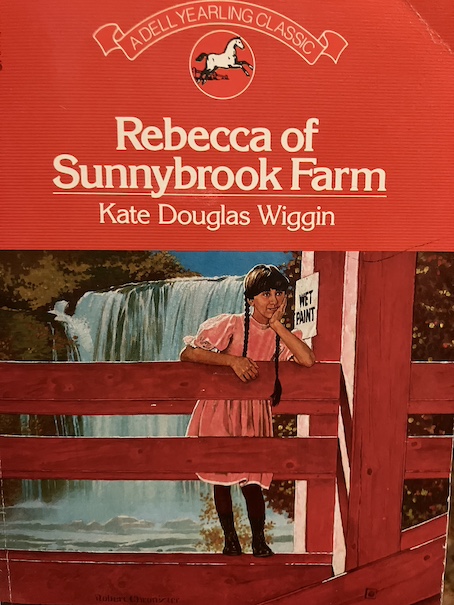
When her family falls on hard times, young Rebecca is sent to live with her aunts, who had been really hoping that her mother would send Rebecca’s practical older sister instead. Rebecca is a dreamy, imaginative girl, but in spite of her Aunt Miranda’s impatience with her, she charms everyone and earns their respect. This book is public domain and is available on Project Gutenberg. By Kate Douglas Wiggin.
Series
When an aging, unmarried brother and sister decide that they could use some extra help on their farm, they the decide to take in an orphan boy who can help with the farm chores. However, by mistake, the orphanage sends them a red-haired young girl instead, changing their lives and others in the community with her liveliness and imagination. Books in this series are public domain and are available on Project Gutenberg. By L. M. Montgomery. 1908-1939.
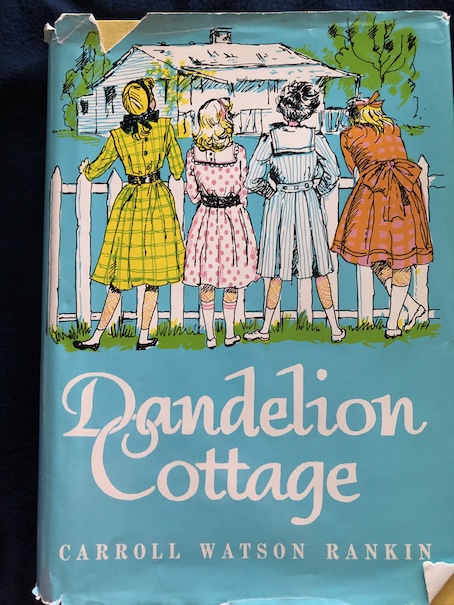
A group of girls in the early 1900s are allowed to use a real cottage as their playhouse, and it brings them into contact with interesting people. All of the books in the series are now public domain and available at Project Gutenberg. 1904-1921.
Elsie Dinsmore
A young girl struggles to become close to her widowed father after he returns from an extended trip in Europe. The stories emphasize Christian values. It was a highly popular series during the 19th century. By Martha Finley. 1867-1905.
The original stories take place in the American South before the Civil War and contain language and situations that would be inappropriate for modern children. The books have received criticism for being too preachy and for having an abusive father. However, revised editions of the books was published in the late 1990s, and there were Elsie Dinsmore dolls to go with the books. I’ve never read any of these, either the old or the new. I hadn’t even heard of them before I started researching children’s books from this period, although I later discovered some books for children and adults that reference this series, including some adult mystery books by Elizabeth Peters..
The Five Little Peppers Series
A widow and her five children do their best to support themselves, eventually finding a wealthy benefactor. By Margaret Sidney. 1881-1916.
The Little Colonel Series
A Southern colonel disowns his daughter for marrying a Yankee, but they later reconcile when the colonel meets his young granddaughter and recognizes her as a kindred spirit. By Annie Fellows Johnston. 1896-1914.
This is one of the series that I think demonstrates how much the Civil War and its aftermath were still on people’s minds. This was a very popular series in its time, and Shirley Temple starred in a movie version of the first book in the series in 1935. I’ve seen the movie but never read the books.
Maida Books
Maida’s father is a very wealthy man, but Maida is a poor little rich girl who suffers from ill health. To fulfill Maida’s wishes for a simpler life and give her something to care about, her father buys her a little cottage and a small shop to tend, giving her opportunities at a simpler, more ordinary, life and the chance to make some regular friends, both of which help her health. By Inez Haynes Irwin. 1909-1955.
Marjorie Philips Series
About a girl growing up in the early 20th century. By Alice Turner Curtis. 1904-1913.
The Three Margarets Series
Three cousins are all named “Margaret” after their grandmother. However, all three girls have grown up in different places and in different circumstances, they all have different personalities, and on the surface, they seem to have little in common other than their first name and the fact that they’re cousins. The Margaret who goes by Margaret is quiet and bookish. The Margaret who is called Peggy is brave but clumsy. The Margaret who is called Rita has a Cuban mother (they emphasize this in the story, and there are some stereotypes surrounding it) and has a fiery and dramatic personality. When the three Margarets are brought together by their uncle one summer so he can get to know them and they can get to know each other, they bond with each other, and it changes their lives. By Laura E. Richards. 1897-1904.
Adventure
The Cruise of the Dazzler (1902)
A boy who is bored with the routine of school runs away to go to sea on a sloop called the Dazzler. Later, he learns that the captain of the sloop is a criminal. Available online at Project Gutenberg. By Jack London.
Series
The first of the Stratemeyer Syndicate series. Three brothers, Tom, Sam, and Dick Rover, have adventures and solve mysteries while attending a military boarding school. 1899-1926.
Humor
The Ransom of Red Chief (1907)
A short story about a pair of kidnappers who abduct the son of a wealthy man, only to find that the kid is more wild than they suspected and that he poses a greater threat to them than they do to him. Also, the people in the boy’s town aren’t exactly eager for him to be returned, and the boy’s father knows his son well and understands the situation far better than the kidnappers. By O. Henry.
New Treasure Seekers (1904)
The further adventures of the Bastable children. Part of the The Bastable Children Series. This book is public domain and is available on Project Gutenberg. By E. Nesbit.
Oswald Bastable and Others (1905)
A collection of short stories. Part of the The Bastable Children Series. This book is public domain and is available on Project Gutenberg. By E. Nesbit.
The Wouldbegoods (1901)
The Bastable children are at it again! After their latest escapades go too far, the children are sent off to the country for awhile. There, they make a couple of new friends and form a club to perform good deeds and try to improve themselves. Of course, their attempts at good deeds don’t go as planned and end up causing more problems than they solve. Part of the The Bastable Children Series. This book is public domain and is available on Project Gutenberg. By E. Nesbit.
Mystery
The Pothunters (1902)
This is the first book published by Wodehouse, who later wrote the humorous Jeeves and Wooster stories for adults. This story is about boys at a British boarding school. They are heavily involved with sports at their school, and someone steals the school’s trophies (called “pots”). They have to figure out who took them and get them back. Available online at Project Gutenberg. By P.G. Wodehouse.
Series

Two pairs of fraternal twins have adventures and solve mysteries. Early books were more adventure/general fiction than mystery, but the series evolved over time. Books in this series are public domain and are available on Project Gutenberg. A Stratemeyer Syndicate series. 1904-1992.
Fantasy
The Enchanted Castle (1907)
Some children on holiday encounter a mysterious mansion and a young girl who tells them that it’s magic. The girl turns out to be even more right than she knows. This book is public domain and is available on Project Gutenberg. By E. Nesbit.

Five Children and It (1902)
A group of siblings encounter a magical being that grants them wishes, but none of their wishes goes as planned! This book is public domain and is available on Project Gutenberg. By E. Nesbit.
Just So Stories (1902)
Full title: Just So Stories for Little Children. Stories about the origins of animals. By Rudyard Kipling.
The Life and Adventures of Santa Claus (1902)
A fictional biography of Santa Claus, explaining his origins and the reasons why he leaves presents. (It has no connection to the historical St. Nicholas.) It was later made into a stop motion movie in 1985. The book is available online through Project Gutenberg. By L. Frank Baum.
The Master Key (1901)
Full title: The Master Key: An Electrical Fairy Tale, Founded Upon the Mysteries of Electricity and the Optimism of Its Devotees. A boy named Rob likes to experiment with electricity, and one day, he accidentally touches “the Master Key of Electricity” and summons the Demon of Electricity. The Demon of Electricity gives Rob a series of gifts in the form of technology that has not been developed yet. Rob accepts most of them and had adventures with them, but he refuses the final set of gifts because he believes that humanity is not yet ready for them. Available online through Project Gutenberg. By L. Frank Baum.
The Other Side of the Sun (1900)
A collection of short fairy tale-style fantasy stories. Available online through Internet Archive and Project Gutenberg. By Evelyn Sharp.
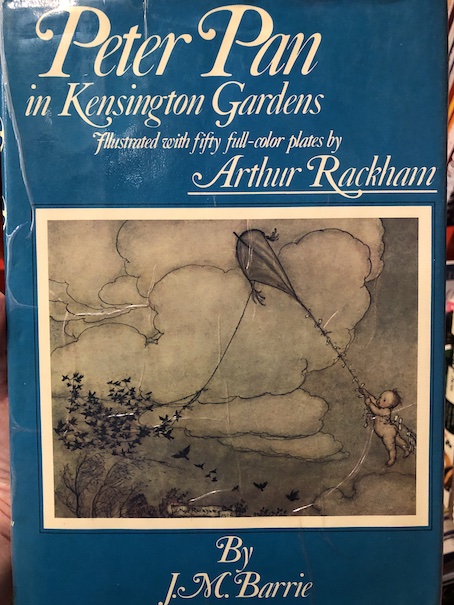
Peter Pan in Kensington Gardens (1906)
Originally, this story was part of a longer book by J. M. Barrie, written for adults called The Little White Bird. After Barrie used the character of Peter Pan for the play Peter Pan; or, the Boy Who Wouldn’t Grow Up in 1904, the publishers published this part of the book as a separate book. In this story, Peter Pan is a baby who flies away from his home to live in Kensington Gardens because all babies used to be birds (apparently) and he doesn’t want to grow into an adult human. However, Peter Pan is no longer a bird. For a time, he lives with the fairies in the garden and is friends with a girl named Maimie. He tries going home eventually, only to find that his mother has had another baby in his absence. It’s a sadder and darker story from the play and the later book based on it called Peter and Wendy. By J. M. Barrie.
The Phoenix and the Carpet (1904)
When some children accidentally ruin the rug in their nursery, their parents get another one that turns out to be a magic carpet with a phoenix egg inside. Sequel to Five Children and It. This book is public domain and is available on Project Gutenberg. By E. Nesbit.
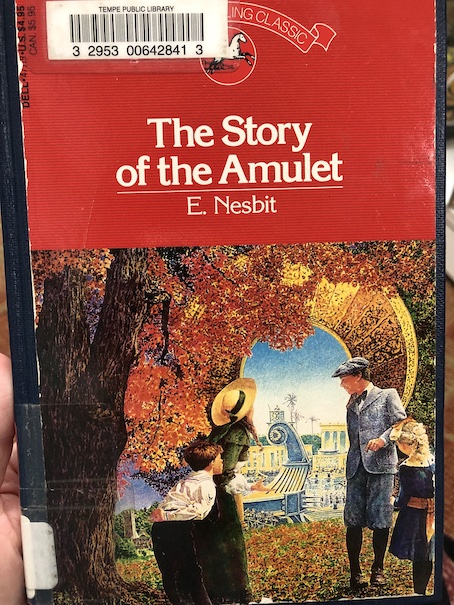
The Story of the Amulet (1906)
A set of siblings purchase a magic amulet but learn that they must travel back in time to find its missing half. Sequel to The Phoenix and the Carpet. This book is public domain and is available on Project Gutenberg. By E. Nesbit.
The Story of the Live Dolls (1901)
For one day, all of the dolls in the village of Cloverdale come to life. This book is public domain and available on Project Gutenberg. By Josephine Scribner Gates.
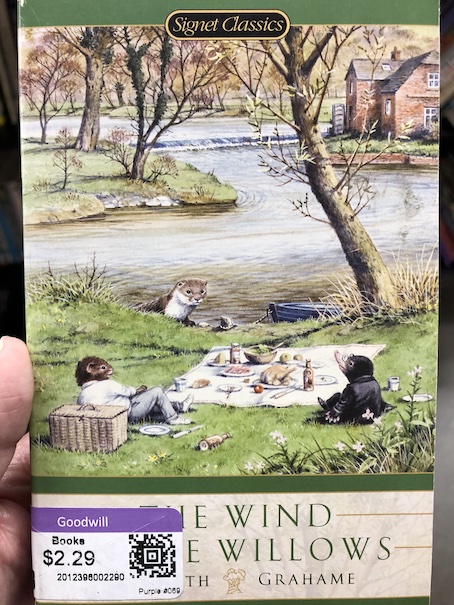
The Wind in the Willows (1908)
The adventures of talking animals who act like humans: Toad, Mole, Ratty, and Badger. By Kenneth Grahame.
The Wonderful Wizard of Oz (1900)
A young farm girl is carried off to a magical land by a tornado. This book is public domain and is available on Project Gutenberg. By L. Frank Baum.
Series
A series of collections of classic fairy tales. By Andrew Lang. 1889-1910.
Historical Fiction
A Little Heroine of Illinois (1908)
A ten-year-old girl works on the homestead where she lives, but the homestead is threatened by Confederate invasion during the American Civil War. By Alice Turner Curtis.
The Little Heroine at School (1909)
The girl from A Little Heroine of Illinois attends a school for girls in Boston. By Alice Turner Curtis.
Series
Picture Books
The Hole Book (1908)
A careless boy plays with a gun and accidentally fires a shot. The bullet continues through the wall and through a series of other objects, causing various disasters all over town and killing one wildcat that had cornered a zookeeper (but, fortunately, no one else is killed) before it finally gets stopped by an extremely dense cake. The book is not only a lesson not to play with guns but also a demonstration of how one careless act can have unexpected consequences. The story is told in rhyme, but the most distinctive part of the book is that it has an actual hole that continues all the way through the book and the drawings of every single object the bullet hit. By Peter Newell.
Warning: Although this book isn’t really about race, racial stereotypes of the era creep in. There is a page where “mammy” complains about somebody shooting her watermelon. The drawing of “mammy” and her kids isn’t great, but not much worse than the other characters in the book because most of them are drawn like caricatures anyway. I know that doesn’t sound like a ringing endorsement, but that’s basically what it looks like. Apart from that page, I don’t really have any complaints. The dangers of playing with a loaded gun is a lesson worth learning. This book is in the public domain and available online.
The Tale of Peter Rabbit (1901, 1902)
Peter Rabbit disobeys his mother’s instructions and is almost caught by a farmer in his garden. By Beatrix Potter.
Children’s Non-Fiction
Dwellers in the Garden (1908)
A collection of short stories that teach children about birds, butterflies, mice, and other insects and creatures that live in gardens. By Theodore Wood.
Scouting for Boys: A handbook for instruction in good citizenship (1908)
The book that laid the foundation for the Boy Scout movement. By Robert Baden-Powell.
Children of the Decade
Children born in this decade in the United States:
Popular 1900s Names – Many of the names for children born in this decade were what we would consider “classic” names in the early 21st century, like: John, William, James, Mary, Helen, and Margaret.
They were born around the time the Wright brothers built and flew their first airplanes. Aviation was very new when they were born, and they would have known from their parents what an amazing development it was, but they would not remember a time before it existed.
All of them would have been alive during World War I (1914-1918). Those who were born later in the decade wouldn’t remember much about life before the war. All of them would have called the war “The Great War” throughout their childhood because World War II had not yet occurred.
They were born before most women in the United States could vote. With the exception of some women in western states who got voting rights before the rest of the country, few of their mothers had the right to vote at the time of their births. The children would later be old enough to understand and remember when women’s suffrage was granted, and their mothers may have been among the first women to vote after that.
They lived during a time when people not only did not have television but also did not have home radios, which were invented and popularized in the 1920s. If you wanted music at home, you had to either learn to sing or play an instrument yourself, listen to a family member who could, or use a phonograph (early record player) to play a record. Phonographs commonly were of the wind-up variety, so no electricity was needed.
They would have been in their teens and 20s during the 1920s and Prohibition. Some of them were flappers (or Bright Young Things) during that period or frequented speakeasies, although that would largely depend on their individual personalities. People who were more daring, had more of a desire to be “modern,” or had less concern for rules and laws and enjoyed pushing the limits of society would be more likely to engage in these activities. People who were more shy, more conservative in their habits, or truly believed in the cause of Prohibition would not have gone to speakeasies and would have been less daring in their clothes and personal habits. A good number of people would have also fallen between these groups in their habits, more modern and maybe a little daring in some ways but not in others. (For example, wearing some of the latest fashions but not the more daring ones and sneaking an occasional drink quietly at home, which was possible for those who still had alcohol at home from before Prohibition began or those who knew how to make their own, but not going to speakeasies.) There are variations in human behavior in every period of history.
They would have been in their 20s and 30s during the Great Depression. By then, many of them would be married with children of their own and would have been among those who lost their jobs or were struggling to find work while still providing for their families. Their children’s early lives may have been marked by poverty, uncertainty, and movement from place to place as their parents searched for work.
They would later have been in their 30s or 40s during World War II. Some of the people who served in World War II were born in this decade. They were part of the “Greatest Generation.” Some of the older ones born in this decade may have also sent their sons overseas to fight (those in their 40s would have been old enough to have sons in their late teens or early 20s at the time).
They would have been adults at the beginning of the Cold War and witnessed the technology race and the invention of space flight. Many of them would not have lived to see the end of the Cold War, which happened when they would have been in their 80s, almost their 90s for those born early in the decade.
They would have been in their 50s and 60s as the Civil Rights Movement took place. When they were children, their schools were segregated by race. Their children’s schools would also have been segregated. Their grandchildren would likely have been among the first to attend desegregated schools.
They would have to live to their 80s or 90s in order to witness the time people gained the ability to access the Internet and send and receive e-mail from home computers. It would be almost impossible for any of them to have seen anything on this site because it was first published in 2016, and they would have to have been over 100 years old to do so.
Children born in this decade would also have read books from the following decade, the 1910s, in their youth. However, children who were old enough to read some of the books published in the early part of this decade when they were first sold would have been born in the preceding decade, the 1890s.
Children’s Authors Were Children, Too!
Everyone was young once, and I’d just like to take this opportunity to remind readers that authors born around this time would have grown up like other children of their time, witnessing the same events and reading the same books as they grew up.
Children’s authors born in this decade:
Elizabeth Goudge – April 24, 1900 – Author of The Little White Horse (1946) and Linnets and Valerians (1964)
Antoine de Saint-Exupery – June 29, 1900 – Author of The Little Prince (1943)
Holling C. Holling – August 2, 1900 – Author and illustrator of Paddle-to-the-Sea (1941)
Langston Hughes – February 1, 1901 – Famous poet of the Harlem Renaissance and author of books for adults and children, particularly biographies and non-fiction about African and African American culture
Marguerite Henry – April 13, 1902 – Author particularly known for her horse stories, especially Misty of Chincoteague (1947)
Louis Slobodkin – February 19, 1903 – Author of the Spaceship Under the Apple Tree series (1952-1972)
Phyllis A. Whitney – September 9, 1903 – Author of juvenile mysteries, including Secret of the Samurai Sword (1958), Mystery on the Isle of Skye (1960), Mystery of the Golden Horn (1962), The Vanishing Scarecrow (1971)
Mary Norton – December 10, 1903 – Author of The Borrowers series (1952-1982) and Bed-knob and Broomstick (1943, 1947, 1957)
Theodor Seuss Geisel (Dr. Seuss) – March 2, 1904 – Author of many famous picture books, including The Cat in the Hat (1957) and Green Eggs and Ham (1960)
Elizabeth Hoffman Honness – June 29, 1904 – Author of children’s mystery stories, including Mystery of the Secret Message (1961) and Mystery of the Pirate’s Ghost (1966)
Mildred Wirt Benson – July 10, 1905 – Ghostwriter for the earliest books in the Nancy Drew series and other girls’ series under the Stratemeyer Syndicate and author of other independent books under her own name
Munro Leaf – December 4, 1905 – Author of The Story of Ferdinand (1936)
Eleanor Estes – May 9, 1906 – Author of the Moffats series (1941-1983) and other books, including The Hundred Dresses (1944) and Ginger Pye (1951)
Margret Rey – May 16, 1906 – Co-creator of the Curious George series (1941-1966)
Crockett Johnson – October 20, 1906 – Author and illustrator of Harold and the Purple Crayon (1955)
Betty McDonald – March 26, 1907 or 1908 (contradictory accounts) – Author of the Mrs. Piggle Wiggle series (1947-1957)
Astrid Lindgren – November 14, 1907 – Author of the Pippi Longstocking series (1945-1971) and many other books
William Steig – November 14, 1907 – Author of Sylvester and the Magic Pebble (1969) and Doctor De Soto (1982)
Ian Fleming – May 28, 1908 – Creator of the character of James Bond for adults and author of Chitty-Chitty-Bang-Bang (1964) for children
Don Freeman – August 11, 1908 – Author and illustrator of Corduroy (1968) and many other books
Elizabeth George Speare – November 21, 1908 – Author of The Witch of Blackbird Pond (1958) and The Sign of the Beaver (1983)
Mary C. Jane – September 18, 1909 – Author of juvenile mysteries, including The Mystery in Old Quebec (1955), Mystery Back of the Mountain (1960), Mystery Behind Dark Windows (1962), and Mystery on Nine-Mile Marsh (1967)
Kay Thompson – November 9, 1909 – Author of the Eloise series (1955-1959, 2002)
P.D. Eastman – November 25, 1909 – Author of Are You My Mother? (1960) and Go, Dog. Go! (1961)
Other Resources
Documentary Films
CrashCourse
CrashCourse is a YouTube channel with fun educational videos on a variety of topics and different periods of history. The videos are fairly short for educational lectures. Most are less than 15 minutes long. These videos are intended for teenagers and older, so be aware that there may be topics and language inappropriate for younger children.
- The Progressive Era: Crash Course US History #27
- Progressive Presidents: Crash Course US History #29 – The goals and achievements of Theodore Roosevelt, William Taft, and Woodrow Wilson.
- Women’s Suffrage: Crash Course US History #31 – Part of this discusses birth control, so be aware and preview it before showing it to kids.
- Modern Thought and Culture in 1900: Crash Course European History #31 – From impressionism and art nouveau to Sigmund Freud
- Growth, Cities, and Immigration: Crash Course US History #25
THE ULTIMATE FASHION HISTORY: The 1900s
An educational lecture about fashion and culture in the early 1900s. It discusses art nouveau and the Gibson Girl, who was the beauty ideal of the era for women. It also explains some of the extremes that women would go to in order to achieve the ideal figure (don’t watch this while eating) and how people had learned to use photographic fakery when their subjects fell short of the ideal, creating unrealistic body expectations for women. About 35 minutes long.
In the explanation that accompanies the video, the poster notes that not all of the colorized footage is of Berlin (a few scenes are in Munich) and that the dates of the footage range from about 1890 to 1920, including some footage from 1914 toward the end, when World War I was beginning. Although the dates are somewhat imprecise, I included it because it shows Europe before the world wars. Some of the young boys in the footage may have become soldiers later, and some of those buildings may have been damaged or destroyed by the end of World War II. (I couldn’t say for sure which, not being familiar with the area, although this footage of 1945 Berlin may give you an idea.)
For more about 1900s culture:
The People History: 1900 to 1909
Timeline of major events.
Major events and developments.
The World of the Edwardian Child
About the lives of children during the early 1900s and the level of knowledge that was discussed in their literature, as shown in the Children’s Encyclopaedia, including the understanding of science that existed at the time and how men and women and differences in racial and social classes were portrayed.
 Jestress's Forgotten Books and Stories