A Little History
The Great War (WWI) and Other Major Events
At the beginning of the decade, the United States was largely isolationist, but World War I (called The Great War prior to World War II) pulled the country into international conflicts and changed American society. The war began with the assassination of Archduke Franz Ferdinand of Austria in 1914, and it expanded as countries called in their allies in a complicated system of alliances.
During WWI, many women entered professions which women did not usually do because many of the men who usually did them were away at war. Most of these jobs were given back to men after the war was over because it seemed only right that the men who had served their country should have their jobs back after their service. However, the women’s suffrage movement continued, and at the beginning of the following decade, women in the United States gained the right to vote.
Toward the end of the decade, just as WWI was coming to an end, many people around the world became ill with a serious form of influenza, and many died from it. The spread of the disease was hastened by the movement of troops between countries due to the war. There was nowhere that was spared from the disease, and no age group was safe. In fact, many of the people who died were young adults, who were otherwise apparently healthy, often due to an overreaction in their immune systems. Even world leaders suffered from the influenza that came to be known as the Spanish Flu, not because that’s where it came from but because that was the first country to begin openly reporting cases. Because the first cases were less serious than the ones that came later, doctors did not know that they were dealing with initially, and the influenza spread so quickly because of the large numbers of people moving between countries, the true origin of the disease has never been determined.
During the Influenza Pandemic of 1918-1919, children began reciting a little rhyme:
I had a little bird,
Its name was Enza.
I opened the window,
And in-flu-enza.
Another notable event from this decade was the sinking of the Titanic in 1912. This sea disaster helped to change safety regulations for passenger ships. This event, along with the WWI and the Influenza Pandemic, eventually became a topic referenced in children’s literature.
Culture and Entertainment
Motion pictures were being produced for the public during the 1910s, and the film industry in the United States became centered in Hollywood, California. All of the films produced during this decade were silent movies. Sound movies wouldn’t be developed until the following decade. Many of the films produced in this decade were not preserved because the technology was relatively new, the film used was physically delicate, and films were not being made to be preserved. Among the most famous movies of this decade were:
- Comedy films with Charlie Chaplin, mostly short films, particularly The Tramp (1915), his most memorable role.
- Films with Mary Pickford (some of which were based on books, like The Little Princess (1917), Rebecca of Sunnybrook Farm (1917), and Daddy-Long-Legs (1919), and I suspect that Mary Pickford’s career may have influenced the character of Ruth Fielding in children’s literature)
- Some of the earliest films about the Oz stories, including The Wonderful Wizard of Oz (1910), The New Wizard of Oz (1914), and The Magic Cloak (1914).
- The world’s first animated short movies, including Little Nemo (1911) and Gertie the Dinosaur (1914).
- Movie serials – Episodic films shown one episode at a time in theaters with episodes ending with cliffhangers to keep audiences coming back to see what would happen next – like The Perils of Pauline (1914)
- Birth of a Nation (1915) – D. W. Griffith’s film about the end of the Civil War and the rise of the Ku Klux Klan. The movie was controversial even when it was made, but it was very popular when it was released, 50 years after the end of the Civil War, and is credited with helping to inspire a resurgence of the Ku Klux Klan that continued into the following decade. The cinematography was very good for the time period and its length helped to inspire other lengthy movie epics, which is part of the reason why this movie is still considered a classic and is still used for history and film classes (which is how I learned about it – this video explains more and gives a good explanation of the history and some fascinating clips from other 1910s films as well). The best part for me was that one odd tree which proves that the opposing armies are actually charging from the same position, and they just filmed those parts separately to make it seem like the troops are charging toward each other from different positions.
Childhood and Children’s Literature
In 1910, two major camping and activity groups for children were established in the United States: the Boy Scouts of America and the Camp Fire Girls of America. Part of the reason for their founding was that society was becoming increasingly urban, and some people were concerned that young people of the time were not learning some of the traditional values and outdoor skills associated with more rural life. At the time of its formation, the Camp Fire Girls was supposed to be the girls’ version of the Boy Scouts. The Girl Scouts organization did not yet exist in the United States.
The Camp Fire Girls’ original focus was similar to the one that the Girl Scouts would later have, somewhat like the Boy Scouts but with a more feminine/domestic emphasis, teaching skills like sewing and having the girls learn about famous women. The Girl Guides of America, which later became the Girl Scouts of the United States of America, was established two years later, in 1912. Its founder, Juliette Gordon Low, was inspired by British scouting organizations. She suggested a merger with the Camp Fire Girls, but the merger never happened because the Camp Fire Girls was the larger organization of the two at that time, and it rejected the offer. The two organizations are still separate in modern times. Another way that the two organizations differed was in their approach to race and ethnicity. Even at its founding in 1910, the Camp Fire organization allowed girls of different races to join. (The Camp Fire Girls later became Camp Fire Boys and Girls in 1975, when it started accepted both boys and girls as members. In the 21st century, about 100 years after its founding, it is simply known as Camp Fire and prides itself on including any child or youth who wants to join, citing inclusiveness as one of its strengths.) However, the Girl Scouts were segregated. A significant reason for the difference between the two groups on race was that the Camp Fire Girls was founded in Maine and Vermont, and the first Girl Scout troops began in Georgia. It was about 50 years after the beginning of the Civil War, still within living memory of the event, and people living in different regions of the country had different feelings on subject of race (see Birth of a Nation above). In the South, segregation was maintained by law, and the policy of the Girl Scouts was to follow local laws regarding racial segregation. However, girls of different races could form their own troops. The first troop for African American girls was formed in 1917, five years after the founding of the organization. The segregation of troops lasted until the 1950s, when the Girl Scouts began a process of desegregation. Another interesting fact about the first American Girl Scouts is that their original uniforms were homemade, and they were dark blue. The color changed to green in the 1930s.
These scouting organizations were not the first camping/scouting/wilderness activity groups of their kind to exist, and there were other, small groups that were being founded around the same time in different areas of the United States, but the smaller groups did not last, and the Boy Scouts, Girl Scouts, and Camp Fire groups became the major organizations of their type in the United States during the 20th century and into the 21st century. Soon after the creation of these organizations, scouting and camping activities became common themes in children’s literature.
In other trends in children’s literature during this decade, the Stratemeyer Syndicate was already producing its first series, although it had not yet produced some of the series for which it would be best known later, including the Hardy Boys and Nancy Drew series. The Syndicate developed successful patterns for producing series of children’s books and continued producing new series throughout the following decades. Even early in the Syndicate’s history, it faced criticism for producing formulaic series which caused children to be “mentally lazy.” However, children enjoyed the various series which the Syndicate created and featured children and young people who had exciting adventures and solved mysteries, often with little or no help from older adults.
Among the famous literary characters created during this decade were Tarzan and Zorro.
Children’s Fiction Books
General Fiction
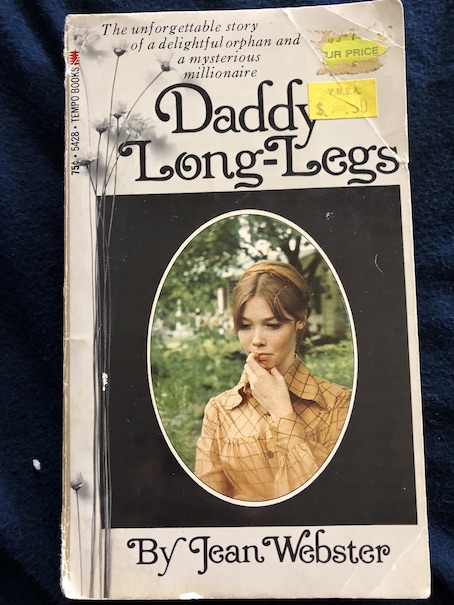
Daddy-Long-Legs (1912)
A wealthy benefactor provides money to a young orphan girl, Jerusha “Judy” Abbott, so that she can go to college. He asks that she write to him about her college experiences and progress in class but insists upon remaining anonymous. Judy nicknames him “Daddy-Long-Legs” in her letters because she has only had one brief glimpse of him and only knows that he is very tall with long legs. Through the course of the book and her letters, she eventually discovers his true identity. By Jean Webster.
Dear Enemy (1915)
A sequel to Daddy-Long-Legs, focusing on Judy’s friend, Sallie, in her new job after college. By Jean Webster.
Josephine and Her Dolls (1915)
An eight-year-old girl acts out World War I stories with her dolls. By H.C. Cradock.
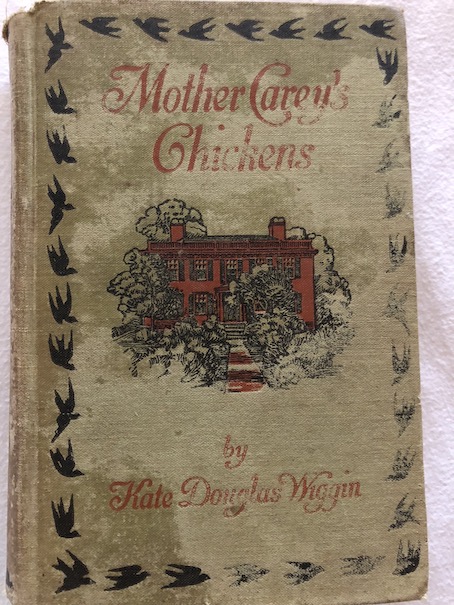
Mother Carey’s Chickens (1911)
A widow and her children struggle to make a new life for themselves in a small town in Maine while taking in a cousin who is a snob. This book is public domain and on Project Gutenberg. It was also the basis for Disney’s Summer Magic. By Kate Douglas Smith Wiggin.
Pollyanna (1912) and Pollyanna Grows Up (1915)

A two-book series. A young orphan brightens her aunt’s life with her optimism even while she faces serious problems herself. Both books public domain and on Project Gutenberg. By Eleanor H. Porter.
The Secret Garden (1911)
An orphan girl born in India goes to live with her uncle in Yorkshire, England in a house filled with secrets and sadness and finds herself investigating a mysterious walled garden and trying to bring it back to life. It is public domain and on Project Gutenberg. By Frances Hodgson Burnett.

Understood Betsy (1916)
A young orphan girl goes to live with relatives on a farm in Vermont and finds a happier home than the one she left behind and a new sense of self-confidence. It is public domain and on Project Gutenberg. By Dorothy Canfield Fisher.
Note: Dorothy Canfield Fisher was an early advocate of the Montessori method of education in the United States, and in particular, this book presents many of the principles of the Montessori method and how it can help children.
Series
When an aging, unmarried brother and sister decide that they could use some extra help on their farm, they the decide to take in an orphan boy who can help with the farm chores. However, by mistake, the orphanage sends them a red-haired young girl instead, changing their lives and others in the community with her liveliness and imagination. 1908-1939.
Camp-Fire Girls
The adventures of another group of Camp Fire Girls. By Stella M. Francis. 1918.

The Camp Fire Girls
The adventures of a group of Camp Fire Girls. By Jane L. Stewart. 1914.
The Camp Fire Girls
The adventures of a different group of Camp Fire Girls. By Hildegard G. Frey. 1916-1920.
The Daddy Series
Harry and Mabel Blake have fun and adventures with their father as he takes them different places, like to the garden, to the circus, on a camping trip, and to a farm. By Howard R. Garis. 1914-1916.
A group of girls in the early 1900s are allowed to use a real cottage as their playhouse, and it brings them into contact with interesting people. All of the books in the series are now public domain and available at Project Gutenberg. 1904-1921.
The Five Little Peppers Series
A widow and her five children do their best to support themselves, eventually finding a wealthy benefactor. By Margaret Sidney. 1881-1916.
The Little Colonel Series
A Southern colonel disowns his daughter for marrying a Yankee, but they later reconcile when the colonel meets his young granddaughter and recognizes her as a kindred spirit. By Annie Fellows Johnston. 1896-1914.
This is one of the series that I think demonstrates how much the Civil War and its aftermath were still on people’s minds. This was a very popular series in its time, and Shirley Temple starred in a movie version of the first book in the series in 1935. I’ve seen the movie but never read the books.
Maida Books
Maida’s father is a very wealthy man, but Maida is a poor little rich girl who suffers from ill health. To fulfill Maida’s wishes for a simpler life and give her something to care about, her father buys her a little cottage and a small shop to tend, giving her opportunities at a simpler, more ordinary, life and the chance to make some regular friends, both of which help her health. By Inez Haynes Irwin. 1909-1955.
Marjorie Philips Series
About a girl growing up in the early 20th century. By Alice Turner Curtis. 1904-1913.
Mary Jane Series
The adventures of a girl named Mary Jane as she grows up, goes to school, and travels to other countries. By Clara Ingram Judson. 1918-1939.
Adventure
The Adventures of Maya the Bee (1912)
A young bee who wants adventure leaves her hive and learns about bravery and duty.
Series
The Adventures Of . . . Series
A vintage children’s book series of adventure stories with talking animals. Includes the Old Mother West Wind series and Green Meadow series. By Thornton W. Burgess.
The first of the Stratemeyer Syndicate series. Three brothers, Tom, Sam, and Dick Rover, have adventures and solve mysteries while attending a military boarding school. 1899-1926.
Mystery
The Daring Twins (1911)
A family of five children is living under the guardianship of a cousin after the deaths of the children’s parents. One of the oldest of the family, Phil Daring, works in a bank, and when he is falsely accused of theft, his twin sister Phoebe finds the evidence to prove his innocence. It was republished in 2006 under a different title, The Secret of the Lost Fortune, but readers are warned that parts of the book contain inappropriate racial language and ethnic stereotypes. By L. Frank Baum.
Phoebe Daring (1912)
While her twin brother Phil is away at college, Phoebe Daring investigates a local theft to clear the name of a friend who is falsely accused. Sequel to The Daring Twins. By L. Frank Baum.
Series
The Bluebird Books
A series of girl detective stories, some of which discuss life in the United States during WWI. By L. Frank Baum, under the pseudonym Edith Van Dyne. 1916-1924.
Two pairs of fraternal twins have adventures and solve mysteries. Early books were more adventure/general fiction than mystery, but the series evolved over time. Books in this series are public domain and are available on Project Gutenberg. A Stratemeyer Syndicate series, credited to Laura Lee Hope. 1904-1992.
The Moving Picture Girls

Teenage girls join a silent film company along with their father. They have adventures, solve mysteries, and find romance on filming locations. Contains many details about filming silent movies. A Stratemeyer Syndicate series, credited to Laura Lee Hope. 1914-1916.
I understand that it’s difficult to find physical copies of this series now. This site has descriptions of books in the series. You can read the books for free online through Project Gutenberg or buy the complete series for Kindle very cheaply.
An orphan girl in the early 20th century grows up to become the owner of her own film company in Hollywood. Along the way, she solves mysteries with her friends at school, on vacation, and later, on filming locations, and helps the war effort during World War I. A Stratemeyer Syndicate series. 1913-1934.
Fantasy
The Blue Rose Fairy Book (1911)
A collection of fantasy stories. By Maurice Baring. Not part of the Color Fairy Books series by Lang
Available online through Internet Archive.
Loraine and The Little People (1915)
The Little People entertain Loraine while she is recovering from an illness. By Elizabeth Gordon.
Loraine and The Little People of Spring (1918)
A collection of short stories about how young Loraine visits her grandparents in Maine to strengthen herself in the country after being ill and has adventures with her pony and the Little People. By Elizabeth Gordon.
Available to read online through the Library of Congress
Peter and Wendy (1911)
This was the novelization of the play from 1904, Peter Pan; or, the Boy Who Wouldn’t Grow Up. Peter Pan is a boy who never grows up, living in the magical land of Neverland with his friends, the Lost Boys and a fairy named Tinker Bell and having adventures. Neverland is inhabited by various people and elements that appear in classical children’s literature, like Indians (Native Americans), mermaids, and pirates. Peter Pan existed as a character in one of Barrie’s previous books, but the play and this book added the characters of Wendy and her brothers, popularizing Wendy as a first name. The ending of the book includes a section not included in the original play about how Wendy grew up, got married, and had children of her own. Peter is disappointed, until Wendy’s daughter Jane goes to Neverland with him, and when Jane grows up, her daughter Margaret goes to Neverland, too. The ending indicates that the cycle continues through the generations of the family. By J. M. Barrie.
Series
A series of collections of classic fairy tales. By Andrew Lang. 1889-1910.
Raggedy Ann and her brother, Raggedy Andy, are rag dolls who come to life and have magical adventures. By Johnny Gruelle. 1918-1975.
Uncle Wiggily Series
The adventures of an elderly rabbit with a candy-striped cane and his animal friends. By Howard R. Garis. 1912-c. 1955.
Science Fiction
Series
Tom Swift
The science fiction adventures of a boy inventor named Tom Swift. This series was released in several sub-series, some of which focused on the son of the original Tom Swift, Tom Swift, Jr. Some of the later series leave it vague whether the boy in the series is Tom Swift, Jr. or possibly the grandson of the original Tom Swift. The original Tom Swift series was written and published 1910-1941. Later series were released 1954-1971, 1981-1984, 1991-1993, 2006-2007, 2019. A Stratemeyer Syndicate series.
Historical Fiction
Series
The Little Maid’s Historical Series
A series of historical novels focusing on different girls in American history, especially Colonial America and the Revolutionary War, although other periods are also included. By Alice Turner Curtis. 1910-1937.
The Twins Series
A series of stories that take place in different time periods and different countries around the world, each focusing on a different set of twins. By Lucy Fitch Perkins. 1911-1938.
Picture Books
Series
Bubble Books (Harper Columbia Books that Sing)
This series did something that was new for the 1910s but which became popular for children’s books during the rest of the 20th century – These picture books included gramophone records that accompanied the text of the books. The 5.5″ records were produced by the Columbia Gramophone Company.
Children’s Non-Fiction
A Child’s Book of the Teeth (1918)
All about teeth and how to care for them, written by a dentist, Harrison Wader Ferguson. You can read a review and see pictures of this book here.
Every Child’s Pencil Tracing Book (1917)
Drawing and coloring lessons for children, focusing on crayons and paints with pictures for children to trace onto tracing paper and color.
On the Trail: An Outdoor Book for Girls (1915)
A guide to teach girls about camping, wilderness fun, and outdoor handicrafts. By Lina Beard and Adelia Belle Beard. Available online through Project Gutenberg.
The Story Tellers Book (1912)
A book of short stories for parents and teachers to use with children as reading practice, meant for children 3 to 7 years old. It includes some popular folktales, a few Christmas stories, and some other assorted stories. By Alice O’Grady and Frances Throop.
Children of the Decade
Children born in this decade in the United States:
Popular 1910s Names – Many of the names for children born in this decade were what we would consider “classic” names in the early 21st century, like: John, William, James, Mary, Helen, and Dorothy.
They were born after the Wright brothers built and flew their first airplanes. Aviation was very new when they were born, but they would not remember a time before it existed.
They may have been the children of men who were soldiers in World War I. Some of the children born early in the decade would have been alive during the war, although they might not have been old enough to remember much about it. Those who were born later in the decade would never have known a world that had not experienced a world war. However, all of them would have called the war “The Great War” throughout their childhood because World War II had not yet occurred.
They were born before most women in the United States could vote. With the exception of some who lived in western states where women got the vote earlier, none of their mothers had the right to vote at the time of their births. The ones born at the beginning of the decade would have been old enough to understand and remember when women’s suffrage was granted, but the ones who were born at the end of the decade would have been too young to remember women getting the vote.
They lived during a time when people not only did not have television but also did not have home radios (which were invented and popularized in the 1920s).
They would have been in their teens and 20s during the Great Depression.
They would later have been in their 20s or 30s during World War II. Some of the people who served in World War II were born in this decade. They were part of the “Greatest Generation” and some were likely parents of Baby Boomers after the war.
They would have been adults at the beginning of the Cold War and witnessed the technology race and the invention of space flight.
They would have been in their 70s or 80s around the time people gained the ability to access the Internet and send and receive e-mail from home computers.
Theoretically, someone who was born in this decade may have lived to see the creation of this site, but since this site was first published in 2016, that person would have to have been at or nearing 100 years old to do so.
Children born in this decade would also have read books from the following decade, the 1920s, in their youth. However, children who were old enough to read some of the books published in the early part of this decade when they were first sold would have been born in the preceding decade, the early 1900s.
Children’s Authors Were Children, Too!
Everyone was young once, and I’d just like to take this opportunity to remind readers that authors born around this time would have grown up like other children of their time, witnessing the same events and reading the same books as they grew up.
Children’s authors born in this decade:
Joan G. Robinson – February 10, 1910 – Author of When Marnie Was There (1967)
Margaret Wise Brown – May 23, 1910 – Author of many famous children’s books, including Goodnight Moon (1947) and The Runaway Bunny (1942)
William Howard Armstrong – September 14, 1911 – Author of Sounder (1969)
Eleanor Cameron – March 23, 1912 – Author of The Mysterious Christmas Shell (1961), A Spell is Cast (1964), and the Mushroom Planet books (1954-1967)
Syd Hoff – September 4, 1912 – Cartoonist and author of children’s books, best known for the Danny and the Dinosaur series (1958-1996).
Robert McCloskey – September 15, 1914 – Author and illustrator of Make Way for Ducklings (1941), Homer Price (1943), and Blueberries for Sal (1948)
Charlotte Zolotow – June 26, 1915 – Author of William’s Doll (1972) and The White Marble (1963)
Jean Fritz – November 16, 1915 – Author of The Cabin Faced West (1958)
Beverly Cleary – April 12, 1916 – Author of the Ramona series and other children’s chapter books.
Bill Martin Jr. – March 20, 1916 – Author of children’s picture books, including Brown Bear, Brown Bear, What Do You See? (1967) and Chicka Chicka Boom Boom (1989)
William Pene Du Bois – May 9, 1916 – Author of The Twenty-One Balloons (1947)
Roald Dahl – September 13, 1916 – Author of many famous children’s books, including Charlie and the Chocolate Factory (1964) and Matilda (1988)
Barbara Cooney – August 6, 1917 – Author and illustrator of many children’s books, including Miss Rumphius (1982)
Robert C. O’Brien – January 11, 1918 – Author of Mrs. Frisby and the Rats of Nimh (1970)
Marcia Brown – July 13, 1918 – Author and illustrator of many award-winning children’s books
Madeleine L’Engle – November 29, 1918 – Author of A Wrinkle in Time (1962)
Richard Scarry – June 5, 1919 – Author and illustrator of many picture books and creator of the Busytown characters like Lowly Worm
Jean Carolyn Craighead George – July 2, 1919 – Author of My Side of the Mountain (1959) and Julie of the Wolves (1972)
Other Resources
Documentary Films
Some of these are full-length documentaries, others are clips, and some are just collections of vintage footage and reminiscences from people who lived during the time period.
CrashCourse WWI Videos
CrashCourse is a YouTube channel with fun educational videos on a variety of topics and different periods of history. The videos are fairly short for educational lectures. Most are less than 15 minutes long. These videos are intended for teenagers and older, so be aware that there may be topics and language inappropriate for younger children. The following videos are the ones they have about WWI and other events of the 1910s:
- How World War I Started: Crash Course World History 209
- Who Started World War I: Crash Course World History 210
- The Roads to World War I: Crash Course European History #32 – An analysis of the causes of the war and circumstances leading up to it.
- World War I Battlefields: Crash Course European History #33
- America in World War I: Crash Course US History #30
- WWI’s Civilians, the Homefront, and an Uneasy Peace: Crash Course European History #34
- Progressive Presidents: Crash Course US History #29 – The goals and achievements of Theodore Roosevelt, William Taft, and Woodrow Wilson.
- Women’s Suffrage: Crash Course US History #31 – Part of this discusses birth control, so be aware and preview it before showing it to kids.
Timeline Documentaries
Timeline has produced full-length documentaries on a wide variety of topics, and some are available to watch for free through YouTube. Each of these documentaries or parts of documentary series is about an hour long, so I recommend starting with the shorter videos I’ve recommended to get an overview of the issues before watching these for more detail. These are documentaries that are available WWI:
- How A Wrong Turn Started World War 1 | First World War EP1
- Germany’s Brutal Invasion And Mistreatment Of Belgium | First World War EP2
- Fighting on All Fronts: WWI A Logistical Nightmare | First World War EP3
- The Last Of The Ottoman Victories At Gallipoli | First World War EP4
- Italy: WWI’s Worst Front | First World War EP5
- How Allies Broke The Deadlock | First World War EP6
- How Britain Used Warships To Blockade In WW1 | First World War EP7
- The Revolutions That Shaped WW1 | First World War EP8
- Germany’s Final Bid To Win WWI | First World War EP9
- 1918: The Final Months Of World War One | First World War EP10
- The True Cost Of Peace After WW1 | Armistice
- Understanding The Global Unease After WW1 | Impossible Peace
- Why World Peace Failed After WWI | Total War – This one explains how WWI led to WWII
A very short explanation by the Centers for Disease Control and Prevention (CDC) in 2018, the 100th anniversary of the event. Because it was created and posted before 2020, it makes no mention of the Coronavirus Pandemic, but there are later videos about that.
The 1918 Pandemic: The Deadliest Flu in History
A little longer video (about 6 minutes), also from 2018, the 100th anniversary of the Influenza Pandemic. From SciShow.
THE ULTIMATE FASHION HISTORY: The 1910s
An educational lecture about popular fashion and culture of the 1910s, relating it to events of the decade. Part of it explains the beginning of the trend of women bobbing their hair, considered a very daring hairstyle for the time. Most women had long hair, and short hair was considered boyish. Some women who wanted to appear somewhat daring and trendy but couldn’t bring themselves to completely cut their hair would wear their hair long at the back, pinned up, and cut the front part of their hair short at the sides to create the illusion that their hair was short all the way around. About 18 minutes long.
What Men REALLY Wore in the 1910s
A comprehensive video about the different clothing options men had in the 1910s and how they would be worn. From Gentleman’s Gazette.
Getting Dressed in 1910s London – Working Class Suffragette
Shows a woman dressing in the style of a suffragette from the 1910s and also explains more about the history of the suffragettes. “Suffragettes” were the more militant campaigners for women’s rights, and this short video explains how they were ready to use and face violence, if necessary. “Suffragists” were more peaceful. The word “suffragette” was originally coined as a term of derision. From CrowsEyeProductions.
Getting Dressed in WW1 – Young Woman
Shows a woman dressing in the style of a young woman from around the time of World War I. Part of this short video explains how knitted sweaters were becoming a popular alternative to coats or the shawls that would have been used in earlier periods. From CrowsEyeProductions.
Getting Dressed in WW1 – VAD Nurse
Shows a woman dressing in the style of a World War I Voluntary Aid Detachment nurse and explains the role that VAD nurses played during the war. From CrowsEyeProductions.
Getting Dressed in WW1 – British Soldier
Shows a man dressing in the style of a British soldier during World War I and explains a little about what soldiers’ lives were like. From CrowsEyeProductions.
Pandemic Chic 1919 – Photoshoot Diary
Discusses what people wore during the Influenza Pandemic of 1918-1919. They wore face masks, and they show pictures of people of all ages from the period wearing them. Some women also wrapped a veil around their mask to make it look more fashionable. This video was made in 2020 and makes comparisons between the two pandemics, although it notes that the diseases are not the same. From CrowsEyeProductions.
1911 – A Trip Through New York City
Vintage black-and-white footage taken by a Swedish company. Older film camera tended to make it look like people were moving faster than they really were, so the speed has been adjusted to look more natural, and ambient sounds have been added to the film to give a more realistic feel.
1913-1915: Views of Tokyo, Japan
Black-and-white footage of typical street and market scenes in Tokyo (film speed corrected and ambient sounds added). Includes children playing (watch for the talented girls dribbling balls with their feet and juggling one-handed about 3 minutes in). Some of the artwork makes you wish it was all in color! Sadly, many of the buildings you see would later be destroyed during World War II. Notice the attention that bystanders pay to the movie camera.
During World War I, African American soldiers introduce jazz music to Europe, setting the stage for an international Jazz Age in the following decade. Short video from the BBC.
Peter Jackson: World War One footage brought to life by Lord of the Rings director
Peter Jackson explains his new film, They Shall Not Grow Old, which features restored, colorized footage from World War I. The interview shows clips of the footage and explains how it was colorized and how sounds were added (the original footage was silent).
For more about 1910s culture:
The Times of Our Lives in Art and Culture / 1910-1920: Hollywood Is Born, the World Is at War
About art, literature, movies, music, and culture in general during the 1910s.
 Jestress's Forgotten Books and Stories