A Little History
Major Events
Most people think of the 1920s as the Jazz Age or the decade of Prohibition (1920 to 1933) in the United States. In spite of the ban on alcohol, people found various ways around the law, such as making bootleg liquor or visiting “speakeasies“, where alcohol was illicitly sold (the activity of many famous gangsters, like Al Capone).
The 19th Amendment to the Constitution, ratified in 1920, gave American women the right to vote. During the 1920s, American women experienced a new sense of independence and became more interested in having careers of their own. They took to wearing simpler, less restricting clothes than previous generations of women did. Many of them cut their hair shorter in “bobs” and wore much shorter skirts. They became the image of the “flapper“, daring young women who pushed the limits of society’s expectations. (“Bright Young Things” were young people, both men and women, in Britain, especially in the upper classes who similarly dressed daringly and acted outrageously, pushing the limits of society in the name of fun and a new sense of independence.) Not all young women of this time were quite as daring as the flappers who frequented speakeasies. Because human behavior varies, some women were more shy or conservative in their habits. However, if you want to look at the early childhoods of the women who became flappers, consider what life was like for women born in the early 1900s and the 1890s, who would have been in their teens through their 30s during the 1920s.
“Prosperity” and “normalcy” were the new battle cries of American society after World War I, and the country practiced an aggressive form of capitalism in pursuit of these goals. The general public venerated people who were rich and successful, and mass production was in vogue. The United States became more influential internationally through financial interests. Unfortunately, the decade ended with the crash of the stock market and the beginning of the Great Depression.
The Ku Klux Klan also experienced a resurgence of popularity during the 1920s, partly as a reaction to sudden changes in society, anti-immigrant attitudes, fears of communists because of events in Bolshevik Russia, and the feeling of wanting to return to “normalcy” (because what is considered “normal” is relative, and for some people, the Ku Klux Klan inspired feelings of nostalgia, see D.W. Griffith’s 1915 film “Birth of a Nation”, especially the second half. Many people found it inspiring. Personally, I don’t want to see it again). To put this into context, anyone born during the American Civil War (1861 to 1865) would have been in their 60s during the 1920s. Even though they wouldn’t have grown up during a time when slavery was legal, their parents would have. Anyone who was an adult during the 1920s would have been old enough to know people (perhaps parents or grandparents) who were alive when slavery was legal. Some of their parents or grandparents may even have been slave holders or veterans of the Civil War. In general, the older generations may have painted a rosy picture of what life was like before the Civil War began, and the stories that children hear from their elders can make a lifelong impression.
The point is that when you decide to “return to normalcy,” some people might want to go back farther than others. Because of this, I’m repeating my warning about the racial attitudes in some vintage children’s books, especially in original editions. They aren’t all like that, but just be aware that the language in some of them would be distasteful to modern readers. The Stratemeyer Syndicate revised many of its early works, updating them not only to represent changes in technology used in daily life but also cultural references and racial attitudes. My reviews have notes about racial attitudes that I notice in the stories and some of the changes between modern versions and originals (if I can get a look at them or find information about them). For more information, especially about books that I haven’t covered, Wikipedia and Goodreads also have reviews that explain what to expect from original versions of books and how they compare with more modern rewrites.
In 1922, Howard Carter discovered the tomb of Tutankhamun in the Valley of the Kings, leading to a craze for Egyptian art and culture. People would often buy clothes, jewelry, and other objects with Egyptian motifs on them, and there were a number of novelty songs about Egypt.
In 1927, Charles Lindbergh became famous for his solo transatlantic flight from New York to Paris in his airplane, the Spirit of St. Louis, increasing national interest in airplanes and air travel. (Charles Lindbergh is the same Lindbergh whose young son was kidnapped in a famous case in the 1930s and later came under fire for his opposition to the US entering WWII.)
Culture and Entertainment
The 1920s was also when home radio was invented and popularized as a form of entertainment. Society was committed to enjoying itself after the hardships of the First World War. They enjoyed various entertainment fads and crazes, including crazes for Mahjong, crossword puzzles (the first crossword puzzle book was published in 1924 and came with a pencil included), quizzes, and Bridge. Some of the candy bars that are still popular today were originally created in the 1920s, including Baby Ruth, Milky Way, and Butterfinger.
Most of the movies produced during the 1920s were silent films, but by the end of the decade, sound films were being made. Among the most famous silent films of the 1920s were:
- The Sheik (1921) with Rudolph Valentino
- It (1927) with Clara Bow (which had an impact on women’s attitudes and sense of style, promoting the image of the “It Girl“)
- Comedy films with Buster Keaton
- Films with Mary Pickford (some of which were based on books, like Pollyanna (1920) and Little Lord Fauntleroy (1921) (in which Mary Pickford plays both Cedric and his mother), and I suspect that Mary Pickford’s career may have influenced the character of Ruth Fielding in children’s literature)
- German Expressionist horror films, such as The Cabinet of Dr. Caligari (1920) and Nosferatu (1922) (based on Bram Stoker’s Dracula, Stoker’s widow sued the studio for copyright infringement)
The first feature-length sound film was The Jazz Singer with Al Jolson, presented in 1927. (Note: Al Jolson was known for using “blackface” in his acts, something that appears in that movie. His performance in this particular movie is kind of an odd mix of promoting black styles of music and understanding of the feelings behind them while dressed up in this caricatured makeup at a time when levels of prejudice in the United States were particularly high. Life is full of mixed emotions.)
Children and Children’s Literature
Children in the 1920s didn’t have as many toys to choose from as children in later decades. Some children’s toys, such as dolls, were made out of celluloid, a precursor to more modern forms of plastic, but most were made out of metal, wood, or cloth.
One of the most famous children’s book characters who was created during this decade was Winnie-the-Pooh, who was based on a teddy bear owned by the author’s son, whose name was also Christopher Robin. Most of the rest of the characters in the series were also based on toys that the real Christopher Robin owned.
Although not everyone knows it, the first of the Boxcar Children books was also written in this decade. However, the first Boxcar Children book was different from the one that most people remember from their youth because the author later shortened it and revised it during the 1940s, turning it into the tamer story that modern readers know. One of the scenes in the original book that was eliminated/drastically altered was the beginning of the book, where the Boxcar Children’s father was a drunk who died of alcohol poisoning. Seriously. The mother was already dead before the book began, and I don’t think they ever explained why, but in the original book, the father drank himself to death, possibly out of depression because of his wife’s death. Part of the reason why the children were so self-sufficient was because they had to start taking care of themselves as well as their father even before their father died. They are remarkably well-adjusted for having experienced this trauma in their early lives.
Children’s Fiction Books
General Fiction
Series
When an aging, unmarried brother and sister decide that they could use some extra help on their farm, they the decide to take in an orphan boy who can help with the farm chores. However, by mistake, the orphanage sends them a red-haired young girl instead, changing their lives and others in the community with her liveliness and imagination. 1908-1939.
The Camp Fire Girls
The adventures of a group of Camp Fire Girls. By Hildegard G. Frey. 1916-1920.

Madge Bettany, in need of money and with a younger sister to help raise, decides to leave England and go to Austria to start a new boarding school for girls. The series covers the adventures of the girls who attend the boarding school. By Elinor M. Brent-Dyer. 1925-1970.
A group of girls in the early 1900s are allowed to use a real cottage as their playhouse, and it brings them into contact with interesting people. All of the books in the series are now public domain and available at Project Gutenberg. 1904-1921.
Emily of New Moon Series
When Emily’s father dies, she goes to live with relatives at New Moon farm. At first, life there isn’t very happy because her Aunt Elizabeth is very stern and her relatives are snobs, but Emily manages to make some new friends and becomes a writer. This series is a trilogy. By L. M. Montgomery. 1923-1927.
Maida Books
Maida’s father is a very wealthy man, but Maida is a poor little rich girl who suffers from ill health. To fulfill Maida’s wishes for a simpler life and give her something to care about, her father buys her a little cottage and a small shop to tend, giving her opportunities at a simpler, more ordinary, life and the chance to make some regular friends, both of which help her health. By Inez Haynes Irwin. 1909-1955.
Mary Jane Series
The adventures of a girl named Mary Jane as she grows up, goes to school, and travels to other countries. By Clara Ingram Judson. 1918-1939.
Milly-Molly-Mandy Series
Collections of short stories about a little girl and her friends and their slice-of-life adventures. By Joyce Lankester Brisley. 1928-1967.
Humor
Series
The Just William series is a vintage children’s book series from Britain. William Brown is an imaginative boy who frequently gets into trouble, often because he’s acting out things that he’s read in books and seen in movies. By Richmal Crompton. 1922-1970.
Adventure
Hitty, Her First Hundred Years (1929)
The adventures of a doll as she is lost, found, and travels around the world.
Series
The Adventures Of . . . Series
A vintage children’s book series of adventure stories with talking animals. Includes the Old Mother West Wind series and Green Meadow series. By Thornton W. Burgess.
Bomba the Jungle Boy
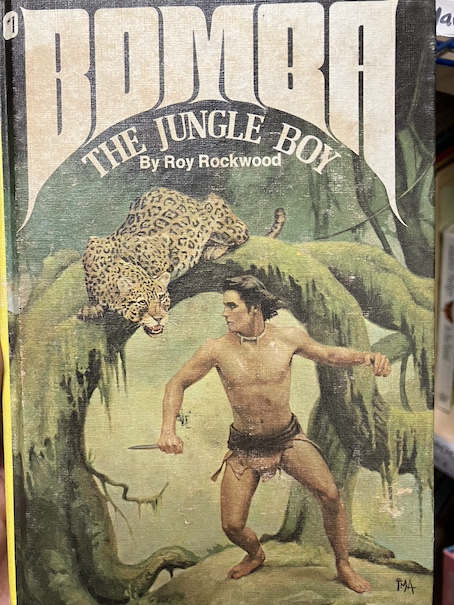
Basically, this Stratemeyer Syndicate series is a Tarzan imitation. Bomba is a white boy who grows up in a jungle in South America, eventually discovering his true identity. Later, he also goes to Africa and has adventures in the jungle there. The racism level is about what I both feared and expected when I first heard the title of the series. Wikipedia notes that a common theme throughout the series is that the white boy “has a soul that is awake,” but the souls of all the darker-skinned people in the books are still asleep. This is why I’m probably not going to cover this series further, but this was a popular series when it was published. It was later made into a series of movies in the 1940s and 1950s, and it sometimes gets a mention in other old books, movies, and tv shows as a cultural reference. 1926-1938.
The first of the Stratemeyer Syndicate series. Three brothers, Tom, Sam, and Dick Rover, have adventures and solve mysteries while attending a military boarding school. 1899-1926.
Mystery

The very first version of the first book in the popular series was published in 1924, but the version that most of us read as children was actually a revised and shortened version of this book published in the 1940s. You can read the original version on Project Gutenberg.
One of the parts that distinguishes the original from the shortened version that most of us know is that, in the original version, the children’s father dies during the first chapter of the book from alcohol-related causes. It’s the only time either of the children’s parents actually appear in the original books.
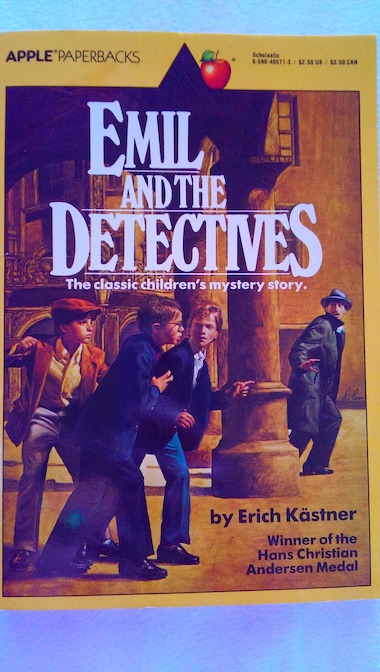
Emil and the Detectives (1929, 1930)
After he is robbed on a train, a boy sets out to find the thief who stole his grandmother’s money, recruiting a lot of other boys to help him. Originally written in German. By Erich Kastner.
The Secret Stair (1928)
The Van Dirk family has owned a precious Book of Hours with a jeweled cover for generations, but due to strange circumstances, it was not passed on to the family member who should have inherited it. When Sally Shaw goes to live in the Van Dirk mansion, she discovers the truth of what happened and confronts sinister characters. Part of The Cupples and Leon Mystery Stories for Girls Series. By Pemberton Ginther (Mary Pemberton Heyler).
The Windy Hill (1921)
A brother and sister learn about the history of their family, which helps to explain some strange things happening in the present. By Cornelia Meigs.
Series
Betty Gordon Series
Betty Gordon is an orphan who is the ward of her uncle. She attends boarding school with her friends, similar to the Ruth Fielding Series. Unlike Ruth Fielding and Nancy Drew, Betty Gordon is known for being quick-tempered. A Stratemeyer Syndicate series. 1920-1932.
The Bluebird Books
A series of girl detective stories, some of which discuss life in the United States during WWI. By L. Frank Baum, under the pseudonym Edith Van Dyne. 1916-1924.
Two pairs of fraternal twins have adventures and solve mysteries. Early books were more adventure/general fiction than mystery, but the series evolved over time. Books in this series are public domain and are available on Project Gutenberg. A Stratemeyer Syndicate series. 1904-1992.
Hardy Boys Mysteries
Two brothers, Frank and Joe Hardy, solve mysteries in their East Coast town of Bayport and around the world. By Franklin W. Dixon, A Stratemeyer Syndicate series. 1927-Present.
An orphan girl in the early 20th century grows up to become the owner of her own film company in Hollywood. Along the way, she solves mysteries with her friends at school, on vacation, and later, on filming locations, and helps the war effort during World War I. A Stratemeyer Syndicate series. 1913-1934.
Fantasy
A Gallery of Children (1925)
A collection of short fantasy stories. By A.A. Milne.
Available to read for free online through Project Gutenberg.
Loraine and the Little People of Summer (1920)
By Elizabeth Gordon.
Available to read online through the Library of Congress.
Loraine and the Little People of the Ocean (1922)
By Elizabeth Gordon.
Available to read online through the Library of Congress.
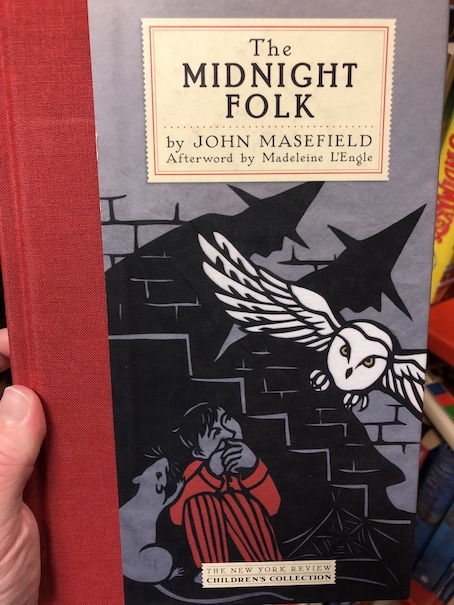
The Midnight Folk (1927)
A boy searches for his family’s fortune but discovers that a coven of witches is also looking for it. By John Masefield.
The Old Tobacco Shop (1921)
This book probably wouldn’t be considered appropriate for children in modern times because it centers around smoking. The owner of the local tobacco shop warns five-year-old Freddie to leave his magic tobacco alone. However, Freddie gives in to temptation and smokes some. He and his friends are magically transported to a ship at sea, where they are captured by pirates. Then, they meet a magical Persian rug merchant. At the end of the story, Freddie wakes up. Apparently, everything he experienced before was a dream that he had because the tobacco made him ill, and he passed out. By William Bowen.
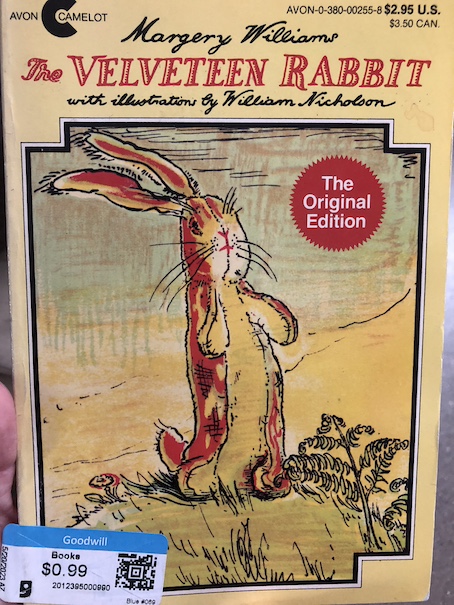
The Velveteen Rabbit (1922)
A favorite stuffed animal becomes real through the love of the boy who owns him. By Margery Williams.
The Wind Boy (1923)
Two refugee children and their mother, who is an artist, are separated from the children’s father during a war. When their mother hires a girl to help with the household chores in their new home, the girl takes the children to visit a magical land called the Clear Land. Then, the children meet a boy who looks like the boy with wings that their mother is sculpting called the Wind Boy. The Wind Boy wants to go play with the children in the Clear Land, but he can’t because he did something that has caused a problem. He made a mask just for fun, but it turned out to be too scary. He threw it away, but someone else has found it and is using it frighten children in the village. Until they can find the person responsible for this prank and destroy the awful mask, the Wind Boy won’t be allowed in the Clear Land. By Ethel Cook Eliot.
Series

Doctor Dolittle Series
Doctor Dolittle loves animals, and when his pet parrot teaches him how to talk to other animals, it leads to some amazing adventures! By Hugh Lofting. 1920-1950.
Raggedy Ann and her brother, Raggedy Andy, are rag dolls who come to life and have magical adventures. By Johnny Gruelle. 1918-1975.

Uncle Wiggily Series
The adventures of an elderly rabbit with a candy-striped cane and his animal friends. By Howard R. Garis. 1912-c. 1955.
This classic children’s series is about a stuffed bear called Winnie-the-Pooh and his other animal friends who live in the Hundred Acre Wood. By A. A. Milne. 1924-1928.
Science Fiction
Series
Tom Swift
The science fiction adventures of a boy inventor named Tom Swift. This series was released in several sub-series, some of which focused on the son of the original Tom Swift, Tom Swift, Jr. Some of the later series leave it vague whether the boy in the series is Tom Swift, Jr. or possibly the grandson of the original Tom Swift. The original Tom Swift series was written and published 1910-1941. Later series were released 1954-1971, 1981-1984, 1991-1993, 2006-2007, 2019. A Stratemeyer Syndicate series.
Historical Fiction
Cedric the Forester (1921)
Sir Dickon, a Norman nobleman living in the 12th century, has his life saved by a Saxon forester, Cedric. The two of them become friends and have adventures together. By Bernard Marshall.
The Great Quest (1921)
The story begins in Massachusetts in 1826. A man called Neal (short for Cornelius) shows up in his home town after a long absence and convinces his childhood friend, Seth, and his friend’s nephew, Josiah, to join him in a hunt for hidden treasure. However, it turns out that the treasure is a lie, and Seth’s old friend is actually involved in the slave trade. He forces Seth and Josiah to accompany his mission to Africa to kidnap people for his slave trade. Eventually, Seth and Josiah manage to mutiny against Neal. By Charles Boardman Hawes.
The Trumpeter of Krakow (1928)
Joseph Charnetski and his family try to protect the Great Tarnov Crystal from the Tartar chief who wants it for himself, taking refuge in medieval Krakow. By Eric P. Kelly.
Series
Frontier Girl Series
By Alice Turner Curtis. 1929-1937.
The Little Maid’s Historical Series
A series of historical novels focusing on different girls in American history, especially Colonial America and the Revolutionary War, although other periods are also included. By Alice Turner Curtis. 1910-1937.
The Twins Series
A series of stories that take place in different time periods and different countries around the world, each focusing on a different set of twins. By Lucy Fitch Perkins. 1911-1938.
The Yankee Girl Civil War Stories Series
By Alice Turner Curtis. 1920-1930.
Picture Books
The Gateway to Storyland (1925)
A collection of folktales, short stories, and poems. Collected by Watty Piper.
Little Folks Story of Rin-Tin-Tin (1927)
Rin-Tin-Tin the dog looks after children.
Millions of Cats (1928)
A man who is looking for the perfect cat can’t decide which one is best, so he brings home every single cat he finds. However, that is way too many cats! The cats argue amongst themselves which is the best, and they all fight and eat each other up … all but one. The one lone kitten left is homely and just wants some love … and that cat is the perfect cat for the man and his wife. By Wanda Gag.
Children’s Non-Fiction
The Knave of Hearts (1925)
A short play based on the nursery rhyme, The Queen of Hearts. By Louise Saunders. Illustrated by Maxfield Parrish.
The Laughing Prince (1921)
A collection of folktales from Yugoslavia. By Parker Fillmore.
Historical Note: Yugoslavia only existed as a country in Eastern Europe from the end of World War I in 1918 to the breakup of the Soviet Union in 1992. In the 21st century, the territories that made up Yugoslavia are separate, independent countries, including Bosnia and Herzegovina, Croatia, Serbia, and Montenegro. I remember the breakup of this country along with other changes to the map from when I learned about it in school because I was young when the Cold War ended and was learning geography while all this was happening. However, I’m part of the youngest generation to remember this. Probably, most Americans younger than me wouldn’t remember that this was once the name of a country or know where it was or what happened to it just off the top of their head. Certainly, no folklore book from the 21st century would refer to this region as “Yugoslavia.” It’s only during the 20th century when that name would be used.
Available online through Internet Archive.
Tales of Silver Lands (1924)
A collection of folktales from Central America. Newbery Medal winner. By Charles J. Finger.
Available online through Internet Archive.
This Singing World (1923, 1926)
A collection of beautiful, classic children’s poems by some of the most famous poets for children and adults from the 19th century and early 20th century. Poems collected and edited by Louis Untermeyer.
The Upward Path: A Reader For Colored Children (1920)
This is a children’s reader intended specifically for African American children to inspire them and help them appreciate themselves, containing works by African American writers. The preface says, “To the present time, there has been no collection of stories and poems by Negro writers, which colored children could read with interest and pleasure and in which they could find a mirror of the traditions and aspirations of their race.” I haven’t tried this one yet, but it sounds like a nice sentiment, originally published at a time of heightened racism in the US.
Available online through Project Gutenberg and as an audiobook through Librivox.
Children of the Decade
Children born in this decade in the United States:
Popular 1920s Names – Many of the names for children born in this decade were what we would consider “classic” names in the early 21st century, like: Robert, John, James, Mary, Helen, and Dorothy.
They were born between the two World Wars. Some of them were the children of people who served in the armed forces during that World War I. Later, some of the older ones fought during World War II themselves. The ones born in the earlier part of the decade are considered part of The Greatest Generation. Some of the younger ones were among the British child evacuees of the war (including Nina Bawden, author of Carrie’s War; Eric Hill, the creator of the Spot books; and Lynne Reid Banks, author of the Indian in the Cupboard series), and child evacuees could be sent to the British countryside to get them out of the big cities and away from bombings or to other countries, including the United States and Canada. The experiences of child evacuees would later become themes in children’s literature, especially when these children became old enough to write about their experiences themselves. All of these children were old enough really could remember Pearl Harbor (about 11 to 21 years old at the time).
Part of their childhoods and teenage years were spent during the Great Depression. Their parents would have taught them the values of learning to make do and being careful with money.
They would have been teens and adults at the beginning of the Cold War (about 16 to 26 years old) and would be in their 60s by the time that the Cold War drew to an end at the end of the 1980s and beginning of the early 1990s.
They would all would be adults in their 30s when Hawaii and Alaska were admitted as states of the United States in 1959. During the early part of their lives, there were only 48 states.
Flight had already been invented when they were born, but they would all remember a time before space flight. All of them would have been adults in their 40s at the time of the moon landing at the end of the 1960s and would remember it afterward.
Throughout their lives, they would see many changes in the world, including rapid technological changes such as:
- from records to cassette tapes to cds to music purchased electronically with no physical copies
- from their first radios to their first television sets in black-and-white to color television to vhs tapes to dvds to movies and television streamed online
- increasing computer usage and the progression from floppy disks of various sizes to cds of computer games and software to downloads and updates for computer programs managed entirely through the Internet
- from corded phones to cordless phones to cell phones to smart phones that do far more than just make phone calls
Many of these changes would have happened when they were adults. Their children and grandchildren would be even more comfortable with technology than they were, having grown up with forms that their parents wouldn’t have had during their earliest years.
Home radios were invented and popularized during the 1920s, when they were very young. Radio would be a major form of entertainment throughout their youth.
All children born in the 1920s would remember when people didn’t own television sets and much of their home entertainment would have come from radio and non-electronic forms of entertainment. Some of their families may have purchased their first home tv sets during the 1940s, but television broadcasting was new, and many families purchased their first television sets during the 1950s. Color tv would not become common until the 1960s. VCRs wouldn’t come into vogue until the 1970s. Some of them may have rented their first VCRs from video stores rather than owning them themselves. Before they had VCRs of their own, they just watched their favorite shows when they were on tv, at the time they aired, and if they missed them, they simply missed them. This was a simple fact of life that would change significantly later, eventually becoming almost unknown by their grandchildren.
They did not have home computers or video games when they were young, and their children might not have had them during their youth either, but their grandchildren would.
The World Wide Web would not be available on home computers until the 1990s, when they were in their 60s and 70s. Computer usage in general would have increased in popularity as they progressed through their working lives, but most of them wouldn’t have needed one in their careers. For the most of their lives, when they needed something typed, it was done on a typewriter. If they needed two copies of something, they would either have to type using a sheet of carbon paper between a blank sheet and the page they were currently typing in order to make a second copy or just type the entire page twice over. Mistakes were either corrected with correcting fluid or the entire page simply had to be retyped until it was completely correct. This would be something that their grandchildren would have little or no experience doing.
All of them were already adults around the turn of the new millennium, all of them older than 70 years old. Most of them had children and grandchildren of their own at the time.
As adults, everyone born in this decade would be old enough to understand the events of September 11, 2001 at the time it happened and remember them forever after.
They were born during a time when schools in the United States were segregated, and they would have finished their education by the time things were changing. Racial makeup of churches and other religious institutions would vary by religion and region. Years later, they would have strong memories of times when there were separate bathrooms or drinking fountains for different races in the United States or when people of different races weren’t allowed into certain restaurants or other public places. They would have been in their 30’s and 40’s at the time of the Civil Rights Movement, and some of them were among those who took part in it.
Children born in this decade would also have read books from the following decade, the 1930s, in their youth. However, children who were old enough to read some of the books published in the early part of this decade when they were first sold would have been born in the preceding decade, the 1910s.
Children’s Authors Were Children, Too!
Everyone was young once, and I’d just like to take this opportunity to remind readers that authors born around this time would have grown up like other children of their time, witnessing the same events and reading the same books as they grew up.
Children’s authors born in this decade:
Sid Fleischman – March 16, 1920 – Author of The Whipping Boy (1986)
Ruth Chew – April 8, 1920 – Author of fantasy books for children, such as The Trouble with Magic (1976) and Do-It-Yourself Magic (1987), and The Secret Summer (1970)
Rosemary Sutcliff – December 14, 1920 – Author known for children’s historical fiction books.
Bernard Waber – September 27, 1921 – Author of the Lyle Crocodile series (1962-2010) and Ira Sleeps Over (1972)
Eve Titus – July 16, 1922 – Author of the Basil of Bakerstreet books (1958-1964) and the Anatole books (1956-1979)
Charles M. Schulz – November 26, 1922 – Creator of the Peanuts characters (comic strip ran 1950-2000)
Barbara Brooks Wallace – December 3, 1922 – Author of the Miss Switch books (1971-2002), Peppermints in the Parlor (1983), and The Twin in the Tavern (1993)
Jane Langton – December 30, 1022 – Author of The Diamond in the Window (1962) and the other books in the Hall Family Chronicles
Mary Francis Shura – February 23, 1923 – Author of Our Teacher is Missing (1992)
Ruth Stiles Gannett – August 12, 1923 – Author of Three Tales of My Father’s Dragon (1948-1951)
Stan and Jan Berenstain – September 29, 1923 and July 26, 1923, respectively – Co-creators of The Berenstain Bears (starting in 1962)
Lloyd Alexander – January 30, 1924 – Author of The Chronicles of Prydain (1964-1968)
Donald Sobol – October 4, 1924 – Author of the Encyclopedia Brown mystery series (1963-2012)
Nina Bawden – January 19, 1925 – Author of Carrie’s War (1973)
Robert Cormier – January 17, 1925 – Author of I Am the Cheese (1977) and The Chocolate War (1974)
Russell Hoban – February 4, 1925 and Lillian Hoban – May 18, 1925 – Co-creators of the Frances pictures books (1960-1970) and Harvey’s Hideout (1969)
Robert Kraus – June 21, 1925 – Author of Leo the Late Bloomer (1971)
Mary Calhoun – August 3, 1926 – Author of the Katie John series (1960-1980)
Joan Lowery Nixon – February 3, 1927 – Author of mystery, historical, and general fiction, including The Kidnapping of Christina Lattimore (1979), the Orphan Train Adventures, and the lesser-known The Valentine Mystery, Casey and the Great Idea (1980), and Kleep: Space Detective.
Zilpha Keatley Snyder – May 11, 1927 – Author of The Headless Cupid (1971) and other Stanley Family mysteries and The Egypt Game (1967)
Peggy Parish – July 14, 1927 – Author of the Amelia Bedelia books (1963-1988) and Liza, Bill, and Jed mystery series (1966-1986)
Eric Hill – September 7, 1927 – Author and illustrator of the Spot books (1980-2013)
Norman Bridwell – February 15, 1928 – Author of the Clifford series (1963-2015)
Ellen Raskin – March 13, 1928 – Author of The Westing Game (1978) and other mystery books
Betsy Byars – August 7, 1928 – Author of many books for children, including the Bingo Brown series (1988-1992) and the Herculeah Jones mystery series (1994-2006)
Louise Fitzhugh – October 5, 1928 – Author of Harriet the Spy (1964)
Marjorie Weinman Sharmat – November 12, 1928 – Author of the Nate the Great series (1972-2019), the Olivia Sharp series (1989-1991), and other books, including Gila Monsters Meet You at the Airport (1980)
Eve Bunting – December 19, 1928 – Author of many children’s books on a variety of topics, including Coffin on a Case! (1992) and picture books like Scary, Scary Halloween (1986)
Norton Juster – June 2, 1929 – Author of The Phantom Tollbooth (1961)
Eric Carle – June 25, 1929 – Author of Brown Bear, Brown Bear, What Do You See? (1967) and The Very Hungry Caterpillar (1969)
Lynne Reid Banks – July 31, 1929 – Author of the Indian in the Cupboard series (1980-1998)
Ursula K. LeGuin – October 21, 1929 – Author of the Earthsea fantasy books (1968-2001)
Other Resources
Books
Only Yesterday by Frederick Lewis Allen, 1931.
A look back on the events of the previous decade and popular culture during the 1920s, written by someone who had just witnessed it.
Our Hearts Were Young and Gay by Cornelia Otis Skinner and Emily Kimbrough, 1942.
The humorous reminiscences of a pair of best friends about their first trip to Europe as young women in the 1920s. A fun look at the attitudes of young women and their sense of independence yet relative innocence when compared with more modern young people. There is a humorous scene in which the girls have a kind of revelation about “the facts of life” (which their parents never really explained to them) while looking at art in a museum. Although they never say anything explicit, it’s worthy of a chuckle from more knowing people. There’s also a scene in which Cornelia’s mother (her parents are never far behind the girls in their travels, which both explains a lot about how older adults viewed youthful independence and frequently proves helpful because the girls have little idea about what they’re doing and often need help) tries to explain to them the truth about a pair of homosexual young men, while at the same time not actually explaining anything at all, yet giving the girls the impression that they’ve learned something important, although they really aren’t sure what. It gives a good idea of what young women of the time knew and didn’t know and how the knowing but not knowing frequently happened at the same time. Actually, that experience is pretty timeless. This hilarious book was later made into a movie, although it’s difficult to find the movie these days.
Children’s Literature : A Textbook of Sources for Teachers and Teacher-Training Classes by Charles Madison Curry, 1921.
This is a resource book meant specifically for teachers as a collection of short pieces of children’s literature, background information about them, and tips for how to use them. The book includes nursery rhymes, poems, fairy tales, and myths and folktales from around the world. The contents of the book give a good indication of what teachers and their students in the 1920s would have found familiar staples of childhood literature. It’s available to read for free online through Internet Archive.
Documentary Films
Some of these are full-length documentaries, others are clips, and some are educational lectures.
CrashCourse
CrashCourse is a YouTube channel with fun educational videos on a variety of topics and different periods of history. The videos are fairly short for educational lectures. Most are less than 15 minutes long. These videos are intended for teenagers and older, so be aware that there may be topics and language inappropriate for younger children.
- Post-World War I Recovery: Crash Course European History #36
- The Roaring 20’s: Crash Course US History #32
All That Jazz: How Fashion Broke Free During the 1920s
About changes in fashion and society during the 1920s. Short video from the BBC.
THE ULTIMATE FASHION HISTORY: The 1920s
An educational lecture about fashion in the 1920s. About 40 minutes long.
About popular color palettes used in fashion, home decor, advertising, and even children’s books in the 1920s.
CULTURAL CONNECTIONS to FASHION: The Jazz Age
An educational lecture about how cultural events and fads shaped fashion in the 1920s, from the discovery of King Tut’s tomb to the silent movies. Parts refer to racy themes and fashions and may not be appropriate for kids. About 2 hours long.
Getting Dressed in the 1920s – Eveningwear
Shows a woman dressing in a 1920s evening gown and explains a little about flapper culture in the 1920s. From CrowsEyeProductions.
How Prohibition Led to the Revival of the Ku Klux Klan
Prohibition met with racial tensions in the 1920s and was sometimes used as an excuse by the KKK for targeting black people. An excerpt from a Smithsonian documentary.
For more about 1920s culture:
Timeline of events, fashions, and trends.
Major events, entertainment, fashion, and fads.
 Jestress's Forgotten Books and Stories