A Little History
The Great Depression
The 1930s was the decade of the Great Depression. Following the stock market crash on October 29, 1929, many people were out of work. Up until the crash of the stock market, many American businesses and individuals had made careless financial decisions without considering the wider impact that they would have in the long term. Many ordinary people had invested money in the stock market, and when they didn’t have money to invest, they borrowed money to invest. Basically, they had hoped to make a profit on their investment and repay their loans with money to spare, but that’s not the way the situation worked out, and having large numbers of people engaging in this behavior was a catastrophe. When the stock market crashed, these borrowing investors found themselves in severe debt, having lost everything that they had invested. However, the stock market crash didn’t cause the Great Depression by itself. Worse still, many people soon found themselves unemployed. Decreases in consumer spending and weaknesses in the banking industry caused companies to lay off their workers and banks to fail. These elements turned into a self-perpetuating cycle because unemployed people have no money to spend, leading to further decreased consumer spending and even more lay-offs. People panicked and tried to withdraw their money from banks, forcing banks to liquidate their assets and causing more bank failures. (There were other forces at work during the Great Depression, and the issue of what caused it is pretty complex, but that’s the short explanation and gives you an idea of what was happening around that time. To put it in one sentence, problems were caused by bad business and banking practices, and the way people reacted to these problems made the whole situation much worse.)
The Great Depression was a world-wide event because world economies are interconnected, and when one nation suffers severely, it affects others. In particular, Germany was still suffering from the effects of World War I and the crippling war reparations they owed to other countries. Up until the Great Depression, they had been using loans from the United States and other countries to pay the reparations, but with the failures of the US banking industry, those loans came to an end, leaving Germany in a worse position. These severe economic problems were among the reasons (although not the only ones) for the rise of fascism in Europe around this time, including the Nazi Party in Germany. This was part of the way unresolved conflicts from World War I combined with economic suffering in the years afterward to form the basis for the beginning of World War II. (Again, this is a short explanation. There were also other, more complex issues involved in the causes of World War II. This isn’t even touching on the Pacific Theater of the war yet.) Hitler rose to power, promising the German people that he could deliver everything they wanted – good jobs, a stable economy, a return to greatness, and revenge on the countries that had humiliated Germany in the past war. On September 1, 1939, Germany invaded Poland with the goals of regaining territory and resources for rebuilding Germany and a continuation of the concept of acquiring “living space” or “Lebensraum” for Germans. This event marks the beginning of World War II.
The Great Depression ended in the United States when the country joined the war effort in World War II because the US began producing munitions and other goods to be shipped overseas for the war effort, stimulating the economy.
Culture and Entertainment
Most people didn’t have a lot of money to spend, but they still looked for ways to entertain themselves. Prohibition ended in 1933, and people were able to buy and sell alcoholic drinks again. Radio was a common form of entertainment, and people listened to radio plays, quiz shows, music, and the latest news and sports for free in their own homes. Swing music was popular, and young people especially liked to go to dance halls.
People also liked to go to the movies, which were no longer silent ones. The 1930s were part of the Golden Age of Hollywood. Comedies were popular and helped to cheer people up during the hard times. There were also a lot of musicals and gangster films. Child stars, notably Shirley Temple, became popular. Most of these movies were still black-and-white, but color film was used for a few major films by the end of the decade, particularly The Wizard of Oz and Gone With the Wind. Walt Disney created his first full-length animated movie in 1937, Snow White and the Seven Dwarfs.
Some of the candy bars that are still popular today were originally created in the 1930s, including Three Musketeers (which originally were sold in packs that included three pieces of candy with fillings in three different flavors: chocolate, vanilla, and strawberry, but because of sugar rationing during World War II, the company started selling them with only chocolate filling, which is why they only come in one flavor today and I spent part of my childhood wondering what the “three” was supposed to stand for) and Snickers.
Children and Children’s Literature
Because many people were struggling for money, they weren’t able to buy their children many toys, and most of them were very simple. Electronic toys were very limited, although there were electric train sets. Some children’s toys, such as dolls, were made out of celluloid, a precursor to more modern forms of plastic. Most toys were made out of metal, wood, or cloth. Some board games that are still popular today, such as Scrabble, Sorry!, and Monopoly came from the 1930s and would become more popular in later decades.
In children’s literature, series books were popular, and the Stratemeyer Syndicate (which already produced many series) began publishing the Nancy Drew series. It was very successful, and in many ways, became the standard for the “girl detective” mystery genre. Books in the series were produced for decades after, although the original Nancy Drew series took some of its inspiration from the Ruth Fielding Series and did not have as many books as the Judy Bolton series, which also emerged in the 1930s, written by a single author, not a syndicate. Judy Bolton was not quite as popular as Nancy Drew, which is why some modern readers haven’t heard of it, and the series was not continued by other authors (which would happen later with some popular series that refused to die when the original author did, like The Boxcar Children). Part of the reason why the Judy Bolton series didn’t continue was because its heroine grew up during the course of the series, eventually becoming a married woman, who could no longer be a “girl” detective, something she had in common with Ruth Fielding. However, Judy Bolton still has a following in modern times, and some people believe that Judy Bolton is really more realistic than Nancy Drew and a better role model for girls. Some books in the Judy Bolton series are rare collectors’ items now.
The characters of Dick and Jane appeared for the first time in the Elson-Gray Readers in 1930, which were designed to give children early lessons in reading. Later, Dick and Jane starred in their own series of readers which were commonly used in American schools and schools in other English-speaking countries through the mid-20th century. The stories were simple, with little plot, designed to teach young children how to recognize very basic, common words on sight (as opposed to sounding out longer words using phonics). Dick and Jane were a brother and sister who had a young sister called Sally and a dog named Spot. (Although Spot was originally a cat in the first stories.) They were at their most popular during the 1950s, with the final books published in 1965, although they continued to sell through the early 1970s. By the 1980s, they had been replaced by other readers in American schools. However, because they were so popular for decades, they have become icons of children’s literature. Even people who were born later and never used their readers in school (like me) have heard of them, some of them hearing about them from parents or grandparents who read them when they were young. The very simple, formulaic language (ex. “See Spot. See Spot run. Run, Spot, Run!”) in the stories also lends itself well to parody. (I couldn’t bring myself to link to some of it here because some of it gets graphic, but if you Google it, there’s plenty to see.) Even though Dick and Jane became the popular readers for the mid-20th century, the much-older McGuffey Readers, which focused on phonics, continued to be sold and used until about 1960, and even after that, into the 21st century, some private schools and homeschooling families still use them.
The Caldecott Medal award was established in 1938 to reward excellence in American children’s picture books.
Children’s Fiction Books
General Fiction
The Family from One End Street (1937)
A collection of stories about a working class family in a small town in England. By Eve Garnett.
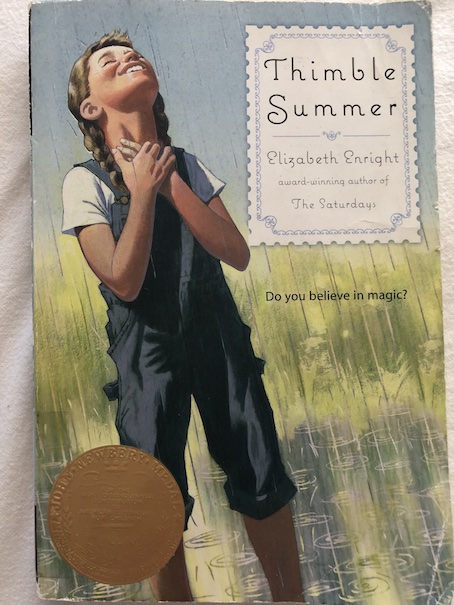
Thimble Summer (1938)
A ten-year-old girl named Garnet, who lives on a farm in Wisconsin, finds a thimble by the river and becomes convinced that it’s magical and brings her good luck. By Elizabeth Enright.
Those Plummer Children (1934)
The summer adventures of the five Plummer children and their friend. The first in a trilogy. By Christine Noble Govan.
The story takes place in Tennessee, and there are interactions between black people and white people. In a description of the book I’ve read, it seems that black people are treated somewhat stereotypically, and there may be inappropriate racial language. Since I haven’t read the book myself, I can’t be more specific right now. If you decide to try it, just be prepared. I may or may not try it. It seems that at least some people still have fond memories of it, although even people who are fond of the story may have mixed feelings about it now. I mostly point out books like this just to show the range of literature available during each decade and the mindsets of what children were reading. Apparently, the author was using her own childhood memories as inspiration.
Winter Cottage (1939, 1968)
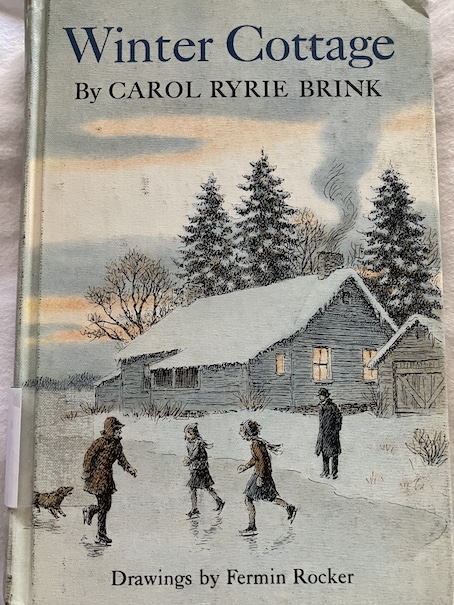
A family, down on their luck during the Great Depression takes refuge for the winter in someone’s empty summer cottage, and it changes their lives for the better. By Carol Ryrie Brink.
Series
When an aging, unmarried brother and sister decide that they could use some extra help on their farm, they decide to take in an orphan boy who can help with the farm chores. However, by mistake, the orphanage sends them a red-haired young girl instead, changing their lives and others in the community with her liveliness and imagination. 1908-1939.
The everyday adventures of a group of neighborhood children. By Carolyn Haywood. 1939-1986.
Madge Bettany, in need of money and with a younger sister to help raise, decides to leave England and go to Austria to start a new boarding school for girls. The series covers the adventures of the girls who attend the boarding school. By Elinor M. Brent-Dyer. 1925-1970.
Mary Jane Series
The adventures of a girl named Mary Jane as she grows up, goes to school, and travels to other countries. By Clara Ingram Judson. 1918-1939.
Maida Books
Maida’s father is a very wealthy man, but Maida is a poor little rich girl who suffers from ill health. To fulfill Maida’s wishes for a simpler life and give her something to care about, her father buys her a little cottage and a small shop to tend, giving her opportunities at a simpler, more ordinary, life and the chance to make some regular friends, both of which help her health. By Inez Haynes Irwin. 1909-1955.
Milly-Molly-Mandy Series
Collections of short stories about a little girl and her friends and their slice-of-life adventures. By Joyce Lankester Brisley. 1928-1967.
Shoes Series
A very loose series about children who find their life’s ambitions and begin making their way in the world. Some characters recur but are not in every book. The best-known book in the series is the first one, Ballet Shoes, which has been made into a movie. By Noel Streatfeild. 1936-1962.
Adventure
The Good Master (1935)
The adventures of cousins living in rural Hungary. By Kate Seredy.

Jane, Stewardess of the Air Lines (1934)
Jane has just completed her training as a nurse when the director of the training school suggests that she and her friend Sue take jobs as airline stewardesses, which is a new and evolving profession at this time. The job turns out to be one adventure after another after Jane and Sue deal with a passenger who has appendicitis on their way to the job interview itself. From there, the adventures just keep coming! By Ruthe S. Wheeler.
Some reviews of this book call it mildly sexist and point out how people who are thin and attractive are always favored in the book (something that also appears in the early Nancy Drew books, written around this time – all or most of the good characters are described as “slim” or “slender” or something similar), while others point out how Jane’s adventures get increasingly zany as the story continues, including Jane getting her pilot’s license and doing stunt flying, dealing with air pirates, and eventually coming into a fortune by 1930s standards. I haven’t read the book yet, but it looks like a fascinating but romanticized vision of what a new profession for women could be like. The book is public domain and available to read online through Project Gutenberg.
Series
Bomba the Jungle Boy
Basically, this Stratemeyer Syndicate series is a Tarzan imitation. Bomba is a white boy who grows up in a jungle in South America, eventually discovering his true identity. Later, he also goes to Africa and has adventures in the jungle there. The racism level is about what I both feared and expected when I first heard the title of the series. Wikipedia notes that a common theme throughout the series is that the white boy “has a soul that is awake,” but the souls of all the darker-skinned people in the books are still asleep. This is why I’m probably not going to cover this series further, but this was a popular series when it was published. It was later made into a series of movies in the 1940s and 1950s, and it sometimes gets a mention in other old books, movies, and tv shows as a cultural reference. 1926-1938.
The Scout Patrol Boys
An explorer and archaeologist leads a scout troop on amazing adventures. By Jack Wright. 1933.
British series about children and their adventures on school holidays, mostly centering around boats as the children play at being explorers and pirates. By Arthur Ransome. 1930-1947.
Humor
The Flying Classroom (1933)
The adventures of a group of boys at boarding school. There are some touching themes about how the boys come to terms with bad things that have happened in their pasts, like the boy who was abandoned by his father at a young age. Originally written in German. By Erich Kastner.
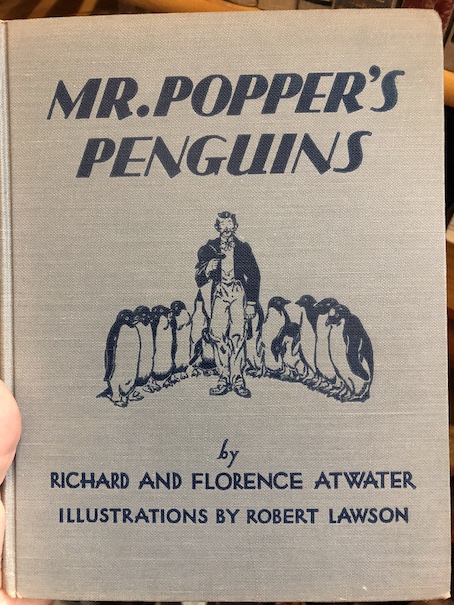
Mr. Popper’s Penguins (1938)
Mr. Popper writes a letter to an arctic explorer who sends him a penguin as a pet. Soon, Mr. Popper owns an entire family of penguins.
Series
The Just William series is a vintage children’s book series from Britain. William Brown is an imaginative boy who frequently gets into trouble, often because he’s acting out things that he’s read in books and seen in movies. By Richmal Crompton. 1922-1970.
Professor Branestawm is an an absent-minded inventor who gets into trouble with his inventions. By Norman Hunter. 1933-1983.
Mystery
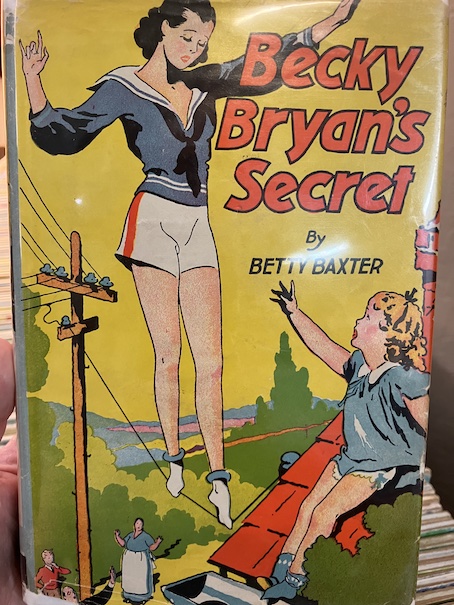
Becky Bryan’s Secret (1937)
Becky Bryan, the new girl at the local high school, is oddly mysterious about her past, but her rescue of a small child brings some secrets to light. By Betty Baxter.
The Door in the Mountain (1932)
The four McClean kids live near an old mining town in Arizona. The adventure begins when a couple of English kids come to town, and they all find a hidden mine. Part of The Cupples and Leon Mystery Stories for Girls Series. By Izola L. Forrester.
The Dormitory Mystery (1937)
Martha takes up residence in a university dormitory, where the dean seems to be searching for something. A granite toad and a pair of pitchers with mysterious inscriptions lead Martha and her friends to a hidden fortune. Part of The Cupples and Leon Mystery Stories for Girls Series. By Alice Anson (Betty Baxter Anderson).
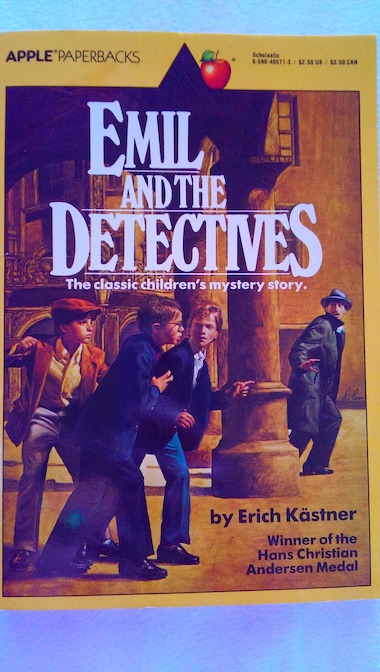
Emil and the Detectives (1929, 1930)
After he is robbed on a train, a boy sets out to find the thief who stole his grandmother’s money, recruiting a lot of other boys to help him. Originally written in German. By Erich Kastner.
The Jade Necklace (1932)
Roselyn Blake inherits a valuable jade necklace from her father, who was an explorer and scientist. After her father’s death, she moves in with some family friends, and they get a new house in the country. Then, Roselyn has a visit from a nobleman from China, and mysterious things happen that seem to center around the jade necklace. Part of The Cupples and Leon Mystery Stories for Girls Series. By Pemberton Ginther (Mary Pemberton Heyler).
Mystery of the Spanish Cave (1936, 1958)
The cave has a fearsome reputation, known for skulls that wash up on the rocks and entire ships and crews that have vanished there. However, young Dick Garland plans to find out what has happened to those vanished ships. By Geoffrey Household, illustrated by Charles Beck.
Secret of the Dark House (1934)
Jean investigates robberies and some strange characters in her neighborhood. Part of The Cupples and Leon Mystery Stories for Girls Series. By Frances Y. Young.
The Thirteenth Spoon (1932)
Alan Hoyt is a collector, and when Carol takes a job as his secretary, he shows her some of the rarest pieces of his collection. Then, strange things start happening, these rare items are stolen, and Carol figures out how to get them back. Part of The Cupples and Leon Mystery Stories for Girls Series. By Pemberton Ginther (Mary Pemberton Heyler).
The Twin Ring Mystery (1935)
Gail and Bob’s friend, Joan, visits them at the beach and becomes fascinated by an old locket that is the prize for a swimming contest. Inside the locket, Joan finds a ring that is one of a pair and learns the secret of a pair of separated lovers. Part of The Cupples and Leon Mystery Stories for Girls Series. By Mildred A. Wirt.
The Unseen Enemy (1938)
Friends Polly and Margot work on a volunteer project over the summer, but some unknown person is sabotaging the project. As Polly and Margot try to figure out who is committing the sabotage and why, they uncover the solution to a much older mystery in their town. By Betty Baxter.
Series
Barbara Ann Series
Barbara Ann Wilson is a girl detective in high school, later moving on to college. By Ruth Grosby. 1939-1942.
Betty Gordon Series
Betty Gordon is an orphan who is the ward of her uncle. She attends boarding school with her friends, similar to the Ruth Fielding Series. Unlike Ruth Fielding and Nancy Drew, Betty Gordon is known for being quick-tempered. A Stratemeyer Syndicate series. 1920-1932.
Two pairs of fraternal twins have adventures and solve mysteries. Early books were more adventure/general fiction than mystery, but the series evolved over time. Books in this series are public domain and are available on Project Gutenberg. A Stratemeyer Syndicate series. 1904-1992.
Dana Girls Mysteries
The Dana girls are a pair of orphaned sisters who live with an aunt and uncle. They attend school, but are often given time off school to investigate mysteries. A Stratemeyer Syndicate series. 1934-1979.
Hardy Boys Mysteries
Two brothers, Frank and Joe Hardy, solve mysteries in their East Coast town of Bayport and around the world. By Franklin W. Dixon, A Stratemeyer Syndicate series. 1927-Present.
Judy Bolton Mystery Series
Judy Bolton is a girl detective who grows up and chooses between romantic rivals during the course of her series. The Judy Bolton books are known as “the longest-lasting juvenile mystery series written by an individual author.” By Margaret Sutton (Rachel Beebe). 1932-1967.
Kay Tracey is a teenage detective who solves mysteries with her friends. A Stratemeyer Syndicate series. 1934-1942, Reissued 1951-1984.
Nancy Drew Mysteries
Nancy Drew encounters and solves mysteries with her friends in her hometown of River Heights and around the world. By Carolyn Keene, A Stratemeyer Syndicate series. 1930-Present.
Penny Parker Mysteries
Penny Parker is a reporter for her father’s newspaper. By Mildred A. Wirt. 1939-1947.
An orphan girl in the early 20th century grows up to become the owner of her own film company in Hollywood. Along the way, she solves mysteries with her friends at school, on vacation, and later, on filming locations, and helps the war effort during World War I. A Stratemeyer Syndicate series. 1913-1934.
Fantasy
The Box of Delights (1935)
The sequel to The Midnight Folk. A Christmas story. Kay Harker struggles to protect a magical box which can grant its owner special powers and the ability to travel through time. By John Masefield.
A Traveller in Time (1939)
A young English girl from the 1930s travels back in time to befriend people who are trying to rescue Mary Queen of Scots. By Alison Uttley.
Tryst (1939)
A 17-year-old girl falls in love with the ghost of a man when her family rents his former home. By Elswyth Thane.
This one is a young-adult tear-jerker, but some people have nostalgic memories about it. Some reviewers have pointed out how poignant the story is when you consider that it was published on the eve of WWII, when the deaths of many young people separated them from the people they loved.
The Twilight of Magic (1930)
A pair of twins, brother and sister, in a Medieval setting where magic exists, seek help from an apple seller who is rumored to be a witch to help their parents with their debts. The apple seller gives them a magical object that sends the children on adventures. By Hugh Lofting.
Series

A magical nanny comes to take care of children and take them on amazing adventures. 1934-1988.
Raggedy Ann and her brother, Raggedy Andy, are rag dolls who come to life and have magical adventures. By Johnny Gruelle. 1918-1975.
Uncle Wiggily Series
The adventures of an elderly rabbit with a candy-striped cane and his animal friends. By Howard R. Garis. 1912-c. 1955.
Books in the Wonder-Story Books series are collections of fairy tales and folktales that were also used as reading primers. 1938, 1953, 1962, 1976.
Science Fiction
Series
Tom Swift
The science fiction adventures of a boy inventor named Tom Swift. This series was released in several sub-series, some of which focused on the son of the original Tom Swift, Tom Swift, Jr. Some of the later series leave it vague whether the boy in the series is Tom Swift, Jr. or possibly the grandson of the original Tom Swift. The original Tom Swift series was written and published 1910-1941. Later series were released 1954-1971, 1981-1984, 1991-1993, 2006-2007, 2019. A Stratemeyer Syndicate series.
Historical Fiction
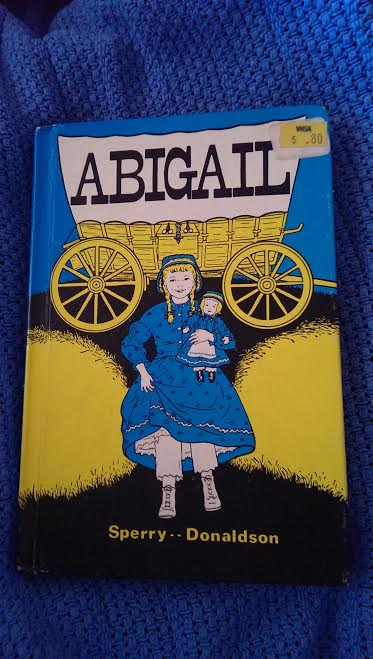
Abigail (1938)
Susan is a little girl during the 1800s, and she and her family make the journey from Kentucky to Indiana in a covered wagon. She shares her adventures with her beloved doll, Abigail. By Portia Howe Sperry and Lois Donaldson.
Caddie Woodlawn (1935)
The adventures of a young girl in frontier Wisconsin in the 1860s.
Calico Bush (1931)

In 18th century Maine, an orphaned girl becomes an indentured servant for the Sargeant family, struggling to make a new life and home for herself. By Rachel Field.
Pinafores and Pantalets (1931)
A pair of young sisters, Sarah and Evelina, start school in New York toward the end of the American Civil War and come to understand what the war was really about. By Florence Choate and Elizabeth Curtis.
Roller Skates (1936)
A girl from a wealthy family gets an unexpected taste of freedom when her parents travel to Europe and leave her in the care of a pair of teachers who allow her to freely explore late 19th century New York City on her roller skates. For the first time in her life, she is able to meet people she otherwise wouldn’t meet, make unexpected friends, and have adventures. (Reviews I’ve read of this book mention inappropriate racial language and an alarming murder scene that the girl discovers.) By Ruth Sawyer.
The Treasure In The Little Trunk (1932)
Two sisters in the 1820s travel with their family from Vermont to New York, where they will live on a new farm. By Helen Fuller Orton.
The White Stag (1937)
Strange historical fiction novel about Attila the Hun that blends history and mythology.
The Yearling (1939)
A boy in rural 1870s Florida adopts an orphaned fawn but is later forced to shoot it.
Series
Frontier Girl Series
By Alice Turner Curtis. 1929-1937.

Little House on the Prairie Series
A young girl homesteads with her family on the American frontier during the 1800s. By Laura Ingalls Wilder. 1932-1953.
The Little Maid’s Historical Series
A series of historical novels focusing on different girls in American history, especially Colonial America and the Revolutionary War, although other periods are also included. By Alice Turner Curtis. 1910-1937.
The Twins Series
A series of stories that take place in different time periods and different countries around the world, each focusing on a different set of twins. By Lucy Fitch Perkins. 1911-1938.
The Yankee Girl Civil War Stories Series
By Alice Turner Curtis. 1920-1930.
Picture Books
Andy and the Lion (1938)
A retelling of Androcles and the Lion. By James Daugherty.
Angus and Topsy (1935)
About a girl named Judy and her dogs. By Marjorie Flack.
Animals of the Bible, A Picture Book (1937)
A collection of quoted Biblical passages accompanied by realistic, detailed black-and-white drawings. Illustrated by Dorothy P. Lathrop. Text selected by Helen Dean Fish.

Barkis (1938)
James gets a puppy for his birthday and doesn’t want to share his new pet with his sister. After all, his sister hasn’t shared her pet cat. However, when the dog gets out of the house and falls in the stream, James’s sister helps to rescue him, changing James’s mind about sharing. By Clare Turlay Newberry.
Ella the Elephant (1931)
A baby elephant, separated from her mother, struggles to find her.

The Five Chinese Brothers (1938)
Brothers with super-human powers save one of their brothers, who is sentenced to be executed. Based on an old folktale. By Claire Huchet Bishop and Kurt Wiese.
The Forest Pool (1938)
Two boys in Mexico, Diego and Popo, search for an iguana, trying to capture it for their “zoo.” Diego’s parrot, Polly, keeps repeating phrases about a hidden treasure, and the boys think that the wise iguana will help them to figure out what Polly’s phrases mean and where the treasure is, but will it? By Laura Adams Armer.
Four and Twenty Blackbirds (1937)
Full title: Four and Twenty Blackbirds: Nursery Rhymes of Yesterday Recalled for Children of Today. A collection of songs and nursery rhymes, most of which are not the ones that are most well-known for modern children. Illustrated by Robert Lawson. Text compiled by Helen Dean Fish.
The Hen That Kept House (1933)
A hen tries to keep house while the peasant family she lives with is away, but it turns out to be more difficult than she and the other animals thought. By Emma L. Brock

The Little Engine That Could (1930)
A small train makes it over a mountain because she thinks she can and is willing to try.
Mei Li (1938)
A little girl in China enjoys the excitement of the Chinese Lunar New Year and comes to realize that the “kingdom” that she will someday rule, as predicted when she has her fortune told, is her own home. By Thomas Handforth.
Mike Mulligan and His Steam Shovel (1939)
Mike Mulligan and his steam shovel, called Mary Anne, do great work, but when new machines make Mary Anne look old and obsolete, can the two of them prove Mary Anne’s value and save her from the scrap heap? By Virginia Lee Burton.
The Road in Storyland (1932)
A collection of folktales. By Watty Piper.
Seven Simeons: A Russian Tale (1937)
A folktale about seven brothers with unique talents who must use their special abilities to find a wife for the king. Retold and illustrated by Boris Artzybasheff.
Snow White and the Seven Dwarfs (1938)
A retelling of the classic Brothers Grimm fairy tale. By Wanda Gag.

The Story About Ping (1933)
A small duck finds himself alone on the Yangtze River in China, facing danger as he searches for his family.

The Story of Ferdinand (1936)
Ferdinand is a peaceful bull, who only wants to enjoy the flowers in his field. By Munro Leaf. Drawings by Robert Lawson.
This book was actually the subject of controversy when it was first published because of its pacifistic themes. It was banned by both Franco and Hitler, and even some Americans suspected it of being “Red Propaganda” or “Fascist Propaganda”, presumably because they feared the pacifism in the story would encourage people not to fight communists or fascists. However, other people loved the book, and 30,000 copies were sent to Germany after World War II as a peace gesture.
The Tale of Corally Crothers (1932)
A little girl is lonely because she has no sisters or brothers. She goes in search of a friend and finds … you, the reader! The story is told in rhyme. By Romney Gay.
I’ve seen people asking about this book on other sites. I haven’t found a copy of it myself, but you can see some pictures of this book on this site. There are also two sequels that were published in the 1940s, Come Play with Corally Crothers and Corally Crothers’ Birthday.
When the Wind Blew (1937)
A woman takes care of cats, and they comfort her when she needs it. By Margaret Wise Brown.
I haven’t found a copy of it myself, but you can see pictures of this book on this site.
Series
The adventures of a little girl who lives in a boarding school in Paris. 1939-2013.
Children’s Non-Fiction
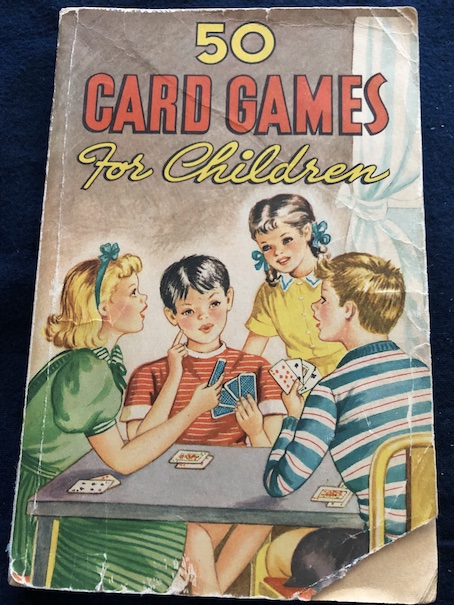
50 Card Games for Children (1933, 1946)
How to play different kinds of card games and solitaire and how to do magic tricks with cards. By Vernon Quinn.
Abraham Lincoln (1939)
A biography of President Lincoln, noted for being written by US immigrants and published on the eve of WWII. By Ingri & Edgar Parin d’Aulaire.
The Ageless Story (1939)
This book uses hymns to tell the story of the life of Jesus. By Lauren Ford.

The Gift of the River (1937)
A history of Ancient Egypt. The river is the Nile. However, I don’t recommend this book. I have a copy, and not only is the history out of date by modern standards, the author has some questionable racial attitudes. I was surprised by some of the attitudes that come out during the course of the book. Also, there are stories in the book that are more literary stories but are presented as if they are historical. It’s possible that scholars believed that the stories were factual at the time the book was written and only later concluded that they were actually literary stories. By Enid LaMonte Meadowcroft.
Invincible Louisa (1933)
A biography of Louisa May Alcott. By Cornelia Meigs.
Series
Famous Biographies for Young People
This mid-20th century non-fiction series offers books containing short biographies of famous people. c. 1939-1977.
Children of the Decade
Children born in this decade in the United States:
Popular 1930s Names – Many of the names for children born in this decade were what we would consider “classic” names in the early 21st century, like: Robert, John, James, Mary, Betty, and Barbara.
They were born before World War II (although not before the rise of Nazis in Germany and the beginnings of German invasions of other countries, so that may depend on perspective), and they were young when the war took place. Although I’m mainly focusing on children in the United States in this section, it’s worth pointing out that children’s experiences of the war depended on where they lived, and some were more affected than others. Some of them were the children of people who would serve in the armed forces during that war (including children’s author Susan Cooper, who wrote The Dark is Rising Sequence). They were among the youngest people who really could remember Pearl Harbor. Most of the child evacuees were also born in this decade (including children’s author Diana Wynne Jones, who wrote Howl’s Moving Castle and Quentin Blake, who wrote and illustrated the Mrs. Armitage books and also illustrated most of Roald Dahl’s books), although some of the older ones were born in the 1920s (including Eric Hill, the creator of the Spot books and Nina Bawden, author of Carrie’s War).
Because they were born during the Great Depression, many of them had more austere early childhoods than those born in later decades. Their parents would have taught them the values of learning to make do and being careful with money out of necessity, establishing traits that would last for the rest of their lives. Many would be very concerned with not wasting anything, like food or used clothing.
Those born during the first half of the decade would have strong memories of World War II, although some of the ones born at the end of the decade might not remember as much about it later. The older ones would remember the creation and use of atomic weapons at the end of the war, and fear of their future use would be a major influence in their later lives and attitudes.
They would have been children and teens at the beginning of the Cold War (about 6 to 15 years old) and would be adults by the time that the Cold War drew to an end at the end of the 1980s and beginning of the early 1990s. All of those born during the 1930s would be about 50 to 59 years old at the time that the Berlin Wall fell in late 1989. Because they grew up during Cold War, they would have been raised with strong anti-communist feelings.
They would all remember a time before space flight. All of them would have been adults at the time of the moon landing at the end of the 1960s and would remember it afterward.
They would all would be adults when Hawaii and Alaska were admitted as states of the United States in 1959. The youngest ones would have been about 20 years old at the time. During the early part of their lives, there were only 48 states.
Throughout their lives, they would see many changes in the world and be exposed to a variety of new technologies, seeing rapid technological changes through the decades such as:
- from records to cassette tapes to cds to music purchased electronically with no physical copies
- from their first television sets in black-and-white to color television to vhs tapes to dvds to movies and television streamed online
- increasing computer usage and the progression from computer punch cards to floppy disks of various sizes to cds of computer games and software to downloads and updates for computer programs managed entirely through the Internet
- from corded phones to cordless phones to cell phones to smart phones that do far more than just make phone calls
Many of these changes would have happened when they were adults. Their children and grandchildren would be even more comfortable with technology than they were, having grown up with forms that their parents wouldn’t have had during their earliest years.
They did not have home computers or video games when they were young, and their children might not have had them during their youth either, but many of their grandchildren would, and their great-grandchildren would consider home computers normal and necessary.
The World Wide Web would not be available on home computers until the 1990s, when they were in their 50s and 60s. Computer usage in general would have increased in popularity as they progressed through their working lives. For the first part of their lives, when they needed something typed, it was done on a typewriter. If they needed two copies of something, they would either have to type using a sheet of carbon paper between a blank sheet and the page they were currently typing in order to make a second copy (that’s a carbon copy, the origin of the “cc” you see in the address section of your email) or just type the entire page twice over. Mistakes were either corrected with correcting fluid, or the entire page simply had to be retyped until it was completely correct. This would be something that their grandchildren and great-grandchildren would have little or no experience doing.
All children born in the 1930s would remember times when people didn’t own television sets and much of their home entertainment would have come from radio and non-electronic forms of entertainment. Some of their families may have purchased their first home tv sets during the 1940s, but television broadcasting was very new then, and many families purchased their first television sets during the 1950s. Color tv would not become common until the 1960s. VCRs wouldn’t come into vogue until the 1970s. Some of them may have rented their first VCRs from video stores rather than owning them themselves. Before they had VCRs of their own, they just watched their favorite shows when they were on tv, at the time they aired, and if they missed them, they simply missed them because they had no way to record them. This was a simple fact of life that would change significantly later, eventually becoming almost unknown by their grandchildren.
All of them were already adults around the turn of the new millennium, all of them older than 60 years old. Most of them had children and grandchildren of their own at the time.
As adults, everyone born in this decade would be old enough to understand the events of September 11, 2001 at the time it happened and remember them forever after.
They were born during a time when schools in the United States were segregated, and many of them were finishing their education around the time things were changing. They would be among the last to attend schools before desegregation became official. Racial makeup of churches and other religious institutions would vary by religion and region. Years later, they would have strong memories of times when there were separate bathrooms or drinking fountains for different races in the United States or when people of different races weren’t allowed into certain restaurants or other public places. Degrees of segregation or discrimination would vary by geographical location, and individuals would have different feelings about it. They would have been in their 20’s and 30’s at the time of the Civil Rights Movement, and some of them were among those who took part in it.
Children’s Authors Were Children, Too!
Everyone was young once, and I’d just like to take this opportunity to remind readers that authors born around this time would have grown up like other children of their time, witnessing the same events and reading the same books as they grew up.
Children’s authors born in this decade:
E.L. Konigsburg – February 10, 1930 – Author of Jennifer, Hecate, Macbeth, William McKinley, and Me, Elizabeth (1967) and From the Mixed-Up Files of Mrs. Basil E. Frankweiler (1967)
Shel Silverstein – September 25, 1930 – Author of children’s books, including The Giving Tree (1964), and collections of poetry for children, including Where the Sidewalk Ends (1974) and A Light in the Attic (1981)
Mary Rodgers – January 11, 1931 – Author of Freaky Friday (1972)
Judith Viorst – February 2, 1931 – Author of Alexander and the Terrible, Horrible, No Good, Very Bad Day (1972)
Katherine Paterson – October 31, 1932 – Author of The Sign of the Chrysanthemum (1973), The Master Puppeteer (1975) Bridge to Terabithia (1977), The Great Gilly Hopkins (1978), and Jacob Have I Loved (1980)
Quentin Blake – December 16, 1932 – Author and illustrator of the Mrs. Armitage books and illustrator of most of Roald Dahl’s books.
Phyllis Reynolds Naylor – January 4, 1933 – Author of Shiloh (1991) and the Alice series (1985-2013)
Penelope Lively – March 17, 1933 – Author of The Ghost of Thomas Kempe (1973)
Richard Peck – April 10, 1934 – Author of the Blossom Culp series (1975-1986) and other books, including A Long Way from Chicago (1998) and A Year Down Yonder (2000)
Lois Duncan – April 28, 1934 – Author of many books, including Ransom (aka Five Were Missing) (1966), Hotel for Dogs (1971), Down a Dark Hall (1974), and I Know What You Did Last Summer (1973)
Diana Wynne Jones – August 16, 1934 – Author of the Chrestomanci series (1977-2006) and Howl’s Moving Castle (1986)
Tomie dePaola – September 15, 1934 – Author and illustrator particularly known for the Strega Nona series (1975-2013) and for picture books about religious stories and folk legends, such as Legend of the Bluebonnet (1983) and The Clown of God (1978)
Patricia Reilly Giff – April 26, 1935 – Author of the Kids of the Polk Street School series (1984-1997)
Susan Cooper – May 23, 1935 – Author of The Dark is Rising Sequence (1965-1977)
Virginia Hamilton – March 12, 1936 – Author of The House of Dies Drear (1968) and The People Could Fly (1985)
Lois Lowry – March 20, 1937 – Author of many well-known children’s books, including The One Hundredth Thing About Caroline (1983), Number the Stars (1990), The Giver (1994), and the Anastasia Krupnik books (1979-1995)
Jill Paton Walsh – April 29, 1937 – Author of The Green Book (1982)
Allen Say – August 28, 1937 – Author of Grandfather’s Journey (1993)
Avi – December 23, 1937 – Author of many books for children, including No More Magic (1975), Who Stole the Wizard of Oz? (1981), The True Confessions of Charlotte Doyle (1990), Midnight Magic (1999), and The Secret School (2001)
John Bellairs – January 17, 1938 – Author of the Johnny Dixon horror series (1983-1999) and the Lewis Barnavelt books (1973-2008), including The House with a Clock in Its Walls (1973)
Judy Blume – February 12, 1938 – Author of the Fudge series (1972-2002) and many books for teen and tween girls, including Are You There God? It’s Me, Margaret. (1970)
Patricia MacLachlan – March 3, 1938 – Author of the Sarah, Plain and Tall books (1985-2009) and other books, including Tomorrow’s Wizard (1982)
Jane Yolen – February 11, 1939 – Author of many books, including The Devil’s Arithmetic (1988) and Wizard’s Hall (1991)
Gary Paulsen – May 17, 1939 – Author of Hatchet (1986)
Penelope Farmer – June 14, 1939 – Author of Charlotte Sometimes (1969)
Brian Jacques – June 15, 1939 – Author of the Redwall series (1986-2011)
Emily Arnold McCully – July 1, 1939 – Author and illustrator of Mirette on the High Wire (1992)
Other Resources
Documentary Films:
Some of these are full-length documentaries, others are clips, and some are just collections of vintage footage and reminiscences from people who lived during the time period.
CrashCourse
CrashCourse is a YouTube channel with fun educational videos on a variety of topics and different periods of history. The videos are fairly short for educational lectures. Most are less than 15 minutes long. These videos are intended for teenagers and older, so be aware that there may be topics and language inappropriate for younger children.
- The Great Depression: Crash Course US History #33
- Economic Depression and Dictators: Crash Course European History #37
The Thirties in Colour (episode 1)
The Thirties in Colour (episode 2)
A two-part BBC documentary about the advent of color films and amateur/home movies in the 1930s, first adopted by wealthy families who could afford the new cameras and took them on travels around the world.
A short YouTube video about women’s clothing in the 1930s.
THE ULTIMATE FASHION HISTORY: The 1930s
An educational lecture on YouTube about women’s clothing in the context of the events of the 1930s. About 40 minutes long. There is also a related video about the color palettes of clothing, household decor, and marketing materials in the 1930s, which relates to children’s books because illustrations in children’s books of the period also used the popular color palettes of the time with muted pastels, sea foam greens, and shades of orange. People used color to cheer themselves up in the face of bleak circumstances in the wider world, but they tended toward muted shades because they had a comforting effect.
How Sunbathing Became a National Craze in the 1930s
A short piece about the start of sunbathing and surfing beach culture in the United States with colorized footage. From the Smithsonian.
An explanation of the rise of fascism in Germany by travel writer Rick Steves. This documentary shows locations associated with historical events. About 26 minutes long.
Hitler’s Terrifying Rise To Power
A Timeline documentary.
Color footage of Berlin during the 1936 Olympics held there, where Jesse Owens won his famous victory and was reputedly snubbed by Hitler. The narrator, speaking in German (English subtitles provided), describes the opening of the Olympics and the major attractions of the city for visitors. Signs of Nazism are present throughout this tourist piece, and some of the buildings were damaged or destroyed later, during the coming war.
For more about 1930s culture:
Events, statistics, entertainment, fashion, and fads.
Major events, timeline, stats, fashion, and trends.
 Jestress's Forgotten Books and Stories