A Little History
From War to Cold War
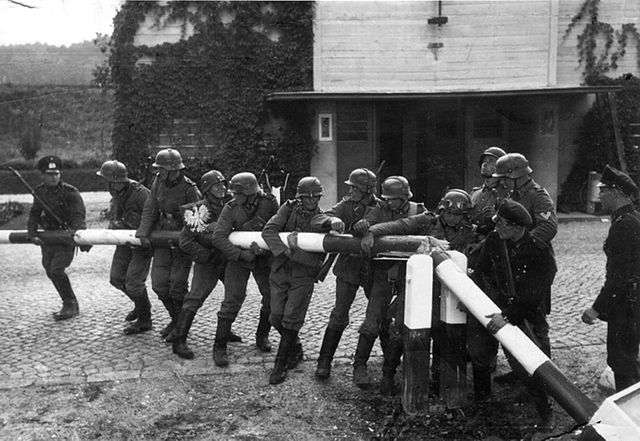
This was the decade of World War II (the first half of the decade), and the beginning of the Cold War Era (the second half of the decade). Some historians, including my college professors, say that World War II could be called World War I, Part 2 because part of the reason it started was that the post-war treaties and reparations from World War I left Germany’s economy crippled and the people desperate. Then, the onset of the Great Depression drove desperate people in various countries, including to put their faith in dictators who promised to save them and restore their countries to greatness. (That’s the short and simple way of explaining what happened. There’s a lot more detail behind that.) Old grudges and conflicts that had never been completely resolved during the last resurfaced. The rise of dictators and the expansionist policies of the Axis powers led to a war that was eventually fought in battles all over the world as each side called in its allies once again. Many people died during the war, and many were put to death in Nazi concentration camps during the Holocaust.
Veterans of WWII Who Became Children’s Authors
Some children’s authors or people who became children’s authors were veterans of WWII. Among them:
- Roald Dahl – author of many books for children including James and the Giant Peach, Charlie and the Chocolate Factory, and Matilda – He served in the British Royal Air Force (RAF), and his first book for children, The Gremlins, was published in 1943. It was based on the pilot lore that mechanical malfunctions with planes were caused by gremlins.
- Lloyd Alexander – known for fantasy books for children and young adults, including the Chronicles of Prydain – Joined the US Army but didn’t seem suited for many of the early positions he had. He turned out to be clumsy with artillery and fainted at the sight of blood. Eventually, he joined the United States Army Combat Intelligence and Counter-Intelligence Corps, specializing in translating French to English.
- Richard Scarry – Author and illustrator of many picture books and creator of the Busytown characters like Lowly Worm – Drafted by the US Army in 1942. He had a medical dispensation “from strenuous physical activity” but served in various positions, including the military’s radio repair school and as “Editor and Writer of Publications for the Information and Morale Services Section of the Allied Force Headquarters.”
- Sid Fleischman – Author of The Whipping Boy – Joined the US Navy Reserves in 1941 and served on the USS Albert T. Harris in the Pacific.
- Bernard Waber – Author of the Lyle Crocodile series (1962-2010) and Ira Sleeps Over (1972) – US Army staff sergeant 1942 to 1945.
- Donald Sobol – Author of the Encyclopedia Brown mystery series – US Army Corps of Engineers in the Pacific Theatre.
- Russell Hoban – Co-created picture books with his wife, Lillian Hoban, including the Frances pictures books (1960-1970) and Harvey’s Hideout (1969) – US Army radio operator in the Philippines and Italy. Earned a bronze star for his service.
- Stan and Jan Berenstain – Co-creators of The Berenstain Bears (starting in 1962) – Stan was a medical illustrator for the US Army and Jan was a draft artist for the Army Corps of Engineers. Jan also spent part of the war working in an aircraft factory, where she fashioned the wedding rings she and Stan used from spare aluminum. They married after the war in 1946.
From Wikimedia Commons
The Home Front
From Wikimedia Commons
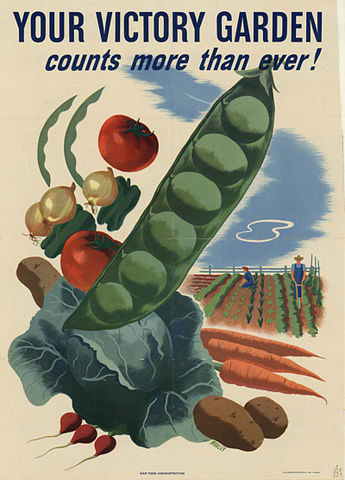
During World War II, the war influenced every aspect of daily life. Even in places that never saw battle, there were air raid drills in case the war spread further, and families had to adjust their eating and buying habits to accommodate the rationing of products during the war. People planted Victory Gardens that helped supplement their family’s food rations. They learned to “make do and mend” and get the most possible use out of what they had. It helped that people felt that their deprivations had a purpose and that being careful about what they bought and used helped to support the war effort. Even civilians were part of the “Home Front” of the war. Patriotism ran high everywhere!
From Wikimedia Commons
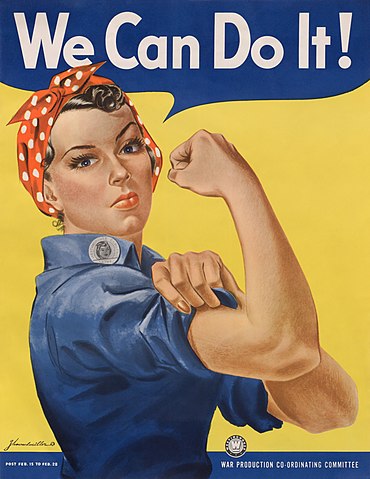
War production helped to put an end to the Great Depression and provided new jobs, and women did many jobs that were usually done by men, like agricultural work and factory jobs, because so many of the men were away at war. In the US, fear of Japanese spies caused many citizens of Japanese descent to be put in internment camps, where they were kept as prisoners until the end of the war.
End of the War and Aftermath
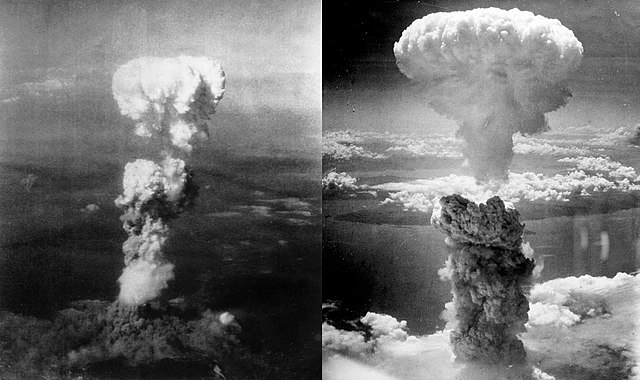
By the end of the war, the United States had developed nuclear weapons and used them against Japan. This time, post-war settlements and power struggles ended up dividing the world into large sections controlled by competing political ideologies: communist countries, particularly Russia (the Soviet Union) and those loyal to Russia or under Russian control, vs. capitalist countries, particularly the United States and western Europe and countries influenced by those regions. This was the basis for the Cold War.
From Wikimedia Commons
While much of World War II was about acquiring land and resources, the two sides of the Cold War began competing against each other for economic and technological superiority, using the threat of nuclear weapons to keep each other in check in a dangerously precarious balance of power. Countries outside of those two main political rivals were called “Third World” nations because they were not part of either of the two most influential groups or their power struggle. (Capitalist countries were considered the “First World”, and communist countries were the “Second World.”) “Third World” nations were less affluent and not part of the technological race, leading to the modern conception of the term referring to “developing” countries.
Not only did the onset of the Cold War change life and attitudes, there were changes in many social attitudes because of the experiences and outcomes of World War II. Women who had taken on jobs previously done by men during the war had a taste of the wider possibilities of life beyond motherhood and homemaking, and some of them wanted more. Also, racial minorities who had bravely served their country during the war wanted recognition for their contributions and the equal rights that were their due as citizens of the society they had fought to protect. While some people were anxious to return to normality (or their concept of normality) after the war, much like people were at the end of World War I, it soon became apparent just how many people were dissatisfied with certain parts of the status quo because they were blocked from receiving a fair share of society’s new prosperity. This conflict between those who wanted to cling to a comforting conformity to traditional ways of life and habitual social attitudes and those who wanted to change society for the better in this new, post-war world would form the basis for the coming Civil Rights Movement.
Culture and Entertainment
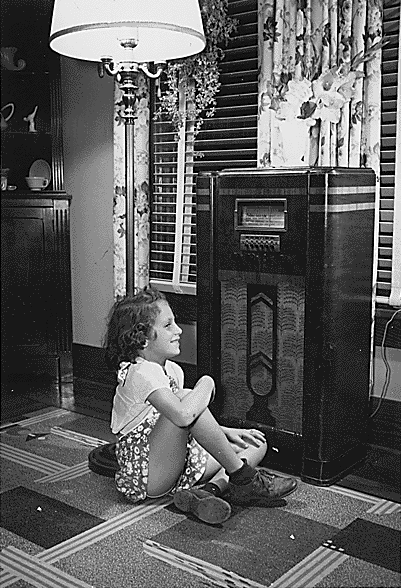
From Wikipedia (Considered public domain in the US because it was produced by a government employee)
Culturally, this was the era of big band music, and swing was still popular. Radio was also still popular, and radio shows came in great variety. Many of them included references to the war or messages urging people to buy war bonds and support the war effort. Radio shows were transmitted overseas for the entertainment of the troops as well.
People could go to movie theaters to see not only the latest films (still mostly in black-and-white, although color film was gradually taking hold), but also news reels and cartoons. Film noir, crime movies with dark themes and images, became popular. Movies also often featured patriotic and war themes with announcements for people to buy war bonds.
Television broadcasting in the United States began in the early 1940s, although most families didn’t purchase televisions right away. It took some time for the medium to catch on, and families also needed time to afford their first television sets. At first, all television programs were black-and-white, but color television became popular in later decades.
One of America’s favorite candies, M&Ms, was a product of the 1940s.
Childhood and Children’s Literature in the 1940s
Children’s lives were heavily influenced by World War II, although the way they were influenced varied by location. Children who grew up in war zones had traumatic memories of the war, and there were children who were killed during the war and the Holocaust, including Anne Frank, whose diary was published after her death. Children were sometimes forced to flee dangerous areas with their families, and some were sent away to live with strangers when their parents were unable to flee with them.
In Britain and other countries, children were evacuated from areas that either were being bombed or were in potentially danger of being bombed (large cities and government centers, like London, and areas near factories or major transport/shipping centers) and sent to safer places in the countryside. Some were even sent to other countries, such as the United States or Canada. Very young children were sometimes evacuated with a parent, usually the mother, and some children’s parents could arrange for them to stay with relatives or friends, while other children were sent away alone to live with strangers. Sometimes, siblings were evacuated together, and sometimes, they were split up and sent to different households because the available households could only take one or two children. Stories about these child evacuees later became part of children’s literature.
Children’s Authors Who Were Child Evacuees During WWII
I’d also like to remind readers that children’s authors were once children, too. Among the British child evacuees during this period were future authors and illustrators, some of whom later wrote books based on their wartime experiences:
- Eric Hill – creator of the Spot books, later known for popularizing “lift-the-flap” style picture books – evacuated from London to the countryside before the age of 14.
- Diana Wynne Jones – author of children’s fantasy novels, including Howl’s Moving Castle and the Chrestomanci Series – evacuated from London in 1939 at age 5 and moved several times during the war.
- Lynne Reid Banks – author of the Indian in the Cupboard series – evacuated from England to Canada with her mother and a cousin.
- Quentin Blake – author and illustrator of the Mrs. Armitage books and also illustrator of most of Roald Dahl’s books – evacuated from Kent to the West Country.
- Jill Paton Walsh – Author of The Green Book (1982) – When she was 3 years old, she and her mother and siblings left London and went to live with her grandparents in Cornwall.
- Nina Bawden – author of Carrie’s War (which is about WWII child evacuees) – evacuated to Wales at age 14.
- Sheila Garrigue – author of All the Children Were Sent Away (about a child evacuee to Canada, based on her own childhood experiences) – evacuated from England to Canada at age 7
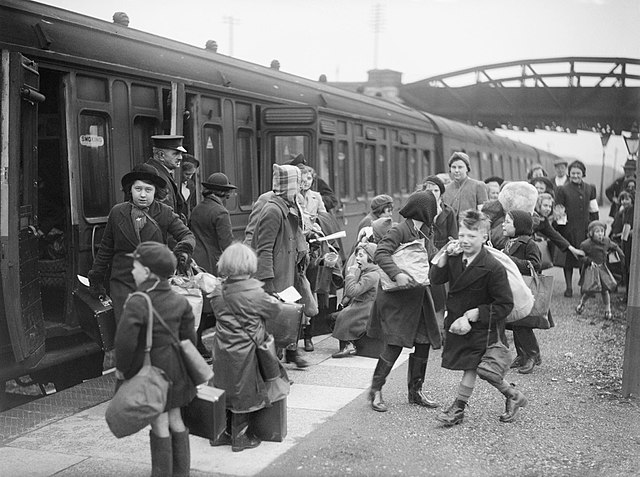
From Wikimedia Commons
Some children who were not evacuated also became writers. For example, Susan Cooper, known for The Dark is Rising Sequence, lived in Buckinghamshire as a child during the war and remembered living near an anti-aircraft post that fired on German planes and spending nights in her family’s air raid shelter. She later said that being a child during the war inspired the theme of the struggle between Dark and Light in her books. Besides The Dark is Rising Sequence, she also wrote an episode for a British children’s tv show called Shadows in the 1970s that featured themes of war and a battle against “The Dark.” In the episode, Dark Encounter, a man returns to the place where he was evacuated as a child during the war and goes back in time, encountering his past self and helping his past self fight a battle against “The Dark.”
Children on the Home Front
Even children who stayed living with their parents in safer areas, in various countries, were expected to do their part for the war effort. Children’s schools and scouting groups had supply drives and collections of materials needed for the war. Like their parents, they had to abide by the rationing of food and other items, making do with what they had available and learning to make things last.
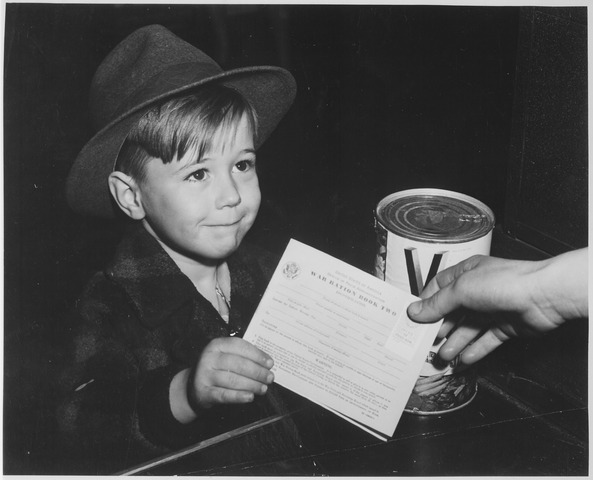
From Wikimedia Commons
During the war years, rationing would have made candy and other items more rare treats than they would be after the war ended. Some toys which are considered classic children’s toys were created in the 1940s, such as Mr. Potato Head (which did not include a plastic potato until 1964, early sets just featured parts that were meant to be stuck in to real potatoes, my mother and her siblings sometimes used foam balls for the same purpose because they could be reused and to avoid using actual food), Silly Putty, and Slinky. After the war, toy companies began increasingly using plastic because it was useful for mass-producing toys. Fisher Price became the first toy company to produce all of its toy lines in plastic
Children’s Books from WWII and the 1940s
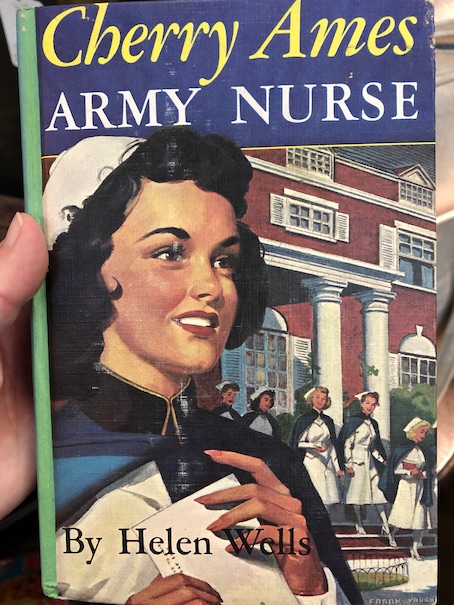
Patriotic and war themes entered children’s literature during WWII. Some characters in children’s books, like the nurse Cherry Ames, were shown taking part in the war, and there were historical fiction books that explored patriotic themes and past wars to put modern events in perspective and remind even the children of the heritage of their countries and what their parents were fighting to protect. Books that featured WWII itself were being published during the war, and books that dealt with the aftermath of the war started to be published very soon after. During the war, there were also books that had nothing to do with the war or patriotism and were meant to be fun or comforting. (I decided to make special notes on my list of 1940s books below, pointing out which ones mentioned the war or showed the war directly, for those who are interested.)

The first Little Golden Books were published during the early 1940s. Little Golden Books are short picture books for young children with a distinctive gold foil spine, but the most notable feature, especially with the earliest books, was the price. Little Golden Books were much more affordable than other children’s books of their time, costing only 25 cents each compared to the more typical price of $2 or $3 each. Families who had previously had trouble affording to buy books for their children soon had a variety of fun, good quality picture books to choose from, a vast improvement from the deprivation many people suffered during the Great Depression in the previous decade. Also, the books were purposely sold in grocery stores, five-and-dime stores (the precursor to 21st century dollar stores), and train stations instead of being sold only in bookstores, like other books. The idea was to make the books accessible to parents and children by putting them in places where families were likely to shop, especially for common and inexpensive products, and where adults would be likely to want to purchase something small and cheap to entertain the children. Little Golden Books would continue to be popular with following generations of children through the rest of the 20th century and into the 21st century. (I have a list of Little Golden Books on this site, but I list them individually in each of my decade lists because Little Golden Books don’t really represent one single series so much as a collection of smaller series and individual books.)
After World War II, there was a sudden rise in new births, which people began calling the “Baby Boom.” Because of this sudden increase in births, children, children’s services, and products for children and young people became particularly important for the following decades.
Children’s Fiction Books
General Fiction
Blue Willow (1940)
Janey is the daughter of an itinerant farm worker who longs for the stability and home that her family has lacked since their ranch failed. By Doris Gates.
The Hundred Dresses (1944)
Kids in a small town bully a poor immigrant girl, who only ever wears one dress to school, for saying that she has one hundred dresses at home in her closet. Later, in an art contest at school, the kids learn that she was talking about drawings of dresses that she had made. The girl wins the contest and the kids want to apologize, but the girl and her family have already been driven away from town by the bullying. By Eleanor Estes.
Dig for a Treasure (1949)
A family with children in need of a house camps out in a little house that some local kids use as a playhouse. The kids become friends with each other and hunt for a lost treasure. Sequel to The Invisible Island. By Dean Marshall.
The Invisible Island (1948)
When the Guthrie family moves to the countryside from New York City, the children in the family become fascinated by an island in the middle of a nearby lake. They like to pretend like they’re shipwrecked there, with their mother sending them “rations.” There, they find adventure and mystery and the magic of a happy summer. By Dean Marshall.
Judy’s Journey (1947)
Ten-year-old Judy belongs to a family of migrant farm workers. The family lives in a tent as they travel around, looking for work, but Judy longs for them to be able to buy their own farm so she can live in a real house. By Lois Lenski.
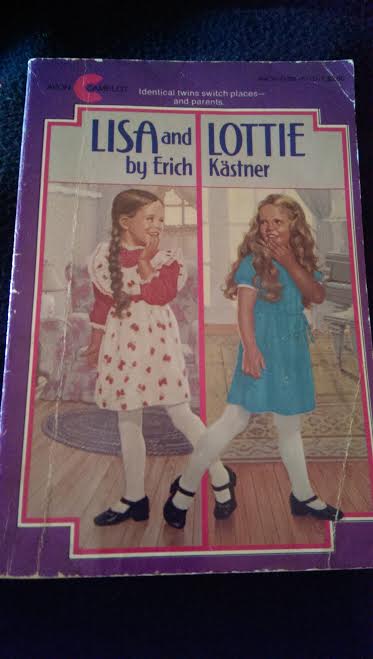
Lisa and Lottie (1949)
A set of twins who were separated by their divorced parents and haven’t seen each other since they were babies meet again at a summer camp. This was the basis for the Disney movie The Parent Trap. Originally written in German. By Erich Kastner.
Nancy of Apple Tree Hill (1942)
A family moves back to their old family farm, Apple Tree Hill, in Tennessee, and learn how to homestead there. By May Justus.
New Worlds for Josie (1944)
An American girl and her sister have adventures at a Swiss boarding school in 1936. By Kathryn Worth.
Peachblossom (1943)
A six-year-old orphan girl in China is forced to flee with her foster family when war breaks out. She finds refuge in a girls’ school, where she is unexpectedly reunited with her aunt. (The author of this book grew up in China because her father taught English at a university in Shanghai.) By Eleanor Frances Lattimore.
The Silver Pencil (1944)
Janet, a girl from Trinidad, goes to school in England and later trains to be a teacher in New York. Along the way, she treasures a silver pencil that was a gift from her father, and it inspires her to become a writer. Aspects of the story were inspired by the author’s own life. By Alice Dalgliesh.
Strawberry Girl (1945)
Ten-year-old Birdie Boyer has recently moved to the backwoods in Florida with her family to grow strawberries. She hopes to win a 4-H prize for her strawberries, but a feud with the neighbors may ruin everything. By Lois Lenski.
A Tree Grows in Brooklyn (1943)
A girl from a poor family with an alcoholic father grows up in Brooklyn, New York during the early 1900s and World War I. The story is semi-autobiographical. By Betty Smith.
Series
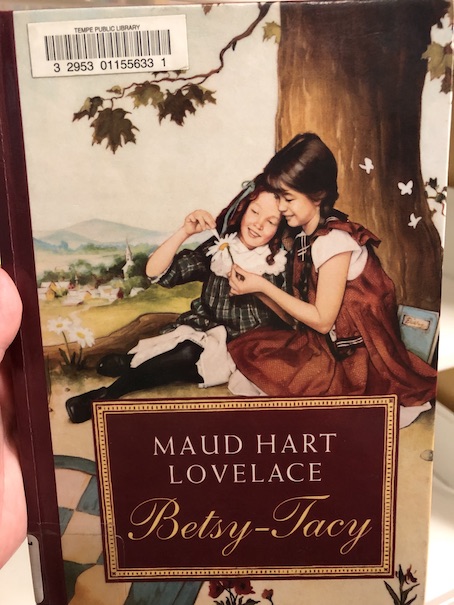
The everyday adventures of a group of neighborhood children. By Carolyn Haywood. 1939-1986.
A series about a pair of best friends growing up in Minnesota around the turn of the last century. By Maud Hart Lovelace. 1940-1955.
Blue Door Series
A group of children form a theater group and eventually become professional actors. The first book is The Swish of the Curtain. By Pamela Brown. 1941-1956.
Madge Bettany, in need of money and with a younger sister to help raise, decides to leave England and go to Austria to start a new boarding school for girls. The series covers the adventures of the girls who attend the boarding school. By Elinor M. Brent-Dyer. 1925-1970.
This series mentions WWII, and the war has a direct impact on the stories that were written while the war was happening. The school relocates during the war for safety reasons.
When shy Ginnie moves to town, she makes friends with the more outgoing Geneva, and the two girls have adventures together. By Catherine Woolley. 1948-1973.
Maida Books
Maida’s father is a very wealthy man, but Maida is a poor little rich girl who suffers from ill health. To fulfill Maida’s wishes for a simpler life and give her something to care about, her father buys her a little cottage and a small shop to tend, giving her opportunities at a simpler, more ordinary, life and the chance to make some regular friends, both of which help her health. By Inez Haynes Irwin. 1909-1955.
Malory Towers Series
Twelve-year-old Darrell Rivers attends boarding school for the first time, making friends and enemies and having adventures with her fellow students. By Enid Blyton. 1946-1951.
The adventures of the four children of the Melendy family in 1940s New York. The children all have different ambitions in life. The final book in the series is Spiderweb for Two, which has a slightly different theme from the other books and features only two of the children and a treasure hunt. By Elizabeth Enright. 1941-1951.
Milly-Molly-Mandy Series
Collections of short stories about a little girl and her friends and their slice-of-life adventures. By Joyce Lankester Brisley. 1928-1967.
The Naughtiest Girl Series
Elizabeth Allen is the spoiled only child of a wealthy family, and her behavior is so bad that she has driven away six governesses who have tried and failed to teach her some manners and decent behavior. Finally, when Elizabeth is eleven years old, her parents decide to send her to boarding school. Elizabeth, who is accustomed to getting her way in everything, is determined to make the school send her home again by being on her absolute worst behavior, The Naughtiest Girl in the School. Being badly-behaved has gotten Elizabeth her way before. However, this time, Elizabeth has failed to reckon with the other students. This school has an efficient student government that manages student problems, and Elizabeth is stunned when she finds out what her peers think of the way she acts. She also gradually realizes that she really wants the friendship of the other students and that she’s been lonely as an only child. But, getting the friendship she needs means learning to care about other people’s feelings and how she treats them. By Enid Blyton, later continued by Anne Digby. 1940-1952, 1999-2001.
Shoes Series
A very loose series about children who find their life’s ambitions and begin making their way in the world. Some characters recur but are not in every book. The best-known book in the series is the first one, Ballet Shoes, which has been made into a movie. By Noel Streatfeild. 1936-1962.
Humor
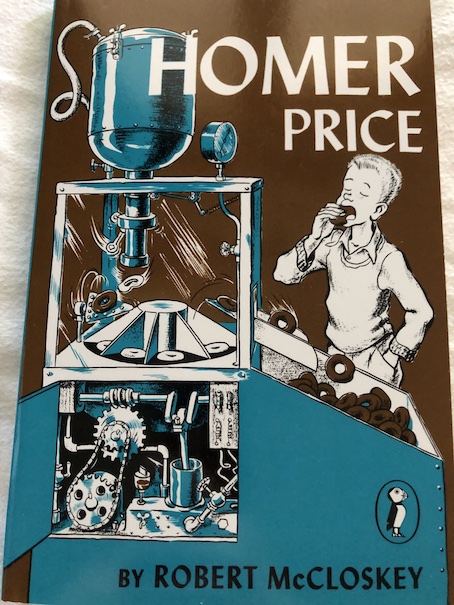
Homer Price (1942)
The adventures of a boy named Homer Price. This is a collection of six short stories about the humorous things that happen to Homer, including the donut machine that gets out of control. By Robert McCloskey.
Trolley Car Family (1947)
When Mr. Parker loses his job as a trolley driver, he moves his large family into a trolley car that they turn into a home. By Eleanor Clymer.
Series
The Just William series is a vintage children’s book series from Britain. William Brown is an imaginative boy who frequently gets into trouble, often because he’s acting out things that he’s read in books and seen in movies. By Richmal Crompton. 1922-1970.
Books in this series that were published during the war feature the characters taking part in activities to help the war effort and meeting evacuee children sent to their town.
Pippi is a girl with red pigtails that stick out from her head and amazing strength who lives alone in a small town in Sweden. Her father is king of an island of cannibals. 1945-1971.
Adventure
Call It Courage (1940)
A Polynesian boy struggles to overcome his fear of the ocean after his mother’s death at sea. By Armstrong Sperry.
The Outsiders of Uskoken Castle (1941)
A group of homeless children take refuge in a supposedly haunted castle in the Yugoslavian countryside (modern Croatia), living like bandits. By Kurt Held (Kurt Kläber).
This book is set contemporary to when it was written, during WWII. Its author was a Jewish Communist who fled Germany during the war.
So Dear to My Heart (1947)
A rewritten/expanded version of Midnight and Jeremiah (1943), based on the Disney adaption of the original book. A young farm boy in 1903 Indiana raises a black lamb rejected by his mother and turns him into a champion at the county fair through love and care. The expanded version also has themes about bitterness, hatred, and prejudice (not racial, more personal) that are resolved during the course of the story. By Sterling North.
The Twenty-One Balloons (1948)
Professor Sherman crosses the Pacific Ocean in a balloon and lands in Krakatoa. By William Pene du Bois.
Series
Enid Blyton’s Adventure Series
Four British schoolchildren become close friends, having adventures and solving mysteries together while on vacation from the boarding schools they attend. 1944-1955.
Four children and their dog have adventures while the children are on their school holidays. By Enid Blyton. 1942-1962.
British series about children and their adventures on school holidays, mostly centering around boats as the children play at being explorers and pirates. By Arthur Ransome. 1930-1947.
Mystery
Ann Sheridan and the Sign of the Sphinx (1943)
By Kathryn Heinsenfelt.
The Avion My Uncle Flew (1946)
An American boy finds a mystery involving an escaped Nazi and stolen fortune while visiting his uncle in post-war France. By Cyrus Fisher.
This book, written soon after the end of the war, shows some of the aftermath of the war.
The House in Cornwall (1940)
Four children go to stay with a half-uncle they don’t really know during their school holidays because the cousin they normally visit at this time is ill. However, their uncle isn’t quite the person they thought he was, and he’s involved in something shady and dangerous. The children realize that they are practically prisoners in his house, not being allowed access to outside information and kept under strict watch. What is their uncle really doing, and who do they hear crying in the gardener’s house at night? By Noel Streatfeild.
Jane Withers and the Swamp Wizard (1944)
By Kathryn Heinsenfelt.
Mystery in the Pirate Oak (1949)
Two children hunt for a mysterious silver box hidden in a tree years earlier. By Helen Fuller Orton.
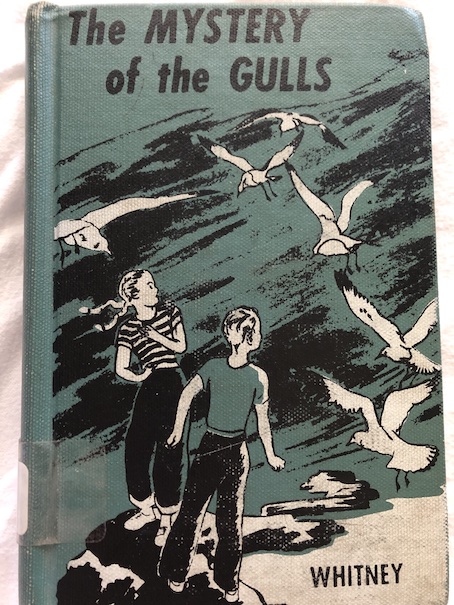
The Mystery of the Gulls (1949)
When Taffy’s mother must prove that she can manage her aunt’s old hotel on Mackinac Island in order to inherit it, strange things start happening, and someone seems to be trying to interfere. By Phyllis Whitney.
Mystery of the Jade Idol (1943)
Cousins Judy and Susanne are visiting a plantation in Mexico with their relatives when a valuable artifact is stolen along with some other things. Someone shoots the maid, people start seeing “ghosts”, and they are surrounded by suspicious characters. Part of The Cupples and Leon Mystery Stories for Girls Series. By Anna Andrews Barris.
Mystery of the Mooncusser (1949)
A blind girl and her brother and mother move into a house that is supposedly haunted. Also called Mystery at Boulder Point. By Eleanore M. Jewett.
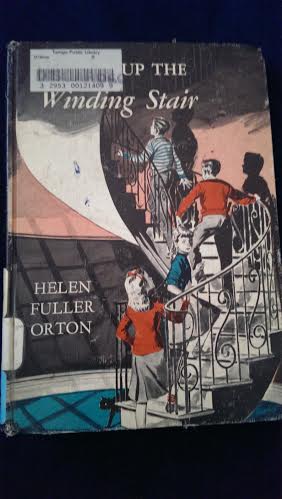
Mystery Up the Winding Stair (1948)
Four cousins search for a hidden treasure in their grandfather’s mansion during a blizzard.
This book has a slight implication related to the aftermath of WWII. One of the boys staying with his grandfather is there because his father is in Japan, doing some work for the government.
Peggy Brown and the Secret Treasure (1947)
By Kathryn Heinsenfelt and Henry E. Vallely.
Series
Barbara Ann Series
Barbara Ann Wilson is a girl detective in high school, later moving on to college. By Ruth Grosby. 1939-1942.

Two pairs of fraternal twins have adventures and solve mysteries. Early books were more adventure/general fiction than mystery, but the series evolved over time. Books in this series are public domain and are available on Project Gutenberg. A Stratemeyer Syndicate series. 1904-1992.
Four children who lived alone in a boxcar after the death of their parents are taken in by their grandfather and solve mysteries everywhere they go. 1924, 1942-Present.
A young nurse solves mysteries as she completes her training, serves during World War II, and moves to different jobs. “Cherry” is a nickname for Charity. 1943-1968.
This series mentions WWII, and the war has a direct impact on the stories.
Dana Girls Mysteries
The Dana girls are a pair of orphaned sisters who live with an aunt and uncle. They attend school, but are often given time off school to investigate mysteries. A Stratemeyer Syndicate series. 1934-1979.
A group of friends solve mysteries with their pet Scottie dog. Also called the Five Find-Outers and Dog By Enid Blyton. 1943-1961.
Hardy Boys Mysteries
Two brothers, Frank and Joe Hardy, solve mysteries in their East Coast town of Bayport and around the world. By Franklin W. Dixon, A Stratemeyer Syndicate series. 1927-Present.
Judy Bolton Mystery Series
Judy Bolton is a girl detective who grows up and chooses between romantic rivals during the course of her series. The Judy Bolton books are known as “the longest-lasting juvenile mystery series written by an individual author.” By Margaret Sutton (Rachel Beebe). 1932-1967.
Kay Tracey is a teenage detective who solves mysteries with her friends. A Stratemeyer Syndicate series. 1934-1942, Reissued 1951-1984.

The Lone Pine Club is a group of friends who love nature and investigate mysteries. By Malcolm Saville. 1943-1978.
WWII plays a direct role in the series. One of the kids in the book is a child evacuee send away from London to escape the bombings, and others have a father serving in the RAF.
Nancy Drew Mysteries
Nancy Drew encounters and solves mysteries with her friends in her hometown of River Heights and around the world. By Carolyn Keene, A Stratemeyer Syndicate series. 1930-Present.
Penny Parker Mysteries
Penny Park is a reporter for her father’s newspaper. By Mildred A. Wirt. 1939-1947.
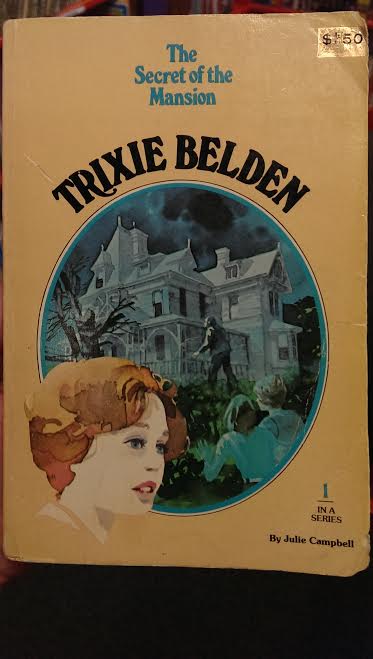
A classic mystery series featuring a girl and her group of friends who solve mysteries and support good causes. Created by Julie Campbell and continued by other authors. 1948-1986.
Fantasy

Bed-Knob and Broomstick (1943, 1947)
The combined edition of The Magic Bed-Knob and its sequel, Bonfires and Broomsticks. Together, these two books were the basis for the Disney movie Bedknobs and Broomsticks. Siblings spend the summer with a woman who is an amateur witch, who gives them a magic bed knob which allows them to travel to other places and other times on their bed. By Mary Norton.
Fog Magic (1943)
A young girl goes back in time whenever the area where she lives is covered in fog.
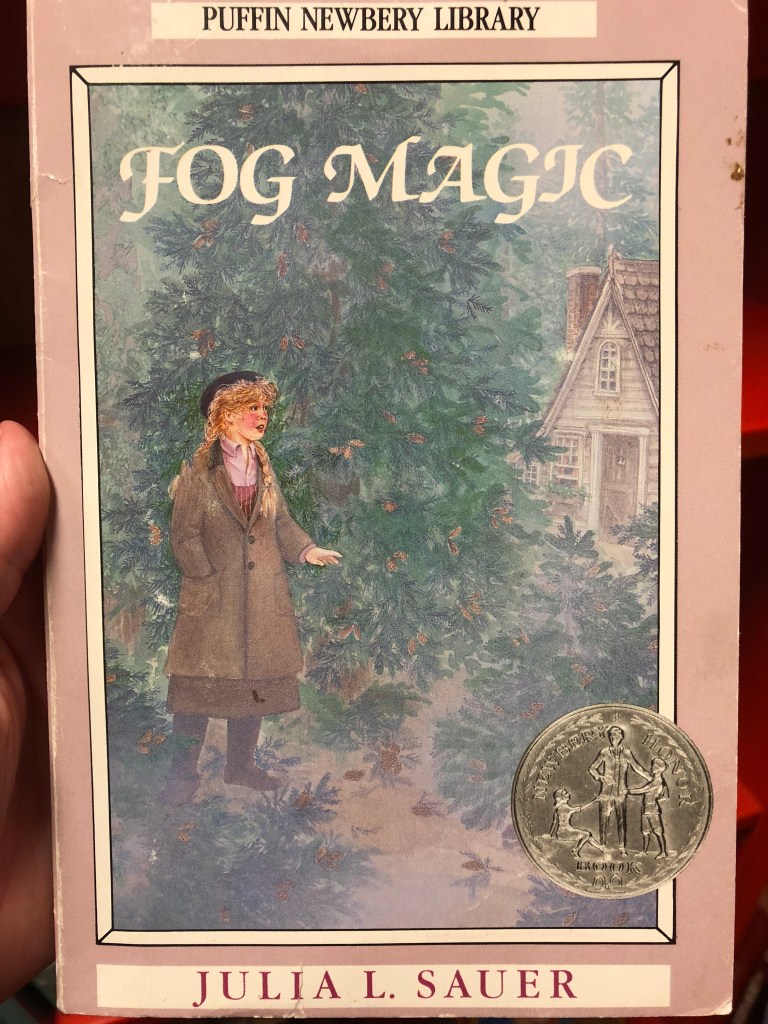
This book makes a passing reference to the war and how the main character feels about it, but the war does not influence the story directly.
The Gremlins (1943)
Gremlins are sabotaging British airplanes because of the destruction of their homes in the forest, until a pilot named Gus convinces them that they should team up to fight a common enemy – the Nazis. By Roald Dahl.
This was Roald Dahl’s first book for children, although not as well-known as his later books. He was a pilot in the RAF during WWII, and he based this book on the pilot lore that mechanical malfunctions with planes were caused by gremlins.
The Little White Horse (1946)
Maria Merryweather, an orphan, goes to live with a cousin, Sir Benjamin, at his mysterious estate, Moonacre Manor. There are secrets and magic and a strange kind of sadness connected with the house, and Maria must delve into the past to learn what she must do to change it. By Elizabeth Gouge.
The Magic Tunnel (1940)
Two children ride the subway on their way to see the Statue of Liberty, and they find themselves going down a mysterious tunnel that takes them back in time to 1664 Colonial New York, when the city was known as New Amsterdam. By Caroline D. Emerson.
Miss Hickory (1946)
A small wooden doll has to get along with animals when her family moves to town during the winter, leaving her behind.
Mistress Masham’s Repose (1946)
Ten-year-old Maria is an orphan and heiress to an impoverished estate. Her cruel guardians conspire to steal her inheritance, but Maria befriends a community of Lilliputians, who help her to gain her independence from them, once she learns to respect their autonomy. By T. H. White.
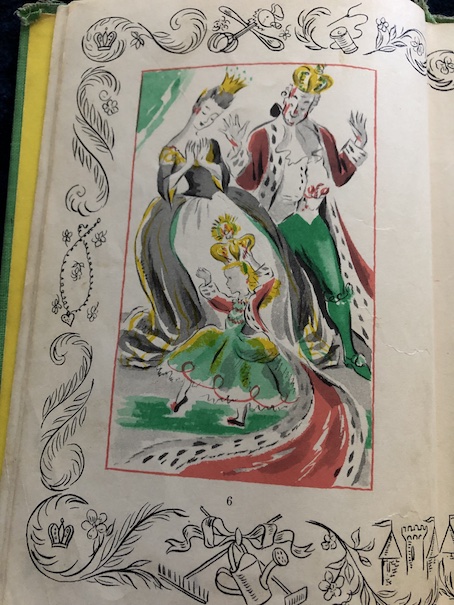
The Plain Princess (1945)
A spoiled little princess learns about friendship and hidden depths and finds her own inner beauty when she is sent to live with a family of commoners for a time.
Rabbit Hill (1944)
The animals living around an empty old house are pleased when new humans move into it because humans mean gardens and new sources of food, but what if these humans also hunt rabbits? (Don’t worry, the story works out well.) By Robert Lawson.
Stuart Little (1945)
An ordinary family gives birth to a baby who is actually a small but very intelligent mouse. By E.B. White.
Twig (1942)
A little girl living in a very plain and ordinary part of Chicago uses her imagination to create a little magic. By Elizabeth Orton Jones.
The Wind and Arabella (1947)
Arabella, a little doll made of raffia fibers, wants to be useful, more than just a doll. By Paul Bohanon and illustrated by Janice Holland.
Series

A magical nanny comes to take care of children and take them on amazing adventures. 1934-1988.
A woman who lives in an upside-down house has magical (and sometimes practical) ways of curing the neighborhood children of bad habits. 1947-1957, 2007, 1997-2001, 2016-2018.
Raggedy Ann and her brother, Raggedy Andy, are rag dolls who come to life and have magical adventures. By Johnny Gruelle. 1918-1975.
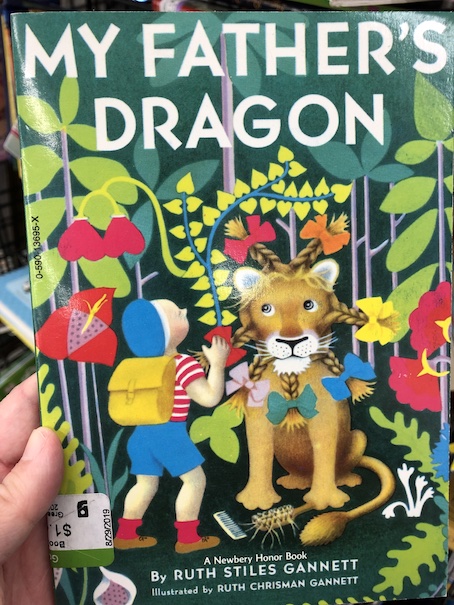
Three Tales of My Father’s Dragon
A boy named Elmer Elevator has adventures with a young dragon. 1948-1951.
Uncle Wiggily Series
The adventures of an elderly rabbit with a candy-striped cane and his animal friends. By Howard R. Garis. 1912-c. 1955.
Science Fiction
Series
Tom Swift
The science fiction adventures of a boy inventor named Tom Swift. This series was released in several sub-series, some of which focused on the son of the original Tom Swift, Tom Swift, Jr. Some of the later series leave it vague whether the boy in the series is Tom Swift, Jr. or possibly the grandson of the original Tom Swift. The original Tom Swift series was written and published 1910-1941. Later series were released 1954-1971, 1981-1984, 1991-1993, 2006-2007, 2019. A Stratemeyer Syndicate series.
Historical Fiction
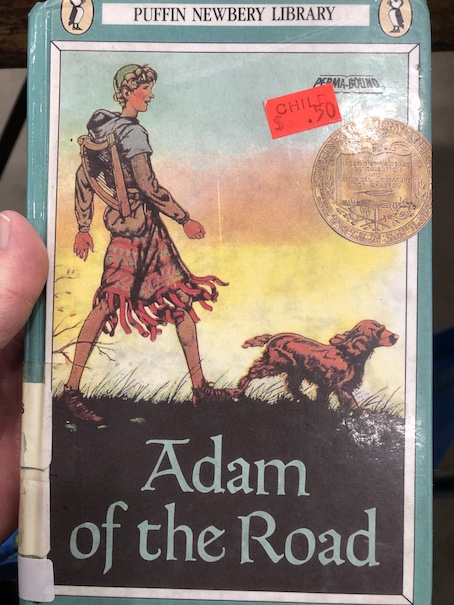
Adam of the Road (1942)
A Medieval adventure. A minstrel’s son searches for his father and his stolen dog. By Elizabeth Gray Vining.
Adopted Jane (1947)
An orphan in the early 1900s goes on a special summer trip with two families who are both interested in adopting her and tries to decide where she really belongs. By Helen Fern Daringer.
Cue for Treason (1940)
In Elizabethan England, a boy named Peter stumbles on a secret rebel plot and treason, fleeing from the conspirators by hiding with a troupe of traveling actors. By Geoffrey Trease.
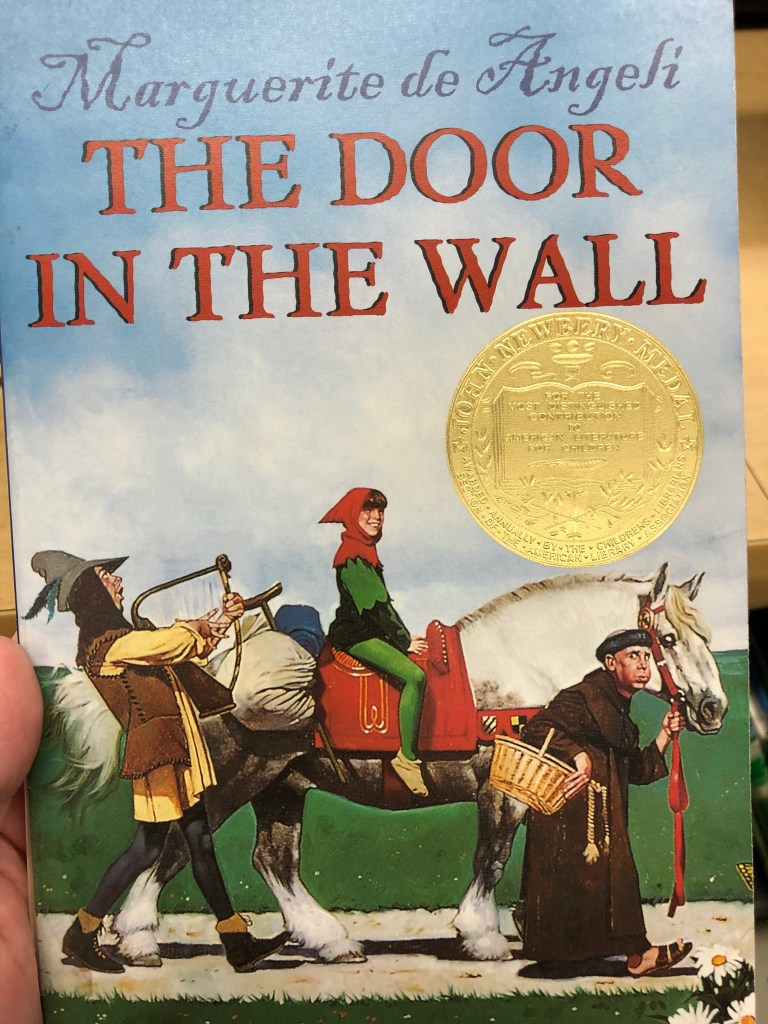
The Door in the Wall (1949)
A boy in Medieval England loses the use of his legs, leaving his planned future as a knight in doubt. He is cared for by a monk, who teaches him that there is always a “door in the wall” (in other words, a solution to problems or a way around an obstacle) and that those who persevere will find it. The boy uses what the monk taught him to find a solution when their castle is besieged and things are at their most grim, and he becomes a hero.
The Gift of the Golden Cup (1946)
A niece of Julius Caesar is kidnapped by pirates. By Isabelle Lawrence.
The Great House (1949)
In 1690, Barbara and Geoffrey travel from London to the place near Oxford where their architect father is building a new great house. Barbara becomes enchanted with the old hall where they’re staying and which will be replaced by the new house. Geoffrey, who also wants to be an architect and is inspired by Christopher Wren, thinks that he’s found a better site for the new house than the one his father is planning to use, but when he gets into trouble for going to a cock-fight, he’s not sure if he can get his father to listen to him. By Cynthia Harnett.
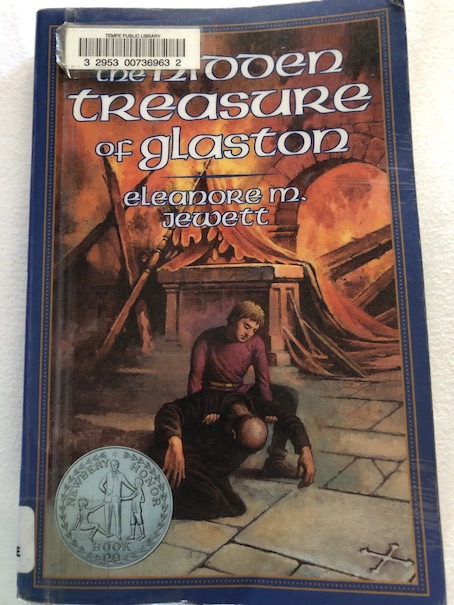
The Hidden Treasure of Glaston (1946)
Hugh, a frail boy and son of a knight, is left at the abbey of Glastonbury when his father is forced to leave England. At first, the boy feels guilty about his physical weakness, which makes it impossible for him to become a knight like his father, but his intelligence, thoughtfulness, determination, and spiritual faith help him to investigate the mysteries of Glastonbury, the supposed final resting place of King Arthur and the Holy Grail, and teaches him that there are more ways of becoming a man than one. By Eleanore Jewett.
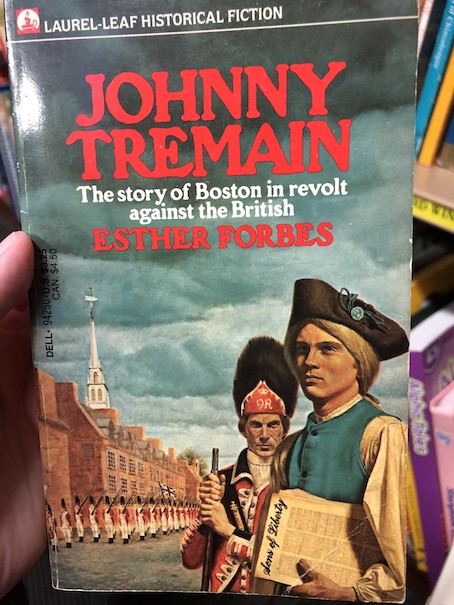
Johnny Tremain (1943)
A boy studying to be a silversmith in Colonial America injures his hand, forcing him to try to find another profession and leading him to become involved with the starting American Revolution. By Esther Forbes.
The Matchlock Gun (1941)
A boy in 18th century New York must defend his mother and sister while his father is away during the French-Indian War. By Walter D. Edmonds.
The Theft of the Golden Ring (1948)
Sequel to The Gift of the Golden Cup. A mystery set in Ancient Rome. By Isabelle Lawrence.
Series
Little House on the Prairie Series
A young girl homesteads with her family on the American frontier during the 1800s. By Laura Ingalls Wilder. 1932-1953.
Picture Books
An American ABC (1941)
An alphabet book based on American history and legends. By Maud & Miska Petersham.
Angelo the Naughty One (1944)
Angelo is terrified of water to the point where he hates to take baths. When his family tries to make him take a bath so he will be clean for his sister’s wedding, he runs away only to be caught by some of the soldiers he admires, who teach him that soldiers must do their duty.
April’s Kittens (1940)
When April’s cat has kittens, her father tells her that they can only have one cat in their apartment, so she’s going to have to find new homes for her kittens. April has trouble parting from her cute kittens, but she finds good homes for a couple of them, and a surprise turn of events allows her to keep the third. By Clare Turlay Newberry.

Blueberries for Sal (1948)
Little Sal goes picking blueberries with her mother, but when they each wander off, Sal and a baby bear each mistake the other’s mother for their own.
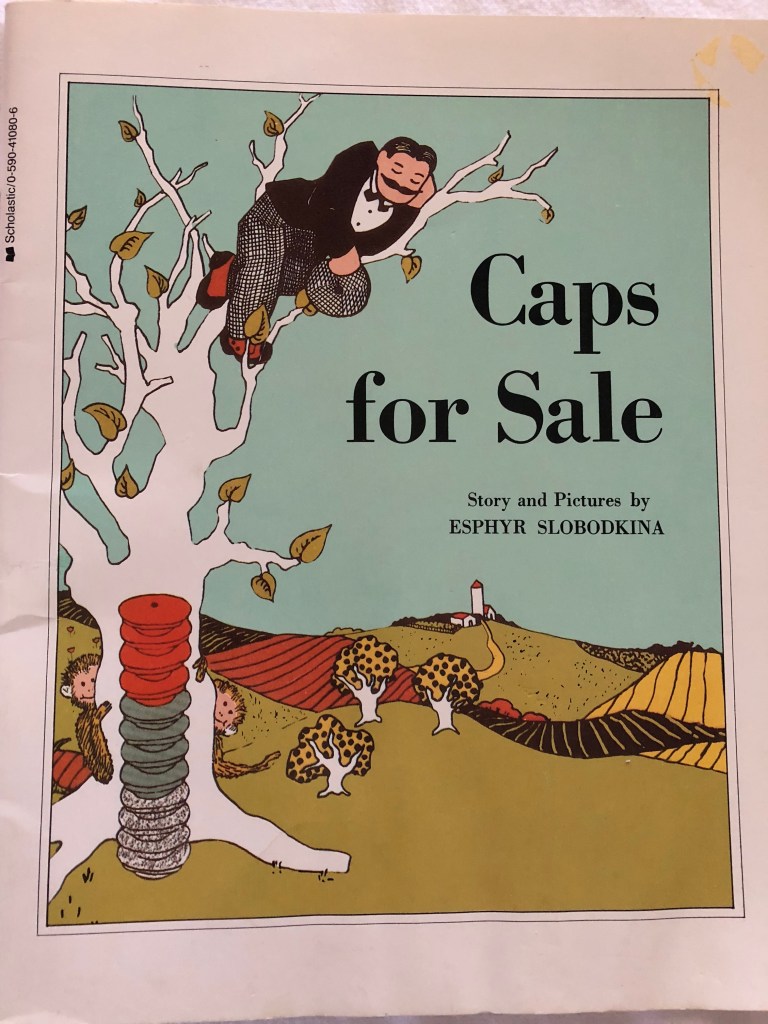
Caps for Sale (1940)
A peddler tries to get his caps back from the monkeys who have stolen them.
The Carrot Seed (1945)
A boy plants a carrot seed and faithfully waters it, even though his family doesn’t think that it will grow. By Ruth Krauss.
Come Play with Corally Crothers (1943)
A sequel to The Tale of Corally Crothers from 1932. By Romney Gay.
Corally Crothers’ Birthday (1944)
A sequel to The Tale of Corally Crothers from 1932. By Romney Gay.
Dash and Dart (1942)
Two young fawns grow up in a forest. By Mary & Conrad Buff.
The Golden Egg Book (1947)
A bunny finds a mysterious egg and tries to figure out how to make it hatch. Little Golden Book. By Margaret Wise Brown, illustrated by Leonard Weisgard.
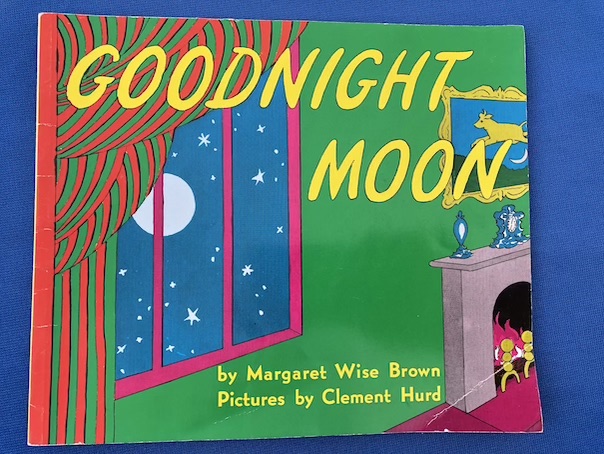
Goodnight Moon (1947)
A classic children’s picture book in rhyme about saying “goodnight” at bedtime.
In My Mother’s House (1941)
A collection of Pueblo Indian poetry. Illustrated by Velino Herrera. Text by Ann Nolan Clark.
The Little House (1942)
A little house feels uncomfortable when the familiar countryside around it is swallowed up by a growing city which has surrounded it. However, the little house finally has an opportunity to return to the countryside it loves. By Virginia Lee Burton.
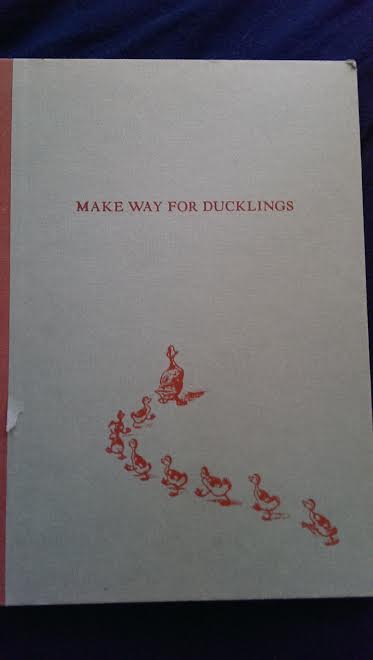
Make Way for Ducklings (1941)
A family of ducks make their home in Boston’s Public Gardens, finding their way through the city with the help of some friendly policemen.
Many Moons (1943)
Princess Lenore is unwell from eating too many raspberry tarts, and she think that only the moon will make her feel better. The king and his advisers can’t think of a way to give the princess what she asks for, but the jester comes up with a solution to the problem. Illustrated by Louis Slobodkin. Text by James Thurber.
Marshmallow (1942)
A small bunny is brought into a household that already has a pet cat. It is an adjustment for the animals, but they soon become friends. By Clare Turlay Newberry.
Nothing At All (1941)
An orphaned dog wants to be adopted along with his brothers, but people don’t know he’s there because he’s invisible. A friendly bird helps him to discover the secret to making himself visible. By Wanda Gág.
Paddle-To-The-Sea (1941)
Paddle-to-The-Sea is a little wooden figure in a toy canoe, made by a young Canadian Indian boy. The boy leaves him on a hillside, where he is carried by melting snow into the Great Lakes, and he journeys from there to the Atlantic Ocean. By Holling C. Holling.

Patty Paints a Picture (1946)
Patty wants to paint a picture of her kitten to hang in her room. She has trouble creating a painting that truly satisfies her, but through her efforts, she comes to learn more about art. The fun part of the book is when Patty takes her kitten to her art class, and she studies all of the different ways her friends in class draw the kitten, seeing how everyone looks at the kitten differently and uses different art styles, some drawn better than others because all the artists are children. The children’s pictures look like pictures by real children. The book explains how Patty learns new art techniques to make her painting look more realistic. By Laura Bannon.
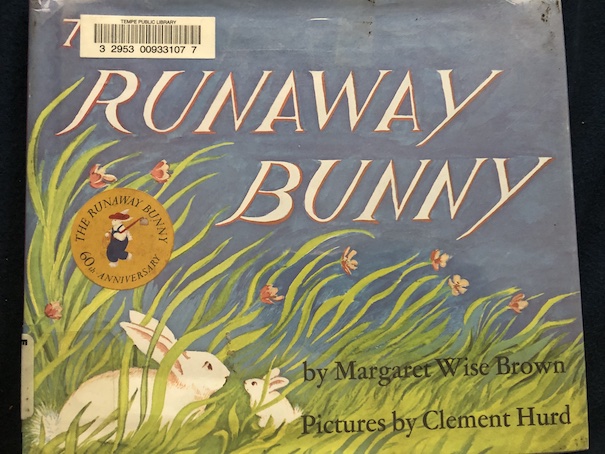
The Runaway Bunny (1942)
A picture book about a little bunny and his mother. By Margaret Wise Brown.
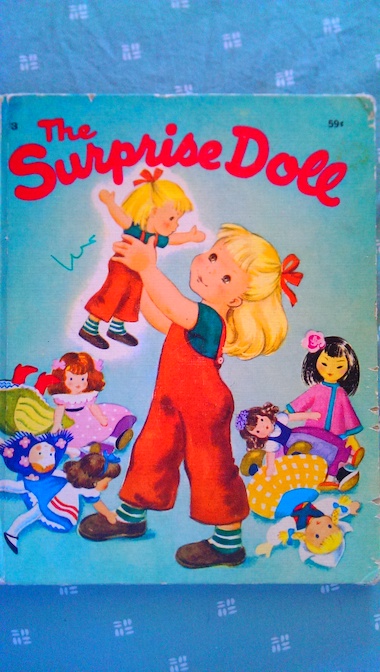
The Surprise Doll (1949)
Mary has six dolls, each from a different country around the world, but she longs for a seventh doll to complete her collection. When she finally receives her seventh doll, it is a very special doll indeed.
The Three Little Chipmunks (1947)
By Marjorie Torrey.
The Travels of Ching (1943)
A doll from China is sent to the United States and travels across the country and back to China before he finds someone who really wants him. Written and illustrated by Robert Bright.
Tweedles Be Brave! (1943)
The king of the monkeys used to be a good king, but now, he has become crotchety and lazy, and the other monkeys are unhappy with him. The only reason why they obey him is that he has always said that he will protect them from a dangerous leopard. However, a brave young monkey named Tweedles decides to put the story about the leopard to the test. By Wolo (Wolff Von Falkenstein).
This book is available to read for free online through Internet Archive.
Twelve O’Clock Whistle (1946)
A boy takes lunch to his father while he’s working at a car factory and sees how cars are actually made. He’s a little disappointed that his father doesn’t make an entire car by himself but sees how it takes a team to do a big job and how everyone can contribute. By Jerrold Beim and Ernest Crichlow.
Series
Curious George
A little monkey leaves the jungle and goes to live with the Man in the Yellow Hat. By H. A. Rey. 1941-1966.
The adventures of a little girl who lives in a boarding school in Paris. 1939-2013.
Classic Little Golden Book children’s series about a little puppy and his adventures with his siblings. 1942-1985.
Children’s Non-Fiction
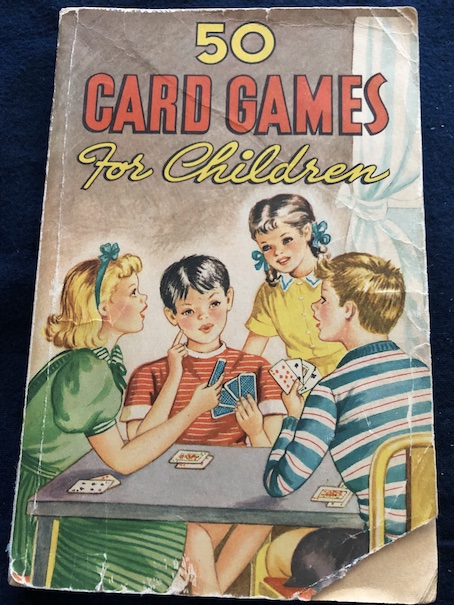
50 Card Games for Children (1933, 1946)
How to play different kinds of card games and solitaire and how to do magic tricks with cards. By Vernon Quinn.
Bible Stories (1947)
By Robbie Trent.
Bible Stories for Little Children (1944)
By Mary Alice Jones.
The Big Book of Real Trains (1949, 1953, 1963)
Picture book about trains, the different types of train cars, and how trains work. By Elizabeth Cameron. Illustrated by George J. Zaffo.

Cheaper By the Dozen (1948)
These are the real reminiscences of children from the Gilbreth family about their unusual childhoods during the 1910s and 1920s. Their father was an efficiency expert, and he used his large family to practice his efficiency principles. By Frank B. Gilbreth, Jr. and Ernestine Gilbreth Carey.
Codes and Secret Writing (1948)
The history of secret codes and how to make and break them. Published by Scholastic. By Herbert S. Zim.
This book is available online through Internet Archive.
The Diary of a Young Girl (aka The Diary of Anne Frank) (1947, 1952)
This is the published diary of Anne Frank. The original Dutch version was published in 1947, and the English versions were published in 1952.
This famous diary was written by a young girl during the war, while her family was in hiding from the Nazis. Sadly, Anne Frank did not survive the war because her family was found and taken to concentration camps, where most of them died.
The First Woman Doctor (1944)
A biography of Dr. Elizabeth Blackwell and her struggles to pursue a medical degree and be accepted in her field during the 19th century. By Rachel Baker.
Fishes (1943, 1957)
A vintage children’s nonfiction science book about fish. By Bertha Morris Parker.
Jewish Holidays and Festivals (1940)
By Ben M. Edidin.
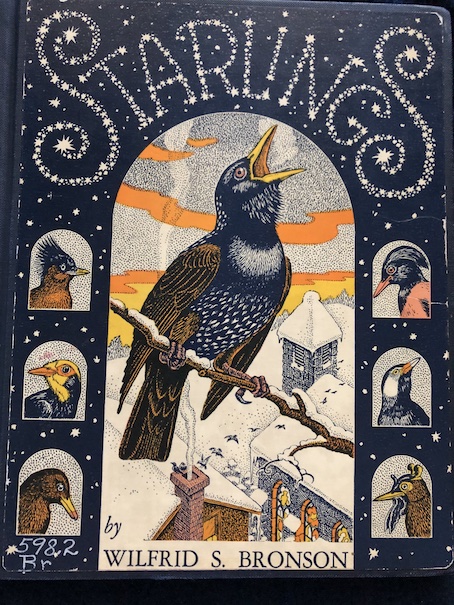
Starlings (1948)
A vintage children’s picture book from the 1940s about starlings, showing how the birds live and interact with their ecosystems. By Wilfred S. Bronson.
They Were Strong and Good (1940)
The author recounts the history of his family against the backdrop of American history. The author admits that parts of the story might not be completely accurate because the incidents were distorted in family stories, but the family itself and the basic circumstances are non-fiction. The book was a Caldecott Medal winner. By Robert Lawson.
I haven’t gotten hold of a copy myself yet, but I know that the book has faced some modern criticism for prejudices portrayed in the story. The author’s father owned a slave. On the one hand, it includes some interesting information about the lives of ordinary people in the past, but on the other hand, I’ve read other people’s reviews that question how “strong and good” the people in the story really were because, although that phrase is often repeated, there isn’t as much to back it up as advertised.
Series
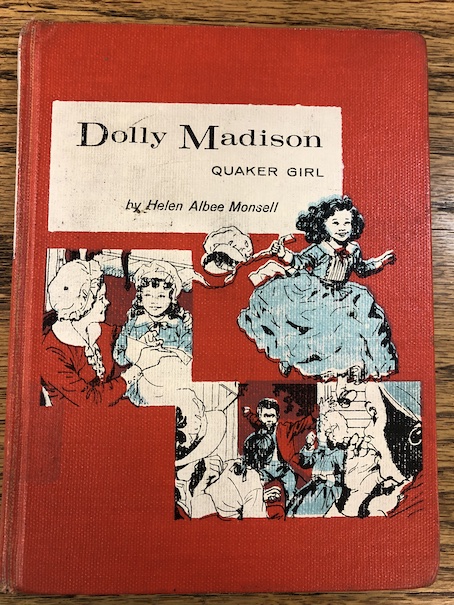
Childhood of Famous Americans
Biographies of famous people, focusing on their childhoods and youths. By various authors.
Famous Biographies for Young People
This mid-20th century non-fiction series offers books containing short biographies of famous people. c. 1939-1977.
Vintage children’s book series about life in different countries around the world during different time periods. May also be known as What Was Their Life? 1945-1965.
Children of the Decade
Children born in this decade in the United States:
Popular 1940s Names – Among the most popular names for children born in this decade were: Robert, John, James, Mary, Linda, and Barbara.
Children born in this decade mark a change in American society. Those born during the first half of the decade were born during World War II. Those born during the second half were among those considered Baby Boomers, born during the sudden increase in population that followed the end of World War II. (Generational designations can sometimes be subjective, especially when defining exact years.) Some of them were the children of people who had served in the armed forces during that war.
Those born during the first half of the decade would have little or no memory of World War II. For those born after, the two World Wars were simply a part of history. Atomic weapons were also a reality that had always existed for them and fear of their use would be a major influence in their early lives.
Those born during the second half of the decade were born during the Cold War and would be adults by the time that the Cold War drew to an end at the end of the 1980s and beginning of the early 1990s. All of those born during the 1940s would be about 40 to 49 years old at the time that the Berlin Wall fell in late 1989. Because they grew up during the Cold War, they would have been raised with strong anti-communist feelings.
They would remember a time before space flight, and all of them would have been adults at the time of the moon landing at the end of the 1960s and would remember it afterward.
They would all would be old enough to remember when Hawaii and Alaska were admitted as states of the United States. The youngest ones would have been about 10 years old at the time. During the earliest part of their lives, there were only 48 states.
In their early years, although they would be taught to beware of strangers, they were far less worried about accepting homemade treats on Halloween than children in later decades, after stories of Halloween sadism spread. In fact, homemade treats such as cookies, popcorn balls, and candy apples were regular offerings at Halloween. They were adults by the time fears about Halloween sadism really spread.
Throughout their lives, they would become comfortable with a variety of new technologies, seeing rapid technological changes such as:
- from records to cassette tapes to cds to music purchased electronically with no physical copies
- from their first television sets in black-and-white to color television to vhs tapes to dvds to movies and television streamed online
- increasing computer usage and the progression from computer punch cards to floppy disks of various sizes to cds of computer games and software to downloads and updates for computer programs managed entirely through the Internet
- from corded phones to cordless phones to cell phones to smart phones that do far more than just make phone calls
Many of these changes would have happened when they were adults. Their children would be even more comfortable with technology than they were, having grown up with forms that their parents wouldn’t have had during their earliest years.
They did not have home computers or video games when they were young, but many of their children and grandchildren would.
They would not have had use of the Internet and e-mail while still in school, not even those who went to college. The World Wide Web would not be available on home computers until the 1990s. Computer usage in general would have increased in popularity as they progressed through school and began their working lives. For the first part of their lives, when they needed something typed, it was done on a typewriter. If they needed two copies of something, they would either have to type using a sheet of carbon paper between a blank sheet and the page they were currently typing in order to make a second copy (that’s a carbon copy, the origin of the “cc” you see in the address section of your email) or just type the entire page twice over. Mistakes were either corrected with correcting fluid, or the entire page simply had to be retyped until it was completely correct. This would be something that their children and grandchildren would have little or no experience doing.
Some of their families may have purchased their first home tv sets during the 1940s, but television broadcasting was new, and many families purchased their first television sets during the 1950s. Color tv would not become common until the 1960s. VCRs wouldn’t come into vogue until the 1970s. Some of them may have rented their first VCRs from video stores rather than owning them themselves. Before they had VCRs of their own, they just watched their favorite shows when they were on tv, at the time they aired, and if they missed them, they simply missed them. This was a simple fact of life that would change significantly later, eventually becoming almost unknown by their children and grandchildren.
All of them were already adults around the turn of the new millennium, all of them older than 50 years old. Most of them had children of their own at the time, and some may have even had grandchildren.
As adults, everyone born in this decade would be old enough to understand the events of September 11, 2001 at the time it happened and remember them forever after.
They were born during a time when schools were segregated, but as they progressed through school, things were changing. They would be among the the first to attend newly-desegregated schools with a far more diverse student body than the schools their parents had attended, especially in higher grades. Racial makeup of churches and other religious institutions would vary by religion and region. Years later, they would have memories of times when there were separate bathrooms or drinking fountains for different races in the United States or when people of different races weren’t allowed into certain restaurants or other public places. They would have been in their teens and 20’s at the time of the Civil Rights Movement, and some of them were among those who took part in it.
Children’s Authors Were Children, Too!
Everyone was young once, and I’d just like to take this opportunity to remind readers that authors born around this time would have grown up like other children of their time, witnessing the same events and reading the same books as they grew up.
Children’s authors born in this decade:
Jack Prelutsky – September 8, 1940 – Author of collections of children’s poetry, including The New Kid on the Block (1984)
Jerry Spinelli – February 1, 1941 – Author of the School Daze series (1991-1993) and Maniac Magee (1990)
Martin Waddell – April 10, 1941 – Author of Can’t You Sleep, Little Bear? (1988)
Nancy Farmer – July 9, 1941 – Author of The Eye, the Ear, and the Arm (1989)
Karen Cushman – October 4, 1941 – Author of Catherine, Called Birdy (1994)
Steven Kellogg – October 26, 1941 – Author and illustrator of many picture books
Cynthia Voigt – February 25, 1942 – Author of Dicey’s Song (1982) and The Vandemark Mummy (1991)
Ruth White – March 15, 1942 – Author of Belle Prater’s Boy (1996)
Pat Hutchins – June 18, 1942 – Author of many books for children, including The Mona Lisa Mystery (1981), The Curse of the Egyptian Mummy (1983), and Which Witch is Which? (1990).
R.L. Stine – October 8, 1943 – Author of the Goosebumps series (1992-1997)
Mercer Mayer – December 30, 1943 – Author and illustrator of the Little Critter books (1975-2015)
Patricia Polacco – July 11, 1944 – Author and illustrator of Thunder Cake (1990) and Thank You, Mr. Falker (1998)
Patricia C. “Pat” McKissack – August 9, 1944 – Author of The Dark-Thirty: Southern Tales of the Supernatural (1992) and books in the Dear America series and Royal Diaries series.
Joanna Cole – August 11, 1944 – Author of the Magic School Bus series (1986–2010) and other books, including Monster Manners (1985) and Norma Jean, Jumping Bean (1987)
Paula Danziger – August 18, 1944 – Author of the Amber Brown series (1994-2003) and other books, including The Cat Ate My Gymsuit (1974) and There’s a Bat in Bunk Five (1980)
David Small – February 12, 1945 – Author and illustrator of picture books, including Imogene’s Antlers (1985)
Robert Munsch – June 11, 1945 – Author of many off-the-wall, fun children’s books, including The Paper Bag Princess (1980)
Start of the “Baby Boom”
Marc Brown – November 25, 1946 – Author of the Arthur Adventure series (1976-2011)
David Macaulay – December 2, 1946 – Author and illustrator of Black and White (1990) and books explaining architectural and engineering concepts like Cathedral (1973) and The Way Things Work (1988)
Kate McMullen – January 16, 1947 – Author of the Dragon Slayers’ Academy series (1997-2012)
Barbara Park – April 21, 1947 – Author of the Junie B. Jones series (1992-2013) and other books, including The Kid in the Red Jacket (1987) and Operation: Dump the Chump (1982)
Gail Carson Levine – September 17, 1947 – Author of Ella Enchanted (1997)
Laurence Yep – June 14, 1948 – Author of the Golden Mountain series (1984-2011), which includes Dragonwings (1975)
Elizabeth Winthrop – September 14, 1948 – Author of The Castle in the Attic (1985) and The Battle for the Castle (1994)
Mary Pope Osborne – May 20, 1949 – Author of The Magic Tree House series (1992-present)
Chris Van Allsburg – June 18, 1949 – Author and illustrator of Jumanji (1981), Zathura (2002), and The Mysteries of Harris Burdick (1984)
Other Resources
Documentary Films
CrashCourse WWII Videos
CrashCourse is a YouTube channel with fun educational videos on a variety of topics and different periods of history. The videos are fairly short for educational lectures. Most are less than 15 minutes long. The following videos are the ones they have about WWII:
- World War II: Crash Course World History #38 – A general history of WWII.
- World War II, A War for Resources: Crash Course World History #220 – An examination of the causes of the war. Much of it had to do with international resources. Expansionist countries had goals of taking over other territories to make themselves completely self-sufficient so they would not have to trade with anyone else. Resources were also necessary to fuel the war and the troops.
- World War II Part 1: Crash Course US History #35 – How and why the US entered WWII and the effect that the war had on the US.
- World War II Part 2 – The Homefront: Crash Course US History #36 – How WWII affected American society and how civilians helps the war effort.
- World War II: Crash Course European History #38 – Explains the beginning and course of the war in Europe.
- World War II Civilians and Soldiers: Crash Course European History #39 – WWII was a “total war” that involved civilians, who were both targets during the war and instrumental in helping the war effort.
- The Holocaust, Genocides, and Mass Murder of WWII: Crash Course European History #40 – How and why the Holocaust happened.
Japan Enters WWII, Seen Through 1940s News Media
A kind of brief timeline of war events associated with Japan’s entry into the war from the early 1940s with vintage news reports and black-and-white footage. From the Smithsonian.
WWII In HD: America Enters World War II
A short video from the History Channel about how and why the US entered the war with colorized footage.
The Only Live News Report from the Attack on Pearl Harbor
NBC radio broadcast. From the Smithsonian.
The U.S. Homefront During WWII
A brief explanation of life on the US Home Front during WWII from the History Channel.
THE ULTIMATE FASHION HISTORY: The 1940s
A lecture about clothing styles of the 1940s. There is also a related video lecture about the color palettes used in clothing, home decor, advertising, and even children’s books during the 1940s. Bright, bold colors and patriotic colors were popular during WWII.
Getting Dressed in WW2 – Women’s Land Army
Shows how women in the British Women’s Land Army dressed during WW2 and discusses their lives and duties. From CrowsEyeProductions.
Evacuees of the Second World War: Stories of children sent away from home
From Imperial War Museums, a series of interviews with former child evacuees with background information. 10 minutes long.
This series of interviews with former child evacuees is much longer than the other one, about 40 minutes long. Part of this one brings up the subject of racial minority children who were evacuated. Children of different nationalities or ones who looked like they might be could be discriminated against by people who were reluctant to host them because of the way they looked, but there were also some nice families who were willing to host them.
Colorized footage of Berlin as World War II came to an end. Notice the way the city was being divided by the different factions that controlled the city, setting up the split into East Germany and West Germany that would last for the duration of the Cold War. Much of the footage shows damaged/destroyed buildings and the efforts of civilians to clear the rubble.
1949 – One Year, Two Germanies
About the separation of Germany into East Germany and West Germany. From DW Documentary. About 42 minutes long.
For more about 1940s culture:
Lists of 1940s children’s books:
These are lists of books that were written and published during the 1940s. For children’s books that were written about events in the 1940s but written and published later, see my list of World War II children’s books in my longer list of Historical Fiction by Period.
 Jestress's Forgotten Books and Stories
.jpg)


I thought that you had posted on a picture book from the 1940s about a boy in Mexico that had to be convinced to take a bath.
LikeLike
Oh, I did. You’re thinking of Angelo the Naughty One from 1944. https://forgottenstoriesweb.wordpress.com/2017/08/25/angelo-the-naughty-one/
LikeLike