A Little History
Major Events
The United States had become a major world power, strong both militarily and economically, after World War II. Their major competitor on the world stage was the Soviet Union (Russia), and the Cold War had begun. The United States also entered the Korean War in the early part of the decade. Alaska became the 49th state and Hawaii became the 50th state in the United States in 1959. These were the last states to be added during the 20th century. From this point on, flags in the U.S. had 50 stars. Earlier in the decade, there were only 48.
In many ways, Americans look back on the 1950s as a prosperous, idyllic time, although there were undercurrents of unrest and Cold War paranoia. Norman Rockwell, whose 1950s cover art for The Saturday Evening Post depicted calm and nostalgic everyday scenes from small town American life and growing suburbia, even admitted that his art was more idealistic than realistic, saying in his memoir, published in 1960, “The view of life I communicate in my pictures excludes the sordid and ugly. I paint life as I would like it to be.” In a lot of ways, I would say that the 1950s was an odd combination of celebration following the end of the World Wars, tempered by a constant feeling of tension as the Cold War began, and a sense of optimistic idealism that clashed with differing views of how life really was and how people would like it to be.
During the 1950s, the United States was still a segregated society, but things were starting to change. School desegregation started in the 1950s with the landmark case Brown vs. the Board of Education. However, other aspects of segregation continued, such as forbidding black people from eating in certain restaurants. This decade also saw the beginning of bus boycotts as black people protested at being forced to give up their seats to white people or being forced to sit at the backs of buses. Protests, demonstrations, and marches associated with the Civil Rights Movement continued into the following decade, eventually leading up to the creation of the Civil Rights Act of 1964, which aimed at putting an end to racial segregation in the United States. Although it was successful in many ways, racial tensions would continue into following decades.
Because of the Cold War, many Americans were highly suspicious of communists. In particular, Senator Joseph R. McCarthy (R, Wisconsin) dedicated himself to finding communists who might pose a threat to the United States, issuing a series of virulent, mostly baseless accusations at various public figures and government employees, ruining reputations and careers. His reign of terror and paranoia came to an end in 1954 when he attacked the U.S. Army itself in a series of televised hearings that publicly exposed his levels of paranoia, cronyism, bullying tactics, and general lack of reason, alienating people who had formerly been allies or at least neutral toward his accusations. In the end, McCarthy’s own career was badly damaged, and he died in 1957 at age 48, probably of alcohol-related causes. The term “McCarthyism” came to stand for making wild, baseless accusations, and this incident was one of the examples of how the popularization of television was helping to spread information and shape public perceptions of important events.
The Space Race began as an off-shoot of the Cold War technological race. The Sputnik was the first man made satellite to orbit the Earth, built and launched by the Soviet Union in 1957. Yuri Gagarin (Russian cosmonaut) became the first person to go to outer space in 1961. However, the United States was determined not to accept technological defeat and continued plans to send astronauts to the moon, succeeding at the end of the 1960s.
Childhood
Baby Boomers were young, suburbia was growing, and rock and roll music was big. People listened to other types of music in the ’50s, too, but rock music became increasingly popular and would grow in popularity in later decades. Early on, it was considered controversial (and aspects of it would remain controversial in later decades) because it was associated with sex and drugs. However, it also became associated with youth culture and the Civil Rights Movement because it had origins in African American rhythm and blues music and appealed widely to young people of all races.
In some ways, I’d argue that the Baby Boom and the 1950s created a sense of what a lot of people would consider an idyllic childhood, in terms of stability and prosperity and just the right balance of adult supervision and childhood independence, and you can see signs of it in children’s books from this decade. Actual childhood experiences varied. There were some problems beneath the surface of society and coming changes that would impact children as well as adults. You’ll notice that even children’s literature of this decade included discussion of topics like poverty, social class, war, and segregation.
Partly because of the sudden increase in the number of children from the Baby Boom, various aspects of culture became increasingly geared toward the young. It was during this period that the term “teenager” was popularized to refer to kids between 13 and 19. Before that, people in their “teen” years were mostly referred to as “young people” or “youths.” With this increasing view that “teenager” was a distinct phase of life between childhood and adulthood, more music, movies, books, and other aspects of culture began to be dedicated specifically to them. Since this was an era of high consumerism, there were plenty of products available for people of all ages.
Television was gaining popularity, and the popular tv shows were game shows, sit-coms, and westerns. In the beginning, it was all in black-and-white, but color shows were developed later. There were some television shows meant specifically for children, such as Howdy Doody and Captain Kangaroo. Some programs were designed to be educational, like the popular, long-running, children’s science program Watch Mr. Wizard (this show was very influential in children’s television, experiencing a revival in later decades and inspiring similar shows like Beakman’s World and Bill Nye the Science Guy). Many smaller local television stations in the United States also ran local television programs for children. As an example, this is one that was a local program for my home town, and it was still being made and aired through my early childhood in the 1980s. (I have to admit that one of the reasons I’m putting this here is to show you this song, which blames Communists for soggy cereal. This song was recorded in 1971, but it demonstrates some adult humor creeping into children’s shows and relates to another point I want to make.) For people living in Britain, this is also the decade when the show Blue Peter started, and it’s still on the air in the 21st century!
Around this same time, breakfast cereals became increasingly aimed at children with added sugar to make them more attractive, as in Frosted Flakes. Combined with the advent of tv shows for children, the stage was set for something that many of us from later generations grew up doing: watching Saturday morning children’s shows while eating cereal!
The 1950s were a relatively prosperous decade, and children in the 1950s had a wide variety of toys to play with. The first electric trains were invented in the early 1900s, and in the 1950s, some of the fancier toy cars ran on batteries. Electronic toys would become far more popular in the following decades. Some 1950s toys were made of metal (like toy cars), but plastic toys were also becoming more common. Some toys that are now considered classics came from the 1950s, including Magic 8-Ball (based partly on a Three Stooges skit from the 1940s). A number of toys that were created in the 1940s grew increasingly popular, such as Mr. Potato Head (which did not include a plastic potato until 1964, early sets just featured parts that were meant to be stuck in to real potatoes, my mother and her siblings sometimes used foam balls for the same purpose because they could be reused and to avoid using actual food), Silly Putty, and Slinky. Other toys that existed earlier were further refined and popularized during the 1950s. Pogo sticks existed before the 1950s, but the classic two-handle design was a ’50s development. Plastic Frisbees, which were produced by different companies since the late 1940s, became very popular. Some models were sold under names like “Flying Saucer” and “Pluto Platter” to capitalize on a public interest in space travel and UFOs. Hula hoops came into their modern form in the late ’50s. Girls loved dolls, but there were some changes in the types of dolls they played with toward the end of the decade.
Barbie dolls were introduced at the end of the 1950s and would grow in popularity, remaining popular for decades afterward. The inspiration for the dolls, which were very different from earlier dolls that were mostly made to look like babies or young children, was partly from paper dolls that Ruth Handler’s daughter played with. Ruth’s daughter, Barbara, pretended that her paper dolls were adults and enjoyed changing their clothes, so Ruth thought it would be a good idea to have a three-dimensional doll that would allow children to do the same thing. On a trip to Europe, she saw a doll in Germany called Lilli, which looked like a young adult, and decided to make a similar doll, only aimed at children. (Lilli was based on an adult comic strip that featured racy jokes, and the dolls were also meant as gag gifts for adults.) Some parents were concerned about Barbie’s very adult figure and the influence it would have on little girls (beginning a string of similar concerns that would continue through the years and generations), but many girls found Barbie a refreshingly different sort of doll to play with and one they could use to imagine adult lives.
Children’s Literature
In children’s literature, the Stratemeyer Syndicate, which had already produced many popular children’s book series, including the Bobbsey Twins, Hardy Boys, and Nancy Drew series, began revising some of their already-published books and series. The revision work would continue into the following decade as the Syndicate removed outdated language, including racially-offensive language and racial stereotypes. (I was surprised when I saw what was in the first Bobbsey Twins book. This is part of the reason why I often say that books written in the 1950s and earlier are more likely to contain racially-offensive language than those written later. It’s interesting to compare the before and after editions.) Books also changed to reflect more modern culture and technology. People in Stratemeyer books no longer drove “roadsters,” and they started listening to rock and roll music. In fact, some books were considered so dated that the stories in them were completely rewritten, even though the titles of the books were kept the same. My favorite example of this is the Hardy Boys book, The Flickering Torch Mystery. In the first, original version, the mystery actually involved a flickering torch as a clue. Later, the entire plot of the book was changed so that it was about a dance place called The Flickering Torch (just so they could keep the title of the book the same). These revisions are why the individual publication years of books matter, and this is important for collectors to remember.
The characters of Dick and Jane in children’s educational readers reached the height of their popularity in the 1950s. The stories were simple, with little plot, designed to teach young children how to recognize very basic, common words on sight (as opposed to sounding out longer words using phonics), a technique sometimes called “look-say” because the teacher would have the children look at the words and listen to her say them so they could associate the appearance of the word with the sound. Dick and Jane were a brother and sister who had a baby sister called Sally and a dog named Spot. Their stories focused on the daily activities of typical, middle-class, suburban children to make them relatable to typical students. The final books were published in 1965, although they continued to sell through the early 1970s. By the 1980s, they were replaced by other readers in American schools. However, because they were so popular for decades, they have become icons of children’s literature.
Even people who were born later and never used their readers in school (like me) have heard of them, some of them hearing about them from parents or grandparents who read them when they were young. The very simple, formulaic language (ex. “See Dick. See Dick run. Run, Dick, Run!”) in the stories also lends itself well to parody. I couldn’t bring myself to link to some of it here because some of the parodies get graphic, but if you Google it, there’s plenty to see. I’ve seen renditions of Dick and Jane and their friends as brain-eating zombies (“See Zombie Tom eat Susan’s brain. Eat, Tom, eat!”), criminals planning a bank heist (“Dick would take out the guard, Sally would hit the vault …”), and aspiring Jedi (“Use the Force, Dick. Use the Force, Jane.”) among others. Part of the reason behind the parodies is that Dick and Jane were not always well-liked even when they were at their most popular. The stories in the books were a little bland, the characters were rather stereotypical, the vocabulary progression in the books was slow, and the sight reading strategy fell into disfavor when compared to the results of phonics training. By the end of the 1950s, the Dick and Jane books had drawn many critics, although some of the people who grew up with Dick and Jane readers still regard them with a sense of fond nostalgia. Dr. Seuss said that his story, The Cat in the Hat, also published in this decade, was specifically meant to be a more interesting alternative for beginning readers.
During this time, there were a number of similar beginning reader books for children that followed the same basic pattern as the Dick and Jane books. These books also used the sight reading method and the basic brother and sister characters, but the characters went by different names. My father went to school in Ohio in the 1950s, and he remembers readers with Alice and Jerry and their dog, Jip. Some religious schools had books with similar characters and different names, like the Catholic series David and Ann. British people might remember a similar series about Janet and John. What a child read in school often depended on the type of individual school and geographic location.
Even though Dick and Jane became the popular readers for the mid-20th century, the much-older McGuffey Readers, which focused on phonics, continued to be sold and used until about 1960, and even after that, into the 21st century, some private schools and homeschooling families continued to use them. The reading strategies taught in American schools vary across time periods and physical locations because American schools are usually managed on a local level. The styles of teaching in use largely depend on the styles favored by teachers and administrators in different locations at that particular time, and sometimes, teaching methods are experimental, with schools trying new trends on a temporary basis and changing the methods used depending on results. I mention this because, even though Dick and Jane and the “look-say” sight reading strategy were highly popular in the 1950s, not everyone was using them during this period because some teachers didn’t like them and some students didn’t learn well with them. My mother came from a family of four children, and they moved to a different state in the mid-1950s. The oldest child in the family had phonics lessons, before their first school switched to sight reading. After the middle two children struggled with sight reading (my uncle in particular struggled because he probably had a mild form of dyslexia as well), my mother, the youngest, ended up with both the Dick and Jane books and phonics lessons. Of the four, she turned out to be the best with languages. Modern approaches tend to combine sight reading and phonics, based on the results of this mid-20th century experimentation.
I’d also like to point out that books about WWII started being written during the previous decade, while the war was still happening, but this decade and the ones afterward were still producing books about WWII, including ones with the added theme about how soldiers and civilians struggled with the lingering trauma and changes to their lives because of the war. I’ve marked some below with war themes.
Children’s Fiction Books
General Fiction
Ginger Pye (1951)
A boy buys a puppy and names it Ginger. When the puppy disappears, the boy finds the person who stole it. By Eleanor Estes.

Gone-Away Lake (1957)
A pair of cousins, exploring a swampy area over summer vacation, find the remains of an old resort that once stood by a lake and meet the people who still live there. By Elizabeth Enright.
Margaret (1950)
A coming-of-age story about a 14-year-old girl who goes to live with her great-aunt and great-uncle in a small town in Texas, struggling to fit in with town life after living in the country, facing class divisions, and learning more about her own family. By Janette Sebring Lowery.

This book was later made into the tv show Annette on the Mickey Mouse Club, starring Annette Funicello as the country girl who goes to live with her city relatives (renamed to Annette from Margaret for the sake of the actress). Episodes of this series are available on YouTube.
Mary Jane (1959)
As the schools in her town become integrated, Mary Jane is going to be one of the first black students to attend the formerly all-white junior high. Her grandfather warns her that this will not be an easy experience for her, and he is right. Other students are not eager to make friends with her. Some try to ignore her, and some call her names or play mean tricks on her. At first, Mary Jane isn’t sure if she will be able to stand it, but through perseverance, she learns that things can get better. By Dorothy Sterling.

Miracles on Maple Hill (1956)
With their father suffering from shock and depression after having been a soldier and a prisoner of war, Marly and Joe’s mother moves the family to their grandmother’s old house in the small town of Maple Hill, where the children’s father can get some rest. There, they are befriended by a couple of supportive neighbors, Mr. and Mrs. Chris, who make maple syrup. When Mr. Chris suffers a heart attack and must spend some time in the hospital, the family helps Mrs. Chris with making the maple syrup. The family’s friendship with the neighbors and learning how people can help and support each other helps the father to heal from the war.
The book never clarifies which war the father was in or even what year the story takes place. The father could have been a soldier during WWII or the Korean War.
Thomasina, the Cat Who Thought She Was God (1957)
This is the book that the Disney movie The Three Lives of Thomasina was based on. Thomasina is the beloved pet cat of Mary, a little girl who lives with her veterinarian father. However, her father is an angry, cruel man, bitter with the world and God since his wife died young. When Thomasina falls ill, the father tries to euthanize her instead of healing her. Mary is now deeply angry at her father for apparently murdering her pet and falls into a deep depression that threatens to kill her. However, Thomasina has survived and is now being cared for by an animal-loving woman nearby who is rumored to be a witch. Thomasina no longer remembers who she used to be and thinks that she is a reincarnation of the Egyptian cat goddess Bastet. When Thomasina finally regains her memory and returns to Mary, Mary is able to heal, and her father, confronted with the consequences of his behavior, learns to change.
Trish (1951)
An average girl from a poor family has a crush on a rich, popular boy, but through her relationship with him, she comes to a greater sense of who she is and who she wants to be and finds someone who appreciates her for that. A teen/young adult coming-of-age romance. By Margaret Maze Craig.
Series
The everyday adventures of a group of neighborhood children. By Carolyn Haywood. 1939-1986.
A series about a pair of best friends growing up in Minnesota around the turn of the last century. By Maud Hart Lovelace. 1940-1955.
Blue Door Series
A group of children form a theater group and eventually become professional actors. The first book is The Swish of the Curtain. By Pamela Brown. 1941-1956.
Madge Bettany, in need of money and with a younger sister to help raise, decides to leave England and go to Austria to start a new boarding school for girls. The series covers the adventures of the girls who attend the boarding school. British series. By Elinor M. Brent-Dyer. 1925-1970.
When shy Ginnie moves to town, she makes friends with the more outgoing Geneva, and the two girls have adventures together. By Catherine Woolley. 1948-1973.
Maida Books
Maida’s father is a very wealthy man, but Maida is a poor little rich girl who suffers from ill health. To fulfill Maida’s wishes for a simpler life and give her something to care about, her father buys her a little cottage and a small shop to tend, giving her opportunities at a simpler, more ordinary, life and the chance to make some regular friends, both of which help her health. By Inez Haynes Irwin. 1909-1955.
Malory Towers Series
Twelve-year-old Darrell Rivers attends boarding school for the first time, making friends and enemies and having adventures with her fellow students. By Enid Blyton. 1946-1951.
The adventures of the four children of the Melendy family in 1940s New York. The children all have different ambitions in life. The final book in the series is Spiderweb for Two, which has a slightly different theme from the other books and features only two of the children and a treasure hunt. By Elizabeth Enright. 1941-1951.
Milly-Molly-Mandy Series
Collections of short stories about a little girl and her friends and their slice-of-life adventures. By Joyce Lankester Brisley. 1928-1967.
The Naughtiest Girl Series
Elizabeth Allen is the spoiled only child of a wealthy family, and her behavior is so bad that she has driven away six governesses who have tried and failed to teach her some manners and decent behavior. Finally, when Elizabeth is eleven years old, her parents decide to send her to boarding school. Elizabeth, who is accustomed to getting her way in everything, is determined to make the school send her home again by being on her absolute worst behavior, The Naughtiest Girl in the School. Being badly-behaved has gotten Elizabeth her way before. However, this time, Elizabeth has failed to reckon with the other students. This school has an efficient student government that manages student problems, and Elizabeth is stunned when she finds out what her peers think of the way she acts. She also gradually realizes that she really wants the friendship of the other students and that she’s been lonely as an only child. But, getting the friendship she needs means learning to care about other people’s feelings and how she treats them. By Enid Blyton, later continued by Anne Digby. 1940-1952, 1999-2001.
Shoes Series
A very loose series about children who find their life’s ambitions and begin making their way in the world. Some characters recur but are not in every book. The best-known book in the series is the first one, Ballet Shoes, which has been made into a movie. By Noel Streatfeild. 1936-1962.
About a boy living in Nebraska in the 1950s and his adventures. By Trella Lamson Dick.
Humor
Series
The Just William series is a vintage children’s book series from Britain. William Brown is an imaginative boy who frequently gets into trouble, often because he’s acting out things that he’s read in books and seen in movies. By Richmal Crompton. 1922-1970.
Pippi is a girl with red pigtails that stick out from her head and amazing strength who lives alone in a small town in Sweden. Her father is king of an island of cannibals. 1945-1971.
Adventure
The Hundred and One Dalmations (1956)
By Dodie Smith.
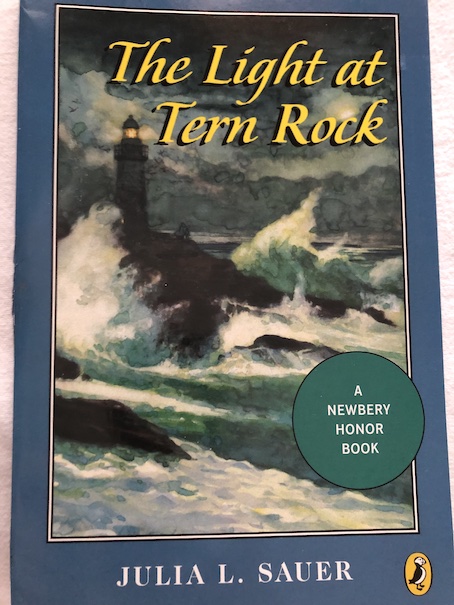
The Light at Tern Rock (1951)
A boy and his aunt agree to tend a lighthouse temporarily while the usual keeper takes a vacation. When the keeper breaks his promise to be back by Christmas, it leads to some revelations about the keeper’s life and the meaning of Christmas and family. By Julia L. Sauer.
Lord of the Flies (1954)
A group of schoolboys is stranded on an island where they form their own savage, dystopian society in this study of chaos, fear, the struggle for order, and human nature. By William Golding.

I’m probably not going to cover this one much because I don’t like dystopian books, but it’s worth mentioning because it’s often used in schools. The savagery was inspired by the World Wars, and there is pending war in the outside world when the story begins.
My Side of the Mountain (1959)
A twelve-year-old boy hates living with his large family in a cramped apartment and decides to go to the empty farm in the Catskills once owned by his great-grandfather. The boy learns self-sufficiency, living by himself, but when the rest of his family comes to join him, he realizes that there are also benefits to being with the people he loves. By Jean Craighead George.

Rasmus and the Vagabond (1956)
An orphan boy runs away from an orphanage in search of a family and meets a friendly tramp who needs his help when he is falsely accused of a crime. By Astrid Lindgren.
Sawdust in His Shoes (1950)
When Joe’s father is killed in an accident, he is forced to leave the circus life that he loves, but he still longs to return to it and has to decide what kind of life he really wants to live. By Eloise Jarvis McGraw.
Series
Enid Blyton’s Adventure Series
Four British schoolchildren become close friends, having adventures and solving mysteries together while on vacation from the boarding schools they attend. 1944-1955.

Four children and their dog have adventures while the children are on their school holidays. British series. By Enid Blyton. 1942-1962.
Ian and Sovra Kennedy are a brother and sister who live outside of the small town of Melvick on the west coast of Scotland during the 1950s. By Elinor Lyon. 1950-1976.

The books were set contemporary to the time when they were written, during the 1950s. It’s important because the third book in the series focuses on a girl who was orphaned during the Blitz.
A society of mice helps to free human prisoners. By Margery Sharp. 1959-1978.
Mystery
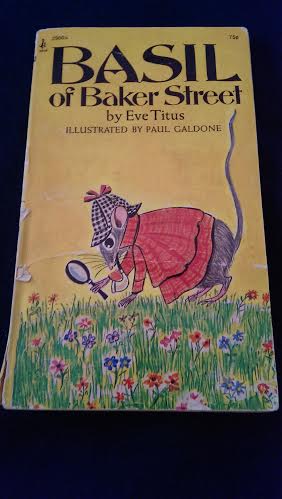
Basil of Baker Street (1958)
Basil, a mouse detective who lives in Sherlock Holmes’s house and studies his methods, searches for a pair of kidnapped mouse twins. By Eve Titus.
Candleshoe (1953)
Not really a kid’s book but the inspiration for the Disney movie Candleshoe. A group of children defend an ancestral home from thieves. By Michael Innes.
Cobbler’s Knob (1958)
Cobbler’s Knob is an old, abandoned house by the sea, and there are local stories about it being haunted. One day, Gail accepts a dare to sneak into the old house to prove it isn’t haunted. The house was once used by the Underground Railroad and later by smugglers, so Gail finds hiding places and secret rooms, but also some modern day problems and the ability to help an unhappy girl who needs someone to care about her. By Eleanore Jewett.
Deadline at Spook Cabin (1958)
A newsboy with ambitions of becoming a report finds a story of his own involving an escaped bank robber. By Eugenia Miller.
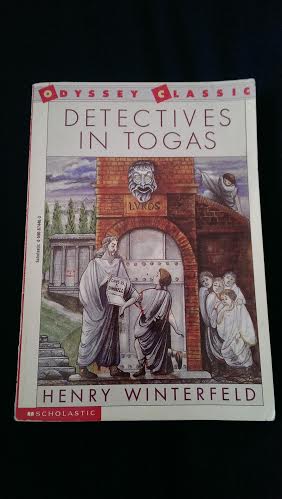
Detectives in Togas (1956)
A group of boys in Ancient Rome investigate a case of vandalism that is part of a plot of political intrigue. The sequel is Mystery of the Roman Ransom. Originally written in German. By Henry Winterfeld.
The Ghost Rock Mystery (1956)
Janice and Tommy visit their aunt’s guest house in Maine and find themselves confronted by mysteries there. A guest creeps around in the night, they see mysterious lights and hear unexplained hoofbeats, and the house has a reputation for being haunted. By Mary C. Jane.
Ghost Town Treasure (1957)
Children search for a hidden treasure to save a town from becoming a ghost town. By Clyde Robert Bulla.
The Mystery in Old Quebec (1955)
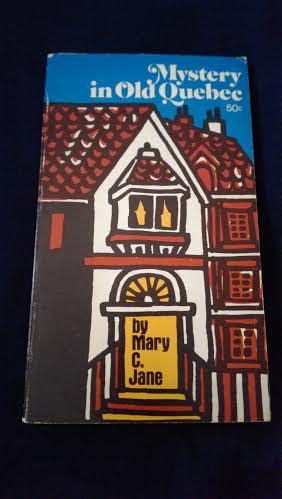
A pair of children visiting the city of Quebec try to help a boy who may be being held prisoner at the hotel where they are staying. By Mary C. Jane.
Mystery in the Old Cave (1950)
A neglected and abused orphan boy helps friends to find a missing treasure in an old cave and finds a new family. By Helen Fuller Orton.
Mystery of the Green Cat (1957)
As four children try to adjust to their new blended family, they become involved with the secrets of the mysterious people living in the house next door. By Phyllis Whitney.

Secret of the Samurai Sword (1958)
Celia and her brother travel to Japan with their grandmother following WWII and encounter a ghostly who haunts the house where they are staying. By Phyllis A. Whitney.
The WWII themes are strong in this book as the characters explore the effect of the war on Japanese society and civilians and how Japan recovered from the war.

Mystery of the Spanish Cave (1936, 1958)
The cave has a fearsome reputation, known for skulls that wash up on the rocks and entire ships and crews that have vanished there. However, young Dick Garland plans to find out what has happened to those vanished ships. By Geoffrey Household, illustrated by Charles Beck.
Mystery of the Strange Traveler (1951)
A pair of sister spend the summer with their aunt and learn some of the hidden secrets of their family’s past and an old ghost story. This book was originally published under the title The Island of Dark Woods. By Phyllis A. Whitney.

The Silver Spoon Mystery (1958)
When the competition between the two newspapers run by neighborhood kids gets too fierce and Peggy makes up a story about a local theft to get attention, she is shocked when the police tell her that the theft she made up actually happened, and she’s a suspect. By Dorothy Sterling.
The Singing Cave (1959)
A boy living in western Ireland finds an ancient Viking tomb while exploring a cave. However, when someone steals the relics, he and a friend must discover what happened to them. By Eilis Dillon.
Trudy Philips, New Girl (1953)
Trudy’s family moves to a new town because of her father’s job, and she has to go to a new school. The class rich girl snubs her, but Trudy still manages to make some new friends, becomes involved in school activities, and solves the mystery of who has been stealing at school. Barbara S. Bates.
One of the interesting points of this book is that there is a class debate at Trudy’s new school about whether the voting age should be lowered from 21 to 18. The story is contemporary with the time when it was written, and in the 1950s, the legal voting age in the US was 21. It was lowered to 18 in 1970, the argument being that 18 is the minimum age for the draft, and if 18-year-olds are old enough to fight and die for their country, they should also be old enough to have a say in choosing the leaders who might send them to war. This was a major issue because of the Korean War (1950-1953) and the Vietnam War (1955-1975).
The book is available to read online through Internet Archive.
Series
Two pairs of fraternal twins have adventures and solve mysteries. Early books were more adventure/general fiction than mystery, but the series evolved over time. Books in this series are public domain and are available on Project Gutenberg. A Stratemeyer Syndicate series. 1904-1992.
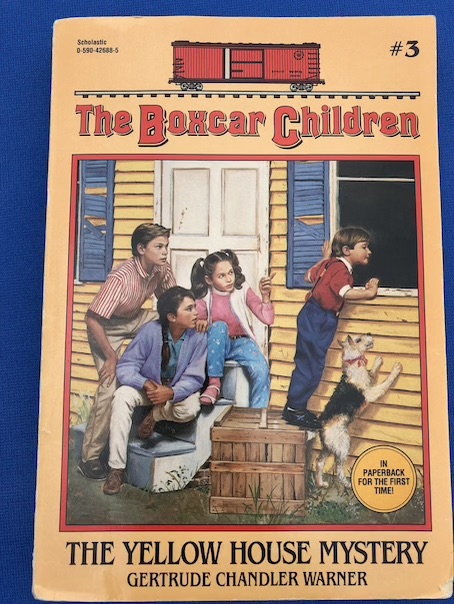
Four children who lived alone in a boxcar after the death of their parents are taken in by their grandfather and solve mysteries everywhere they go. 1924, 1942-Present.
Brains Benton is a young genius who investigates crimes along with his friend, Jimmy Carson. By George Wyatt. 1959-1961.
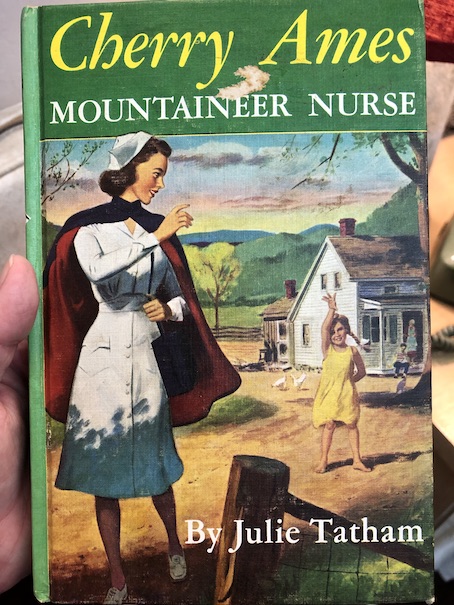
A young nurse solves mysteries as she completes her training, serves during World War II, and moves to different jobs. “Cherry” is a nickname for Charity. 1943-1968.
Dana Girls Mysteries
The Dana girls are a pair of orphaned sisters who live with an aunt and uncle. They attend school, but are often given time off school to investigate mysteries. A Stratemeyer Syndicate series. 1934-1979.
A group of friends solve mysteries with their pet Scottie dog. Also called the Five Find-Outers and Dog. British series. By Enid Blyton. 1943-1961.
The Happy Hollisters
A family with five children solves mysteries. By Jerry West, A Stratemeyer Syndicate series. 1953-1969.
Hardy Boys Mysteries
Two brothers, Frank and Joe Hardy, solve mysteries in their East Coast town of Bayport and around the world. By Franklin W. Dixon, A Stratemeyer Syndicate series. 1927-Present.
Judy Bolton Mystery Series
Judy Bolton is a girl detective who grows up and chooses between romantic rivals during the course of her series. The Judy Bolton books are known as “the longest-lasting juvenile mystery series written by an individual author.” By Margaret Sutton (Rachel Beebe). 1932-1967.

Kay Tracey is a teenage detective who solves mysteries with her friends. A Stratemeyer Syndicate series. 1934-1942, Reissued 1951-1984.
The Lone Pine Club is a group of friends who love nature and investigate mysteries. British series. By Malcolm Saville. 1943-1978.
WWII is important to the series because some of the children are war evacuees, sent to the countryside from London.
Nancy Drew Mysteries
Nancy Drew encounters and solves mysteries with her friends in her hometown of River Heights and around the world. By Carolyn Keene, A Stratemeyer Syndicate series. 1930-Present.
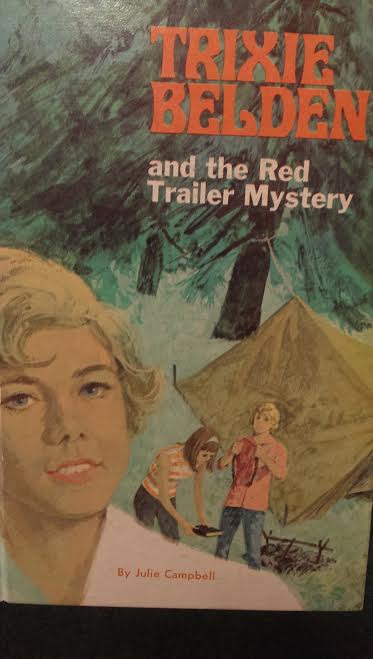
A classic mystery series featuring a girl and her group of friends who solve mysteries and support good causes. Created by Julie Campbell and continued by other authors. 1948-1986.
Fantasy
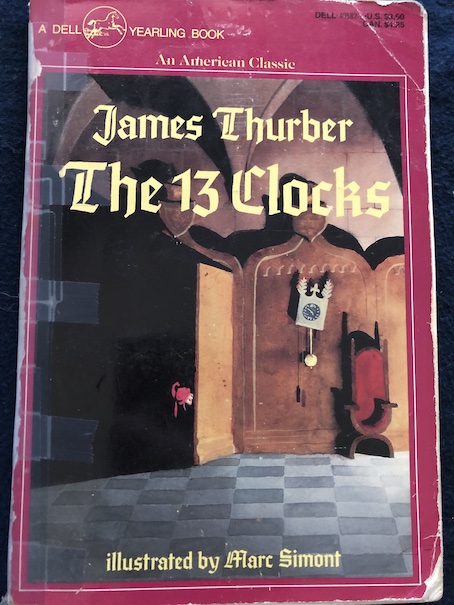
The 13 Clocks (1950)
An evil duke holds his princess niece captive in a castle and has frozen all of the clocks at just five minutes before five o’clock. A prince who wants to rescue to the princess must perform a series of seemingly impossible tasks, including getting the clocks to work again. By James Thurber.
The Blue-Nosed Witch (1956)
A young witch meets up with trick-or-treaters on Halloween and learns about Halloween fun with her new friends. By Margaret Embry.

Charlotte’s Web (1952)
A clever spider finds a way to save the life of a farm pig by writing messages of praise in her spider’s web. By E.B. White.
The Fairy Doll (1956)
A young girl builds self-confidence with the help of a special doll. By Rumer Godden.
Impunity Jane (1955)
A sturdy little doll is passed down through the members of a family until becoming the property of a young boy who gives her the kind of adventures that she craves. By Rumer Godden.
Marianne Dreams (1958)
Marianne begins a drawing when she is sick in bed and finds herself entering the world of her drawing. By Catherine Storr.

The Secret of Roan Inish (1953)
Fiona leaves the big city to return to the seaside to live with her grandparents, hoping that they might once more live on the island their family has called home for generations and hoping to find her lost little brother, who was apparently washed out to sea the day their family left, but who may actually be alive on the island in the care of the seals that live there. Original title – Secret of the Ron Mor Skerry. By Rosalie Fry.
I have the movie-tie in version, which was printed much later, but it contains the text of the original book, Secret of the Ron Mor Skerry (Child of the Western Isles), which was originally published in 1959. Copies of the original book are very expensive collectors’ items. However, there is good news: it has recently come back into print (and on Kindle)!
The Secret River (1955)
A girl named Calpurnia who lives in Florida during the Great Depression is worried because everyone is too hungry to work. To help them, she searches for a secret, magical river to supply her family and friends with food. By Marjorie Kinnan Rawlings.
The Sherwood Ring (1958)
Peggy Grahame, a teenage orphan, goes to live with her Uncle Enos in their family’s ancestral home in New York. Uncle Enos is obsessed with family history, and Peggy discovers that their home is haunted by the ghosts of their ancestors. The ghosts tell their stories to Peggy, and she learns the history of her family and how to solve some problems in the present. By Elizabeth Marie Pope.

The Silver Nutmeg (1956)
Anna Lavinia enters a strange, upside down land by jumping through a still pool. By Palmer Brown.
The Story of Holly and Ivy (1959)
A doll longs for a home and a little girl for Christmas, while a young orphan girl longs for a home and someone to care for her for Christmas. When the orphan takes matters into her own hands, Christmas ends happily for both of them. By Rumor Godden.
Tommy and Julie (1952)
A brother and sister venture into the woods, where other children have apparently disappeared. In the woods, they discover what happened to the other children and have to free themselves as well as the other children from the force that keeps them prisoner. By James S. Wallerstein.
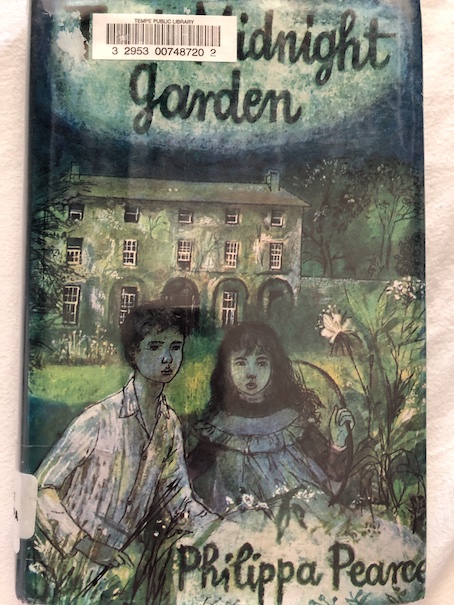
Tom’s Midnight Garden (1958)
Tom is spending the summer with his aunt and uncle. He is lonely at first, but he discovers that when the clock chimes thirteen times at night, he can go back in time, where he befriends an equally lonely girl named Hatty. By Phillipa Pearce.
Toy Rose (1957)
At first, Joy is annoyed when her sister, Jessica, insists on playing with a completely imaginary doll. However, as Joy is swept into the game, the doll, which they call Toy Rose, becomes real to her, too. By Pamela Bianco.
The Tune is in the Tree (1950)
Annie Jo’s father is a pilot, and the birds are very fond of him. One day, when Annie Jo is left alone, the birds come to take care of her. A hummingbird who knows magic makes her small, and she flies around and has adventures with the birds. Along with the magic and fantasy, there are also some real facts about birds in the story. By Maud Hart Lovelace.
Series
The Borrowers Series
Little people live in the houses of ordinary humans, making use of small lost or “borrowed” items. However, discovery by humans forces them to seek new homes. By Mary Norton. 1952-1982.
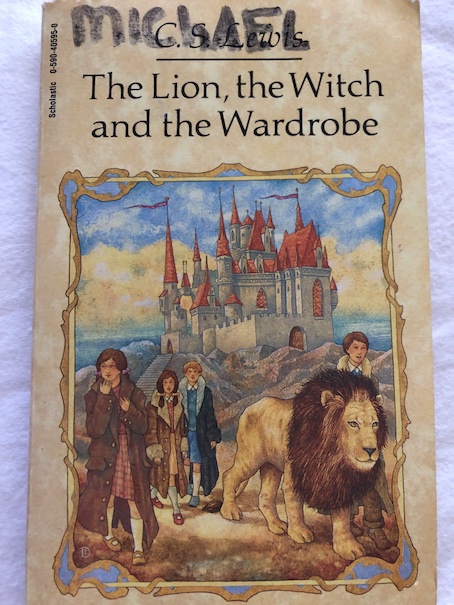
Children have adventures in a magical land where they fight the forces of evil. Much of the series is religious allegory. By C. S. Lewis. 1950-1956.
In the first book, the Pevensie children are sent to the countryside as child evacuees from London during WWII.
The adventures of a haunted English mansion and the people who live there at various times. 1954-1976.

A magical nanny comes to take care of children and take them on amazing adventures. 1934-1988.
A woman who lives in an upside-down house has magical (and sometimes practical) ways of curing the neighborhood children of bad habits. 1947-1957, 2007, 1997-2001, 2016-2018.
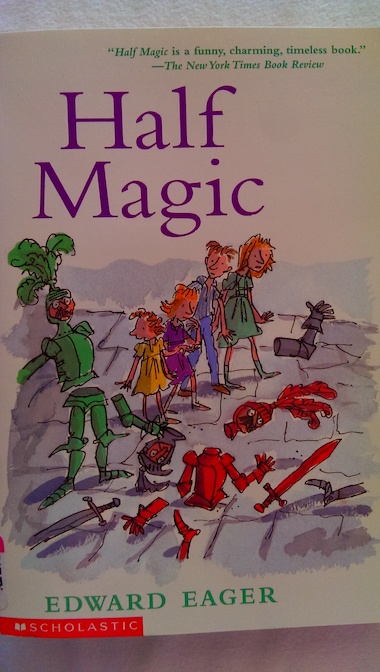
Various groups of children go on magical adventures. A somewhat loose series that follows different sets of characters, although some of the events are related. By Edward Eager. 1954-1962.
Three Tales of My Father’s Dragon
A boy named Elmer Elevator has adventures with a young dragon. 1948-1951.
Uncle Wiggily Series
The adventures of an elderly rabbit with a candy-striped cane and his animal friends. By Howard R. Garis. 1912-c. 1955.
Books in the Wonder-Story Books series are collections of fairy tales and folktales that were also used as reading primers. 1938, 1953, 1962, 1976.
Science Fiction
Series

Danny is a boy who wants to be a scientist and has adventures with a professor at a nearby university and his inventions. By Raymond Abrashkin and Jay Williams. 1956-1977.
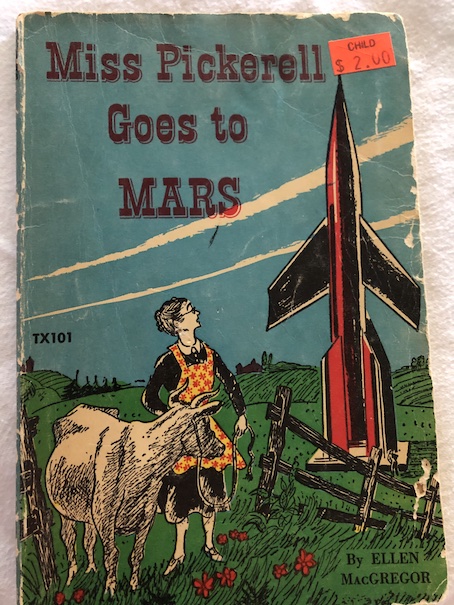
Miss Pickerell is an elderly woman who has scientific adventures with her pet cow. 1951-1986.
The Mushroom Planet Books
Two boys answer an ad from a scientist for someone to build a space ship. After the boys build their spaceship, the scientist reveals that Earth has a tiny, previous-undiscovered moon. The boys go there and find a world covered in giant mushrooms and inhabited by little green men. By Eleanor Cameron. 1954-1967.
The Space Ship Under the Apple Tree Series
A boy scout finds an alien in his family’s apple orchard. The series is humorous as the boy tries to explain human behavior to the alien. By Louis Slobodkin. 1952-1972.
Tom Swift
The science fiction adventures of a boy inventor named Tom Swift. This series was released in several sub-series, some of which focused on the son of the original Tom Swift, Tom Swift, Jr. Some of the later series leave it vague whether the boy in the series is Tom Swift, Jr. or possibly the grandson of the original Tom Swift. The original Tom Swift series was written and published 1910-1941. Later series were released 1954-1971, 1981-1984, 1991-1993, 2006-2007, 2019. A Stratemeyer Syndicate series.
Historical Fiction
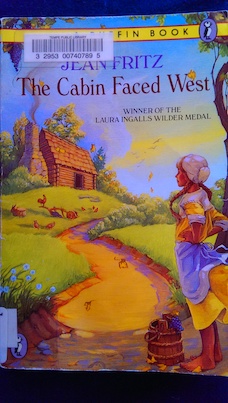
The Cabin Faced West (1958)
A young girl settles on Pennsylvania frontier with her family during the 1700s. By Jean Fritz.
Calico Captive (1957)
An 18th century colonist and her family are abducted by Native Americans in a raid. Based on true events. By Elizabeth George Speare.
The Children Who Stayed Behind (1958)
During World War II, there is a mass evacuation of people from Brighton. However, three children miss their train and are accidentally left behind. At first, the children think that they’re the only people left in Brighton, but when they see the pier light up at night, they know that there must also be someone else left in town. Also called The Kidnapping of Kensington. By Bruce Carter (Richard Hough).
This is another book about WWII civilian and child evacuations.

The Courage of Sarah Noble (1954)
A young girl accompanying her father to her family’s new homestead worries about the nearby Indian tribe until she makes friends with them and stays with them for a time.
The Eagle of the Ninth (1954)
A young Roman officer goes in search of the missing Ninth Legion in Northern Britain. By Rosemary Sutcliff.

The Gauntlet (1951)
A boy goes back in time to the Middle Ages after finding an old, rusty gauntlet, but it isn’t clear whether he actually traveled back in time or was dreaming. By Ronald Welch.
The Light in the Forest (1953)
A boy living in Colonial America is abducted at a young age by Native Americans and raised as one of them. When he is returned to his birth family later, he questions who he really is and what he really stands for. By Conrad Richter.

Moccasin Trail (1952)
Jim Keath has been living among the Crow Indians for the last six years, when he learns that his siblings will be traveling west along the Oregon Trail to start a new home. He decides to join them, but they have been apart for so long and living such different lives that they find it difficult to understand and trust each other. As they deal with the difficulties of the trail and struggle to survive, they learn to trust each other and be a family again. By Eloise Jarvis McGraw.
That Jones Girl (1955)
Lizzie Lou Jones is a girl in the 1920s who wishes that she could be more popular and have an exciting life, like Mary Pickford in the movies. A visit from her aunt shows her that life has many possibilities and gives her a new vision for her future. By Elisabeth Hamilton Friermood.
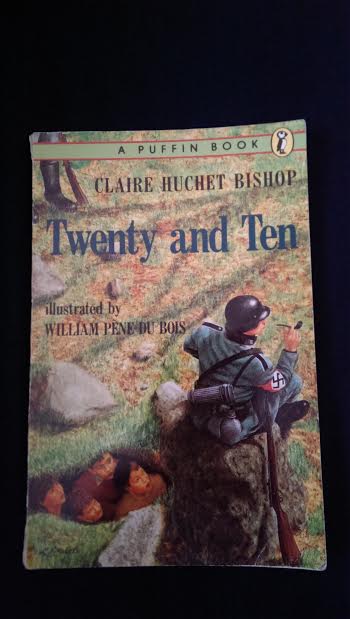
Twenty and Ten (1952)
A group of French school children hide Jewish children from the Nazis during World War II. By Claire Bishop.
This book is about hiding people from the Nazis to save them from the Holocaust.
Warrior Scarlet (1958)

A boy with a disabled arm learns to become a warrior in Bronze Age Britain. By Rosemary Sutcliff.
The Witch of Blackbird Pond (1958)
A teenage orphan girl comes to live with puritan relatives in Colonial America. Unused to the ways of the puritans and making friends with a community outcast, she is suspected of being a witch. By Elizabeth George Speare.
Series
All-of-a-Kind Family Series
Five sisters belonging to a Jewish family have slice-of-life adventures while growing up in 1910s New York. By Sydney Taylor. 1951-1978.
Little Britches Series
A family moves to a Colorado ranch in the early 1900s, and a boy struggles to be the man of his family after the death of his father. Based on events in the author’s life. By Ralph Moody. 1950-1968.
Little House on the Prairie Series
A young girl homesteads with her family on the American frontier during the 1800s. By Laura Ingalls Wilder. 1932-1953.
Picture Books
Bartholomew the Beaver (1952)
Bartholomew the Beaver ignores all of the lessons that his parents try to teach him about the skills that beavers need to know because he’d rather play and goof off instead. However, when a wolf appears, Bartholomew sees the purpose for those skills. By Ruth Dixon, illustrated by Alice Pierce.

The Blind Men and the Elephant (1959)
A group of blind men set out to learn about elephants, which they have never seen, and discover something about perspective and gaining an understanding of large, complex issues.
The Cat in the Hat (1957)
A cat in a striped hat suddenly shows up to entertain two children while their mother is out of the house, but his wild antics make a terrible mess. This book was meant to be a more entertaining form of early reading book than the Dick and Jane primers used at the time because the primers were a bit dull and didn’t make children really interested in reading. By Dr. Seuss.

Cinderella (1954)
A retelling of the traditional fairy tale of Cinderella. Translated and illustrated by Marcia Brown.
The Extra Egg (1957)
A hen hatches a duck egg, and the young duck thinks that he’s a chicken. By Edna A. Anderson.
A Fly Went By (1958)
A series of animals goes rushing past a boy. What are they all running from? By Mike McClintock.

The Funny Hat (1959)
Little Sally wants to go to the circus, and she gets her wish with the help of a funny hat that blows onto her head in the wind. By Marjorie Barrows
Harold and the Purple Crayon (1955)
A four-year-old boy creates his own world by drawing it with a purple crayon. By Crockett Johnson.
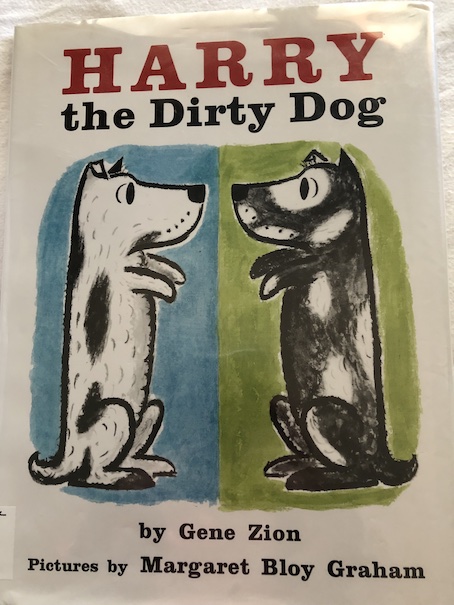
Harry the Dirty Dog (1956)
Harry is a white dog with black spots, but he really hates baths. When he gets dirty enough that he starts looking like a black dog with white spots and his family has trouble recognizing him, Harry sees the benefit of getting a bath. By Gene Zion, illustrated by Margaret Bloy Graham.
Home for a Bunny (1956, 1961)
A little bunny searches for a new home during the spring. Little Golden Book. By Margaret Wise Brown, pictures by Garth Williams.
Horton Hears a Who! (1954)
Horton the Elephant discovers a tiny world of people the size of a speck. But, he realizes that even very small people are still people, and he promises to protect them. By Dr. Seuss.
The House of Four Seasons (1956)
A family tries to decide what color to paint their new house. By Roger Duvoisin.
How the Grinch Stole Christmas! (1957)
The Grinch is annoyed by the noisy Christmas festivities in Whoville, so he plots to ruin their Christmas by stealing all of their presents and decorations. However, the Whos don’t react the way the Grinch expects, which leads to a revelation about what the Christmas spirit means and the Grinch’s change of heart. By Dr. Seuss.
I Can Fly (1950)
A little girl who is playing sings about how she is like different animals. A Little Golden Book.
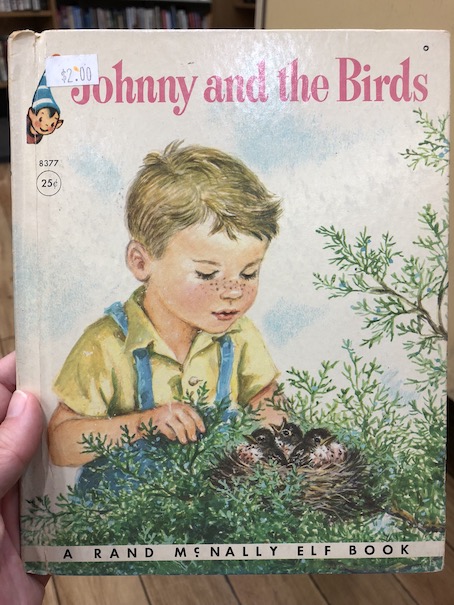
Johnny and the Birds (1950)
A young boy observes and makes friends with wild birds.
Katy Comes Next (1959)

Ruth’s parents own a doll hospital, but because they are often busy, Ruth’s doll Katy gets neglected. Finally, Ruth’s parents realize that they need to make Katy a priority, and she gets the attention she deserves.
The Little Fir Tree (1954, 2005)
A small fir tree is chosen to be a living Christmas tree for a little boy who cannot walk. By Margaret Wise Brown, pictures by Jim Lamarche.
The Little Indian Pottery Maker (1955) and The Little Indian Basket Maker (1957)
Young girls from different Native American tribes learn traditional crafts from their families. By Ann Nolan Clark.
These books, which were written in the mid-1950s, were part of a group of stories (not exactly a series because they didn’t have a specific set of characters in common and the themes varied somewhat) written by a woman who was a teacher with the United States Indian Service. The books that she wrote focus on members of different Native American tribes. She was not Native American herself, and the modern view of Indian schools is not favorable (for good reasons), so one might be a little suspicious of a book written about Native Americans by an Indian school teacher. However, these books interest me because of their explanation of traditional crafts. There are no white people in the stories at all, and they have a timeless quality to them. According to Andie Peterson in A Second Look: Native Americans in Children’s Books, the author was deliberately trying to write books that her Native American students could relate to. Early in her teaching career, she realized that the pre-designed lessons that she was supposed to teach were not benefiting her students because they were outside their range of experience. The Language of Humor: An Introduction credits her with the following story about her first teaching assignment:
The first day I began teaching in a Bureau of Indian Affairs School on the Navajo reservation happened to be Columbus Day. At that time, all BIA schools had the same curriculum, and our lesson plans came pre-packaged. I was supposed to tell the story of Columbus discovering America. I told the story the best I could and included details about the Nina, the Pinta, and the Santa Maria. Afterwards, according to the lesson plan, I was supposed to ask the children to draw pictures of the three ships. I did as I was told and was absolutely amazed when every child in the room drew three sheeps instead of three ships. We hadn’t been communicating at all.
I grew up in Arizona, south of the Navajo reservation that straddles Arizona and New Mexico, and I understand. They raise sheep on the reservation, and it’s miles from the nearest ocean. These children understood sheep. They did not understand ships. I was never that excited about Columbus Day when I was a kid, either.

The Merry Christmas Book (1953)
A collection of Christmas songs and stories. By Jean Horton Berg.
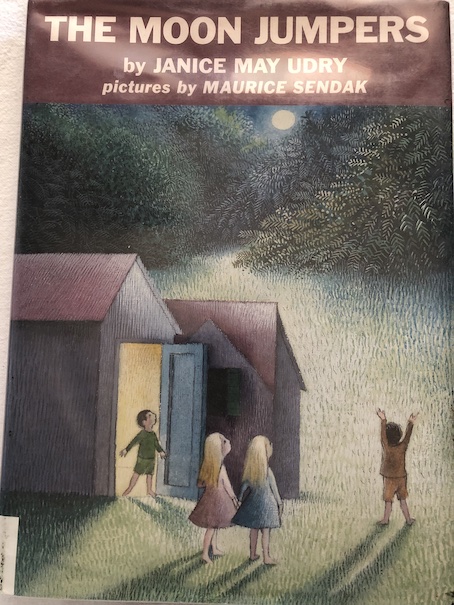
The Moon Jumpers (1959)
Four children and their black cat are enchanted by the beauty of a summer night as they play outside. By Janice May Udry.
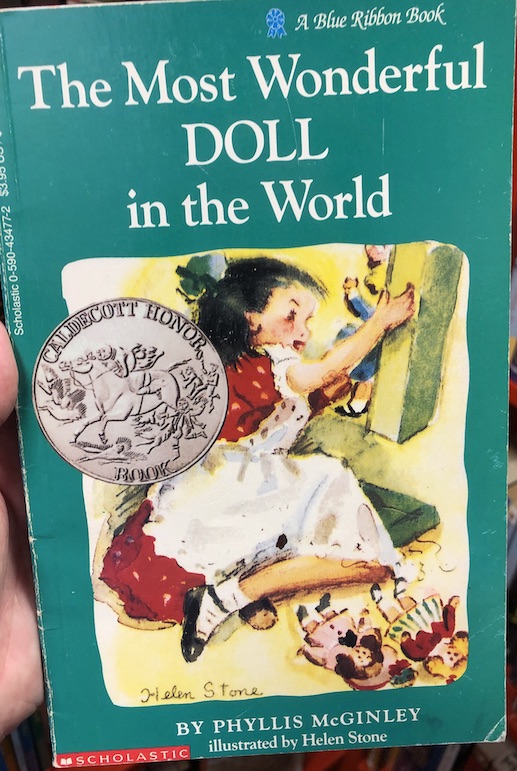
The Most Wonderful Doll in the World (1950)
Dulcy loses a favorite doll, but as she misses her lost doll and describes it over and over to other people, the doll becomes increasingly wonderful. How will she feel when the doll is finally found, and she realizes that her memories of the doll don’t match the reality? By Phyllis McGinley.
Mother Goose Rhymes (1950-1953)
A collection of children’s nursery rhymes. Illustrated by Eulalie.
One Morning in Maine (1952)
A little girl spends an enchanting morning with her father on the coast of Maine and loses her first tooth. By Robert McCloskey.
Snuggles (1958)
A kitten named Snuggles eats too much, even though her mother warned her not to. The interesting thing about this book is that the pictures are photographs of real cats in whimsical poses. By Ruth Dixon. Photography by Harry Whittier Frees.
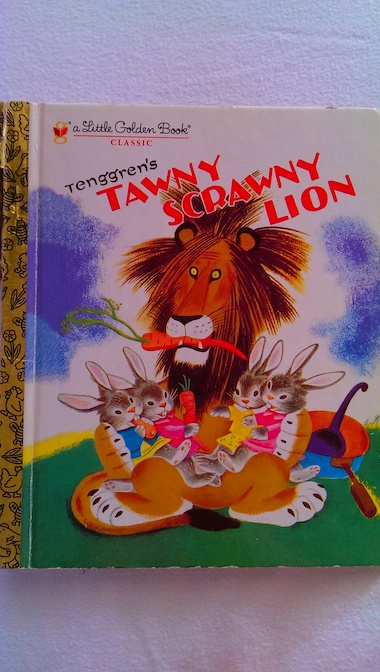
Tawny Scrawny Lion (1952)
The tawny scrawny lion can never seem to get enough to eat until the rabbit gives him some wonderful carrot stew.

Time of Wonder (1957)
A girl enjoys a special family vacation in Maine, made magical by the beauties of nature and her own imagination. By Robert McCloskey.
We Help Mommy (1959)
Two young children help their mother with household chores. Little Golden Book. By Jean Cushman, pictures by Eloise Wilkin.
Series
Curious George
A little monkey leaves the jungle and goes to live with the Man in the Yellow Hat. By H. A. Rey. 1941-1966.
Eloise Books
The adventures of a little girl who lives in the Plaza Hotel in New York City. By Kay Thompson. 1955-1959.
The adventures of a little girl who lives in a boarding school in Paris. 1939-2013.
Children’s Non-Fiction

The Big Book of Real Trains (1949, 1953, 1963)
Picture book about trains, the different types of train cars, and how trains work. By Elizabeth Cameron. Illustrated by George J. Zaffo.
The Diary of a Young Girl (aka The Diary of Anne Frank) (1947, 1952)
This is the published diary of Anne Frank. The original Dutch version was published in 1947, and the English versions were published in 1952.
This book is often used in schools, even today, to teach children about the Holocaust and WWII.
Fishes (1943, 1957)
A vintage children’s nonfiction science book about fish. By Bertha Morris Parker.
Freedom Train: The Story of Harriet Tubman (1954)
By Dorothy Sterling.
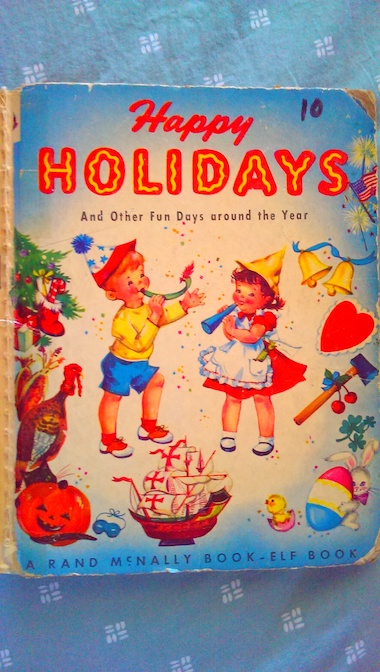
Happy Holidays (1953)
This book explains a little about the origins of various holidays and how they are commonly celebrated. For each holiday in the book, different children talk to their parents or friends about what different holidays mean and how they are planning to celebrate.
How; Sign Talk in Pictures (1952)
Kitschy book about Native American sign language written and presented by an actor famous for portraying Native Americans in films. By Iron Eyes Cody.
I Am Fifteen – And I Don’t Want to Die (1956)
Christine Arnothy was a fifteen-year-old girl during the siege of Budapest during World War II, and this book is based on the diary she kept during that time.
This is another book about civilians fleeing from the war.
It’s About Time (1955)
Explains the concept of time and how clocks and calenders work. By Miriam Schlein.
The Wonder Book of Trains (1952)
By Lisa Peters.
Series
Famous Biographies for Young People
This mid-20th century non-fiction series offers books containing short biographies of famous people. c. 1939-1977.
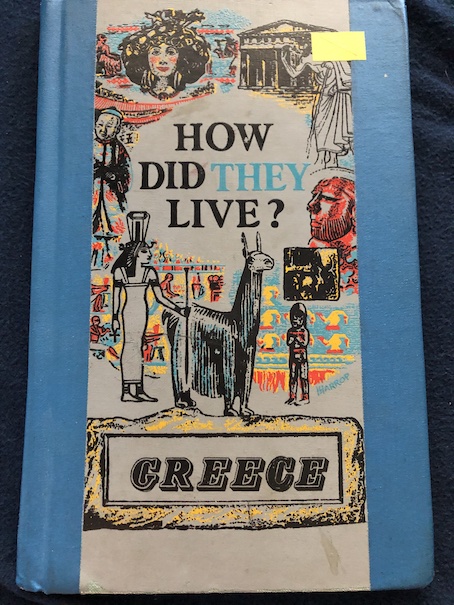
Vintage children’s book series about life in different countries around the world during different time periods. May also be known as “What Was Their Life?” 1945-1965.
This vintage children’s nonfiction book series covers various aspects of American history. There are related series that cover events and people in world history. 1950-1974, reprinted in later decades.
A series of nonfiction picture books on a variety of topics, published by Childrens Press.
Vintage children’s nonfiction book series about where different types of products come from. c. 1952-1954.
Children of the Decade
Children born in this decade in the United States:
Popular 1950s Names – Among the most popular names for children born in this decade were: Robert, Michael, James, Mary, Linda, and Patricia.
They were among those considered Baby Boomers, born during the sudden increase in population that followed the end of World War II. (Generational designations can sometimes be subjective, especially when defining exact years.) Some of them were the children of people who had served in the armed forces during that war.
No child in born in this decade would have experienced life before the World Wars. Atomic weapons were also a reality that had always existed for them, and fear of their use would be a major influence in their early lives.
They had been born during the Cold War and would be adults by the time that the Cold War drew to an end at the end of the 1980s and beginning of the early 1990s. All of them would be about 30 to 39 years old at the time that the Berlin Wall fell in late 1989. Because of their Cold War origins, they would have been raised with strong anti-communist feelings.
The older ones, born at the beginning of the 1950s, would remember a time before space flight, and all of them would have been old enough to understand the moon landing at the time it happened at the end of the 1960s and remember it afterward.
The older ones would also be old enough to remember when Hawaii and Alaska were admitted as states of the United States. The younger ones would not remember when there were less than 50 states, and people who were born in following decades would not see any new states admitted to the union or changes to the design of the American flag for the remainder of the 20th century and into the 21st century.
In their early years, although they would be taught to beware of strangers, they were far less worried about accepting homemade treats on Halloween than children in later decades, after stories of Halloween sadism spread. In fact, homemade treats such as cookies, popcorn balls, and candy apples were regular offerings at Halloween during their youth.
Throughout their lives, they would become comfortable with a variety of new technologies, seeing rapid technological changes such as:
- from records to cassette tapes to cds to music purchased electronically with no physical copies
- from their first television sets in black-and-white to color television to vhs tapes to dvds to movies and television streamed online
- increasing computer usage and the progression from floppy disks of various sizes to cds of computer games and software to downloads and updates for computer programs managed entirely through the Internet
- from corded phones to cordless phones to cell phones to smart phones that do far more than just make phone calls
Many of these changes would have happened when they were adults. Their children would be even more comfortable with technology than they were, having grown up with forms that their parents wouldn’t have had during their earliest years.
They did not have home computers or video games when they were young, but many of their children would.
They would not have had use of the Internet and e-mail while still in school, not even those who went to college. Computer usage in general would have increased in popularity as they progressed through school and began their working lives. For the first part of their lives, when they needed something typed, it was done on a typewriter. If they needed two copies of something, they would either have to type using a sheet of carbon paper between a blank sheet and the page they were currently typing in order to make a second copy or just type the entire page twice over. Mistakes were either corrected with correcting fluid or the entire page simply had to be retyped until it was completely correct. This would be something that their children and grandchildren would have little or no experience doing.
Home tv was becoming common when they were very young, with many families purchasing their first television sets during the 1950s. However, color tv would not become common until the following decade. VCRs wouldn’t come into vogue until the 1970s. Some of them may have rented their first VCRs from video stores rather than owning them themselves. Before they had VCRs of their own, they just watched their favorite shows when they were on tv, at the time they aired, and if they missed them, they simply missed them. This was a simple fact of life that would change significantly later, eventually becoming almost unknown by their children and grandchildren.
All of them were already adults around the turn of the new millennium, all of them older than 40 years old. Most of them had children of their own at the time, and some may have even had grandchildren.
As adults, everyone born in this decade would be old enough to understand the events of September 11, 2001 at the time it happened and remember them forever after.
They were born around the time when school segregation was ending. They would be among the the first to attend newly-desegregated schools with a far more diverse student body than the schools their parents had attended. Racial makeup of churches and other religious institutions would vary by religion and region. Years later, some would have memories of times when there were separate bathrooms or drinking fountains for different races in the United States or when people of different races weren’t allowed into certain restaurants or other public places.
Children born in this decade would also have read books from the following decade, the 1960s, in their youth. However, children who were old enough to read some of the books published in the early part of this decade when they were first sold would have been born in the preceding decade, the 1940s.
Children’s Authors Were Children, Too!
Everyone was young once, and I’d just like to take this opportunity to remind readers that authors born around this time would have grown up like other children of their time, witnessing the same events and reading the same books as they grew up.
Children’s authors born in this decade:
Amy Hest – April 28, 1950 – Author of The Purple Coat (1986) and When Jessie Came Across the Sea (1997)
Bruce Coville – May 16, 1950 – Author of The Magic Shop series (1989-2003) and My Teacher is an Alien series (1989-1992)
Elvira Woodruff – June 19, 1951 – Author of The Magnificent Mummy Maker (1994), The Christmas Doll (2000), and The Ravenmaster’s Secret (2003)
Valerie Tripp – September 12, 1951 – Author of many books in the American Girls series
Lynne Cherry – January 5, 1952 – Author and illustrator of The Great Kapok Tree (1990)
Gary Soto – April 12, 1952 – Author of Taking Sides (1991), Summer On Wheels (1995), and The Cat’s Meow (1997)
Jane Hissey – September 1, 1952 – Author of the Old Bear and Friends books (1986-2016)
Paul Fleischman – September 5, 1952 – Author of Half-a-Moon Inn (1980) and Weslandia (1999) (He’s also the son of Sid Fleischman)
Robin McKinley – November 16, 1952 – Author of The Blue Sword (1982) and The Hero and the Crown (1984)
Paul O. Zelinsky – February 14, 1953 – Author and illustrator of many books, including Rapunzel (1997)
Carl Hiaasen – March 12, 1953 – Author of Hoot (2002)
Patricia C. Wrede – March 27, 1953 – Author of The Enchanted Forest Chronicles (1985, 1990-1995) and the Mairelon the Magician books (1991, 1997)
Christopher Paul Curtis – May 10, 1953 – Author of Bud, Not Buddy (1999) and The Watsons Go to Birmingham – 1963 (1995)
Louis Sachar – March 20, 1954 – Author of the Wayside School series (1978-2020), the Marvin Redpost series (1992-2000), and the Holes series (1998-2006)
Felicia Bond – July 18, 1954 – Author and illustrator of The Halloween Play (1983) and illustrator of If You Give a Mouse a Cookie (1985) and other books in the If You Give series.
Jon Scieszka – September 8, 1954 – Author of The True Story of the 3 Little Pigs! (1989), The Stinky Cheese Man and Other Fairly Stupid Tales (1992), and the Time Warp Trio series (1991-2005)
Tamora Pierce – December 13, 1954 – Author of the Song of the Lioness series (1983-1988) and the Circle of Magic series (1997-1999)
Polly Horvath – January 30, 1957 – Author of The Happy Yellow Car (1994), The Trolls (1999), and Everything on a Waffle (2001)
Graeme Base – April 6, 1958 – Author and illustrator of Animalia (1986) and The Eleventh Hour (1989)
Megan McDonald – February 28, 1959 – Author of the Judy Moody books (2000-2018)
Other Resources
Documentary Films
Some of these are full-length documentaries, others are clips, and some are just collections of vintage footage and reminiscences from people who lived during the time period.
CrashCourse
CrashCourse is a YouTube channel with fun educational videos on a variety of topics and different periods of history. The videos are fairly short for educational lectures. Most are less than 15 minutes long. These videos are intended for teenagers and older, so be aware that there may be topics and language inappropriate for younger children.
- Revolutions in Science and Tech: Crash Course European History #44
- Post-War Rebuilding and the Cold War: Crash Course European History #41
- Post-World War II Recovery: Crash Course European History #42
- The Cold War: Crash Course US History #37
- USA vs USSR Fight! The Cold War: Crash Course World History #39
- Civil Rights and the 1950s: Crash Course US History #39 – Discusses segregation in housing and education, Brown vs. the Board of Education.
Daily Life and Popular Culture in the 1950s
A YouTube video discussing daily life, particularly for middle-class Americans, and some major cultural trends during the 1950s. It discusses Dr. Spock’s philosophy of parenting, which became popular in the 1950s. The part about average salaries and prices helps add some context to family’s lives and how they could afford the things they needed.
This Cleveland DJ Popularized Rock ‘n’ Roll
Clips from a 1950s dance show with colorized footage. Helps explain the connection between rhythm and blues and rock and roll. From the Smithsonian.
William and Daisy Myers in Levittown, Pennsylvania: Case Study of racial inequality in 1950’s
This is a series of interviews of residents of Levittown, PA shortly after the famous incident of racial harassment and violence that occurred there during 1957 against the Myers family, the first black people to move into the new community. Language warning: Some of the people who were against having black neighbors were pretty frank about their reasons, and the “n-word” was used (although, to be fair, the one who used it was quoting someone else).
I debated about including something as negative as this, but I put it here for three reasons. One is that racial issues are of historical significance. Also, some of the people who were interviewed were welcoming of the black family and said so. Even more importantly, a major topic of the interview is what parents in the area were telling their children about the incident and how children seemed to be reacting to what their parents said and what happened. These people were typical people, raising typical 1950s children, so their attitudes and the attitudes that they taught their children show typical mindsets of the time, and these mindsets appear in children’s literature. This is part of the reason why I include warnings about racial terms children’s literature from the 1950s and earlier. This is the start of a major turning point in society, and the people in this video are kind of on two sides of it. I also thought it was interesting how the woman about 6:30 minutes into the program says that she doesn’t want to discuss the issue with her children because they wouldn’t understand but keeps talking about it while her son stands next to and behind her, clearly listening.
Something that this particular woman also focuses on is interracial marriage, a subject that also concerns the other people opposed to integration. If you’re wondering what the obsession is with this, consider that the people being interviewed here appear to be in their 30s or 40s. (Many are veteran families, which meant that the men were in their 20s or 30s and serving in the army in the previous decade.) That makes the time periods for their births in the 1910s and 1920s. If you read my sections on those decades, there was a resurgence of the Ku Klux Klan and strong feelings of prejudice in society during those periods. The parents of some of these people may have also been part of that. The film Birth of a Nation from 1915 partly helped to promote the KKK and feelings of prejudice, and one of the main issues from the second half of that movie (the more racist half) was the idea of interracial marriages (specifically forced ones, which I think was meant to be a euphemism for rape). What I’m trying to say is that this was a famous movie when these people were young, and probably a lot of them had seen it or had parents who liked it and talked about it, and when they’re talking about interracial marriage, I think some of them are picturing that idiot Flora throwing herself off a cliff to avoid the attentions of a fakey black man but with much less contempt than I feel for this scene because I think that they took it seriously. (For more information about this movie and its cultural influence, see this video.)
While I’m doing math, this video documentary is more than 60 years old. I don’t know what happened to the children the people in this video were talking about, but they would be elderly in the early 21st century.
Clips from a collection of home movies on 8mm that feature children playing games with their friends. Watch for the Hokey Pokey and Red Rover!
In The 1950s There Were Lots Of RULES
This is a clip from a longer program (the aspect ratio and sound are a little off) about how attitudes toward behavior and conformity in the 1950s influenced the way young people behaved when they were a little older, in the 1960s. Actual experiences in life varied, but this is apparently something that some people in the 1950s experienced. I can believe that this sort of conformity and control was a serious worry for some people not only because of the counter culture of the 1960s but the way issues of control and conformity entered popular entertainment and children’s literature. In the 1950s, there were teen rebellion movies, like Rebel Without a Cause (1955), and in the 1960s, science fiction books and shows, like the original Star Trek series, brought up the topic of suppression of creativity and independent thought. These themes came out in literature and entertainment because they were subjects on people’s minds.
I think that part of this emphasize on social rules and heavy instruction on how to be “normal” and function in society is actually part of the fallout from World War II. Civilians as well as those who served in the military suffered trauma because of the war, and it had some lasting effects on their mental states and outlooks on life. If you look at the videos and resources in my section on the 1940s, there are interviews with adults looking back on how their lives were affected by the war when they were children. In particular, in one of the videos about child evacuees from London, there was a man who said that, after the war was over, the adults expected all of the children to just settle down and be “normal”, but many of them couldn’t because the war had been going on for much of their young lives. To them, wartime conditions were normality. They didn’t really understand the type of “normal” the adults were thinking of or what they meant by settling down. I think this pressure to return to “normal” pervaded society in both Britain and the United States, even in places where children were not evacuated or their lives were less disrupted. In the adults’ desperation to return to “normal”, they started setting down hard rules to try to make kids be what they pictured as “normal” as an extension of their own unsettled feelings. Adults still dealing with the emotional trauma of war just wanted home life to be what they remembered or how they thought it should be, and they wanted the kids to behave in ways that wouldn’t jar their parents’ shattered nerves.
There was also an underlying element of unsettlement and fear among the adults as they realized that many things had changed in life and society since the war and that they would continue to change. For many, the specific version of nostalgic “normal” that they had in their minds was neither nostalgic nor shared by other people, and for all of those who wanted to return to it, there were plenty of others who wanted to move on with the new. The emerging suburban life with its emphasis on conformity clashed with a society that increasingly wanted change. The generation of people who were children during this time often found themselves in the middle, some following the examples of their parents’ version of normality but others searching for something else.
(Side Note: As a child in the 1980s and 1990s, I never had to watch educational videos in school about how to fit in socially and how to date. When the subject of dating came up, our teachers (possibly for legal reasons) always said that we should speak to our parents about the subject, very hands-off on personal issues. I also think fitting in, by itself, is overrated. If people are doing things that you don’t like or are actually really bad ideas, where’s the benefit of joining them?)
What The Baby Boomers Experienced
This video clip discusses what classrooms were like for Baby Boomers. It mentions overcrowded classrooms and discipline issues among the problems. It also discusses how education in America differed from education in Russia at the time. Changes in schooling at the time were related to the Cold War technology race, leading to an increased emphasis on math and science.
What High School Kids Were Like In The 1950s
An interview with high school students during the 1950s from a vintage television program. This is a small, mixed-race group that talks about things like current fashions and dating. My impression is that they are likely all college-bound, and that may have even been the reason why these particular kids were selected to be interviewed.
What The Future Meant To HS Students In 1958
This is an interview with a different group of high school students, mixed-race, about whether or not they’re going to college. This group is divided about whether they want to go to college or not. Some of them know they want to go, others wish they could if they could afford it, and others know definitely know that they won’t go to college. Their debates about the high costs of college, the usefulness of a college education, the purpose of liberal arts studies, and whether or not women can have both a family and a career are amazing similar to debates about the same issues in the 21st century.
For more about 1950s culture:
Major events of the decade.
Major events, timeline, stats, fashion, and fads.
Entertainment, fashion, trends, and statistics.
Lists of 1950s children’s books:
12 Books You’ll Remember If You Were a Child in the 1950s
Classic Children’s Books By The Decade: 1950s
Goodreads — Best Children’s Books of the 1950s
Wikipedia — 1950s Children’s Books
 Jestress's Forgotten Books and Stories