A Little History
Major Events and Cultural Shifts
After the more liberal 1960s, the U.S. started becoming more conservative again. However, many of the social changes that started or were promoted in the 1960s and earlier decades stuck. People maintained an interest in environmentalism and promoted the idea among their children. Segregation was illegal, and many children in the 1970s attended schools with far more diversity than their parents had. People were still concerned about career opportunities for women. Although the U.S. did not have a female president, other countries around the world did have female leaders, including Margaret Thatcher of the United Kingdom and Isabel Martinez de Peron of Argentina.
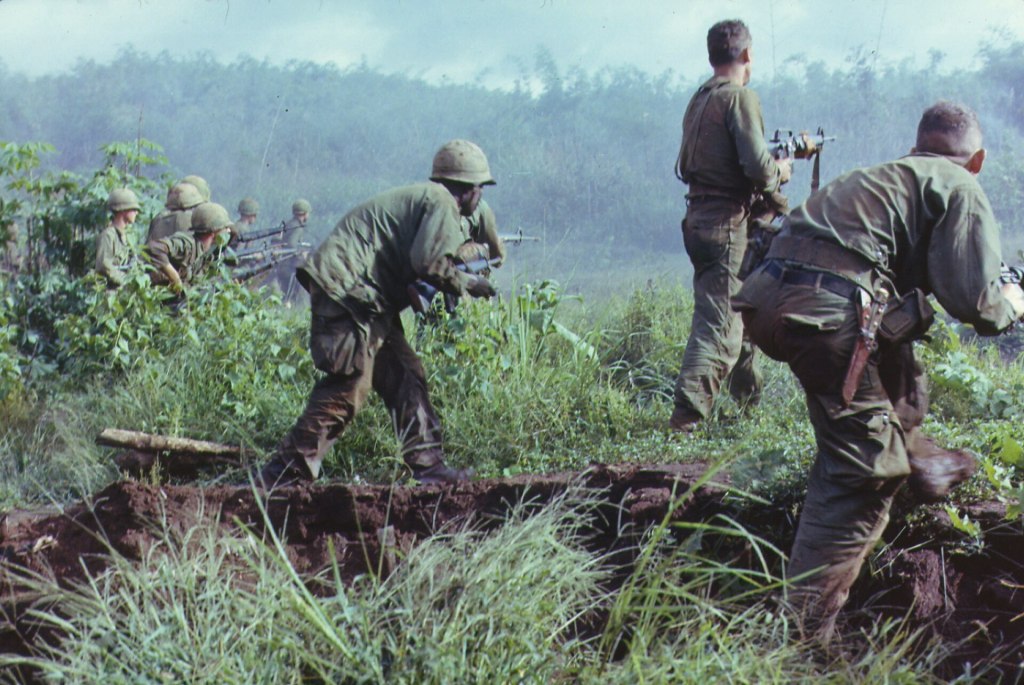
The decade was far from peaceful in spite of the persisting anti-war attitudes of many people. The anti-communist sentiments of the on-going Cold War had led the nation into the Vietnam War with troops already being sent during the 1960s. Anti-war demonstrations continued into the 1970s along with the fighting. Many of the soldiers who went overseas did so only because they were drafted. When the war ended and the last of the surviving soldiers returned home in 1973, many of them met with (undeserved, especially for those who had not gone by choice) scorn from members of the public for taking part in the bloody conflict, leaving the former soldiers with little or no sense of accomplishment or appreciation for the hardships they had endured. For many, it felt like it had all been a waste.
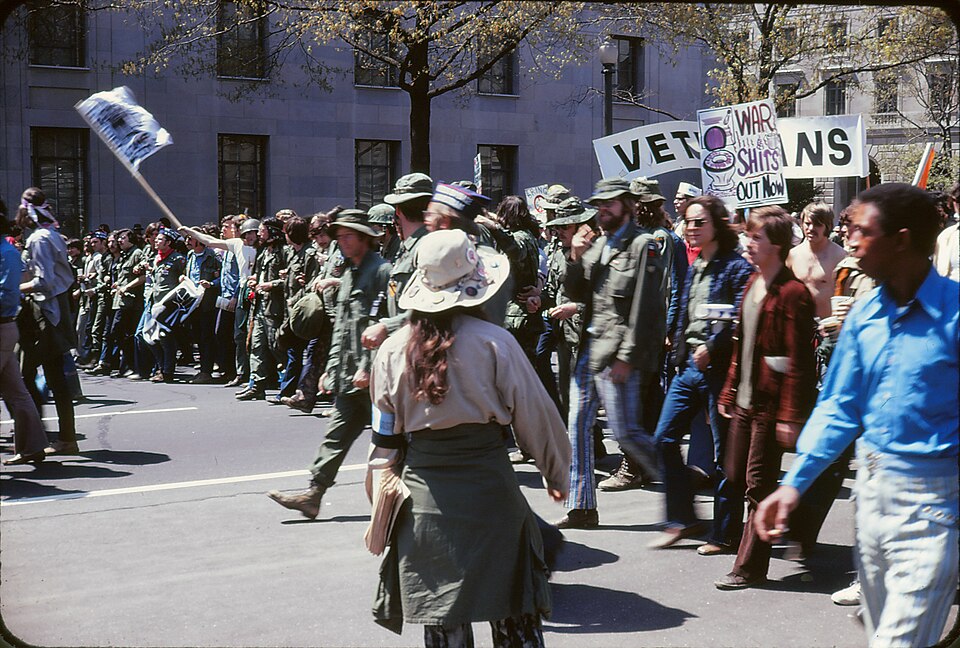
The voting age in the United States was lowered from 21 to 18 in 1971 because 18 was also the minimum draft age, and people argued that anyone considered old enough to die for their country should also be considered old enough to help choose its leaders.
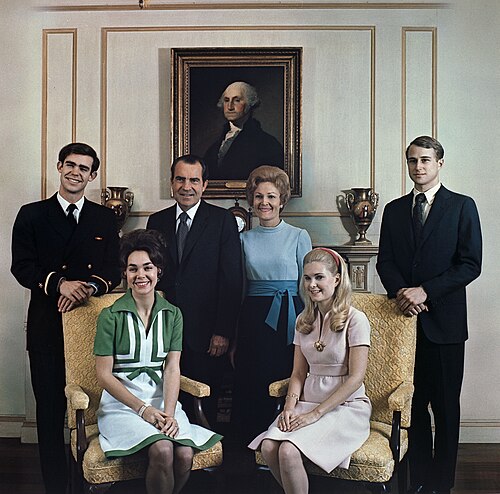
People also became increasingly distrustful of politicians because of political scandals such as Watergate. President Nixon resigned in order avoid impeachment.
The United States celebrated its Bicentennial in 1976, and you’ll see some patriotic themes in children’s literature and some nonfiction books focusing on Colonial America and the American Revolutionary War published during this decade.
Children’s Literature and Entertainment
In children’s literature, books for older children were showing an increasing tendency to tackle difficult topics which had been taboo in earlier decades, such as divorce, single parents, puberty (including Are You There, God? It’s Me, Margaret), racism, child abuse (including Lottery Rose) and drug use. It wasn’t that such topics were completely absent from children’s literature in earlier decades, but in the 1960s and 1970s, children’s literature began to deal with such topics in a more direct way and attempted to normalize conversations about difficult and sensitive topics. Such books were (and still are) frequently challenged and banned in school libraries, but the number of books on topics like this increased during the following decades. Young readers, supported by many adults, wanted to read about such topics because they reflected aspects of real life and real life concerns that they were trying to understand.
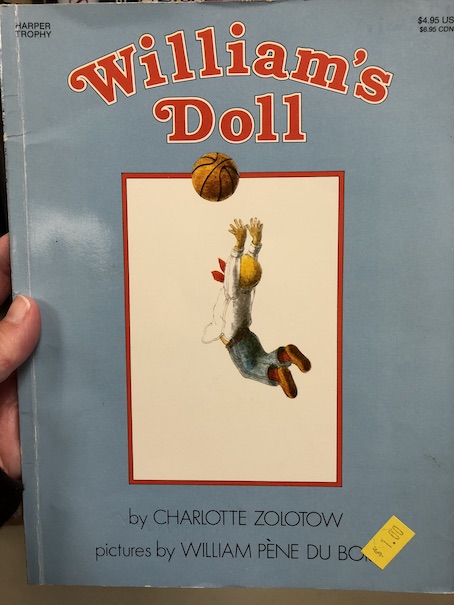
There was also a tendency toward books about self-acceptance for young children. It may have been partly a reaction to the focus on “normality” of the 1950s and a continuation of the counter-culture movement of the 1960s, but there were themes of acceptance of different types of people in the 1970s, including acceptance of people of difference races or the varied abilities and interests of girls and women in children’s books and entertainment. There were also themes of acceptance for people who develop a different rates from the “norm” (such as the book Leo the Late Bloomer) or whose personal tastes or interests were different from that of their peers (such as the book William’s Doll). Some books and children’s entertainment focused on helping children to understand and accept their own emotions, such as the book Ira Sleeps Over, which is about a little boy who’s a little nervous about his first sleepover and the fact that he still sleeps with a teddy bear and worries that his best friend won’t understand and Will It Be Okay? shows an understanding mother offering reassurance for her young daughter’s worries. The message of such books and children’s entertainment was that feelings are normal and that feeling or being a little different from everyone is also normal and acceptable.
Free to Be … You and Me is an iconic piece of children’s entertainment from this decade, starting as a book and record album set in 1972 and then made into a television special in1974. Its message was one of acceptance, including self-acceptance, acceptance of emotions, and acceptance of other people. Because Free to Be … You and Me was both a series of songs on the album and skits with songs on the television special, it drew on the talents of various actors, musicians, and authors of the time (including a poem by Shel Silverstein and songs sung by Diana Ross and teenage Michael Jackson, back when he was still known as a member of The Jackson 5 with his brothers), and one of the songs/skits was a musical version of William’s Doll.
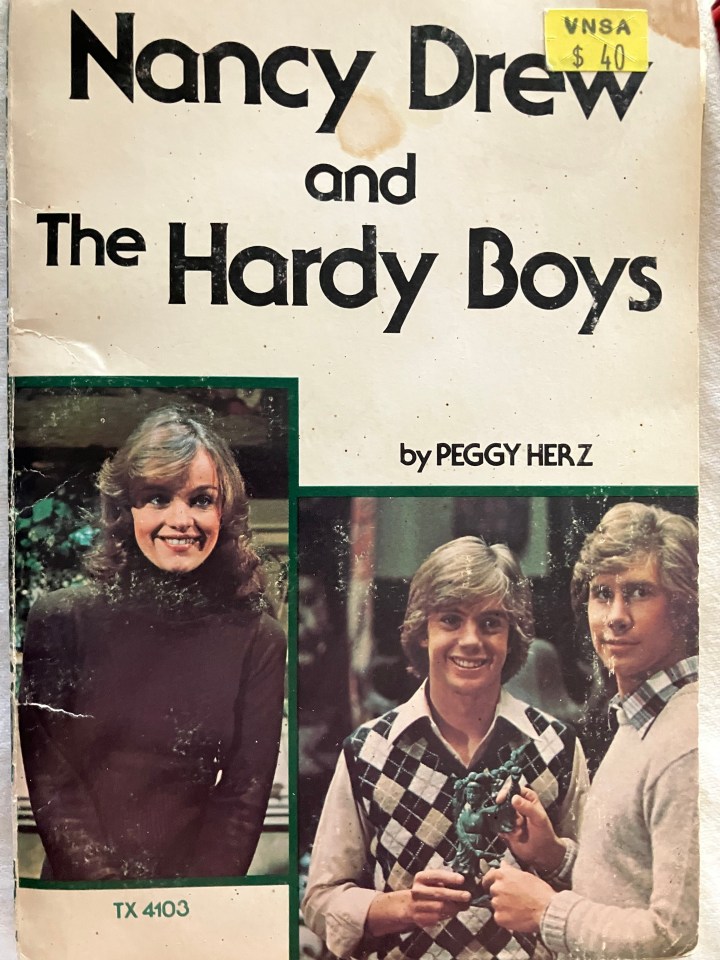
Two classic children’s mystery book series by the Stratemeyer Syndicate, Hardy Boys and Nancy Drew, appeared in a joint television show in the late 1970s. (This series is on dvd, and sometimes, you can also find clips or episodes on YouTube if you’ve never seen it.) This was not the first time that these characters appeared on television or film, but it was interesting because episodes in the second season of the show featured crossovers where Nancy Drew and the Hardy Boys met and worked together. Later, in the 1980s and 1990s, there was a crossover Nancy Drew/Hardy Boys book series, and the characters continued to be put together in books and computer games.
Rock and pop music were major cultural influences, and they frequently crossed over with other forms of children’s and teen entertainment, such as television shows and books. The role of Joe Hardy on the 1970s Hardy Boys and Nancy Drew was played by Shaun Cassidy, who was the son of Shirley Jones, who played the leader of a family of singers on another tv show called The Partridge Family in the early 1970s. Shaun Cassidy didn’t have a role on The Partridge Family, but he was also a singer, and he used his role on Hardy Boys and Nancy Drew to help promote his musical career, giving Joe Hardy a hobby as singer and guitar player and performing in some of the episodes. This also made Shaun Cassidy a teen heartthrob, like his older brother David Cassidy (who played the eldest boy singer on The Partridge Family), attracting some attention to the Hardy Boys portion of Hardy Boys and Nancy Drew from teen girls. Teens could read more about their favorite music and tv idols, like the Cassidy brothers, in the entertainment and pop culture magazine Tiger Beat (published from 1965 to 2021), and many fans kept posters of their favorite stars on their bedroom walls.
Two iconic children’s television programs, Mister Rogers’ Neighborhood and Sesame Street, began in the late 1960s. Both shows were educational and showed people of different races living side-by-side and being friends, and Mister Rogers’ Neighborhood in particular focused on helping children understand their emotions and some of the more difficult aspects of life in a reassuring way. A touching and memorable episode of Mister Rogers’ Neighborhood aired in 1970 dealt with the death of Mister Rogers’ pet fish, helping young children to understand concepts of grief and loss. Both of these shows were popular in the 1970s, and reruns and new episodes episodes remained popular in following decades.
A popular children’s educational cartoon, Schoolhouse Rock, also started in the 1970s. This series of short cartoons used songs to teach children lessons on various topics, including grammar, mathematics, history, and civics. Among the most popular episodes were Conjunction Junction (about the use of conjunctions in grammar) and I’m Just a Bill (about how bills become laws in American government). The series continued to be popular for decades afterward and commonly appeared on television in between other children’s cartoon shows and was frequently used in schools. (This video on YouTube explains more about the history of the show and its educational content.)
Another issue that becomes more prominent in children’s literature around this point is environmentalism. I haven’t been able to pinpoint the very first children’s book to address this topic yet (if you know what it was, you can tell me in the comments below), but environmental themes had already started to appear in children’s literature and started becoming increasingly prominent very early in this decade. The Lorax by Dr. Seuss was published in 1971, the same year that the Keep America Beautiful ad campaign appeared on television (known colloquially as the “Crying Indian” ads because they showed a man who appeared to be a Native American man weeping over the pollution of his ancestral lands – see also How; Sign Talk in Pictures for more information about this actor, who was not actually a Native American but was also right about the anti-pollution sentiment).
Along with other cultural issues, such as racism and war, environmental themes often appeared in children’s and young adult science fiction and fantasy books of the 1970s. Some authors imagined dystopian futures, where war and neglect of the environment set society back to more primitive forms, while others imagined that people of the future would develop new forms of society that would conquer these issues, and there were some books that hypothesized that humanity would reach a crisis point with these issues and then start finding ways to recover. I think these different approaches in children’s literature reflected uncertainty on the part of the adults, due to the on-going threat of nuclear weapons and the Cold War and increasing concerns about the effects of pollution on the environment. None of the adults knew what the future would be, and stories of this type were both an outlet for their concerns and an effort to get children thinking about what their generation would do about these issues, hopefully making responsible choices as they grew up to change the world for the better.
Some books with historical themes or time travel themes during this period reflect a kind of nostalgic longing for a simpler, cozier, and more organic way of life in the past that contrasts with the more complicated realities of the present and the uncertainties of the future. In particular, I’d like to call attention to Come Back, Lucy (aka Mirror of Danger), which is a Christmas ghost story about a young orphan girl who is tempted to escape the worrying realities of her life as she moves in with her very modern relatives by retreating into a charming Victorian past but is confronted by some of the dark realities of the past and her growing awareness that living means moving forward, and Tuck Everlasting, which is about a girl who is unhappy with her life and is offered the chance to join an immortal family and be young forever. Both of those books show a kind of tension between past nostalgia and the pull of the modern world and the need to continue into the future in the face of uncertainty. Not all children’s books with historical themes from the 1970s show that type of tension, though. Some were more about cozy nostalgia, adventure, and exploring exciting events from the past. Because the US was celebrating its Bicentennial in 1976, there were American children’s books with patriotic themes or that revisited Colonial America or the American Revolution.
A character who appeared on products for children from this period was Holly Hobbie, a pioneer girl wearing patchwork clothes and a large sun bonnet that frequently hid her face. The character was originally created as artwork for a greeting card company but was later made into a doll and decoration for products for girls, such as bedroom decor, clothes, stationery, jewelry, toys, and games. Because she didn’t come from a book or television series initially (although books and tv shows were created later around the character), Holly Hobbie didn’t have much of a backstory or personality as a character, but her distinctive patchwork style and old-fashioned charm appealed to a sense of nostalgia and longing for a cozy past and simpler way of life. (Holly Hobbie products were also sold in later decades. Although I was born in the 1980s, I had a plastic tea set with Holly Hobbie on it as a child and some bedroom decor that was a hand-me-down from an older cousin.)
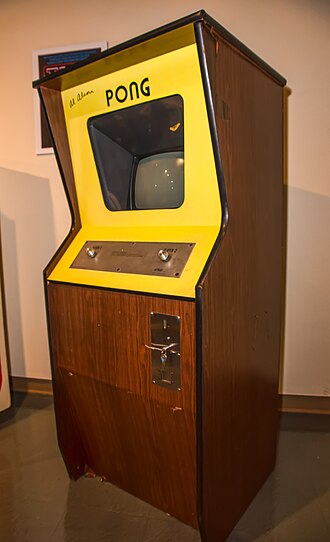
The 1970s was also the birth of arcade video games, although prototypes existed in the 1950s and 1960s. This was the beginning of the popularization of consumer video games, which could expand during the following decades.
Children’s Fiction Books
General Fiction
Humor

The Best Christmas Pageant Ever (1972)
The Herdmans are the worst kids in town! They’re bullies and thieves, and chaos follows them wherever they go. What will happen when they decide that they want to be in this year’s Christmas pageant? By Barbara Robinson.
Chocolate Fever (1972)
A boy who loves chocolate so much that he eats it with everything suddenly breaks out in chocolate spots. What can he do to cure his chocolate fever? By Robert Kimmel Smith.
How to Eat Fried Worms (1973)
One boy bets another $50 that he won’t eat a worm every day for 50 days. The other boy accepts the bet and spends the 50 days trying different ways of preparing the worms to make them taste better. By Thomas Rockwell.
Series

The Just William series is a vintage children’s book series from Britain. William Brown is an imaginative boy who frequently gets into trouble, often because he’s acting out things that he’s read in books and seen in movies. By Richmal Crompton. 1922-1970.
Also called the Bruno and Boots series. Bruno and Boots are a pair of pranksters at a boarding school in Canada. By Gordon Korman. 1978-1995.
Pippi is a girl with red pigtails that stick out from her head and amazing strength who lives alone in a small town in Sweden. Her father is king of an island of cannibals. 1945-1971.
Professor Branestawm is an an absent-minded inventor who gets into trouble with his inventions. By Norman Hunter. 1933-1983.
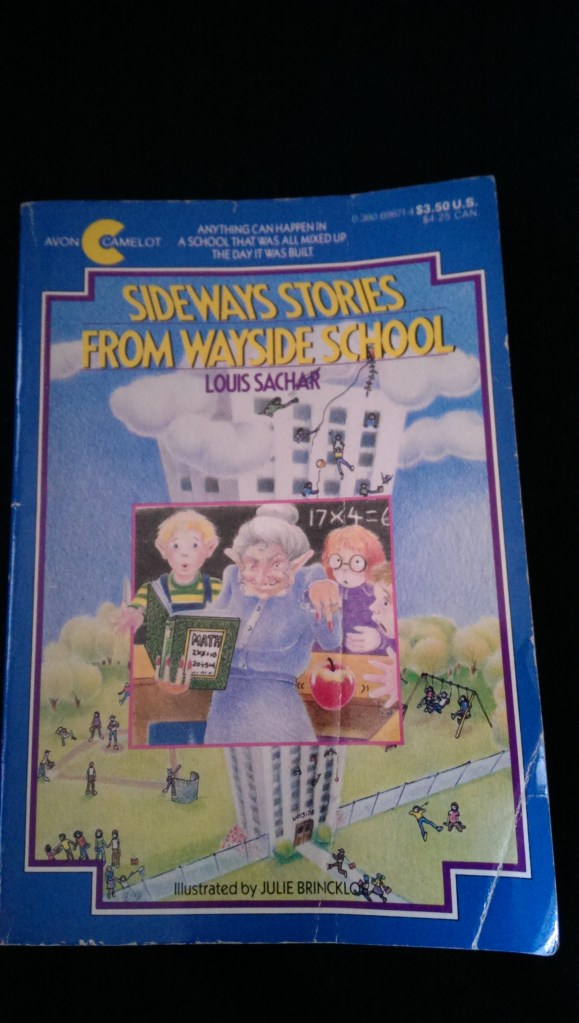
Short funny stories about a school that was accidentally built sideways. Nothing normal ever happens at Wayside School! By Louis Sachar. 1978-1995.
Adventure

The Rescue (1978)
A family on vacation has to save themselves from a sudden flood. By Mary Cunningham.
Runaway Ralph (1970)
Sequel to The Mouse and the Motorcycle. Ralph feels the need to get away from his family, so he uses his motorcycle to leave. He ends up at a kids’ summer camp and befriends a boy called Garf, helping to prove that Garf isn’t a thief. By Beverly Cleary.
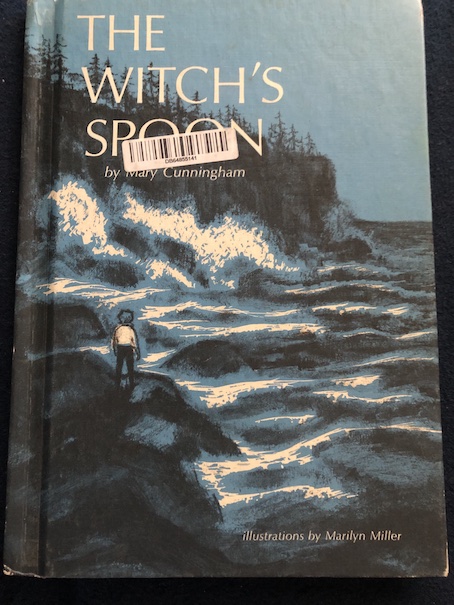
The Witch’s Spoon (1975)
Two children visit their grandmother beach cottage over the summer, getting to know a cousin they never met before and sharing a special day of freedom and adventure. By Mary Cunningham.
Series
Choose Your Own Adventure
A series of gamebooks where the reader was the main character of the story and had the ability to make decisions that would influence the the course of the story. There were multiple possible endings in each book, some good and some bad, depending on the readers’ choices. This series didn’t invent the concept of gamebooks, but it was a major influence in popularizing them. Each of the books were stand-alones, written by different authors, and they were also different genres. Many were fantasy stories, but others were science fiction and general adventure and some were mysteries or ghost stories. There are also several spin-off series. 1979-1998, 2005-Present.
The Mad Scientists Club Series
A group of boys who enjoy science and making things use their inventions are often part of pranks that they play on their small town, Mammoth Falls, but the boys also use their inventions and skills to help people. By Bertrand R. Brinley. 1965-1974, 2001-2005.
A society of mice helps to free human prisoners. By Margery Sharp. 1959-1978.
Scary

Blackbeard’s Ghost (1965, 1976)
A couple kids awaken the ghost of Blackbeard the pirate in an old tavern that’s about to be demolished. By Ben Stahl.
Come Back, Lucy (aka Mirror of Danger) (1973, 1974)
Lucy is a young orphan who was raised by her kind and old-fashioned aunt. When her aunt dies, Lucy goes to live with her cousins, a more boisterous and modern family. Lucy has a difficult time adjusting to her new home and life, but then, she makes an exciting discovery. Lucy finds a mirror in the attic that allows her to see and connect with a girl named Alice, who lived in the house 100 years earlier. At first, Lucy enjoys traveling back in time to visit Alice in the past, participating in a more peaceful, old-fashioned kind of life. However, Alice actually has sinister intentions for Lucy. By Pamela Sykes.

The book has two titles because it was originally published in the UK and retitled when it was published in the US. There is also a sequel from 1984 called Lucy Beware!
Down a Dark Hall (1974)
A young adult gothic horror novel about girls at a haunted boarding school who channel the spirits of famous people to complete their unfinished works. By Lois Duncan.
The Ghost Belonged to Me (1975)

The ghost of a young girl who died in an accident is haunting Alexander’s barn. She needs his help in order for her body to be found and returned to her family’s crypt in New Orleans. This is the first of the Blossom Culp books.
Gone Away (1979)
A farm girl in 1930s England attends school for the first time, boarding in a house in town that is haunted. By Ruth Tomalin.
The Halloween Tree (1972)

A group of friends tries to save their friend’s life on Halloween and learns some of the secrets behind the holiday. By Ray Bradbury.
The Red Room Riddle (1972)
Two boys in the 1920s investigate a local haunted house on a frightening Halloween night. By Scott Corbett.
Series
Lewis Barnavelt Series
Lewis Barnavelt is an orphan who lives in Michigan with his uncle, who is also a warlock. This is the series that includes The House with a Clock in Its Walls. By John Bellairs. 1973-2008.
Mystery
Fantasy
Science Fiction
The Power Twins (1976)
A pair of twins and their cousin discover that their uncle is not what he appears to be, and he takes them on an adventure in outer space. By Ken Follett.
Series

Danny is a boy who wants to be a scientist and has adventures with a professor at a nearby university and his inventions. By Raymond Abrashkin and Jay Williams. 1956-1977.
Miss Pickerell is an elderly woman who has scientific adventures with her pet cow. 1951-1986.
The Space Ship Under the Apple Tree Series
A boy scout finds an alien in his family’s apple orchard. The series is humorous as the boy tries to explain human behavior to the alien. By Louis Slobodkin. 1952-1972.
Sword of the Spirits Trilogy
In a dystopian future, society has reverted to a sort of pseudo-Medieval system controlled by clerics called “Seers” who use the will of the “Spirits” to dictate laws to the people. Christians are a persecuted minority, and anything having to do with old forms of science and technology is outlawed. By John Christopher. 1970-1972.
Tom Swift
The science fiction adventures of a boy inventor named Tom Swift. This series was released in several sub-series, some of which focused on the son of the original Tom Swift, Tom Swift, Jr. Some of the later series leave it vague whether the boy in the series is Tom Swift, Jr. or possibly the grandson of the original Tom Swift. The original Tom Swift series was written and published 1910-1941. Later series were released 1954-1971, 1981-1984, 1991-1993, 2006-2007, 2019. A Stratemeyer Syndicate series.
Historical Fiction
Picture Books
Children’s Non-Fiction

Bells (1970)
A children’s nonfiction book about the history of bells and legends and superstitions about them. By Elizabeth Starr Hill, illustrated by Shelly Sacks.
Castle (1977)
The story of the building of Medieval castle with detailed drawings and explanations about its architecture and defenses. By David Macaulay.
Cathedral (1973)
The story of the construction of a Medieval cathedral. The story takes place in a fictional town in France, Chutreaux, but it is based on the construction of real Medieval cathedrals. By David Macaulay.
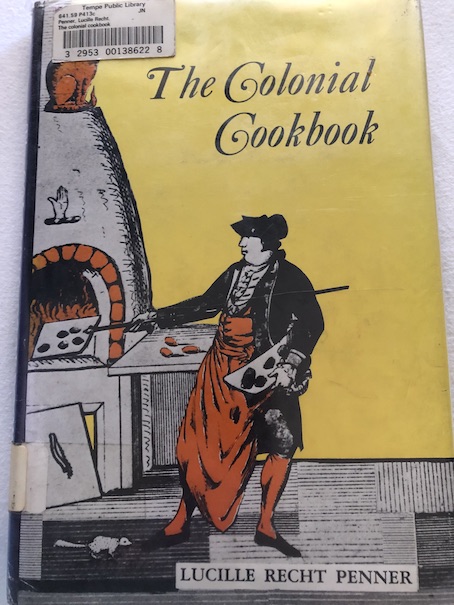
The Colonial Cookbook (1976)
This cookbook explains the history of food, cooking, and dining habits in Colonial America and provides recipes that readers can make themselves.
Going to School in 1776 (1973)
This book was about schools and subjects that children would study around the beginning of the American Revolution. It also talks about apprenticeships and other types of education and what it was like to grow up in Colonial America. By John J. Loeper.

Halloween Cookbook (1977)
A cookbook for children with Halloween, fall, and harvest-themed recipes.
The Little House Cookbook (1979)
This children’s cookbook is based on the foods eaten in the Little House on the Prairie series. By Barbara M. Walker, illustrated by Garth Williams.
Nancy Drew and the Hardy Boys (1977)
This is a nonfiction book about the 1970s television series of Nancy Drew and the Hardy Boys with interviews of the actors. By Peggy Herz.
Raggedy Ann and Andy’s Cookbook (1975)
This children’s cookbook is inspired by the classic Raggedy Ann and Andy stories, and the recipes are accompanied by illustrations from the original books and quotes from the stories. By Nika Hazelton.
Seashells for Katie and Andy (1973)
A couple of children look for seashells on the beach with their grandmother, and she tells them a little about each of the shells they find. By Solveig Paulson Russell, illustrated by Marjorie Cooper.
Series
Famous Biographies for Young People
This mid-20th century non-fiction series offers books containing short biographies of famous people. c. 1939-1977.
A series of how-to hobby books for children also called the KnowHow Books.
This non-fiction series describes to children what it would be like to live in certain periods of history or to take part in certain historical events.
The classic children’s hobby and activity book series from Klutz Press. Each book comes with materials needed for the hobbies and activities. 1977-Present.
This vintage children’s nonfiction book series covers various aspects of American history. There are related series that cover events and people in world history. 1950-1974, reprinted in later decades.
This is a series of craft and cook books, mostly themed on holidays. The Little Witch and her friend the Goblin and other friends give readers tips for making crafts and recipes and sometimes throwing holiday-themed parties and playing games. By Linda Glovach. 1972-1989.
Nonfiction picture book series that takes readers back in time to show how different types of people lived in the past.
Children of the Decade
I saw Star Wars at least eight times
Had the Pac-Man pattern memorized
And I’ve seen the stuff they put inside Stretch Armstrong, yeahI was Roger Stauback in my back yard
Had a shoebox full of baseball cards
And a couple of Evel Knievel scars
On my right armWell, I was a kid when Elvis died
And my mama criedIt was 1970 somethin’
In the world that I grew up in
Farrah Faucett hairdo days
Bell Bottoms and 8-track tapesLookin back now, I can see me
And oh man, did I look cheesy?
But I wouldn’t trade those days for nothin’
Oh, it was 1970 something
– 19 Something’ by Mark Wills (2002)
Children born in this decade in the United States:
Popular 1970s Names – Among the most popular names for children born in this decade were: Michael, Christopher, Jason, Jennifer, Amy, and Melissa. (In the United States, people were starting to shift from using some of the names that had long been considered classics. For the first time in decades, John and James were not among the top three names for boys, and Mary dropped below the top ten!)
None of them would remember a time before space flight or before human beings had walked on the moon. They would be old enough to have memories of the Challenger disaster of 1986, although some of the youngest ones may not have fully understood what was happening at the time.
They would be old enough to understand and remember the fall of the Soviet Union and the end of the Cold War at the end of the 1980s and early 1990s. Everyone born from 1972 and onward were legally children at the time of the fall of the Berlin Wall in late 1989, age 17 and younger. Those born in 1979 would only have been about 10 years old.
In their early years, especially for those born later in the decade, they would be taught in school to beware of strangers and made aware of the existence of dangerous individuals around them. There were stories of Halloween sadism during both the 1970s and 1980s, and their teachers and parents carefully taught them never to accept unwrapped Halloween treats or any food from anyone they didn’t know.
They were among the first to start using the Internet and e-mail while still in school, although Internet use was getting popular around the time that many of them were finishing their education, and there were not yet many sources of information available online that they could use when writing their school reports.
They were among the first to have video games that they could play at home as well as ones in public video arcades.
Home tv was pretty much a given when they were kids, and almost all of it was in color. VCRs also came into vogue when they were young. Some of their parents rented their first VCRs from video stores rather than owning them themselves. Those who didn’t have VCRs of their own just watched their favorite shows when they were on tv, at the time they aired, and if they missed them, they simply missed them. This was a simple fact of life that would change significantly later, almost unknown by their children.
Throughout their lives, they would become comfortable with a variety of new technologies, seeing rapid technological changes such as:
- from cassette tapes to cds to music purchased electronically with no physical copies
- from vhs tapes to dvds to movies and television streamed online
- from floppy disks of various sizes to cds of computer games and software to downloads and updates for computer programs managed entirely through the Internet
- from corded phones to cordless phones to cell phones to smart phones that do far more than just make phone calls
Their children would be even more comfortable with technology than they are, having grown up with forms that their parents wouldn’t have had during their earliest years. They would also be among the first to post pictures of their children online, starting when those children were babies.
All of them would have been old enough to understand and remember the Columbine High School shooting in 1999. Most them would have finished their education by that point, and those who were still in school would have been in college.
They were already adults around the turn of the new millennium. The youngest among them were college age. Many of the older ones had young children of their own at the time.
As adults, everyone born in this decade would be old enough to understand the events of September 11, 2001 at the time it happened and remember them forever after.
None of them would have lived during a time when schools were segregated. Racial makeup of churches and other religious institutions would vary by religion and region. None of them would live during a time when there were separate bathrooms or drinking fountains for different races in the United States or when people of different races weren’t allowed into certain restaurants or other public places. Almost all (with a few odd exceptions) 1970s children would find such concepts repulsive later in life.
Children born in this decade would also have read books from the following decade, the 1980s, in their youth. However, children who were old enough to read some of the books published in the early part of this decade when they were first sold would have been born in the preceding decade, the 1960s.
Other Resources
Documentary Films
Some of these are full-length documentaries, others are clips, and some are just collections of vintage footage and reminiscences from people who lived during the time period.
CrashCourse
CrashCourse is a YouTube channel with fun educational videos on a variety of topics and different periods of history. The videos are fairly short for educational lectures. Most are less than 15 minutes long. These videos are intended for teenagers and older, so be aware that there may be topics and language inappropriate for younger children.
- USA vs USSR Fight! The Cold War: Crash Course World History #39
- The Rise of Conservatism: Crash Course US History #41 – A reaction to changes in the US during the 1960s, particularly the Civil Rights Movement. This is when former Southern Democrats switched to the Republican party.
-
Ford, Carter, and the Economic Malaise: Crash Course US History #42 – Also covers the energy crisis of the 1970s, which is the direct reason why my parents’ house does not use natural gas, while others the older half of the neighborhood, built only a few years before, do.
NYC Man-On-The-Street Interviews–1979
Interesting outtakes from a man-on-the-street interview series on Wall Street in New York City in 1979. The interviewer asks people questions about their views on government, corporations, computers, and how they feel about living in an “information society.” (The woman in the blue dress who appears about 4 minutes in has some thoughts about that which sound very much like what people say in the early 21st century – people are inundated with an abundance of information, and it’s overwhelming, but it can’t be helped, and there’s no way to escape from it.)
Daily Life and Popular Culture in the 1970s
A nostalgia video about popular culture and standards of living in the 1970s.
THE ULTIMATE FASHION HISTORY: The 1970s (Part I)
THE ULTIMATE FASHION HISTORY: The 1970s (Part II)
A two-part educational lecture about fashion fads of the 1970s.
For more about 1970s culture:
16 Things Only People Who Grew Up in the ’70s Will Remember
About 1970s fashions and fads.
General information about events of the decade.
The 1970s: American Pop Culture History
Stats, major events, and culture.
Major events around the world.
Major events, timeline, stats, fashion, and trends.
Entertainment, fashion, trends, and statistics.
Lists of 1970s children’s books on other sites:
1001 Children’s Books You Must Read Before You Grow Up: 1970s
 Jestress's Forgotten Books and Stories


