This is a list of children’s fantasy books from the 1970s.
Individual Books

And This is Laura (1977)
Laura worries that she’ll always be boring and ordinary compared to her siblings, but she has an usual talent that nobody realizes. She is psychic. By Ellen Conford.
The Bassumtyte Treasure (1978)
Young Tommy Bassumtyte, an orphan, goes to live with a distant cousin of the same name in England. His resemblance to a distant ancestor of theirs helps him to travel through time and solve the mystery of a missing treasure.

The Court of the Stone Children (1973)
A lonely girl who loves museums encounters a ghost who needs her help to learn the truth about the past.
Eight Days of Luke (1975)
David, an orphan who lives with mean and neglectful relatives when he’s not at boarding school, accidentally summons a boy named Luke with magical powers. Characters and events tie in with Norse mythology. By Diana Wynne Jones.
The Enchanted Forest (1856, 1974)
A fairy tale type story about a princess and her magical adventures. Originally written in French. By La Comtesse de Segur. Translated to English by Beatrice Schenk de Regniers, who also make some alterations to the story.
The Farthest-Away Mountain (1976)
A girl has the goals of traveling to the Farthest-Away Mountain (which was once a happy, magical place until it was corrupted by the son of an evil sorcerer), speaking to a gargoyle, and marrying a prince. When the time comes for her to fulfill her goals, she learns that her destiny isn’t quite as she imagined it to be, but it’s still fantastic. By Lynne Reid Banks
Freaky Friday (1972)
This is the book that the Disney movies of the same name were based on. A teenager who thinks that her mother’s life is easier than hers discovers one morning that they have inexplicably swapped places, gaining some insights about herself and what it really means to step into someone else’s shoes. By Mary Rodgers.
The Ghost of Thomas Kempe (1973)
A boy and his family move to an old house in an English village and discover that it’s haunted by the ghost of a 17th century sorcerer. By Penelope Lively.
The Last of the Really Great Whangdoodles (1974)
Some children befriend an eccentric professor who explains to them that many creatures that are supposedly imaginary actually exist and used to be part of our world. They journey to a magical land to meet the last of the Whangdoodles, but they have to pass a number of traps and tests to reach him. By Julie Andrews Edwards.
Mrs. Frisby and the Rats of NIMH (1971)
Mrs. Frisby is a widowed mouse who needs the help of some former lab rats to save her home from a farmer and her son from pneumonia. By Robert C. O’Brien.
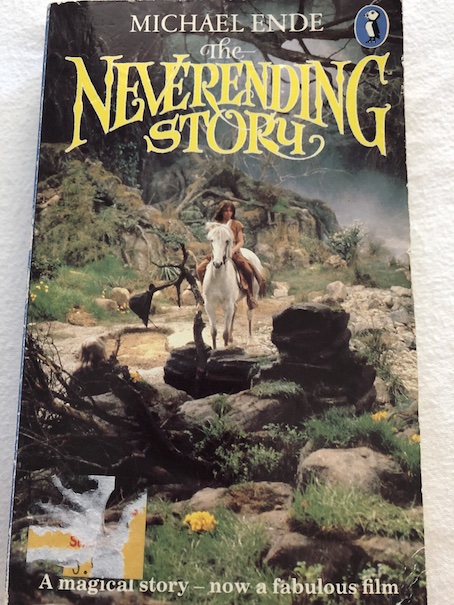
The Neverending Story (1979, 1983)
A bullied boy steals a book from a bookshop and reads it secretly while hiding in his school, finding himself becoming part of the story. The book was originally published in German, and the English edition was released in 1983. By Michael Ende.
A Pattern of Roses (1972, 1975)
A boy whose parents are renovating an old cottage in England begins learning about the history of the house and another boy who once lived there and died under mysterious circumstances years ago. As he investigates the mystery, he finds that events from this past boy’s life are strangely also beginning to happen to him as well. The US edition of this British book is called So Once Was I. By K. M. Peyton.
The Perilous Gard (1974)
A young woman in Tudor England rescues a little girl who has been abducted by fairies. By Elizabeth Marie Pope.

The Practical Princess (1978)
A book of short stories with brave, clever, and practical heroines.
Princess Tales (1971)
A collection of princess stories by various authors, including retellings of some classic fairy tales. Edited by Nora Kramer, illustrated by Barbara Cooney.
A Stitch in Time (1976)
A modern girl, Maria, makes a connection with a girl from the Victorian era, Harriet, who used to live in the house that her family has rented during the summer. Maria is an imaginative girl, who isn’t sure at first if she’s just imagining it when she seems to hear things from the past of this house that no one else hears, like a dog barking (when there’s no dog around), a swing creaking (when there is no swing outside in the present), and piano music in the parlor (which no one is playing). When Maria finds Harriet’s old sampler, her connection to Harriet grows, and Maria senses that Harriet may have suffered a tragedy in the distant past, eventually learning that the tragedy isn’t quite what she thought it was. By Penelope Lively.
A String in the Harp (1976)
An American boy who has recently moved to Wales with his family finds a magic tuning key that once belonged to the legendary bard Taliesin that gives him and his family visions of the distant past. By Nancy Bond.
The Talking Parcel (1974)
A group of children must save the magical land of Mythologia, which is full of mythological creatures, from cockatrices. Also published under the title The Battle for Castle Cockatrice. By Gerald Durrell.
To Nowhere and Back (1975)
Elizabeth thinks of herself as being a realist, but what can she think when she finds herself traveling back in time and seeing events 100 years ago through the eyes of another girl? By Margaret J. Anderson.

The Trouble with Magic (1976)
Two kids free a wizard with a magical umbrella from a bottle and have adventures with him in New York. By Ruth Chew.
Tuck Everlasting (1975)
A runaway girl discovers a family of people who accidentally made themselves immortal by drinking from a magical spring. The girl considers what it would really mean to be immortal and faces the choice of whether she would want that for herself as well. By Natalie Babbitt.
Series

There are multiple parallel universes, where everyone has at least one double, living in different circumstances in different worlds, but once in a while, there is someone born who has no doubles in any of the other worlds, so all of the magical powers and talents that might have been spread among the doubles are all centered on one person, called the Chrestomanci. By Diana Wynne Jones. 1977-2006.
The Dalemark Quartet
In a parallel universe, the land of Dalemark is a divided land ruled by earls. By Diana Wynne Jones. 1977-1979, 1993.
A group of people known as the “Old Ones” struggle against the forces of evil. This series draws on Arthurian legends, mythology, and folklore. By Susan Cooper. 1965-1977.
Girls of the Good Day Orphanage
Strange and wonderful things happen around the girls at the Good Day Orphanage. Magical realism. The series includes the book Good Charlotte. By Carol Beach York. 1967-1992.
The adventures of a haunted English mansion and the people who live there at various times. 1954-1976.
This metaphysical fantasy book series that focuses on the Hall family of Concord, Massachusetts and references Transcendentalist literature and famous literary figures. The best-known book in the series is the first one, The Diamond in the Window. By Jane Langton. 1962-2008.

This short series of time travel stories is about children who reach out of their own time periods to touch others living in the past and in the future in order to change their world for the better. The series centers on themes of climate change and war and how we respond to changes in the world around us. By Margaret J. Anderson.
A magical nanny comes to take care of children and take them on amazing adventures. 1934-1988.
Raggedy Ann and her brother, Raggedy Andy, are rag dolls who come to life and have magical adventures. By Johnny Gruelle. 1918-1975.
Books in the Wonder-Story Books series are collections of fairy tales and folktales that were also used as reading primers. 1938, 1953, 1962, 1976.
Mildred Hubble is the worst witch at witch school, but sometimes, being a little different from everyone else can be a good thing. By Jill Murphy. 1974-2018.
 Jestress's Forgotten Books and Stories