This is a list of children’s general fiction books from the 1970s.
Some of the topics in children’s fiction during the 1970s would have been taboo in earlier decades, like divorce, child abuse, and puberty.
Individual Books
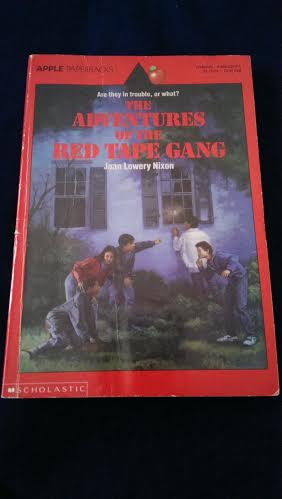
The Adventures of the Red Tape Gang (1974)
A group of neighborhood friends form a club to right the wrongs of their neighborhood.
Are You There, God? It’s Me, Margaret (1970)
Eleven-year-old Margaret Simon’s family moves to a new house, and she ends up making new friends and questioning many things about life and growing up. By Judy Blume.
The Cat Ate My Gymsuit (1974)
A girl with poor self-confidence is inspired by an unconventional teacher who changes the way she looks at herself and other people. By Paula Danziger.
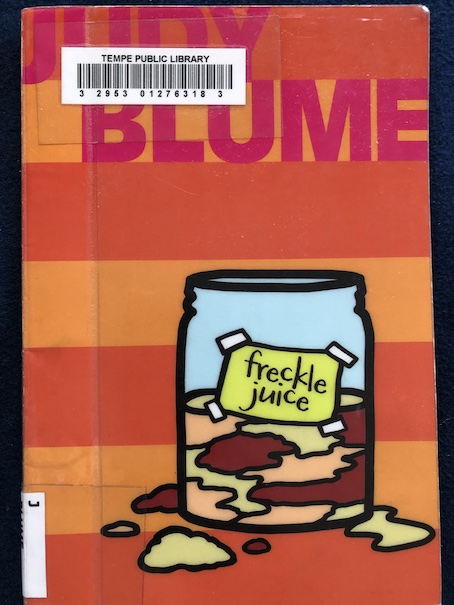
Freckle Juice (1971)
A boy who wants freckles buy a secret formula from a classmates that she promises will give him freckles. By Judy Blume.
The Great Gilly Hopkins (1978)
Galadriel “Gilly” Hopkins is a foster child who has lived in different foster homes. Unhappy with her current situation, Gilly runs away to find her birth mother, hoping that she will be able to live with her again. Gilly has idealized visions about what her mother will be like when she meets her, but what will she do when she sees that her birth mother isn’t really the way she imagined her? By Katherine Paterson.

The Lancelot Closes at Five (1976)
Two girls in a new housing development attempt a stunt of spending a night hiding out in one of the neighborhood’s model homes. By Majorie Weinman Sharmat.
Lottery Rose (1976)
Georgie, an abused boy, wins a rose bush in a lottery, and it comforts him when he is taken away from his abusive mother to start a new life at a boarding school.
Magdalena (1971)
A Puerto Rican girl living in New York is asked to make friends with a difficult girl at school, changing both of their lives. By Louisa R. Shotwell, illustrated by Lilian Obligado.
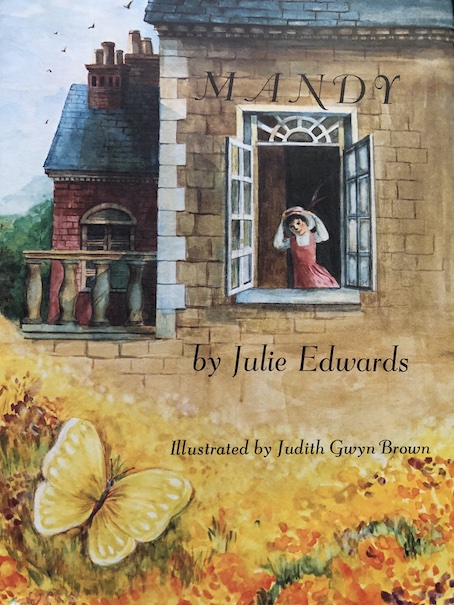
Mandy (1971)
An orphan who longs for a real home of her own sneaks away from the orphanage and finds an old cottage, which she fixes up and makes into her special place. By Julie Andrews Edwards.
Sarah and Katie (1972)
Sarah and her best friend, Katie, have been writing a play together that their class will perform for their Thanksgiving celebration. Originally, the understanding was that Katie would play the lead character, a wealthy and generous but frail girl. However, a new girl has joined the class, and Sarah is fascinated because she looks just the way that she had pictured the wealthy girl in the play. The new girl turns out to be a good actress as well, and when Sarah decides that they should let her have the lead in the play, it affects her friendship with Katie. There is kind of a moral to the story because, while the new girl looks more the way Sarah pictured the character in the play, Sarah remembers that Katie was always the true model for the character because the character’s generosity, which is the heart of the play, is really Katie’s generosity and caring. Appearances aren’t everything. By Dori White.

The Secret Summer (1970)
A brother and sister run away from their harsh baby-sitter to spend the summer secretly at the lake. By Ruth Chew.
Susan’s Magic (1973)
A purchase at a rummage sale starts a series of events that lead Susan to be involved with a stray cat and the owner of an antiques store who needs help. Susan’s involvement helps make things better for everyone, although Susan has to make some sacrifices in the process. In return, she makes new friends, earns their respect, develops a new sense of identity, and makes peace with her parents’ divorce. By Nan Agle.
The Vandals of Treason House (1974)
Four children are forced to clean up an old house after being caught committing vandalism. While cleaning the house, they learn more about the house’s fascinating history and end up leading a campaign to have the house preserved as a historic building. By Nancy Veglahn.
The Witch’s Spoon (1975)
Tom and Lauren visit their grandmother in her cottage by the sea and spent a magical summer with their cousin from Italy. By Mary Cunningham.
Series
Anastasia Krupnik
Anastasia is an average girl, dealing with growing up and changes in her family. By Lois Lowry. 1979-1995.
The everyday adventures of a group of neighborhood children. By Carolyn Haywood. 1939-1986.
Madge Bettany, in need of money and with a younger sister to help raise, decides to leave England and go to Austria to start a new boarding school for girls. The series covers the adventures of the girls who attend the boarding school. By Elinor M. Brent-Dyer. 1925-1970.
When shy Ginnie moves to town, she makes friends with the more outgoing Geneva, and the two girls have adventures together. By Catherine Woolley. 1948-1973.
 Jestress's Forgotten Books and Stories