I have a special section at the end of this page for gamebooks, which became increasingly popular during this decade, partly because of the Choose Your Own Adventure series, which began in 1979, and partly because of the influence of Dungeons and Dragons, the iconic role-playing fantasy game that was also created in the 1970s and gained popularity through the 1980s. Dungeons and Dragons built on earlier forms of war gaming and the lore of creatures from mythology and earlier fantasy literature, especially Lord of the Rings, creating an interactive game in which players created their own characters and participated in a story in which they could make decisions.
The game received criticism from conservative Christian groups, which took the fantasy elements of the games literally and believed that the “spells” in the game were actual spells meant to initiate children into satanism and give them a skewed sense of reality. Their concerns were part of a wider “satanic panic” taking place in the 1980s. (The modern sci-fi/fantasy series Stranger Things, which is set in the 1980s, uses this as a story element in its fourth season. It was a kind of moral panic somewhat related to “juvenoia“, which as this video explains, is a paranoia about the next generation, the strange things younger people do, and the possibly harmful effects that social change can have on the young. I particularly enjoyed the video’s discussion about the roles that entertainment and literature play in this and the discussion about the increasing intellectual complexity of entertainment.) Ironically, their vocal protests about Dungeons and Dragons drew more public attention to the game and increased its popularity. (The modern name for this phenomenon of attempts at censorship increasing public knowledge or popularity of something, particularly when it involves information spread through the Internet, is the Streisand Effect. Just try saying “Don’t look!” and then count the number of people who turn to look at what they’re not supposed to look at.)
The more people heard about the game, even in a negative way, the more people wanted to find out what the game was really about. The criticism unintentionally encouraged people who had not heard of Dungeons and Dragons before to investigate to see if the game was really as sinister as critics said it was. Thus, more people ended up trying the game and liking it. Knowledge of the game and its premise spread through the population, making it more publicly known and accepted than it was before because it turned out to be more understandable and less scary than critics previously thought. Dungeons and Dragons and related role-playing games and fantasy literature are still considered part of nerd culture as opposed to mainstream culture, but nerd culture as a whole has become more mainstream than it used to be, and more people in the 21st century are likely to see D&D players as fantasy-genre-loving geeks and nerds instead of budding satanists.
The interactive story-telling element of role-playing games like Dungeons and Dragons was appealing to both game fans and book fans. Role-playing games started including story modules with branching options based on player choices, like the stories in gamebooks, and there were new series of gamebooks being published that included characters and elements from games like Dungeons and Dragons, some of them published by game companies.
In the gamebooks section here, I’ve listed a few examples of this type of fantasy gamebook, but there were many more during the 1980s and in following decades. The most complete catalog of gamebooks in general that I’ve seen online is Demian’s Gamebook Web Page, so I recommend consulting it if you’re looking for details about a specific series.
In spite of the criticisms against fantasy literature (and, in some ways, because of them), the genre became increasingly popular through the next decade, particularly with the publication of the popular Harry Potter series, which also received its share of similar criticism. These fantasy books and science fiction series and those that followed them (along with their related tv shows, movies, games, and fan conventions) have helped contribute to the popularization of nerd culture and related fandoms in the decades of the late 20th century and early 21st century by exposing a wider range of people to genres that were once much more niche interests. In a society that increasingly enjoys more complex and intellectual stories, varied storylines, and novelty in entertainment, the fantasy genre, which requires suspension of disbelief, the ability to intellectually accept rules that do not apply to normal life temporarily for the sake of the story, has found increasing interest and acceptance.
Some of the books listed as individual books are actually part of series, but the rest of the series were published in different decades.
Individual Books
Archer’s Goon (1984)
Year’s ago, Howard’s father, Quentin, made a deal that he would be exempt from city taxes if he regularly delivered 2,000 words of nonsense to city hall. Originally, this was supposed to be an exercise to help Quentin over a case of writer’s block, but now, someone has sent a goon to Quentin to collect the latest set of nonsense words, which haven’t been received. When the new set is unsatisfactory, Howard goes to see the official at city hall who is responsible and learns that the town is actually managed by a set of wizards and that Quentin’s nonsense words are actually serving the purpose of the unknown person who is keeping the wizards in the town. By Diana Wynne Jones.
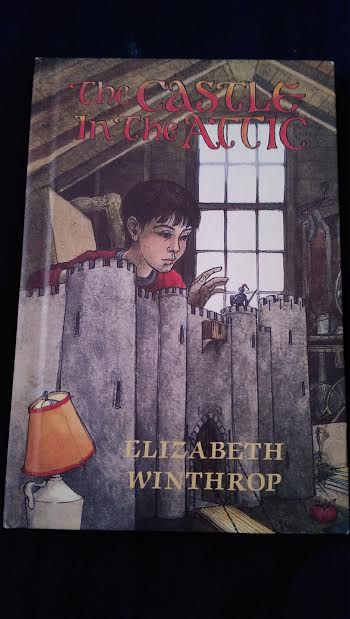
The Castle in the Attic (1985)
William learns that the toy castle given to him by his nanny is magic and that a magic token has the power to shrink people small enough to enter it. The sequel is The Battle for the Castle.
Do-It-Yourself Magic (1987)
A brother and sister buy a model kit that turns out to be magic. By Ruth Chew.
Four Dolls (1983)
A collection of stories from earlier decades about four special dolls and their owners and the difference they make in each other’s lives. Contains Impunity Jane, The Fairy Doll, Holly, and Candy Floss.
Half-A-Moon Inn (1980)
A mute boy searching for his mother is taken prisoner by a cruel and thieving innkeeper. By Paul Fleischman.
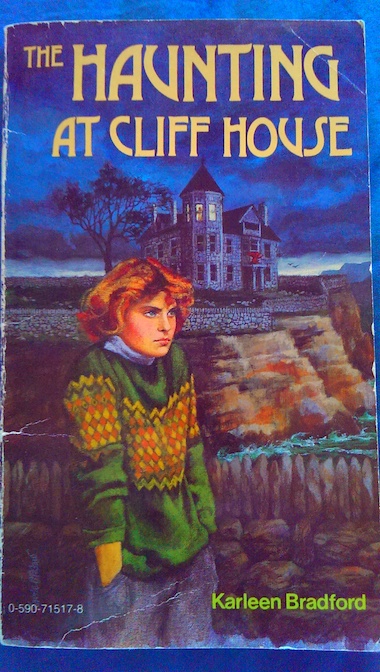
The Haunting at Cliff House (1985)
When Alison and her father travel from Canada to Wales in order to see the house that they’ve inherited from a distant relative, Alison finds herself caught up in a ghostly mystery from the past. Somehow, she must prevent another young girl from making the worst mistake of her life while considering the choices she is making in her own life.
Howl’s Moving Castle (1986)

Sophie Hatter is cursed by an evil witch to be an old woman and takes a job as housekeeper to the mysterious wizard Howl in his magical moving castle. By Diana Wynne Jones.
Kiki’s Delivery Service (1985, 2003)
A young witch must live in a town without other witches for a year in order to develop her skills and find her place in the world.
Lucy Beware! (1983)
Lucy finds herself meeting again with the malevolent and manipulative Victorian ghost Alice who haunted her when she first came to live with her relatives because each of them is experiencing problems in their lives and questions about their futures, and they each feel like they need the other’s help. Each of them travels through time to each other’s era. Sequel to Come Back, Lucy (Mirror of Danger). By Pamela Sykes.
It’s very difficult to find physical copies of this book for sale now.
Matilda (1988)
Matilda is a little girl with incredible intelligence and powers of telekinesis, and she uses those powers to get revenge on her abusive parents and her beloved teacher’s wicked aunt, who has stolen her inheritance. By Roald Dahl.
Mazemaker (1989)
A girl accidentally goes back in time through a mysterious maze and must solve the mystery of the maze’s original maker in order to return to her own time. By Catherine Dexter.
Moondial (1987)
A girl who is staying with a family friend discovers that the sundial of an old manor house nearby has the ability to send her back through time, where she has to help unhappy children who lived at the house in the past. By Helen Cresswell.
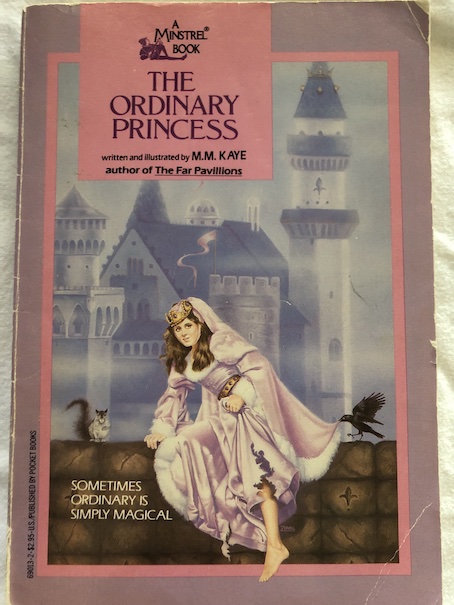
The Ordinary Princess (1986)
A fairy’s wish at a young princess’s christening ensures that she will be an ordinary, imperfect girl instead of the perfect princess that her parents were expecting, but what others think of as a misfortune turns out to be a blessing. By M. M. Kaye.
The Princess in the Pigpen (1989)
The daughter of an Elizabethan nobleman suddenly finds herself on a farm in 20th century Iowa. By Jane Resh Thomas
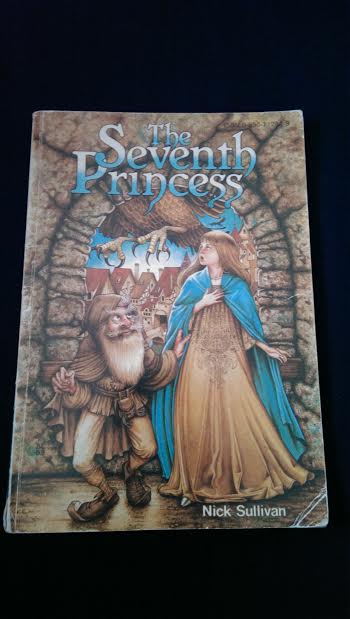
The Seventh Princess (1983)
A girl falls asleep on her school bus and has a fantastic dream, only it turns out to be more than just a dream. Jennifer learns that she has been adopted by a king only to be used as tribute to an evil enchantress. She struggles to find the key to breaking the enchantress’s spells and saving not only herself but the six princesses who went before her. By Nick Sullivan.
Shadow Over Mousehaven Manor (1989)
Minabell Mouse is looking forward to her aunt visiting for Christmas when she gets word that her aunt is very sick. Minabell hurries to go to her, not knowing that she’s heading into danger. By Mary DeBall Kwitz.
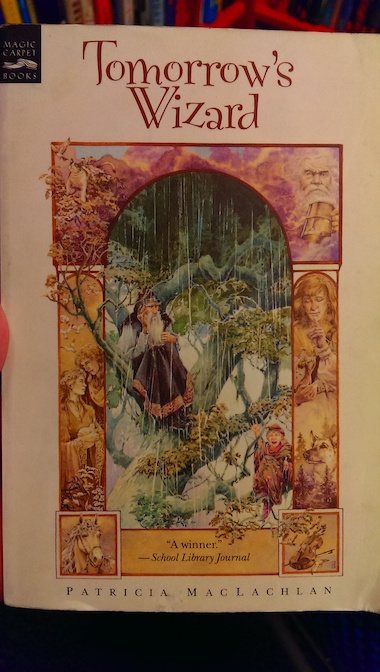
Tomorrow’s Wizard (1982)
A wizard and his apprentice grant people’s wishes until the time comes for the master to grant his apprentice’s wish. By Patricia MacLachlan.
Trapped in Time (1986)
Audrey and her younger brother Nathan are having a picnic when they accidentally unearth an old pocket watch that transports them back in time to the Revolutionary War.
Voices After Midnight (1989)
A set of siblings staying in an old house in New York City find themselves traveling back in time to stop a tragedy.
A Walk in Wolf Wood (1980)
A brother and sister travel back in time to Medieval Germany to save a good man who has been turned into a werewolf by an evil sorcerer. By Mary Stewart.
The Witches (1983)
An orphan boy goes to live with his grandmother, who tells him stories about witches. It turns out that she used to be a real witch-hunter and all of the stories she tells him are real. By Roald Dahl.
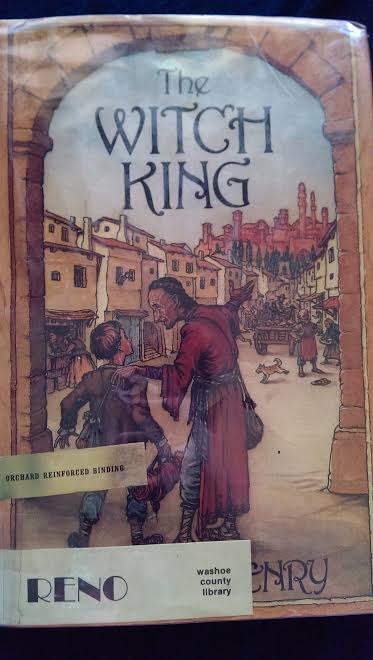
The Witch King (1987)
A boy journeys to a far-off city and discovers his destiny as an ancient legend is fulfilled. By Maeve Henry.
Series
The Borrowers Series
Little people live in the houses of ordinary humans, making use of small lost or “borrowed” items. However, discovery by humans forces them to seek new homes. By Mary Norton. 1952-1982.

In this series, there are many different worlds and series of worlds, and in each of those different dimensions, there is a copy of every person, except one, who has nine lives, and this person is an extremely powerful enchanter called the Chrestomanci. 1977-2006.
The Enchanted Forest Chronicles
This young adult series about Princess Cimorene, who becomes the Queen of the Enchanted Forest, parodies many popular fairy tales. 1985-1993.
Girls of the Good Day Orphanage
Strange and wonderful things happen around the girls at the Good Day Orphanage. Magical realism. The series includes the book Good Charlotte. By Carol Beach York. 1967-1992.

This metaphysical fantasy book series that focuses on the Hall family of Concord, Massachusetts and references Transcendentalist literature and famous literary figures. The best-known book in the series is the first one, The Diamond in the Window. By Jane Langton. 1962-2008.
This is a very loose trilogy that takes place mainly in Canada, at a place called Hawthorn Bay on Lake Ontario, at various periods in history. It’s partly an historical series and partly fantasy because some of it involves fantasy elements like ESP and time travel. By Janet Lunn. 1981-1997.

A boy brings toy plastic figures to life by locking them in an old cupboard with a special key. 1980-1998.
This short series of time travel stories is about children who reach out of their own time periods to touch others living in the past and in the future in order to change their world for the better. The series centers on themes of climate change and war and how we respond to changes in the world around us. 1977-1984.
A magical nanny comes to take care of children and take them on amazing adventures. 1934-1988.
On her thirteenth birthday, Sarah Collins discovers that she is actually a witch and can use magic. 1988-1989.
Mildred Hubble is the worst witch at witch school, but sometimes, being a little different from everyone else can be a good thing. By Jill Murphy. 1974-2018.
Young Wizards
A pair of young wizards living in modern times battle against a mysterious being that is trying to destroy the universe. By Diane Duane. 1983-2016.
Gamebooks
Endless Quest
A series of fantasy gamebooks directly based on Dungeons and Dragons and other role-playing game series, published in three sub-series by TSR and Wizards of the Coast, game companies that produced Dungeons and Dragons. 1982-1987, 1994-1996, and 2018-2019.
Fantasy Forest
Similar to the Endless Quest books, also published by TSR and based mostly on Dungeons and Dragons, but meant for younger readers than Endless Quest. 1983-1984.
Wizards, Warriors, and You
A gamebook series where players could first choose to be either a wizard or a warrior, with choices of spells and weapons they could use. There was one adventure in each book, but the course the adventure would take depended on the initial choice of character and what the character had to use, plus some additional choices later in the story that would determine which ending the reader got. After the first reading, readers could always go back to the beginning and read the book again as the other character. 1984-1986.
 Jestress's Forgotten Books and Stories