There may be some books listed as individual books in this section which are actually part of series. I do this sometimes if other books in the series were published in different decades.
Among the general fiction series popular during the late 1980s and into the 1990s were series that were aimed at girls and featured groups of friends who were part of a special club or best friends at school. I like to think of those types of books as Girls’ Friendship Series (although I saw recently on someone else’s blog that some people like to call them “Girls Gangs Doing Shit Together“, which is a pretty good description for what happens in the stories). Basically, the girls’ friendships with each other are the main focus of the stories. The girls have adventures and work on projects together, but a major part of the stories is about their relationships with each other and other kids outside of their regular group. Sometimes, because of things that happen in the stories, they have fights with each other or conflicts because they want to become friends with someone their other friends don’t like. Very often, there’s a snobby girl or bully who acts as a nemesis for the whole group. Frequently, there are stories about how the girls relate to each other as they face issues involving growing up, dealing with issues in their families (like divorce, family problems, or issues with siblings), and developing their own interests while still maintaining their friendships with each other. These series have a tendency to become a little generic with certain stock characters (ex. the snobby girl, the trendy girl, the leader type with all the ideas, the athletic girl, the shy but sweet girl, the chubby girl who’s always worried about her weight even though her friends still like her, etc.) and stock plots:
- The girls are best friends, but getting too competitive in a contest or sporting event threatens to set them against each other.
- One of the girls gets interested in a boy for the first time or wants to become friends with a new girl, which makes the others in their group feel a little awkward or neglected.
- One of the girls is unhappy with her appearance so she decides to try a new style, but it turns out to not really be her, and she’s better off just being herself.
- The leader type is put in charge of something, and the power goes to her head. She drives everyone crazy until the other girls teach her that acting bossy isn’t the same as being the boss.
- One of the girls gets involved with too many after-school activities, over-burdening herself and making it hard for her to spent time with her friends until she realizes that she’s taken on too much.
- One (or more) of the girls has to cope with major changes in her life, like parents getting divorced (or remarried) or having to move to a new house, but her friends help her by showing that they’re still her friends, no matter what she’s going through.
- The girls meet a movie star or rock star or some other celebrity.
- The girls take part in an event to help a good cause, raising money or awareness for something important.
- The girls end up competing in a contest or sporting event against a group of boys in order to prove that girls are just as good as boys at whatever it is.
- Pranks were a regular feature of these series, and there might be a book specifically about an elaborate prank, possibly as part of one of the following two plots:
- The snobby girl and her friends try to sabotage a project the nice girls are working on or create arguments between the other girls just to be mean and ruin their friendships or as part of a larger plot to “steal” a guy one of the nice girls likes.
- Often, there’s at least one mystery story or “ghost story” of the Pseudo-Ghost Stories variety (these were always my favorite books in this type of series). Sometimes, it’s a Halloween story, but not always. The girls typically investigate a local legend, a mysterious old house in their neighborhood, or a creepy person they think might be a witch. Strange things might happen at a party or sleepover. Sometimes, the girls might also be concerned about whether such things as bad luck, curses, fortune telling, or ESP might be real (because it’s pretty common speculation for the pre-teen girls these series target and a popular subject at sleepovers, especially fortune telling and ESP), and these subjects often go along with ghost stories and creepy mysteries. If there wasn’t a creepy mystery in a series, there was probably a mystery that involved something getting stolen.
But, in spite of the stock characters and plots, many girls who grew up in the 1980s and 1990s have fond memories of these series, and many of the stories have positive messages about coping with problems, developing new interests in life, and making friends. There were a lot of “girl power” messages in these books, kind of echoing the slogan used for Barbie dolls around that time, “We girls can do anything!” Some of these series books were even the vehicles which gave girls some of our first messages about serious issues like caring for the environment or dealing with racism. Lots of girls I knew as a kid wanted to be in clubs that did all the cool stuff that girls in these series book did! For an older type of Girls’ Friendship Series, see the Ginnie and Geneva Series. This genre wasn’t invented in the 1980s and 1990s, just popularized.
Boys who grew up in the 1980s and 1990s wouldn’t have been in on the Girls’ Friendship Series genre, although there were other general fiction books that addressed some similar themes for them, such as getting along with people at school, dealing with bullies, handling school work or activities, understanding important social issues for the first time, and generally growing up.
Stories that included divorced parents or blended families were very common during the 1980s and 1990s. Sometimes, they were even subplots in mystery and fantasy stories as well as general fiction.
Individual Books
Casey and the Great Idea (1980)
Casey is a young feminist who likes to pursue good causes and has a lot ideas about how to make things better, but her ideas don’t always go as planned, partly because she doesn’t fully understand certain situations or what certain people really want. However, one of Casey’s latest ideas has uncovered a serious problem that no one expected. By Joan Lowery Nixon.
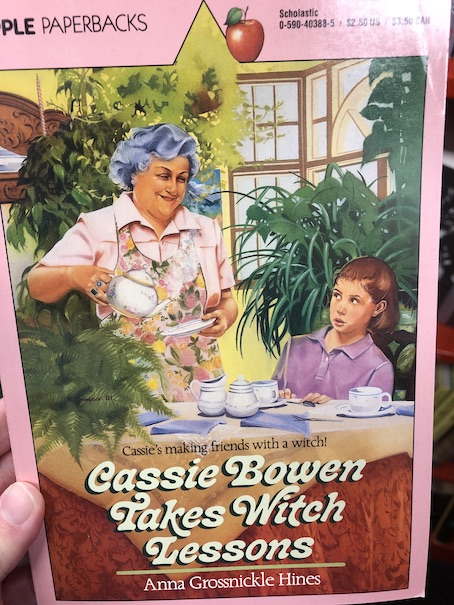
Cassie Bowen Takes Witch Lessons (1985)
When Cassie makes friends with the strange new girl at school whose grandmother is rumored to be a witch, she questions her relationship with her former best friend, who has befriended the mean girl at school and has started acting like her. By Anna Grossnickle Hines.
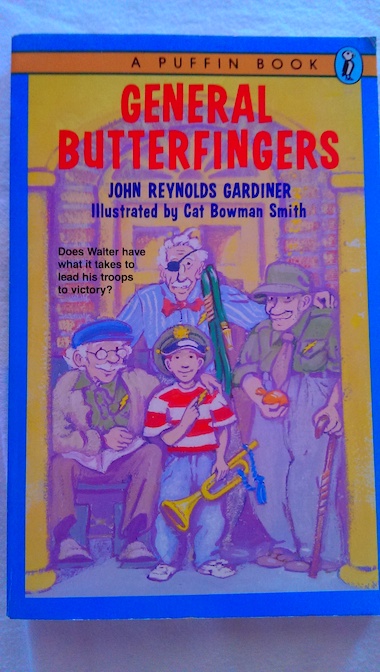
General Butterfingers (1986)
Young Walter helps a group of retired soldiers to uncover the fraud keeping them from their rightful inheritance. By John Reynolds Gardiner.
How to Snoop in Your Sister’s Diary (1989)
A girl is upset because her older sister has a new boyfriend and spends all of her time with him. Then, she reads something disturbing while snooping in her sister’s diary, causing her to worry about how to handle the situation. By Janet Adele Bloss.
Maudie and Me and the Dirty Book (1980)
Two middle school girls volunteer for a program reading stories to younger children but accidentally create a controversy about censorship. By Betty Miles.
The Most Beautiful Place in the World (1988)
A poor boy in Guatemala finds the love and support he needs from his grandmother. By Ann Cameron, drawings by Thomas B. Allen.
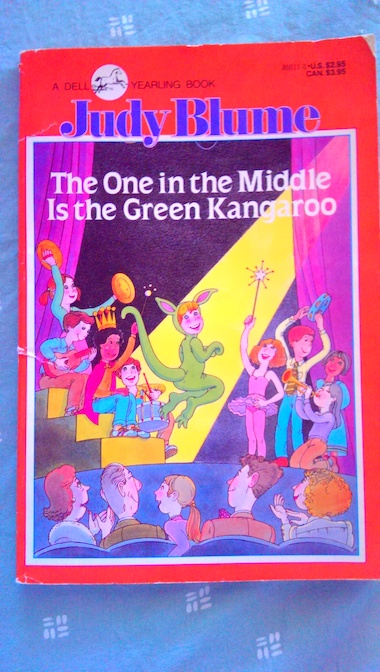
The One in the Middle is the Green Kangaroo (1981)
Freddy feels like there’s nothing special about him, that he’s just the middle child between his older brother and younger sister. Then, he gets a role in the school play! By Judy Blume.
Park’s Quest (1988)
Park’s father died in the Vietnam War when Park was very young. His mother refuses to answer any of his questions about his father, and he has never even met any of his relatives on his father’s side of the family. When his mother finally lets Park visit his relatives, he learns the truth about his father’s life. By Katherine Paterson.
Us and Uncle Fraud (1984)
An uncle visits and entertains his niece and nephew with tall tales about his life that they know aren’t true. By Lois Lowery.
Series
Anastasia Krupnik
Anastasia is an average girl, dealing with growing up and changes in her family. By Lois Lowry. 1979-1995.
About a girl whose parents are divorced and the changes in her family. By Jeanne Betancourt. 1983-1990.
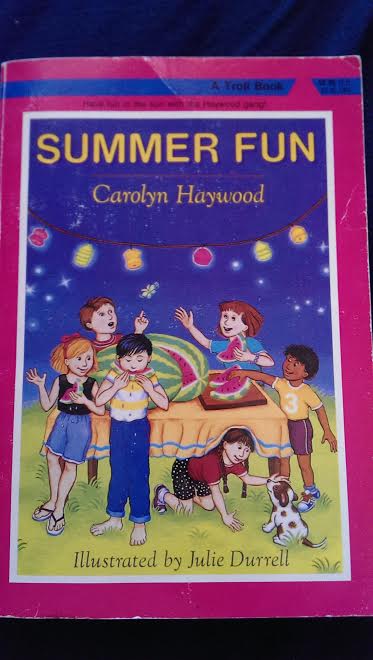
The everyday adventures of a group of neighborhood children. By Carolyn Haywood. 1939-1986.
A group of girls has attended Camp Sunnyside every summer for years, and they’ve formed a strong bond from their shared summer adventures. 1989-1992.
This young adult book series focuses on a group of girls at a boarding school and their friendships, adventures, crushes, and difficulties in life and school. 1984-1989.
The Kids From Kennedy Middle School
This series is about the kids who attend Kennedy Middle School, their friendships and rivalries, and the pressures that kids encounter from school, classmates, and parents.
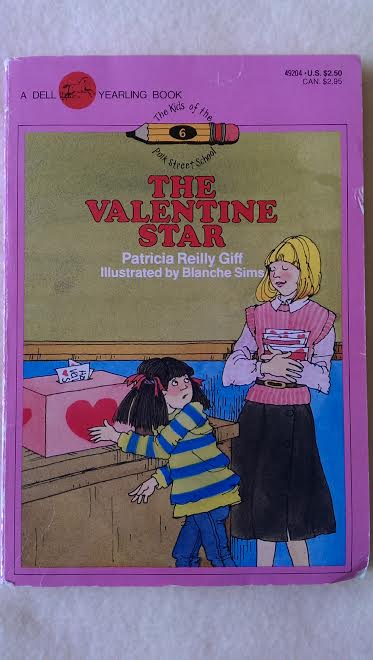
The Kids of the Polk Street School
About the children in Ms. Rooney’s second grade class, their friendships, rivalries, school issues, and special occasions. By Patricia Reilly Giff. 1984-1991.
Peanut Butter and Jelly Series
This series is about two best friends, elementary school students Polly Butterman and Jillian Matthews, better known as Peanut and Jilly. 1988-1991.
Children’s book series about a junior scouting troop of second graders. 1988-2000.
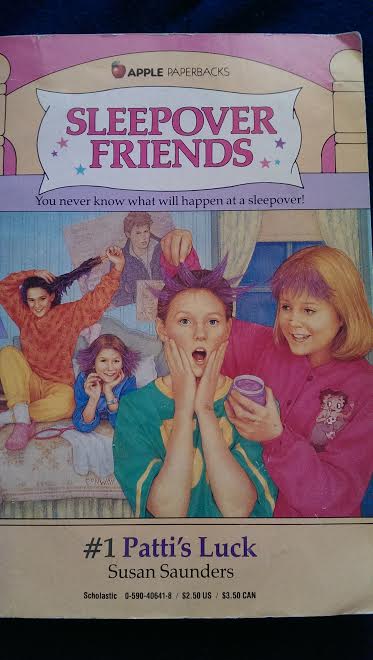
Four friends, Kate, Stephanie, Lauren, and Patti, love to have sleepovers. They also help each other through common problems that preteen girls face and have adventures in their small town. By Susan Saunders. 1987-1991.
A group of neighborhood friends living in St. Louis start their own newspaper, using a treehouse as their headquarters. 1989-1991.
 Jestress's Forgotten Books and Stories