A Little History
Major Events
The decade began with the dissolution of the Soviet Union and the end of the Cold War, and it was a relatively prosperous decade, compared to the others around it. However, the ’90s weren’t completely peaceful. The United States entered the First Gulf War early in the decade. Part of that war was Operation Desert Storm, which was to free Kuwait from Iraq after Saddam Hussein’s forces invaded and took control. Bill Clinton’s presidency was rocked by scandal, and former football player OJ Simpson was put on trial for the murder of his ex-wife (and found not guilty, although members of the public continued to question this verdict). Princess Diana of the United Kingdom was killed in a car accident, leaving behind two young sons, Prince William and Prince Harry.
The Internet, Technology, and the Information Age
Technological developments led to the rise of the Information Age with the development of the World Wide Web. Home computers were much more common, and for those who didn’t have one at home, they were readily available at schools or public libraries, increasingly with Internet access. Much of what was available on the Web wasn’t as well-produced as today and teachers wouldn’t always allow Internet sources to be used in writing reports for school (there wasn’t as much useful information available online then anyway), at least not as the only source, but more and more teachers began teaching their students how to use the Internet and how to document sources they found online (although they had to make up their own forms for documenting online information at first because the established systems that were used for citing sources didn’t have a format for internet sources yet, and that continued even into the early 2000s). As the decade went on, the quality and quantity of information on the Internet improved, although quite a lot of false information also found its way to the Internet as well, which was why teachers still urged students to supplement Internet sources with print ones.
Merchants began eagerly embracing the Internet as a way to market products to customers they could not reach before, and they created websites where you could look at products and order them to be sent directly to your house, like electronic versions of the old mail-order catalogs. (This sounds pretty routine in the early 21st century, but it was a big deal when people first realized that they could do this.) Private individuals also began creating websites for their own interests, everything from joke lists to fan sites about their favorite tv shows. Some amateur websites were known for being poorly designed or ludicrously designed with too many flashing colors or weird sound effects that the people who designed them would put in just for the sake of showing that they could do that. Individuals started getting their own e-mail addresses as well so they could send messages either for work or just for fun to family and friends. Before there were Internet memes, where were e-mailed joke lists and popular stories and those chain messages where you would ask people a series of questions to answer that they would both reply to and send on to other friends just for fun.
Some people owned cell phones, but not many. In the ’90s, cell phones were large, clunky, and expensive, especially compared to later models, which also included more features than just the ability to make phone calls. (I was pretty impressed the first time I owned a calculator powerful enough that it could also play Tetris.) DVDs began replacing VHS tapes as the format for home movies, and CDs replaced the cassette tapes people used for music during the previous decade. Many people had portable CD players so they could listen to music on the go. Some people began buying digital cameras instead of the film cameras that people used before. The first models were more sensitive to movement than the later ones, so if your hand shook a little or if the lighting was bad, your pictures might get blurred.
Home video game systems were becoming ever more popular, and companies competed with each other for people’s money. Each video game system had series of games with their favorite proprietary characters: Nintendo had the Mario games, Sega had Sonic the Hedgehog, etc. People had their favorite games and systems. The quality and variety of games improved throughout the decade, especially in terms of graphic styles (1980s games had very simple graphics with a pixelated look). Many kids owned hand-held gaming systems, like the Nintendo Game Boy, and other electronic toys (and those who didn’t have them really wanted them). Parents often worried that their children were playing too many video games as well as watching too much tv.
Children and Children’s Literature and Entertainment
Children’s television shows were a mixture of entertainment and educational programing:
- The popular mystery/geography computer game series Carmen Sandiego, which started in the previous decade, spawned a children’s game show in the early 1990s, Where in the World is Carmen Sandiego, named for the first computer game in the series. (Because maps were changing due to the fallout of the end of the Cold War and the dissolution of the Soviet Union, the episodes had a disclaimer at the end that the geographical information in each episode was current as of the air date of the episode. You can still see some of these episodes on YouTube. The show’s acapella theme song is incredibly catchy and will stay with you forever.)
- Two popular children’s science shows, Beakman’s World and Bill Nye the Science Guy, were based on the old, popular children’s science program Watch Mr. Wizard from the 1950s and ’60s. Schools often used episodes of these shows in science classes.
- Wishbone, a popular children’s television show on PBS, introduced children to classic literature. Wishbone was a book-loving dog who lived with a boy named Joe. While Joe and his friends were dealing with typical kid problems, like having trouble in school subjects, being falsely accused of something, standing up to bullies, making new friends, dealing with gossip, handling fears and superstitions, living up to family expectations, or having first crushes, Wishbone would compare their struggles to stories from folklore or classic literature, like The Red Badge of Courage, Ivanhoe, Pride and Prejudice, The Legend of Sleepy Hollow, or The Hound of the Baskervilles. This show was cute because the dog would wear little costumes and act out the part of one of the characters in the stories.
- Two other series on PBS which were based on book series were The Magic School Bus and Arthur (which was still being made in the 2010s). Arthur is particularly interesting for its references to other popular children’s books and entertainment as well as the ordinary struggles of growing up and dealing with friends.
- There were also plenty of just-for-fun shows and cartoons on tv, including Animaniacs, Tiny Toon Adventures, and the shows on the Disney Afternoon.
- Pokemon video games and their accompanying cartoon show gained rapid popularity in the US as well as Japan, sparking an interest in American kids and teenagers for other forms of Japanese entertainment, including different types of anime and manga.
In children’s literature, horror and scary stories were particularly popular early in the decade, especially the Goosebumps series by R. L. Stine. It was so popular that there was a tv show based on the book series. (Side note: The Goosebumps book series was also parodied in the Arthur television show as the “Scare-Your-Pants-Off” series. It appears in more than one episode, and it was used to discuss the issues of censorship and whether or not scary stories can be harmful for children. These were issues that surrounded the real-life series. The Goosebumps series was challenged many times in school libraries, and children who were fans of the series had feelings about that.)
The first of the Harry Potter books was published in 1997. They were wildly popular, and the Harry Potter series was credited for helping to get children excited about reading as they eagerly waited for new installments of the series, sometimes lining up at midnight parties at bookstores so they could be among the first to get a copy of a new book. I knew people who stayed up all night after getting a new copy of one of those books, reading the whole thing or most of it before morning, when they finally feel asleep. Some people praised the complexity of the stories, which integrated pieces of traditional folklore in clever ways and tackled dark themes like death, corruption, prejudice, and the ability to do the right thing even in desperate circumstances, but some parents argued that they encouraged an unhealthy interest in fantasy and the occult. This was another very popular book series that was often challenged in school libraries, and again, young fans of the series had feelings about that. For the late ’90s and into the 2000s, other fantasy series also became very popular as fans of the Harry Potter books searched for more like them. (Side note: This series was parodied on Arthur as “Henry Skreever.”)
At the end of the decade, 1999, the first of the Series of Unfortunate Events was published, about a set of young orphans whose parents belonged to a secret organization and whose distant cousin plots to kill them for their family fortune. It’s a very dark series, sort of gothic suspense, and by the end, you still don’t know the answers to all of the mysteries and questions posed by the books. It still annoys me for the lack of complete answers, so I’m not going to cover it here. The movie version wasn’t bad, though. I never saw the tv series. (Side note: This series was another that was parodied on Arthur as “Horrendously Horrible Happenings” by “Persimmony Glitchet.”)
You’ll notice that a number of the major popular book series for children during this time were challenged by adults who wanted them removed from schools or public libraries: Goosebumps (for horror and occult references), Harry Potter (for fantasy and encouraging children to be interested in witchcraft), the Series of Unfortunate Events (for all of its dark themes), and others. I just wanted to point out that kids and teens during this time were well aware of these challenges and the reasons behind them and had opinions of their own about censorship. Censorship was a topic that was openly discussed in schools and among friends and was a theme in children’s literature and tv shows themselves. It was something kids of the time knew about and could relate to in their own lives. The episode of Arthur that talks about Goosebumps style books explains kids’ views well. The attitudes of children whose favorite books were challenged by adults would stay with them throughout their lives.
As someone who was a kid during the 1990s, I also think that the changes in the world that came with the end of the Cold War and the increasing ability of people to be able to communicate easily with people around the world through the Internet gave kids and young adults of this generation increasing interest both in world events and travel. More and more, people were joining chat groups and online forums with people in other countries. Soon, they would be able to play computer games with people on the other side of the world and read travel blogs, and even write their own. The world is a big place, but people were becoming more able to reach parts of it that they couldn’t reach easily before, even without leaving their houses. People’s views were becoming increasingly global, especially among the young. As with the issue of censorship in books, these first generations of the users of the World Wide Web would also jealously guard their abilities to use the Internet as freely as possible, something that would become more of an issue in future decades.
Moving On …
As the decade progressed, there were many concerns raised about environmental issues, and these concerns were openly discussed in schools. Kids were taught about the dangers of pollution and the benefits of recycling, and many of their parents joined environmental groups to Save the Whales (which existed since the 1970s, but I remember it being a very popular cause in the 1990s) or Save the Rainforest. There were books from earlier decades with environment themes, but there was an increasing number of them around this time and more emphasis on environmental issues in society. Environmental concerns and worries about global warming or climate change would play ever-larger roles in the following decades.
As the decade came to a close, there was a brief scare about the Y2K bug, that computer systems had previously only been designed to hold double digit years and weren’t programmed to recognize the turn of a century. Some of my teachers were developing complicated plans for how they were going to handle the crisis they thought was looming. However, as the Millennium turned, most of these fears came to nothing. I was in high school at the time, and I was more exasperated than worried. My father was a computer programmer, and he said it wasn’t that hard to just add two more digits to a year in a date. It just time-consuming and took some extra overtime. I hadn’t been concerned because I already knew people like my father were fixing things, and I knew how they were doing it. My parents bought us cute little Y2K “bugs” made out of computer chips and metal bits, shaped like insects, as stocking stuffers for Christmas 1999. (There were plush and plastic ones, too!) All the same, we spent New Year’s Eve at my aunt and uncle’s cabin in the mountains. I’m not sure whether it was because my parents really thought there was a chance that there could still be a problem or if my dad was just making sure he wouldn’t be called in for some more last-minute overtime. I just know he once told his boss that the cabin didn’t have a phone, which was true at the time, but I don’t think he mentioned it when my aunt and uncle later put one in.
“The ice we skate is getting pretty thin
All Star by Smash Mouth (1999)
The water’s getting warm, so you might as well swim
My world’s on fire. How about yours?
That’s the way I like it, and I’ll never get bored.”
Fiction Books
General Fiction
Adventure
Series
The Series of Unfortunate Events
Orphaned siblings are pursued from one foster home to another by a distant relative gifted with disguise abilities, who is trying to get their inheritance. Along the way, they discover that their parents were involved in a secret society. There are still a lot of unanswered questions at the end of the series, so I’m still mad at it and won’t cover it. By Lemony Snicket (Daniel Handler). 1999-2006.
The orphaned daughter of an archaeologist has adventures with her new guardians. 1987-2005.
Gamebooks
Choose Your Own Adventure
A series of gamebooks where the reader was the main character of the story and had the ability to make decisions that would influence the the course of the story. There were multiple possible endings in each book, some good and some bad, depending on the readers’ choices. This series didn’t invent the concept of gamebooks, but it was a major influence in popularizing them. Each of the books were stand-alones, written by different authors, and they were also different genres. Many were fantasy stories, but others were science fiction and general adventure and some were mysteries or ghost stories. There are also several spin-off series. 1979-1998, 2005-Present.
Humor
Mystery
Scary

The Dark Thirty: Southern Tales of the Supernatural (1992)
There are ten short, scary stories in this book, not thirty. The author explains in the beginning that the name comes from an expression kids used when she was young. The “dark-thirty” was the last half hour of light before it became truly dark outside, and the kids had to hurry home so they wouldn’t be out after dark, when the monsters came out. The stories have African American themes. By Patricia C. McKissack.
When Sarah and her family move into an old house that belongs to her great aunt, they awaken a ghost from her aunt’s past.

Return to Groosham Grange (1990)
Sequel to Groosham Grange. At his haunted boarding school, David is competing for a special award, but the contest is being sabotaged. By Anthony Horowitz.
Scared Stiff (1991)
Kelly’s parents are morticians, and their family lives over the mortuary. Their work always gives Kelly the creeps, but one night, a dead body comes to life, bent on revenge against the people who sent him to prison. By Jahnna N. Malcolm.
Series
Goosebumps
Very popular collection of horror novels with a variety of monsters and ghosts. By R. L. Stine. 1992-1997.
I’m not planning to cover this series in detail because it’s so popular that it’s already been covered in detail elsewhere.
Lewis Barnavelt Series
Lewis Barnavelt is an orphan who lives in Michigan with his uncle, who is also a warlock. This is the series that includes The House with a Clock in Its Walls. By John Bellairs. 1973-2008.
Eleven-year-old Nina Tanleven and her best friend, Chris, have the ability to see ghosts and have encounters with them in their town. By Bruce Coville. 1987-1991.
A series of books of scary stories for children, best known for Scary Stories to Tell in the Dark. 1981-1991.
Fantasy
Science Fiction
Historical Fiction
Picture Books
Non-Fiction
101 Wacky Facts About Mummies (1991)
A collection of facts and trivia about mummies. By Jack C. Harris.
The Cartoon Book (1990)
How-to book about how to draw cartoons and comic strips. By James Kemsley.
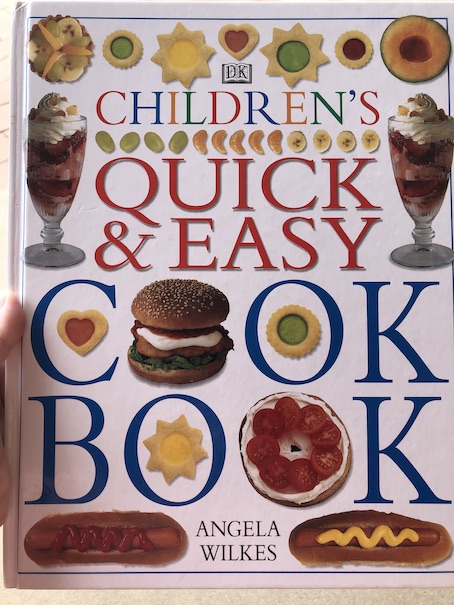
Children’s Quick and Easy Cook Book (1997)
The American edition of a British children’s cook book with easy recipes. By Angela Wilkes.
Cleopatra: Queen of the Kings (1998)
A picture book biography of Cleopatra, one of the most famous rulers of Egypt. By Fiona MacDonald, illustrated by Chris Molan.
Colonial American Holidays and Entertainment (1993)
How people living in Colonial America would entertain themselves and celebrate holidays. By Karen Helene Lizon.

Daily Life in a Victorian House (1993)
The home and life of a family in England during the Victorian era.
Dragons, Dragons, and Other Creatures that Never Were (1991)
A collection of poems and quotes about mythological creatures with illustrations.
From Junk to Jewelry (1991)
A book of craft projects for children, using things that might otherwise be thrown away to make fun jewelry.
The King’s Fool (1993)
This is a non-fiction book about fools and jesters throughout history. By Dana Fradon.
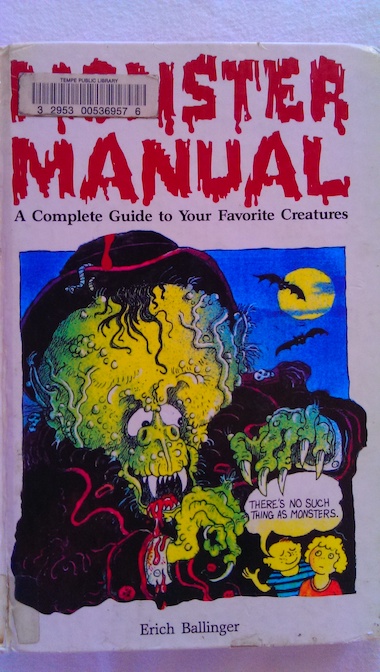
Monster Manual (1989, 1994)
An encyclopedia of monsters and other creatures from folklore, literature, and movies. Originally written in German. The second date listed is for the English translation.
A Pioneer Thanksgiving (1999)
A pioneer family in 1840s Canada celebrates Thanksgiving, explaining the history of the holiday and offering related activities for readers to try. By Barbara Greenwood, illustrated by Heather Collins.
Raggedy Ann’s Tea Party Book (1999)
A children’s guide to planning a tea party with Raggedy Ann. By Elizabeth Silbaugh, illustrated by Laura Francesca Filippucci.
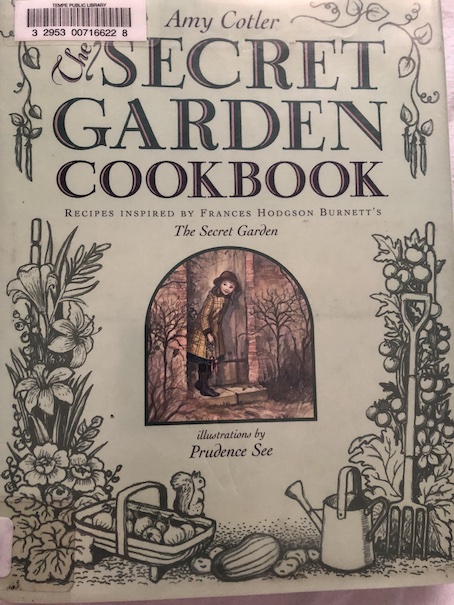
The Secret Garden Cookbook (1999)
This is a cookbook with recipes based on the types of foods eaten by characters in The Secret Garden by Frances Hodgson Burnett. By Amy Cotler, illustrations by Prudence See.
Secrets Your Handwriting Reveals (1991)
A simple beginning guide book to handwriting analysis for kids. By Carole Gerber.
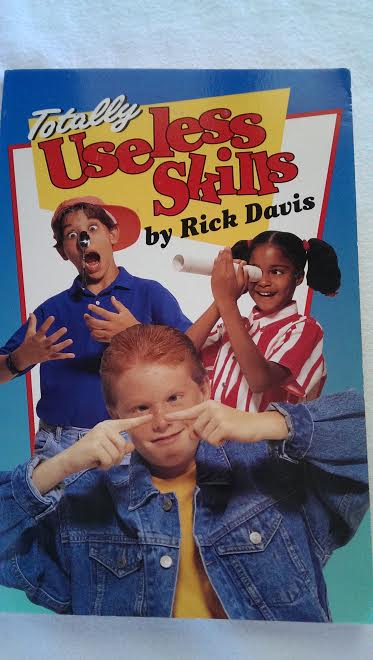
Totally Useless Skills (1994)
A book that helps children develop confidence and learning skills through tricks and stunts.
Voyage to the Planets (1990)
A children’s picture book that explains about the planets in the solar system. By Jeff Davidson.
Series
A series of instructional art books for children.

Children’s nonfiction series on a variety of topics, from world history to science and technology, illustrated with photographs.
About games and sports played in countries around the world.
A collection of related biography book series for children with different themes. 1988-2010.
This is a non-fiction series of picture books about aspects of daily life in America during the 18th and 19th centuries.
This non-fiction series describes to children what it would be like to live in certain periods of history or to take part in certain historical events.
Kate Waters is the author of a series focusing on historical reenactors, showing them acting out the lives of real children who lived in Colonial America.
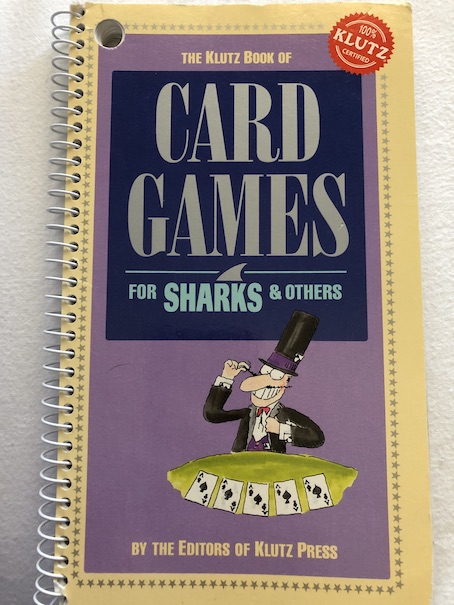
The classic children’s hobby and activity book series from Klutz Press. Each book comes with materials needed for the hobbies and activities. 1977-Present.
North American Indian Culture Series
Not sure if this is the official title of the series, but it’s series of children’s nonfiction books about Native American culture. 1990-1992.
These nonfiction books explain life in different time periods by explaining different types of people who lived in those times periods and things that happened in places where people spent their time. By Sarah Howarth. 1991-1997.
Children’s historical biography series from the 1960s. 1965-1969, reprinted 1990s and 2000s.
This is a non-fiction children’s book series about various types of cultural traditions from around the world. Covers different topics, like clothing, food, and games.
A series of nonfiction picture books on a variety of topics, published by Childrens Press.
Usborne Starting Point History
Children’s nonfiction book series that answers questions about life during various times in the past.
You Wouldn’t Want to Be Series
Children’s non-fiction picture book series that teaches history with humor, focusing on gruesome and dangerous parts of world history. 1999-2016.
Interesting Facts
Children born in this decade in the United States:
Popular 1990s Names – Among the most popular names for children born in this decade were: Michael, Christopher, Matthew, Jessica, Ashley, and Emily. The name “Taylor” entered the top ten names for girls, and people began to get increasingly interested in using surnames as first name.
None of them would remember a time before space flight.
The first children born in the decade were born during the dissolution of the Soviet Union at the end of the Cold War. None of them would remember anything about the Cold War later. 1990s children would be the first children born following the end of the Cold War.
They would be the first generation of children to be vaccinated against chicken pox while young, making a disease that had once been considered practically a rite of childhood (mostly because there was no way of preventing it before, it was just highly contagious and, therefore, almost inevitable) much less common, except in anti-vaccine families. (Consider all of the children’s books about having chicken pox that some kids will never relate to! I say, go ahead and get your shot, kids, if you’re able. I have a permanent scar on my face from chicken pox because I was born in the ’80s.)
They were born around the time that Internet and e-mail use was increasing schools and private homes. How soon they came to use the Internet themselves would depend on what their families could afford in their homes, but most of them would have started using it early in their education. Later, they would likely not be able to recall a time before the World Wide Web existed. Generally, they became accustomed to various forms of technology from their earliest years, including Internet, e-mail, video and computer games, and cell phones. They would expect continued technological advancements throughout their lives.
The ones born in the early part of the decade would have been old enough to understand and remember the Columbine High School shooting in 1999. These older ones would have been in elementary school at the time, while the younger ones would have only been babies and likely unable to remember the event. Unfortunately, shootings, violence, and terror would be major factors in their later lives and the world around them. Because of modern methods of sharing information, they would frequently see video recordings of violent events and hear or read commentary about them from a variety of sources.
Those born in the early part of the decade would remember the turn of the new millennium, being in elementary school at the time. The youngest children would only have been infants at the time and would not remember anything about life in the 20th century later in life.
The older children born in this decade would have been old enough to understand the events of September 11, 2001 at the time it happened and remember them forever after. They would have been in elementary school at the time. This incident (and later shootings and acts of terror) would make them increasingly aware that violent, unpredictable people are always present and that any of them could be killed in similar incidents. Being young would be no protection. Most would consider the risks minimal and go about their normal lives, but the knowledge would always be there, along with the understanding that going about normal lives always involves a certain amount of risk.
The Great Recession of the early 2000s and the turbulent aftermath would have hit around the time that many of them were looking for their first jobs (regardless of whether they went to college or not), making it difficult for them to get a start in life.
None of them would have lived during a time when schools were segregated. (At least, not official segregation, which would be illegal long before they were born. Economic, not specifically racial segregation, would have more of a bearing on the makeup of their schools, although some racial segregation may have occurred as a by-product of economics in some of their schools. It would vary by region and social class.) None of them would live during a time when there were separate bathrooms or drinking fountains for different races in the United States or when people of different races weren’t allowed into certain restaurants or other public places. Almost all (with a few odd exceptions) 1990s children would find such concepts repulsive later in life. Racial makeup of churches and other religious institutions would vary by religion and region.
Children born in this decade would also have read books from the following decade, the 2000s, in their youth. However, children who were old enough to read some of the books published in the early part of this decade when they were first sold would have been born in the preceding decade, the 1980s.
Other Resources
Documentary Films:
Some of these are full-length documentaries, others are clips, and some are just collections of vintage footage and reminiscences from people who lived during the time period.
CrashCourse
CrashCourse is a YouTube channel with fun educational videos on a variety of topics and different periods of history. The videos are fairly short for educational lectures. Most are less than 15 minutes long. These videos are intended for teenagers and older, so be aware that there may be topics and language inappropriate for younger children.
-
George HW Bush and the End of the Cold War: Crash Course US History #44
-
The Clinton Years, or the 1990s: Crash Course US History #45
THE ULTIMATE FASHION HISTORY 1990s
An educational lecture about fashion fads of the 1990s and the reasons behind them. (I didn’t like grunge, even though I wore oversize plaid shirts that were hand-me-downs around this time, but honestly, heroin chic is the worst! If you ever find yourself looking like that, please seek help immediately.)
Events in Children’s Lives:
How I grew up in Russia (00’s kid)
Children who were very young or born in the 1990s were the first post-Cold War generation. In this YouTube video, Niki Proshin, explains what it was like being born in post-USSR Russia in the 1990s and growing up in the early 2000s in Russia.
The School Shooting Generation Grows Up
Sadly, in the United States school shootings were part of the reality of the youth of this generation and would continue to haunt them as they grew up and had children of their own.
For more about 1990s culture:
Thoughtco — Timeline of the 1990s
Lists of 1990s children’s books:
25 books that will take every Nineties kid straight back to their childhood
29 Books Every ’90s Kid Will Immediately Recognize
 Jestress's Forgotten Books and Stories