A Little History
Terrorism, Technology, and Recession
The beginning of this decade was marked by the terrorist attacks and destruction of the World Trade Center in New York on September 11, 2001. Throughout the decade, there was an increasing awareness of the threat of terrorists and a determination to stop them with increased security measures.

In the later part of the decade, around 2007 and 2008, a series of risky and questionable financial practices on the part of investors and mortgage brokers led to a severe economic downturn known as the Great Recession. The effects on society were somewhat similar to that of the Great Depression, but not quite as severe. When the payments due on variable-rate mortgages offered by predatory lending companies suddenly ballooned on unsuspecting homeowners, many people lost their homes to foreclosure. There was widespread unemployment, with people trying to scrape together a living through whatever temporary or part-time gigs they could get.
Although the Great Recession is considered to have ended in the early 2010s, for many people, the effects were felt long beyond that. People who were unemployed or underemployed for long periods through the Recession struggled for a long time afterward to obtain stable, full-time employment due to their unstable, gap-filled work records and lack of experience in their main fields. Families who had lost their homes and were financially devastated by the home foreclosures struggled to scrape together money for new homes and restore depleted savings. For those who suffered other personal setbacks during that time, such as health problems or family emergencies, the struggle was that much harder.
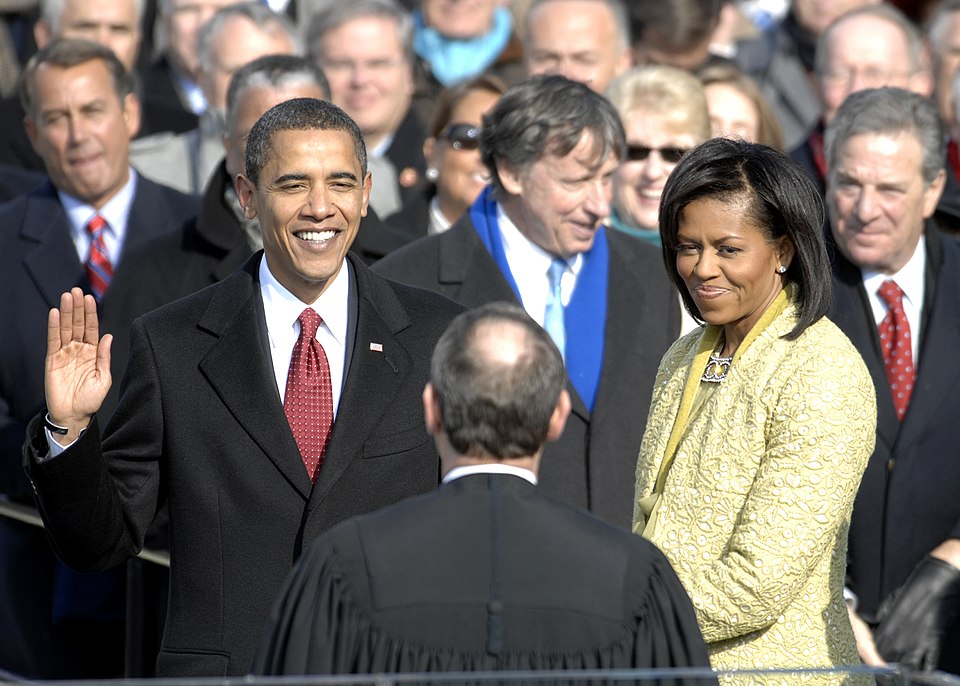
Shortly after the beginning of the Great Recession, Barack Obama was elected as the first black President of the United States, running on a campaign of restoring hope to the American people. However, the following decade began with an air of worry and economic uncertainty for many people, and the period of terrorist attacks was by no means over.
Technology and Entertainment
Social media on the Internet gained increasing importance. Facebook, the social media giant, began in 2004. Throughout the following years, parents would post pictures and information about their children online, leading to social questions about children’s privacy rights and the Internet. Some children, as they got older, would be embarrassed by pictures that their parents had posted years before. Also, when children themselves got their own social media accounts, the spread and seriousness of online bullying would call into question whether social media is harmful to children. However, social media in general continued to rise in popularity because it was a useful tool for helping people to keep in touch with each other, share ideas, and participate in social groups.
Fantasy books and movie series were popular. The Harry Potter series of books was completed during this decade, and most of the movies were made during this decade. In the early part of the decade, the Lord of the Rings book series was made into a live-action trilogy. Disney’s popular Pirates of the Caribbean movies series also began in 2003, based on the decades-old ride at Disneyland. The Twilight series of books, in which an ordinary girl falls in love with a vampire (although, not exactly a traditional vampire in the sense of folklore or Bram Stoker’s Dracula, because this one sparkles in daylight and has other features not found in traditional vampire lore), popularized a new genre of books for teenagers and young adults, Teen Paranormal Romance, a kind of cross-over between fantasy and romance.
Children’s Literature
In children’s literature, the Harry Potter series continued, with movies being made of all the books. The Harry Potter books were so popular that they were often released at midnight parties at bookstores with people lining up to get their copies. Some people were so eager to read the next book that they would stay up all night after getting their copies, reading. Because readers knew ahead of time that the books got darker as the series continued and that characters would die, some people would beg their friends for spoilers to make sure that their favorite characters were still alive. Some pranksters would spread false rumors online about which characters survived and which didn’t. I’ve decided not to cover the Harry Potter series on this site because it has been covered in so much detail on other sites already.
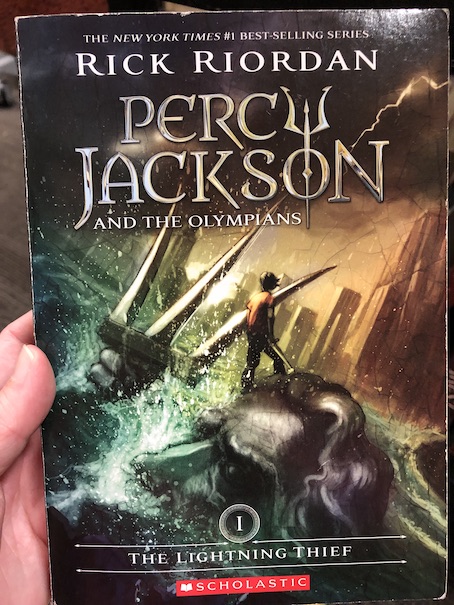
The Series of Unfortunate Events also continued (and I’m still not covering it because I’m still annoyed with it after all these years), with a movie of its own and a tv series. One of the other series that was popular in this decade was the Percy Jackson series. In some ways, Percy Jackson was based on a similar concept to Harry Potter, but instead of a boy suddenly realizing that he was a wizard and going to a school for wizards and battling evil wizards, Percy Jackson discovers that he is actually a demigod (the child of a normal human and one of the Greek gods). His father is actually Poseidon, and he goes to a special camp for young demigods for protection and training. He does battle against the Titans. Although, when these books first came out, I thought it was a little funny that the books had a somewhat similar premise to Harry Potter, it is a fun series, and as I recall, it was popular with Harry Potter fans, too.
Some of the picture books on this page were featured on Reading Rainbow (I have a list of others). Reading Rainbow was an educational children’s television program on PBS (Public Broadcasting Service) that encouraged young children to read. The show ran from 1983 to 2006 and was an iconic part of childhood to kids who grew up during those decades, introducing many of us to some of our favorite childhood books.
Fiction Books
General Fiction
Stargirl (2000)
A quirky girl high school girl and her fluctuating popularity at school raise questions about popularity, nonconformity, and personal identity. By Jerry Spinelli.
Series
Diary of a Wimpy Kid
A boy named Greg keeps a diary of his everyday adventures and the trials and tribulations of school and growing up. 2004, 2007-Present.
The Naughtiest Girl Series
Elizabeth Allen is the spoiled only child of a wealthy family, and her behavior is so bad that she has driven away six governesses who have tried and failed to teach her some manners and decent behavior. Finally, when Elizabeth is eleven years old, her parents decide to send her to boarding school. Elizabeth, who is accustomed to getting her way in everything, is determined to make the school send her home again by being on her absolute worst behavior, The Naughtiest Girl in the School. Being badly-behaved has gotten Elizabeth her way before. However, this time, Elizabeth has failed to reckon with the other students. This school has an efficient student government that manages student problems, and Elizabeth is stunned when she finds out what her peers think of the way she acts. She also gradually realizes that she really wants the friendship of the other students and that she’s been lonely as an only child. But, getting the friendship she needs means learning to care about other people’s feelings and how she treats them. By Enid Blyton, later continued by Anne Digby. 1940-1952, 1999-2001.
Children’s book series about a junior scouting troop of second graders. 1988-2000.
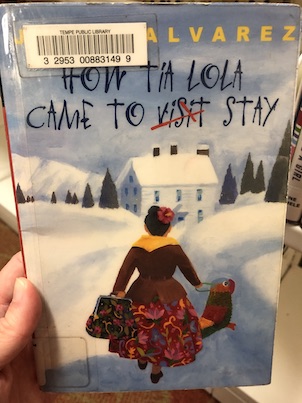
After Miguel’s parents get divorced, Miguel’s mother moves from New York to Vermont with Miguel and his sister and invites her eccentric aunt from the Dominican Republic to come stay with them and help raise the children. By Julia Alvarez. 2001-2011.
Humor
Series
Amelia Bedelia is a maid who frequently gets confused by figures of speech and words with multiple meanings. By Peggy Parish and Herman Parish. 1963-Present.
Adventure
Series
Choose Your Own Adventure
A series of gamebooks where the reader was the main character of the story and had the ability to make decisions that would influence the the course of the story. There were multiple possible endings in each book, some good and some bad, depending on the readers’ choices. This series didn’t invent the concept of gamebooks, but it was a major influence in popularizing them. Each of the books were stand-alones, written by different authors, and they were also different genres. Many were fantasy stories, but others were science fiction and general adventure and some were mysteries or ghost stories. There are also several spin-off series. 1979-1998, 2005-Present.
The Mad Scientists Club Series
A group of boys who enjoy science and making things use their inventions are often part of pranks that they play on their small town, Mammoth Falls, but the boys also use their inventions and skills to help people. By Bertrand R. Brinley. 1965-1974, 2001-2005.
The Series of Unfortunate Events
Orphaned siblings are pursued from one foster home to another by a distant relative gifted with disguise abilities, who is trying to get their inheritance. Along the way, they discover that their parents were involved in a secret society. There are still a lot of unanswered questions at the end of the series, so I’m still mad at it and won’t cover it. By Lemony Snicket (Daniel Handler). 1999-2006.
The orphaned daughter of an archaeologist has adventures with her new guardians. 1987-2005.
Scary
Series
Lewis Barnavelt Series
Lewis Barnavelt is an orphan who lives in Michigan with his uncle, who is also a warlock. This is the series that includes The House with a Clock in Its Walls. By John Bellairs. 1973-2008.
Mystery

Danger After Dark (2005)
A group of girls looking for a place for their club befriend an heiress in an old mansion and find a hidden treasure. By Ellie McDonald.
An orphan girl, Jenny, goes to live with the grandfather she has never met before and is falsely labeled as an imposter with mysterious attempts made on her life. By Barbara Brooks Wallace.
The Magic Nation Thing (2005)
Abby has psychic abilities, and she uses them to solve mysteries and help her mother, who is a private investigator. By Zilpha Keatley Snyder.
Series
A boy inventor solves mysteries with his sister and friend. By Clifford B. Hicks. 1962-2009.
Bessledorf Mysteries (aka Bernie Magruder Mysteries)
Eleven-year-old Bernie Magruder and his family live in the Bessledorf Hotel in the small town of Middleburg because his father is the hotel manager, and he solves mysteries with the help of his friends. By Phyllis Reynolds Naylor. 1983-2003.
Four children who lived alone in a boxcar after the death of their parents are taken in by their grandfather and solve mysteries everywhere they go. 1924, 1942-Present.
A young girl with a photographic memory solves mysteries by using details that she remembers from her mental pictures. By David A. Adler. 1980-2014.
A boy genius who is the son of a police chief helps his father solve mysteries in their town and also solves mysteries for the neighborhood kids with the help of his friend, Sally. 1963-2012.
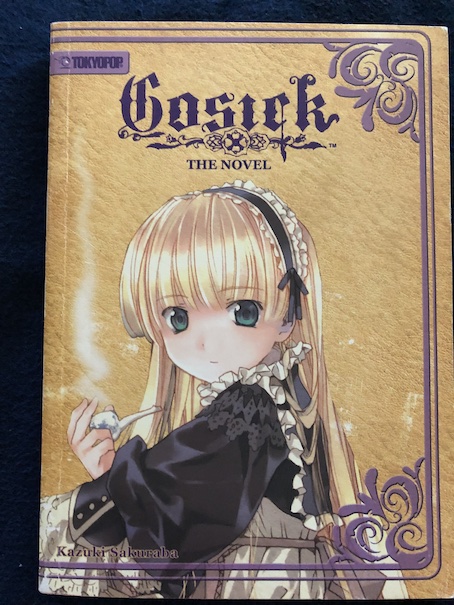
A series of Japanese light novels that reference and parody classic scary stories and detective stories and themes. The title is a take-off on the “gothic” genre. Victorique is a mysterious girl who spends all her time at the top of the library in an exclusive boarding school in a small European country before WWII. Kujo, a Japanese student attending the boarding school, meets Victorique when he is given the task of taking her class assignments. He discovers that Victorique is a child genius with a mysterious past and joins her in solving mysteries with spooky themes, including murder, at this boarding school where everyone is obsessed with ghost stories. This is not a series for young children! The dark stuff gets pretty dark. It’s best for teens and young adults.
Hardy Boys Mysteries
Two brothers, Frank and Joe Hardy, solve mysteries in their East Coast town of Bayport and around the world. By Franklin W. Dixon, A Stratemeyer Syndicate series. 1927-Present.
A girl whose parents are a police officer and a private investigator solves mysteries. By Betsy Byars. 1994-2006.
Jigsaw Jones is a second-grader who solves mysteries around his school and neighborhood with the help of his friend, Mila. By James Preller. 1998-2008.
Meg Mackintosh is a girl who likes to solve mysteries. The interesting thing about this series is that the books are designed so that the readers can attempt to solve the mysteries along with Meg, using the pictures provided and other clues. By Lucinda Landon. 1986-2013.
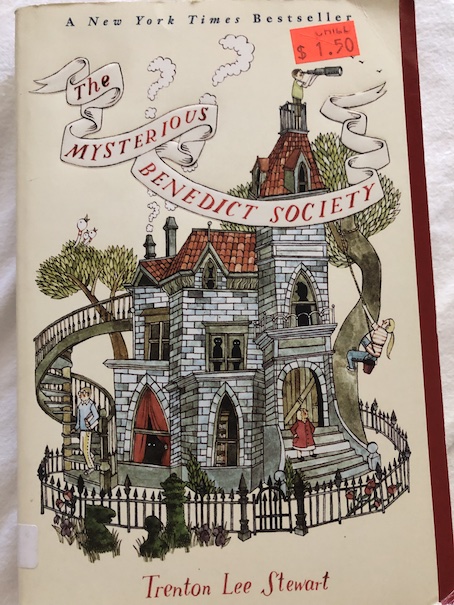
The Mysterious Benedict Society Series
The Mysterious Benedict Society is a group of children with special abilities, who are chosen by a man named Nicholas Benedict to undertake an undercover mission to stop his evil twin, Ledroptha Curtain, from broadcasting secret, subliminal messages and trying to take over the world. 2007-2019.
Nancy Drew Mysteries
Nancy Drew encounters and solves mysteries with her friends in her hometown of River Heights and around the world. By Carolyn Keene, A Stratemeyer Syndicate series. 1930-Present.
Nate the great is a boy detective who solves cases for other children, especially friends who live in the neighborhood. 1972-Present.
Sammy Keyes is a girl detective whose own life contains many mysteries. By Wendelin Van Draanen. 1998-2014.

“Queer” as in strange, weird, mysterious. No other sense of the word! Two friends, Gwen and Jill, solve mysteries with the help of Jill’s dog, Fletcher, who loves salami. By Elizabeth Levy. 1973-2003.
A boy who loves puzzles solves mysteries in his town. 2007-2012.
Fantasy
House of Many Ways (2008)
Charmain Baker has to look after her uncle’s house while he is ill, but her uncle is a wizard, and this is not an ordinary house. By Diana Wynne Jones.
Kiki’s Delivery Service (1985, 2003)
A young witch must live in a town without other witches for a year in order to develop her skills and find her place in the world.
The Magic Half (2009)

Miri is the only child in her family without a twin and often feels left out. However, the house that her family has moved into is magic, and it enables her to travel back in time to 1935, where she meets a girl who could be the twin that she’s always wanted and who desperately needs a new home. By Annie Barrows.
Princess Academy (2005)
A mountain community is surprised when they are told that the priests of their country have determined that the girl who will marry their prince will come from their community. The identity of this girl is not yet known, but all of the girls between 12 and 18 years old must attend a special academy for a year to educate them in the way a princess must be educated. Then, the prince will choose his future bride from these girls. During the course of the year, the girls learn many lessons, learn more about each other, make friends and have rivalries, and come to a better understanding of their options in life, what they can do, and what they really want. By Shannon Hale.
The Thief Lord (2000)
A pair of orphaned brothers try to hide out in Venice, joining a gang of other orphaned children. They discover a magical merry-go-round that can make old people younger and young people older, changing the lives and destinies of some irresponsible adults and a boy who needs to take responsibility. By Cornelia Funke.
Series
The Adventures of the Bailey School Kids
The third grade class at Bailey Elementary keeps encountering strange adults who may actually be mythological or supernatural creatures. 1990-2007.
The Bartimaeus Sequence
Set in an alternate reality where a magical oligarchy rules Britain, a boy is trained to be one of these elite magicians. At first, he is arrogant because of his position, but he gradually also learns humility, heroism, and self-sacrifice. By Jonathan Stroud. 2003-2010.
Children of the Red King/Charlie Bone Series
A boy named Charlie Bone discovers that he has special powers and is descended from a magician called the Red King. He attends a special academy for people endowed with magical powers. By Jenny Nimmo. 2002-2009.

In this series, there are many different worlds and series of worlds, and in each of those different dimensions, there is a copy of every person, except one, who has nine lives, and this person is an extremely powerful enchanter called the Chrestomanci. 1977-2006.
Dragon Slayers’ Academy
A traveling minstrel predicts the future of a boy named Wiglaf, telling him that he’s going to be a hero. Because of the prediction, he signs up for the Dragon Slayers’ Academy, although he doesn’t really seem like warrior material. By Kate McMullan. 1997-2012.
This metaphysical fantasy book series that focuses on the Hall family of Concord, Massachusetts and references Transcendentalist literature and famous literary figures. The best-known book in the series is the first one, The Diamond in the Window. By Jane Langton. 1962-2008.
Harry Potter Series
A best-selling series about an orphan boy who discovers that he is a wizard and attends a school for wizards in Britain. As he grows up and his education as a wizard progresses and he prepares to face down the evil wizard who killed his parents, Harry learns many secrets about life, death, magic, and his own mysterious past. By J.K. Rowling. 1997-2007.
How To Train Your Dragon
A Viking boy captures and trains a young dragon as a rite of passage. The two become friends and heroes. By Cressida Cowell. 2003-2015.
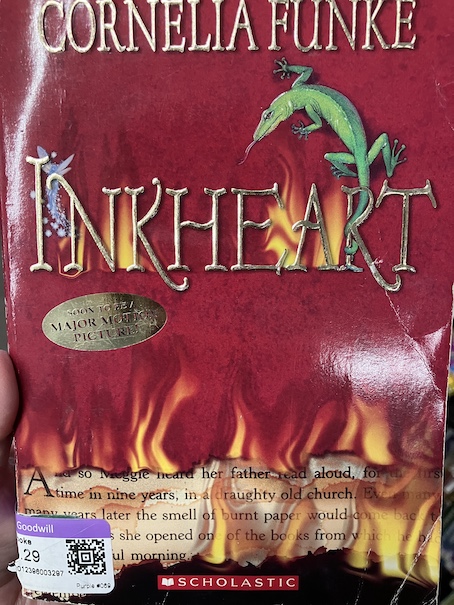
The Inkheart Trilogy
A teenage girl and her father, who is a bookbinder, have the ability to bring characters from books to life by reading the books aloud. By Cornelia Funke. 2003-2008.
A group of girls discover that if they put on clothes found in a friend’s attic and look in the attic mirror, it will send them to other times and places, where they have magical adventures. By various authors. 1995-2002.

Jack and Annie discover an old tree house in the woods that is filled with books and can take them to different periods of time. By Mary Pope Osborne. 1992-Present.
A woman who lives in an upside-down house has magical (and sometimes practical) ways of curing the neighborhood children of bad habits. 1947-1957, 2007, 1997-2001, 2016-2018.
The Ology Books
All of the titles in this series end with “-ology”, including Dragonology, Wizardology, Egyptology, and Pirateology. It’s difficult to know how to categorize this series. They’re typically written in the format of journals or encyclopedias. Most of what they cover is subjects from folklore, but it also has some historical and non-fiction information, but it’s usually told within a kind of fictional narrative. I think these books are often classed as fantasy, but they could also qualify as creative non-fiction, and they also include some activities. 2003-Present.

Percy Jackson and the Olympians
A boy learns that his father was actually one of the Greek gods, and he is sent to a special camp to learn how to use his abilities along with other children descended from gods. By Rick Riordan. 2005-2009.
Elaborations and expansions on classic fairy tales. By Gail Carson Levine. 1999-2002.
The Spiderwick Chronicles
Three children move to a new home and discover fairies. The adventures of the original series were continued in a follow-up series called Beyond the Spiderwick Chronicles. By Tony DiTerlizzi and Holly Black. 2003-2009.
This is actually a collection of fantasy series about different girls: the princess of a fairy-tale kingdom, a fairy, and a girl who travels through time with her aunt. The format is similar to the American Girls history series, and there were dolls associated with it. 1997-2001.
Willow Falls Series
Strange things happen in the town of Willow Falls on the birthdays of its children. By Wendy Mass. 2009-2015.
Mildred Hubble is the worst witch at witch school, but sometimes, being a little different from everyone else can be a good thing. By Jill Murphy. 1974-2018.
Science Fiction
Series
Books of Ember
Post-apocalyptic sci-fi series about a group of people living in an underground city while the surface world recovers from worldwide devastation, waiting to emerge and repopulate the world. By Jeanne DuPrau. 2003-2008.
Dinotopia is an island where humans and dinosaurs live together. 1992-2007.

A boy travels through different worlds to fight an evil villain and save the universe. By D.J. MacHale. 2001-2009.
Tom Swift
The science fiction adventures of a boy inventor named Tom Swift. This series was released in several sub-series, some of which focused on the son of the original Tom Swift, Tom Swift, Jr. Some of the later series leave it vague whether the boy in the series is Tom Swift, Jr. or possibly the grandson of the original Tom Swift. The original Tom Swift series was written and published 1910-1941. Later series were released 1954-1971, 1981-1984, 1991-1993, 2006-2007, 2019. A Stratemeyer Syndicate series.
Historical Fiction
The Christmas Doll (2000)
A pair of young orphans in Victorian London and a very special doll lead to marvelous changes in this touching Christmas story. By Elvira Woodruff.
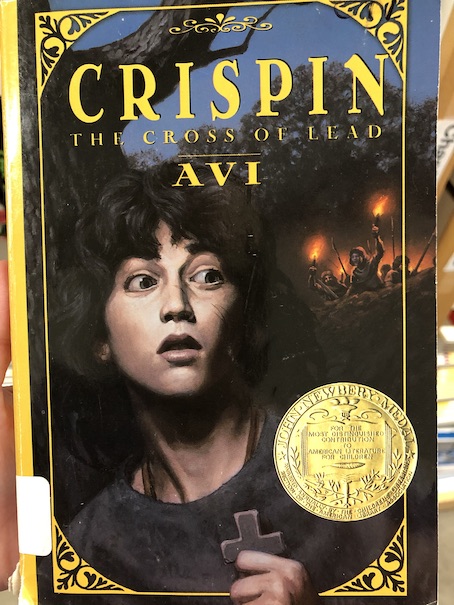
Crispin: The Cross of Lead (2002)
A Medieval boy fleeing a false accusation learns the secrets of his own past and becomes entangled in the secrets of others. By Avi.
The Golden Bull (2008)
A brother and sister struggle to survive and seek their destinies during a terrible drought in Ancient Mesopotamia. By Marjorie Cowley.
Hana’s Suitcase (2002)
The curator of a Holocaust museum in Japan researches the young owner of an old suitcase and learns the tragic circumstances of her death. Based on a true story. By Karen Levine.
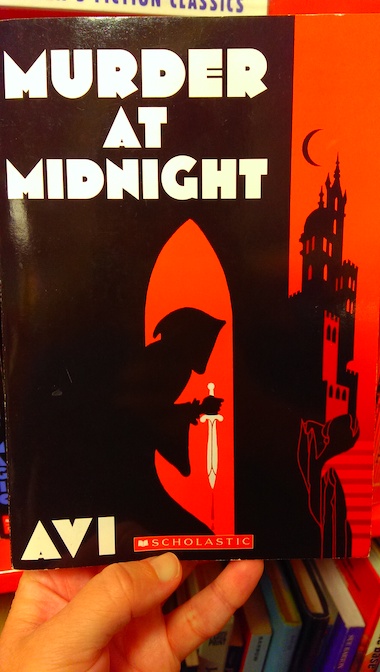
Murder at Midnight (2009)
A servant boy in a Medieval Italian kingdom struggles to prove that his master is not guilty of witchcraft and to find a traitor targeting their king. Prequel to Midnight Magic. By Avi.
The Puppeteer’s Apprentice (2003)
A young girl in Medieval England discovers her destiny as a puppeteer. By D. Anne Love.

The Ravenmaster’s Secret (2003)
The son of the Ravenmaster at the Tower of London befriends a young prisoner, the daughter of a Jacobite rebel, who is due to be executed and must decide if he is willing to risk himself to save her. By Elvira Woodruff.
The Secret School (2001)
The year is 1925, and what 14-year-old Ida Bidson wants most is to graduate from her community’s small, one-room schoolhouse so that she can go to high school in a nearby city. When the local school board closes the school rather than hire a new teacher, Ida and the other students take their education into their own hands. By Avi.

The Traitor’s Gate (2007)
A boy in 19th century England finds himself caught up in political intrigue and family secrets. By Avi.
A girl goes to stay with her eccentric grandmother in the rural Midwest for a year just after the Great Depression. Hysterical! By Richard Peck.
Series
A collection of different series of books, each focusing on a girl from a different period of American history. 1986-Present.
American Girl History Mysteries
A series of mysteries featuring girls from different periods of American history. 1999-2004.
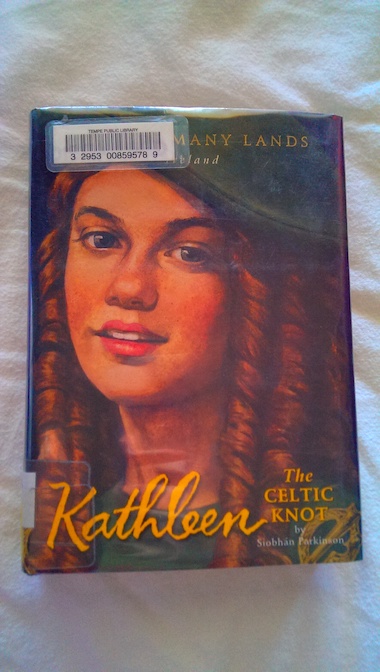
This series features girls from different countries around the world. The stories all take place in different time periods. 2002-2003.
An historical mystery series with Christian themes that takes place in turn-of-the-century South Carolina. Amanda Shaw is an orphan with a mysterious past who finds a new life with relatives she had never met. By Lois Gladys Leppard. 1983-2004.
The adopted son of a famous judge helps him to solve mysteries in feudal Japan. Not a series for young children! By Dorothy and Thomas Hoobler. 1999-2014.
Life changes for farm family on the Great Plains during the early 1900s when the father marries a mail-order bride. 1985-2006.
Picture Books

The All-I’ll-Ever-Want Christmas Doll (2007)
It’s the Great Depression, and Nella’s family can’t always afford presents at Christmas. One year, when they can afford the doll that Nella has been hoping for, Nella tries to claim the doll all for herself instead of sharing with her sisters. However, she discovers that even the best present in the world isn’t as much fun when she plays alone. By Patricia C. McKissack, illustrated by Jerry Pinkney.
Bamboo (2006)
A husband and wife grow magical bamboo that helps them when they’re in trouble and saves the husband’s life. By Paul Yee, illustrated by Shaoli Wang.
Christmas Farm (2008)
A woman decides to start a Christmas tree farm with some help from a neighbor boy. By Mary Lyn Ray, illustrated by Barry Root.

Diary of a Wombat (2002)
A wombat adopts a family of humans who feed it. By Jackie French, illustrated by Bruce Whatley.
The Gift of the Christmas Cookie (2008)

A boy during the Great Depression learns about the origins of Christmas cookies and a lesson in generosity. By Dandi Daley Mackall, illustrated by Deborah Chabrian.
The Girl in the Castle Inside the Museum (2008)
A little girl lives in a castle inside a glass globe in a museum. By Kate Bernheimer, pictures by Nicoletta Ceccoli.
Goin’ Someplace Special (2001)
In the 1950s, most of Nashville, TN is segregated, but there is one special place that Tricia Ann knows she can go. By Patricia C. McKissack, illustrated by Jerry Pinkney.

Grandma’s Records (2001)
A boy’s grandmother introduces him to the music in her record collection and her memories of Puerto Rico. By Eric Velasquez.
Hanukkah at Valley Forge (2006)
A Jewish man at Valley Forge, during the American Revolution, describes the history of Hanukkah and the significance of the holiday to George Washington. By Stephen Krensky, illustrated by Greg Harlin.
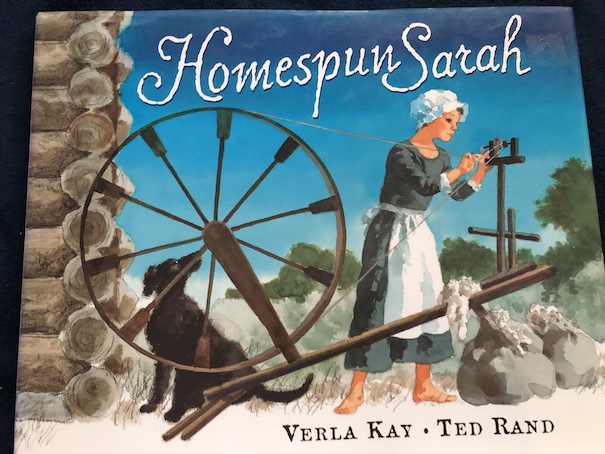
Homespun Sarah (2003)
An 18th century family makes new clothes from homespun cloth. By Verla Kay, illustrated by Ted Rand.
Isabel’s House of Butterflies (2003)
A girl from a poor family in Mexico comes up with a plan to save their special butterfly tree. By Tony Johnston, illustrated by Susan Guevara.
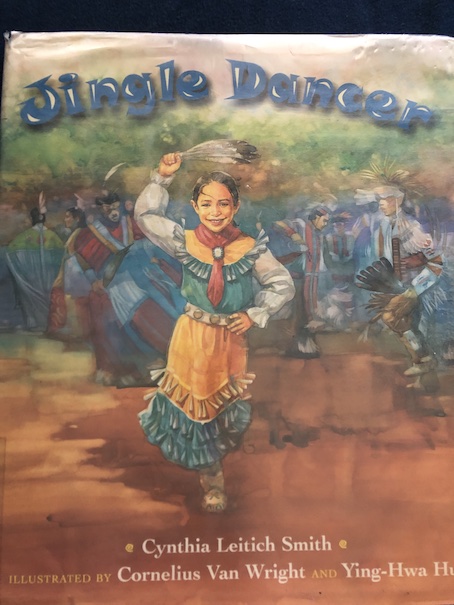
Jingle Dancer (2000)
A young Native American girl wants to dance like her grandmother, but she needs some help to get the jingles she needs for her costume. By Cynthia Leitich Smith, illustrated by Cornelius Van Wright and Ying-Hwa Hu.
The Little Green Witch (2005)
The Little Green Witch can’t get any of her friends to help her make a pumpkin pie. A retelling of The Little Red Hen folktale. By Barbara Barbieri McGrath.

Mrs. Armitage, Queen of the Road
When her Uncle Cosmo gives her his old car, it isn’t quite what Mrs. Armitage expected, but a series of mishaps turns it into something incredible.
Noel (2005)
This lovely Christmas picture book reads like a Christmas carol with beautiful art and poetry about the Christmas season. By Tony Johnston, art by Cheng-Khee Chee.
The Other Side (2001)
Two girls in a segregated town become friends and defy the prejudice that keeps them on opposite sides of a fence. By Jacqueline Woodson.
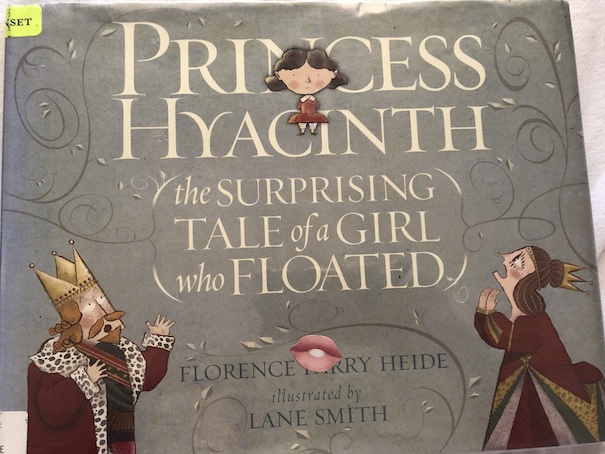
Princess Hyacinth (2009)
Princess Hyacinth isn’t affected by gravity and would just float away if she wasn’t weighted down. She figures out how to deal with her condition with the help of a friend. By Florence Parry Heide, illustrated by Lane Smith.
A Terrible Thing Happened (2000)
A boy named Sherman witnesses something terrible. The book doesn’t describe exactly what he saw, but the story explains how he learns to deal with his feelings after witnessing something traumatic. At first, he tries to forget about it, but when he realizes that he can’t forget what happened and that he’s becoming angry and depressed by the memory of what he saw, Sherman gets some relief by discussing his feelings with a therapist. By Margaret Holmes.

We’re Going on a Ghost Hunt (2001)
Two kids go on a ghost hunt and are very brave, right up to the moment when they find a ghost!
What To Do About Alice? (2008)
A short biography about Alice Roosevelt and her eccentric, colorful life. By Barbara Kerley, illustrated by Edwin Fotheringham.
The Wheat Doll (2008)
A pioneer girl in Utah loses her beloved doll, who was stuffed with wheat, in a storm. At first, she is sad that her doll is lost forever, but then, she discovers wheat growing in the spot where her doll was lost and realizes that she has the ability to make her doll again. By Alison L. Randall.
Whose Garden Is It? (2001)
A lady wonders who owns a lovely garden she passes, but she discovers that the answer is more complicated than she thought. By Mary Ann Hoberman, illustrated by Jane Dyer.
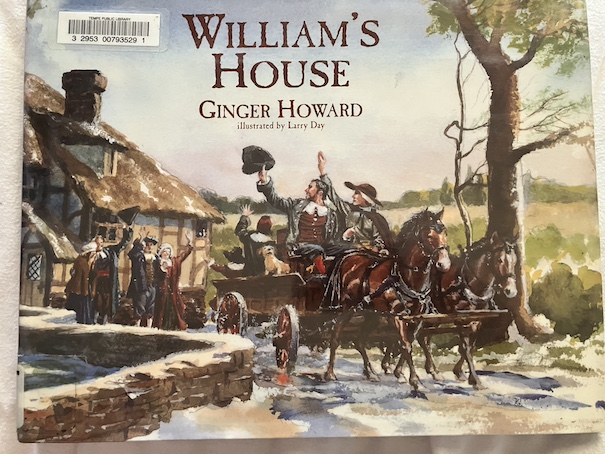
William’s House (2001)
William and his family have arrived in Colonial New England, and they need a new house. William wants a house like the one where he lived in England, but living in a new place calls for some changes. By Ginger Howard, illustrated by Larry Day.

Yetsa’s Sweater (2006)
Yetsa helps her grandmother prepare wool and make a new sweater in the traditional way of the Coast Salish people. By Sylvia Olsen, illustrated by Joan Larson.
This book is a sequel to Jumanji. A pair of brothers find a board game that launches their house into outer space, and they have to finish the game in order to get back home.
Series
The adventures of Arthur the aardvark and this family and friends. By Marc Brown. 1976-2011.
A family of bears teaches children life lessons. By Stan and Jan Berenstain. 1962-Present.
Clifford is a giant red dog who has adventures with his owner, a girl named Emily Elizabeth. 1963-2015.
A teddy bear finds the right owner for him and has adventures with toy friends. 1968-2011
A spooky little series of picture books about different children and the monster stories they invent and tell each other. It’s fun to be scared! By Rose Impey. 1988-2004.
Little Witch is a young witch in a family of witches. She is sometimes nicer than her family wishes that she would be and has adventures with her human children friends. By Deborah Hautzig. 1984-2004.
The adventures of a little girl who lives in a boarding school in Paris. 1939-2013.
An educational series. Ms. Frizzle takes her students on impossible field trips in a magic school bus to teach them science lessons. 1986-Present.
This is a loose series of picture books about young mice who experience life, growing up, and school, much like young human children. 1986-2013.
The characters of Misterland use their distinctive personality traits to teach moral lessons. Created by Roger Hargreaves and continued by Adam Hargreaves. 1971-Present.
Stuffed animal friends have adventures together and teach children lessons. By Jane Hissey. 1986-2016.
The Pigeon Series
Includes Don’t Let the Pigeon Drive the Bus! By Mo Willems. 2003-2019.
Spot is a puppy who has fun and adventures with his parents and animal friends. 1980-2013.
Strega Nona is a witch in a small town. Big Anthony is an assistant that she hired to help her with chores but sometimes messes up because he doesn’t know what he’s doing or doesn’t listen to what Strega Nona says. 1975-2013.
Non-Fiction
Something that you will notice in children’s nonfiction books of this decade is that it was becoming increasingly common for them to include links to websites for additional information and related activities. In the previous decade, the 1990s, the Internet was new to ordinary people. That was the decade when many people were first able to access it from their homes and schools, and when many of us first started using it, there was less variety in online content. Through the end of the 1990s and into the early 2000s, the number and variety of websites and Internet-based information dramatically increased, and a new generation of children grew up using the Internet from early childhood. The number of educational and activity websites specifically for children increased.
When you find printed books from this decade with lists of recommended websites in the back, not all of those websites still exist or exist in the form they had when the books were printed. Things on the Internet can change abruptly, and that was particularly true when the World Wide Web was very new and evolving. Sometimes, website owners discontinued their sites or changed the content to reflect new information or changing interests. If you want to know what a particular website looked like at some point in the past, one of the best and most likely places to find out would be the Wayback Machine at Internet Archive. Not all old web pages have been archived.

The Best Book of Pirates (2002, 2006)
Children’s non-fiction picture book about pirates in world history.
The Boys’ Book: How to Be Best at Everything (2004)
A how-to guide for boys about how to do a variety of things, from how to build a campfire to how to eat at a fancy restaurant.
The Dangerous Book for Boys (2006, 2007)
A book of hobbies and activities for children, particularly boys.
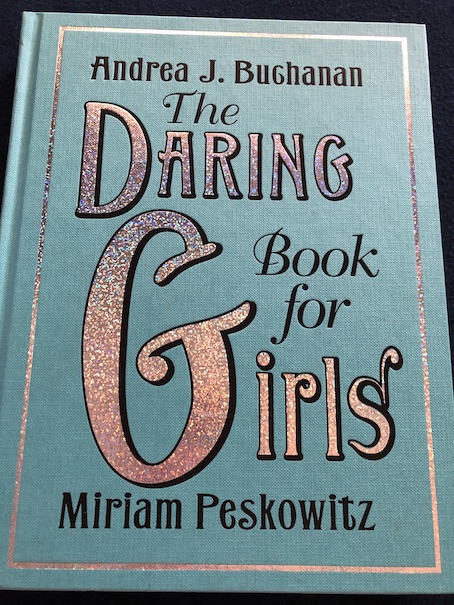
The Daring Book for Girls (2007)
A book of how-to projects, activities, and hobbies for girls.
The Double-Daring Book for Girls (2009)
A book of how-to projects, activities, and hobbies for girls. Sequel to The Daring Book for Girls.
Fannie in the Kitchen (2001)
Children’s picture book based on the life of Fannie Farmer and her famous cookbook. By Deborah Hopkinson.

Inside the Secret Garden (2001)
This is a how-to book with activities, crafts, and recipes that fit the themes in the classic children’s book The Secret Garden by Frances Hodgson Burnett. By Carolyn Strom Collins and Christina Wyss Eriksson with illustrations by Tasha Tudor and Mary Collier.
The Sleepover Cookbook (2000)
A cookbook for kids with easy recipes that they can make with their friends at sleepovers or parties. By Hallie Warshaw.
Series
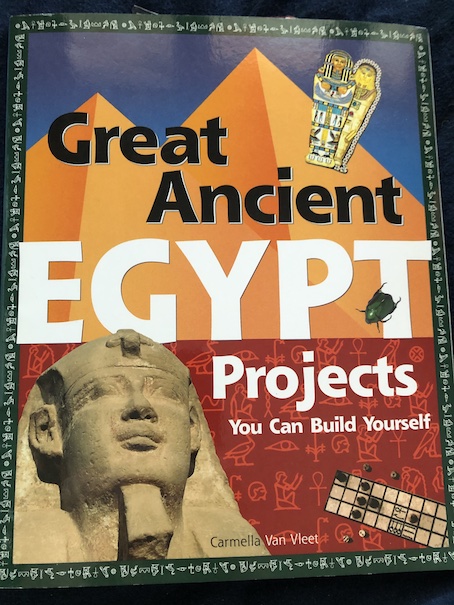
A series of nonfiction books for children about educational topics like history, technology, and science with projects for them to do themselves. 2005-2019.
Children’s nonfiction series on a variety of topics, from world history to science and technology, illustrated with photographs.
A collection of related biography book series for children with different themes. 1988-2010.
This non-fiction series describes to children what it would be like to live in certain periods of history or to take part in certain historical events.
The classic children’s hobby and activity book series from Klutz Press. Each book comes with materials needed for the hobbies and activities. 1977-Present.
Step Into History Series
Puts historical events into perspective by putting the reader in the position of someone in the past laying siege to a castle or building a Roman city or taking part in other historical events. By Julia Bruce. 2009.
Children’s historical biography series from the 1960s. 1965-1969, reprinted 1990s and 2000s.
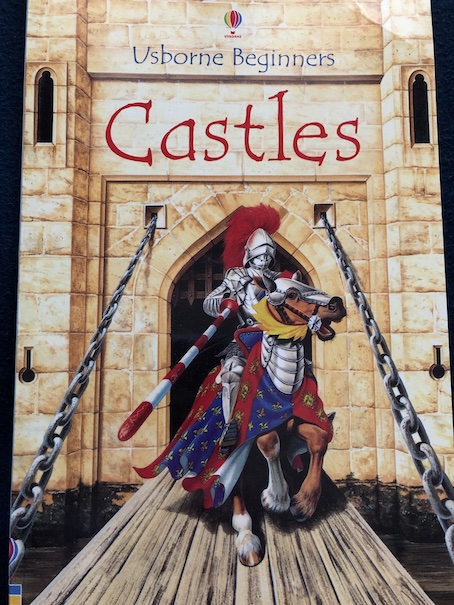
Nonfiction books on a variety of topics for beginning readers, including history, science, and animals and nature.
You Wouldn’t Want to Be Series
Children’s non-fiction picture book series that teaches history with humor, focusing on gruesome and dangerous parts of world history. 1999-2016.
Children of the Decade
Children born in this decade in the United States:
Popular 2000s Names – Among the most popular names for children born in this decade were: Michael, Jacob, Joshua, Emily, Madison, and Emma. The name “Madison” entered the top three names for girls, and using surnames as first names became more mainstream.
Were the first children born in the first century of the Second Millenium, at the start of the 21st century.
By the time they were born, children were being vaccinated against chicken pox while young, making a disease that had once been considered practically a rite of childhood (mostly because there was no way of preventing it before, it was just highly contagious and, therefore, almost inevitable) much less common, except in anti-vaccine families. (Consider all of the children’s books about having chicken pox that some kids will never relate to! I say, go ahead and get your shot, kids, if you’re able. I have a permanent scar on my face from chicken pox because I was born in the ’80s. There are some things you don’t really want to relate to.)
None of them would remember a time before space flight or the invention of the Internet. They would be among the first children whose parents would post pictures of them on the Internet via social media. Some of them would gain social media pages of their own early in life, practically seeing their entire lives documented online.
The presence of technology in their daily lives would be pretty much a given, and they would start using it from a young age. They would not remember a time before the Internet or cell phones. Computers would be commonly used in both their schools and homes, and video and computer games were popular. Even their parents would frequently play video and computer games of some kind, having grown up with them themselves. For those interested in older video games, many older systems and games were available fairly cheaply at stores that sold used systems and at garage sales. Some of these older systems would even look archaic to modern children.
Less of them had lessons in writing in cursive in school than previous generations because increasing use of technology, including use of computers to type homework assignments that would previously have been written by hand, made proper handwriting less necessary. When they write by hand, most of them just print. This is becoming increasingly common, although some people question whether it is wise, partly because reading cursive is also becoming something of a lost skill.
Most of them were born after the events of September 11, 2001, although those born very early in the decade were babies at the time. They would have no memory of life before this happened, and some of the aftermath of this event, such as the increased security measures at airports, would simply be ordinary facets of life to them. However, knowledge of terrorism would characterize much of their early lives. This incident (and later shootings and acts of terror) would make them increasingly aware that violent, unpredictable people are always present and that any of them could be killed in similar incidents. Being young would be no protection. They would see videos of violent incidents on television and through the Internet, giving them a high level of awareness of violence at a young age. Most would consider the risks minimal and go about their normal lives, but the knowledge would always be there, along with the understanding that going about normal lives always involves a certain amount of risk.
The Great Recession of the early 2000s and the turbulent aftermath may have affected their parents’ careers and finances during their earliest years. Their parents may have been among those whose homes were repossessed when the housing market collapsed. Some of them may have found themselves homeless early in their lives, possibly moving in with grandparents who still owned a house, or growing up in an apartment instead of a private home because their parents could not afford to buy a house. Although some children born in this decade had prosperous, privileged childhoods, others grew up in comparatively austere, turbulent circumstances. For those whose families suffered during the Great Recession, the children would be made aware early in life that money and employment were not guaranteed and could be lost with little warning.
None of them would have lived during a time when schools were segregated. (At least, not official segregation, which would be illegal long before they were born. Economic, not specifically racial segregation, would have more of a bearing on the makeup of their schools, although some racial segregation may have occurred as a by-product of economics in some of their schools. It would vary by region and social class.) None of them would live during a time when there were separate bathrooms or drinking fountains for different races in the United States or when people of different races weren’t allowed into certain restaurants or other public places. Almost all (with a few odd exceptions) 2000s children would find such concepts repulsive later in life. Racial makeup of churches and other religious institutions would vary by religion and region.
Actually, one of the hot button issues of their early childhood would be the question of whether people who identify as a non-standard gender or non-binary gender (in other words, people who mentally identify as a gender that is different from what their physical bodies suggest – instead of being regarded solely as either male or female, a choice between just two options based on physical form, some people feel somewhere between, possibly as part of a larger spectrum or as if their brains are telling them that they are something different from what their bodies indicate that they are, although the exact reasons why are still poorly understood as of this writing in 2018) could use restrooms that were in keeping with their sense of personal identity as opposed to physical form. This idea met with much resistance when it was first proposed, especially from older generations at this time (read the comments attached to some of the articles that I linked to the explanation for examples of public opinion). For children who would be in school in the 2010s, this issue would be discussed among parents and students, and schools would have to decide how they would handle the matter when it arose. One of the things mentioned frequently in opinions on this issue, especially from people who are either opposed to changes or neutral on the issue, is “Why does it matter? Somehow, people have survived so far with restrooms the way they are.” This is a still-evolving issue, but my thought is it isn’t always the big events in history, like wars, elections, or political movements, that end up meaning the most to people, but all the hundreds of little things that come along with them. Most of our lives take place in the small, day-to-day events that make up our daily routine, like chores, work, school, shopping, and yes, going to the bathroom. Anything that changes those small, daily routines, changes us, not just for one day, but for the rest of our lives. When little things get easier, our lives get easier, and when little things get harder, our lives get harder. So, that’s why it matters for a lot of people. How any individual person feels about an issue like this depends on whether or not they think it’s going to make life easier or harder.
They would have been between the ages of 10 and 20 years old when the Coronavirus Pandemic of 2020-2021 began. They would have been among those children and young adults whose education was affected by the pandemic as schools closed and/or moved to an online format. Throughout the pandemic, education frequently alternated back and forth between in-person and online as school systems struggled to cope with outbreaks of the disease. Parents and school districts argued about mask requirements for teachers and students. Some parents gave up on in-person schooling, at least temporarily, and switched to homeschooling instead. Some families discovered that they actually liked the flexibility of homeschooling while others struggled with childcare as parents returned to work. Children found separation from their friends due to quarantines and social distancing difficult, and parents tried to find ways to keep their children busy and provide them with ways to socialize with others safety. Their methods varied widely because nobody alive at this time had ever been through an event like this before, and everything was experimental. Some people tried to ignore the pandemic as much as possible and live “normal” lives, doing what they would typically do and seeing the people that they would usually see. Others joined online groups and classes (at least temporarily) to have as little direct contact with others as possible, an option especially popular among families with family members who were considered especially vulnerable. Some people tried to find a middle ground, establishing circles or “pods” (various terms were used) of friends who would share childcare and educational responsibilities, providing their children with an opportunity to learn and socialize with a limited group of people who either mainly or completely associated with each other, limiting families’ risk of exposure to the coronavirus.
Children born in this decade would also have read books from the following decade, the 2010s, in their youth. However, children who were old enough to read some of the books published in the early part of this decade when they were first sold would have been born in the preceding decade, the 1990s.
Other Resources
Documentary Films
Some of these are full-length documentaries, others are clips, and some are just collections of vintage footage and reminiscences from people who lived during the time period.
CrashCourse
CrashCourse is a YouTube channel with fun educational videos on a variety of topics and different periods of history. The videos are fairly short for educational lectures. Most are less than 15 minutes long. These videos are intended for teenagers and older, so be aware that there may be topics and language inappropriate for younger children.
- Terrorism, War, and Bush 43: Crash Course US History #46 – I like their description of the reactions to the 9/11 Terrorist Attack. It is accurate. I was in my first semester of college when this happened, and it influenced the classes that I took in my college career and the topics under discussion in history, political science, and philosophy classes. We were aware even back then that new security measures also interfered with rights to privacy, and while we wanted terrorists to be found before they could carry out other attacks, not everyone was happy with the methods being used. People who weren’t alive before this period also don’t realize just how different airport experiences were prior to this event.
- Obamanation: Crash Course US History #47 – Covers the beginning of the Great Recession in 2008, its causes, and the election of the first black President.
Events in Children’s Lives:
9/11 survivor Janice Brooks speaks to students born after attack
A survivor of the attack of September 11, 2001 on the World Trade Center recounts the experience on the 17th anniversary of the event in 2018.
Who was to blame for the financial crisis?
An examination of the causes of the financial crisis of the late 2000s by the BBC.
Why the shock of 2008 still matters today
An explanation from 2018 of the beginnings of the Great Recession of 2008 and the implications that it still has for young working people and their futures – austerity, lack of pensions, etc. Although the focus of the explanation is Great Britain, much of what they say is true of the United States and other countries as well.
‘I earned more as a student than I have since’
This continues the idea of the previous video, the effect that the Great Recession had on younger people, who were just finishing their education or beginning their working lives in a difficult economy. Even in 2018, 10 years later, when things seemed to have improved somewhat, the impact from the crash left many young people (particularly those who had been born in the 1980s) behind where they had expected to be in their lives or careers, with lower wages and less opportunities and questioning their positions and priorities, in some ways more distrustful of people and society. Although the focus is on Great Britain, much of what they say is true of the United States and other countries as well.
How I grew up in Russia (00’s kid)
Children who were very young or born in the 1990s were the first post-Cold War generation. In this YouTube video, Niki Proshin, explains what it was like being born in post-USSR Russia in the 1990s and growing up in the early 2000s in Russia.
 Jestress's Forgotten Books and Stories

