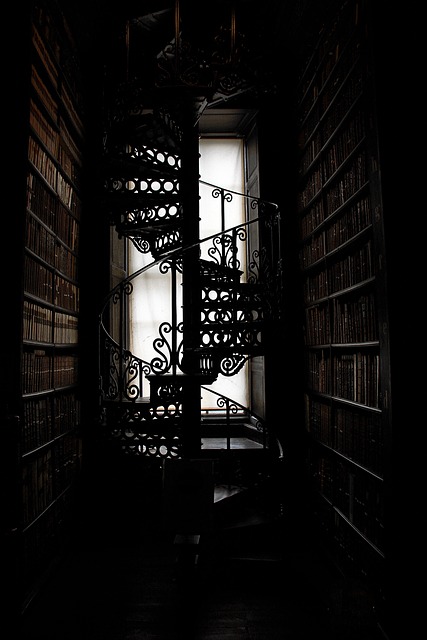
Dark and Light Academia are both aesthetics and themes that have been popular in the 2020s. People sometimes define them in different ways, but what they both have in common is the romanticization of learning and love of books, literature, and the arts. As the names indicate, Light Academia tends to focus on lighter, more optimistic themes, like self-knowledge and self-discovery and the fun and adventure of learning, while Dark Academia tends to be more mysterious with deeper and more serious themes, sometimes focusing on issues of life and death.
Light Academia stories focus on the benefits and joys of education, how it helps people to understand themselves or the world. Characters in these stories find their minds broadened by their experiences. They learn things about topics they enjoy, or they discover new interests or avenues of learning that they didn’t know before. They form friendships with people who encourage them and teach them important lessons outside of the classroom. In Light Academia stories, education helps people find their places in the world and makes their lives better.
Dark Academia focuses on the dangers and difficulties of pursuing an education or the search for knowledge. What characters learn in Dark Academia books are uncomfortable truths about the human condition or the people around them, and they must find ways to deal with what they’ve discovered. Sometimes, there are secret societies or clubs at school that take part in dangerous activities or exclude other students to promote their image of being “elite.” Sometimes, characters’ obsession with their pursuit of knowledge, academic competitiveness, or using their academic pursuits or connections to climb the social ladder lead them to do things they shouldn’t do, whether it’s just mistreating other people around them or actually committing crimes. Sometimes, Dark Academia books focus on the people who are doing dark and dangerous things as a character study of what leads to that type of behavior, and others focus on the people trying to solve the situations created by people doing dark and dangerous things and what they learn from their experiences. (Personally, I prefer the latter, so that’s mostly what you’ll see on my lists.) Sometimes, Dark Academia includes elements of the supernatural as a form of dangerous knowledge. Basically, while both Light and Dark Academia focus on education and learning, Light Academia is about the positive experiences and effects of learning, while Dark Academia is about people dealing with the negative sides of the educational system, knowledge of the darker sides life or of people around them, and/or the dark sides of personal ambition.
Stories with an Academia setting tend to take place in traditional places of learning and study, such as schools (especially boarding schools), colleges, libraries, and museums, although they can take place anywhere where the characters can learn and enjoy books and the arts, search for the answers to some mystery or puzzle, explore their own identities, or find some kind of deeper truth. Not all school stories are necessarily Academia stories. School stories that focus more on friend groups at school, for example, could be considered more friendship stories, and the Wayside School series is just fun nonsense. For books to fall under the academia themes and aesthetics, they should include elements of a love of learning and knowledge, insights about education, a love of books and the arts or culture, and/or self-discovery.

Because people have different conceptions of what Dark and Light Academia can be, not everyone will agree with how I categorized these pieces of nostalgic and vintage children’s and young adult literature, but if you’re into exploring these aesthetics, you may enjoy some of these books. As always, this site is a work in progress, and more will probably appear here later.

The academic aesthetic in general has faced some criticism because stories that fit the aesthetic frequently have elements of classism or elitism, although many books in this genre criticize elitism in education and use themes of social class differences as sources of tension or intrigue in the stories. (For example, Daddy-Long-Legs is a vintage book that confronts issues of social class in academics.) Books in this genre are also frequently very Eurocentric or focused on Western culture because they were inspired by British aestheticism and British and US East Coast educational institutions (but not exclusively – there are exceptions).
I think the key to enjoying this aesthetic is the key to enjoying most genres or aesthetics – it has its time, place, and mood. It’s something to enjoy for what it is when you’re in the mood for that kind of thing, but I don’t think any single genre or aesthetic should be anyone’s entire life. (I routinely go through phases where I get very deep into particular genres or themes like this, but phases come and go.) There’s a lot to like here, but do leave a little room for other things that may come along. If you like the look of being in love with books or knowledge, be open to loving all kinds of books and knowledge on a variety of subjects and life experiences! Add substance to the look, and gather knowledge that will broaden your views and imagination rather than narrow them. There are many types of knowledge and ways to apply them. Appreciate them wherever you find them! Also, knowledge and style should be used for self-understanding and self expression and for gaining understanding of others and building relationships with them. If you use your self-expression to be critical of others, shut down their self-expression, or harm their understanding of themselves or ability to build relationships, it’s not a good thing. Use knowledge and style as tools, not weapons. There’s an important difference. That’s not just knowledge but wisdom.
Some of my book suggestions overlap with the aesthetic of Cottagecore because both of these aesthetics became popular during the Coronavirus Pandemic in the early 2020s, and the two aesthetics have certain elements in common. During the pandemic, people tended to remain at home more, sometimes having to quarantine to avoid spreading the illness or trying hard to avoid catching it in the first place. Cottagecore and Academia themes and aesthetics were ways of coping with that relative isolation and the stress of the situation going on around them. Through much of the pandemic, people basically had two choices (that is, if they didn’t have the option to try to ignore the situation entirely and keep doing whatever they would normally do): either they didn’t get out as much and had to stay home alone or with just close family, taking pleasure in activities they could do at home (which often included reading and self-study, especially for students whose schools temporarily closed, and self-reflection – hence, Light and Dark Academia), or when they did get out, they would go to mostly outdoor places, like parks or the countryside, where they would encounter as few people as possible, distancing themselves from others, and taking pleasure in being outdoors in nature (hence, Cottagecore).
What both of these aesthetics have in common are elements of:
- Coziness – People learned to make themselves feel comfortable in small ways to cope with the stress.
- Pleasures taken in small things in life – Whether it’s quiet moments with a good book or love of the natural world and countryside.
- A slower pace of life – Partly to combat stress and also because some typical fast-paced activities were temporarily paused or slowed during the pandemic while we waited for conditions to improve.
- Vintage styles – A revival in vintage clothing and interest in history helped take people’s minds off the immediate situation and offered comfort through the familiar and traditional as well as literal comfort because these vintage styles are genuinely comfortable to wear.

So, Cottagecore and Light and Dark Academia are not the same thing, but they do have certain elements in common because they were both popularized by a common experience and mindset, and they are both based heavily in nostalgia. Anne of Green Gables is a classic example of a book series that can fit either or both aesthetics because Anne loves nature and lives in a little farmhouse in the countryside but she also loves books and literature and becomes dedicated to studying, eventually becoming a teacher and author.
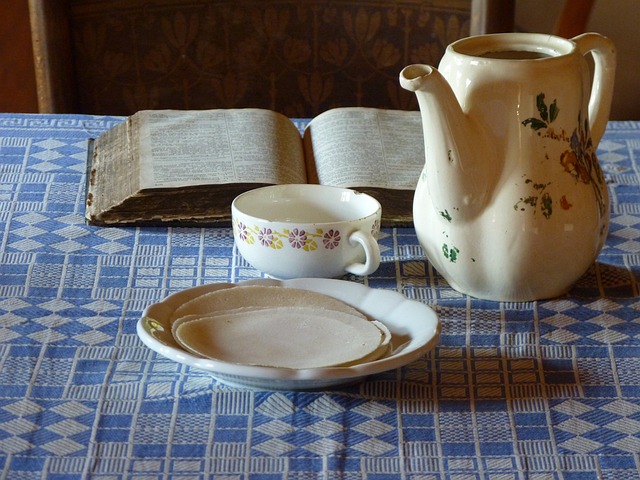
If you look at videos on YouTube for these two aesthetics, you’ll notice that many people who are fans of one are also fans of the other, and some people switch between the two, depending on the season. Cottagecore is often (although not always) associated with spring and summer because those are usually the best times to be outside in nature. Dark Academia is often (although not always) associated with fall and winter because fall is usually the back to school season and winter is a good time to stay indoors reading and studying.


Because Dark and Light Academia are aesthetics rather than genres, trying to capture certain themes and feelings, there are certain forms of clothing, activities, and decoration that tend to go along with them. (You can find many YouTube videos about this. Using books as a form of home decoration as well as reading is key.) In general, Academia clothing is meant to evoke school and study. It sometimes resembles school uniforms or preppy, old-fashioned, and traditional Ivy League college clothing:
- Dark or muted colors (sometimes muted pastels, especially in the Light Academia style)
- Patterns like argyle and plaids
- Materials like tweeds and corduroy
- Sweaters and blazers for outwear
- Elements like vests or pleated skirts
- Shoes like loafers, Mary Janes, ankle boots, or lace-up Oxford shoes
As with Cottagecore style, people who like Academia style often get items through thrift shopping. In its most basic form, it’s usually not too far outside of basic officewear (such as turtlenecks or button-up shirts with a cardigan or jacket and loafers), but with more of an emphasis on comfort and vintage style rather than formality. Picture comfy, cozy clothing, often layered, that someone might wear for curling up with a cup of tea or coffee and a good book.

As people wear these clothes, surround themselves with decorations that fit the theme, and immerse themselves in books, many of them are also inspired to try related activities, such as learning to write calligraphy with a dip pen, maintaining a journal, studying an esoteric subject just for fun, and writing stories and poems.
In my lists of Light Academia and Dark Academia recommendations below, I’ve sorted the books by genre. These are all nostalgic or vintage children’s or young adult books, so there is a reading range from elementary to high school. My principle is not to have reviews here for books that are newer than 10 years old by the current year because my focus is on nostalgia, which takes time, but I do have books mentioned on the lists that are newer because I will probably review them eventually.
Originally, I didn’t mark the books by reading level, but I decided to add a few notes about the rough age group/reading level of the books. I don’t often do this because I think reading level is somewhat subjective and also because the focus of this site is mainly nostalgia, looking back at old favorite books or books someone might have missed reading as a child, teen, or young adult that they might like to revisit. When people are revisiting older, nostalgic children’s books, they’re usually not too concerned about the reading level so much as a the reading experience. However, because this is a list that focuses on a newer reading aesthetic and because the focus of this aesthetic is learning, I think the reading level of the books becomes more important.
Light Academia
General Fiction
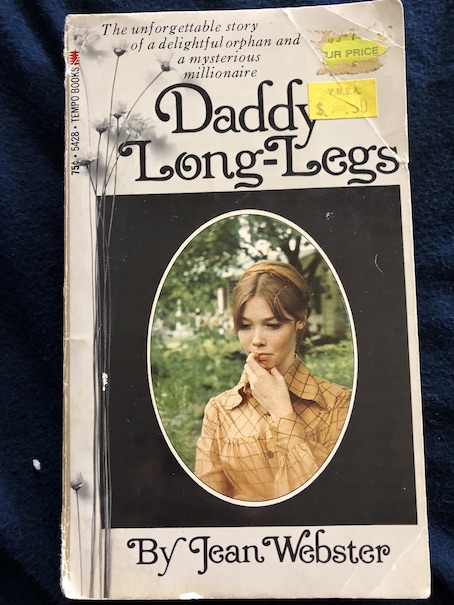
Daddy-Long-Legs (1912)
A wealthy benefactor provides money to a young orphan girl, Jerusha “Judy” Abbott, so that she can go to college. He asks that she write to him about her college experiences and progress in class but insists upon remaining anonymous. Judy nicknames him “Daddy-Long-Legs” in her letters because she has only had one brief glimpse of him and only knows that he is very tall with long legs. During her time at college, Judy gains a new sense of her personal identity and ambitions, starting to forge a career as a writer. Through the course of the book and her letters to Daddy-Long-Legs, she eventually discovers his true identity. The story is set contemporary to the time when it was written, in the 1910s. By Jean Webster.
Rough reading level: Teen or young adult. I don’t recall any thing that would be objectionable for younger readers, but because of the focus on a teen going off to college, I think it would appeal more to teens. Teens might also identify more with some of the things Judy studies in the story and her growing awareness of her personal identity and self-expression.

Little Women (1868)
During the American Civil War, the four March sisters grow up and discover their destinies. The first of a series. By Louisa May Alcott.
The Secret Language (1960)
Young Victoria North is shy, nervous, and homesick because she is attending boarding school for the first time. School improves for her when she makes friends with Martha Sherman, an outgoing girl who has been a boarding school student before and who introduces Victoria to all the things that make boarding school fun and magical – the usual pranks, the midnight feasts, and friends with their own secret language. By Ursula Nordstorm.
Rough reading level: Middle grade, but there are some things that might appeal to someone older.
The Silver Pencil (1944)
Janet, a girl from Trinidad, goes to school in England and later trains to be a teacher in New York. Along the way, she treasures a silver pencil that was a gift from her father, and it inspires her to become a writer. Aspects of the story were inspired by the author’s own life. By Alice Dalgliesh.
Tom Brown’s School Days (1857)
A boy named Tom Brown goes to boarding school at Rugby. Things are difficult for him, including dealing with a bully, but he makes some good friends and learns some valuable life lessons. This book was based on the author’s own school experiences. It was one of the most famous Victorian British boarding school stories and helped to popularize the genre. By Thomas Hughes.
Available to read online through Project Gutenberg.

Understood Betsy (1916)
A young orphan girl goes to live with relatives on a farm in Vermont and finds a happier home than the one she left behind and a new sense of self-confidence. It is public domain and on Project Gutenberg. By Dorothy Canfield Fisher.
Note: Dorothy Canfield Fisher was an early advocate of the Montessori method of education in the United States, and in particular, this book presents many of the principles of the Montessori method and how it can help children.
Rough Reading Level: Middle grade, although if you know a few things about history, psychology, or the Montessori method and/or educational theories, you can get deeper into this book.
Series
When an aging, unmarried brother and sister decide that they could use some extra help on their farm, they decide to take in an orphan boy who can help with the farm chores. However, by mistake, the orphanage sends them a red-haired young girl instead, changing their lives and others in the community with her liveliness and imagination. Books in this series are public domain and are available on Project Gutenberg. By L. M. Montgomery. 1908-1939.

Madge Bettany, in need of money and with a younger sister to help raise, decides to leave England and go to Austria to start a new boarding school for girls. The series covers the adventures of the girls who attend the boarding school and how their time at the school changes their lives. The series also includes how the school and the girls are affected by WWII. The WWII books were written during the war years. By Elinor M. Brent-Dyer. 1925-1970.
This is a vintage British series and isn’t as well-known in the US, but it is possible to get the books here.
Rough Reading Level: Middle school or upper-middle grade.
Emily of New Moon Series
When Emily’s father dies, she goes to live with relatives at New Moon farm. At first, life there isn’t very happy because her Aunt Elizabeth is very stern and her relatives are snobs, but Emily manages to make some new friends and becomes a writer. This series is a trilogy. By L. M. Montgomery. 1923-1927.
Humor
Adventure
Series
Historical Fiction

Away From Home (1985)
Also called Sixteen and Away from Home, part of the Grandma’s Attic Series, set in 19th century Michigan. Mabel and Sarah Jane will be living away from home for the first time as they board in town, finishing their education at the local academy (high school level). They enjoy their many new experiences and first crushes, although the class bully threatens to ruin things for them. Mabel also has to confront the question of whether she’s trying so hard to excel in her studies because she loves learning, or if it is because she’s trying to compete with the other students. Mabel starts to consider how too much competitiveness can spoil a person’s attitude and take the enjoyment out of things.
Rough Reading Level: Middle school or upper-middle grade.

From Anna (1972)
Anna is the youngest in a family of five children living in Frankfort, Germany during the 1930s. She is often teased and shamed for being clumsy and having trouble at school. It always seems so much harder for her to learn things and do things than her older siblings. As the Nazis begin taking control of Germany, and her father fears for the family’s future, Anna’s Uncle Karl dies in Canada, and the family moves to Canada to claim his estate and start a new life. In Canada, their new doctor discovers what everyone else has missed about Anna: her vision is extremely poor and she can hardly see. When Anna gets her first pair of glasses and special classes for people with vision problems, she begins to realize that she is capable of more than anyone ever expected, including herself. By Jean Little.
Rough Reading Level: Middle school or upper-middle grade.

In Spite of All Terror (1968)
A London girl’s life changes when she is sent to the country as a child evacuee during World War II. One of the ways that her life changes is that the evacuation program allows her to continue her education, break free from her working class family, and begin building a new future for herself. Along the way, she considers how what she reads and studies helps her to understand the war and the people around her, although she sometimes questions whether certain subjects or types of literature are useful or not, a topic that she debates with her teacher. By Hester Burton.
Rough Reading Level: Teen or Young Adult. There is death in the book because of the war, including one that’s a bit graphic, and there is also a teenage pregnancy (although not the heroine of the story).

The Secret School (2001)
The year is 1925, and what 14-year-old Ida Bidson wants most is to graduate from her community’s small, one-room schoolhouse so that she can go to high school in a nearby city. When the local school board closes the school rather than hire a new teacher, Ida and the other students take their education into their own hands. By Avi.
Rough Reading Level: Middle grade.
Two Are Better Than One (1968)
Two imaginative girls growing up in early 1900s Idaho write a story about a pair of dolls that changes their lives. By Carol Ryrie Brink.
This is a coming-of-age story that often centers around the girls’ experiences at school and their relationship with their strict teacher. Although they and their teacher don’t get along at first and hurt each other’s feelings, they gradually get to know each other better and have some honest conversations that change the course of their relationships. The girls’ feedback on their experiences with their teacher and their urging for her to share some of her personal experiences and travel stories with the class help her to connect with her students more and to make her lessons more colorful and interesting. The teacher’s life has been more interesting than she thinks it has, and she just needs to learn how to open up and share it with her students. The teacher also gives the girls advice about their continuing education and helps them seriously consider their futures and where they want to go with their education. The girls are capable of more than they think they are, and they are more ready for the changes coming in their lives than they think. They just need some guidance and encouragement to see it.
Rough Reading Level: Middle grade.
Series
Mystery
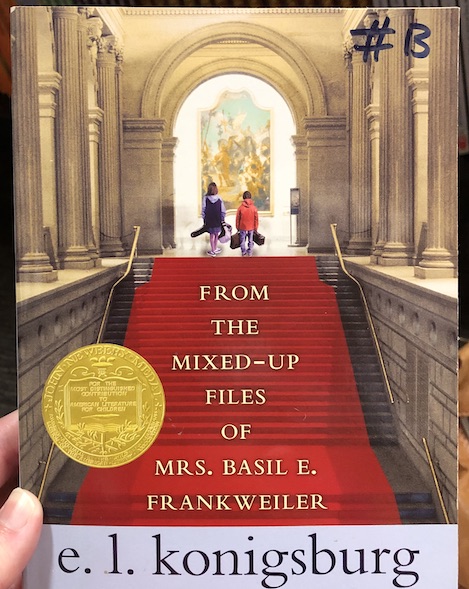
From the Mixed-Up Files of Mrs. Basil E. Frankweiler (1967)
Two runaway children hiding in the Metropolitan Museum of Art uncover the secret of a sculpture that may have been sculpted by Michelangelo and also learn a few things about themselves. By E.L. Konigsburg.
Rough Reading Level: Middle grade.
Mystery by Moonlight (1963)
During the day, Gail uses a shed on the property of an old, abandoned house as a private place to write her poems, but at night, she hears strange noises coming from the supposedly empty house. Is it haunted? By Mary C. Jane.
Rough Reading Level: Middle grade.
Who Stole the Wizard of Oz? (1981)
When a rare book is stolen from the local library and Becky falls under suspicion, she and her twin brother Toby investigate to learn the truth. By Avi.
Rough Reading Level: Middle grade.
Series
Fantasy

Alice in Wonderland (1865)
A young girl falls down a rabbit hole and finds herself in a strange land where nothing works like it’s supposed to. By Lewis Carroll.
Alice in Wonderland is a strange story, but much of the nonsense in the story is actually based on parodies of stories and poems that people from the 19th century would have known and recognized and on inside jokes that Lewis Carroll had with the children of his superior at Oxford about places and people at the university.
Rough Reading Level: Middle grade.
Linnets and Valerians (1964)
The four Linnet children run away from their harsh grandmother, who is supposed to be taking care of them while their father is away, and go to stay with their nicer uncle, Ambrose. There, they find a village that is under a witch’s spell and a strange woman, Lady Alicia Valerian, who is searching for her missing family. By Elizabeth Goudge.
Uncle Ambrose is a bit of a curmudgeon, but he is also a retired teacher. It’s not so much that he likes children, but he loves teaching them. He knows how to make lessons more interesting to the children and how to keep them occupied with activities so they don’t cause trouble, helping them to further their education in a unique fashion and to improve their behavior.
Rough Reading Level: Middle grade. There is a character in the story who is a kind of racial stereotype, although he is a sympathetic character, and adults emphasize to the children in the story that they should consider his feelings. My review has details about that.

Through the Looking-Glass (1871)
Alice returns to the chaotic, magical Wonderland when she steps through a mirror. Sequel to Alice in Wonderland. By Lewis Carroll.
This magical adventure is based around a real game of chess.
Rough Reading Level: Middle grade.
Series

Kat is a young girl who goes on time travel adventures with her aunt. They meet famous people in history and often have an impact on historical events. The sections in the back give more information about the time periods they visit in each book.
Rough Reading Level: Middle grade.
Jack and Annie discover an old tree house in the woods that is filled with books and can take them to different periods of time. By Mary Pope Osborne. 1992-Present.
Rough Reading Level: Early middle grade/beginning chapter books.
Mildred Hubble is the worst witch at witch school, but sometimes, being a little different from everyone else can be a good thing.
Rough Reading Level: Middle grade.
Picture Books

Carmen Learns English (2010)
A young girl who speaks Spanish starts school in the US and has to learn English. In the process, she discovers that she enjoys teaching. By Judy Cox, illustrated by Angela Dominguez.
Counting on Katherine: How Katherine Johnson Saved Apollo 13 (2018)
The story of real-life Katherine Johnson and her work at NASA. By Helaine Becker, illustrated by Dow Phumiruk.
Emma (1980)
Emma is a lonely grandmother but discovers a new interest in life when she becomes a painter. By Wendy Kesselman, illustrated by Barbara Cooney.
Five Secrets in a Box (1987)
Little Virginia Galilei looks at the instruments that her father, Galileo, uses to study the night sky. By Catherine Brighton.
The Ink Garden of Brother Theophane (2010)
A young monk is inspired by plants and nature to create new inks to produce colorful manuscripts. By C. M. Millen, illustrated by Andrea Wisnewski.
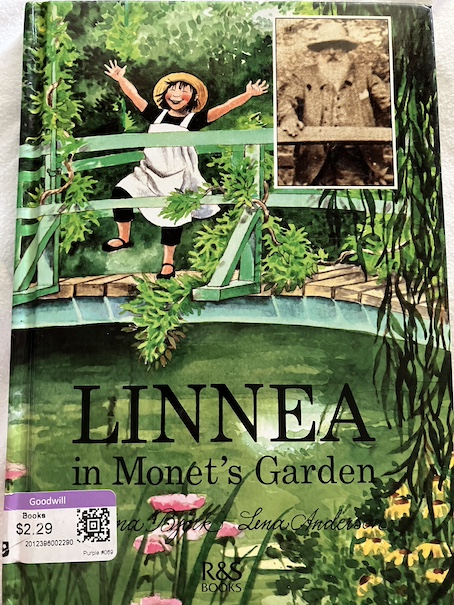
Linnea in Monet’s Garden (1985, 1987)
A young girl travels with a family friend to visit Monet’s Garden in France, learning about his life and art. By Christina Bjork, drawings by Lena Anderson.
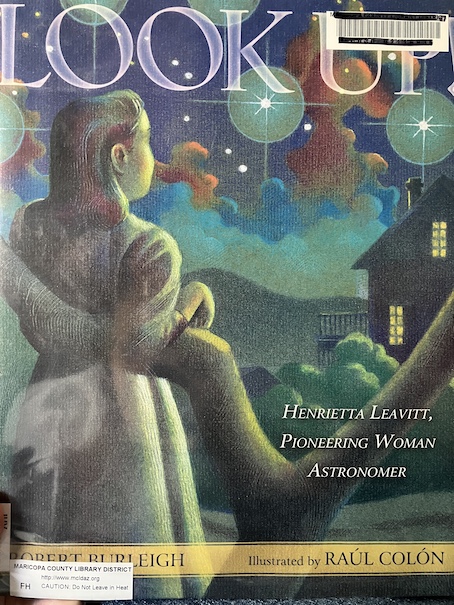
Look Up! (2013)
The story of Henrietta Leavitt, a pioneering female astronomer who discovered the importance of a star’s brightness. By Robert Burleigh.
Maria’s Comet (1999)
Young Maria Mitchell discovers her love of the night sky through her family and later becomes an astronomer. Based on a real person. By Deborah Hopkinson.
Dark Academia
General Fiction
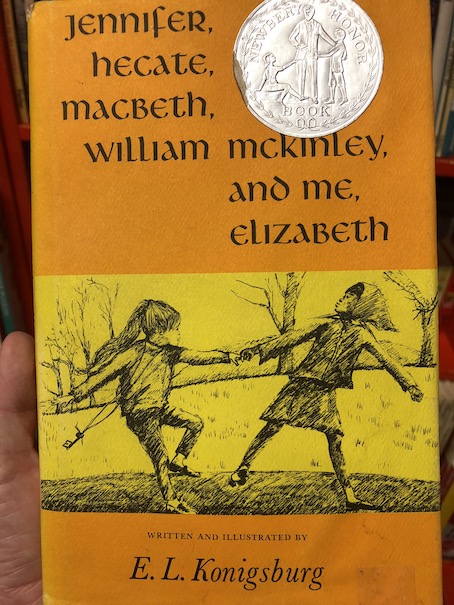
Jennifer, Hecate, Macbeth, William McKinley, and Me, Elizabeth (1967)
When Elizabeth moves to a new neighborhood, she meets a strange girl named Jennifer who offers to teach her how to be a witch. By E. L. Konigsburg.
Rough Reading Level: Middle grade.
A Separate Peace (1959)
A young man reflects on his time at boarding school and how he caused an accident that led to the death of his best friend. He didn’t meant to hurt him or kill him; it was just a momentary impulse that had catastrophic consequences. As an adult, he has spent time as a soldier, and his experiences in war have given him a greater understanding of human behavior and his own past. By John Knowles.
Rough Reading Level: Teen/Young Adult.
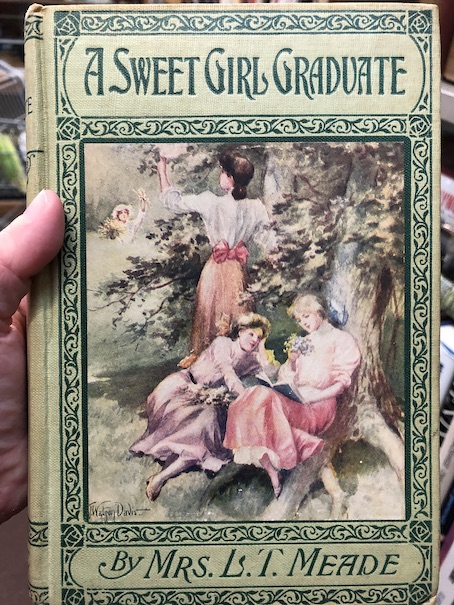
A Sweet Girl Graduate (1891)
A drama about a poor girl who attends a 19th century ladies’ college in England, confronting class differences and toxic friendships and the obsession some of her fellow students have with the memory of a popular student who died. Later editions were published under the title Priscilla’s Promise. By Mrs. L. T. Meade.
Rough Reading Level: Teen/Young Adult.
Adventure
Historical Fiction
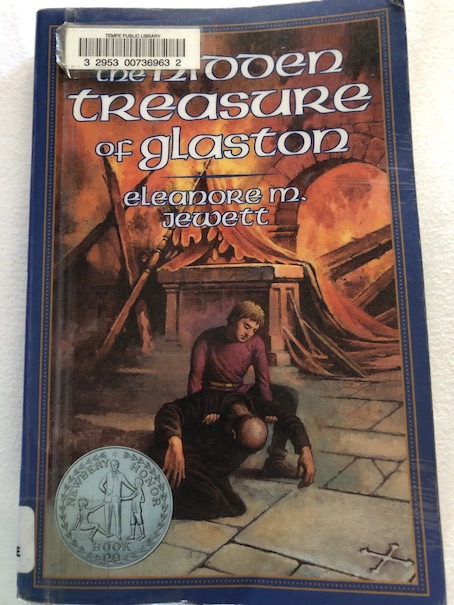
The Hidden Treasure of Glaston (1946)
Hugh, a frail boy and son of a knight, is left at the abbey of Glastonbury when his father is forced to leave England. At first, the boy feels guilty about his physical weakness, which makes it impossible for him to become a knight like his father, but his intelligence, thoughtfulness, determination, and spiritual faith help him to investigate the mysteries of Glastonbury, the supposed final resting place of King Arthur and the Holy Grail, and teaches him that there are more ways of becoming a man than one. Unlike his father, he finds his destiny through learning and study instead of fighting. By Eleanore Jewett.
Although the boy finding his life’s interests in learning and study is beneficial for him, the story also contains death and some dark secrets, which is why I listed it as Dark Academia.
Rough Reading Level: Middle school or upper-middle grade.
Scary

Among the Ghosts (2010)
A girl named Noh is spending the summer with her aunt at the boarding school where she teaches. She discovers that an old, burned dormitory is haunted and that the ghosts there need her help. By Amber Benson.
The Artifact Hunters (2020)
Sequel to The Charmed Children of Rookskill Castle. Twelve-year-old Isaac is sent from Prague to Scotland for safety during WWII. He finds himself at Rookskill Castle with other children learning to use magic powers to fight the Nazis, but he must also learn the secret of the mysterious pendant that his parents gave him. By Janet Fox.

The Charmed Children of Rookskill Castle (2016)
An old Scottish castle is turned into a boarding school for children evacuated from London during WWII. However, strange things are happening there, and soon, children start disappearing. By Janet Fox.
Rough Reading Level: Middle school or upper-middle grade.
Down a Dark Hall (1974)
A young adult gothic horror novel about girls at a haunted boarding school who channel the spirits of famous people to complete their unfinished works. By Lois Duncan.

There is also a movie version of this book from 2018. The story is dark, but the movie is actually darker.
Rough Reading Level: Teen/Young Adult.
Ghost Knight (2011)
A boy at boarding school confronts ghosts and solves a murder that occurred centuries earlier. By Cornelia Funke.
The Girl Who Wasn’t There (2014)
Maisie’s father becomes the caretaker of a boarding school, but Maisie finds it difficult to make friends there. Then, she discovers that the one friend she has made is actually a ghost. By Karen McCombie.
Gone Away (1979)
A farm girl in 1930s England attends school for the first time, boarding in a house in town that is haunted. By Ruth Tomalin.
Rough Reading Level: Middle grade.
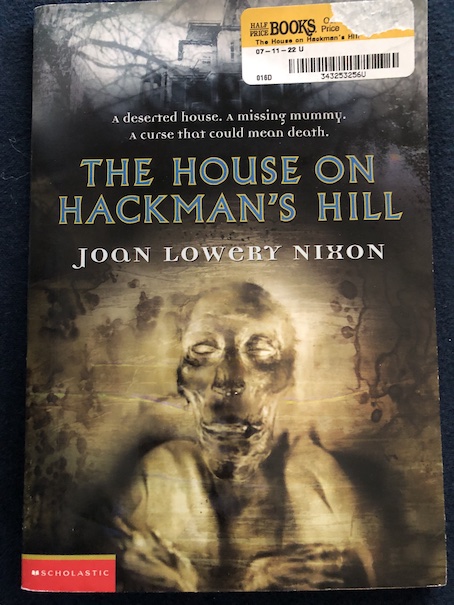
The House on Hackman’s Hill (1985)
A pair of cousins are fascinated by the story of an old house that may be inhabited by a cursed mummy and decide to try to find the mummy and claim the reward. By Joan Lowery Nixon.
Rough Reading Level: Middle grade.
Say Her Name (2014)
A girl at a boarding school summons Bloody Mary on a Halloween dare, but to everyone’s surprise, Bloody Mary actually comes. They only have five days to figure out how to prevent her from coming after them. By Juno Dawson.
The Shadow Guests (1980)
Cosmo learns that his family is under a curse when his mother and brother mysteriously disappear. By Joan Aiken.
Shiverton Hall (2012)
A boy named Arthur Bannister begins attending a spooky boarding school that has many scary stories. By Emerald Fennell. Some parts are gruesome, and I wouldn’t recommend this book for younger readers.
Shiverton Hall: The Creeper (2014)
Sequel to Shiverton Hall. A boy at the school disappears, leaving behind an ancient book. By Emerald Fennell.

The Time of the Ghost (1981)
The ghost of a teenage girl struggles to remember who she is and how she died. At first, all she knows is that she is one of four sisters (she’s not completely sure which one) who live at a boarding school owned by their parents and that she was in a terrible accident of some kind. It turns out that her spirit has traveled back in time several years to her youth, when she did something that set up her accident later … and her “accident” wasn’t really an accident. Does she still have time to change things and save her own life? By Diana Wynne Jones.
Rough Reading Level: Middle school or teen.
Mystery
The Callender Papers (1983)
Jean is an orphan in the 19th century, living at a school for girls, when she gets a job offer from a mysterious artist and uncovers the secrets of a prominent family and her own past. By Cynthia Voigt.

Father’s Arcane Daughter (1976)
A mysterious woman joins a wealthy family, claiming to be a long-lost daughter who was believed to be dead, and she changes their lives for the better. However, is she really who she claims to be? By E.L. Konigsburg.
It doesn’t take place at a school, but there are intellectual discussions of books and personal discovery, especially on the part of the younger daughter of the family, who is disabled and has emotional difficulties but learns that she is intellectually capable of more than anyone realizes.
Rough Reading Level: Middle school or upper-middle grade.
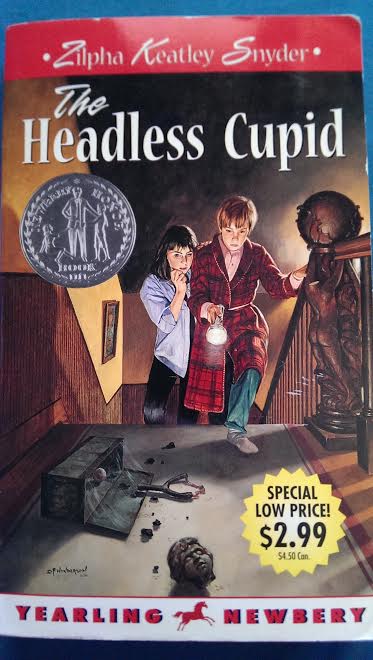
The Headless Cupid (1971)
The Stanleys move into an old house that may be haunted by a poltergeist. By Zilpha Keatley Snyder.
I debated a little about including this one, but I decided to include it on the list because Amanda, the girl in the story who is trying to convince everyone that she has magical powers and has stirred up the poltergeist, has based much of what she does on books that she’s read. This book is often challenged for occult themes, but let’s just say that there is a reason why I put it in the mystery genre instead of the scary genre. You can read my review if you want spoilers.
Rough Reading Level: Middle grade.
The Mystery of Black Hollow Lane (2019)
A girl is sent to a boarding school in England, where she discovers that her father, who disappeared years before, was involved with a secret society. By Julia Nobel.
Rough Reading Level: Middle school or upper-middle grade.
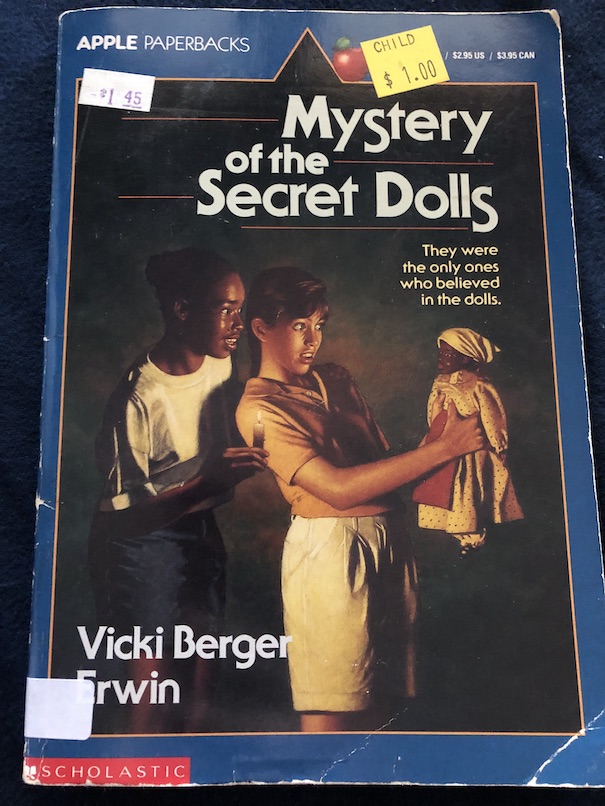
Mystery of the Secret Dolls (1993)
A pair of girls search for antique dolls from the Civil War era that are the key to an old family secret. There’s a lot about the history of this particular family in their small town and a kind of rivalry between the heroine’s aunts, one of which loves cooking and the other of which is obsessed with doll-making and their family’s collection of antique dolls made by an ancestor. Much of it comes to light when their niece comes to visit and do research for a family history project. By Vicki Berger Erwin.
Rough Reading Level: Middle grade.

The Scandalous Sisterhood of Prickwillow Place (2014)
When someone poisons their headmistress, the girls at a Victorian boarding school try to cover up their headmistress’s death while they investigate the crime. By Julie Berry.
Rough Reading Level: Middle school or upper-middle grade.
The Story Collector (2018)
A girl who lives in the New York Public Library, where her father works, investigates the disappearance of a valuable stamp collection and a possible haunting with her friends. By Kristin O’Donnell Tubb.
The Story Seeker (2020)
Sequel to The Story Collector. A girl who lives in the New York Public Library, where her father works, investigates mysterious messages as part of an essay writing contest. By Kristin O’Donnell Tubb.
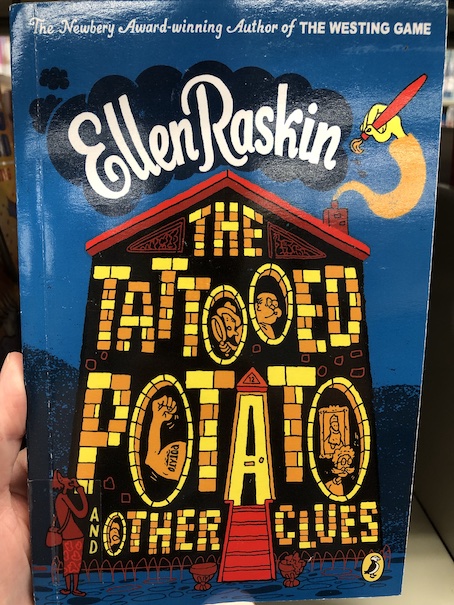
The Tattooed Potato and Other Clues (1975)
An art student takes a job as a painter’s assistant and learns the secrets of the people who live in the same building as the artist and the truth about the murder of her own parents. By Ellen Raskin.
Rough Reading Level: Middle school or upper-middle grade.

The Vandemark Mummy (1991)
A brother and sister move to Maine with their father, where he is put in charge of a collection of Egyptian artifacts at a small college. They are soon confronted with a mystery concerning the mummy in the collection. By Cynthia Voigt.
There are themes about education/intellectualism and ambition in the story, and the sister is studying Sappho and the concept of feminism. There is a comparison of the different ways people and view and promote feminism because she and her mother clash over what they think it should mean. Her mother is about getting higher status and salaries, while the girl is more about intellectual freedom and achievement. They have similar ideals but different ambitions, and there is a character in the story who is prepared to do some very dark things for the sake of their ambitions.
Rough Reading Level: Middle school.
Series
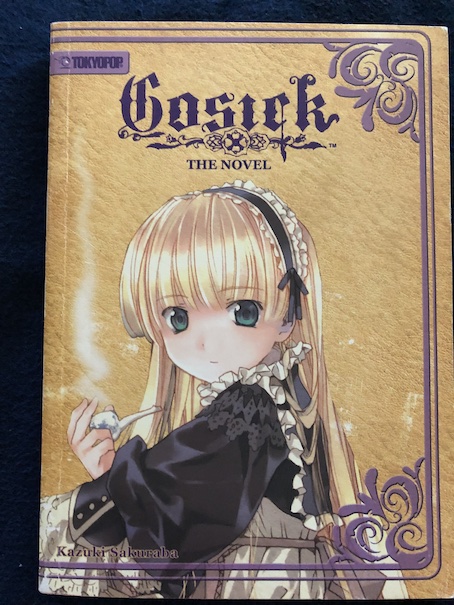
A series of Japanese light novels that reference and parody classic scary stories and detective stories and themes. The title is a take-off on the “gothic” genre. Victorique is a mysterious girl who spends all her time at the top of the library in an exclusive boarding school in a small European country before WWII. Kujo, a Japanese student attending the boarding school, meets Victorique when he is given the task of taking her class assignments. He discovers that Victorique is a child genius with a mysterious past and joins her in solving mysteries with spooky themes, including murder, at this boarding school where everyone is obsessed with ghost stories.
Rough Reading Level: This is not a series for young children! The dark stuff gets pretty dark. It’s best for teens and young adults.
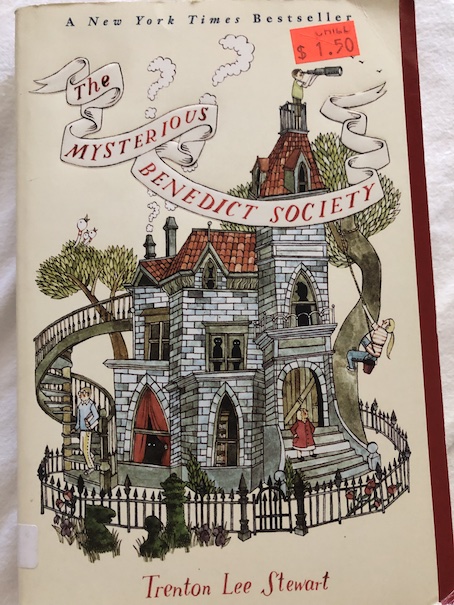
The Mysterious Benedict Society Series
The Mysterious Benedict Society is a group of children with special abilities, who are chosen by a man named Nicholas Benedict to undertake an undercover mission to stop his evil twin, Ledroptha Curtain, from broadcasting secret, subliminal messages and trying to take over the world. 2007-2019.
Rough Reading Level: Middle school or upper-middle grade.
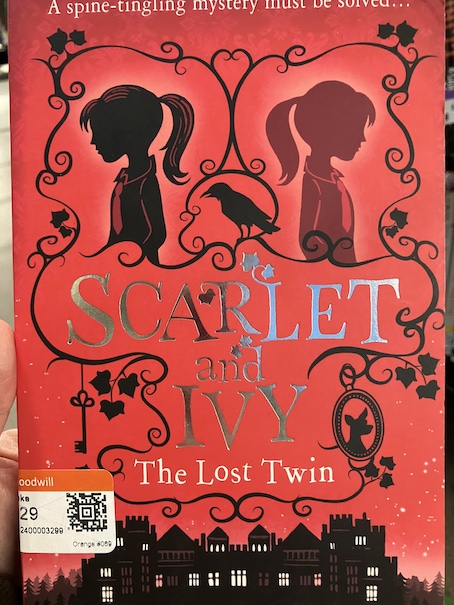
Scarlet and Ivy are a set of twins in the 1930s. In the first book, Ivy is shocked to be told that her sister, Scarlet, has died at boarding book school. She is invited to take Scarlet’s place at the school, but she is forced to pretend to be Scarlet. Fortunately, Scarlet has left Ivy messages and clues about what happened to her and the sinister things that are happening at the school. Ivy is able to save Scarlet, and the two of them continue to attend the boarding school, solving its mysteries and learning some secrets about their own family. 2015-2019.
Rough Reading Level: Middle school
Fantasy

Charlotte Sometimes (1969)
Charlotte begins life at boarding school, but every night, when she goes to sleep in her school bed, she switches places with another girl who was a student at the school back in 1918, Clare. Charlotte doesn’t know why this is happening, but she and Clare begin sharing their lives, living in each other’s place on alternating days. Charlotte worries about getting trapped in the past and becoming Clare permanently, losing her identity as Charlotte. This is the third and best-known book in the The Aviary Hall Trilogy. You don’t need to read the other books in the series to understand it. By Penelope Farmer.
Rough Reading Level: Middle school or upper-middle grade.

The Court of the Stone Children (1973)
A lonely girl who loves museums encounters a ghost who needs her help to learn the truth about the past. By Eleanor Cameron.
Rough Reading Level: Middle grade.
The Diamond in the Window (1962)
Eleanor and Eddy live in their family’s strange old house in Concord, Massachusetts, which is known for being home to some literary greats, including Ralph Waldo Emerson and Louisa May Alcott. The children’s uncle is a literary scholar who specializes in the Transcendentalists, but the family has fallen on hard times and is in danger of losing their house. While the adults struggle to figure out how to pay the taxes they owe, the children investigate the mysterious disappearance of their other aunt and uncle, Ned and Nora, who vanished as children years before, along with their uncle’s prize Transcendentalist student, a wealthy prince. The prince used to make little treasure hunts for Ned and Nora, and the only clue to their disappearance is a poem he left behind with Transcendentalist references, the last treasure hunt he did for the children. If Eleanor and Eddy can solve it, they might find both the prince’s treasure and the secret of what happened to the prince and their missing relatives.

This is the first book in the Hall Family Chronicles. By Jane Langton.
There are fantasy themes, and solutions come to the children in strange dreams. It’s a fun introduction to the concept of Transcendentalism and some literary greats!
Rough Reading Level: Middle school or upper-middle grade.
Mairelon the Magician (1991) and Magician’s Ward (1998)

A short series of young adult novels that takes place in an alternate version of Regency England, where magic is real. Kim, a teenage girl who lives on the streets of London disguised as a boy is taken in by Richard Merrill (aka Mairelon), first as his assistant and then as his apprentice. Together, they solve mysteries of magical intrigue. By Patricia C. Wrede.
The “academic” part really comes into play more in the second book. Mairelon is an academic sort of person, and under his tutelage, Kim learns to read and do magic as well. These stories are both fantasy mysteries, and part of the magic and solution to the mystery concerns the use of language. There is an explanation of why magicians always use a language other than their native language for their magic spells that I thought was interesting.
Rough Reading Level: Teen/Young Adult.
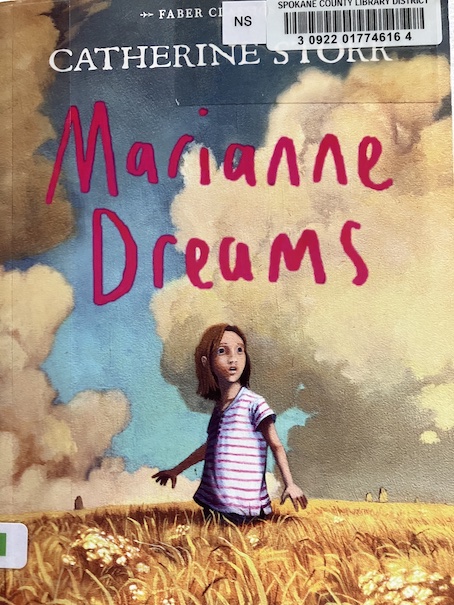
Marianne Dreams (1958)
Marianne begins a drawing when she is sick in bed and finds herself entering the world of her drawing when she dreams at night. Her adventures there with a boy who is also ill teach her patience and perseverance in dealing with her own illness and helping others. By Catherine Storr.
Rough Reading Level: Middle grade.
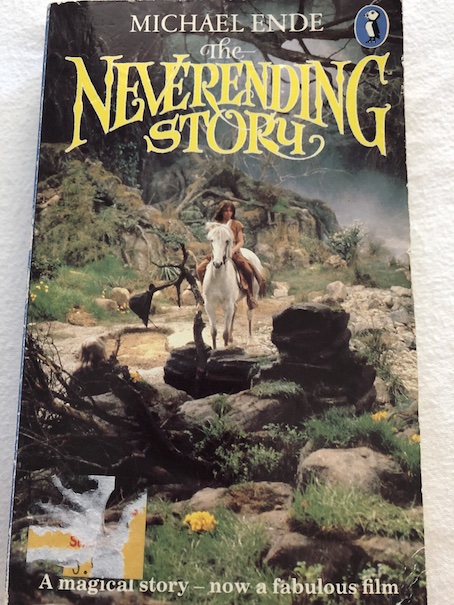
The Neverending Story (1979, 1983)
A bullied boy steals a book from a bookshop and reads it secretly while hiding in his school, finding himself becoming part of the story. The book was originally published in German, and the English edition was released in 1983. By Michael Ende.
Rough Reading Level: Middle school to Teen/Young Adult.
A Pattern of Roses (1972, 1975)
A boy whose parents are renovating an old cottage in England begins learning about the history of the house and another boy who once lived there and died under mysterious circumstances years ago and left behind a tin box full of his drawings. As the modern boy investigates the mystery, he finds that events from this past boy’s life are strangely also beginning to happen to him as well, and the two of them have some odd things in common. The US edition of this British book is called So Once Was I. By K. M. Peyton.

There are themes of death and memory, but as the modern boy contemplates the legacy of the boy who died young many years ago, he comes to some important realizations about his own life, education, and ambitions and makes a decision about his own future legacy. He has been deeply unhappy about his education and his parents’ plans for him and his future career for some time, but the boy from the past makes him see what’s really important and what he really wants, giving him the courage to take his life into his own hands. One warning about this is the tragic death of animals. The movie version is notable for being Helena Bonham Carter’s first movie role. She played young Netty.
Rough Reading Level: Teen/Young Adult.
The Phantom Tollbooth (1961)
Young Milo is incredibly bored when he receives a mysterious package that seems to be some kind of playset that includes a tollbooth and a map. It takes him on an amazing journey through a fantastic land that changes his outlook on life. By Norton Juster.
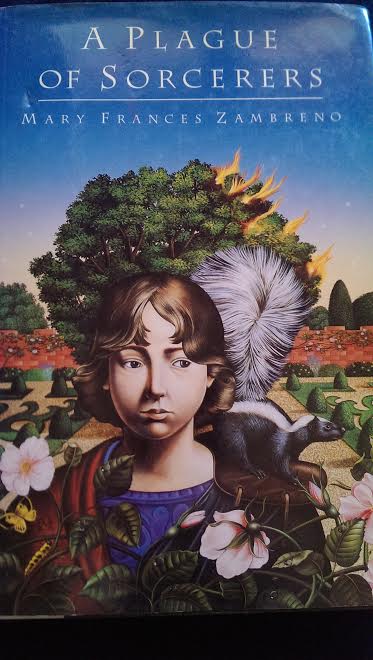
A Plague of Sorcerers and Journeyman Wizard
Jermyn Graves is studying magic, but he is an unusual wizard with a skunk for a familiar. With the help of his familiar and his teacher, he solves magical mysteries, including murder. By Mary Frances Zambreno.
Rough Reading Level: Middle school to Teen/Young Adult.
Tryst (1939)
A 17-year-old girl falls in love with the ghost of a man when her family rents his former home, and she encounters his spirit through his old library. By Elswyth Thane.
This one is a young-adult tear-jerker, but some people have nostalgic memories about it. Some reviewers have pointed out how poignant the story is when you consider that it was published on the eve of WWII, when the deaths of many young people separated them from the people they loved.
Rough Reading Level: Teen/Young Adult.

Wizard’s Hall (1991)
When Henry sets out to learn magic at Wizard’s Hall, he questions whether he has the necessary talent, but he believes in the importance of trying. It turns out that his talent is a particularly unusual one, and he uses it to save the school when it’s under threat. By Jane Yolen.
Rough Reading Level: Middle grade.
Series

In this series, there are many different worlds and series of worlds, and in each of those different dimensions, there is a copy of every person, except one, who has nine lives, and this person is an extremely powerful enchanter called the Chrestomanci. By Diana Wynne Jones. 1977-2006.
I think this series can count as Dark Academia because much of it focuses on the magical education of different characters. Some parts take place at schools, but others involve private tutors or the children learning about their talents through their own experiments. Some of the settings are truly charming, but some dark things happen, especially around the ways nine-lived people lose their lives. There are also themes of betrayal. In particular, Witch Week is set at a toxic boarding school for suspected witches. It helps to read this series in order.
Rough Reading Level: Middle school or upper-middle grade.
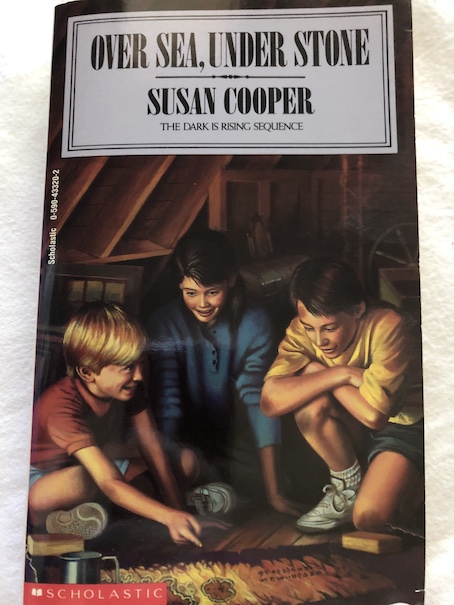
A group of people known as the “Old Ones” struggle against the forces of evil. This series draws on Arthurian legends, mythology, and folklore. By Susan Cooper. 1965-1977.
Rough Reading Level: Middle school or upper-middle grade.
Harry Potter Series
A best-selling series about an orphan boy who discovers that he is a wizard and attends a school for wizards in Britain. As he grows up and his education as a wizard progresses and he prepares to face down the evil wizard who killed his parents, Harry learns many secrets about life, death, magic, and his own mysterious past. There are many references to folklore and legends in the series. By J.K. Rowling.
Rough Reading Level: Middle school or upper-middle grade.
The Inkheart Trilogy
A teenage girl and her father, who is a bookbinder, have the ability to bring characters from books to life by reading the books aloud. By Cornelia Funke. 2003-2008.
Picture Books

The Mysteries of Harris Burdick (1984)
A mysterious man leaves a series of illustrations with a publisher, promising to return with the stories that accompany the illustrations. However, the man disappears, leaving the publisher to wonder just what the stories are really about. By Chris Van Allsburg.
There is no other text to this book other than the titles and captions of the pictures. Readers are invited to write their own stories to go with the pictures and to speculate about what happened to the missing Harris Burdick. We never get the answer in this book, although there was a follow-up book published in 2011 called The Chronicles of Harris Burdick, where various famous authors each wrote what are supposedly the “real” stories of Harris Burdick, and we get an explanation about what happened to the mysterious Harris Burdick. However, if you’d still like to invent your own stories and explanations, you can just stick to the original book.
The Mysterious Horseman: An Adventure in Prairietown, 1836 (1994)
A pair of boys living in a small Midwestern town in the 1830s hear rumors of a mysterious, frightening horseman. By Kate Waters.
This one gets a mention under Dark Academia because of the literary tie-in.
Classic AcademiA
These are classical novels, which were not originally written for children but are frequently used in schools, particularly at the high school level. A knowledge of classic literature is generally a part of the academia aesthetics, but these particular pieces also focus on knowledge, a love of books and learning, and some of the other themes that are part of academia. The historical backgrounds to some of these books are also relevant.
The Fall of the House of Usher (1839)
By Edgar Allan Poe.
Frankenstein (1818)
By Mary Wollstonecraft Shelley – The story of how this novel was created is famous. It was the result of an informal ghost story contest involving Lord Byron, Percy Shelley, Mary Shelley, and John Polidori – a rather scandalous group of creatives who were like the celebutantes of their day. Most of them lived fast and wild lives, dying relatively young. They were all friends, and they were staying in a Swiss villa one summer, when a fierce storm caused them to have to stay indoors, so they started writing and telling ghost stories to pass the time. Some members of the group, like Mary Shelley, published their stories later.
Jane Eyre (1847)
Jane Eyre is an orphan who was abused by her family and the harsh boarding school she attended. She finds freedom and mystery when she becomes a governess. By Charlotte Bronte.
The Legend of Sleepy Hollow (1820)
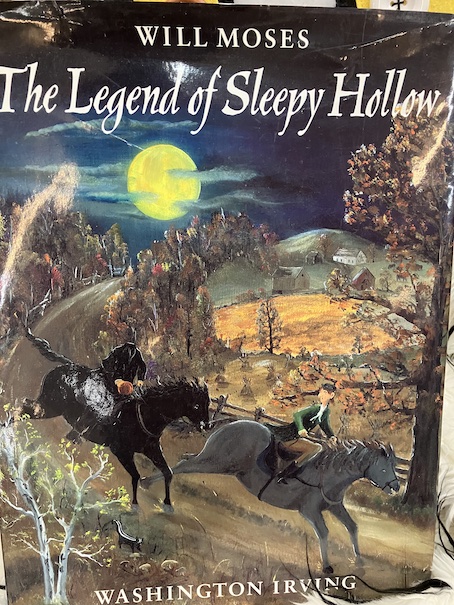
By Washington Irving – A famous example of early American gothic literature. A schoolteacher is frightened by the legendary headless ghost of a Hessian soldier who was killed in the American Revolution, but it remains ambiguous what he really saw.
I like this story because it shows something of the development of folklore and culture in the United States while the country was still fairly young. There are indications of the folklore and superstitions of people based on the cultural origins of their families, but they are also starting to develop a new, shared sense of folklore and even ghost stories based on familiar, shared events in the states/former colonies. During the course of the story, they reference Cotton Mather and colonial witchcraft trials, and the main ghost story comes directly from the Revolutionary War, a major event that cost many lives and formed the young country as a whole. As time went on, and the country went through more internal events, such as the Civil War, new stories, legends, and pieces of folklore would continue to evolve in the US and shape its literature. This story shows part of the beginning, where events in the US gave US citizens unique pieces of folklore that were distinct from those of their ancestors or people living in the countries that their ancestors came from.
The Murders in the Rue Morgue (1841)
By Edgar Allan Poe.
Northanger Abbey (1817)
By Jane Austen, published posthumously – This novel pokes fun at gothic literature, which was popular during the Regency era and in the decades leading up to it, and at social attitudes toward novels in general. Around this time, although fictional novels were being published for popular reading, there were people who disapproved of the idea of reading fiction for fun instead of useful nonfiction books or books that would improve one’s knowledge or character. They thought fictional novels were a waste of time and gave people a false sense of reality.
In the story, a young woman named Catherine, who enjoys spooky gothic novels, accompanies a pair of family friends on a trip to Bath, where she makes some new friends and is invited to visit their family’s home, Northanger Abbey. Because of the scary stories she’s read, she has overly dramatic notions about what an old place like Northanger Abbey must be like and draws some wrong conclusions about the father of the family. However, she also turns out to be correct in realizing that he’s cold-hearted and not a trustworthy person. He’s not quite the sinister villain of stories, but he’s more of a low-level, everyday sort of villain. He hasn’t done anything illegal, but it would be fair to consider him unkind and even immoral in some areas.
The gothic novels that Catherine and others in the book describe reading are real books that Jane Austen herself read, and you can still read them today. They are all public domain. I read The Mysteries of Udolpho myself, although it’s a very long book with long scenes that just describe the countryside because the beauty of nature was a major theme in literature of the period. I’m not sure if I’d recommend it to anyone who isn’t really into Northanger Abbey and wants to know the literary background to the story (probably the #1 reason why people still read this book in the 21st century) or isn’t serious about studying the evolution of gothic literature.
Children’s Nonfiction for Academia
When I was assembling this list, it occurred to me that a genre/aesthetic that focuses around books and knowledge would have to include at least some nonfiction, to gather that knowledge. Really, that could include any form of nonfiction, but ones that I selected here focus on literature, history, culture, the arts, and pieces of esoteric knowledge. I particularly like nonfiction books that take a deep dive into odd and unusual topics, and that feels like an academia mindset. I’ve sorted them into genres below for convenience.
History

Castle (1977)
The story of the building of Medieval castle with detailed drawings and explanations about its architecture and defenses. By David Macaulay.
Cathedral (1973)
The story of the construction of a Medieval cathedral. The story takes place in a fictional town in France, Chutreaux, but it is based on the construction of real Medieval cathedrals. By David Macaulay.
Chimney Sweeps (1982)
The history and traditions of chimney sweeps, including child chimney sweeps.
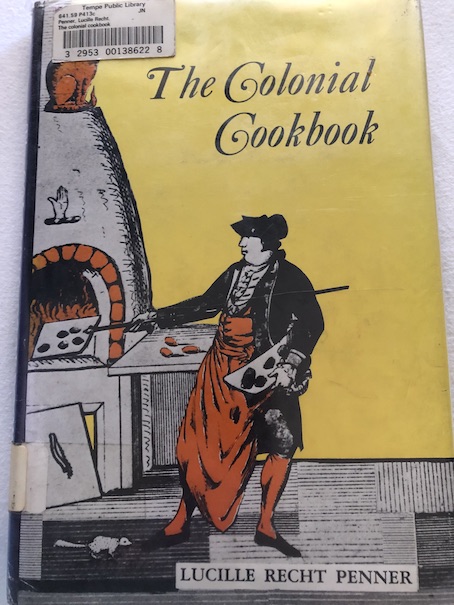
Colonial American Holidays and Entertainment (1993)
How people living in Colonial America would entertain themselves and celebrate holidays. By Karen Helene Lizon.
The Colonial Cookbook (1976)
This cookbook explains the history of food, cooking, and dining habits in Colonial America and provides recipes that readers can make themselves.

Daily Life in a Victorian House (1993)
The home and life of a family in England during the Victorian era.
Going to School in 1776 (1973)
This book is about schools and subjects that children would study around the beginning of the American Revolution. It also talks about apprenticeships and other types of education and what it was like to grow up in Colonial America. By John J. Loeper.
Immigrant Kids (1980)
The lives of immigrant children who came to the United States around the turn of the 20th century, late 1800s to early 1900s, including their education.

The King’s Fool (1993)
This is a non-fiction book about fools and jesters throughout history. By Dana Fradon.
Medieval Holidays and Festivals
This book explains the holidays that people celebrated in Medieval times and how these holidays would have been celebrated, along with some special information about Medieval feasts.
Series

Children’s nonfiction series on a variety of topics, from world history to science and technology, illustrated with photographs.
This is a non-fiction series of picture books about aspects of daily life in America during the 18th and 19th centuries.

This vintage children’s nonfiction book series covers various aspects of American history. There are related series that cover events and people in world history. 1950-1974, reprinted in later decades.
These nonfiction books explain life in different time periods by explaining different types of people who lived in those times periods and things that happened in places where people spent their time. By Sarah Howarth. 1991-1997.
Biography
Abraham Lincoln (1939)
A biography of President Lincoln, noted for being written by US immigrants and published on the eve of WWII. By Ingri & Edgar Parin d’Aulaire.
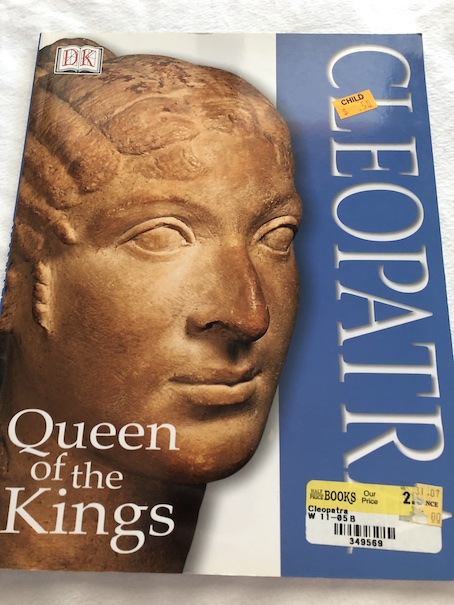
Cleopatra: Queen of the Kings (1998)
A picture book biography of Cleopatra, one of the most famous rulers of Egypt. By Fiona MacDonald, illustrated by Chris Molan.

Great Imposters (1982)
A collection of short biographies of famous imposters in history.
Invincible Louisa (1933)
A biography of Louisa May Alcott. By Cornelia Meigs.
Series
Famous Biographies for Young People
This mid-20th century non-fiction series offers books containing short biographies of famous people. The books were written by different authors, and each one focuses on a different category of people, like famous artists, famous authors, famous scientists, etc. c. 1939-1977.
This non-fiction series describes to children what it would be like to live in certain periods of history or to take part in certain historical events.
Children’s historical biography series from the 1960s.
Culture

Bells (1970)
A children’s nonfiction book about the history of bells and legends and superstitions about them. By Elizabeth Starr Hill, illustrated by Shelly Sacks.
Series
About games and sports played in countries around the world.
This is a non-fiction children’s book series about various types of cultural traditions from around the world. Covers different topics, like clothing, food, and games.
Folklore and Mythology

The First Book of Tales of Ancient Araby (1960)
A collection of Arabian folktales, rewritten for children. By Charles Mozley.
The First Book of Tales of Ancient Egypt (1960)
A collection of folktales and myths from Ancient Egypt for children. By Charles Mozley.
Encyclopedia of Legendary Creatures (1981)
A brief encyclopedia describing legendary creatures from around the world.

Ghosts, Witches, and Things Like That (1984)
Children’s book about Halloween and folklore and related games, crafts, recipes, and poems.
Monster Manual (1989, 1994)
An encyclopedia of monsters and other creatures from folklore, literature, and movies. Originally written in German. The second date listed is for the English translation.
The Ninth Jewel of the Mughal Crown
A collection of folktales and legends about the Mughal Emperor Akbar and his advisor Birbal. Birbal was a friend as well as advisor to Akbar the Great, known for his wit and unique solutions to problems.
The Olympians (1984)
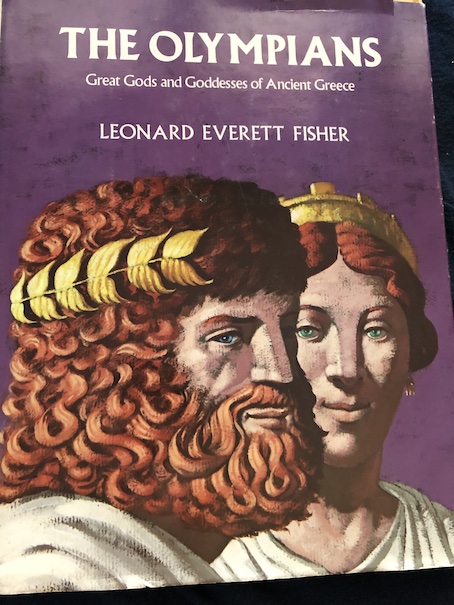
A picture book about gods and goddesses in Ancient Greek mythology. By Leonard Everett Fisher.
Usborne Illustrated Guide to Norse Myths and Legends (1986)
A children’s picture book about Norse legends and mythology. By Cheryl Evans and Anne Millard, illustrated by Rodney Matthews.
Art

The First Book of Paintings (1960)
A beginner’s introduction to understanding and appreciating paintings. By Lamont Moore.
The Lettering Book (1984)
About designing posters and lettering styles. By Noelene Morris.
Series
A series of instructional art books for children.
Poetry

A Child’s First Book of Poems (1981)
A collection of children’s poems by various authors. Pictures by Cyndy Szekeres.
A Child’s Garden of Verses (1989)
This is a reprinting of the classic 19th century collection of children’s poems by Robert Louis Stevenson. Illustrated by T. Lewis and Sara Gutierrez.
Science
Discover the Night Sky (1989)
A children’s book about astronomy with glow-in-the-dark pictures. By Chris Madsen and Michele Claiborne.
Starlings (1948)
A vintage children’s picture book from the 1940s about starlings, showing how the birds live and interact with their ecosystems. By Wilfred S. Bronson.
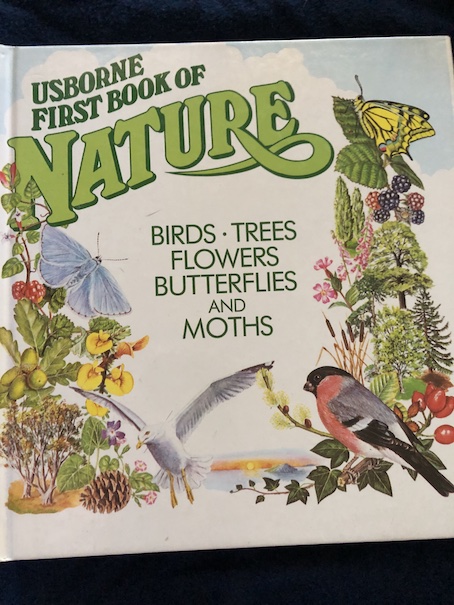
Usborne First Book of Nature (1980)
A nonfiction guide book to plants and creatures.
Series
Children’s nonfiction series on a variety of topics, from world history to science and technology, illustrated with photographs.
Activities and How-To
Codes and Secret Writing (1948)
The history of secret codes and how to make and break them. Published by Scholastic. By Herbert S. Zim.

This book is available online through Internet Archive.
The Dangerous Book for Boys (2006, 2007)
A book of hobbies and activities for children, particularly boys. It’s sort of like The American Boy’s Handy Book for the 21st century.
This book and The Daring Book for Girls are full of many different types of activities. The outdoorsy ones are good for the Cottagecore aesthetic, but there are also more academic sections about history and geography, crafts that fit academia like making marbled paper, and various bits of odd and esoteric knowledge, like secret codes.
The Daring Book for Girls (2007)
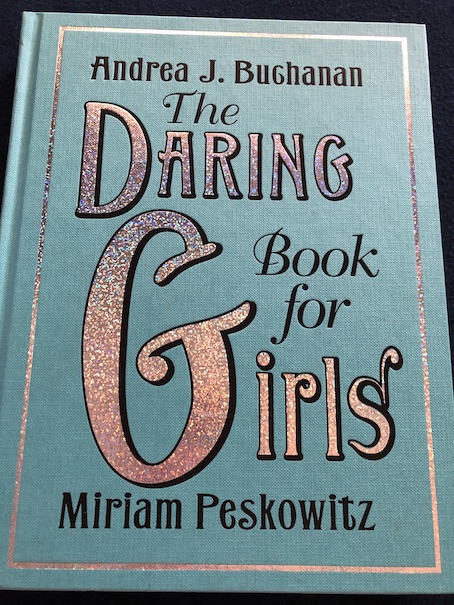
A book of how-to projects, activities, and hobbies for girls. It’s sort of like The American Girl’s Handy Book for the 21st century.
This book and The Dangerous Book for Boys are full of many different types of activities. The outdoorsy ones are good for the Cottagecore aesthetic, but there are also more academic sections about history and geography, crafts that fit academia like making your own paper and writing in italics and making a cloth-covered book, and various bits of odd and esoteric knowledge, like secret codes, phrases and terms of endearment in different languages, Greek and Latin Root Words, and Books That Will Change Your Life.
The Double-Daring Book for Girls (2009)
A book of how-to projects, activities, and hobbies for girls. Sequel to The Daring Book for Girls.
Secrets Your Handwriting Reveals (1991)
A simple beginning guide book to handwriting analysis for kids. By Carole Gerber.
Resources
Aesthetic Videos
You don’t have to revamp your life to have the clothes or decor that go along with this aesthetic to enjoy the books, but if you’re curious, these videos explain the aesthetic.
dark academia: everything you need to know (inc. outfits & book/film/music recommendations)
From Ruby Granger. A good basic overview of the principles of dark academia, common criticisms, and the related activities, clothes, decor, and books and movies.
DARK & LIGHT ACADEMIA STYLE || How to get the Look, Analysis, Essential Pieces & Outfit Ideas
From Silvina Gaiero.
The Academia Aesthetics for Black Women
From Cocoa Styling.
How to Build a Dark Academia Wardrobe from Scratch
From Mariel. She focuses on the basic elements and discusses light academia as well as dark academia, emphasizing wearing things you like, not being so strict about maintaining a particular aesthetic or subset of it that you end up with things you don’t like. I appreciate the flexibility and practicality.
20 Dark Academia Outfits! *with a vintage twist*
From Rachel Maksy. Explains dark academia style mainly through example rather than strict definition, which I think is helpful.
i tried the dark academia aesthetic for a week *fashion, books, music, and activities*
From Jack Edwards. Many dark academia videos focus on women’s clothing, but this video shows male clothing. It’s also a bit humorous and tongue-in-cheek, which makes it fun.
50 dark academia room decor ideas
From just lanch.
From just lanch.
From just lanch.
Light Academia Aesthetic guide & outfit inspiration
From Fab Sakker.
The Problem with Dark Academia
From Rowan Ellis. A critical look at the aesthetic by comparing it to the realities of academia and larger social issues. It also defines the aesthetic with examples of clothing and entertainment and discusses its history, evolution, and appeal.
Book Recommendation Videos
I focus mainly on children’s literature with some young adult literature. Some of these videos also include adult literature, but the videos I chose here all include at least some children’s or young adult literature. (You really get more variety that way. If you only look at adult books, almost every video or list of recommendations covers the exact same ones – The Secret History by Donna Tartt, If We Were Villains by M. L. Rio, The Furies by Katie Lowe, Bunny by Mona Awad, and Catherine House by Elisabeth Thomas are major ones.)
13 Dark Academia Films + Books You Need to Watch & Read
From Darling Desi.
dark and cozy fall books you haven’t heard of yet
From The Book Leo.
the ultimate guide to dark academia books
From The Book Leo.
Articles
About the aesthetic and the subculture that goes with it.
What is “Dark Academia,” and why is it trending on social media in 2022?
From Big Think.
What Is Dark Academia And Why Is It So Popular
From Book Riot.
From The New York Times.
Light Academia versus Dark Academia
From The Mood Guide.
Book Lists
The Dark Academia Aesthetic: A YA and Adult Book List
From Jen Ryland Reviews. Explains some of the background of the aesthetic and reasons for its popularity and also includes movie recommendations.
Bad Education: A Booklist for People who Love Dark Academia
From the Toronto Public Library.
42 Dark Academia Books: The Ultimate Reading List
From Books, Burgers, and Backpacks.
From Goodreads.
From Goodreads.
9 Light Academia Books to Brighten Your Day
From Early Bird Books.
Light Academia Reads: 17 Books for When Dark Academia Feels Too Heavy
From the Boston Public Library.
From List Challenges.
 Jestress's Forgotten Books and Stories