Children’s books that take place during World War II.
American Homefront
Individual Books
Summer of My German Soldier
A twelve-year-old Jewish girl living in Arkansas during WWII meets a German soldier who escaped from a POW camp, and the two become unexpected friends. By Bette Greene.
Voices at Whisper Bend (1999)
Pennsylvania, 1942. Charlotte Campbell’s brother is a soldier, fighting in World War II. Charlotte and other children in her class at school are taking part in a scrap metal drive to help the war effort, but someone steals the metal they’ve been collecting. Discovering who the thief is leads Charlotte to other startling discoveries. Part of the American Girl History Mysteries series. By Katherine Ayres.
Series

About a boy from a poor, troubled family during World War II. The first book, Stepping on the Cracks, focuses on a girl who knows Gordy and despises him as the neighborhood bully. By Mary Downing Hahn.
Molly lives with her family in Illinois during World War II. Her father is an army doctor stationed in England.
Child Evacuees
During the bombings in London, children were evacuated to the countryside and even sometimes to other countries, like the United States, Canada, and Australia, to keep them safe. Of the books listed here, I liked All The Children Were Sent Away and In Spite of All Terror the best. The ones by Michelle Magorian have been made to movies, but I have to admit that they are often over-the-top dramatic with excessive violence and bullying toward the main characters and other characters that I absolutely loathe. I suppose the experience of abusive family life and evacuation were like that for some people, but I think that the less dramatic books were probably more representative of the typical experience. It can be a matter of personal taste, but I found All The Children Were Sent Away and In Spite of All Terror to be more realistic-sounding than the others, and also even the stern guardians in each story have redeeming softer sides that adults in the Magorian books often lack. In Spite of All Terror also does an excellent job of incorporating real events at the time they would have happened and showing characters’ reactions to them.
Individual Books
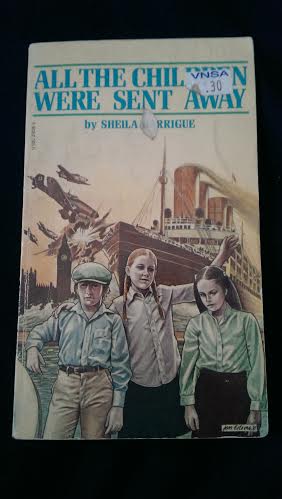
All The Children Were Sent Away (1976)
An English girl whose parents are sending her to stay with relatives in Canada during World War II has to make the journey by boat with a stern guardian. By Sheila Garrigue.
Back Home (1984)
Virginia “Rusty” Dickinson returns home to England after the war ends, having lived in the United States for five years, since she was sent away at age seven. Everything seems strange to her, and other people look at her as an outsider because she seems too American. She also has a young brother who was born while she was away, and her parents’ marriage is suffering because her father is psychologically damaged from the war and her mother has learned to become more independent. Then, her parents send her away to a harsh boarding school where she is bullied mercilessly by the other girls. Will Rusty ever find a place in England where she feels like she can really be at home? By Michelle Magorian.

Carrie’s War (1973)
Child evacuees sent to a town in Wales become mixed up with a set of estranged siblings. While attempting to help things, Carrie does something that causes her to feel guilty for many years, until she revisits the town and learns the truth. By Nina Bawden.
Good Night, Mr. Tom (1981)
An abused boy is evacuated from London during World War II and is taken in by a kind older man. By Michelle Magorian.
In Spite of All Terror (1968)
A London girl’s life changes when she is sent to the country as a child evacuee during World War II. By Hester Burton.
Book Resources
These are lists of other books about evacuated children.
War Guests in Children’s Literature
A list of books about evacuated children on Goodreads.
Historical Resources
You’ll notice that this section focuses mostly on England, particularly London, but children were evacuated from other areas as well. Evacuation of children and vulnerable citizens from at-risk areas happened in other countries as well, and it also happened in various areas within the British Isles, particularly coastal areas and large cities with potential targets or places that might be in the path of enemy planes on their way to such areas.
Websites
The Evacuated Children Of The Second World War
Videos and Documentaries
The experiences of child evacuees could vary greatly. Some children were taken in by kind families and felt like their time away from home and their families was a great adventure. Some children from disadvantaged or abusive backgrounds even found it a great relief to be away from their usual surrounding and fostered by kinder people. Others, however, found themselves hosted by unfriendly people who didn’t want them and resented being forced to care for them. Children could be abused or used as free labor by their hosts. It all depended on where the children were placed and what the people there were like. When the children left home, they didn’t know where they were going, who was going to be their host, or how long they would be staying there. Accommodations could vary wildly from farm houses to boarding schools, depending on where space could be found to house the evacuees.
For some personal accounts of what it was like to be a child evacuee, I’d like to recommend the following videos on YouTube:
Evacuees of the Second World War: Stories of children sent away from home
From Imperial War Museums, a series of interviews with former child evacuees with background information. 10 minutes long.
This series of interviews with former child evacuees is much longer than the other one, about 40 minutes long. Part of this one brings up the subject of racial minority children who were evacuated. Children of different nationalities or ones who looked like they might be could be discriminated against by people who were reluctant to host them because of the way they looked, but there were also some nice families who were willing to host them.
What Living In London Was Like During The Blitz
This Timeline Documentary shows what the conditions were like in London during the war. There is some mention of the child evacuees, but it also shows the conditions that the children who left London escaped.
Hidden/Smuggled People
Individual Books
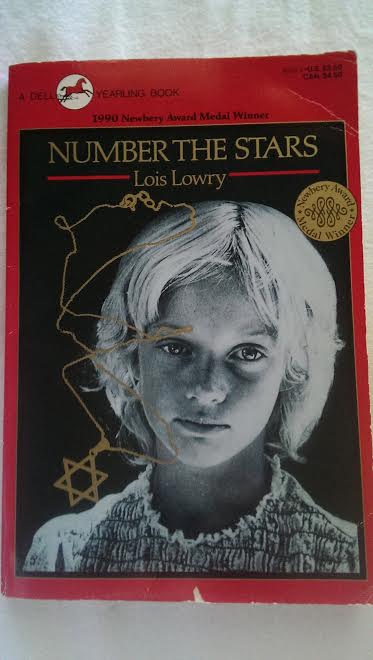
During World War II, in occupied Denmark, a family risks everything to help their Jewish friends escape. By Lois Lowry.
A group of French school children hide Jewish children from the Nazis during World War II. By Claire Bishop.
Nonfiction Books
The Diary of a Young Girl (aka The Diary of Anne Frank) (1947, 1952)
This is the published diary of Anne Frank. The original Dutch version was published in 1947, and the English versions were published in 1952. Anne Frank and her family were hiding in a secret apartment, and that’s where she kept her diary. Unfortunately, they found by Nazis and sent to the concentration camps, where most them died, including Anne.
Refugees
Individual Books
Good Night, Maman (1999)
It’s 1940, and Karin’s family is trying to flee occupied Paris. Then, her mother falls ill, and she is unable to travel. Karin and her brother must flee to America by themselves. Will they be able to reunite with their mother again? By Norma Fox Mazer.
A World War II story, set in occupied Austria. A Jewish family realizes that they must flee their home in Austria to escape the Nazis.
Series
A Jewish family flees Germany to escape World War II and struggles to establish themselves in America. The stories cover the changes in their lives and how the daughters of the family deal with growing up in a new country. By Sonia Levitin.
Nonfiction Books
I Am Fifteen – And I Don’t Want to Die (1956)
Christine Arnothy was a fifteen-year-old girl during the siege of Budapest during World War II, and this book is based on the diary she kept during that time.
Book Resources
These are lists of other children’s books that involve war refugees.
Shortly before WWII began, there was an effort to evacuate Jewish children from Germany because it had already become obvious that Jewish people were in danger. Jewish families in Germany who found it difficult to leave as a family could send their children to England to ensure their safety. There, the children would be placed with foster families who would take care of them until their parents could join them. Sadly, most of the children sent to safety through the Kindertransport never saw their parents again because their parents died in the concentration camps during the war. These fictional children’s books have characters who were part of the Kindertransport.
Holocaust
Some of the books that I listed under Refugees and Hidden/Smuggled People are also used in school to teach children about the Holocaust. However, I didn’t list those books under the Holocaust section because they were more about escaping the Holocaust. The books in this section are about people who didn’t escape and actually endured concentration camps or died in them. These are the darkest books in the World War II list. If you’re choosing books to share with children, I recommend reading them yourself first and being prepared to discuss them with the child readers because these books are tragic, unsettling, and require discussion.
I’ve noticed that, in modern times, there are some segments of our society who believe that it’s important to confront the worst past of the past head-on in stark detail, but there are others who find books of this sort too shocking for any child and even too shocking for themselves as adults (although many wouldn’t want to admit it). I cannot stress too much that the events these stories describe are horrible, and these are not happy stories. When you’re describing the intentional imprisonment, torture, and murder of masses of people, it’s just not going to be pleasant, and no one should dive into these books expecting that. These are not books people normally read for light fun and entertainment but for deeper understanding. I think it’s important for everyone, even kids, to understand these events because they impacted so many people and shaped the world we live in. Don’t be afraid to at the situation directly, even though it stings. I won’t lie; it’s going to hurt. The hurt is a sign that you’re human and have feelings for other humans, even those who lived and died in the past. Reading about horrible things happening to other people doesn’t feel good and shouldn’t feel good. The good parts about it are the knowledge that even the worst events in life can be accepted and understood, that you can be touched by past events and still move forward, and that experiencing empathy for other people is confirmation that you are part of a larger human society that does feel for each other and cares about justice and injustice. Those things are worth experiencing and understanding.
However, if you’re planning to use some of these with children in lessons about WWII, be prepared to help the children understand and deal with their emotions. Give them some time and space to breathe and remind them that they’re looking back on past events from a position of safety. Some children will be more sensitive than others and more troubled by descriptions of violence, depending on their own pasts and temperaments. Also, I recommend tempering the stark descriptions of the Holocaust at its worst with books about other aspects of the war, including survivors who became refugees and child evacuees and children who lived relatively secure lives on the home front. If a child is particularly struggling with Holocaust descriptions due to personal trauma or anxiety and depression, some of the other books can be useful alternative reading options. A child reading an alternative book can describe their book to the others in class, and there can be a class discussion about how the war affected different types of people in different ways. Providing a variety of perspectives and war experiences will provide students with a view of how wide and complicated the war really was and how it touched the lives of many different types of people around the entire world. It would also remind children that, even though many people died tragically, many people also survived these difficult times, which offers a sense of hope. The Holocaust is something that everyone should know about and understand, and I think even children who find it a difficult topic should have at least a basic understanding of the events, but don’t let it be the end of the story and do leave students with a sense of hope and the reminder that life and history do continue even after the worst happens.
Individual Books
The Boy in the Striped Pajamas (2006)
The son of a Nazi officer becomes unexpected friends with a boy in a concentration camp, eventually even sharing in his tragic fate. By John Boyne.
The Devil’s Arithmetic (1988)
A time slip story where a young American Jewish girl travels back in time to a concentration camp during WWII and gains a new understanding and respect for her family’s history. By Jane Yolen.
Hana’s Suitcase (2002)
The curator of a Holocaust museum in Japan researches the young owner of an old suitcase and learns the tragic circumstances of her death. By Karen Levine.
The Number on My Grandfather’s Arm (1987)
A grandfather explains the concentration camp number tattooed on his arm to his granddaughter. By David A. Adler.
Rose Blanche (1985)
A young German girl smuggles food to other children in a concentration camp but pays the ultimate price for her kindness. A picture book, originally in Italian. By Roberto Innocenti and Christophe Gallaz.
What the Night Sings (2018)
Teenage Gerta is fortunate to have survived a Nazi concentration camp, but her family did not. Now that the war is over, she must struggle to come to terms with her loss and the trauma that she experienced and find her own sense of identity. By Vesper Stamper.
Why, Zaida? (1997)
A Holocaust survivor explains his experiences to his grandson. By Alvin Abram.
Book Resources
These are lists of other children’s books about the Holocaust.
13 Children’s and YA Books to Help Remember the Holocaust
Children’s Books about the Holocaust
United States Holocaust Memorial Museum – Children’s Books
Code Talkers
Code talkers were Native Americans who were trained to use their Native languages in coded messages because the US Army realized that their languages were unknown outside of the United States and that enemy forces would be unable to translate them.
Individual Books
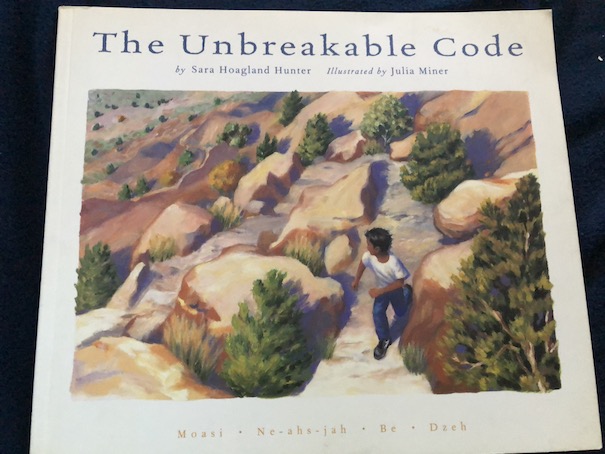
The Unbreakable Code (1996)
When John’s mother remarries, and he learns that he has to move, John’s grandfather tells him about his time as a code talker during World War II and gives him a sense of identity and his family’s heritage that he can carry with him to his new home.
Japanese Internment Camps
After the Japanese attack on the naval base at Pearl Harbor on December 7, 1942, the United States fully entered the war. Before that, they had been mainly acting as a supplier to the Allied nations, particularly Great Britain. One other effect that the Japanese attack on Pearl Harbor had was that people in the United States became very suspicious about people of Japanese descent. Even though many of those people had been born in the United States and were ordinary US citizens, there were rumors that there spies hidden among them. The paranoia became so great that many Japanese people were ordered to internment camps in the US, where they were held as prisoners until the end of the war, so they would have no opportunity to commit acts of espionage or sabotage. Of course, this was the product of racism and hysteria and a failure in leadership on the part of the government for trying to placate the hysterics at someone else’s expense instead of holding firm and emphasizing the true reality of their unreasonable fears. This conclusion does not come from me. This was the conclusion reached in 1982 by the Commission on Wartime Relocation and Internment of Civilians established by President Carter to investigate the causes of the Japanese internment, and that is the reason why the United States government officially apologized for the internment.
Individual Books
The Bracelet (1976, 1993)
This is a picture book about a 7-year-old girl named Emi who is sent to a Japanese Internment camp with her family in 1942. She is sad to leave behind her best friend, who is not Japanese, and her friend gives her a bracelet to wear to remember their friendship. What will happen when Emi loses the bracelet? By Yoshiko Uchida, illustrated by Joanna Yardley.
Nonfiction Books
Farewell to Manzanar (1973)
The memoir of a woman who was sent to a Japanese internment camp with her family when she was a girl.
Historical Resources
Websites
Life at Manzanar War Relocation Center
Details of life at Manzanar with pictures of objects used at the camp.
A timeline of the formation and operation of Manzanar from its creation to its dissolution. From the National Park Service.
Book Resources
Children’s Books About Japanese Internment Camps
This list of books focuses on picture books, and there are lesson plans available for these books for the preschool level. From No Time for Flash Cards.
‘Dangerous Americans’: Mighty Girl Books About The Internment of Japanese Americans
Japanese American Internment in YA & Middle Grade Fiction
I particularly like this list of book because it not only has reading levels marked but also has extra notes about the contents of the books and evaluations of their historical accuracy.
Fiction Resources
For more information about children’s books set during World War II, see the following sites.
Best Children’s Books about World War II (1939-1945)
This list of children’s books on Goodreads are specifically about children in wartime or dealing with the aftermath of the war. Many, but not all, are about the Holocaust or people fleeing from the Holocaust.
A blog dedicated to children’s books about World War II.
Middle Grade Fiction set in the 1940s
A list of children’s books set in the 1940s from Goodreads. These books cover a wide range of topics, from child evacuees to the Holocaust to children on the Home Front.
 Jestress's Forgotten Books and Stories