Studio Ghibli is an animation studio in Japan. I’ve enjoyed all of the Studio Ghibli movies that I’ve seen, but I particularly like the movies that were based on books, so I made this list of the movies that I know were based on books with links to reviews that I’ve done of these books. (My site is always a work in progress, so there will be more here later.)
All of these movies were originally created and voiced in Japanese, but they have also been re-voiced in English and other languages. In spite of the fact that the movies were made in Japan and are often set there, some of the books that the movies were based on were from other countries and had different settings.
Hayao Miyazaki, one of the founders of Studio Ghibli, fascinates me because of his tastes in literature and his adaptions of stories that I was already familiar with from books. Some of these books are also on a list of 50 children’s books recommended by Miyazaki for others to read, and I really recommend them, too. I haven’t read all of the books on his list myself yet, but many of them are classics.
Common themes that appear in Studio Ghibli movies are war and peace (Miyazaki was young during WWII and saw the destruction of war early in life), nature and humans’ connection to nature, growing up and self-identity, magic, and flying. These themes also appear in the books that the movies were based on and in the books that Miyazaki recommended to others.
Studio Ghibli Movies Based on Books
The Borrowers
The Studio Ghibli version of the story was called Arrietty, after one of the main characters. The Borrowers are tiny people who live in the houses of normal humans, keeping themselves hidden and making use of small objects that humans misplace (or that the Borrowers “borrow” from them). However, there are less of these tiny people than there used to be, and although the Clock family of Borrowers are worried about the dangers that may lie outside of their hidden home, Arrietty’s friendships with big humans prompt them to begin a journey to seek a new home elsewhere. By Mary Norton.
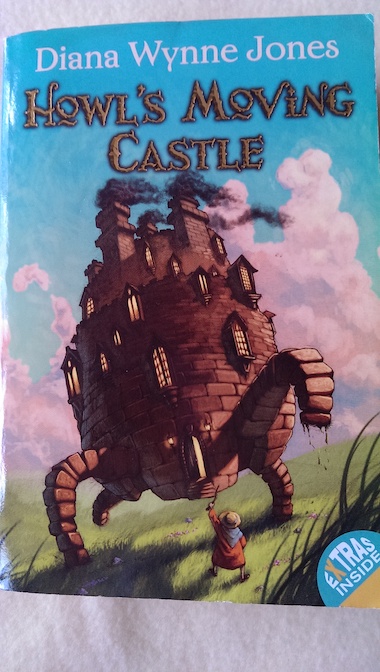
When Sophie, a young hat maker, is cursed by a witch and turned into an old woman, she seeks help from the mysterious wizard Howl, who lives in a magical castle that is constantly moving. Howl, however, is not quite what he appears to be, and he may need her help as much as she needs his. By Diana Wynne Jones.
Kiki’s Delivery Service (1985, 2003)
A young witch must live in a town without other witches for a year in order to develop her skills and find her place in the world.

When Marnie Was There
Anna, a lonely foster child who doesn’t really understand how to make friends and connect with other people, is sent to live in the countryside for awhile in order to recover from a bad asthma attack. While exploring the area alone, she sees an old house which seems oddly familiar to her. Drawn to explore it, she meets a young girl named Marnie, who has a strange way of appearing and disappearing suddenly. In spite of that, Anna comes to love Marnie, who is both neglected by her wealthy parents and abused by her caretakers. Through her love and friendship for Marnie, Anna begins learning how to build connections with other people, and when she learns the real secrets of Marnie’s past, she comes to understand how she came to be a foster child and how to accept the love and support of her foster family. By Joan G. Robinson.
Readalikes
This is a new section to this page, but I’ve been thinking about books that remind me of Studio Ghibli movies even though Studio Ghibli never made movies of these books and they were not among those that Miyazaki recommended for others to read. These are just books that have similar themes and/or similar tone to Studio Ghibli movies. Some of them are also on my list of Books That Should Be Movies, so if Studio Ghibli ever makes movies of these, that would be great!
General Fiction
Gone-Away Lake (1957)
A pair of cousins, exploring a swampy area over summer vacation, find the remains of an old resort community that once stood by a lake and meet the people who still live there. By Elizabeth Enright.
Mandy (1971)
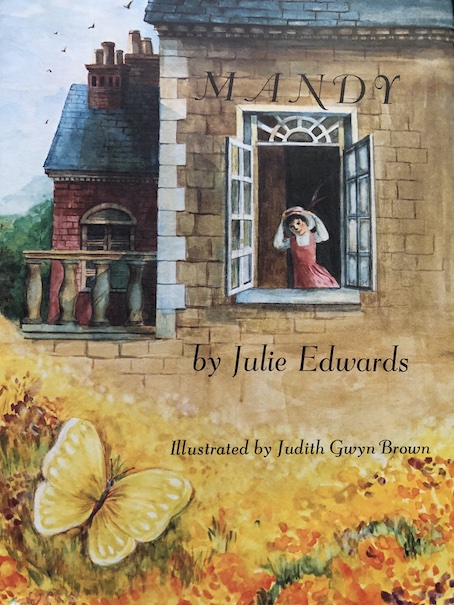
An orphan who longs for a real home of her own sneaks away from the orphanage and finds an old cottage, which she fixes up and makes into her special place. By Julie Andrews Edwards.
Miracles on Maple Hill (1956)
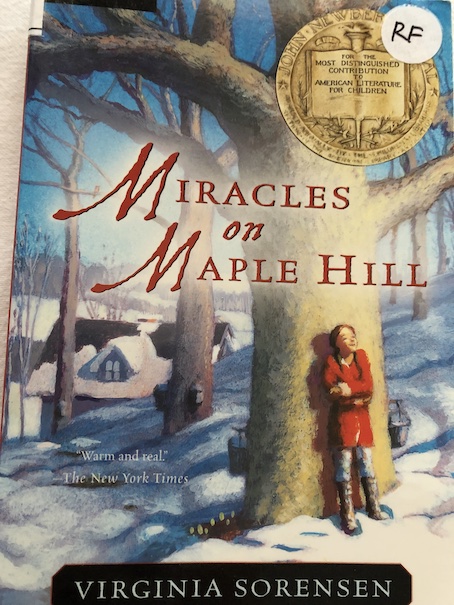
With their father suffering from shock and depression after having been a prisoner of war, Marly and Joe’s mother moves the family to their grandmother’s old house in the small town of Maple Hill, where the children’s father can get some rest. There, they are befriended by a couple of supportive neighbors, Mr. and Mrs. Chris, who make maple syrup. When Mr. Chris suffers a heart attack and must spend some time in the hospital, the family helps Mrs. Chris with making the maple syrup. The family’s friendship with the neighbors and learning how people can help and support each other helps the father to heal from the war. By Virginia Sorensen.

I think the themes of healing from war and appreciation of nature would fit well with Miyazaki’s themes, although Studio Ghibli films are usually set in Japan, no matter where the original book was set. I can’t think exactly how that would work with the production of maple syrup. The countryside/farm setting would fit, though.
The Railway Children (1906)
When their father is accused of a crime he didn’t commit, three children move to a house in the countryside with their mother. The house is near railroad tracks, and their adventures with the trains and a particular Old Gentleman who rides them help to improve their situation and prove their father’s innocence. This book is public domain and is available on Project Gutenberg. It was also made into a movie more than once. By E. Nesbit.
The Secret Language (1960)
Young Victoria North is shy, nervous, and homesick because she is attending boarding school for the first time. School improves for her when she makes friends with Martha Sherman, an outgoing girl who has been a boarding school student before and who introduces Victoria to all the things that make boarding school fun and magical – the usual pranks, the midnight feasts, and friends with their own secret language. By Ursula Nordstorm.

A purchase at a rummage sale starts a series of events that lead Susan to be involved with a stray cat and the owner of an antiques store who needs help. Susan’s involvement helps make things better for everyone, although Susan has to make some sacrifices in the process. In return, she makes new friends, earns their respect, develops a new sense of identity, and makes peace with her parents’ divorce. By Nan Agle.
It sort of reminds me of Whisper of the Heart because of the antique store and cat in the book, but it’s not the same story.
Thimble Summer (1938)

A nine-year-old girl named Garnet, who lives on a farm in Wisconsin, finds a thimble by the river and becomes convinced that it’s magical and brings her good luck. By Elizabeth Enright.
The Witch’s Spoon (1975)
Two children visit their grandmother beach cottage over the summer, getting to know a cousin they never met before and sharing a special day of freedom and adventure. By Mary Cunningham.
Historical Fiction

Carrie’s War (1973)
Child evacuees sent to a town in Wales become mixed up with a set of estranged siblings. While attempting to help things, Carrie does something that causes her to feel guilty for many years, until she revisits the town and learns the truth. By Nina Bawden.
This book reminds me of Studio Ghibli movies because of the war and because the children have a certain amount of independence and have to make some decisions on their own. There is also an element of fantasy because there is a character who some people call a witch (whether she has any special abilities or not is never firmly established) and because there is a legend about a mysterious cursed skull in an old house (which is probably not actually cursed but still has a sense of creepy fantasy because characters believe it is).
Two Are Better Than One (1968)
Two imaginative girls growing up in early 1900s Idaho write a story about a pair of dolls that changes their lives. By Carol Ryrie Brink.
Mystery
Mystery of the Angry Idol (1965)
When Jan’s family moves overseas for her father’s work, she stays in the United States to go to school, living with her mysterious, reclusive great-grandmother in an old house filled with Asian art and secrets. By Phyllis A. Whitney.

A Spell is Cast (1974)
Cory, a lonely young orphan, goes to stay with her guardian’s relatives in California, learning the secrets of her own past and those of her new family and finding a better home than the one she left behind. By Eleanor Cameron.
It reminds me of Studio Ghibli movies because it involves an orphan searching for secrets of the past in a semi-magical place and learning to make new friends and find herself, and there are also themes of appreciation for nature.
Fantasy

Charlotte Sometimes (1969)
A young girl, Charlotte, is sent away to boarding school, but as she tries to become used to her life there, she discovers that every time she goes to sleep in her boarding school bed, she trades places with another girl, Clare, who attended that same boarding school in the past, in 1918, and slept in the same bed. Charlotte struggles through days in the past with the help of Clare’s sister, Emily, not knowing quite why this is happening and worried about losing her own identity as she crosses back and forth between time periods. By Penelope Farmer.
It reminds me of Studio Ghibli movies because of the war themes and fantasy themes. The themes of growing up, taking on new responsibilities, and self-identity also fit well with Studio Ghibli themes.
Fog Magic (1943)
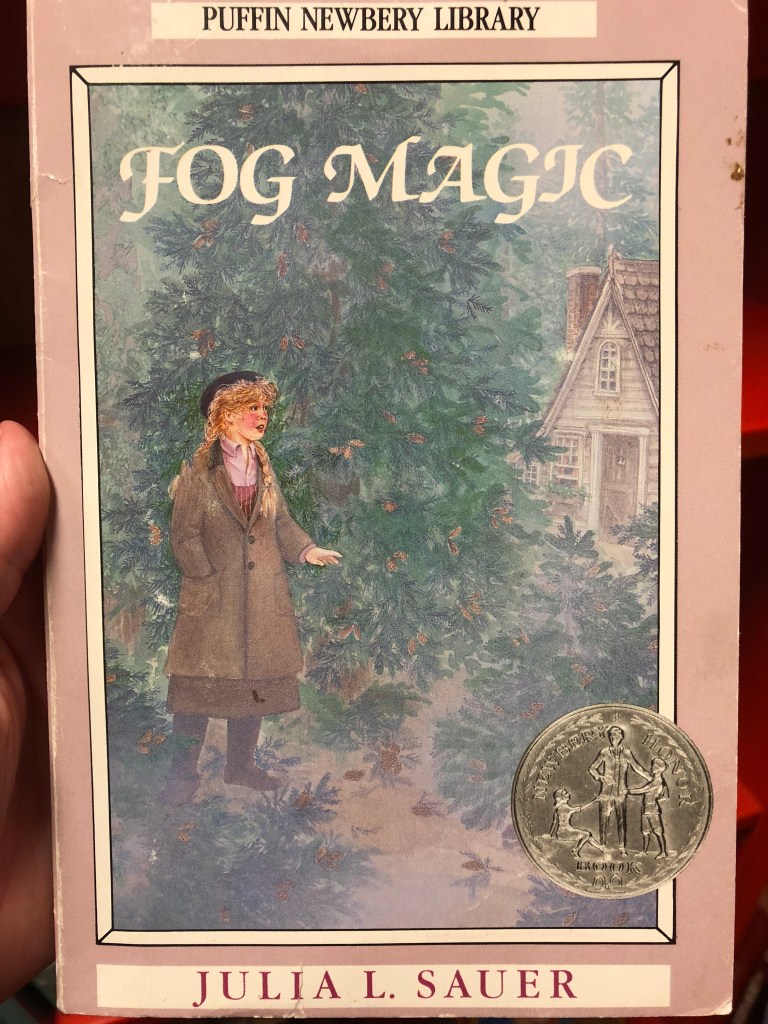
A young girl goes back in time whenever the area where she lives is covered in fog.
Linnets and Valerians (1964)
The four Linnet children run away from their harsh grandmother, who is supposed to be taking care of them while their father is away, and go to stay with their nicer uncle, Ambrose. There, they find a village that is under a witch’s spell and a strange woman, Lady Alicia Valerian, who is searching for her missing family. By Elizabeth Goudge.

Magic Elizabeth (1966)
When Sally goes to stay with an aunt she’s never met before, she finds a portrait of a young girl, who looks very much like her, wearing old-fashioned clothes and holding a doll. This young girl, also named Sally, used to live in her aunt’s house many years ago, and Sally begins to have visions of her life there and how she lost her beloved doll, Elizabeth, who is a little bit magic and is still in the house, waiting to be found. Part mystery, part fantasy.
Marianne Dreams (1958)
Marianne begins a drawing when she is sick in bed and finds herself entering the world of her drawing when she dreams at night. Her adventures there with a boy who is also ill teach her patience and perseverance in dealing with her own illness and helping others. By Catherine Storr.
The Midnight Folk (1927)
A boy searches for his family’s fortune but discovers that a coven of witches is also looking for it. By John Masefield.
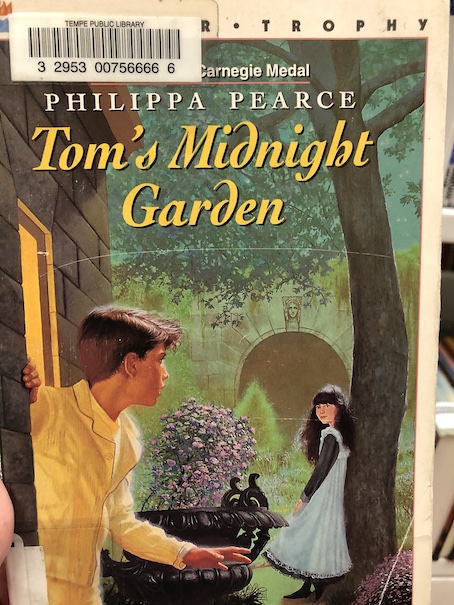
Tom’s Midnight Garden (1958)
Tom is spending the summer with his aunt and uncle. He is lonely at first, but he discovers that when the clock chimes thirteen times at night, he can go back in time, where he befriends an equally lonely girl named Hatty. By Phillipa Pearce.
The time slip in this story reminds me of When Marnie Was There.
 Jestress's Forgotten Books and Stories