The Chronicles of Narnia is a classic children’s fantasy book series that also functions as religious allegory. When I was in high school, my history teacher tried to convince me that it wasn’t religious allegory but an allegory for World War II. Realistically, there are elements of both in the series. The series begins during World War II, when the four Pevensie children are evacuated from London to the countryside and have their first adventures in Narnia.
Some religiously conservative families shy away from fantasy books, but if they want to try out a fantasy series, this is one of the best series to try because of the religious allegories and morals. Aslan the lion is a representation of God, and his country is Heaven (the “true” Narnia). Narnia seems to lie somewhere between Heaven and Earth. People live and die there, and it seems to be a kind of testing ground for heroes. Once a person becomes a King or Queen of Narnia (or a “child of God”), they always remain a King of Queen of Narnia (or a “child of God”). There are instances of sin, where characters lie or betray their friends out of fear or to gain something for themselves, and there is redemption, where they realize the errors of their ways and make amends. There is a point when Aslan sacrifices himself and rises again, stronger than ever.
The main characters in the stories are children, some of them based on the author’s godchildren. The four Pevensie children appear in most of the books, but there are also other children in the books who are friends or relatives of the Pevensies.
Some books in the series jump around in time. Time works differently between Earth and Narnia, so centuries can pass in Narnia when very little time passes on Earth.
I found the end of the series difficult to take because (spoiler) many of the characters that we’ve come to know and love through the series are killed in a railway accident as their souls take part in the final battle of Narnia and move on to the “true” Narnia. It’s framed as a positive because it means that they get to be young forever in the “true” Narnia, having amazing adventures with the people they love, but it’s still upsetting because it occurs to me that they were destined for Narnia in any case, and I would have liked for them to have lived their lives on Earth to old age first. The one young Pevensie who isn’t killed in the railway accident on Earth is Susan, who was more worldly than the others and wasn’t on the train. We don’t see her reaction to the deaths of her parents and siblings or learn what the rest of her life on Earth is like, although there is an implication that she will someday come to “true” Narnia, too, because she was also once a Queen there, and once someone is a King or Queen in Narnia, they will always be a King or Queen there.
The author of the series, C. S. Lewis, was an Anglican lay theologian and also wrote nonfiction books on the subject of religion.
Books in the Series:

The Lion, the Witch and the Wardrobe (1950)
During WWII, the four Pevensie children are evacuated from London to the countryside, where they stay with Professor Digory Kirke and find an old wardrobe that acts as a gateway to the magical land of Narnia.
Prince Caspian: The Return to Narnia (1951)
The four Pevensie children return to Narnia one year after their first adventure, but 1,300 years have passed in Narnia’s time. They are summoned to Narnia by Prince Caspian blowing on Susan’s horn. He needs their help to save Narnia after his uncle usurps his throne.

The Voyage of the Dawn Treader (1952)
Edmund and Lucy Pevensie return to Narnia with their cousin, Eustace. They join Prince Caspian on his ship, the Dawn Treader, to search for the lords his uncle banished.
The Silver Chair (1953)
Eustace and his friend Jill search for Prince Caspian’s missing son.
The Horse and His Boy (1954)
This story takes place during the time that the Pevensies were the kings and queens of Narnia. A boy and his talking horse escape from captivity and make their way to Narnia.
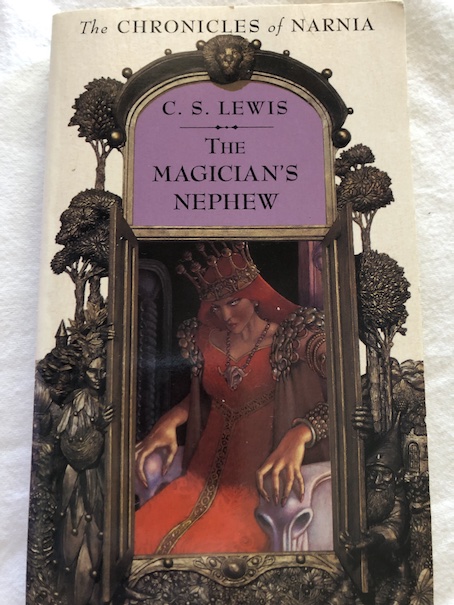
The Magician’s Nephew (1955)
This story goes back in time and shows how Narnia was created and how Digory Kirke (the professor from the first book) first encountered it as a child.
The Last Battle (1956)
Most of the characters who have previously been to Narnia return there for the final battle that takes place as Narnia comes to an end. Aslan leads the characters, whose time on Earth has come to an end, to the “true” Narnia, where they will live and have wondrous adventures forever.
 Jestress's Forgotten Books and Stories