The Dandelion Cottage series was written during the early 1900s, so although it feels like an historical series to modern readers, it’s really just a general fiction series from an earlier era.
Four girls in turn-of-the-century Michigan fix up an abandoned cottage to use as a kind of playhouse, and having a real house as their playhouse changes their lives as it brings them into contact with new and interesting people.
The four girls are:

Bettie Tucker – Her father is the minister of the local church, and her family is the reason why the little cottage behind the church was abandoned. The little cottage was once the church rectory, but it was small and in disrepair, and the large Tucker family just wouldn’t fit into it. Bettie is the only girl in her family. She has seven brothers. Bettie has short brown hair and is regarded as a bit of a tomboy. She wears boys’ shoes because she gets hand-me-downs from her older brothers and has to pass on shoes to her younger brothers. Her mother makes dresses for her because early 20th century girls wear dresses, but because she’s accustomed to sewing mostly for boys, the dresses often somewhat resemble boys’ clothes, like in the shapes of the collars. She is a cheerful girl who doesn’t mind boyish things, although she also does girl things, like playing with dolls.
Jean Mapes – Jean is regarded as a sensible, well-behaved girl by the adults, who approve when their daughters make friends with her. Being sensible and well-behaved doesn’t always make someone an appealing friend to a child, but Jean is also a charming and friendly girl.

Marjory Vale – Marjory is an orphan who lives with an unmarried aunt. Her mother died when she was a baby, and her father died a couple of years later. Because her aunt has brought her up to be very well-behaved, she often acts older than she really is. Inwardly, she’s not quite as sedate, polite, and mature as she appears, but some children think that she’s stuck up because of the way she behaves. She’s witty and can be sharp-tongued and sarcastic when she’s not in one of her polite moods.
Mabel Bennett – Mabel is big for her age and taller than the other girls. She’s a bit naive and not as clever or good at school as some of the other girls. She can also be a bit clumsy. However, she’s warm-hearted and appreciated by her friends.
The cottage in the stories is based on a real cottage in Michigan. All of the books in the series are now public domain and available at Project Gutenberg.
There are some issues with racial terms used in the books (keep in mind when they were written and language used then). I haven’t read all the books yet, but the issues I’ve spotted relate to stereotypes about Native Americans when the children in the stories are playing pretend. The issues I’ve seen so far seem pretty tame compared to some parts in the Little House on the Prairie series, so anyone who is okay with Little House on the Prairie would probably be okay with these books, but since I haven’t read all the books yet, I can’t be completely sure how the rest of the books are. I recommend that adults read through the books first before giving them to children and be prepared to talk about things with the child readers. Apart from that issue, they are otherwise calm, charming stories.
Books in the Series:
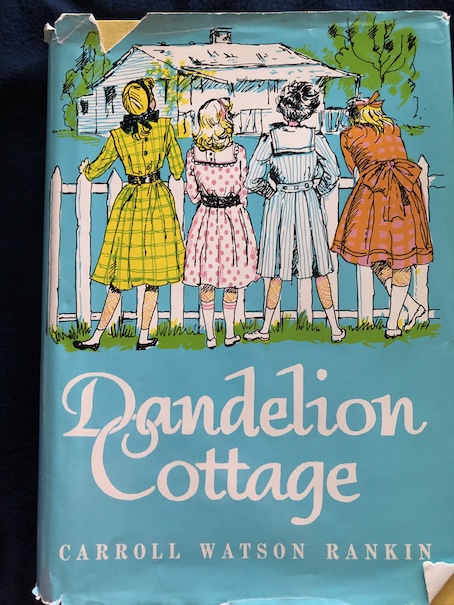
Dandelion Cottage (1904)
The four friends make a deal that they can use the cottage as their playhouse, provided that they take care of it.
The Adopting of Rosa Marie (1908)
The girls of Dandelion Cottage like playing “Mother”, pretending that they’re grown-up women with children of their own. Some of the girls can borrow young children from their own families to have real babies to look after, but Mabel takes the game too far when she borrows the wrong baby.
The Castaways of Pete’s Patch (1911)
The girls go on a picnic but are unexpectedly stranded and forced to camp out for weeks.
Girls of Highland Hall (1921)
The girls attend boarding school and investigate some school mysteries and have adventures.
 Jestress's Forgotten Books and Stories