This is a series from the American Girls Books, focusing on a girl from the American Revolution.

Felicity, often called Lissie by her family, is the daughter of a prosperous merchant living in Virginia at the beginning of the American Revolution. She is something of a tomboy, especially at the beginning of the series. She loves horses more than anything and is bored by the usual domestic chores that girls of her time had to do, like cooking and sewing. She wishes that her father would let her work in his shop instead of sending her to have lessons in etiquette and the domestic arts from Miss Manderly. At first, Felicity tends to be impatient and impulsive, acting before she really thinks things through.
In the first book in the series, Felicity helps to rescue a horse named Penny from her abusive owner. She broke the law in doing so but considered it worth the risk for the horse’s sake, although she could not keep the horse herself because the owner would know that she was responsible for the horse’s disappearance and reclaim it. Penny reappears later in the series, much to Felicity’s relief, and Felicity is able to keep her and the foal Penny later has. The abusive owner also mends his ways and becomes a helpful friend. In a way, the horse’s predicament mirrors the revolution in that someone who is mistreated seeks independence, even though it means breaking all the rules, and later becomes more friendly with the former master.

The impending revolution and Felicity’s conflicting feelings about it is very much the focus of Felicity’s series. Felicity’s father supports the revolution, but her grandfather doesn’t. Felicity loves both men and learns a lot from each of them. At one point, her father’s apprentice, Ben, runs away to join the revolutionary army, breaking his apprenticeship agreement, although Felicity later finds him and convinces him to return to her father. Although she sympathized with the cause he supported, the way he chose to support it was dangerous and jeopardized his relationship with her father and his future.
Felicity’s best friend is Elizabeth, who also has lessons with Miss Manderly, along with her snooty older sister, Annabelle. Elizabeth’s father is a Loyalist, who opposes the revolution, and Annabelle is disdainful of Felicity because of her father’s position on the coming war. Felicity and Elizabeth worry about the changes happening around them and the effect that it will have on their friendship when the war finally comes.

During the course of the series, Felicity does learn to be a little more thoughtful and patient and comes to appreciate some of the more boring, feminine lessons that she has at Miss Manderly’s, which have practical applications to her life. In the end, there are indications that Felicity will also start playing more of a role in her father’s business as her father becomes more involved in the war effort.
My book list is incomplete because I’m focusing on those no more than ten years old, and I don’t have access to some of the activity books and kits. For a more complete list, see this American Girl Wiki.
Books in the Series:

Felicity falls in love with a beautiful but abused horse. What can she do to rescue this horse from its cruel owner, and what risks will she take?
Felicity begins enjoying her lessons with Miss Manderly and her new friendship with Elizabeth. However, people are talking revolution against England and neighbors are taking sides. Felicity isn’t sure whether she should continue with the tea ceremony lessons she loves when her father is against the tax on tea, and Annabelle’s taunts about her father’s revolutionary stance endanger Felicity’s friendship with Elizabeth and her lessons at Miss Manderly.

Felicity and the other girls have having dancing lessons with Miss Manderly, and they receive an invitation to the Christmas party at the governor’s mansion. However, Felicity’s dreams of dancing at the ball may come to nothing when her mother becomes very ill, and Felicity fears for her life.
Felicity’s grandfather gives Felicity a beautiful guitar for her tenth birthday. It used to belong to Felicity’s grandmother, and Felicity is supposed to be very careful with it. When Felicity desire to show off the guitar leads her to take it out of the house without permission, her family is disappointed with her and refuses to believe her when she has something even more important to tell them.
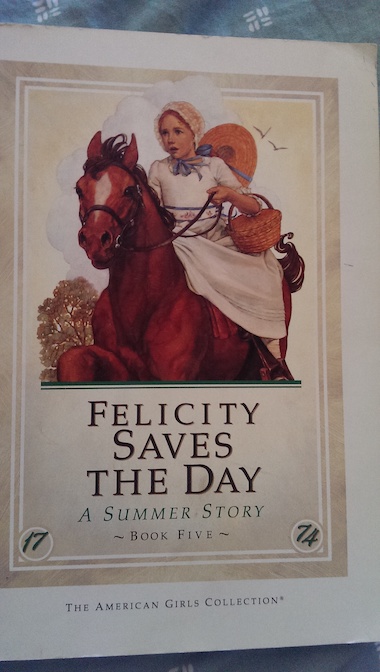
While Felicity is staying at her grandfather’s plantation during the summer, her father’s apprentice, Ben, runs away to join the revolutionary army. However, he has broken his apprenticeship agreement by running away, and when Felicity finds out that bounty hunters are after Ben to catch him and return him to her father, Felicity tries to persuade him to return on his own before he gets hurt.
The war that everyone has feared is becoming a reality. Felicity fears for her friend Elizabeth and mourns her grandfather, who has just passed away. However, before her grandfather’s death, he made some arrangements which will make the uncertain future a little brighter for Felicity and others around her.
Mystery Stories:
Peril at King’s Creek
Traitor in Williamsburg
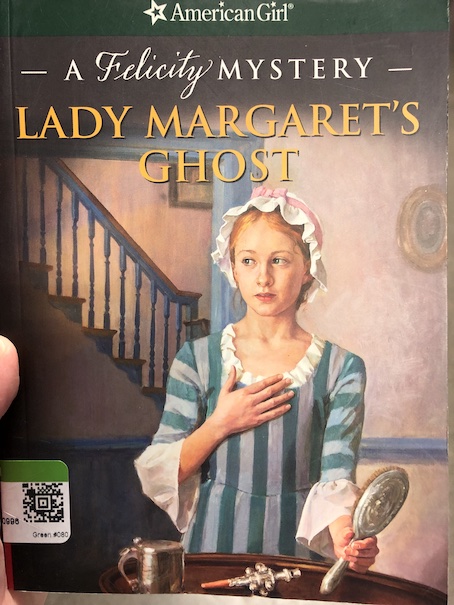
Lady Margaret’s Ghost (2009)
When strange things begin happening around their home, Colonial American girl Felicity thinks that the heirlooms her family has recently inherited are haunted.
Supplemental Books:
This book has recipes like the ones Felicity might have used in Colonial times.
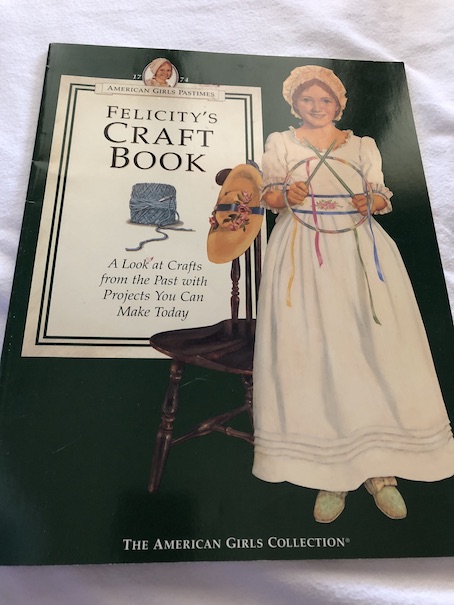
This book describes crafts that people would have practiced in Colonial times with instructions for activities that readers can try at home.
Welcome to Felicity’s World, 1774: Growing Up in Colonial America
This book explains what life was like in Colonial times, including not only information about daily life but pictures of objects and clothing used during the Colonial era.
 Jestress's Forgotten Books and Stories