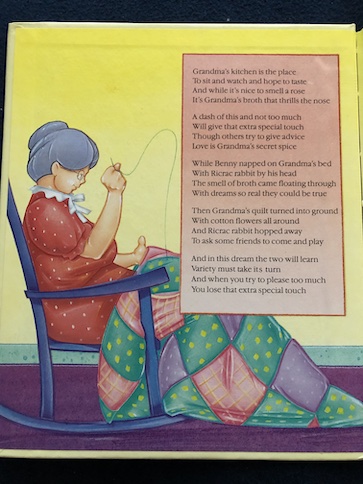
In this series of picture books, children have dreams in which their stuffed animals come to life and teach them important life lessons. All of their dreams take place in a land where the the ground is quilt-like, and all of the stuffed animals can talk. Sometimes, the stuffed animals are struggling with worries and problems like those that children have, like how to make friends, how to deal with things that frighten them, and how to persevere even when it seems like they can’t do something that they really want to do. By helping the animals, the children learn the lessons themselves. Other times, the animals offer corrections to the children’s behavior, like when Bobbin the horse tells Billy that the reason he can’t have some of the things he wants is because those things aren’t good for him or when RicRac the Rabbit points out that Janie should make an effort to help others because it’s what she would want from them if she was in their place. All of the stories have a moral based on a common proverb. The morals and proverbs are not specifically any religion, but they can be compatible with with religious lessons.
Each of the books originally came with a cassette tape of a narrator reading the story aloud. As the narrator on the tape, who was supposedly the children’s grandmother, reads the story, there are times when the story stops, and the characters sing a song that has to do with the theme of the story. The cassette tape also started and ended with the series theme song:
“Pleasant Dreams
May your sleep be sweet like an angel’s song.
Pleasant Dreams
May you meet new friends as you dream along.
Pleasant Dreams
For tomorrow’s always a brighter day, it seems
When you journey through
the Land of Pleasant Dreams.
Lay your head upon your pillow
Close your eyes and say a prayer
And before you even know it,
you are there.
Pleasant Dreams
For tomorrow’s always a brighter day, it seems
When you journey through
the Land of Pleasant Dreams.”
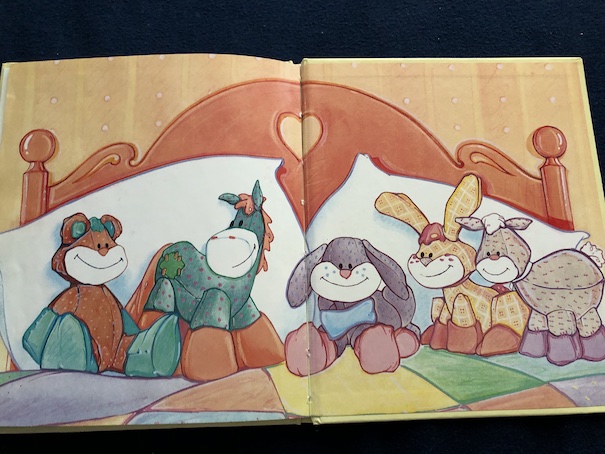
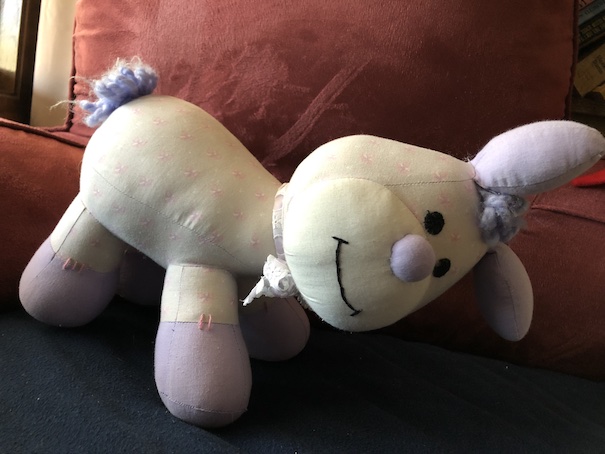
There was also a line of stuffed toys based on the ones in the books, supposedly made by the grandmother telling the stories. The stuffed animals are:
Threads the Bear
Bobbin the Horse
RicRac the Rabbit
Lacey the Lamb
Snips the Dog
There was also a television series based on the books, and some of the episodes are currently available on YouTube. The characters in the tv series were played by puppets, and The Puppet Studio, which created and operated the puppets, has a short video on their channel showing clips of the show with examples of the puppets.
Books in the Series:
Bearly There At All
Threads the Bear worries about making friends but learns that what he really needs to do is to be himself. Moral: “Everyone is special in their own way.”
A Tailor-Made Friendship (1986)
Bobbin the Horse learns what it means to be a real friend. Moral: “A friend in need is a friend indeed.”
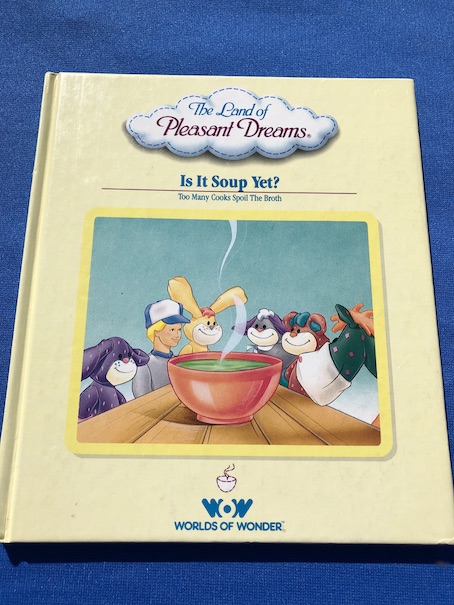
Is It Soup Yet? (1986)
RicRac the Rabbit is planning a party for his friends, but he worries that they won’t like what he’s serving for them to eat. When everyone tries to offer advice and ingredients for the soup, it turns out to be too much advice. Moral: “Too many cooks spoil the broth.”
The Biggest Little Girl
Cindy wishes that she were bigger but learns that there are benefits to being small. Moral: “Bigger isn’t always better.”
The Fluff Puff Farm
Krista learns that she can do more than she thinks she can. Moral: “Nothing is impossible to a willing heart.”
The Girl Who Wanted to Be Beautiful
The Prince of the Land of Pleasant Dreams says that Carlie is the prettiest girl in the land for a very special reason. Moral: “Beauty is as beauty does.”
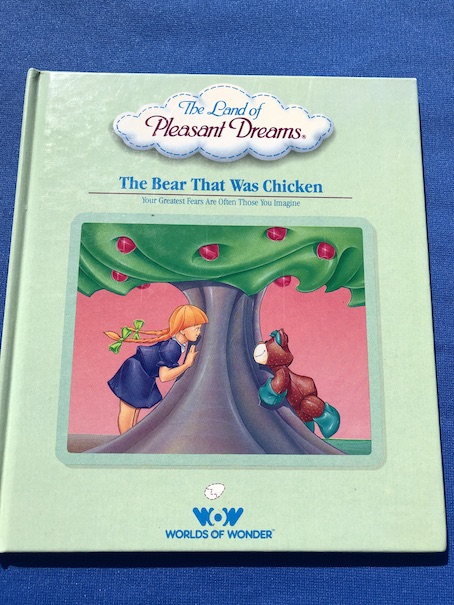
The Bear That Was Chicken (1986)
Threads the Bear is afraid of many things. When Mary encourages him to face his fears, he learns that being brave is doing what you’re afraid to do, and often, it turns out to be less scary than you think. Moral: “Your greatest fears are often those you imagine.”
The Girl with the Pop-Up Garden
Janie is willing to work hard for her own benefit, but why should she help others with their work? RicRac the Rabbit teaches her about the importance of helping others, even when she may not get anything in return. Moral: “Do unto others as you would have them do unto you.”

A Fence Too High (1986)
Lacey the Lamb has been preparing for the fence-jumping contest with the other sheep, but she’s still just a little lamb and worries that she’ll never make it over the final fence because it’s too high. With Peter’s help, she improves her jumping ability by trying again and again until she succeeds. Moral: “If at first you don’t succeed, try, try again.”
The Boy Who Wanted the Moon
Billy is used to getting things he wants, but he learns that what he thinks he wants isn’t always what’s good for him. Moral: “The person who always gets what he wants doesn’t always want what he gets.”
The Dog That Went Too Fast
Snips the Dog teaches Joey that fast can sometimes be too fast. Moral: “Haste makes waste.”
 Jestress's Forgotten Books and Stories