The Kids of the Polk Street School
 #2 Fish Face by Patricia Reilly Giff, 1984.
When there’s a new girl in Ms. Rooney’s class, Emily Arrow is happy at first that she’ll be sitting next to her and thinks maybe they’ll be friends. However, that feeling doesn’t last very long. Dawn Bosco doesn’t seem interested in making friends. She doesn’t respond to the compliments that Emily gives her. Instead, she brags about herself, saying things that Emily learns later aren’t true. Worst still, she steals Emily’s toy unicorn, Uni.
Uni is Emily’s best friend, and she’s convinced that he brings her good luck. Without him, everything seems to go wrong. Emily even has trouble sleeping because she always sleeps with Uni. When she tries to get Dawn to give Uni back, she denies taking him, but Emily knows that Dawn is hiding him in her pencil box. She saw him there, but she just can’t get to him. Will Emily ever get Uni back?
The book is currently available online through Internet Archive.
My Reaction and Spoilers
 The title of the story comes from the fish faces that Emily was making, imitating the classroom pet fish. She shows Dawn her fish face when she’s trying to joke with her, but Dawn just thinks it’s weird. Dawn worries that she’s not making friends, but at the same time, she also seems determined not to like things and people at her new school and stealing Emily’s unicorn and lying about it was a sure way to make her angry.
I didn’t like this book as well as others in the series. The kids in the series don’t always explain their actions or completely understand them, which is somewhat true to life. Young children don’t always understand their true feelings or motives because they don’t have the words or the experience to explain what they feel. However, this book felt more unexplained than normal.
Dawn steals Emily’s toy unicorn just moments after they first meet, while sitting in the desk next to her in their classroom. Emily doesn’t get help getting her unicorn back right away, and by the time she does, it’s too little help, and Dawn gets away with keeping the unicorn. We’re supposed to believe that Dawn did it just because she felt awkward in a new place with no friends, but that’s shaky because even a second-grader would know that stealing something isn’t going to win friends. The kids later find a letter Dawn was writing to a friend at her old school, saying that she’d done something bad but that Emily was mean and that she was upset about not having friends. So, she understands that she did something wrong, but still thinks Emily is mean for trying to recover her stolen property? Children can say and do some odd, sometimes contradictory, things, but Dawn’s feelings seem to be all over the place and her character difficult to pin down.
It’s difficult to tell what, if any, lesson to take away from this story. That if someone steals your stuff, it’s because they’re lonely and you just don’t understand them? Things partly get resolved because Emily is interrupted in searching for her unicorn and ends up taking Dawn’s reader out of her desk. Returning the reader seems to be what causes Dawn to have a change of heart, maybe because missing it made her understand Emily’s feelings about the loss of her unicorn, but we never really find out.
Fortunately, Dawn does become a more distinct character in other books, and later, because she wants to be a detective, she gets her own series of mysteries. One of the mysteries in her spin-off series references this story because something else disappears in class, and Dawn is suspected because people know that she stole something before. In that book, Dawn has to figure out the mystery in order to clear herself of suspicion.
One thing I did like about this book was that, although losing Uni was very hard for Emily at first, she does come to realize that she can do without him, that he is not her sole source of good luck, and that she can sleep without him at night. She is pleased when Dawn agrees to give him back, but she does recognize that learning that she can be okay on her own is a sign of growing up.
 #1 The Beast in Ms. Rooney’s Room by Patricia Reilly Giff, 1984.
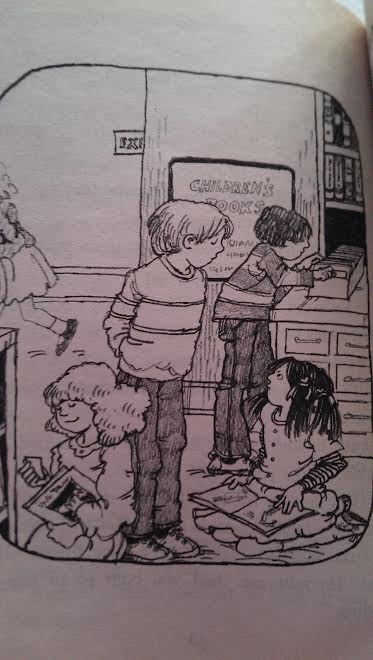 However, even though he’s embarrassed at having to attend special reading classes with Mrs. Paris while most of the rest of his class has normal reading, these special classes really help him, not just to improve his reading skills, but to connect with other kids in his new class who have the same reading difficulties he does and who understand how he feels.
 Journeyman Wizard by Mary Frances Zambreno, 1994.
 Jestress's Forgotten Books and Stories