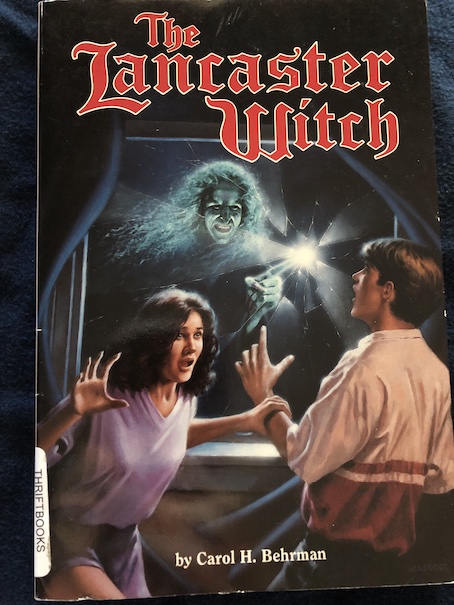
Thirteen-year-old Maddie Stoner is startled when her parents suddenly tell her that she has an English cousin named Clive who is going to be arriving for a two-week visit on Saturday. Maddie has never even heard of Clive before and wants to know who he is and what’s behind his sudden visit. Her parents explain that Clive is more like a second or third cousin, the son of her mother’s cousin, who moved to England years ago and married a British man. Her mother’s cousin has only occasionally kept in touch since her marriage, but her son, Clive is just a little less than a year older than Maddie and wants to visit the US. His mother has asked Maddie’s mother if she’s willing to have him at their home in New Jersey this summer, and her mother said yes.
Maddie gets the feeling like there’s something more behind this mysterious cousin’s visit than her parents are admitting, but they dodge her questions on the subject. When she tells her friend, Chloe, about her cousin, Chloe theorizes that maybe Clive is some kind of juvenile delinquent or is otherwise in trouble or into something his parents don’t approve of, so they want to send him overseas to get him away from his problems. (Chloe says that she read somewhere that people in England use the term “teddy boy” to describe boys involved in gangs. I looked it up, and it seems to be an older term from the 1950s and 1960s. It seems more associated with the aesthetic of certain types of rock and roll fans, although there were gangs associated with it as well. It’s just kind of an old concept for a 1990s book.)
When Maddie and her parents go to meet Clive at the airport, Maddie sees a creepy woman in black with a very pale face following Clive, her hand on his shoulder. Then, a traveler hurrying past accidentally bumps into Maddie with his suitcase and knocks her down. When she gets up and looks around, the woman is gone. She asks Clive who the woman was and where she went, and he says that there’s nobody with him. Maddie’s parents think she was just mistaken, that she just saw another traveler who happened to be near Clive at the time. Maddie is sure that she wasn’t mistaken, but Clive refuses to acknowledge that the woman in black was with him and her parents don’t want her to keep talking about it.
As Maddie and Clive start getting to know each other, Maddie decides that she likes Clive. Neither of them has any siblings. Clive and his parents live in a resort town called Morecambe outside of Lancaster in northern England. When Maddie asks Clive what made him want to visit the US, he’s a little evasive, just saying that his mother thought it would be good for him to get away for a while, making Maddie more suspicious that there’s something about Clive that no one wants to tell her. However, they discover that they have similar tastes in music, and when Maddie invites him to come to the community pool with her and her friends, Clive eagerly accepts, saying that he likes to swim.
At the pool, something happens that convinces Maddie that something truly sinister is happening. Clive and her friends all go swimming while Maddie takes some time to sun herself. Maddie is dozing in a lounge chair when someone starts yelling that someone is drowning! Clive is the one who almost drowns, but fortunately, he is rescued in time by the lifeguard. When he’s pulled out of the water, he tells Maddie that “she” pushed him into the water and made him hit his head and that “she” almost killed him. When Maddie looks around to see who “she” is, she sees the woman in black leaving the pool area. However, when the lifeguard starts asking Clive questions, he changes his story, saying that he just made a clumsy dive and hit his own head. Maddie later confronts him about what he told her, saying that she saw the woman in black, but Clive just gets upset and denies it all.
Maddie talks to her mother, and her mother confirms that Clive’s mother said that he’s been having a few problems lately that he needs to get away from. Clive’s mother was vague about what kind of problems Clive has been having, and Maddie’s mother assumes that Clive’s problems are just typical kid problems. She discourages Maddie from talking it about with Clive because she wants his visit to be pleasant and doesn’t want him to be upset.
Still, Maddie suspects that something much more serious is happening with Clive. Unable to shake the feeling that something bad is happening and that Clive is in real trouble, she snoops in his belongings, finding a letter that he started writing to his parents, saying that “it” followed him to the US. Clive also has books about ghosts and has written some notes about ghosts. Maddie wonders if Clive could be crazy, but she saw the woman in black herself. Clive’s panicked notes about ghosts might not be the imaginings of an unbalanced person but the reasonable fears of a person experiencing something truly unearthly.
Eventually, Maddie gets Clive to admit that the woman in black exists, but he refuses to tell her more about it until she promises that she won’t tell anyone else. Maddie promises, and Clive tells her that it’s the Lancaster Witch. In the 1600s, a group of women were executed for witchcraft in Lancaster, England. One of them, a woman named Elizabeth Device, was supposedly the head of a family of witches, and she cursed the judge in the trial and his descendants. Clive is one of those descendants. He’s been aware of her presence, following him around for about a year, and that was why he wanted to leave England, hoping to get away from her. His parents don’t seem to see her, so he hasn’t been sure whether she was real or just a ghost in his imagination. There have been stories about people in his family being haunted, but his father thinks that’s just superstition. Even though Maddie assures Clive that she’s seen the Lancashire witch, too, and that he isn’t imagining things, Clive says he can’t be sure. Maybe his imagination is now influencing her imagination.
For a while Maddie is persuaded that maybe the woman in black is all their imagination, and she tries to distract Clive from thinking about it. However, everywhere they go and everything they do, she always seems to be lurking around them, causing bad things to happen. She shatters a mirror in Maddie’s room at night and shoves Clive down the stairs. When Clive goes out for a bike ride with Maddie’s friend Tommy on a day when Maddie isn’t feeling well, he mysteriously disappears. Everyone assumes that he just got separated from Tommy and got lost because it’s an unfamiliar town for him, but Maddie is sure that it’s the ghost of Elizabeth Device and her curse!
As they search for Clive, Maddie and Tommy have to confront some truly dangerous things, both conventional and supernatural. There is a real ghost in the story, but there is also a more conventional form of danger. Dealing with the physical danger provides a solution for ridding Clive and his family from the curse of the Lancaster witch forever.
My Reaction and Spoilers
I remember reading this book when I was about 10 or 11 years old. A friend of mine had a copy, and I borrowed it from her. I remembered that I really liked it, but I had forgotten many of the details over the years. Now that I’m an adult, I understand more about the history behind the events in the story than I did as a kid. As a kid, I knew about witch trials, so I understood the basic concept behind the witch’s ghost, but I now know much more about the specific witch trial the story references.
There is a note in the back of the book about the historical basis for the story. In 1612, ten women were hanged for witchcraft in Lancashire, England, in front of Lancaster Castle, including Elizabeth Device. There have been many non-fiction books written about this case, and there are video documentaries on YouTube about the Lancashire witches, also known as the Pendle witches or Pendle Hill witches. One of the more shocking elements of that witch trial was that Elizabeth Device’s own nine-year-old daughter, Jennet, testified against her.
In the story, when Clive and Maddie are discussing the witches and witchcraft trials, they compare the Lancashire witch trials to the Salem witch trials, although Clive is wrong about the Salem witches being burned to death. It’s sloppy scholarship on the part of the author. The notion of witches always being burned is prevalent in popular culture, and it makes for dramatic scenes in movies, but that’s not how it went in real life, at least not in Colonial American. Nobody was burned in Salem because it was a British colony, and the British punishment for witchcraft was hanging, like in the Lancashire trials. Most of the Salem “witches” were hanged, and one person was pressed to death. It’s been a pet peeve of mine to point that out since I did some reports about witchcraft trials in college. It’s one of the first things people get wrong about Salem when they haven’t really researched the events there.
Maddie and Clive discuss some of the motives people had for accusing others of witchcraft, which could vary from suspicion that a neighbor was causing misfortunes to outright spite against someone they hated or envied for other reasons. Clive says that some of the people accused and executed for witchcraft believed that they were actually casting spells themselves. Whether they actually could do magic or if they were actually just following old superstitions is debatable, and Clive acknowledges that. Of course, since this is a ghost story with a witch’s ghost, the presumption here is that the witch had some kind of real power.
The story is suspenseful, but it has a good ending. Most people don’t know that the ghost is real, and they think that the danger Clive is in comes from another source. There is a conventional source of danger in the form of some criminal activity. Dealing with that situation helps to resolve the matter of the witch’s ghost because the ghost decides that Clive has repaid her family for what happened during the witch trial.
In the story, Maddie and her friends enjoy talking with Clive about differences between American and British teenagers, and they point out the differences in the ways each of them talk. Maddie also wonders if British kids play Monopoly, and the book says that she and her friend Tommy teach Clive how to play. However, I know that Britain has had its own versions of the game of Monopoly for decades, long before this story was written, so Clive should have at least known the premise of the game, even if he didn’t usually play.
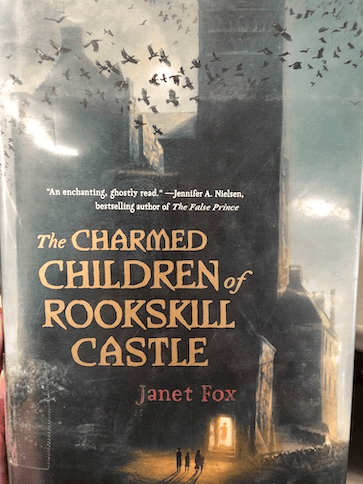
The Charmed Children of Rookskill Castle by Janet Fox, 2016.
In 1940, in London, the coming of the Blitz during World War II means that children must be sent away to escape the bombings. Kat Bateson and her siblings are told that they will be sent to Rookskill Castle.
Rob is excited about going to a castle because it might be haunted and they might learn all kinds of Medieval fighting skills, like fencing and archery. Kat says that the castle is now called Rookskill Castle Children’s Academy, so they’ll probably just be having standard lessons. Rob thinks that she’s being stodgy and boring. Their little sister, Amelie, thinks that ghosts sound exciting, but 12-year-old Kat is sure that there won’t be ghosts. The castle is owned by the children’s distant relatives, and Kat is more worried about practical things, like their father’s war work with MI-6 (he is a spy, although they are not supposed to talk about it), how she will fit in with other children at school, and packing warm clothes for Scotland.
Before the children leave for Scotland, Great Aunt Margaret gives her something for protection – her chatelaine. The chatelaine is a family heirloom that holds a pen, scissors, and thimble attached by chains to a ring. Great Aunt Margaret says that it’s magical, and she warns Kat to be careful with magic because magic always comes at a price. Kat doesn’t really believe in magic, like her younger siblings do. She is practical and enjoys numbers, puzzles, and the clockwork skills that her father has been teaching her. Still, she accepts the chatelaine from her aunt. Her aunt tells her that the pen will write by itself, the scissors will cut anything, and the thimble has the power to capture souls.
Kat and her siblings make the trip to Scotland along with Peter, the American son of people their mother works with. The Bateson children like Peter, and they become friends. However, when they reach Scotland, the station master warns them away from Rookskill Castle, talking about strange stories about the place and other children who have gone there and haven’t been seen since. The children are spooked by what he says, but they have no choice but to go with the man from the castle who comes to pick them up.
When they arrive at Rookskill Castle, they all find the place creepy. The boys find the lady who runs the castle school, Eleanor, to be pretty and charming, but the girls find her creepy. Kat thinks that there is something wrong with her, although she’s not sure what. Eleanor also wears a chatelaine, although Kat doesn’t think hers is as good as the one Aunt Margaret gave her. Aunt Margaret’s chatelaine holds practical items, but Eleanor’s chatelaine holds strange-looking charms with no practical use. Kat doesn’t know what the point of them is, but she prefers Aunt Margaret’s chatelaine.
The children are told that they will share rooms – Peter and Robby together and Kat and Amelie together – and that they must wear school uniforms, which is typical of a boarding school. However, they are also told that they will be locked in their rooms at night, which sounds alarming, and that if they hear any strange noises, they should ignore them because old castles make odd sounds. They are not allowed to wander the grounds and explore.
The children and the other students at the school soon begin to see and hear strange things around the castle. They see other, mysterious children, who are not students but who may be ghosts. The boys hear strange noises coming from a secret room that Kat thinks sound like a radio. Kat thinks that the radio sounds might indicate that there is a German spy at the school, someone who is communicating with someone outside in secret. That would make sense for wartime Britain, but it can’t explain the other, frightening things that are happening at the castle.
There is something wrong with the teachers and the cook at the school. Their memories are sometimes muddled, and they seem to be easily confused about certain things. One of their teachers keeps talking about special artifacts with magical powers that could decide the course of the war, including a magical chatelaine once owned by Vlad the Impaler.
The longer they’re at the school, the more everyone seems to be affected by the place. Kat becomes certain that the students’ cocoa is drugged every night, and Lady Eleanor isn’t what she appears to be. Really none of the adults in the castle is quite what they appear to be, but Lady Eleanor is particularly sinister. In a series of flashbacks, it is revealed that she has led an unnaturally long life because of a magical pact she made centuries ago. In order to gain the power she craves, she needs the souls of children. Logical Kat needs to grasp the idea that there is magic and take possession of her own magical potential to save herself and the others in a terrifying showdown on Halloween night.
My Reaction
I really enjoyed the combination of magic and historical fiction in this story! I’ve read other books that combine the real-life experiences of WWII child evacuees with magic and fantasy. Many people would remember that the children in The Lion, the Witch, and the Wardrobe were child evacuees, but there are other books with similar themes, like Stonestruck by Helen Cresswell. There are several things that make this book different from others of its type, and I love that this book fits well with the Dark Academia aesthetic that’s been popular during the last few years.
One thing that appears in this story that I haven’t seen in similar ones is the use of mathematics and engineering skills alongside magic. Kat’s talent for mathematics and puzzles have practical uses during their adventure, and so does her budding talent for clockwork and machinery. There is both real machinery in the form of code machines and magical machinery in the story, and Amelie comments on the similarity between magic and the incredible results produced by Kat’s mathematics and by machines. I like the juxtaposition of real skills needed for invention and creation alongside the magic.
There is also a double threat in the book – the magical one and the more standard wartime threat of spies. The book’s premise of Nazis being interested in supernatural artifacts also has some basis in history. Movies like Indiana Jones and the Raiders of the Lost Ark are actually correct that there was an element of superstition in Nazism, and Nazis did attempt to use folklore and antiquities to create or build a connection to the past and to powerful figures. (There are many videos and documentaries on YouTube that offer more details about this. I recommend the ones from National Geographic, the Smithsonian Channel, and various universities as being the most authoritative and reliable.) The Nazi concept of history was really more of a fan fiction about their imagined past glories rather than sound and real history, and it was meant to serve as an inspiration for the empire they wanted to create. The book was correct that the darkness of war brings out magic, after a fashion. Even Allied countries, like Britain, saw a rise in spiritualism because of the war as people tried to connect to the spirits of lost loved ones, and this was also the time when Wicca began evolving into a religious movement. In fact, the founders of Wicca in Britain attempted their own magical ritual in the New Forest to ward off the Nazis. (The incident is recounted in this documentary about the life of the founder of Wicca by Professor Ronald Hutton of the University of Bristol.) In times of chaos, people are prepared to try anything and everything they can to protect what’s important, and that can include magic. The real life Wiccan rituals were not like the magic in this book, but I found it interesting that the fantasy of this story built on some real-life wartime attitudes about the supernatural.
I like books that include interesting and unusual historical details. Although this is a fantasy story, the experiences of the child evacuees do resemble the experiences of real-life evacuees. I enjoyed reading about their train journey from London to Scotland and the black-out curtains that even the trains have. Many books about child evacuees have them sent to live in private homes with people they don’t know, but in real life, there were some evacuees who were sent to boarding schools instead.
The use of a magical chatelaine is a charming touch that also shapes the nature of the story. A chaletaine is an unusual piece of jewelry that isn’t commonly worn anymore, which makes it different from stories that make use of charmed necklaces and rings. A chatelaine is a belt hook with items joined to it by chains. The items can be practical items, like the ones on Kat’s chatelaine, or charms, like the ones on Eleanor’s. Each of the items on the chatelaines in the story has a purpose.
There are also themes about power in the story. Eleanor craves power. When she was younger, before she began living this unnatural life, she craved love, but she was abused and neglected. She was powerless and fearful of the people who abused her, and her quest for power is to make herself invulnerable to that type of abuse again. However, in the process, she has sacrificed her humanity and placed herself in the position of being used by someone much more powerful. Readers and the characters can feel sorry for her because of her past life experiences, but she is beyond the point where they could save her from herself, the choices she’s made, the things she’s done to other people, and the evil force that has used her. The book is a little open-ended, with the villain behind the villain still lurking around at the end with a mission of his own to accomplish, and this story has a sequel, The Artifact Hunters.
In 1943, 11-year-old Howie Crispers lives in Brooklyn and goes to public school. Although he’s still a kid in school, every part of his life and every part of the lives of people he knows, like his best friend, Denny, has been impacted by WWII. Howie’s father is in the Merchant Marines, which means that he’s away most of the time, taking supplies overseas. Howie never knows exactly where his father goes because people aren’t supposed to talk too much about the movement of people and supplies for the war. The phrase “Loose lips sink ships” has special meaning for Howie. When letters from his father arrive, they arrive censored, with pieces of important information cut out of them, so Howie’s father can’t accidentally give away information that might potentially be important to an enemy if the letter was intercepted or if his family mentioned things that they shouldn’t from his letters.
Denny’s father is in the army somewhere in North Africa, and other classmates have fathers or brothers overseas or family members involved in war work in some way within the United States. The kids also participate in volunteer activities related to the war effort, like gathering useful scrap materials that can be made into supplies. Many things are rationed, and people can’t always get what they want. Sometimes, there are blackouts and air raid drills. Whenever someone has to make do with things as they are or put up with abnormal situations, they tend to shrug it off and say, “Don’t you know there’s a war on?” Howie’s noticed that phrase seems to be an excuse for a lot of things.
Howie and Denny, like other kids, love listening to plays on the radio, and popular entertainment also frequently focuses on the war. Howie and Denny are especially fascinated by stories of spies, and they start wondering if there could be spies around them even now. Their primary suspect for being a spy is their school principal, Dr. Lowminster. With most of the men they know away fighting or working in some capacity related to the war, they wonder why he isn’t also in the armed forces or doing some kind of war work. Dr. Lowminster is a strict man, and when Howie spots him leaving the school one morning just as classes are about to start, he realizes that this is something out of character for him and his usual routine.
Skipping class himself, Howie follows Dr. Lowminster and overhears a conversation between him and an unknown woman about firing Howie’s teacher, Miss Gossem! Howie likes Miss Gossem and even has a secret crush on her, and he’s appalled that Dr. Lowminster wanted to get rid of her. He doesn’t give an exact reason for firing her during the discussion Howie overhears, only saying something vague about Miss Gossem not maintaining the correct moral standards. Howie doesn’t know what that means, but he’s sure that sweet, pretty Miss Gossem couldn’t have done anything bad enough to get fired.
Since he’s already suspected Dr. Lowminster of being a spy, he also starts thinking of him like the villains in radio show or movie serials, who do cruel things to get revenge on pretty women who refuse to marry them, and he considers that this could be a similar situation. Maybe Dr. Lowminster is just mad at Miss Gossem because she doesn’t love him or something. In such cases, in movies or on the radio, a hero steps in and saves the lady from the villain, so Howie decides that he’s going to be Miss Gossem’s hero!
Later, when he can talk to Miss Gossem in private, Howie confides in her that he knows that she’s being fired and that he wants to help her. Miss Gossem, who has only just learned about it herself is surprised how Howie knew, and he’s forced to confess the embarrassing details about how he spied on the school principal because he thought he was a spy. Miss Gossem says that she doesn’t think the principal or anyone else at the school is a spy and that the woman the principal was talking to was Mrs. Walsh, who is the acting school superintendent and the principal’s boss. Howie asks Miss Gossem if there’s anything he can do that would help her, but Miss Gossem says that this is something that she’ll have to work out for herself. She only asks that he not tell the rest of the class about it yet. Howie agrees, although he’s already told Denny.
He and Denny talk it over, and Denny’s still convinced that the matter might have to do with spies or something related to the war. One evening, when Howie is caught outside during an air raid drill near Miss Gossem’s apartment, a policeman tells him to get off the street, so he asks Miss Gossem if he can come in. She lets him in, and she asks him how he knew she lived there. Howie admits that he’s spied on her, too. Miss Gossem tells him that he shouldn’t be spying on her. When he sees a picture of a young man in an Air Force uniform on her table, he asks her who it is, and Miss Gossem admits that it’s her husband. She still goes by her maiden name because not many people knew that she got married. They got married rather suddenly before he went overseas, and now, she’s worried because she hasn’t heard from him and doesn’t know where he is. She worries that he might be dead. Howie confides in her that he worries about his father, too, and how he sometimes has nightmares about horrible things happening to his father.
As teacher and student confide their worries to each other, Howie asks Miss Gossem again about why she was fired and learns some things about her situation. Miss Gossem asks him not to tell the rest of the class what he knows, but he does anyway because he thinks they can help prevent Miss Gossem from being fired. Miss Gossem is upset with Howie for revealing her secrets, and she worries that, if the principal finds out, it will make her situation worse. Miss Gossem insists that she is an adult and has to deal with things herself. Howie is upset because he was only trying to help.
Howie doesn’t know what else to do, but his little sister, Gloria, who listens to romantic soap operas instead of hero stories, offers him another perspective and some suggestions that help to change the situation. Dr. Lowminster is a man, but the nature of Miss Gossem’s problems might get more sympathy from adult women … like their mother and Dr. Lowminster’s boss, Mrs. Walsh.
My Reaction
This story contrasts with another by the same author, Who Was That Masked Man, Anyway?, which is also about a boy growing up in the United States during WWII, coming to terms with the effects of the war on daily life and the people around him, and indulging in a little fantasy and adventure based on radio plays and popular entertainment of the time. The difference between these two stories is that the boy in Who Was That Masked Man, Anyway? lives far more in the world of fantasy and his own imagination than Howie is in this story. Both boys are inspired by radio play adventures, but the boy in Who Was That Masked Man, Anyway? has some serious problems coping with the mundane and hard realities around him and frequently acts and speaks as though he’s living in a radio play.
In this story, Howie is much more accepting of the realities of situations around him, once he understands what the realities are. He is genuinely worried about his teacher’s problems and the effects that they are having on her life. At one point, he sees Miss Gossem looking out over a cliff and worries that she might be contemplating suicide because of her despair at her situation. Fortunately, she isn’t, and although she finds Howie’s efforts to help her somewhat embarrassing, he and his friends and sister are able to get some help for Miss Gossem, at least enough that she is able to finish working until the end of the school year.
However, while Who Was That Masked Man, Anyway? had a somewhat idealized ending in spite of the characters’ troubles and the chaos around them, Don’t You Know There’s a War On? ends on a more realistic and imperfect note. The characters in Don’t You Know There’s a War On? can’t solve all of the problems around them in the end. At the end of the story, the war ends, and the characters’ lives change yet again, as they shift into a new mode where they they can’t keep saying, “Don’t you know there’s a war on?” We don’t fully get the end of everyone’s story because Miss Gossem and Denny both move away, but we know that they have to go on with their lives as they are now, changed because of the war. It’s not exactly a happy ending although it’s not completely unhappy, either, because the characters’ lives will go on. It’s somewhere in the middle between happy and unhappy with an element of uncertainty about exactly what’s going to happen and how things will ultimately end up, which is very realistic.
Because Don’t You Know There’s a War On? was written after Who Was That Masked Man, Anyway?, I had the feeling that the author wanted to revisit that time and a similar setting in a more realistic way than he did in the previous book. Both books are enjoyable, but reading each of them is a different experience. That’s not unlike real life, too. Different people can experience the same situation in different ways. There are common threads between the two stories because the boys are experiencing some shared events and elements of popular culture in their time, but because their situations aren’t exactly the same, and they have very different personalities, their stories take different directions.
World War II is happening, but Frankie Wattleson mostly spends his time thinking about his favorite radio shows, like Captain Midnight, The Shadow, The Lone Ranger, and The Green Hornet. He spends a lot of his time listening to radio shows and daydreaming about them, and his parents and teacher are getting concerned about him. He doesn’t do his homework, just copying his friend Mario’s homework because he’s too busy with his favorite radio shows. He and Mario get caught reading radio fan magazines in class, when they’re supposed to be reading the class reader. Frankie keeps narrating his life like it’s a radio show or talking like a radio advertisement, and even Mario is getting annoyed with him.
Frankie gets Mario into trouble with escapades that he tries to act out like they’re radio shows, like when he sneaks Mario into his family’s house so they can sneak into the bedroom of the medical student who’s renting Frankie’s brother’s room while he’s away in the army. The boys wanted to get a look at the skeleton that the medical student keeps in his room, but the medical student catches them and reports them to Frankie’s mother. Frankie’s parents try to impress on him that his behavior is serious. His father works hard at two jobs and is frequently tired, his brother is away at war, and their boarder provides their family with another source of needed income. They don’t want to lose him as a boarder. Frankie’s mother forbids him to listen to the radio for a week, but he sneaks listening to the radio by visiting Mario and listening to his radio. The boys sneak back and forth between their houses, using a board between their bedroom windows.
Then, Frankie’s parents tell him that his brother, Tom, is coming home from the army. Tom has been wounded, and Frankie is thrilled at Tom coming home as a wounded hero. Frankie’s parents try to explain to him the reality of Tom’s condition. They don’t know how serious his wound is, but they know that he will need peace and to recover. At first, Frankie thinks that his parents will get rid of the medical student boarding with them so Tom can have his room back, but to his horror, his parents tell him that’s not the case. They still need the money from their board badly, so they’re giving Tom Frankie’s room.
Frankie protests that it’s not fair for him to have to give up his room, but his parents say it’s necessary. When Tom comes home, he’ll need quiet and privacy. Frankie asks where he’ll be sleeping, and his father says that they’re going to make up a new bedroom for him in the basement. It sounds terrible to Frankie. The basement is dark and smelly, and if Frankie goes down there, he won’t have his radio or the board for crossing over to Mario’s room. It’s like being sent to a dungeon!
However, when Frankie and Mario look through the stuff in the basement, they find what looks like some kind of old radio! Frankie’s father says that it used to belong to his Uncle Charlie. Frankie doesn’t remember Uncle Charlie, but his father is tired and doesn’t want to talk about him. Frankie isn’t good at fixing things, but he persuades Mario to help him repair the radio. It turns out to be a different kind of radio than Frankie thought, the kind for sending and receiving messages, not the kind of listening to radio shows. Still, Frankie thinks maybe Mario can help him use it to listen to the radio in Mario’s room when his family bans him from using the radio in their house.
When Tom arrives home, he’s different from how Frankie imagined he would be as a returning hero. He is wounded in the leg and uses a crutch to walk. He’s quiet and depressed, and he doesn’t want to go anywhere, do much of anything, or see anyone. Frankie, who is caught up in the ideas of the adventure stories that he listens to on the radio, tries to get Tom to tell him what the war was like and what it was like being wounded, thinking that the stories will be exciting, but Tom tells him he doesn’t want to talk about it.
The idea of having an adventure and being a hero is what keeps Frankie so enthralled with radio shows. His daydreaming and narrating his adventures with Mario as if they were a radio play is all based around his desire to be a hero and escape from the dull or difficult parts of his real life. The problem is that Frankie doesn’t know what it takes to be a real hero or what real-life “adventures” are actually like, and even when he tries to ignore real life, it doesn’t ignore him. His attempts to live out the adventures he imagines go awry, and his teacher makes it clear that, if he doesn’t start paying attention to reality, he’s going to fail the sixth grade.
My Reaction
I didn’t read this when I was a kid, although I loved historical novels and books by Avi. The boy in this story has an obsession with radio plays the way kids of my time sometimes got obsessed with tv shows. His family, his teacher, and even his best friend know that Frankie’s taking his obsession too far, but Frankie uses his love of radio to both hide from difficult things in real life and to imagine that he can be a hero, like the heroes on the radio.
In between parts of the story, there are interludes with snippets of radio programs and advertisements, showing readers what Frankie’s listening to and where he gets his ideas. I’m a fan of radio plays myself, so I was already familiar with some of the programs that Frankie listens to and their general style. I could recognize many of the tropes of the radio plays in Frankie’s fantasies from the beginning.
Frankie’s radio-based exploits are amusing, but also cringey because readers as well as Frankie’s family and teacher know that he’s headed for trouble by not paying attention to reality. Even his best friend is losing patience with him. I kept waiting for the moment when he would snap out of it and accept some of the hard realities around him. There is a moment when he does get a dose of reality that shatters some of his illusions, the moment when he meets is Uncle Charlie. Up to that point, Frankie was working his Uncle Charlie into his fantasies, imagining him as some kind of secret hero, but Uncle Charlie’s secrets turn out to be more ordinary and not at all romantic or noble. Uncle Charlie accepts the reality of his own situation for what it is, and he knows things ahead of him will be hard and that he has himself to blame for what his life is now. Frankie finds it hard to hear, and his brother’s confession of what war is really like similarly shatter’s some of Frankie’s illusions. It makes him realize that he’s made some mistakes in his thinking and plotting, and Frankie does try to put an end to a romantic scheme that he’s put in motion. However, Frankie’s scheme, while causing chaos, does actually result in a happy ending, so he is able to maintain some of his fantasies and illusions, even in the end.
This story contrasts with another by the same author, Don’t You Know There’s a War On?, which is also about a boy growing up in the United States during WWII, coming to terms with the effects of the war on daily life and the people around him, and indulging in a little fantasy and adventure based on radio plays and popular entertainment of the time. The difference between these two stories is that the boy in Don’t You Know There’s a War On? is more realistic in his views that Frankie is in this story. Both of them are inspired by radio play adventures, but the boy in Don’t You Know There’s a War On? isn’t living in a fantasy world as much as Frankie is and is more open to accepting the mundane and hard realities of life once he understands some of the situations around him.
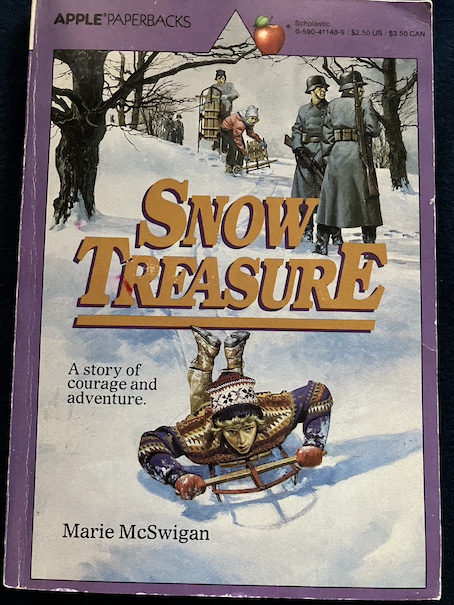
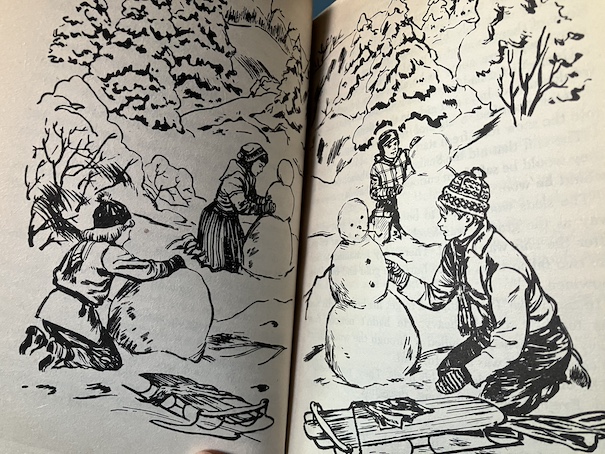
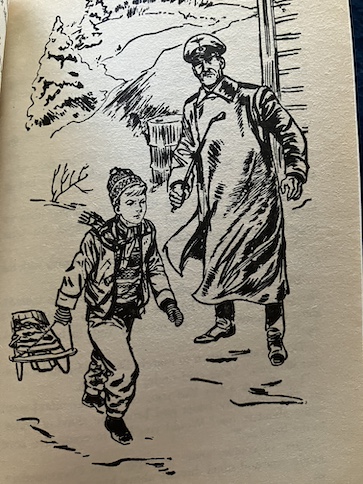
The story takes place in Norway, during the winter of 1940. A group of children are sledding on a hillside when they see Peter’s Uncle Victor walking with a friend of his. Uncle Victor is a fisherman, and Peter loves hearing the stories he tells whenever he’s back from a trip. The children call and wave to him, and he waves back, but he doesn’t stop or call back to them. It seems a little out of character for him because he usually gives them more enthusiastic greetings and likes spending time with him. Peter is surprised that his uncle is even there because it seems early for him to arrive.
The children continue playing in the snow, starting a snowball fight. When it starts getting dark, the children realize that they have to get home to supper. At first, they think that their parents will be angry that they’re late, but the parents seem preoccupied and don’t seem to notice. When Peter mentions that he saw Uncle Victor, his father suddenly jumps up, looks alarmed, and says that he has to go out. Peter wonders if Uncle Victor is in some kind of trouble, and when he tries to ask about it, his mother doesn’t want to talk about it. He just says that Peter’s father has been working hard at the bank and that they just had a visit from a treasury official. Peter’s sister worries that the bank might be in trouble, but their mother says that the bank is fine and that it has more gold than ever. Peter asks if it has something to do with the war because even the children know about the Nazis taking Poland and how worried that the adults have been since. Peter’s mother says, yes, it’s about the war, but she doesn’t really explain more.
Later, Peter wakes up and hears his father and some other men talking about gold bouillon. The men talk about how they’re going to keep Norway’s gold out of the hands of the Nazis. When the men notice that Peter is watching them and listening, Peter’s father tries to send him back to bed, but Uncle Victor insists that Peter stay because Peter has just given him an idea. Peter is almost thirteen years old, and Uncle Victor realizes that he and his friends can help them. He asks Peter about how many children are in the local school and how many are over 10 years old. It’s a small school, and Peter thinks that there are about 20 children in the local school who are more than 10 years old, including the girls. Uncle Victor asks him about how he and the others could handle making a really long sled ride to the place where he docks his boat. It’s miles away, but Uncle Victor and the other men used to do it when they were children, and Peter says that he and his friends could do it, too.
The men send Peter back to bed while they talk over their plans, but they say that they’ll talk to Peter more later. As Peter lies in bed, he thinks about what they’ve told him so far. He knows that they have a large amount of money in gold bouillon, and they want to be sure that it stays out of the hands of the Nazis, but what is the point of the sleds and Uncle Victor’s boat? As he thinks about it, he realizes that they mean for the children to transport the gold to the boat on their sleds. They were talking about other modes of transportation that they’ve considered, and they’ve decided to have the children carry it for them. Peter wonders how much weight their sleds can carry because gold is very heavy.
The next day, as he and his sister walk to school, they watch some of the men building what looks like strange-looking sheds. The men say that they are building bomb shelters. When Peter and his sister ask them if they’re afraid of bombings from the Nazis or the Russians, the men say that they’re not really afraid of bombings from either one. The bomb shelters are just in case.
Other children have also noticed the bomb shelters, and everyone at school is restless and uneasy. Some of the younger children are so upset that they start crying, and some children have to be sent home. Then, Uncle Victor comes to talk to the students. Instead of telling them one of his sea stories, he’s there to help them form a special club and that they’re going to do something to help their country. He calls it the Defense Club, and he appoints Peter as the club president. Uncle Victor says that everyone is in the Defense Club and that they must all follow Peter’s orders.
The next day, Peter’s father says that he’s going to show them the route that he wants Peter to lead his friends along. He wants to be sure that Peter remembers the way to go and can do it without help. Along the way, they talk about the gold and the importance of keeping it out of enemy hands. The treasury official who recently visited the bank has decided that the best thing to do to make sure that their country’s gold can’t be captured by the enemy is to send it to a safe place. Other countries have sent their gold to the United States for safe-keeping, so Norway plans to send at least part of its gold bouillon to the United States as well.
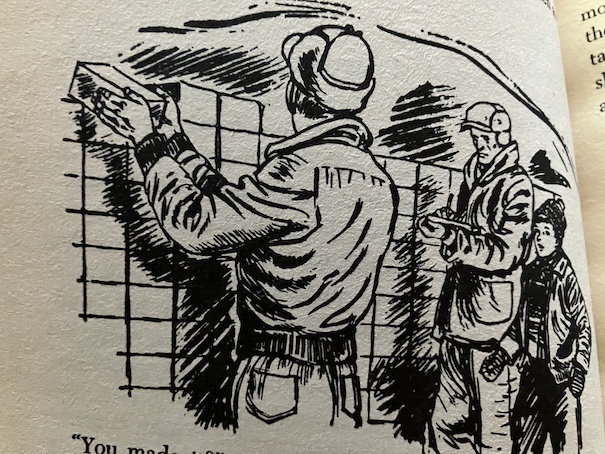
However, there has been a recent development. Enemy ships have been sighted off the coast of Norway, laying mines. This is going to make getting the gold out of Norway by ship difficult and dangerous. Peter’s father and his friends lead Peter to a cave that Peter never knew existed before. The men say that the reason why Peter never knew there was a cave there is that they dug out this cave themselves. This is where they will hide the gold.
The following night, April 8, Norway is under black-out conditions in case of bombings. Not a single light is allowed after dark, and people are afraid. The bomb shelters are ready, and they have blocks of ice ready in place of sandbags. Soon, Peter’s father will leave to join the army, and he says that Peter will be the man of the house while he’s gone. Peter asks him what to do about the gold, and his father says that Uncle Victor will tell him when and if they need to move it. In the meantime, Peter is to pretend that he knows nothing about it and not tell anyone anything.
When Peter speaks to Uncle Victor, Uncle Victor tells him that he wants Peter to make sure that he and his friends go sledding regularly in the area. If the Germans are watching, and they see the children often sledding, they’ll start ignoring them. It would only look weird if the children started going places where the Germans haven’t seen them before. He also explains that the children will be divided into teams of sledders with Peter and some of the other, oldest children leading each team. Peter asks Uncle Victor why it’s important to move the gold when the sea is mined. If Uncle Victor doesn’t know where the mines are and can’t navigate around them, he won’t be able to get the gold out anyway. Uncle Victor says that he will be learning the locations of the mines, and he wants the gold ready to go when the time comes, so he can get it out quickly. He adds that Peter is not to question orders from this point forward. The adults teach the children how to tie and untie the gold from their sleds.
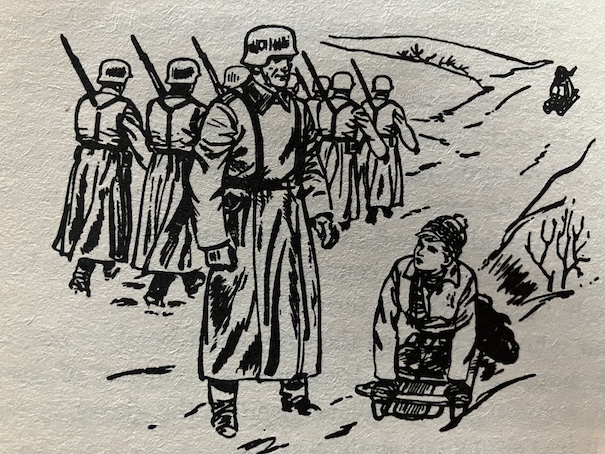
As Norway becomes occupied by the Germans, the children have a scare when they run into a Nazi patrol, but the Nazis move out of the children’s way to let them sled. One of them comments to the children that he wouldn’t interrupt their sledding because he liked to sled when he was a boy, too. The children are thrilled with their brush with danger and how the Nazis just let them through. In spite of the friendliness of the Nazi soldiers, however, the children refuse to talk to them. The adults ordered them to not speak to the Nazis so they can’t let anything slip to them. The Nazis try to offer the children candy to make friends with them, but the children won’t take it or even say a single word to them.
Transporting the gold is a long process because the children can’t carry much at a time. The adults are nervous because it won’t be much longer before the snow melts, and the children won’t be able to sled. Also, Uncle Victor’s boat hasn’t been where he usually docks it, so the children have been burying the gold in the snow at the docking point until he returns. Then, a late blizzard comes.
The blizzard is unusually fierce, and it lasts for days. The Norwegians don’t find it too difficult because they are prepared for storms like this, and they spend the blizzard at home. The Nazis have suffered during the blizzard because they weren’t prepared for it, and they’re in a bad mood when it’s over.
One day, one a commandant tries to offer Peter a job living in their barracks and shining his shoes. (These aren’t even tempting conditions.) When Peter still refuses to even talk to him, the commandant gets angry, and he says it’s a sign of how stupid the Norwegians are. He says that the children are stupid because they’ve been out of school too long, and it’s time for them all to go back to school. At first, the children aren’t too concerned about this threat because they know that the schoolmaster of their small school has left to join the army, and there’s no one in town to teach the school. However, the Germans say that the school will reopen even if one of the German soldiers has to teach it. This is a worry because, while the snow dumped by the blizzard has bought them some time to finish their sled deliveries of gold, if the children are back in school all day, they won’t have enough time after school to finish the job. The adults have to come up with a plan that will keep the children out of school long enough to finish their mission.
The book is available to borrow and read for free online through Internet Archive (multiple copies). The story was later made into a movie in 1968. The movie is available to watch on Amazon Prime Video, or the movie or clips of it sometimes appear on YouTube.
My Reaction and Spoilers
Based on Real Events?
I liked this story because of the combination of historical events and adventure. What interested me most about the book is that the it was written and published during WWII itself, and the author claimed that it was based on real events, although she admitted that some of the details were invented for the story.
There are many stories about people resorting to unusual and imaginative methods to smuggle items and people past enemy soldiers during the war, so it does beg the question about whether real children helped to smuggle gold past the Germans on their sleds. There are no definitive sources to verify that the story about the sleds is true, and some people doubt it, although the smuggling of gold out of Norway is true. It is true that, in 1940, about $9,000,000 worth of gold bullion from Norway arrived by in Baltimore, Maryland, carried by a freighter called Bomma. At the time, the ship’s captain told a story about children transporting gold secretly on their sleds, which is probably where the author got the idea for the story.
The author herself said that, in real life, there were more children and adults involved than she included in the story, which is also true, although whether or not they used sleds as part of their operation is the part that is still difficult to verify. There was an article in an Australian newspaper from 1941 which described a large-scale military and civilian effort in Norway to smuggle gold bullion out of the country by various means, including trucks and small, private boats. Some of the details of this account shed a little light on the larger situation. According to the story in the Australian newspaper, some civilians acted as village guides, helping to guide gold-carrying trucks through forests to reach the sea, where it would be loaded onto ships. There, some of the gold was loaded aboard a British destroyer and cruiser, but the cruiser had to leave early due to German bombing, and some of the gold was left behind. Civilians, including patriotic men, women, and children helped in the efforts to transport the remaining gold to a freighter, using small, private boats, traveling by night along the edges of the fjords.
It does seem that at least some children were involved in the effort, but their exact roles are uncertain. From the Australian description, it seems that some of them may have been aboard the small boats transporting gold. If sleds were also used to transport some of the gold, the article doesn’t mention it, but the absence of a mention doesn’t necessarily mean that it didn’t happen at all. Even if most of the gold was transported by other means, it is still possible that sleds were used to carry some of it, part of the way. Because the smuggling of the gold was meant to be secret, I suppose the people involved couldn’t really admit to their involvement at the time or offer too many details. Since the end of the war, it seems like nobody has claimed to be one of the children who transported gold on their sleds, so that part of the story remains unverified, and it could be exaggerated or legend.
Spoilers
The plan that the adults come up with is to fake an epidemic in town that will keep the schools closed. The town doctor is in on the plot, and he paints the younger children in town with spots to make it look like they have something like the measles. He insists that the school remain closed until the illness that the people in town call “the plague” (because they can’t pronounce what the doctor claims it is) has passed. In the meantime, he wants the older children in town to stay away from the younger children and spend as much time outside as possible. The younger children are to stay inside under quarantine, and the doctor cautions the German soldiers to stay away from the children to avoid catching the disease.
Of course, they can’t keep up this deception forever, and Peter himself is later in danger when he offends the German commander and is later take prisoner. However, there is a twist to the story because one of the German soldiers is secretly on their side and resents being pressed into the service of the Nazis. This unexpected ally helps Peter to make his escape and fulfill his family’s mission.
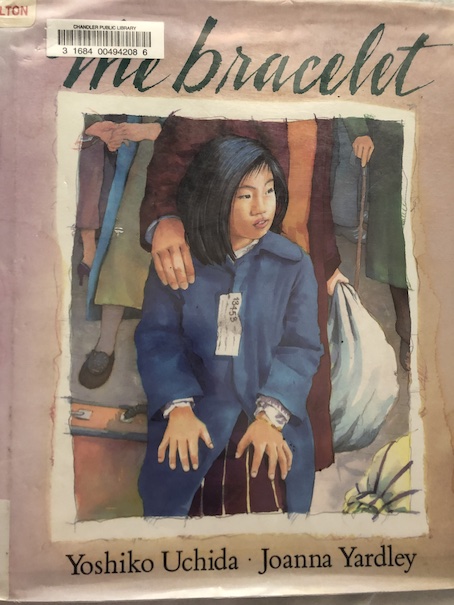
The Bracelet by Yoshiko Uchida, illustrated by Joanna Yardley, 1976, 1993.
Emi is a young girl, a second-grader, in a Japanese American family in 1942. After the Japanese attack on Pearl Harbor, there was widespread paranoia about people of Japanese descent in the United States. In response to the fear that these people could secretly be spies for Japan, many of them were ordered to go to internment camps for the duration of the war. Emi’s family is one of those families.
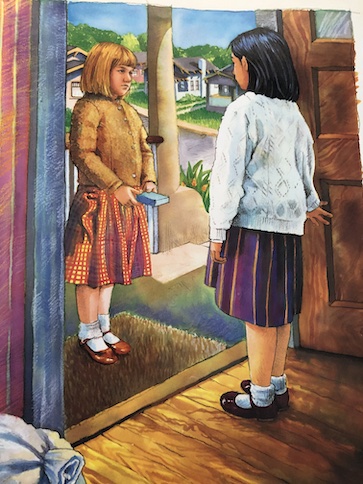
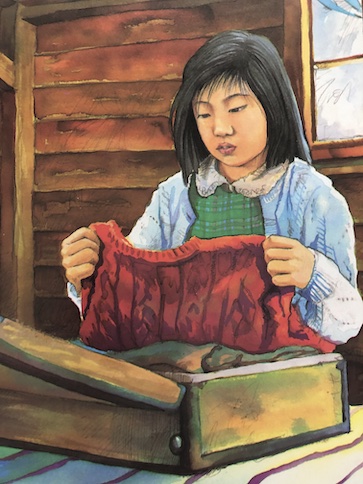
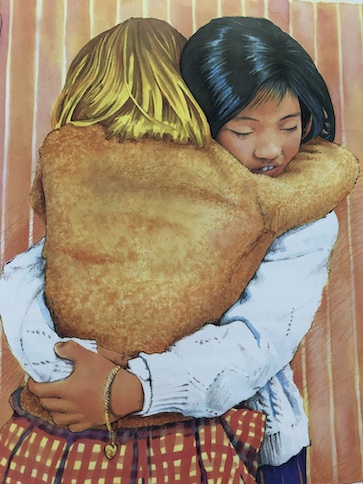
When the story begins, her family has packed and is preparing to report to one of these camps. Emi is sad to leave her home and worried about where they are going. It’s particularly hard for her to leave her best friend. Before they go, her friend stops by with a special present, a bracelet for her to remember her friend by. Emi promises that she will always wear it.
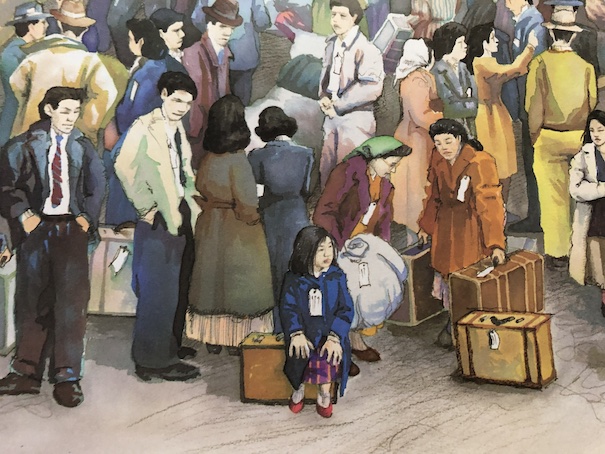
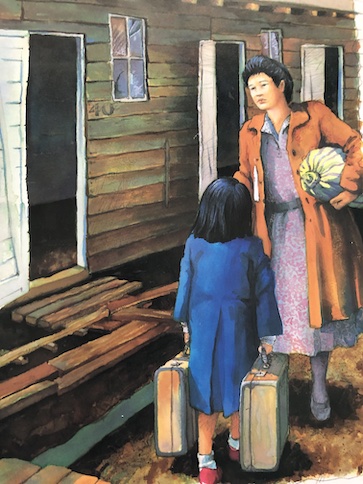
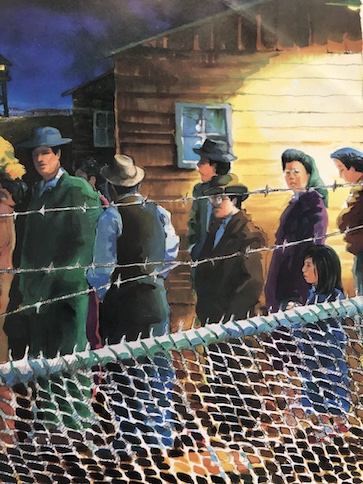
The move to the camp involves a long bus ride and crowds of people. When they get there, Emi’s family is assigned to a barrack made out of an stable because the camp is in an old, converted racetrack (this is a description of Tanforan Assembly Center from real life), and it’s not a very homey place. It’s dirty and still smells like horses. The camp is surrounded by barbed wired wire, and they have to line up with everyone else for meals. They know that this is a temporary camp and that they will later be sent somewhere else. (They will be sent to Topaz.)
Then, Emi suddenly realizes that she no longer has her bracelet. She must have lost it somewhere in the move to the camp! They look everywhere, but they can’t find it. How is Emi going to remember her best friend without that special present?
The book is available to borrow and read for free online through Internet Archive (multiple copies).
My Reaction
The author of this book, Yoshiko Uchida, has also written other books about Japanese internment camps during World War II and the experiences of the people there and their experiences with returning to normal life after the war. When she was a young woman, she and her family were also held in the Japanese internment camps, giving her direct knowledge of the conditions there and insight into the affect that the camps had on the lives of ordinary people. The experiences of the people in her stories follow the experiences of her own family.
This particular book would make a good introduction to the concept of Japanese internment camps for children. It shows one of the camps through the eyes of a young girl, and it’s not a very friendly or welcoming place because it is essentially a prison. It’s an unfair prison because the people there haven’t done anything wrong, and that comes through in the story. (“They hadn’t done anything wrong. They were being treated like the enemy just because they looked like the enemy. … They loved America, but American didn’t love them back. And it didn’t want to trust them.”) They’re only there because some people are suspicious that some of them might do something wrong because of their ethnic background. Kids can understand the unfairness of the situation and Emi’s feelings at leaving her home and her friend. It’s not an easy topic to discuss, but the feeling of unfairness is a universal one, experienced by humans of all ages. Everyone has experienced something in their life, big or small, that was unfair, so the emotion isn’t difficult to understand.
Nobody is physically hurt doing the story, and nobody is called any racial slurs, making this a relatively gentle introduction to a difficult topic. There are soldiers with guns watching the people going to the camp, and they wonder if those guards are really going to shoot anyone who tries to run away, but nobody is shot. The presence of the armed guards is the most overtly scary part of the book, although there is also an atmosphere of general uncertainty because Emi and her family don’t know what’s going to happen next.
Through Emi’s thoughts, kids can understand that these are ordinary people who have been caught up in something larger that has changed and complicated their lives. The book doesn’t cover much about life at the camp because it’s a short book that mainly covers Emi’s feelings at leaving home and her arrival at the camp, but it sets the scene well for longer, more difficult books, to fill in the blanks.
The bright side to the story is that Emi realizes that her memories of her friend don’t depend on a physical object, like the bracelet. She has memories of all the fun things she and her friend did together, and as long as they remember each other, they will still be friends. We don’t know from this book whether Emi will ever see this friend again or not, but I think that Emi appears as a secondary character in other books by the same author. I think she’s a friend of Yuki in Journey to Topaz and Journey Home.
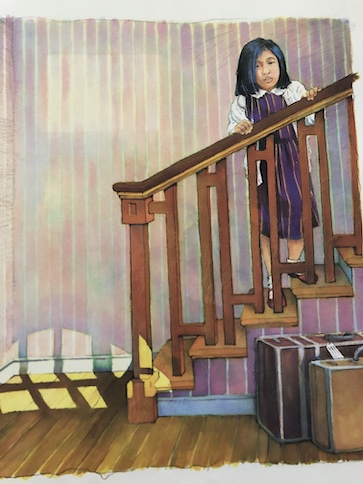
The edition of the book that I used for my review is the one from 1993. There is a section in the back of the book with historical information about the Japanese internment, and the section in my edition has updated information that wouldn’t have been in the original version of the book. The story was first printed in 1976, but the historical section in my edition ends with the conclusions reached in 1982 by the Commission on Wartime Relocation and Internment of Civilians established by President Carter to investigate the causes of the Japanese internment. The conclusion of that commission was the Japanese internment was the product of racism, paranoia, and hysteria on the part of the public and a failure in leadership on the part of the government for trying to placate the hysterics at someone else’s expense instead of holding firm, providing reassurance and firm leadership, and emphasizing the true reality of their unreasonable fears. (Remember, that doesn’t just come from me or from this picture book. Those were the very real conclusions of an official government commission. I do agree with that assessment of the situation, though. I strong feelings against people who are obsessed with conspiracy theories and insist on spreading them because rumors do very real harm.) I think the earlier edition also had different illustrations because the copyright on these illustrations is only for 1993. I really liked the pictures in this book. They’re colorful pictures that look like watercolor paintings. They have almost a dream-like quality that fits well with the theme of memory.
As I was reading this and writing my review, I tried to remember how old I was when I first learned about Japanese internment camps during WWII and what books I might have read about it when I was a kid. I want to say that I was probably about 10 to 12 when I was first introduced to the topic, and I’m positive that I knew about it by the time I finished middle school, but I can’t remember exactly. I don’t think I read many books about it when I was young, although I remember that Farewell to Manzanar was one that was often recommended. I think my first introduction to the topic was probably either non-fiction, from history class in school and things my parents told me, but I also have a vague memory of being told about Farewell to Manzanar and asking what it was about, so that might have been what started the conversation.
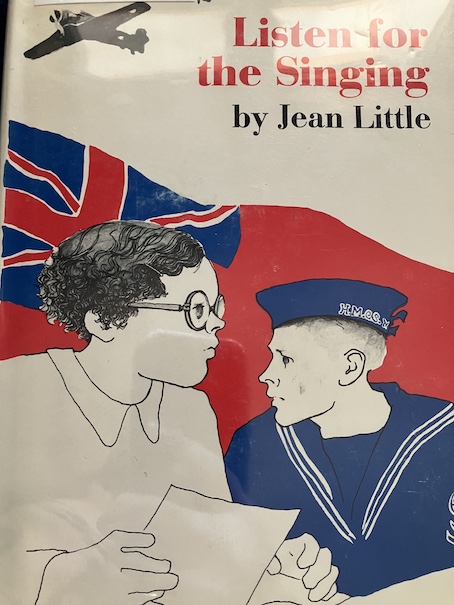
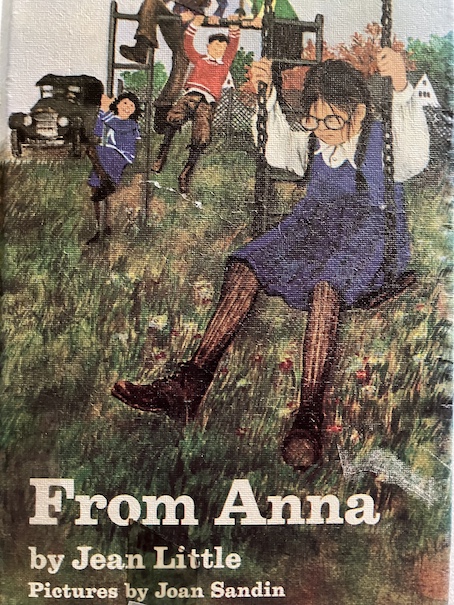
This book is the sequel to From Anna. In the previous book, Anna’s family moved from Germany to Canada both to claim an inheritance from a relative and also to escape the Nazis, whose hold has been increasingly tightening on their country. The inheritance isn’t large, mostly just a house and a small grocery store, but it offers the family a chance to start over, away from the Nazis. Anna, the youngest of her siblings was often clumsy and had learning difficulties that her family did not understand. They were often rough, critical, and impatient with her. However, in Canada, Anna has her first thorough physical with a doctor, who reveals to Anna’s startled parents that Anna has an extremely low level of vision, to the point where she is almost blind. For the first time, Anna gets powerful glasses and special classes that help her to cope with her disability and catch up on the learning she’s missed. Anna’s family repents of how hard they were on her when they didn’t understand her problem, and Anna realizes that she is capable of more than she had ever imagined possible.
The sequel begins about 5 years after the previous book, in the fall of 1939. Anna has been wearing glasses for years now, and she’s adjusted to them well. However, changes are coming for her and her family. She is about to leave the special program that she’s been in for students with vision problems and attend a regular high school. She remembers that she used to have problems in regular classes when she lived in Germany, and she worries that she won’t be able to cope with regular classes. Her family, friends, and teacher all remind her, though, that she’s learned things in the last few years that will help her to do much better now. Her teacher says that she’s ready to move on. Anna gets upset when she learns that her friend Isobel from her old school will be going to a different high school, but Anna’s oldest sister, Gretchen, points out that she won’t be alone in high school. Rudi has already graduated from high school, but Gretchen will still be there, and so will the twins. Gretchen says that she will help Anna register on the first day and help her find her way around.
Anna has also begun to worry about her father, who has been distracted by the news they’ve been hearing about the impending war. Her family left Germany partly because they were worried about the direction it was heading under Hitler and the Nazis, and it seems that everything they worried about is now coming true. Then, they hear on the radio that Britain has now declared war on Germany (marking the beginning of the book as September 1939). The onset of war changes things for the family and creates tensions for them among the people in Canada.
When Anna goes to the first day of high school, she learns that her homeroom teacher will be Mr. Lloyd. Her siblings have had Mr. Lloyd as a teacher, and Anna already knows that he’s mean. He plays favorites in class, even though he teaches world history, he doesn’t actually know much about history. Rudi embarrassed him when he was a student, pointing out things he got wrong, and Mr. Lloyd has no love for him or any of the other Solden siblings. Worse still, Mr. Lloyd has a severe prejudice against students with German last names, asking them in class where they were born and if they were proud of their “Fatherland.”
Anna is upset when she is one of the students he singles out, and she’s not sure what to say, but a couple of other students in class speak up to shut him down. Paula voluntarily tells him that, while her mother is Scottish, she was born in Austria … the same place where Hitler comes from. Mr. Lloyd is taken aback, and Anna is surprised both at how bold Paula is and that Mr. Lloyd doesn’t punish her for talking about. Paula later tells her that her mother works for the local school board and has a reputation for standing up for kids who are bullied by teachers, and Mr. Lloyd knows who she is. He has to be careful what he says to Paula or in her presence, or her mother will deal with him. The other student who spoke up is the son of the local alderman, so his father also has influence. Mr. Lloyd could be risking his job if he pushes them too far or says too much in front of them that they might report to their parents.
Anna is grateful to Paula for her intervention, and she also appreciates some help she gets from Paula’s best friend, Maggie. The girls and their other friend, Suzy, make it a point to walk with her to their next classes when Anna explains that she’s been having trouble getting around because she can’t see well. The four girls become friends, and Anna is happy that she already has a friend group at school on the first day.
However, Anna is still troubled about Mr. Lloyd and his targeting of kids with German backgrounds. When she gets home from school and tells her oldest brother, Rudi, what happened, Rudi gets so upset that he goes to his room and refuses to talk anybody. When Anna walks down to the store that her parents manage, she sees Gretchen upset and arguing with their parents about her name. One of her new teachers is also targeting students with German names and gave her a hard time about being called “Gretchen” when the English version of her first name is “Margaret.” At first, Gretchen tries to persuade her parents that she should change her name to Margaret, but after she calms down a little, Gretchen realizes that a name change isn’t really going to solve the problem. There isn’t really anything she could do to make this teacher like her because the teacher is severely paranoid about Germans and talks about how there are German spies everywhere.
Dr. Schumacher, Anna’s family’s doctor and friend, has also experienced some of the same sentiment that the children are experiencing at school. He’s lost at least one of his patients, who no longer trusts him because of his German background, and Anna overhears some of his other patients gossiping about him and speculating on whether or not he’ll serve in the armed forces. Dr. Schumacher tells Anna and his wife that he isn’t overly concerned about these gossipy women, and he doesn’t consider the patient who switched doctors to be a big loss. He, like other young men, feels called to do something about the situation happening around them, but he cannot join the army because he has a heart murmur from having had rheumatic fever when he was younger. His wife (who is also Anna’s former teacher) is relieved that the army has rejected him because they are also expecting a baby.
As Anna and her new friends get to know each other better, Maggie and Paula ask Anna questions about her vision problems. At first, Suzy doesn’t think it’s kind to ask too many questions about it, and the talk of disabilities seems to make her uncomfortable, but the others let her know that she’s misread the room. Rather than finding it uncomfortable to talk about who vision problems, Anna is actually relieved that she can open up about it and that having these problems isn’t regarded as a shameful secret, and Maggie and Paula say that they genuinely want to know what Anna is experiencing so they can help her when she needs it. Anna admits that, sometimes, she’s not even entirely sure when she needs help because, not being able to see certain things, she doesn’t always know what she’s missing. When Anna needs to use alternate materials in class because of her vision problems, she is nervous that Mr. Lloyd will yell at her or bully her, knowing how he feels about students with German backgrounds, but to her surprise, he doesn’t. In fact, he proves very helpful and supportive to her. Mr. Lloyd treats Anna with more consideration than other students because he understands the nature of Anna’s visual problems better than most.
When Anna has trouble in algebra, her father suggests that she talk to her brother, Rudi, who is a math whiz. However, Anna hesitates to ask him for help because Rudi always used to tease her about her awkwardness, worse than her other siblings. She finds it hard to admit to him that she needs help with anything else. When she does ask him, though, Rudi enjoys teaching Anna about his favorite subject, and he even helps her with other things to help her fit in at high school, like teaching her how to dance and encouraging her to get her hair done.
As the story continues, the war increasingly becomes a larger part of everyone’s life. Anna’s father is upset because word reaches him that his sister was arrested in Germany for being a housekeeper for an elderly Jewish man, who was also arrested. At school, the principal makes a speech on Armistice Day where he acknowledges that the war is going to have a profound effect on all of the students and that they will have to grow up faster because of it. As part of the speech, he quotes a preacher who said, “Faith is when you hear the bird singing before the egg is hatched.” This phrase is what gives the book its title because the principal urges the students to “listen for the singing”, to look to the potentials of the future and have faith that they will get through the crisis that is enveloping the world and that the world contains better things.
Anna tries to discuss the idea of imaging how things will be or could be, like hearing the bird sing before the egg hatches, with Rudi, but he doesn’t understand. Rudi seems like he has a promising future ahead of him. He’s already started college and has a talent for mathematics and engineering. He really enjoys college, but at the same time, with so many other young men like himself preparing for war, he feels the pull to join them. When they hear of their aunt’s arrest in Germany, it only makes it worse. Rudi can’t stop thinking about people he knows back in Germany whose lives have already been affected by the Nazis – people who have fled, been arrested, or simply disappeared. He also thinks of the headmaster of their old school back in Germany, who was known to be a Nazi, and how afraid all the children were of him. Rudi decides that he can’t stand back and let people like that win, so he joins the navy against his parents’ wishes.
It turns out to be a disastrous decision. Rudi is still in Canada when he suffers an accident where cleaning fluid is splashed into his eyes, leaving him blind. The doctors don’t believe that Rudi will ever regain his sight. Although Rudi tries to act brave and calm about his new disability, Anna can see that he’s suffering. Having learned to come out of her shell and cope with her own disability, she has a sense of how difficult this is for Rudi, who is usually accustomed to being able to do things pretty easily. Anna realizes how serious Rudi’s mental state is when she hears him crying one night and even praying to die. Anna knows that Rudi needs help, both physically and mentally. He’s suffered a terrible loss, and he feels like his life is over because he can’t see a way forward. Anna has to help him “listen for the singing”, to envision the possibilities.
The book is available to borrow and read for free online through Internet Archive (multiple copies).
My Reaction and Some Spoilers
From Anna told a complete story by itself, but I still enjoyed this new story with Anna and her family. It was nice to see Anna making progress in school and life, finding new friends, and her family treating her better. Because her mother and siblings treated her badly for years before they realized that Anna was slow and clumsy because she couldn’t see, there are some lingering feelings that affect their relationships. Anna’s mother and siblings have repented about their treatment of Anna and have become much more helpful, supportive, and considerate, but Anna still has some lingering fear of Rudi, who was always the one who was the meanest to her. However, even he admits that he regrets his past behavior. Even before he is afflicted with his own disability, he makes it a point to help Anna with her math lessons, learning to dance, and going to her first hair appointment.
Rudi becomes much more thoughtful and mature in this book. He especially comes to appreciate Anna when Anna helps him through the shock and depression after the accident that leaves him blind. When the story ends, it’s still at the beginning of the war, and we don’t know the ultimate fates of many of the characters. The war is just starting to change people’s lives. We know that, like Rudi, many of them will end up marked for life in some way by the things that are about to happen. Some of the other characters in the book see family members going off to war, and we have no idea whether they will come back or not. Mr. Lloyd comes out of his shell a little around Anna because they come to understand one another, thanks to their shared disability. It turns out that Mr. Lloyd’s vision is also very poor, much more than most of his students know, making him sympathetic to Anna. At the end of the story, things are looking brighter for Rudi, as he realizes that his life isn’t over, and there are ways he can cope with his new blindness and continue the studies he initially abandoned to join the navy. We only get to see the beginning of the war, but it’s enough to show us that it’s going to have a profound change on people in many ways before it’s over. Like Anna, readers must also “listen for the singing” to imagine how the characters will continue forward from this point. There will be hard things because of the war, but also hopeful developments in the character’s lives.
I enjoy the literary references in the story. During the story, Anna is reading the book A Girl of the Limberlost, and Anna enjoys studying Emily Dickinson’s poems. Anna also mentions other books she’s reading and bits of poetry or book characters, like Little Lord Fauntleroy. The movie The Wizard of Oz is playing in theaters at the time of the story, and Anna and her friends go to see it.
People With Visual Impairment
As in the first book, there’s information about people coping with forms of visual impairment, based on the author’s own experiences, growing up with low level vision. There’s also a lot about the attitudes the main character witnesses toward people with disabilities and her own feelings about the ways people treat her and how she wants to be treated. Some people, like Suzy, try too hard to shield Anna from public scrutiny by trying to avoid mentioning her disability or shutting down questions about it, but Anna actually prefers to discuss her vision with people who genuinely care and are trying to help her.
Anna is surprised at how much Mr. Lloyd helps her when everyone knows that he has anti-German sentiment. In fact, he goes out of his way to make sure that Anna has what she needs, sometimes even before she asks. Anna realizes why he is so helpful to her when she looks at the notes on his desk, which are printed larger for him, the way that he ensures Anna’s test materials are printed. The truth is that Mr. Lloyd also has low level vision. He covers up for his disability, but he privately admits to Anna that he also struggled when he was young. His parents got him a private tutor because his vision was so bad, and he admits to Anna that he’s impressed at how well she does in a standard school. Mr. Lloyd has strong feelings about some things, but Anna realizes that he’s also a bit shy and socially awkward. The two of them bond over their shared disability and experiences they’ve had in common.
When Rudi becomes blind, he initially feels like his life is over. He can’t continue in the navy, and he doesn’t know how he can return to his studies. Although he tries to cover up how hopeless he feels, Anna realizes that he feels like he can’t do anything anymore. He even lacks the will to use the resources he’s being offered. Anna pushes Rudi to “see” things differently, showing him how he can do things besides sit around and feel sorry for himself. She introduces him to recorded books (on records, not tapes or CDs, because of the time period) and Braille. When Rudi begins to see that he can still think and study, even if he can’t see, he begins to feel more hopeful and see new possibilities for his future. The part of the story about Rudi’s blindness doesn’t come until the end of the book, about the last third or quarter, but it serves to illustrate the point about envisioning hopeful possibilities for the future, even in the midst of misfortune and the chaos of the world around them.
Anti-German Sentiment
Anti-German sentiment was common among the Allied countries during both World Wars. People were paranoid about spies being among them. In most cases, it was just paranoia, but as with many conspiracy theories, it’s the odd case where it actually turned out to be true that kept people in that constant state of paranoia. Realistically, most average schools during this period did not have enemy spies in them, but the possibility that a spy could be anywhere haunts the characters, and that’s behind some of the prejudice that Anna’s family experiences in the story. (See also Charlotte Sometimes for an example at a boarding school for girls during WWI.) In the story, Mr. Lloyd’s prejudice isn’t just about the rise of the Nazis but also about his own brother’s death in the previous war against Germany. To him, the war that’s just starting brings back painful memories of the last one.
Later in the story, after Anna and Mr. Lloyd come to an understanding with each other over their shared vision troubles, Anna speaks to Mr. Lloyd about his prejudice against Germans. She points out to him that a lot of Germans don’t support the Nazis, and they are also at their mercy. She doesn’t know whether or not she’s ever going to hear from her aunt again after she was arrested by the Nazis. Mr. Lloyd admits to Anna that he’s probably not going to be able to let go of all of his feelings about Germans because he’s had years of resentments about them, but he also apologizes to her that his feelings have made things harder on her. This is a small concession, but it may be a turning point in Mr. Lloyd’s attitude. He tells Anna to give his regards to Rudi and is nice to Anna’s father when they meet. Seeds of change have been sewn for Mr. Lloyd, and we see the beginnings in the story. It’s another point where we see the beginning of something and can imagine how it might play out over time.
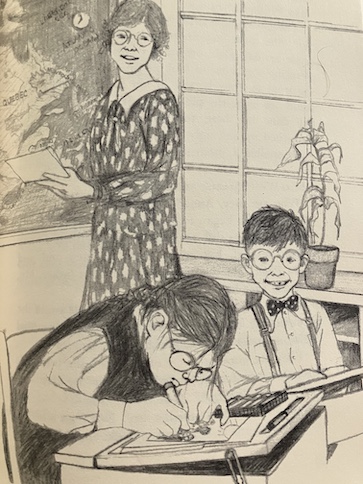
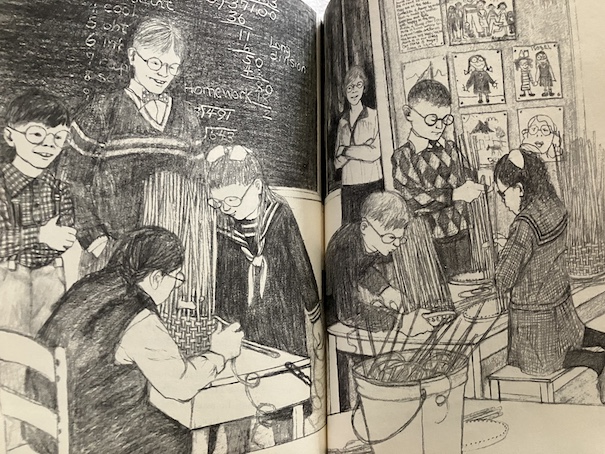
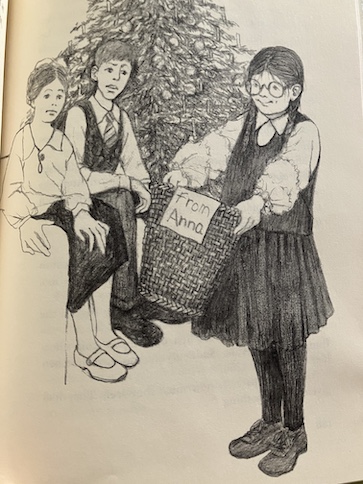
Anna Solden is the youngest in a family of five children living in Frankfort, Germany during the 1930s. Anna has a difficult relationship with her family, partly because she is the youngest of all of them and partly because they treat her badly. It’s not that there is no affection for Anna, but her mother and siblings think of her as not being very smart or capable. She is physically clumsy and has learning difficulties at school, and they have no patience for her. Her teacher at school thinks that she’s just “stubborn” and doesn’t want to learn, but Anna knows that she really tries.
For some reason that Anna doesn’t understand, other people just seem to have an easier time than she does. She’s also awkward at home, and she seems unable to learn things like sewing or knitting, like the other girls. Anna just doesn’t understand how the others can do things, like finding the eye of a needle to put a thread in it. There is something wrong with Anna, but nobody seems to understand, and after the years of criticism and teasing she’s received from her impatient mother and older siblings, Anna doesn’t even try to explain anymore. She only knows that there’s something wrong with her that makes her unlike her siblings.
Her mother sometimes jokes that each of her children is her “dearest child” whenever one of them does something particularly helpful or admirable, but she has never really thought of Anna as her “dearest child.” She has called her that once in a while, but more for the form of the thing and trying to make her feel less left out rather than actually meaning it, and Anna can tell that she never means it. The only person who seems to truly care about Anna is her father. Her mother thinks that Anna is an unaffectionate child, but that’s because she feels so uncomfortable with her mother and siblings because of the way they treat her and talk about her. She can’t get comfortable around them even when she wants to because she just knows she’s going to do something wrong, and they’ll all jump on her again. Her eldest brother, Rudi (short for Rudolf), gives her the nickname “Awkward Anna”, and her other siblings call her that, too. Only her father ever intervenes and tells the others to stop teasing her, although they continue to do so anyway.
Things change for the family with the rise of the Nazi movement. Suddenly, there’s a new headmaster at the children’s school who bans them from singing certain songs, and the children can tell that all of the teachers are afraid of him. Then, disturbingly, people they know start disappearing. Jewish people are dismissed from their jobs, and people who are sympathetic to Jewish people become targets. So far, Anna’s father has managed to keep his job as a teacher at a private school, but his sympathies are known, his sister is married to a Jewish man, and Anna overhears him telling her mother that he doesn’t think his position will be safe for much longer. Even little Anna knows that things aren’t right and that something disturbing is happening, and her father is very worried.
When her father tells the family that he’s decided that they have to leave Germany, her mother balks at it. She doesn’t think things are really so bad, and Germany has always been their home. She doesn’t want to leave, and she tries to use Anna as an excuse to stay. With Anna struggling in school, she says it would be bad to uproot the family and take them all to another country, where they wouldn’t even know the language. However, Anna’s father insists that Germany is becoming more dangerous, and the family needs to leave while they can. If they wait, they may lose their chance to get away at all. Rather than making things harder for Anna, it turns out to be the best possible thing that could have happened to her, and it changes her life forever.
When Anna’s father’s brother, Karl, who was living in Canada, dies and leaves him his property, it settles the family’s plans. Karl wasn’t a wealthy man. He only owned a house and a small grocery store, and Canada is affected by the Great Depression, just like everywhere else. Still, going to Canada to claim the inheritance will give them the excuse they need to leave the country without anyone being overly suspicious, and the grocery store will provide them with a living while they’re getting established in their new country. Anna’s father makes arrangements with Karl’s lawyer, and he insists that everyone in the family study English. Anna’s mother still protests the move, but her father insists. Anna listens to the others practicing, but only her father seems to notice that Anna picks up more words than the others realize. She doesn’t have the confidence to use what she knows, and she is accustomed to her siblings telling her that she does everything wrong. Her father has noticed that Anna has a talent for learning words, songs, and poetry by listening to them, although she has difficulty reading them. The twins in the family, Fritz and Frieda, start to brag about going to Canada, but their father stops them because he doesn’t want to get attention from the authorities.
Strangely, on the ship to Canada, Anna finds the voyage easier than the others. While they are all seasick, she feels fine, and she even enjoys the rocking motion of the ship. For some reason, she is able to feel the motion better than the others and move with it, and she’s less clumsy on the ship than she is on land.
When the family arrives in Canada, the lawyer, Mr. Menzies, meets them, and he introduces them to Karl’s friend, Franz Schumacher, who is a doctor. The family is relieved to have a friend in Canada who is also German because they’re still struggling with English and will need some help getting adjusted to life in Canada. However, Dr. Schumacher becomes much more important to Anna. He’s the one who realizes what Anna’s real trouble is.
Back in Germany, Anna’s mother only took her children to a doctor when they were seriously ill or injured. She prided herself on knowing how to treat all the minor illnesses herself. However, soon after the family arrives in Canada, they all go to Dr. Schumacher for a checkup, the only one they’ve ever had without being obviously ill. In fact, Anna has never been examined by any doctor in her entire life because she has never been considered seriously ill, and that’s the reason why nobody has ever realized what Anna’s real problem is. During this one examination, Dr. Schumacher tests Anna’s vision and immediately notices what everyone, from her teachers to her parents have completely failed to realize: Anna has extremely low level vision and is almost blind. After his examination of Anna, Dr. Schumacher immediately goes to the waiting room and sternly demands of her parents, “Did you know that this child can’t see?”
Anna’s parents don’t know what he’s talking about at first because Anna isn’t technically blind. She can see some general things, but her extremely poor vision is the reason why she has such trouble reading, why she can never find the eye of a sewing needle or make even stitches, why she can’t see that there is still dust on the furniture she’s just dusted, why she constantly bumps into things or trips over uneven surfaces, and all the other problems Anna has always had. Dr. Schumacher tells her parents that she could have been wearing glasses for years, and he immediately takes them upstairs at his medical office to see an eye specialist, who gives Anna a prescription for glasses.
With Dr. Schumacher acting as translator between the eye doctor and Anna’s parents, who are still struggling with English, the eye doctor and Dr. Schumacher make them understand that Anna’s vision is not normal. The new glasses will help, but even with glasses, Anna will not have completely normal vision. The doctors say that, instead of going to the regular school with her siblings, Anna will have to attend special a Sight Saving Class at a school for children with vision problems. Anna is very upset, although Dr. Schumacher insists that she will like it.
When her new glasses arrive and she puts them on for the first time, she is immediately surprised at how her vision improves. She is started by all the details of the world around her that immediately jump out at her, like the little wrinkles around her father’s eyes that she has never seen before. Unfortunately, Frieda ruins the moment of wonder and revelation by joking about how much Anna looks like an owl in her new glasses. Anna hates the way her siblings and other kids have always laughed at her, so she wants to take off the glasses, in spite of the way they help her, but her father insists that she continue to wear them and that she will get used to them. Although her first sight of better vision was a little soured by teasing, Anna does continue to marvel at all the things she can now see that she could never see before, like the details of her own fingernails and the fuzzy little hairs of her wool blanket.
Dr. Schumacher helps Anna to get settled at her new school and introduces her to her new teacher, Miss Williams. Anna is very nervous, being at a school without her siblings for the first time, where the lessons are all in English. Dr. Schumacher is still helping the family with translations, but Anna is going to have to really learn English to cope. However, to Anna’s surprise, this new school is much better than the one she attended in Germany. Miss Williams is more kind than her last teacher, and she understands Anna’s vision problems and how to help her with her lessons. Anna begins making more progress than she ever has before at school. To Anna’s surprise, she discovers that she really likes reading, once she can see well enough to do it and is given the time and support she needs to improve.
The other children are also nicer to Anna. Although she is shy and defensively prickly with everyone at first, they all take the time to get to know Anna and make friends with her. Because everyone in the class has the same types of vision problems, nobody gives Anna a hard time or laughs at her. At Anna’s old school, people were always comparing her to her older siblings, not unlike the way Anna’s mother compares her children to each other, but nobody at Anna’s new school have ever met the rest of her family. When Anna gets over the feeling of uncertainty, going to an unfamiliar school that none of her siblings has attended before, she realizes that there are benefits to being with people who are not comparing her to the rest of her family and who approach their relationship with her on her own terms and without any expectations. For the first time in her life, she is free from the shadow of her critical, teasing, and non-understanding family, and she is able to try new things without worrying about failure and criticism.
However, her problems with her family continue. After all of their years of belittling, criticizing, and dismissing her, Anna only feels comfortable confiding in her father, and even then, she can’t bring herself to tell him everything. She doesn’t want to tell her mother or siblings anything about what she’s been learning at her new school. She doesn’t want to speak English around them, even though she has become fluent or almost fluent. When her new teacher gives her a book as a present, she insists on hiding the book in her desk at school and not bringing it home. She doesn’t want her family to tease her again and ruin the progress she’s been making and her good feelings and new friendships at school. At home, her siblings still think of her as strange and incapable. Miss Williams can tell from Anna’s behavior that something is wrong at home for Anna, although she’s not entirely sure of the reason, and Dr. Schumacher is concerned about Anna. Anna becomes attached to both of them, getting the support and reassurance from them that she’s never really had from her family.
As Christmas approaches and the family has little money, Anna’s siblings begin planning some special surprise presents for their parents, some homemade things and some small items they can buy with a little money they earn. Nobody really expects Anna to participate in this secret present plan because they know that she can’t do the things they can do to earn money, and she can’t knit or sew, like her older sister Gretchen. Finally fed up with everyone being dismissive of her and acting like she can’t do things and doesn’t count, Anna defiantly tells them that she will make her own present arrangements.
The problem is, Anna doesn’t know how she can possibly do that. They are correct that she has no way of earning money, and although her glasses have helped her considerably, there are still many things she has trouble doing with her vision problems. Everyone at school can see that she is depressed, and when they finally convince her to confide her problems in them, Anna discovers that she’s far from alone in her experiences. The others at school also know what it’s like when family members get impatient with them and can’t understand why they have trouble doing certain things. They also wish that there was something they could make that would impress everyone.
With Miss William’s creativity and some help from Dr. Schumacher, they arrange their own special surprise, and Anna also plans some other surprises for her new friends, who appreciate them. When Anna gives her parents her own special present, just from her, and Miss Williams and Dr. Schumacher are their Christmas guests, Anna’s family finally begins to see Anna in a new light.
The book is available to borrow and read for free online through Internet Archive. There is a sequel to this book called Listen for the Singing.
My Reaction
Anna’s Disability
We are not told exactly what the cause of Anna’s vision problems is. We just know that she suffers from low level vision, not completely blind but severely limited, especially without glasses. She may be what we might call “legally blind“, although the story doesn’t use that term. Apparently, while glasses offer her some improvement, even with them, her vision isn’t what that of an unimpaired person would experience, and she still needs some extra help. The author, Jean Little, writes about Anna’s perspective well because she also suffered from partial blindness since she was a baby due to scars on her cornea.
Through the first half of the book, Anna has this sense that there is something wrong with her because she can’t do the things her siblings do, even when she tries really hard. When she does something clumsy, she honestly can’t figure out what went wrong. Anna has no idea just how bad her vision is because she’s apparently never been able to see any other way. I thought that the author did a good job building up Anna’s condition, not by describing what Anna can or can’t see (because Anna has no basis for comparison to know what she’s been missing), but by describing the things Anna can or can’t do and her confusion about why things don’t work for her like they do for other people. Since the author drew inspiration from her own experiences, Anna’s experiences feel real and make sense once readers understand Anna’s vision problems.
For the first part of the story, descriptions of what Anna can do and what she can’t feel almost like the author is planting clues to Anna’s true condition as well as just describing her experiences. Anna has difficulty reading, and she has trouble doing things when people show her what to do, but her father has noticed and points out her ability to learn things by listening rather than reading or looking. In other words, alert readers might begin to notice the pattern – there’s nothing wrong with Anna’s memory because she has a good memory for things she’s heard, and there’s nothing wrong with her hearing, but she struggles or fails at everything that requires sight. She and her father notice some of these little clues, although Anna has trouble articulating what she experiences, and her father isn’t quite sure what to make of them. They really need an expert to bridge the gap and help interpret the situation.
Disability Words
People have often struggled with ways to describe people with disabilities. Disabilities are not positive things because they do make life harder for the people who have them, but at the same time, we don’t want to describe them or the people who have them in an overly-negative way. We don’t want to give the impression that people who have disabilities are somehow at fault for them or to imply (as the characters in this story initially do to Anna) that people with disabilities are completely incapable just because they struggle in some areas of their lives.
When Anna’s sister Gretchen talks to their father about Anna, their father tells her that Anna is “special” and that she has a lot of love in her. The word “special” has been used as a kind of euphemism to refer to people with various disabilities, and because of its use as a euphemism, it has acquired a kind of stigma. However, when Anna hears her father refer to her as being a “special” person, she doesn’t feel insulted because she thinks of the positive aspects of “special.” As Merriam Webster defines it, “special” can mean “held in particular esteem” or someone or something that stands out from others of its kind for having unique qualities. That’s not a bad thing to be, especially for someone like Anna, who is often compared to her older siblings. She likes the notion that she stands out from the others in a positive way and that her father values her for the qualities that she does have, like being a loving person.
When Dr. Schumacher introduces Anna to her new teacher at her new school, he says that he’s brought Miss Williams “a challenge.” Anna is still struggling with English at that point, and she’s not sure what to think of being “a challenge.” When she asks her father what the word means, he defines it as, “something to be won, maybe. Something special that makes you try hard to win it.” That is one way of looking at it, sort of in the sense of “an invitation to compete in a sport” with the idea that there is a prize to be won, and it’s a more positive description than thinking of a “challenge” as “a stimulating task or problem” or a difficulty to be overcome. Dr. Schumacher was trying to convey to Miss Williams that Anna might not be an easy student to deal with because she’s only just starting to learn English and has only just become aware of her vision problems and will need more effort and extra support, but at the same time, she represents an interesting and rewarding case to study and watch as she develops. Anna’s father is emphasizing the aspect of her as being rewarding and special, so Anna likes the notion that she is a “challenge” in that sense.
Anna’s Relationship with Her Family
Although members of Anna’s family do intentionally tease her and hurt her feelings, they also frequently do it unintentionally. At one point, Gretchen says, “Oh, papa, why is it that Anna makes you feel so mean when you know you haven’t been?” When Anna is later praised for her imagination at her new school, she comes to think about whether her siblings have imaginations, and she realizes that Gretchen doesn’t, really. Gretchen doesn’t understand how the things she says or does are wrong and hurtful to Anna because she doesn’t have the imagination to look at things from her sister’s perspective. She is aware, from Anna’s reactions, that what she says or does has a bad effect on her, but because she can’t seem to look at things from someone else’s perspective, she can’t figure out that the things she’s said are hurtful or why.
I would argue that this lack of imagination is also at the root of why nobody in Anna’s family has realized what Anna’s real problem is for years. They live with her all the time, and yet, they’re only aware of the results of Anna’s problem – her difficulty in learning things and her physical clumsiness – but they never really seem to examine the reasons why these things happen. They just assume that Anna must not be trying hard enough or may be incapable of doing things. They only make the most shallow assessments of the situation, not looking for any deeper reason for why Anna doesn’t seem able to make more of an effort or unable to accomplish more than she has. They don’t seem to grasp the mental concept that there might be a deeper reason or a problem that needs some attention.
Most 21st century families, confronted with a child who seems to be struggling or not developing in the way other children do would probably take that child to a doctor, explain what’s happening, and ask if there’s something wrong with the child. When Anna finally gets examined by a doctor, for the first time apparently since her birth, he sees what’s wrong immediately. Anna’s problem gets addressed in a single day. Prior to this, though, her critical mother apparently never though to do this even once during all the years of struggling. It’s almost mind-blowing. Anna’s family has been acting like she’s dumb for years, but yet, they’re the ones who have missed the obvious points and the easiest path to improvement – get an expert opinion. All this time, they’ve been cursing the darkness (criticizing Anna for struggling) rather than lighting a candle (considering other possibilities and getting expert help).
Admittedly, I got rather judgemental about Anna’s mother and siblings, particularly the mother, throughout the story, but it wasn’t just because they didn’t understand Anna’s problem or because they missed earlier opportunities to diagnose or address it. I would have viewed them much more kindly if they hadn’t dished out so much blame and criticism themselves. As the story points out, nobody is perfect, and everybody has their flaws or needs help at some point. However, the more critical a person is with someone else, the more likely other people are to be extra critical with them when their flaws and screw-ups become apparent. Some people get so accustomed to dishing it out that it can come as a terrible shock to them when someone gives them exactly what they’ve been giving to others. They never imagined that what they’ve said to or about others might be equally true or them, possibly even more so in some respects. I experienced that feeling with these characters, even more so because it’s their critical and condescending nature that makes the problem even worse than it otherwise would have been. They’re not the cause of Anna’s disability, but they do cause extra problems because of the way they react to it and how they treat Anna. I was less judgemental about Anna’s father because, even though he also didn’t understand Anna’s problem, he was dishing out less blame and criticism. He was more observant about Anna’s behavior and feelings, and he was making more of an effort to understand and help. Possibly, his more helpful approach comes from him being a teacher, a profession that depends on an ability to accurately observe a student’s progress and look for ways to help them improve.
After Anna’s family realizes that Anna’s real problem is that she can’t see, her parents do get glasses for her and have her attend the special classes she needs. They do care about her, but at the same time, her mother still seems to look at her as a disappointment, and her siblings still regard her as a problem. I get it that they’ve spent years trying to help Anna do things that she really couldn’t do and probably have some built-up frustration about how their efforts to help her never seemed to work. Helping a person with a disability can be frustrating, especially when the helper doesn’t really know how to help, and nothing seems to help certain problems. The fault I find with Anna’s family is their failure to recognize their own role in this. Anna’s inability to get close to them and open up to them is because of their teasing and criticism, and that hampered Anna’s ability to communicate her real issues to them. Then, they can’t seem to recognize that things are not instantly fine between them and Anna when she gets glasses but they don’t change their behavior.
There are some times when Gretchen tries to say something reassuring or helpful to Anna, and Gretchen is offended when Anna rejects her efforts. The problem is that Gretchen’s attempts at kindness are often accompanied by a putdown of some kind, and Gretchen doesn’t see that her approach is flawed. It’s not that Anna’s family doesn’t care at about her at all, but their own interpersonal skills are flawed. Nobody’s perfect, but everyone has been kind of looking at Anna as the problem child for so long, it doesn’t really seem to dawn on them until almost the end that they all have some problems, and that there are times when they need a little help or correction, too.
There’s too much teasing and criticism in their family dynamic in general. I think this is part of the reason for their poor interpersonal skills, and I ultimately blamed the mother, who seems to be the instigator of this type of behavior. The father of the family is usually the adult in the room who tries to tell the children when they’ve gone too far, and there were times when I wondered why the mother wasn’t being more of an adult and doing some behavioral parenting or modeling better behavior herself. Adults who behave in immature ways are trying, and adults who encourage children to behave in that way are downright infuriating.
There were even times when Anna’s mother seemed a bit resentful of her father’s fondness for Anna, calling Anna his “darling.” When she did that, I got the uncomfortable feeling that she regarded Anna as not being truly deserving of being anybody’s “darling.” She does apparently make some efforts to tell her children that she loves them all and, once in a while, calls Anna her “dearest child” at least for the form of the thing. Anna’s mother does care about her but at the same time seems frustrated and disappointed that Anna isn’t “normal”, like her siblings, and Anna is aware of how her mother feels. She isn’t fooled by her mother going through the form of telling her that she’s a “dearest child”, and she resents her mother starting that “dearest child” thing in the first place. In fact, I think the the mother did unintentionally set all of her children a little bit against each other through her promotion of criticism and blame when someone does something wrong and starting some rivalry among the children as each somewhat competes to be thought of as the “dearest.” Although Anna takes much of the flak throughout the story, there are times when the other children fight among themselves or push blame onto each other and onto Anna when something goes wrong and they want to deflect criticism from themselves. Although Anna gets the worst of it, it seems like all of the children in the family feel that competitive pressure to either please their mother or avoid harsh blame, criticism, and teasing from the mother and each other. Their relationships with each other aren’t totally bad, but they’re not as good as they might have been without that element. I think this has a definite effect on their communications and relationship skills.
Anna’s relationship with her family shifts abruptly at the end of the story. There are smaller shifts earlier on, where Anna gets fed up with her siblings and talks back to them, and Anna is unaware that her father lectures them about their behavior out of her hearing. At the end, when Anna surprises everyone with the present that she made for her parents at school, her siblings, especially Rudi, try to ruin it. Rudi is the first to speak up because he was jealous, thinking that he had the best present and resentful of Anna taking the attention by doing something unexpectedly impressive. Rudi accuses her of not making her present, at least not alone. Anna speaks up to him, although it’s difficult for her, and she admits that the students in her class had help with the project (a woven wastepaper basket) to get started but that she did do all the weaving herself. Anna’s father turns on Rudi and points out that he also had some help in getting his present, and so did the others. To Anna’s surprise, her mother actually joins her father in lecturing the other children (for the first time ever, I believe), pointing out all the times when each of them had help from their father, even when he was tired from working. She hasn’t been as oblivious to what her children have been doing as she has seemed, and she can now see the toll that Anna’s siblings’ criticism has had on Anna. Anna’s mother recognizes that this project is a triumph for Anna, and she refuses to let Rudi ruin it to usurp the attention for himself.
Anna’s mother comments to Anna that everyone has been blind, meaning that no one in Anna’s family has seen her for who and what she really is or what she’s capable of doing. Anna’s mother doesn’t quite admit it, but I think that she may have realized that she bears some responsibility for the years Anna suffered from having her vision problems go unaddressed and being blamed for something that wasn’t her fault at all. Anna’s mother prided herself on only taking the children to the doctor when absolutely necessary, and she never took Anna because it just never seemed necessary to her, even though Anna was showing obvious symptoms that something was seriously wrong with her. Her mother’s pride in her ability to handle things without professional help, never even considering that there might be something physically wrong with Anna that was beyond her knowledge, was what left Anna undiagnosed and frustrated for so long. If she had taken her even once for an examination, Anna could have had glasses years ago, and she would have lived a much happier life, learned her schoolwork much faster, and not had all the disappointment and criticism heaped on her by her non-understanding family. After the lecture to the siblings about criticizing Anna and how each of them has had help at various times, Anna’s siblings feel guilty about their treatment of Anna, although the parents quickly cheer them all up to avoid ruining Christmas.
WWII Refugees
Many books about refugees from Germany and Europe during and just prior to the beginning of WWII focus on Jewish families, but the family in this book is Christian. While Jews were the primary targets of Nazi Germany, this book points out that other people also felt repressed and even in danger from the Nazi regime and that even people who might not be in immediate danger still found life under the Nazis unlivable and unacceptable and wanted to escape. As Anna’s father says to his wife, “It is not just the Jews who are in danger, Klara. Anyone who disagrees, anyone who speaks up too loudly …”
Treasures from Grandma’s Attic by Arleta Richardson, 1984, 2011.
The Grandma’s Attic series by Arleta Richardson is based on her grandmother’s reminiscences about life growing up on a farm in Michigan during the 1800s. This is the fouth book in the series, and like the first three, it’s a collection of short stories.
Usually, the stories are framed as grandmother, Mabel, telling her granddaughter some story about herself or her family when she was young, but in this book, the stories don’t have the framing element of the grandmother talking to her granddaughter. Instead, each story is just Mabel, talking about something that happened when she was young. Many of the stories in this book focus on things that happen at the small local school and lessons that they learn. The books don’t always say exactly how old the children are or what the year is, but the beginning of this book says that the year is 1886, and Mabel and Sarah Jane are thirteen and a half years old. The stories that follow the first one take place in order because characters and situations introduced in the earlier stories are referenced in the later ones.
Many of the scrapes the Mabel and her friend Sarah Jane are relatable, the kinds of minor trouble that many children (and even some adults) get into. I particularly liked the story about the fortune teller because it’s similar to something my mother told me about someone who heard something frightening from a fortune teller (or someone who claimed to be able to read palms). Even as an adult, this person similarly couldn’t get the idea out of their head once they heard something that they dreaded would happen, even though it never did. Fortunately, nothing truly tragic happens in any of the stories in this book or in the series in general. The stories are pretty calm, and many of them have a moral to them, many of them Christian-based.
The book is available to borrow and read for free online through Internet Archive.
Stories in the Book:
Cousin Agatha
Mabel’s father’s Cousin Agatha invites herself to join the family for Thanksgiving, further inviting herself to stay through Christmas. Cousin Agatha is highly critical and difficult to get along with, so the family starts getting nervous when she talks about wanting to stay with them for the long term. Mabel and her brothers consider doing things to irritate her so she won’t want to stay, but Mabel comes to realize that part of the reason why Agatha acts the way she does is that she’s a nervous and insecure person, starved for attention and affection.
A New Friend
A new girl named Mary comes to school, and when she gets a crush on one of Mabel’s brothers, she tries to make herself into Mabel’s best friend. However, when Mabel refuses to help her scheme to ingratiate herself to Mabel’s brother, Mary turns spiteful and tries to get Mabel in trouble.
Christmas Spirit
The children at school draw names for a gift exchange at Christmas. However, one girl, Hannah, is sour and grouchy, and she says that, if she doesn’t draw a name she likes, she won’t bring a gift. Mabel gets Hannah as her name, and she gives Hannah a gift, but when Mabel doesn’t get a gift herself, she blames Hannah. She later realizes that she’s misjudged the situation.
The Perfect Paper
Warren is a boy at school who shows off how well he does at school, and he makes it a point that he thinks boys are smarter than girls. Mabel prays that she’ll do better than Warren on their next math test to teach him a lesson, and at first, it seems to work. However, her father notices that one of the problems was marked incorrectly, meaning that Warren actually got a better score than she did. Mabel finds herself in the position of having to tell the teacher about it, but both she and Warren learn lessons about qualities that are more important than perfect test scores and the relative worth of boys and girls.
Wesley’s Lesson
Wesley is a big boy at school, and the others sometimes tease him or scold him about how much he eats. Wesley’s eating habits can sometimes be a problem when he eats things that everyone was supposed share (as in the Christmas story), but his size is mainly a problem when he’s careless. One day, he runs hard into Sarah Jane while playing, knocking her to the ground. He’s apologetic, but Sarah Jane is angry and embarrassed. She persuades Mabel to help her get some revenge and teach Wesley a lesson, but their teacher ends up teaching the girls a lesson about respecting their classmates’ feelings.
The Seamstress
Mabel wants a new dress for the ice cream social, but her mother doesn’t have time to make one. Mabel insists that she’s old enough to make a dress on her own, but her mother knows that’s harder than Mabel thinks.
The Autograph
Cousin Agatha sends Mabel a special present, a book autographed by the author. Mabel is eager to take it to school to show everyone, but her mother doesn’t think it’s a good idea. It turns into a problem when Warren offers to buy the book from Mabel. She loves the gift, but the money Warren promises her could mean more because she wants to buy something for her mother. Then, Sarah Jane suggests forging the author’s signature in a cheap copy of the same book. Does Mabel have it in her to be a forger?
The Farewell Party
The children learn that their teacher, Miss Gibson, will be leaving, and she’ll be replaced by another teacher, Mrs. Porter. The children at school aren’t happy about it because they like Miss Gibson, and they worry that Mrs. Porter might be mean or that she wouldn’t like them. The children decide that they can’t let Miss Gibson leave without having a farewell party for her, but they learn that the adults are planning a surprise of their own.
Really Responsible
Mabel starts thinking of all the things she’d like to do with her future. Sarah Jane thinks getting married is the best thing to do, but Mabel wants to do something that she can do on her own rather than having her role in life defined by the man she marries. Sarah Jane doesn’t think that she can do anything big like that on her own because she isn’t always reliable and responsible, and Mabel complains that nobody has any faith in her, but she worries that maybe Sarah Jane is right. Mabel’s mother uses a lesson from the Bible to show Mabel that, if she wants to prove that she’s responsible in big ways, she should prove herself responsible in small ones first. However, Mabel’s absent-mindedness soon gets her into trouble again!
The Tangled Web
Mabel is looking forward to a birthday party, but everything goes wrong from the moment she wakes up. It’s a rainy day, and Mabel is sick. Mabel’s mother insists that she stay home. Sarah Jane says that’s fine because the party has been rescheduled. The problem is that the party has been rescheduled to Sunday, and their families believe that Sunday should always be a day of rest. When the girls sneak out to the party without permission, they get caught up in their own scheme.
Gypsies
Mabel’s mother takes in a gypsy family temporarily because their baby is sick, and they need help. Their neighbors ask her if she’s doing the right thing because they think that gypsies can’t be trusted, and even Mabel’s brothers have heard that they’re thieves. However, Mabel’s father says that they shouldn’t assume things about other people because good and bad people can be found among any group, and Mabel’s mother points out that, whatever else they are, they’re human beings who need help. The gypsies themselves prove their own character when it’s time for them to leave, and they repay their hosts’ generosity.
The Expensive Bookcase
When Sarah Jane’s father makes a new bookcase for her, Mabel decides that she’d also like one for her birthday. Mabel’s father agrees on the grounds that it will help Mabel to be more neat and tidy. However, the project turns out to be bigger than they thought when Mabel’s mother decides that Mabel could also use new curtains and new paint in her room, and then, Mabel decides that she would like her bed spread dyed to match. Mabel ends up owing her brother a surprising amount of favors in exchange for the work.
Monday’s Child
Mabel is fascinated by the poem about the days of the week that children are born on. Since Mabel was born on a Monday, according to the poem, she should be “fair of face.” Sarah Jane was born on a Friday, so she’s supposed to be “loving and giving.” Mabel’s mother says that it’s only a poem, not something to live by, and that beauty is as beauty does. The person who does the right thing is the most beautiful person. Mabel has trouble believing that until she sees a lovely girl at the general store who demonstrates the concept that beauty doesn’t bring happiness or character.
The Fortune-Teller
Mabel and Sarah Jane wonder about the future and what the fortune teller in town might have to say to them. Mabel’s mother warns her that curiosity can lead to trouble and that if she tries to have her fortune told, she might hear something she won’t like. However, the girls can’t resist seeing the fortune teller. Although the girls promise themselves that the fortune telling is just for fun and that they won’t take it seriously, when Mabel hears something that she doesn’t like, she has trouble getting it out of her head. Because she’s been primed to believe the prediction, she misinterprets something that she overhears.
Revenge
Mabel can’t find her cameo pin, and she blames her brother Roy because of his teasing and tricks he plays. Later, a comb disappears from her room, and Mabel again blames Roy. He doesn’t exactly deny that he didn’t take these things, although he implies that Mabel probably lost them herself. When a quarter disappears from the money that Mabel has been saving to buy a present for her mother, Mabel is sure that Roy is responsible, but she can’t spoil the surprise for her mother by admitting that she’s been saving money for a present. Mabel decides that she needs to take matters into her own hands and teach Roy a lesson but ends up teaching herself one.
Still More Stories from Grandma’s Attic by Arleta Richardson, 1980, 2011.
The Grandma’s Attic series by Arleta Richardson is based on her grandmother’s reminiscences about life growing up on a farm in Michigan during the 1800s. This is the third book in the series, and like the first two, it’s a collection of short stories. Each of the stories are framed as a story being told by the grandmother to the granddaughter about something that happened when she was young, inspired by something the granddaughter is experiencing in her life. Some of them are funny stories, others are though-provoking, and many of them have a moral or life lesson to them. The grandmother, Mabel O’Dell, has two older brothers and a best friend, named Sarah Jane, and many of the stories center around things they did as children. There are Christian themes in the stories, and some of them contain Biblical references.
What I like are the small details about life in the past. We get to see children going about their farm choices and attending school in a one-room schoolhouse, and we get to see what was important to the children back then. The children in the story have their own wishes and plans, fun things they like to do in their spare time, things that worry or frighten them, and special occasions that they look forward to.
One thing that I would like address, though, is the religious aspects of the stories. Something that would probably stand out to modern readers is that the Bible readings and lessons aren’t restricted to home and church but are also taught in the school every day. There are some people in the 21st century who seek out private schools that still do this, and some people who wish public schools still did, but there’s an important aspect of this that I’d like to make clear to everyone: This is a small rural community with only a one-room schoolhouse and around 15 or so children at a time and a single church that everybody in the area attends.
Everybody there is the same religion, which is why this school and others from this time period, particularly in small communities, were completely comfortable incorporating Bible readings into their school lessons. There was nobody around whose beliefs were different from theirs. They could happily take it for granted that was the case because it definitely was. They didn’t have to give it a second thought or even much of a first one because they’d all see each other every Sunday in that one little church. There is no need to to accommodate diversity in communities where there isn’t any. We don’t see how the characters in these stories respond to people of different religions because they never meet any, at least not during the course of the stories in this book. I think some people who are nostalgic about that element forget that this is the primary reason why modern public schools don’t do things like that anymore, and there are definite trade-offs.
If you accommodate a group of diverse people, it’s true that you can’t concentrate on religious sub-groups in the same way and don’t get the reinforcement of beliefs that those people also receive at home and at church that make life seem consistent across all channels, but at the same time, if you live in a community that intensively studies its own beliefs and customs and has nothing else to accommodate, you have to forfeit the experience of learning more about the variety of people that exist in the wider world or the lessons that diverse groups learn about getting along with people who are different, not taking social agreement or a shared vision of life for granted, and learning to understand and accommodate people with concerns that you don’t necessarily share just because you care about how someone else feels and need to find a way work with each other. Nobody gets to have everything in life or learn everything in life, and putting all of your emphasis on one thing means passing up other opportunities. It’s just the way life is. Mabel and her friends learn many valuable things about life and the choices they make, but how to live in a diverse community with people who have different beliefs just isn’t one of them. They don’t talk about any of that because they don’t need to.
The books in the Grandma’s Attic series cater to a sense of nostalgia, which is pleasant, but I just wanted to remind readers that there are reasons why most people don’t live this way anymore and that most schools aren’t run this way anymore, and there are some benefits to new ways doing things that are a better fit for the world that 21st century people live in. Enjoy this “simpler time” for what it is, but just understand that there are things modern people experience that are worth something, too, and things we get to do with people who 19th century people who were being educated in one-room schoolhouses might not have even imagined meeting!
That being said, I do find this book charming and cozy. It makes for a relaxing read, and I think the morals and life lessons in the stories are positive ones. The characters in the stories do have some consequences for their childhood escapades, but nothing tragic or overly serious. It’s fun to see them getting into childhood scrapes, enjoying simple pleasures, and planning parties and special surprises for friends and family.
The book is available to borrow and read for free online through Internet Archive.
Stories in the Book:
Face Cream from Godey’s Lady’s Book
Mabel and her best friend, Sarah Jane, attempt to make face cream from a recipe in a women’s magazine, with unexpected results!
It Rhymes with Mop
Mabel was often a careless and sloppy child, but she learns her less when her family has dinner with the minister and his wife.
High Society
Mabel is invited to come with Sarah Jane on a visit to her cousin’s house in the city. Sarah Jane’s relatives are more wealthy, and they have a big house with servants, but the girls come to realize that the high life in the city isn’t really the life that they want to live.
The Dog Who Could Spell
Mabel proves to Sarah Jane that her dog is smarter than she thinks when the girls get into trouble, and Mabel gets the dog to understand and fetch help.
The Wrinkled Stockings
Mabel and Sarah Jane are tired of wearing their heavy long underwear under their clothes because it wrinkles their stockings and makes them feel uncomfortable. Since it’s nearly spring, they decide to modify their long underwear for better comfort, but they’re sorry when they realize just how changeable the weather can be.
Whenever I’m Afraid
Grandma remembers a time when she was a child and found herself home alone while she was sick and how she comforted herself with prayer and the thought that God was looking after her.
Grandpa Hobbs
Grandpa Hobbs is a neighbor whose memory has become confused in his old age. He sometimes lives in the past and confuses past events and people with present ones. When he stays with Mabel’s family for a time, though, they are surprised at some of the things that he does remember!
The Spelling Bee
Mabel and her brother have a habit of leaving things where they don’t belong because they forget to put them away. When Mabel’s father decides that he will confiscate anything that’s not in its proper place, he takes something important of Mabel’s. However, in driving home the lesson about personal responsibility and accountability, Mabel’s father learns that he also needs to teach the children about forgiveness and mercy by demonstrating some himself.
The Prettiest House in the Country
Mabel’s mother says that the house needs to be repainted, but Mabel’s father keeps putting it off. When she learns that he’s making plans to repaint the barn instead of the house, Mabel’s mother takes matters into her own hands.
My Own Boss
Mabel is tired of her parents always telling her what to do and insists that she wants to make some decisions about things herself. When her parents allow her to make some choices on her own, she learns that making choices means learning to live with the results.
The Harvest Home Festival
The kids in Mabel’s class at school each have to memorize something from the Bible to recite at the Harvest Home Festival. Mabel, being a procrastinator, puts off memorizing her piece until a couple of days before she recites it. However, when she has last-minute doubts about whether or not she’s really committed it to memory
The Surprise Birthday Present
Mabel’s father needs a new suit, but the family needs to raise the money to buy one for his birthday. At first, they don’t think they’ll be able to raise enough money to get him a new suit in time for his birthday, but Mabel finds something other than money that gives them what they need. The moral of this story is that God sometimes answers prayers in unexpected ways.
The Perfect Party
Mabel and Sarah Jane decide to throw a surprise birthday party for their teacher at school. They think they’ve got everything planned well, but they forget that, even at a surprise birthday party, sooner or later, someone has to tell the birthday person when to arrive.
Windfalls
Mabel and Sarah Jane are allowed to take apples that have already fallen from a neighbor’s trees (the “windfalls), but one day, they see what they think is the perfect apple to give to their teacher and try to make it fall on purpose. In the process, they end up getting into a scrape that Mabel knows she won’t be able to hide from her parents.