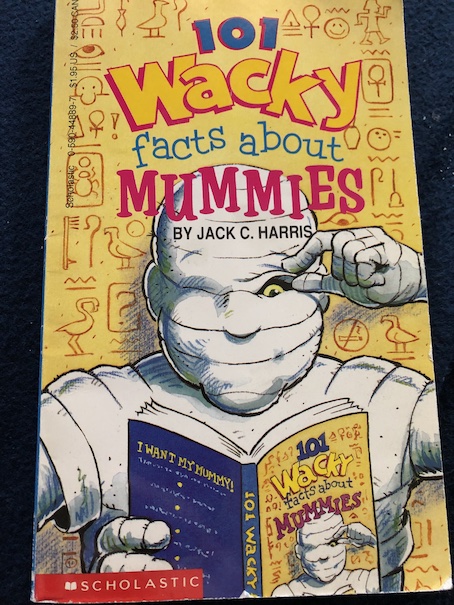
101 Wacky Facts About Mummies by Jack C. Harris, 1991.
This is a book of fun facts about mummies, particular ones from Ancient Egypt, but also ones from other parts of the world. Some of the facts and trivia have to do with the way mummies are made, and others have to do with the discoveries of mummies in modern times.
Here’s just a sampling of the kinds of facts the book offers about mummies in each section:
Will the Real Mummy Please Lie Down? – Basically introduces what mummies are and basic methods for making them and mentions that they’re thousands of years old and that many still have fingernails and toenails.
Egyptians: The Mummy-Making Masters – Facts specifically about Egyptian mummies, including the fact that the Ancient Egyptians never wrote a guide to how to make mummies and few sources have been found with any description of the process, so no one knows precisely what combination of preservatives they used.

Wrap Session! – More about how Egyptians made mummies, including how they removed bodily organs and stored them separately from the body, probably throwing away the brain because they thought that the heart was more important, believing it to be where intelligence and memory were stored. Sometimes, mummies were also painted in different colors to indicate if they were male or female – males were painted red, and females were painted yellow. Fingernails and toenails might also be capped with gold.
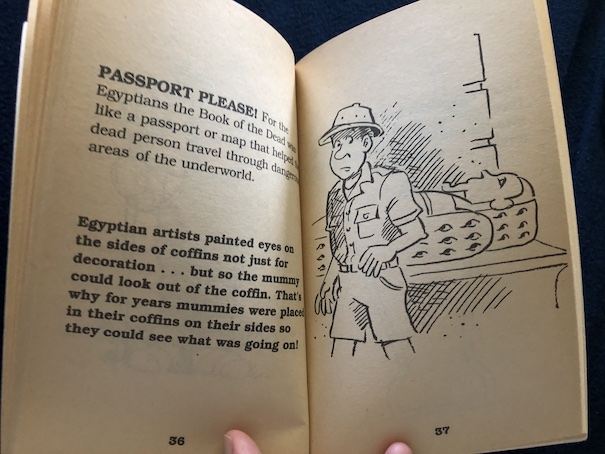
The First Mummy-Wrappers – This section is about the Egyptians who embalmed mummies. It was a profession that was generally passed down through families, and they lived in a special area of their city because other people didn’t want to live near people who handled dead bodies for a living. However, the embalmers often had servants or slaves who would be made to do the worst parts of the embalming.

Tomb It Make Concern – This section is about the construction of pyramids and tombs. Because they took years to construct, pharaohs would start the construction of their own tombs immediately on taking the throne.
Farewell, Mummy Dearest – This section talks about funerals, mourners, and what Egyptians believed about the afterlife.
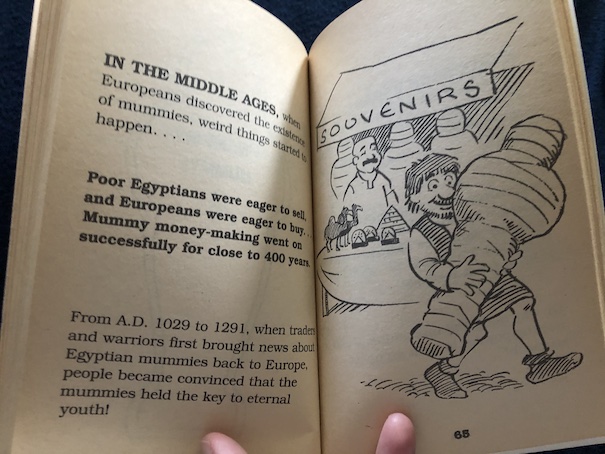
I Want My Mummy! – This section discusses things later people did because they were fascinated by ancient mummies. Sometimes, poor Egyptians would dig up mummies to sell or create fake mummies to satisfy demand. Sometimes, mummies were used in medicines because people believed that the secrets of their preservation could be used to heal the living or help them maintain their youth. During the 19th century, some people would hold “mummy unwrapping” parties, where they would show off and unwrap a mummy they had purchased.

The Chinchorro Connection – This section is about South American mummies.
Natural Beauties! – There are natural conditions that can preserve human bodies, like the cold in high mountains and the acids in peat bogs.
Better Left Shut: The Tomb of King Tut – King Tut’s tomb is one of the most famous Ancient Egyptian tombs because it was relatively undisturbed when modern people found it.
The Curse of King Tut’s Tomb – A series of strange and unfortunate events that happened around the time of the discovery of King Tut’s tomb led to the rumor that the tomb was cursed.
The book is available to borrow and read for free online through Internet Archive.
 Jestress's Forgotten Books and Stories