
The Secret is Out: True Spy Stories by Teri Martini, 1990.
This is a non-fiction book about famous spies in history. It begins with a discussion of spies in general and asks the question of whether spies are heroes or villains. The answer depends on which side they’re on and which side you’re on. Spies around the world and throughout history have been engaged in similar work, using similar tactics, although technology has changed the profession in modern times. Even spies on opposite sides of a conflict use the same skills and tactics, they just employ them for the benefit of different countries or causes.
The book is currently available online through Internet Archive.
The stories contained in the book:
 The Gentleman Spy — This is the story of Captain John Andre and General Benedict Arnold during the American Revolution. John Andre was a British officer who was executed for his role in helping Benedict Arnold defect to the British side.
Abraham Lincoln’s Personal Spy — The famous Pinkerton detective agency, the first detective agency in the United States, played an important role in the American Civil War.
The Spy with “the Delicate Air” — Spies were not always part of an official organization. Even a civilian could turn spy in the name of a cause she believed in as Belle Boyd did during the American Civil War.
The Black Chamber — In the early 1900s, agents of the Austro-Hungarian Empire tracked down a mysterious agent in the pay of Russia and discover that the person they were looking for was the man who had once been in charge of their own organization.
The Eye of the Morning — Mata Hari was one of the most famous spies of all time, although she wasn’t really successful. It was more her reputation as a dancer and the manner of her death that made her famous.
 The Phantom of the Desert — Lawrence of Arabia was actually Thomas Edward Lawrence, a British army Captain. He helped the Arabs to fight against the Turks during WWI.
The Spy without a Country — A poor young man from Hungary with a habit of telling tall tales left home to seek his fortune and eventually ended up becoming a Member of Parliament in Britain under the name of Trebitsch Lincoln. However, when Trebitsch Lincoln was in need of money during WWI, he decided to turn to spying.
Mincemeat Swallowed Whole — This is one of my favorite true spy stories! During WWII, the British concocted a scheme to give false information to the Germans using a dead body that supposedly was a drowned British marine carrying important documents.
The Clenched Fist — Fritz Kolbe spied for the Allies from within Hitler’s foreign office during WWII.
The Third Man — Harold “Kim” Philby was a spy for British intelligence during the Cold War, but he was secretly working for the Soviet Union.s
The Spy Next Door — Colonel Rudolf Ivanovich Abel was a Russian spy who posed as an ordinary American, Emil Goldfuss, in New York City. After he was captured, the Americans decided not to execute him, although that was the usual punishment for espionage. Instead, he was held prisoner until he could be used for the famous prisoner exchange where he was traded to the Russians for the captured U-2 pilot, Francis Gary Powers.
 The Codebreaker Kids by George Edward Stanley, 1987.
 Mystery of the Secret Message by Elizabeth Honness, 1961.

 Fudge-A-Mania by Judy Blume, 1990.
 Mystery on Taboga Island by Patricia Maloney Markun, 1995.
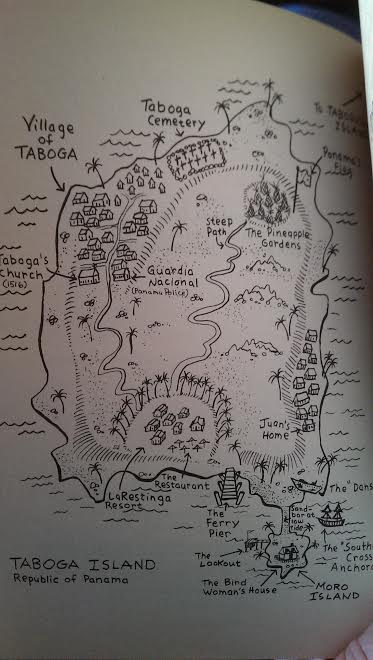 They also introduce Amy to Madame Odelle, who people call The Bird Woman because of all the birds she keeps around her house. She is a widow who lives alone and hardly ever sees people, but she invites the children in and when she learns that Amy is interested in art, she shows them a special painting that her family has had for generations. Madame says that her grandfather bought the painting years ago from a traveling Frenchman who was in need of money. Amy thinks that it looks like one of Paul Gauguin’s paintings, and she knows that some of his work is unaccounted for. However, the initials on the painting are PGO. What could the ‘O’ stand for?
 In the Kaiser’s Clutch by Kathleen Karr, 1995.
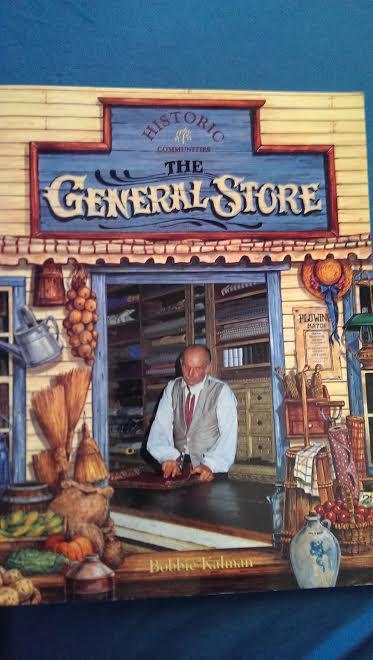 The General Store by Bobbie Kalman, 1997.
 Store owners also had to decide how much they should charge for each item or how much they would be willing to take in trade. Farmers often bartered for goods with the produce from their farms, and it was common for store owners to use a form of credit to keep track of what their customers owed and what they owed to their customers. Farmers would typically sell their goods at harvest time, and the store owners would give them a certain amount of credit at their store, based on what they thought the farmers’ produce was worth. Then, the farmers could use the credit on their account at the store until the next harvest and selling time. If a farmer ran out of credit before the next harvest, the store owner would usually extend credit at the store to the farmer to allow him and his family to buy some necessities, knowing that the farmer could make up for it when he came to sell his next batch of produce.
 Another odd kind of code that the book mentions was the kind that people would use on mailed letters. Instead of the sender paying the postage, as they do now, people receiving letters were supposed to pay for them when they picked them up from the general store. If a receiver returned a letter unopened, they wouldn’t need to pay anything, so some people would try to cheat the system by writing a message in code on the outside of the envelope so the receiver would know the most important part of what the writer wanted to tell them for free.
 Colonial Crafts by Bobbie Kalman, 1992.


 Going to School in 1776 by John J. Loeper, 1973.
 These explanations are told in story form, rather than simply explaining listing the ways children could live, learn, and go to school, trying to help readers see their lives through the eyes of the children themselves. The children’s lives are affected by the war around them. As the book says, many town schools in New England were closed during the war, so the students would attend “dame schools” instead. A dame school was a series of lessons taught in private homes by older women in the community. In other places, such as cities like Philadelphia, official schools were still open. Discipline was often strict, and school hours could be much longer than those in modern schools. Sometimes, children would argue with each other over their parents’ positions on the war.
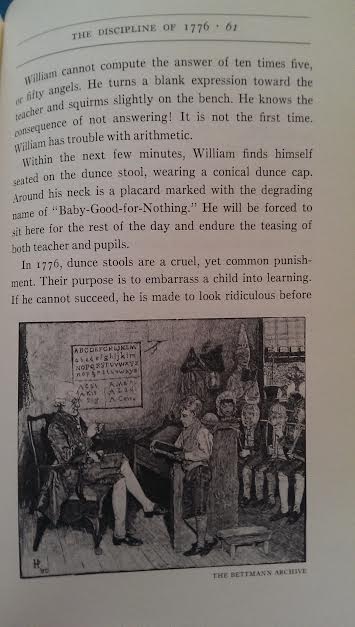 There were different standards for what girls and boys were expected to learn because their learning was guided by what they were each expected to do with their adult lives. A typical school might teach boys subjects like, “writing, arithmetick [sic], accounting, navigation, algebra, and Latine.” Generally, “reading, writing, arithmetic, and religion” were common elementary school subjects. Latin lessons and other advanced subjects were typically for boys who planned to become lawyers or clergymen. Girls were likely to receive little formal education beyond reading and writing, and black people were less likely to receive even that.
 Trapped in Time by Ruth Chew, 1986.
 Franz had only joined the army in the first place because his parents were dead, and he didn’t know what else to do. Now, he has to find a new place to live, somewhere where there won’t be other Hessians who would recognize him as a deserter. Andy and Nathan also have problems because they’ve now realized what time they’re in, and they don’t know how to get home. The watch no longer seems to work.
 Jestress's Forgotten Books and Stories