This is the first book in a short series of spooky mysteries for children featuring Sherlock Holmes.
One foggy night, a woman named Laura Coffin comes to Baker Street to see Sherlock Holmes, and his friend, Dr. Watson. She’s very worried about her uncle, Professor Sloane Coffin, who is an Egyptologist, living in Scotland. He’s been very ill and is likely to die, but Laura is increasingly alarmed by his mental state. Her uncle has come to believe in the Ancient Egyptian religion and believes that, when he dies, he will return from the dead. He thinks this power to return from the dead and live forever will come from a diamond he found in a tomb in Egypt called the Eye of Osiris. Laura and her uncle’s doctor, Dr. Cabot, have also come to suspect that her uncle’s medical state may be due to poison, although they’re not sure who could be poisoning him. Laura has come to Sherlock Holmes because the local authorities don’t believe her.
The most likely suspects for poisoning the professor would be his lawyer, Mr. Grizzard, who has been staying in his house and seems to have a sinister and unhealthy influence over the professor; the professor’s manservant, who Laura suspects of plotting to steal her uncle’s diamond when he dies; and a mysterious Egyptian man who has been staying nearby and seems to be lurking around the professor’s property for unknown reasons. Sherlock Holmes promises Laura that he and Dr. Watson will come to Scotland and investigate her uncle’s condition. Privately, he tells Dr. Watson that he thinks that there is something else that’s bothering Laura, something that she’s not telling them.
When they arrive in Scotland, Laura is glad to see them, although Mr. Grizzard isn’t. Laura introduces them to Dr. Cabot and her uncle. Dr. Watson doesn’t recognize the disease that the professor is suffering from, and Dr. Cabot says that he can’t figure out why the professor is so sick. Based on the tests he’s done, the professor really shouldn’t be this bad, but he does look like he’s dying. The professor accuses his niece and everyone else of only being concerned about his diamond. The professor confirms that he believes everything that his niece said earlier. He says that he believes in Ancient Egyptian gods (he calls them “gods of darkness”, which doesn’t seem scholarly), and he believes that, through his diamond, they will bring him back to life, and he will live forever.
Soon after Holmes and Watson meet the professor, he suddenly dies. Mr. Grizzard explains the professor’s will and final wishes. Laura is the professor’s primary heir, but she cannot take possession of the estate until she is 21 years old, so Mr. Grizzard will be in charge of the estate as executor until then. The professor had an Egyptian-style tomb built in his backyard, and his wish was to be buried there, along with his diamond. Mr. Grizzard makes certain that the professor’s requests are carried out, including the requirement that the tomb must be able to unlock from the inside.
Holmes spots a man spying on the funeral. He and Watson take turns watching this man as he seems to be observing the tomb and waiting for something. As Watson watches this man during a storm, he sees the door of the tomb open and the professor come out! Unfortunately, Watson is knocked unconscious by a falling tree branch. When he wakes up, there is no sign of the professor, and the man who was spying on the tomb has been murdered!
Did Watson really see what he thought he saw? Did the professor really rise from his tomb and kill the man watching him? Why was this man watching the tomb in the first place? What will the professor do now, and what does he want?
My Reaction
When I first got this book, I wasn’t quite sure what to expect. Pastiches can take familiar characters in some unusual directions, and I had read a review criticizing this series for adding supernatural elements and Christian themes that weren’t found in the original Sherlock Holmes stories. I thought that the story would probably be a pseudo-ghost story, somewhat like Scooby-Doo mysteries, where it seems like something supernatural is happening, but there’s actually a rational, more physical explanation. However, I wasn’t completely sure for most of the book whether that would be the case or not. There’s room left for readers to wonder whether Professor Coffin has really risen from the dead or not.
For those who prefer the ghosts to have logical explanations … you won’t be disappointed. There is a rational explanation for everything that happens in the story, and there are multiple people who could be good candidates for the villain behind everything that happens. Some of my suspicions turned out to be correct, but there are actually multiple villains involved, which complicates the situation and offers surprises for readers.
The other reviewer was right that there are Christian themes in the story. The Christian themes don’t really come into the story until the end, when Holmes and Watson are discussing the case with Laura Coffin. Laura asks why God allows people to behave wickedly. Holmes and Watson say that it’s not so much a matter of God allowing it as people choosing to commit evil deeds, and reassuring her that, sooner or later, everyone faces the judgement of God. Laura feels disillusioned about some of the people she trusted, but they also reassure her that, as a wealthy young heiress, she has her life still ahead of her to enjoy, and she will find better people. The religious talk and the quote from the Bible do seem a little out of character because I can’t recall the characters focusing on religious morals in the original stories so much as the deductive process, but I didn’t think it was bad. It was just a brief conversation, not overdone. If the characters had talked that way all the way through the book, it might have been a bit much, but it seemed plausible enough for a brief conversation on the subject.
The themes of the story reminded me of the Sherlock Holmes computer game The Mystery of the Mummy, but the story in that computer game isn’t the same one in this book.
The FunCraft Book of Spycraft by Falcon Travis and Judy Hindley, 1975, 1976.
This book is a part of a series of craft and hobby books that was first printed in Britain. It’s meant for kids who like to play at being spies, and it teaches kids how to use secret codes make disguises, and other tips and tricks for being a spy.
Much of the book focuses on different types of secret codes and techniques for sending secret messages. In fact, I would say that there is more about secret codes and messages than there is about anything else, but what they have to say is interesting. Most of the codes in the book are fairly easy, which is good for kids who are just beginning. The book explains popular codes like the pig-pen code and gives instructions for making simple code machines, like the popular code wheels for alphabet shifts. However, I enjoyed the variety and creativity of other codes and methods of sending secret messages, like the code based on music notes and the suggestion of using clocks or watches to represent semaphore figures.
The book not only explains some well-known and standard codes and signals, like semaphore and Morse code, but also explains how to adapt these codes in new ways. Morse code messages could be shown in a sequence of knots on a rope or in the placement of objects in a picture.
Some methods of sending secret messages don’t rely on codes so much as pre-arranged signals, like the placements of certain objects or arrangements of certain colors. These objects or color patterns might look completely ordinary to most people, but they can have special meanings to those who understand what each signal stands for.
The book also covers other topics related to spies, like how spy rings are organized, where messages can be concealed, types of equipment spies use, how to make maps, how to spot and interpret clues, and how to set traps.
There are also disguise tips. The book points out various ways that people can make themselves look different, like changing the way they comb their hair, changing their hair color, or trying to make themselves look older or fatter. One piece of advice about changing your skin tone by rubbing talcum powder on it to make it look lighter or cocoa powder on it to look darker sounds messy, and I’m not sure I’d recommend it, but the other parts seem okay. There are instructions for making a false beard, nose, and glasses and a bald-headed wig. None of these would really be convincing disguises, but they could be entertaining for kids to try to make and might be useful for Halloween costumes.
There is also a spy-themed board game in the book where one player controls a pair of spies and the other controls a pair of spycatchers. The player controlling the spies has to evade the spycatchers in order to win.
Overall, I think that the book is pretty entertaining, and kids who are really into spies and spy games would find it fun. With all of the different codes, disguise ideas, and the board game, there are plenty of fun activities to try!
The book is available to borrow and read for free online through Internet Archive (under an alternate title – The Knowhow Book of Spycraft).
Tom and Sidney Weston, a pair of identical twins, are excited about their first big summer jobs as service boys at a fancy resort hotel. Tom is thinking that the work is going to be easy and that they’ll have plenty of time to have fun, but then, he starts worrying about what kind of fun Sidney is going to try to have. Sidney mentions that they might see some interesting people at the hotel, and Tom remembers that Sidney thinks of himself as a detective and is always on the lookout for spies and criminals. It’s a real problem because Sidney is perpetually wrong in his suspicions about everything and everyone he tries to investigate. He’s gotten into trouble before for making false accusations, and because the two boys look alike, Tom sometimes gets blamed for things that Sidney does. Tom is really looking forward to this summer, and he’s determined that Sidney isn’t going to ruin their summer jobs.
Right from the first, Sidney is in detective mode. As the boys are picking up room service dishes, Sidney tries to study the dishes to make deductions about the people in each room. Tom tries to get Sidney to stop because their manager, Walter Parson, is a serious man with little patience, and he’s already annoyed that he has trouble telling the two boys apart. Sidney is excited when a hotel guest complains that her purse is missing, thinking that he’s found a case to investigate, but while he interviews her for details and pressing for details about a primary suspect, Tom just notices that the lady’s purse is still in her room. It wasn’t stolen, just misplaced. Tom uses this incident to emphasize to Sidney that he needs to give up this detective game because it only causes problems.
However, unbeknownst to the boys, there are real spies at the hotel, and they’re interested in the nearby air base, just like Sidney speculated might happen. The readers learn who the spies are right in the beginning, before the boys even know that there are spies. It’s a little like a Columbo mystery, where the identities of the villains aren’t a secret, and part of the suspense of the story is how the heroes will figure it out and prove it. Even though we know right away who the main villains are, Sidney is clueless.
Sidney continues investigating various guests as though they’re all spies or criminals, although he doesn’t seem at all suspicious of our real villains. He becomes convinced that Lawrence Waghorn is a spy when he’s actually a television writer who’s working on a script for a show about spies. He convinces the guest who temporarily lost her purse, Miss Fuller, that another guest, Mr. Kitzel, is a suspicious character, and she starts following him around and spying on him. In turn, Mr. Kitzel gets the idea that Miss Fuller either has an awkward crush on him or that she’s investigating him because he cheated on his taxes. He’s very nervous because she keeps following him around and tries his best to avoid her. Sidney steals his boss’s dog because he’s under the false impression that the dog is being trained to help the spies carry out their mission, and he seriously wants to inform the Prime Minister of Canada (where they live) and the President of the United States. Tom keeps trying to thwart his brothers’ various schemes and confiscate the spy equipment that he’s hidden around their hotel room. Confusion abounds, although some of its helps to inspire Waghorn, who has been suffering from a case of writer’s block.
Meanwhile, the real spy, Richard Knight (a pseudonym, county of origin unspecified), is trying to get his hands on a new airplane being tested at the nearby air base. He’s brought along a pilot named Bert Cobber. Cobber actually has military training and trained alongside the pilot testing the plane, “Wings” Weinberg. Weinberg has nerves of steel … except about anything related to his cadet days, having been partnered with Cobber, who is a skilled but reckless flier and nearly got him killed on many occasions while flying drunk, forgetting to put sufficient fuel in the plane, and repeatedly crashing. Weinberg hasn’t seen Cobber for years, but he practically has a nervous breakdown every time he relives those memories. A friend of Weinberg’s assures him that, if Cobber is really as reckless as Weinberg remembers, he probably got himself killed long ago, but Weinberg has the uneasy feeling that Cobber is still around somewhere.
Although many characters have the overall situation wrong, I appreciated those moments when some people got certain things exactly right. When Miss Fuller overhears Mr. Parson yet again mistaking Tom for Sidney and also quizzing him about why he’s getting mail from different government agencies, she steps up to tell him to stop his bullying, reminding him that mail is private and that the boy doesn’t owe him any explanation about his personal mail just because he works for him. She also tells him that he’s talking to Tom, not Sidney, and that he’s a fool for getting that wrong.
I also love it that the different government agencies that Sidney has been writing to already know who he is because Sidney has submitted many other inquiries to these various agencies. They’re all familiar with Sidney’s false accusations, and in their response letters to Sidney, they express both amusement for Sidney’s wild escapades and sympathy for whatever poor sap Sidney is suspicious of today. Sidney is never discouraged by their criticism of his wild theories or their requests for him to stop writing. It’s getting to the point where some law enforcement agencies are so fed up with Sidney that they wish they could find something to arrest him for.
Meanwhile, Richard Knight has noticed Sidney’s investigations, although he is unimpressed because he knows that Sidney is way off base. However, he hasn’t fully reckoned with the lengths Sidney is prepared to go to “save the western world”, and Sidney’s schemes interfere with Knight’s in completely unexpected ways.
My Reaction
I remember reading this book when I was in middle school, and I loved it. I remember thinking that it was really funny, although I’d forgotten a lot of the details since then. As an adult, I find Sidney more frustrating than I remember, and I feel sorry for poor, long-suffering Tom. As with the MacDonald Hall books by the same author but with different characters, Sidney’s crazy schemes end up working out for the best, and he ultimately saves the day, even though it’s largely by accident.
There are a couple of changes that I wish I could make to the story. First, I liked it that, while Mr. Kitzel isn’t a spy or a major criminal, he does have one guilty secret: he cheated on his taxes by claiming his dog as a dependent daughter. He becomes convinced that Miss Fuller is onto him for that. However, I’d like to create even more semi-guilty secrets for various guests at the hotel so that Sidney can be almost correct about some things while still missing the most suspicious person of all. As it is, Sidney is seriously way off base because he’s paranoid and delusional, although in a comedic sort of way. I don’t like characters that are intentionally stupid, so I’d like more secrets and petty crimes among the more innocent guests so Sidney can be almost right about them.
I’d also like to see Sidney develop some self-awareness during the course of the story. He is completely oblivious to his own failings and false conclusions and also to the way other people react to him, even when they tell him, in writing, that they don’t want to be bothered with his wild goose chases anymore. That’s part of the comedy of the story, but I find it a bit frustrating. Sidney does almost come to realize how other people look at him when he tries to persuade Miss Fuller that he was wrong about Mr. Kitzel being a spy, but she’s as impervious to correction as he is, so he ends up just letting her continue barking up the wrong tree. I think it would have shown more character development and maybe even have been more funny if Sidney comes to realize how Tom feels, trying to reign him in, if he had to try to control someone even more overly paranoid and determined than he is. The book ends well, but I think it would have been even better if, at the end, Sidney apologizes to Tom for everything he’s put him through, saying that, while everything worked out for the best, he realizes that he’s done a lot of things wrong and that he still has a lot to learn. Then, just when Tom thinks that things are going to calm down, he can see Sidney seriously reading a book about espionage or interrogation techniques and making notes or signing up for a summer correspondence course in criminal investigation, hinting that Sidney’s adventures aren’t over yet and leaving it open about whether he’s going to really learn something practical or just graduate to the next level of crazy.
The Bodies in the Bessledorf Hotel by Phyllis Reynolds Naylor, 1986.
Officer Feeney is the first person who suggests that, someday, there might be a dead body at the Bessledorf Hotel. The hotel is coincidentally located next to the local funeral parlor, which is why the subject of dead bodies comes up, and Officer Feeney has a way of suggesting frightening things that scare Bernie Magruder, son of the hotel’s manager. Officer Feeney’s reasoning is that most people die in bed, so it only makes sense that some of them would be hotel beds. The hotel has 30 rooms, and with people coming and going, it’s surely just a matter of time before a guest dies there. It’s a morbid thought, although Bernie reasons that Officer Feeney is overestimating the number of people who pass through the hotel because it isn’t always full and some of the guests are long-term residents.
Still, Bernie gets a shock after he returns to the hotel, and the cleaning lady, Hildegarde bursts in on him and his parents, hysterical about finding a body in a bathtub of Room 107 with all his clothes on. Bernie’s father tells his wife to call Officer Feeney to write a report of the death and considers whether they can remove the body secretly, perhaps in a laundry cart, to avoid bad publicity for the hotel. Unfortunately, some of their guests already heard Hildegarde screaming about a dead body, so word is out. They want to know if it’s a case of murder or suicide and how it’s being investigated, and one of the long-term guests, who is a poet, has already written a short poem for the occasion.
However, by the time they all get to the room where Hildegarde saw the body, it’s gone. There is nothing in the bathtub, not even water. Officer Feeney shows up and demands to know what’s going on, and Hildegarde insists that she really saw something. The Magruders believe her, but they have no explanation for where the body could have gone. The guests speculate about body-snatchers and ghosts.
All they know about the man who occupied that room is that he gave his name as Phillip A. Gusset, he checked in the evening before, and he said that he would be leaving the next morning. Officer Feeney asks them if there was anything odd about him, like if he seemed nervous or unwell. Nobody remembers anything like that. They remember that he had a mustache and a hat with a red feather and just a single bag with him. He did kind of make Bernie’s parents uneasy, and he seemed to have a strange scent about him, although they find it difficult to describe what it actually smelled like. Officer Feeney says that, without a body or any evidence that something has happened, there doesn’t seem like anything to investigate. Bernie’s father is relieved that there won’t be any report of a murder or death occurring at the hotel because, otherwise, the owner might fire him. Bernie remembers that the man’s slippers were still in the room and goes to get them in case they’re evidence. When he gets there, he discovers that the slippers have mysteriously disappeared.
Bernie’s friends, Weasel and Georgene, think that people will probably never want to rent that hotel room ever again, and Bernie’s father renumbers the rooms so there will be no Room 107. Weasel convinces Bernie and Georgene to help him search the area for the body, thinking that whoever took it would most likely want to dispose of it quickly. They search down by the river, but they only find a bag of garbage that Bernie’s younger brother, Lester, left there to trick them.
Even though there’s no evidence that anything happened and the police aren’t investigating the situation, the incident of the disappearing guest appears in a newspaper in Indianapolis, where the hotel owner, Mr. Fairchild, lives. Mr. Fairchild calls the hotel to demand to know what’s going on. Mr. Fairchild says that he want the hotel to put on live entertainment in the evening on weekends to draw attention away from the incident and bring people in. However, he expects Bernie’s father to hire the entertainment out of his own money since Mr. Fairchild thinks this situation is his fault, and most entertainment is out of the Magruders’ price range. Fortunately, Bernie’s father has joined a barbershop quartet, so his group can do their singing at the hotel.
The singing goes well, but a strange woman with orange hair checks into the hotel and keeps making comments about dead bodies there. Then, one of the waiters finds this woman dead in her room, Room 321. Just like the first body, this body also vanishes. By this time, Bernie’s father suspects that the woman faked her “death” just to scare the waiter and ran away as soon as he was gone. As Bernie’s parents investigate the room, they notice an odd smell that reminds them of the first guest who disappeared. The smell really unnerves his father, but strangely, not his mother. It’s a faint smell that’s difficult to identify, but it conjures different images for both of them. Bernie’s father says it reminds him of sweaty clothes, cigars, and pastrami, while his mother says it makes her think of flowers and a porch swing in the evening.
The Magruders aren’t sure why someone wants to fake deaths at the hotel, but this latest faker didn’t pay for either her room or dinner, and somehow, the newspaper has heard about it and reported it again. Mr. Fairchild is angry, and Bernie knows that they need to figure out who the prankster is before they do it again!
The book is part of the Bessledorf mystery series, also known as the Bernie Magruder series. It is available to borrow and read for free online through Internet Archive (multiple copies).
My Reaction
Attempts to investigate the mystery alternate with the Magruders’ attempts at cheap hotel entertainment. The barbershop quartet works until one of the members gets laryngitis. Some of the guests start a food fight when the entertainment is bad. Then, Joseph gets some of his friends from the veterinary college who play instruments to come. Personally, I like the part where Lester suggests that they hold a haunted house at the hotel and take people on tours of the rooms where “dead” bodies have been found. They reject that idea, but there are hotels and bed-and-breakfasts that give haunted tours, and people come to investigate ghosts. That actually can be a successful gimmick. I once intentionally stayed in a supposedly haunted hospital that had been turned into a hotel in an old western mining town. A possible murder once occurred there, but I enjoyed the visit.
When a new guest shows up at the hotel with that same, strange scent, Bernie knows that it’s their culprit, back again in another disguise. Now that he knows who to watch, he starts planning how they’re going to trap the person.
I had a couple of ideas in beginning about who was doing all of this and why, but there are some surprising twists in the story. Bernie’s first attempt to catch the villain is weirdly thwarted by the discovery of a dead body that is actually a real, dead person. It’s not a guest; it’s a body stolen from the funeral parlor next door. The bad guy decided to change his tactics.
One of the clues to the person’s identity is that mysterious smell and the way it has an opposite effect on Bernie’s parents. It irritates Bernie’s father but makes his mother feel strangely nostalgic. The truth is that they’re both remembering the same thing or the same person, but although they can’t remember right away exactly what they’re remembering, they have very different feelings about it.
Surprisingly, although Mr. Fairchild threatens to replace Mr. Magruder with another manager, he actually shows up at the hotel himself and discovers that he likes playing detective and figuring out what’s going on. He’s also impressed with the way Mr. Magruder stayed to finish managing things even after he told him that he was planning to hire someone to replace him, and that secures the family’s position.
The Case of the Painted Dragon by by George Wyatt (Charles Spain Verral), 1961.
Jimmy and Brains are on their way to school when a strange man in a car stops and asks them if they know where he can find a Japanese kid. (He uses the derogatory terms “Jap” and “Nip”, and Brains disapproves. Also, the man is very unspecific about which kid he’s looking for. He offers no names, just that he’s looking for a Japanese boy about their age The town where the boys live is a fairly small college town, so I guess it’s supposed to be reasonable that there would only be one boy matching that description. I grew up in a larger university town, so the idea of there being only one person who could match any description and just expecting random people to know who it is seems really odd to me.) Brains just says that they don’t know anybody with Japanese ancestry, and the man drives away.
After the man leaves, the boy talk about how suspicious he was. They really don’t know who he could be looking for. The last Japanese family to live in their town was the Yamadas, but Mrs. and Mrs. Yamada were killed in a car accident the year before. (It was a point in the book’s favor that Brains doesn’t like derogatory racial terms, but the point is lost quickly when Jimmy is describing Mr. Yamada, who taught art at the boys’ school, and he says that Mr. Yamada “wasn’t one of those ‘inscrutable orientals’ you’re always reading about.” He says that Mr. Yamada was friendly and also coached the school’s swimming team. It’s nice that Jimmy liked Mr. Yamada, but the way he says it sounds a little back-handed. I suppose it’s a sign of the times when this book was written that the author thought it was reasonable for people, even kids, to “always” be reading about “inscrutable orientals”, but on the other hand, I’ve read other books from this time period and earlier that weren’t like that, so I’m inclined to think that it’s not really “always” and everyone.) However, the boys don’t remember the Yamadas having a son their age, so they doubt there’s a connection. They’re concerned because they think that the suspicious stranger might have bad intentions toward the kid he’s looking for.
After the boys get to school, Jimmy sees that stranger driving by the school, and he gets worried. Either the stranger is still looking for the Japanese boy, or he’s looking for Brains and Jimmy. Brains thinks that the best thing to do is try to find the Japanese boy before the man does. However, Brains doesn’t want to tell their principal or teacher about the stranger or the boy. Jimmy worries that maybe the stranger made up the Japanese boy as an excuse to get to him and Brain, and he decides to tell the principal about the stranger in the car, and the principal goes outside and demands that the stranger tell him who he is and what he’s doing, hanging around the school and scaring the students. Unfortunately, he confronts the wrong person in the wrong car, which is an embarrassing situation. (He did the right thing even if he confronted the wrong person. I give him credit for that, but they need to have a reason why the school authorities don’t do anything about the weirdo scouting the students.)
In the boys’ next class, they meet a new student, Mikko, who may be the Japanese boy that the stranger was looking for. The boys make friends with Mikko, inviting him to come to baseball practice with them. They want to warn him about the stranger, but before they talk to him about thr man who seems to be looking for him, they spot the car following them again. Mikko spots the car, too, and the boys ask him if he knows the driver. Mikko says, no, the man is a stranger. Aside from the people at school, the only people Mikko knows in town are Mr. and Mrs. Bevans, the people he’s staying with. Brains makes up a story about why the man might be following them because he doesn’t want to alarm Mikko too much and also because he doesn’t want anybody calling the police until he and Jimmy have had a chance to investigate the situation themselves. (This is a selfish move – Brains just wants a case to investigate, and he doesn’t want to share the case with the proper authorities. But, again, the story needs to provide a reason for Brains and Jimmy to handle the investigation without adult help.)
Jimmy’s mother knows about Mikko’s background and tells him about it when he gets home. It turns out that Mikko is the Yamadas’ son, but until recently, he had been living with relatives in Japan. Mr. Yamada was born in the US, but he worked in Army Intelligence during WWII, which is when he went to Japan and met his wife. Mikko had been born in Japan and was going to school there, but the Yamadas planned to move to the US permanently. Mr. and Mrs. Yamada had come first to get established, but they died in the car accident before they could bring Mikko to join them in the US. However, Mr. Yamada had wanted his son to become an American citizen, like him, and get an American education. The Yamadas had boarded with Mr. and Mrs. Bevans and became friends with them. The Bevanses’ have no children of their own, and they are considering adopting Mikko and giving him the American life that his father wanted him to have.
There is one adult who knows about the mysterious car following Mikko: Yama, an old family servant who accompanied Mikko from Japan to the US to make sure that he gets settled in his new home. Yama is a former sumo wrestler and a formidable man, and when Mikko tells him about the mysterious stranger in the black car, Yama says that he will protect him. However, when the Bevanses’ house is ransacked while the boys are playing baseball and they return and find Yama looking around Mikko’s room, they boys start to suspect that Yama may be involved with the mysterious stranger in some way. At least, he seems to know more than he wants to say about the situation because he refuses to call the police to report the ransacking.
After some further research, Brains and Jimmy learn that the Yamadas’ car accident might not have entirely been an accident, and Brains suspects that everything that has happened may relate somehow to Mr. Yamada’s former work in Army Intelligence.
My Reaction
This is the last book in the Brain Benton series, but it’s also more of a mystery than the previous books. In most of the books, it doesn’t take the boys long to realize who the villains are, and the mystery is more about how they’re going to prove it and stop the bad guys. However, in this book, Brains and Jimmy really do start off completely in the dark. First, they have to learn who the Japanese boy is that the strange man is looking for, and then, they have to learn the history of Mikko and his family. Brains and Jimmy do genuine investigative work, starting with old newspaper stories about the accident that killed Mikko’s parents. Little by little, they begin to reconstruct the past and learn why someone is looking for Mikko and what Mikko has that they want. Even when the boys know who the bad guys are and what they’re after, there is still the puzzle of where Mikko’s father hid it before he died.
I enjoyed the mystery in the book, but I didn’t like some of the ways Jimmy talked about Japanese people. I think it was good that he noted that derogatory terms are inappropriate, and I appreciated that he liked Mikko pretty quickly and pointed out good things about him. Those are good points. It’s just that, sometimes, even when Jimmy speaks favorable about some of the Japanese people in the story, it comes off sounding a little back-handed, like when he says that Mr. Yamada was actually a really nice and friendly guy and not “inscrutable” like characters Jimmy has heard about. I can see that it’s a positive point that someone who has been given a negative impression about certain types of people can consciously notice that the reality is both different and better than what he’s heard before. I think Jimmy is moving in a good direction in his attitudes. It’s just that compliments sound flat when they’re accompanied by a negative or implied negative. It’s like the difference between saying “He’s a really nice guy” vs. “He’s a really nice guy for being the kind of person I’ve always heard was really sinister.” It just adds an uncomfortable twist on the sentiment. I know that the reason Jimmy talks like this is because this book was written during the 1960s, when racial attitudes were changing, and the author probably felt like it was necessary to acknowledge old stereotypes, but I still don’t like it.
The Case of the Waltzing Mouse by by George Wyatt (Charles Spain Verral), 1961.
The Crestwood Garden Club holds an animal show to raise money for their Community Camp Fund. Brains and Jimmy enjoy seeing all of Professor Gustave’s animals, but they become concerned when a seal knocks over a creel where its fish are stored, and they see that there is a large amount of cash concealed inside. Professor Gustave says that he carries that much cash with him because he is always traveling from town to town with his animal show and can’t depend on a single bank for his money.
Brains still seems concerned about the money and the way it’s concealed, but Jimmy is hoping that Brains won’t find a mystery that will disrupt their vacation plans. Every year, they spend a few weeks at a lakeside cabin that their families rent, and all Jimmy wants to do is go swimming and fishing.
However, while Jimmy’s older sister, Ann, is driving the boys to the cabin, they come upon the professor’s trailer of animals. The animals are very upset, and the professor is nowhere to be seen. After searching the area, they find the professor, and he tells them that he was attacked by a couple of men. One of them is a guy called Blackie, who used to work for the professor, but the professor fired him because he mistreated the animals. The men were trying to take the creel with the money in it, but the professor threw it into the bushes, and they didn’t find it.
It turns out that the professor is also going to be staying at a cabin by the lake for awhile. They help him to get settled there with his animals, but Brains is still concerned that the men will be back for the professor’s money. The concern is justified because the men later attack the professor while he’s in a boat on the lake, and the creel is lost overboard. The professor is very upset, not just because the money is now at the bottom of the lake but because the money actually doesn’t belong to him. The professor says that it really belongs to someone else, although he doesn’t say who.
Brains realizes that they can get the creel back because a policeman friend of theirs is also staying at the lake and has offered to teach the boys how to skin dive. Jimmy has wanted to learn to dive and is willing to dive for the creel. Unfortunately, the situation is complicated when the men kidnap the professor for ransom, saying that they’ll let him go if the boys bring them the money.
My Reaction
There were parts of this book that I didn’t really care for. I’ve noticed that the Brains Benton books sometimes include stereotypical attitudes of boys looking down on girls or discounting their abilities. Near the beginning of the book, Jimmy’s sister Ann is trying to get the boys to hurry getting ready to go to the cabin, but Brains wants some extra time to take care of a new device that he’s just gotten. Jimmy says, “But, after all, she is a girl, and girls and women just don’t understand how it is when a fellow gets interested in something highly scientific and technical.” No, Jimmy, I don’t think that’s the issue. It’s not about not understanding how someone can find science interesting; Ann’s just in a hurry to get going. She would probably be just an impatient if you were taking extra time to pick out a different shirt or get your hair combed just right. Granted, some of Jimmy’s comments are tongue-in-cheek. When Ann later tells them to stay out of trouble because she knows that they’ve gotten into trouble with their detective business before, Jimmy mentally lists the dangerous situations they’ve been in while denying that they were really that bad. “Women! Always exaggerating!”
The mystery wasn’t too bad. We do know who the villain is from the beginning, so like the other books that I’ve read in this series, it’s more of a “howdunit” than a “whodunit.” Readers get to watch Brains and Jimmy figure out how to rescue the professor and save his money. There is one other element of the story that is more of a mystery than the professor’s kidnapping. The professor says that the money isn’t really his, and the boys see a mysterious girl talking to Blackie. Is she the one who really owns the money, and if so, what is the relationship between her and the professor?
The Case of the Roving Rolls by George Wyatt (Charles Spain Verral), 1961.
Summer has been dull, with no mysteries to solve. Jimmy doesn’t mind too much because he has other things to do, but his friend and partner in their detective agency, “Brains” Benton, is going a little stir-crazy. When they started their detective agency, they named it the Benton and Carson International Detective Agency, but so far, they’ve only solved local cases. Brains wants to find an international case to solve to justify the name. The opportunity comes when Jimmy gets a letter from his Uncle Ed, who has been living overseas.
Uncle Ed is a pilot who has been living in a fictional Middle-Eastern country called Kassabeba. In his letter, he mentions that something strange has been happening there recently, although he finds it hard to explain exactly what’s been happening. He says that, soon, the answer may be coming to the boys’ town of Crestwood, if it’s not there already. The Emir who ruled the country died under somewhat suspicious circumstances, and his half brother took over from him, but the Emir also had a son who was attending Eton at the time his father died. Apparently, the Emir’s half brother has been doing everything he can to prevent this young prince from coming home to challenge his rule of their country. Uncle Ed and some others who were friendly with the former Emir and like his son, Prince Halam, have been trying to help him, although it’s not going very well. The half brother hasn’t been coronated as the new Emir yet, but the prince’s supporters doubt they can get the prince back home before that happens in another month. Instead, they’ve decided to send the prince to Crestwood College, where Brains’s parents are teachers, seeing it as a quieter, safer place for him to finish his education. The prince’s supporters are hoping that he’ll have another chance at ruling his country when his education is complete. Unfortunately, Uncle Ed has just received word that the half brother has sent a couple of his associates to the US. It’s possible that he’s discovered where the prince is going, and his associates may be heading to Crestwood to harm the prince. Uncle Ed describes these two associates – Jujab, who is short and round with a moon-shaped face, and “the Duke”, who is tall and lanky with a horse face and claims to be British.
The prospect of helping to protect a prince from another country is exciting, and Brains has a thought about the first thing they should do. He says that, if people are coming to Crestwood from another country, probably one of the first things they would do is try to connect with someone else from their own country who is already living in Crestwood because they could use some help and support. Crestwood isn’t a big city, and there is only one other person from Kassabeba already living there, a man named Khouri who works as a cook for a wealthy woman in town. Jimmy is afraid of the cook because he’s a temperamental man, and he had a bad run-in with him at Mrs. Willoughby’s mansion. Jimmy’s been doing a little work there because Mrs. Willoughby hired him to make some shelves for a gardening show, and the cook flew into a rage at him for coming into the kitchen. However, Brains thinks it’s important that they find out if Jujab and the Duke have been to see the cook.
When Jimmy is on his way to the Willoughby estate to meet Brains there after his paper route, he is almost hit by Mrs. Willoughby’s Rolls-Royce … but there’s nobody driving it! Yet, somebody must be controlling it somehow because the car deliberately swerved toward Jimmy and then made a turn in the road. Just after the Rolls-Royce almost hits Jimmy, Mrs. Willoughby’s British butler and chauffeur, Frothingham, comes along on a bicycle, in pursuit of the car. He falls off the bike, and Jimmy helps him. Frothingham explains that he’s got to catch up to the car. He says that it was parked in the Willoughby driveway and that the hand brake was set, and he can’t understand what happened. When Jimmy says that maybe the brake just failed, Frothingham says that he doesn’t think it’s likely because it’s a good quality car and well-maintained. When Brains comes along, Jimmy explains the situation to him, and the two of them follow Frothingham to where he has found the Rolls-Royce parked and apparently undamaged.
Frothingham says that he still can’t imagine who was driving the car and just abandoned it, and Jimmy is still sure that he didn’t see anyone behind the wheel. Brains says that he has an idea about it but that this strange occurrence is a sign that something more serious is about to happen. When Frothingham asks him what he means by that, Brains asks him if he’s seen any unusual strangers around the Willoughby estate recently. Frothingham says that he hasn’t, but Brains is still convinced that the people who are after the prince have been around the Willoughby estate already and that there may be something important hidden in the car.
When the boys later see the Rolls-Royce strike a pedestrian, Frothingham is blamed. The boys are sure that he’s innocent, but they didn’t see who was driving the car, so they can’t swear to it. The boys struggle to clear Frothingham’s name.
My Reaction and Spoilers
I liked this story in the series better than the last one that I read because I felt like there was more intrigue and uncertainty. We do have two specific villains that Brains and Jimmy are looking for from the beginning – the men known as Jujab and the Duke. The characters have descriptions of them, and they know that these men pose a threat to the young prince who will be arriving soon. That means that these people haven’t actually done anything yet, but Brains and Jimmy want to find them before they do.
The incidents with the car are odd and seem like they might be unrelated at first, but they are actually part of the villains’ plot. When Frothingham was first introduced, I was suspicious of him because he seems to be British, but the man known as the Duke is known for posing as a British person. Although the characters in the story seem to have known and liked Frothingham for some time, it occurred to me that he could have been planted in Crestwood for longer than Jimmy’s uncle thought. However, that’s not the case. (Spoiler!) Frothingham is just exactly what he seems to be, an innocent man working for a wealthy local woman. In order for Jujab and the Duke to accomplish their mission, they have to establish some kind of identity for themselves in Crestwood. By making it seem like Frothingham committed a hit-and-run, they get his drivers’ license temporarily revoked so that the man known as the Duke can get hired as a temporary chauffeur for Mrs. Willoughby. Mrs. Willoughby is the one who’s going to meet the young prince when he arrives, so her chauffeur is in a perfect position for some foul play.
The boys have all the information they need to figure this out about halfway through the book, but what makes this book intriguing is that there’s more going on than just the evil half-uncle’s associates trying to get to the prince. When the prince actually arrives, the boys ask him what happens at a coronation ceremony in his country. (This is part of why the prince comes from a fictional country. Not only does the author not have to account for real people and events in a real country, but he can also make up any customs he wants for this country.) The prince describes the ceremony, including a part where the new Emir drinks spring water called the “Water of Life” from a special Golden Vial that has been used for the purpose for generations. The ceremony cannot take place without this Golden Vial, and Brains realizes that, although the prince believes that the vial is back in his home country with his half-uncle, it has actually been transported to the US. It turns out that Mrs. Willoughby’s car was originally owned by the prince’s father and that he left it to her because she was a friend of his and had admired it … and maybe because he hoped that his son would also go to her and retrieve the Golden Vial from the car. The half-uncle’s associates are not just in the US to find the prince but to retrieve this Golden Vial because, without it, the half-uncle cannot be coronated at all.
One other point I thought I would mention is that, when Jimmy first saw the car and didn’t see a driver, I thought that, for some reason, the villains installed a remote control device in the car. This book was written a few years before remote controlled cars were first sold, but with Brains interested in new inventions, it wouldn’t be out of the realm of possibility. However, that’s not the case with this story. The car does have a driver; it’s just that he’s crouched down so he can’t be seen as well. Science and invention enter the story when they realize that they can find the Golden Vial with a Geiger counter because it contains a special stone that contains radioactive material.
The Case of the Counterfeit Coin by George Wyatt (Charles Spain Verral), 1960.
One Saturday, Jimmy Carson is going around, collecting fees from customers on his paper route, when he decides to stop for a soda. To his surprise, he discovers that one of the coins he has received from a customer turns out to be something very unusual. It appears to be from a foreign country, although Jimmy doesn’t recognize what country it’s from. When someone suggests that it could be a rare and valuable coin, Jimmy decides to call his friend and detective partner Brains Benton and ask him what he thinks about it. However, as Jimmy is talking to Brains at a public pay phone, someone tries to reach into the phone booth to grab the coin! Luckily, Jimmy notices in time and yells, and the person doesn’t succeed in getting the coin. Jimmy isn’t able to see the person’s face, but he gets a good look at their hand, the person’s hand has an odd, blackened thumbnail.
It seems that the coin has greater significance for someone than just an odd foreign coin that they accidentally spent instead of American money. When Brains looks at the coin, he identifies it as an ancient Athenian coin, but he also notices that someone has used modern implements on the coin and a varnish to make it look older than it really is. In other words, the coin might at first look like a collector’s coin, but it’s actually a fake. So, if the coin is fake, where did come from, and who wants it so badly?
The boys start going over Jimmy’s route to try to figure out where the coin came from and if any of Jimmy’s customers have a blackened thumbnail. It turns out that the coin came from Binky Barnes’s house. Binky is about their age, but the boys consider him to be a nuisance because he has a way of exaggerating things and is always telling tall tales. You can’t believe a lot of things that Binky says, but the coin apparently came from Binky’s coin collection. It was a new acquisition, and his mother was the one who accidentally gave it to Jimmy when paying him for their news delivery. That still doesn’t explain who was trying to steal it from Jimmy.
Binky is upset when the boys tell him that his coin is a fake, but they point out that he’s legally entitled to get his money back from the person who sold it to him. Binky says that he bought the coin at an old junk shop owned by a man named Silas Gorme. When the boys go to the shop with Binky, they discover that Silas Gorme is the man with the blackened thumbnail who tried to steal the coin from Jimmy!
Silas Gorme is quick to offer Binky a refund in exchange for getting the coin back, but Brains confronts him about how he tried to steal the coin from Jimmy earlier and demands to know where the coin came from. Gorme finally agrees to take the boys to the coin dealer he purchased the coin from, Jeremy Dexter. Gorme tells Dexter that he wants his money back because the coin is fake, but Dexter denies selling him a fake coin. When Dexter examines the coin, he confirms that it’s fake and that it looks like the coin he sold Gorme, but he insists that the coin he sold was authentic.
During the conversation with Dexter, it is revealed that Gorme sold the coin to Binky for less than he paid when it bought it from Dexter, which looks suspicious. Then, they find the tools used for creating the fake coin in Dexter’s shop, which also looks suspicious. Dexter denies that those tools belong to him, but the situation has now become a police matter. Brains is sure that Gorme planted the tools in Dexter’s shop to frame him, and Jimmy is concerned that Dexter is in trouble because of them. Can the boys figure out what Gorme’s game really is and prove it?
The book is available to borrow and read for free online through Internet Archive.
My Reaction and Spoilers
This story has the trope of a tomboy girl who is mistaken for a boy. Jeremy Dexter has a daughter called Terry. Terry is one of those neutral names that can be nicknames for other, longer names. In this case, Terry is short for Theresa. When the boys first meet her, she’s dressed in clothes that a boy might wear and a baseball cap, and when she gets mad at the boys for getting her father into trouble with the police, she tries to hit Brains and accidentally hits Jimmy. At first, Jimmy is ready to get into a fight with Terry, thinking that Terry is another boy, but Brains stops him and points out that Terry is actually a girl. Traditionally, it isn’t considered acceptable for a boy to hit or get into a fight with a girl, so Jimmy would look bad for hitting Terry back, even though she struck first. The whole situation is something of an old-fashioned trope that’s partly there to show how bright Brains is for noticing something that Jimmy didn’t.
Terry is also a Scrappy-Doo-like character, picking fights to prove she’s tough and charging in when she’s not supposed to, messing things up. Brains and Jimmy find her annoying because of that, and frankly, so did I. A tough and intelligent girl is good and could be a real help to the boys as well as being a client, but Terry’s a thoughtless, put-up-your-dukes kind of character and doesn’t really add anything to the plot besides comic relief. Really, it’s odd for her to be the kind of character who sees fist fighting as her first resort because her father is such a gentle, intellectual type. I just don’t see the point in it.
The mystery itself seems pretty obvious. Considering that only Dexter, the boys, and Gorme are present in Dexter shop when the counterfeiting tools are discovered, it seems pretty obvious who planted them. This is one of those books where there’s less emphasis on whodunit than how they’re going to prove it. I’m not that big on most howdunit style stories, but this one does have a bit of a twist because the boy discover that Gorme is really only the tip of the iceberg. He’s not just an unethical shopkeeper selling one duplicate coin so he can sell his antique coin and have it, too. I turns out that he’s just one member of a larger counterfeiting ring, and the others aren’t happy with him for drawing attention to their activities. Brains and Jimmy infiltrate the gang’s hideout to get the proof that they need to prove what’s really going on to the authorities.
Ruth Fielding at Lighthouse Point or Nita, the Girl Castaway by Alice B. Emerson (the Stratemeyer Syndicate), 1913.
When this story begins, Ruth’s friend Helen is finally being initiated into the society that Ruth and some of their friends founded at their boarding school, Briarwood Hall. In the second book of the Ruth Fielding series, when the girls started attending Briarwood, they found themselves caught between two rival social groups. One of them had the reputation for being led too much by the school faculty instead of the students themselves. Ruth, Helen, and some of the other girls craved more independence from the teachers. However, the other main social group, which was more student-led, was led by a sly bully of a girl named Mary Cox. That group had basically turned into a cult of personality centered around Mary Cox, where everyone else had to do whatever she said. The initiation into Mary Cox’s group was a mean trick, and Mary Cox, known as “the Fox” to many girls at school because of her slyness, used bullying tactics to dominate the other girls.
For awhile, Helen was a member of Mary Cox’s group, finding it exciting, but Mary Cox took exception to Ruth very soon after they first met because Ruth is more independent-minded and not easily led or intimidated by Mary. Although Ruth was one of the new girls at school and one of the youngest, she decided to assert her independence and create a new society without some of the problems that plagued the older ones. She found other interested girls who felt the same way she did, and they soon attracted more members who were similarly tired of the old groups. Ruth’s group is called the Sweetbriars, or S.B.s for short, although Ruth frequently reminds people that the group is not hers exclusively. To avoid the problem with Mary’s group, having everything monopolized by one person, Ruth established in the rules that leadership of the Sweetbriars will rotate, with no member serving as the club president for more than one year. That way, no one will have total control, and there will be opportunities for new people with fresh ideas to get more involved.
Helen, who eventually figured out what kind of person Mary was, stuck with her group for awhile anyway, out of loyalty to the membership, but since then, Mary’s group has fallen apart. Helen was one of the last to leave it, but Mary is still resentful that many of her old members have joined the Sweetbriars, including Helen.
Shortly after Helen’s initiation, Ruth and her friends are talking about taking a summer trip to a friend’s beach house. They started talking about their summer plans over the winter break, and now, they’re making the final arrangements. Mary, still looking for ways to cause trouble for Ruth and the Sweetbriars and regain her social dominance, tells Helen that the only reason she’s being invited to the beach house is because she’s now a Sweetbriar, implying that the other girls wouldn’t have wanted her around if she hadn’t joined their club. Frankly, Helen is a bit of a sucker and falls for Mary’s manipulation. She confronts the other girls about what Mary said.
The other girls all remind her that, first of all, they started planning this trip well before her initiation. Second, they are inviting people who aren’t part of the Sweetbriars. They’ve invited Madge, who is the student leader of the faculty-led social club, and she’s coming. They’ve also invited some boys, brothers of girls at the school and their friends, who attend the nearby boys’ boarding school. Helen says that Madge is also an honorary Sweetbriar, even though she’s in another club, and the other girls correctly realize that Mary’s comments to Helen were a manipulation to secure her own invitation. The girl whose family owns the beach house, Jennie Stone (nicknamed “Heavy” by the other girls because she’s “stout”), is actually one of Mary’s roommates at school, and she reminds Helen that she also invited Mary but that Mary was non-committal about accepting.
The girls debate among themselves whether or not Heavy should renew the invitation and encourage Mary to come with them. It’s pretty obvious to the girls (except maybe Helen) that Mary is being manipulative and probably has a trick up her sleeve. (They don’t call Mary “the Fox” for nothing, and if the reader has any doubts that this is a ploy, Mary is listening to this whole conversation through the keyhole.) Mercy, known for her outspokenness, thinks they should all just forget about Mary because her meanness will spoil the fun. Ruth doesn’t like Mary, either, but she can see that Helen will feel bad if they act exclusionary, and Mary will try to use that against them. Ruth tells Heavy that it’s only right for her to invite her roommate, and not only does Ruth want her to invite Mary, she insists on it.
So, Mary will be going to the beach house with the other girls, but before their trip even gets started, the situation is rocky. When the girls get on the boat that will take them from the school to the train station, Mary goofs off, teasing one of the other girls, and she ends up falling overboard. Since Mary can’t swim, Ruth has to jump in and save her. This is the second time that Ruth has saved Mary’s life since she arrived at the school. The first time, Mary credited the rescue to Helen’s brother, Tom, who also helped, but this time, Ruth gets the credit alone, and everyone witnessed it. One of the other girls says that Mary will have to change her attitude toward Ruth now, but Ruth knows that isn’t likely. Just because Mary might owe her some gratitude for the rescue doesn’t mean that Mary will like her, and Mary is the kind who would resent “owing” a person she doesn’t like.
Worse still, Ruth learns that her Uncle Jabez has lost a considerable amount of money in a bad investment, and he might not be able to afford to sent her back to Briarwood Hall! It’s a heavy blow because she’s finally settled in there and has a good group of friends. He’s become so paranoid about money again that he might also stop the money he was contributing toward Mercy’s education, which would be a double blow.
Ruth is an ambitious girl and determined not to give up on her education so easily. Raising the money for her next year’s tuition would be difficult all on her own, but Ruth knows that she has to find a way to do it over the summer. At first, she isn’t sure that she should go to the seaside with the others as planned, but Uncle Jabez surprises her by giving her some money and telling her to go. As the girls set out on their trip, Heavy also tells Ruth that Mary Cox’s family is having trouble. Mary’s father died a year ago, leaving the family with money problems, and her brother left college to tend to his father’s business affairs. Now, her brother has disappeared on a business trip, and she and her mother are worried about him. With the girls’ problems hanging over their heads, they all set off for Heavy’s family’s seaside bungalow at Lighthouse Point.
When the party arrives at Lighthouse Point in Maine, there’s a storm, and they hear that there’s a shipwreck on a nearby reef. The young people all go down to the seaside to watch the rescue efforts. At first, they think it’s all very exciting, but then, the destructive power of the storm and the real risk to the rescuers makes them realize the seriousness of the situation. They watch, horrified, as a lifeboat overturns in the storm. It seems like there won’t be any survivors of the wreck, but some people are saved.
Among the survivors is a girl who calls herself Nita. Nita, who is about the same age as Ruth and her friends, admits to being a runaway, but she is evasive about where she came from and what her situation is. The ship captain’s wife, Mrs. Kirby, is also rescued, and she says that it’s her impression that Nita was not well cared for when they first met and that Nita was trying to go to New York, possibly to stay with some relatives there. Nita says that she wants to go to New York, but she is still evasive about why, what she plans to do there, or if she knows anyone there.
In spite of her recent traumatic experience, Nita is very self-controlled, mentally sharp, and even a bit sly. The party of young people and Heavy’s Aunt Kate take Nita with them to the bungalow where they give her a bed and question her more about her past. She lets a couple of things slip, referring to a man named Jib Pottoway, who was a “part Injun” (that’s how Nita puts it, she means that part of his family is Native American, saying that “Jib” is short for Jibbeway, which is apparently either an older version or slang corruption of Ojibwe) “cow puncher” who lent her books to read. Nita apparently came east from somewhere in the western United States, having romantic notions from books about how poor girls can make friends with wealthy families in the east who can help them with their education and help them rise up in society. She’s been finding out that the realities of the east are very different from what she’s read in books, but she still has her stubborn pride. Nita says that she can move on if the others don’t want her around or if they’re getting too nosy about her past, but Aunt Kate is reluctant to let her go until she knows whether Nita is going to be able to manage on her own or has somewhere to go.
Since Nita has only the clothes she was rescued in and those are ruined, the part gets her some new clothes to wear. They notice that a somewhat disreputable man named Jack Crab seems strangely interested in Nita, as if he recognizes her from somewhere. There is an explanation later when Tom picks up a newspaper clipping that Jack Crab drops about a girl named Jane Ann Hicks, who has run away from her wealthy uncle who owns a ranch in Montana. Nita certainly first the description of the missing Jane Ann. In her uncle’s and the reporter’s words, “‘Jane Ann got some powerful hifalutin’ notions.’ She is now a well-grown girl, smart as a whip, pretty, afraid of nothing on four legs, and just as ignorant as a girl brought up in such an environment would be. Jane Ann has been reading novels, perhaps. As the Eastern youth used to fill up on cheap stories of the Far West, and start for that wild and woolly section with the intention of wiping from the face of Nature the last remnant of the Red Tribes, so it may be that Jane Ann Hicks has read of the Eastern millionaire and has started for the Atlantic seaboard for the purpose of lassoing one–or more–of those elusive creatures.” They’ve got her pegged, although the “or more” part of lassoing millionaires makes her sound more like a gold-digging adventuress than an overly-romantic teenager who’s read too many novels. However, if Nita really is Jane Ann Hicks with a wealthy, ranch-owning uncle, why would she need to find a wealthy benefactor to buy her the piano she says she wants and fund her education?
Nita runs away from the beach house, but unfortunately, she trusts the wrong person and is soon in need of Ruth and her friends to rescue her again.
The book is now public domain and is available to borrow and read for free online through Internet Archive (multiple copies) and Project Gutenberg.
My Reaction and Spoilers
Racial Language and Other Issues
I think I should start with a warning that there are some issues with racial language in this book, which is pretty common with early Stratemeyer Syndicate books. I already mentioned the word “Injun” and the newspaper article that mentions “Red Tribes” above. I also noticed that in the article that describes Jane Ann’s disappearance, it is mentioned that she was raised by her uncle alone at his ranch “for a woman has never been at Silver Ranch, save Indian squaws and a Mexican cook woman.” I’m sure they’d be thrilled to find that they don’t count. The Stone family’s cook at their beach house is a black lady called “Mammy Laura” who speaks in a stereotypical way with phrases like “lawsy massy.” (Although, to be fair, Mr. Hicks the rancher also speaks like a stereotypical cowboy, so stereotypes are being used in a very general way and not directed at any group in particular. I know, it’s still not great.)
It’s also a little uncomfortable how they keep referring to Mercy as “the lame girl” or “the cripple.” They don’t seem to mean it as an insult, more as a general description, and it’s true that it’s one of Mercy’s characteristics and a major part of her storyline in the first book. Her health has improved since then, although it’s established that she’s never going to be able to walk as well as other people and will always need some assistance, like crutches. It’s just that it feel like we’re being beaten over the head with it when they keep repeating that she’s “lame.” I think they’re trying to do it as a descriptor, trying to make the writing a little more colorful by referring to characters by some part of their appearance and not just by name, like how they keep calling Ruth “the girl from the Red Mill”, but it falls flat because it seems insensitive and shallow. First of all, this isn’t something that readers are likely to forget and need to be constantly reminded about Mercy. Second, it gives the impression that this is Mercy’s main characteristic. Mercy is the most blunt and sarcastic character among the girls, and she has quite a lot of personality, so she does have characteristics beyond her disability. Third, in the first book, they establish how much Mercy hates her disability and how bitter she was about it until she found a way to improve her situation, make friends, and move forward with her life and education. It doesn’t seem like she’d enjoy people constantly calling her “cripple” and “lame”, and it would be completely in character for her to bluntly say so if asked, so it’s a little uncomfortable when the invisible narrator of the book keeps doing it.
Heavy’s nickname is also a little irritating. She doesn’t seem to mind it, but this is a good opportunity to point out that older Stratemeyer Syndicate books do have a tendency to use characters’ weights as one of their defining characteristics. Even up through later series, like Nancy Drew, characters are often specifically described in terms like “slender”, “slim”, “stout”, etc. Typically, in Stratemeyer Syndicate stories, the slimmer characters are either the main characters or the nicer or more talented ones, while the fatter ones are either more comic relief, socially awkward, or villains. Actually, one of the things I like about Heavy is that she doesn’t fall into this pattern. Heavy is pleasant, cheerful, practical, and generous.
The Runaway
As Ruth considers Jane Ann’s position and why she would run away from her uncle, she remembers that she also considered running away from Uncle Jabez when she first came to live with him. Both Ruth and Jane Ann are orphans who depend on their uncles, who control the family finances and their education. Jane Ann’s uncle is far richer than Uncle Jabez, but he also has firm ideas about the kind of life Jane Ann is going to live as the future heiress to his ranch and what kind of education she’s going to need. He rejects the kind of education a girl would have on the east coast of the US as being too “effete” for a young woman who will someday have to manage a ranch with tough “cow punchers.” However, Jane Ann wants some of the refinements of east coast culture, like her own piano, an education, and the company of other girls her own age who share her interests, none of which are available at her uncle’s ranch. It’s true that Jane Ann has a lot of unrealistic notions about life from the books she’s been reading, but that’s largely because cheap romantic novels have been her main source of information about life outside of her uncle’s ranch. Getting an education and more interaction with the outside world would do her some good. Actually, I think Jane Ann’s problem does reflect a problem that exists even in modern education, when parents and instructors are so focused on job training and the roles they think the young are going to fill in life that they neglect the subjects that give students a broader view of life and how the world works, their roles as human beings outside of career roles, and their relationships to other human beings in the world.
When Mr. Hicks comes to the beach house later, looking for his niece, Ruth talks to him about what she knows about Jane Ann/Nita and what Jane Ann really wants. Mercy also adds some criticism because she has “a sharp tongue and a sharper insight into character”, pointing out to Hicks in no uncertain terms what a young girl needs and how she feels about things. Her criticism of the name “Jane Ann”, which seems as dull and plain to the other girls as Jane Ann thought it was herself, seems a little overdone. Jane Ann’s uncle picked that name because it was his grandmother’s name, and it is traditional for certain names to be reused in families. It’s not as romantic and modern as the girls think it should be, but it’s also simple and classic and could really belong to just about any time period, so I don’t think it’s as old-fashioned as they’re implying. I do appreciate Mercy’s straightforward talk and how she speaks her mind without being intimidated by either Hicks’s age or wealth. Mercy really is a character with a personality, which makes her different from some of the other cookie-cutter characters in Stratemeyer Syndicate books with little variation in their personalities, and she’s one of my favorites in this series.
Like other books in the series, there is an element of mystery, but the book tends to lean more toward adventure. However, as the series goes on, the stories are becoming more mystery, and this one is more mystery than previous books. There is first the question of who Nita really is. The newspaper clipping provides a clue, although it’s not a firm answer until Jane Ann’s uncle shows up, looking for her. Then, there is the question of where Jane Ann went after she left the beach house. Ruth is sure that Crab had something to do with her disappearance, but she and her friends have to do some intentional investigating and searching for Jane Ann to rescue her. In spite of some of the problematic language, I like the direction this series is heading.
At the end of the story, there is still something unresolved, and that’s how Ruth is going to pay for her boarding school. Jane Ann’s uncle offers a reward for rescuing her, but Ruth can’t bring herself to accept it because she doesn’t want it to appear that she was only helping Jane Ann for the sake of the money. Instead, she and her friends will be rewarded with a trip to the ranch where Jane Ann and her uncle live.
Odd Piece of Trivia
When Jack Crab tries to pester Nita about what her name is, Mercy bluntly tells him off using a children’s retort:
“Puddin’ Tame!” retorted Mercy, breaking in, in her shrill way. “And she lives in the lane, and her number’s cucumber! There now! do you know all you want to know, Hardshell?”
I not only appreciate that she pokes fun at Crab’s name, calling him “Hardshell“, but she brings up an interesting piece of children’s lore. The “Puddin’ Tame” retort was old-fashioned when I was a kid in the 1980s and 1990s, but it was a popular playground retort for decades, maybe over a hundred years, although I’m not sure of its actual age, and it’s possible that it’s still circulating in schools and playgrounds somewhere. When kids say it, the quick rhyme is more important than the meaning, although there are theories that “Pudding Tame” or “Pudding Tane” (as some people say it) is a reference to a devil character called Pudding of Thame.
Ruth Fielding at Snow Camp or Lost in the Backwoods by Alice B. Emerson (the Stratemeyer Syndicate), 1913.
It’s shortly after Christmas, and Ruth and her friends, the Cameron twins, Helen and Tom, are home from boarding school. They’re excited because the twins’ father has purchased a snow camp, a kind of winter retreat in the woods, with a nice cabin that has enough room for the twins, Ruth, and some of their school friends. In fact, Mr. Cameron is allowing the young people to take a party of their friends there soon, before school starts again.
However, before they leave on their trip, Ruth and the twins have an unexpected confrontation with a neighbor’s bull that causes a boy hiding in a hollow log to be knocked into a freezing creek. They manage to rescue the boy and take him back to the Red Mill to warm up.
The boy reluctantly explains that he is Fred Hatfield and that he has run away from home, which is in Scarboro, New York, close to the snow camp. His father is dead, and he says that he has plenty of other siblings to help his mother at home. He is evasive about why he felt the need to run away, just saying that he was tired of where he was, and he’s sure his family won’t miss him. None of the adults are impressed by that explanation, saying that they’re sure that a mother would miss any of her children, no matter how many others she might have.
Ruth spots a newspaper clipping that Fred dropped, and when she picks it up and reads it, she realizes that Fred’s situation is more serious than anyone else thinks. At first, she doesn’t tell anyone else about the clipping, not sure how much she should reveal about what she knows (even to the readers). However, knowing that Fred might try to run away, she hides his trousers so he can’t leave in the middle of the night.
The next day, they tell Fred that the young people are going to the snow camp near Scarboro, and that Mr. Cameron will take Fred there on the train when he escorts his children and their friends there. As Ruth anticipates, Fred doesn’t want to go back to Scarboro. He tries more than once to run away, and one of his attempts to run and Ruth’s attempt to stop him cause them both to be separated from the rest of the party, lost in the winter woods. Fred isn’t happy with Ruth for tagging along with him and interfering in his business, and Ruth says that she’s not going to let him abandon her in the woods.
Together, they have a frightening encounter with a with a panther and get help from a hermit living in the woods. The hermit is a strange man who keeps rattlesnakes as pets, although the poison sacs have been removed. He teaches the Ruth and Fred to walk in snow shoes, and he helps them to reach the snow camp. They actually manage to get there before the rest of their party does, but Fred disappears just as they arrive.
When Ruth calls her friends in town to let them know that she’s all right and that she’s reached the snow camp, Mr. Cameron shocks her by telling her that the boy she’s known as Fred can’t possibly be the real Fred Hatfield. Mr. Cameron has learned from the local authorities that Fred Hatfield was killed in an apparent hunting accident months ago, although some people wonder if it was actually a murder. Fred’s half brother is being held by the authorities for Fred’s death. Did Fred just fake his death and run away? Or is the boy they know as Fred someone else entirely?
The book is now public domain and is available to borrow and read for free online through Internet Archive (multiple copies) and Project Gutenberg.
My Reaction and Spoilers
When we’re first told that Fred Hatfield was supposedly killed in a hunting accident, they mention that the boy’s body apparently rolled into a river after being shot, making it seem like Fred could still be alive, but then we’re told that the boy’s body was recovered from the river. That means that either Fred is actually dead and this new runaway Fred is an imposter or some other boy has been killed and Fred is just letting everyone think that the dead boy is him. Either way, there is a runaway boy whose identity needs to be established and a dead body whose identity also needs to be confirmed, and the circumstances of that death also need to be established. What really happened during that fateful hunting trip?
I liked the premise of this book because it’s much more of a mystery than the previous two books in the series. However, as an early Stratemeyer Syndicate book, there isn’t much deliberate investigation of the mystery. Most of the story is more adventure-oriented, and the characters learn the truth of the mystery almost by accident and through Fred’s eventual confession. In between, the characters have some outdoor winter fun. The girls make some homemade candy, which the boys spoil with a prank, causing some boy/girl rivalry. The girls get lost in a bad snow storm while trying to prove that they can be as daring and innovative as the boys when it comes to having fun and end up having to rescue Fred as well, which is when the solution to the story is revealed.
The solution is pretty much what people thought it was, which is a bit of a let down. At first, I thought that there might be more of a plot twist. Even the true identity of the dead body isn’t very exciting. Fred was labeled as a bad boy in the beginning, and that turns out to be true, but his half brother also admits that he was pretty hard on Fred at home because he’s smaller and not as physically strong as his older half brothers. They criticized Fred for not keeping up with the physical work they were doing and called him lazy, but realistically, Fred can’t do all the things they do, and his half brothers realize that they have to acknowledge and accept that. They say that they’re going to try to find him a different kind of work that he can do.
It’s not a bad ending, but I’d like to see a little more deliberate investigation from Ruth Fielding. I would have liked to see Ruth Fielding talk to other members of Fred’s family and maybe have one of them produce a picture of Fred to help establish his identity. Then, I’d like to have Ruth and her friends find Fred more deliberately than accidentally. The story isn’t bad the way it is, and there’s plenty of adventure, but as a mystery fan, I usually prefer more deliberate detective work.
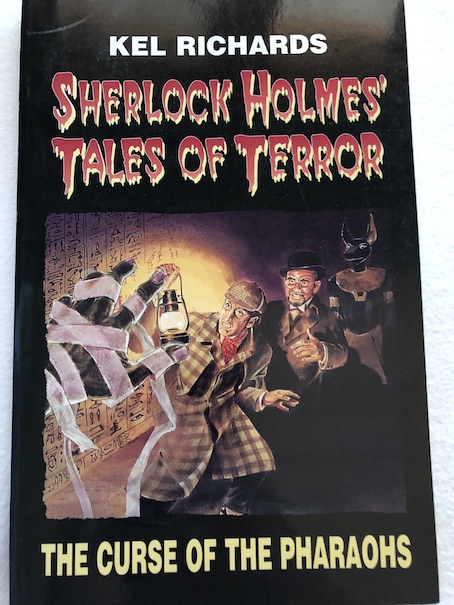

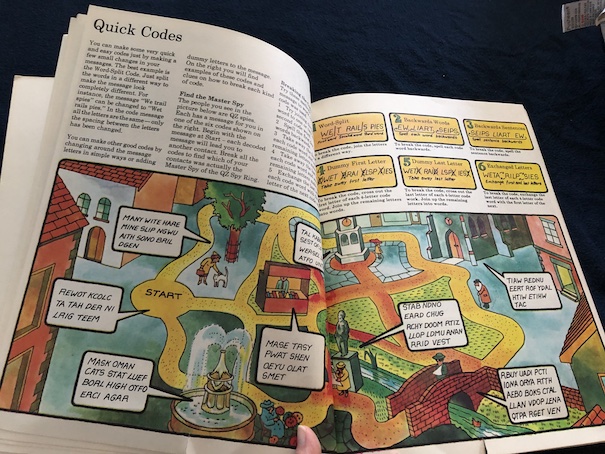


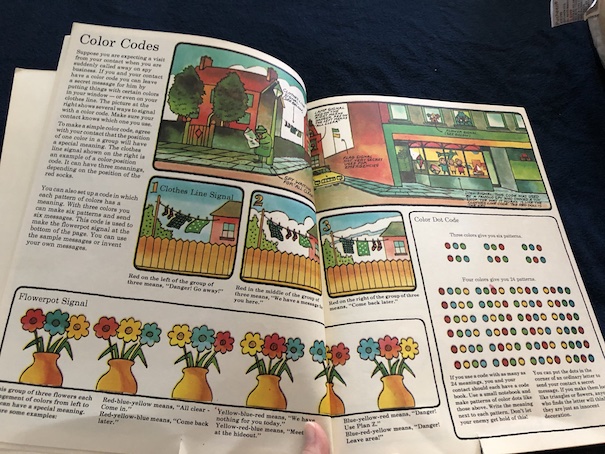


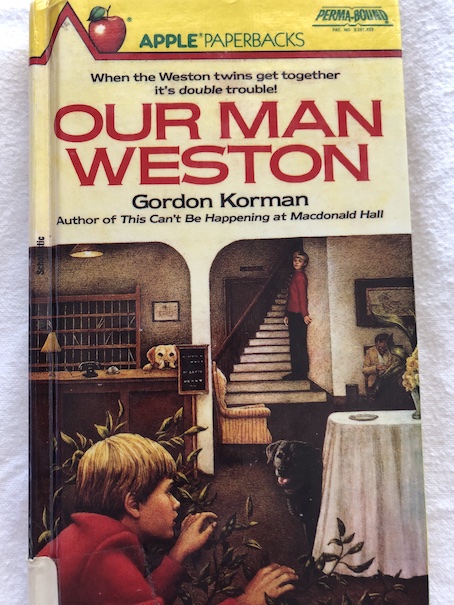

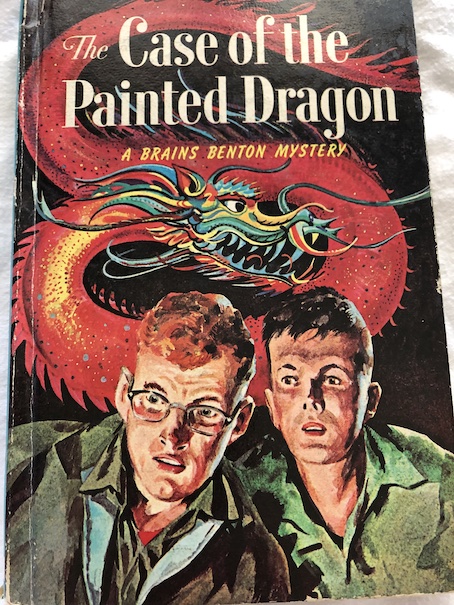
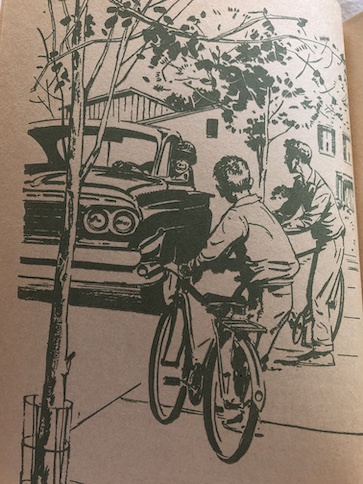

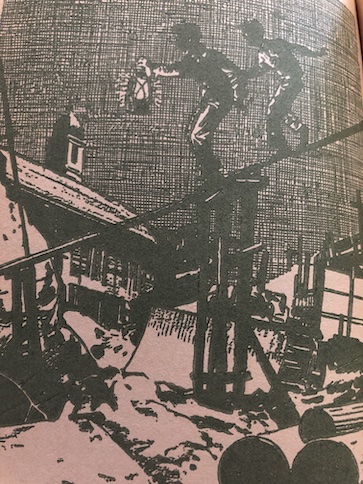
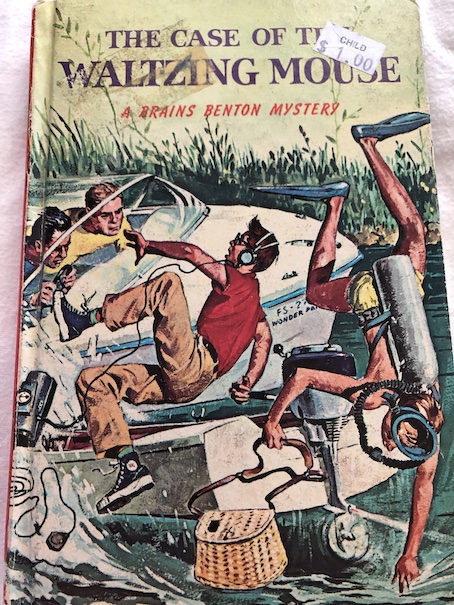


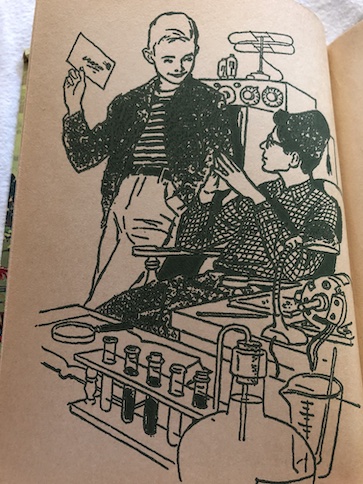
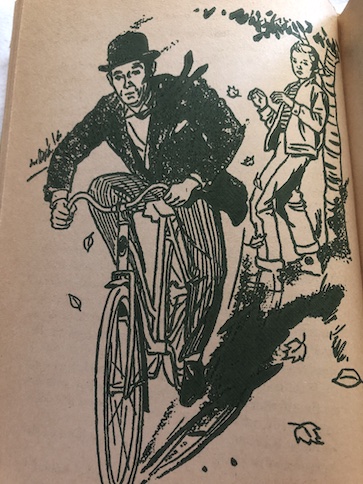


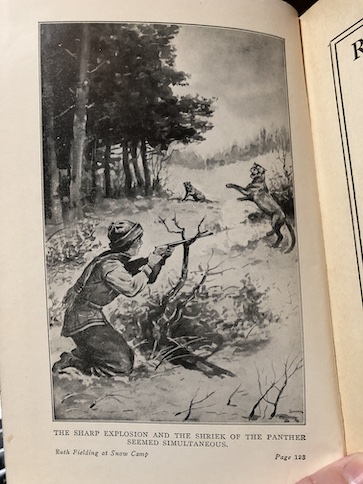
 Jestress's Forgotten Books and Stories