Tomorrow’s Wizard

TomorrowsWizardTomorrow’s Wizard by Patricia MacLachlan, 1982.

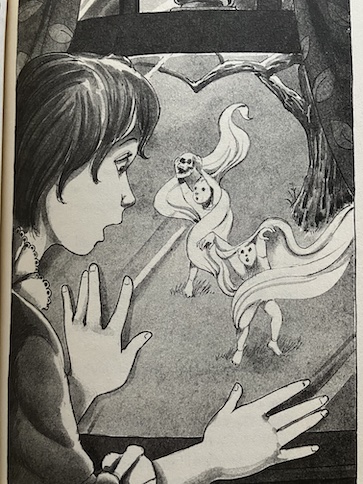
In a way, this story is a collection of shorter stories, but they are all tied together. In the beginning, Tomorrow’s Wizard (that’s actually his name, he’s also called Tomorrow) has just been given an apprentice wizard named Murdoch. Their job is to listen for important wishes to grant. Each of the shorter stories in the book involves a different wish and how Tomorrow and Murdoch grant it.

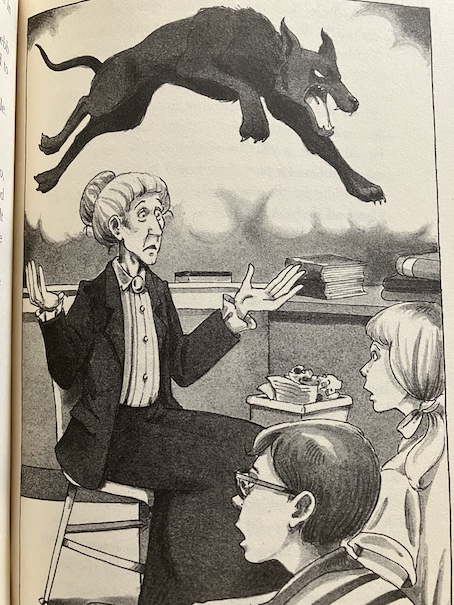
The First Important Wish – Rozelle is a pretty girl but wild and given to fits of temper. Her parents had her later in life and never disciplined her, so she has never had a reason to learn to control herself. However, her tantrums drive everyone else crazy. Rozelle’s father, acknowledging how difficult it is to deal with Rozelle, wishes that he could find a man who was willing to marry her. Tomorrow hears the wish and sends a variety of suitors to meet Rozelle, but she doesn’t like them, and none of them really like her, either. Then, another possibility occurs to the wizards: the villagers have been complaining that they are afraid of a nearby giant. Tomorrow knows that he giant is really harmless and gentle, just lonely. Could it be possible that Rozelle is the company that he needs?

Three-D – Miller Few and his wife, Mona, are nasty people, two of a kind. Because he’s the only miller in town, Miller Few (known to his neighbors as Three-D for Dreadful Dastardly Demon) freely cheats his customers. He and his wife have no friends because they’re so awful. Then, one day, Three-D saves Murdoch’s life. To reward the miller, Murdoch agrees to grant him a wish. The miller and his wife decide that they want a nice, sweet child who would do their work for them. The child Murdoch grants them is indeed sweet. A little too sweet. Not only does little Primrose look pretty and do the housework, but she helpfully reminds the miller about his debts and the other things her parents do wrong. The miller and his wife become more careful and agreeable and gain new friends because of Primrose, but they aren’t very happy. They aren’t really being themselves, and they’re tired of being on their best behavior all the time. But, perhaps there is one thing that can stop Primrose from being overly sweet: the miller’s old cat, Clifford.

The Comely Lady and the Clay Nose – Geneva is a very beautiful young woman and has many admirers, but she knows that they are more in love with the way she looks than with who she is. It worries her, and she wishes for someone who would love her for the person she is. To help solve her problem, Tomorrow makes an ugly clay nose for Geneva to wear, telling her that it will help her to find the person she is looking for. When she puts it on, her former admirers flee, and for awhile, Geneva is very lonely, but she perseveres and ends up finding the love that she is looking for.

The Perfect Fiddle – Bliss, the fiddle-maker, is ironically an unhappy man. The reason is that, no matter how good his fiddles are, he can never make one that’s completely perfect. After Bliss tries several crazy schemes to capture perfection in his fiddles, Tomorrow goes to visit Bliss’s wife, Maude. Like Tomorrow, Maude has seen the problem with Bliss’s approach to his fiddles and finally asks Bliss the question that makes him reconsider whether perfection should be his goal.

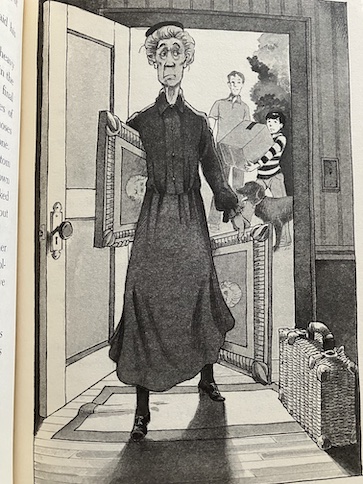
The Last Important Wish – Although Tomorrow is impatient with his apprentice, Murdoch, he does like having him live with him, and he has also grown attached to the horse that lives with them both. However, he has come to see that the life of a wizard isn’t the one that Murdoch is really suited for. More than anything, Murdoch wants the experience of being born and living among humans. The horse, too, wishes for a kind master and a family. Tomorrow sees that it’s time to grant both of their wishes, giving the horse and Murdoch (as a baby) to a kind farmer with a wife and other children.

The book is currently available online through Internet Archive.

Wizard’s Hall

Wizard’s Hall by Jane Yolen, 1991.

Henry hadn’t seriously considered becoming a wizard.  It was just one of a number of things he considered being when he was young.  However, when he suggests the possibility when he is eleven years old, his mother unexpectedly jumps on the idea and immediately packs him off to Wizard’s Hall, the school for young wizards.  Although Henry expresses doubts, his mother tells him that it’s only that he try that counts.  Being a dutiful son, he immediately sets out for Wizard’s Hall to enroll.  He has a moment when he gets worried and tries to turn back, but he discovers that he can’t because his destiny is at Wizard’s Hall, the road there won’t let him turn back.

At Wizard’s Hall, the Registrar (after consulting with a strange bird or animal in a cage called called Dr. Mo) changes Henry’s name to Thornmallow, saying that he’s prickly on the outside but squishy on the inside.  Henry isn’t happy about being given a new name, but he accepts it as part of what he has to try at the school.  The Registrar and the teachers also refer to Thornmallow oddly as what they “desperately need.”  Something is deeply wrong at Wizard’s Hall, and the teachers are hopeful that Thornmallow will be the one to save them, although he doesn’t appear to have much aptitude for wizardry.

On his first day, his teachers discover that he is tone-deaf, which is unheard of for wizards.  Wizards have to recite their spells in the proper tones, and Thornmallow can’t do it.  When one of his teachers tries to help him by covering his years while he attempts to recite, Thornmallow accidentally recites a spell that produces an avalanche of snow and roses.  It’s more powerful than anyone expects of a beginning student, especially one like Thornmallow, who has no prior knowledge of spells and doesn’t show much aptitude in other ways.  Thornmallow wonders briefly if he might have some special, hidden talent for wizardry, but he is unable to produce the same results when he is alone.

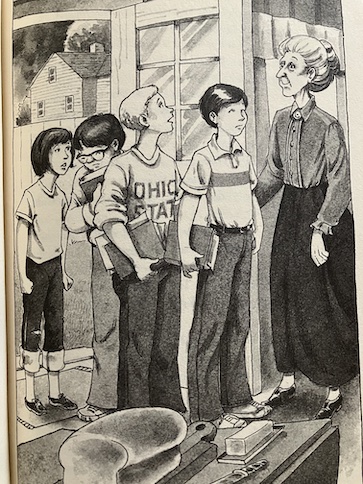
Although Thornmallow feels lonely and out-of-place at his new school, he persists because he promised his mother that he would try, and the teachers at the school also say that trying is important.  He also makes his first real friends his own age at the school.  A couple of other first-year students, Tansy and Willoweed (called Will for short) are assigned to be his Guardians, helping him to become acquainted with the school and its rules, and another girl, Gorse, also becomes his friend.  Thornmallow realizes that he would miss his new friends if he were to leave, although he briefly considers it, having the feeling that his first spell was just a fluke and that he doesn’t have any real talent for magic.

However, just when Thornmallow goes to tell his teachers that he thinks that his admittance to the school was a mistake, he overhears them talking about the serious threat to the school: the school is in danger from an evil sorcerer and his Quilted Beast (a “quilted beast” doesn’t sound particularly threatening because quilts are soft and comfy, but it’s way worse than that).  The teachers don’t know how to defeat the Master and his Beast, but they know that it’s vitally important for the school to have its full quantity of students, 113.  They were almost full when they sent out a call for the final student and got Henry/Thornmallow.  Although they aren’t sure why Thornmallow is the proper final student, it seems that he has some important role to play in the situation. When he learns the danger that they’re in, Thornmallow realizes that he has to stay and try to help them as best he can.

The book is available to borrow and read for free online through Internet Archive.

My Reaction and Spoilers:

Master Hickory, one of the teachers, explains to Thornmallow and his friends that the Master was one of the original founders of the school years ago.  The main founder had been Doctor Morning Glory, and she sent out a call for others to help her, bringing 13 sorcerers to found the school.  However, one of the others, Nettle, was prickly in every sense of the word.  He enjoyed using his words (and words are very important in magic and in the story) to sting and hurt others.  Eventually, the other 13 founders pushed him out of the school, and he turned to dark magic to get revenge. 

The Quilted Beast is made out of the dark pieces of the souls of each of the other founders, all “quilted” together.  Master Hickory explains that everyone has a little darkness in them in the form of very deep emotions, the kind that can tempt people to do bad things, if they let them get out of control.  I particularly liked the explanations of how people have their dark sides and how mature people deal with them.  At first, Thornmallow struggles to understand why the teachers are so upset that their dark sides have been removed because he thinks that would make them better.  However, Master Hickory explains that by “dark side,” he doesn’t mean the parts that are necessarily evil; he means the parts that could become evil, some of which are actually good.  Master Hickory says that some of the strongest human emotions can turn to evil if they aren’t kept under control.  For example, ambition out of control can become greed, or admiration out of control can become envy.  Having these feelings isn’t evil by itself; it’s the way people respond to their feelings that determines that.  Even love, which is considered good, is a deep emotion that can turn to something evil if used improperly, and so can count as part of a person’s dark side.  Mature people learn to deal with their feelings and control them, using them in the best ways.  People who aren’t mature, don’t.  Thornmallow, who often quotes his mother’s words of wisdom throughout the story, says, “Good folk think bad thoughts; bad folk act on ‘em.” 

I find those words of wisdom familiar because that’s something that my own parents impressed on me, “You can feel anything, but you don’t have to act on it.  You never have to act on it.” It was okay to have feelings and to say how we felt, but just “feeling like it” wasn’t an excuse for misbehavior. Everything has limits. You can’t hit your sibling just because you feel like it, and you can’t call people names just because you’re mad.  You can feel any way you want, but no matter what you’re feeling, you still have to behave, within the rules. If you don’t, there will be problems, and those problems won’t go away because of how you “feel.”  This probably explains a lot of my impatience toward people who don’t control themselves and don’t have limits for their behavior.  It’s not that I think it’s always easy or that people are always completely successful; it’s more that I have no respect for those who think it’s impossible and don’t even want to try, which brings us back to the story …

Master Hickory says that the teachers who had the smallest dark sides have still been basically functional since having them taken away, but those of particularly strong feelings have been damaged by the attack, including Morning Glory, who was both the most loving and the most ambitious of all the teachers.  What happened to Morning Glory isn’t fully explained until almost the end of the story, but the loss of her has been devastating to the school. When Thornmallow tells his friends about the problem, the kids are scared, but if there’s one thing that Thornmallow believes in, it’s trying. He and his friends are determined to try and save the school from the Master and the Quilted Beast, but time is running out.

The importance of trying is the theme of the story. Thornmallow/Henry doesn’t know his real talents or abilities, but just by showing up and trying to help, he learns that he possesses a special ability that makes him the right person to stop the evil wizard. Although he is not good at magic, not an enchanter, he has the ability to act as an enhancer for the abilities of others. The times when Thornmallow succeeds in his spells are when he’s working with, especially touching, one of the other wizards. He is able to use the talents of others and magnify them to be greater than anything either of them would do by themselves. By himself, Henry isn’t particularly special, but he can unite his friends and combine the talents of others, just by trying.

Another interesting aspect of the story is that the magic at Wizard’s Hall is largely based on word play. The characters play off words, using special names to point to the true natures of people and to change situations to be what they need them to be, which turns out to be part of the solution to their problem. Words spoken aloud at Wizard’s Hall have power and can change reality. For example, the names that everyone is given when they arrive at Wizard’s Hall are clues to the kind of people they are and what their abilities are. Thornmallow’s name is already explained, and at first, he puzzles a little over Tansy’s name when he meets her. Tansy is a black girl, and Thornmallow knows that tansy is a bright yellow flower. Gorse later explains to him that Tansy got her name because of her sunny personality. It’s not about what she looks like but what she is. Gorse describes herself as being small and prickly, and she seems proud of it because she’s comfortable with herself as she is. Before they can defeat the Master, who is really Nettle, they realize that they need to learn more about what Nettles are, which gives Thornmallow a clue as to what he needs to do and the words he needs to use.

Alien Secrets

Alien Secrets by Annette Klause, 1993.

Robin Goodfellow, nicknamed Puck (her parents were fond of Shakespeare), is a human girl from Earth in the future.  When the story begins, she has been kicked out of boarding school on Earth and is traveling by space ship to join her parents, who are scientists who have been working on another planet.  They left Robin with her grandmother on Earth, who enrolled her in an English boarding school in order to give her some discipline and some friends her own age, but she was expelled for failing her classes (not to mention throwing a fit and burning her books when she discovered that she had failed).  Puck dreads what her parents will say when she arrives on the planet where they are now living because they had always hoped that Puck would also become a scientist and work with them, but this journey will change Puck’s life.

Before the ship she will be traveling on leaves Earth, Robin witnesses a man attacking someone else, possibly killing him.  Robin does not report the attack because she doesn’t know whether or not the other person was killed, and she doesn’t think that anyone will believe her anyway.  She witnessed this attack while sneaking around a place where she wasn’t supposed to be, and she is being sent to her parents in disgrace after being expelled, so she doesn’t sound like a very credible witness.  However, the man in the fight, Mizzer Cubuk (“Mizzer” is how they say “Mister” in the book), turns out to be traveling on the same ship as Puck.  All Puck can think of to do is to try to avoid him on the ship and hope that he didn’t get a very good look at her after she ran away from his fight.

To Puck’s surprise, the captain of the ship she is traveling on, Captain Cat Biko, asks her if she could make friends with an alien who is also traveling on the ship.  The alien is one of the Shoowa, who were enslaved by another group of aliens called the Grakk.  Now, he is free and finally traveling home to Aurora, the same planet where Puck is going.  The captain feels sorry for him and thinks that he might appreciate a friend and that he might find a human child less intimidating than an adult.

Later, Puck and other passengers are woken out of their sleep by the sounds of wailing and moaning.  One of the women on board, Leesa, says that she saw something that looked like a ghost that walked straight through her. Other people, who didn’t see or hear it, assume that it was nightmares or imagination, but Puck knows that it wasn’t.  One of the crew members, Michael, tells Puck that there have been rumors that the ship is haunted and that other people have seen and heard strange things.

Strange things are happening on the ship, and some of the passengers seem to be hiding something. Who can Puck trust, and who isn’t who they seem to be?

The alien who is traveling on board the ship understands Puck’s feeling of failure.  The alien, called Hush, says that he carries shame because he lost something important, something that his people were counting on him to take home to their planet.  Puck and Hush discuss how people from Earth had fought the Grakk and sought to learn about Grakk technology from Shoowa slaves who were freed after the war.  Even the ship they are now traveling on was once a Grakk ship.  The Earth people kept delaying sending the slaves home because they wanted to pump them for more information and because they were trying to decide if they could really trust them more than the Grakk.  After negotiating with the Earth people about returning home, the Earth people agreed, with some provisions.  They arranged for some of the Shoowa to stay on the Grakk home planet, still working with humans.  Some of them would travel on ships with Earth people, and some others could go home to their own planet.  Hush is the first one to head home, and he was entrusted carrying home an important symbol of his people that his family had protected for generations: a statue that represents a child because children are the future and a source of freedom, according to an ancient Shoowa prophecy. Unfortunately, the statue was stolen from Hush before he could return it to its rightful home. He reported the theft to the Earth security personnel at the station, but they didn’t take him seriously. They thought that he probably just lost it by accident.

The haunting is real in this book.  On a tour of the ship, Puck learns that the ship’s navigator has also seen the ghost aliens.  One of the characteristics of a ship’s navigator is the ability to see hyperspace, something that not everyone has the ability to do, although even scientists in Puck’s future time don’t seem to know why some people can do that and others can’t.  Slowly, it becomes evident that people who are able to see hyperspace are also able to see the ghosts.

On the journey to Aurora, Puck also learns that she is one of the rare people who are able to see hyperspace, giving her a possible future in navigating a space ship, something that she would really enjoy learning.  When she arrives at Aurora and is greeted by her parents, who have missed her while they were apart, Puck also comes to realize that her parents will always love her, even in spite of failing her classes. Even Hush’s people tell him that, although they are happy to have the statue back, his safe arrival was always the most important thing, and they wanted him to come home, whether he successfully brought the statue or not. Both Hush and Puck come to realize that their families will always love and value them even with their imperfections and failings.  With parents who love her and a new vision of the future ahead of her, Puck is ready to make a new life on Aurora.

The book is available to borrow and read for free online through Internet Archive.

Kate Greenaway’s Book of Games

Kate Greenaway’s Book of Games by Kate Greenaway, 1889.

A book about children’s games with rules and general pastimes. The book doesn’t distinguish between the two, but I do because, to me, games have specific rules whereas more general pastimes and toys do not.

Many of the games and pastimes would be familiar to people in modern times and are still popular. Some games are like playground games (some of them are even still played on playgrounds today) that require running and motions, and others are more talking games (some of those have become classic road trip games, played in the car). Pastimes include making soap bubbles, flying kites, and using swings.

The book includes games like I Love my Love with an “A”, Blind Man’s Buff, Frog in the Middle, Russian Scandal (This is an old name for the Game of Telephone, before the invention of the telephone became really popular. I’ve also heard it as Russian Gossip, although I don’t know why it’s specifically “Russian.”), French and English (which is basically Capture the Flag), Oranges and Lemons (which is played like London Bridge is Falling Down, only with a different rhyme), and Twenty Questions. Some of the less familiar ones, especially to young Americans today, might be Puss in the Corner (a game that involves players running and changing places with each other and the person who is left without a place being “it” or the “puss”), Mary’s Gone A-Milking (a chase game with a song), What Is My Thought Like? (a talking/guessing game that involves creativity), and The Old Soldier and Judge and Jury (which are both talking games with words that are forbidden to say).

One of the interesting things about this book, besides noticing which games are still played and which are more obscure now, is that the children in the pictures are actually wearing clothes that are from an earlier part of the 19th century from when the book was written. This is a classic feature of Kate Greenaway’s illustrations, also seen in her other books. Modern people who are less familiar with the evolution of 19th century clothing might not notice that detail.

This book is still in print in modern times. It also available to borrow for free online through Internet Archive (multiple copies).

For more information about Victorian games in general, see the Victorian Games section of my Historical Games site. History and games are both hobbies of mine.

Jeffrey Strangeways

Jeffrey Strangeways by Jill Murphy, 1990.

Jeffrey lives with his widowed mother in a Medieval village (not a realistic one, this is a fairy tale type story), where his mother supports the both of them by selling her knitting.  However, when his mother breaks both of her arms after falling off of a cart, eleven-year-old Jeffrey must find a job and earn some money.  As a young boy from a poor family, there aren’t many options for him at first, and he doesn’t try very hard for the ones that are available because what he really wants to do is to be a knight.  As a boy from a non-noble family, it isn’t likely that he’d ever actually become a knight, but it’s all that Jeffrey has ever dreamed of.

One day, after Jeffrey has failed to get the jobs that were available in a nearby town of Axington, he is walking home, sad and worried about what his mother will say, he meets a knight.  In fact, it’s not just any knight but a famous one, Sir Walter!  Jeffrey is thrilled to meet him.  Sir Walter asks Jeffrey for directions and invites him to join him for supper. 

The two of them discuss what it’s like to be a knight.  Sir Walter tells Jeffrey that it’s not all as glamorous as people think it is.  Some parts are very difficult, and he has to travel a lot on his various assignments, keeping him away from his family for extended periods.  Unlike real, historical knights, who would work for a lord, Sir Walter works for an agency in Axington called Free Lance Rescue Services Limited, which gives him his assignments.  They send knights like Sir Walter to rescue damsels in distress or deal with dragons or ogres.  Although it’s not easy work, Jeffrey likes the sound of it!

When Jeffrey returns home and his mother finds out that he didn’t get a job, she is upset.  Jeffrey tells her about his meeting with Sir Walter, and she points out that, even though it’s exciting, he really needs to focus on finding work because they’re running out of money.  Seeing his mother so upset, Jeffrey lies to make her feel better, telling her that Sir Walter has recommended him for a job with his rescue agency.  His mother is doubtful at first, knowing that knights are usually from noble families and that her small son hasn’t had any training or shown any fighting ability.  Jeffrey reassures her that he’ll probably just be helping in the office until he gets more training.  To Jeffrey’s shame, his mother believes him and is proud of the job that he doesn’t have.

The next day, after his mother sends him off to his first day on his new “job,” Jeffrey decides that the only thing to do is to go to the agency in Axington and try to find out if he can get a job there, or failing that, anywhere he can in order to make things right with his mother.  When he gets to Axington, he is hungry, so he asks at a food stand in the marketplace if he can help out for a while in exchange for some food.  He spends the morning peeling potatoes in exchange for lunch.  However, although it’s boring work, Jeffrey does get a good meal out of it, and he catches the eye of a leatherworker, who compliments him for working hard.  Jeffrey confides in the leatherworker that he’s really hoping to get a job at the rescue agency, and the leatherworker tells him that his fiancé is the secretary there.  He gives Jeffrey a message to take to the secretary, and Jeffrey sees it as his opportunity to ask for a job.

When Jeffrey delivers the message to the secretary (which is an invitation to join her fiancé for lunch), the secretary tells him that the rescue agency has no job openings at the moment, but that she’ll pay him a penny to watch the office and her mother’s rambunctious dog, Lancelot, while she’s at lunch.  It’s not much, but a penny is enough to buy his mother a nice dinner, so Jeffrey takes the job.  The secretary tells him a little about how the office works, but she doesn’t expect anything to happen while she’s at lunch because nothing ever does.

However, while the secretary is away, a message comes in that Sir Walter is in trouble!  Sir Walter is in the cave of an evil ogre and needs help at once!  Jeffrey tries to find the secretary to tell her and ask what to do.  When he can’t figure out where she went to lunch, Jeffrey decides that there’s no time to waste and that he must rescue Sir Walter himself!

Although Jeffrey is eager to help Sir Walter, he does worry about the lies that he has told his mother about his new “job”, the fact that he isn’t really qualified for what he’s doing and doesn’t even have permission to be doing it, that the ogre might well end up eating him as well as Sir Walter, and that he left a mess in the office when he ran off on his rescue mission and is currently in possession of a dog that doesn’t belong to him.  The book is a fun adventure story, but it makes some good points about truthfulness and responsibility as well.

Although Jeffrey really only brought the dog along because he had nowhere else to leave him, it is really Lancelot who defeats the ogre, partly by accident.  At first, Jeffrey is tempted to claim the victory for himself, but he decides to be honest and admits the truth about the ogre’s defeat to Sir Walter.  Still, Sir Walter is grateful and offers to sponsor Jeffrey for knight school and give him a part-time job polishing his armor.  Jeffrey accepts, and he also gets to keep Lancelot, who needed a new home anyway, although his mother says that he will have to be responsible for the dog and its training.

The book is available to borrow and read for free online through Internet Archive.

The Whipping Boy

The Whipping Boy by Sid Fleischman, 1986.

Jemmy is an orphan who lives in the royal castle as the prince’s new whipping boy.  Prince Horace, or Prince Brat, as the prince is commonly called, is known for constantly misbehaving, playing mean pranks, and refusing to do his lessons (he tells his tutor that he doesn’t need to learn how to read because he could always get someone else to do his reading for him).  However, in their land, it is illegal for anyone to use any kind of physical force or punishment on a prince.  Instead, the royal family employs a whipping boy to take the prince’s punishments for him.  As you can imagine, seeing someone else whipped in his place does little to correct the prince’s bad behavior.  In fact, the prince usually likes the spectacle of the whipping boy yelling.  He doesn’t like it that, unlike the others, Jemmy never yells when he’s whipped.

Jemmy was recruited for the role of whipping boy off the streets, where he survived by being a mudlark and rat catcher.  There are benefits to living in the palace, even if his purpose in being there is to take the prince’s punishments.  Jemmy gets food to eat and nice clothes to wear and attends the prince’s lessons with him, where he pays attention when the prince does not.  Jemmy actually loves the books and learning he receives.

After about a year, though, the prince suddenly comes to Jemmy in the middle of the night and tells him that he’s running away from home and wants Jemmy to come with him as a manservant.  When Jemmy asks him why he wants to leave, the prince says that he’s bored.  Jemmy wonders why Prince Brat wants him to come along instead of a friend, but then he realizes that, as nasty as he is, Prince Brat doesn’t have any real friends.

When the two of them are outside of the palace, Jemmy is tempted to run off and leave Prince Brat to fend for himself, but before he can make up his mind about it, the two boys are taken prisoner by bandits, Cutwater and Hold-Your-Nose Billy (named for all the garlic he eats).

Prince Horace tries to pull rank on the bandits, telling them who he is and ordering them to go away.  It’s a mistake.  When the bandits see the royal crest on the saddle of the horse that the boys are riding, they decide that they can probably get a good ransom for the prince.  Since neither of the bandits can write, they try to make the prince write his own ransom note, but of course, Prince Brat can’t write because he’s refused to learn. 

Jemmy, seeing an opportunity to turn the situation around, offers to write the note instead.  As Jemmy suspected, when the bandits realize that he can write and Horace can’t, they start assuming that he’s actually the prince and that the two boys have switched places.  After writing the note, Jemmy suggests that they let the “whipping boy” (Horace) take it to the castle, thinking that not only will Horace get safely away but that he’ll be rid of Horace after that.

To Jemmy’s surprise, Prince Horace ruins the whole scheme by refusing to return to the castle.  Jemmy tries to reason with him, but Horace says that he won’t go home until he’s ready.  The boys to manage to slip away on the bandits, and Horace insists on following Jemmy even though Jemmy wants to be rid of him.

Although Jemmy can’t understand why, Horace says that he’s having the time of his life.  For once in his life, he doesn’t have people fussing over him and telling him to keep his clothes clean.  Horace has found palace life stifling and boring, and he feels like his father hardly notices him or cares.  Part of the reason why Horace acts up is to get his father’s attention.  Jemmy is surprised by these insights into the prince’s life and character, and he is also surprised that, when he finally gets the chance to slip away and leave Horace behind, he can’t do it.  He knows that Horace isn’t used to life outside the palace, and Jemmy worries about what might happen to him if he’s left alone, although he tells himself that Horace could always return to the castle.

Before their adventures are over, Horace gets to experience what it’s like to do chores for himself and even to be whipped by the bandits, when they think he’s the whipping boy.  Being whipped himself shows Horace what he has subjected others to on his account.  Jemmy is surprised that Horace bears the punishment without crying or complaining, something which Horace says that he learned from watching Jemmy, who made it a point to take whippings with quiet dignity.  Horace also learns what other people really think of him when a woman at a fair comments on the prince’s disappearance, using the “Prince Brat” nickname and saying that the young prince is a “terror” and bound to be a terrible king when he’s older.  Usually, people are careful about what they say in front of the prince, and Horace is shocked to find out how disliked he is because of his bad behavior.  However, Horace’s new experiences and realizations bring a change in his outlook and personality that make him more sympathetic and likeable.  There is also the realization that what Horace really needs in his life isn’t a whipping boy to take his punishments for him but someone who can be a real, honest friend with him, like Jemmy.

In the end, Jemmy becomes the prince’s companion, not his whipping boy, so that the prince will be less lonely and stop acting out to get attention.  The king promises that Horace can keep Jemmy as his companion and his responsibility as long as Horace himself can behave responsibly and do his lessons as he should.

Although the country and characters in the story are fictional, the practice of keeping a whipping boy so that princes wouldn’t have direct physical punishment was a real practice.  Even today, the term “whipping boy” can stand for a person who takes blame or punishment in the place of someone with higher rank or authority, even when the person of higher rank is the one at fault.  For example, if a business manager or CEO makes a bad decision and orders one of his employees to do something they shouldn’t and the employee gets the blame for it as if what they did was their idea and not the boss’s, that employee can be considered the “whipping boy.” Another example would be if a stepchild in a family was given blame or punishment in place of a biological child because of favoritism on the part of the punishing parent (similar to the crude saying “beaten like a red-headed stepchild“). In fact, depending on the circumstances, a “whipping boy” might not even be a person, but a thing or a concept that is blamed instead of the person or thing that is the true cause of a problem, such as blaming “modern society” or “kids these days” for an individual’s bad habits or behavior, “the government” or “the system” for a business’s bad decisions or policies, or “millenials” for practically everything they’ve been blamed for by older people. It is similar to the concept of the “scapegoat” or “fall guy” but with the connotation that the person who is really at fault, the one who is trying to avoid blame or punishment, succeeds because of higher rank, authority, seniority, or some other form of favoritism among those who will assign blame or punishment.

This book is a Newbery Medal Winner and is available online through Internet Archive (multiple copies).

There is also a movie version of the book, sometimes called Prince Brat and the Whipping Boy.  The movie follows the concept of the original story pretty well, but it elaborates more on Jemmy’s life before he became the whipping boy and on how Horace feels neglected by his father.  In the movie, Jemmy is pressed into service as whipping boy by the king’s soldiers, who don’t bother to find out if he has any other family.  Although Jemmy is an orphan in both the book and movie, in the movie, he also has a younger sister he looks after, and part of what he wants to do when he leaves the palace is to find her.  The boys together learn that the younger sister was arrested for attempting to steal a handkerchief in Jemmy’s absence, and they have to rescue her from prison, a side adventure that didn’t occur in the book.  In the movie, Horace also explains to Jemmy that his mother died in a riding accident when he was young and that his father pays more attention to affairs of state than he does to him.  Horace is shown multiple times trying to get his father’s attention, only to be brushed off because his father is too busy.  In the movie, the king almost declares war on another country, thinking that Horace was kidnapped over a border dispute, something that didn’t happen in the book.  In both the book and the movie, Jemmy’s new friendship with Horace brings about a change in the prince.  At the end of the movie, both Jemmy and his sister are taken in to the palace as companions for Horace. Sometimes you can find this movie or clips of it on YouTube. Although it was originally released on VHS, it is currently available on DVD.

King Bidgood’s in the Bathtub

King Bidgood’s in the Bathtub by Audrey Wood, 1985.

King Bidgood loves being in his bath, but one day, he just doesn’t want to get out!  When the young page realizes that the king is refusing to leave the bath, he calls out to the courtiers, asking what to do about it.

One by one, they try to interest the king in other activities, but each time, he keeps inviting them to join him (fully clothed, although he apparently isn’t, just mostly hidden by bubbles) in order to prove that absolutely everything can be done in the bath.

When the knight says it’s time for battle, they end up having a battle with toy ships in the tub.  When the queen tells him that it’s time to eat, they have a fancy feast right there in the tub.  The king’s activities eventually include a fishing trip and a dance.

In the end, the page is the one who figures out how to put an end to this never-ending bath.

I love the pictures in this book, and the repetition as each person steps forward with a suggestion should appeal to young children.  This book is a Caldecott Honor Book. It is currently available online through Internet Archive.

The Dragons Are Singing Tonight

The Dragons Are Singing Tonight by Jack Prelutsky, illustrated by Peter Sis, 1993.

This is a picture book of poems about dragons, but that description doesn’t quite do the book justice.

Jack Prelutsky is best known for his books of humorous poems for children, but not all of the poems in this book are funny. Some of them are humorous or have humorous twists, but others are just about the magic and wonder of the idea of dragons, some of which only exist in the imagination. Sometimes, just believing in magic or imagining it can be magical by itself!

The pictures are all excellent, colorful, and fanciful, and they really bring the poems to life. The book is larger than average, and the pictures span full pages.

The book is currently available online through Internet Archive.

Book of Enchantments

Book of Enchantments by Patricia C. Wrede, 1996.

This is a collection of short fantasy stories, some of them based on other writings and series by the same author.  Many of them are also humorous. There is a section in the back of the book that explains the stories behind the stories and how they relate to her other works.

The stories included in this book:

Rikiki and the Wizard – A greedy wizard, unsatisfied with his success in life, attempts to summon a god to make him even more wealthy and famous so that he will never be forgotten. In exchange, he offers his daughter in marriage to the god who will help him.  Most of the gods recognize the wizard’s greedy and selfish purposes and refuse to cooperate, but Rikiki, the blue chipmunk god, is rather absent-minded and shows up to answer the summons. However, Rikiki, although having the powers of a god, is mostly obsessed with finding nuts, and how he interprets the wizard’s wishes (in exchange for the nuts the daughter feeds him, not for marrying the daughter) technically fulfill the requests but not in the way that the wizard had hoped.

The Princess, the Cat, and the Unicorn – This story takes place in The Enchanted Forest from one of the author’s series.  Things don’t go as expected for fairy tales in the fairy tale kingdom of Oslett, and it often bothers the king’s councilors.  Even though the princesses of the kingdom have a stepmother, she is a very kind and motherly person instead of the wicked stepmother usually found in folktales, and the princesses love her.  The princesses even get along well with each other instead of having the usual rivalries and jealousies between the oldest princesses and their pretty younger sister.  The middle princess, Elyssa, gets tired of being nagged about what the councilors think she should do and says that she’d like to go out and seek her fortune.  It’s not usually a thing for the middle princess to do, but well in keeping with what goes on in their kingdom.  She is accompanied on her journey by a talking cat who directs her to The Enchanted Forest, where the stuff of fairy tales happens.  There, the princess must escape the clutches of a vain unicorn, who is looking for a princess to adore it, and help the cat, who is not quite what he seems.

Roses by Moonlight – A modern retelling of The Prodigal Son story in a modern setting and with sisters instead of brothers and a fantasy twist.  Adrian is jealous of the party that her family is giving for her sister Samantha, the prodigal daughter returned.  As she sulks outside, her mother talks to her about her sister and the choices people make in life and enigmatically says that, while she is satisfied with her own choices and life, it occurs to her now that there may have been other choices that she had never considered before.  Instead of asking Adrian to come back inside and try to enjoy Samantha’s party, she asks her to stay outside for a while and see if someone shows up, mysteriously adding that if she is offered a choice, she should be careful and not choose too quickly.  Adrian does indeed meet a strange woman who offers her the choice of her destiny.  In a magical rose garden, Adrian may pick a rose which will represent the course that her life will take.  She is allowed to smell each one first and see what they have to offer.  Given the choice of any possible future, what will she choose?

The Sixty-Two Curses of Caliph Arenschadd – Also in A Wizard’s Dozen.

Earthwitch – A king whose kingdom is besieged appeals to the Earthwitch for help. He learns that the current Earthwitch is his former lover, and while the magic of the earth can help solve his problem, it will cost him to use it.

The Sword-Seller – A strange merchant gives a swordsman a free sword at a fair and recommends a woman to him who needs to hire a swordsman to accompany her on a journey to see her aunt, apparently fleeing problems with her other relatives. Her other relatives seem to behave oddly about the journey, and the swordsman isn’t sure why. He agrees to take the job and discovers the real reason why the merchant was willing to give him the sword.

The Lorelei – On a class trip, a girl has to save her classmate from the call of the Lorelei.

Stronger Than Time – This story is about what would have happened if the prince had been killed before rescuing Sleeping Beauty.

Cruel Sisters – A retelling of an old folk tale about jealous sisters, one of which evidently killed the other.  The story is told from the point of view of their other sister.

Utensile Strength – The last story in the Enchanted Forest Chronicles. When an enchanter makes a mistake while trying to make a magical weapon and accidentally casts the spell on a frying pan, the king and queen of the Enchanted Forest hold an unusual tournament of warriors to find the person who is destined to wield this very strange but powerful weapon.  The story is followed by the winning recipe from the cooking portion of the tournament, Quick After-Battle Triple Chocolate Cake.

The book is currently available online through Internet Archive.

Talking to Dragons

Talking to Dragons by Patricia C. Wrede, 1985.

This is both the fourth book in the Enchanted Forest Chronicles and the first book in the series that was written.  The author wrote this story before the others and then wrote the other three to explain how the characters got to this point.  The first three books in the series focus on Princess Cimorene and her adventures, but this book focuses on her son, Prince Daystar.

Partly because this series is kind of backwards, with the last book being the first written, I’m going to start with a spoiler.  When the book begins, Daystar is unaware that he is a prince and that his father is the king of the Enchanted Forest.  He grew up in an ordinary cottage on the edge of the forest, so he is accustomed to the presence of all kinds of fantasy creatures and fairy tale characters.  He thinks of himself and his mother as ordinary poor folk.  However, his mother has taught him not only reading and writing but other skills that are more unusual for peasants, like music, fighting, and even a little magic.

When Daystar is 16 years old, a wizard named Antorell comes to their house.  Daystar’s mother, Cimorene, seemed to know him, and he knows her.  Antorell demands “the sword” and the boy, and Cimorene casts a spell to melt him.  (“’No! Not again!’ he screamed.”  If you’ve read the other books, you already know why.  But, again, this book was written first.)

The next day, Cimorene gives Daystar a sword that he’s never seen before but which seems to draw him to it, and she starts giving him instructions.  The instructions are vague, but Cimorene insists that Daystar is to go into the Enchanted Forest and not to come back until he can explain why he had to go in there in the first place.  Also, he is not allowed to draw the sword from its scabbard unless he really needs to use it.  Cimorene says that she can’t explain more because it might “ruin everything.”  Not knowing what else to do, Daystar starts into the Enchanted Forest.  When he glances back, Cimorene and the cottage have suddenly disappeared.  Daystar has no idea why, but he has no choice but to keep going.

In the forest, Daystar meets a talking lizard called Suz, who claims to know everything about the Enchanted Forest and what goes on there (a tall claim, considering everything that goes on there).  When Daystar asked him if he knows anything about the mysterious, magical sword that his mother gave him, Suz tells him that it’s the Sword of the Sleeping King and that everyone has been looking for it.  Daystar knows nothing about it, which surprises Suz.  To Daystar’s surprise, both the sword and Daystar’s lack of knowledge agitate Suz, who says that he must get Kazul, who will know what to do.  Before he then runs off, leaving Daystar wondering who Kazul is, Suz tells him that he’s going to have to learn about the sword by himself because there are certain rules associated with magic, but that he should follow the sword to find out.

The next person Daystar meets is a red-haired girl who is stuck in a hedge.  She is surprised by how easily Daystar can get into the magical hedge, and at first, she thinks that he is a wizard.  She is relieved when she finds out that he’s not.  The girl, Shiara, tells Daystar that wizards have been chasing her because she burned the Head Wizard’s staff.  Most people could never accomplish that because wizards’ staffs are extremely powerful and have protective spells on them, but Shiara is a fire-witch.

As the two of them talk, Daystar learns that, while fire-witches are extremely rare and powerful come by their powers naturally, Shiara’s abilities are more unpredictable than most.  She has trouble casting spells on purpose, but when she gets mad, she can do some extremely powerful ones without really trying.  Fire-witches tend to have tempers, and Shiara is no exception.  Because of that, she doesn’t have many friends.  Most people are afraid to be around her because they never know when she’ll lose her temper and accidentally set things on fire.  Even worse, for Shiara, is knowing that most fire-witches are able to do very impressive spells and are almost invulnerable, but yet, she can’t even burn her way through a hedge when she tries it.  The wizards are very interested in her because most fire-witches are immune to their spells.  When they learned that she was a fire-witch who couldn’t cast her own spells, they tried to kidnap her in order to study her magic, which she how she ended up setting the Head Wizard’s staff on fire.

Daystar and Shiara finally get out of the magical hedge when Daystar suggests that Shiara try being polite to it instead of losing her temper.  Creatures and objects in the Enchanted Forest tend to respond well to politeness.  When they’re out of the hedge, a wizard shows up and tries to kidnap Shiara again, but Daystar defends her with his sword.  However, Daystar’s hand is injured when he tries to pick up the pieces of the wizard’s staff, and it explodes.

Daystar and Shiara seek help from Morwen, a witch who lives nearby.  It is from Morwen that Daystar begins to get a sense of what his sword is capable of doing.  He also meets up with Suz again, who tells him that he should go to the castle and that Kazul will meet him there.  Daystar still doesn’t know what he’s walking into, but missions in the Enchanted Forest can’t be ignored, and he has a mission to complete that everyone has been waiting for since before he was born.

By the end of the story, Daystar has learned what he needs to do to rescue his father, and Cimorene and Mendanbar are reunited.  Shiara ends up getting what she wants, partially, because she gains the ability to use her powers, but is forced to be polite in order to do so, which really irritates her.  She becomes Kazul’s new princess, where she will learn both the personal skills and magical skills she needs to control both herself and her ability.  Cimorene believes that Shiara will end up marrying Daystar eventually and becoming the next queen of the Enchanted Forest.  However, the series ends here, and the future is left to the imagination.  Morwen also decides to marry Telemain, a character from the previous books.

Like other books in this series, this book contains a lot of humor and parodies on popular fairy tales and fairy-tale creatures. Personally, I like the first two books in the series the best, but this one is also fun. There is a mild touch of romance to it, which is also nice.

The book is currently available online through Internet Archive.

There is one more story after this series, a short story in the collection Book of Enchantments that features Daystar and both of his parents but does not have Shiara.