Sometimes, current events remind me of the events of children’s books. I debated about bringing this one up because I haven’t gotten hold of this particular book recently (partly because I’m probably not the only person who’s thinking about it right now), and I don’t have a proper post prepared for it, but years ago, a teacher introduced my class to Cathedral by David Macaulay. David Macaulay wrote a series of children’s books, explaining the architecture of historical buildings, including one about the construction of Gothic cathedrals, like Notre Dame in Paris.
The pictures in these books are fascinating, which is why I’m sorry that I don’t have a proper post prepared with example pictures. (I’ll probably do one later, when I can get hold of the book again) The book is available in multiple copies through Internet Archive, although there is a waiting list to get it right now.
However, the book was also made into a documentary film. Part of the story-line involves a fictional Medieval town replacing their cathedral after their first cathedral was destroyed by fire. (In the book, the cathedral was damaged by lightning, not destroyed by fire. The two stories aren’t the same.) This fictional cathedral serves as an example of the process of constructing a Medieval cathedral and the difficulties and dangers it might involve. The story of the town alternates with explanations about the history and architecture of cathedrals. This short clip explains the basic architecture of a Gothic cathedral, using Notre Dame as an example toward the end.
One of the aspects of the story that I find most inspiring is the dedication that the people who funded and built the cathedral showed. The construction of a cathedral in the Middle Ages could take a lifetime or even longer, and not everyone who began the task would live to see its completion. Their motivation was not mere personal gain but a glorious accomplishment that would both honor their beliefs and last far beyond them.
I’m not sure how long it will take to complete the renovations after the fire that damaged Notre Dame, but whatever it takes, I’m sure it will be worth it.
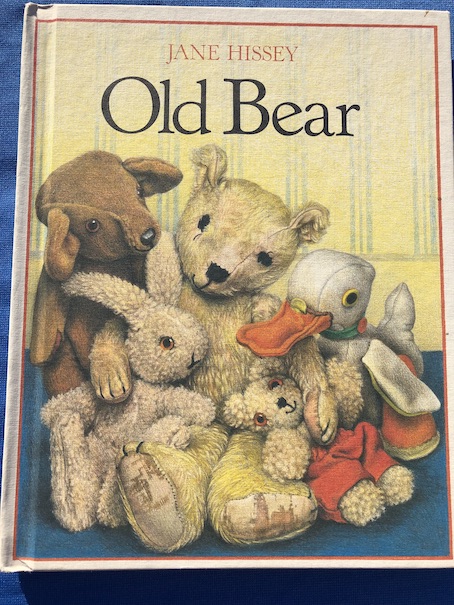
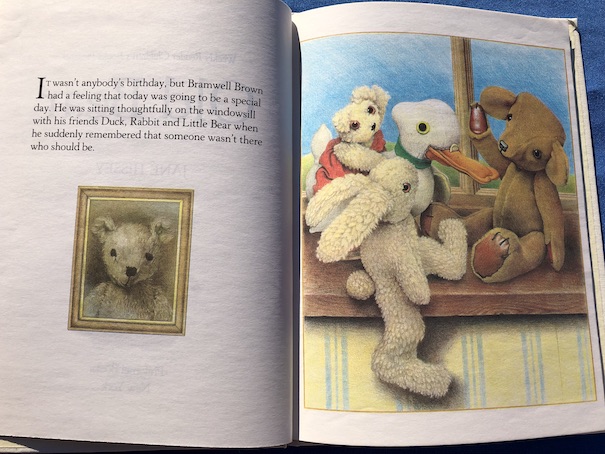
A group of stuffed animals remember that an old friend of theirs, Old Bear, was put up in the attic because he was an old toy and the children of the house were too rough with him. The other stuffed animals miss him and worry that the humans in the house have forgotten about him, so they try to think of a way to get him out of the attic.
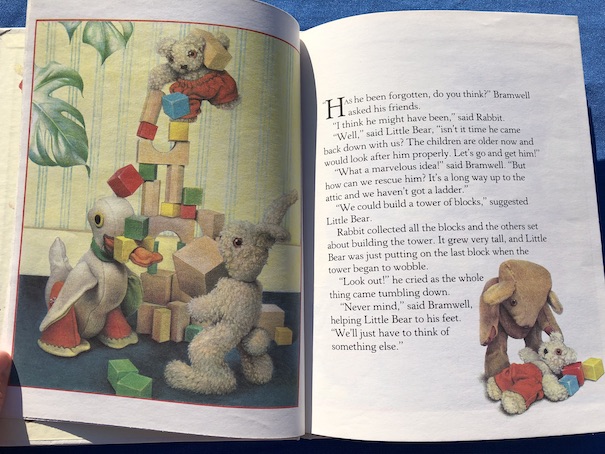
The problem is that the entrance to the attic is in the ceiling, high above their heads. The stuffed animals try various tricks to get up to the attic, from building a tall tower of blocks to jumping on the bed.
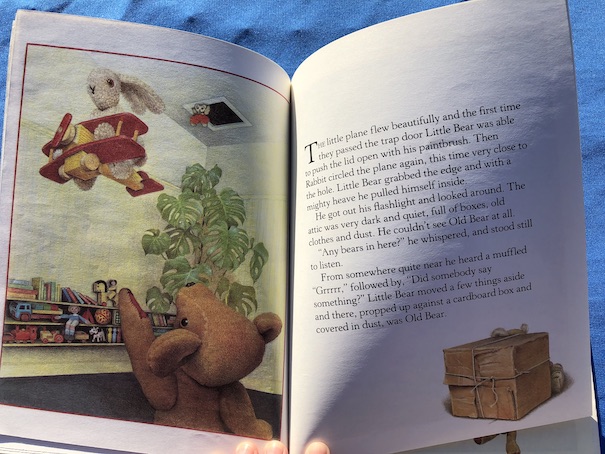
Eventually, they are successful when they use a toy airplane. After Little Bear finds Old Bear in the attic, they use parachutes made of handkerchiefs to parachute back into the playroom to rejoin the other stuffed animals.
Old Bear says that he spent most of his time in the attic sleeping, but he is glad to be back with his friends.
I remember my mother reading this book to me when I was a young child in the 1980s! One of the things that I like about this book is the detailed pictures. The textures on the stuffed animals are excellent, giving readers the feeling that they could reach into the book and touch the fluffy Little Bear, Bramwell’s paws (which look like they’re made of vinyl), and the Duck, who looks like he’s made of felt. The stuffed animals’ schemes to reach the attic are also fun and clever, using other children’s toys.
The book is part of a series originally published in the UK. The series was later made into a British television series during the 1990s. This particular story is one of the episodes, and you can see this episode on the author’s YouTube channel.
The book is available to borrow and read for free online through Internet Archive. (To borrow a book through Internet Archive, you have to sign up for an account, but it’s free, and then you read the book in your browser window.)
Bear really loves the moon and decides that he would like to give the moon a birthday present. The problem is that he doesn’t know when the moon’s birthday is. He tries asking it, but it doesn’t answer.
Deciding that he needs to get closer to the moon to talk to it, Bear goes to the mountains to ask the moon when its birthday is. In the mountain, Bear hears his own echo and thinks that it is the moon answering him. When Bear tells the moon that his birthday is tomorrow, the “moon” replies that its birthday is tomorrow. Bear is pleased, especially when the moon echoes his wish for a hat for its birthday.
Bear buys the moon a hat and puts it on top of the moon by putting it in a tree. The following morning, the hat is on Bear’s doorstep, and Bear accepts it as the moon’s present to him.
When the wind blows poor Bear’s hat away, Bear goes to the mountains again to apologize to the moon for losing the hat. It’s okay, though, because Bear and the moon still love each other.
Bear never realizes that what he’s hearing is his own echo. It’s sweet although somewhat silly. If you wonder what happened to the hat in the end, it’s shown on the back cover of the book, holding a bird’s nest.
The book is currently available online through Internet Archive. (When you borrow a book from Internet Archive, you have to set up an account, but it’s free.)
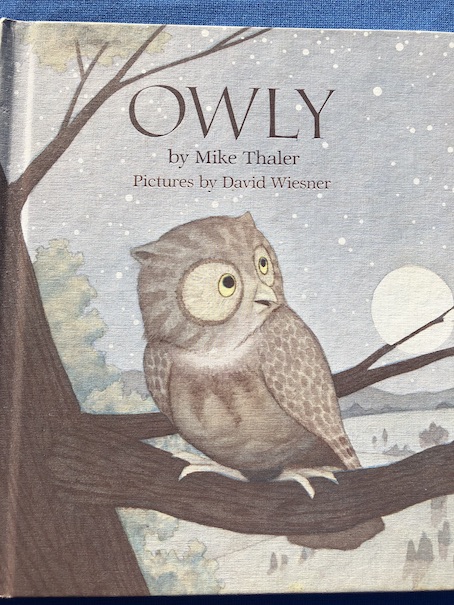
Owly is a curious young owl. He is always asking his mother questions, like how many stars there are in the sky or how high the sky is.
Owl’s mother tells him to go and see these things for himself, but there are too many stars in the sky to count, and he can’t fly high enough to reach the sky.
The story continues with Owly’s questions and attempts to find the answers, but all of his questions are unanswerable because they involve amounts too big to count or measure.
In the end, Owly and his mother talk about how much they love each other, and they compare it to the number of stars in the sky and the other things that couldn’t be counted or measured.
This is one of those children’s books where the story leads up to how much the parent loves the child (and vice versa). I’ve seen other books where the author sets up a cute way to talk about how much parents love their children, and sometimes, the set up is pretty obvious in this type of story. However, the message is still sweet, and this gentle story might make nice, calming bedtime reading. The pictures are as gentle and calm as the story itself.
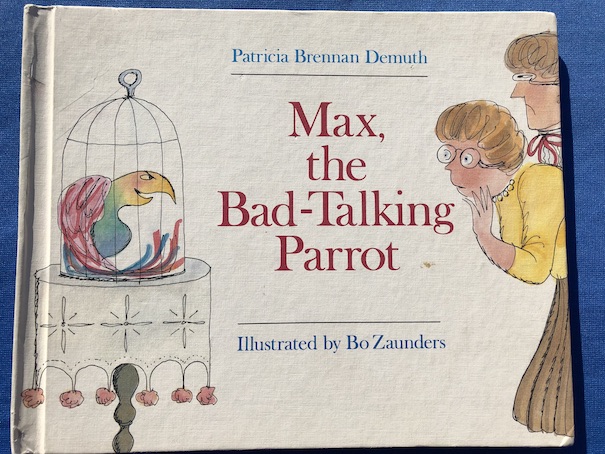
Max, the Bad-Talking Parrot by Patricia Brennan Demuth, illustrated by Bo Zaunders, 1986.
Don’t worry, Max’s “bad” talk isn’t really that bad.
Max is a parrot who belongs to a woman named Tillie. They live in a house that has been made into two apartments. The woman who lives in the apartment above them is Mrs. Goosebump. Mrs. Goosebump is Tillie’s friend, and Max likes her, too.
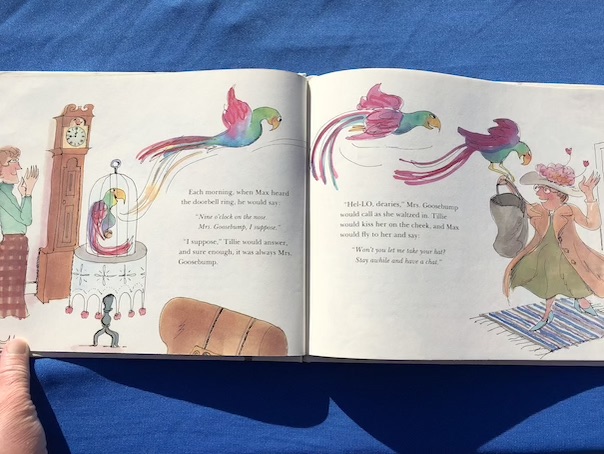
Because Mrs. Goosebump works the night shift in a toll booth, she always comes to see Tillie and Max in the morning, when her shift is over. Max always greets her with one of his rhymes. Everything Max says is a rhyme.
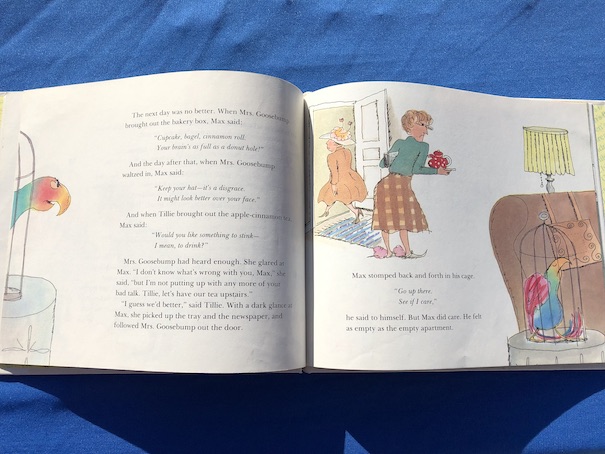
However, one day, as Max is dozing on Mrs. Goosebump’s shoulder during one of her visits, he thinks that he hears her calling him an ugly bird. Max gets upset and returns to his cage, not ever saying goodbye to Mrs. Goosebump when she leaves. He feels badly about the insult, and when Mrs. Goosebump visits later, he only gives her insulting rhymes, like, “Cupcake, bagel, cinnamon roll, Your brain’s as full as a donut hole!”
Mrs. Goosebump and Tillie have no idea why he’s so angry. The only thing that they can think to do is ignore him.
Later that night, a burglar breaks into Tillie’s apartment and starts stealing some of her things, including Max! Max is scared, but by coincidence, the burglar stops to pay at Mrs. Goosebump’s tollbooth. When Max recites some of his rhymes for her, she recognizes one of his usual rhymes and calls the police.
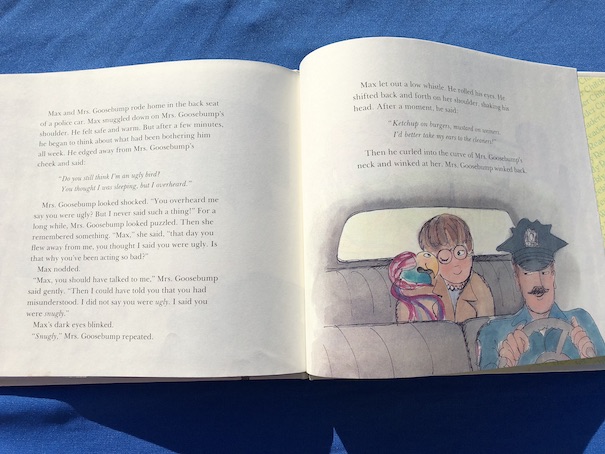
After Max is rescued, he finally tells Mrs. Goosebump why he was so angry, and Mrs. Goosebump explains that she actually said that he was “snugly”, not ugly. With the misunderstanding cleared up, the two of them become friends again. Max is also considered a hero for alerting Mrs. Goosebump about the robber.
When I
was a kid, I thought that Max’s rhymes were funny, and the scene with the
robber at the tollbooth is funny because Max tricks Mrs. Goosebump into
believing that the burglar is insulting her before he says the rhyme that Mrs.
Goosebump recognizes. The book is also a
good lesson about the importance of talking to people about what you’re feeling
in order to clear up misunderstandings.
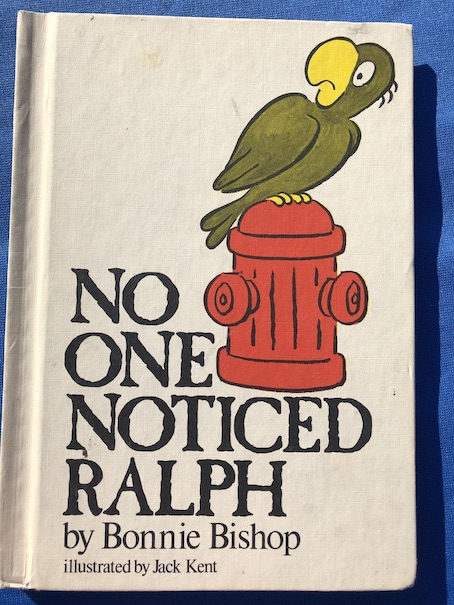
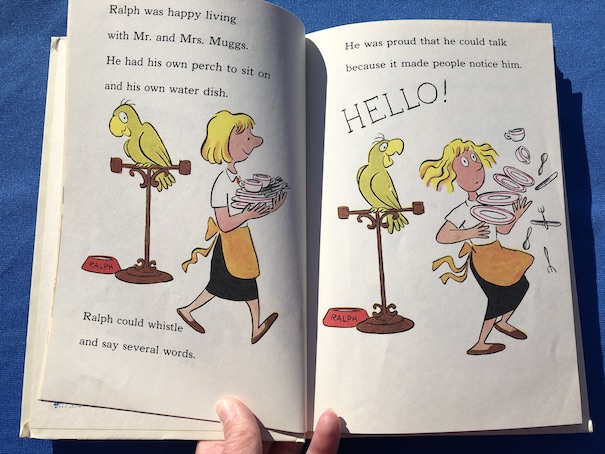
Ralph is a parrot, living in an apartment with Mr. and Mrs. Muggs. Ralph can whistle and talk, and he likes doing it because he enjoys the attention he gets from people when he does it.
He has certain times when he whistles, like when he wakes up Mr. and Mrs. Muggs in the morning, and certain words he says to get treats. Sometimes, in the evenings, Mr. and Mrs. Muggs will light a fire in the fireplace and make popcorn, so Ralph will say, “Fire!” to remind them.
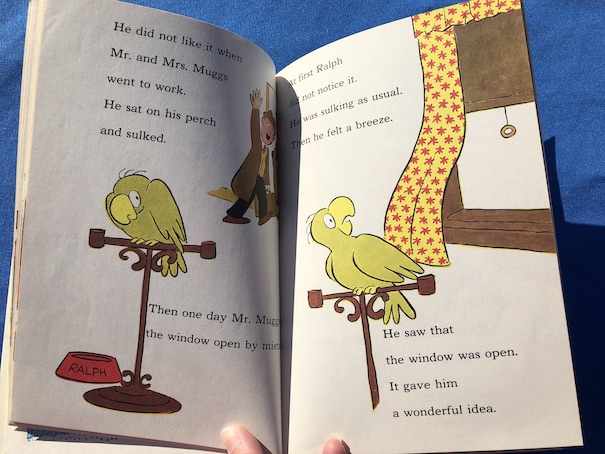
Ralph gets lonely when Mr. and Mrs. Muggs leave for work, and one day, he notices that they’ve left a window open. He decides to fly outside and look for people to give him attention.
When he reaches the street, there are plenty of people, but they don’t pay attention to Ralph. He tries whistling and using words he knows. It has an effect on the people around him, but not what Ralph expects, and still no one notices him.
Then, Ralph sees an apartment on fire, and says, “Fire!” It makes a man nearby notice the fire and call the fire department. The man who called the fire department realizes that Ralph is the one who yelled “Fire!” and calls him a hero. Finally, Ralph gets attention!
Mr. and Mrs. Muggs return home to see everyone with Ralph and hear the story about how he became a hero. Ralph is rewarded with a ride on the fire truck, his picture in the paper, and a lifetime supply of sesame seed crackers but it’s the attention he loves most.
I love this picture book and thought it was funny when I was a kid, when I had a pet bird myself.
Johnny and the Birds by Ian Munn, illustrated by Elizabeth Webbe, 1950.
This cute little picture book is a collection of short stories about a little boy named Johnny and his adventures with wild birds. The stories are very short and are meant to teach children about wild birds.
Johnny and the Catbird – Johnny thinks that he hears a kitten while looking for strawberries, but it’s actually the sound made by a catbird.
The Blue Jays – Father Blue Jay scares a hawk away from his nest.
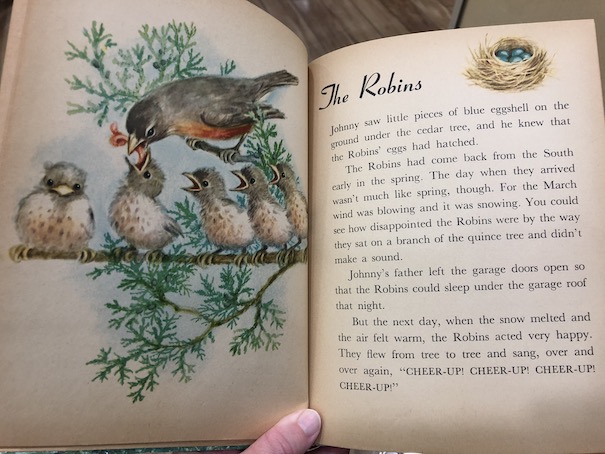
The Robins – Johnny knows that the Robin eggs have hatched when he sees the bits of blue eggshell under the tree where they live.
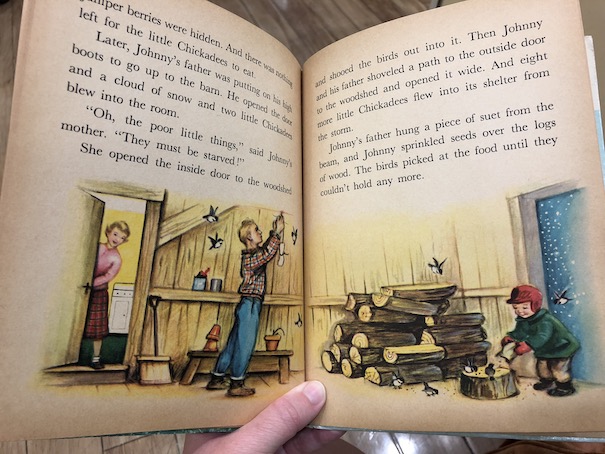
The Chickadees – The Chickadees don’t fly south during the winter like other birds, but Johnny’s family helps them when it’s snowing and they need something to eat.
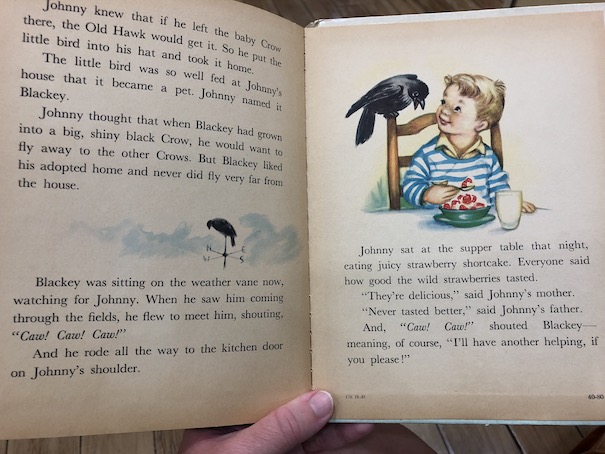
The Crows – Johnny finds a baby Crow out of its nest. Apparently, it’s an orphan, and Johnny fears that it might get eaten by a hawk, so he takes it home and takes care of it. It becomes a pet, and he names it Blackey.
The book is available to borrow and read for free online through Internet Archive.
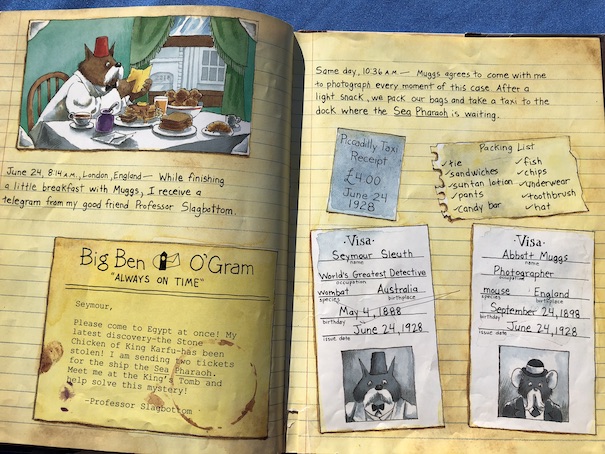
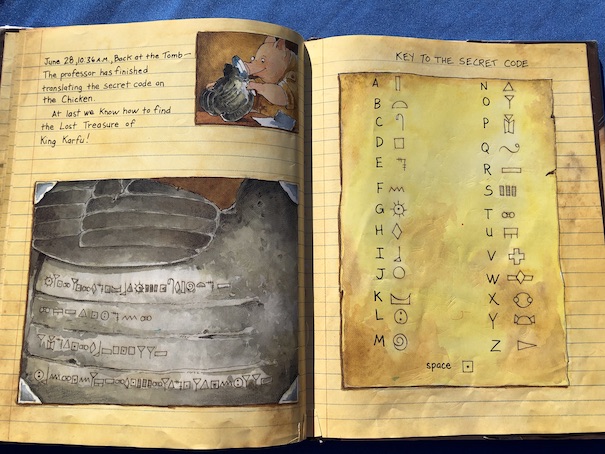
Seymour Sleuth, an Australian wombat living in London, introduces himself as “the greatest detective in the world.” His friend, Abbott Muggs, a mouse, is a photographer who assists him in his cases and documents them. When the story begins, Seymour receives a telegram from his friend Professor Slagbottom, who is working on an archaeological site in Egypt. Someone has stolen one of their finds, the Stone Chicken of King Karfu, and he needs Seymour’s help to find it! Seymour and Muggs head for Egypt!
King Karfu was a wealthy pharaoh and a wonderful cook, and the Stone Chicken may provide clues about the Lost Treasure of King Karfu, the nature of which is unknown. When they reach the dig in Egypt, Professor Slagbottom explains that he was researching a message in code on the outside of the Chicken when it was stolen. The suspects are the other people on the dig, who may be trying to steal King Karfu’s Treasure.
Seymour interviews the suspects one at a time and considers their connection to clues found at the scene of the crime. As an adult, I figured out who the culprit was pretty quickly, but for the benefit of child readers, Seymour provides notes about the clues and suspects to help them understand the connections. The pictures in the story also provide important clues. After Professor Slagbottom’s decoder is stolen, Seymour realizes who the thief is.
After they get the Stone Chicken back, readers can use the decoder provided to solve the code and learn where the Treasure is. It turns out that the Treasure is actually a recipe, written in the same substitution code – for peanut butter and jelly sandwiches!
I always like mysteries that involve codes and puzzles, and this cute animal mystery would be fun and challenging for young kids. With the key provided, it would be a good introduction to substitution codes for kids who have never seen them. There is one other book with Seymour Sleuth, The Mystery of the Monkey’s Maze. The author, Doug Cushman, is also the author of the Aunt Eater Mysteries.
The book is currently available online through Internet Archive.
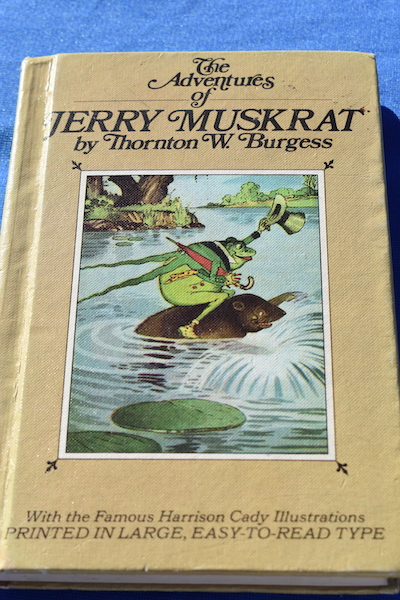
The Adventures of Jerry Muskrat by Thornton W. Burgess, 1914.
This book is part of a series of stories about the adventures of different animals.
Jerry Muskrat lives with his family and friends in the Smiling Pool and Laughing Brook, near the farm owned by Farmer Brown. Jerry’s mother warns him to look out for the traps that Farmer Brown’s son likes to set, but he’s sure that he can take care of himself . . . until he has a very narrow escape!
Jerry’s mother calls a meeting of the other animals to discuss the threat of traps after Jerry’s close call. They decide to ask Great-Grandfather Frog for his advice. He tells them that they must find all of the traps and use a stone or stick to trigger them. Then, when the traps have been sprung, they will bury them. The animals have some close calls while springing the traps, but they manage to set them off successfully.
However, they soon have a new problem: it seems like the water in the Smiling Pool is getting lower each day. When the animals investigate, they discover that someone has dammed the Laughing Brook that feeds the Smiling Pool! If they don’t do something about it, they might all have to go live on the Big River, and they don’t want to leave their home.
It turns out that the dam was made by Paddy the Beaver, Jerry Muskrat’s “big cousin from the North.” Jerry tries to make a hole in the dam so that the water will flow, but Paddy blocks it again, telling them not to mess with his dam. Jerry has to explain to Paddy why the residents of the Smiling Pool need the water. Once Paddy understands, he lets the water flow again.
The animals in the story refer to the place where they live in terms of their pool and brook and the nearby farm. You don’t really know exactly where they live, but there is one animal who has a Southern accent, “Ol’ Mistah Buzzard.” Ol’ Mistah Buzzard talks like the characters in Disney’s Song of the South, regularly dropping phrases like, “Where are yo’alls going?”, “Fo’ the lan’s sake! Fo’ the lan’s sake!”, and referring to other animals as “Brer Mink” and “Brer Turtle.” The book was written before the movie Song of the South was created in 1946, but long after the book that the movie was based on, Uncle Remus by Joel Chandler Harris from 1881. I suspect that the author of this book was inspired by the animal stories in Uncle Remus and that the Buzzard’s dialect is a salute to that. Unfortunately, that kind of dialect is really annoying for modern readers and may make it a difficult thing to read aloud to children. Mercifully, none of the other characters in the book do this. The parade of animals who hurry to find what has stopped the water in the brook is also a take-off from The Tortoise and the Hare story because the turtle, who was left behind by the others in their rush does become the first to find the source of the problem when the others stop to rest.
This book is over 100 years old and in the public domain now. There are multiple places to read this book for free online, but the one that I recommend the most is Lit2Go from the University of South Florida because it offers audio readings of the chapters in the book as well as the text. The book is also available online through Project Gutenberg.
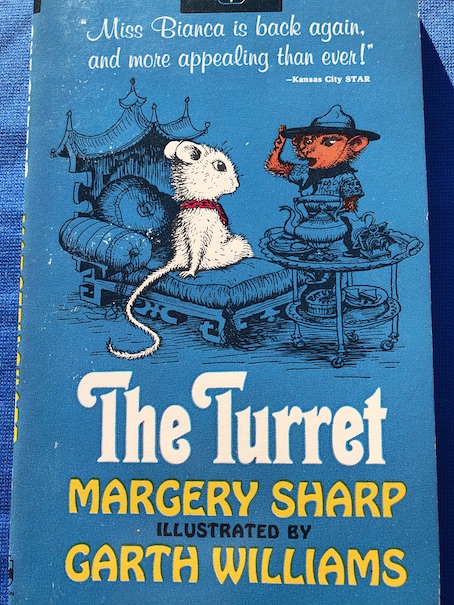
Miss Bianca has decided to resign as Madame Chairwoman of the Mouse Prisoners’ Aid Society. She has never felt particularly drawn to public life, really preferring her quiet life as a pet of an Ambassador’s son (whom she always calls “the Boy”), keeping him company during his lessons and writing poetry in her spare time. During the times when she is away from the Boy, undertaking rescue missions for the society, she knows that the Boy pines for her and worries about where she is. She has started to feel a little guilty that she might be neglecting her Boy.
Bernard, the Secretary of the society, actually feels a little relieved by her decision to resign. While he thought that she made a great chairwoman, he has always worried about the dangerous nature of their missions, afraid that something might happen to Miss Bianca. (Miss Bianca is a little annoyed that he seems so eager for her to resign, and his comment that “you’re too beautiful to be allowed into deadly peril” makes a weirdly chauvinistic compliment – like it would be okay for her to risk her neck if she were ugly because it would be less of a loss? – but Miss Bianca takes it in the spirit in which it seems to be offered.) The two of them reminisce about some of their past missions. Bernard thinks that the worst villain they’ve faced was the head jailer in the Black Castle (from the first book in the series), but Miss Bianca thinks that the worst was Mandrake (from the last book) because the target of his cruelty was a defenseless child.
The
society plans to throw a special dinner for Miss Bianca, and Miss Bianca
suggests that she would like a picnic by water.
The ideal place for it would be the moat around an old tower outside of
the city. Miss Bianca enjoys the picnic
and is fascinated by the crumbling old turret.
Then, she notices something white in the window. Thinking that it’s a piece of litter, one of
the mouse boy scouts goes to retrieve it.
It turns out to be a small piece of linen, and after the boy scout takes
it, it’s replaced by another. Miss Bianca
comes to the conclusion that there is someone in the turret and that the person
could be a prisoner, signaling for help.
When she studies the scrap of linen more closely, she also realizes that
she knows who the prisoner is because it has the name Mandrake on it!
After the events of the previous book, the evil Duchess had Mandrake locked in the turret. To Bernard, it sounds like a just punishment for Mandrake, but Miss Bianca feels a responsibility to rescue him, in the hope that he might reform. However, Bernard is skeptical about that possibility, thinking that they would just be letting a criminal lose if they tried to free Mandrake, and Miss Bianca is unable to persuade the other members of the society to undertake the mission.
However, Miss Bianca is unable to give up on Mandrake and goes to see him in his turret. Mandrake is a shadow of his former self. She introduces herself to him as a member of the Mouse Prisoners’ Aid Society, and it turns out that he’s heard about it from friends of his who have been in jail (having had many disreputable associations over the years). In order to test how likely Mandrake would be to reform, Miss Bianca asks him what he would do if he were freed from captivity, and he says that he’d like to be a gardener at an orphanage. He feels badly about the child slaves he helped to abuse while serving the Duchess, and he’d like to see children happy, making their garden a beautiful place. Miss Bianca is satisfied with this and sets about planning his escape. (She’s free to undertake this mission because her Boy is having his tonsils out and won’t miss her for awhile.)
At
first, Mandrake doesn’t know how people even bring him food, since his room in
the turret doesn’t seem to have a door and food just seems to arrive during the
night. Miss Bianca stays up at night to
see what happens and learns that there is a hidden staircase in the turret that
his jailers use. Before Mandrake can escape,
though, he needs to be stronger because he’s badly under-nourished. Miss Bianca recruits the mouse boy scouts to
bring him vitamins to help make him healthier and tries to figure out how the
secret passage works and think of some way to create a distraction so that Mandrake
can escape.
Shaun,
the leader of the boy scouts, helps her to come up with a plan. (The book says that Shaun is half-Irish and
thinks of himself as being a “handsome boy-o.”
Stereotypical.) Shaun has figured
out that the jailers watching Mandrake are actually grooms by trade, and he
knows of a race horse, Sir Hector, who could provide a good distraction for
them. Miss Bianca approves of the plan
and persuades Sir Hector to help them.
Meanwhile, the members of the Prisoners’ Aid Society are getting fed up with their strict new chairwoman, who only seems interested in forcing them to participate in group exercises. Members are starting to avoid going to meetings, and worse still, someone suggests to Bernard that the bossy chairwoman particularly likes calling committee meetings because she’s in love with him and wants the excuse to see him. The thought horrifies Bernard, but he’s afraid to say anything to Miss Bianca because he doesn’t want her to feel obligated to try to become the chairwoman again in order to solve the society’s problems (or his), not knowing what she’s actually been up to in her free time.
In the end, everything works out well. When Mandrake is rescued, he actually does become the gardener for an orphanage. The members of the society find out Miss Bianca’s daring mission, undertaken with just a handful of boy scouts, and feel badly that they didn’t take part. They complain to the new chairwoman that she was just wasting their time with exercises instead of real missions, and she resigns, saving Bernard from her attentions. Miss Bianca does not return to the society as its chairwoman, but the next chairwoman is more competent.
















 Jestress's Forgotten Books and Stories