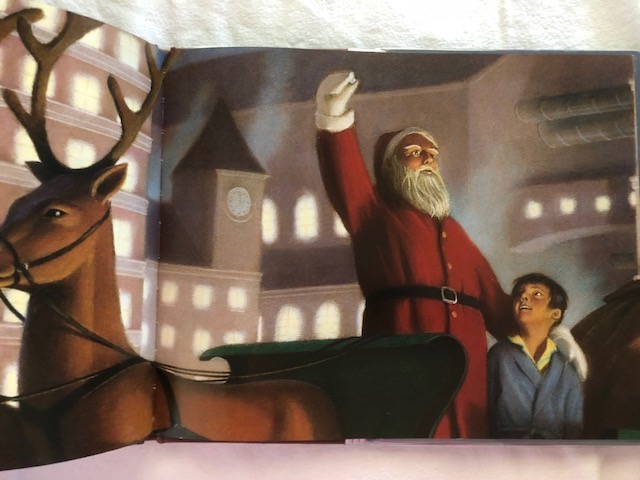
This House is Made of Mud

HouseMud

This House is Made of Mud by Ken Buchanan, illustrated by Libba Tracy, 1991, 1994.

The edition of this book that I have is the bilingual edition with English and Spanish.  Originally, the book was written in just English. I like to use kids’ books for Spanish practice, which is why I like this one.  It’s a Reading Rainbow Book.

The story is written in a poetical form (non-rhyming), describing an adobe house, which is why it’s made of “mud.”  It’s a traditional way of building houses in the American Southwest, where I’m from.

HouseMudBeginning

As the book describes the house, it compares it to the land around it and the world in general.  Like the Earth, the house is round, which is how some Native Americans build their houses.

HouseMudRound

Aside from the people who live there, animals also share the house, from the family pets to bugs and mice who live in the walls and under the floor.

HouseMudAnimals

Their yard is the desert, surrounded by mountains and full of cactus.

HouseMudYardCactus

The people who live there have many friends who come to visit, and it is a house full of love.

The book is currently available through Internet Archive.

HouseMudLove

The Unbreakable Code

UnbreakableCode

The Unbreakable Code by Sara Hoagland Hunter, illustrated by Julia Miner, 1996.

A young boy, John, is upset because his mother has recently remarried, to a man from Minnesota.  Now, John is faced with the prospect of moving to Minnesota, and he doesn’t want to go.  He would much rather stay with his grandfather on his farm on the Navajo Reservation.  His grandfather points out that he’ll return in the summer, but that hardly seems good enough.  Then, his grandfather tells him that he’ll be okay because “You have an unbreakable code.”

UnbreakableCodeJohnGrandfather

John asks what his grandfather means by that, and he says that the Navajo language is the unbreakable code.  John worries that he’ll forget how to speak Navajo, but his grandfather says that he never did even though he had to attend a government boarding school at a young age and that the language saved his life during World War II.  John’s grandfather was a code talker.

John’s grandfather tells John the story of how he became a Code Talker, starting with when he was at boarding school.  The purpose of the government “Indian Schools” was to assimilate Native Americans into white American culture.  They were known for forcing their students to abandon traditional clothing, cut their hair, take English names, and speak only English.  John’s grandfather describes having to chew on soap whenever he was caught speaking Navajo.  He was only allowed to return home during the summer to help his family with their sheep and crops.

UnbreakableCodeBoardingSchool

Then, when he was in his teens, during World War II, he heard an announcement on the radio that the Marines were looking for young Navajo men who could speak both English and Navajo.  Seeing it has a chance to escape, he ran away from school and enlisted.  After life at a harsh boarding school, the military marches and drills were no problem, and all of the Navajos already had wilderness survival skills.

After they had completed basic training, they were told that they were needed for a secret mission in the Pacific.  The Japanese had intercepted American radio transmissions and broken the codes they were using.   The Marines wanted Navajo speakers because the language was almost unknown outside of the United States, not many non-Navajos had ever learned it, and at that point in its history, the language had not been recorded in writing, so there was no way that the Japanese could research it and learn it.  The Marines and code talkers developed a system of code words in Navajo and military terms to use, so it wasn’t as simple as just speaking the language plainly.  The system was highly effective.

UnbreakableCodeTalker

John’s grandfather goes on to tell John about how bloody the war was and how his life was constantly at risk.  Once, another American soldier even mistook him for a Japanese spy because he didn’t know what language he was speaking.  Fortunately, one of his friends intervened and saved his life.

UnbreakableCodeWar

The code was never broken during the war, and John’s grandfather eventually made it home safely.  However, the code talkers were not hailed as heroes because, for many years, the government wanted to keep the code a secret.  No one was allowed to talk about it.  John’s grandfather was glad to return to a peaceful life on his farm.

UnbreakableCodeReturnHome

His grandfather’s story gives John the courage that he needs to face moving to a new place.  After all, his grandfather had been to far more frightening places and faced them with courage.  Knowing his family’s history gives John a new sense of his own identity and the knowledge that his identity and language will remain with him wherever he goes.

This book is available to borrow and read for free online through Internet Archive.

My Reaction and Additional Information

Even though this is a picture book, it isn’t really a book for very young children.  There are descriptions of the blood and violence of the war that would be more appropriate for older children.  There is a brief note from the author at the beginning of the book that explains a little about World War II and code talkers, and at the end of the book, there are charts that demonstrate how the code worked.  This book is an a good way to introduce students to the topic of code talkers if they have never heard of them before.

UnbreakableCodeTable1
UnbreakableCodeTable2

In modern times, there is a written form for the Navajo language, and since I grew up in Arizona, the colleges I attended had classes in Navajo for those who wanted to study the language.  I used to see the books for the classes in the school book stores, although I never studied Navajo myself.  I met one of the code talkers once when he came to speak at our college.  I believe that there are a few who are still alive at the time of this writing.

Monster Slayer

MonsterSlayer

Monster Slayer retold by Vee Browne, illustrated by Baje Whitethorne, 1991.

This is a retelling of a Navajo folktale.  An Editor’s Note at the beginning of the book explains a little about the original legend.  It is actually part of a much longer story.  The book only focuses on the Walking Giant part.  The Walking Giant threatened the villages of the Anasazi.  The author and illustrator of this book are both Navajo.

Changing Woman, who created both humans and monsters, had twin sons, but they did not know who their father was until they were twelve years old, when their mother told them that their father was the Sun.

MonsterSlayerAnasaziVillage

The twins went to see their father, but they were returned to Earth to help their people to fight the monsters which plagued the land.  The monsters prevented the Anasazi from planting their crops, and people were starving.  The people appealed to Changing Woman and her sons for help.  The twins’ father gave them his lightning arrows to use in the fight.

MonsterSlayerVillagers

Hearing the sound of thundering footsteps, Changing Woman told her sons that it was the sound of the Walking Giant.  The twins took their armor, sacred magic feathers, and lightning arrows and set out to find the giant.  Eventually, they found him by a lake.  The twins hid behind a rock, but the giant could smell them.

MonsterSlayerMagicFeathers

As the fight began, the twins let the giant shoot the first arrow at them because their father told them to, since Walking Giant was older that they were.  However, their magic feathers helped them to evade the giant’s boomerang.  Then, one of the twins used a lightning arrow to finish off the Walking Giant.  To commemorate their victory, Changing Woman named this twin Monster Slayer.  (The other boy was already named Child Born of Water.)

MonsterSlayerGiant

This story is interesting but felt a little disjointed to me. That may be because it is a shortened version of the legend.  I wish that the beginning note explained a little more about the context of the story.  This book won the Best Juvenile Book Western Heritage Award from the National Cowboy Hall of Fame.

The book is available to borrow and read for free online through Internet Archive.

The Courage of Sarah Noble

SarahNoble

The Courage of Sarah Noble by Alice Dalgliesh, 1954.

SarahNobleCookingIn 1707, a man living in Massachusetts named John Noble bought some land in Connecticut which had recently been purchased from a tribe of Indians (Native Americans) living nearby.  He planned to move his family there and start a new homestead, but with his children so young and the baby somewhat sickly, it was decided that he would travel to the new land ahead of his family and start building a new house there.  The only family member to accompany him was his eight-year-old daughter, Sarah, who came along to cook for him.  Before they leave home, Sarah’s mother tells her to “Keep up your courage,” something which Sarah repeats to herself from time to time.

SarahNobleFamilyOn the way to their new property, Sarah and her father have to camp out in the wilderness, although they do manage to stay one night with a family called Robinson.  The Robinson boys tease Sarah, saying that where she’s going, the Indians will probably chop off her head and eat her or do other horrible things.  Their sister tells Sarah not to worry because her brothers just like to tease.  Sarah’s father and Mistress Robinson also reassure her that the Indians in the area are friendly and that they sold their land knowing that new people would come there.

The Robinsons make Sarah uncomfortable.  Sarah later says to her father that there doesn’t seem to be love in the Robinson house. Her father agrees with the observation and says that the Robinsons should learn to watch their words and teach their children to do the same, adding “there are people in this world who do not help others along the way, Sarah, while there are those who do. In our home all will be treated with kindness-always, Sarah. The Indians, too, and they will not harm us.”  Although the Robinsons allowed the Nobles to stay the night in their house, they didn’t exactly make them feel welcome, and both of them realize that the things the boys were saying and their rough manner were clues to the Robinsons’ real attitudes and the kinds of things the parents talk about when no one else is around.

SarahNobleReadingWhen Sarah and her father reach the land that is to be their new home, they take refuge in a hollow place in a hillside, and John begins building their new house.  However, Sarah is still very nervous and lonely.  Then, while Sarah sits, reading the Bible, some curious Indian children from the nearby tribe come to see her.  She reads a Bible story aloud to them, and they listen, but she when she finishes the story, she can tell that they didn’t understand what she was saying.  Sarah can’t understand them, either, when they try to talk to her.  She gets impatient and snaps at them for not knowing English, and they run away from her.  Sarah is sorry about that because she realizes that she shouldn’t have been so irritable, and even if they couldn’t talk to each other, it was still nice to have people around.

Fortunately, the Indian children come back to see her again, and they become friends.  She tries to teach them English, but they don’t make much progress at first.  Even without being able to talk to each other, though, they can still do things like picking berries together.

SarahNobleNativeAmericanChildren

Sarah’s father also becomes friends with an Indian he nicknames “Tall John” because he can’t figure out how to pronounce his real name.  John and Tall John trade with each other, and John allows Sarah to visit Tall John’s home to play with his children.

When John finishes building the house and it is time for him to go and fetch the rest of their family, he decides that it would be better for Sarah not to make the long journey again, so he leaves her in the care of Tall John and his family.

SarahNobleStaysBehind

At first, Sarah is a little worried about living with the Indians.  Being friends and visiting during the day is one thing, but what would it be like to actually live with them?  Although Sarah likes her Indian friends, it’s obvious that the stories that she’s heard all her life about “savage” Indians bother her, and she still has some prejudices and misconceptions to overcome.  There are also the worries that often accompany children who are staying with someone other than their parents: what if something bad happens, her father never comes back, and she never sees her family again?  Sarah worries that, even though the tribe that lives nearby is nice, there are other Indians who aren’t, and some of them might attack while her father is away.

Fortunately, things go well during Sarah’s time with the Indians.  She finds some of their habits strange, and she notices that Tall John’s children (nicknamed “Small John” and “Mary”) find some of her habits strange, like the clothes she wears and the way she prays at night.  Tall John’s family gives Sarah some deerskin clothing, like they wear, and some moccasins, which she finds surprisingly comfortable.  There is a scare about a possible attack, but that passes without incident, and Sarah ends up enjoying her time with her Indian friends, playing games and participating in chores with them.  Tall John and his wife treat Sarah like one of their own children.

When it’s time for her to rejoin her family, Sarah changes back to her old clothes, but they no longer seem as comfortable to her, and she decides to keep wearing the moccasins.  A little of her Indian friends has rubbed off on her, and she is a different person because of her experiences.  Sarah’s mother expresses some concern about her daughter having lived with “savages” (her word), but Sarah is quick to defend them, saying that they aren’t savages and that they’re friends.  Her father agrees that Tall John and his family are good people who took good care of Sarah.

This book is a Newbery Honor Book.  It is currently available online through Internet Archive (multiple copies).

My Reaction

Throughout the story, various characters have obvious prejudices about American Indians, and the language used isn’t what we would use today (ex. “Indians” instead of “Native Americans” and nobody says “squaw” anymore (or shouldn’t – white people used to think it simply meant “woman” but it has other connotations as well, better to just say “woman” when that’s what you mean)), but these are fitting with the time period when the story takes place.  The overall attitude of the story, especially Sarah’s evolving attitudes toward her new Native American friends, is good.  Sarah begins by being frightened because of all of the scary things people have told her about Indians, but once she begins spending time with them and living among them, she sees that the things she heard before weren’t true, and she values their friendship.  The parts where characters behave in prejudiced or condescending ways are uncomfortable, but you can’t have a story about improvement without someone behaving or thinking wrongly in the first place.  At least, that was my interpretation.  I understand that there are others who are more concerned.  At the end of the story, Sarah’s mother doesn’t seem convinced about the Indians, but I like to think that experience may change her as it did Sarah.  I think Sarah’s mother represents where Sarah came from but not where she ends up.  I think it’s important to explain to children the historical context of the story and put the emphasis on Sarah’s changing opinions.  Sarah’s experiences help her to see the truth about her new neighbors.

The author’s note in the beginning of the book explains that the story of Sarah Noble is based on the life of the real Sarah Noble, who did accompany her father to the family’s new homestead when the community of New Milford was forming in order to cook for him while he built the family’s new house.  The real Sarah did live with the nearby tribe of Native Americans for a time, although the author of the story had to invent some of the details of her stay.  It also says that the real Sarah maintained a friendship with the Indian the book refers to as “Tall John.”  The real Sarah become a school teacher as an adult, as the Sarah in the story said that she wanted.  She also married and had children.

Molly’s Pilgrim

MollysPilgrim

Molly’s Pilgrim by Barbara Cohen, 1983.

Molly has been unhappy since her family moved to the smaller town of Winter Hill, New Jersey so that her father could get a better job. In New York City, there were other Jewish girls like her, and she didn’t feel so strange and out-of-place. The Winter Hollow girls don’t understand her at all and don’t like her. Molly’s family fled Russia to escape persecution, and they’ve only been living in America for about a year.  Molly still has a Yiddish accent and doesn’t quite speak proper English yet.  Molly is constantly teased about the way she talks and her unfamiliarity with American habits.

MollysPilgrimSchool

One girl in particular, Elizabeth, makes up rhymes to make fun of Molly, even following her home from school like a creepy stalker, to continue singing them at her. The other girls follow Elizabeth’s lead because they kind of admire her and because she is always giving them candy.

MollysPilgrimBullies

Then, one day, the girls’ teacher begins teaching them about Thanksgiving. Of course, Elizabeth makes a big deal about the fact that Molly has never heard about Thanksgiving before. But, Molly finds the story about the pilgrims interesting. The teacher says that for their Thanksgiving activity, instead of making paper turkeys like they usually do, the children are going to make clothespin dolls to look like American Indians and pilgrims, so they can create a scene like the first Thanksgiving.

MollysPilgrimClass

When Molly gets home and explains the assignment to her mother, she has to tell her mother what a “pilgrim” is. She explains it by saying that they were people who came from across the ocean in search of religious freedom. Her mother understands that and offers to help Molly with the doll.

However, when Molly sees what her mother has done with the doll, she is worried. The doll is beautiful, but her mother has dressed the doll in the clothes of a Russian refugee, like Molly’s family, not in the traditional Puritan garb of the pilgrims. At first, Molly is sure that she’ll be teased more than ever at school when she shows up with a doll wearing the wrong clothes and that people will think that she’s stupid for not understanding how pilgrims dressed.

MollysPilgrimDoll

But, Molly’s mother is correct in pointing out that their family are modern pilgrims, coming to America for the same reasons that the original pilgrims did. Molly does get some teasing from Elizabeth (that’s not a surprise, since it’s Elizabeth, after all), but when the teacher asks Molly about the meaning of her doll, it leads everyone to a better understanding, both of the holiday and where Molly and her family fit in with their new country and its history.

Molly’s teacher points out that the holiday of Thanksgiving wasn’t entirely an original idea that the pilgrims invented all by themselves but that they took their inspiration from a much older Jewish tradition from the Old Testament.  Human beings do not exist in a vacuum, and we all regularly take ideas that we’re exposed to and build on them in our own lives.  Although Puritans were generally known for their belief in religious “purity” (hence, their name) and noted for their intolerance to different religions and beliefs, they also strongly believed in education, which frequently involves taking past ideas and knowledge and applying them toward new situations.  Their Thanksgiving celebration was just an example of that, an older idea that they used for their own purpose, adapted to the lives of the people who adopted the tradition.  It was their celebration, but not their sole intellectual property.

The book is currently available online through Internet Archive (multiple copies).

There is also a sequel to this book called Make a Wish, Molly, in which Molly learns about birthday parties in the United States.

My Reaction and Additional Information

The book doesn’t mention it, but the word “pilgrim” itself is also much older than the early Puritan colonists in America.  Before the development of the America colonies, it referred to any religious traveler on their way to a holy place, and many people still use it in that sense.  A person on a pilgrimage could be just about anyone from anywhere going to anywhere else as long as the journey has spiritual significance.  The Puritan colonists used that term for themselves to emphasize the reasons why they were seeking new homes in a new land.  For them, it was a kind of pilgrimage to a place where they could start again.  Molly’s family came to America in search of religious freedom, just as the Puritans did.  Their journeys weren’t quite the same, but they shared a common purpose and ended up in the same place (more or less).

By showing the links between Molly and her family and the pilgrims, Molly’s mother and her teacher help the other students to understand that Molly really does fit in, that her being there makes sense, and that she has a place in their class and in their celebration of Thanksgiving.

This story was also made into a short film. I remember seeing it in school when I was a kid in the early 1990s.  I checked on YouTube, and there are trailers posted for this film.  One thing that I hadn’t remembered from when I was a kid was that the time period of the book was earlier than the film.  In the film, the characters are shown to be contemporary with the time the film was made, but the style of dress of the girls in the book’s pictures and the things that Molly’s mother says about why the family left Russia indicate that the book probably takes place during the late 19th century or early 20th century, possibly around the same time as the events in the famous play/movie Fiddler on the Roof.

As a side note, if you’re wondering why the girl is named Molly, which doesn’t sound particularly Russian, Molly is typically a nickname for Mary and other, similar-sounding, related names.  Molly’s mother also calls her Malkeleh, which may be her original name or perhaps another variant, if her original name was Malka, as another reviewer suggests.

In spite of the warning on that last site I linked to about reading a book with your child that may be covered in class, I say to go ahead and read it anyway.  It’s hard to say what books may or may not be used in classes by individual teachers, and if your child’s teacher doesn’t happen to use this one, it’s still a good story.  Perhaps just warn your child not to say something that would spoil the ending for their classmates who haven’t read it yet.

The Snowy Day Mystery

Cam Jansen

CJSnowyDayMystery

The Snowy Day Mystery by David A. Adler, 2004.

One snowy day, Cam Jansen and her friends are on the school bus outside of their school.  Because of the snow, a lot of parents have decided to drive their kids to school, and with all the extra cars, it’s difficult for the bus driver to pull up and let the kids out.  Cam and her friend, Eric, pass the time while they’re waiting with a memory game.

Their game proves useful later, when one of their teachers discovers that someone has stolen three computers from one of the classrooms.  There are footprints in the snow outside the classroom window, but the window was locked from the inside after the theft.  Whoever took the computers must have actually entered the school and passed them to someone outside.  But, computers are big and heavy.  How did they get them away without anyone seeing them?

Cam and Eric begin to investigate, and Danny, a classmate with a habit of telling really bad jokes, tags along.  Part of the solution to the mystery has to do with all of the extra cars in front of the school that morning.  The thieves’ car would have blended in with all of the others, except that they were doing something that none of the other cars were doing, something that Cam realizes that no car would have had a reason to do.  Cam saw the thieves leave herself and is later able to describe the car to the police, but the unusual thing about it doesn’t occur to her until she thinks about where the thieves parked their car.

The book is currently available online through Internet Archive.
Cam Jansen and the Ghostly Mystery

Cam Jansen

CJGhostlyMystery

Cam Jansen and the Ghostly Mystery by David A. Adler, 1996.

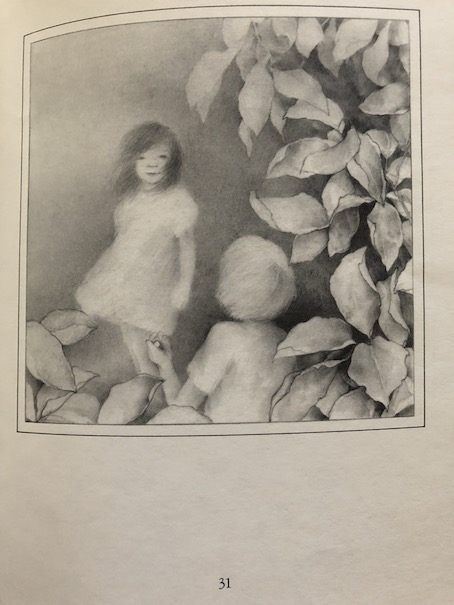
CJGhostlyMysteryGhostCam Jansen’s Aunt Molly takes her and her friend Eric to buy tickets for a Triceratops Pops concert.  Triceratops Pops is a singing group that dresses up like dinosaurs, and many of the fans buying tickets also wear dinosaur costumes.  While they’re standing in line, someone dressed as a ghost starts sneaking up behind people and scaring them by yelling, “Boo!”  At first, it seems like a mildly annoying prank, but then one old man standing nearby seems to have a heart attack when he is startled.

The guards standing near the ticket booth rush to help the man and call for an ambulance for him.  However, while they are distracted, the person in the ghost costume robs the woman selling tickets, taking all the ticket money and her own money from her purse.

Cam is convinced that the old man who collapsed was part of the thief’s plan and that his “heart attack” was just an act to distract the guards.  She noticed that he seemed to be wearing a wig to make himself look older.  But, there are two other clues that are important: the magazines that the man dropped when he fainted, and the fact that the ghost costume was found in the ladies’ restroom.  Once again, Cam helps the police with her amazing memory!

The book is currently available online through Internet Archive.

Cam Jansen and the Mystery of the UFO

CJUFO

Cam Jansen and the Mystery of the UFO by David A. Adler, 1980.

Cam Jansen‘s friend, Eric, wants to enter a photography contest.  All of the pictures for the contest must be taken in black-and-white, have to be “of local interest”, and must be completely natural, not posed.  As Cam and Eric look for things to photograph, Cam spots a kitten trapped in a tree.  Eric takes a picture of her rescuing the kitten.

Then, they see a bunch of people standing around, pointing at some strange, multi-colored lights in the sky.  A local newscaster even shows up to cover the mysterious lights and talk about UFOs.

Cam and Eric decide to investigate the area where it look like the UFOs landed.  When they get there, they spot some strange creatures with silvery skin and pointed heads!  However, it soon becomes obvious that these “aliens” aren’t what they appear to be.  They speak English, are called “Cindy” and “Steven”, and are actually covered in aluminum foil.  But, why are they playing alien, and what are the UFOs really about?

Cam decides to keep the cat that she rescued and names her Neptune.  When the true purpose behind the aliens’ hoax is revealed, Neptune helps to foil their plans.


Eat Your Poison, Dear

EatYourPoisonDear

Eat Your Poison, Dear by James Howe, 1986.

Milo Groot is the editor of the school paper at Sebastian Barth’s school. Milo is something of a social outcast at school, but after he gets extremely ill eating in the school cafeteria, Sebastian and his friend David begin to wonder if there’s been some foul play. Although everyone thinks it’s just a bad case of the flu at first, it’s strange how Milo’s symptoms only come up after eating lunch at school.

Milo recently wrote an editorial for the school paper, criticizing a group of boys at school who have adopted kind of a “greaser” look, wearing leather jackets, smoking cigarettes, wearing temporary tattoos (so badass), and calling each other by biker-style nicknames. The biker boys, who like to call themselves the Devil Riders (they don’t actually have motorcycles, but they like to stand around and look at pictures of them a lot), have been kind of mean to other kids, even former friends, but the school’s principal says that there’s no school rule against simply wearing leather jackets, so there’s nothing he can do about their biker persona. Milo starts up a petition against them, though, trying to get the principal to crack down on their little group. Could one of them be behind Milo’s poisoning?

Then, suddenly, two more kids at school get sick in the same way. The school cafeteria has always gotten good health ratings, leading Sebastian to think that whatever is harming people at school must be deliberate. Soon, whatever is harming the students affects a large part of the student body, with seventy-seven students all getting sick on the same day. But, still, who is doing it and what is their motive?

The book is currently available online through Internet Archive.

My Reaction and Spoilers

The story gets somewhat philosophical about the nature of hurt and why people hurt each other. Sebastian asks his friend Corrie’s father, Reverend Wingate, for his opinion about why people hurt others. Sebastian’s grandmother thinks that people hurt others because of some hurt that they have themselves. This is part of the reason why the Devil Riders act the way they do. It is revealed that the leader of the little gang, Harley (not his real name, that’s his “biker” nickname) has a very unhappy home life that he often lies about to others. Acting tough with his friends and pushing other people around is his way of dealing with it. One thing that Reverend Wingate notes is that “There is no way for people to stop hurting one another except to stop.” He relates it to the arms race of the Cold War (contemporary with when the story was written), saying:

“If we justify building up our own arsenals because they have more weapons, then we only heap one folly on top of another. There comes a time when we must say, ‘Enough! I don’t have to have more toys than you. I don’t need the last word. I will turn the other cheek.’”

In other words, some battles aren’t worth fighting because the cost is too high, higher than the gains of victory, and in those cases, it’s better just to move on. In a way, both Sebastian’s grandmother and Reverend Wingate are correct; the villain that they’re looking for is someone who’s been harboring hurt for a long time and hasn’t yet realized the cost of getting revenge.

I found it interesting when Harley (who is not the villain, even though he is the primary suspect for a time) tells Sebastian that a person who is less popular than others is at a disadvantage when they do something wrong. Harley says that his social worker tells him, “. . . everybody makes mistakes. She says, you make a mistake on the blackboard, what do you do? You erase it and try again. I say to her, sometimes somebody writes on the blackboard with a magic marker, just to be mean, and everybody sees it and nobody can erase it away. It’s always there, and always will be the rest of your life.”

Popularity can make other people more willing to forgive a wider range of behavior, however I think that the situation that Harley describes is less a matter of popularity and more of method and intent. When someone does something “just to be mean,” it’s always going to leave a mark, at least emotionally, and “magic marker” isn’t meant to be erased, so it’s a bad choice for someone airing only temporary feelings.  If he had chosen chalk, then yeah, whatever mean or rude thing he wrote would have been erased and forgotten, but Harley didn’t do that, and that’s his own fault. If his aim was to hurt people, he can’t legitimately complain that people got hurt because all that happened was that he succeeded in what he deliberately set out to do. He also can’t legitimately complain about lasting consequences when he deliberately chose a lasting form of inflicting that hurt.  Some people just have poor priorities and bad strategy, and that’s what gets them into trouble.  Harley is still blaming other people for his own bad choices, and he’s going to continue having problems until he realizes that he, and he alone, is the one responsible for the thing he does and only he can change what he decides to do.

That being said, some things that are apparently permanent aren’t really, if you know how to clean up after yourself and have the will to do it.  You can even get permanent marker off of a chalkboard, if you have some rubbing alcohol.  People have figured out how to do that because there are times when they’ve had the need to do it, and they tried ways to fix the situation until they found what worked.  Life is like that.  You can gripe about things being wrong and unfixable, or you can try ways of fixing things before you decide that they’re impossible to fix.  People also appreciate people who make an effort.  Harley needs to learn both how to behave himself in the first place and how to clean up after himself in the second.  He could use a practical adult who understands how to fix things, and he needs to develop the mindfulness to keep himself from creating more problems to solve.

Before the story is over, Sebastian himself makes a big mistake, accusing the wrong person because he made a false confession. However, Sebastian is willing to face up to the apologies that he will owe others after he learns the truth, realizing that a false accusation was part of what the real villain was hoping for. Anger is also a kind of poison. Truth can hurt at first, but unlike poison, it can make things better.

Stage Fright

SBStageFright

Stage Fright by James Howe, 1990.

A well-known actress, Michaele, who is also an old friend of Sebastian Barth’s mother, has come to town to be in a play. She’s staying with Sebastian’s family, and Sebastian has a role in the play as Michaele’s son. His friends will be working on the sets for the play, and everyone is really excited. However, Michaele herself is nervous because she hasn’t done live theater for some time. She is also struggling to get to know her nine-year-old son, who has recently come to live with her.
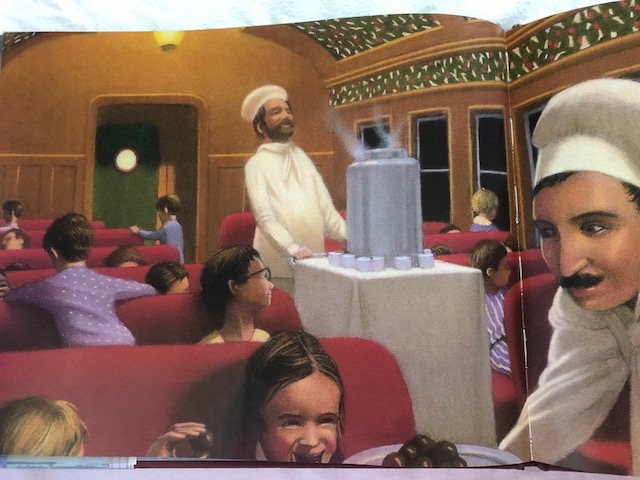
Then, someone begins sending her strange notes. At first, they come in the form of secret admirer notes and are accompanied by little presents. Later, the notes take a nasty turn, and Michaele becomes the victim of suspicious accidents. Someone even calls her son pretending to be his father, who lives in another state, to get him to go off on his own to meet him somewhere. Although nothing bad happens to the boy and no one comes to meet him, his sudden disappearances cause Michaele to worry that he has been kidnapped. Someone seems to be trying to frighten Michaele out of doing the play, but who is it and why?

The theme of the story is the difference between what people imagine is true and what is really true. A lot of the people in the story have unrealistic expectations of others. For instance, Michaele is impatient with her young son, who has had a troubled history of being torn between his divorced parents, who are both busy with their careers. By the end of the story, she has come to understand him better and plans to spend much more time with him.

Michaele, as a well-known actress, also attracts many admirers, most of whom have different illusions about what she is really like and what she really wants. In the end, after Sebastian reveals the culprit, Michaele decides not to let what happened stop her from going for what she knows she really wants, whether her efforts succeed or not. Michaele’s confidence is restored, and she’s looking forward to a brighter future with her son.

The book is currently available online through Internet Archive.