Raymond Wilks is the son of a ship’s doctor. They are sailing on a ship taking convicts to the British colonies in Australia when the prisoners revolt and take over the ship during the middle of a terrible storm. Raymond’s father is killed, and the ship is wrecked, but Raymond escapes with a young thief named Hugh O’Donovan. The two of them are taken to shore by friendly dolphins, and they meet up with some of the inhabitants of Dinotopia.
At first, they are frightened of the dinosaurs, but everyone is kind to them. They are taken to Waterfall City, one of the most beautiful places in Dinotopia, and they begin learning about the history and ways of the land. People in Dinotopia don’t use money, and everyone shares with each other, trading goods and services for everything they need. There is no crime in Dinotopia because everyone has all that they need and everyone looks after each other.
Raymond, although still mourning his father’s death, thinks that Dinotopia is a wonderful place, and he admires the attitude of the people there. Hugh, who was orphaned at a young age and forced to steal to survive, has difficulty believing that the people are all as nice as they seem or the society as perfect as they say. His harsh childhood has taught him not to trust others too much. Little by little, the people of Dinotopia win Hugh over, and he desperately wants to become worthy of the kindness that people show him, although he doubts whether he ever can.
As Hugh and Raymond struggle to come to terms with their new life in Dinotopia, they encounter a flying dinosaur called a Skybax who is suffering from an old injury. The Skybax, called Windchaser, shows up from time to time and causes trouble. He is the only unhappy creature they have seen since arriving in Dinotopia, and Raymond develops a strong desire to learn what is wrong with him and help him. Raymond’s struggles to help the unhappy dinosaur lead him into danger, and Hugh fears that he may lose the best friend he’s ever had.
The book is currently available online through Internet Archive.
#27 The Camp-Out Mystery by Gertrude Chandler Warner, 1992.
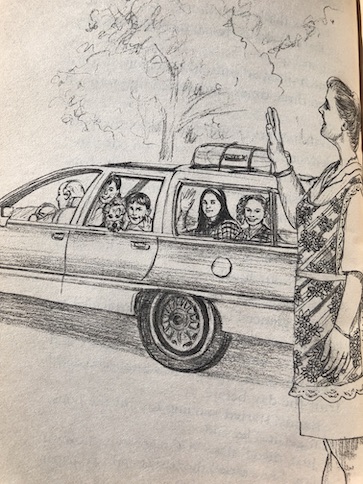
The Alden family has decided to go on a camping trip to a campground at a state park. From the moment that they arrive, though, strange things seem to be happening. When they stop for supplies, a woman Mr. Alden knows, Doris, seems oddly evasive when he tries to ask her about her sister, Hildy, and she makes the odd comment that she hopes nothing will spoil their trip. As they pull into the state park, they discover that the arrow on the sign pointing to the rangers’ station has been reversed to point the wrong way. Mr. Alden shrugs the incident off as a prank, but it’s only the beginning of the strange happenings.
The Aldens get to their camp site and notice that the place is a mess. Either the previous campers were pretty messy, or they left in a hurry. The Aldens clean up the site and set up their tents. (The description of how they set up camp is actually somewhat educational because they talk about things to look for when choosing a campsite, how they have to check the ground for rocks and tree roots before setting up their tents and why they should avoid places where it looks like rain water might pool and why it can be dangerous to set up a tent under a tree if there is a lightning storm.) Later that night, Violet is woken by the sound of music. At first, she thinks that it must be some nearby campers, but it sounds too loud and too close. When she and Jessie get up to investigate, the sound stops.
Later, the kids see strange lights in the woods, and things
disappear or are moved around at their campsite. When Mr. Alden realizes that someone has been
sneaking into their camp and taking things, he suggests that they might want to
leave the park, but the kids say that they’d rather stay because they’re still
enjoying themselves. Then, Mr. Alden injures
his ankle when he’s startled by another blast of loud music and part of the path
he’s on gives way because the dirt was loosened by rain. The children are prepared to leave when their
grandfather is injured, but to their surprise, Mr. Alden says that he’d rather
stay, too.
Who is doing all of these things and why? Is it the unfriendly Hildy, who lives alone
in a cabin and wants everyone to leave her alone? Or maybe her seemingly-helpful neighbor,
Andy, for reasons of his own? Could
Doris be responsible? What about the
Changs, a family camping nearby who seemed disappointed that they didn’t have
the campground to themselves?
There are some environmental themes and lessons in the story. The Aldens frequently pick up litter that other campers and hikers leave behind. There is also an explanation that the reason why part of the path Mr. Alden was on collapsed due to erosion because there are no trees along that section of path; tree roots help secure the soil so that it doesn’t wash away. After the mystery is solved, Mr. Alden decides to donate some trees to the park, and the kids talk about adding more trash cans and a recycling center to help solve the litter problem.
The book is available to borrow and read for free online through Internet Archive.
The Yellow House Mystery by Gertrude Chandler Warner, 1953, 1981.
This story in the Boxcar Children series picks up the following spring after the previous book. The children’s cousin, Joe, is arranging for the excavation of the cave where the children found their Native American artifacts. They’ve decided to use dynamite to blast open the roof of the cave to make excavation easier (I’m not sure if this is really the best way to get at artifacts that were sheltered safely for years in their cacve and were easily being dug up by children in their current situation, but okay), and although he had told the children that they couldn’t be there for the blasting, he’s changed his mind. He’s even going to let seven-year-old Benny be the one to push down the handle that will set off the blast. (Because this is one of the early books in the series, the children are aging from the first book in the series – Henry is sixteen years old, Jessie is now fourteen, and Violet is twelve.)
One of the people who will be working on the excavation is Alice, an old school friend of Joe’s. Everyone can tell that Joe is in love with her, and soon, he proposes to her. They get married and decide to spend their honeymoon camping out in the barn on the island, just like the children did the previous summer.
However,
the children have started to wonder what the story is about the old yellow
house on the island. For some reason, it
makes their grandfather sad, and he doesn’t like to talk about it. Eventually, their grandfather tells them that
their housekeeper, Mrs. McGregor, used to live in that house with her husband,
Bill. Bill used to take care of Mr.
Alden’s father’s race horses. He was a
nice man, but weak-willed. His brother,
Sam, and his brother’s disreputable friends were often able to persuade Bill to
do things that would get him into trouble, and Bill was never able to stand up
to them. One day, he vanished
mysteriously from that house, and neither his wife nor the Aldens have any idea
what happened to him. There are only two
clues about the reason for Bill’s disappearance. One is money that Bill was supposed to give
to Mr. Alden’s father for the sale of two horses that he managed on his behalf. Mr. Alden assumes that Bill’s brother did
something with the money and that Bill probably left because he was afraid to
face Mr. Alden without the it. Sam died
soon after Bill disappeared, so they were unable to ask him about what he knew. The other odd thing that happened before Bill
disappeared was that Mrs. McGregor heard strange sounds in the night. When she went to investigate, her husband was
apparently just reading a newspaper, and he claimed that the noise was nothing
unusual. But, what was Bill really
doing?
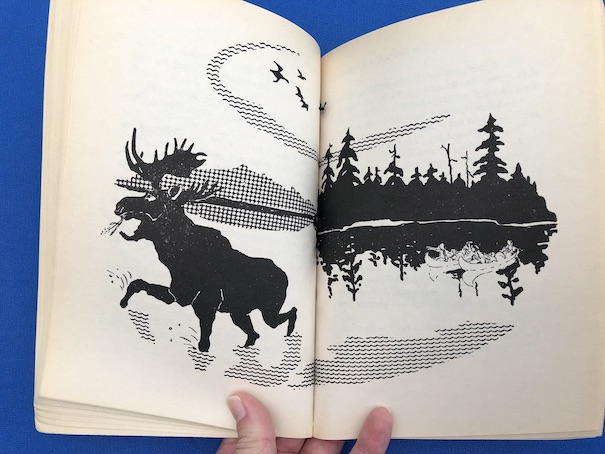
The kids want to investigate Bill McGregor’s mysterious disappearance, and their grandfather and Joe and Alice enter the house with them to have a look for more clues. In a hiding place behind one of the fireplace bricks, they find a letter from Sam to Bill about the money from the horse sale. Sam promised Bill that he would be able to pay him back more than the money he owed and tells Bill to meet him at a house in Maine near Bear Trail. The kids persuade their grandfather to let them to go Maine with Joe and Alice over the summer to try to find the house on Bear Trail so they can find out what happened to Bill. The trip will involve camping, hiking, and canoeing, but they’re up to the challenge!
Joe is familiar with Bear Trail because he used to work as a trail guide when he was in his teens. They are also joined by another trail guide, Mr. Hill, and have adventures that include a storm and a real bear. However, the real answers to the mystery lie at the Old Village at the end of the trail.
The book is available to borrow and read for free online through Internet Archive. There are multiple copies of the book. In order to check out a book through Internet Archive, you need to sign up for an account. The account is free, and you read the books in your browser.
My Reaction
In a
number of ways, this book is more adventure than mystery. It doesn’t take long for the kids to realize discover
Bill McGregor’s new identity. However,
what happened to the money is more of a puzzle.
Even Bill has been unable to find where his brother hid it years ago. Benny discovers it by accident while watching
a toad.
One thing that had made me uncomfortable was how long Bill had stayed away from his wife. When the kids confront him about his real identity, it turns out that Sam’s disreputable friends had lied to him, telling him that his wife had died shortly after he disappeared. He is overjoyed to discover that she is still alive, and she is glad to see him when he finally returns home.
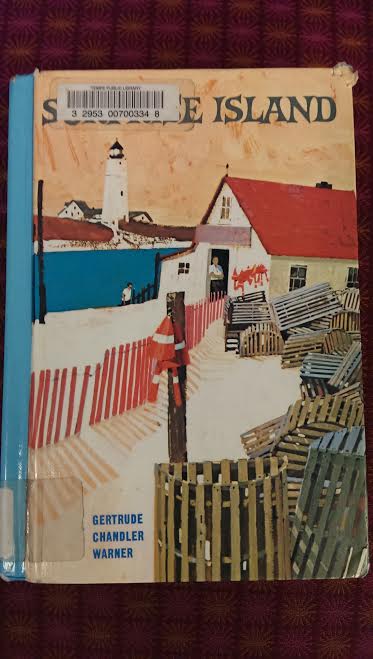
Surprise Island by Gertrude Chandler Warner, 1949.
Mr. Alden
has promised his grandchildren a special surprise for their summer vacation. He
tells them that, years ago, his father bought a small island because he kept horses
and wanted a quiet place for them. The
island has only one little yellow house, a barn, and a fisherman’s hut where
Captain Daniel lives. Captain Daniel
operates the motorboat that can take people to the island. Mr. Alden plans to take his grandchildren to
the island to look over the house, and if they like, they can spend the summer
there. The children think that it sounds
like fun.
When
they get to the island, the children decide that they want to stay in the barn
instead of the house. Captain Daniel
also tells them that he has a young man staying with him, a friend who hasn’t
been feeling well. The Aldens’ old
friend, Dr. Moore, has come to see the island with them, so he looks in on the
young man. It turns out that the young
man was in an accident and had lost his memory for a time, although he has been
gaining it back. He says that he used to
live with an uncle but that he didn’t want to go home again until he was sure
that he was completely well. He is going
by the name of “Joe”, which is short for his middle name, Joseph. Captain Daniel says that he’s known the young
man all his life, and Dr. Moore also seems to know him, but Joe doesn’t seem to
want to talk about himself to Mr. Alden.
The kids
enjoy setting up housekeeping in the barn.
It reminds them of when they used to live in an old boxcar. They use old boxes for furniture, dig for
clams, and eat vegetables from the garden that Joe and Captain Daniel have
tended for them. Their grandfather
allows the children to stay on the island in Captain Daniel’s charge, but they are
mostly allowed to take care of themselves.
Joe sometimes brings them supplies that they ask for from the mainland. (One of the themes of the Boxcar Children Series
is self-sufficiency. At one point,
Jessie comments about how much better things seem “when we have to work to get
it.”) For fun, they go swimming, and Joe
spends time with them, telling them about different types of seaweed. They are surprised at how knowledgeable Joe
is.
Henry gets the idea that they can set up a kind of museum of interesting things that they find on the island, like samples of different types of seaweed, shells, flowers, pictures of birds that they’ve seen, etc. The other children think that it sounds like fun, and they begin thinking about the different types of things that they can collect.While they’re searching for things to collect and add to their museum, the children find a cave and an old arrowhead and ax-head. They are authentic Indian (Native American) relics! When they show Joe what they’ve found, he gets very excited, especially when they tell him that they saw a pile of clam shells, too. Joe explains to the children how Native Americans used to use shells as money called wampum. He thinks that what they saw was wampum, which the people who used to live there might have made after drying the clams to eat later. Joe explains to the kids some of the process they would have used to turn the shells into wampum. He’s eager to go to the cave and look for more Native American artifacts with them, but he urges them not to say anything to anyone else about it because other treasure hunters will probably show up if they do. The children agree to keep their find a secret until their grandfather returns.
When
they return to the cave with Joe, they make an even more incredible find: a
human skeleton with an arrowhead inside.
It looks like they’ve found the bones of someone killed by an arrow!
The book is available to borrow and read for free online through Internet Archive.
My Reaction
As with
some other vintage children’s mystery series, the early books in the series
were more adventure than mystery. The
most mysterious part of this book concerns the real identity of the young man
they call “Joe.” The truth begins to
come out when a strange man who calls himself Browning comes to the island in
search of a young man who disappeared the year before while doing some
exploring for him. The young man he’s
looking for worked for a museum.
This is the book where Violet first learns to play the violin. This is a character trait that stays with her for the rest of the series.
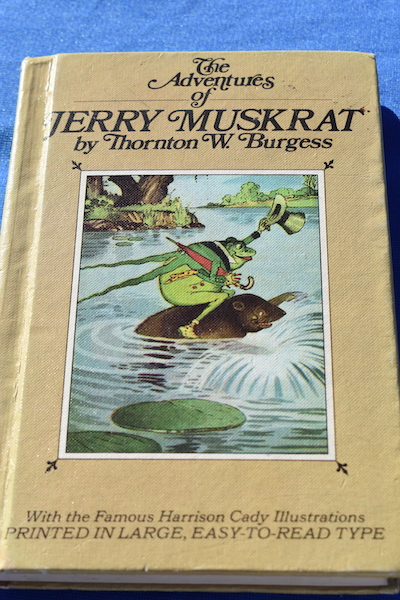
The Adventures of Jerry Muskrat by Thornton W. Burgess, 1914.
This book is part of a series of stories about the adventures of different animals.
Jerry Muskrat lives with his family and friends in the Smiling Pool and Laughing Brook, near the farm owned by Farmer Brown. Jerry’s mother warns him to look out for the traps that Farmer Brown’s son likes to set, but he’s sure that he can take care of himself . . . until he has a very narrow escape!
Jerry’s mother calls a meeting of the other animals to discuss the threat of traps after Jerry’s close call. They decide to ask Great-Grandfather Frog for his advice. He tells them that they must find all of the traps and use a stone or stick to trigger them. Then, when the traps have been sprung, they will bury them. The animals have some close calls while springing the traps, but they manage to set them off successfully.
However, they soon have a new problem: it seems like the water in the Smiling Pool is getting lower each day. When the animals investigate, they discover that someone has dammed the Laughing Brook that feeds the Smiling Pool! If they don’t do something about it, they might all have to go live on the Big River, and they don’t want to leave their home.
It turns out that the dam was made by Paddy the Beaver, Jerry Muskrat’s “big cousin from the North.” Jerry tries to make a hole in the dam so that the water will flow, but Paddy blocks it again, telling them not to mess with his dam. Jerry has to explain to Paddy why the residents of the Smiling Pool need the water. Once Paddy understands, he lets the water flow again.
The animals in the story refer to the place where they live in terms of their pool and brook and the nearby farm. You don’t really know exactly where they live, but there is one animal who has a Southern accent, “Ol’ Mistah Buzzard.” Ol’ Mistah Buzzard talks like the characters in Disney’s Song of the South, regularly dropping phrases like, “Where are yo’alls going?”, “Fo’ the lan’s sake! Fo’ the lan’s sake!”, and referring to other animals as “Brer Mink” and “Brer Turtle.” The book was written before the movie Song of the South was created in 1946, but long after the book that the movie was based on, Uncle Remus by Joel Chandler Harris from 1881. I suspect that the author of this book was inspired by the animal stories in Uncle Remus and that the Buzzard’s dialect is a salute to that. Unfortunately, that kind of dialect is really annoying for modern readers and may make it a difficult thing to read aloud to children. Mercifully, none of the other characters in the book do this. The parade of animals who hurry to find what has stopped the water in the brook is also a take-off from The Tortoise and the Hare story because the turtle, who was left behind by the others in their rush does become the first to find the source of the problem when the others stop to rest.
This book is over 100 years old and in the public domain now. There are multiple places to read this book for free online, but the one that I recommend the most is Lit2Go from the University of South Florida because it offers audio readings of the chapters in the book as well as the text. The book is also available online through Project Gutenberg.
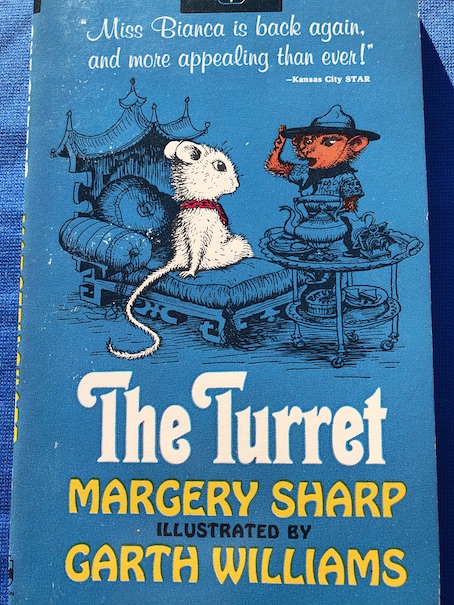
Miss Bianca has decided to resign as Madame Chairwoman of the Mouse Prisoners’ Aid Society. She has never felt particularly drawn to public life, really preferring her quiet life as a pet of an Ambassador’s son (whom she always calls “the Boy”), keeping him company during his lessons and writing poetry in her spare time. During the times when she is away from the Boy, undertaking rescue missions for the society, she knows that the Boy pines for her and worries about where she is. She has started to feel a little guilty that she might be neglecting her Boy.
Bernard, the Secretary of the society, actually feels a little relieved by her decision to resign. While he thought that she made a great chairwoman, he has always worried about the dangerous nature of their missions, afraid that something might happen to Miss Bianca. (Miss Bianca is a little annoyed that he seems so eager for her to resign, and his comment that “you’re too beautiful to be allowed into deadly peril” makes a weirdly chauvinistic compliment – like it would be okay for her to risk her neck if she were ugly because it would be less of a loss? – but Miss Bianca takes it in the spirit in which it seems to be offered.) The two of them reminisce about some of their past missions. Bernard thinks that the worst villain they’ve faced was the head jailer in the Black Castle (from the first book in the series), but Miss Bianca thinks that the worst was Mandrake (from the last book) because the target of his cruelty was a defenseless child.
The
society plans to throw a special dinner for Miss Bianca, and Miss Bianca
suggests that she would like a picnic by water.
The ideal place for it would be the moat around an old tower outside of
the city. Miss Bianca enjoys the picnic
and is fascinated by the crumbling old turret.
Then, she notices something white in the window. Thinking that it’s a piece of litter, one of
the mouse boy scouts goes to retrieve it.
It turns out to be a small piece of linen, and after the boy scout takes
it, it’s replaced by another. Miss Bianca
comes to the conclusion that there is someone in the turret and that the person
could be a prisoner, signaling for help.
When she studies the scrap of linen more closely, she also realizes that
she knows who the prisoner is because it has the name Mandrake on it!
After the events of the previous book, the evil Duchess had Mandrake locked in the turret. To Bernard, it sounds like a just punishment for Mandrake, but Miss Bianca feels a responsibility to rescue him, in the hope that he might reform. However, Bernard is skeptical about that possibility, thinking that they would just be letting a criminal lose if they tried to free Mandrake, and Miss Bianca is unable to persuade the other members of the society to undertake the mission.
However, Miss Bianca is unable to give up on Mandrake and goes to see him in his turret. Mandrake is a shadow of his former self. She introduces herself to him as a member of the Mouse Prisoners’ Aid Society, and it turns out that he’s heard about it from friends of his who have been in jail (having had many disreputable associations over the years). In order to test how likely Mandrake would be to reform, Miss Bianca asks him what he would do if he were freed from captivity, and he says that he’d like to be a gardener at an orphanage. He feels badly about the child slaves he helped to abuse while serving the Duchess, and he’d like to see children happy, making their garden a beautiful place. Miss Bianca is satisfied with this and sets about planning his escape. (She’s free to undertake this mission because her Boy is having his tonsils out and won’t miss her for awhile.)
At
first, Mandrake doesn’t know how people even bring him food, since his room in
the turret doesn’t seem to have a door and food just seems to arrive during the
night. Miss Bianca stays up at night to
see what happens and learns that there is a hidden staircase in the turret that
his jailers use. Before Mandrake can escape,
though, he needs to be stronger because he’s badly under-nourished. Miss Bianca recruits the mouse boy scouts to
bring him vitamins to help make him healthier and tries to figure out how the
secret passage works and think of some way to create a distraction so that Mandrake
can escape.
Shaun,
the leader of the boy scouts, helps her to come up with a plan. (The book says that Shaun is half-Irish and
thinks of himself as being a “handsome boy-o.”
Stereotypical.) Shaun has figured
out that the jailers watching Mandrake are actually grooms by trade, and he
knows of a race horse, Sir Hector, who could provide a good distraction for
them. Miss Bianca approves of the plan
and persuades Sir Hector to help them.
Meanwhile, the members of the Prisoners’ Aid Society are getting fed up with their strict new chairwoman, who only seems interested in forcing them to participate in group exercises. Members are starting to avoid going to meetings, and worse still, someone suggests to Bernard that the bossy chairwoman particularly likes calling committee meetings because she’s in love with him and wants the excuse to see him. The thought horrifies Bernard, but he’s afraid to say anything to Miss Bianca because he doesn’t want her to feel obligated to try to become the chairwoman again in order to solve the society’s problems (or his), not knowing what she’s actually been up to in her free time.
In the end, everything works out well. When Mandrake is rescued, he actually does become the gardener for an orphanage. The members of the society find out Miss Bianca’s daring mission, undertaken with just a handful of boy scouts, and feel badly that they didn’t take part. They complain to the new chairwoman that she was just wasting their time with exercises instead of real missions, and she resigns, saving Bernard from her attentions. Miss Bianca does not return to the society as its chairwoman, but the next chairwoman is more competent.
Miss Bianca is still a hero to the Mouse Prisoners’ Aid Society after the rescue of the Norwegian poet in the last book. Bernard is a lesser hero, even though he was part of the mission, but such is the lot the organization’s Secretary. Since the success of the rescue mission, the society is keen to perform another rescue, a deviation from the society’s usual role of merely providing comfort to prisoners. The rescue mission that they have in mind this time is that of a little girl. (The first Disney The Rescuers movie also featured the rescue of a little girl, but the circumstances in the book are very different.)
Patience
is an eight-year-old orphan who has been abducted and enslaved by the Grand
Duchess and is being held in her Diamond Palace. The Grand Duchess is cruel, and some people
think that she’s a witch. Miss Bianca
appeals to the Ladies’ Guild of the society to help free Patience. The Ladies’ Guild doesn’t usually take part in
the more exciting missions of the society.
The mice are somewhat concerned about what they will do with the child
once they have rescued her because other prisoners they’ve helped have had
homes to return to, but Miss Bianca assures them that they have a home in mind
for the girl, a farm family in Happy Valley who have lost a daughter and would
be likely to take in another girl. The Ladies’
Guild agrees to undertake the mission. Bernard
wanted to come, too, but Miss Bianca insisted that they didn’t need his help.
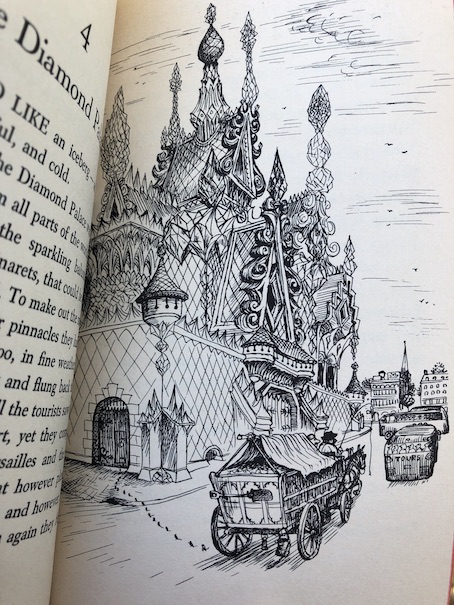
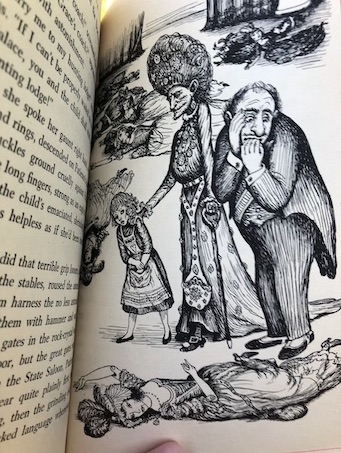
The Diamond Palace is a strange place, in many different ways. People often come to see it because it looks like it’s made out of diamonds, although it’s actually rock crystal. It’s cold all the time, but even weirder than that, there seem to be less servants in the Palace than Miss Bianca would expect, given that the Duchess is always surrounded by ladies-in-waiting, who would be expected to have maids of their own. It turns out that the “ladies-in-waiting” aren’t real people – they’re clockwork automatons!
Rather
than being a witch, the Duchess is simply an odious person who has so much
money that she can give full reign to a nasty personality without anyone
stopping her. She’s so nasty and spoiled
and used to forcing people to do what she wants that all of her previous, human
ladies-in-waiting found that they just couldn’t handle her increasingly unreasonable
demands, like insisting that they all stand perfectly still all day long while
she sits on her throne, not even the slightest movement allowed. No human being could possibly manage that. When the human ladies-in-waiting all fainted
after trying to keep perfectly still for forty-eight hours straight, the
Duchess screamed that they all must have done it on purpose and dismissed them,
replacing them with automatons. The mechanical
people are almost perfect because they always stand perfectly still until they’re
needed and never complain or have human needs, but the Duchess discovers that they’re
not quite perfect because there are some chores that they can’t do and she also
misses seeing people react fearfully or start crying when she bullies
them. Keeping Patience as her slave
gives the Duchess someone to do those chores and also someone to abuse. The Duchess has had other child slaves before,
but the others have died from the abuse, ill-nourishment, and general bad treatment. (This is a darker story in a lot of ways from
the Disney one.)
When Miss Bianca and the other mice meet Patience, she is also under-nourished and desperately lonely. Miss Bianca sends the others back to the society to report about the automatons and stays with Patience to keep her company, trying to decide how to deal with the strange, mechanical people. Bernard worries anxiously about Miss Bianca when the others come back without her and decides to go after her.
The Duchess’s
other human servant, Mandrake, her Major-domo, is also little more than a slave. The Duchess has evidence of a crime that he once
committed and uses it to keep his loyalty.
Usually, he’s the only one who gets to go out the back door because he
doesn’t trust Patience to take out the garbage without running away. However, Patience tells Miss Bianca that the clockmaker
sometimes comes in that way when he comes to wind up the mechanical ladies-in-waiting. Miss Bianca hatches a plan that involves
making the ladies-in-waiting break down.
However, to Miss Bianca’s surprise, the Duchess commands Mandrake and Patience to come with her to her hunting lodge when the ladies-in-waiting break down. There is no opportunity for escape. However, it turns out that the hunting lodge is actually above Happy Valley, and Bernard knows where it is.
Of
course, they do get Patience safely to her new foster family. Miss Bianca actually talks to the girl’s
foster mother and tells her that Patience will probably forget about her eventually,
when she grows up, but the foster mother likes the lullaby that Miss Bianca
sings for Patience and promises to keep it as a family tradition.
The darker aspects of the story really bothered me, and I have to admit that I didn’t like it as well as the Disney version. Mandrake actually reappears in another book in the series.
The book is currently available online through Internet Archive.
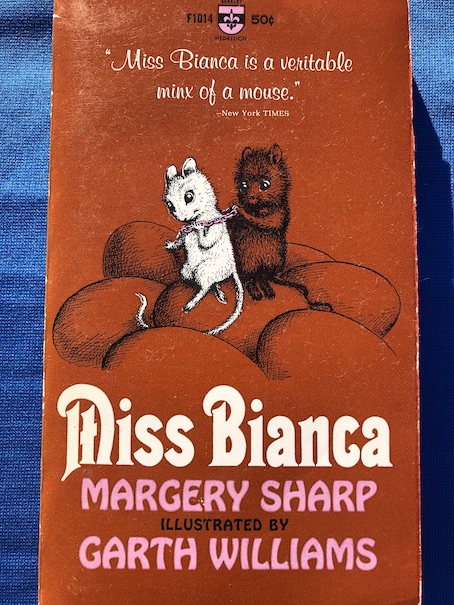
This is the first book of The Rescuers Series. Disney made a movie called The Rescuers based on this series, but the movie was very different from the book. The movie involved a pair of mice who were members of a mouse version of the United Nations called The Rescue Aid Society who rescued a young orphan girl who was kidnapped for the purpose of recovering a treasure from a dangerous cave. In the book, the prisoner the mice rescued was a poet who was being held captive in a castle.
The
beginning of the first book of the series explains the purpose of the
Prisoners’ Aid Society, an organization of mice that helps human prisoners:
“Everyone knows that the mice are the prisoners’ friends – sharing his dry bread crumbs even when they are not hungry, allowing themselves to be taught all manner of foolish tricks, such as no self-respecting mouse would otherwise contemplate, in order to cheer his lonely hours; what is less well known is how splendidly they are organized. Not a prison in any land but has its own national branch of a wonderful, world-wide system.”
However, the mice are daunted by their latest concern, a prisoner who is being held captive in the Black Castle, a Norwegian poet. The Black Castle is a harsh prison, and because of the jailer’s cat, mice usually cannot reach the prisoners there. However, the current chairwoman of the society believes that it may be possible to rescue one of the prisoners there. She thinks that Miss Bianca is just the mouse for the job because she is the pet of an ambassador’s son and will soon be traveling to Norway with her owner. The chairwoman sends Bernard, a pantry mouse, to Miss Bianca to recruit her for the mission.
Miss Bianca is frightened when Bernard explains the mission to her and faints. However, it turns out that Miss Bianca is a poet, and so is the man who is being held prisoner. Bernard uses her sympathy for a fellow poet and some flattery to inspire her to agree to help.
When
Miss Bianca reaches Norway, she recruits some help from the mice in the cellar
of the embassy. In particular, a sailor
mouse called Nils accompanies her to where the other mice from the Society are
meeting. There, Bernard joins them for
the journey to the Black Castle.
When they reach the castle, Miss Bianca, Bernard, and Nils take up residence in an empty mouse hold in the head jailer’s quarters. (There is a horrifying description of how the head jailer apparently pinned live butterflies to his walls to die. Ew!) The jailer does have a horrible cat named Mamelouk, who is as cruel as his master. At first, Miss Bianca isn’t afraid of the cat, having known a nice cat who didn’t eat mice when she was young. After talking to Mamelouk and interacting with him, she comes to recognize his cruelty and real intentions toward her. However, Mamelouk is an important source of information. It is from Mamelouk that they learn that the jailers will be having a New Year’s Eve party soon and that many of them are likely to be lax in their duties. This will be the best time for them to try to rescue the poet!
The mice do successfully rescue the poet, and Miss Bianca returns to her boy, who has been missing her. However, this is just the first of her adventures in this series!
Overall, I prefer the first Disney Rescuers movie to the book because the prison/castle seemed pretty dark for a children’s book, and I think the idea of rescuing a child is also more appropriate for a children’s book.
The book is currently available online through Internet Archive.
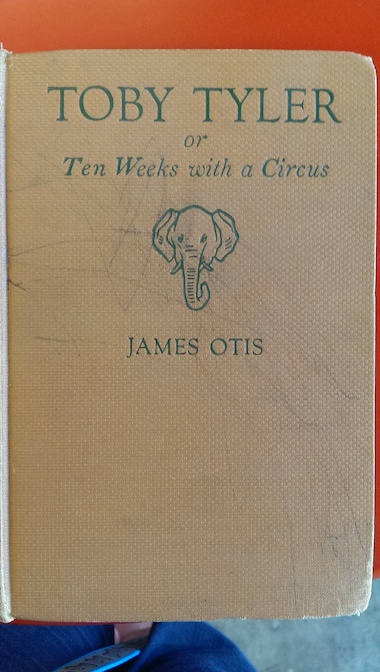
Toby Tyler; Or, Ten Weeks with a Circus by James Otis, 1881.
Toby Tyler is an orphan who lives with a church deacon he calls “Uncle Daniel.” Uncle Daniel isn’t really his uncle, but he raised Toby after he was abandoned as a baby. Toby doesn’t know anything about his parents. Uncle Daniel is stern with him and says that Toby eats more than he earns, making it a hardship to care for him. Toby is cared for, but life with Uncle Daniel isn’t exactly happy.
Toby has a fascination for the circus, although Uncle Daniel says that the show isn’t any good, and it’s all a waste of time and money. The circus is certainly cheap, as Toby can see from the first. When he tries to buy some peanuts, he only gets six for the penny he gives, and all or most seem to be bad. The lemonade is basically water with lemon peel in it. But, to Toby’s surprise, the man who sells the snacks at the circus, Mr. Lord, offers him a job. He says that people who work for the circus get to see the show as often as they like, and he could use a boy to help him as an assistant.
Toby think that it sounds like an exciting offer, and Mr. Lord persuades Toby that the best way would be for him to sneak away at night because his Uncle Daniel might disapprove and stop him from taking the job. Not taking that as a warning, Toby agrees. Toby feels a little guilty about running away and surprisingly homesick, but he decides to stand by the agreement he made with Mr. Lord and see what possibilities life with the circus might have for him.
Life with the circus turns out to be very different from what Toby is used to and what he expects. It’s noisy and dirty, and no one seems to particularly care about Toby or his welfare. Mr. Lord also turns out to be even sterner than Uncle Daniel, not even telling Toby what he expects him to do, just expecting him to do it. Toby works hard, and Mr. Lord acknowledges that he’s better than the other boys who have helped him, but he’s still a temperamental man and hard to please. Like Uncle Daniel, he fusses about how much Toby eats. Toby also has to sell snacks inside the big top under the watchful eyes of Mr. Jacobs, who threatens him with violence if he doesn’t make sales or if people try to cheat him.
However, Toby does succeed in making a few friends in the circus. The first friend he makes is a monkey that he calls Mr. Stubbs. Mr. Treat, who plays the part of the Living Skeleton in the circus sideshow, and his wife, who is the Fat Lady, have seen Mr. Lord mistreating other boys, and they intervene to make sure that Toby is all right, giving him food when Mr. Lord doesn’t. Unlike everyone else Toby has known, Mrs. Treat lets him eat as much as he wants without worrying, saying that some people just need more food than others. Like her husband, Toby seems to have the ability to eat a lot while still being small and skinny. Mrs. Treat herself maintains an enormous size while hardly eating anything. She says that’s just how some people are.
When Mr. Castle teaches Toby to do trick riding, his status goes up in the circus, and he is no longer under Mr. Lord’s thumb. As far as the Treats are concerned, Toby could stay with them forever. However, life in the circus isn’t what Toby had once thought it was, and Toby can’t get rid of the thought that he’s made a terrible mistake by running away from Uncle Daniel. He wants to go home and make things right with him.
In the Disney movie, Toby stays with the circus, doing well with his trick riding act and having happy adventures with his monkey friend. Unfortunately, in the book, Mr. Stubbs is accidentally shot by a hunter and dies. The book was meant to teach moral lessons about responsibility, whereas the movie was just about fun and adventure.
In the end of the movie, Toby stays with the circus even while being reunited with the people who raised him and missed him when he ran away, giving an all-around happy ending. In the book, Toby feels terrible about the death of Mr. Stubbs (although it wasn’t really his fault), and the hunter who shot him is very sorry because he hadn’t realized that he had shot someone’s pet. To make up for it, he helps Toby to get back to Uncle Daniel. At first, Toby is unsure that Uncle Daniel will want him back, but he misses his old home so much that he says he doesn’t care if Uncle Daniel whips him for running away. However, Uncle Daniel has also missed Toby since he disappeared. As stern and harsh as he could be before, Uncle Daniel genuinely cares about Toby and welcomes him back with open arms. The ending implies that Toby’s future with Uncle Daniel will be happier than the past because they have much greater appreciation for each other now.
The book is now in the public domain and is available on Project Gutenberg.
Most of this story is framed as a flashback, actually two of them. In the beginning, during the late 1800s, a girl named Mary is taken by her grandmother, Susannah, to visit an old friend of hers who is dying. The friend, Bethlehem, is a black woman who is a teacher in Canada and has a student living with her, a young black girl named Free, who is about the same age as Mary. At first, Mary doesn’t completely understand who Bethlehem is and why they are there to see her, and Free is somewhat aloof and suspicious of these white people, but together, Bethlehem and Susannah explain to both the girls about their unusual friendship and a shared history that changed both of their lives forever. As they explain, Mary writes down their story.
Years ago, before the American Civil War, Susannah was a young teenage orphan. She traveled from her home in Vermont to the home of her aunt and uncle in Virginia, her new guardians. Homesick, missing not only her deceased parents but the friends she left behind, especially a boy who is her best friend (and who eventually becomes her husband, Mary’s grandfather), Susannah finds life in Virginia strange and unpleasant. Her aunt and uncle own slaves, which is something that makes Susannah uneasy. She was raised not to believe in slavery, but her aunt and uncle give her a slave of her own to take care of her, a girl about her age named Bethlehem. Susannah is extremely uncomfortable with the situation, not really being the kind of person to get others to do things for her or order anyone around, and Bethlehem isn’t happy about being saddled with this sad, somewhat weak and clueless, white girl.
Bethlehem already has serious problems. Susannah’s older, male cousin has taken a liking to Bethlehem and pursues her, trying to force his attentions on her. Bethlehem resists but knows that one day she might not be able to stop him because she’s in his family’s power. They own her and have authority over her. Susannah is unaware of this situation at first, being a rather naive girl. However, Susannah’s unhappiness at her new home increases, and more and more, she longs to return to her real home in Vermont, and her desire to escape also becomes Bethlehem’s ticket to freedom.
Both of the girls long for freedom, although each craves a different kind of freedom and has in mind a different kind of life they long to live elsewhere. Together, they team up to run away in disguise as boys, although Bethlehem does not trust Susannah at first because she resents white people and the slavery that has been forced on her for her entire life. However, with their common interest in escape, they learn to rely on each other. They come to trust and understand one another much better during the course of their journey. It is an eye-opening and life-changing experience for both of them. Then, when it comes time for them to say goodbye and go their separate ways, it is one of the hardest things that either of them have had to do.
It is a story about lives with separate directions but which crossed in unexpected ways to the benefit of both of them. Because Susannah and Bethlehem have different destinies and different things that they want in life, they cannot live their lives together and do not see each other again for many years after their adventures, but because of their shared experiences, they still share a bond that lasts across time.
After Bethlehem’s death, Mary becomes concerned about the young student of Bethlehem’s, Free, who was living with her as a part of her family, but Free doesn’t want their help. Susannah tells Mary that they have to let her live her life and establish her own independence in the way she wants, just as Susannah had to let Bethlehem go her own way years before as a strong, independent young woman who only wanted the freedom to choose her own course in life.
In the end, Mary, as an adult looking back on the one and only time she met her grandmother’s old friend, just before her death, realizes that she has also learned much from the experience, not just about her grandmother’s history, but about herself, other people, racial differences and attitudes, and some of the realities of the world, absorbing vicariously some of the lessons her grandmother learned years ago through her story and Bethlehem’s.
This isn’t really a happy story. The ending kind of leaves readers with an unsettled feeling because there are many things left unanswered and unresolved. The book does explain a little about what happens to the characters at the end, but for the most part, they all kind of go their separate ways. Although they’ve had an effect on each other, nothing is clear-cut, and they share moments together more than lives. I have to admit that I felt like some of the story dragged in places and others were downright depressing, making this a difficult book to get through. However, it is interesting for showing a part of history, a life-changing event from different points of view, and some poignant thoughts about caring but letting go.
The book is available to borrow and read for free online through Internet Archive.











 Toby Tyler; Or, Ten Weeks with a Circus by James Otis, 1881.
 Toby think that it sounds like an exciting offer, and Mr. Lord persuades Toby that the best way would be for him to sneak away at night because his Uncle Daniel might disapprove and stop him from taking the job. Not taking that as a warning, Toby agrees. Toby feels a little guilty about running away and surprisingly homesick, but he decides to stand by the agreement he made with Mr. Lord and see what possibilities life with the circus might have for him.
 Steal Away by Jennifer Armstrong, 1992.
 Jestress's Forgotten Books and Stories