One night, after a party, Lord Inaba is killed in his room by a mysterious intruder. The only clue to the intruder’s identity is a red origami butterfly left at the scene. Lord Inaba’s death is an embarrassment to the shogun because Lord Inaba was in Edo under his protection.
It doesn’t take Judge Ooka long to decide that the murderer was a ninja. Ninjas are hired assassins known for their stealth and great skill with weapons. The butterfly left at the scene was to purify the spirit of the dead man and keep it from coming after his killer.
However, Judge Ooka says that it is not enough to know that that the murderer was a ninja; what they have to find out is who hired the ninja. He assigns Seikei the task of finding the source of the butterfly and learning who Lord Inaba’s enemies were. Judge Ooka finds a ninja he knows, Tatsuno, and convinces him to accompany Seikei on a journey through Lord Inaba’s territory and to teach him what ninjas are like. Although Seikei is not sure that he trusts Tatsuno, he learns to be grateful to him for his help and for saving him from the real danger, which comes from a surprising source.
While many children’s movies glorify the ninja, in real life, they were mercenaries, assassins for hire. They used clever tricks in order to gain access to their victims and to get away without being caught, which ended up giving rise to a number of legends about them, attributing an almost supernatural quality to their skills. While searching for the assassin and the person who hired him, Seikei learns a number of the tricks that ninjas used and the security measures that people would take to try to guard against them, such as nightingale floors (here is a video of a nightingale floor in a Japanese castle and another where you can hear the floor even better).
The book is currently available online through Internet Archive.
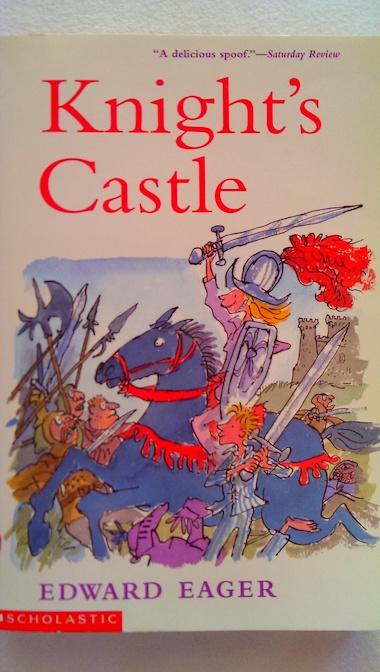
Roger and Ann are the children of Martha from the previous two books in the series. Like their mother’s family when they were growing up, they live in Toledo, Ohio. Their Aunt Katharine (one of Martha’s older sisters) used to live close to them in the Midwest but now lives in Baltimore, Maryland. Roger and Ann don’t particularly get along with Aunt Katharine’s children, Eliza and Jack, because Eliza is bossy and Jack is only interested in photography. However, the four children end up spending the summer together when Roger and Ann’s father needs to have an operation at a hospital in Baltimore.
Like their mother and her siblings when they were young, Roger and Ann also like fantasy stories, which their father likes to read to them. Roger starts to believe in real magic when it seems like one of his toy soldiers comes to life at night. Roger collects toy soldiers, and he has over 200 of them, but this one is special because his father says that its been handed down in their family for generations. Roger calls it the Old One. It’s rather worn, so it isn’t obvious at first, but the Old One is actually a knight. Worried about his father’s illness, Roger takes the Old One to bed with him (which he thinks is more manly than taking a teddy bear to bed), and then feels it wriggling in his hand.
Realizing that the Old One is magic and is coming to life when he holds him, Roger asks him if it’s part of his magic to grant wishes. If it is, then he wishes for his father to get well, and if possible, for him and his sister to have an adventure in Baltimore over the summer. The Old One doesn’t answer him immediately, but over time, he makes it clear to Roger that wishes have to be earned, and that will be the source of his summer adventure.
When the children arrive in Baltimore to stay with wealthy Aunt Katharine while their father is in the hospital, Aunt Katharine gives them presents. Ann gets a new dollhouse, and there is a toy castle for Roger. Since Aunt Katharine has also just taken all the children to the movies to see Ivanhoe, all of them become immediately interested in playing with the castle.
That night, Roger has a strange dream that he finds himself within the story of Ivanhoe, which is being acted out in his toy castle. The Old One is there as well, although he is mainly watching the action as Roger begins to take part in the story. When Roger comes face-to-face with the villain, he accidentally lets Ivanhoe’s plans slip to him. Things are looking pretty bleak when Roger suddenly realizes that the castle is still a toy and everyone around him is just a lead soldier. This revelation ends the magical adventure and brings him back to reality. However, Roger is disappointed that he ended the adventure so early when perhaps he could have done something really heroic.
Seeing the toy soldiers scattered around instead of poised for the battle they were planning the night before, Eliza and Ann think that Roger was just playing with the castle without them, but he explains to them what happened. The girls were just reading The Magic City by E. Nesbit, and they start building their own “magic city” out of random things from around the house, surrounding the toy castle. Roger is upset about the city because he says that it doesn’t fit in with the Ivanhoe story, and he’s sure that it will ruin everything, maybe from preventing the magic from working again at all. The Old One tells Roger that magic works by threes, so the next opportunity for magic will be in three days.
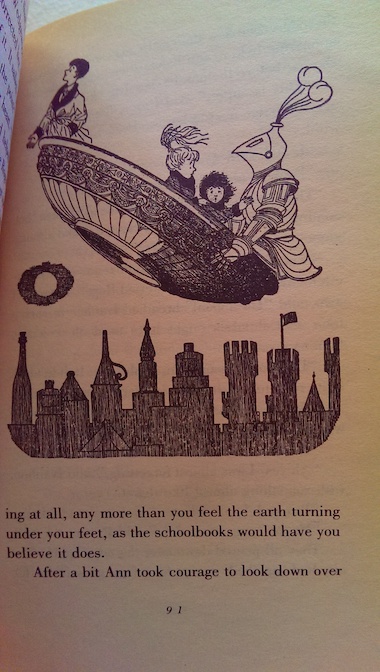
As it turns out, the city does end up becoming part of the story when the magic brings it all to life on the third night. Roger, Ann, and Eliza find themselves in the middle of the city, surrounded by knights attempting to drive modern cars. Ivanhoe has become a fan of science fiction books, via the public library in the city that the girls built. Although Ivanhoe has turned into something of a geek, the children persuade him to come on a mission to rescue the captive Rebecca, and they end up traveling in a flying saucer (made from a real saucer) to the Dolorous Tower, where the adventure ends as soon as Eliza remembers that the villain threatening them is still just a lead soldier.
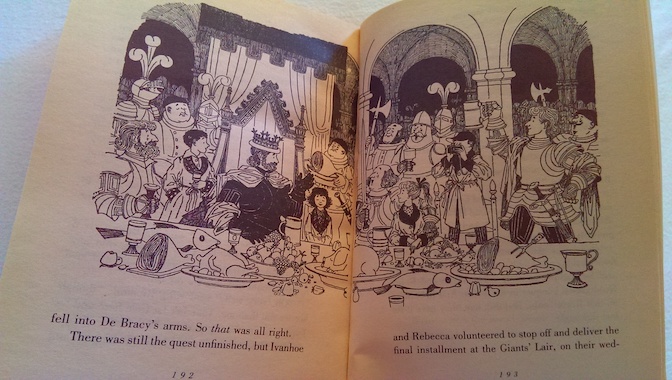
It was an even weirder adventure than Roger’s first one, but by now, the children are starting to understand the rules that go along with the magic. Jack, who says he doesn’t really believe in magic, accompanies the other children on the next adventure, as they try to prove to him that it’s real. They end up having to rescue some of the others from the “giant’s lair”, which turns out to be Ann’s new dollhouse. The dolls are angry that Ann has been neglecting them, only paying attention to the dollhouse when she and Eliza needed to borrow things for their magic city. They manage to escape again by remembering that the dolls are just dolls.
However, Roger is still worried about their father, who is about to undergo his operation. The Old One had told him that wishes needed to be earned, and he doesn’t think that they’ve managed to accomplish much in their adventures. Roger thinks that they need to do something really heroic so that his wish for his father to get better will come true. The Old One gives Roger a rhyme, hinting at what the children need to do on their next adventure, but Roger doesn’t understand what it means, and he doesn’t know if he can figure it out in time.
Actually, it is Ann who eventually realizes what the rhyme means and provides Roger with the “wisdom” that he needs to earn his wish. All throughout the story, Roger was criticizing his little sister for things she did wrong, saying that she was too little and only a girl. Because Roger thinks of her as being just his little sister, he overlooks what she has to contribute to the adventure. Roger’s acquired wisdom is to value the contributions of others and not underestimate their ability to contribute. Ann, being young and shy, frequently doubts herself, but she also learns confidence when she realizes that she has the answer to the riddle. Jack and Eliza learn lessons as well. Doubting Jack learns to believe in magic, and Eliza learns that she can’t always be the boss, that sometimes it is better to let someone else take the lead when they’re the right person for the job. (Although, she does say at the end of story, “If that wouldn’t be just like that magic’s impudence! Trying to teach me moral lessons!”)
Like other books in this series, there are a lot of references to popular pieces of children’s literature and jokes about things that happen in children’s stories.
The book is currently available online through Internet Archive.
Larry Damar and Josh Toomey are sailing in a boat off the coast of Peolle Island in the Caribbean when they rescue an old man from what seems to be a skiff. But, as soon as they get him aboard their own boat, they realize that what they thought was a skiff is actually more of a long boat, and it looks old. Very old.
They take the old man, who is suffering from exhaustion, to their fathers. While the old man rests, they inspect the boat and confirm that it is an antique. Oddly, from the condition of the wood, they believe that it has been resting in water for some years, but not salt water. It’s the kind of longboat that would have been carried aboard larger naval ships from a couple hundred years earlier. The name on the side of the boat, HMS Tiger, is familiar, but they heard that it was lost at sea ages ago. The old man is also carrying what appears to be some very old documents, but they are unable to read them, and when the old man speaks, they’re not quite sure what language he’s speaking.
They send a message to Sir Harry Arnold at the antiquities department of the British Naval Archives about the boat and the old man. When he arrives, he confirms that the longboat came from the HMS Tiger, a three-masted ship built in England in 1791. The Tiger was considered a jinxed ship because of everything that went wrong during its construction and its maiden voyage. Because of that, no one wanted to sail on it again or even work on the ship to dismantle it. So, the builder decided to send the boat on one last voyage by itself. He and his men loaded up the ship with supplies as if it had a crew aboard and then set it adrift, watching it sail off majestically, without a crew. Everyone had assumed that it would have eventually sunk, damaged by the weather, but apparently, it survived for longer than anyone had suspected.
Since no one can understand his language, the old man, who calls himself Vali, draws pictures to explain to them where he came from. Vali indicates which island he came from, and according to his other drawings, he lived there with many other people until many of them were killed in some kind of storm. He also draws a picture of a young girl with a crown on her head. Then, Larry’s dad, Vincent, recognizes the seal on a signet ring that Vali shows them. Vincent has read about the history of the country of Grandau (fictional country), and he recognizes its royal seal.
About 200 years before, Grandau was overrun by a neighboring country. Members of the royal family of Grandau escaped the invasion along with some loyal servants and tried to flee across the Channel to England to seek sanctuary. However, they were only in an old fishing boat, and it was thought that it sunk in a storm before they reached England because such a small craft would be unlikely to have survived. Grandau has not been a happy country since then. Over the years, they have been ruled by a series of dictatorships, and it has been in an almost constant state of unrest.
Now, the presence of the longboat from the HMS Tiger presents a much more intriguing theory of what happened to King Tynere of Grandau and his people. By an unbelievable coincidence (your suspension of disbelief is required for this story), the royal family’s attempted escape to England happened around the same time that the HMS Tiger was sent off alone and fully equipped for its final voyage. It now seems that the desperate people on the fishing boat were saved by encountering this grand, unmanned ship that no one else wanted, that everyone feared was jinxed. Grandau was not a seafaring nation, so the people were probably unable to actually sail the ship, simply letting it drift until they found land. Eventually, they arrived at an island in the Caribbean, and their descendants have been living there ever since in anonymity, until the disaster that prompted Vali to risk venturing out for help.
Unfortunately, their attempts to determine what language Vali was speaking and where he came from have also come to the attention of the wrong people. The government currently in power in Grandau has been working hard to stamp out the history and culture of the country in order to tighten its hold on the people, although their hold has never been more than tenuous, just like all the other dictatorships since Grandau’s royal family fled. Now that word has reached them that members of the royal family that the people of Grandau mourn may actually still be alive, they are determined to eliminate them before they can return to their ancestral home.
The author of this book, Mickey Spillane, is best known for his Mike Hammer series of hard-boiled mysteries for adults, and some of his hard-boiled style shows in this adventure book for children. This book is also part of a short series, although I don’t have the first book, The Day the Sea Rolled Back. In that book, Larry and Josh are helping their fathers hunt for sunken treasure, but their efforts are being sabotaged by a pair of treasure-hunting brothers.
This book was the basis for the Disney made-for-tv movie The Secret of Boyne Castle. However, the book and the movie are very different. Although they have a similar premise, many details were changed in the movie version, the first of which is that the location of the story was moved from Scotland, as it was in the original book, to Ireland.
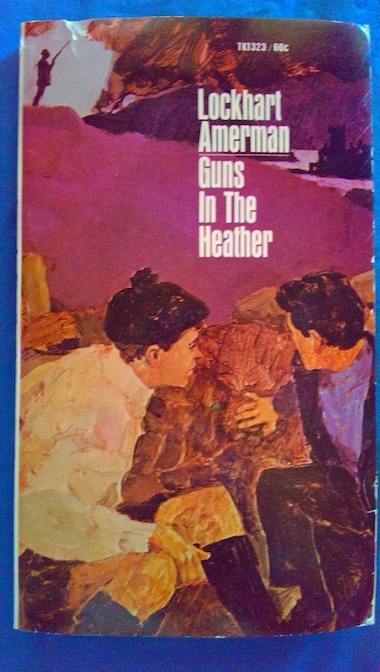
Jonathan Flower, sometimes called “Posy” by his friends, spends most of his time at various boarding schools. His mother died when he was very young, and his father has a government job that takes him all over the world, so Jonathan has been in boarding schools in various countries, seeing his father whenever he can during school breaks. For the most part, Jonathan doesn’t really mind it. He and his father get along pretty well, and he knows that his father’s work is important.
Right now, he’s at a boarding school in Scotland. He’s made a lot of friends there, spending holidays like Christmas and Easter at various friends’ homes. He’s also developed an interest in rugby and cricket. He anticipates that his father will meet him at the end of the school year so that they can go mountain climbing together over the summer break. However, shortly before his father is expected to arrive, Jonathan receives a telegram from him, saying that he is to go to a certain place and meet a Mr. Finch. Because the telegram contains certain words that this father uses when a situation is urgent, Jonathan goes to meet Mr. Finch and is kidnapped.
Mr. Finch, who also goes by the alias Dr. Fisher, holds Jonathan captive in a house, pretending that Jonathan is a patient who has volunteered for an experimental treatment. Fortunately, Jonathan’s father, disguised as a milkman, soon rescues him.
While Jonathan’s father, who is actually a government agent, attends to some of his duties, Jonathan tries to go to the American embassy, only to be misled and almost recaptured. For a time, he is on his own, unsure of who to trust and how to reconnect with his father. When the two of them finally meet again, they both seek shelter with friends, but their enemies aren’t far behind, no matter where they go. They end up staying with friends who own an old castle, but their enemies are planning a siege.
My Reaction
The style of the writing in this book doesn’t make for a particularly easy read. It’s not overly difficult, but it starts off slow and is very dense, unlike many more modern books. The scenes also change quickly throughout the book, and I had trouble keeping track of who some of the characters were. Overall, I preferred the movie, even though it didn’t follow the book very closely.
In the Disney movie version, a strange man drives onto the grounds of an Irish boarding school, stumbles out of his car, and whispers an urgent message to a teenage American exchange student (played by a young Kurt Russell and renamed Richard Evans) that is meant for his older brother. Then, the man dies from a bullet wound. Another man, who is ostensibly from the American embassy in Dublin, abducts Richard after saying that he needs to go to the embassy to make a statement about the stranger’s death. Richard is also accompanied by an Irish friend, Sean, when he is lured away from the school, and his friend helps him as they escape from the enemy spies holding them captive. The two of them search for Richard’s older brother (who they have only just learned is a spy, whereas Jonathan was aware that his father worked for the government) to give him the dead man’s message. In both the book and the movie, there is a final showdown with the bad guys at a castle, but in the movie, they go to the castle to retrieve a secret message that the dead man left there. I don’t think that the movie is available on dvd, but I have seen it on YouTube and Internet Archive.
Emil and the Detectives by Erich Kastner, translated by May Massee, 1929, 1930.
This book was originally written in German. It was written in Germany during the period between the two World Wars. The date of the story itself is never specified, but it may actually be earlier than when it was written, prior to World War I. There is a sequel to the book that I haven’t read where Emil’s vacation ends early because he hears that war has broken out, an incident based on the author’s own boyhood experiences at the start of World War I.
The Emil books have an interesting history because of the time period when they were written. This video explains how the book came to be written, the time period when it was written, and its cultural impact. By the time the Nazis came to power, Emil and the Detectives had become popular and, as a harmless children’s book, was saved from Nazi book burnings. The sequel story, Emil and the Three Twins, wasn’t so lucky, which is why it isn’t as well-known as the first Emil book, although it is available today. The author, Erich Kastner, was known to be a pacifist and opposed to the Nazi government, which was why many of his works were burned during the Nazi regime and publishers were forbidden to publish new books from him. (This video explains more about the book burnings and Kastner’s burned works.) Although his political stance interfered with his writing, and he was questioned by the Gestapo several times, he chose to remain in Germany for the duration of the war. Another of his children’s books, Lisa and Lottie, which was the basis for the Parent Trap movies by Disney, was written after World War II ended.
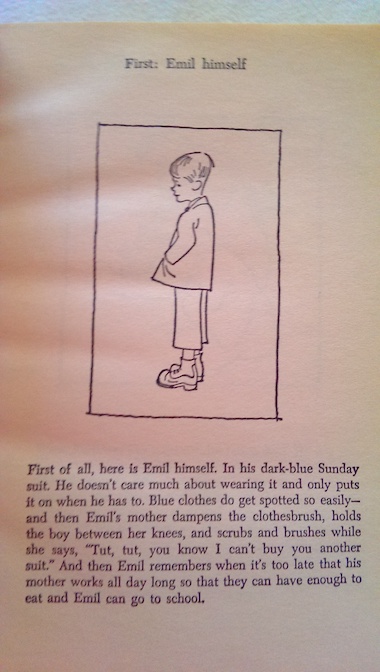
At the beginning of this story, it explains that Emil Tischbein’s father died when he was very young and that his mother works hard as a hairdresser to support the two of them. When she can, she saves a little money for Emil’s grandmother as well. When the story begins, Emil is preparing for a train trip to Berlin to visit his relatives. Emil will be traveling by himself and will meet his relatives near the station when he arrives. His mother gives him some money to take to his grandmother and warns him to be careful. Emil pins the money inside his pocket for security.
On the train, Emil talks to the people who share his train compartment. One of them, who calls himself Herr Grundeis, tells him tall tales about what Berlin is like and gives him a piece of chocolate, which is apparently drugged. Emil falls asleep on the train, and when he wakes up, he realizes that he’s been robbed!
Determined to get the money for his grandmother back, Emil searches for Herr Grundeis and spots him getting off the train. It’s too soon for Emil’s stop, but he follows Grundeis off the train anyway, tracking him to a café.
While Emil is trying to decide how to handle the situation, another boy who carries a horn that he likes to honk, Gustav, spots him watching Grundeis. Gustav asks Emil what he’s doing, and Emil explains the situation. Emil isn’t sure how to get the money back from Grundeis. At first, he’s afraid to tell the police what happened because of a prank he and some friends pulled at home. He worries that perhaps the police have found out about the prank and that they won’t take him seriously. Gustav is sympathetic to Emil and tells him that he can get together some friends to help.
Gustav recruits a bunch of other boys from the neighborhood, and they continue tailing Grundeis through the city to his hotel. The boys call another friend at home, who keeps track of their progress and gives them reports about what others have said. Emil gets one of the other boys to tell his relatives that he has been delayed on important business, causing his cousin, Pony Hutchen, to come and tell him that everyone is worried and that he’s going to be in big trouble with his relatives if he doesn’t show up soon. However, they still have the problem of deciding how to confront Grundeis and get him to return the money. In this case, the detectives don’t need to solve the mystery of who the thief is. The real problem is how to prove it.
This book is known around the world and has been made into movies several times, including a Disney version in 1964. The Disney version still takes place in Germany, but for some reason, Emil’s train trip is changed to a bus trip, and the criminal’s plot is much more elaborate. It’s available on dvd, and you can see the trailer on YouTube.
The book is currently available online through Internet Archive (multiple copies).
My Reaction and Spoilers
Overall, I liked the story, although I found the book difficult to read because the wording sounded strange and awkward in many places. I think this is probably because of the translation between German and English. I have the feeling that the translator was trying to be too literal in the translation instead of focusing on translating for meaning and tone. Unfortunately, I can’t read German, so I can’t say what the original version was like.
There was a note in the beginning of my copy of the book that says that many of the character names in the book are actually jokes on the part of the author. It’s not as obvious in English because the forms of the names sound reasonable for German names, but anyone who knows German would spot that they aren’t real names. For example, Emil’s last name is Tischbein, which means “table-leg,” and the thief’s alias, Grundeis, means “ground-ice.”
In the end, the boys use their numbers (they have about a hundred child detective recruits by the end of the story) to corner the thief in a bank, and when they confront him in front of the bank personnel, they manage to prove that Emil is the owner of the money using the pin holes in the bills, where Emil had pinned it to his jacket. The author of the book also appears briefly in the story as a journalist who interviews Emil and his friends for a newspaper story about how they caught the thief. (I think he’s the one standing at the back of the group of reporters in the picture because the man’s hair looks like Kastner’s, combed back.)
Like in another of Kastner’s books, Lisa and Lottie, there is the theme of a child who behaves well because of the family’s poor circumstances. Emil, like Lottie, is being raised by a single mother who has to work hard to support the two of them. Both Emil and Lottie understand that if they behave badly and get into trouble, it would create more hardships for their mothers. They basically live hand-to-mouth, and the children understand that their mothers cannot take time away from work to deal with their discipline problems. Each of them has had to shoulder some of the household burdens from an early age, and it has made them more serious and also a little closer to their mothers than many of the other children from more affluent families. Aside from Emil’s prank at home (which causes him some worry), he is obedient to his mother and also very concerned about her welfare.
Who Stole Kathy Young? by Margaret Goff Clark, 1980.
Kathy Young has had her share of problems. Her mother died a year and a half ago, and now, her father has a housekeeper with a sour personality. A couple of months after her mother’s death, Kathy was seriously ill, and her illness caused her to lose most of her hearing. She now depends on a hearing aid and her improving lip-reading and sign language abilities.
This summer, Kathy’s best friend, Meg, is staying with her while her parents are on a trip to Switzerland. Meg was of great help to Kathy when she was trying to adjust to her hearing loss, practicing sign language with her during her special lessons. Kathy’s dream is to become an artist, but Meg now wants to be a teacher for the deaf, like the teacher who taught Kathy. Kathy is still very unsure of her abilities to cope with her deafness. She had the opportunity to attend a special art workshop over the summer but passed it up because she was worried about whether she would be able to communicate with and understand her teacher and the other students, and she knew Meg couldn’t attend to help her.
Kathy has been enjoying Meg’s summer visit, but the girls have noticed something odd. It seems like a couple of strangers, a man and a woman, have been hanging around everywhere they go. Meg is worried about it, but Kathy doesn’t want to worry her father. She thinks that they’re probably tourists, like the housekeeper said. They nickname the strangers Heron and Toad because of their appearances.
One day, Kathy is kidnapped! Some men in a van stop to ask her directions and when she tries to explain where they have to go, they pull her inside and drug her! Meg witnesses the kidnapping, but is standing too far away to help Kathy.
When Kathy wakes up from being drugged, she finds herself on a boat. Her abductors have cut her hair and changed her shirt to disguise her from anyone who might spot her. They’ve also taken her hearing aid, hoping to render her helpless and keep her from finding out their plans because she can’t hear them. However, Kathy isn’t as helpless as they think. She can still read lips, and she can still think.
Kathy learns to rely on herself and her own wits as she tries to gather as much information as she can about her kidnappers and to figure out how she can save herself. Through this experience, she develops more self-confidence, realizing that she can do more and handle more than she had thought was possible.
While Kathy is struggling in captivity and her father is dealing with the police and the ransom demand, her friend Meg is trying desperately to find her. The story alternates viewpoints between the two girls as Meg aids the investigation into Kathy’s disappearance and puts together clues that Kathy leaves for her as her abductors move her from place to place. The mastermind behind the kidnapping plot is closer to home than they think.
The book is available to borrow and read for free online through Internet Archive.
Sixteen-year-old Aaron Maguire thinks of himself as a typical teenager, even though his family is far from typical. His mother is a buyer for a fashion boutique, and his father does special effects for monster movies in Hollywood. They’re also officially “separated” and preparing for a divorce, even though they’re still living in the same house. So far, they’ve just kind of divided the house in two in order to have their own space. Aaron goes back and forth between the two halves of the same house as his parents share him. It’s a little weird (and, to Aaron, also a little depressing), but there’s weirder to come.
An old man approaches Aaron and tells him that he’s destined to be a wizard and that he will teach Aaron what he needs to know. At first, Aaron thinks this man is nuts and probably homeless, but what he says is true. The old man is the wizard Anaxagoras. Anaxagoras demonstrates to Aaron how the skateboarding maneuver he had just pulled off defies the laws of physics and tells Aaron things about his personal life that no one should know (how angry he is with his parents about their separation and about his crush on Penelope Karpovsky, a girl he knows from biology class). He also changes the dollar Aaron had offered him into a $100 bill and shows him that they can travel to magical lands and even through time. Although Aaron still has trouble believing what he sees (his father does special effects for a living, after all), he becomes Anaxagoras’s apprentice.
Partly because Aaron still has doubts and needs something physical to convince him of the wizard’s powers and trustworthiness, Anaxagoras gives him a mirror. It looks basically like an ordinary pocket mirror with a neon pink frame, but Anaxagoras invites him to ponder it and figure out what it does, telling him that what he does with it is important.
However, when Aaron meets the divine Penelope for pizza and she asks to borrow a mirror to check her hair, Aaron lets her borrow Anaxagoras’s mirror. He instantly regrets it because the mirror suddenly changes in Penelope’s hands. Now, it has a tortoiseshell frame and is shaped like a heart. Penelope, who has low self-esteem in spite of her prettiness, is suddenly really happy when she looks in the mirror and refuses to give it back, insisting that she wants to borrow it for a few days. Because Aaron is in love with Penelope, he finally agrees to let her keep it for awhile.
When Aaron tries to tell Anaxagoras about Penelope borrowing the mirror, he doesn’t seem concerned. He just hurries Aaron on to his next lesson, which involves a plumbing problem. Anaxagoras’s lessons are pretty weird, although Aaron finds himself learning that there is more magic in the everyday world than he ever suspected.
Aaron later attempts his own feat of magical plumbing at the studio where his dad is working and encounters a creature of darkness. The mirror gets out of his hands, and he enchants a car in order to chase it down. Finally, a dare from some classmates causes him to unleash a dragon on the unsuspecting city, one that only Aaron can understand and defeat, once he realizes the true nature of his magical mirror.
Aaron has a distinctive voice as a California teenager, and his first experiments with magic lead him to some surprising discoveries about himself which help him to understand and reconcile his feelings about his parents’ divorce.
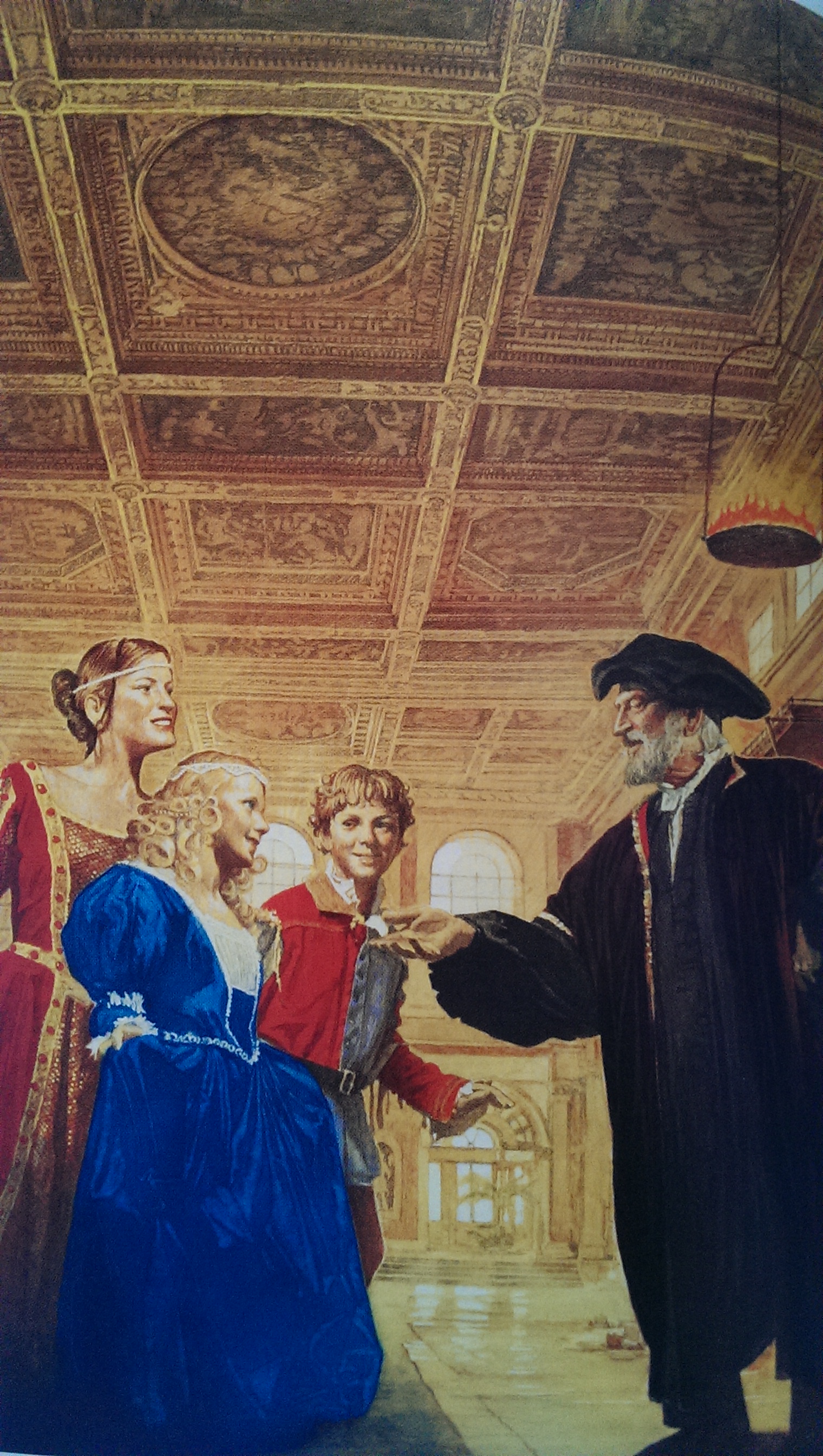
This time, Kat and her aunt, Jessie, find themselves in Florence during the Renaissance. They appear shortly before someone attempts to steal some very important papers belonging to the Florentine City Council from Signor Millori. Kat and Pietro, Signor Millori’s son, both run after the thief, and Kat helps to get the papers back. To thank Kat for her help, Signor Millori invites her and Jessie to stay with him and his family in their palazzo during their stay in Florence.
Signor Millori is a wealthy banker, and the palazzo is a grand place. Kat and Pietro become friends, and he confides in her how much he loves art. Pietro’s father wants him to become a banker, but Pietro’s dream is to study painting with Leonardo da Vinci. In fact, he takes Kat and her aunt to see Leonardo painting a mural at the Palazzo del Vecchio.
Leonardo notices Kat’s aunt and thinks that she has an interesting face. When he asks her to come to his studio to pose for some sketches, she eagerly accepts. Kat hopes that she can use the opportunity to show Leonardo Pietro’s artistic talent and convince him to take Pietro on as a student. However, although Leonardo likes the sketch of Pietro’s that he sees, he says that he has enough apprentices at the moment. Pietro cannot resist the opportunity to study Leonardo’s work, however, and borrows a couple of his notebooks to study.
Besides being a great artist, Leonardo da Vinci is also a scientist, and along with his notes on art, there are sketches and plans for possible inventions in the notebooks. Kat and Pietro go to return the notebooks the next day, but before they can get to Leonardo’s studio, the same thief who tried to steal Signor Millori’s papers steals the notebooks.
Florence has been at war with Pisa for some time, and the Florentine City Council has consulted with Leonardo da Vinci to see if he can come up with some inventions that would give them the upper hand. They know that the thief must be a spy for Pisa who is trying to see what Leonardo has been working on. However, Kat knows that if they do not retrieve the notebooks, history may be changed. Soon, it becomes obvious that the spy has an accomplice who is living in the Millori’s palazzo. Can Kat and Pietro find the notebooks and stop the spies before it is too late?
Although this is a fantasy story that involves time travel, it is based on historical events, and there is a section in the back that explains more about the Italian Renaissance and Leonardo da Vinci. At the time of the story, Italy was not a united country. The Italian peninsula was covered with many small city-states which frequently fought each other. In 1494, Pisa broke away from Florence, and Florence fought for several years to bring it back under their control, until they eventually succeeded in 1509. This conflict was the basis for the story, and the artist and inventor Leonardo da Vinci was consulted by the Florentine Council during the struggle.
Also in the back of the book is an explanation of mirror writing, which Leonardo da Vinci used in his notebooks. There are also instructions for making fresco ornaments and a recipe for Nutty Biscotti.
Mouse detective Basil’s arch enemy, Professor Ratigan, has taken over the Asian country of Bengistan, near India. Basil discovers that he is holding the real ruler of the country captive so that he and his gang can loot the country for everything they can get, keeping the populace in subjugation. Basil is determined to go there and free the rightful ruler so they can vanquish Professor Ratigan!
When Dr. Edward Hagerup of the British Mousmopolitan Museum hears that Basil is heading to Asia, he asks him to investigate an historical mystery for him. There have been tales of a race of pygmy cats, no bigger than mice, but new evidence has been found that suggests there is more truth behind the stories than anyone has realized. Basil has an interest in archaeology and eagerly accepts this extra task as part of their mission. Along the way, other mice who have heard of the expedition join up to help Basil.
At first, Basil’s original mission, stopping Ratigan, seems easy. Basil and his friend Dawson allow themselves to be captured so that they can get into the palace and find the real Maharaja of Bengistan. After solving a secret code in the dungeon, they find the Maharaja, who tells them that another acquaintance of theirs, the opera singer, Relda, is also a prisoner in the palace. She was giving a performance there when Ratigan and his thugs took over, and Ratigan has forced her to stay, giving private performances for him. During one of these performances, Basil and his friends manage to take Ratigan by surprise and capture him.
Now, Basil thinks that he and his associates are free to continue their other mission, finding the lost civilization of pygmy cats. However, that mission is fraught with danger and surprises, and they haven’t quite heard the last of Ratigan.
The story isn’t really much of a mystery. It’s really more an adventure story.
Basil and his friends manage to locate the island of pygmy cats with the help of Jeannie (a sea serpent related to the Loch Ness Monster who lost her way back to Scotland after a family trip — I kid you not) and the Sacred Catfish (which they bribe with catnip — I also kid you not, and his nip trip is a little disturbing).
This is my least favorite of the Basil series, partly because of the lack of mystery and also because of “primitive” nature of the pygmy cats when they find them. Basil makes it clear that the pygmy cats are inherently less intelligent than mice and that their greatest achievements were because of the influence of royal mice who washed up on the shores of their island years ago, only to be wiped out by a volcano. (Really? Really. Basil, if these mice were so superior and the pygmy cats so inferior, why were the cats able to get away from the volcano when the mice didn’t, hmm? Why didn’t the mice just go to the part of the island where the cats were until the volcano stopped erupting? Just what kind of bill of goods are you trying to sell us, Basil?) Basil comes off sounding like a 19th century imperialist, and the fawning adoration he gets for his discovery is really annoying.
In general, I don’t like the Basil stories that turn out to be more adventure than mystery, and Basil’s smug superiority at various points in the story are off-putting. It’s true that that Sherlock Holmes (which this series parodies) had an ego as well, but these sort of imperialist attitudes in a children’s story are distasteful. Although I like recommending nostalgic books for future generations, this is one that I really can’t recommend. The brightest spot in this book was the secret code in the dungeon, which is more in keeping with the mystery theme. If the book had made the plot to capture Ratigan and end his reign of terror in another country without all this stuff about an “inferior” species of small cats, it would have been a much better story.
Like other books in this series, this book contains a number of jokes on the original Sherlock Holmes stories. Read a number of the names backwards, and you’ll see some familiar names from Sherlock Holmes as well as a reference to another series by Eve Titus.
This book is available to borrow and read for free online through Internet Archive.
A Norwegian scholar from the British Mousmopolitan Museum approaches Basil about a letter that he has recently received along with an arrow. The letter mentions a recent sighting of the mysterious Adorable Snowmouse (no, that’s not a typo, he’s big for a mouse, but really adorable and saves people lost in the mountains), and the arrow is evidence that points to the whereabouts of a lost colony of mice who fled Switzerland during the time of William Tell, about 600 years previously. These particular mice lived in William Tell’s basement, and like Tell himself, the Tellmice (as they are called) left their home because they opposed the rule of a tyrant. However, even after the tyrant’s reign ended, the Tellmice did not return home and no one knows for sure what became of them.
Basil is eager to join the expedition to search for the lost colony, but he is also concerned about opposition from his nemesis, Professor Ratigan. Professor Ratigan has recently made attempts on his life, and he now knows about the expedition to find the lost colony, even stealing the evidence from Basil’s home. Basil is sure that Professor Ratigan will do everything he can to prevent them from reaching the lost colony.
In Switzerland, the expedition is joined by a pretty and adventurous opera singer, Relda (a take-off on Irene Adler, from the original Sherlock Holmes stories, read her name backwards), who comes in disguise after Basil tells her that the mission is too dangerous for her. That’s just one of the jokes on original Sherlock Holmes stories that appear in this book. These jokes would go over the heads of kids who aren’t familiar with the original stories, but make the story more entertaining for adults.
Basil and his friends do meet up with the Adorable Snowmouse, find the lost colony, and defeat Ratigan (well, temporarily, at least).
Although the Basil of Baker Street Series is supposed to be about a mouse detective kind of like Sherlock Holmes, some of the entries in the series, like this one, are really more adventure than mystery. The book is currently available online through Internet Archive.



 The Ship That Never Was by Mickey Spillane, 1982.
 Guns in the Heather by Lockhart Amerman, 1963.
 This book was originally written in German. It was written in Germany during the
  At the beginning of this story, it explains that Emil Tischbein’s father died when he was very young and that his mother works hard as a hairdresser to support the two of them. When she can, she saves a little money for Emil’s grandmother as well. When the story begins, Emil is preparing for a train trip to Berlin to visit his relatives. Emil will be traveling by himself and will meet his relatives near the station when he arrives. His mother gives him some money to take to his grandmother and warns him to be careful. Emil pins the money inside his pocket for security.
 Determined to get the money for his grandmother back, Emil searches for Herr Grundeis and spots him getting off the train. It’s too soon for Emil’s stop, but he follows Grundeis off the train anyway, tracking him to a café.
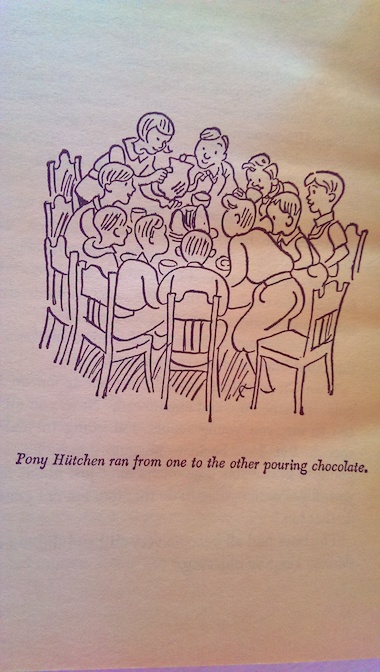 Gustav recruits a bunch of other boys from the neighborhood, and they continue tailing Grundeis through the city to his hotel. The boys call another friend at home, who keeps track of their progress and gives them reports about what others have said. Emil gets one of the other boys to tell his relatives that he has been delayed on important business, causing his cousin, Pony Hutchen, to come and tell him that everyone is worried and that he’s going to be in big trouble with his relatives if he doesn’t show up soon. However, they still have the problem of deciding how to confront Grundeis and get him to return the money. In this case, the detectives don’t need to solve the mystery of who the thief is. The real problem is how to prove it.
 There was a note in the beginning of my copy of the book that says that many of the character names in the book are actually jokes on the part of the author. It’s not as obvious in English because the forms of the names sound reasonable for German names, but anyone who knows German would spot that they aren’t real names. For example, Emil’s last name is Tischbein, which means “table-leg,” and the thief’s alias, Grundeis, means “ground-ice.”
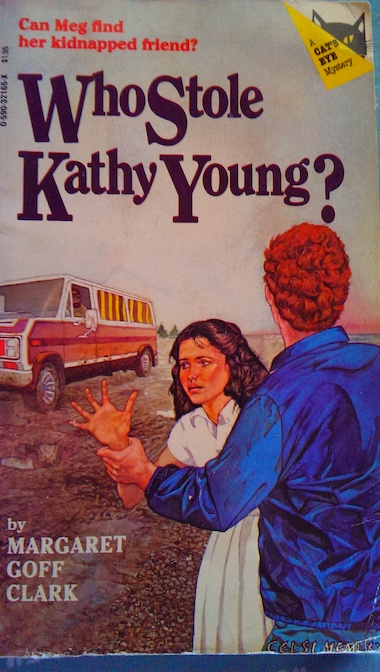 Who Stole Kathy Young? by Margaret Goff Clark, 1980.
 Sixteen-year-old Aaron Maguire thinks of himself as a typical teenager, even though his family is far from typical. His mother is a buyer for a fashion boutique, and his father does special effects for monster movies in Hollywood. They’re also officially “separated” and preparing for a divorce, even though they’re still living in the same house. So far, they’ve just kind of divided the house in two in order to have their own space. Aaron goes back and forth between the two halves of the same house as his parents share him. It’s a little weird (and, to Aaron, also a little depressing), but there’s weirder to come.
 However, when Aaron meets the divine Penelope for pizza and she asks to borrow a mirror to check her hair, Aaron lets her borrow Anaxagoras’s mirror. He instantly regrets it because the mirror suddenly changes in Penelope’s hands. Now, it has a tortoiseshell frame and is shaped like a heart. Penelope, who has low self-esteem in spite of her prettiness, is suddenly really happy when she looks in the mirror and refuses to give it back, insisting that she wants to borrow it for a few days. Because Aaron is in love with Penelope, he finally agrees to let her keep it for awhile.
 This book is part of the
 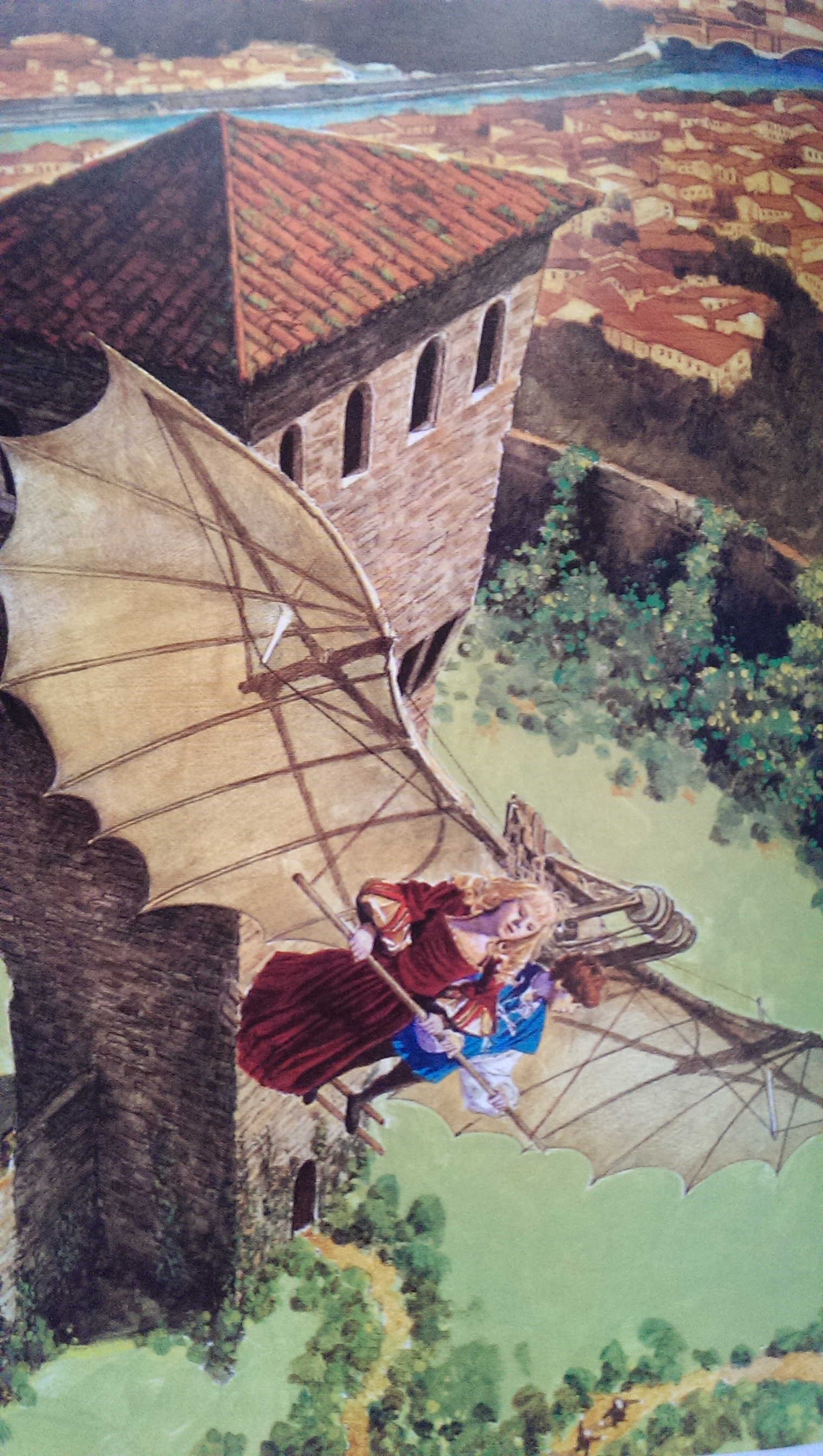 Besides being a great artist, Leonardo da Vinci is also a scientist, and along with his notes on art, there are sketches and plans for possible inventions in the notebooks. Kat and Pietro go to return the notebooks the next day, but before they can get to Leonardo’s studio, the same thief who tried to steal Signor Millori’s papers steals the notebooks.
 Basil and the Pygmy Cats by Eve Titus, 1971.
 Now, Basil thinks that he and his associates are free to continue their other mission, finding the lost civilization of pygmy cats. However, that mission is fraught with danger and surprises, and they haven’t quite heard the last of Ratigan.
 Basil and the Lost Colony by Eve Titus, 1964.

 Jestress's Forgotten Books and Stories
