Do-It-Yourself Magic

Do-It-Yourself Magic by Ruth Chew, 1987.

Rachel and her younger brother, Scott, stop by the discount store on the way home to admire the model kits.  Most of the model kits are too expensive for them to buy, but one kit has been put on discount, The Build-Anything Kit.  The kids think it’s a good deal because they can use it to build more than one kind of model. 

When they get it home and begin to play with it, they are confused at first.  Scott tries to build a model stock car racer, but all the wheels and other pieces are all different sizes.  Then, Rachel finds a double-headed hammer labeled, “sizer.”  The kids discover that when they hit the model pieces with the hammer, they can make them bigger or smaller.  Besides working on pieces, the sizer can also make people bigger or smaller.  Rachel makes Scott smaller so that he can drive his stock car model around the room.  Then, when he drives outside, she makes both him and the car bigger, so the car is the size of a normal car.  A neighbor spots them in this strange car and calls the police, so the children are forced to shrink the car again quickly. 

When they get home, they discover that they left the door open and that a man is trying to steal their tv set.  Without thinking, Rachel hits him with the sizer and shrinks him.  Now, they have to decide what to do with him before the situation gets worse!

At first, the kids keep the thief in a glass, but then they let him out and allow him to drive around in the stock car model.  While they are trying to decide what to do with him, they take a look in the model box again and notice some pieces that weren’t there before.  They look and feel like stone blocks, so they begin building a castle with them.  To their surprise, the man they shrunk runs into the castle.  They are worried about him, so they hit the castle with the sizer to make it bigger.  Suddenly, the castle is as large as life, and they go inside to discover that they are back in medieval times. What will happen to the thief in the past, and will the kids get back home?

The book is currently available online through Internet Archive.

River Quest

Dinotopia

#2 River Quest by John Vornholt, 1995.

Thirteen-year-old Magnolia and Paddlefoot, a Lambeosaurus, are apprenticed to the Habit Partners of Freshwater. Habitat Partners keep an eye on different aspects of the environment on Dinotopia and make sure that the environment is maintained and cared for. The Habitat Partners of Freshwater are specifically concerned with the bodies and sources of freshwater all over Dinotopia.

When Magnolia’s master, Edwick, is injured badly during the eruption of a geyser, he and his partner, a Saltasaurus named Calico, retire and leave the post to Magnolia and Paddlefoot. Magnolia thinks that she is still too young for the position, and she and Paddlefoot worry about whether they are ready to handle the job. However, they have no choice because a crisis has arisen, and Edwick is in no shape to handle it.

The Polongo River, which supplies the water for the waterfalls that power virtually everything in Waterfall City, is drying up. Magnolia and Paddlefoot must journey up the river to find out what is happening and restore the river to its proper course.  Along the way, they find friends who can help them, but completing their mission means coming perilously close to the Rainy Basin where the meat-eating dinosaurs live.

The book is currently available online through Internet Archive.

Windchaser

Dinotopia

#1 Windchaser by Scott Cienein,1995 .

Raymond Wilks is the son of a ship’s doctor. They are sailing on a ship taking convicts to the British colonies in Australia when the prisoners revolt and take over the ship during the middle of a terrible storm. Raymond’s father is killed, and the ship is wrecked, but Raymond escapes with a young thief named Hugh O’Donovan. The two of them are taken to shore by friendly dolphins, and they meet up with some of the inhabitants of Dinotopia.

At first, they are frightened of the dinosaurs, but everyone is kind to them. They are taken to Waterfall City, one of the most beautiful places in Dinotopia, and they begin learning about the history and ways of the land. People in Dinotopia don’t use money, and everyone shares with each other, trading goods and services for everything they need. There is no crime in Dinotopia because everyone has all that they need and everyone looks after each other.

Raymond, although still mourning his father’s death, thinks that Dinotopia is a wonderful place, and he admires the attitude of the people there. Hugh, who was orphaned at a young age and forced to steal to survive, has difficulty believing that the people are all as nice as they seem or the society as perfect as they say. His harsh childhood has taught him not to trust others too much. Little by little, the people of Dinotopia win Hugh over, and he desperately wants to become worthy of the kindness that people show him, although he doubts whether he ever can.

As Hugh and Raymond struggle to come to terms with their new life in Dinotopia, they encounter a flying dinosaur called a Skybax who is suffering from an old injury. The Skybax, called Windchaser, shows up from time to time and causes trouble. He is the only unhappy creature they have seen since arriving in Dinotopia, and Raymond develops a strong desire to learn what is wrong with him and help him. Raymond’s struggles to help the unhappy dinosaur lead him into danger, and Hugh fears that he may lose the best friend he’s ever had.

The book is currently available online through Internet Archive.

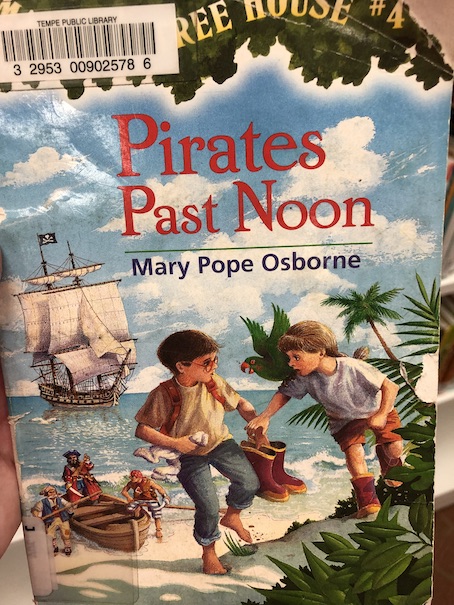
Pirates Past Noon

Magic Tree House

#4 Pirates Past Noon by Mary Pope Osborne, 1994.

One rainy afternoon, Annie urges Jack to go to the tree house with her because she has a feeling that they will soon meet its mysterious owner.  When they arrive, no one is there, so the kids start looking at the books.  The day is cold and wet, and Annie shows Jack a picture of a sunny beach, saying that she wishes they were there.  Soon, they find themselves on the beach. 

They have fun at first, but then some pirates come to the beach, looking for a treasure buried by Captain Kidd.  The evil pirate, Cap’n Bones, makes the kids prisoners aboard his ship until they figure out where the treasure is hidden from the clue written on the captain’s map.

The clue says that the treasure is hidden underneath the whale’s eye, and from the ship, Jack and Annie realize that the island is shaped like a whale with a big boulder for its eye.  The kids make the pirate captain take them back to the island in exchange for telling him where the treasure is.  While the pirates are digging for the treasure, a parrot flies over, saying, “Go back!”  The pirates take that as a sign of an approaching storm and flee, leaving the kids behind. 

A storm does come, but Jack still has difficultly tearing himself away from the treasure that they’ve uncovered.  Finally, the parrot convinces him to leave, and he and Annie use the tree house to go home again. 

Once they’re back in Pennsylvania, the parrot appears and turns into a woman and says that she’s Morgan le Fay.  She is the owner of the tree house and the amulet.  Besides being King Arthur’s sister and an enchantress, she is also the librarian of Camelot.  She has been using the tree house to travel to other times to collect books that the scribes in Camelot can copy for their library.  She put the spell on the tree house so that she can travel to some of the places in the books herself.  The kids can use the spell only because Annie truly believes in magic and Jack really loves books.  She and the tree house disappear as the kids head home, but Jack discovers that she left her amulet with him as a sign that she will come back.

I was surprised that the owner of the tree house turned out to be Morgan le Fay, both because an Arthurian character didn’t seem to quite fit with a magical children’s tree house and because Morgan le Fay wasn’t one of the good characters in the Arthurian legends. The exact nature of the character of Morgan le Fay changed through different retellings of the Arthurian legends, and she wasn’t always an adversary or villain, but she does do things in some of the stories that wouldn’t make her a good heroine for children’s literature. However, none of that matters in this series because, here, she’s just an enchantress from Camelot who is interested in books.

The book is currently available online through Internet Archive.

Dinosaurs Before Dark

Magic Tree House

#1 Dinosaurs Before Dark by Mary Pope Osborne, 1992.

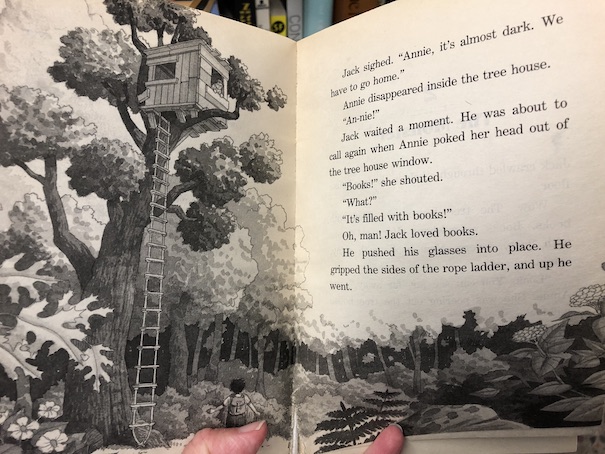
Eight-year-old Jack is walking home with his seven-year-old sister, Annie, when Annie spots a tree house in the woods that they’ve never seen before.  In spite of Jack’s warnings, Annie climbs up into the tree house and yells down that there are a bunch of books in there.  Jack loves books, so he also climbs up into the tree house to see what she’s found. 

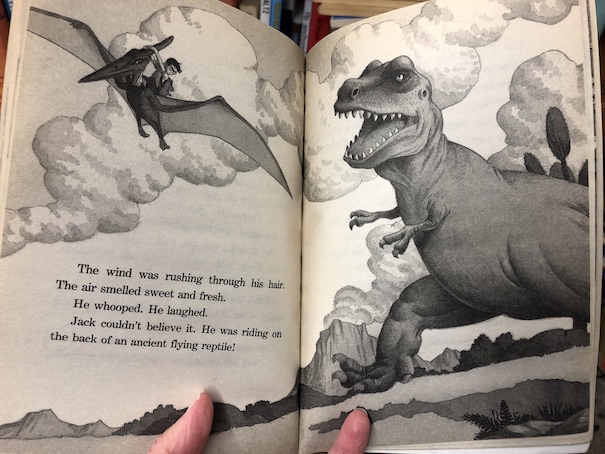
There are books in the tree house about all sorts of interesting times and places.  When Jack starts looking at a book about dinosaurs, he wishes that he could see one himself.  Suddenly, the tree house takes the kids back in time to a land filled with dinosaurs.  The two of them have some hair-raising adventures as they try to figure out how to get back home, getting some help from a friendly Pteranodon when they need to escape from a Tyrannosaurus Rex. 

The kids figure out that the tree house will take them anywhere they want as long as they look at a picture of the place in one of the books and wish to go there.  There is a book about Pennsylvania in the tree house with a picture of their home town in it, so all they need to do is to look at it and wish they were there in order to go home. 

While they are still in the land of the dinosaurs, Jack finds a gold amulet with the letter M on it.  He thinks it belongs to whoever owns the tree house, so he picks it up and brings it back with them, although by the end of the book, the kids still don’t know who it really belongs to. The ownership of the tree house is something that they eventually figure out through their adventures with it. (See book #4 in the series for the answer.)

Miss Bianca

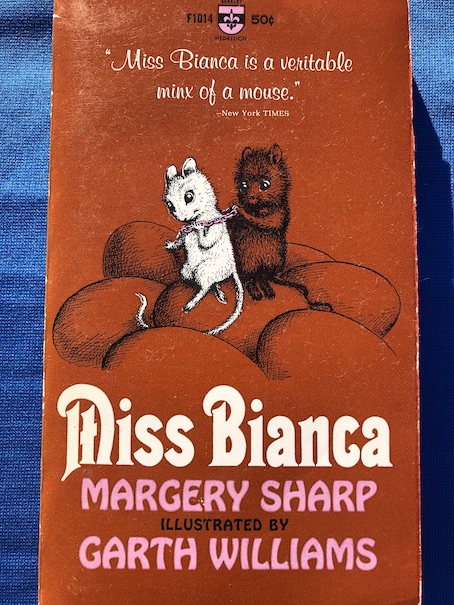
Miss Bianca by Margery Sharp, 1962.

Miss Bianca is still a hero to the Mouse Prisoners’ Aid Society after the rescue of the Norwegian poet in the last book.  Bernard is a lesser hero, even though he was part of the mission, but such is the lot the organization’s Secretary.  Since the success of the rescue mission, the society is keen to perform another rescue, a deviation from the society’s usual role of merely providing comfort to prisoners.  The rescue mission that they have in mind this time is that of a little girl.  (The first Disney The Rescuers movie also featured the rescue of a little girl, but the circumstances in the book are very different.)

Patience is an eight-year-old orphan who has been abducted and enslaved by the Grand Duchess and is being held in her Diamond Palace.  The Grand Duchess is cruel, and some people think that she’s a witch.  Miss Bianca appeals to the Ladies’ Guild of the society to help free Patience.  The Ladies’ Guild doesn’t usually take part in the more exciting missions of the society.  The mice are somewhat concerned about what they will do with the child once they have rescued her because other prisoners they’ve helped have had homes to return to, but Miss Bianca assures them that they have a home in mind for the girl, a farm family in Happy Valley who have lost a daughter and would be likely to take in another girl.  The Ladies’ Guild agrees to undertake the mission.  Bernard wanted to come, too, but Miss Bianca insisted that they didn’t need his help.

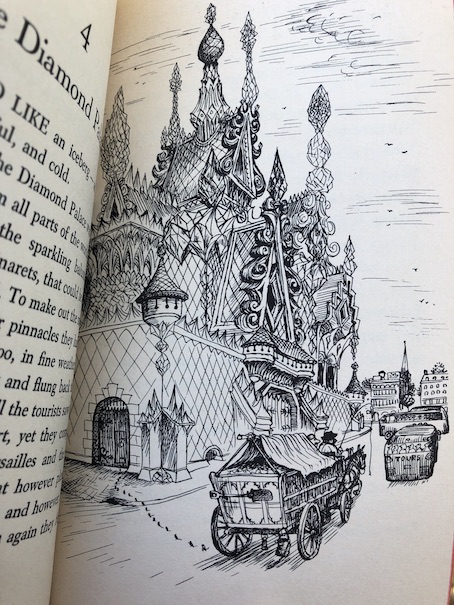
The Diamond Palace is a strange place, in many different ways.  People often come to see it because it looks like it’s made out of diamonds, although it’s actually rock crystal.  It’s cold all the time, but even weirder than that, there seem to be less servants in the Palace than Miss Bianca would expect, given that the Duchess is always surrounded by ladies-in-waiting, who would be expected to have maids of their own.  It turns out that the “ladies-in-waiting” aren’t real people – they’re clockwork automatons! 

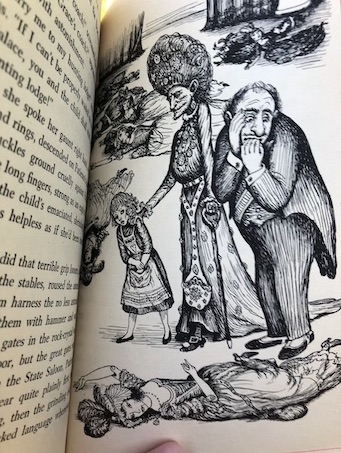
Rather than being a witch, the Duchess is simply an odious person who has so much money that she can give full reign to a nasty personality without anyone stopping her.  She’s so nasty and spoiled and used to forcing people to do what she wants that all of her previous, human ladies-in-waiting found that they just couldn’t handle her increasingly unreasonable demands, like insisting that they all stand perfectly still all day long while she sits on her throne, not even the slightest movement allowed.  No human being could possibly manage that.  When the human ladies-in-waiting all fainted after trying to keep perfectly still for forty-eight hours straight, the Duchess screamed that they all must have done it on purpose and dismissed them, replacing them with automatons.  The mechanical people are almost perfect because they always stand perfectly still until they’re needed and never complain or have human needs, but the Duchess discovers that they’re not quite perfect because there are some chores that they can’t do and she also misses seeing people react fearfully or start crying when she bullies them.  Keeping Patience as her slave gives the Duchess someone to do those chores and also someone to abuse.  The Duchess has had other child slaves before, but the others have died from the abuse, ill-nourishment, and general bad treatment.  (This is a darker story in a lot of ways from the Disney one.)

When Miss Bianca and the other mice meet Patience, she is also under-nourished and desperately lonely.  Miss Bianca sends the others back to the society to report about the automatons and stays with Patience to keep her company, trying to decide how to deal with the strange, mechanical people.  Bernard worries anxiously about Miss Bianca when the others come back without her and decides to go after her.

The Duchess’s other human servant, Mandrake, her Major-domo, is also little more than a slave.  The Duchess has evidence of a crime that he once committed and uses it to keep his loyalty.  Usually, he’s the only one who gets to go out the back door because he doesn’t trust Patience to take out the garbage without running away.  However, Patience tells Miss Bianca that the clockmaker sometimes comes in that way when he comes to wind up the mechanical ladies-in-waiting.  Miss Bianca hatches a plan that involves making the ladies-in-waiting break down.

However, to Miss Bianca’s surprise, the Duchess commands Mandrake and Patience to come with her to her hunting lodge when the ladies-in-waiting break down.  There is no opportunity for escape.  However, it turns out that the hunting lodge is actually above Happy Valley, and Bernard knows where it is.

Of course, they do get Patience safely to her new foster family.  Miss Bianca actually talks to the girl’s foster mother and tells her that Patience will probably forget about her eventually, when she grows up, but the foster mother likes the lullaby that Miss Bianca sings for Patience and promises to keep it as a family tradition.

The darker aspects of the story really bothered me, and I have to admit that I didn’t like it as well as the Disney version.  Mandrake actually reappears in another book in the series.

The book is currently available online through Internet Archive.

The Cookie Tree

CookieTree

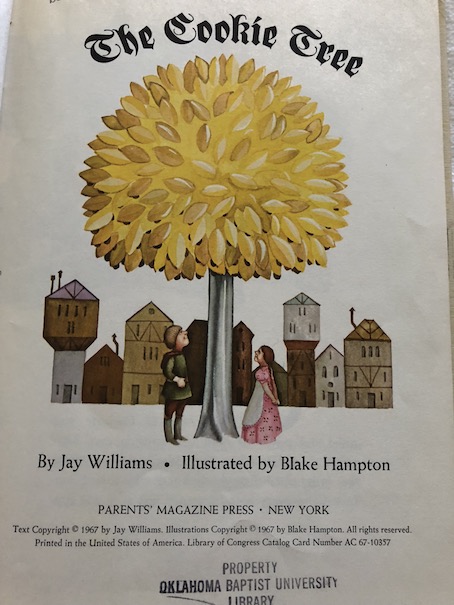
The Cookie Tree by Jay Williams, 1967.

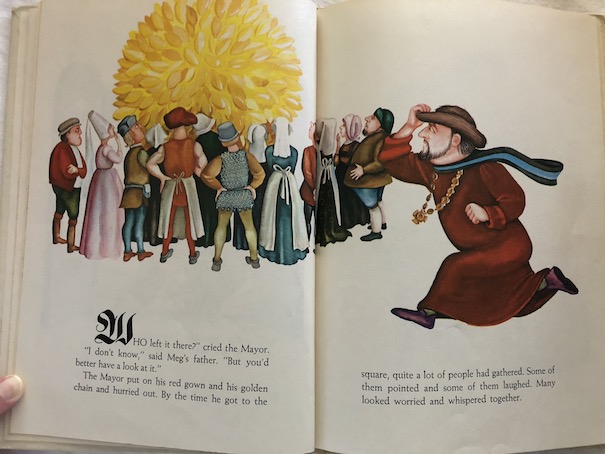
Owlgate is a very orderly little village.  Everything has a purpose and a place, and nothing unexpected happens . . . until the day the cookie tree appears in the middle of town.  The tree is silver and gold and has chocolate cookies.

CookieTreeOwlgate

A girl named Meg notices it first, but her parents refuse to allow her to pick a cookie from the tree because they’re worried about where it came from. For all they know, the cookies could be poisonous!  Meg’s father gets the mayor to come look at the tree.

CookieTreeTownspeople

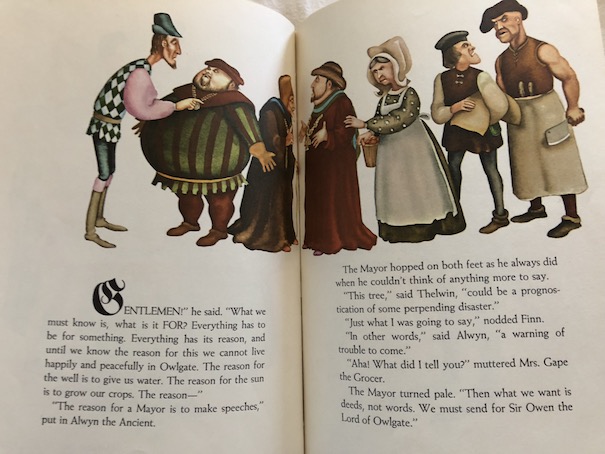
Eventually, everyone in town comes out to see the tree.  The miller thinks that the whole thing is probably a big joke, but most of the other adults are worried because it’s weird.  Some of them think maybe it’s some kind of bad omen.  Little Meg’s theory is that a magician sent it as a present for the village, just to give them cookies.  However, the adults reject that explanation, saying that it doesn’t make sense and they don’t any reason see why a magician would send them a cookie tree.

The mayor consults with the Village Councillors, but they don’t accomplish much other than to establish that there are indeed chocolate cookies growing on the tree when one of them samples a cookie.  The adults argue back and forth about what to do about the tree, but by the time they come up with a plan, the tree has vanished!

CookieTreeDebate

While the adults’ backs were turned, the children of the village ate all the cookies, and once the cookies were gone, the tree disappeared.  Apparently, Meg’s theory about the magician sending the tree just to give them cookies was correct.

One of the things that people sometimes praise children for doing is seeing things for what they are. Adults have a tendency to over-analyze things, looking for hidden meanings that may or may not exist. Sometimes, things really are just what they appear to be, and over-analyzing just confuses the issue. It can be like that with children’s books. Adults worry about every little thing in stories and possible messages being sent to children, but when people start over-analyzing stories, they can find themselves making up hidden messages and reading things into stories that aren’t really there.  Sometimes, stories and other things are just for fun, and you might as well simply enjoy them for what they are!

The book is currently available online through Internet Archive.

The Princess in the Pigpen

The Princess in the Pigpen by Jane Resh Thomas, 1989.

Elizabeth is the nine-year-old daughter of a nobleman in London in the year 1600, and she’s very sick.  However, while she’s lying in her bed with a terrible fever, she suddenly finds herself in a pigpen in 20th century Iowa with no idea how she got there. At first, she doesn’t even know where she is, and when she is found by the McCormick family, the family who owns the farm, they have no idea who she is or where she came from.  That she is very ill is obvious, so they take Elizabeth to the local doctor, who says that she has scarlet fever (what strep throat turns into when it’s neglected, it’s serious and life-threatening) and gives her penicillin, which helps her to recover.

However, there is still the question of how Elizabeth ended up on the McCormick farm in Iowa in the first place.  Elizabeth tells them that she is from London and insists that the year is 1600.  Ann, the McCormicks’ daughter, who is about the same age as Elizabeth, doesn’t believe that Elizabeth is really from the past.  The current year is 1988, and Ann thinks that Elizabeth is probably crazy, but obviously in need of some help.  The McCormicks tell the local sheriff about Elizabeth, and he begins looking through reports of missing persons to find one that fits her.

Still, it’s hard to explain Elizabeth’s strange clothing (Ann is sure that Elizabeth must be rich because her dress is obviously very fancy) or the antique toys that were found with her (a doll and a music box).  When Ann goes to school, Elizabeth stays at home with her mother, Kathy, and asks her about all the strange things that she’s been seeing around her, like cars and electric lights.  Kathy assumes that Elizabeth is merely confused and that her memory has been affected by her illness.

By coincidence, Kathy is a historian, teaching at a nearby university, and has studied English history.  She is aware of Elizabeth’s family, including her father, Michael the Duke of Umberland.  When Elizabeth asks her if she knows what happened to her mother, who was also ill when she last saw her, Kathy says that she was still alive in 1605, which means that she must have survived her illness.  Kathy quizzes Elizabeth in English history, and Elizabeth knows the correct answers because they are all current events to her.  Kathy thinks that someone must have taught Elizabeth history but notices that Elizabeth really seems to believe everything she says and knows a surprising amount of detail.

Further research into history and Elizabeth’s family tells Elizabeth the years when her parents and other people she cares about will die, which is distressing to her.  Ann begins to believe Elizabeth about her life when Elizabeth describes her home to her, and the description matches one in a book.  In the same book,there is also a portrait of Elizabeth’s family from 1605.  In the portrait, Elizabeth is a little older than she is now, and her mother has had another baby.  Elizabeth’s doll and music box are also in the painting.  The book also contains an account of the fire that later destroyed the manor house.  According to the book, Elizabeth managed to save the lives of her family by alerting them to the fire and also managed to salvage a couple of valuable books.

Now that Ann is convinced that Elizabeth is really from the past, they must find a way to help Elizabeth to return home so that she can save the lives of her family!

The book is available to borrow and read for free online through Internet Archive.

My Reaction

There were a couple of things that I liked about the time travel in this story. One is that it seems that it was fated to happen. Elizabeth is meant to survive her illness and to save the rest of her family. She was only able to do that because she had been to the future and learned about the dangers they would be facing. When she returns to her own time, she doesn’t change the past but makes sure that things turn out the way they were supposed to.

I also found it interesting that Elizabeth’s family has no living descendants in the late 20th century. Her family continued beyond Elizabeth’s time, but the family line apparently ended before the time period of the modern characters in the story, so we don’t have one of those moments that sometimes occurs in time travel stories where the modern characters meet a descendant of the past characters. That can be a fun moment in some stories, but I appreciate the variety.

At one point in the book, Ann makes a reference to the book A Wrinkle in Time, about other children who get “lost in space and time.”

The Court of the Stone Children

The Court of the Stone Children by Eleanor Cameron, 1973.

Nina and her parents have recently moved to San Francisco from Nevada.  Nina doesn’t like living in the city, but the move was necessary because her father has been ill and in need of a job.  Still, Nina misses her friends, and her parents don’t understand how difficult Nina has found it to make friends in their new home.

One of the most popular girls, Marion Charles, nicknamed Marnychuck, and her friends like to tease Nina at every opportunity. Nina doesn’t think that she even wants to try to be friends with them because hanging out at Marnychuck’s house would mean always having to be on her guard about every little thing she says, knowing that they would twist every innocent comment she makes into some sort of joke so they could laugh at her.  They could never be friends because there would be no way that Nina could ever open up to them about anything.  (Sadly, I know the type all too well.)  For example, one day, while the girls are walking home from school, they start talking about things they want to be when they grow up.  Nina says that she wants to be “something in a museum,” momentarily forgetting the word “curator”, until a boy nearby helpfully supplies the word. Of course, Marnychuck and her friends ignore the helpful word and just laugh about “something in a museum” as they walk away.

However, the boy who was listening turns out to be genuinely curious about why Nina wants to work in a museum, saying that it sounds like an unusual ambition.  Nina tells him that, until she had come to San Francisco, she’d never been in a big museum before, and she describes how the one in the park impressed her.  She used to work in a small one in her home town. The boy understands the way she feels and shares her love of the past.  He tells her about Mam’zelle Henry, a local woman who owns a private museum called the French Museum.

Nina visits the French Museum and loves the rooms with old-fashioned furniture.  They give her a strange feeling of timelessness, and before she knows it, she finds herself in a room with another young girl who says, “I knew you’d come.”  Nina isn’t sure who this mysterious girl is, but she asks her to come back another time.

When Nina returns to the museum the next day to return an umbrella that she borrowed from Mrs. Staynes, the registrar at the museum, she speaks to the girl again in the museum courtyard.  The courtyard is full of stone statues of children, and the girl tells Nina that when she was young, she used to wish that they would come to life.  The girl’s name is Dominique, although she says that people usually call her Domi. The two girls begin talking about their lives, although Domi oddly talks about her past in the present tense. Domi tells Nina about her emotionally-distant grandmother and her loving father, who was imprisoned and shot.  The news of Domi’s father being shot comes as a shock to Nina.  Domi tells Nina that, after her father was (“is”) imprisoned and shot, she had a dream about Nina in which her father said that Nina would help them.  Domi also says that the rooms at the museum are from her home in France, which was taken apart to be “modernized”and some of the pieces were sent to the museum. Nina finds Domi’s story confusing, but Domi says that they will talk more later.

Nina meets up with the boy who introduced her to the museum, whose name is Gil, at the cottage of Auguste, who lives on the museum property.  As she talks with the two of them and Mrs. Staynes, Mrs. Staynes brings up the subject of the ring that Nina saw Domi wearing and which also appears in a painting in the museum.  Earlier, Mrs. Staynes had told Nina that she couldn’t possibly have seen anyone wearing that ring, and Mrs. Staynes now explains that the reason why is that she owns the ring herself.  At first, Nina thinks that she must own a ring which is similar to Domi’s, since the two of them couldn’t have the same ring,but then, it turns out that the cat that Domi said was hers also belongs to Auguste.

The answer, as Nina discovers the next time she meets Dominique, is that Domi is a ghost.  Mrs. Staynes does own Domi’s ring now because Domi died a long time ago. Nina faints when Domi’s hand goes right through hers.  When Nina recovers, Domi is gone, and Mam’zelle Henry gives her a ride home.  The two of them bond as they discuss Nina’s ambition to become a curator.

Mam’zelle lets Nina borrow a journal that she found in the garden that belonged to Odile Chrysostome in 1802.  Odile was one of the names of the stone statues in the courtyard, according to Dominique, and Nina learns that the others are also named after members of the Chrysostome family.  The people at the museum say that they don’t know which of the statues is supposed to have which name, but thanks to Dominique, Nina does.

Gil becomes Nina’s first friend her own age, and he’s been working on a project involving time.  Someday, he wants to write a book about the concept of time. Time is important because Domi needs Nina’s help to resolve problems that occurred in the past.

Domi was young during the time of Napoleon.  Her mother had died in childbirth along with Domi’s younger sibling.  After her mother died, her grandmother moved into the house to oversee things and help care for Domi.  However, Domi’s father had protested some of Napoleon’s policies of conquest, and it led to his downfall.  One day, Domi discovered her father’s valet,Maurice, murdered in her father’s bedroom. She had thought that her father was there the night before, having returned from being away for a time, but he was nowhere to be found.  A short time later, her father was charged with conspiring against Napoleon and executed. Domi knows that her father was innocent of the charges, and she suspects that Maurice was killed because he knew something important, but she needs Nina’s help to find the missing pieces.  Domi knows that Mrs. Staynes is working on a book about her father’s life, and she doesn’t want the false accusations against him to be printed.

This book is available to borrow and read for free online through Internet Archive.

My Reaction and Spoilers

I thought that the book started out a little slowly.  It takes quite a while before Nina discovers that the boy’s name is Gil or learns anything about him, and it’s about halfway through the book before Nina learns that Domi is a ghost, although there are hints before it.  I knew that Domi was from the past, although I thought at first that she might be a time traveler of some kind.  Even after Nina learns that Domi is a ghost, it takes a while before Domi tells Nina her full story and what she really needs her to do.  The first part of the book dragged a little for me, and I was a little confused at first about why Odile’s diary was so important, but it turns out to contain the vital clues that Domi needs.  Domi’s father was with the Chrysostome family at the time that he supposedly murdered his valet and was conspiring against Napoleon. There is a piece of physical evidence that proves it, and finding it convinces Mrs. Staynes to change her book. 

One of Nina’s strengths is her power of imagination, and she helps Mrs. Staynes not only to see the truth about Domi’s father but to see him as a living, breathing person.  Before, Mrs. Staynes’ book was mostly facts with little sense of the feelings of the living people behind it, but Nina’s discoveries and imagination help breathe life into the work.  At the end of the book, the past remains unchanged (Domi’s life and that of her father are what they were before), but having the truth known gives Domi peace. Nina also makes peace with her new life in San Francisco, having discovered new opportunities and friends there as well as a nicer apartment for her family to live in.

Fog Magic

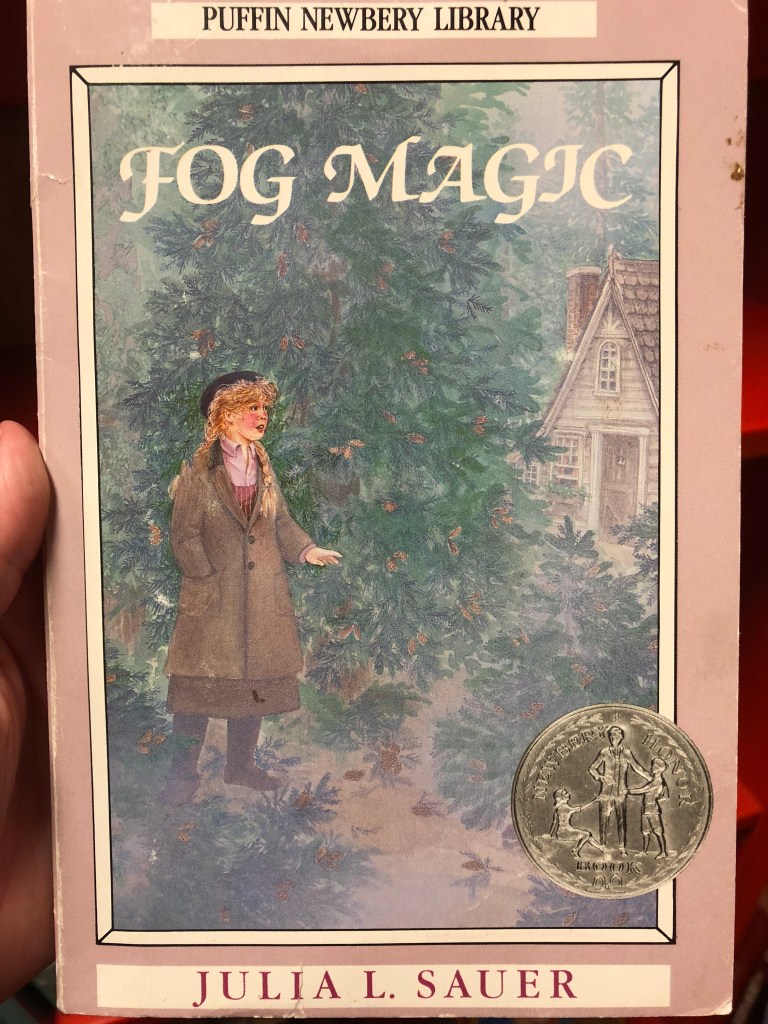
Fog Magic by Julia L. Sauer, 1943.

Greta loves fog and always has, although other people can’t understand it.  When she is ten years old, she begins to get the sense that there is something in the fog that she should find.  One day, when she goes looking for a lost cow from her family’s farm, she sees a house in the fog that isn’t there when the fog is gone.  Apparently, there used to be a house on that site, but it’s gone now.  Except when there’s fog.

From then on, Greta loves to walk in the fog.  When she does, she meets people from the past.  One day, she meets a woman named Laura Morrill, who recognizes her as being from the Addington family and says that her name must be Greta.  According to Laura, there’s always a Greta in every generation of Addingtons and that there’s always a child in every generation who has a great love of fog.  Greta’s ability to use the fog to travel back in time and see her town as it once was is apparently inherited.

Greta makes friends with Retha Morill, Laura’s daughter.  However, when Mrs. Morrill gives her a piece of pie to take home, it disappears, making Greta realize that she can’t bring things from the past to the present.  Retha’s parents seem to realize it, too.  When Retha offers her a little silver egg cup to take home, Mrs. Morrill suggests that perhaps it would be better for Greta to leave it at their house and use it when she comes.  Greta also has the feeling that, when the fog starts to lift, she needs to go home, and Mrs. Morrill agrees.

On another day, Greta and Retha spot an older girl in the woods.  Retha seems to know who she is and calls out to her, but she runs from them.  They try to catch up to her, but she gets away, and Retha is upset.  It turns out that the girl is named Ann, and she was falsely accused of theft.  When it was discovered that she hadn’t stolen anything, the townspeople had tried to find her, but she’s been hiding from them ever since, too afraid to come back.  At first, people had thought that maybe she had gone to another town to find work, but now that they know that she’s been living alone in the woods, they’re worried about her.  The story also upsets Greta because she has heard a local ghost story about a girl who haunts the woods after being falsely accused, and Greta takes that to mean that Ann will die.  The Morrills assure her that they will look out for Ann.

Greta is tempted to talk to Retha about her mysterious time traveling in the fog, but Retha stops her from talking about it.  Retha says that even her mother doesn’t want to talk about where Greta goes while she’s not with them, only saying that both men who go to sea and the women who wait for them on shore “have to learn to be content and at peace shut in by their horizon.”  To Greta, that means that she should be content with wherever she is while she’s there and with the fog that allows her to see her friends in the past.

The more Greta visits the Morrills, the more she gets caught up in the lives and troubles of the people living in the past.  At one point, Greta and Retha talk about some of the sad things that have happened to people the Morrills know, and Retha asks Greta if there is sorrow where she lives.  Greta has to admit that there is.  People generally do have their troubles, no matter when they live.  Retha says that her mother says that living and dying are both natural things, so there is no use being sad about them, except when the death is an unnatural one, like in a war.  There is no war going on in Retha’s time, but Greta lives during the time this book was written, in the middle of World War II.  Greta is aware of the war and says that sometimes people have to fight whether they want to or not, but Retha doesn’t think so.  Greta realizes that she can’t make Retha understand the circumstances of the world in the future.

However, as Greta’s twelfth birthday approaches, she has the feeling that things are changing.  Her birthday will be the last time that she can visit her fog friends, but they give her a special present to remember them by.  Greta’s father seems to know what Greta has been doing in the fog, and he reveals to her, without actually saying it, that he once did the same thing himself.  He says that when people grow up, they leave the things of childhood behind, but each of them is able to keep a special birthday gift from the past as a reminder that some things do last.

The ending of the story implies that, although Greta’s adventures in the fog were real, not purely imaginary, she has to give them up to make room for the new things that will enter her life as she grows up.  Her life lies in her present and future, so she can’t keep going back to the past.  However, her experiences with her friends in the past are part of what has made her more mature, and they will stay with her forever.

The book is a Newbery Honor Book. It is available to borrow and read for free online through Internet Archive.

My Reaction

The idea of magic and magical adventures ending at a certain age, as the person begins to grow up, is a classic idea in children’s literature. Sometimes, in other books, it’s implied that the reason this happens is because the “magic” was all imaginary, and the child in the story grew out of that particular kind of imagining, but that isn’t the case in this story. The explanation in this book for why the magic has to end is simple but makes sense. The characters don’t really analyze the issue too deeply, simply taking it in stride. We never find out why this particular family seems to have this tradition of going back in time in the fog as children, and the characters seem to decide that there is no reason to find out why.

Unlike in some modern books, there doesn’t seem to be any particular mission for Greta (or her father or any other generations before her) to fulfill in her time traveling. Greta is mostly an observer of the events in the past, not really participating in them directly or changing them in any way. She doesn’t even seem to influence the thoughts or attitudes of people in the past much. When she talks about the concept of war with Retha, she doesn’t try to change Retha’s mind about it or tell her about World War II and other future events because she realizes that each of them really belongs to two different times and sets of circumstances, and each of them needs to live in their own time, dealing with their own situations. It is their differing situations which give them their attitudes. The Morrills seem to be aware that Greta comes from the future, but they treat the subject carefully, never directly stating where she is from, just hinting at it. From they way they act, it seems as though they’ve met other members of Greta’s family before, but again, the ties between their two families (if any) are never explained, and none of them seems to want to delve too deeply into the matter. For the most part, they just seem to take the whole situation as being a natural part of life in their families and in the area where they live, something just to be enjoyed and not questioned. In fact, some of their attitudes seem to imply that they fear questioning too deeply, as if that in itself might end the magic too soon.

Although the story leaves the reasons behind the time traveling very open and unresolved (probably, other children in Greta’s family will be doing this in the future, also not really knowing why), it is really a very calm story. Not having a special mission to complete in the past leaves Greta free to simply enjoy the company of the people in the past, observing their lives without the stress of needing to solve their problems for them, and readers can similarly enjoy the ride without worrying that anything really bad will happen. You do end up being interested in what happens to some of the characters, like the woman who is in danger of losing her family’s home, but events unfold in the way Greta knows they will. She’s sad when she knows that certain people are going to die (not the woman whose home was in danger, that works out well) and there is nothing she can do about it, but it all seems to be part of the natural circle of life, something that matures Greta when she realizes it.

One of the fun things that I liked about the book were some of the unusual first names of the characters, like Retha, Eldred (Retha’s father), and Ardis (Mrs. Stanton).