Shadow Over Mousehaven Manor by Mary DeBall Kwitz, 1989.
Minabell Mouse is happily looking forward to her Aunt Pitty Pat visiting her for Christmas with her new husband, Magnus, but she receives an urgent message from Magnus, saying that her aunt is very ill and may not survive much longer. He urges Minabell to home to her aunt’s home, Mousehaven Manor right away and bring the copy of her aunt’s will that her aunt left with her. With her home suddenly damaged badly by a storm, Minabell does immediately set out for Mousehaven Manor, crossing the Illinois prairie through the tunnel called Rodent Run, which small animals use to travel in safety. Before she leaves home, one of her friends gives her a Christmas present to take with her, something long and thin. It’s awkward to carry, but her friend insists that she take it with her and open it on Christmas. Another friend warns her to beware of the tough Chicago rats who are a gang of criminals who have invaded Chicago’s City Hall.
On the way, Minabell Mouse stops to rest and has a fearful encounter with a group of rats carrying a pirate flag with the name “Prairie Pirates” on it. She witnesses them murder a chicken at a farm, pluck it, and carry it off. It’s horrifying, and Minabell is lucky that the pirates didn’t see her. She is alerted by a stranger who makes her keep quiet.
The stranger introduces himself as Secret Agent Wendell Weasel, a member of the Illinois State Ski Patrol, a form of animal law enforcement. Minabell asks Wendell who those pirates were, but before he answers her questions, he insists that she identify herself and tell him where she’s going and why. Minabell explains to Wendell about her aunt, and he looks at the copy of the will she is carrying, which leaves everything to her, as her aunt’s closest relative.
Wendell urges Minabell to turn around and go home because it’s too dangerous for her to continue her journey. The Prairie Pirates are a band of Chicago rats, and the “Sungam” that they heard the pirates chant is the code name of their leader. Wendell says that he can’t tell her more than that because the information is classified, but he says that if Minabell really thinks about the word “Sungam”, she will see that there is a good reason not to go to her Aunt Pitty Pat and Uncle Magnus. (Hint, hint.) Of course, Minabell doesn’t see what Wendell is talking about at first and continues her journey because she thinks Aunt Pitty Pat needs her. She does, but not in the way Minabell expects.
Minabell does realize the significance of the word “Sungam” when she uses it to frighten off cats who attack her. Puzzling over the word more, Minabell tries writing it out in the snow and sees that it’s “Magnus” spelled backward. Minabell realizes that her aunt has actually married the leader of the Prairie Pirates! The Prairie Pirates have taken over Mousehaven Manor, and her beloved aunt is their prisoner! (Flying their pirate flag over the house isn’t the most subtle way to lure an innocent victim into their new hideout. I don’t think it even counts as a hideout anymore if you have a banner advertising that you’re there. Even if Minabell hadn’t already figured out the code name clue, the flag is a dead giveaway. Just saying.)
There is still time for Minabell to turn back before meeting the pirates, but she can’t leave her aunt in danger and Mousehaven Manor occupied by the enemy. However, she’s going to have to come up with a clever plan, or she’s going to be in danger, too.
I haven’t found a copy of this book online, but there is also a sequel called The Bell Tolls at Mousehaven Manor. There are only two books in the series.
My Reaction and Spoilers
I had to get this book because I vaguely remembered a teacher reading it to my class years ago in elementary school. There was a lot about the book that I forgot over the years. I had completely forgotten that it was actually a Christmas story. My strongest memory of this story was actually a small detail, but one that they repeat during the book. Minabell has a little ritual that she does whenever she needs to remember something, particularly when she needs to remember where she hid something. I had forgotten the rhyme she says, but I remembered her writing what she needs to remember on her forehead with her finger. That struck me as actually a clever trick because writing something, even if you never look at it again, helps things to stay in your memory because you really need to concentrate in order to write, and you can remember the act of writing, which brings back the memory of what you’ve written. When I was a kid, after hearing this story, I used to do that sometimes, write something on my forehead with a finger to help me remember.
Reading the book as an adult, the Sungam/Magnus clue is pretty obvious. The plot also sort of reminds me of The Mysteries of Udolpho, which I read several years ago because I really like Jane Austen’s Northanger Abbey, which references and parodies that book. The connection that book and this one is that part of the long, rambling, episodic plot of The Mysteries of Udolpho involves an aunt who has cluelessly married the leader of a gang of bandits, and the leader of the gang just wants to acquire her money and property. This book is a little different because the mouse aunt has not actually married the rat; he’s just holding her captive so he can take over her house and use it as the base for his gang and claiming that they’re married to justify occupying the manor. Like in The Mysteries of Udolpho, the bandit leader holds the aunt and her niece captive at an isolated manor house, trying to get the aunt to not only sign over all her money and property to him but also her niece’s inheritance. That’s why Magnus told Minabell to bring her copy of her aunt’s will. He needs to change the will so that it leaves Mousehaven Manor to him.
So, strangely, Shadow Over Mousehaven Manor is a little like The Mysteries of Udolpho for children. I actually recommend it more than The Mysteries of Udolpho because The Mysteries of Udolpho is rather long and disjointed. Both books contain some admiration of the beauties of the countryside while the character that travel, but the scenery descriptions are much longer in The Mysteries of Udolpho, and Shadow Over Mousehaven Manor is just more fun to read because it involves talking mice and pirate rats. The mice in this book are also much more sensible than the humans in The Mysteries of Udolpho. The mouse aunt knows darn well what Magnus is, while the human aunt was completely clueless almost up to the point where her husband caused her death. I’ve amused friends sometimes with describing The Mysteries of Udolpho, and I might put my short (short-ish) explanation of the plot (plots) of the book on the Internet sometime just for fun, but I mostly recommend reading that book only if you’ve already read and like Northanger Abbey.
I’m going to include some spoilers for the story because this book isn’t currently available to read online. Minabell has the presence of mind to realize that, before she attempts to enter Mousehaven Manor and save her aunt, she needs to hide the will she is carrying because she can’t let it fall into Magnus’s hands. When she does reach the manor, she is also imprisoned with her aunt in the manor’s dungeon, along with a friend who came to try to help her. (I don’t really know why any mansion in the US, mouse or human, needs a dungeon, but maybe mouse history in the US was more feudal than human society or something. It doesn’t really matter. It’s just a really cool mouse manor house, and it has a dungeon. It also has secret passages.) They get out of the dungeon because the aunt remembers an old song that has a clue to a secret way out of the dungeon, and they find their way to the belfry tower, where they ring the bell to signal for help. There, they meet a family of bats hibernating in the bell tower. The bell wakes them up, and one of them helps them reach their friends. Minabell, her aunt, and their friends battle the pirates and drive the out of Mousehaven Manor. They celebrate with a big New Year’s party, and Minabell decides that she wants to continue living at Mousehaven Manor with her aunt.
When the story begins, in 1912, the four Linnet children are in a bad situation. With their father on his way to serve in the army in India with a stop in Egypt, they have been left behind to stay with their grandmother, who is not an indulgent, “grandmotherly” sort of grandmother. First, she’s planning to give away the children’s dog because she doesn’t like dogs. Then, she’s planning to send the two eldest children, Robert and Nan (short for Anna), to boarding school, while keeping the younger children, Betsy and Timothy, to be tutored at home. Worse, she locks the children up by themselves, sometimes in the dark, leaving them to scream.
Admittedly, the reason why they were locked up was because their grandmother had arranged a tea party to show them off to her friends, and the children, not liking parties, had barricaded themselves in a hen house, fighting off the gardener and their grandmother’s companion with rhubarb stalks until they were finally caught. They were locked away from the party guests until they were ready to apologize, which none of them want to do. (Bad strategy on the part of the adults. Some things are their own punishment. Rather than locking the children up, which is cruel, they should have let the children suffer the consequences of their own bad choice. Don’t get them out of the hen house; insist that they stay out there, not being allowed any of the goodies at the party or even being allowed back into the house until they first clean themselves up in the yard. The kids aren’t very good at planning, and I’m sure they don’t have food stores in the hen house. Everyone gets hungry eventually, and it should be clear to the children that it’s their personal choice how long they want to stay that way. But, the grandmother also shouldn’t give away the children’s dog without their consent, so it’s hard to feel too sympathetic here.) Realistically, it is acknowledged that their grandmother could be quite kind with children who were gentle, quiet, and well-behaved, but also realistically, this is not the case with her grandchildren. Frankly, the children are wild and have no inclination to compromise with their grandmother. With all of these things combined, it is clear that life with their grandmother is going to be impossible, and Robert decides that there’s only one thing to do: escape.
Robert manages to break out of the room where he’s been locked up, and he frees his siblings and their dog, Absolom. The four children set off with their dog, intending to walk to the mountains (just some mountains, somewhere to the west – nowhere specific and no real plan involved) and make their living there because Robert imagines that would be a good idea. As they pass an inn, they spot a pony and cart tied up outside, and they decide to appropriate them for some transportation. Besides, Robert has always wanted a pony. Nan is concerned that they’re stealing, but Robert says that they’re just “borrowing.”
The Linnet children have much more in common with their Uncle Ambrose than with their grandmother or other relatives. Uncle Ambrose is similarly unsociable and impatient. Uncle Ambrose was once a teacher, but now that he’s retired, he has no desire to spend time with children again. He also doesn’t like dogs. But, it turns out that the pony they “borrowed” belongs to him and takes them to his house. When Uncle Ambrose realizes who the children are, he takes them into his house and keeps them over night, although he doesn’t introduce himself to them immediately. The children feel much more at home with Uncle Ambrose, even when they don’t know who he is, because his house is a bit shabby and untidy, and he has a pet owl and a cat with kittens. Also, in spite of his gruff manner and assertion that he’s not happy about having children around, Nan has the sense that he actually likes them. The children decide that they’re going to try to behave themselves in this house because they like being there and want to stay.
In the morning, Uncle Ambrose goes to town to get the groceries that his peg-legged gardener, Ezra, neglected to get the other day when the children stole the pony and cart in town. When he returns, he also has the children’s luggage with him. Uncle Ambrose went to see his mother about the children, and when he suggested that he could keep them at his house, the children’s grandmother eagerly took him up on the offer. The children are all intensely relieved that they won’t be sent back to their strict grandmother and her overly-tidy house and can stay with their eccentric uncle, the peg-legged gardener who comes home singing in the middle of the night when he gets drunk, and the wonderfully untidy garden outside, where they can play.
Uncle Ambrose confesses to the children that he has actually missed his students since he retired from teaching. He isn’t particularly fond of children by themselves, but he is fond of teaching them. As a condition of the children staying with him, Uncle Ambrose insists that they allow him to educate them. The children agree to this because one of their reasons for running away was so they would not be split up when Robert and Nan were sent to boarding school. The children just want to stay together with their dog. Uncle Ambrose agrees to this, saying that he doesn’t approve of sending young girls to boarding school at all, although he insists that girls be properly educated as well as boys. He says that he wouldn’t even consider sending Robert to boarding school until he’s had a better grounding because he’s not satisfied with the reports he’s had of Robert’s academic abilities. The children aren’t thrilled at the idea of studying, but they agree to it because staying together and studying with Uncle Ambrose sounds better than being split up or the other alternative, being sent to stay with their Uncle Edgar in Birmingham. Also, Uncle Ambrose is willing to give the children some time each day to themselves, to play or do what they want. He won’t even insist that they show up for meals, but if they miss them, they’ll just have to go hungry. (See? I told you it was a better strategy than fighting to get them out of the hen house.) As much as the kids don’t like the idea of studying, they love the idea of having some freedom. Freedom means that adventures could happen.
Now, the story at this point could have been a complete story by itself – a group of wild, undisciplined kids are left with their strict grandmother, and after a battle of wills between the children and the grandmother and some overly-harsh punishment, the children run away, finding a gruff but kindly bachelor uncle who rediscovers the pleasure of having children around and also happens to have once been a teacher and can tutor the children while their father is away, managing to inspire the children to behave a little better and learn to make some better decisions by granting them a little freedom to make some of their own choices instead of being too controlling. That’s all very nice as a single story. However, in this case, all of that is just the background for the story to come. We’re still in just the first part of the book.
Segue to the Magic
After it’s settled that the children will stay with Uncle Ambrose, they decided to go into town for their first free excursion. They stop at the little store in town to buy some sweets and a picture postcard to send to their grandmother because Nan has been thinking over their time with her and has realized that they were badly behaved and feels guilty about it. The store is managed by Emma Cobley, an old woman in an old-fashioned dress and cap and a red shawl who owns a black cat named Frederick. Emma is a little creepy and she warns the children to stay away from Lion Tor because it’s a dangerous place. (A “tor” is “a high, craggy hill.”)
When the children return to the house, Ezra insists upon introducing them to the bees. The children think that this is a very odd thing to do, but Ezra says that it’s important, and he asks the bees to look after the children. Timothy asks if it’s possible for bees to look out for people, and Ezra says that they once saved his life when he fell into an old tin mine and showed the vicar (the children’s uncle, after he retired from teaching – they’re all living at the vicarage now) where to find him. When Ezra hears that they’ve been to Emma Cobley’s shop, he tells them not to go there anymore. The most Uncle Ambrose buys there is stamps, but neither of them ever buys anything else from her, and Ezra is reluctant to tell the children why. There is something a bit creepy about Emma and some suspicious things in her shop, like the overly-appealing candy and the one postcard that she refuses to allow the children to buy or even look at for long.
As the children start having lessons with Uncle Ambrose, Robert asks him if he will be giving them pocket money. Uncle Ambrose says that he doesn’t give pocket money, but there are opportunities for earning some. He gives them a list of chores that they can do and what he’s willing to pay for doing them. He also points out to Robert that, as the oldest boy, he can’t expect to wriggle out of the tougher chores or leave them to the girls, but if he’s willing to tackle the tougher chores, he will pay him well for it. Uncle Ambrose has somewhat chivalrous sensibilities about what girls can handle, and he also reminds the boys that there are consequences for misbehavior, lying, or stealing. He says that he would never use corporal punishment on a girl, but he has caned boys before and could do the same to his nephews if they give him reason. He tells the children that, from this point on, they cannot interrupt their lesson time with any subjects that aren’t related to the lesson. (He never does hit any of the children and does make reasonable exceptions to this rule later in the story.) It isn’t just the threat of punishment that keeps the children in line, though. It turns out that Uncle Ambrose is an excellent story-teller, and when he starts describing other countries or historical events, the children are captivated. In many ways, Uncle Ambrose makes learning fun because he really loves his subjects and knows how to share what’s fascinating about them with other people. There are parts of the learning that seem like drudgery, but they are balanced out by the parts that are truly fascinating.
The children also gradually begin learning more about the other people who live nearby. There is a black man (called a “Negro” in the story) called Moses Glory Glory Alleluja. (That’s apparently his real name in the story and not just a nickname, to which I say, “God help us all!”) When the children first see him, they’re startled and afraid of him because he’s carrying a curved knife and looks like “a coal-black giant.” They stop and stare at him because they’re afraid, and Ezra tells them not to hurt the poor man’s feelings because he’s a gentle man. As he gets closer to the children, they realize that he’s not as fearsome as they had first thought from a distance. He’s actually very pleasant, and the knife he’s carrying is just a scythe for clearing plants.
Moses works for Lady Alicia (a sort of man-of-all work – cook, gardener, butler, etc.), and Lady Alicia also has a monkey called Abednego. When the kids go with Ezra to pick up a couple of extra beds that Uncle Ambrose is borrowing from Lady Alicia for the children, Abednego takes Betsy’s doll, and she has to chase after him to get it back. In the process, Betsy meets Lady Alicia, an elderly lady in very worn fancy clothes and wearing jewelry. The two of them introduce themselves to each other and explain a little about who they are. Lady Alicia once lived there with her husband and son, but she says that her son, Francis, was “lost” years ago on Lion Tor at the age of eight. She doesn’t explain at this point how that happened or even if her son died or simply disappeared. Her husband also disappeared a few years later overseas because he was a traveler and explorer. She doesn’t seem to expect to see either of them again. This is really where the main plot of the book is introduced.
The Magic
So, now we know that there’s a creepy old lady who owns a shop that isn’t quite what it seems to be and a mysterious and sad old lady whose husband and son have disappeared, and it’s all connected to Lion Tor. The children’s first encounter with Lion Tor happens when Betsy’s siblings realize that she’s missing at Lady Alicia’s house. Not knowing that she’s with Lady Alicia, they assume that she’s wandered off into the woods to pick flowers and go searching for her. Nan finds her way to Lion Tor, where she discovers a cave that is filled with paintings. She knows they weren’t done by cave people ages ago because people in the drawings are wearing modern hats. The artist turns out to be a bearded man in ragged clothes who seems unable to speak.
Nan learns that this man is called Daft Davie, but Nan doesn’t think that’s fair because he seems intelligent and artistically talented, even though he isn’t able to speak. Ezra explains to her that Davie used to work for a blacksmith in another village nearby but some boys kept teasing him and tormenting him because he couldn’t speak, so he eventually went to live by himself at Lion Tor.
The boys eventually find Betsy with Lady Alicia. To their surprise, Lady Alicia seems to be enjoying Betsy’s company, even though she doesn’t normally like visitors. She invites the children to return again with Nan, making an odd comment about how the Linnet family seems “inevitable” but might do her some good.
Uncle Ambrose allows Nan to use the parlor of his house as her private room, where she can do her sewing and darning or just have time to herself. He says that he hasn’t done much with the parlor himself, other than putting furniture in it, because the parlor is usually for the lady of the house, and he’s unmarried. Now that Nan is there, she counts as the lady of the house as the oldest girl, and Uncle Ambrose can tell that she’s a reflective kind of person who can use some quiet time to herself, away from the other children. Nan is appreciative, and she’s also surprised when Uncle Ambrose tells her that the previous lady of the house was Lady Alicia. Before her marriage to the local lord, she was the daughter of the previous vicar, and he found some of her old books in a hidden cabinet in the room.
Uncle Ambrose removed the books from the hidden cabinet and put them on the bookshelf in the room, but out of curiosity, Nan investigates the hidden cabinet and finds that it still contains a notebook. However, the notebook belonged to a young Emma Cobley, not Lady Alicia. The notebook contains what looks like evil witchcraft spells. Nan is alarmed, although later, she’s confused because she sees Emma Cobley at church. She isn’t sure what to think because she can’t imagine that a real, evil witch would go to church. Nan considers that perhaps Emma used to practice witchcraft in her youth but repented later and changed her ways. However, if that’s true, why does Ezra disapprove of her, and how can they explain Emma’s creepy black cat? When Nan studies the spells in the book, seeing spells that can prevent a person from speaking, cause a person to lose his memory, and cause a person to forget affection for another, Emma’s true character and some of the mysterious events of the past begin coming a little more clear.
When Nan talks to Ezra later, he says that Emma Cobley’s father was a black-hearted warlock who taught her evil spells. Ezra says that his own mother practiced white magic and that his family is descended from ancient peoples who were called fairies or gods. Nan had thought that there was something gnome-like in his appearance and isn’t surprised that he’s a bit magical. Ezra further describes the day that Lady Alicia’s son disappeared at Lion Tor. They’d been on a picnic with the boy’s nurse, and the nurse and the boy had been playing hide-and-seek. A mist came up, and they were unable to find the boy. They feared that he might have drowned in the marsh because his cap was nearby, but they were never able to establish that. Some other people thought he might have been kidnapped by gypsies, but there was no evidence of that, either.
In the cemetery of the churchyard, there is a memorial to Lady Alicia’s husband, Hugo Francis Valerian, and his son who was named after him, but the husband’s death date is unknown. The children argue about what that really means. Robert says that the Valerians are dead, but they’re just not buried at the site of the memorial because they were lost and nobody knows exactly when they died and where the bodies are. However, Betsy has the feeling that they’re not dead, and Nan agrees that disappearing isn’t the same as dying. But, is that really true? Are the Valerians alive or dead, and if they are alive, where are they?
Pieces of the past continue falling into place. Betsy and Nan accidentally find old love letters that Emma Cobley wrote to the elder Hugo Valerian … love letters that also contain angry threats when the love wasn’t returned. Pictures that Davie painted on the walls of his cave resemble ones from Lady Alicia’s tapestry. Uncle Ambrose doesn’t believe in the power of witches and thinks that what Ezra has been saying about magic and spells is just superstition, but Ezra knows a few things that Uncle Ambrose doesn’t. He’s the one who knows how to undo Emma Cobley’s wicked spells.
The book is available to borrow and read for free online through Internet Archive. Sometimes, this book also appears under the title The Runaways.
My Reaction and Spoilers
A Few Concerns
I didn’t like the parts with the harsh punishments or threats of it for the children. Locking children up or caning them would be considered child abuse by modern standards, although my feelings about that are somewhat offset because they kids are pretty wild and the book makes it clear that they are badly behaved in the beginning and provoked the punishment they received. I’m willing to let it go partly because nobody actually gets caned and because of the fairy-tale atmosphere of the story. In fairy tales, there is often a cruel relative, and in this case, it’s more like an overly-provoked one at her wit’s end. In either case, the children’s situation with their grandmother in the beginning establishes the reason why they go to live with their eccentric uncle and have magical adventures.
Some people might not care for the different standards for boys and girls in the story. It’s old-fashioned, out of date even for the time when the book was first published, but the setting is also old-fashioned, so I think it’s meant to establish the time and place. It’s common in older children’s books and stories that imitate them for boys to be given more freedom than girls but also for boys to be subjected to harsher, more physical punishments when they get out of line. Uncle Ambrose seems to have similar feelings in that direction, although he does give the boys and girls the same lessons because he feels that girls’ minds also need to be educated, and he allows all of the children to have equal free time and ability to play and explore the area together.
As another reviewer of this book observed, it seems a little strange that the children would be so frightened of Moses when they first meet him because they used to live in India, and you would think that they would be accustomed to the idea that there are people of different races in the world. This can’t be the first time that they’ve seen people who look different, although I suppose they could be a little intimidated by him being especially tall and carrying a scythe. That might be something that would be a little startling to see very suddenly until you look again and realize it’s just a really tall guy with a farm implement because we’re living in the countryside now. I liked the warning from Ezra to the children to behave themselves and not hurt Moses’s feelings. I thought it was good to emphasize that other people’s feelings are important, and that comment helped to humanize Moses because, even if he looks a little strange or intimidating at first, he’s still a human being with feelings.
However, there is another part of the story not too long after that, when they’re looking for Betsy and Robert, who has a habit of play-acting, pretends like he’s a Roman emperor giving a command to a “coal-black Nubian standard-bearer”, saying, “Slave, lead on.” There seems to be some self-awareness in the story that this wasn’t a good thing for Robert to say to Moses (who is a servant, not a slave, although Ezra later says that there is a rumor that Lady Alicia’s husband may have bought him in a slave market overseas when he was young), and Timothy is concerned that Robert might have offended him. The story says that Moses isn’t the kind of person who takes offense or holds grudges, and he seems to understand that Robert is play-acting, but I felt like this somewhat undermined the message of considering other people’s feelings by suggesting that the best way to be is not to have any particular feelings to consider. That’s not something anybody can count on in real life or insist that others provide for them. Real human beings are not like stuffed teddy bears, who can take endless abuse or respond to any comment with a constant smile and still be lovable and want to snuggle afterward, like none of it matters. Real humans have both feelings and limits, and this is one instance where I felt like someone should have thrown a little cold water on Robert’s play-acting. The whole story has an air of unreality about it, which is part of the charm, but I think even fantasy stories should be real about human behavior.
The Fantasy
The fantasy in the story is really very light, compared to most fantasy books. Although it becomes well-established by the end of the book that Emma Cobley is definitely a witch who cast evil spells which caused Lady Alicia to lose both her son and her husband, the spells and their undoing were done in such a way that Uncle Ambrose never seems to realize that it was all magic. Basically, the children and Ezra find the little figures with pins in them that Emma made, and Ezra recites a magical rhyme that allows them to remove the pins, thus breaking the spells. Then, they burn the figures and Emma’s old spell book, destroying her magic forever. After that, Lady Alicia’s son and husband both come back, Emma actually becomes a much nicer person, and everybody lives happily ever after.
The pace of the story is fairly slow, which is actually part of its atmospheric charm. For a book dealing with an evil witch, black magic spells, and unhappy people, it’s really pretty relaxing. I think part of that effect is because of its gradual pace and also because there are never very serious consequences for anybody in the story. It’s sad that Lady Alicia, her husband, and her son were all parted from each other for a period of years, but when the spells are broken, they are pretty quickly very happy again. Emma Cobley does try to prevent the children from learning her secrets and breaking the spells, but really, nothing bad happens to the children at all. There is one semi-frightening part where the boys and their dog are up a tree with Emma and her friends below it, but then Uncle Ambrose comes and takes the children home, and everything is fine. Emma tries to cast spells on the children at once point, but the children don’t even notice until they find the figures of themselves later. Ezra tells them that the witch’s spells were ineffective against them because he made his own figures of the children first and put them in the church, so they are protected. Emma herself faces no consequences in the end, either. They don’t have to destroy the witch to destroy her magic, and once her magic is gone, she is so changed and everyone is so happy that there’s no retribution, only forgiveness.
On the one hand, the lack of consequences in the story for things the children do make the story feel like the stakes are low. There is a sense of sadness around characters in the story, but is no particular sense of urgency. They are not racing the clock to break the spells, and the villains are pretty ineffectual at putting up obstacles to their success. On the other hand, it seems like most of the story focuses on atmosphere over action. This little village is an enchanting place to be. It’s charming, and the lack of consequences for the children, whether it’s for being racially insensitive or facing down a witch or even just staying out late, make the story feel like a very safe kind of adventure. Uncle Ambrose, Ezra, and their bees won’t let anything serious befall the children, and the worst punishment they have for misbehavior is being sent to bed with gruel (a kind of thin porridge) instead of a proper supper. Uncle Ambrose told them that if they missed meals, it would be their fault, and they’d have to go without. However, he never lets children go to bed hungry, and he even allows them sugar on their gruel. Again, very low stakes, but charmingly so. This story is not stressful, which is good, but it’s not for people looking for excitement.
I was a little impatient with the children for not making the connection between the spells in the book and Daft Davie even after seeing the figurines, including the one with the pin in its tongue. This spell is supposed to prevent people from talking, and who else do they know who can’t talk? There aren’t that many people in the area, and there’s only one person in the story whose main characteristic is an inability to speak. Even as they’re breaking the spells, they don’t know who they’re breaking them for, like they can’t even guess, and Nan is surprised when Davie can suddenly talk afterward. I think this is one of those stories that wants to make readers feel clever for figuring it out before the characters, but that can also feel a little frustrating. If there’s one thing I would change about this story (other than the racial bits), I would want the children to realize the truth about the spells faster and break them more deliberately.
I don’t really mind that Uncle Ambrose never believes in the magic. The book leaves the situation a little open for the characters, and possibly even the readers, to believe that there are other explanations for what happens. Maybe “Davie” lost his memory and ability to speak through an illness. The children in the story know that’s not it, but it’s not important for anybody else to know. Although, perhaps Uncle Ambrose knows more about magic than he lets on because, for reasons that are never explained, his pony never grows old, and his pet owl seems immortal. But, maybe that’s for the readers to decide.
The year is 1842, and Maria Merryweather is on her way to her family’s ancestral home, Moonacre Manor. Thirteen-year-old Maria is an orphan. Her mother died when she was a baby, and now, her father has died. Their house in London had to be sold to pay his debts, and now, Maria is going to live with a distant cousin, Sir Benjamin Merryweather, in the country. She is traveling with her nurse, Miss Heliotrope, who has taken care of her since she was little and is like a mother to her, and her dog, Wiggins. Maria and her father were never really close. Maria isn’t sure that she’s going to like living in the country because she is accustomed to city life and the luxuries that come with it. She fears that life in the country will be rough and full of deprivation.
Maria begins to feel better when she actually sees Moonacre. It’s a lovely, romantic, castle-like manor house. The manor also gives her an odd feeling of home because so many Merryweathers have lived there for so long. Sir Benjamin welcomes her, and she likes him immediately. Oddly, Sir Benjamin refers to has as “one of the silver Merryweathers”, saying that she was born during a full moon. It’s true that Maria has unusual silvery gray eyes. Sir Benjamin says that he’s a “sun Merryweather”, born at midday, but that’s okay because moon Merryweathers and sun Merryweathers get along well. He does have a rather warm, sunny appearance.
Sir Benjamin shows them around the manor and to their rooms. The furnishings are a little shabby, but they’re quite comfortable, and they like their new rooms. Maria is charmed because her room is in a turret, and it has a very small door that’s really only big enough for a small girl like her to get in. Miss Heliotrope is worried that she won’t be able to get into Maria’s room if she is ill and needs her, but Maria is sure that isn’t going to be a problem. She loves the room because it just seems so perfect for her. Wiggins even seems to be getting along with Sir Benjamin’s big, old dog, Wrolf, although Maria has some doubts that Wrolf is actually a dog because he doesn’t look like any dog she’s ever seen before.
At dinner that evening, Sir Benjamin talks about giving Maria riding lessons, saying that he has a little gray pony who would be just right for her. Maria mentions a beautiful white horse that she saw from the carriage as they were approaching the manor, but Miss Heliotrope didn’t see it and thinks she just imagined it. Miss Heliotrope thinks that Maria imagines things all the time, like the little boy named Robin, who had a feather in his cap and was a childhood playmate, but Maria insists that the boy really did exist and so does the little white horse. Thinking about Robin makes her wish that he was here to keep her company at Moonacre, but she hasn’t seen him for a couple of years and doesn’t know where he is.
There are a few odd things that Maria and Miss Heliotrope notice about Moonacre, though. Aside from the odd dog, Wrolf, Sir Benjamin seems oddly evasive about who and where the servants are. They never see them, yet someone has been doing the cooking and cleaning and making fires in the fireplaces. There’s even a fire in Maria’s room, but she can’t figure out how anyone got in to make one since the door is too small for even an adult Miss Heliotrope’s size.
The next day, a riding habit appears in Maria’s room. It’s very nice quality, even though Maria can tell that it’s second-hand because it’s an older style and a little worn and has the initials LM on it. Maria like it, but who used to own it, and who put it in her room? In the parlor attached to her room, Maria also sees an old painting that contains a white horse and an animal that looks something like Wrolf, although she’s still not quite sure what kind of animal it is. (What’s that “brave-looking” animal that has a tawny mane and a tuft on its tail? I’m sure if we think about it, it will come to us.)
Sir Benjamin tells Maria that she shouldn’t wander the countryside alone, but she is free to explore as long as she’s with her pony Periwinkle or Wrolf. The one place he doesn’t want her to go is Merryweather Bay because there are rough fishermen there. He refers to Maria as a “princess” and the area around Moonacre as her “kingdom,” and from the way he says it, it seems that he somehow means that literally. Even the local people seem to have some kind of awe and respect for her.
Maria finds the nearby village of Silverydew charming. The Old Parson introduces her to the children of the village, and they tell her about the mysterious “Black Men” (because they all wear black, not their race) who hang out in the woods and by Merryweather Bay. They set traps for animals and steal livestock from the locals, and everyone is afraid of them.
Maria also discovers that Robin is here in the village of Silverydew, and he rescues her from an encounter with the Black Men. Robin tells her that her ancestor, Sir Wrolf, who founded the Merryweather family, was the one responsible for making the Black Men as evil as they are, and because of that, his soul has been unable to enter Paradise. Locals say that his spirit rides around nearby Paradise Hill, weeping because of what he did, and he will continue to do it until someone finds a way of solving the problem he caused.
Maria asks what exactly Sir Wrolf did, and Old Parson tells her the story of Sir Wrolf and how he acquired the lands around Moonacre. At first, Sir Wrolf just owned the land where the manor house sits, but he wasn’t satisfied with that. Although he was known for being brave and jovial, he was also a greedy and selfish person who thought that he was entitled to take anything he wanted from anyone. First, he kicked the monks out of the monastery on Paradise Hill and used the monastery for a hunting lodge. A fierce lightning storm made him abandon it later because he believed that it was sent by the monks as punishment. Then, he decided that he wanted the woods and bay around Moonacre for hunting and fishing, but they belonged to another nobleman called Black William. He tried various ways to take those lands from Black William, including direct warfare, but he was unsuccessful. Then, it occurred to him that Black William had a lovely daughter, his only child, and if he married her, he would share in her inheritance. Sir Wrolf put on a show of apologizing to Black William and demonstrating that he had mended his ways so he could win the affection of Black William’s daughter. The daughter, who was called the Moon Princess because she was as fair and lovely as the moon, believed that Sir Wrolf was sincere and married him. Sir Wrolf did end up falling in love with his bride, and they had a child together, but the lands he expected to acquire through her were still on his mind. Then, Black William suddenly remarried, and his new wife gave birth to a son, who replaced the Moon Princess as the heir to Black William’s lands. Sir Wrolf was outraged by this reversal of fortune, and while he ranted about it, he let slip how he had married his wife in the hopes of getting her lands. The Moon Princess was shocked and hurt, and although her husband insisted that he had come to love her even though he had married her for selfish reasons, she no longer believed him. She grew to hate him for his deception and even turned against the son they had together. She wanted no part of Sir Wrolf’s life anymore. Then, worse still, word reached them that Black William had mysteriously disappeared and his young son was dead. Although there were no indications of foul play, and it was possible that neither of them had really died at all, the Moon Princess came to believe that her husband was a murderer. One day, she rode away on the little white horse that her husband had given her when they married, and she was also never seen or heard from again. With Black William and his son and daughter gone, Sir Wrolf finally had possession of the lands he had coveted for so long, but he was no longer happy. He genuinely missed his wife and felt guilty for what he had done, and he couldn’t enjoy his prize.
The Old Parson explains that the sins of the past still affect the present and will continue to do so until someone makes them right again. The Black Men who now inhabit the disputed lands are probably the descendants of Black William’s supposedly dead son. The Old Parson believes that the boy’s mother probably feared what Sir Wrolf might do to the boy when his father left them, so she pretended that he was dead already. Every generation of Merryweathers since then have tried to push the Black Men out of the disputed lands, but they’ve never been successful. Also, every generation, a young woman very much like the Moon Princess comes to Moonacre, and she gets along well with the sun-like Merryweathers, but so far, a quarrel has always separated them. Maria worries about that because she likes her cousin Sir Benjamin and doesn’t want to leave Moonacre. Old Parson tells her that part of the legend of Moonacre is that, some day, there will be a Moon Princess who will come and will not leave. The legend states that she will right the wrongs of the past and make peace again, but only if she can get over the prideful nature that all Moon Princesses have and love a poor man who is below her station. The townspeople are in awe of Maria because they hope that she will turn out to be that Moon Princess.
Maria adopts the mission of righting past wrongs, reconciling old quarrels, and bringing peace to the valley once again, but she’ll have to be careful. Not everyone is ready for peace yet, and she has to guard against falling into the same bad habits that others have before her. Before she can complete her destiny, she must speak directly to the Black Men in their castle and when she does, they make a bargain with her. They agreed to end their poaching and thievery if she can prove that Black William wasn’t murdered by Sir Wrolf and if she will restore not only their lands but the pearl necklace that belonged to the original Moon Princess. However, that necklace has been missing since the first Moon Princess disappeared. How can Maria give them something that she doesn’t have and doesn’t know how to find?
The book is available to borrow and read for free online through Internet Archive (multiple copies, including one in Chinese). There is also a movie version of the story called The Secret of Moonacre.
My Reaction and Spoilers
I didn’t read this book as a kid, but it’s one that I’ve been meaning to read for some time. I saw the movie version years ago, and I was curious about what the book was like. The movie and the book set up a somewhat different situation for the quarrel between the two families. In the movie, the quarrel was about the fabulous pearls owned by the first Moon Princess and not about land. Also, Loveday and Robin were members of Black William’s family in the movie, which they weren’t in the book, changing the dynamics of their relationships with Sir Benjamin and Maria.
This story is an enchanting light fantasy. The setting by itself is magical, and Maria’s rooms in the manor are like every little girl’s dream! The story also includes odd, seemingly intelligent animals with unusual capabilities, such as the Zachariah the cat, who takes messages for people and lets them into the manor house or guides them around, and Wrolf, who is clearly a lion, even though everyone calls him a dog. The fact that Wrolf is a lion dawns on Maria toward the end of the book, and Robin confirms that’s true, saying that they all keep calling him a dog because it sounds less scary, and they don’t want to alarm anyone.
Maria’s family history is not something to be proud of, as Old Parson points out. Her ancestors were not the greatest people, in spite of their land-ownership and high status. People are looking to Maria to be better than the others who came before her and to make past wrongs right.
From Robin’s mother, Loveday Minette, who also becomes like a mother to her, Maria learns a little more about what it means to be one of the Merryweather “Moon Princesses.” Gradually, it is revealed that Loveday was the last Moon Princess before Maria. She was in love with Sir Benjamin, and the two of them were going to be married, but like all Moon Princesses and Merryweather men, they had a stupid quarrel and parted. Loveday married someone else and had Robin, but even though she has remained near Moonacre and secretly helps the household, she has been careful not to see Sir Benjamin ever since. Over the years, she has come to realize that she made a terrible mistake with Sir Benjamin and regrets it, but like other Moon Princesses, she has too much pride to admit that she was wrong and apologize. She is more mature now, and she sees that, in some ways, she was aggravating to Sir Benjamin and provoked him, and having provoked him to anger, because Moon Princesses tend to love men with tempers (one of the curses of the Merryweather men), was too proud to make up with him. By the same token, Sir Benjamin was legitimately disrespectful of her and her feelings, and when he attempted an apology, it was a half-hearted effort that attempted to preserve his pride more than demonstrate care for Loveday’s feelings, which is why Loveday didn’t feel like she could accept it.
Members of the Merryweather family and the people they marry have a tendency to attach enormous importance to and emotional investment in small things (geraniums, the color pink, etc. – they either passionately love these things or are violently or oppressively against them), and then they blow up at each other when their partner doesn’t feel exactly the same way about them, taking it as personal insult if someone likes something they don’t like or doesn’t like something they do like. (Like in the Internet meme, “Stop liking what I don’t like!”) They don’t know how to tolerate interests they don’t share, not sweat the small stuff, or live and let live. I would say that a lot of it has to do with poor relationship skills and, ultimately, a lack of respect for other people, even the people they love. They don’t respect each well enough to find out why the other person cares so much about something that seems small and annoying. They are self-absorbed in their own feelings, seeing situations only from their own point of view and putting their own feelings first. They see every conflict as some kind of contest about who’s right, with the drive to win against each other, which puts them both in a position of being on opposite teams instead, where one of them has to get the better of the other in some way, instead of on the same winning team. The result is that neither of them ever really wins, and even if one of them defeats the other in something, they ultimately end up losing their whole relationship, so it’s a net loss for everybody.
This is the cycle that has repeated for generations in this family. Loveday realizes that, for this destructive cycle to end, the Moon Princess has to learn not to provoke the one she loves as well as overcome her sense of pride. Also the Moon Princess’s love (it’s pretty clear to everyone that it’s going to be Robin, in this case) has to learn to control his temper, not respond to things as if they were some kind of personal attack, and consider the well-being of others, especially his princess. Both of them need to learn caring and consideration for others and how to put aside pride and self-interest for the sake of peace, both in their personal relationship with each other and for the sake of the wider community. Loveday emphasizes to both Maria and Robin that they must not quarrel with each other. People are depending on them to put things right in the area, and their own future happiness depends on learning to get along with each other.
The things Loveday and other adults emphasize for the children are personal skills that real people do need to learn in order to have relationships with other people and be mature members of a peaceful, stable community:
Don’t aggravate people. You can’t have peace if you’re always teasing or provoking people, and picking fights.
Choose your fights carefully, and wherever possible, avoid turning small disagreements into big fights. Remember that any battle comes with a cost, and the costs of petty fighting are higher than the rewards.
Be considerate of other people’s feelings and respectful of their property. You don’t have the right to do what you want with other people’s property just because you want it or it bothers you that they have it.
Understand that nobody is perfect, including you.
It is not your partner’s responsibility to please you in every way or give you everything that you want. It is your responsibility to deal with your own emotions and control your own choices and behavior.
Sometimes, you really are in the wrong, and you can’t always have everything you want. Accept both of these facts with maturity and take responsibility for your choices.
Being wrong can be embarrassing, but not nearly as embarrassing or destructive as not dealing with situations that need attention or problems that need to be solved.
The problems you cause affect more than just you, and problems do not go away when they are ignored.
Whatever the circumstances, no matter who or what you’re dealing with, it’s never just about you.
The word “responsible” has two meanings. The first is being at fault. (Sir Wrolf was responsible for the situation in the valley and the problems it caused.) The second just means taking charge of a situation and doing what needs to be done, sometimes because you’re the only one who can or is willing to do it. (Maria didn’t cause the problems, but she was responsible because she fixed the problems.) The second type of “responsible” is necessary for successful relationships, no matter who the first type applies to.
Love requires understanding and accepting each other and allowing each other to be their own person with their own likes and dislikes.
Caring means making each other a priority, working as a team, and doing what’s best for the team, even if it requires some compromise and self-sacrifice.
Building a shared life or solving shared problems is team effort, not a competition with each other. There is no “winning” unless it’s a shared victory. Otherwise, everyone loses.
It’s not exactly a spell, but the children’s mission is based around learning to function as a couple and to control their tempers and personal behavior. Magical things do start to happen when they learn to consider others’ feelings and not just their own.
There does seem to be some magic in the story. Robin later explains to Maria that the reason why nobody else could see him playing with her in London when they were younger is because he was always in or around Silverydew or Moonacre. He says that he traveled to London to play with her when he was asleep, so he wasn’t physically there. It’s like a form of astral projection or out-of-body experience. Also, like Sir Benjamin’s “dog” turns out to be a lion, the “little white horse” turns out to be a unicorn.
I couldn’t help but notice that all of the known Moon Princesses since the first one and the men that they seem to love before before they quarrel with them seem to be cousins of each other. Loveday Minette and Sir Benjamin were cousins of each other because their fathers were brothers, and Maria and Robin are more distant cousins of each other because their grandfathers were brothers. The idea of marrying a cousin or even loving them romantically seems odd for modern times, but that did happen in noble families in the past, so it might not seem so odd for the characters and others in the story.
This book also taught me what a mangel-wurzel is. They just mention it in passing, like readers should know what it is. It has such a strange name that I had to look it up. It’s a kind of beet, and apparently, it has also been used to make “punkies” or jack o’lanterns in areas where people didn’t grow turnips, before people adopted pumpkins for the purpose. Just an odd bit of trivia.
Barbara and Rick Benton have an old woman, Mrs. Cunningham, taking care of them while their parents are away on a trip. They don’t mind Mrs. Cunningham, but she has a habit of cooking cabbage, which makes the house smell bad. One day, they decide to buy a can of air freshener to make the house smell better, but they don’t have much money. After looking over the selection at the store, they realize that they only have enough money to buy a really cheap bottle with a damaged label. They’re not even sure what scent it’s supposed to have, but they decide that it’s better than nothing and take it.
However, the bottle isn’t air freshener at all. When they get it home and open it, a man with an umbrella pops out of the bottle. He introduces himself as a wizard named Harrison Peabody, saying that he was accidentally trapped in the bottle. When they tell him why they got the bottle, he offers to fix the smell for them, producing real roses by magic in Barbara’s bedroom.
It’s pretty impressive, but Barbara soon learns that magic has inconveniences. The roses get in the way when she tries to do her homework, they have thorns that prick her fingers, and she’s worried that it will get messy if she has to water them. She asks Harrison Peabody if he can take them away, but he says that undoing magic is more difficult than doing it. It’s even more inconvenient when he produces a pine forest in Rick’s room because he wanted his room to smell like pine.
The kids let Harrison Peabody, who they call Harry, stay in their attic because there’s an extra mattress there, but they’re careful to hide him from Mrs. Cunningham. Barbara uses Harry’s magical umbrella to get rid of the roses and pine trees while he’s in the bathroom.
It seems like Harry’s magic works sometimes but not always. In the morning, he’s able to use it to remake the attic into a comfortable living space and provide a lavish breakfast, but later in the day, he needs the kids to bring him food. Harry is reluctant to explain, but he finally admits that he’s not a very powerful wizard. All of his magic depends on his umbrella, and the umbrella only does magic when it’s raining. Even then, it will only work its magic if you ask it politely.
The kids take Harry to Prospect Park for a picnic, and in the lake, they spot a sea serpent. It turns out that the sea serpent can talk. His name is George, and he actually knows Harry. George gives Harry and the kids a ride around the lake, and they use the umbrella’s magic to clean the lake and make it suitable for swimming. Unfortunately, they accidentally lose the umbrella in the lake.
The next day, the kids go back to the park to look for the umbrella while Harry stays at home with a cold. George finds the umbrella for them, warning them to remember that it’s Harry’s umbrella and that things often go wrong, even when Harry tries to use it. Ignoring that, Rick impulsively wishes for the umbrella to take him and his sister to the zoo, and when they get there, he also impulsively wishes that all of the animals were free. Then, it stops raining, so he has no chance to take it back.
Chaos ensues, with all of the zoo animals roaming around free and the zookeepers struggling to round them all up again. Then, to the children’s horror, some of the zookeepers catch George, thinking that he’s another escapee. The zookeepers quickly realize that they’ve never seen any animal like George before. They don’t know what he is, but they decide that they can’t let him roam around free. They put him in an aquarium at Coney Island, and it’s up to the children to rescue him!
The book is available to borrow and read for free online through Internet Archive (multiple copies).
My Reaction and Spoilers
This book is odd because it gave me so many feelings of the story being incomplete. It seems like it was written as a fantasy adventure story for fairly young kids because all of the problems are pretty easily solved, but there are so many questions left unanswered that I almost feel like it used to be a longer story but was cut down for some reason. Actually, it’s probably that it could have been a longer story but the author chose not to make it longer.
First, we never get any explanation of Harrison Peabody’s background, how he came to be a wizard, and how or where he got that magical umbrella. When the children ask him how he got into the bottle, he says that it was an accident, that he just went in for a little bit and someone capped up the bottle so he couldn’t get out. But why? Was someone trying to get rid of Harry, like those stories where someone tries to get rid of an evil genie by tricking him into going back into the bottle he came from? But, Harry’s not a genie and not a bad guy.
There is also no explanation of how he came to meet George the sea serpent. The closest we get to George’s background is that George says that he was one of the sea serpents that John Van Nyse saw at Steinbokkery Pond, which was once on the site of the Lefferts House, referencing an old story from New York. I liked the reference to a piece of local folklore, and it does help to date Harry a little because, when Harry encounters George in the park, George has to explain to him that the Steinbokkery Pond was drained to build the Lefferts House. Since Harry didn’t know that and has memories of what the area used to be like, Harry must have been in the bottle since before the house was constructed, around 1783. But, again, the story never explains that.
The end of the book is also abrupt. When the kids retrieve the lost umbrella from George, Rick’s sudden wishes to go to the zoo and free the animals seem, well, pretty sudden. He didn’t mention anything about wanting to go the zoo before, and it seems like the kids would have been in a hurry to get the umbrella back to Harry. It feels like that incident was just thrown in to have something zany happen that would add some excitement to the story.
Rescuing George isn’t too hard with the magic umbrella. George decides that he wants to return to the ocean instead of going back to the lake in the park, so the kids wish him to be where he wants to go. Then, after they return to Harry and point out to him that their parents will return soon and will surely notice that he’s been living in the attic, he uses the umbrella to return the attic to its former state. Then, he whispers something to the umbrella, and they both abruptly vanish. There is no indication of where Harry is going; he’s just gone. I think it’s meant to be mysterious, but to me, it just felt odd and incomplete. I had been expecting that there would be some kind of resolution of the chaos that the magic umbrella causes. Maybe Harry would decide that magic has caused too much trouble and he’ll put the umbrella away, saving it only for emergencies. I even thought that there might be some romance with Mrs. Cunningham, who I assumed was a widow, and maybe they would go on to be caretakers for other children, like they were for Barbara and Rick, with the implication that their magical adventures would continue. Instead, Harry just disappears, and the story is over with no further explanation.
This book starts up after the events in the previous book in the series, Magic or Not?, but one of the interesting features of this book is that each of the characters takes a turn in telling the story from the first person. As with the previous story, it’s ambiguous about whether or not there’s any magic involved, although the story implies that there is. In the previous book, the characters came to believe that an old well on the Martins’ property was a magic wishing well, leading them and their friends on a series of adventures over the summer. At the end of the summer, they were still uncertain about whether the well was really magic or if their adventures were just coincidence and maybe some playacting on the part of the adults around them. In this book, they investigate the well more, starting the process of making wishes again, partly because they’re bored and need some excitement, but also to find out whether the well really is magical or not.
When I give my opinion of this story, I’m going to do much o it within the summary itself because there are things that I really need to address within each section of the story. In particular, there are some historical circumstances that I need to explain.
The book is available to borrow and read for free online through Internet Archive (multiple copies).
The Story
James Martin begins the story in this book, starting by saying that he and his twin sister Laura normally can’t stand books told from the first person because they often contain characters lamenting “If only I had known …” or “If only I had” done this or that, and they think that the characters sound dumb for not thinking ahead more, realizing the significance of things happening when the reader can, and not taking appropriate actions like a real person would. However, they’ve decided that it’s okay to tell their story in the first person because they do realize the significance of things as they happened to them, and it’s Laura’s idea that each of their friends should tell their part of the story themselves because they all experienced what happened in a different way.
James Begins
James explains that he and his sister are in the same class at school, the one for more advanced students, along with their friends Kip and Lydia. Their other friend, Gordy, is in a different class at the same school because he’s a slower learner. It wasn’t easy for them to start being friends with Gordy in the previous book, but since then, they’ve tried to be especially nice to him … to varying degrees. (They don’t seem very nice to me.) Sometimes, they say that they still have to be firm with him on some things. In the previous book, he was a bit of a troublemaker because he is often thoughtless about his actions and has some rough tendencies. He comes from a wealthy family, and his mother is a fussy queen bee type, which has caused some awkwardness hanging out with him, which continues into this book.
In the previous book, James and Lydia moved to a smaller town from New York City, and they discovered that their new house has an old well on the property that the girl living nearby, Lydia, told them was a magic wishing well. James never believed that it was, but Laura did, and even James had to admit that the “wishing well” did give them and others things that they were wishing for. Or, at least, they got what they wanted in meaningful ways. It’s still questionable whether it was because of the well or not.
Since their previous adventures, the kids have settled back into ordinary life. They’re all getting used to their new school, and Kip and James try out for the football team. However, the kids soon start to feel that life is getting dull. The four main friends who are all in the same class start getting in the habit of leaving Gordy out of some of their activities, partly because he’s in a different class and partly because it gives them an element of secrecy that they feel like they’ve lacked since their previous adventures. They still do some things with Gordy and let him join them when he comes looking for him. Gordy isn’t the kind of guy to hold grudges, and that makes the others feel guilty about the times when they leave him out, which perversely makes them leave him out more because having him around reminds them that they feel guilty for excluding him earlier. James acknowledges that none of this is right or fair but says that it’s just a part of human nature and can’t be helped. He also says that they all genuinely like Gordy, but he often seems a bit childish, and there’s “something about him that makes people want to pick on him.”
(I genuinely hate people who have this attitude about taking advantage of others just because there’s “something” about them that just makes them want to, like it’s not self-entitled to feel and act that way. Besides, I know exactly what this “something” is, and that’s Gordy’s niceness. Other people might yell or complain at someone who’s being mean to them and tell them right to their face that they’re being a jerk, which can help put a quick end to their jerkiness or at least cause them to dump it on some other poor person instead. Unfortunately, the buck tends to stop with Gordy because he doesn’t lose his temper, doesn’t complain, and doesn’t tell others off when he should, and they’re the type who won’t change until someone does tell them off. They take advantage of Gordy’s niceness because he doesn’t stop them from taking advantage, and deep down, they know that’s what’s happening. That’s why they feel guilty, but not enough to stop what they’re doing. This really annoys me because it seems like they’re almost blaming Gordy for not stopping them from being mean to him, but yet, they totally know what they’re doing and could just stop it themselves. If you don’t like or respect what you’re doing, whose fault is that? You could just decide to do something different anytime you want. I found them annoying when they acted like this in the last book, and I thought that they’d learned something by the end of that story, but I guess not. It’s annoying when characters don’t seem to learn anything, especially when they’ve just been mocking characters in other books for being slow on the uptake. I also don’t like it when this type of character is one of the main characters in a story because, as readers, we’re expected to identify and sympathize with the main characters of a story, and in this case, I don’t want to do either. They’re just getting on my nerves at this point, and we’re not very far into the story. Fortunately, this does get better.)
One day, when the kids are sitting around on the porch of the cottage that they use as their clubhouse without Gordy, talking about how Halloween is coming but nothing feels exciting since their adventures with the wishing well, they start to consider wishing on the well again. They’ve thought of doing this before, but they hesitate to do it because they’re afraid of using up the “magic” (even though James claims he doesn’t really believe in it) or cause the well to become angry with them for making frivolous wishes. They decide to swear an oath to each other in blood not to wish on the well until the well gives them a sign that it’s time, although they don’t know what kind of sign they’re expecting. However, Gordy does not swear the oath because they left him out.
When Gordy comes along, he’s giving a piggyback ride to Deborah, James and Laura’s younger sister. Gordy is always nice to little Deborah and enjoys indulging her in small ways. Gordy’s niceness and the way Deborah gushes about it make the rest of them feel uncomfortable. (Enough to change your behavior and quit being such jerks about this? Hmm?) Then, Deborah happily tells the older kids that Gordy has “fixed the well” so it will give them “magic wishes all the time.” Laura, who is particularly protective of the well, demands to know how he “fixed” it, and Deborah says that he put a wish down the well, writing it down on her spelling paper, which had a gold star on it. When they ask Gordy what his wish said, he says that he wrote, “Get going, or else. This means you.” (That doesn’t sound like a “wish” so much as a threat. Admittedly, this heavy-handedness about Gordy is off-putting. I wouldn’t have blamed the others as much for avoiding him sometimes if that was their main motivation, but it’s not, so I still blame them.)
Laura is angry about that tasteless threat, feeling like it’s going to ruin everything. However, James reminds her that Gordy didn’t know about the oath that they’d just taken together and that he only did it to please Deborah. Besides, they’ve all also been more rude to the well in the past than Gordy was. However, Laura completely loses her temper, saying that the well and the magic belongs to them and not to Gordy. She tells him right to his face that he’s a pest, they never wanted him around, and he should just go home. James and Kip redeem themselves to me at this point by standing up for Gordy against Laura. The boys acknowledge that, although they’ve fought before, sometimes physically, Gordy isn’t a bad guy and doesn’t deserve this treatment. Gordy apologizes, saying he’s sorry if he’s caused trouble, but he felt like someone should do something, Deborah wanted him to, and nobody else seemed willing to do it.
(I liked the part where James says, “Stick and stones may break your bones, but names and plain truths and meanness can go much deeper and cut you to the quick.” I like that because I never approved of the usual saying that words can’t hurt you. Yes, they do. They’re often meant to. That’s the whole reason why people say mean things in the first place, to hurt or embarrass someone else in order to relieve their own feelings or settle a score which may or may not really exist outside of their own minds, and it’s just gaslighting to pretend otherwise. It’s just something that teachers and parents say when they want to ignore a situation instead of dealing with it or confronting someone else’s uncomfortable emotions directly.)
Laura goes into the clubhouse, upset, but Gordy and the others follow her inside. Gordy simply and directly tells her that he’s sorry, and if he did something wrong, it’s because he didn’t know better. James can tell that Laura really feels worse about her own behavior than about Gordy’s. She also apologizes, saying that the “magic” can’t be good if it makes her say mean things like that, and she doesn’t really mean what she said. (Nothing “made” you be mean but you, Laura. That’s just honest. It came from you, and that’s why you’re angry with yourself. Deep down, you know it. Now, learn to help it, so I can stop feeling like I need to explain it. Nobody can change your behavior but you. I do appreciate that the kids are now speaking more honestly and trying to work things out, though.)
James clarifies the situation for Gordy, who isn’t into reading fantasy stories like the other kids are. In fantasy stories, magic always operates by certain rules. If you break the rules, something bad might happen, and if it does, it would be his fault. To her credit, Laura says that if something bad does happen, they’ll all be in it together, but if the adventure goes well, Gordy should be the one in charge of it because he’s the one who started it. It pains Laura to admit that because the truth is that she had really wanted to be the one to make the wish herself, and that’s what’s really behind her temper tantrum. Gordy offers Laura the opportunity to be in charge, if she wants, but everyone agrees that it should be Gordy because it’s only right and in keeping with the “magic.” Gordy isn’t quite sure what being in charge means in this type of adventure, but the others say that they’ll be with him through the whole thing.
At that moment, somebody knocks on the door of their clubhouse, which never usually happens. The kids take that as a sign that the wishing well’s magic is starting, and they tell Gordy that he’d better answer the door as the leader of this adventure. The perspective of the story shifts to Gordy at this point.
Gordy’s Story
I actually enjoyed hearing Gordy’s perspective more than James’s. I hadn’t expected that at first because Gordy can be kind of rough and thoughtless, but he’s deeper than he lets on. Part of his difficulty is that he’s actually a very shy and nervous person, and that’s why he sometimes says dumb and awkward things; he just blurts things out from time to time because he’s nervous. Yeah, I’ve been there, too, kid. He’s worried about his friends seeing how scared he often is inside because he thinks that they won’t like him if they knew. His loud and rough manners are a cover for his shyness and nervousness. It pains him sometimes that he says or does things he shouldn’t, but he’s fully aware of what he’s doing and why. Like the others when they’re rude or mean to him, he can’t seem to stop himself. (There’s a lot of that going around.) He’s brighter than he pretends, and he knows that Laura lied to him earlier about having a dentist appointment so that the others could hang out without him. Even though he hasn’t confronted the others about that, he is hurt that they do these things and make him feel left out, and that’s part of what inspired him to make the wish on the wishing well. Even though they aren’t always as nice to him as they should be, he thinks they’re fun to be with, and he admires them for knowing what to do in different circumstances.
Gordy is nervous when he goes to answer the door of the clubhouse, not knowing who or what to expect. When Deborah sees who’s at the door, she screams, “Witches!” It’s a little old lady in a black cloak. She has gnarled hands and straggly white hair, and she does look kind of like a witch. For some reason, she’s also holding a bunch of branches and plant stalks. Gordy says the only thing he can think of, which is, “How do you do?”
It turns out that the old lady wants directions to Hopeful Hill. Gordy takes that as a bad sign because Hopeful Hill is a mental hospital. As Gordy describes it, it’s “a place where unhappy people come for the experts to make them hopeful again.” People from this mental hospital often walk up and down the road nearby for exercise, and mean kids from the area sometimes yell insults at them, calling them “loonies.” Gordy privately admits that he used to do that, too, when he was younger, but he’s ashamed of it now, and he hopes that his friends never find out about that, either.
Since Gordy knows that the wishing well magic is supposed to be based around doing good deeds, and he’s supposed to be the leader on this, he offers to show the little old lady the way to Hopeful Hill. As he walks with the lady, the others follow a little way behind them, which makes Gordy feel better. All the way, the woman creepily mumbles strange words to herself. Gordy isn’t sure whether she’s speaking in a different language that he doesn’t recognize, whether she’s a witch who’s casting spells, or whether she’s just a crazy person who’s mumbling gibberish. However, as he calms down a little, he starts to recognize what the woman is saying as the names of different plants. Relieved, Gordy starts talking to her about plants, and he starts liking her. Feeling a little bad that the lady would have mental problems, he politely asks her if she’d like to talk about her problems. However, the lady laughs and tells him that she’s not a patient. She’s one of psychologists. She’s also an amateur naturalist, and she likes to teach her patients about plants and birds. Gordy actually likes bird watching, but he doesn’t like to talk about it to other kids because he’s been teased about it before.
By the time they’ve arrived at Hopeful Hill, Gordy and the psychologist have become friends, bonding over their love of birds and nature. Before they part ways, the psychologist mentions that she has a patient named Sylvia who could use some help and maybe Gordy could be the person to help her. Sylvia is a little girl who recently lost both of her parents in an accident and has been having difficulty coping with the shock of it. Gordy understands, remembering how he felt when his father died. The psychologist thinks that maybe Sylvia needs other children to talk to, and she asks Gordy if he would be willing to talk to Sylvia. Gordy is often nervous talking to people, but he agrees to try.
There is an interlude in Gordy’s story where Laura explains how she and the others are still following behind Gordy and the old lady, still worrying about the old lady being a witch and what she’s going to do with Gordy. When he goes into the asylum with her, they’re still able to see them through a window, and they watch as the old lady introduces him to a pretty girl with blonde hair. Because they don’t know who Sylvia is and why Gordy is there, they think maybe the girl is under a spell.
Meanwhile, Gordy is surprised at what the asylum looks like on the inside. It sort of reminds him of a hotel. He meets Sylvia’s aunt, who is now her guardian and is an unsympathetic person. The psychologist, whose name is Doctor Emma Lovely, introduces Gordy to Sylvia. Sylvia is younger than Gordy (a sixth-grader) but older than Deborah (a first-grader). Gordy estimates that she would be in the third grade. At first, Gordy doesn’t know what to say to Sylvia, so he tells a dumb joke. He knows it’s a dumb joke, but it always makes him laugh, and it makes Sylvia laugh, too. The aunt is worried that Sylvia is becoming too excited, but Doctor Lovely says to let the children talk. Gordy later finds out that, up to this point, Sylvia had not spoken aloud for weeks, but she can’t resist asking him what “the third” at the end of his name means. Gordy explains that he was named after his father and grandfather, which is why he’s the third person to have that name. He tells her that his father is dead, too. He isn’t sure if he should say that, but he thinks it might be good for her to know that she’s not the only person who lose a parent. Then, he tells her a little more about his life, how he lives down the road, and what his friends are like. When it’s time for Gordy to go home, Sylvia doesn’t want him to leave, but Gordy says he has to go but maybe he can come back. Doctor Lovely says that she’d like him to come back.
It seems like their first good deed has gone well, and the kids go back to Gordy’s house for supper and to talk about what they should do next. However, while they’re talking, Sylvia suddenly shows up. She slipped away from the asylum and came to see Gordy because he mentioned to her where he lives. The kids invite her inside, although they’re concerned about what to do with her because she’s a runaway. Lydia’s impulse is to keep her, but James realizes that they’d have to make some special arrangements to do that. They consider keeping her at one of their houses, but they either don’t have the room or don’t think that their parents would let them. Gordy and his mother have the most money and space, and he’d like to have Sylvia stay there, but his mother is absorbed in all of her social activities and committees, and he doesn’t think that she’d have time or interest in Sylvia. (They also have a cottage that they use as a clubhouse, and I expected that they would consider keeping her there, but they don’t.) They end up calling Doctor Lovely and letting her take Sylvia back to Hopeful Hill, but Gordy doesn’t feel good about it because he doesn’t think Sylvia can really get better there.
The next day at school, Gordy is distracted, worrying about Sylvia, and does poorly in class. His teacher, Miss Wilson, keeps him after school to ask him why he’s been so distracted all day, so he explains the entire situation to her. Miss Wilson is moved by Sylvia’s story, so she gives Gordy a ride to Hopeful Hill, stopping by her house on the way to pick something up. When they get to the asylum, Miss Wilson gives Sylvia the box she got from her house, which contains a beautiful doll that Miss Wilson used to play with when she was young. Sylvia loves the present, and Miss Wilson invites her to come see her other dolls and dollhouses sometime.
While Sylvia plays with the doll, Gordy listens to Miss Wilson talking to Doctor Lovely, offering to take Sylvia. Miss Wilson has been teaching for many years and loves children. She’s wanted a child of her own, although she’s never had one, and she has the time to care for Sylvia because she works at a school, and her working hours would mean that she would only work when Sylvia herself is in class. Doctor Lovely says that could be arranged, if Sylvia is willing, and Sylvia agrees that she would like to stay with Miss Wilson for awhile and see if she likes it with her. (Sylvia’s aunt isn’t really discussed much, but since she doesn’t seem to want to be responsible for Sylvia, it seems that she’s willing to let someone else adopt her.)
Gordy is pleased because it seems like this little adventure is wrapping up nicely, and Miss Wilson even tells Gordy that she’s thinking of transferring him from her class to his friends’ class at school. His friends’ class is the more advanced one at school, and Gordy is a little more academically slow than they are, but Miss Wilson thinks that he can handle it and that being with his friends might motivate him to work a little harder and learn better. Gordy likes the idea, but he’s also starting to like Miss Wilson a little better now, so he says that he’d like to finish the semester with her before deciding. He hurries to meet his friends and tell them what happened with Sylvia, and Laura takes the story from there.
Laura’s Story
When Laura and the others hear Gordy’s story about Miss Wilson taking Sylvia, they’re a little disappointed because they had been planning to break her out of the asylum, and living with a teacher doesn’t seem like much fun, but Gordy says that Miss Wilson is really nice. Lydia is also dissatisfied because it seems like everyone was skipped over in this adventure but Gordy. Laura says that might be because she was so mean about it when they first found out about Gordy’s wish.
For a few days, things are pretty calm. They continue to visit Sylvia and are happy to see that she’s getting along well with Miss Wilson. Then, one day, James is reading a local paper, and he spots a letter to the editor that gets their attention. The letter wishes good luck to the new railroad station, and it’s signed “A Well-Wisher.” The kids are confused because they haven’t heard anything about a new railroad station in the area, and they wonder if it could be some kind of code. Then, they start thinking about the word “well-wisher.” It occurs to them that they are also well-wishers, both because they have a “magic” wishing well and because they wish everyone well.
The kids start wondering if anyone else in the area also has a magic wishing well, and if that’s what the “Well-Wisher” means. They start asking other people in the area who have wells if their wells are wishing wells, and they get a variety of responses, but nobody who sincerely says that their well is a wishing well. Since that doesn’t seem to lead anywhere, they decide to go down to the town’s railroad station and see what the letter means by “new railroad station.” They don’t learn anything there, either.
The kids stop to buy apples from a man selling them from a nearby orchard, and the man tells them that the orchard has been condemned, and this is his last crop. The town is forcing him to sell his property to the town so they can use the land for the new railroad station. The farmer is upset about having to move and seeing his beloved trees cut down.
At first, the kids think that their next wishing well mission is to prevent the new additions to the railroad station and save the orchard, but Kip points out that many commuters, like his father, rely on that railroad station, and the station has been getting more crowded and has insufficient parking. Just like the school the community decided to build in the last book, there is a community need for this expansion of the railroad station. Then, the kids wonder if there is a way to help the farmer keep his orchard even though he has to move it from its present site.
Fortunately, there is someone else who has an orchard and who could use an experienced farmer to help her manage it, and there might even be some romance in it!
Lydia’s Story
Dicky LeBaron has always been a rotten bully at school, particularly liking to pick on Gordy, although Lydia has had some bad experiences with him, too. The whole group has had a couple of run-ins with him just during the course of this book, and when it’s Lydia’s turn for a good deed, the first thing she thinks of is taking care of Dicky. Laura doesn’t think that the wishing well should be used for revenge, but Dicky keeps following them around, spying on them, and spreading mean rumors about what they do in their clubhouse. Lydia decides that she’s had enough of Dicky and is going to do something about him.
Lydia tells Dicky that what she and the others really do in the clubhouse is talk to ghosts, and she invites him to come see for himself. Dicky accepts the invitation, and Lydia feels a little guilty because she’s actually planning a trick on him. However, because Dicky has been so mean, she decides to go through with the trick anyway. There’s a hole in the floor of the clubhouse where an old furnace used to be. Normally, the kids keep the hole covered by an old chest so nobody falls into the basement, but Lydia moves the chest and covers it with a rug instead. Her idea is to trick Dicky into stepping on the rug and falling onto a pile of pillows in the basement. Then, while he’s trapped in the basement, she plans to scare him with spooky ghost noises, and then, when the rest of her friends come, they can all tell off Dicky for all the mean stuff he’s done to them and tell him that they won’t let him out of the haunted basement until he promises to behave better.
Of course, none of this goes according to plan. Instead, Lydia accidentally falls into her own trap, and when she falls into the basement, she hurts her ankle. When Dicky comes, she still puts on a ghost act, calling out from the basement in a ghostly voice and making a horrible face when Dicky looks down the hole. At first, Dicky really is scared, but then his older friends, who are even meaner, come along, realize that it’s a trick, and show him that it’s just Lydia in the basement. Dicky is mad at Lydia for tricking him, and he and the mean older boys talk about what they’re going to do to get even. However, when the older boys talk about doing something to little Deborah, Dicky draws the line because Deborah’s just a little kid. He and the other boys argue about it, and the older boys shove Dicky down the hole with Lydia.
Trapped in the basement together, Lydia and Dicky have a few honest words about what they’ve each done. Lydia apologizes for the trick, and Dicky reveals that he’s only been doing the stuff he’s been doing and sneaking around because he felt left out. Lydia asks him why he didn’t just ask to join in and be friends instead of acting like a creep, but Dicky cuts the discussion short while he figures out how to get out of the basement.
Dicky manages to climb out of the basement through a chimney, and when his “friends” try to stop him, they accidentally disturb a hornets’ nest, which drives them off. Dicky gets out and frees Lydia. Then, they go and rescue Gordy and Deborah from where the big boys had them tied up. Dicky gets a few hits from Gordy and from James and Kip when they come along because they all think he was one of the boys who attacked Deborah. Fortunately, they get the whole situation straightened out, and Deborah isn’t traumatized from the experience.
James admits that Dicky turned out better than he though under the circumstances, but he’s not sure he really wants him around because of the way he’s been acting toward them for a long time (a valid concern) and because he dresses like a juvenile delinquent (kind of shallow). Lydia tells James off for being a snob and not giving people a chance when they try to improve themselves (also a valid criticism). They all sit down with Dicky and explain to him what their group is really about, telling him about the wishing well and the good deeds and letting him decide for himself whether or not he’s interested in joining them. Even though Dicky is a bit superstitious, he thinks the wishing well sounds kind of childish and turns down the offer to join them. However, he thanks them for offering to let him join and seems to be fond of Deborah, and Laura thinks that he might help them out at some later point, if they need him.
Kip’s Story
Kip’s story in particular requires explanation because it’s topical for the time period when the book was written.
James and Laura’s family misses church next Sunday because they oversleep, but Kip is there, and he hears the minister giving the congregation a stern talk about a local issue. Apparently, there is a new family moving to the area, and some of the current residents disapprove and have been putting together a petition against the family. The minister tells the congregation that he disapproves of the petition and has written a letter of welcome to the new family, inviting members of the congregation to sign it as well.
The minister doesn’t say why people are against this new family, and this is the first that Kip has heard of it, but his parents are among those who sign the welcome letter. After church, Kip overhears some women talking about the minister, saying that he shouldn’t have brought up this issue in church and he “doesn’t know his place.” A couple of men are also talking, saying, “Once one gets in they’ll all come. We have to draw the line.” As far as lines go, I’m pretty good at reading between them, and I know that this book was published in 1960.
Even though nobody has openly said it, I knew at this point in the story that these people are talking about a black family moving to the area. The situation is like that of the Myers family in Levittown, Pennsylvania in 1957. I wouldn’t show the video I linked to kids because of some of the language involved, but the woman about 6 to 10:30 minutes into that video pretty much sums up her entire issue with having new neighbors who are black. She just “could never” accept them socially, like the snobbiest mean girl at the cool kids’ table in the middle school cafeteria, who thinks it’s weird and wrong that “uncool” kids want to be treated like human beings, too. She speaks like these people outside the church. I don’t know who the woman in the video is/was, but if she felt like she wasn’t being heard, I think that the way the characters talk in this book from 1960 show that people definitely heard her and others like her and noticed how they felt and what they said. Just because people don’t agree with you or even like you as a person doesn’t mean that they didn’t listen, hear, and understand. Understanding does not equal approval. It’s completely possible to understand someone else’s position yet not identify with it or approve of it, just like I felt irritated by the main characters in this story when they were being jerks to Gordy at the beginning, even though, as a reader, I was seeing the situation through their eyes. Seeing it through their eyes didn’t make me like it better. Sometimes, what you come to understand about a person is that they’re in the wrong or just being a jerk and you don’t want any part of their issues. That might sound harsh, but it’s true. It’s the risk we all take when expressing opinions, that when we get someone else’s attention, it won’t be the kind of attention we wanted but the kind that other people think we deserve.
In the story, Lydia’s grandmother calls the people against the new family “Philistines.” The kids don’t know exactly what that means although Kip vaguely remembers that the Philistines had “the jawbones of an ass”, which he thinks sounds like the situation here. (Actually, Samson killed Philistines with the jawbone of an ass, but I like Kip’s explanation because of the imagery.) Kip’s mother tells him that she doesn’t want to talk about the issue because it makes her “too angry”, so he talks it over with his friends instead. They still don’t openly say what the issue is with the new family because little Deborah is with them, and the older kids are careful about what they say around her, but Kip implies that he’s figured it out. They just refer to the disapproving townspeople as “snobbish”, which is true, although adults will recognize that it’s a particular kind of snobbishness.
I’d like to say here that I found it interesting that they never actually refer to the new family as black at any point in the story. I kept expecting that they would, but they never did. It’s all implied, and if you’re old enough to understand what’s going on, you get it. Deborah doesn’t get it at first, although she does when she actually sees the new family in person for the first time. They are never actually described, but the fact that their appearance makes Deborah immediately see the issue settles the matter.
The kids think that this issue with the new family in town might be their next mission and that Kip should be in charge of it, but Kip questions whether there’s anything for them to do because the minister has already been taking steps to deal with the situation. They consider signing the minister’s letter, if he’ll accept signatures from children, but they also wonder whether magic and their wishing well would go well with a church activity. They decide to go to the minster and ask him about it and if there’s anything they can do.
The minister is pleased that the children care and want to help, and he’s not overly concerned if they’re motivated by “wishing well” magic to do so. From the way he says it, it sounds like he regards the “wishing well” as a harmless children’s game or the product of overactive imaginations, which it might be, since the story never firmly settles it. The minister just appreciates that the children’s hearts are in the right place and uses the reference to fountains in Proverbs 5:16 as proof that a wishing well’s help is acceptable here. (Although, that verse is actually a metaphor for marriage and adultery, which completely goes over the heads of the children. He’s just humoring them here. Personally, I would have picked a reference to the story of Jesus and the Samaritan woman at Jacob’s well because that has an actual well in it and “living water”, but it’s not a detail that’s really important to the story. The important point is the minister is happy to accept whatever help these imaginative children are willing to offer.) He says that, since the new family also includes children, it would be fitting if they could collect a page of children’s signatures to add to the letter. The kids are all happy to sign the children’s page and say that they can get some other signatures as well. They also get more signatures from other adults, not just children.
When the children go back to James and Laura’s house, Kip’s parents are talking to James and Laura’s parents. The adults are worried about the children hearing about the problem, although James’s father says that they might as well know that the world isn’t a perfect place and has its problems. The kids walk into the room and tell them that they know what’s happening already. James’s father says that he’s not really worried about whether can get enough people to sign the welcome letter. He’s pretty sure that the majority of the people in the community will be willing to accept the new family into the community. What worries him is that the people who are unhappy about the new family might escalate their behavior into some kind of demonstration if they don’t get their way. The kids say that they’ve wished on the wishing well, and they’re sure that will take care of it. Their parents know what the kids think about the wishing well, but they urge them to be careful here because this is a situation that makes people emotional, and it could get out of hand. Still, the kids have faith in the wishing well and in the friends they’ve made through their various adventures.
I found it interesting how the kids describe the way other children at school have heard about the issue from their parents. If their parents haven’t all talked to them directly about it, they’ve at least talked about it in front of them. The kids at school generally side with whatever their parents say about the issue, and the ones that are against the new family are described as being “stuffy, hopeless, purseproud ones” (“purse proud” people are people who are especially proud of their wealth because they have little else to be proud of, basing their self-esteem on monetary wealth) or “feckless goons who’ll do anything for a little excitement.” They also mention that there are “mindless ones who never have any opinion of their own and have to borrow other people’s,” and those people are up for grabs for either side, so they manage to sway a few of them. At one point, a bully tries to take their paper and tear it up, but Dicky stops him. Dicky orders the bully and some of the other kids to sign the paper, too, so he’s finally using his powers for good. Gordy’s mother is very influential in the community, and the “intolerant ones” (as the book describes them) try to recruit her to join their cause, but she turns them down. She doesn’t sign the welcome letter either, though, because she considers the entire situation tasteless and undignified and doesn’t want to get involved in any way.
It’s a little worrying when they hear that the “intolerant ones” are planning some kind of demonstration, but Kip comes up with a good idea for a demonstration of welcome: they recruit a bunch of friends to do a nice garden for the new family. People bring all kinds of plants for the garden, and many children help. The presence of the children gets the demonstrators to back out of their demonstration. The new family loves the new garden, and it turns into a big community celebration.
Before Kip’s story ends, he gets curious about who originally owned the new family’s house. After some research, he finds out that the original owner was an escaped slave who traveled through the Underground Railroad. Not only does it seem right that a black family should move to the property, but the original owner had a reputation for growing herbs in her garden that she used for magical cures, which seems to fit with the magic of the wishing well.
Deborah’s Story
I partly expected the story of the new family in town to be the climax of the book, but it’s not. They’ve safely moved in, but now, they’re going to have to live in the community, and there are still people who have bad feelings about that. This is where little Deborah gets a story in the book. The others hadn’t expected Deborah to get an adventure from the wishing well because she’s just a little sister of a couple of the main characters, but she’s in a unique position to do some good for the new family. Because Deborah is still only in the first grade, she dictates her story to another character, who doesn’t identify himself at first but who plays an important role in her adventure.
The three children in the new family are younger than most of the characters in the book so far, but the oldest, a boy named Hannibal, is six years old and in Deborah’s first grade class. Hannibal’s first day at school does not go well. He’s surly to his teacher and the other kids, making it clear that he doesn’t want to be there, and he doesn’t want to play with them. Hannibal’s behavior seems to confirm to the children whose parents didn’t want his family to move there in the first place that they were right not to want them, and some of the kids start teasing Hannibal on the playground at recess, making fun of his unusual name.
Dicky’s teacher has recently made him a playground monitor for the younger children in order to teach him some responsibility. Dicky (the other narrator who shares Deborah’s story and writes it down for her) knows that’s why he was given the job of playground monitor, but he finds that he actually doesn’t mind the job. When the other kids start teasing Hannibal and Deborah can see that he’s getting more upset, she runs to get Dicky. The mean kids are intimidated by Dicky and run away when he comes. At first, Dicky admits that he doesn’t quite understand the situation. Thinking that the other kids didn’t want to play with Hannibal, he calls one of his younger brothers over and tells him to play with Hannibal instead.
However, Hannibal says that he doesn’t want to play with anybody. He tells Dicky flat out that he doesn’t want to be there at this school and that the other kids don’t really want him. Dicky says that people do want him here, and that’s why they fixed up the garden and had that welcoming party. Hannibal is pretty sharp for his age, though, and he says that he knows that there are people here who didn’t want him or his family and the flowers in the garden aren’t going to fix that. He says he also knows that even people who do nice things often do them for their own sake, so they feel good, not because they really like or want to help someone else. Hannibal is also homesick for where they used to live in New York, and he wants to go back there.
Dicky can’t deny that a lot of what Hannibal said is true, but he also recognizes the emotional state that Hannibal is in. Dicky’s family has had a lot of problems, and even he realizes that’s why he’s often acted the way that he has. His family is poor, he has a lot of brothers, and social workers who have come to visit his family are often unhelpful because they don’t really understand the family or their situation. In the past, Dicky has often taken out his frustrations through vandalism and being mean to other kids, especially kids like Gordy, who have more than his family does. However, Dicky is now old enough to understand that breaking things and being mean don’t help anything and often make problems worse. He explains to Hannibal that making friends requires some effort from him as well as the other kids because they can’t be his friends if he won’t let them be, and even though he wishes he were back where he used to live, he lives here now, and he might as well make the most of it. Hannibal is too upset to listen, though, and when Dicky tells him to play with the other kids, he just starts shoving people around, pretending that he’s playing tag. Hannibal is so angry and surly all day that he really gets on everyone’s nerves, and when school’s out, he runs away from the other kids, some of whom are planning to get back at him for how he’s been treating them.
Deborah is worried about Hannibal, so she persuades Dicky to give her a ride on his bike while they go looking for him. Dicky is sympathetic and agrees. Deborah thinks that Hannibal is her mission from the wishing well, and even though Dicky doesn’t believe in it and thinks all the wishing well stuff is corny, he lets Deborah talk him into doing a ritual by the well where they wish that Hannibal would behave better and get along with others. Dicky does the ritual with Deborah to make her happy, although he worries that someone else might see them, and it will ruin his cool, tough guy reputation.
The person who sees them doing the ritual is Hannibal, who is hiding nearby. He is fascinated by the ritual that the others are doing and by Deborah’s “magic” wishing well. When Deborah tells him that they were wishing about him, Dicky expects that Hannibal will get mad again, but he doesn’t. Instead, Hannibal wants to make a wish of his own, wishing that he could be just like other kids.
Dicky tells Hannibal that he should learn to like himself and appreciate himself for being different because everyone is a unique person, and there will never be another person just like him again. Hannibal says that he likes himself just fine, but other people don’t, and that’s why it’s a problem. Dicky says that he can make the other kids behave themselves and play with him, but Deborah realizes that what Hannibal needs is someone to be nice to him for his own sake, because they want to, not because they have to.
Deborah invites Hannibal to come inside for some water, and when Hannibal notices that he’s ripped his clothes and worries about what his mother will say, Deborah suggests that her mother might be able to fix the rip. Seeing that someone is genuinely trying to be nice to him and that people will take care of him here softens Hannibal. The first grade teacher tells the other students to be nice to Hannibal on his second day because his first day was just really hard for him and that’s why he was behaving badly. The second day goes better, and Hannibal starts playing with the other kids and settling in.
The adventure does seem to do Dicky some good, too. He somewhat comes to believe in the magic of the wishing well, although he doesn’t like to admit it openly, and helping another troubled kid who reminds him a little of himself helps him to settle some of his own problems, teaching him the leadership and responsibility that his teacher hoped he would learn. He starts becoming more friendly with the other kids and hanging out with them more, although he also spends time with other friends or just by himself because he still likes being a kind of lone wolf. His personality grows and changes, but he also realizes that he can still be himself and his own man.
James’s Story
By this point, everyone has had an adventure of some kind except for James. Part of the reason why James is last is because he both believes in the magic of the wishing well and doesn’t. He likes fantasy stories and magic as much as Laura, but he also notices that everything that they’ve accomplished so far could also just be accomplished through kindness and thoughtfulness and that there doesn’t really need to be any magic. James likes facts and being sure of how things work, so for the last wish of the wishing well, he asks the well to give him some kind of evidence of whether or not there really is any magic.
One Saturday, the kids go on a long bike ride to just explore the area, finding a sign post that points to a place called Journey’s End Road. Curious about who would live on a road with such a strange name, they decide to check it out. At first, they’re expecting that they’ll find little cottages with elderly people in them, people who are at the end of life’s “journey”, so to speak. Instead, they find a mansion that looks like a castle.
While they’re admiring this castle-like mansion, a blonde girl in a blue dress steps out onto a balcony and calls to James for help, saying that she’s locked in and needs to get down. Laura thinks this is wonderfully romantic, rescuing a princess from a tower, and even James thinks that it seems pretty magical and romantic. Laura asks the girl if she’s being held prisoner by a wicked ogre, and she says yes. James doesn’t really believe that, but he’s more than willing to help. The girl tells him where to find a ladder, and he helps her to climb down from the balcony.
Once the girl is on the ground, she asks them to take her into town so she can get some important papers to the police and stop some international spies. James is still happy to help her, even though it’s weird that she’s now talking about spies. Gordy recognizes the girl as an older, teenage girl named Muriel who he’s seen at dance classes. Muriel tells them that her name is not her real name because she was stolen by the spies as a baby.
Her story gets weirder and more unbelievable, but James is enchanted by her because she’s pretty and gives her a ride on the handlebars of his bike, even leaving the others behind because she’s eager to get back to town quickly. She says that she needs to get to the town hall with the “papers”, but then, she says that they’re being followed, so they have to duck into a movie theater.
Of course, it turns out that she actually wants to meet another boy at the theater. She had a date with him to see the movie, but her father didn’t approve, and that’s why she was locked in her room. James is offended that she lied to him, let him pay for the tickets, and even referred to him as a “little boy.” Angry and humiliated, James hangs around in the theater’s lounge, afraid to face his friends and feeling let down by the “magic.” Then, he smells a gas leak in the lounge and warns the ticket seller. Seeing it as his opportunity to rescue Muriel from something that’s actually dangerous, James also goes back into the theater and makes Muriel leave with him.
Muriel is angry with James for interrupting her date, and then, he’s confronted by Muriel’s angry father, who mistakes him for Muriel’s date. Fortunately, James’s sister and friends come and explain all of Muriel’s lies to her father. Then, the movie theater is evacuated, and the ticket-seller and police praise James in front of Muriel’s father for saving everyone, pointing out that he personally saved Muriel and calling him a hero. Muriel’s father admits that he made a mistake thinking that James was the hoodlum that he didn’t want his daughter to date and says that they can see each other any time they want. James isn’t interested in seeing Muriel again, but he’s pleased at being a hero. He and his friends get their picture in the local paper.
James’s conclusion is that the wishing well proved that there is magic. His reasoning is that, if all he was supposed to do was to find the gas leak and be a hero, there were other ways he could have done it. He thinks that the wishing well directed him to Muriel so he could have the experience and excitement of rescuing a “princess” (or as close an approximation as they could get).
However, James does feel a little disillusioned, thinking about what “princess” Muriel is actually like, and he sees the need to grow up and see people and things for what they are. On the bright side, James has started to see the appeal of girls, and he’s learned to recognize that there are better girls than Muriel. He starts seeing a girl named Florence, and he sees his relationship with her as a kind of magic, so he’s satisfied, even though he now doesn’t have as much time for secret meetings with his friends and the “magic” wishing well.
The End
The book ends around Thanksgiving, with some final comments from everyone about how their adventures affected them and what they’re thankful for after their experiences.
Mrs. Piggle-Wiggle by Betty MacDonald, 1947, 1957, 1975, 1987.
This book has been printed and reprinted many times over the decades. The edition that I used for this review is the same one that I read when I was in elementary school, printed in the 1980s. One of the reasons why the edition matters is that the illustrations were different in the first printings in the book. In 1957, the illustrations were replaced by the ones you see here, which continued to be used in later printings.
Mrs. Piggle-Wiggle is a widow who lives in an upside-down house. Her husband was a pirate, and she has magical cures for the bad habits of the children who live in her neighborhood. Sometimes, she doesn’t need magic for a particular child’s bad habit, just using psychology. Sometimes, certain behaviors, like staying up all night instead of going to bed, are their own punishment, and Mrs. Piggle-Wiggle advises the parents to let the children do them for a certain period of time so they can find out for themselves why these things are a bad idea, usually with very funny results. This book is the first book in the series, and it particularly uses more psychology than magic.
As an adult, I actually prefer the psychological cures to the magical ones. These stories are meant to be humorous rather than practical, and because of that, they’re not realistic. First, they never really go into the psychological reasons why some of these kids do the things they do, like becoming over-protective of their belongings or suddenly becoming afraid of taking baths. Then, when children suffer the consequences of their misbehavior, the consequences are humorous and exaggerated, like the boy whose room gets so messy that he actually traps himself inside until he decides to clean up and the girl who gets so dirty that her parents can grow radishes on her. However, the fact that there are consequences for the children’s behavior is a useful touch of realism. It gives parents or teachers the opportunity to talk to kids about what they expect would happen if they actually did any of the things kids do in the stories and think about some of the consequences of their own actions. These are stories that can make kids chuckle and then make them think.
I think it’s important to point out that Mrs. Piggle-Wiggle never actually blames the children for their bad behavior, seeing it more as an affliction that they need to be cured from. She likes all children in spite of their bad habits and bad behavior (something I admit that I find hard to do with people in real life), and she wants to cure them of their problems so that other people will see how likeable they are underneath. Even though Mrs. Piggle-Wiggle likes the children, she doesn’t spare them from the consequences of their actions because that is part of the cure that the children need to become the best versions of themselves. Sometimes, the consequences are the cure by themselves, and those are the stories I like best. After all, what makes bad habits “bad” is that they have bad consequences to them. They cause problems, both for the person behaving badly and others. Maybe, sometimes, people need to see the problems for themselves and experience the consequences directly before they find the motivation to fix their behavior. I can believe that part of these stories is realistic. The rest of it is just for fun.
The Mrs. Piggle-Wiggle books are collections of short stories, and each one focuses on a different child or set of children, their particular problems or bad habits, and Mrs. Piggle-Wiggle’s solutions for them.
The book is available to borrow and read for free online through Internet Archive (multiple copies).
The Stories in this Book:
Mrs. Piggle-Wiggle, Herself
This section of the book introduces and describes Mrs. Piggle-Wiggle. She is a small woman with a hump on her back, which she says contains magic. (The hump isn’t really shown in the pictures of her in the book, but she’s supposed to have one.) She has very long brown hair, which she usually wears up, but sometimes, she lets it down so that children can comb and braid it or style it in different ways. Her eyes are also brown, and her skin is described as being a “goldy brown.” (Her racial identity is not specified because it’s not important to the stories. The pictures show her as being white, so maybe she just has a tan, but I find the written description interesting because it could leave the character open to different interpretations and playable by different types of actors. Her description could fit quite a lot of people, really.) She wears brown clothing (although that’s not how she’s shown in the pictures) and smells like sugar cookies. She claims not to know her own age, saying that it doesn’t matter, since she’ll never get any bigger than she is now.
Mrs. Piggle-Wiggle is a widow, and she tells the children that her husband was a pirate who buried treasure in the back yard before he died. She has no children of her own, but she loves all the neighborhood children, and she frequently looks after them and has them come over to play. She doesn’t often speak to the children’s parents because she gets nervous around adults. She also has a dog named Wag and a cat named Lightfoot.
Mrs. Piggle-Wiggle lives in a little brown house that is upside down. She says that her house is upside down because, when she was a little girl, she used to look up at the ceiling when she was in bed and wonder what it would be like to walk on the ceiling, so when she grew up, she purposely built her house upside down just to find out. The only parts of the house that are normal are the kitchen, the bathroom, and the stairs because none of them would work properly if they were upside down.
When I was a kid, I thought that the upside-down house was the best part of the stories. When people walk around inside it, they have to step over the sills of the doorways because what should be the tops of doors are not flush with the ceiling the way the bottoms are flush with the floor, and these doorways are upside down. Mrs. Piggle-Wiggle put little steps into and out of doorways to help with that, but kids like to jump the doorways as a challenge. Mrs. Piggle-Wiggle lets them make chalk marks to record the lengths of their jumps. Also, because the ceilings are now the floors, the chandelier is on the floor of the living room, shining upward instead of down, and kids sit around it like it’s a camp fire. The children can also use the slanting ceiling-floors of the house as slides.
Most of this part of the book is backstory for Mrs. Piggle-Wiggle, but it explains that the first neighborhood child she made friends with was a girl named Mary Lou, who was running away from home because she hated doing the dishes so much. Seeing Mary Lou going down the sidewalk in the rain with her suitcase, Mrs. Piggle-Wiggle invited her in for tea and cookies, and Mary Lou told her about her problems. Mrs. Piggle-Wiggle tells Mary Lou that she really likes washing dishes because it’s fun to pretend that she’s a beautiful princess who was captured by an evil witch who makes her do all the cleaning and that the only way she can escape is to have everything clean by the time the clock strikes. Mrs. Piggle-Wiggle draws Mary Lou into a game of pretend, where they both pretend that they’re cleaning the kitchen for the evil witch. Then, Mrs. Piggle-Wiggle puts on her witch’s costume, pretending to be the witch, inspecting the kitchen to make sure that it’s clean.
It’s so much fun that Mary Lou gets over hating washing the dishes. When she tells her parents about Mrs. Piggle-Wiggle, they let her spend time with Mrs. Piggle-Wiggle, and she brings her friend, Kitty, to visit when Kitty says that she hates making the beds at her house. Mrs. Piggle-Wiggle plays a similar game of pretend with Kitty and Mary Lou, where they pretend that they are making beds for a cruel queen who will throw them in the dungeon if the sheets are wrinkled.
Gradually, Mary Lou and Kitty start bringing their siblings and other friends to see Mrs. Piggle-Wiggle, and Mrs. Piggle-Wiggle gets to know all of the children in the neighborhood. She shows them how to make chores fun, teaches them to do things like bake cookies and pies, and lets them dig for pirate treasure in the backyard. Because she is so good with children, parents in the neighborhood call her to ask for help and advice when they’re having problems with their kids.
The Won’t-Pick-Up-Toys Cure
Hubert Prentiss’s grandfather gives him many wonderful toys, but Hubert doesn’t like putting them away. It’s very difficult to get around his room, and the problem gets worse all the time. Hubert’s mother tries asking other mothers what they do with their children, but they either don’t have the same problem or don’t know what to do. Then, one of them suggests asking Mrs. Piggle-Wiggle because she’s so good with children. Mrs. Piggle-Wiggle has met Hubert before because he’s come to her house with the other children.
Mrs. Piggle-Wiggle suggests that Hubert’s mother let Hubert make his room messy and that she not try to pick up after him or even enter his room. Then, when the room gets to the point that it’s difficult for Hubert himself to even go in or out, to give her a call. After a week, Hubert’s room is so bad that he can’t open his bedroom door and can’t even use his bed. His mother has to feed him through his bedroom window. Even though she’s only able to give him things like peanut butter sandwiches through the window and Hubert doesn’t have anywhere comfortable to sleep anymore, he’s still not motivated enough to leave his room and put away all his toys. However, Mrs. Piggle-Wiggle has a plan to motivate Hubert enough that he’s willing to finally clean his room just to get out.
The Answer-Backer Cure
When Mary O’Toole’s teacher picks her to stay in at recess and help clean up the classroom, Mary is so irritated that she tells the teacher to do it herself and to let her go play with the other kids. Her mother tells her that was a rude thing to say to her teacher, but it’s just the beginning of Mary’s bad habit of being rude and impudent to people. Mary thinks that it makes her look smart to contradict people, and her new responses to any order or request her parents and teacher make are “Why should I?” and “I’ll do it because I want to but not because you tell me to.” (Nobody but you cares why you do it, kiddo. They just want it done because they just want to get through the day and accomplish things. You can either be the one who makes that easier or the one who makes that harder or more unpleasant, but things are still going to need to be done either way.)
Mary’s mother goes through the usual routine of calling other mothers for their opinions, and one of them suggests talking to Mrs. Piggle-Wiggle. Mrs. Piggle-Wiggle’s solution is to let Mary keep her parrot, Penelope for awhile. Penelope is as rude as Mary is and repeats many of the things that Mary herself says. At first, Mary thinks it’s funny, but gradually, she begins to see how annoying it is and realizes how she sounds when she talks that way. Her dad actually laughs when he hears how much the parrot sounds like Mary, which makes Mary mad. Penelope also uses remarks that Mary thought that she’d made up herself, but she says them before Mary actually said them around her, making Mary realize that she’s not even as clever and original as she thought she was. When she sees how annoying it is to be around someone as rude and negative as she was, Mary apologizes to her teacher and gives it up.
(Actually, I know a lot of adults who talk just like Mary – “I’ll do it because I want to but not because you tell me to.” If they don’t use those exact words, it’s solidly the exact same attitude. They say they do it specifically because they’re adults and nobody should be telling them what to do under any circumstances, even if it’s something important. For them, it’s a kneejerk reaction to being told something, anything, no matter the circumstances and with little thought or attention to what they’re being told and whether it’s actually worthwhile. I always think of this story whenever I hear them talking that way.)
The Selfishness Cure
Dick Thompson is selfish and greedy. It’s no fun for other kids to come play at his house because he won’t share any of his toys or let anybody touch anything that belongs to him. It’s always “MY” this and “MY” that and everything is “MINE!” Dick’s mother realizes that something must be done when she gives Dick a box of peppermint sticks specifically to share with other kids in order to teach him how to share, and he actually hits Mary O’Toole on the hand with his baseball bat for trying to take one.
When Dick’s mother calls his father at work and asks him what they should do, the father’s first suggestion is a good, hard spanking because that’s something Dick can keep all to himself, but the mother is upset at the idea of more physical violence. The father then suggests that she talk to Mrs. Piggle-Wiggle because she’s helped other children in the neighborhood.
Mrs. Piggle-Wiggle’s Selfishness Cure is her special Selfishness Kit. It contains a variety of padlocks that Dick can use to lock up his stuff. It also has labels and paint that Dick can use to label all of his stuff, and it even has a pastry bag for labeling Dick’s food as his with frosting. The idea is to indulge Dick’s desire to prevent anyone from touching anything that belongs to him until it becomes so much of a hassle that he decides that it’s too much trouble.
At first, Dick is really happy that he can label everything he owns with his name and write “DON’T TOUCH!” on it, but as predicted, it turns out to be a big problem. Because Dick has everything, including his lunch, marked with his name and “DON’T TOUCH”, it isn’t long before everyone at school knows and is laughing at him. Plus, as my mother says, “With some kids, you can tell them not to touch something, and they won’t touch it, but there are also kids who, when you tell them not to touch something, just can’t wait to touch it.”
The Radish Cure
Patsy is a perfectly ordinary girl, but one day, she suddenly decides that she hates baths and refuses to take another one. There is no explanation why, and none of the other mothers in the neighborhood seem to be having that problem with their children, but Mrs. Piggle-Wiggle has a solution.
Mrs. Piggle-Wiggle tells Patsy’s mother to led her go several weeks without washing at all, letting her get as dirty as she wants. Then, she should get a packet of small radish seeds and plant them on Patsy. When Pasty sees that she’s sprouting radishes, she suddenly decides that she’s ready for a bath.
The Never-Want-To-Go-To-Bedders Cure
The three children in the Gray family never like going to bed. Every night, when it’s time for bed, they beg to be allowed to stay up a little later and insist that nobody else in the neighborhood goes to bed as early as they do. It often takes about an hour of whining, complaining, and arguing before their parents are able to get them to bed.
Mrs. Gray goes through the usual routine of asking other parents if they have this problem with their children, but none of her friends do, so she asks Mrs. Piggle-Wiggle what to do.
Mrs. Piggle-Wiggle’s advice is to let the children stay up as late as they want to. Mrs. Gray worries that not getting enough sleep will be bad for the children’s health, but Mrs. Piggle-Wiggle says that a day or two with less sleep won’t make much of a difference, and by that time, they’ll realize why going to bed at night is a good idea.
The Gray children think it’s great at first that their parents no longer tell them to go to bed and even let them stay up half the night, but soon, they’re falling asleep in the middle of the day, missing movies that they go to see when they fall asleep in the theater and missing out on fun activities with other kids either because they’re asleep or too tired to enjoy them.
The Slow-Eater-Tiny-Bite-Taker Cure
A boy named Allen has suddenly become obsessed with eating his food very slowly, taking super-tiny bites. It’s a very odd habit, and it makes meal times difficult because he eats very little and take a very long time to do it. I’d be worried if he was having difficulty swallowing, but his mother calls Mrs. Piggle-Wiggle.
Mrs. Piggle-Wiggle gives his mother sets of dishes in different sizes, from fairly large to ridiculously tiny. At each meal, Allen’s mother uses progressively smaller dishes. Allen is fascinated by the tiny dishes, which fit his new dainty eating, but he’s getting weaker because he’s been hardly eating anything.
I actually found the descriptions of his weakness a little alarming, but his mother then reverses the order of the dishes she gives him, starting with the smallest and then moving to the biggest. As Allen realizes that he feels better when he starts eating more food, his appetite returns, and he gets his strength back.
The Fighter-Quarrelers Cure
Twins Joan and Anne Russell have been fighting with each other a lot, and it’s driving their parents crazy. The twins argue with each other over everything, like who is wearing whose clothing and who had more bacon or the biggest slice of melon on their plate at breakfast, and they even pinch and slap each other. Sibling quarrels are pretty common, but Mrs. Russell asks Mrs. Piggle-Wiggle if there’s anything they can do to end this constant fighting.
Mrs. Piggle-Wiggle advises the girls’ parents to make notes about the types of petty things that the girls argue about and spend a day having staged arguments of their own in front of the girls to show them what it’s like to be around that type of arguing all the time.
From the moment they wake up the next day, the twins suddenly find themselves in the awkward position of trying to reason with their parents and referee their quarrels as they become witnesses to the same kinds of petty behavior they’ve been doing themselves. Finally, the girls have had their fill of fighting, and with their petty quarrels now in perspective, the entire family promises each other that they won’t fight like that again.
An evil Duke lives with his niece, Princess Saralinda, in a castle with 13 clocks that do not work. The Duke is a cold-hearted man, so cold that his hands are always cold, and he has frozen all of the clocks. Time itself seems frozen in the cold castle. The Duke comes to believe that he has actually “murdered” time, that it will never again be “Now” in the castle. The Duke is afraid of “Now.” “Now” has urgency and consequences, and he hopes that by stopping time, he will never have to confront “Now.”
One of the Duke’s fears is of his niece’s suitors. Princess Saralinda is lovely and as warm as the Duke is cold, so the Duke does not want to let her go. He needs her warmth as relief from his own coldness. Every time a potential suitor attempts to call on Princess Saralinda and ask for her hand, the Duke thinks up some impossible task for the suitor to accomplish with a sentence of death for failing to accomplish the impossible so Princess Saralinda will never be married.
Then, a prince comes to town disguised as a minstrel named Xingu, which is dangerous because using a name that starts with ‘X’ is one of the things that the Duke sometimes kills people for doing. The prince is a youngest son, and as youngest sons often do in fairy tales, he has gone into the world to seek his fortune, adventure, and the lady of his dreams. At the town’s inn, the minstrel prince hears stories about Princess Saralinda, her suitors, and the Duke’s impossible challenges. In spite of the gruesome consequences for failing to complete the impossible tasks, the prince finds himself contemplating how he might be able to gain entrance to the castle and try his hand at defeating the Duke and winning the princess.
The minstrel prince begins making up a joking song about the Duke, and the people in town are nervous because the Duke kills people for any form of impertinence. One of the Duke’s spies, known as Whisper, witnesses the song and runs off to tell the Duke about it. Then, the prince is approached by a strange little man who calls himself the Golux and who offers to help him, although he freely admits that he makes up stories and often forgets what’s made up and what’s real. The prince doubts how helpful he can be, but the Golux suggests a story he can tell the Duke when the Duke considers killing him and feeding him to his geese, that Princess Saralinda can only be married two days after his death. The Duke would do almost anything to prevent Princess Saralinda’s marriage, so he wouldn’t kill him if his death might be the omen that causes her marriage to happen.
Soon, the Duke’s guards come to arrest the minstrel prince and take him to the dungeon. When he is brought before the Duke, the minstrel prince tells him what the Golux told him to say. The Duke isn’t sure whether he’s telling the truth or not, but since he’s not sure if he can kill him outright, he decides to set one of his impossible tasks for the minstrel to complete. The minstrel says that he can’t do an impossible task because he’s not a prince (as far as the Duke knows), but the Duke says that they’ll make him one just so he can do it.
As the guards escort the minstrel prince back to the dungeon, he sees Princess Saralinda, and she wishes him well, which is all that she can say in her uncle’s presence because she’s under a spell. The minstrel prince falls in love with her, and he realizes that his love is returned when she later manages to give him a rose.
In the dungeon, the minstrel prince encounters the Golux again and asks him how he got in and if there’s a way out, but the Golux is evasive, just telling another one of his stories about his mother being a witch and his father a wizard. However, the Golux has a useful suggestion for managing the Duke’s next impossible task: control what the task is through reverse psychology. He doesn’t use those exact words, but he tells the minstrel prince to beg the Duke to set him any task he likes but not to send him out in search of a thousand jewels. The Duke, being evil, will automatically set him the one task he begs not to be given. The minstrel prince says that he still can’t give the Duke a thousand jewels because he doesn’t have any jewels. The Golux points out that he’s no ordinary minstrel. He is actually Prince Zorn of Zorna, and his father will surely supply the jewels he needs. That’s all very well, but the prince isn’t sure if the Duke will give him the time he needs to reach his father and return.
Sure enough, the Duke sets the prince the task of getting a thousand jewels, but the matter is complicated because it turns out that he’s aware of who the prince really is. Knowing that it would take Prince Zorn 99 days to get the required jewels from his father and return, the Duke gives him only 99 hours to do it, and he further requires that all of the 13 clocks in the castle strike five o’clock (they are frozen at 10 minutes before five o’clock) when he returns with the thousand jewels.
The stakes of the task are high for both the Prince and the Duke because, as a guard explains to Prince Zorn, the Todal, which is a kind of blob monster in the service of the devil, waits to gobble up the Duke if the Duke fails to be sufficiently evil. If Prince Zorn passes whatever test the Duke sets for him, rescues the princess, and escapes, the Todal will surely put an end to the Duke.
The book is available to borrow and read for free online through Internet Archive (multiple copies).
My Reaction and Spoilers
This isn’t a princess book for young children because it has some dark content in it. The Duke is cruel to animals and has even killed children. The cruelty and killing isn’t described in detail, but the story is better for older elementary school children or middle school level. I’d say about 9 or 10 years old and older.
Through the course of the story, it’s revealed that Princess Saralinda isn’t actually the Duke’s niece. He later confesses that he actually abducted her from a castle as an infant, and even he isn’t completely sure of her true identity. Even as a child, she had that magical, glowing warmth that the Duke craves. He’s been raising her with the idea of marrying her himself when she’s old enough. He’s been unable to marry her up to this point because her former nurse was a witch and cast a spell that prevents him from marrying her until she’s 21 years old, and that time is approaching soon.
Part of the fun of this book is that it draws on many elements from fairy tales, like the woman who can cry jewels, which somewhat resembles the fairy tale about the kind girl whose words produce jewels and flowers when she speaks. The solutions to many of the problems in the story are also riddles. For example, if nothing makes a person laugh or cry, then literally nothing is what you have to provide. In the case of how to get the clocks moving again, Princess Saralinda has been the key all along. The clocks aren’t dead, merely frozen, and her warmth can get them moving again.
Of course, it all ends happily. Princess Saralinda’s true identity is established by the end of the story, and Prince Zorn is able to marry her. The Duke is thwarted and eaten by the Todal.
This is one of the most famous time slip stories for children! I remember either reading it or having it read to me when I was a kid, but I have to admit that I really remembered only the broad strokes of the story until I reread it as an adult.
When the story begins, Tom Long is sad and angry because his brother, Peter, has caught the measles, and it’s going to ruin their summer holidays. The two of them originally planned to spend the summer building a tree house in the apple tree in their backyard garden, but now, Tom is being rushed away from the house (sent into exile, as he thinks of it) so that he won’t catch the measles from his brother. Tom thinks that he would rather be sick with Peter than sent away by himself.
Tom is going to stay with his Uncle Alan and Aunt Gwen. His aunt and uncle are kind people who like kids, and in a way, it makes Tom feel worse because it makes him seem unreasonable for resenting spending the summer with them. If they were cruel, he could run away and everyone would tell him he was right for doing so, but when people are nice to you, there’s less to complain about, and Tom is in a complaining mood. The major problem with staying with Uncle Alan and Aunt Gwen is that they live in a small flat with no garden. Tom can’t even get out and see the sights of the city because he’s supposed to be in quarantine for awhile, just in case he’s already caught the measles from Peter and it hasn’t started to show yet. (It takes about 10 to 14 days after infection before measles symptoms start to show, so Tom has to stay in quarantine that long to be sure he’s not sick. Anybody with experience of coronavirus quarantines knows the drill, even if they didn’t before.) So, basically, Tom is going to be temporarily shut up like he’s sick, with the goal of making sure that he’s not sick and not going to be, but without the company of his brother or the comforts of his own home. They’re doing it for Tom’s welfare because measles can have serious side effects, and it’s not something anybody wants to get. There are sound reasons for trying to both protect Tom from infection if he hasn’t been infected already and also trying to protect others that Tom might infect while they’re waiting to make sure that he’s really okay, but it’s still a depressing situation. They’re planning on Tom quarantining for ten days with his aunt and uncle, just about a week and a half, provided that he doesn’t show any symptoms that would force him to quarantine for longer. The only people Tom is allowed to see during his quarantine period are people who have already had measles and are now immune to it, like his aunt and uncle.
The flat where Uncle Alan and Aunt Gwen live is in an old house in or near Ely, England that has been divided up into flats. It’s not a bad house, but Tom doesn’t think it seems particularly welcoming. He’s also a little offended that the guest room where he’s supposed to be staying used to be a nursery and has the characteristic bars on the windows that old-fashioned nurseries have to keep children from falling out. Aunt Gwen explains that those are left over from when the house used to be a private home and aren’t meant for him, but Tom is in no mood to be treated like he’s a baby. The one feature of the house he likes is the old grandfather clock that belongs to Mrs. Bartholomew, the owner of the house and his aunt and uncle’s landlady, who lives upstairs. The clock’s chimes can be heard all over the house, and it’s something of a joke and a source of irritation to the people living in the house because, even though the clock keeps perfect time, it never chimes the right number. The chimes are always some random number for no apparent reason. Of course, there is a reason.
Tom is bored and restless. All he has for entertainment is crossword puzzles, jigsaw puzzles, and his aunt’s old books from when she was a kid, and the books are just school stories for girls, so Tom doesn’t find them interesting. Tom helps his aunt in the kitchen, and he loves her cooking, but it’s a bit rich and gives him indigestion. Because of that, he often has trouble sleeping, but his aunt and uncle insist that he get ten hours of sleep a night because that’s what kids his age are supposed to need. They won’t let him read or get up or do anything when he can’t sleep, so he just has to lie awake, bored.
One night, while lying awake in bed, Tom hears the clock downstairs strike thirteen. That strikes him as odd because he’s never heard a clock strike thirteen times before, and he didn’t even think it was possible for a wrong clock to do that. He starts considering that maybe there is actually a hidden, thirteenth hour of night that his uncle knows nothing about, so that one free hour should belong to Tom, to with as he wishes. He’s not sure that idea really makes sense, but he feels compelled to get up and go downstairs to investigate.
When Tom gets downstairs, he can’t read the clock because it’s too dark, and he can’t find the light switch. Then, he gets the idea to open the back door so he can read the clock by moonlight. However, when he opens the back door, he sees a beautiful lawn and garden instead of the empty yard his aunt and uncle told him was there. At first, Tom is angry that they lied to him about there not being a garden. He thinks to himself that he’s going to come back and see the garden in daylight. As he’s heading back inside to look at the clock, he encounters a young maid. He’s surprised to see the girl enter someone else’s flat without knocking or ringing the bell in the middle of the night. Then, he begins to notice that the house is different from the way he saw it during the day. The grandfather clock is still there, but the laundry box, milk bottles, and travel posters have been replaced by an umbrella stand, a dinner gong, an air gun, and a fishing rod. The girl calls out that she’s lit a fire in “the parlour,” and Tom watches as she crosses to another room, kind of melting through the door instead of opening it like a living person would. Is Tom seeing a ghost? Then, the vision fades, all of the old-fashioned furnishing are gone, and everything in the downstairs hall looks the way Tom remembered it from his arrival.
In spite of realizing that the house might be haunted, Tom is happier from his adventures and knowing about the beautiful garden outside. He now has something more exciting to think about than just being bored. However, he’s still mad at his aunt and uncle for keeping him in the dark about the garden outside. He tries to hint to them that he knows about it, but when he mentions seeing hyacinths blooming, his aunt tells him that’s impossible because it’s summer, and hyacinths are out of season. Tom is unsettled by that, and he runs downstairs to check. When he gets there, the lock on the back door is different from what he remembered the night before, and when he opens the back door, there’s no garden there, only the dust bins his aunt and uncle mentioned and a man working on a car. Tom asks the man, who lives in the flat where Tom saw the maid enter to light a fire if he has a maid, and man tells him no. Tom tries to ask him about the garden, but he starts crying when he realizes that the garden couldn’t have been real. The man tries to ask him what’s wrong, but Tom doesn’t want to explain it. He stops Tom from running into old Mrs. Bartholomew, who has come downstairs to wind the grandfather clock. Tom watches the winding process with fascination and feels calmer.
Tom begins to reason out how he could have seen a garden the night before when there isn’t one there now. He’s sure that he didn’t just dream it or imagine it, so he decides to conduct an investigation. He considers the different pieces of the puzzle – the house that looks different at night, the clock that chimes thirteen times, and trees that are now in the backyards of neighboring houses but which must have been part of the large garden he saw. Tom begins writing a series of letters to his brother about what he’s experiencing and his investigations into it, which he asks Peter to burn after reading. At night, he stays up, waiting for the clock to chime thirteen again … and it does. When it does, everything is as he saw it before – the different furnishings downstairs, the different latch on the back door, and best of all, the garden.
Tom visits the garden every night, noting that every time he goes, it’s a different time of day or a different season of the year. Time in the garden doesn’t correspond to time in the real world. Months can pass between his visits, even though Tom goes there every single night. It seems like, no matter how long Tom spends there, exploring, only a few minutes of the night has passed when he returns. One night, he sees a tree struck by lightning, but the next time he looks, the tree is just fine. Tom starts a discussion with his aunt and uncle about time without fully explaining why he wants to know how time works. When he poses the question of how a tree could fall over and then be standing upright again later, his aunt thinks that he’s talking about fairy tale or something he dreamed or imagined. His uncle says that it’s impossible without turning back the clock. The mention of a clock being turned back intrigues Tom, but his uncle says that’s just an expression, meaning to relive the past, which nobody can actually do. It’s a clue to Tom, though, about what’s really happening in the garden.
Tom also quickly realizes that he seems to have little substance when he’s in the garden. He can climb trees in the garden, but he can’t open doors by himself, for some reason. If he concentrates hard, he can walk through doors like a ghost, which is both frightening and fascinating. Also, most of the people he encounters can’t see him. Animals react to his presence, but people tend to look through him or past him and don’t seen to hear anything he says. There are three brothers who spend time in the garden, and Tom thinks that he’d like to be friends with the middle boy, James, but James never sees or hears him. The boys have a younger cousin, Hatty, who follows them around. They’re not very nice to her and often ignore her or exclude her from their activities, but Tom discovers, to his surprise, that Hatty can both see and hear him. Hatty becomes Tom’s friend, and they begin talking to each other, playing, and exploring the garden together.
Hatty is a sad and lonely girl who often plays imaginary games by herself in the garden. She tells Tom that she’s a captive princess, that the cruel woman who claims to be her aunt isn’t really her aunt, and that the mean boys aren’t her real cousins. The truth is that Hatty is an orphan and that her aunt resents her being her responsibility. Hatty’s aunt and cousins have money and servants, but Hatty is emotionally neglected. She has no one to be close to and share secrets with except for Tom.
Tom is so captivated by his shared time in the garden with Hatty that he tells his aunt that he’d like to stay longer. His uncle is mystified that Tom is really that interested in staying with them because he knows their apartment is boring, but his aunt is enthusiastic about him spending an extra week beyond his quarantine so she can show him some of the sights of the city. Then, Tom catches a cold that requires him to stay in bed for longer, but he is still able to visit the garden at night.
By this time, Tom has figured out that the garden once existed in the history of the house and that Hatty was someone who lived in the house at some point in the past, but he doesn’t really understand how or why he is able to visit her in the no-longer-existing garden at night. He still thinks that Hatty might be a ghost and even the garden might be some kind of ghost that haunts the house. However, Hatty tells Tom that she thinks he’s the ghost. Tom denies it, knowing that he’s not dead in his own time, but it’s true that, whenever he’s in the garden with Hatty, he is somewhat non-corporeal, unable to affect physical objects but able to walk through solid objects when he tries, and he is invisible to most people. Tom says that the only reason why he can walk through closed doors is that the garden itself, and every physical thing in it, is a ghost – he’s not passing through them so much as they’re passing through him because he’s solid, and they’re not really. Tom and Hatty argue about who’s a ghost and who’s not because, from each of their perspectives, they’re both real and alive, but yet, the entire situation is unreal. Tom sees pieces of the past changing and disappearing, and he knows what’s real in his time. However, Hatty can also say the same – she knows what’s real in her time, and Tom has a definite ghostly quality when he’s in her garden. What is the truth, and how long can the two of them continue meeting like this?
The book is available to borrow and read for free online through Internet Archive (multiple copies, including one in Chinese). It’s been made into tv versions (parts sometimes appear on YouTube) and a movie in 1999. The movie is also available online through Internet Archive.
If you’re interested in other time slip stories, see my list of Time Travel books.
My Reaction and Spoilers
Things to Do
First of all, I just have to get it out of my system: Tom’s family is not a creative bunch. I know the aunt and uncle took Tom in on short notice, but I’m just saying that with a little imagination, they could find more things for Tom to do during his quarantine. Two weeks is not that long if you have things to do and think about. There were always art supplies at my house when I was a kid, and even if you don’t have them on hand, paper and colored pencils or crayons aren’t very expensive. The cooking is a good activity, and maybe the aunt could teach Tom some new recipes that he could make by himself. With as much as the aunt is cooking, she’s also probably using things that come in boxes and cans, and boxes and cans can be made into things. Also, they could get the kid a book on something more interesting he can learn and use, like magic tricks he can practice or secret codes. They wouldn’t have to buy him books for just a couple of week, either. They could just go to the local library and ask the children’s librarian for some recommendations. They could teach him how to fold different kinds of paper airplanes or carve things out of soap (save the shavings in an old nylon stocking – it’s almost like soap on a rope you can use in the shower) or make a kite he can fly in the park when his quarantine ends. Heck, if he had a deck of cards, he could at least learn different types of solitaire games. There are over one hundred variations, and the kid just has to be entertained for a couple of weeks, 14 days. The activities don’t have to be very impressive if you can think of enough of them to have a different one each day for him to try to break up the monotony of the the more usual stand-bys, like reading and puzzles. Just to prove that it’s possible, I made a list:
Drawing – I mentioned before that paper and crayons or colored pencils aren’t too expensive, and he doesn’t need to be any good at it. It’s just a challenge and would give him something creative to do, maybe while listening to music on the radio or something. Bonus points if you know enough about art to tell him about different styles of art and suggest that he try some different styles, like cubism or surrealism. He could also use art supplies to map out things, like a plan of the tree house he and Peter want to build. After he’s done that, he could draw a creative map of an imaginary castle or mansion or a haunted house or an entire amusement park or an elaborate clubhouse he would build if there were no restrictions on space or money. It doesn’t have to be possible or even drawn particularly well as long as it’s entertaining.
Paper airplanes or origami – You can make some fun things out of folded paper, and if you know how to make different styles of paper airplanes or can find a book about it, you can conduct tests to determine which styles fly the best. Yes, you then have a lot of paper airplanes laying around, but if your goal is to pass the time, cleaning up also takes up time.
Card games – I covered that. There are a lot of things you can do with a deck of cards, even if you’re just playing solitaire. He could try to build a house of a cards. He could also learn card tricks and the order of poker hands. (I know that not every family would be okay with a kid learning the rules to a gambling game, but my parents never minded as long as we didn’t gamble with money, and it’s the sort of mildly daring activity that appeals to kids. Besides, this kid has nobody else to play with right now, except for his aunt and uncle.)
Magic tricks – I covered this one. There are (and were back then) books of magic tricks that a boy could study, many of which use ordinary objects that a person could find around the house. He could practice a new trick each day or spend an entire day with one book, trying anything that looks interesting.
Secret codes – Again, they had books about this even back then, and once you know a few principles, you can start making your own codes. When I was a kid, I liked to experiment with basic alphabet shifts, and secret codes often formed the basis of treasure hunts that I had with my brother. Tom can’t have a treasure hunt for his brother yet, but he could be encouraged to plan one. Give him a notebook where he can practice his codes and make notes of possible hiding places. He can also write coded messages to send to his brother and challenge him to read them.
Current events – Kids don’t often read the newspaper, but his aunt and uncle could introduce him to features of the newspaper and what’s happening in the world. A new newspaper arrives every day, and it’s a source of reading material. At least, he could look at the comics or the sports pages, if he likes sports.
Model town or castle – As I said, there are probably cardboard boxes and cans being thrown out of this house, and they could be appropriated for some kind of craft project, ideally one that would take awhile for Tom to build and that he could add to each day. One of the best things to make out of random junk would be a town or a castle. Tin cans are towers and turrets, and cardboard boxes are the main buildings. Cover the outsides of the cans and boxes with plain paper and draw on them for decoration. Make people out of paper and cardboard. It could turn out amazing if he’s willing to put the time into making it as detailed as possible, but if it doesn’t turn out amazing, it’s okay because it was just junk anyway.
Plan for the future – This quarantine will end. Tom can mark off days on the calendar until he’s in the clear. Give Tom a guidebook to the city and tell him to make a list of places he wants to go and things he wants to do when the quarantine is over. It could be amusing for at least an afternoon. He’ll learn about the sights and landmarks of the city and be mildly entertained thinking of fun things to do in the near future. It will give him something to look forward to. It’s also an incentive for Tom to behave himself because his aunt and uncle can tell him that they’ll take him places he wants to go if he’s good about abiding by the rules of the quarantine until it’s over. Admittedly, Ely is one of the smallest cities in England, so there wouldn’t be as many sights to see as in London, and Tom already knows about the Cathedral, but there are shops, restaurants, and museums there. Some of them were founded after the 1950s, but there were some in Tom’s time, too. He visits at least one museum with his aunt at the end of the quarantine and goes to the movies with her. If they can’t find enough to do just in Ely when Tom’s quarantine is over, they could also spend a day visiting surrounding towns.
Discover or develop your mental powers – The amusement potential with this one depends on whether the kid has reached that phase where kids get fascinated by things like psychic abilities. Many kids go through a phase like that, and since Tom seems to like the idea of being in a haunted house, he’s probably the right age. If you can get him a book about psychic powers or telekinesis, he’d probably find it a fascinating read. The aunt and uncle could talk to him about whether or not such things actually exist, and he could try to test himself to see if he has any such powers. I had an English teacher in middle school who actually did that with us. There was only one test I really did well. Most people don’t do those types of tests well at all, but it’s amusing for at least an hour or two to try or talk about. If he happens to do better than average on anything, he could brag about it to his brother and his friends, telling them that he discovered and honed his psychic powers in a spooky old house during his vacation.
Write a story or poem – All you need is paper, a pencil, and some imagination. Writing a long story and trying to do it well could cover the entire quarantine period by itself, it would give him something to think about, and he’d have something to show for his relative isolation. Of course, the real goal is to be entertained and pass the time, so the story or poem doesn’t have to be great. It can be as crazy as Tom wants to make it, as long as he’s amused.
Start learning a language – Two weeks isn’t enough to really learn to speak a language, but it’s enough to learn a few words and phrases. If his aunt or uncle has an old textbook lying around from their student days, they could use that, or they could pick up a used one cheaply or get one from the local library. It might make Tom groan because it’s a little like school, but it would be a challenge to practice using words from another language. Of course, that depends on which words and phrases the kid learns. There can be a lot of amusement potential in learning to insult people in other languages, although that lesson should also come with the warning that you never know which languages other people might know.
Board games – A classic! If they’re not into card games, Tom can spend evenings playing board games with his aunt and uncle. Most people have chess and checkers sets (his uncle does offer to teach him chess later in his visit), and Monopoly and Clue (or Cluedo) were common back then. Monopoly games are notorious for taking a long time to finish.
Invent a game – There are a lot of things you can do if you have paper and pencils, and one of them is to design your own board game. It can be about anything, and the rules can be anything you want. When you think you’ve got it the way you want, try playing it and see if there are any adjustments you need to make. Tom can also make his own jigsaw puzzles by cutting up a picture he’s drawn or gluing a magazine picture to a piece of cardboard and cutting it up. The cardboard can come from an empty cardboard box or he can remove the cardboard back of a drawing pad, if he no longer needs it.
Jokes – Get Tom a joke book and have him mail his brother a new joke every day. When he’s done reading the book, they could challenge him to try to make up some jokes of his own. Sending and receiving mail is an activity by itself, and Tom does write to Peter during the story.
Learn to dance – This is assuming that the aunt and uncle also know how to dance, but I think it was pretty common back then for people to know at least a couple of basic dances. Tom could practice with his aunt in their living room (if they have to rearrange the furniture to do it, that’s another time-consuming activity), and it would give him something to do for some mild exercise. Even if a boy might be embarrassed to dance with his aunt, nobody’s going to see them while he’s in quarantine, he doesn’t have to tell people who taught him, and if he’s willing to learn, it could help him later at school dances.
See? If you think about it, there are plenty of things to do for just a couple of weeks. There are even more if you’re willing to invest in buying things like craft kits or model kits or other things necessary to start a new hobby, but I was trying to be as basic as possible, mostly relying on inexpensive books and paper and pencils. However, the plot of the book requires Tom to be bored and lonely, so they can’t do those things, and that brings us back to the story.
Measles
How readers receive the beginning premise of the story, that Tom was sent away from home because his brother has the measles, depends partly on their generation. I have never actually seen a live case of the measles in my entire life, as of this posting. I was born in the early 1980s, and growing up, everyone I knew who had the measles was an older person who had it as a child in the 1950s or earlier, before the time that this story was written. Vaccines against measles have been available in the United States since the early 1960s, too late for my parents but well before I was born.
I know that this disease still exists, and it’s been the subject of recent controversy because there’s been a recent outbreak in the American Southwest among unvaccinated people (2025), but I grew up in a community where measles vaccines were required for going to public schools. Because all of the kids I knew when I was young went to the same school with the same requirement, everybody I knew in my own generation was vaccinated, and none of us ever got measles.
I’m pointing this out because the first generation of children to read this story would have found the situation familiar, but it’s not something that happened to me or anybody else I knew as a kid. When I was a kid, I used to think of measles as an old-timey old people’s disease, one of the diseases that your characters could get in the Oregon Trail computer game that could either delay or kill your characters, but not something that I ever expected to encounter in the real, modern world. When I read books like this as a child, that was kind of how I thought about it. For me, it marked the time period of the story as “old.”
The closest equivalent from my youth was chicken pox because that was a spot-causing disease that I knew people had to be quarantined for, and it was unavoidable because there was no vaccine available in my earliest years. I did have chicken pox as a small child, which is why I have a scar on my face now, and I was isolated from other children when it became obvious that I had it. However, my younger cousins were vaccinated for chicken pox when that vaccine became available in the 1990s, so they’ve never experienced the disease that afflicted me. For the next generation, I get to be the older person who has a story about an old-timey disease because life moves on. It’s just part of the cycle of time and history. But, just as background for my mindset as a child reader, when I was a kid, I pictured measles as a kind of old-fashioned but more serious chicken pox. That’s not medically true because they’re separate diseases, but I just never saw or experienced actual measles, and that was the closest equivalent I could imagine at that age.
For younger generations, the covid pandemic of the 2020s might be what they picture when someone talks about quarantines.
The Truth About Hatty (Spoilers)
So, what is the truth about Hatty and the midnight garden? This is a time slip story, not a ghost story, although sometimes the two of those go together in books. In this case, the time slip is not based around ghosts but around memory. When Tom is seeing the garden as it was in the past, he is seeing it as it existed in Hatty’s memories. He is somewhat correct in saying that he is non-corporeal there because the garden itself is non-corporeal – it’s a memory. Hatty is still alive in Tom’s time, and Tom is able to enter the garden when she revisits it in her memories and when she remembers him.
The twist in the book (spoiler) is that Hatty is Mrs. Bartholomew, the current owner of the house and the landlady of the flats. When Tom is trying to figure out whether Hatty’s a ghost, he briefly considers asking Mrs. Bartholomew about the history of the house, but he rejects the idea because his aunt and uncle told him that Mrs. Bartholomew only moved to this house fairly recently, after the death of her husband, so Tom assumes that she has no connection with or knowledge of Hatty and her family.
I liked the part where Tom tries to do some research and figure out what time period child Hatty lives in based on the types of clothes people wear in her time. He has some difficulty finding a good source with details about the variations in clothing styles over the years. He does realize that Hatty was a child in the Victorian era, between the 1830s and the early 1900s, but he ends up guessing earlier in the Victorian era than she actually lived, which is why he thinks she’s definitely dead and a ghost instead of an elderly lady in the 1950s.
As Tom continues his time travels into the past, Hatty gradually ages because Mrs. Bartholomew is remembering different times in her life. Eventually, Tom sees Hatty fall in love with a young man she calls “Barty.” Tom is hurt because, when she falls in love with Barty, Hatty seems to forget about him and is suddenly unable to see him any more. It’s because Mrs. Bartholomew’s focus is shifting in her memories, focusing more on remembering Barty than remembering Tom. The last time when Tom tries to go back in time, the garden is suddenly not there, and he crashes into the dust bins outside. His aunt and uncle think he was walking in his sleep, and Tom is depressed that Hatty seems like she’s gone forever. He learns the truth when Mrs. Bartholomew insists that he come upstairs and apologize for waking her by knocking over the dust bins.
Mrs. Bartholomew thought for years that Tom was some kind of ghost who became harder and harder to see as she got older, probably because, as she got older and started thinking about other things, like Barty, she wasn’t concentrating so much on Tom. The night when the garden didn’t appear, Mrs. Bartholomew was dreaming about her wedding, so she wasn’t thinking about the garden. When Tom crashed into the dust bins, he called out her name, and she woke up and recognized his voice. Tom is happy that Hatty remembered him all these years, that she didn’t deliberately forget him, and that she’s not dead or a ghost. Mrs. Bartholomew tells him about what happened in her life after to marriage to John Bartholomew/Barty. Hatty and her husband moved away from the house, and they had two sons, who both later died during World War I. She and her husband continued living together for many years, until his death, when she returned to the house where she’d grown up.
The Time Traveling
So, now you know who Hatty is, but what does the clock and its thirteen chimes have to do with her memories and Tom’s time traveling? The mechanics of the time traveling in time slip stories are rarely fully explained, but the characters in this book do consider and discuss the possibilities. Part of it seems to involve the Biblical reference engraved on the clock about “Time no longer” from Rev. 10 1:6. I thought it was an interesting approach, bringing religious references into the story. When Tom tries to talk to his uncle about how time works, his uncle goes into scientific theories of time and gets annoyed with him when he tries to talk about the angel in the Bible. After talking to his aunt, Tom gets a sense that his uncle believes in a different version of “Truth”, and that makes it difficult to talk to him. Most of what his uncle says about more philosophical and scientific explanations of time goes over Tom’s head.
What Tom eventually figures out from bits and pieces of his uncle’s explanation and his own reflection about his time-traveling experiences, is that perspective matters in relation to time. He has his perspective of how time moves – he’s been traveling back to the garden every night for a few weeks during the summer. However, Hatty has her own perspective of time – Tom has appeared to her in the garden roughly every few months over a period of about ten years of her life. When Tom considers the situation from Hatty’s point of view, he decides that people’s individual experiences of time are just pieces of the much larger experience of time and history. This is the point when Tom realizes that neither he nor Hatty are ghosts, just two people whose experiences of time have crossed. When Tom enters into Hatty’s time, she perceives it as the present and him as a ghost because he’s outside of his natural time period and not fully a part of her present. Similarly, the maid appeared ghost-like to Tom at first because she had somewhat entered into Tom’s present before fading back to her present, appearing to vanish like a ghost. Time in the garden appears to jump around because Tom is entering into different sections of Hatty’s time. That’s why he sees the tree in the garden standing, then struck by lightning and fallen, and then standing again, and it’s also why he sees Hatty as being around his age, then younger, and then getting older. All of those things he sees are just sections of Hatty’s timeline that Tom experiences in isolation from each other, a different one every night.
Toward the end of the book, Tom tries to take advantage of the way time seems to stand still in his own time while he’s in the garden, so he can stay longer with Hatty. He thinks maybe he’ll stay for days or even forever, safe in the knowledge that time back home is standing still, and he can return there whenever he wants, enjoying carefree days of playing in the garden forever. However, he has not fully reckoned that time is still passing for Hatty even when it seems to pause for him while he’s in her time. Hatty has gradually grown up, and is moving forward with her life. She can’t stay a little girl, playing in the garden forever.
When Tom talks to the elderly Mrs. Bartholomew later, she observes that “nothing stands still, except in our memory.” When she was younger, she had always thought that the garden would stay the same forever, but it didn’t. She realized that when she saw the tree in the garden get struck by lightning. Everything changes, sometimes gradually, and sometimes suddenly, but time always moves forward. The property was eventually split up by her cousin James when he was having trouble with his business and needed money. He sold off pieces of land at a time, so parts of the garden were built over by new houses. Eventually, all that was left was the main house and part of the old yard. When James decided to sell off what was left and move to another country to start over, Hatty and Barty bought the old house and some of Hatty’s favorite things, including the grandfather clock. Hatty admits to Tom that she used to intentionally misunderstand what time it was chiming on the clock and often got up extra early in the morning to go play in the garden. This is apparently the source of the clock’s weird chimes that don’t match the real hour. The clock is now connected to Hatty’s memories of the house and the garden, and Hatty’s memories are what controls what time it is in the garden when Tom makes his nightly visits.
Old Hatty was controlling the timing of Tom’s visits through her memories, although young Hatty was unaware of it. However, Tom realizes that even old Hatty wasn’t completely in control, either. Old Hatty comments that this summer, she’s thought of the garden far more than she ever had before and how much she wanted someone to play with when she was little. Tom realizes that old Hatty is describing his desires. When he first came to his aunt and uncle, he was bored and lonely and just wanted to play with someone, like he would have with his brother in their garden. It seems like Tom’s mood influenced Mrs. Bartholomew’s memories and dreams of the past, and their shared wish for friendship produced the midnight garden, so they could play there again.
In the end, Tom decides that “Time no longer” means that both the past and the present are both real and connected, not separate from each other, just as he and Hatty were always both real and connected to each other through their sharing of the same time. They were not separated by time but joined each other in it.
According to Wikipedia, the theory of how time works in this story is based on a book called An Experiment with Time by J. W. Dunne. When he was young during the late 19th century, Dunne had dreams that seemed to be visions of the future, seeing himself flying in a sort of airplane before airplanes had even been invented. He eventually became an airplane designer, and he also theorized about the nature of time. Dunne’s theory of time, called serialism, postulates that human beings are only conscious of traveling along a base timeline, where we experience the past, present, and future of our physical lives, but that there is also a higher level of time that can be experienced by a higher level of the mind or human spirit. Part of his theory states that, while people eventually die a physical death in the lower timeline, their spirit or consciousness lives on in the higher timeline for eternity. This is partly the conclusion Tom comes to when he starts seeing his time and Hatty’s as being part of some bigger timeline, and it’s referenced by the phrases “time no longer” and “exchanged time for eternity.”
My Father’s Dragon by Ruth Stiles Gannett, illustrated by Ruth Chrisman Gannett, 1948.
This is a fantasy book where the author tells a story about her father’s adventures rescuing a dragon when he was a boy.
It all starts when the boy, Elmer Elevator, brings home an alley cat that he found. However, his mother doesn’t like the cat and doesn’t want Elmer to keep her. When he tries to feed the cat secretly, she throws the cat out and punishes Elmer. The boy and the cat take a walk in the park together, and the boy confides his wish to learn how to fly airplanes when he grows up. The cat says that he doesn’t have to wait until he grows up to learn how to fly.
The cat explains that she has traveled a great deal, and not too long ago, she visited the Wild Island, which is inhabited by wild animals. The island is divided in half by a river inhabited by crocodiles. Normally, the animals have to take the long way to get around the river to avoid being eaten by the crocodiles, but a few months before the cat visited the island, a baby dragon fell of his cloud and landed next to the river with an injured wing. The other animals on the island captured the poor baby dragon, and when his wing healed well enough for him to fly, they started forcing him to carry passengers and cargo over the river. They work the poor baby dragon too hard and mistreat him. The cat made friends with the little dragon and wanted to help him but didn’t know how because she couldn’t untie the rope that holds the dragon prisoner. The cat suggests to Elmer that the dragon would probably be happy to give him a ride if he helps to free him, and Elmer decides to do just that. Besides, he’s angry with his mother for mistreating the cat and doesn’t mind leaving home for awhile.
The cat decides that she’s too old to travel, so she stays behind, but she helps Elmer to prepare for the trip. Elmer stows away on a ship to the nearby Island of Tangerina and gets to the Wild Island by climbing over the rocks between them. When he reaches the Wild Island, he decides to look for and follow the river, but he has to be careful of the animals on the island.
Elmer is found by some tigers who say that they’re hungry and curious to know what little boys taste like. However, remembering some of the cat’s advice, he offers the tigers some chewing gum because (apparently) tigers love it. He also tells them that it’s special chewing gum that will change colors when they chew it, and then, they’ll be able to plant it in the ground to grow more chewing gum. The tigers fall for it and forget about Elmer, who sneaks away.
Elmer also has a dangerous encounter with a rhinoceros after he drinks from his “weeping pool.” The rhino wants to toss Elmer into his pool to drown him, but Elmer asks him what he has to weep about. The rhino says that he’s upset that his tusk is no longer as white and pretty as it used to be, and Elmer gives the rhino his toothbrush and toothpaste. The rhino lets Elmer go and begins using the toothbrush to clean his tusk, but by now, the boars have realized that there is someone on the island who doesn’t belong.
Elmer continues onward, helping a lion with a messy mane and a gorilla with fleas and befriending the crocodiles by offering them all lollipops, until he finally finds the dragon and rescues him. They fly away from the island together, but it’s not the end of their adventures.
There’s a reason why the author and illustrator’s names are very similar but not identical. If you read their short biographies, they explain that the illustrator was the stepmother of the author.
This book is a Newbery Honor Book, and it’s also the first in a trilogy about Elmer and the dragon and their adventures together. It’s available to borrow and read for free online through Internet Archive (multiple copies).
A Meeting of Minds by Carol Matas and Perry Nodelman, 1999.
This is the final book in the Minds series. Each book in the series begins shortly after the previous book ends, and this one starts only three weeks after the last book.
Princess Lenora and Prince Coren are still in Andilla for their impending wedding when, while simply walking down a hallway of the castle, they suddenly find themselves transported to a land of snow. The world in which they now find themselves is our world (which, I guess would be distant past of their world, the late 20th century). Disoriented and cold, Lenora and Coren go inside a shopping mall to get warm. At first, Coren thinks that Lenora has caused their present predicament (because, usually, she does, either consciously or unconsciously), but Lenora denies having anything to do with it.
At the time they’d been walking down the hallway, they’d been discussing the exhibition at the castle in honor of their upcoming wedding and Lenora’s desire for a better world. The exhibition was called “A Meeting of Minds” and designed to showcase the ways that different groups of people in their world live and what they envision as a perfect world. The entries in the exhibit were chosen as entries in a contest, and a panel of judges from different countries would choose winners from among them. The winning entries would be adopted as real laws in the hope of fulfilling Lenora’s wish of making the world a better place for everyone. What could go wrong? (Seriously, things in this world always go wrong when people try to enforce some vision of perfection, so what’s it going to be this time?) Could the exhibition have something to do with their present predicament?
Lenora and Coren briefly consider different possibilities, including the possibility that some unknown enemy has sent them to this strange place, but nothing really makes sense. Lenora has the uncomfortable feeling that something she’s done may have cause this problem after all, although she can’t think what it is. Either way, they are stuck in a strange land.
They stop a passing girl and ask them where they are, and she tells them that they’re in a mall called Portage Place. That doesn’t really explain much to Lenora and Coren, so the girl tells them to buy a map. Lenora and Coren don’t understand the concept of “buying” (in the last book, they didn’t know the word “economy”). When they try to ask her the name of her “world”, it turns out that the girl is an alien conspiracy theorist, wearing a shirt with a picture of an alien on it and the words “The Truth is Out There” (the slogan from the X-Files tv show). The girl is very excited, thinking that Lenora and Coren are space aliens. She tells them that they’re in Winnipeg on Earth and asks them where they’re from. Coren recognizes the name “Earth” as the old name for their world. This confirms that, although there are fantasy elements in these stories, Lenora and Coren are actually from the distant future of the Earth, although the three of them work out that they might actually be from a parallel universe of our Earth. However, her helpfulness ends when she suddenly seems to suspect them of being “Mindies” and making fun of her. Lenora and Coren don’t know what she’s talking about.
The two of them explore the mall, getting into trouble when they try to stop two girls from taking another child’s toy and end up having security called on them and not having money to pay for food in the mall food court. Fortunately, a couple of other young people in line offer to pay for their food. These young people, Barb and Thomas, seem to recognize them as Princess Lenora and Prince Coren, but strangely, Lenora and Coren learn that they think that they’re in costume and only pretending to be themselves. It slowly comes out that the authors of the book series live in Winnipeg and that there’s a fan convention in town for the books in which Lenora and Coren are fictional characters. (I’ve never actually heard of a convention specifically for this series of books, but I don’t live in Canada, so I can’t swear that it never happened. However, the characters later meet someone dressed as Spock at the convention, so it’s possible that this is supposed to be part of some larger book or sci-fi/fantasy-themed convention.)
Lenora and Coren don’t fully understand the concept of the fan convention, but Lenora sees it as a possible lead to what’s happening, so she insists on going to the convention center. At the convention center, Lenora and Coren encounter other people who are apparently trying to dress like they do and pretend to be them. Some of them even criticize what Lenora and Coren are wearing because their real outfits don’t agree with the fans’ interpretations of the characters. (Fandoms are like this in real life. The more someone likes something and spends time with it, the more they consider themselves an authority on it. They kind of are, but sometimes, fans get wrapped up in their own vision of what they’d like characters to be like that they kind of depart from the original story or get out of sync with the vision of the original authors. It’s almost like they mentally create an alternate reality of a world that was already fictional, which fits very well with the themes of this entire series.) Lenora and Coren think that they’re all very rude for criticizing the way they dress, telling them how they should talk to be in character, and thinking that Coren is a wimp or geek or that Lenora is annoying or arrogant, which some of them say right in front of them.
At this point, someone comments that Lenora sounds just like she does in the books, and the people at the convention start talking about all of the books in this series, which I’ve already reviewed. Finally, Lenora and Coren understand that these people know about them and are imitating them because they have read books about them. Coren is embarrassed when these fans start talking about some of his more embarrassing moments like they’re common knowledge. Lenora gets angry and decides that they need to talk to the authors. (Which seems to have been the goal of this book.)
Coren and Lenora get in line to talk to the authors of the books, but when they meet them, the authors also just think they’re fans of the books who are putting on a little skit for them. There’s some banter with the authors (including some inside jokes that Carol and Perry seem to have with each other, like how bad Perry’s handwriting apparently is), and the authors remark how much Lenora and Coren sound like their characters, although they don’t think they really look like them (which is interesting, as if they have a completely different vision of them in their minds). Lenora gets angry with them and accuses them of stealing from their lives to write their books, so she grabs some of the books the authors and signing and runs away with them.
As Lenora and Coren hide from security with their stolen books, they start reading about themselves. They find that the books do describe their previous adventures together, and they seem to capture some of what they were thinking and feeling at the time, but not everything is correct. In a twist that makes this book a little more interesting than it started out, not everything in the books they read is like the real-life Minds books. Lenora and Coren start noticing that Sayley plays a very prominent role and is described in glowing terms and that her favorite word, “scrumptious” appears frequently. Then, Lenora and Coren discover that one of the events at the convention is a worship service for the “Divine Sayley.” One of the other convention attendees tells them that the Sayley in the books was named after the Divine Sayley, who is a real figure in their world, an angelic-looking girl with divine powers, who seems to be a glowing version of their Sayley.
It seems that Lenora and Coren have discovered the source of this strange world and everything that has been happening to them, but how and why did Sayley do it? Or, did she really do it at all? And how can Lenora and Coren get home when their powers no longer work?
The book is available to borrow and read for free online through Internet Archive.
My Reaction and Spoilers:
First, I’d like to talk about why the authors wrote this book. It’s somewhat of a departure in theme and tone from the rest of the series, and because of that, it annoyed me. At first, I guessed that this book was just the authors’ excuse to have their own characters meet them in the story, to show off a few inside jokes for their own amusement, and to kind of toot their own horns. That sort of story annoys me. I don’t like it when authors do that. When I read a series that I like, I want to do it for the sake of the characters and the stories, not for the sake of the fandom, and any inside jokes the co-authors have with each other are not jokes I am personally in on, so I’m just not going to get the same charge out of them. (There’s an in-joke in this book about Perry Nodelman having some kind of special underwear. I don’t know what it is because it isn’t described, but I’ve seen lots of funny undershorts in those catalogs that come around Christmas, and I don’t really care which pair he owns. Younger readers would probably get more of a kick out of that bit of trivia than I do.)
However, I looked it up, and I found this explanation, written by one of the co-authors, Carol Matas:
Why We Wrote A Meeting of Minds
In thinking about the imaginative powers of the people of Gepeth, it suddenly struck us that they could have imagined us. After all, the Gepethians have the power to make whatever they imagine real, so why not this entire world of ours, including the city of Winnipeg and everyone who lives there–including us? Lenora and Coren are figments of our imaginations–but we might also be figments of theirs. In A Meeting of Minds, that is exactly what happens. Lenora and Coren and the authors Carol M and Perry N come face to face, as Lenora and Coren find themselves stuck without their powers in the city of Winnipeg and unable to get out. Who created whom? And will Lenora and Coren ever manage to escape this frightening city, worse than their worst nightmares? You’ll have to read the book to find out!
That explanation did make me feel a little better about the book, that more thought went into it than just a bunch of inside jokes for fans. The Minds books all focus on the power of the mind and the imagination and the nature of reality. A meta plot, like trying to decide if the authors created the characters or the characters created the author does fit with the theme of the theme of the series, almost like the end of Through the Looking Glass, where the reader is left to decide whether Alice dreamed the Red King or if Alice was just part of the Red King’s dream. However, by the end of this book, the question is resolved, as far as people in Lenora’s world is concerned. According to the story, Sayley really did create Winnipeg and everything in it, including the authors of this book and their books and fandom. There is something a little unsettled about the end of the book, but that’s not what it is.
I can’t talk about my full opinion of this story without some spoilers, though, so get ready: The current problem is actually a plot by Leni and Cori, the annoying doubles of Lenora and Coren created two books ago in the series, although it also turns out that their plot is part of the machinations of someone else.
It’s important to remember that Leni and Cori are basically Lenora and Coren themselves, sharing all of their memories up to the point in time when Lenora created them as separate people, but with twists to their personalities. She created Leni on purpose as a double of herself so she could go off and do what she wanted and people wouldn’t know she was missing, but she made Leni a distinct personality, who would like all of the boring things she didn’t like about managing a household and planning a wedding, so Leni would be happy to stay home and do those things while Lenora herself went adventuring. Cori was an accidental creation, when Lenora’s powers where acting erratically. She was in trouble and wished that Coren was there to help her, but she also wished that Coren was a braver, more action-oriented person, so Cori appeared as a kind of white knight figure to rescue her. Once Lenora created Leni and Cori, she didn’t have the heart to un-imagine them into non-existence because they are now distinct people and personalities by themselves.
Unfortunately, while Leni and Cori are pretty well-suited to each other, they both come with their annoying defects. Leni is frivolous and vapid, getting too wrapped up in petty details, like hair, clothes, and makeup, to care about larger issues. Cori is brave but reckless. He doesn’t have the real Coren’s thoughtfulness and rushes right into danger because his only solution to anything is fighting. Lenora and Coren come to appreciate each other more after seeing what their doubles are like and experiencing their annoying sides. Coren realizes that he doesn’t want Lenora to be like Leni, and Lenora stops complaining that Coren thinks too much. They don’t like their doubles, but the feeling is actually mutual. Because Leni and Cori have personalities that are almost opposite to Lenora and Coren, they find Lenora and Coren as annoying as Lenora and Coren find them, just for different reasons. Cori thinks that Coren is a wimp, and Leni thinks that Lenora is irresponsible and tasteless.
Part of the problem is that, while everyone knows that Leni and Cori are recently-created doubles instead of the real Lenora and Coren, Leni and Cori are still real people with all of the memories of Lenora and Coren. So, while the public and their royal parents acknowledge Lenora and Coren as their real children and the real princess and prince, Leni and Cori are angry and dissatisfied because they are no less “real” and have all the memories of being princess and prince. They are not treated as equals to Lenora and Coren, and their own parents don’t really consider them their children. Leni resents being treated like she’s secondary to Lenora, especially since Lenora made her to be the embodiment of all of the qualities that her parents wished she had. Leni is (for the most part) quiet and obedient, focused on spending all of her time looking the part of a princess, and rarely uses her powers in order maintain the Balance. While all of the preparations are going on for Lenora and Coren’s grand wedding, preparations that Lenora and Coren themselves don’t even find particularly interesting because they just don’t like all of the fuss and pageantry, Leni and Cori are also engaged to be married and actually want the pageantry of a grand wedding instead of the quieter ceremony being planned for them. With Lenora and Coren put out of the way, they can take over the wedding themselves, and Leni thinks that, once people get used to her instead of Lenora, they will think of her as an improvement and forget about Lenora.
Sayley did create the little world of Winnipeg that Lenora and Coren are trapped in as a display, her entry in the A Meeting of Minds contest, but Leni is the one who trapped Lenora and Coren in that world. In another twist, it turns out that Sayley created Winnipeg not as her example of the best world possible but as her example of the worst world possible, which she created for contrast. (Sorry, real world Winnipeg. It turns out that Sayley thinks snow is dreadful, but on the bright side, none of you will ever have to worship the Divine Sayley, which by itself makes real world Winnipeg immediately a better place for everyone.) When Sayley discovers what Leni and Cori have done, she wants to tell Coren’s parents, but Cori reads her mind and Leni banishes Sayley to her own exhibit along with Lenora and Coren.
By Sayley’s logic, what really makes her version of Winnipeg so bad is that nobody there believes in the power of the imagination. Everyone there likes to imagine things and they enjoy hearing about the power of imagination, which is why they are fans of Lenora and Coren, but none of them believe that imagination is real or that they can actually create the things they imagine. Their lack of belief in the powers of the mind is what prevents Lenora and Coren’s powers from working. Even though they worship Sayley as “divine”, Sayley says that they don’t really believe in her, they just consider her to be a symbol. Because of that, nobody there respects the real Sayley or listens to her. Sayley is unable to get the authors, Carol and Perry, to listen to them even though she tries to prove to them that she actually made them because she knows all about the embarrassing pair of underwear that Perry owns. Carol and Perry are still unconvinced and think that Sayley needs “help.”
Fortunately, there is one person in this world who Sayley allowed to have the power of imagination, Michael, and he believes that Sayley, Lenora, and Coren are all who they say they are. Michael figures out how to help them all to escape from the exhibit, but when they do, they still have to face down Leni and Cori and the evil force that is controlling them – Lenora’s old alter-ego and nemesis, Hevak.
The evil way that Leni behaves in this book is a clue that she isn’t quite herself. Normally, being well-behaved is a part of her personality, and her scruples would prevent her from doing any of the things she did, even though she secretly wanted to in the back of her mind. Hevak explains that, because Leni is another version of Lenora, he a part of her as well as Lenora. When Leni was feeling jealous and resentful about the wedding, it awakened him in her mind, and he used his influence to force her to overcome her normal inhibitions and do what she was thinking of doing. At first, I was thinking that having Hevak come back seemed like a bit of a cop-out and seemed a little like those cliched scenes in anime where the villain changes into their “final form” and reveals their “true power”, but that explanation actually does make sense for the way this world functions.
Just as Hevak and Lenora are poised for their ultimate battle, however, it all just kind of comes to an end. Defeating Hevak proves easier than it seems like it should because Hevak himself has changed, even though it doesn’t really seem like it from the rest of the book. What Hevak decides is that he’s been through just about everything – he tried to create perfection and failed, people have called him evil (because he does evil things), he tried to be perfectly good, and for a long period, he was stuck in a state of nothingness. Now, he wonders what it’s all for. He hasn’t really accomplished much, and he doesn’t really see the point in continuing on this way. He’s thought about it so much that he’d really rather return to nothingness and not have to think about anything. It’s a little anti-climactic for how much of a nemesis Hevak is.
However, Lenora can’t bring herself to imagine him as not existing permanently because he was always an extension of herself, so instead, she takes Michael’s suggestion and sends him to Winnipeg, which gives the authors a chance to make a few more jokes about life in Winnipeg. Michael says that there are many unimaginative people there who spend time not doing much or thinking much, so without his powers, Hevak will fit in nicely and feel comfortable. Sayley promises to make Winnipeg a little nicer than it is now without changing its character completely, giving it other seasons besides winter and making it part of a much larger world, so people in Winnipeg won’t feel trapped there if they don’t like the climate and can experience some variety. Unfortunately, she also says that, since Winnipeg was supposed to be her worst world, she’s going to give the other seasons a downside, too, which is why she decides to invent mosquitos for Winnipeg’s summer. (So, now we all know who to blame.) Michael isn’t worried because he says that people in Winnipeg are tough. I kind of liked Hevak’s banishment to Winnipeg for the humor value, even though it felt like a rather easy wrap-up to the story.
This is the final book in the Minds series, and from the way it ends, I think there could be room for another one after it, even though one was never written. The book ends with Lenora and Coren’s actual wedding, stopping just as the ceremony ends. It appears that they are going to live happily ever after with the form of perfection they’ve selected taking effect as the ceremony ends, but exactly what that means is never clarified, probably because perfection is a difficult thing to imagine and maybe complete perfection is impossible to achieve. Lenora and Coren are both happy, although Coren does have some slight misgivings about whether the perfection is going to be too perfect in some way. (Remember, this series is all about Balance.) However, he brushes his worries aside to complete the ceremony. Then, we don’t know what happens after that. Is their new perfect world everything they’ve ever wanted and keep everyone happy forever, or will there be new, unforeseen complications after their marriage? Would new, unforeseen complications actually make Lenora happier than a completely settled world because she actually likes excitement and new problems to solve? Could that actually be her version of perfection? Is there a chance that Hevak will return from Winnipeg or has he finally found his true niche there, shoveling snow? There are no answers to these questions because the series is over, so we’ll never know, but I’ll leave you with a final thought – this world is all about imagination and the power of the imagination to create, so if you imagine something after this, that’s what you’ve created.
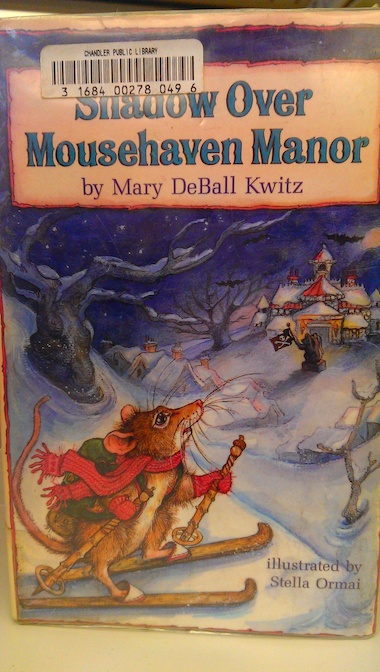

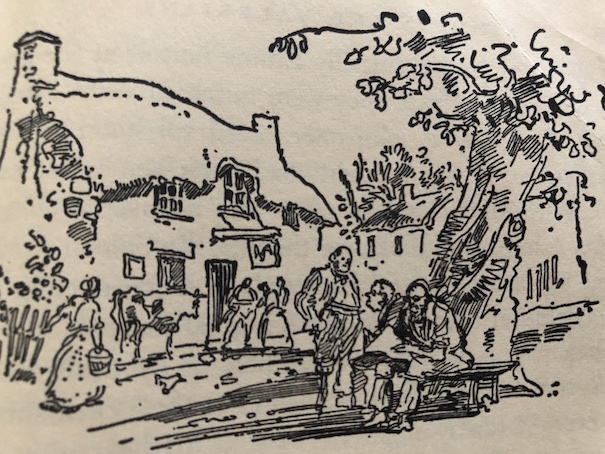
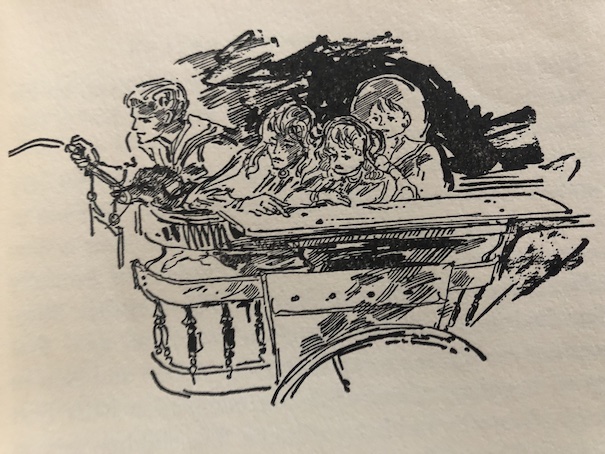

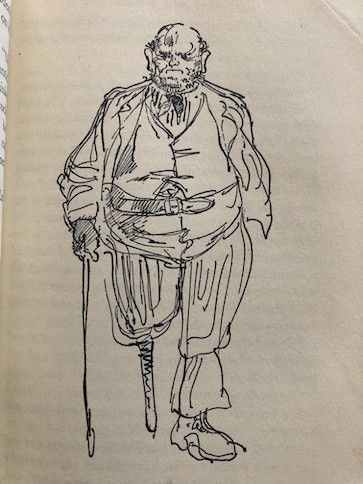
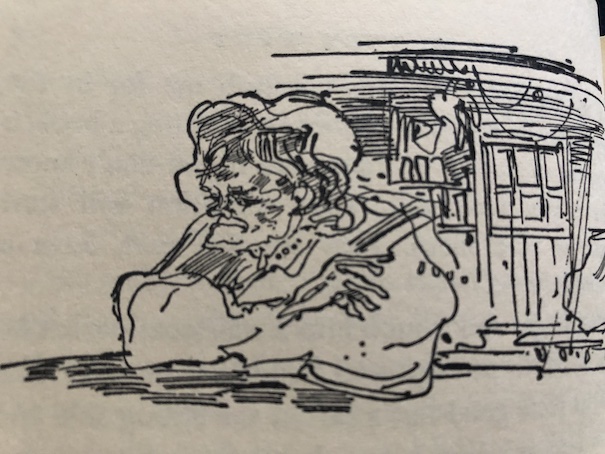


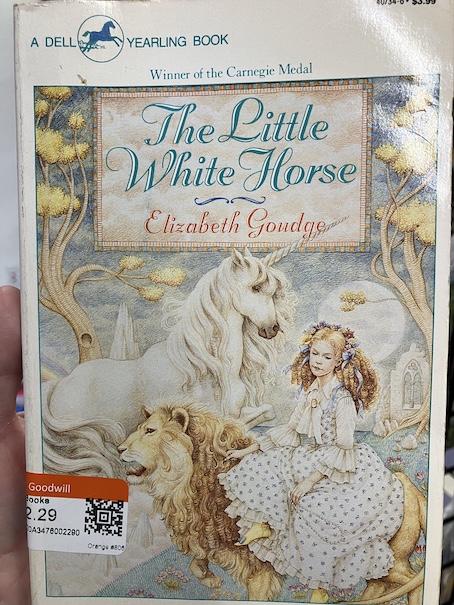
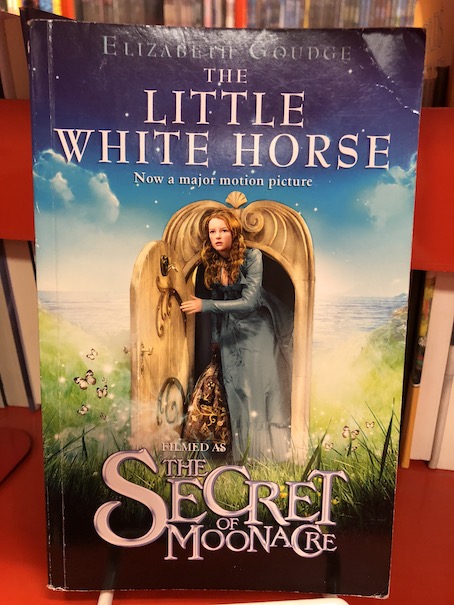
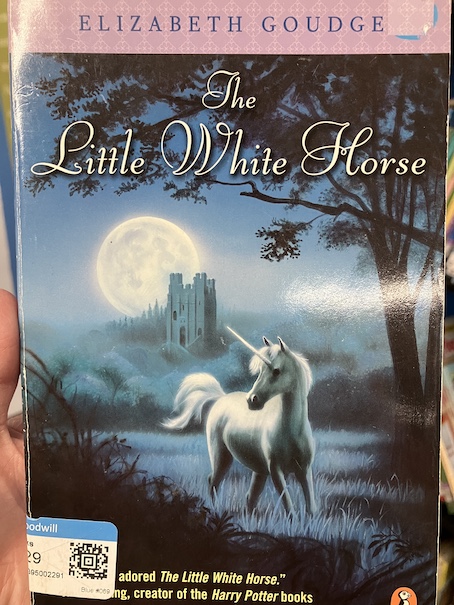


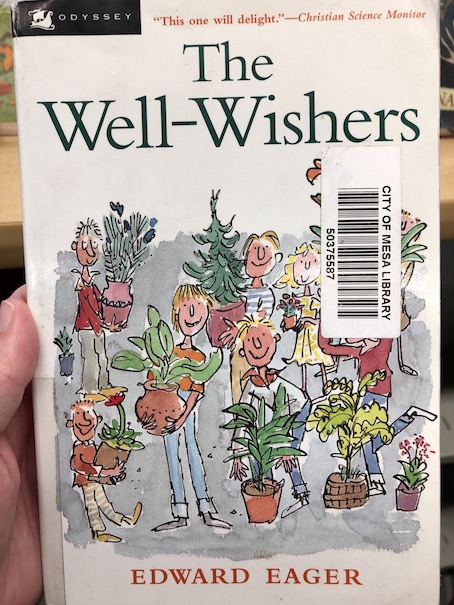
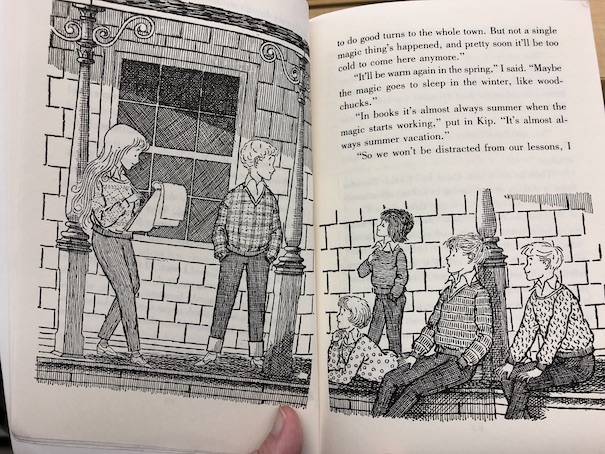


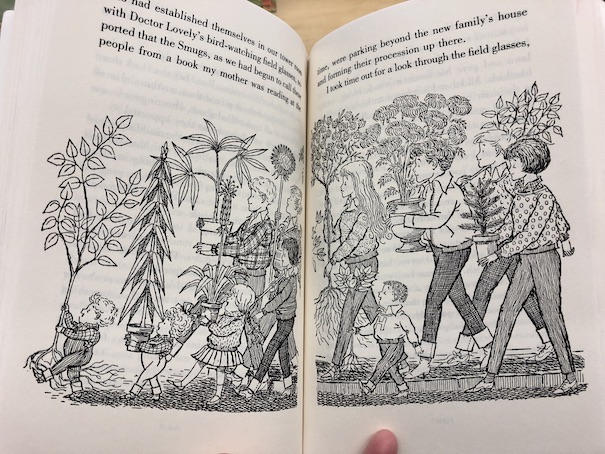



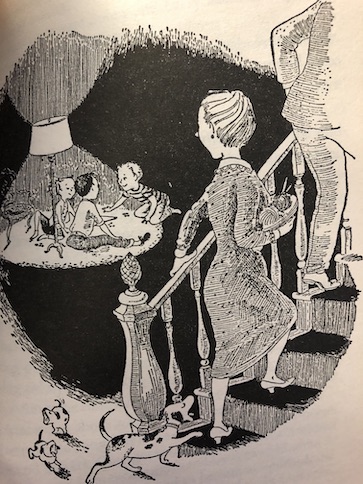
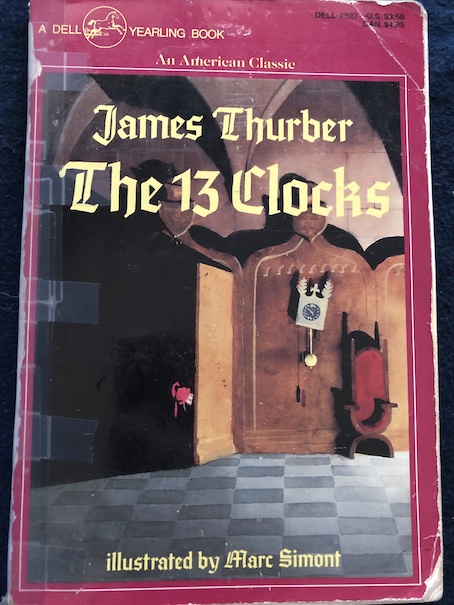

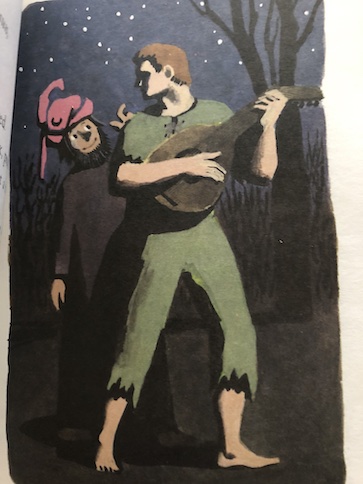

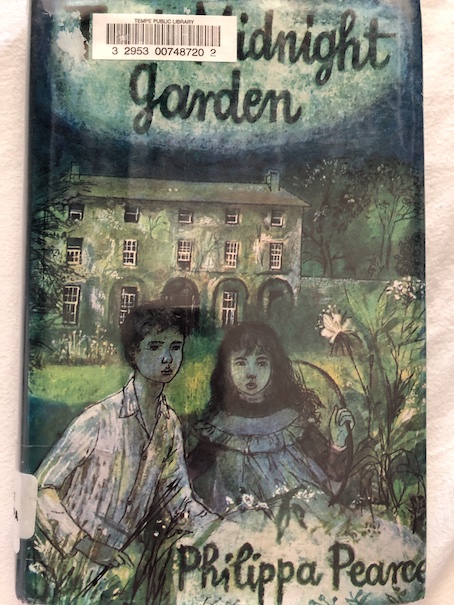



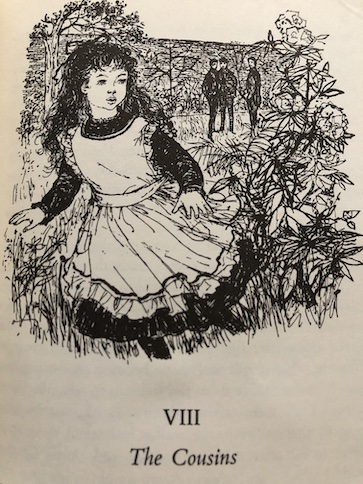


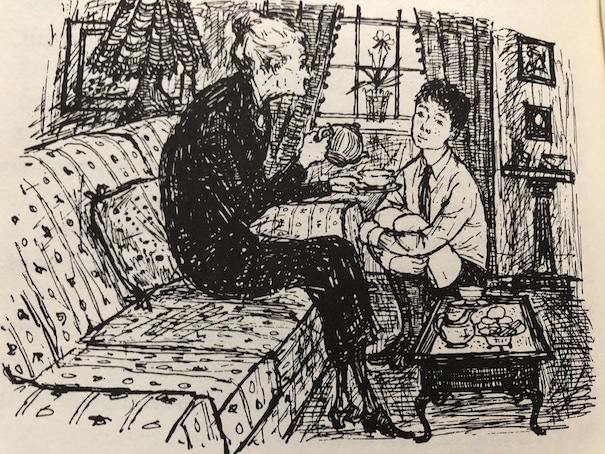

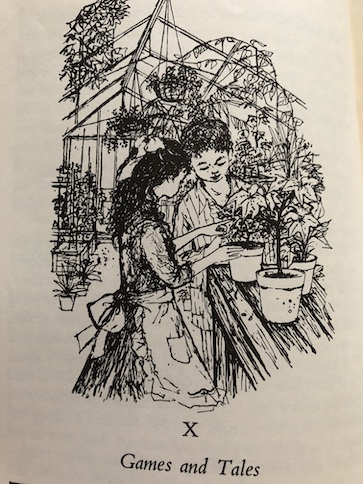



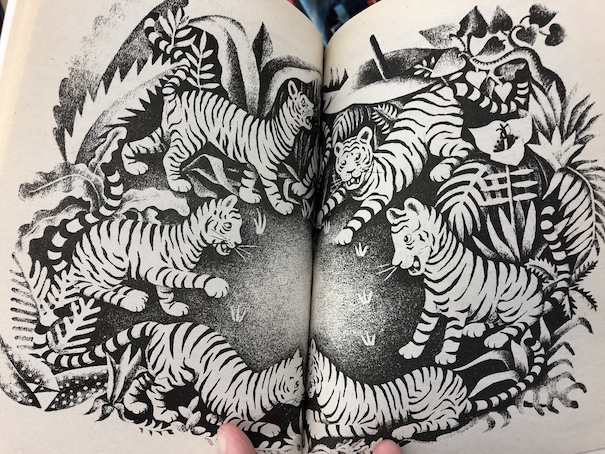
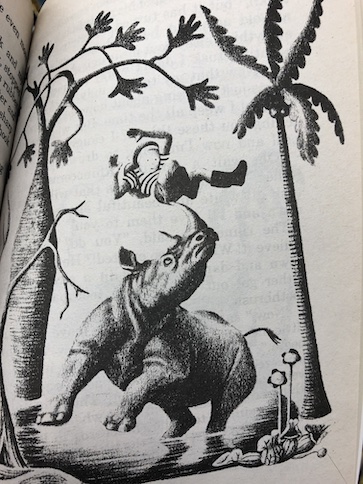

 Jestress's Forgotten Books and Stories