This is the fourth book in The Dark is Rising Sequence, and it picks up not long after the previous book ends.
Will Stanton has been very ill with hepatitis, and the doctor ask advised his parents to send him somewhere to rest for a while and recover his strength. In the previous book, his sister Mary had gone to stay with relatives in Wales after she had the mumps, so his parents agree to send him there. Even after he recovers, Will has a nagging feeling that he’s forgotten something very important. What he’s forgotten are the clues that he and his friends discovered at the end of the previous book, but little by little, they come back to him.
Will calls his relatives Aunt Gem and Uncle David, but really, they’re distant cousins. On his way to stay with them on their farm, Will sees a mountain that locals call “the Grey King”, which begins bringing back Will’s memory of the clues to the next item of power that he and his friends are supposed to find. An encounter with a strange dog with silvery eyes brings back the rest of Will’s memory, reminding him that he is the youngest of the Old Ones and it is his mission to find a magical harp in Wales.
The owner of the dog is an albino boy named Bran, who surprisingly knows the clues that Will had been struggling to remember. Bran reveals that Merriman visited him before Will arrived, told him to keep an eye out for Will and help him, and taught him the first part of the clue rhyme as a show that he can be trusted. The boys talk about what the clues in the rhyme mean. Will is supposed to find the harp on “the Day of the Dead”, which Will thinks means Halloween and which is coming soon, but he’s confused because the rhyme also refers to the end of the year. Bran says that Halloween might have once been regarded as the time of the New Year (which is true, and I discussed it in the History section of my Halloween Ideas site), and the two of them discuss some old traditions and superstitions about Halloween.
On Halloween, Bran and Will go into the mountains, and Will’s knowledge and abilities are tested before they are given the harp. Yet, Will is not the one to play it because he doesn’t know how. Bran is the harper. He also seems to have a strange connection to one of the lords who guarded the harp in the mountains. On the way down, the boys have a frightening encounter with a fox who has been killing sheep in the area, but weirdly, nobody else else can see the fox but the boys. A disagreeable farmer shoots poor Bran’s brave dog because he thinks that the dog is the one killing the sheep, and Bran is inconsolable. (I hate books where the dog dies.)
However, their work is not yet done. Will has to use what he’s learned from Bran about playing the harp to wake the Sleepers, who will aid the Light in the upcoming battle against the Dark. Bran also comes to learn his true identity and that of his mother. Although he is not one of the Old Ones, Bran is special and will play a pivotal role in the battle between Light and Dark.
The book is a Newbery Medal winner. It is available to borrow and read for free online through Internet Archive (multiple copies).
My Reaction and Spoilers
Even though this book is the Newbery Medal winner in the series, I didn’t like it as well as the earlier books. It’s partly because the dog Cafall dies, and I always hate books where the dog dies. I love dogs, and also, I realize that it’s often a cheap way to give readers and emotional wrench, to kill off a beloved animal. Also, I missed the familiar characters from the earlier books. The Drew children are not in this story, and even Merriman doesn’t play much of a role. For most of the story, Will is alone, although he does make an important friend in Bran, whose past is more mysterious than most people know.
Although, Cafall also represents one of the innocent sacrifices in the name of the battle between good and evil. Bran is angry at Cafall’s death and says that neither he nor his dog were part of Will’s battle or quest, and it wasn’t fair for them to be dragged into it or for Cafall to be killed. He’s partly right, although he is actually much closer to the center of this battle than he knows. Another character in the book talks to Will about the apparent callousness of the Light for those who end up being sacrificed in the struggle. Will’s answer is that some things cannot be helped. They might want to protect everyone and make things work out well for everyone, but circumstances don’t always make it possible, and there are times when trying to save someone or make someone happy could cause something else to happen that would be worse for everyone. I’m not completely satisfied with that explanation because, in this particular instance, I don’t see why this sacrifice was necessary and I feel like it could have been avoided, like I felt that another tragedy in The Dark is Rising could have been avoided. I suppose the principle that avoiding one sort of bad thing could lead to something worse could be true, but I just don’t feel it in these stories.
I was more convinced and intrigued by the concept of people who aid the dark without knowing that they’re doing it. In the previous book in the series, the author addressed the idea of neutral parties in the struggle between good and evil, but this book introduces the idea of ignorant or deluded people who do bad things without realizing. In the story, they aren’t regarded as true agents of the Dark because they haven’t consciously joined the Dark side and don’t even know that there’s any Light/Dark struggle happening around them, but they are doing what the Dark wants them to do and hurting people and the cause of the Light either because they are being tricked and manipulated into doing it or because they have some other motive that allows them to do bad things because they don’t care as much about the concept of good and evil as much as accomplishing their own goal.
In this case, the unwitting helper of the dark is the farmer who shot Bran’s dog. He genuinely did think that the dog was killing his sheep, so he thought that he was just protecting his property by killing the dog. That could be seen as a good motive gone astray, but when Bran’s real history is revealed, it is also revealed that the farmer also has darker motives for his bad behavior that he has been trying to keep hidden. It’s not just about protecting his sheep but also his resentment against Bran and Bran’s father, so he enjoyed hurting them by killing their dog. The farmer’s resentment goes back to when Bran’s mother, Guinevere, brought him out of the past to be raised by his adoptive father in the 20th century. Bran’s real father is King Arthur, but by the time Bran was born, Guinevere had already betrayed Arthur and feared that he would reject his son because of what she did. She wanted Bran to grow up in a safe place, away from his parents’ struggles. At her request, Merlin (which is Merriman Lyon’s real identity), brought her forward in time to the 20th century to find a new home for Bran. Bran’s adoptive father is a good man, and Guinevere knew that her son would be safe with him. He loved her in return and wanted her to stay and marry him, but Guinevere knew she couldn’t stay, so she left secretly, leaving Bran behind. Her departure might have been hastened because the farmer was jealous of Bran’s adoptive father for having Guinevere. Although he didn’t know Guinevere’s true identity, she was a beautiful woman, and the farmer wanted her for himself. He apparently tried to attack her or maybe even force himself on her, and he was fought off by Bran’s adoptive father and a friend of his. Although the farmer is a married man, he still harbors possessive feelings about Bran’s absent mother and resentment toward the men who stopped him from taking her. By extension, he also resents Bran. In the end, he is driven mad by his obsessions and his manipulation by the forces of the Dark.
This is the third book in The Dark is Rising Sequence, and it brings together the two sets of characters who have already been established in the series: the three Drew children from the first book and Will Stanton and the Old Ones from the second book.
The story begins with the theft of the grail that the Drew children found in the first book with their Great-Uncle Merry, otherwise known as Merriman Lyon. The grail was stolen from the museum where it was being studied, and Merry wasn’t there because he was supposedly on an extended trip to Greece. However, when word of the theft spreads, Merry comes back to see the children. He is the only person other than the children who know that the thieves who took the grail were not ordinary thieves but agents of the Dark, the forces of evil. Merry say that he believes that they took the grail because it will lead them to something else that they’re seeking. He says that he will need the children’s help again and asks them to trust him. There will be danger, but he promises them protection. The children agree and accept Merry’s invitation to spend their holidays in Cornwall with him again.
Meanwhile, Will Stanton is bored because his older brothers and sister are off doing other things. Even though he is secretly one of the Old Ones and has great powers, he is also still the youngest in his family and feels left out of things that his older siblings are able to do. Then, a mysterious stranger arrives and introduces himself as Will’s Uncle Bill. Will was named after Bill, who is one of his father’s brothers and has been living in the United States for as long as Will can remember. Will’s parents are glad to see Bill, and Bill offers to take Will with him on a trip to Cornwall because a friend of his who is also staying there will have a couple of nephews about Will’s age staying with him. Will is eager to go, and his parents agree to let him.
Of course, the friend that Uncle Bill is talking about is Uncle Merry, and the nephews are Simon and Barney Drew, along with their sister Jane. At first, the Drew boys don’t like Will much because they think he’s going to interfere in their mission with their Uncle Merry, not knowing yet that Will has special powers and is directly involved in the fight against the Dark as their ally.
Shortly after they arrive in the village where the Drew children stayed in the first book, Will and Uncle Merry mention a pagan ceremony that is still being practiced in the area called the Greenwitch. Uncle Merry says that Jane may watch it, but not the boys because only women are allowed to attend the ritual. However, the dog Rufus that the children befriended on their last visit is kidnapped, and they are given the warning that the captain who owns him had better stay away from the Greenwitch if he wants him back. Unbeknownst to the children, the captain, who is the man who owns the house where they stayed last time, is another of the Old Ones.
Still, Mrs. Penhallow, the wife of a fisherman they met in the first book, invites Jane to come with her to see the Greenwitch being made. Jane doesn’t know what that means at first, but she goes to the ceremony anyway. Jane watches the local women weaving branches together to make a strange figure. It makes Jane uneasy because it doesn’t seem human but it has a kind of power. The women tell her that few people can sense its power but that people make wishes on it before tossing the Greenwitch into the sea for luck. Jane is given the opportunity to make a wish herself, and she finds herself wishing that the Greenwitch could be happy because she senses a loneliness about the figure. She feels a little silly for that wish after she realizes that she could have wished to find the grail again instead. One of the women there approves of the sentiment of Jane’s wish although she notes that it’s also a dangerous one because it’s difficult to know what might make someone happy. Some people find happiness in dark or dangerous things, but in this case, it might be a very good wish.
However, the forces of darkness are also targeting Barney. Barney has recently been developing artistic skills, like the children’s mother, and an artist who serves the Dark steals one of his drawings to gain control over him. The Dark needs Barney, at least for a short period, because he can do something that none of them can; Barney can look into the grail and tell them what he sees.
The book is available to borrow and read for free online through Internet Archive (multiple copies).
My Reaction
There are even more pagan references in this story than in the previous two. The Greenwitch is a fictional ceremony, but it seems like it’s based on or inspired by a kind of folk magic. It might be that the local women who make the Greenwitch are meant to represent a coven performing magic. I’m not going to go too deep into the history pre-Christian traditions because this isn’t a real ritual that I can trace and the history of neo-paganism is complicated. If you’re curious, I recommend watching this documentary about the life of Gerald Gardner, the founder of Wicca. I don’t really believe in Wicca myself, but I think Gerald Gardner is a delightful eccentric and fun to hear about. (Just don’t show the documentary to kids without watching it yourself. There are a couple of things in there that night not be suitable for young kids.)
It’s not all focused on the folklore of the British Isles, though. At one point in the story, the characters seek the help of Tethys, a figure from Greek mythology. The Greenwitch is meant as a tribute to her, so she has power over it, and the characters need something from the Greenwitch. This story introduces the idea that, although the stories are about the struggle between good and evil, Light and Dark, there are also some powerful, ancient forces that are not part of this struggle, including Tethys and the Greenwitch. These forces are neutral, and their neutrality requires that they neither help nor hinder either side in the struggle. Tethys and the Greewitch are among those neutral forces.
Part of this story also involves characters doing things they shouldn’t because they don’t have all of the information they really need to make better decisions. Ignorance and half-knowledge are annoying parts of stories like this, plot devices to allow characters to get into dangerous situations. It all works out for the best in the end, though.
The day before his eleventh birthday on Midwinter, Will Stanton has an uneasy feeling that something is about to happen. First, the rabbits that his family keep behave oddly. Then, other animals seem to be afraid of him when they never have before. When he and his brother James go to pick up some hay from Mr. Dawson, Mr. Dawson makes an odd comment about “the Walker” being abroad and that it’s going to be a bad night. Then, Mr. Dawson says that he has something for Will for his birthday. He gives Will an odd iron ornament and tells him to keep it safe and not talk about it with other people. Everything about this day seems odd to Will, but he accepts this unusual gift.
That night, Will has an increasing sense of terror, and a rook apparently breaks the skylight in his room during a snow storm. The next day, Will can’t seem to wake up his sleeping family. He puts on warm clothes and leaves the house with a strange feeling that this is somehow his destiny. Things in the area look different, as if he is now in a different time, sometime in the past. Eventually, he sees a man he knows who works for Mr. Dawson, John Smith. John Smith is working on horseshoes for a black horse that belongs to a mysterious stranger in a dark cloak. The mysterious stranger offers him food and a ride on his horse, but Will refuses both. The stranger gives him an uneasy feeling, and without really knowing why, Will says that he is looking for “the Walker.” The cloaked stranger tells him that “the Rider is abroad” and tries to grab him, but John Smith pulls him out of the way, and the stranger is angry. John Smith tells Will that he is just newly woken and will have to figure things out for himself but to trust his instincts today. A beautiful white horse appears, and John Smith says that Will can ride it, if he wants, but Will’s instincts tell him that he needs to go on alone. As he leaves, Will sees John Smith giving the white mare shoes that look like the iron ornament that Mr. Dawson gave him.
As he explores the countryside further, Will encounters a wandering tramp that he saw attacked by rooks the day before and confronts him as being “the Walker.” The Walker is defensive and suspicious, and he asks Will to show him “the Sign.” Will realizes that he must mean the iron ornament that he now wears on his belt, but before he can show it to the Walker, the Rider comes and frightens the Walker away. The Rider sees his Sign and comments that Will only has one of them so far, and that won’t help him much. Fortunately, the white mare comes and carries Will away from the Rider.
The white mare carries Will away into the hills, he has a sensation like he’s falling, and then, he finds himself alone in the snow near a pair of carved wooden doors that appear to be standing by themselves, attached to nothing. Will pushes on the doors and finds himself in what seems to be a great hall, hung with tapestries. There is an old woman and a tall man standing by the fireplace, and they greet him. Will tries to ask them about the doors and why they seem to be standing by themselves, but the doors have vanished behind him. The man says that Will’s first lesson is that nothing is what it seems to be.
The man introduces himself as Merriman Lyon (introduced in the previous book in the series), and he says that he and Will were born with the same gift, the power of the Old Ones. Now that it’s Will’s eleventh birthday, his gift is awakening, but he must learn how to control it. At first, Will doesn’t think that he has any particular gift, so Merriman shows him how he can receive mental pictures from someone else’s mind and send them a mental picture and how he can even put out a fire with his mind. Will becomes convinced that he does indeed have powers that normal boys don’t have. Merriman tells him that this gift is a burden, like many special gifts, but he was born with this gift for a special purpose.
Merriman says that he doesn’t want to tell him too much yet because the full knowledge of his destiny may be dangerous for him while he is still learning to use his gift. However, he does tell Will that he is actually one of the Old Ones, the first of his kind to be born in the last 500 years, and he will be the very last of them. Like other Old Ones, he will play a role in the battle between good and evil. His first role is that of the Sign-Seeker. He must find the six Signs and guard them. The iron ornament is the first Sign, but the others won’t be as easy to find.
Will returns to his family and his ordinary life, buying Christmas presents for his siblings for the coming holiday, but he knows that his life is no longer ordinary. He has much to learn about how to use his powers, and the sinister forces that pursue him to try to stop him from carrying out his mission.
The book is a Newbery Honor Book. It’s available to borrow and read for free online through Internet Archive (multiple copies). The book was adapted as a movie called The Seeker in 2007.
My Reaction and Spoilers
Fantasy books sometimes have to deal with the subject of religion and the relationship between magic and religion. This book also does so somewhat, but I noticed that it also seems to try to remove itself from consideration of the issue at the same time. At one point, Merriman discusses the idea of witches and witchcraft trials with Will, telling him that none of those involved were Old Ones, like the two of them. He says that everyone involved with witchcraft trials were ordinary humans, most of the people who were called “witches” were innocent victims although a small number were genuinely evil, and generally, the witchcraft trials were the result of human madness and irrationality, not genuine magic. In other words, readers don’t need to worry about trying to reconcile the power of the Old Ones with witchcraft because the author says that the two of them are two different, unrelated things.
Will and his family celebrate Christmas during the course of the book, and they go to church, so it’s apparently fine for an Old One to also be a Christian. Yet, there is a scene at church on Christmas where Will and John Smith have to stop the forces of the Dark attacking the church. The minister tries by calling on the powers of God and exorcising the evil spirits, but John Smith says that the minister’s efforts don’t work because “This battle is not for his fighting”, apparently indicating that the powers of Light and Dark as portrayed in this story are somehow outside of any religion or the interference of any god because they are forces that are completely unto themselves. The traditional Christian view would be that God commands the forces of good and light while the devil commands the forces of evil and darkness, but they’re saying here that’s not the case in this story. Will’s thought is that there is a place that exists out of time where all the Gods that ever were came from and also all of the forces and powers in the world, and it seems like some of these exist independently of each other, that they don’t have any beginning and so none of them is less old than any of the others. There is an element of pagan and folklore traditions that runs through these books, and I think that part of this concept references that, but I also see that looking at the battle between Light and Dark in this way, as being something independent of absolutely everything else, leaves the author of the stories free to have it play out in whatever way makes a good story without having to make it adhere to any rules and traditions other than the ones she’s chosen.
Of course, even fictional magic has to follow some rules in order to make logical sense to the readers. As I said, there are pagan and/or folklore traditions that are implied to be true or to have more significance than most people would suspect. Will uses holly as a form of protection for his home during Christmas. Aside from its association with Christmas, there are also many folkloric superstitions about holly. It is also revealed that part of what makes Will so special is that he is the seventh son of a seventh son, another concept from folklore.
A theme that is carried over to this book from the first one in the series is that evil can sometimes appear innocent and even friendly. People who have appeared as friends before can be revealed to be secretly evil or coerced to the dark side, even people who have been close before. Those who aren’t as in tune with the battle between good and evil may be fooled by friendly smiles, charming manners, and a pleasant appearance, but those who are aware of the difference between dark and light can feel when someone isn’t right.
There is one case in this book where a previously good person turns to the Dark because he feels betrayed about how Merry put his life at risk for the cause of the Light. I feel like this could have been avoided if Merry had been more honest with him in the beginning about the risks of what they were doing and the reasons why it was so important, but Merry seems to feel like it was all inevitable, something that was fated to be. Yet, at the end of this person’s life, Merry emphasizes that all of the choices this person made were his own, and although he went through much suffering because of things that had to happen as they did, he could have still had a better life even while undergoing his ordeals if he had made different choices along the way. I think I see what he means, that there are some things in life that are unavoidable but people can make them better or worse through their own choices and behavior, but I still feel like Merry set him up for this bad situation because he didn’t explain things properly when he should have. Maybe that was Merry’s bad decision, too?
Parts of this book actually reminded me of The Box of Delights, a vintage children’s fantasy book that also takes place at Christmas. In both books, Herne the Hunter, a character from folklore, makes an appearance, and the boys in each story get turned into different animals through their adventures with magical books.
The Drew family is spending the summer in Cornwall with their Great-Uncle Merry. Professor Merriman “Merry” Lyon isn’t really a relative, but a very old family friend who teaches at a university and has a somewhat mysterious past. Of the three Drew children – Simon, Jane, and Barney – Barney is the one most looking forward to their time in Cornwall because he loves Arthurian stories, and he is fascinated by Cornwall’s connections with King Arthur. Simon is more interested in watching boats.
One day, while the children are bored because it’s raining, they start playing at being explorers inside the house where they’re staying and discover a secret passage to a hidden room. There, they find an old manuscript that seems to be some kind of treasure map! It seems like parts are written in Latin, but even Simon, who has studied Latin in school, can’t read it all. At first, they wonder if they should tell their parents about it, but they decide not to, at least not right away, because their parents would probably tell them not to touch it because it doesn’t belong to them. They feel like they just have to figure out what it means and what it might lead to.
The family makes the acquaintance of a yacht owner, Mr. Withers, and his sister, and the two of them invite the whole family to go for a ride on their yacht. Mrs. Drew is an artist and wants to spend the day painting, so she declines, and so does Jane. Jane says that she’s afraid of getting seasick, but really, the Witherses give her an uneasy feeling. Jane feels like there’s something that’s not right about them, and it’s strange that Miss Withers asks them if they’ve found any secret passages in the house just after they actually found one. None of the children confide anything in Miss Withers. Mr. Withers seems oddly interested in the books in the house.
The next day, while her father and brothers go out on the yacht with the Witherses, Jane studies the manuscript and tries to figure out what it means. When she also finds an old guidebook to the area in an old trunk, she realizes that the map on the manuscript shows the area where they are staying, but there’s something strange about the coastline. The coastline on the old map is a slightly different shape. Jane wonders if one of the two maps could be wrong or if the coastline has changed somehow over the years because the manuscript looks very old.
Since the guidebook was written by the local vicar, Jane decides to go see him and ask him about the coastline and whether it’s changed over the years. She takes along the guidebook but not the manuscript. However, the vicar she meets says he’s the new vicar, not the old one who wrote the book. She talks to him about the book and the coastline anyway, but he gives her a bad feeling, similar to the one that the Witherses give her. The vicar discounts the idea of the coastline changing, and he asks Jane uncomfortable questions about the books in the house, pressing her for answers that she doesn’t have and doesn’t want to give him.
When the boys come back from the yacht, and Jane tells them about the guidebook and the vicar, Simon is irritated that Jane tried to investigate the manuscript without them, and he doesn’t think she should have talked to the vicar. Jane says that she didn’t tell the vicar about the manuscript, only the guidebook, and Barney says that what Jane learned is important.
The next morning, they wake up to find that the house has been ransacked. Books have been tossed all over in the middle of the night by someone who was clearly hunting for something. The children are sure that their mysterious intruder was searching for the manuscript, which is safe because Jane had it hidden in her bed. But, who was it? Was it the vicar or the Witherses? All of them seemed interested in old books and manuscripts, and they all seem suspicious. What is the real significance of the manuscript anyway?
Still not wanting to tell their parents or the police who were called to investigate the break-in, the children confide in Great-Uncle Merry about the manuscript and their suspicions. Uncle Merry knows more about the manuscript than the children know, and he tells them about a lost grail, a copy of the original Holy Grail, inscribed with the true story of King Arthur and about an ancient struggle between good and evil, a struggle that the children have now joined.
The book is available to borrow and read for free online through Internet Archive (multiple copies). The book was once adapted as a tv mini-series, but apparently, no copies of it survive.
My Reaction and Spoilers
This book is the first in a series about the struggle between good and evil, known as the Light and the Dark, and all of the other books in the series also draw on Arthurian legends. Merry and the children appear in other books, although not always together. Merry (the children sometimes call him Gumerry, which is short for Great-Uncle Merry) isn’t quite what he appears to be, which is how he knows things that other adults don’t know. There are hints in this book about Merry’s real identity, but it isn’t explained in this book, although Barney has a feeling that his name is a clue.
When Merry explains about the battle between good and evil, he says that the struggle has been going on for ages, and neither side ever completely wins or completely loses. It’s like that in this story, too. At first, I wasn’t completely sure whether they would actually find the grail or if it would turn out to be a MacGuffin, only existing to drive the action without it being really important whether it was actually found or not. The heroes do actually find and successfully retrieve the grail, but they also lose the manuscripts they’ve found before they can completely study them. It’s a victory, but not a total victory, and the villains are still around and may reappear in the future. This story ends in a way that indicates that this could have been a standalone book, which it might have been originally, before the author decided to continue the series, but the ending is also open, making the continuation of the series natural.
There are references to old folklore traditions throughout the story. I’ve never seen The Wicker Man, but I saw a comment on a YouTube video where someone compares a public festival from this story to a scene in The Wicker Man, so there may be the implication that this is a more ancient form of celebration with more significance than the modern characters think. In fact, old traditions and folklore from the British Isles also appear in various forms throughout the series, and there are references to pagan beliefs.
I didn’t like the part where the kids were pretending to be explorers, and they were talking about acting out one of those scenes with “rude natives” (Simon’s words, and even he has to admit that he doesn’t quite know what it means when Barney asks him, although he’s aware that it’s a different sort of “rude” from the word meaning “impolite”) who want to make them gods and encountering cannibals. That type of scene always annoys me in books, and I’m sure that they’re referencing some of the vintage books I’ve read where that happens or ones very much like them. It’s really my only complaint about this story. Fortunately, that part doesn’t last very long because the kids find the manuscript and get on with the fantasy story.
The Children of Green Knowe by L. M. Boston, 1954, 1955, 1982, 1983.
Seven-year-old Toseland is traveling by train to stay with his great-grandmother Oldknow at the old family home, Green Noah, for Christmas. His mother is dead, and his father now lives in Burma with his new wife, who Toseland doesn’t know very well. He has no brothers or sisters, and he spends most of his time at boarding school, so he is often lonely, wishing that he had a family outside of school, like the other boys. His great-grandmother is the only other relative he has, and he has never met her before. He is a little nervous at the idea of meeting her because he knows that she must be very old.
When Toseland arrives at the station, it’s raining, and there has been flooding, but there is a taxi-man waiting to take him to the house. When he arrives, he is immediately fascinated by the large, old house and all of the things in it. It reminds him of a castle, and he marvels at how his great-grandmother could live in such a place. He is surprised at how at home he feels there and how easily he likes and gets along with his great-grandmother. For the first time in his life since his mother died, he really feels at home, and when he asks if the house partly belongs to him, too, his great-grandmother reassures him that it does.
The two of them talk about what to call each other. Toseland’s great-grandmother asks him to call her Granny (although she is still often called Mrs. Oldknow throughout the book), and she asks him if he has any nicknames. Toseland says that the boys at school call him Towser and his stepmother calls him Toto, but he doesn’t like either nickname. Granny Oldknow says that Toseland is a family name and there have been other Toselands before him. The last one was his grandfather, and his nickname was Tolly, so Granny asks him if he would like to be called that also. Toseland says that he likes that nickname better than the others, and his mother used to call him that, so he is called Tolly from that point on.
Granny Oldknow shows Tolly to his room and helps him begin to unpack. It’s a wonderful room with many old toys that used to belong to the other children who have lived in the house in the past. Among the toys is an old dollhouse which Tolly realizes is a miniature version of the house they’re in. When he finds the miniature version of his room, he notices that there are four beds in it instead of one. He asks Granny Oldknow if other children stay at Green Noah, and she cryptically says that they do sometimes, and he might see them, but they come when they want to.
Tolly becomes fascinated by a portrait of three children in old-fashioned clothes with their mother and grandmother. Granny Oldknow tells him that those three children lived in the house long ago. The oldest boy was an earlier Toseland, who was nicknamed Toby. His younger brother was named Alexander, and their little sister was named Linnet. Granny Oldknow had been an orphan when she was a child and was raised at Green Noah by an uncle. Because she was an only child, she often lonely and liked to pretend that the children in the picture were her siblings, so Tolly decides that he’d like to do the same thing.
Tolly asks his great-grandmother questions about Toby, Alexander, and Linnet and learns details of their lives. Toby had a sword because he was going to be a soldier when he grew up, a pet deer, and a horse named Feste who loved him. Alexander had a book in Latin that he loved to read and a special flute. Linnet used to keep birds in a wicker cage that is still in Tolly’s room, along with the toy mouse that used to belong to Toby. Sometimes, Tolly thinks that toys in his room move when he’s not looking, and at night, he hears children moving about and laughing, and he thinks that it’s the three children from the painting.
Tolly comes to the conclusion that the three children are still around Green Noah and that they’re playing hide-and-seek with them. He tries to play with them, too, and the children apparently give him a twig in the shape of a ‘T’. Granny Oldknow tells him that she used to play hide-and-seek with the children when she was young, and they would give her an ‘L’ twig because her first name is Linnet, like the little girl in the painting. Later, he hears the children singing Christmas carols. Tolly becomes frustrated that the children tease him and never really show themselves to him, but Mrs. Oldknow tells him that “they’re like shy animals” and that he has to give them a chance to decide that they’re ready to come to him.
He finds the key to the old toy box in his room, and inside the box, he finds more things that belonged to the three children. When he shows them to Mrs. Oldknow, she talks about how things were when the three children were alive at Green Noah. Tolly is shocked when he realizes for the first time that Toby, Alexander, and Linnet are all dead. Mrs. Oldknow gently tells him that they lived at Green Noah centuries ago and could not be alive now. Sadly, the children all died young in the Great Plague during the 17th century. Their illness was sudden and brief, and they all sickened and died in one day along with their mother. Tolly and his great-grandmother are descended from the children’s older brother, who wasn’t at home when this happened. However, the children never left Green Noah, which used to be called Green Knowe years ago. Tolly still loves the children, even though they’re ghostly and elusive. He craves the sense of family he gets from them, having been deprived of family feelings for so much of his young life.
Mrs. Oldknow continues to tell Tolly stories about the three children and other members of his family. As his connection to his ancestors grows, Tolly begins to catch glimpses of the children more and more, and eventually, he’s able to see them and talk to them. He asks the children about their mother, and the children say that she’s in heaven but doesn’t mind them coming back to visit their old home from time to time. The children don’t seem sad at being dead, enjoying the freedom of playing around their old home with the animals and the spirits of their old pets, who keep them company. Their final illnesses had only lasted a few hours before they died, and their deaths happened so long ago that they say that they hardly remember the Great Plague and what it felt like. Tolly is still sad and frustrated that the children appear and disappear so suddenly, but his attachment to them grows and so does his attachment to Green Noah itself. As Christmas comes, Tolly develops a bond with his family, both living and dead, and a realization that the old family home that connects them is also his home, a place they can all return to.
The book is the first in a series and is available to borrow and read for free online through Internet Archive (multiple copies).
My Reaction and Spoilers
This is a ghost story, but it’s not a scary ghost story. There’s nothing frightening about the three ghost children. It’s sad that they died so young, but at the same time, they’re not very sad about it themselves. They seem to enjoy playing together endlessly with the animals around their old home and seeing the new relatives who inhabit the house, their older brother’s descendants. Even their former pets are no longer sad at the children’s passing because they are also spirits who continue to play with them through the centuries. There is one semi-scary part of the story involving a witch’s curse placed on an old tree called Green Noah, which is how the name of the house was changed from Green Knowe, but Tolly is protected by the ghosts of his ancestors.
There is never any desire for the characters to rid Green Noah of its ghosts. They are family and are part of the place, as much a part of it as the living are. The ghosts do not feel trapped there, either. They are just revisiting the home they loved and the family members who now live there. They can come and go as they please, and the ghost children often do.
This also is not the kind of story where a child knows that a place is haunted but can’t convince the adults or tries to hide the ghosts’ presence from the adults. Mrs. Oldknow is fully aware that the ghosts are there and has known about them since her own childhood. Generations of children in the family have probably known about them and played with them, and they are also not the only family ghosts who inhabit the old house. At one point, Tolly and Mrs. Oldknow hear a woman singing and the rocking of a cradle, and Mrs. Oldknow says that she’s heard it before around Christmas, a grandmother singing to a baby. Tolly is confused because even little Linnet wasn’t a baby when she died, and Mrs. Oldknow says that this isn’t the children’s grandmother but somebody from generations earlier than the three children. This grandmother ghost has been around so long that Mrs. Oldknow doesn’t know who she or the baby are supposed to be, although we are told that they are about 400 years old, where the three children died about 300 years earlier. Generations of the same family have lived in the house and have all left their mark on it, and part of them is still there. Now, Tolly has also become part of this family home, and it’s also a part of him. The ghosts are hesitant to fully show themselves to Tolly at first and seem more attached to Granny Oldknow, probably because she’s lived there longer, since she was an infant. The ghosts know her, and she knows all of their stories. However, they are all family, and Tolly develops a new connection to his family as his great-grandmother tells him the stories about them, and he can hear and see the ghosts more often.
Really, that feeling of connection and connectedness is the primary focus of the story. In the beginning, Tolly is lonely, feeling like he doesn’t have a family and doesn’t belong anywhere or to anyone. His father lives far away in Burma with his new wife, and Tolly doesn’t feel connected to them. His mother is gone, and he spends most of his time at school, even having to remain there during the holidays when other students are going home to their families. His great-grandmother inviting him to Green Noah is the first time that Tolly feels a real connection to anyone in his family since his mother’s death, and through her stories and his encounters with the ghosts, he comes to see that he really is part of a much larger family, going back ages. Just because most of his family is now dead or scattered doesn’t mean that they’re not his family. They still love him, and he loves them, even across the centuries. Green Noah really is a family home, and it’s a place that family can return to, even those who seem to be gone forever. It’s a place that has known both the joys of a happy family and the tragedies of loss that families experience from time to time. Through it all, it’s still home, and importantly, it becomes the home that Tolly has been wishing for.
The story takes place in the days leading up to Christmas, and by Christmas, Tolly has received important presents. First, the ghostly Alexander grants him the give of his special flute, which had been a reward from King Charles II for singing so beautifully for him when he was alive. Tolly also has musical talents, and his great-grandmother decides to switch him to a different school so he can develop his talents and so he can stay at Green Noah during his school holidays. On Christmas, Tolly also receives his own pet dog, very much like the one that the ghostly Linnet owned, and he names his dog after hers, just as he has been named after all the other Toselands who have gone before.
In some ways, the story reminds me a little of When Marnie Was There (some people might know the story from the Miyazaki movie version), which has similar themes of family and belonging and ancestors reaching out across time to remind children that, while life is brief and often complicated, love is eternal and everyone belongs somewhere and to someone. However, The Children of Greene Knowe is a much gentler story, and it also contains some shorter stories about Tolly’s family.
The Box of Delights by John Masefield, 1935, 1957.
This book is a sequel to The Midnight Folk. Since the events of the previous book, Kay Harker has become a student at a boarding school, and he is now returning home for Christmas.
At the train station, Kay panics when he realizes that he can’t find his ticket, but it is returned to him by a nice old man with a dog named Barney. Kay also sees some men who seem to be looking for someone else. He overhears their description of the man they’re looking for, but they seem to conclude that the man isn’t on the train. Kay thinks that they might be police detectives, looking for an escaped criminal. His conclusion is proven correct when a porter tells him later that the detectives caught the man they were looking for, trying to disguise himself as a duchess. Kay asks what the criminal did, and the porter says that he’s murderer who killed his father-in-law in a very brutal way. Now, the detectives are taking him away in a special card with an armed guard, and he will probably hang for the crime. Kay finds the story thrilling, but he wonders if the guard made it up or embellished it. When he buys a newspaper, he doesn’t see anything about a murder like the porter described in it.
Kay enjoys the train ride home because, when he went to school, it was by car, so he’s seeing things on the journey home that he hasn’t seen before. On the train, he meets a couple of men dressed like theology students, but whether they’re really theology students is questionable. They sometimes speak to each other in a foreign language that Kay thinks might be Italian, and they trick Kay into playing a card game for money that’s like the Shell Game. Kay only plays once, and when he realizes that he’s been tricked, he decides the men are sinister. The two men ask Kay about the countryside, and one of them refers to him as “Mr. Harker” when Kay never introduced himself. Kay asks the man how he knew his name, but the man never really explains. When Kay arrives at his train station and meets Caroline Louisa, who looks after him, he realizes that his coin purse and watch are missing. Strangely, when he checks for them, he finds the ticket that he thought that he’d lost, so the ticket the nice man gave him must have been his own.
The nice man with the dog is also at the train station. Caroline Louisa thinks that he looks like a Punch and Judy man, and when Kay asks him, he simply says that he is a showman. He also seems to speak in odd riddles, telling Kay that “the Wolves are Running” and asking him if he will do anything to stop them biting. Kay says that he doesn’t know what he means. Rather than explaining, the man asks him to go to a shop in town to buy some muffins, and while he’s there, to look for a lady wearing a ring like the one he’s wearing and give her the message that “The Wolves are Running.” Kay is surprised that this man also seems to know his name and won’t explain how.
When Kay returns to Caroline Louisa, he mentions the men on the train who knew his name, and she says that they probably read it on his luggage labels. Without telling Caroline Louisa why, Kay asks if they can stop in town to buy some muffins. Caroline Louisa also mentions that the four Jones children, Peter and his three sisters, will be spending Christmas with them because their parents have to go abroad. Kay gets along pretty well with the Jones children, and Peter will be sharing a room with him. Kay says that he will have to get some extra presents for the Jones children in town as well. They stop in town, Kay buys the muffins as he was told, and sees the woman that the old man described with a ring like his. Not knowing why it’s important, Kay passes along his message to her, and she nods to him. Then, Kay notices that there are people in town with Alsatians, and they seem to be on the scent of something. Kay wonders if they could police dogs, and Caroline Louisa says she doesn’t know, but she doesn’t like them herself because they remind her too much of wolves.
When they get home to Seekings, the four Jones children are already there. (We did not met them in the previous book, so these are new characters to readers, although Kay has already met them at this point.) Kay thinks of Peter as “a good honest sort of chap.” Of his three sisters, Kay thinks of Jemima as being the smart one. Maria is untidy and has a toy pistol. She has a fascination with gangsters, like in the movies, and she wishes that they could find a gang of robbers and have a battle with them. Susan looks like a small fairy.
Kay gets the idea of inviting the man they’ve come to think of as the Punch and Judy man to the house to perform for them. When he goes back to town to invite him, another man wearing the same ring as the others stops him and tells him to pass on the message that “Someone is safe.” Kay thinks that the message is intended for the Punch and Judy man and passes the message on to the old man when he sees him. He tries to ask the old man what he’s been talking about when he talks about the “Wolves”, but he’s evasive. Instead, he tells Kay that he will come perform a Punch and Judy show for the children at Seekings at the time he was thinking of. Kay asks him how he knew he was going to make that request, but he ignores the question. The old man produces the image of a Phoenix in the fireplace at the pub where they are talking, and he says that he has other wonders in a little box that he will show him later.
When the old man, whose name is Cole Hawlings, comes to Seekings to perform for the children, he does many magic tricks that appear to be real magic. After his performance, some Christmas carolers come to the house, and Kay spots three men, who seem to be spying on the house, trying to see into the study. One of them is one of the men who tricked him with the card trick on the train. Cole Hawlings is very nervous about these men and starts talking about wolves running again.
Caroline Louisa is unexpectedly called away to tend to her sick brother, and while Kay is seeing her off, the other children are approached by one of the spying men, who asks where Hawlings went. Maria, who didn’t actually see Hawlings leave, mistakenly says that he left with the carolers. As Kay returns to the house, he overhears the spying men talking about it. They are definitely after Hawlings, and they are associates of Abner Brown, the villain from the previous book. Kay realizes that his old enemy has returned, and once again, he will have to face off against evil magic.
When Kay meets up with Hawlings again, Hawlings says that it’s not really him that the wolves are after but the Box of Delights that he carries. He gives it to Kay for safe keeping. Kay doesn’t fully understand the purpose of the box, although Hawlings shows him how to use it to return home without any time seeming to have passed. The next day, Kay brings Peter with him when he goes to see Hawlings, and the boys witness Hawlings being kidnapped and dragged into an airplane! They try to report it to the police, but the police don’t believe that they witnessed a kidnapping, and someone else turns up in another town, claiming to be Hawlings. Where is the real Hawlings, why do Abner Brown and his people want his box so badly, and what is Kay going to do with it?
The book is available to borrow and read for free online through Internet Archive (multiples copies). There have been multiple dramatizations of the book, and you can sometimes find them or clips of them on YouTube.
My Reaction
I felt like this story was more cohesive than The Midnight Folk, which seemed more disjointed. It is still episodic and tries to work in various elements from children’s fantasies, stories, and folklore. When Kay opens the box, he finds a strange book, and when he opens the book, he finds himself in a forest with Herne the Hunter, a character from folk legends. Herne turns Kay into different animals. After a delightful adventure exploring the woods with Herne in different animal shapes, Kay finds himself back in his own bedroom with hardly any time having passed. Later, the children use the box to shrink themselves to hide from the villains and meet fairies. Aside from the traditional and folklore elements, there are also elements of modern stories and fantasies. The children have a fascination with gangsters (probably from movies of the time), and the villains have some pretty impressive equipment, like a taxi that turns into an airplane and airplanes that fly silently, seeming to combine more modern technology with an element of fantasy or magic.
I also liked the addition of Peter and his sisters because it gave Kay other children he could talk to and who could see the things he sees and share in his adventures. Kay doesn’t tell his friends everything, although they do share in various parts of his adventures, and I’m actually amazed that they take these parts in stride and don’t ask as many questions as I think they should be asking. The adults around them are completely oblivious to the magical happenings, with the exception of Hawlings.
As an historical food note, the police inspector recommends to Kay that he have a hot milk drink called a posset, and he describes what goes into one, but the version that he describes is non-alcoholic. The original drink was an alcoholic beverage, but presumably, this one was toned down for children. The way they describe it in the book, it sounds similar to a non-alcoholic eggnog, but served hot.
Kay Harker is an orphan, the ward of Sir Theopompus, usually in the care of his governess, Miss Sylvia Daisy. One day, Sir Theopompus asks Kay if he has any idea what he wants to do when he grows up. Kay says that he likes the idea of being a jockey, but Sir Theopompus says that he could be a sea captain, like his great-grandfather. According to the stories about him, Kay’s great-grandfather sailed around the world and stole a treasure from the priests of Santa Barbara worth about a million pounds (British money). The stories differ about what happened to the treasure, though. In some versions, his crew mutinied and took the treasure for themselves, but other stories say that he brought the treasure home with him and hid it somewhere in his family home, the home where Kay now lives.
Sir Theopompus asks Kay if he’s ever come across the treasure, but Kay says he hasn’t. Sir Theopompus suggests that if Kay finds the treasure, the two them could split it between them. Kay says that wouldn’t be fair, if he had to do all the work of finding it by himself, and also the treasure is stolen property, so it would rightly belong to the priests of Santa Barbara. Still, Sir Theopompus encourages Kay to search for the treasure. Kay doesn’t believe that the treasure is really in the house or that his great-grandfather would be a thief, and he doesn’t think it’s fair to tell such stories about him when he isn’t there to defend himself. His governess tells him that he has been impertinent and sends him to bed early.
Kay is later woken by someone calling to him to open the door, and he sees a door in his room that he has never noticed before. The voice he hears belongs to the black cat called Nibbins, who tells Kay to come with him and not make any noise. Most of the house is asleep, and Nibbins refers to the ones who are awake as the “midnight folk.” He leads Kay down a secret passage that was once used by smugglers.
There, Kay learns that his old toys were his “guards.” He doesn’t know where his old toys are because his governess packed them away when she came, saying that they would just remind him of the past. Nibbins says that his old toys had stumbled onto a clue about the hidden treasure and went in search of it. They didn’t think it would take them long to find it, but he hasn’t heard from them since. Kay sadly fears that his old toys may actually be dead. (A horrifying thought.)
Then, there’s an even more shocking revelation. Nibbins shows him that there are spy hole where Kay can see what’s happening in various rooms in the house, and in the dining room, he witnesses a meeting of witches! Nibbins shows Kay where the witches keep their brooms, and they take a couple of the brooms on a ride to the woods, where Nibbins introduces Kay to a poacher called Bitem. They witness the witches having a bonfire and a magical ritual at Wicked Hill. Nibbins says that he used to be a witches’ cat and helped with rituals like that. Sometimes, he still feels the call of magic.
The leader of the magical group is a wizard called Abner Brown, and they overhear him saying to the witches that they are going to hunt for the Harker Treasure. Abner has learned that the treasure is not actually in the Harker house, but it’s somewhere close by. Abner reveals previously-unknown details of the treasure’s history, including the fact that his own grandfather had once been in possession of it and hid it until someone called Benito Trigger found it. Abner has found evidence that his grandfather tracked down Trigger and confronted him in this very area and that Trigger may have killed him. Abner believes that the treasure is still hidden somewhere near to where his grandfather died. Nibbins leads Kay back to his bedroom through another secret passage before anyone discovers that he is gone.
Kay knows that what he witnessed the night before wasn’t a dream because, in the morning, he sees the remains of the leftover goose that the witches were eating the night before, picked to the bones. The servants think that the cats got at the goose and ate the leftovers, but Kay knows better.
Then, the portrait of Kay’s great-grandfather comes to life, and his great-grandfather invites Kay into the portrait, showing him the house as it was in the past. His great-grandfather denies having stolen the treasure years ago, but he says that it was entrusted to him and that he lost it. He was in Santa Barbara when the territory was breaking away from Spain, and the archbishop gave him the treasure to guard from the revolutionaries. However, his crew did mutiny and turn pirate. The crew took the treasure, and they abandoned Kay’s great-grandfather ashore, far from any European colony. For a time, he says that he was a slave of a tribe of Indians (Native Americans), but he eventually escaped and made it home to England. He heard that his old ship may have sunk, but he doesn’t know for sure. Even he doesn’t know where the treasure is now, thinking that it must have either sunk with the ship or been scattered by the crew. It’s always bothered him that he was unable to fulfill his promise to keep the treasure safe. He wants Kay to learn what happened to the treasure and, if possible, restore it to its rightful owners.
Through Kay’s midnight adventures and the ghosts of the past stirred up by the magic of the witches, Kay begins to learn the full sequence of events that led to the treasure being lost, and eventually, what happened to it. Along the way, Kay also makes the startling discovery that his governess is actually one of the witches!
The book is available to borrow and read for free online through Internet Archive (multiple copies).
My Reaction and Spoilers
There were some parts of the story that I found difficult to follow because the story kind of jumps around, people start talking about things as if we should already know about them, and some things that Kay encounters are not fully explained. Many of them seem like dream sequences or imaginings, except they have lasting consequences. Then, there are times when people go into lengthy explanations that seem to meander, and there are people who go by multiple names. For awhile, Kay almost seems to forget about seeking his great-grandfather’s treasure and starts looking for the treasure of an old highwayman instead, and there is a strange interlude with King Arthur and his knights.
Still, this story is a children’s classic, and it’s almost like a collection of all the features that are found in classic children’s literature: an orphan, talking animals, witches, pirates, ghosts, mermaids, a highwayman, King Arthur and his knights, hidden treasure, etc.
For awhile, I thought that the story might end with the implication that much of it was in Kay’s imagination. Kay is a lonely boy who doesn’t see his guardian very often and lives with a strict governess and no other children for company. I thought maybe he was spinning dreams or imagined stories to explain other events happening around him. I spent part of the story working out how a child might interpret a strict governess who took away his old toys as a witch, and I thought maybe she was in a romantic relationships with Abner Brown, which would be why Kay would see him as a wizard. Then, maybe these young people had parties in the house with their friends after Kay was put to bed, so he imagined that they were having witches’ meetings. They could also be hunting for the legendary treasure, so all the parts related to treasure-hunting could be true. However, the book implies that the magical parts of the story are real. Even the magical things Kay experiences have real world consequences, which help both him and readers to realize that what he has seen has really happened.
I thought that the story became a little more cohesive after Kay makes the discovery that his governess is actually one of the witches. He eventually learns the full truth of what happened to the treasure years ago and meets up with his old toys/guards, who are still alive and have been seeking the treasure the entire time. Kay’s toys/guards bring the treasure from its hiding place to a secret hiding place in Kay’s room and help him to alert the proper authorities and restore the treasure to its rightful owner. Kay’s governess is arrested when she and her friends are caught trespassing in pursuit of the treasure and in possession of smuggled goods. The governess is released when Abner Brown pays the fines for their activities, but she leaves the area instead of returning to Kay. Kay’s home life changes for the better because a friend of his mother comes to live with him and look after him.
Shadow Over Mousehaven Manor by Mary DeBall Kwitz, 1989.
Minabell Mouse is happily looking forward to her Aunt Pitty Pat visiting her for Christmas with her new husband, Magnus, but she receives an urgent message from Magnus, saying that her aunt is very ill and may not survive much longer. He urges Minabell to home to her aunt’s home, Mousehaven Manor right away and bring the copy of her aunt’s will that her aunt left with her. With her home suddenly damaged badly by a storm, Minabell does immediately set out for Mousehaven Manor, crossing the Illinois prairie through the tunnel called Rodent Run, which small animals use to travel in safety. Before she leaves home, one of her friends gives her a Christmas present to take with her, something long and thin. It’s awkward to carry, but her friend insists that she take it with her and open it on Christmas. Another friend warns her to beware of the tough Chicago rats who are a gang of criminals who have invaded Chicago’s City Hall.
On the way, Minabell Mouse stops to rest and has a fearful encounter with a group of rats carrying a pirate flag with the name “Prairie Pirates” on it. She witnesses them murder a chicken at a farm, pluck it, and carry it off. It’s horrifying, and Minabell is lucky that the pirates didn’t see her. She is alerted by a stranger who makes her keep quiet.
The stranger introduces himself as Secret Agent Wendell Weasel, a member of the Illinois State Ski Patrol, a form of animal law enforcement. Minabell asks Wendell who those pirates were, but before he answers her questions, he insists that she identify herself and tell him where she’s going and why. Minabell explains to Wendell about her aunt, and he looks at the copy of the will she is carrying, which leaves everything to her, as her aunt’s closest relative.
Wendell urges Minabell to turn around and go home because it’s too dangerous for her to continue her journey. The Prairie Pirates are a band of Chicago rats, and the “Sungam” that they heard the pirates chant is the code name of their leader. Wendell says that he can’t tell her more than that because the information is classified, but he says that if Minabell really thinks about the word “Sungam”, she will see that there is a good reason not to go to her Aunt Pitty Pat and Uncle Magnus. (Hint, hint.) Of course, Minabell doesn’t see what Wendell is talking about at first and continues her journey because she thinks Aunt Pitty Pat needs her. She does, but not in the way Minabell expects.
Minabell does realize the significance of the word “Sungam” when she uses it to frighten off cats who attack her. Puzzling over the word more, Minabell tries writing it out in the snow and sees that it’s “Magnus” spelled backward. Minabell realizes that her aunt has actually married the leader of the Prairie Pirates! The Prairie Pirates have taken over Mousehaven Manor, and her beloved aunt is their prisoner! (Flying their pirate flag over the house isn’t the most subtle way to lure an innocent victim into their new hideout. I don’t think it even counts as a hideout anymore if you have a banner advertising that you’re there. Even if Minabell hadn’t already figured out the code name clue, the flag is a dead giveaway. Just saying.)
There is still time for Minabell to turn back before meeting the pirates, but she can’t leave her aunt in danger and Mousehaven Manor occupied by the enemy. However, she’s going to have to come up with a clever plan, or she’s going to be in danger, too.
I haven’t found a copy of this book online, but there is also a sequel called The Bell Tolls at Mousehaven Manor. There are only two books in the series.
My Reaction and Spoilers
I had to get this book because I vaguely remembered a teacher reading it to my class years ago in elementary school. There was a lot about the book that I forgot over the years. I had completely forgotten that it was actually a Christmas story. My strongest memory of this story was actually a small detail, but one that they repeat during the book. Minabell has a little ritual that she does whenever she needs to remember something, particularly when she needs to remember where she hid something. I had forgotten the rhyme she says, but I remembered her writing what she needs to remember on her forehead with her finger. That struck me as actually a clever trick because writing something, even if you never look at it again, helps things to stay in your memory because you really need to concentrate in order to write, and you can remember the act of writing, which brings back the memory of what you’ve written. When I was a kid, after hearing this story, I used to do that sometimes, write something on my forehead with a finger to help me remember.
Reading the book as an adult, the Sungam/Magnus clue is pretty obvious. The plot also sort of reminds me of The Mysteries of Udolpho, which I read several years ago because I really like Jane Austen’s Northanger Abbey, which references and parodies that book. The connection that book and this one is that part of the long, rambling, episodic plot of The Mysteries of Udolpho involves an aunt who has cluelessly married the leader of a gang of bandits, and the leader of the gang just wants to acquire her money and property. This book is a little different because the mouse aunt has not actually married the rat; he’s just holding her captive so he can take over her house and use it as the base for his gang and claiming that they’re married to justify occupying the manor. Like in The Mysteries of Udolpho, the bandit leader holds the aunt and her niece captive at an isolated manor house, trying to get the aunt to not only sign over all her money and property to him but also her niece’s inheritance. That’s why Magnus told Minabell to bring her copy of her aunt’s will. He needs to change the will so that it leaves Mousehaven Manor to him.
So, strangely, Shadow Over Mousehaven Manor is a little like The Mysteries of Udolpho for children. I actually recommend it more than The Mysteries of Udolpho because The Mysteries of Udolpho is rather long and disjointed. Both books contain some admiration of the beauties of the countryside while the character that travel, but the scenery descriptions are much longer in The Mysteries of Udolpho, and Shadow Over Mousehaven Manor is just more fun to read because it involves talking mice and pirate rats. The mice in this book are also much more sensible than the humans in The Mysteries of Udolpho. The mouse aunt knows darn well what Magnus is, while the human aunt was completely clueless almost up to the point where her husband caused her death. I’ve amused friends sometimes with describing The Mysteries of Udolpho, and I might put my short (short-ish) explanation of the plot (plots) of the book on the Internet sometime just for fun, but I mostly recommend reading that book only if you’ve already read and like Northanger Abbey.
I’m going to include some spoilers for the story because this book isn’t currently available to read online. Minabell has the presence of mind to realize that, before she attempts to enter Mousehaven Manor and save her aunt, she needs to hide the will she is carrying because she can’t let it fall into Magnus’s hands. When she does reach the manor, she is also imprisoned with her aunt in the manor’s dungeon, along with a friend who came to try to help her. (I don’t really know why any mansion in the US, mouse or human, needs a dungeon, but maybe mouse history in the US was more feudal than human society or something. It doesn’t really matter. It’s just a really cool mouse manor house, and it has a dungeon. It also has secret passages.) They get out of the dungeon because the aunt remembers an old song that has a clue to a secret way out of the dungeon, and they find their way to the belfry tower, where they ring the bell to signal for help. There, they meet a family of bats hibernating in the bell tower. The bell wakes them up, and one of them helps them reach their friends. Minabell, her aunt, and their friends battle the pirates and drive the out of Mousehaven Manor. They celebrate with a big New Year’s party, and Minabell decides that she wants to continue living at Mousehaven Manor with her aunt.
When the story begins, in 1912, the four Linnet children are in a bad situation. With their father on his way to serve in the army in India with a stop in Egypt, they have been left behind to stay with their grandmother, who is not an indulgent, “grandmotherly” sort of grandmother. First, she’s planning to give away the children’s dog because she doesn’t like dogs. Then, she’s planning to send the two eldest children, Robert and Nan (short for Anna), to boarding school, while keeping the younger children, Betsy and Timothy, to be tutored at home. Worse, she locks the children up by themselves, sometimes in the dark, leaving them to scream.
Admittedly, the reason why they were locked up was because their grandmother had arranged a tea party to show them off to her friends, and the children, not liking parties, had barricaded themselves in a hen house, fighting off the gardener and their grandmother’s companion with rhubarb stalks until they were finally caught. They were locked away from the party guests until they were ready to apologize, which none of them want to do. (Bad strategy on the part of the adults. Some things are their own punishment. Rather than locking the children up, which is cruel, they should have let the children suffer the consequences of their own bad choice. Don’t get them out of the hen house; insist that they stay out there, not being allowed any of the goodies at the party or even being allowed back into the house until they first clean themselves up in the yard. The kids aren’t very good at planning, and I’m sure they don’t have food stores in the hen house. Everyone gets hungry eventually, and it should be clear to the children that it’s their personal choice how long they want to stay that way. But, the grandmother also shouldn’t give away the children’s dog without their consent, so it’s hard to feel too sympathetic here.) Realistically, it is acknowledged that their grandmother could be quite kind with children who were gentle, quiet, and well-behaved, but also realistically, this is not the case with her grandchildren. Frankly, the children are wild and have no inclination to compromise with their grandmother. With all of these things combined, it is clear that life with their grandmother is going to be impossible, and Robert decides that there’s only one thing to do: escape.
Robert manages to break out of the room where he’s been locked up, and he frees his siblings and their dog, Absolom. The four children set off with their dog, intending to walk to the mountains (just some mountains, somewhere to the west – nowhere specific and no real plan involved) and make their living there because Robert imagines that would be a good idea. As they pass an inn, they spot a pony and cart tied up outside, and they decide to appropriate them for some transportation. Besides, Robert has always wanted a pony. Nan is concerned that they’re stealing, but Robert says that they’re just “borrowing.”
The Linnet children have much more in common with their Uncle Ambrose than with their grandmother or other relatives. Uncle Ambrose is similarly unsociable and impatient. Uncle Ambrose was once a teacher, but now that he’s retired, he has no desire to spend time with children again. He also doesn’t like dogs. But, it turns out that the pony they “borrowed” belongs to him and takes them to his house. When Uncle Ambrose realizes who the children are, he takes them into his house and keeps them over night, although he doesn’t introduce himself to them immediately. The children feel much more at home with Uncle Ambrose, even when they don’t know who he is, because his house is a bit shabby and untidy, and he has a pet owl and a cat with kittens. Also, in spite of his gruff manner and assertion that he’s not happy about having children around, Nan has the sense that he actually likes them. The children decide that they’re going to try to behave themselves in this house because they like being there and want to stay.
In the morning, Uncle Ambrose goes to town to get the groceries that his peg-legged gardener, Ezra, neglected to get the other day when the children stole the pony and cart in town. When he returns, he also has the children’s luggage with him. Uncle Ambrose went to see his mother about the children, and when he suggested that he could keep them at his house, the children’s grandmother eagerly took him up on the offer. The children are all intensely relieved that they won’t be sent back to their strict grandmother and her overly-tidy house and can stay with their eccentric uncle, the peg-legged gardener who comes home singing in the middle of the night when he gets drunk, and the wonderfully untidy garden outside, where they can play.
Uncle Ambrose confesses to the children that he has actually missed his students since he retired from teaching. He isn’t particularly fond of children by themselves, but he is fond of teaching them. As a condition of the children staying with him, Uncle Ambrose insists that they allow him to educate them. The children agree to this because one of their reasons for running away was so they would not be split up when Robert and Nan were sent to boarding school. The children just want to stay together with their dog. Uncle Ambrose agrees to this, saying that he doesn’t approve of sending young girls to boarding school at all, although he insists that girls be properly educated as well as boys. He says that he wouldn’t even consider sending Robert to boarding school until he’s had a better grounding because he’s not satisfied with the reports he’s had of Robert’s academic abilities. The children aren’t thrilled at the idea of studying, but they agree to it because staying together and studying with Uncle Ambrose sounds better than being split up or the other alternative, being sent to stay with their Uncle Edgar in Birmingham. Also, Uncle Ambrose is willing to give the children some time each day to themselves, to play or do what they want. He won’t even insist that they show up for meals, but if they miss them, they’ll just have to go hungry. (See? I told you it was a better strategy than fighting to get them out of the hen house.) As much as the kids don’t like the idea of studying, they love the idea of having some freedom. Freedom means that adventures could happen.
Now, the story at this point could have been a complete story by itself – a group of wild, undisciplined kids are left with their strict grandmother, and after a battle of wills between the children and the grandmother and some overly-harsh punishment, the children run away, finding a gruff but kindly bachelor uncle who rediscovers the pleasure of having children around and also happens to have once been a teacher and can tutor the children while their father is away, managing to inspire the children to behave a little better and learn to make some better decisions by granting them a little freedom to make some of their own choices instead of being too controlling. That’s all very nice as a single story. However, in this case, all of that is just the background for the story to come. We’re still in just the first part of the book.
Segue to the Magic
After it’s settled that the children will stay with Uncle Ambrose, they decided to go into town for their first free excursion. They stop at the little store in town to buy some sweets and a picture postcard to send to their grandmother because Nan has been thinking over their time with her and has realized that they were badly behaved and feels guilty about it. The store is managed by Emma Cobley, an old woman in an old-fashioned dress and cap and a red shawl who owns a black cat named Frederick. Emma is a little creepy and she warns the children to stay away from Lion Tor because it’s a dangerous place. (A “tor” is “a high, craggy hill.”)
When the children return to the house, Ezra insists upon introducing them to the bees. The children think that this is a very odd thing to do, but Ezra says that it’s important, and he asks the bees to look after the children. Timothy asks if it’s possible for bees to look out for people, and Ezra says that they once saved his life when he fell into an old tin mine and showed the vicar (the children’s uncle, after he retired from teaching – they’re all living at the vicarage now) where to find him. When Ezra hears that they’ve been to Emma Cobley’s shop, he tells them not to go there anymore. The most Uncle Ambrose buys there is stamps, but neither of them ever buys anything else from her, and Ezra is reluctant to tell the children why. There is something a bit creepy about Emma and some suspicious things in her shop, like the overly-appealing candy and the one postcard that she refuses to allow the children to buy or even look at for long.
As the children start having lessons with Uncle Ambrose, Robert asks him if he will be giving them pocket money. Uncle Ambrose says that he doesn’t give pocket money, but there are opportunities for earning some. He gives them a list of chores that they can do and what he’s willing to pay for doing them. He also points out to Robert that, as the oldest boy, he can’t expect to wriggle out of the tougher chores or leave them to the girls, but if he’s willing to tackle the tougher chores, he will pay him well for it. Uncle Ambrose has somewhat chivalrous sensibilities about what girls can handle, and he also reminds the boys that there are consequences for misbehavior, lying, or stealing. He says that he would never use corporal punishment on a girl, but he has caned boys before and could do the same to his nephews if they give him reason. He tells the children that, from this point on, they cannot interrupt their lesson time with any subjects that aren’t related to the lesson. (He never does hit any of the children and does make reasonable exceptions to this rule later in the story.) It isn’t just the threat of punishment that keeps the children in line, though. It turns out that Uncle Ambrose is an excellent story-teller, and when he starts describing other countries or historical events, the children are captivated. In many ways, Uncle Ambrose makes learning fun because he really loves his subjects and knows how to share what’s fascinating about them with other people. There are parts of the learning that seem like drudgery, but they are balanced out by the parts that are truly fascinating.
The children also gradually begin learning more about the other people who live nearby. There is a black man (called a “Negro” in the story) called Moses Glory Glory Alleluja. (That’s apparently his real name in the story and not just a nickname, to which I say, “God help us all!”) When the children first see him, they’re startled and afraid of him because he’s carrying a curved knife and looks like “a coal-black giant.” They stop and stare at him because they’re afraid, and Ezra tells them not to hurt the poor man’s feelings because he’s a gentle man. As he gets closer to the children, they realize that he’s not as fearsome as they had first thought from a distance. He’s actually very pleasant, and the knife he’s carrying is just a scythe for clearing plants.
Moses works for Lady Alicia (a sort of man-of-all work – cook, gardener, butler, etc.), and Lady Alicia also has a monkey called Abednego. When the kids go with Ezra to pick up a couple of extra beds that Uncle Ambrose is borrowing from Lady Alicia for the children, Abednego takes Betsy’s doll, and she has to chase after him to get it back. In the process, Betsy meets Lady Alicia, an elderly lady in very worn fancy clothes and wearing jewelry. The two of them introduce themselves to each other and explain a little about who they are. Lady Alicia once lived there with her husband and son, but she says that her son, Francis, was “lost” years ago on Lion Tor at the age of eight. She doesn’t explain at this point how that happened or even if her son died or simply disappeared. Her husband also disappeared a few years later overseas because he was a traveler and explorer. She doesn’t seem to expect to see either of them again. This is really where the main plot of the book is introduced.
The Magic
So, now we know that there’s a creepy old lady who owns a shop that isn’t quite what it seems to be and a mysterious and sad old lady whose husband and son have disappeared, and it’s all connected to Lion Tor. The children’s first encounter with Lion Tor happens when Betsy’s siblings realize that she’s missing at Lady Alicia’s house. Not knowing that she’s with Lady Alicia, they assume that she’s wandered off into the woods to pick flowers and go searching for her. Nan finds her way to Lion Tor, where she discovers a cave that is filled with paintings. She knows they weren’t done by cave people ages ago because people in the drawings are wearing modern hats. The artist turns out to be a bearded man in ragged clothes who seems unable to speak.
Nan learns that this man is called Daft Davie, but Nan doesn’t think that’s fair because he seems intelligent and artistically talented, even though he isn’t able to speak. Ezra explains to her that Davie used to work for a blacksmith in another village nearby but some boys kept teasing him and tormenting him because he couldn’t speak, so he eventually went to live by himself at Lion Tor.
The boys eventually find Betsy with Lady Alicia. To their surprise, Lady Alicia seems to be enjoying Betsy’s company, even though she doesn’t normally like visitors. She invites the children to return again with Nan, making an odd comment about how the Linnet family seems “inevitable” but might do her some good.
Uncle Ambrose allows Nan to use the parlor of his house as her private room, where she can do her sewing and darning or just have time to herself. He says that he hasn’t done much with the parlor himself, other than putting furniture in it, because the parlor is usually for the lady of the house, and he’s unmarried. Now that Nan is there, she counts as the lady of the house as the oldest girl, and Uncle Ambrose can tell that she’s a reflective kind of person who can use some quiet time to herself, away from the other children. Nan is appreciative, and she’s also surprised when Uncle Ambrose tells her that the previous lady of the house was Lady Alicia. Before her marriage to the local lord, she was the daughter of the previous vicar, and he found some of her old books in a hidden cabinet in the room.
Uncle Ambrose removed the books from the hidden cabinet and put them on the bookshelf in the room, but out of curiosity, Nan investigates the hidden cabinet and finds that it still contains a notebook. However, the notebook belonged to a young Emma Cobley, not Lady Alicia. The notebook contains what looks like evil witchcraft spells. Nan is alarmed, although later, she’s confused because she sees Emma Cobley at church. She isn’t sure what to think because she can’t imagine that a real, evil witch would go to church. Nan considers that perhaps Emma used to practice witchcraft in her youth but repented later and changed her ways. However, if that’s true, why does Ezra disapprove of her, and how can they explain Emma’s creepy black cat? When Nan studies the spells in the book, seeing spells that can prevent a person from speaking, cause a person to lose his memory, and cause a person to forget affection for another, Emma’s true character and some of the mysterious events of the past begin coming a little more clear.
When Nan talks to Ezra later, he says that Emma Cobley’s father was a black-hearted warlock who taught her evil spells. Ezra says that his own mother practiced white magic and that his family is descended from ancient peoples who were called fairies or gods. Nan had thought that there was something gnome-like in his appearance and isn’t surprised that he’s a bit magical. Ezra further describes the day that Lady Alicia’s son disappeared at Lion Tor. They’d been on a picnic with the boy’s nurse, and the nurse and the boy had been playing hide-and-seek. A mist came up, and they were unable to find the boy. They feared that he might have drowned in the marsh because his cap was nearby, but they were never able to establish that. Some other people thought he might have been kidnapped by gypsies, but there was no evidence of that, either.
In the cemetery of the churchyard, there is a memorial to Lady Alicia’s husband, Hugo Francis Valerian, and his son who was named after him, but the husband’s death date is unknown. The children argue about what that really means. Robert says that the Valerians are dead, but they’re just not buried at the site of the memorial because they were lost and nobody knows exactly when they died and where the bodies are. However, Betsy has the feeling that they’re not dead, and Nan agrees that disappearing isn’t the same as dying. But, is that really true? Are the Valerians alive or dead, and if they are alive, where are they?
Pieces of the past continue falling into place. Betsy and Nan accidentally find old love letters that Emma Cobley wrote to the elder Hugo Valerian … love letters that also contain angry threats when the love wasn’t returned. Pictures that Davie painted on the walls of his cave resemble ones from Lady Alicia’s tapestry. Uncle Ambrose doesn’t believe in the power of witches and thinks that what Ezra has been saying about magic and spells is just superstition, but Ezra knows a few things that Uncle Ambrose doesn’t. He’s the one who knows how to undo Emma Cobley’s wicked spells.
The book is available to borrow and read for free online through Internet Archive. Sometimes, this book also appears under the title The Runaways.
My Reaction and Spoilers
A Few Concerns
I didn’t like the parts with the harsh punishments or threats of it for the children. Locking children up or caning them would be considered child abuse by modern standards, although my feelings about that are somewhat offset because they kids are pretty wild and the book makes it clear that they are badly behaved in the beginning and provoked the punishment they received. I’m willing to let it go partly because nobody actually gets caned and because of the fairy-tale atmosphere of the story. In fairy tales, there is often a cruel relative, and in this case, it’s more like an overly-provoked one at her wit’s end. In either case, the children’s situation with their grandmother in the beginning establishes the reason why they go to live with their eccentric uncle and have magical adventures.
Some people might not care for the different standards for boys and girls in the story. It’s old-fashioned, out of date even for the time when the book was first published, but the setting is also old-fashioned, so I think it’s meant to establish the time and place. It’s common in older children’s books and stories that imitate them for boys to be given more freedom than girls but also for boys to be subjected to harsher, more physical punishments when they get out of line. Uncle Ambrose seems to have similar feelings in that direction, although he does give the boys and girls the same lessons because he feels that girls’ minds also need to be educated, and he allows all of the children to have equal free time and ability to play and explore the area together.
As another reviewer of this book observed, it seems a little strange that the children would be so frightened of Moses when they first meet him because they used to live in India, and you would think that they would be accustomed to the idea that there are people of different races in the world. This can’t be the first time that they’ve seen people who look different, although I suppose they could be a little intimidated by him being especially tall and carrying a scythe. That might be something that would be a little startling to see very suddenly until you look again and realize it’s just a really tall guy with a farm implement because we’re living in the countryside now. I liked the warning from Ezra to the children to behave themselves and not hurt Moses’s feelings. I thought it was good to emphasize that other people’s feelings are important, and that comment helped to humanize Moses because, even if he looks a little strange or intimidating at first, he’s still a human being with feelings.
However, there is another part of the story not too long after that, when they’re looking for Betsy and Robert, who has a habit of play-acting, pretends like he’s a Roman emperor giving a command to a “coal-black Nubian standard-bearer”, saying, “Slave, lead on.” There seems to be some self-awareness in the story that this wasn’t a good thing for Robert to say to Moses (who is a servant, not a slave, although Ezra later says that there is a rumor that Lady Alicia’s husband may have bought him in a slave market overseas when he was young), and Timothy is concerned that Robert might have offended him. The story says that Moses isn’t the kind of person who takes offense or holds grudges, and he seems to understand that Robert is play-acting, but I felt like this somewhat undermined the message of considering other people’s feelings by suggesting that the best way to be is not to have any particular feelings to consider. That’s not something anybody can count on in real life or insist that others provide for them. Real human beings are not like stuffed teddy bears, who can take endless abuse or respond to any comment with a constant smile and still be lovable and want to snuggle afterward, like none of it matters. Real humans have both feelings and limits, and this is one instance where I felt like someone should have thrown a little cold water on Robert’s play-acting. The whole story has an air of unreality about it, which is part of the charm, but I think even fantasy stories should be real about human behavior.
The Fantasy
The fantasy in the story is really very light, compared to most fantasy books. Although it becomes well-established by the end of the book that Emma Cobley is definitely a witch who cast evil spells which caused Lady Alicia to lose both her son and her husband, the spells and their undoing were done in such a way that Uncle Ambrose never seems to realize that it was all magic. Basically, the children and Ezra find the little figures with pins in them that Emma made, and Ezra recites a magical rhyme that allows them to remove the pins, thus breaking the spells. Then, they burn the figures and Emma’s old spell book, destroying her magic forever. After that, Lady Alicia’s son and husband both come back, Emma actually becomes a much nicer person, and everybody lives happily ever after.
The pace of the story is fairly slow, which is actually part of its atmospheric charm. For a book dealing with an evil witch, black magic spells, and unhappy people, it’s really pretty relaxing. I think part of that effect is because of its gradual pace and also because there are never very serious consequences for anybody in the story. It’s sad that Lady Alicia, her husband, and her son were all parted from each other for a period of years, but when the spells are broken, they are pretty quickly very happy again. Emma Cobley does try to prevent the children from learning her secrets and breaking the spells, but really, nothing bad happens to the children at all. There is one semi-frightening part where the boys and their dog are up a tree with Emma and her friends below it, but then Uncle Ambrose comes and takes the children home, and everything is fine. Emma tries to cast spells on the children at once point, but the children don’t even notice until they find the figures of themselves later. Ezra tells them that the witch’s spells were ineffective against them because he made his own figures of the children first and put them in the church, so they are protected. Emma herself faces no consequences in the end, either. They don’t have to destroy the witch to destroy her magic, and once her magic is gone, she is so changed and everyone is so happy that there’s no retribution, only forgiveness.
On the one hand, the lack of consequences in the story for things the children do make the story feel like the stakes are low. There is a sense of sadness around characters in the story, but is no particular sense of urgency. They are not racing the clock to break the spells, and the villains are pretty ineffectual at putting up obstacles to their success. On the other hand, it seems like most of the story focuses on atmosphere over action. This little village is an enchanting place to be. It’s charming, and the lack of consequences for the children, whether it’s for being racially insensitive or facing down a witch or even just staying out late, make the story feel like a very safe kind of adventure. Uncle Ambrose, Ezra, and their bees won’t let anything serious befall the children, and the worst punishment they have for misbehavior is being sent to bed with gruel (a kind of thin porridge) instead of a proper supper. Uncle Ambrose told them that if they missed meals, it would be their fault, and they’d have to go without. However, he never lets children go to bed hungry, and he even allows them sugar on their gruel. Again, very low stakes, but charmingly so. This story is not stressful, which is good, but it’s not for people looking for excitement.
I was a little impatient with the children for not making the connection between the spells in the book and Daft Davie even after seeing the figurines, including the one with the pin in its tongue. This spell is supposed to prevent people from talking, and who else do they know who can’t talk? There aren’t that many people in the area, and there’s only one person in the story whose main characteristic is an inability to speak. Even as they’re breaking the spells, they don’t know who they’re breaking them for, like they can’t even guess, and Nan is surprised when Davie can suddenly talk afterward. I think this is one of those stories that wants to make readers feel clever for figuring it out before the characters, but that can also feel a little frustrating. If there’s one thing I would change about this story (other than the racial bits), I would want the children to realize the truth about the spells faster and break them more deliberately.
I don’t really mind that Uncle Ambrose never believes in the magic. The book leaves the situation a little open for the characters, and possibly even the readers, to believe that there are other explanations for what happens. Maybe “Davie” lost his memory and ability to speak through an illness. The children in the story know that’s not it, but it’s not important for anybody else to know. Although, perhaps Uncle Ambrose knows more about magic than he lets on because, for reasons that are never explained, his pony never grows old, and his pet owl seems immortal. But, maybe that’s for the readers to decide.
The year is 1842, and Maria Merryweather is on her way to her family’s ancestral home, Moonacre Manor. Thirteen-year-old Maria is an orphan. Her mother died when she was a baby, and now, her father has died. Their house in London had to be sold to pay his debts, and now, Maria is going to live with a distant cousin, Sir Benjamin Merryweather, in the country. She is traveling with her nurse, Miss Heliotrope, who has taken care of her since she was little and is like a mother to her, and her dog, Wiggins. Maria and her father were never really close. Maria isn’t sure that she’s going to like living in the country because she is accustomed to city life and the luxuries that come with it. She fears that life in the country will be rough and full of deprivation.
Maria begins to feel better when she actually sees Moonacre. It’s a lovely, romantic, castle-like manor house. The manor also gives her an odd feeling of home because so many Merryweathers have lived there for so long. Sir Benjamin welcomes her, and she likes him immediately. Oddly, Sir Benjamin refers to has as “one of the silver Merryweathers”, saying that she was born during a full moon. It’s true that Maria has unusual silvery gray eyes. Sir Benjamin says that he’s a “sun Merryweather”, born at midday, but that’s okay because moon Merryweathers and sun Merryweathers get along well. He does have a rather warm, sunny appearance.
Sir Benjamin shows them around the manor and to their rooms. The furnishings are a little shabby, but they’re quite comfortable, and they like their new rooms. Maria is charmed because her room is in a turret, and it has a very small door that’s really only big enough for a small girl like her to get in. Miss Heliotrope is worried that she won’t be able to get into Maria’s room if she is ill and needs her, but Maria is sure that isn’t going to be a problem. She loves the room because it just seems so perfect for her. Wiggins even seems to be getting along with Sir Benjamin’s big, old dog, Wrolf, although Maria has some doubts that Wrolf is actually a dog because he doesn’t look like any dog she’s ever seen before.
At dinner that evening, Sir Benjamin talks about giving Maria riding lessons, saying that he has a little gray pony who would be just right for her. Maria mentions a beautiful white horse that she saw from the carriage as they were approaching the manor, but Miss Heliotrope didn’t see it and thinks she just imagined it. Miss Heliotrope thinks that Maria imagines things all the time, like the little boy named Robin, who had a feather in his cap and was a childhood playmate, but Maria insists that the boy really did exist and so does the little white horse. Thinking about Robin makes her wish that he was here to keep her company at Moonacre, but she hasn’t seen him for a couple of years and doesn’t know where he is.
There are a few odd things that Maria and Miss Heliotrope notice about Moonacre, though. Aside from the odd dog, Wrolf, Sir Benjamin seems oddly evasive about who and where the servants are. They never see them, yet someone has been doing the cooking and cleaning and making fires in the fireplaces. There’s even a fire in Maria’s room, but she can’t figure out how anyone got in to make one since the door is too small for even an adult Miss Heliotrope’s size.
The next day, a riding habit appears in Maria’s room. It’s very nice quality, even though Maria can tell that it’s second-hand because it’s an older style and a little worn and has the initials LM on it. Maria like it, but who used to own it, and who put it in her room? In the parlor attached to her room, Maria also sees an old painting that contains a white horse and an animal that looks something like Wrolf, although she’s still not quite sure what kind of animal it is. (What’s that “brave-looking” animal that has a tawny mane and a tuft on its tail? I’m sure if we think about it, it will come to us.)
Sir Benjamin tells Maria that she shouldn’t wander the countryside alone, but she is free to explore as long as she’s with her pony Periwinkle or Wrolf. The one place he doesn’t want her to go is Merryweather Bay because there are rough fishermen there. He refers to Maria as a “princess” and the area around Moonacre as her “kingdom,” and from the way he says it, it seems that he somehow means that literally. Even the local people seem to have some kind of awe and respect for her.
Maria finds the nearby village of Silverydew charming. The Old Parson introduces her to the children of the village, and they tell her about the mysterious “Black Men” (because they all wear black, not their race) who hang out in the woods and by Merryweather Bay. They set traps for animals and steal livestock from the locals, and everyone is afraid of them.
Maria also discovers that Robin is here in the village of Silverydew, and he rescues her from an encounter with the Black Men. Robin tells her that her ancestor, Sir Wrolf, who founded the Merryweather family, was the one responsible for making the Black Men as evil as they are, and because of that, his soul has been unable to enter Paradise. Locals say that his spirit rides around nearby Paradise Hill, weeping because of what he did, and he will continue to do it until someone finds a way of solving the problem he caused.
Maria asks what exactly Sir Wrolf did, and Old Parson tells her the story of Sir Wrolf and how he acquired the lands around Moonacre. At first, Sir Wrolf just owned the land where the manor house sits, but he wasn’t satisfied with that. Although he was known for being brave and jovial, he was also a greedy and selfish person who thought that he was entitled to take anything he wanted from anyone. First, he kicked the monks out of the monastery on Paradise Hill and used the monastery for a hunting lodge. A fierce lightning storm made him abandon it later because he believed that it was sent by the monks as punishment. Then, he decided that he wanted the woods and bay around Moonacre for hunting and fishing, but they belonged to another nobleman called Black William. He tried various ways to take those lands from Black William, including direct warfare, but he was unsuccessful. Then, it occurred to him that Black William had a lovely daughter, his only child, and if he married her, he would share in her inheritance. Sir Wrolf put on a show of apologizing to Black William and demonstrating that he had mended his ways so he could win the affection of Black William’s daughter. The daughter, who was called the Moon Princess because she was as fair and lovely as the moon, believed that Sir Wrolf was sincere and married him. Sir Wrolf did end up falling in love with his bride, and they had a child together, but the lands he expected to acquire through her were still on his mind. Then, Black William suddenly remarried, and his new wife gave birth to a son, who replaced the Moon Princess as the heir to Black William’s lands. Sir Wrolf was outraged by this reversal of fortune, and while he ranted about it, he let slip how he had married his wife in the hopes of getting her lands. The Moon Princess was shocked and hurt, and although her husband insisted that he had come to love her even though he had married her for selfish reasons, she no longer believed him. She grew to hate him for his deception and even turned against the son they had together. She wanted no part of Sir Wrolf’s life anymore. Then, worse still, word reached them that Black William had mysteriously disappeared and his young son was dead. Although there were no indications of foul play, and it was possible that neither of them had really died at all, the Moon Princess came to believe that her husband was a murderer. One day, she rode away on the little white horse that her husband had given her when they married, and she was also never seen or heard from again. With Black William and his son and daughter gone, Sir Wrolf finally had possession of the lands he had coveted for so long, but he was no longer happy. He genuinely missed his wife and felt guilty for what he had done, and he couldn’t enjoy his prize.
The Old Parson explains that the sins of the past still affect the present and will continue to do so until someone makes them right again. The Black Men who now inhabit the disputed lands are probably the descendants of Black William’s supposedly dead son. The Old Parson believes that the boy’s mother probably feared what Sir Wrolf might do to the boy when his father left them, so she pretended that he was dead already. Every generation of Merryweathers since then have tried to push the Black Men out of the disputed lands, but they’ve never been successful. Also, every generation, a young woman very much like the Moon Princess comes to Moonacre, and she gets along well with the sun-like Merryweathers, but so far, a quarrel has always separated them. Maria worries about that because she likes her cousin Sir Benjamin and doesn’t want to leave Moonacre. Old Parson tells her that part of the legend of Moonacre is that, some day, there will be a Moon Princess who will come and will not leave. The legend states that she will right the wrongs of the past and make peace again, but only if she can get over the prideful nature that all Moon Princesses have and love a poor man who is below her station. The townspeople are in awe of Maria because they hope that she will turn out to be that Moon Princess.
Maria adopts the mission of righting past wrongs, reconciling old quarrels, and bringing peace to the valley once again, but she’ll have to be careful. Not everyone is ready for peace yet, and she has to guard against falling into the same bad habits that others have before her. Before she can complete her destiny, she must speak directly to the Black Men in their castle and when she does, they make a bargain with her. They agreed to end their poaching and thievery if she can prove that Black William wasn’t murdered by Sir Wrolf and if she will restore not only their lands but the pearl necklace that belonged to the original Moon Princess. However, that necklace has been missing since the first Moon Princess disappeared. How can Maria give them something that she doesn’t have and doesn’t know how to find?
The book is available to borrow and read for free online through Internet Archive (multiple copies, including one in Chinese). There is also a movie version of the story called The Secret of Moonacre.
My Reaction and Spoilers
I didn’t read this book as a kid, but it’s one that I’ve been meaning to read for some time. I saw the movie version years ago, and I was curious about what the book was like. The movie and the book set up a somewhat different situation for the quarrel between the two families. In the movie, the quarrel was about the fabulous pearls owned by the first Moon Princess and not about land. Also, Loveday and Robin were members of Black William’s family in the movie, which they weren’t in the book, changing the dynamics of their relationships with Sir Benjamin and Maria.
This story is an enchanting light fantasy. The setting by itself is magical, and Maria’s rooms in the manor are like every little girl’s dream! The story also includes odd, seemingly intelligent animals with unusual capabilities, such as the Zachariah the cat, who takes messages for people and lets them into the manor house or guides them around, and Wrolf, who is clearly a lion, even though everyone calls him a dog. The fact that Wrolf is a lion dawns on Maria toward the end of the book, and Robin confirms that’s true, saying that they all keep calling him a dog because it sounds less scary, and they don’t want to alarm anyone.
Maria’s family history is not something to be proud of, as Old Parson points out. Her ancestors were not the greatest people, in spite of their land-ownership and high status. People are looking to Maria to be better than the others who came before her and to make past wrongs right.
From Robin’s mother, Loveday Minette, who also becomes like a mother to her, Maria learns a little more about what it means to be one of the Merryweather “Moon Princesses.” Gradually, it is revealed that Loveday was the last Moon Princess before Maria. She was in love with Sir Benjamin, and the two of them were going to be married, but like all Moon Princesses and Merryweather men, they had a stupid quarrel and parted. Loveday married someone else and had Robin, but even though she has remained near Moonacre and secretly helps the household, she has been careful not to see Sir Benjamin ever since. Over the years, she has come to realize that she made a terrible mistake with Sir Benjamin and regrets it, but like other Moon Princesses, she has too much pride to admit that she was wrong and apologize. She is more mature now, and she sees that, in some ways, she was aggravating to Sir Benjamin and provoked him, and having provoked him to anger, because Moon Princesses tend to love men with tempers (one of the curses of the Merryweather men), was too proud to make up with him. By the same token, Sir Benjamin was legitimately disrespectful of her and her feelings, and when he attempted an apology, it was a half-hearted effort that attempted to preserve his pride more than demonstrate care for Loveday’s feelings, which is why Loveday didn’t feel like she could accept it.
Members of the Merryweather family and the people they marry have a tendency to attach enormous importance to and emotional investment in small things (geraniums, the color pink, etc. – they either passionately love these things or are violently or oppressively against them), and then they blow up at each other when their partner doesn’t feel exactly the same way about them, taking it as personal insult if someone likes something they don’t like or doesn’t like something they do like. (Like in the Internet meme, “Stop liking what I don’t like!”) They don’t know how to tolerate interests they don’t share, not sweat the small stuff, or live and let live. I would say that a lot of it has to do with poor relationship skills and, ultimately, a lack of respect for other people, even the people they love. They don’t respect each well enough to find out why the other person cares so much about something that seems small and annoying. They are self-absorbed in their own feelings, seeing situations only from their own point of view and putting their own feelings first. They see every conflict as some kind of contest about who’s right, with the drive to win against each other, which puts them both in a position of being on opposite teams instead, where one of them has to get the better of the other in some way, instead of on the same winning team. The result is that neither of them ever really wins, and even if one of them defeats the other in something, they ultimately end up losing their whole relationship, so it’s a net loss for everybody.
This is the cycle that has repeated for generations in this family. Loveday realizes that, for this destructive cycle to end, the Moon Princess has to learn not to provoke the one she loves as well as overcome her sense of pride. Also the Moon Princess’s love (it’s pretty clear to everyone that it’s going to be Robin, in this case) has to learn to control his temper, not respond to things as if they were some kind of personal attack, and consider the well-being of others, especially his princess. Both of them need to learn caring and consideration for others and how to put aside pride and self-interest for the sake of peace, both in their personal relationship with each other and for the sake of the wider community. Loveday emphasizes to both Maria and Robin that they must not quarrel with each other. People are depending on them to put things right in the area, and their own future happiness depends on learning to get along with each other.
The things Loveday and other adults emphasize for the children are personal skills that real people do need to learn in order to have relationships with other people and be mature members of a peaceful, stable community:
Don’t aggravate people. You can’t have peace if you’re always teasing or provoking people, and picking fights.
Choose your fights carefully, and wherever possible, avoid turning small disagreements into big fights. Remember that any battle comes with a cost, and the costs of petty fighting are higher than the rewards.
Be considerate of other people’s feelings and respectful of their property. You don’t have the right to do what you want with other people’s property just because you want it or it bothers you that they have it.
Understand that nobody is perfect, including you.
It is not your partner’s responsibility to please you in every way or give you everything that you want. It is your responsibility to deal with your own emotions and control your own choices and behavior.
Sometimes, you really are in the wrong, and you can’t always have everything you want. Accept both of these facts with maturity and take responsibility for your choices.
Being wrong can be embarrassing, but not nearly as embarrassing or destructive as not dealing with situations that need attention or problems that need to be solved.
The problems you cause affect more than just you, and problems do not go away when they are ignored.
Whatever the circumstances, no matter who or what you’re dealing with, it’s never just about you.
The word “responsible” has two meanings. The first is being at fault. (Sir Wrolf was responsible for the situation in the valley and the problems it caused.) The second just means taking charge of a situation and doing what needs to be done, sometimes because you’re the only one who can or is willing to do it. (Maria didn’t cause the problems, but she was responsible because she fixed the problems.) The second type of “responsible” is necessary for successful relationships, no matter who the first type applies to.
Love requires understanding and accepting each other and allowing each other to be their own person with their own likes and dislikes.
Caring means making each other a priority, working as a team, and doing what’s best for the team, even if it requires some compromise and self-sacrifice.
Building a shared life or solving shared problems is team effort, not a competition with each other. There is no “winning” unless it’s a shared victory. Otherwise, everyone loses.
It’s not exactly a spell, but the children’s mission is based around learning to function as a couple and to control their tempers and personal behavior. Magical things do start to happen when they learn to consider others’ feelings and not just their own.
There does seem to be some magic in the story. Robin later explains to Maria that the reason why nobody else could see him playing with her in London when they were younger is because he was always in or around Silverydew or Moonacre. He says that he traveled to London to play with her when he was asleep, so he wasn’t physically there. It’s like a form of astral projection or out-of-body experience. Also, like Sir Benjamin’s “dog” turns out to be a lion, the “little white horse” turns out to be a unicorn.
I couldn’t help but notice that all of the known Moon Princesses since the first one and the men that they seem to love before before they quarrel with them seem to be cousins of each other. Loveday Minette and Sir Benjamin were cousins of each other because their fathers were brothers, and Maria and Robin are more distant cousins of each other because their grandfathers were brothers. The idea of marrying a cousin or even loving them romantically seems odd for modern times, but that did happen in noble families in the past, so it might not seem so odd for the characters and others in the story.
This book also taught me what a mangel-wurzel is. They just mention it in passing, like readers should know what it is. It has such a strange name that I had to look it up. It’s a kind of beet, and apparently, it has also been used to make “punkies” or jack o’lanterns in areas where people didn’t grow turnips, before people adopted pumpkins for the purpose. Just an odd bit of trivia.

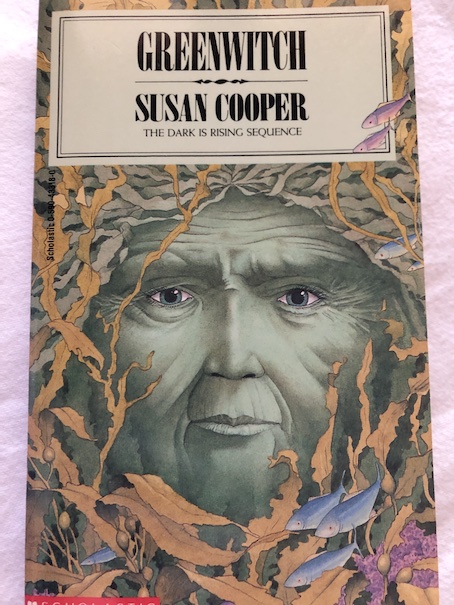

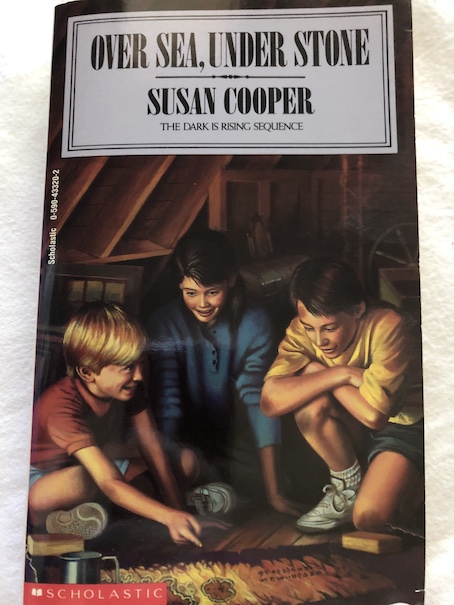

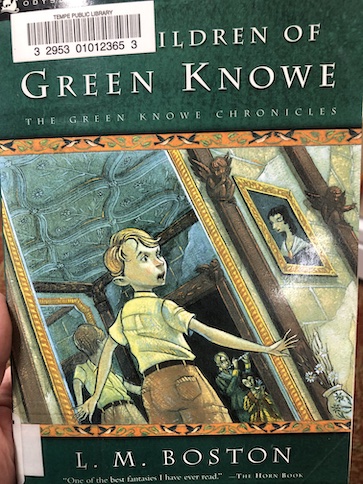


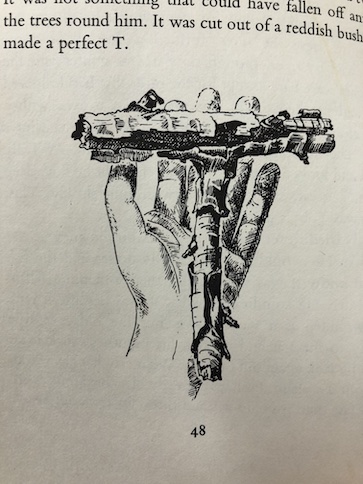
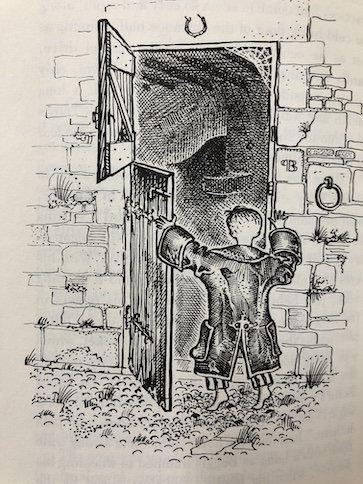
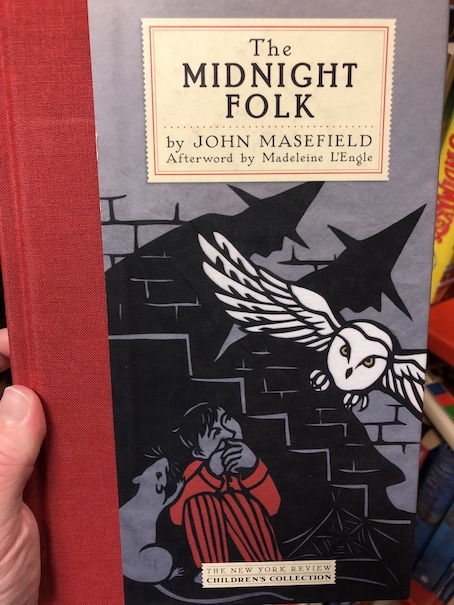
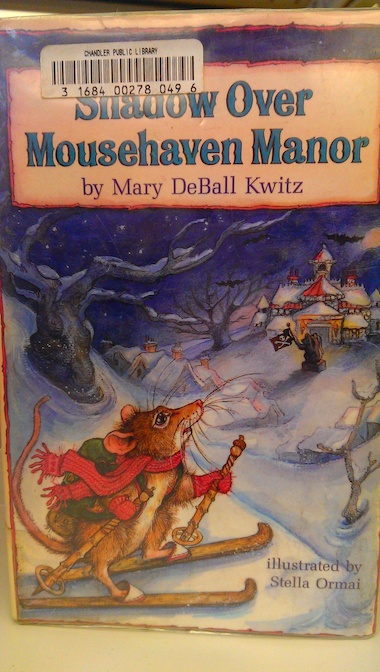

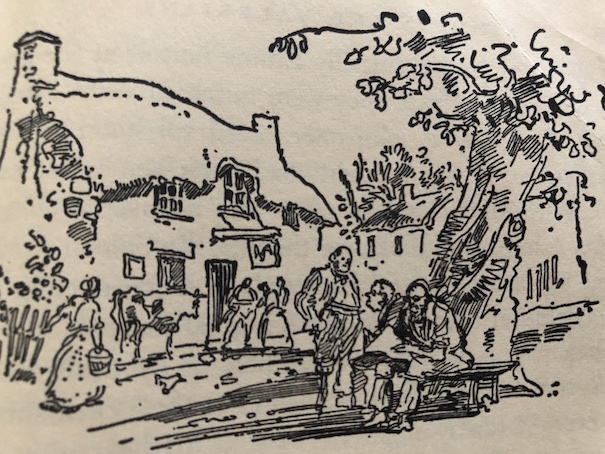
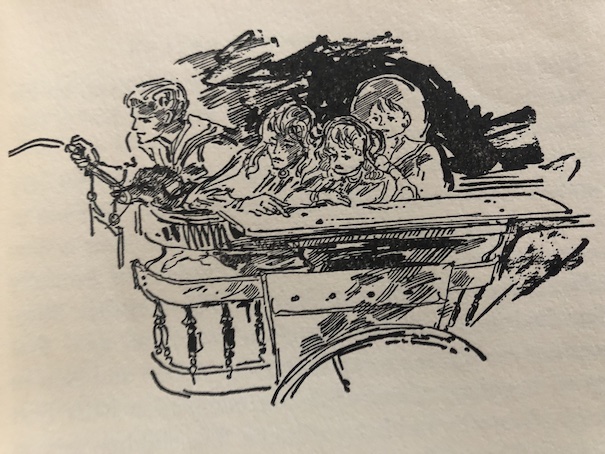

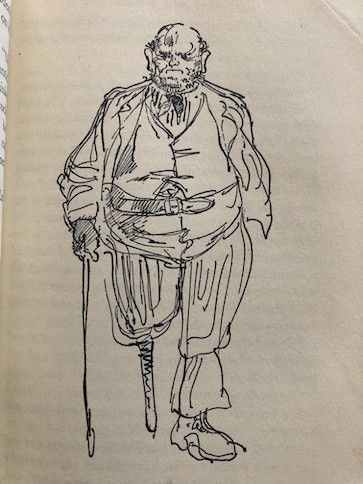
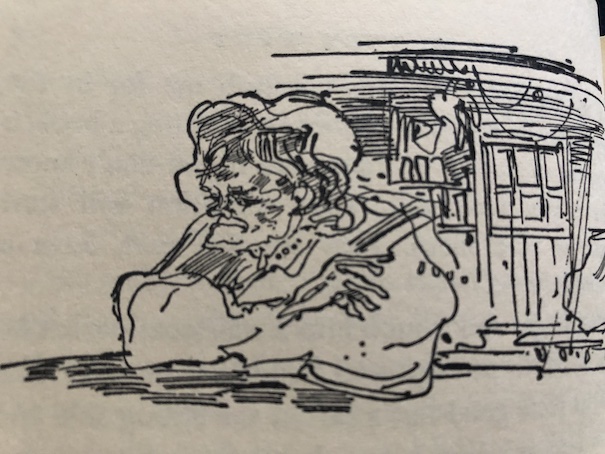


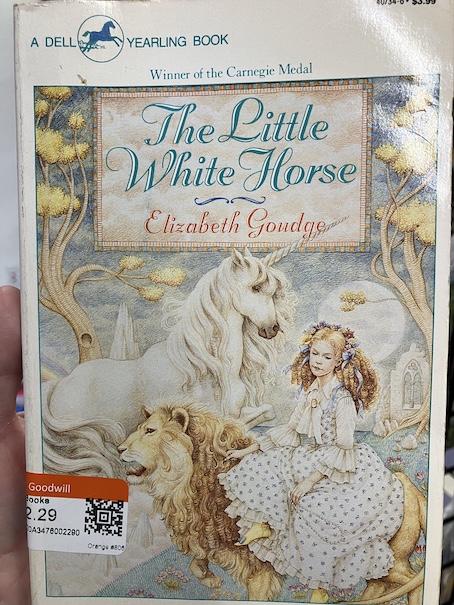
 Jestress's Forgotten Books and Stories