Cousins in the Castle

cousinscastleCousins in the Castle by Barbara Brooks Wallace, 1996.

Young Amelia Fairwick is living a happy life in London with her father and her father’s fiancée, Felicia, when her father leaves on a business trip and word reaches her that he has been killed in a hotel fire. Now, the poor orphaned girl must go live with her deceased mother’s cousins in New York. Amelia leaves behind everything that is familiar to her when she accompanies her stern and gloomy Cousin Charlotte on the ship to New York.

On the ship, she makes only one friend, a young actress and singer named Primrose Lagoon, whom Cousin Charlotte forbids her to see. Although the future looks gloomy for Amelia, there are far stranger and more sinister events in store for her. As soon as they reach New York, Cousin Charlotte abandons Amelia on the docks. A kind woman named Nanny Dobbins and her son offer help her, only to steal her luggage and make her a prisoner in a small cellar in a bad part of town.

When her jailer, the drunken Mrs. Shrike, falls asleep, leaving the door open, Amelia escapes and attempts to find Primrose, her only friend in the city. Throughout Amelia’s adventures, she doesn’t know who to trust, and every step she takes seems to bring her closer to the mysterious Cousin Basil, who is supposed to be her guardian, and his castle-like home.

The time period for this story is never exactly defined, but it appears to take place during the 1800s because of the gaslights in use.  Like many of Wallace’s books, things and people are not what they seem, but in spite of the villain’s sinister intentions, it all ends happily.

Ghosts in the Gallery

ghostsgalleryGhosts in the Gallery by Barbara Brooks Wallace, 2000.

Eleven-year-old Jenny was raised in China by her mother and stepfather, who ran a dance studio. She has no memory of her real father, who died when she was a baby. When her stepfather dies and her mother becomes deathly ill, her mother writes a letter to her real father’s father, a grandfather that Jenny never even knew existed before. In the letter, her mother explains that she is dying and that she will be sending Jenny to live with her grandfather. Then, Jenny starts the long journey from China to the East coast of the United States alone.

Leaving her dying mother to head to a strange country to live with her previously unknown relations is frightening enough, but there is still worse to come. When Jenny arrives at her wealthy grandfather’s home, no one is expecting her or knows who she is. Her uncle, Winston Graymark, insists that her mother’s letter never arrived. Worse still, he believes that Jenny is an imposter, and that her mother merely made up the story about his long-lost brother being her father.

At first, he angrily threatens to send Jenny back to China, but Madame Dupray, a servant who cares for Jenny’s ill grandfather, suggests that she be taken on as a household servant. Jenny is given a dreary little room in the cellar and embarks on the drudgery of household chores. Could the Graymarks really be her relatives? If so, what happened to the letter that Jenny’s mother sent? Something sinister is happening in Graymark House, and Jenny will have to face suspicious servants and attempted murder before she finds the truth.

The “ghosts” in the title are the portraits of Jenny’s ancestors, which hang in the gallery. They appear grim and frightening at first, but when Jenny begins to recognize them as her relatives, they no longer frighten her.  Like many of Wallace’s books, this book contains sinister characters with hidden motives, but ends happily.  The story takes place at some point during the Victorian era.

Peppermints in the Parlor

peppermintsparlorPeppermints in the Parlor by Barbara Brooks Wallace, 1980.

Newly orphaned Emily Luccock journeys to the home of her Aunt and Uncle Twice in San Francisco. She has not seen her aunt and uncle in years, but they are the only family she has now, and she hopes that she will soon feel at home in their lovely mansion, Sugar Hill Hall.

Upon arriving in San Francisco, however, she is met by her Aunt Twice, who seems to be a pale shadow of the woman she once was. Sugar Hill Hall is now owned by the sinister Mrs. Meeching, and Aunt Twice is forced to work as a cook and housekeeper. Aunt Twice seems very frightened of something, but she refuses to say exactly what she fears, and Uncle Twice is nowhere to be found.

Aunt Twice tells Emily that her wealthy parents lost all their money before they died, and she is now poor, too. Emily is quickly put to work as a housemaid alongside Tilly, another orphan girl. Her only real friend is Kipper, a fishmonger’s son who is paid to do chores around the mansion sometimes. The house is being run as a home for elderly people, but the elderly people are treated badly, fed rotten food, and punished severely for even so much as taking a single peppermint from the bowl in the parlor. Emily tries to do little things to make the old people happier, but all the time, she is right at the center of all the sinister events surrounding Sugar Hill Hall.

The book is available online through Internet Archive.

Abigail

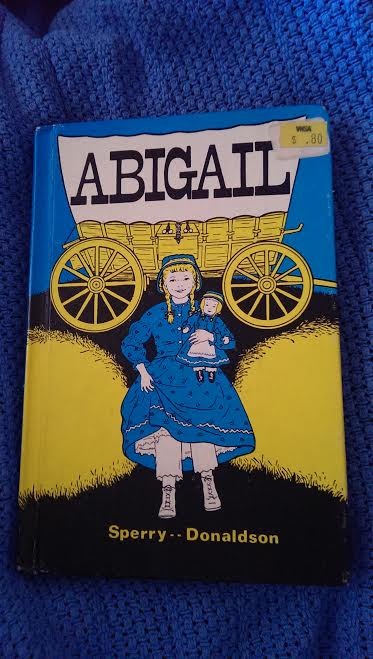
abigailAbigail by Portia Howe Sperry and Lois Donaldson, 1938.

Susan is a little girl living on a farm in Kentucky during the 1800s.  Her family has recently decided to move to Indiana, which is the new frontier of the United States.  Her uncle and his family are already living there, and he has persuaded Susan’s parents of the opportunities that await them.

As the family packs up to leave, Susan’s grandmother gives her a special present that she and Susan’s aunt made for her: a new doll.  Unlike Susan’s old wooden doll, this doll is a soft rag doll that she can sleep with.  They made the doll to look like Susan herself, but Susan names the doll Abigail after her grandmother.

Abigail accompanies Susan on her adventure as the family heads west to Indiana in their covered wagon.  Susan is sad and a little afraid at first, but when she thinks of what Abigail would say to her about her need to be brave and to explain to her all the strange things they will encounter on the journey, Susan regains her courage.

The family does have adventures on their two-week trek to Indiana.  They have to cross rivers, face down a bear, and worry about whether they will encounter unfriendly Indians (Native Americans).  Even after they arrive in Indiana, joining their other relatives, they will still have to get used to life in a new place.

Throughout the book, there are little side-stories, poems, and hymns that the family sings and tells each other.  Through it all, Abigail is Susan’s constant companion, helping her to feel at home in her new home.  I loved this book when I was a child because I always loved dolls.  This book was a bigger part of my youth than the Little House on the Prairie series, but it would probably appeal to Little House on the Prairie fans.

The book is available to borrow and read for free online through Internet Archive.

The Great and Terrible Quest

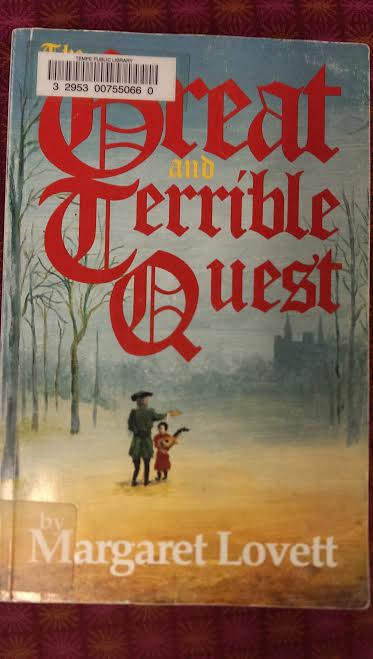
greatterriblequestThe Great and Terrible Quest by Margaret Lovett, 1970.

This story takes place in a fictional kingdom during the Middle Ages. Trad is a ten-year-old boy who has lived most of his life with his abusive grandfather. He barely remembers his parents, who died in a plague when he was only four. This grandfather consorts with robbers and evil men. Trad often pretends to be stupid to avoid their notice and warns travelers away from their territory.

One day, he rescues a man who has been badly wounded and cares for him in a secret cave. This man, whose white hair makes him seem elderly, insists that he is on a mission, a great and terrible quest . . . but because of a head wound, he can’t remember what his quest is. All that he knows is that time is short, and he does not have long to complete his quest to find something very important.

Trad soon learns that his grandfather’s wicked friends are the ones who attacked this mysterious stranger. Taking Trad’s father’s old lute, a couple of coins, and a mysterious ring dropped by one of the robbers which seems to have once belonged to the stranger, Trad and the stranger embark on a journey across the land, making friends and pursued by enemies as they go. While the stranger struggles to remember his identity and the nature of his mission, Trad begins to learn a few things about his own forgotten past and the nature of his family. Nothing is what it seems. Their country is in trouble because of the evil men who have been controlling it. Everything depends on the success of the stranger’s mission, and Trad has a much larger role to play than he had ever dreamed.

It’s a beautiful and fascinating story about good and evil, loyalty, friendship, and determination to do the right thing, even against the odds. There are parts that might frighten younger readers. The fights are violent and bloody, and there are a couple instances of cruelty to animals (partly, it seems, to show how truly evil Trad’s enemies are). Still, it’s a great story for tweens and teens, and readers will want to cheer Trad on as he struggles to help those around him and find his own destiny.

Although the kingdom is fictional and the themes are similar to fantasy stories, there is no actual magic in the story.

The book is currently available online through Internet Archive.

Starlight in Tourrone

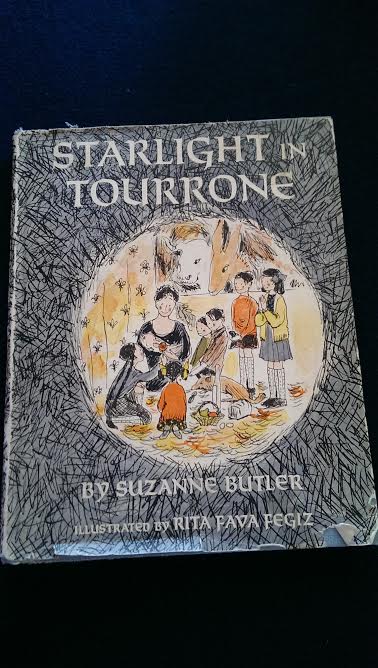
starlighttourroneStarlight in Tourrone by Suzanne Butler, 1965.

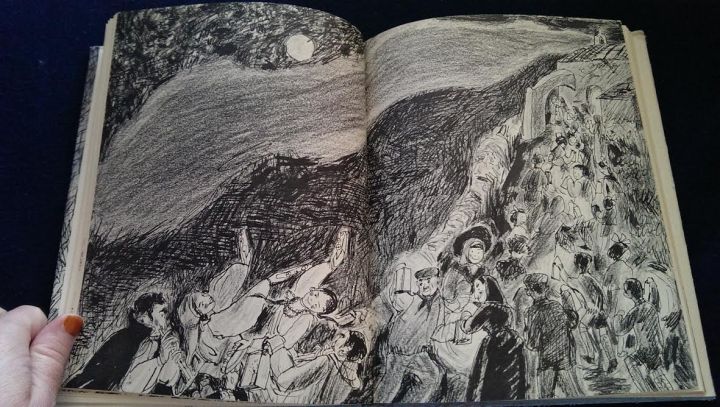
This is a story about a group of children in southern France during the middle of the 20th century, not too long after World War II, who want to stage a special Nativity scene at Christmas. One of the older men in the small village of Tourrone tells his grandchildren about how, when he was young, the village had held a live Nativity scene at the chapel on the hill with the youngest baby in the village playing the part of the Christ child and his mother playing Mary. Then, all the people in the town would climb the hill to the chapel and present gifts to Mary and the baby Jesus in a ceremony called the March to the Star.

However, these traditions have been lost because, following World War II, the village has lost much of its population, and the chapel is an unused ruin. The children and their friends, inspired by the grandfather’s stories, decide that they want to hold the March to the Star and the Nativity scene this year.

starlighttourronemarchAt first, most of the adults in the village are skeptical. Since there are no young couples living there anymore and no babies have been born there for several years, no one knows where the mother and child for the Nativity scene will come from. Many of the adults are too busy with their own problems and worries about the future to help. Still, the children continue to work faithfully on their plans, drawing in the adults in spite of themselves.

starlighttourronepreparationsstarlighttourronelanternJust as people in the village start to feel hopeful again, something happens that threatens to ruin everything, but there is still one more miracle yet to come, thanks in part to the one person who never doubted it would happen.

It’s a beautiful story about the power of faith and how miracles come to those who are prepared for them. The last page of the book contains the music for the Provencal Carol that the children sing along with the English translation.

The book is available to borrow and read for free online through Internet Archive.

starlighttourronenativity

starlighttourronecarol

Sarah Morton’s Day

sarahmortonSarah Morton’s Day: A Day in the Life of a Pilgrim Girl by Kate Waters, 1989.

This book is part of a series of historical picture books. It features a young girl who was an historical interpreter at Plimoth Plantation, a living history museum, playing the part of a real pilgrim girl who lived in 17th century Plymouth.  The pilgrim girl’s name was Sarah Morton, and she was nine years old in 1627, the year that Plimoth Plantation reenacts.

As Sarah Morton, the girl takes readers through a typical day in her life.  She demonstrates the chores that a pilgrim girl would have to perform.  She explains the clothes that a pilgrim girl would wear and what people ate.  There is a recipe for 17th Century Indian Corn Bread, a simple recipe that readers can make at home, but it warns that modern people wouldn’t think that it tastes very good.  It’s basically just water and cornmeal grits.

sarahmortonpic1Although much of Sarah Morton’s day is taken up with chores, she also discusses her relationship with her mother and her new stepfather.  The death of a parent was something that pilgrim children often experienced.  After her father’s death, Sarah’s mother remarried, and Sarah is concerned about whether her new father likes her.

However, her stepfather is a good man who cares about her.  He gives her lessons in reading and writing, something that not every pilgrim girl would have.  He also gives her a special toy: a knicker box, which is a wooden box with arches for rolling marbles through as a game.  She gets to play with her friend, Elizabeth.

The two girls are also excited about a ship that has been sighted out at sea.  Soon, new people will be coming to their colony, and they wonder if the ship is also carrying letters from England or special goods that they would like, like a new bolt of cloth.

In the back of the book, there are sections explaining a little about the Plimoth Plantation living history museum, the real Sarah Morton, and the girl portraying Sarah Morton, Amelia Poole. The Plimoth Plantation site has more information about the real Sarah’s Morton’s life, including what happened to her when she grew up.  If you’re curious about what Amelia Poole is doing today, she is a fiber artist and lives in Maine.

The book is available to borrow and read for free online through Internet Archive.

sarahmortonpic2

The Master Puppeteer

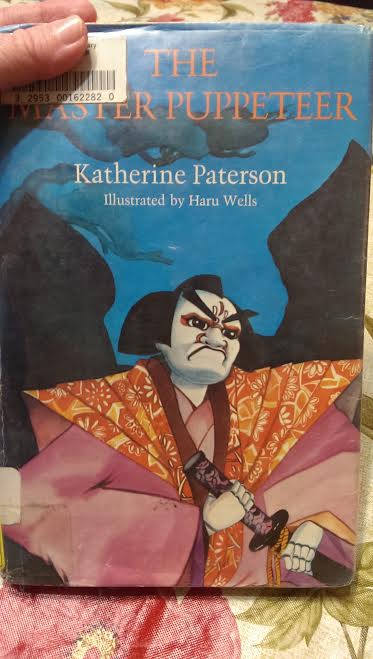
masterpuppeteerThe Master Puppeteer by Katherine Paterson, 1975.

Jiro was born during a terrible time in the history of Osaka, Japan, during the 18th century. Around the time he was born, a plague swept the city, killing his other siblings, making Jiro the only child of Isako and Hanji, the puppet maker. His mother resents him for surviving when her other children didn’t and criticizes him for being clumsy when he tries to help his father make puppets. Now there is famine in Osaka, and Jiro’s family is on the verge of starvation. The only way they can support themselves is by making puppets for Yoshida’s puppet theater, the Hanaza.

The Hanaza has been doing well in spite of everything because the rice merchants are still wealthy enough that they can afford to spend money attending the theater. One day, when Jiro goes with his father to bring a puppet to Yoshida, Yoshida comments that the boy has spirit and offers to take him on as an apprentice at the theater. Hanji does not take the offer seriously, but Jiro does. He knows that he will not be able to help his parents by making puppets, and the people at the theater earn money and have plenty to eat. He joins the theater without telling his parents, introducing himself to the old, blind Okada, who chants the words of the plays.

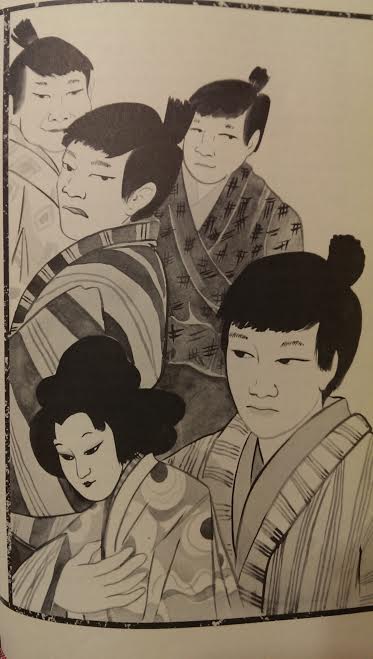
masterpuppeteerpic1Okada was once Yoshida’s teacher, and he accepts Jiro into the theater. Jiro is fascinated with the world of the theater, studying alongside Yoshida’s son, Kinshi, who becomes his closest friend. However, he must first graduate from apprentice to puppeteer before he can begin earning enough money to support his family, and the news from outside the theater is grim. Word has reached him that his father is ill and his mother is starving. The poor people of Osaka, starving and oppressed by the wealthy merchants and tax collectors, begin rioting.

Saburo, the leader of a gang of bandits, has become a hero to the people, taking food and money from rich people in clever and daring raids and using it to feed some of those who are starving. Kinshi in particular admires Saburo and sets off on his own mission to save the poor people of Osaka. Jiro fears for Kinshi’s safety but does not know who to turn to for help until he finds evidence that seems to point to the true identity of Saburo.

One of the fascinating things about this story is the way the puppets are operated.  Unlike either hand puppets or marionettes, where the operators are never seen, the operators of puppets in Japanese theater are on stage with them.  However, the operators are dressed completely in black with hoods, so the audience will disregard their presence.  Because of the violent episodes in this story, I would recommend it for middle school level.

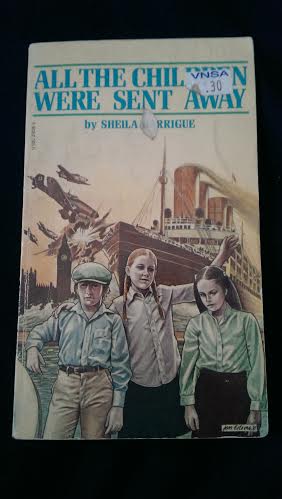
All The Children Were Sent Away

It’s 1940, and Sara Warren’s parents are sending her to stay with her uncle in Canada until the war is over.  With the increasing bombings of England, her parents have decided that it’s just too dangerous for Sara to stay, and her uncle has written, asking them to send her.  Many other British families are sending their children away to escape the bombings, and Sara travels to Canada on a ship with other British child evacuees.  All of them are worried about the families they’ve left behind and what it’s going to be like, living in another country.  They also worry about whether or not they’re ever coming back.

Sara’s escort for the trip is Lady Drume.  She is a bossy, over-bearing woman with very definite ideas about how children should be raised.  She doesn’t like Sara to talk to the sailors on the ship because they can be “impertinent,” and she doesn’t want her to play with the other children because they’re “guttersnipes!”  She even refuses to attend the lifeboat meeting or let Sara go without her!  To Sara’s mind, Lady Drume is as bad as any Nazi.

Sarah still manages to make friends with some Cockney children, Ernie and Maggie, seeing them whenever she can get away from Lady Drume, and an old sailor called Sparky makes sure that she understands safety on board the ship and attends the lifeboat drills.

But, when Lady Drume forces Sara to cut her hair after she’s been waiting so long for it to grow out, Sara decides that’s the last straw!  With the help of her friends, Sara hides from Lady Drume on the ship.  In the process, she learns something about Lady Drume which changes some things for the better, although it takes an outbreak of measles for Lady Drume to really understand and appreciate Sara.

This book is available to borrow and read for free online through Internet Archive.

Part of trouble with Lady Drume and her behavior is that she’s actually very afraid.  She doesn’t like to talk about lifeboats or life jackets because the war and the possibility of sinking frighten her.  She deals with problems by being brusque and trying to ignore frightening things, charging on ahead with whatever seems like a practical course of action to her.  It’s not even just the war but the changing world around her that frightens Lady Drume, a woman who’s used to knowing who’s who and what’s what and getting things done the way she likes them.  But, the rigors of their journey and their mutual vulnerability when they’re sick help lower Lady Drume’s barriers.  Lady Drume isn’t a bad person, and in the end, she arranges a special surprise for Sara to make her exile from England more bearable.

The end of the story is a brief section explaining Sara’s return to England, having been away for a few years, and her feelings at seeing how England and her parents have changed during that time.

There is a sequel to this book that shows what happened during Sara’s time in Canada called The Eternal Spring of Mr. Ito.  It focuses on suspicion of Japanese people following the bombing of Pearl Harbor.  There were Japanese internment camps in Canada as well as the United States during World War II.

Sheila Garrigue’s books about child evacuees from England were partly based on her own experiences as a child evacuee during World War II, as explained in her obituary after her death in 2001.

The Night Crossing

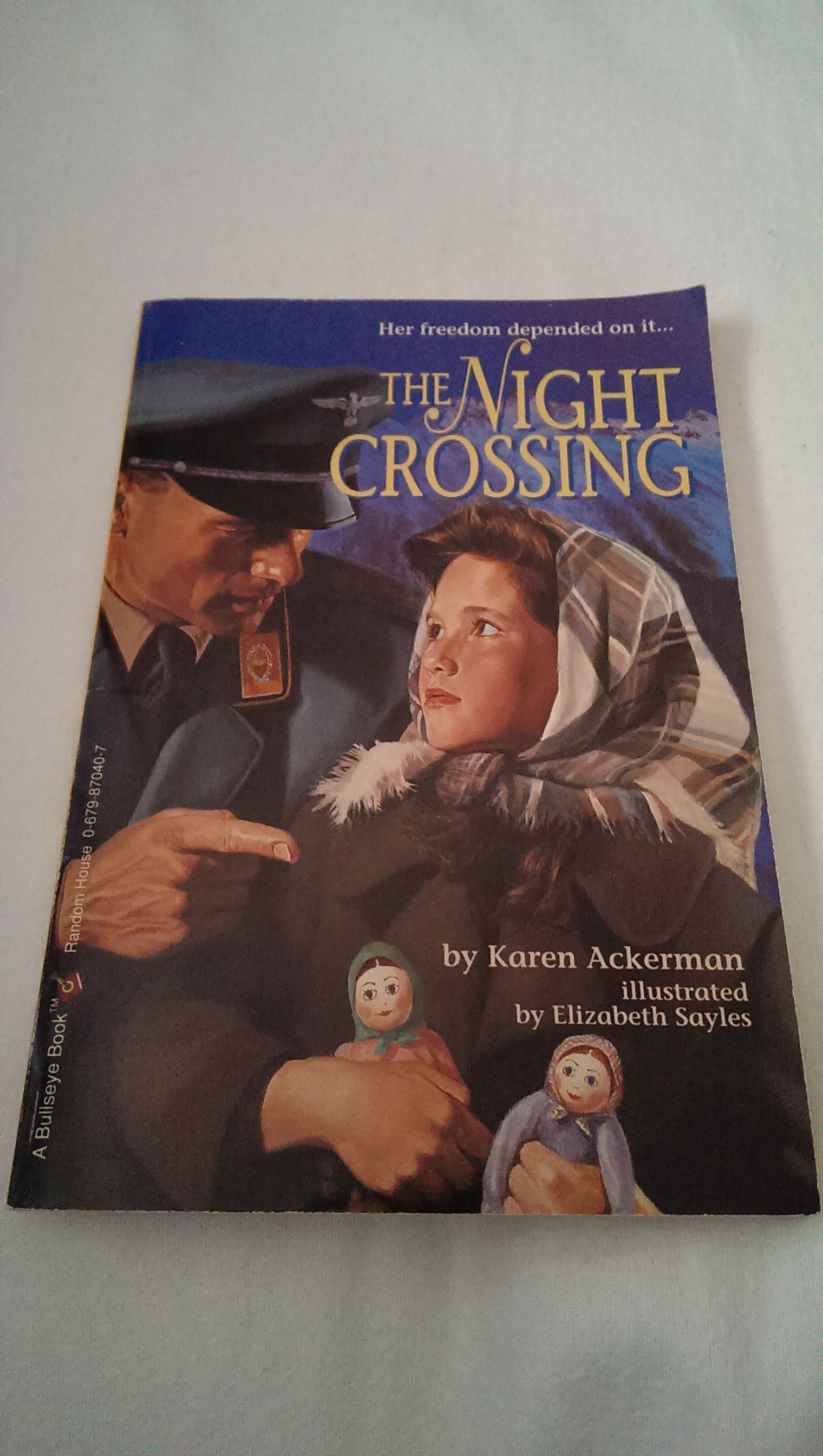
NightCrossingThe Night Crossing by Karen Ackerman, 1994.
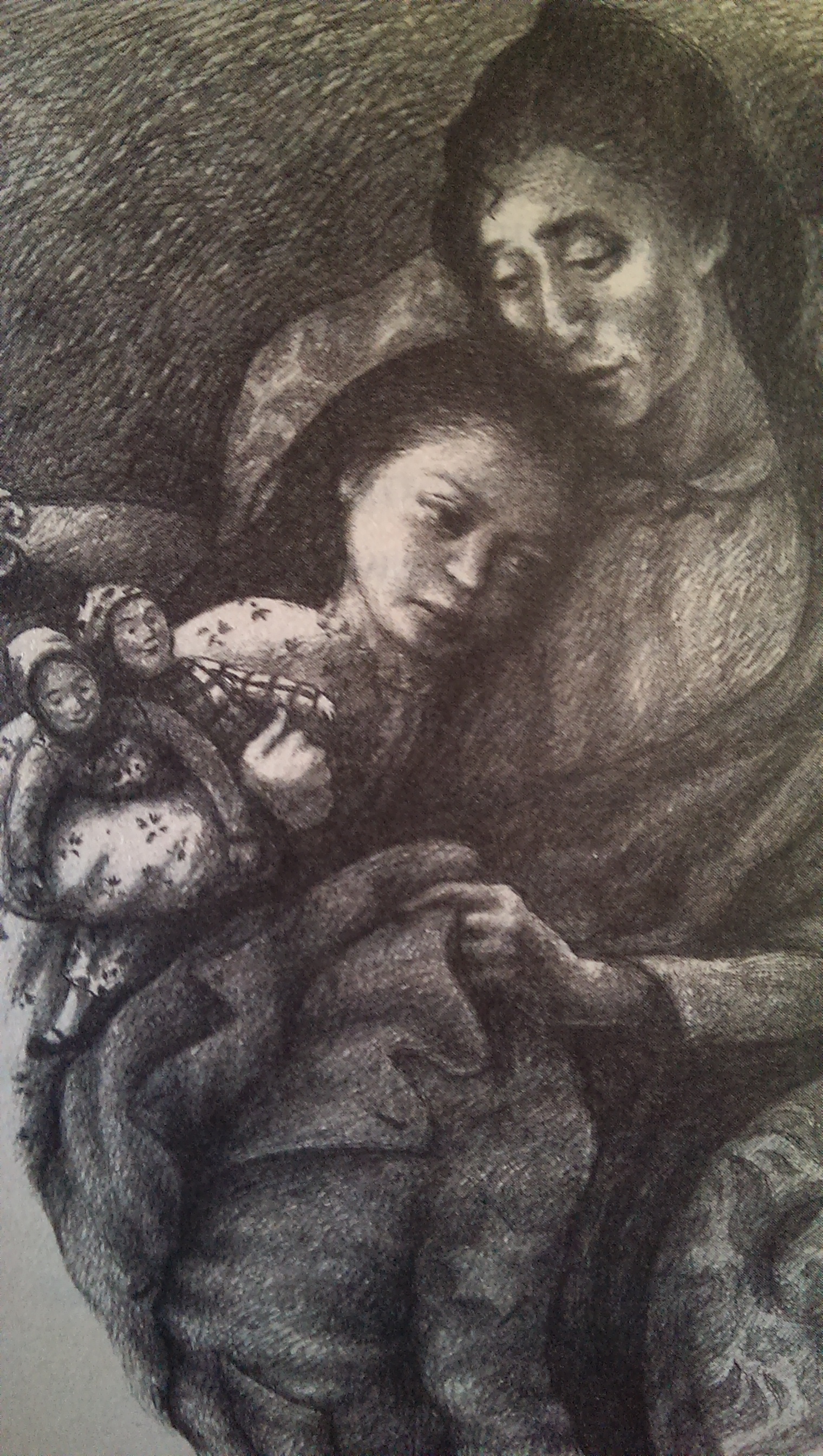
It’s 1938 in Austria, and Clara’s parents have decided that their family needs to leave before things get worse.  Already, Jewish families like theirs are being rounded up by the Nazis, and Clara and her sister Marta were chased through the streets by other children, shouting insults.

Their family has been through things like this before.  Clara’s grandmother tells her about when she had to flee Russia as a little girl to escape the pogroms.  She brought her dolls Gittel and Lotte with her as her family hiked through the Carpathian Mountains.  Now, Clara will carry them with her as their family leaves Austria for Switzerland.

It’s a hard journey with lots of walking and little food.  The family can carry very little with them, and some of what they have they are forced to trade for food, a place to rest, and for not being turned over to the Nazis.  Finally, at the border crossing, Clara’s parents are afraid that they will have to get rid of the candlesticks that have been in their family for generations because they might be discovered by the border guards.  Then, Clara comes up with a plan to hide them in her dolls.  Will it work?

NightCrossingPicThis is a pretty short chapter book.  Although the subject matter is serious, and parts might be frightening to young children (the part where Clara and Marta are chased and perhaps some of the parts where the family is hiding), there are only vague references to more dark subjects like concentration camps (people who already know what they are and what happened there would understand, but children who haven’t heard about them wouldn’t get the full picture from the brief mentions).  The book would be a good, short introduction to the topic of the Holocaust by putting it in terms of the way it changed the lives of ordinary people who had to flee from it.  Actually, it wouldn’t be a bad way to start a discussion of the Syrian refugees in Europe by putting it into the context of ordinary people fleeing the violence of war.

This book is currently available online through Internet Archive.