This time, Larry has come to visit Kipper and his family on their farm in Kansas while his father attends a police convention in Florida and will be spending Christmas with them. At first, Kipper thinks that Larry probably regrets this visit because Kansas isn’t very exciting, and it’s snowing while Larry’s father is in sunny Florida.
The situation gets worse when Kipper gets into a fight with his friend Scooter when Larry and Kipper were supposed to be spending the night at Scooter’s house. Scooter apparently cheated at a game, and Kipper got so mad that he said that he and Larry would just go home. The problem is that the boys have to walk a couple of miles to reach the farm where Kipper’s family lives, and the snow has turned into a blizzard.
The boys start to get scared that they might freeze to death when Larry spots a light from a house nearby and heads toward it. Kipper thinks that it’s a dangerous mistake because the house with the light is the old Morgansterne house, and it’s been empty for years. However, when the boys reach the house, there are oil lanterns burning in the windows and a fire in a wood-burning stove. Out of desperation, the boys let themselves into the house to warm up, but then they start to wonder who lit the fire and the lanterns. They search the house to see if there’s anyone there, but they don’t find anyone. The only thing they find upstairs is an old box of Christmas ornaments.
The boys spend the rest of the night in the house without seeing anyone and continue to the farm in the morning. When they explain to Kipper’s mother what happened and where they spent the night, she’s concerned, both because the boys were out in the snowstorm and because nobody should be in the old Morgansterne house. Old Miss Morgansterne, who owns the house, has been living in a retirement home, and no one else is supposed to be there. Kipper’s mother decides to call the sheriff and have him look into it.
The sheriff comes and questions the boys about what they saw in the house, and they ask him about a robbery at a jewelry store in town that the family heard about on the radio while waiting for him to arrive. Larry wonders if there’s a connection between the robbery and the supposedly empty house that seemed to be occupied by someone before they arrived. The sheriff doesn’t see why there would be a connection between the two events, but Kipper’s younger brothers think that maybe the robbers were in the house the whole time, hiding in some kind of secret passageway, like in books and movies. The sheriff thinks that the boys have overactive imaginations.
However, there is more to the theory that the house and the robbery are connected than the sheriff thinks. Soon, the sheriff is alerted that the car that is believed to belong to the robbers has crashed into a pond near a dangerous curve in the road and the two men inside the car are dead. When they search the car, they find some of the jewelry from the robbery, the less expensive costume jewelry, so it seems that they were correct that these men were the robbers, but strangely, the most expensive jewels from the robbery, diamonds, are still missing. The sheriff says that it’s almost like they melted away, like the diamond-like snow that Larry commented on earlier.
It makes sense to the boys that the robbers were in the Morgansterne house before they were. They remember seeing a car like the robbers’ car along that road before the snow storm got bad, and it would explain why the house was empty all that night. The robbers accidentally saved the boys’ lives by lighting the stove in the house for them, but they never returned to their hideout in the empty house because they had their car accident. But, somewhere along the way, the diamonds they stole seem to have vanished. Can the boys figure out how?
The book is available to borrow and read for free online through Internet Archive.
My Reaction
Overall, I liked the story. I had more than one theory about where the diamonds were, and one of them turned out to be correct, but there was enough doubt in my mind to keep the story interesting until the end.
This is the first book of the Kipper and Larry mystery series. Kipper (real name Christopher) and Larry are 13-year-old cousins. The two boys meet each other for the first time in this book, when Kipper comes to visit Larry and his family in Michigan. The boys had written letters to each other before, but they were both excited to finally meet in person.
Larry and his father live in Ludington, on the shores of Lake Michigan, and Larry takes Kipper fishing soon after he arrives, which is when Kipper first encounters the mysterious figure known only as The Fog Man. This strange old man starts Kipper, and Kipper finds him eerie. Larry explains to Kipper that The Fog Man is kind of a local eccentric. He is apparently both deaf and mute. No one knows his real name. He apparently lives in the nearby forest, but during the summer, he comes to the beach to collect driftwood, which he sells to tourists, who are fascinated by this eccentric old man, and to the lady who runs the nearby gift shop, Miss Norton.
Shortly after this encounter, the boys learn that someone has stolen thousands of dollars from the safe on one of the car ferries that travel back and forth across Lake Michigan and Wisconsin. (Another book by the same author but in a different series takes place on one of these car ferries, The Case of the Vanishing Villain.) Kipper and Larry are able to see the scene of the robbery because of Larry’s father’s position as the local chief of police. However, the boys’ adventures are just beginning.
The most likely suspect in the robbery seems to be a man called Karminsky, who worked on the ferry. He disappeared around the time of the robbery, and Larry’s father thinks that he’s hiding out somewhere in the area, waiting for the police to stop looking for him so he can make his getaway. Larry is intrigued by the idea that the robber might be hiding out in the woods nearby. Although his father forbids the boys to go looking for the robber, they can’t resist checking out the woods anyway.
Larry confides in Kipper that he really wants to help his father catch this robber so that his father will be a big success and get public recognition. Larry sometimes feels bad that he and his father have been alone since his mother died when he was young. He thinks that, if his mother was still alive to help his father take care of him, his father would be able to do much more in his life and career, so Larry wants to be the help that he thinks his father really needs.
Soon, the boys think that they’ve found Karminsky’s hideout in the woods, but even though they lie in wait for him all night, they don’t manage to catch him there. The only person they see in the area is the Fog Man, and to Kipper’s shock, he sees the Fog Man walking without his characteristic limp!
When the boys later find the Fog Man’s coat and a fake white beard, they reach different conclusions about what happened. Kipper thinks that the Fog Man was involved in the robbery all along and that he was always in disguise from the beginning. However, Larry is accustomed to thinking of the Fog Man as a harmless old eccentric who has hung around town for the last few years, selling driftwood to tourists. Larry thinks that the Fog Man might be an innocent victim of Karminsky’s, that Karminsky may have killed him so he could take his place and blend in with the usual beach scene until he could make his escape.
Then, Larry’s father tells them that Karminsky has been found in another town, apparently having missed being on the ferry in the first place. So, if Karminsky was never on the ferry and never in Ludington, who stole the money and masqueraded as the Fog Man?
The book is available to borrow and read for free online through Internet Archive.
My Reaction
I bought this book because I always liked the Flee Jay and Clarice mystery story that I mentioned before and wanted to see more by the same author. I liked it because, while I thought that I understood things pretty quickly in the story, there are some surprising twists to the mystery. I thought that I had it figured out twice, but I was surprised both times, and the true identity of the Fog Man remains a mystery until the very end.
The Mystery of the Stuttering Parrot by Robert Arthur, 1964, 1992.
Hector Sebastian, a detective who became a mystery writer, has become a mentor to The Three Investigators, and he has asked them to visit a friend of his, Malcolm Fentriss, who is a Shakespearean actor. Mr. Fentriss has lost his parrot and wants help to find it. That seems simple enough, but there’s far more to it than that. When Jupiter and Pete arrive at his house to talk to him about the case, they hear someone calling for help, and a man wielding an old-fashioned pistol marches them into the house. The boys believe that the man is Mr. Fentriss and tell him that Hector Sebastian sent them to help with his missing parrot. Mr. Fentriss reveals that the pistol is actually a decorative cigarette lighter and says that the whole thing was a test of bravery for them that he dreamed up after Hector Sebastian told him that the boys were coming. Unfortunately, he says that he no longer requires their help to find his parrot because the parrot came back, and that’s who they heard calling for help because he taught his bird to say that.
However, as the boys are leaving, Jupiter suddenly realizes that there’s a problem with the man’s story: there are no telephone wires leading to the house! That means that this house has no telephone, so Hector Sebastian couldn’t have called, that man isn’t the owner of this house, and the real Mr. Fentriss must have been the one who really called for help! (This clue marks this book as being earlier than the late 20th century/early 21st century. When I was a kid, people’s phone landlines were already being buried underground instead of strung overhead, and therefore, wouldn’t be easily seen anyway. In my area in the 1980s and 1990s, only the oldest neighborhoods in town still had overhead wires. With the later advent of cell phones, a person wouldn’t need wires to get phone calls at all.) The boys tell their chauffeur to take them back to the house so they can help Mr. Fentriss, and they see the imposter leaving in his car. They consider trying to follow the imposter, but they decide that they’d better see if Mr. Fentriss is alright instead. They find him tied up, and as they free him, they explain who they are and that Hector Sebastian sent them.
Mr. Fentriss tells them that he still wants their help finding his parrot, who is named Billy Shakespeare, after William Shakespeare. He tried to go to the police, but they didn’t want to help, saying that either his bird just flew away or he was making the whole thing up as a publicity stunt for his acting. According to Mr. Fentriss, his bird quotes from Shakespeare, except that he has a tendency to stutter. Instead of saying, “To be or not to be”, he says, “To-to-to be or not to-to-to be.” Jupiter is intrigued at the idea of a stuttering parrot. Mr. Fentriss tells him that he got the parrot from a mysterious Mexican peddler with a donkey cart because another friend also bought a parrot from the peddler. When this friend hear the other parrot quoting from Shakespeare, she thought the Mr. Fentriss would like him and told the peddler to visit Mr. Fentriss. Mr. Fentriss is also sure that Billy didn’t just fly away because both the bird and his cage are missing. Billy disappeared when he was out for a walk, and there were signs that a car had been at the house while he was gone, so Mr. Fentriss thinks that whoever drove the car took the parrot.
When the boys ask Mr. Fentriss about the man who tied him up, he says that the man called himself Claudius and that he claimed to be from the police at first, asking him questions about the missing parrot. In particular, he wanted to know what the bird said and whether or not he knew of anyone else who had bought a bird from the same peddler. Mr. Fentriss told him the bird’s phrase, leaving out the part about the stutter, and about his friend, also mentioning that the peddler also had another bird, a dark-colored one that didn’t seem well. Claudius seemed familiar with the bird, calling it Blackbeard. Claudius attacked him and tied him up when he started getting suspicious that he wasn’t really from the police and they heard the boys approaching. Jupiter promises that The Three Investigators will do their best to find the parrot.
As the boys leave Mr. Fentriss’s house again, they have a strange encounter with a man who has a French accent and asks them if they are friends of Mr. Fentriss and if there’s any news about Billy. The boys say that the bird is still missing, and the man says that he’s a friend of Mr. Fentriss who was just going to visit him to ask about his bird, but if the bird hasn’t been found yet, he won’t bother Mr. Fentriss after all. Jupiter notices that the man driving the Frenchman’s car has a gun holster.
Jupiter and Pete then go to see Mr. Fentriss’s friend, Irma, to ask her about her parrot, Little Bo-Peep, and discover that her bird is missing, too. From a description that Irma gives them of a man who almost knocked her down with his car when she went out to buy birdseed, it sounds like Little Bo-Peep was stolen by the man they know as Claudius. The boys promise Irma that they’ll find her parrot, too.
When Jupiter and Pete meet up with Bob, who wasn’t with them because he had to go to his part time job at the library, they tell him everything that happened. The boys know that they need to track down Claudius, but how are they going to find him again?
This is the book that introduces Jupiter’s idea of the “ghost-to-ghost hookup” (a play on coast-to-coast hookup, which is a term from early radio and television broadcasting). Basically, each of the Three Investigators calls five different friends, asking them to keep an eye out for Claudius and his distinctive car and also asking them to pass on the message to five other friends. It works almost like a chain letter, except that the message is spread by phone. As friends tell other friends, the message spreads across the city, and The Three Investigators promise a reward to the person who can give them the information they seek.
When someone does finally come to them with information, it turns out to be the young nephew of the peddler. The boys learn that the two missing parrots were actually part of a group of seven owned by a mysterious stranger who is now dead. This mysterious stranger, who called himself Mr. Silver, gave the birds colorful names from history and fiction and taught them to talk. Their messages, when combined, lead to something that Mr. Silver hid.
The the newer and older versions of this book are available to borrow and read for free online through Internet Archive.
Norman Newman is convinced that his sister, Elaine, is a witch. When he goes to her room one evening to call her to dinner, he catches her all dressed in black and chanting strange words.
Norman likes to read horror and mystery books, and he uses some of the techniques that he has learned from reading his favorite mystery stories to investigate his sister. Some of these techniques don’t work as well for Norman as they do for the characters in his books, partly because he doesn’t really know how they work (like which end of a glass you’re supposed to put against a door when you’re trying to listen in on someone) and partly because the characters and situations in books are fictional and some of the things they do don’t work that well in real life.
Early in the story, Norman uses one of his scary stories for a book report for school, and his teacher tells him that she wants him to start to read other types of books. She makes him write an extra book report, telling him that he has a week to read something outside of his usual genre and report on it. That incident and some other pieces of bad luck cause Norman to think that maybe Elaine really is a witch and that she put a curse on him, just like a witch in the book he just read.
Norman’s friend, Milo, thinks that Norman’s imagination is just running away with him. It’s happened before because of the scary stories he reads. Once, he thought that their teacher might be an alien.
When Norman has a brief streak of good luck, he starts to think that whatever curse Elaine put on him may be over, but then, he gets sick to his stomach. He goes to the library to get a book for his new book report, and he also gets a non-fiction book about witches. Then, he overhears Elaine talking to her friend, Deirdre, about something being powerful and scaring Deirdre’s sister. The two of them begin chanting together. Norman decides that he was right about Elaine being a witch and that Deirdre must be a witch, too.
After some research, Norman and Milo learn that, to get rid of the effects of a magic spell, they need to learn the words to the spell and say it backwards. Norman doesn’t remember the whole spell from when he heard Elaine say it, so Milo says that he’ll just have to look for a copy of the spell in her room. The book they consult also says that a spell can be neutralized if the person it was cast on duplicates it, which means gathering all the materials used in the spell, but Norman doesn’t know where he would find things like newts’ eyes and frogs’ toes. Either way, it looks like Norman’s going to need a copy of Elaine’s spell. However, even when he gets it and tries to break the curse, things still go wrong. What can Norman do to get rid of this bad luck spell?
I particularly liked the character of Milo in the story. Milo uses a wheelchair because he was hit by a car when he was young and can’t walk. Norman notes that, although Milo can’t use his legs, he gets around very well in his wheelchair and that he has very strong arms. Milo is also more level-headed than Norman, pointing out to him how he has allowed his imagination to run away with him in the past.
The book is available to borrow and read for free online through Internet Archive.
Spoilers and Other Thoughts
I thought that the secret behind Elaine’s spell was pretty obvious from the beginning because the book repeatedly says that Elaine wants to be an actress. It reminded me of other stories I’ve seen where someone’s playacting was mistaken for some real life danger. Overall, I enjoyed the book, even though I figured out what was going on pretty quickly. Kids might be in suspense for longer.
By the end, Norman still hasn’t learned his lesson because the next scary story he reads leaves him looking at his dog suspiciously. There is at least one sequel to this story called Norman Newman and the Werewolf of Walnut Street.
Mystery of the Witches’ Bridge by Barbee Oliver Carleton, 1967.
Thirteen-year-old Dan Pride is an orphan. His father was an international correspondent, and during his early years, Dan lived in different European countries, as his parents traveled around to his father’s assignments. However, three years ago, his parents died in a plane crash. Since then, Dan has been living in a British boarding school. Now, he has returned to the United States to live with his father’s brother, Uncle Julian. Dan doesn’t know what to think about his new town because it’s very different from everything that he’s known before, but he likes the idea of belonging to a family once again because he has been lonely since his parents died.
The Pride family lives in a New England seacoast town. They were one of the founding families of the town in Puritan times, but Dan discovers that the local people aren’t particularly friendly with the Pride family. Billy Ben Corey, a man who works for his Uncle Julian, explains that the Pride family has been rather stand-offish with the townspeople, and there are also rumors and stories about witches that go back to Puritan times. Billy Ben says that most of the modern locals don’t really know all the details of the witch incidents, but the vague rumors that have circulated about the Pride family have caused the townspeople to treat them with suspicion.
This sounds like a somewhat sinister beginning to Dan’s life in York, Massachusetts as he comes to understand how much of life there is governed by the past relationships between the oldest families of the area. Billy Ben tells him that the Coreys have worked for the Prides for generations, but relations between the Prides and the Bishop family haven’t been good and that Dan should avoid them.
Dan presses Billy Ben for more information, and Billy Ben tells him the story of how one of his ancestors, Samuel Pride, was accused of witchcraft back in Puritan times. Some unfortunate happenings at the time, which were probably just the result of bad luck and bad weather, were blamed on him because he was kind of an odd, temperamental person. He was known for playing the fiddle extremely well, and people said that he used it to summon up the devil in the form of a black dog out of the marsh. The person who made the accusation and who led the group that came to arrest Samuel Pride was an ancestor of the Bishop family. Samuel came out to meet the group that came to apprehend them on the old stone bridge that leads to the island in the marsh where the Pride family has their house and farm, Pride’s Point. The story goes that when Samuel met the mob on the bridge, he placed a curse on them, that doom would come for them out of the night, out of the fog, and out of the marsh. Samuel and his wife were executed for witchcraft, and not only after, there was a terrible fog and a sickness that killed many people in town. People said that it was the result of Samuel’s curse. That’s why the Prides and the Bishops have a bad relationship even though they’re neighbors, why the townspeople are still a little suspicious of the Prides, why the Prides are somewhat standoffish of the townspeople (When you think about it, who really wants to be outgoing and friendly with people whose ancestors not only killed yours but who are not welcoming or friendly themselves because they have continually looked at you and your family with suspicion for generations, like you’re the weird ones? The townspeople basically created this situation and have been perpetuating it ever since, yet they act like the problem is with the Pride family instead of themselves. Gaslighting is a relatively new term from the 20th century, but the concept has been around forever, used even by people who don’t know what it is and that it’s what they’re really doing.), and why people in the area are afraid of the stone bridge that they call the Witches’ Bridge, the place where the curse was supposedly delivered. Even into modern times, people in the area see strange lights in the marsh and hear mysterious fiddle music or dog howls that they think might be Samuel’s ghost.
There is still more to come because the mysterious misfortunes of the Pride family have continued even into modern times. Dan is named for his grandfather, Daniel Pride, who died suddenly under very mysterious circumstances, something that still haunts his Uncle Julian. Young Dan learns the story from Mrs. Corey, a relative of Billy Ben’s, who is Uncle Julian’s housekeeper. Daniel Pride had been working to change the family’s image in the eyes of the local people, debunk all the old ghost and witch stories, and lay past quarrels to rest. To try to make peace with the Bishop family and restore the Pride family’s former fortunes, Daniel had been trying to arrange to buy the shipyards that the Bishop family owned, which had formerly been owned by the Pride family. The Bishop family initially agreed to the sale, and one foggy night, Daniel went to see the Bishops to finalize the sale. What happened after that is still a mystery. Daniel was found dead the next day near the old chapel with a look of terror on his face. It’s known that he had a heart condition, so he apparently had a heart attack, but from the marks on the ground, it also appears that he had been running before he collapsed, possibly deliberately frightened to death. Also, there were marks on the ground nearby where his briefcase fell, but the briefcase containing the sale papers was never found. The superstitious people in the area think that Daniel’s death was another symptom of the family’s curse, but it might also have been deliberate murder and theft. The Bishop family insist that they never finalized the sale of the shipyard with Daniel before his death, but Uncle Julian believes that the sale was finalized and that the Bishops are lying to take advantage of his father’s sudden death, just like their ancestors arranged the execution of Samuel for their own advantage. Uncle Julian remains suspicious and bitter about what has happened, just as the townspeople continue to look at the Prides suspiciously.
All of this makes York seem like it’s not the best place to raise a sensitive young orphan, and that’s basically what Uncle Julian says to Dan when Dan arrives at Pride’s Point. Uncle Julian seems elderly and physically frail, and Dan senses that he is a deeply troubled man. Uncle Julian tells Dan that the family and the old family home have a troubled history. That’s why Dan’s father decided to go away and live his life traveling to different places, and that’s why Uncle Julian delayed sending for Dan for so long after his parents’ deaths. Uncle Julian doesn’t seem to think that Pride’s Point is a very healthy place, and he hints at buried secrets. However, he does say that, now that Dan is there, there are going to have to be some changes.
Dan doesn’t think this sounds too hopeful, and he’s lonely and disappointed that he hasn’t found the happy family and home he was hoping for and that he doesn’t even seem particularly welcome there. He can’t even really enjoy playing his violin because of the connection people there seem to have between “fiddle” music, witchcraft, and his supposedly sinister ancestor. As Dan is looking around his new bedroom that night, he suddenly spots a mysterious flashing light from his window, outside in the marsh. It’s creepy because it not only supports all the ghost and witch stories that Dan has just heard but because he recognizes the patterns in the flashes of light as Morse Code … and the message being sent is his own name: D-A-N P-R-I-D-E.
Dan doesn’t believe that any supernatural force was using Morse Code to flash his name at night. It was obviously some human person, but who would do that and why? What is the truth about his grandfather’s death? Is Uncle Julian right that the Bishops caused Daniel Pride to die and then lied about the sale of the shipyard to cheat the Pride family? Or is someone else responsible?
The book is available to borrow and read for free online through Internet Archive.
My Reaction
I stand by my earlier statement that there is basically inter-generational gaslighting of the Pride family going on. It’s gone on for so long that the townspeople have trouble recognizing what they’re doing or stopping themselves from doing it, even though some of them seem to have the feeling that it isn’t right. At one point, some of the townspeople who come out to Pride’s Point to help fight a fire make jokes about the Pride curse. I could sense tension in them, and I think it was an attempt to lighten the mood, but under the circumstances, it wasn’t really appropriate for them to joke around, especially not about something that’s been a sensitive topic for the Prides, something that has literally caused members of their family to die and others to be persecuted for generations. Keep your audience in mind, and learn how to read a room, people of York!
Uncle Julian hates the stories and rumors that have circulated about his family since before he was born, but he doesn’t know what to do to stop it, and he sometimes wonders if it wouldn’t be better for the family to simply leave their old family home and start up again somewhere else. Mrs. Corey tells Dan that every single time anything bad happens in the area, people either look at the Prides suspiciously or find a way to blame them, even though they didn’t have anything to do with whatever it was. Dan can tell that Uncle Julian is so accustomed to having people blame him and his family for things and repeat scary stories about them that he halfway believes the stories in spite of himself, and he’s overly sensitive anytime it looks like the townspeople might be trying to blame the Prides for something yet again. That’s what makes this situation gaslighting, because the community’s constant untrue stories have warped even the Prides’ sense of reality and views of themselves. The community of York as a whole has created a situation that makes it difficult for the Prides to make friends with other people and get reality checks, and the most dangerous part of it is that among the few people that the Prides are in the habit of trusting is someone who turns out to be the person they should fear the most.
I couldn’t help but notice that there was someone in the story that Dan trusted too much in the beginning. It’s partly because Dan is young and in a situation where he is just getting to know the circumstances and people involved, but even when this person says things that are untrue, contradictory, or just plain mean, he doesn’t call him on it or seem to question within himself why this person is talking like that, at least not until about the middle of the book. Gaslighters will do this to a person, playing mind games, lying, alternately being friendly and praising their victim and then putting down their victim and/or trying to blacken their name to other people, discouraging them from getting close to people who care about them and might actually help them, acting like normal things that the victim does or feels are somehow weird or abnormal, trying to keep their victims in a constant state of confusion, unsure of what the reality of the situation really is. Although I found myself angry with the people of York in a general way for perpetuating something awful that their ancestors did for generations and for being apparently oblivious to what they’re doing in modern times, there is a definite villain in the story who is both deliberately and concretely evil.
There is a parallel drawn in the story between Uncle Julian’s big, black dog, Caliban, who is disfigured from an old injury and the Pride family themselves. Dan is afraid of the big dog, and Billy Ben tells him that it attacked him once, but Uncle Julian says that Caliban is just distrustful because he was badly abused and injured in his earlier life. People are like that, too. I understand that because I used to volunteer at an animal shelter, and that’s where I got my dog, Betty. (If you look at my About page, you’ll see a picture of Betty.)
I’ll never know Betty’s complete history because she was found wandering alone without a collar before she was brought to the shelter. However, I’m pretty good at reading between the lines, and I can read at least part of the story from her behavior. Betty is afraid of anyone, even me, walking behind her, and I’ve noticed since her shelter days that sometimes, her back end looks a little off-center when she runs. Her tail has an odd, permanent bend at the very tip that we didn’t discover until we had the hair on it trimmed. I think she’s been kicked hard from behind before, hard enough to leave permanent injury. She’s not as scared of things as she used to be after having lived with my family for a few years, but she used to be terrified of newspapers or anybody standing over her with anything in their hands, so I think she’s been hit with things before. Betty also gets scared when people laugh. She’s not as scared as she used to be because she’s gotten used to us laughing at something funny on tv, but there are times when she’s cringed and slunk away with her tail between her legs from people when they laugh and she can’t figure out why they’re laughing. Betty’s fear of laughter actually disturbs me because I think I know why it scares her. Based on her reaction, I’ve think that it’s likely that whoever hurt Betty before laughed when they did it. I think Betty has an association between laughter and pain, and that’s why she takes laughter as a bad sign, reacting fearfully to it when she thinks it might be directed at her. Laughing while inflicting pain is a sick thing to do, the product of a sick mind. There are stories in Betty’s reactions, and I’m disturbed by the mental picture I have of the person who had Betty before.
I have to admit that my own history has also both colored/given me insight into Betty’s behavior. If it isn’t obvious from comments in my previous reviews, I don’t see teasing as a positive thing. I’ve reacted to it in the past much like Betty does to sudden, unexplained laughter, which is why I understand the feeling behind it. Some people say that they like to tease their friends and people they like, but I just don’t like it, and I’ve learned to be more open and honest about how I never will like it. I do not have good feelings about people who tease others for fun, and I deeply resent being told that I have to like it because the people doing it are “just having fun.” It’s not a bonding activity, not with me, no matter who says it is. I absolutely refuse to “bond” with anyone who does it. Anyone telling me that I have to change myself to like people who tease is 100% guaranteed to get on my bad side. I have a bad history with teasing and bullying, I have a bad history with the people who do it, and I just don’t want to be around it. Teasing involves getting a laugh at someone else’s expense, benefiting from their discomfort, and getting a good feeling from making someone else feel bad. I don’t think any of that is right, and it doesn’t take much for it to get way out of hand, especially when people have the impulse press harder to get the reaction they want to their “jokes”, like the other person just didn’t get it, instead of cutting it out when their “jokes” just aren’t funny. It’s always awkward when it comes from people who don’t know the sore spots that they shouldn’t poke at and try to act like they’re special friends who should be cut some slack when the reality is that we don’t really know each other that well, we’re not really close friends, and no such special relationship actually exists between us. Real friends understand and demonstrate respect for each others’ feelings, and they don’t intentionally poke at a friend’s sore spots, like the people of York did to Uncle Julian with their jokes in this story.
What ties all of this together is that Betty’s reaction to laughter is like Uncle Julian’s reaction to the townspeople and their jokes and comments; it’s a conditioned response from long-term negative association. The townspeople are uneasy because Uncle Julian doesn’t laugh with them, but Uncle Julian doesn’t laugh with the townspeople because none of it was actually funny. By perpetuating these witch stories, even in the form of “jokes”, they’re constantly feeding the myths and ghost stories and making the situation worse, and they don’t seem to care about how he or his family feels or how it affects their lives. You can tell who respects you and who doesn’t by seeing who tries to treat you the way you want to be treated. The people of York were making jokes to soothe their own feelings, sharing in-jokes that they’ve had with each other at the Prides’ expense, and they got really uncomfortable when suddenly confronted with Uncle Julian’s, feelings that they helped to provoke and didn’t want to deal with.
Don’t worry about Betty. It’s sad that she’s been afraid of things and it’s kept her from being more outgoing and friendly, but we’re working through it. In non-pandemic times, I take her to places where I know she’s welcome, and she has acquired a fan club of people who like to see her and say hi whenever we visit. Anytime she seems uneasy because we’re laughing about something, I sit next to her, pet her, and praise her for being a Good Girl so she knows that nobody is trying to be mean to her and that we value her. When someone has been programmed through negative reinforcement, positive reinforcement is needed for balance. I’m trying to build more positive associations for her. It’s working, and she’s improving. She behaves very well and is very happy little dog when she’s treated well. Don’t worry about me, either. I’ve had some bad experiences, but I’m not the only one who’s had to deal with this stuff. There are lots of different kinds of people in the world, and I’ve learned some things about finding the kind of people I want to be around and making it clear how I want to be treated. I just gripe and vent now and then because I don’t like mean behavior or seeing others in these situations, and I’m all out of patience for it. I’ve learned what to do to help remedy such problems, but that doesn’t stop me from resenting the people who create problems that need to be solved.
The way both people and animals behave offers clues about what’s been happening with them. Sometimes, they offer warning signs of people to avoid, and sometimes, they are signs that the person or animal is in distress and needs some outside help and support. Caliban’s behavior in the story is more defensive than aggressive. That is, Caliban is reacting, not instigating … and if I saw what Dan saw in the story, I would know immediately to be very suspicious of the person Caliban hates the most because it explains where the source of harm in his life is. In a similar way, the Pride family is mostly reacting, not instigating. They have been harmed, both physically and psychologically, for an extended period of time, and while they seem to have the sense that’s the case, they’ve been too close to the problem for too long to see what the source of the greatest harm really is. But, about halfway through the book, Dan does learn to correctly read the people around him and comes to realize who is really his friend and how isn’t, based not on how others talk about them but by how they each actually treat him. When you pay attention and think about people’s actions in context, you can see who really has your best interests at heart and who doesn’t.
Dan spends much of the story, particularly at the beginning, feeling like he is unwanted, both in York and at Pride’s Point. At first, he thinks that his Uncle Julian doesn’t want him, but he gradually realizes that’s not it. There is someone else who doesn’t want Dan there, for reasons of their own. As I was reading, I noted times when this person said and did things that manipulated Dan’s feelings, even actively trying to make Dan feel bad while carefully seeming “honest” or “helpful” so Dan would continue to listen. I felt so much better when Dan finally realized the truth about this person. I have to say that I was really angry with Uncle Julian when I discovered that he was fully aware of who hurt his dog and that he still trusted this person. For me, the first hint of that would have caused me to permanently sever the relationship because it’s sick behavior and a sign of a disturbed mind, but I can only suppose that he felt unable to because he had been dependent on this person for too long, largely shunned by the wider community, who could have given him a reality check if they’d had a firmer grasp on reality themselves.
Dan, who had never heard of the Bishops before arriving in York, finds himself becoming angry and resentful of them, hating them for what they’ve done to his family for generations. His uncle even warns him not to get involved with the family, but that’s exactly what the real villain wants. When Dan makes friends with a boy named Pip Cole and his twin sister, Gilly, he confides his anger at the Bishops and how he blames them for this whole mess and for perpetuating it for generations, but Pip knows more about the situation than Dan suspects, and he has seen a different side of the problem. Pip tells Dan his family would have less problems if they would just forgive the Bishops, but Dan doesn’t believe it at first because, the way he sees it, the Bishops are the villains, who have actively profited from their villainy all along. I appreciate Dan’s situation. Pip doesn’t fully appreciate that, for Dan and his uncle, it’s not just about the past because they’re still actively suffering from the townspeople’s stories, rumors, and suspicions about them. It’s hard and maybe impossible to forgive something that’s ongoing from people who see no problem with the situation and aren’t particularly sorry. On the other hand, the resolution of this situation requires at least one of the parties involved to make the first move. Dan’s grandfather was trying, but his mysterious death prevented his mission from being completed. Even Uncle Julian reveals that he had been prepared to forgive the Bishops and marry their daughter, but some of the circumstances of his father’s death led him to believe that his fiance actually had a hand in it, and that apparent betrayal is what has left him such a haunted man all of these years.
The stories that Dan has heard about his family are not the complete story. Dan eventually comes to realize that the Prides and the Bishops each have only half of the real story, and because of their reluctance to associate with each other, the Bishops partly out of continued superstition and guilt, not knowing how to deal with the Prides’ anger, and the Prides, because they are both justifiably angry and accustomed to unfair treatment and being shunned by the community. However, it’s important that they do talk to each other because it’s the only way for each of them to get the complete picture of what’s really been happening and learn the real villain’s true motives.
The key to establishing the truth is in the missing briefcase, and both Dan and his enemy are searching for it. Dan needs to make peace with his family’s past, and he finds some help from a mysterious hermit called Lamie, who lives alone in the marsh. Lamie is another outcast of the York community. People avoid him because he has a reputation for being weird. People in this community in general may be “normal” in the sense that their behavior is fairly uniform, but uniformity by itself isn’t a virtue. When you’ve got an entire community doing something they shouldn’t, being the odd one out can be a good thing. Lamie helps Dan when he needs it, and Dan discovers that Lamie is actually a very kind and understanding person. Lamie’s solitary lifestyle is rather unorthodox, but he’s actually happy in his solitude because he knows who he is, he takes care of himself, he’s comfortable with himself, and he’s living the kind of life he likes, in touch with the natural world. When Dan talks to Lamie, he realizes that Lamie is comfortable with his own identity and at peace in his own mind in a way that his uncle isn’t. Even more importantly, Lamie sees things from a different perspective because he isn’t part of the groupthink of this community.
Lamie was friends with Dan’s grandfather, and he tells Dan about a hidden chamber built by the Prides’ ancestors, where Dan’s grandfather kept important family papers. However, Lamie tells Dan that he isn’t sure that he should look for it if his only motive is revenge. Dan does have a desire for revenge after all of the stories of injustice toward his family that he’s heard and what he’s suffered himself since he arrived in this area. Lamie helps to calm Dan’s desire for revenge by quoting from St. Francis of Assisi, emphasizing the importance of forgiveness instead of revenge. The part about truth speaks to Dan, and he comes to realize that what he really wants, more than revenge, is to know the truth about what happened to his grandfather. Lamie tells him that he saw some of what happened the night his grandfather died, from a distance. Because of the fog, he couldn’t see everything, but he knows that the Bishops were telling the truth that Dan’s grandfather didn’t make it to their place that night to complete their deal, defusing Dan’s anger at them for their supposed lies. Lamie’s memories also give him clues about the true identity of his grandfather’s attacker and the location of the secret hiding place. However, to find it and to evade his enemy, Dan will need the help of the very people his uncle has forbidden him to associate with.
I found the parts about the gaslighting of the Pride family and the poisonous duality of their true enemy frustrating and anger-inducing, but once Dan speaks to Lamie (really, my favorite charcter in the story) and begins to sort out who he can trust and who he can’t, I felt a lot better. The story is very atmospheric, with a grand old house and property, surrounded by a foggy marsh, and even when the characters know who their enemy really is, they are kind of trapped with him in a dangerous cat-and-mouse situation as they both race to find what they’re really looking for. By the end of the book, all of the old mysteries are wrapped up, including the source of the the mysterious “fiddler” music.
The Vanishing Scarecrow by Phyllis A. Whitney, 1971.
Joan Lang and her mother are moving from their town in Connecticut to Rainbow Island, where Joan’s Great Uncle Agate Benson owned his own amusement park. However, the move is sad because Great Uncle Agate’s death in a skiing accident has so closely followed Joan’s father’s death from a long illness. Joan and her mother knew that they were going to have to move to a smaller house because they could no longer afford their bigger one, and Uncle Agate’s sudden death means that they will inherit his house on Rainbow Island and the amusement park that goes with it. Joan and Uncle Agate had been writing letters to each other since her father’s death, and he made her feel less lonely, so Joan knows that she will miss him, but she is looking forward to seeing the amusement park that he had described to her.
However, the terms of Uncle Agate’s will are unusual, and his lawyer is vague on some aspects of them. What they know is that they must live at Rainbow Island and manage the amusement park for three years in order to gain full ownership. If they decide to leave before that time, Uncle Agate has another plan for the amusement park, but the lawyer refuses to tell them what it is immediately.
When they arrive at Rainbow Island, they meet Mrs. Fuller, who works at the amusement park’s gift shop and lives there with her two sons, Peter and Kent. Mrs. Fuller hopes that Kent and Joan will be friends because they’re close in age. Kent doesn’t seem particularly friendly at first, and when Joan confronts him about that, he says that he’s just trying to figure out what she and her mother are going to be like. Kent, like other people who live and work at Rainbow Island, was very attached to Uncle Agate. He appreciated his vision and imagination, and he misses him now that he’s gone. He has trouble believing that things will ever be like they were with Uncle Agate.
Mrs. Fuller and Kent both mention strange things that have been happening at the amusement park recently, including a scarecrow that frightened Mrs. Riddell, the wife of Wilson Riddell, who manages the park, but she says that she’d better let Mr. Riddell explain the situation. When Joan and her mother go to Uncle Agate’s old house to begin unpacking their things, Mr. Riddell comes to talk to them. He doesn’t seem particularly welcoming, either. Joan’s mother tries to ask him about the scarecrow incident, and he explains that someone, possibly a teenage prankster, has been pulling tricks around the park lately. Earlier that day, someone ran right through the Riddell house, terrifying Mrs. Riddell. Mrs. Riddell is described as being a very nervous person who is somewhat unwell, so Mr. Riddell seems uncertain whether his wife actually saw a person dressed as a scarecrow, as she described, or if that was her imagination. Earlier, she also claimed to see a witch. The idea of someone in a scarecrow costume is plausible because the amusement park includes a field of scarecrows, and they do have a spare scarecrow costume that they’ve used in the past to make it look like one of the scarecrows has come to life, to give guests a bit of a thrill. However, the employee who normally wears the costume hasn’t worn it for some time, and it seems like the recent scarecrow sightings are the work of a prankster.
As Kent shows Joan around the amusement park, they meet up with Peter in the Wizard’s Fortress, where he points out that someone has been messing around with the dioramas of historical scenes, moving some of the little figures around to scenes where they don’t belong. In the dungeon of the fortress, Joan meets up with Mr. Riddell’s daughter, Sheri, who is also about her age. Sheri has found the costume the scarecrow was wearing under some straw. Joan isn’t sure that she trusts Sheri because of the strange way she acts and how she seems to be sneaking around, keeping secrets, and playing weird pranks and tricks.
Could Sheri have something to do with the mysterious scarecrow, or could it be Emery Holt, the man who did odd jobs for Uncle Agate and sometimes wore the scarecrow costume as an act in the park? Another suspect could be Jud Millikin, an escaped convict who used to live in the area and who still has family living nearby. Joan and her mother hear people whispering about him, wondering if he might have come back to see his sick daughter, although people say it isn’t likely that he’d show his face in town since the police are looking for him. But why would he want to sabotage the Rainbow Island amusement park? Joan considers that there might be an answer closer to home when she learns that the Riddells and the Fullers don’t really get along, and there seems to be a silent power struggle between them for control of the park. Either of the families might want the other to leave, plus Joan and her mother, so they can be in charge.
Joan finds a message and an audio recording left behind by Uncle Agate for her, in which he seems to have had a premonition of his impending death and saying that the reason why he wants Joan and her mother to manage the park with Mr. Riddell is that the park needs someone with a fresh imagination to keep creating new exhibits and keep the park interesting for new generations of children. Joan wants to find out who is sabotaging the park and to keep Uncle Agate’s vision for the park alive, but her mother isn’t so sure that the situation is going to work for them.
Joan does have a fantastic imagination. She loves writing and making up stories, and she finds the atmosphere of the amusement park inspiring. However, Joan’s mother worries sometimes that Joan lives too much in her stories and doesn’t face up to reality enough. When Joan accuses her of not liking her stories, her mother says it’s not that, it’s just that writers also need a grounding in real life and the real world, and that it’s not good to use fantasies as a way of ignoring real life. She says that Uncle Agate was like that. Uncle Agate and his sister were orphaned from a young age, and while his sister was adopted by a family, Uncle Agate remained in the orphanage for the rest of his youth. When he grew up, he became successful in the toy industry, which was how he gained enough money and expertise to start his amusement park. However, Joan’s mother believes that much of what he did with the park was trying to live out childhood fantasies from his deprived youth and forget the hard realities of it. Joan’s mother says that she finds the real world outside of the amusement park more compelling, and she doesn’t want Joan to live too much in fantasy.
Joan is attracted to fantasy, but she’s realistic enough to know that there won’t be any hope for the park until she learns the true identity of the mysterious scarecrow that is trying to sabotage it. In the recorded message he left for Joan, Uncle Agate refers to a “right place” where Joan will find instructions that will tell her what to do. As Joan explores the the amusement park, familiarizing herself with the attractions and exhibits, she searches for the place that Uncle Agate referred to. Along the way, she has frightening encounters with someone dressed as a witch and the dangerous scarecrow among the regular figures in the exhibits.
My Reaction and Spoilers
The atmosphere of the story is great, and the author does a good job of making everyone Joan meets look like a potential villain or accomplice. All through the book, I kept changing my mind about who the real scarecrow was, and there are red herrings in the form of other people dressing up in costumes. Joan is never sure who to trust. There is a major twist toward the end of the book that turns the entire situation on its head. The rest of the ending after the scarecrow’s identity was revealed seemed a little abrupt to me, but the story has a good overall message.
At the beginning of the story, Joan does actually look at the amusement park on Rainbow Island as a kind of fantastic sanctuary from her problems, where she can escape from the sad loss of her father and uncle and the problems she’s been having at school. However, she learns that the amusement park isn’t really a sanctuary because it has problems of its own and the people associated with it also have their problems. However, these are problems that Joan is more motivated to solve because they are more exciting than her problems back home, and the stakes are high.
Joan and her mother have a frank discussion about facing up to life’s problems, and Joan points out that her mother’s impulse to run away from the park isn’t that different from her reluctance to face up to her problems with her schoolwork. Joan’s mother doesn’t find the park as interesting as Joan does, so she’s not as interested in trying to save it as Joan is. It’s similar to the way that Joan was unmotivated to work harder at school because it bored her, it was less imaginative than the creative writing she likes to do, and she was preoccupied with other major changes in her life. Joan’s mother acknowledges the truth of that, that it’s easier to try to solve a problem when you’re more motivated to work on it, and the two of them agree that, whatever else they do with their lives, they can’t just abandon the park without trying to catch the saboteur.
All of the characters in the story get new perspectives on their lives from this adventure, seeing how the park and their problems fit into a much bigger picture of life. Joan comes to understand that there are some problems that she’ll still have to face up to, like her school problems, no matter what else happens, and she sees that understanding the real problems that real people have is what will give her characters and stories greater depth.
This story is fascinating and magical, partly because of other the stories that it reminds me of and partly because, at various points in the story, I was pretty sure that I knew what kind of book it was going to be, but I was never more than partly correct.
When young Cory Winterslow arrives at the airport in California, she expects to be met by her Uncle Dirk. Uncle Dirk has sent her letters before and a picture of himself, but they’ve never actually met in person. Cory is supposed to be spending Easter vacation with her relatives, the Van Heusens, a wealthy family living on an estate called Tarnhelm. Her mother, Stephanie, sent a telegram to the Van Heusens to tell them when Cory would arrive on the plane from New York, where they’ve been living, but no one shows up to meet Cory at the airport. This seems almost like the beginning of a gothic novel, with a young heroine on her way to meet people she’s never met who turn out to not really be expecting her and aren’t what they appear to be, but that’s not really the case here.
Fortunately, a sympathetic older woman who was also on the plane, Mrs. Smallwood, talks to Cory, who explains the situation. Mrs. Smallwood knows the Van Heusens, and she calls both the house at Tarnhelm and Uncle Dirk’s office. Apparently, Uncle Dirk never mentioned to his secretary that he needed to meet anyone that day, and he’s away on business until late. Nobody is home at Tarnhelm, but Mrs. Smallwood is optimistic that it’s all just an oversight. She says that she’ll give Cory a ride to the house. Cory is hesitant to accept a ride from a stranger because she and Mrs. Smallwood have only just met, but it’s raining and she doesn’t know what else to do, so she goes with her. This part seems a bit worrying, but you don’t have to worry because it’s not a kidnapping story.
On the way to Tarnhelm, Mrs. Smallwood points out local sights, and Cory asks her a bit about her relatives. Cory’s mother has always been reluctant to talk about her relatives in California. Mrs. Smallwood describes Uncle Dirk as a young man who never smiles. She says that his mother, Cory’s grandmother, as a high society woman who sometimes acknowledges acquaintances in public and sometimes doesn’t, depending on her mood, something that often offends Mrs. Smallwood, as one of those acquaintances. They also pick up a boy called Peter Hawthorne, who was out walking in the rain and needed a ride. He introduces himself to Cory as the president of the Explorers Club. His description of Cory’s Uncle Dirk doesn’t sound very favorable, either. However, he mentions that the sign for the mansion at Tarnhelm has a unicorn on it, just like the unicorn on the pendant that Cory wears, which she thinks of as her “amulet”, and Cory takes that as a hopeful sign.
Unfortunately, the Smallwoods’ car runs out of gas. Since it’s not raining anymore, Peter offers to walk Cory the rest of the way to Tarnhelm. Then, it starts to rain again, so they take shelter in a cave that Peter knows. While they wait out the storm, Peter asks Cory more about herself. Cory explains that she usually refers to her mother as “Stephanie” because she’s actually adopted. She later reveals that she doesn’t know anything about her birth parents because Stephanie doesn’t like to talk about them, saying that it makes her sad. Stephanie is an actress, and they’ve had to move around sometimes. Because she’s had to switch schools several times, Cory hasn’t made many friends her own age. Cory doesn’t always go with Stephanie when she travels for work, often staying at home with housekeepers (which she calls “lady-helps”) so she can continue going to school. Stephanie isn’t married, so Cory doesn’t have a father to take care of her. The reason why she has come to stay with her relatives during this school break is that Stephanie needs to travel again for her work and couldn’t manage to find new help to stay with Cory. This is the first mention that Cory’s “mother” isn’t really her mother and these relatives that she’s going to visit aren’t blood relatives. This is central to the plot of the book, but there’s a twist coming, and it’s not the twist that I expected. I had theories about the identities of Cory’s biological parents at this point that turned out to be completely wrong.
When the rain lets up a bit, Peter takes Cory the rest of the way to the house, although they leave her luggage in the cave because it’s too hard to carry it over the muddy ground. When they arrive at the house, the housekeeper, Fergie, welcomes Cory. She says that everyone has been in a tizzy about her because Stephanie actually sent multiple telegrams with different sets of instructions for picking up Cory, so nobody knew when she was really arriving. (This is the first indication that Stephanie is unreliable.) Fergie and her husband, Andrew Ferguson, both work for the Van Heusens, and they make Cory feel welcome at Tarnhelm, fussing over her and giving her and Peter a hot dinner. However, they tell Cory not to mention the cave to her grandmother because she wouldn’t understand, and she might be unhappy about Cory showing up at the house wet and muddy. Peter promises to bring Cory’s luggage up to the house later. If this were a gothic novel style of story, the servants would be strict, unhappy, uncaring, or putting on a facade of caring while being just plain sinister, but the Fergusons are exactly as caring and friendly as they seem to be. This isn’t that kind of book.
The Fergusons are Scottish and a bit superstitious. At dinner, they notice that Cory is left-handed, “cawry-fisted”, as they call it. Peter is intrigued that “cawry” sounds like “Cory”, and the Fergusons say that there’s a superstition that left-handed people are enchanted or bewitched. However, the Fergusons don’t think it’s a bad thing that Cory is left-handed and possibly bewitched; it’s just more of an interesting idea to them. This story isn’t as supernatural as I originally expected.
The Fergusons tell Cory that her grandmother and uncle are good, kind people, but they aren’t used to children and are fussy about some things. Uncle Dirk is known to be moody, and Cory’s grandmother likes things quiet and orderly. Cory starts to think that she might be happier with just the Fergusons, although she is still curious about her relatives. She hopes that they will like her, and maybe if they like her enough, they’ll let her stay longer so she can go to Peter’s school and join his Explorers Club because she badly wants friends. Issues about how to make friends add an element of teen drama to the story, but there’s more going on here than that.
The house is beautiful and charming, and Fergie gives Cory Stephanie’s old room, which Cory loves. It has beautiful, old-fashioned furniture and its own fireplace! She also shows Cory a collection of carved wooden masks hanging on the walls of the hallways that her Uncle Dirk made. Uncle Dirk is an architect, but he’s also been a wood carver. In Stephanie’s room, there is even a mask of Stephanie’s face, which Cory recognizes. During the night, she half wakes up and is aware of her grandmother and Uncle Dirk in her room, whispering about her, saying that she looks rather plain and something about somebody “getting used to” something. They don’t deny this conversion later when Cory asks them about it, and there is less sinister significance to it than it seems at first.
The next morning, Cory meets her grandmother and Uncle Dirk at breakfast. They greet her politely, but her grandmother says that she wants to have a word with Peter about how he should have taken her to his house until the rain stopped, not made her walk through the mud to Tarnhelm, ruining her shoes. Cory asks her not to say anything to Peter because she really wants to join the Explorers, and they wouldn’t let her in if they thought that she was afraid of a little mud. However, her grandmother reminds her that she’s only there for a short visit, and she doesn’t want her getting hurt or doing anything dangerous. Uncle Dirk is more sympathetic and offers to teach her to swim.
Mrs. Van Heusen brings up the subject of Stephanie, and during the conversion, she lets slip that Stephanie has never legally adopted Cory. Now, we’re getting to a major plot point of the story! Stephanie is consumed by her acting work and not good with paperwork, and Mrs. Van Heusen thinks it’s about time that she took care of the issue of Cory’s legal adoption. The news comes as a shock to Cory, who thinks that, not being legally adopted, she doesn’t really belong to the family at Tarnhelm. Both her grandmother and Uncle Dirk hurriedly reassure her that she is family to them and belongs at Tarnhelm and that the official paperwork doesn’t really make a difference to them. There is no danger in the story of Cory being rejected by this family, and they don’t have any objection to her visit or Stephanie’s guardianship of her. However, this is another of the early indications that Stephanie is not as attentive as she should be as Cory’s guardian and that there are aspects of Cory’s life and well-being that are being neglected. Cory is starting to develop a new awareness of these issues.
Cory asks her grandmother and Uncle Dirk about her birth parents because Stephanie has never explained who they were or what happened to them. Her grandmother says that it’s only right that she knows and that Stephanie really should have told her before. Uncle Dirk explains to Cory that her parents’ names were Lawrence and Coralie Winterslow and that they were friends of Stephanie’s when they were young, before they were even married. They all liked to go skiing together. Cory’s parents lived in England for awhile after they were married, and Cory was actually born in London. Then, her parents were killed in a skiing accident in Switzerland. Stephanie had been with them on that skiing trip, and before Cory’s mother died from her injuries, she asked Stephanie to take three-year-old Cory because she had no living relatives on her father’s side and she didn’t want to leave her child with her own relatives, for some reason. Cory is glad to know the story of her parents but sad at the same time and worried about not being legally adopted. Fergie suggests to her that she write to Stephanie about it and see what she says. (At first, I was expecting that there would be more intrigue about Cory’s parents’ deaths, but there’s nothing suspicious about their cause of death. The story that Uncle Dirk tells Cory is exactly what happened. The Winterslows were also definitely Cory’s biological parents. I thought that there might be some intrigue about that, but her birth parents were who Uncle Dirk says they were.)
Later, Cory also asks Uncle Dirk about the unicorn on the sign at Tarnhelm and about her own silver unicorn pendant. Uncle Dirk tells her that he has a fascination for British history and heraldry, which is why he carved the unicorn as the symbol of Tarnhelm. He also says that the pendant used to belong to Cory’s mother and that her father had a matching unicorn tie pin, although he doesn’t know what happened to it after his death. Cory wishes that she’d thought to ask Stephanie about it in her letter.
All of this explanation about Cory’s parents’ history sounds pretty straight-forward, although sad. However, the story doesn’t end there. Everyone has a history, and there are things about her Uncle Dirk that Cory doesn’t know yet as well as the reasons why Stephanie has never completed Cory’s adoption papers.
Cory becomes sick and feverish, spending a few days in bed. During this time, she has strange dreams, but not all of them are actually dreams. She remembers dreaming about a room with a chess set that has carved unicorns instead of horses as the knight pieces. Later, when Uncle Dirk plays chess with her, with a normal chess set, she mentions this dream, and both Uncle Dirk and her grandmother act strangely about it. Eventually, Cory comes to realize that her “dream” wasn’t just a dream, that she actually did get out of bed and wander around while she was feverish, but it takes some time before the full meaning of the chess set becomes clear to her.
Various people comment to Cory about Uncle Dirk’s moods and personality, hinting at past problems he’s had. Cory’s grandmother makes a comment to Cory about Uncle Dirk harming himself more than anyone else, except perhaps for one person, hinting at relationship troubles in Uncle Dirk’s past that contribute to his dark moods. Nosy Mrs. Smallwood also refers to the strange behavior of the Van Heusen family, often rude and unfriendly. While Mrs. Smallwood is a busy-body with issues of her own, she is correct in noticing the casual harm that various members of the Van Heusen family have done to people around them. It’s never intentional and they rarely notice the consequences of what they do, but that’s part of the problem. The Van Heusens are often selfish, thoughtless, and out-of-touch with other people’s feelings and the effects of their actions on others. Even Uncle Dirk acknowledges that members of the family are often hard on each other even when they care about one another.
However, the Van Heusens aren’t all bad, and some of them have changed somewhat over time. Mr. Smallwood, who is a more optimistic and level-headed person than his wife, tells Cory that his wife likes to live in the past, and while Uncle Dirk was a rather thoughtless young man who wouldn’t have made a good husband, he’s grown up since then. He says that Uncle Dirk has become friendlier and more thoughtful toward others, in spite of his occasional dark moods. But, since Uncle Dirk has never been married, what did Mr. Smallwood mean about him not making a good husband?
On the grounds of the Van Heusens’ estate, Cory spots what looks like the foundations of a house that was started to be built but never completed. Peter says that he and the other Explorers sometimes play around these foundations. Cory wonders who was planning to build a house there and why they never finished it. Uncle Dirk gets angry when he catches Cory and Peter snooping around the tower at Tarnhelm, where he keeps some of his old wood-carving things and where Peter finds some mysterious poetry.
Peter later takes Cory to visit Laurel Woodford, a young woman Cory met on the beach earlier, who helped Cory find her necklace when she lost it. Laurel is a weaver. Laurel lives by herself, but she says that she isn’t lonely because she has plenty of things to do that keep her busy. However, there is a kind of sadness about Laurel, and she has secrets of her own. She knows the Van Heusen family herself, and it wasn’t a happy experience for her.
Slowly, without Cory really doing any intentional investigating, the pieces of the past start coming together – Uncle Dirk, a marriage that didn’t take place, a house that wasn’t completed … and two identical unicorn pendants.
The story is haunting and magical, but not because of an real spells or magic. The only ghosts are the ghosts of the past. The book reminds me of a couple of other books that I’ve read, but explaining which ones involves some spoilers. I don’t mind giving spoilers for this story because I haven’t found a copy of this book that’s available to read online, and it’s something of a collector’s item now, with copies typically costing at least $20 and frequently more, although it’s sometimes possible to find one for less.
My Thoughts and A Few Spoilers
One of the interesting things about this book is that it reminds me of other books that I’ve read and liked. Some children’s books are mentioned in the course of the story because Cory likes to read, like The Five Little Peppers and How They Grewand The Story of the Amulet, but these aren’t the books that the story reminds me of.
Throughout the book, the Fergusons use various Scottish words and phrases, sometimes singing old songs or quoting from poems. Mrs. Van Heusen says that she particularly likes the Fergusons because her family was also from Scotland, and they remind her of her youth, which is a comfort to her. The Scottish element and the young orphan learning to make friends and become close to a new family remind me of Mystery on the Isle of Skye, although that book was actually set in Scotland. The books also have a similar feel in the way they approach the element of mystery in the story and the element of “magic” and “spells” that aren’t really magic spells. Both books have an enchanting quality to them, but it’s because of the atmosphere of the stories, not because there’s any actual magic.
During the course of the story, Cory learns more about what it takes to make friends. Peter realizes that Cory isn’t particularly good at making friends and confronts her about the reasons why. It’s partly because Cory has had to change school multiple times, but Peter has also noticed that Cory always waits for other people to approach her with offers of friendship and invitations to join in. If they don’t, she just feels hurt and left out instead of voicing her desire to join in. Even when she gets an invitation, her impulse is to reject it if she thinks it was only offered out of pity. Peter finds it annoying that Cory seems to need people to practically beg her to be their friend and join in activities. It reminds Cory of advice that Stephanie has tried to offer her before that she should just join in and not worry or assume that people don’t want her around. Even Fergie told her that if she wants to make friends, she’ll have to drop her pride, meaning that she’ll have to learn to make the first move and approach other people instead of waiting for them to come to her. This criticism is partly true, but Cory’s experience of life is that many of the things she wants also depend on the decisions of other people, and Peter comes to rethink some of what he said when some of his friends are less than accepting of Cory. It isn’t nice to be invited into a place where you aren’t really made to feel welcome and accepted. This is also a fitting description of Cory’s life with Stephanie, being largely raised by her hired help.
When Cory finally receives Stephanie’s reply to her letter, Stephanie’s selfishness and detachment from Cory’s life become increasingly apparent. Cory shares the letter with her grandmother and Fergie and outright asks her grandmother if she can stay in California. Her grandmother asks her if she won’t miss Stephanie because Stephanie is the only mother she’s known since she was little, but Cory says she won’t because Stephanie is gone so much and busy with her acting, leaving her with hired help. Fergie, while being hired help herself, is more maternal and says that situation is unacceptable, but Cory’s grandmother says that she’s not sure that she’s up to raising another child, that she’s old and wants her peace and quiet now. Even while Cory’s grandmother knows that her daughter is self-centered, she has a kind of self-centeredness of her own. When her grandmother gets dramatic about the worry Cory puts her through when she’s running around the caves with her friends, Cory realizes that Stephanie has been imitating her during her dramatic acts.
Cory begins to get the answers about her past and Uncle Dirk’s when Peter shares some treasure with her that he and other members of the Explorers have found and are hiding in a cave on the Van Heusens’ property. This treasure is part of the reason why some of the other Explorers have been less than welcoming to Cory, not wanting to share it and their secret hiding place with her. They’re worried that she’ll give their secrets away to the Van Heusens, and then, they’ll lose their treasure and their secret hiding place. However, among their treasures is a carved wooden box that Peter found, and it looks like Uncle Dirk’s carving work. Cory points out that the carved wooden box probably belongs to Uncle Dirk, and since it was on the Van Heusen land, he probably hid it in the cave himself. Peter, as the finder of the box, lets Cory have it to return to Uncle Dirk.
In the box, Cory finds four colorful feathers, four pretty seashells, a poem about an angry quarrel signed with the initials “L.W.”, a carved wooden bracelet, a woman’s scarf, and a small silver pendant that is identical to the one that Cory wears. However, the back of this particular unicorn has a rough spot where it used to be mounted on something else, and Cory realizes that this is the one from the tie pin that Uncle Dirk told her about, turned into a necklace. From these pieces, Cory begins to realize that the contents of the box are Laurel’s – her initials on the poem and a necklace made for her that Cory thinks must have come from her father. If that’s true, Cory thinks Laurel must be some kind of relation to her.
Cory also explores the room off the tower in Tarnhelm that contains the amazing chess set with the unicorn knights, and now that she’s no longer sick, she sees that the room also holds other furniture that Uncle Dirk made. Uncle Dirk was the person who started to have the house built, and he was making furniture to go in the house, but for some reason, he stopped and stored the furniture away because there was no new house to put it in. There are also carved masks of Laurel in the room.
Early in the morning, Cory decides to go see Laurel about what she’s found, knowing that if she waits, she’ll miss her because she’s about to leave on a trip. When Cory shows her the box that she’s found and asks her about the unicorn pendant and whether or not they’re related, Laurel tells her that they’re not related but that the unicorn did come from her father’s tie pin. Like my earlier theories, Cory’s theories about Laurel are partly right and partly wrong. After Cory’s parents died, Stephanie sorted through their belongings. She gave the little unicorn necklace to Cory, and she gave Cory’s father’s tie pin to her brother, Dirk. After Dirk got the unicorn tie pin, he had it made into a necklace for Laurel.
Laurel explains that, about seven years earlier, she and Dirk got engaged while they were still in college. However, Dirk was very spoiled by his mother after his sister left home and went to New York to do her acting. He was a very talented wood-carver and looked at himself as an artist who would never have to earn a living because his mother was very wealthy, and she encouraged him in his art. Dirk wanted to drop out of college and just spend his time doing wood carving, without caring much whether he ever made any money at it. Laurel argued with him about it because she didn’t like the idea of living on Mrs. Van Heusen’s money, and she broke off the engagement. Looking back on it, Laurel regrets doing that. She finished college and could have worked to support herself and Dirk independently, just as she’s been supporting herself these last several years, ironically with an art of her own, and with Dirk’s talent at carving, he might have ended up making money at his art anyway, doing something he really loved to do.
It was all about pride. Laurel was too proud to rely on Mrs. Van Heusen, who was happy to support her son’s art, and Dirk was both proud and spoiled and wanted everything his own way on his say-so without working things out with Laurel. Dirk was being a little selfish, but Laurel comes to realize that she was a bit selfish too because she refused to acknowledge how important Dirk’s art was to him and wanted him to be something else. At one point, Laurel wanted to make up with Dirk and talk things out, but he ignored her and refused to talk to her. She got so mad that she left the box of treasures in the cave where she and Dirk used to play as children and threw the engagement ring in the ocean. Since that time, she and Dirk haven’t been able to talk to each other, even though they both wanted to. Dirk gave up the woodcarving that he loved because it was a painful reminder of the reason why he and Laurel broke up. Instead, he went back to college and became an architect so he would have a profession of his own. However, he is given to dark moods because he misses both Laurel and his woodcarving and doesn’t know what to do about it.
The situation gets straightened out when Dirk, realizing that Cory is missing from the house and that fog is coming in, goes to Laurel’s house to make sure that Cory is safe with her. The three of them talk things over, and Dirk asks Cory to give him some time to talk to Laurel alone. Dirk and Laurel make up, and Laurel agrees to marry Dirk as they planned, on the condition that they both adopt Cory because she’s come to love Cory as a niece. Cory is overjoyed to hear the news, and Dirk plans to begin construction on the house that they’d started years before.
The story of the lovers parted by a prideful quarrel and the unicorns that bind them together reminded me of The Little White Horse by Elizabeth Goudge.
There is a scene when Stephanie shows up to claim Cory and take her back to New York, but the family talk it out with her. Stephanie admits that she took Cory partly because that was her promise to her old friend and partly out of guilt because the skiing trip where Cory’s parents were killed had been her idea. Mrs. Van Heusen tells her not to blame herself because she couldn’t have known what was going to happen and Cory’s parents chose to come on the trip with her. Stephanie further admits that she didn’t legally adopt Cory because she was aware that her lifestyle wasn’t particularly suited to bringing up a child, although she’s done her best, and because she knew that Cory did have other relatives. She doesn’t quite admit that she was hoping that one of these other relatives might take her someday, but she gives that impression. Cory’s relatives on her mother’s side haven’t tried to claim her because her grandmother on that side of the family was too old to look after her, and her aunt already had a large family and not much money. Stephanie loves Cory, even though she doesn’t really know how to raise a child and has found it difficult to care for her, and she feels betrayed at first when Cory says that she’d rather stay with Dirk and Laurel. However, Stephanie later apologizes to Cory for making a scene about it because it really would be better for everyone if Cory stayed in California, where she would have a stable life and Stephanie wouldn’t have to worry about her. Stephanie returns to New York on her own, and Cory tells Peter that she’s going to stay in California. Peter and the other Explorers welcome her into their club. Now that Cory knows that she’s going to be staying, everyone feels more like she truly belongs.
#106 The Vanishing Passenger by Gertrude Chandler Warner, 2006.
The Alden children have been working on a project at their public library to invite the author of one of their favorite book series to visit as a guest speaker. However, when they go to meet his train, the author isn’t there. He’s completely disappeared!
The Aldens know that he got on the train because they spoke to him on the phone earlier. When they interview some of the passengers, they discover that the train trip was somewhat chaotic. The train passed through a harsh storm. A small dog disappeared, and his heart-broken family is searching for him as well. The evidence seems to point to the author jumping off the train, but why would he do that? Where is he now, and why hasn’t he tried to get in touch with them?
Carefully, the Aldens have to work backward through the train journey, piecing together the author’s movements to put together the whole story.
The book is available to borrow and read for free online through Internet Archive.
My Reaction
I really appreciated the premise of this story. A mysterious disappearance makes a more unusual kind of mystery than the more typical crimes that appear in mystery stories, like theft. This is a story of a trip in which quite a lot of things went wrong. The kids do manage to track down their missing author with some surprising help from the author’s rival, who is also apparently his friend, showing the children that not all competition has to be unfriendly.
#91 The Mystery at Skeleton Point by Gertrude Chandler Warner, 2002.
Mr. Alden’s cousin Charlotte has recently bought a house and some land at Skeleton Point that is a local landmark. The doctor who owned the old house collected skeletons. He was a bone expert and taught aspiring doctors and veterinarians. It’s a creepy place with a lot of local legends about a skeleton called the Walking Skeleton that came back to life and is trying to turn itself back into a person by stealing pieces from the statuary around the house. The statues are damaged and missing pieces, although no one really knows why.
The locals have mixed feelings about Charlotte’s desire to donate all the skeletons to a medical school and to clean up the house and renovate it. Some people don’t like the idea of a local landmark changing. Greenie, a man who lives nearby, is also an expert on bones who studied with the doctor, and he is upset that the doctor didn’t leave Skeleton Point to him when he died, as he had promised that he would.
The people Charlotte had hired to carry out the renovations argue with each other about how things should be done and are not happy that Charlotte has asked the Alden children to help out with the cleaning and documenting the statuary around house. It seems like they’re trying to distract the Aldens and keep them away from the house.
Then, some of the statues around the house disappear. Who is taking them and why?
The book is available to borrow and read for free online through Internet Archive.
My Reaction
The best part of the story for me was the setting. A house filled with skeletons is a bizarre and creepy idea. But, much of the mystery concerns the statues around the house instead of the skeletons, and honestly, although I had a strong feeling about who was taking the statues, there were times when I suspected other people and different motives for the thefts. The story did a good job of making multiple people look guilty.
#78 The Mystery in the Computer Game by Gertrude Chandler Warner, 2000.
The Alden children love the computer game that they’ve been playing with their cousin, Soo Lee. The game is called Ring Master, and they have to help the characters in the game to solve puzzles in order to find the magical ring. Solving puzzles is a specialty of the Aldens.
Then, they get the chance to be play testers for the sequel to Ring Master. Their grandfather knows the owner of the company that makes the games. The owner of the company invites the children to come to the company for a tour and even gives them a computer to use to play the test version of the new computer game.
Strangely, some of the people at the company seem upset at the Aldens getting the computer. Andy, the one of one of the founding members of the company, insists on coming over to the Aldens’ house and working on the computer, giving it some updates. However, after he leaves, the Aldens realize that some things about the game have suddenly changed. A new character called Naje suddenly pops up, and she seems to be hanging around places in the game that remind them of places that remind them of real places around town.
The Aldens feel like they’re being given a message through the game, especially when they visit some of the places represented in the game and notice Jane, a member of the computer game company, hanging around these places. What is Jane up to, and what is the game trying to tell them?
The book is available to borrow and read for free online through Internet Archive.
My Reaction
This story deals with corporate spies and the theft of intellectual property, but what makes it really interesting is the sort of treasure hunt-style way the puzzles in the computer game lead them to the culprit. The identity of the mysterious person who is feeding the clues to them is part of the mystery. The fact that the person who is feeding them clues feels like they can’t speak up about their suspicious openly is also a clue to their identity.


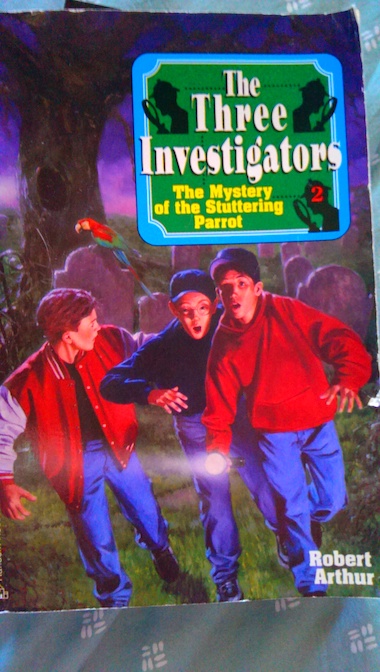


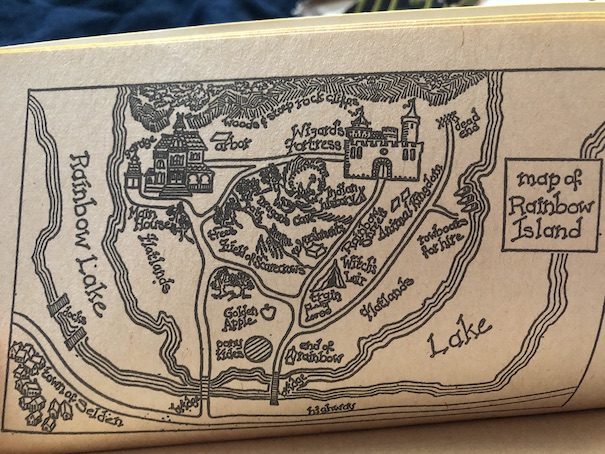


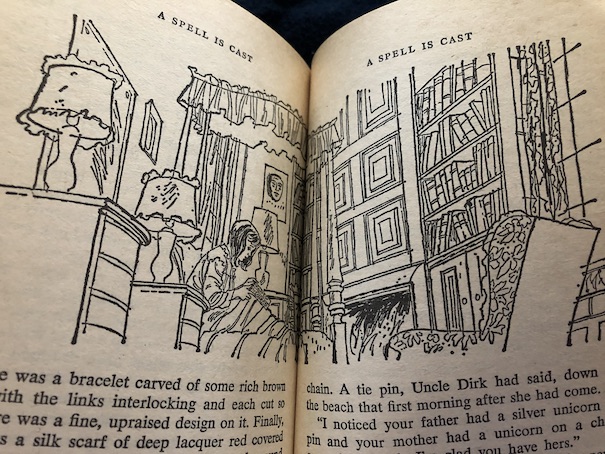


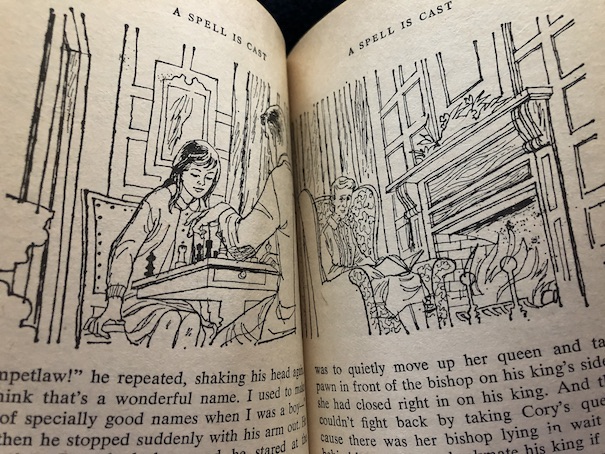
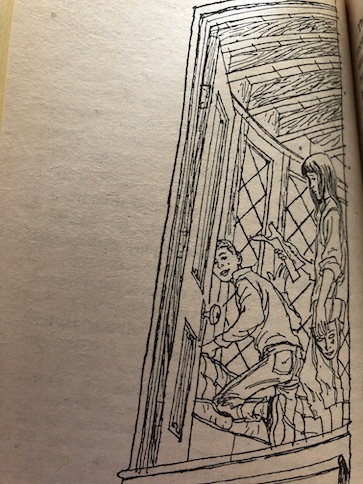

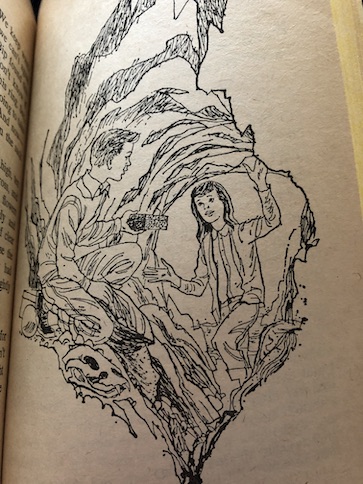


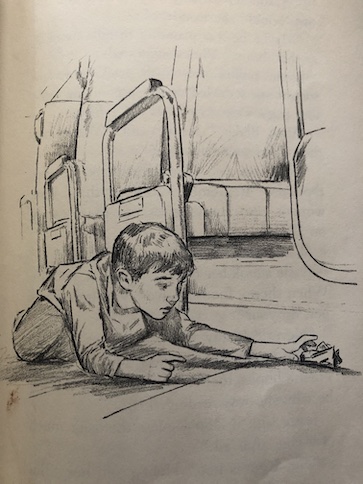
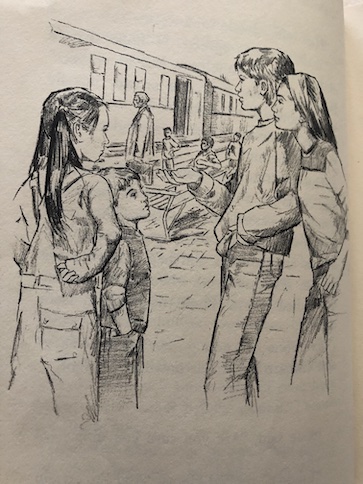

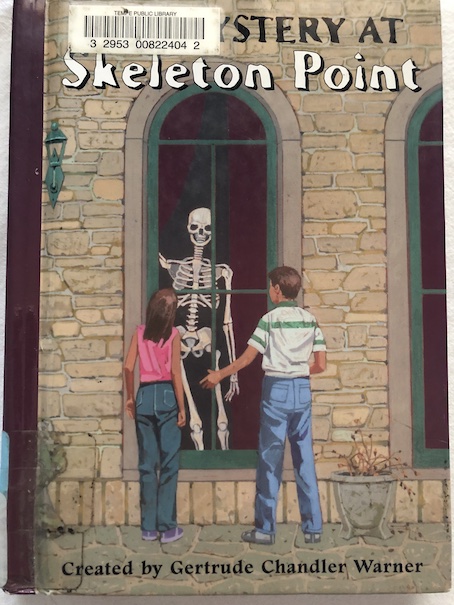




 Jestress's Forgotten Books and Stories