This cookbook has easy recipes that kids can make with their friends at sleepovers, parties, or anytime they want to eat together and include cooking as an activity. Some of the recipes are made from scratch, and some include shortcuts, like using pre-packaged pie dough and crescent roll dough.
The recipes are divided into sections with two sections devoted to snacks, Starter Snacks and Sacktime Snacks (bedtime snacks). There are other sections for meals – dinners, breakfasts, and brunch or lunch. There is also one extra section for birthday treats. The introduction to the book says that it isn’t really important when readers use the recipes – if you want to use a starter snack as a bedtime snack or eat a dinner recipe for breakfast, it’s all up to you. The sections are just to make it easier to find certain types of recipes.
As expected in a book of sleepover recipes, there are plenty of sugary treats, but there is one specifically “healthy” recipe for each section in the book, marked by a heart in the table of contents. The snacks include traditional kid favorites like cookies, popcorn balls, and s’mores. However, even some of the recipes that aren’t specifically labeled “healthy” are still non-sugary, like guacamole and hot taco dip.
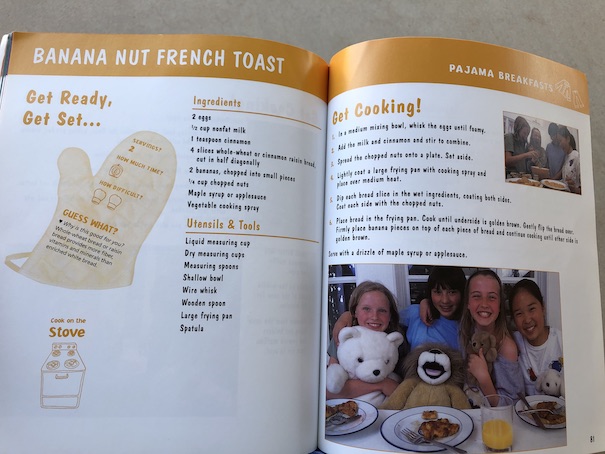
The meal recipes also include many popular favorites. Dinner recipes include chicken pot pie, taco salad, spaghetti and meatballs, and homemade pizza. Breakfast recipes include cream cheese and ham omelettes, chocolate chip muffins, and banana nut French toast. Lunch recipes include tuna melts (called Tuna Meltdowns), bow-tie pasta salad, chicken veggie sticks (kebabs), and turkey burgers.
The section of birthday treats has recipes for different types of cakes and a few non-cake treats like brownie sundaes and Fundue (chocolate dessert fondue).
Each of the recipes in the book comes with ratings, indicating the difficulty of the recipes, although none of them were are really very difficult in general, and the amount of time it takes to make them. One of the things that I liked about this book, besides the ease of the recipes is that the book, is that the pictures show boys cooking as well as girls. I think it’s good that the book portrays cooking as something that both boys and girls can do because it’s a useful life skill for everyone and something that anybody can do for fun.
The book is available to borrow and read for free online through Internet Archive (multiple copies).
Colonial American Holidays and Entertainment by Karen Helene Lizon, 1993.
This book explains how people living in Colonial America would entertain themselves and celebrate holidays. Both entertainment and holidays varied between time periods and geographical areas.
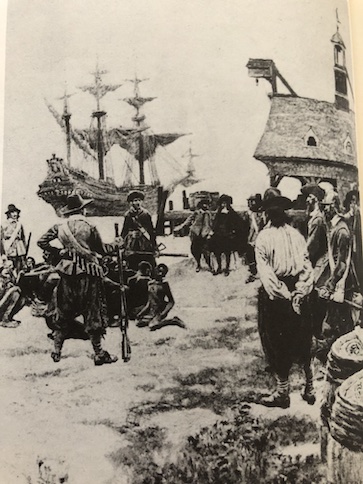
In the early days of European colonies in North America, life was hard. People were occupied with daily survival and the establishment of their communities. As their communities expanded and became more settled, they were gradually able to have more leisure time. The book begins with a general history of the American colonies, briefly explaining the range of countries the early colonists came from, the effect their arrival had on Native Americans, and the role that indentured servants played in society and the adoption of slavery as a means of obtaining workers.
I was glad that they brought up the point about indentured servitude and slavery because I remember discussing it in my college history courses. Indentured servants were people who would agree to work for someone for a period of time in return for having that person pay for their passage to the colonies. There was a benefit for both sides in indentured servitude. For the indentured servants, they used their labor as a means to pay for transportation to the colonies that they could not have afforded by themselves, and once they had worked for the required period, they would be free to establish themselves independently in the colonies. For those who paid for the indentured servants, they would have guaranteed workers for the period of the indenture. However, plantation owners and other employers soon realized that they were not finding as many indentured servants as they wanted, and they didn’t like losing their labor force when their terms of indenture ended the workers left their employ. Therefore, they began to turn to slavery as a means of gaining a steady stream of workers who could not say no to them, no matter what the working conditions were like, and could never leave. Slavery wasn’t so much about race in the beginning as economics and employers who wanted cheap, permanent labor and didn’t care how they got it or what it would mean to the people they bought. But, I have other books that say more about what that led to. This book is mostly about lighter subjects, but it does acknowledge the serious aspects of American history and also makes the point that these completely unwilling immigrants also became a part of American society and, like other groups who came to America willingly, also brought traditions and folklore of their own that would gradually become part of American society, entertainment, and celebrations.
During the Colonial period, celebrations and entertainment varied throughout the regions of the American colonies, depending on the mixture of colonists living there and the holidays and traditions they brought with them from their homelands. Some of their holidays were ones that we still celebrate today, while others have fallen out of favor.
The book is divided into chapters based on different aspects of entertainment, and I’ve given a brief description of each, although all of these sections have more detail than I’ve provided. I particularly recommend reading the book if you would like more information about Native American entertainment or the lives of slaves because there is more information about these topics than I’ve described.
The chapters are:
Winter and Spring Holidays
Christmas seems like one of the most obvious holidays for colonists to celebrate, but it wasn’t so straight-forward. First, not all of the colonists were Christian (there were some Jewish people in parts of the colonies, and they celebrated Hanukkah in the winter), and even among those who were Christian, not all actually celebrated Christmas. The Puritans, who wanted to separate themselves as much as possible from traditions which they thought were not part of pure Christianity, did not celebrate Christmas. In fact, they didn’t celebrate many holidays or special days at all. Apart from the Sabbath, they only had a Day of Humiliation and Fasting and a Day of Thanksgiving and Praise, and those were not regularly scheduled events to be held on any specific date; they were only declared when it seemed that circumstances called for them. A Day of Humiliation and Fasting would happen at a time when things were going badly and the community was suffering, and the Puritans would use that day for prayer, reflection on their sins, and repentance. A Day of Thanksgiving and Praise would happen when the community was prosperous and felt blessed, and it was a time of prayer and feasting.
Also, among the Christians who did celebrate Christmas, not all of them celebrated it on the same day, and different groups had different customs for Christmas, depending on where they were originally from. People from Sweden celebrated St. Lucia Day on December 13th, and people from the Netherlands celebrated Sinterklaas Eve and Day on December 5th and 6th. It was also common for Christmas celebrations to continue through the Twelfth Night from Christmas itself, January 6th, also call Epiphany (the day that the Wise Men visited Jesus).
Easter is a common Spring holiday in modern times, but in Colonial times, it wasn’t so widely or elaborately celebrated. Colonial children were not told stories about an “Easter Bunny” delivering eggs or candy, although colonists from the Netherlands did decorate eggs with natural dyes and scratched designs into the shells.
A spring holiday that many of the colonists celebrated (but not the Puritans) but few people celebrate in modern America was May Day. On May 1st, people would gather flowers and dance around a Maypole.
Summer and Fall Holidays
The Fourth of July is the essential summer holiday of modern America, but it didn’t exist until the signing of the Declaration of Independence in 1776.
Many people’s lives centered around agriculture in colonial times, so fall was harvest time for them. Some colonists (although, not all, and definitely not the Puritans) also celebrated Halloween. The holiday was particularly celebrated in communities where there were people of Irish descent. (This book doesn’t say so, but at this time, it was particularly a Catholic holiday, the eve before All Saints’ Day on November 1st, although some other Christians celebrated it, too. Some Protestant groups, especially the Puritans, shunned the holiday as being too Catholic. I covered the general history of Halloween in more detail on my site of Halloween Ideas, including how Halloween became a secular American holiday.)
In some areas, colonists celebrated an anti-Catholic holiday called Pope’s Day on the 5th of November, where they would burn effigies of the pope. This was an older holiday than the English Guy Fawkes Day, celebrated on the same day, and that holiday was also celebrated in the parts of the colonies with English influence.
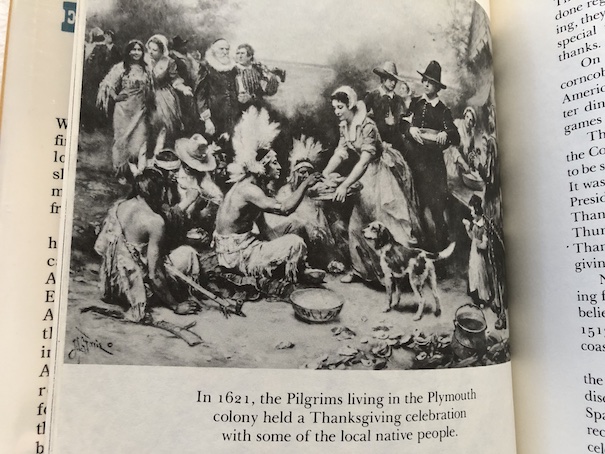
Of course, both colonists and Native Americans had harvest celebrations in the fall, including the periodic Thanksgiving feasts that led to our modern Thanksgiving holiday.
Sports and Recreation
Much of the lives of the early colonists focused on basic survival and the establishment of their new communities. (The book explains some of the ways Native Americans helped the early colonists to survive and adapt to their new environment and to unfamiliar foods.) There was always work to be done, and even young children had to help with daily chores. Still, they found ways to enjoy themselves. Hunting expeditions were a kind of adventure, and children were often assigned the fun chore of picking berries.
Then they had leisure time, they would enjoy games like shovelboard (like shuffleboard but played on long tables), ninepins or bowling (done at first outside on the village green), and billiards (some of the more prosperous families had their own billiard tables). In the 17th century, ninepins was the primary form of bowling with pins instead of our modern ten-pin games. Ninepins, also called Skittle, was the game that Rip Van Winkle played in the story set during this time by Washington Irving. When they talked about just “bowling”, they didn’t use pins at all, instead rolling a ball toward a designated mark on the ground. Boys played stick-and-ball types of games, like stool ball. Even Colonial women enjoyed a game of stool ball. Other games and sports Colonial people enjoyed include quoits (a ring toss game), tennis, battledores, swimming, canoe races, foot races, wrestling, and horse races. Wealthy families even engaged in fencing and (believe it or not) jousting.
During the winter, children built snow forts and had snowball fights and went sledding. Both adults and children went ice skating.
Games and Toys
Many Colonial children’s toys were homemade. It was common for boys to whittle wooden toys for themselves such as whistles and windmills. Boys also had toy guns and bows and arrows. Colonial children liked to roll hoops, either homemade wooden ones or metal hoops from an old barrel. They rolled the hoops upright along the ground using a stick to keep them going, and the object was to go as fast as possible without loosing control of the hoop or having it fall. (They did not use hoops as hula hoops.) Native Americans also played with hoops, and they liked to make it a challenge to throw a spear through a moving hoop. In modern times, jump rope is often considered a girl’s game, but in Colonial times, it was more popular with boys, and they had their own jump rope rhymes. Colonial children also played with spinning tops, marbles (Native Americans had their own traditional marble games as well), jackstones (a precursor to modern Jacks), kites, toy boats, balls, and swings. Girls had dolls (usually homemade and sometimes corn husk dolls at harvest time and paper dolls they made themselves), and some of the more fortunate girls had doll cradles and dollhouses with furniture. Many homemade toys were actually very durable and were passed on through families for generations.
Children also played many games that are still popular on modern playgrounds, including various forms of tag, counting-out rhymes (like the kind modern children use to choose who is going to be “it” in a game), hide and seek, blindman’s buff, leapfrog, cat’s cradle, and hopscotch (which they called “scotch hoppers”). Sometimes, they played board games, like Checkers, Chess, Backgammon, and Nine Men’s Morris.
People throughout the colonies played various types of dice, domino, and card games, some of which were gambling games. Gambling rules and taboos differed throughout the colonies, but in some areas, even children were allowed to gamble.
Social Amusements
A primary form of entertainment in Colonial times was visiting friends and neighbors, and they developed a form of social etiquette around visiting. Some people had specific days when they were expected at friends’ homes, and people often left calling cards to show that they had visited. (Since people couldn’t phone someone to say that they were coming to visit, they either had to prearrange the visit ahead of time to ensure that they were expected or leave a calling card if the person they were visiting happened to not be home, so they would know that a friend stopped by and wanted to talk to them.) Women who lived in towns held tea parties, and pioneer families had picnics that included fishing and berry-picking.
There were seasonal fairs in spring and fall with entertainment like juggling, puppet shows, tightrope walking, fortune-telling, music, exotic animal shows, and various types of contests. The fairs were also part business and involved trading and selling various types of products.
Colonists’ social lives also included political and religious community meetings. Towns would hold meetings to discuss town business and issues of local concern. Election days for public offices often had an air of public celebration as people watched public speeches and debates and booths sold good things to eat to the spectators. Citizens were welcome to attend criminal court trials and witness public punishments designed to humiliate offenders. Communities held market days when farmers, businessmen, and even Native Americans could gather to buy, sell, and trade products.
Church attendance and activities varied by denomination and geographical location. In some areas, church attendance was mandatory, and people would not engage in any other business or activity on Sunday. In areas where neighbors didn’t live close to each other, church was one of their main opportunities to see each other, and it was common for families to meet and share meals after church or for young men to visit with girls they liked.
Taverns, inns, and coffee houses also became important community meeting places. They could be uses as places for community meetings, political discussions, arranging business deals, distributing news and mail, and (as a later chapter explains) sometimes theatrical performances.
Entertainment and Pastimes
Because Colonial life was often hard and full of work, learning how to entertain yourself at home and keep yourself amused while performing chores were important. Work and entertainment often went hand-in-hand, and social occasions were often accompanied by chores and activities to keep the hands busy. Children started learning useful skills early in life. By the age of five years old, girls were able to sew. They also learned knitting, weaving, and embroidery, showing off the range and variety of stitches they knew in hand-sewn samplers. (Originally, samplers were meant to be exactly that – samples of the variety of sewing stitches a girl knew how to do. They were meant to be a demonstration of learning and accomplishment. They were very different from modern samplers that only contain one stitch – cross stitch.) Girls as well as boys knew how to whittle wood, and it was common for children to trade things they had made themselves for other things they wanted. Families had gardens where they grew vegetables, herbs, and flowers that the family could enjoy, and some women developed side businesses selling vegetable and flower seeds from the family garden.
While not everyone knew how to read, many people did, and they would read books like the Bible, works by Shakespeare, and books of poetry. Some people even wrote poetry for fun. Benjamin Franklin opened the first lending library in Philadelphia in 1731. Families often provided their own entertainment in the evening, telling stories and folktales around the fire.
Communities also had musical performances and public dances. Different colonies had different customs regarding dancing, with some communities making it taboo for men and women to dance together. Wealthy plantation owners held fancy formal balls. Music was a common part of children’s education because people who knew how to sing or play an instrument could help entertain their families at home. Some people simply used improvised instruments made out of various objects that they happened to have on hand, like a comb covered in paper, spoons, or tin kettles.
Early American Observances
Aside from the holidays described earlier, there were other special occasions that communities celebrated. Families gathered to celebrate births, baptisms, and weddings. Even funerals, while being a time of mourning, were also social gatherings. Sometimes, wealthy families would give little gifts to those who attended family funerals.
Some children had birthday parties. In the early days of the colonies, people were too occupied with the business of survival to bother much with remembering birthdays, but as communities became more settled and stable, birthdays were increasingly celebrated, especially among the more prosperous families. Sometimes, children were excused from chores on their birthday, and they were often given practical gifts.
Native American groups also had their own seasonal festivals and ceremonies of thanksgiving that varied among tribes. These seasonal festivals marked times for planting or harvesting crops or moving to seasonal quarters. They would also have ceremonies to mark special life events, like testing boys to see if they were ready to be men in their communities.
Working Bees
As I said, work and fun often went hand-in-hand in Colonial America, and sometimes, the colonists would hold special working parties called “bees.” When people got together in big groups to take care of major chores, the work got done faster, and they could have fun talking and visiting with each other while they did it. When they finished with whatever task they set out to do, they would finish the event with food, games, and other fun activities.
At harvest time, they would hold harvest parties to harvest food and prepare it for storage. At apple bees (the parties, not the restaurant), people would peel and core apples and make apple-based foods, like cider and applesauce. At husking bees, they would husk corn. There was also an element of flirting to husking bees because, if a man found an ear of red corn, he was allowed to kiss a woman sitting near him.
At other times of the year, they would hold different types of bees for specific tasks or crafts. “Raising days” were when people got together to build a new building, like a house, barn, or public building, like a schoolhouse. Women held quilting bees and knitting bees. Children today still compete in spelling bees, just like colonial children did. “Sparking bees” were kind of like colonial singles meetups. Single young people in the community would come to the bee to meet each other, and if they found someone who “sparked” their interest, they could begin a formal courtship with that person.
Games, Goodies, Gifts
The final chapter of the book has words for the counting-out rhyme “Intry, Mintry” and the rules for the tag game Fox and Geese and the spinning top game Chipstones. There are recipes for Maple Sugar-on-Snow, Furmenty, Speculaas (a Dutch Christmas cookie), and Raspberry Flummery (a sweet drink). There are also instructions for making a pomander ball.
The book is available to borrow and read for free online through Internet Archive.
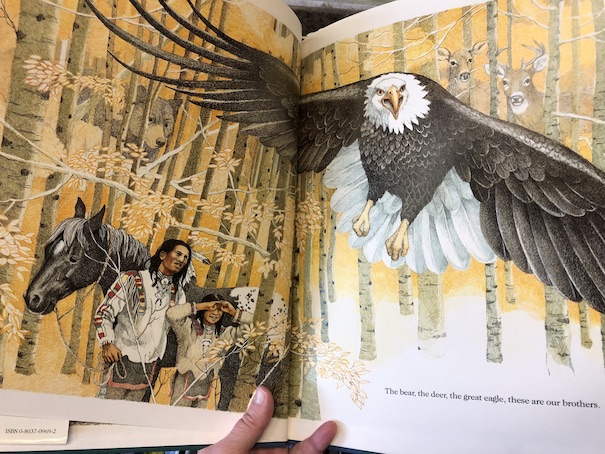
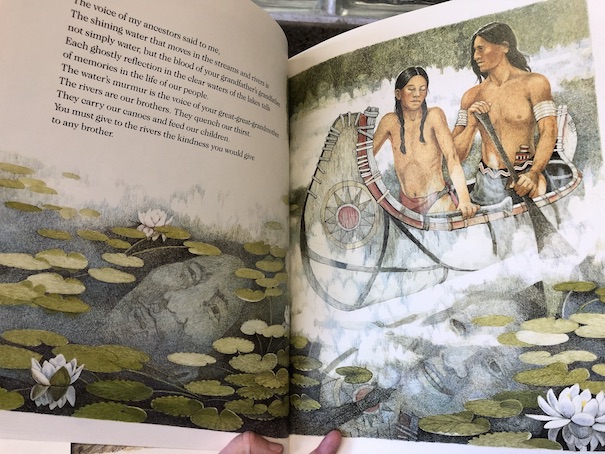
Brother Eagle, Sister Sky: A Message from Chief Seattle with paintings by Susan Jeffers, 1991.
This is a picture book, but not one for very young children because of the serious subject matter. It’s a profound book with beautiful pictures, but before presenting it to children, adults should be sure that the children are old enough to understand the background of the book.
The book begins with some information about its background. It describes the variety of “Indian” (Native American) tribes that have lived in the Americas for thousands of years and how, after white settlers arrived from Europe, they were killed and pushed off their ancestral lands by the new arrivals. It’s historically true, but also dark subject matter, which is why it’s important for the children reading the book to be old enough to understand it. Most of the book is the text of a speech made by Chief Seattle (who lived c. 1786 to 1866) to the Commission of Indian Affairs for the Territory and other government employees when the US government wanted to buy land from his tribe. The historical details concerning this speech from the mid-1850s are complicated, and accounts of it might not be completely accurate, and there is a note in the back of the book that addresses that. I consider the spirit of this speech something worth preserving, so I won’t get too hung up on that right now. I just mention it for the sake of people interested in going deeper into the history.
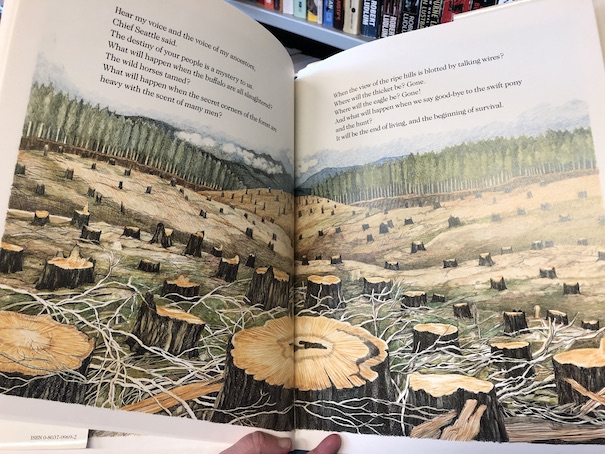
Susan Jeffers particularly wants readers to consider the environmental message of the speech and how relevant the message is today for a society that has endangered itself by placing a higher priority on the acquisition of land, resources, and wealth than on preserving the land and environment that makes life itself possible. This book was written in the early 1990s, and having been a child at that time myself, I know that these themes were increasingly becoming topics in schools and in children’s entertainment during that time. I’d like to point out that I, and others who are younger than me, have heard similar messages about environmental concerns from an early age. This has given us different priorities from earlier generations who did not, although it’s also worth pointing out that many of us came to care more about the environment as children because of the influence of adults who already did.
Chief Seattle questioned the concept of buying land because of the absurdity of buying aspects of nature, like the sky or rain. Land and nature had sacred spiritual meaning for Chief Seattle’s people.
Chief Seattle’s speech was full of poetic imagery, as he explained how his people felt like they were part of the land and it was part of them. He said that they looked on animals like they were brothers.
The land also connected them to their ancestors and the memories of their people.
Chief Seattle questioned what would happen in the future, when the land was filled with people and all of the animals either killed or tamed, painting a bleak picture of a land deprived of life.
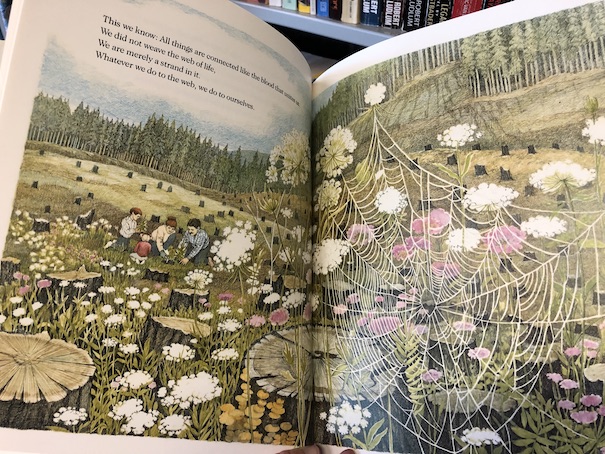
The speech ended with the thought that people didn’t “weave the web of life, we are merely a strand in it.” Chief Seattle called on the people wanting to buy the land to love it, care for it, and preserve it because “Whatever we do to the web, we do to ourselves.”
The environmental themes of the message are poignant for modern times because people have become increasingly aware of the consequences of environment pollution and careless use of natural resources.
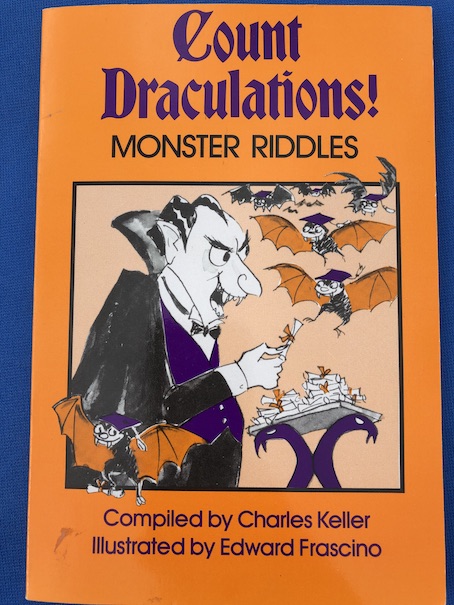
Count Draculations!: Monster Riddles compiled by Charles Keller, 1986.
This is
one of those themed joke books for kids that has monster and Halloween-themed
jokes. The jokes are the basic kid-friendly
question-and-response type with lots of puns.
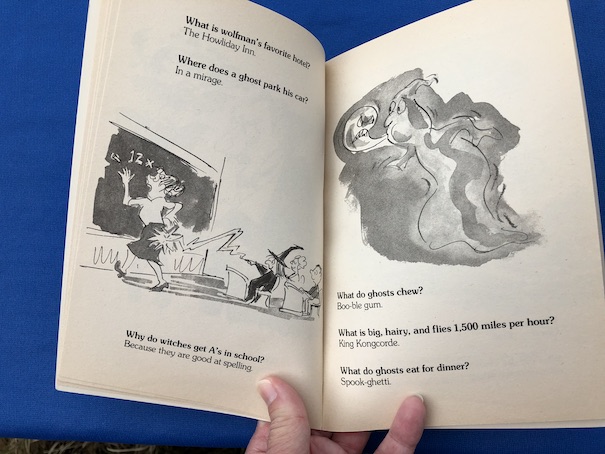
There are also some cute black-and-white illustrations.
Some of my favorite jokes:
Why do
witches get A’s in school?
Because
they are good at spelling.
How do
you get into a locked cemetery?
With a
skeleton key.
Why did
Frankenstein’s monster go to the psychiatrist?
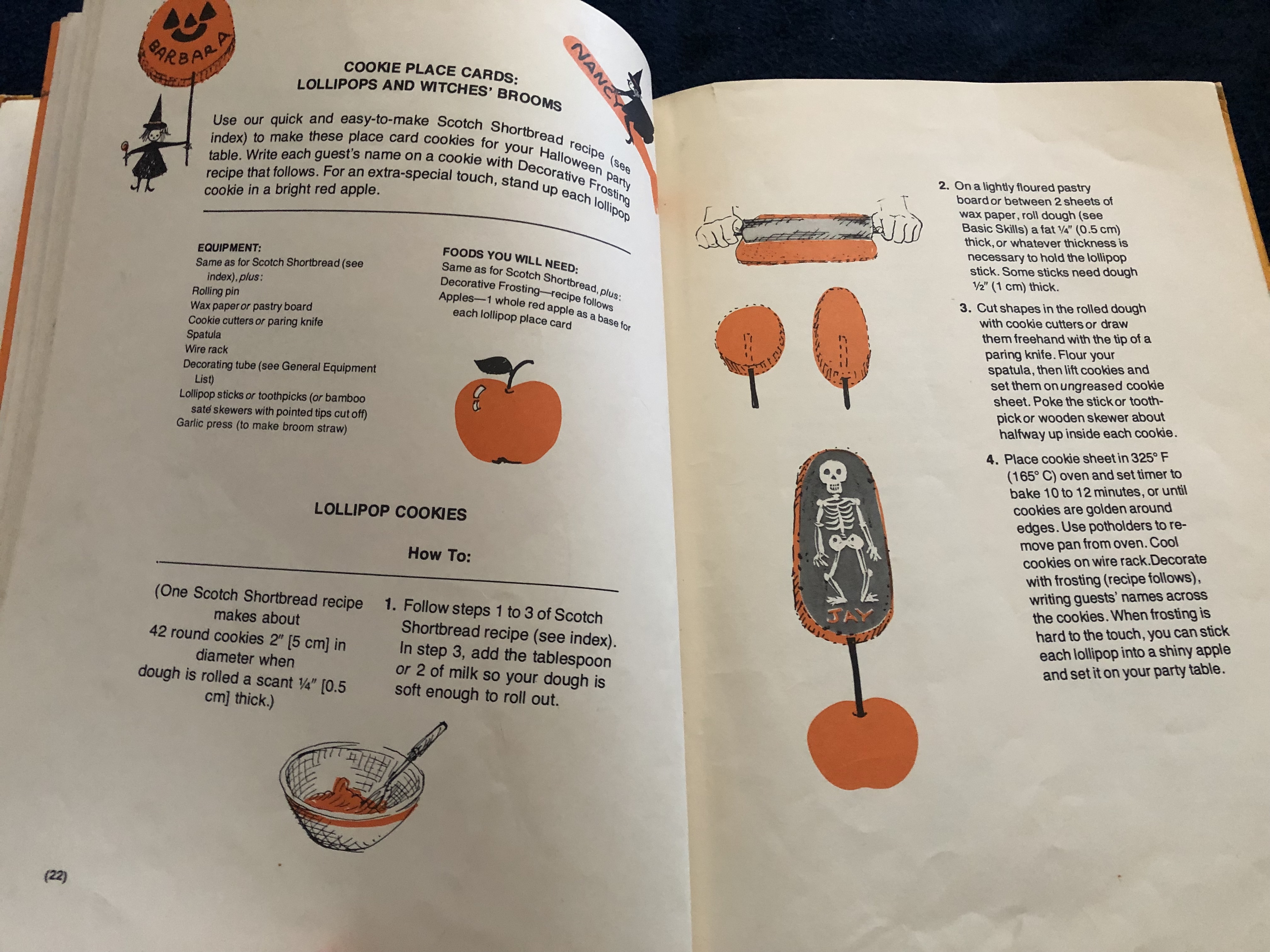
I remember getting this book from my school library when I was a kid. I never actually made anything from it because it was a little beyond my cooking skills. Still, I was fascinated by the recipes in the book, especially the stew inside the pumpkin.
Some recipes in the book use specifically Halloween shapes and colors, while others are more general fall and harvest-themed recipes. The recipes are organized by category with section for food that can also be used as Halloween decorations and other sections for brunch and lunch, vegetable dishes, meat dishes/main courses, and snacks and desserts.
Some of the recipes are old, traditional ones from around the world, such as the ones for Fried Pumpkin Blossoms (an Italian recipe) and the Indonesian Corn Fritters. A brief section at the beginning of each recipe explains a little about the recipe’s background.
In the beginning of the book, there are notes about converting between units of measurement, including converting between imperial and metric units. There is also a guide for converting between Celsius and Fahrenheit temperatures. There are other cooking tips for beginners, such as how to separate eggs (I’ve never done it with my hands, like in the book, but it’s useful to know) and how to chop onions and press garlic.
This is a fun book of jokes and tricks for Halloween or just having some spooky fun with friends, possibly at a sleepover. The book is divided into the following sections:
Making Monsters – How to make costume pieces and turn yourself into a bug-eyed monster, a warty witch, and more! There are also tricks, like making a ghost image appear on a wall, casting a glowing face on someone else’s shadow, and making Bigfoot footprints.
Screamingly Funny – A chapter of ghost jokes.
Ghostly Tricks – Magic tricks that look somewhat ghostly, like making a friend “float” in the air and making magical symbols appear on blank cardboard.
Monster Pranks & Practical Jokes – Tricks that produce ghostly illusions, like how to take ghostly pictures, produce taps with no obvious source, and cause ghostly flashes of light in a dark room.
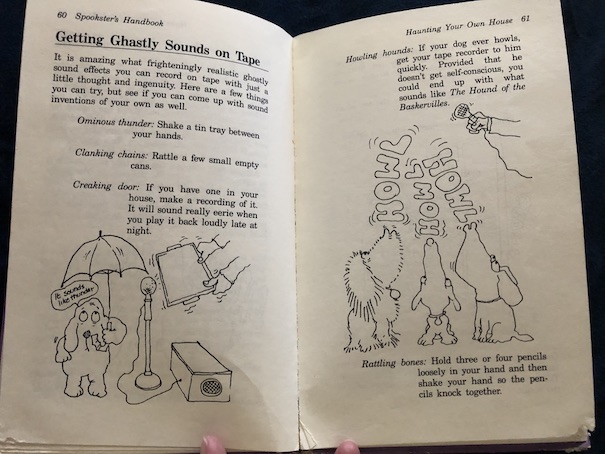
Haunting Your Own House – Describes typical do-it-yourself haunted house tricks for producing scary noises.
Monster Laughs – A chapter of monster jokes.
Scare Your Friends – Tricks and pranks for spooking your friends with a finger in a box, strange noises, or a glowing skull.
Terrible Trivia – Fun facts about superstitions and telling the future.
Fang-Tastic! – A chapter of jokes about vampires.
My favorite parts of the book are the superstitions and the ways to make scary haunted house noises. I haven’t actually tried the noise tricks yet, but at some point, I’m planning to try a few!
The book is available to borrow and read for free online through Internet Archive.
Six-year-old Ramona Quimby thinks of herself as brave. Now that she’s going into the first grade, she’s no longer just a little kid. She even stood up to some boys on the playground who were making fun of her older sister, Beatrice, for being called “Beezus.”
However, Ramona soon discovers that not every sees her the way she sees herself. Beezus is embarrassed at the way her little sister told off those boys and is sure that they’re now going to make a much bigger deal of the incident at school because of it. Beezus says that she’s sick of her silly nickname, which rhymes with “Jesus” and just wants to be called “Beatrice.” Ramona agrees with her, both because she feels bad that she accidentally embarrassed her sister and because it’s her fault that Beezus got her nickname. When she was smaller, Ramona couldn’t pronounce the name “Beatrice” very well and ended up saying “Beezus” instead, and the mispronunciation stuck. Ramona is trying hard to be a big kid now, and she doesn’t like to remember that she used to not even be able to say her own sister’s name. Ramona agrees to call her sister Beatrice in public and to only use the Beezus nickname at home.
Ramona wants to be taken seriously, and she hates it when her mother is amused by some of the silly things she does. (I know the feeling, and so do many other people!) The last thing she wants is to just be a silly little kid that people laugh at, and nobody seems to understand how she feels. She especially hates it when her sister keeps calling her a pest.
Fortunately, their mother understands that part of the problem is that the girls are getting bigger, and they’re starting to feel cramped sharing a room with each other. Mr. and Mrs. Quimby have decided to add an extra room onto the house so the girls won’t have to share anymore, and Mrs. Quimby is going to take a part-time job to help pay for it. Before the girls can start arguing about who gets the new room, Mrs. Quimby tells them that it’s already decided that they will take turns, trading off rooms every six months and that Ramona will have the first turn in the new room.
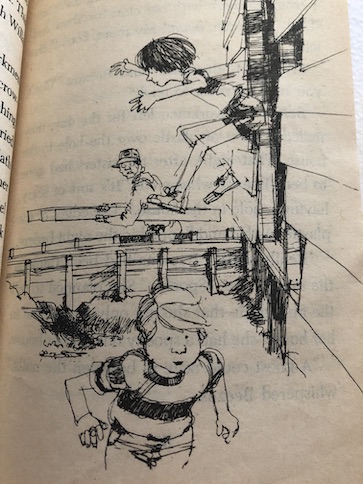
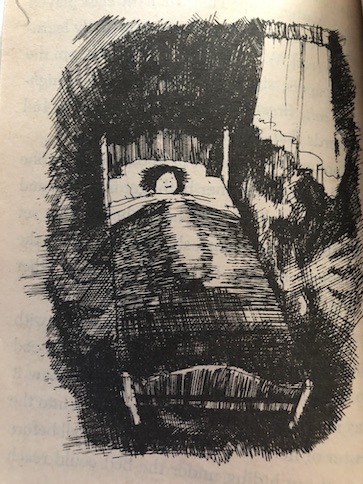
Watching the workmen make a hole in the wall of their house and build the new room is fascinating, although Ramona doesn’t have the patience for planning, methodical work, and learning how different tools are supposed to be used, like her friend Howie. Ramona prefers playing their made-up game of Brick Factory, where she and Howie smash old, broken bricks with rocks. Ramona takes the opportunity to put her special initial, a Q with cat ears and whiskers, into the wet concrete for the floor of the room, and she can’t resist the opportunity to jump through the new hole in the wall of their house. The workmen cover the hole with a sheet of plastic when they go home for the day, but the girls think it’s kind of spooky having a hole in the wall of their house. They imagine that something horrible could sneak in through the hole, like a ghost, maybe one that looks like a gorilla. Ramona can’t wait to tell the other kids all about it when she starts first grade!
Unfortunately, the new school year doesn’t start out the way Ramona hopes. Instead of everyone being excited about her news and how she watched the workmen chop a hole in the side of her house, everyone laughs because the teacher had just made a joke about her being Ramona Kitty Cat because she drew the cat ears and whiskers onto the Q on her name tag the way she always does. Ramona hates being laughed at and made to feel like a fool. Worse still, her friend Howie doesn’t defend her because Ramona said that they “chopped” a hole instead of “prying” it open with crowbars. Because of Ramona’s technical inaccuracy, Howie makes her sound like she was lying about the whole thing!
Then, when the kids make paper bag owls for Parents’ Night, Susan copies Ramona’s design, and the teacher, Mrs. Griggs, praises Susan to the whole class for coming up with the idea of having the eyes looking to the side. She doesn’t even notice Ramona’s owl. Ramona, afraid that everyone else will think that she’s the copycat because of Mrs. Grigg’s public praise of Susan’s owl, just like they all thought she was a liar and laughed at her before because of what Mrs. Griggs and Howie said on the first day of school, crumples her owl up and throws it away before anyone can see it. But, that doesn’t help relieve Ramona’s feelings at the injustice of the situation. She’s owl-less because of Susan stealing her idea. In a fit of temper, she crumples up Susan’s owl, too, and runs away when Susan tells on her even though Mrs. Griggs repeatedly says that she doesn’t like tattletales. (Honestly, I’ve never understood why adults tell kids that. It just encourages kids to behave badly and label others as “tattletale” when they complain, even when the complaint is just. It just gives bullies more power to act with impunity. I also think kids should be encouraged to talk about things, especially some of the more difficult things to talk about, and the whole “I don’t want to hear from tattletales” shuts down conversations before they even start. I’ve guessed that it has something to do with not wanting to take the time to deal with a lot of petty complaints, but at least hear someone out before you decide what they’re going to tell you and how important it is!) Even when Ramona explains the situation to her mother, she can tell that her mother doesn’t fully understand how she feels, and she is forced to apologize to Susan. Mrs. Griggs makes it all the more embarrassing by forcing Ramona to apologize in front of the whole class. Ramona knows that Mrs. Griggs doesn’t understand her and is sure that Mrs. Griggs hates her.
Ramona’s new room isn’t much of a comfort, either. She finds it a bit spooky, and when she’s alone in it, her imagination runs wild, like it did the night that she and her sister were imagining what kind of ghost could get in through the hole in the wall. Ramona certainly doesn’t feel very brave and grown-up about having a room to herself, but she refuses to admit it because she doesn’t want anyone to think that she’s a baby for being scared.
Things come to a head when Mrs. Griggs sends home a progress report that says that Ramona needs to use more self-control and keep her eyes on her own work. Ramona knows that it’s totally unfair because she’s been very self-controlled since the owl incident, in spite of Mrs. Griggs’s inconsiderate lack of understanding, and the only reason why she sometimes looks at the paper of the boy next to her is that he’s been seriously struggling with his work, and she’s been trying to help him. When Ramona is so fed up that she tells her family that she needs to say a bad word and the worst word she can think of to say is “guts”, everyone laughs at her, and Ramona bursts into tears, unable to take it anymore.
Tears and anger serve a purpose, though. Sometimes, an outburst is the only way to make someone understand, and understanding is what Ramona most needs. The family has an honest discussion about Ramona’s feelings, and Beezus tells her that she understands what it’s like to be little and laughed at for doing or saying something silly, reminding her mother about the times when she laughed about things she did, back when Ramona was too little to remember it. Beezus says that her mother’s laughter hurt her feelings when she was Ramona’s age, too, and Mrs. Quimby apologizes. Beezus also says that she never liked Mrs. Griggs very much when she was her teacher, either. Ramona asks if she could switch to the other first grade class at school, but her mother is reluctant to arrange it because her schoolwork has improved and because some of Mrs. Griggs’s criticism was correct and that Ramona does need to improve on her self-control. Mrs. Quimby also says that she wants Ramona to learn to understand and work with different types of people. Mrs. Griggs might not be her kind of person, and she might not always understand Ramona, but Ramona isn’t always easy to understand.
Personally, I didn’t think that last comment was a very good way to put it. One of the great things about the Ramona books is that Ramona’s feelings are easy to understand and identify with. Beezus certainly understood what Ramona meant about what it’s like to be laughed at for just being a kid. It’s something many of us experienced when we were kids, and we identify with how Ramona feels about it. (Didn’t Ramona’s mother ever go through this herself, or does she just not think about it? I kind of wondered when she didn’t seem to understand what her daughters were talking about at first.) I think it would have been better to put more of the emphasis on the idea that different types of people need to learn to respect each other and get along even when they don’t fully understand each other. Other people aren’t always easy to understand, but that’s not because Ramona herself is difficult to understand. Ramona’s feelings aren’t any less understandable than Mrs. Griggs’s, it’s more that not all people have the same capacity for understanding others because they don’t have as much empathy as others or the imagination to consider circumstances they haven’t personally been in themselves or are too focused on their own priorities and don’t have the time or patience for understanding. Adults often don’t consider things from a child’s point of view because their adult priorities in their busy adult lives take precedence, they discount the validity of what children think and feel because children are less experienced in life and sometimes express themselves clumsily, and they don’t slow down and take a step back or a second look or listen when they should. But, they could show a little more consideration for the child’s feelings even they don’t fully understand them. My own first grade experience wasn’t any better than Ramona’s, and I had my own “Mrs. Griggs.” Adults forget that kids can feel and experience things beyond their ability to fully explain them to others. One of the difficulties of being young, at least for me, was not having the vocabulary necessary to make myself understood or ask all the questions that I wanted to ask, and I often had to deal with adults who were short on patience. I can see that Ramona also struggles with finding the right words to express what she’s feeling or what’s really happening, like when she used the word “chopped” instead of “pried” to describe how the workmen opened a hole in the side of her house. I think that learning words and new ways to communicate with different people is an important part of the story.
Fortunately, Ramona’s father is right that the bad things will blow over, and Ramona’s situation improves. Some of the other kids in class become sympathetic to Ramona because they recognize that Mrs. Griggs shouldn’t have made her apology to Susan an embarrassing public apology. Ramona, although frequently bored in class, learns to read better, and she enjoys reading, finding that she can read more interesting stories when she knows more difficult words. She also meets her older sister’s teacher, and he calls her Ramona Q instead of Ramona Kitty Cat, like Mrs. Griggs did, making Ramona realize that there’s life beyond first grade and that better, more sympathetic teachers are waiting for her. She also becomes less afraid of her new room.
A scary encounter with a dog on the way to school that causes Ramona to lose one of her shoes also brings some unexpected sympathy and understanding from Mrs. Griggs. Ramona comes to understand that Mrs. Griggs is trying to be helpful when she offers her one of the old boots from the lost and found to replace the shoe she lost, that Mrs. Griggs simply doesn’t understand Ramona’s feelings about those old boots (they’re old, dirty, and kind of yucky), and that she isn’t likely to understand because she has her own priorities. Instead of getting mad at Mrs. Griggs for her lack of understanding, this realization causes Ramona to come up with her own creative solution to the problem. Ramona gains a better image of herself because of her creative problem solving and her bravery in a difficult situation. Mrs. Griggs also begins to show signs of understanding that Ramona is a creative person who needs a little room to demonstrate her creativity.
The book is available to borrow and read for free online through Internet Archive (multiple copies).
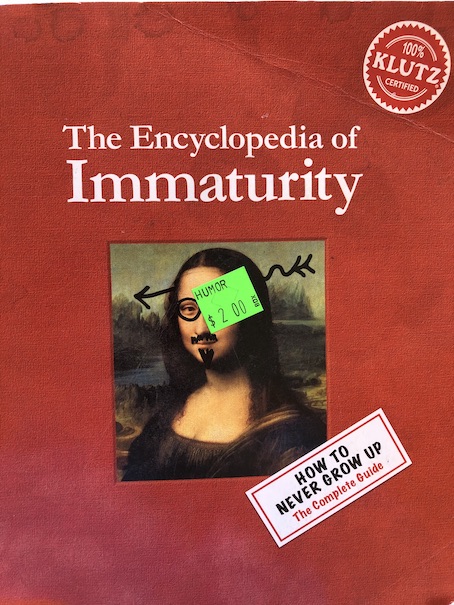
The Encyclopedia of Immaturity by the Editors of Klutz Press, 2007.
This book is part of the classic children’s hobby and activity series from Klutz Press. It’s a collection of pranks, stunts, and fun things to do. There is too much in this book to describe everything in detail, so I’ll just explain some general themes and highlights.
The stunts and activities are in no particular order, and the book isn’t divided into any special sections. Most of activity or stunts just takes up a page or two of explanation, but some are longer, about three or four pages. None of them are very long.
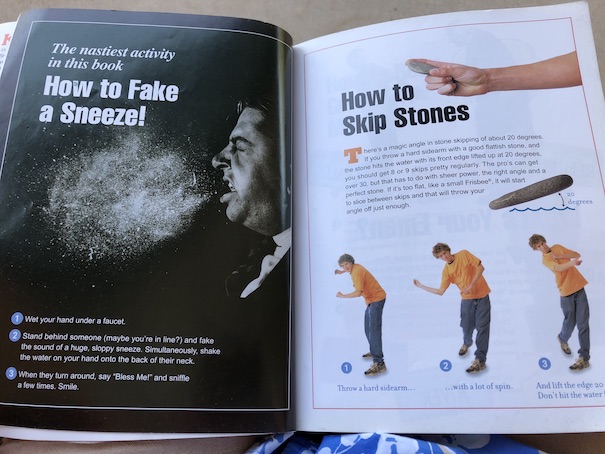
Some of the activities are classic kids’ activities or pranks, like skipping stones, hanging a spoon from your nose, and Peep jousting (a more modern classic – the book points out that you can do it with regular marshmallows, too, but I like Peeps for the imagery). I remember the one about how to blow a bubble gum bubble from your nose instead of your mouth (found on p. 271) being mentioned in Amber Brown Goes Fourth, when Amber’s new friend, Brandi, teaches her how to do it.
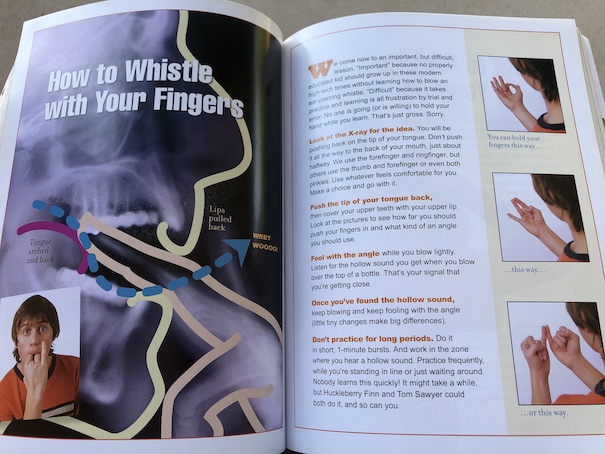
There are also some more difficult tricks to master, like how to do an ollie on a skateboard and how to do a wheelie on a bike. (At least, I consider things like that difficult because I’ve never been able to master them.) I also don’t know how to whistle with my fingers, although the book shows multiple ways to do it.
Some of the pages are designed to be cut out and made into things, like the page that provides a pattern for a paper fortune teller and the page where you cut a square of paper so that it’s possible for a person to go through it.
Some of the activities in the book were also in previous Klutz books, like juggling and how to use trick photography to take pictures that make people look like they’re small enough to pick up. I also remember the backseat rituals for long car trips being part of the Klutz Kids Travel book.
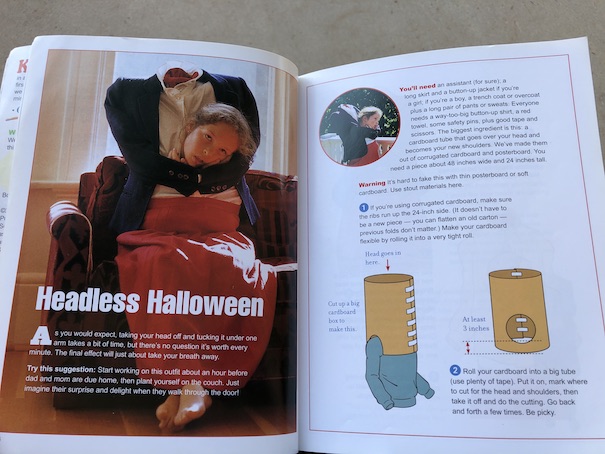
My two favorite sections in the book are the part about how to be a headless person for Halloween and how to sneak around. I never dressed as a headless person as a kid, but I like the idea, and might still do it. I did a lot of sneaking around as a kid because I always loved hide and seek.
There’s quite a variety of activities in this book, including some indoor activities and outdoor activities, and things that can be done on car trips. Some of these activities look kind of gross to me (and still would have when I was a kid because I wasn’t one of the kids who was into gross outs), like how to make fake dog barf, but there’s such a wide selection of activities, I’d say that there’s plenty here for anybody to find fun things to do!
The book is available to borrow and read for free online through Internet Archive (multiple copies), along with the sequel to the book, The Encyclopedia of Immaturity, Volume 2.
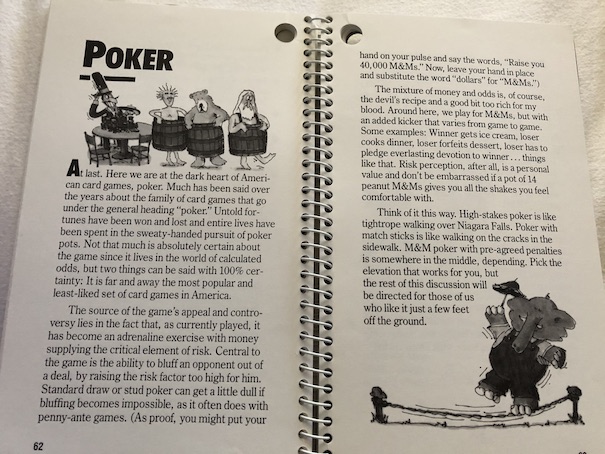
The Klutz Book of Card Games for Sharks & Others by the Editors of Klutz Press, 1990.
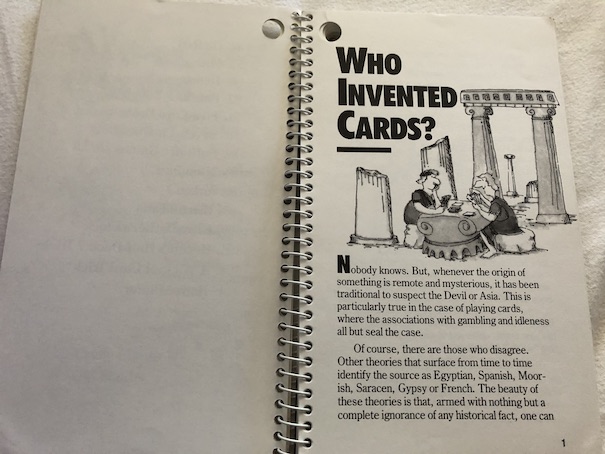
This book is part of the classic children’s hobby and activity series from Klutz Press. Originally, this book came with a deck of cards, which was attached to the book at the hole in the upper left corner.
The book begins with a brief history of playing cards. The exact origins of playing cards are unknown, but the book describes some notable events in card game history, including the fact that people throughout history have often disapproved of playing cards, identifying them as signs of sloth or believing them to be associated with the devil (probably for their connection with gambling, although the book doesn’t get that specific). The book says that the modern form of the standard 52-card deck with 4 suits of 13 cards solidified around the late 1400s in Europe.
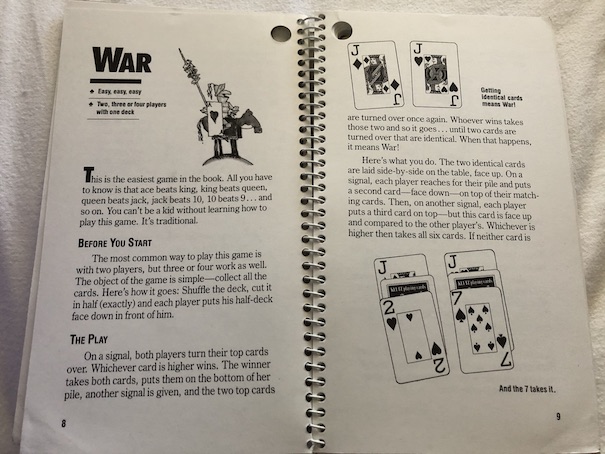
The book then gives instructions for playing various card games, including various types of solitaire and two-player games as well as games for larger groups. The book has the rules for different versions of Poker and Rummy and some childhood classics like War, I Doubt It, Crazy Eights, and Old Maid. For games that involve gambling concepts, like Poker or Michigan, they recommend using M&Ms.
Besides giving the rules for the games, each section also includes a few words about the history of games or some interesting thoughts or facts about them or tips for playing. Many of the thoughts (and some of the history facts) about games are joking, like the tip for Egyptian War, “This game is traditionally played on lunch or picnic tables, when you’re supposed to be taking your tray back.”
At the end of the book, there are instructions for two magic tricks with cards and for building a house of cards.
The book is available to borrow and free for free online through Internet Archive.
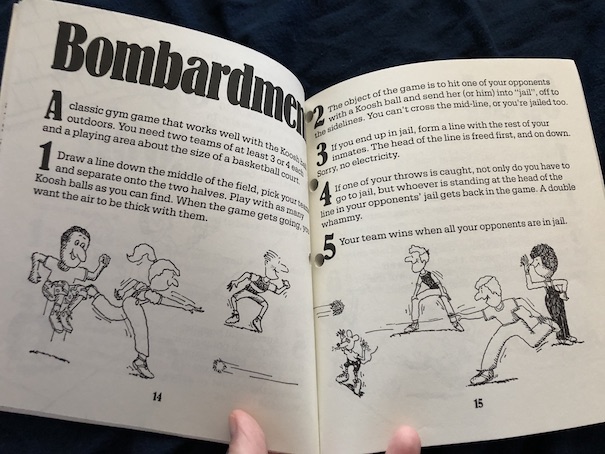
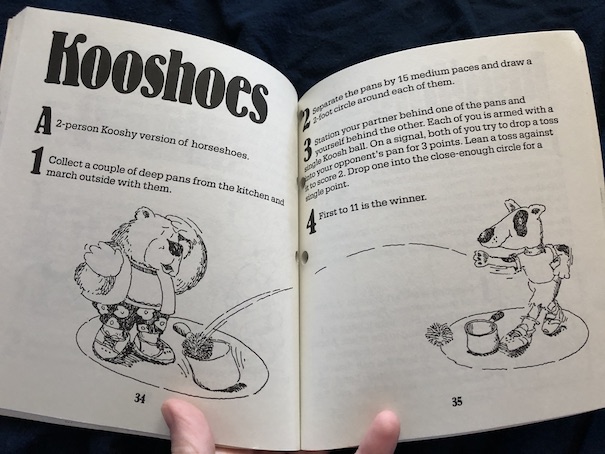
The Official Koosh Book by John Cassidy and Koosh ball inventor Scott Stillinger, 1989.
This book is part of the classic children’s hobby and activity series from Klutz Press. Originally, this book came with three mini Koosh balls, which were attached to the book at the holes on the left side of the book. I can’t remember now whether I actually got my set of mini Koosh balls with this book or if I bought them separately because my book was used. I’ve had this book for a long time, and my favorite activity in the book is juggling, a favorite staple activity of the Klutz series as well as a personal favorite of mine.
My copy of the book isn’t a first edition, and the introduction explains some changes that had taken place since the book was first written. John Cassidy of Klutz Press partnered with the inventor of the Koosh ball, Scott Stillinger, to write the book to explain various ways kids could use Koosh balls and games people could play with them when the toy was a new product. Since the book was first written, Koosh balls had become much more popular, and new varieties of Koosh balls were created, including the Mini Kooshes that came with the book.
Koosh balls are rubber balls covered with rubber filaments that are something like short spaghetti, making them feel soft, even if you get hit in the head with them while learning how to juggle. (I speak from experience.) This soft, painless-when-hit-with-one quality of Koosh balls was completely intentional on the part of the creator. It’s also the reason why they’re still a popular toy and the basis for many of the Koosh games in the book.
Many of the games in this book make use of the fact that it doesn’t hurt to be hit with a Koosh ball to give battle games like Dodge Ball and Bombardment a new twist. As the book says, “Dodge Koosh also fulfills the basic human need to bonk others of our same species.” I get that feeling some days, but when it’s done with Koosh balls, it’s pretty harmless.
Because Kooshes are soft, you can even play games indoors that usually wouldn’t work indoors because of the damage that could be done to things and people.
The book also suggests using Koosh balls for variations on Footbag (or Hacky Sack) or Horseshoes. Koosh balls work for these types of games because they don’t roll like regular balls. Because Koosh balls are made of rubber, they can also be used in a swimming pool.
The book is available to borrow and read for free online through Internet Archive (multiple copies).

























 Jestress's Forgotten Books and Stories