The Valentine Mystery

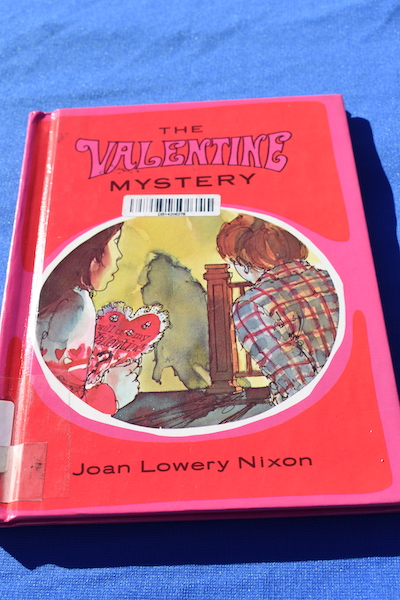
The Valentine Mystery by Joan Lowery Nixon, 1979.

Someone leaves a mysterious, unsigned valentine for Susan Connally at her apartment on Valentine’s Day. Even though everyone was home at the time that the valentine was delivered, the only person who saw the person who brought it was Susan’s little, two-year-old brother, Barney.  All Barney can say about this person is that “He had watches on his tennis shoes.”

Susan and her other brother, Mike, decide to ask some of the other people who live in their apartment building if they know anything about the valentine or a strange person who wears watches on his shoes. 

Nobody knows a person who wears watches on their shoes.  Most people aren’t even wearing tennis shoes.  They’re wearing boots because it’s snowing outside. The questions the kids are asking about people with watches on their tennis shoes sound so strange that one of their neighbors, Mrs. Pickett, thinks that the kids are trying to find the solution to a riddle and keeps guessing things like “a spotted dinosaur who has time on his hands?”  (Mrs. Pickett is one of my favorite characters in this book. All of her solutions involve a spotted dinosaur, for some reason.)

There is a boy named Pete who lives in their apartment building.  His family has only moved there recently, and he’s in Susan’s class at school.  Susan thinks it would be nice if the valentine turned out to be from him, but he’s not wearing tennis shoes or watches.  He’s also wearing boots with round buckles on them.

The breakthrough comes when the kids discover that their little brother is going through a phase where he calls all kinds of shoes “tennis shoes.”

The book is available to borrow and read for free online through Internet Archive.
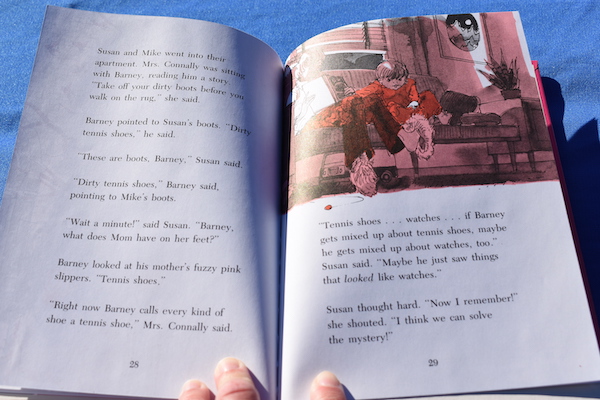
I read this book when I was a kid and then spent years trying to remember what book involved a kid who thought someone had watches on his tennis shoes before I found it again. It’s a cute, fun Valentine’s Day mystery story, and I love all of Mrs. Pickett’s guesses about who would wear watches on their tennis shoes.

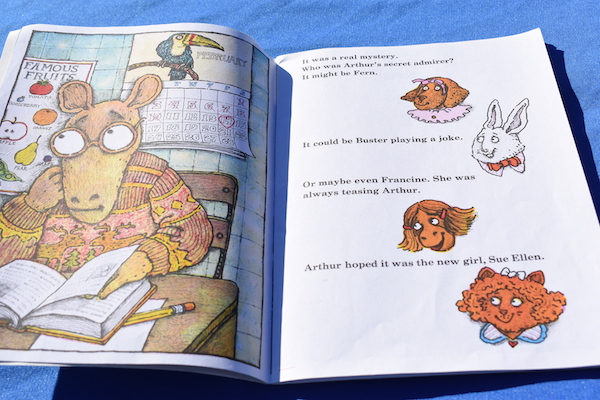
Arthur’s Valentine

Arthur’s Valentine by Marc Brown, 1980.

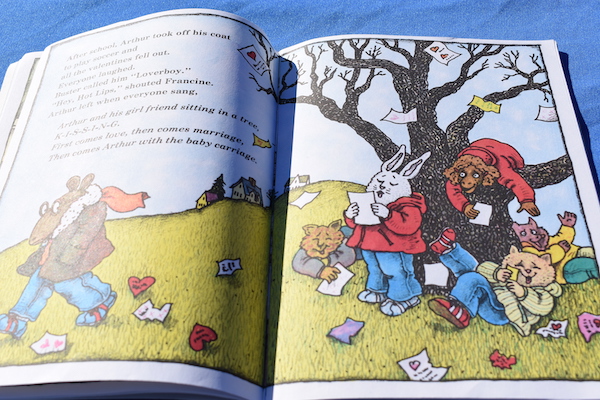
During the week before Valentine’s Day, someone keeps leaving unsigned valentines for Arthur.  He wonders who it is, thinking about the different girls in his class at school. On the other hand, maybe someone is just playing a joke on him.

When his friends find out about his secret admirer, Arthur gets a lot of teasing.  At one point, he thinks that he knows who the secret admirer is, but when he writes a valentine of his own for her, it turns out that he’s wrong, and it leads to more embarrassment.

However, Valentine’s Day isn’t over yet. Arthur’s secret admirer gives him a movie ticket, saying that she’ll meet him at the theater.  With this last message, Arthur realizes who is secret admirer is and arranges a surprise of his own.

This is just a fun, cute Valentine’s Day story, part of the Arthur Adventure Series.

The Desert is Theirs

The Desert is Theirs by Byrd Baylor, illustrated by Peter Parnall, 1975.

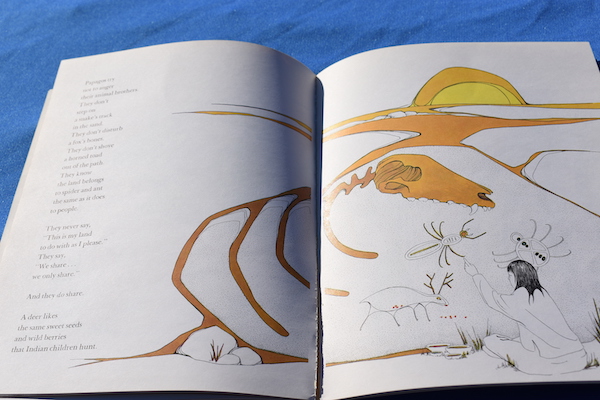
The story in the book is written in a kind of poetical form, describing what life in the desert is like.  It talks about the kinds of animals that live in the desert and how the plants sometimes have to go without water for months because it doesn’t rain much.

It also describes the Desert People, the Papago Indians (Tohono O’odham – Which literally translates as “Desert People”).  Even though the desert is a harsh environment, the people who have lived there for generations think of it as home and like living there.

The book continues with a Native American creation myth that describes how the Earthmaker made a little plot of dirt and greasewood grew in it – the beginning of the desert.  Then, Coyote scattered seeds to grow cactus, and the Spider People sewed the earth and sky together.  In the creation story, other animals help to form the desert, which earns the respect of the Papago.  The Desert People recognize that they have to share the land with the animals as well as each other.

While the desert can be harsh, it isn’t barren.  In the desert, there are still plants to eat and use as medicine.  People also use grasses for weaving baskets and the soil itself for building homes.

People also learn patience in the desert.  It can take a long time for it rain.  Plants sometimes have to wait for years in order to bloom.  Animals wait for the coolness of night to come out.  People plant their crops very carefully.  But, even though they often have to wait, good things are worth waiting for.
I remember teachers reading this book to us in early elementary school because I grew up in Arizona.  It is a Caldecott Honor Book.

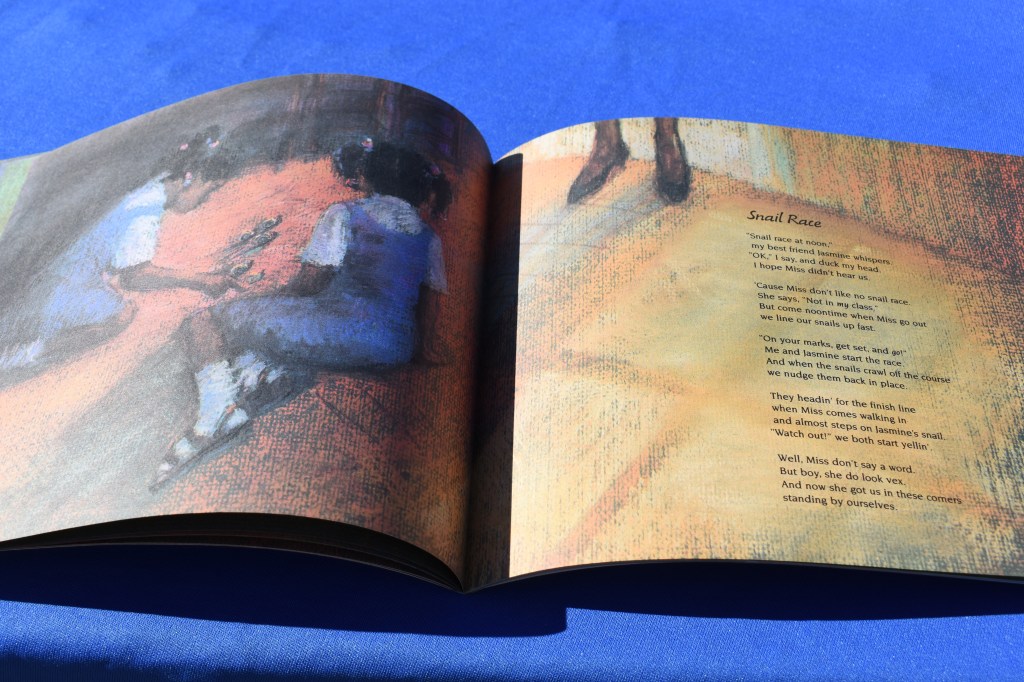
Coconut Kind of Day

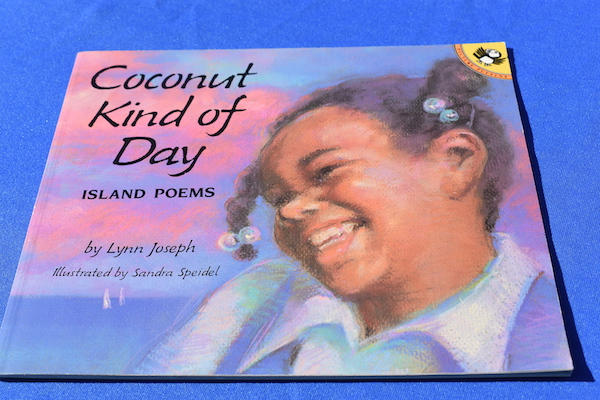
Coconut Kind of Day: Island Poems by Lynn Joseph, illustrated by Sandra Speidel, 1990.

The author’s note in the back of the book explains that the author was originally from Trinidad and that she wrote this book of poems about some of the things that remembers from growing up there.  She also explains some of the terms used in the poems that people who aren’t familiar with Trinidad might not know:

Palet man – Ice-cream man who sells ice cream on sticks, like popsicles (I knew this one because I’m used to the Spanish word “paletero” from growing up in Arizona.)

Soursop – A type of fruit often used as an ice cream flavor

Pullin’ seine – When the fishermen start pulling in their nets, and other people help.

Jumbi man – A bogey man.  It’s popular for people to dress in a Jumbi costume at Carnival time.

Sorrel – A plant used in making a drink around Christmas

The poems are mostly about small, everyday things, like going to school or to the market or how the children play together or get ice cream from the palet man.

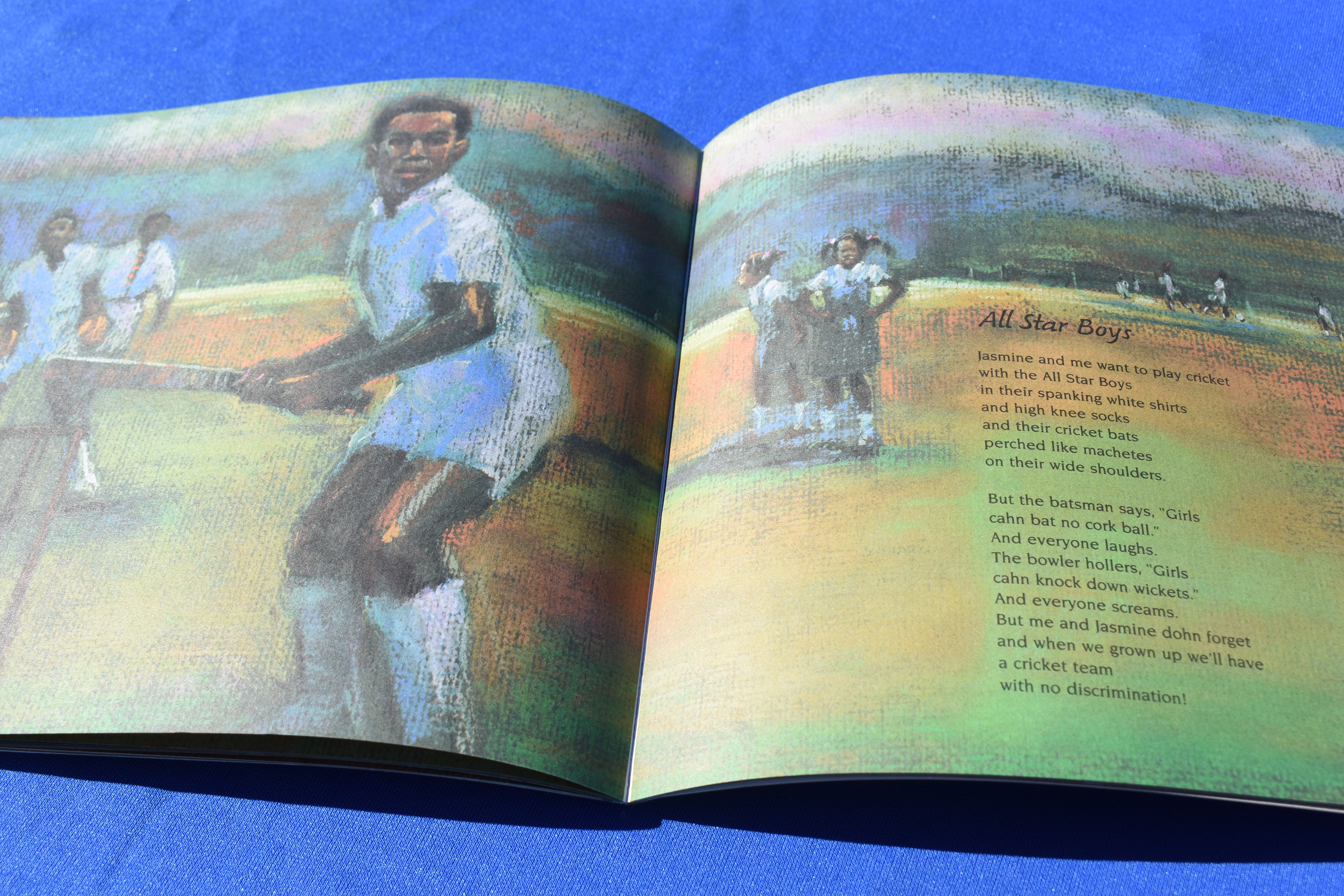
There is one poem where the girls want to play cricket with the boys, but the boys won’t let them, and they decide that when they’re older, they’ll have a cricket team of their own.

The pictures are beautiful, done in an impressionistic style.

Tortillas Para Mama

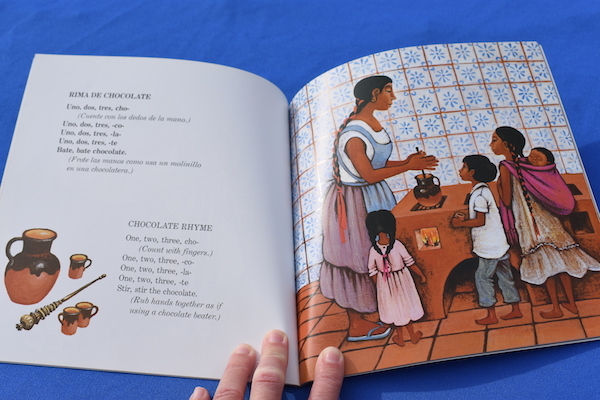
Tortillas Para Mama selected and translated by Margot C. Griego, Betsy L. Bucks, Sharon S. Gilbert, and Laurel H. Kimball, illustrated by Barbara Cooney, 1981.

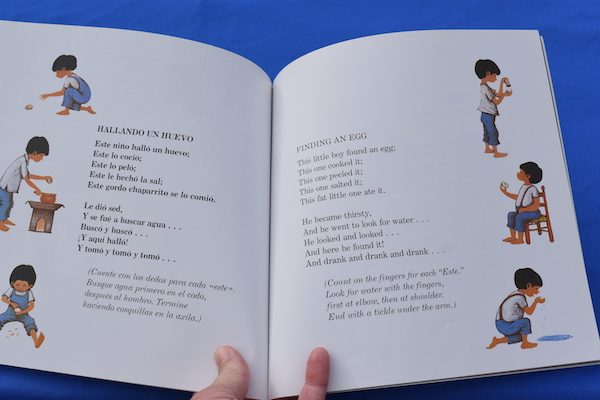
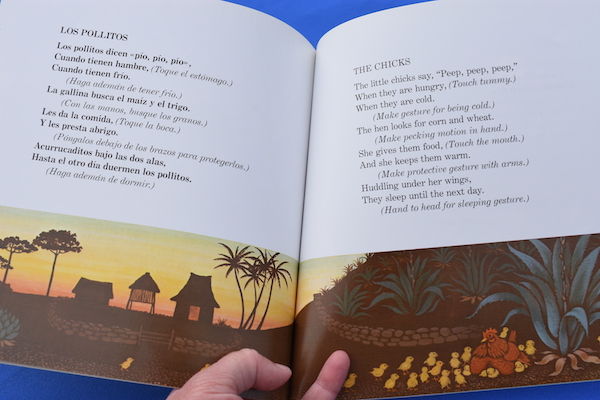
This is a collection of Spanish lullabies and nursery rhymes in the Americas.  The introduction to the book explains how these traditional rhymes have been passed down through the generations of families.  They are not specific to any one country, more generally known where there are Spanish speakers. The rhymes are in both in English and Spanish.

Like children’s rhymes everywhere, they are about small, everyday things, like family, animals, cooking, and other things people do every day, like helping little kids to get dressed.

There are rhymes and songs that involve counting on fingers or making hand motions.

My favorite is the lullaby Los Pollitos (The Chicks), which I first heard when I was little through Kidsongs. I always liked that song.

The illustrations, paintings by Barbara Cooney, are beautiful.  Some people may recognize the art style from her other works like Miss Rumphius and Roxaboxen.

The Gullywasher

The Gullywasher written and illustrated by Joyce Rossi, 1995.

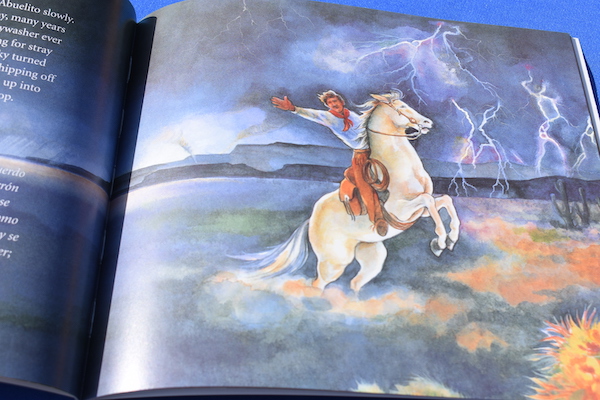
This is a tall-tale story, told by a grandfather to his young granddaughter about how he came to be an old man.  The grandfather was a vaquero (Spanish for cowboy, the origin of the work “buckaroo”) in his younger days.  The book is written in both English and Spanish.

When the story begins, Leticia and her grandfather are watching a passing storm.  The grandfather calls it a “gullywasher” and says that they should wait before going on a walk.

Leticia asks her grandfather to tell her about when he used to be a vaquero.  After some coaxing, he begins to tell her about a big gullywasher that he was caught in when he was younger.

By the time the storm was over, the water had wrinkled his skin.  Then, when he was napping under a palo verde tree, a hummingbird took some of the hairs on his head to make a nest.  It took all of the dark ones, leaving only the white ones.

After that, he came to a village, where he looked for food.  An old woman gave him some corn kernels, but he made the mistake of eating some chili peppers immediately afterward, so the corn popped in his stomach, giving him the pot belly he has today.  Also, his horse was so tired that he had to carry the horse all the way home on his back, making him bent over.  That is how he got to be the old man that he is.

When the tall tale is over, Leticia asks her grandfather if it makes him sad to be bent over.  Her grandfather tells her that it doesn’t because he’s closer to her this way.

The note from the author in the beginning explains a little about the tall tales that cowboys liked to tell.  One of the keys to telling a story like this is to try to keep a straight face during the telling.  Keeping a straight face can make the outrageous story seem more convincing, but it can also make it seem funnier.  There is also a glossary in the back of the book with the definitions of some of the key Spanish words.  It also reminds readers that Leticia’s name is pronounced differently by Spanish speakers than English speakers (“leh-TEE-seeya”).

The Story About Ping

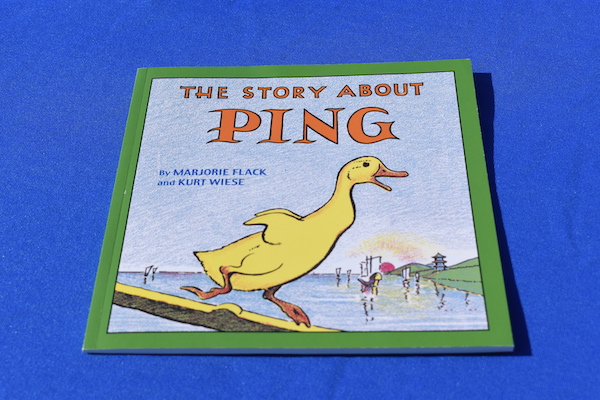
The Story About Ping by Marjorie Flack and Kurt Wiese, 1933.

Ping is a small duck who lives with his family on a boat on the Yangtze River in China.  Every morning, the master of the boat lets the ducks out to look for food on the river, and every evening, he calls them back. 

However, Ping hates it that the master gives the last duck to return at the end of the day a spank on the back, so when he realizes that he is late to return one day, he hides and is left behind.

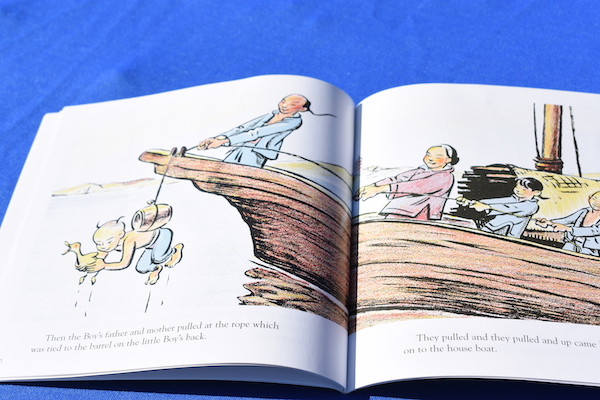
After sleeping on the river bank overnight, Ping sets out to find his family the next day.  However, there are many different boats on the river, and he has trouble finding the one where his family lives.  As he searches, he is captured by a boy who brings him onto his family’s boat.

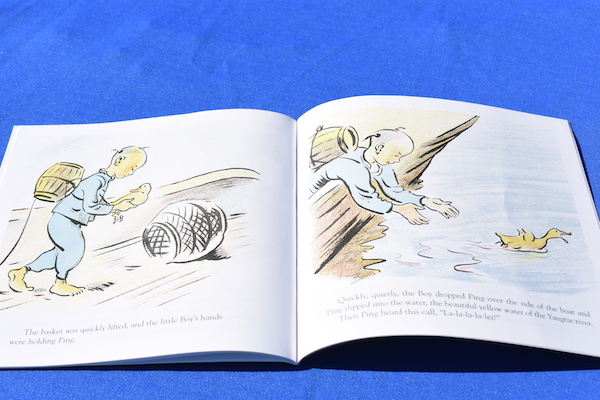
To Ping’s horror, the family who captured him plans to eat him for dinner!  However, the boy who grabbed Ping out of the water thinks that he’s “too beautiful to eat.”  Without letting his family know, the boy frees Ping from the basket where he is being held captive.

As Ping swims away from the boy’s boat, he hears the master of his family’s boat, calling out for the ducks to return.  This time, Ping does return to his family’s boat, even being willing to take a spank for being late, glad just to be safe with his family.

In a way, this little story reminds me of one of the short humor stories in Wayside School is Falling Down.  In that story, a boy at a very strange school gets tired of following the school’s rules.  Some mysterious men explain to the boy that the rules are meant to keep the students safe and choosing whether or not to follow the rules means choosing between freedom and safety.  The story and the boy’s choice are meant to be humorous, but it is a good point about the purpose of rules.  Probably, the reason why the master on Ping’s boat spanks the last duck is to give all of the ducks a reason to hurry back to the safety of the boat.  Ping doesn’t really appreciate that until he sees the dangers that wait for a small duck, alone on the river.  In the end, he is willing to accept some discipline because he wants the safety it promises.  It’s not the usual message in a lot of modern children’s books, especially in the United States, where people and book characters tend to value freedom over safety (the choice made by the boy in the Wayside School book).  However, in this book, Ping and his family have something between total freedom and total captivity – they are allowed to swim pretty freely during the day as long as they return to the boat for safety at night. They get both some freedom and safety in exchange for following the master’s routine. Ping’s danger only comes when he breaks away from that entirely.

But, if you think that analysis is getting too deep, Ping’s adventures and his return to the safety of his family are endearing for lovers of animal stories. Kids who encounter this story will be reassured that Ping is still able to return to home and safety after his adventures!

The story has appeared in film and on television more than once. The book is available to borrow and read for free online through Internet Archive (multiple copies).

Diary of a Wombat

Diary of a Wombat by Jackie French, illustrated by Bruce Whatley, 2002.

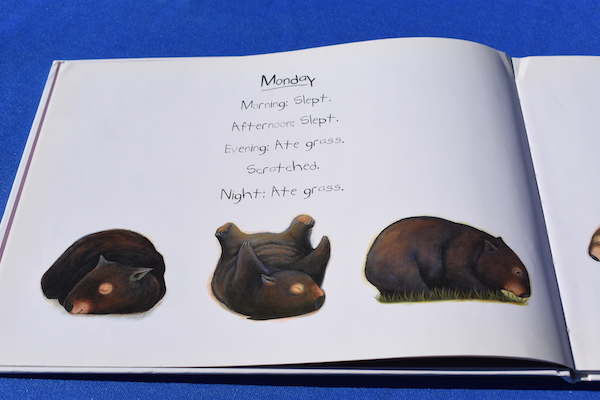
This cute picture book is written in the form of a diary written by a wombat.  The early entries are mostly eating and sleeping, typical for an animal. 

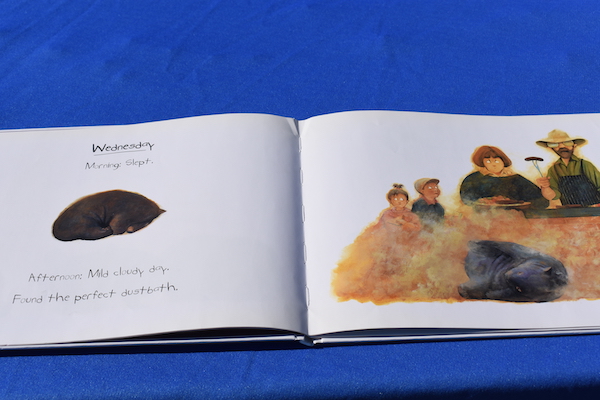
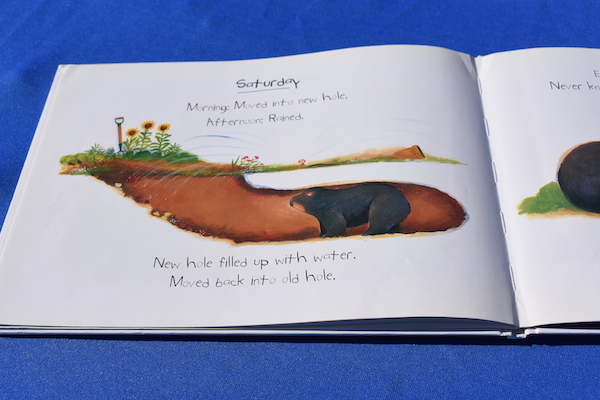
It gets funnier when the wombat makes herself at home in someone’s yard.

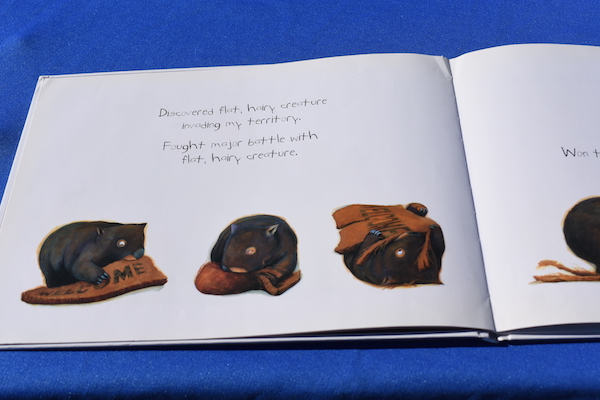
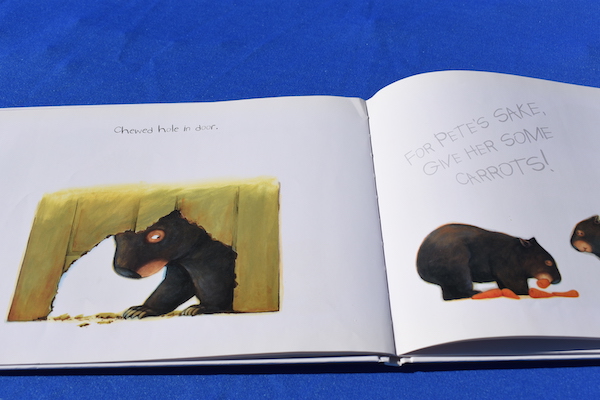
The wombat wins a fight with their doormat and demands food from the humans. They give the wombat a carrot. Big mistake.

Once you feed a wild animal, it comes back for more, and it doesn’t want to take “no” for an answer.

The wombat makes a hole in the humans’ yard but moves out when she doesn’t like their sprinkler.

She also gets tired of the carrots they’ve been feeding her and demands oats instead.

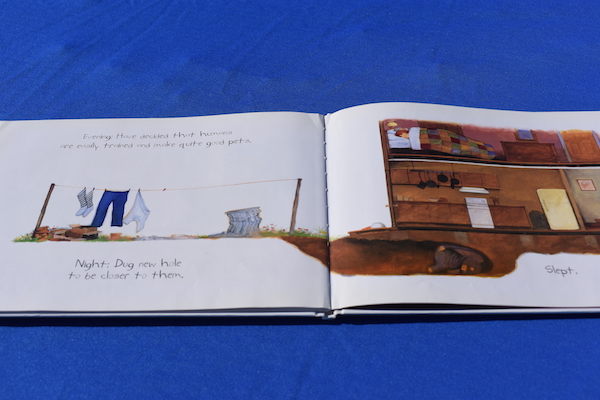
You could say that the humans now have a pet wombat, but the wombat looks at it the other way around.  The wombat is probably right.

This is one of those books where the pictures really make the story.  It’s also a good warning against feeding wild animals! Yet, the wombat is pretty cute . . .

Edward the Emu

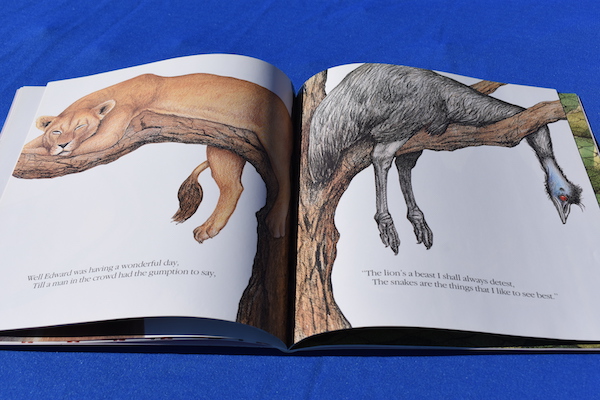
Edward the Emu by Sheena Knowles, illustrated by Rod Clement, 1988.

Edward the Emu lives in a zoo, but he finds it boring.  He is so bored that he decides to try living with and acting like the other animals. 

First, he envies the seals who live in the pen next to his and always seem to be swimming and having fun.  So, one night, he jumps out of his pen to join the seals.  The next day, he hangs out with the seals, lying in the sun and balancing a ball on his nose.  It’s much more fun than his boring old pen, but then he overhears a zoo visitor say that the lions are “the best thing to see at the zoo.”

Edward once again switches pens, deciding that he’ll try to be a lion.  He spends the next day growling and snarling while the lions roar.  It’s a lot of fun, but then another visitor comments that he likes snakes the best. 

Once again, Edward switches pens and tries being a snake.  This time, someone comments about great emus are.  Feeling better about himself, Edward decides to return to his own pen. 

However, to Edward’s surprise, there is another emu in his pen, his replacement because he disappeared!  It’s not a problem, though, because the new emu, Edwina, is glad to see him, and Edward is less likely to be bored now that he has a friend.

A friend sent me this cute picture book from Australia.  The story is told in rhyme, and the pictures of Edward trying to be different types of animals are fun.

The Dancing Goat

The Dancing Goat by Bonnie Book, 1966.

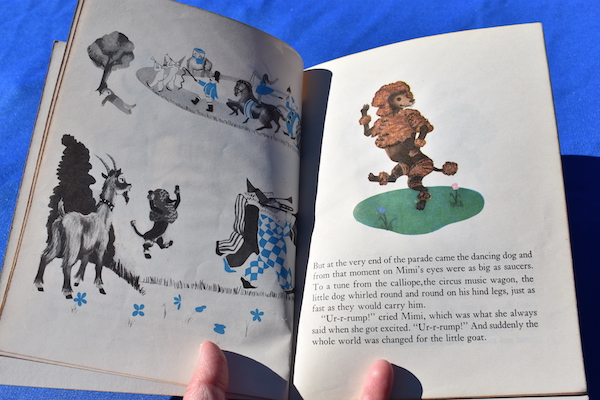
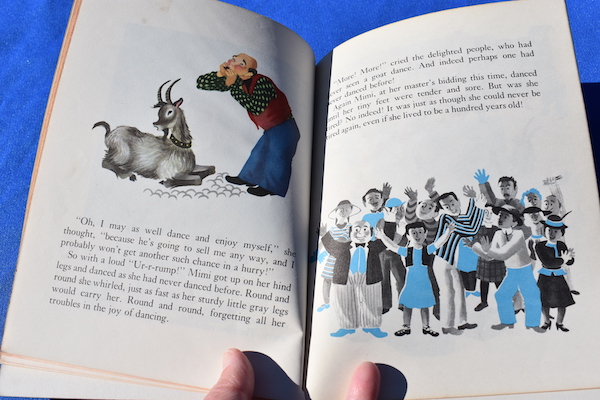
Mimi is a good little goat who lives with a poor farmer and his wife.  They like her and take good care of her, and in return, she provides them with milk that they sell to help make their living.  However, things change for Mimi when she happens to see a circus parade with a dancing dog.  From that moment on, all Mimi wants to do is to dance!

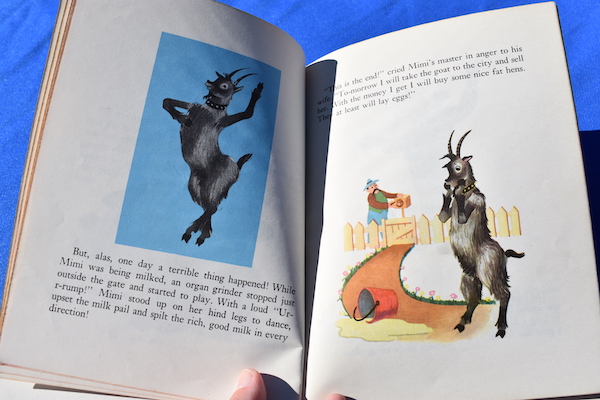
It wouldn’t matter so much except that Mimi develops a bad habit of dancing when the farmer is trying to milk her, spilling the milk.  Eventually, the farmer concludes that he can no longer afford to keep Mimi, even though he and his wife don’t really want to part with her.  Mimi is upset at the thought of losing her home, and when the farmer takes her to the market to sell her, she starts to cry.

The people at the market don’t want to buy a crying goat and think that something is wrong with Mimi.  To cover up the noise of Mimi crying, the farmer starts to blow a tune on his comb.  Hearing the music, Mimi starts to dance again.

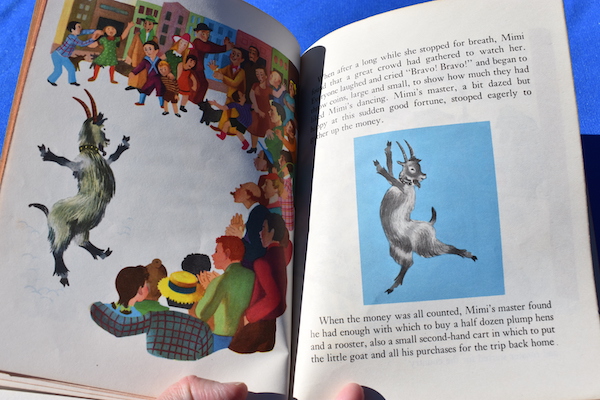
To the farmer’s surprise, everyone in the market loves Mimi the Dancing Goat, and they throw coins.  With the money that Mimi makes with her dancing, the farmer can now only afford to keep her but buy other livestock as well.  From then on, the farmer regularly takes Mimi to the market to show off her dancing and earn some extra money.  He plans to buy another goat to keep Mimi company, and he hopes that the new goat turns out to be a dancer, too!

I usually don’t like “animal almost loses their home” type stories because I always feel too sorry for the poor little animal, but the risk in this story is over pretty quickly, which helps. It also helped that the farmer and his wife genuinely liked Mimi and were only going to part with her reluctantly, so it wasn’t difficult for the farmer to change his mind as soon as Mimi showed that she could bring in money to help earn her keep.