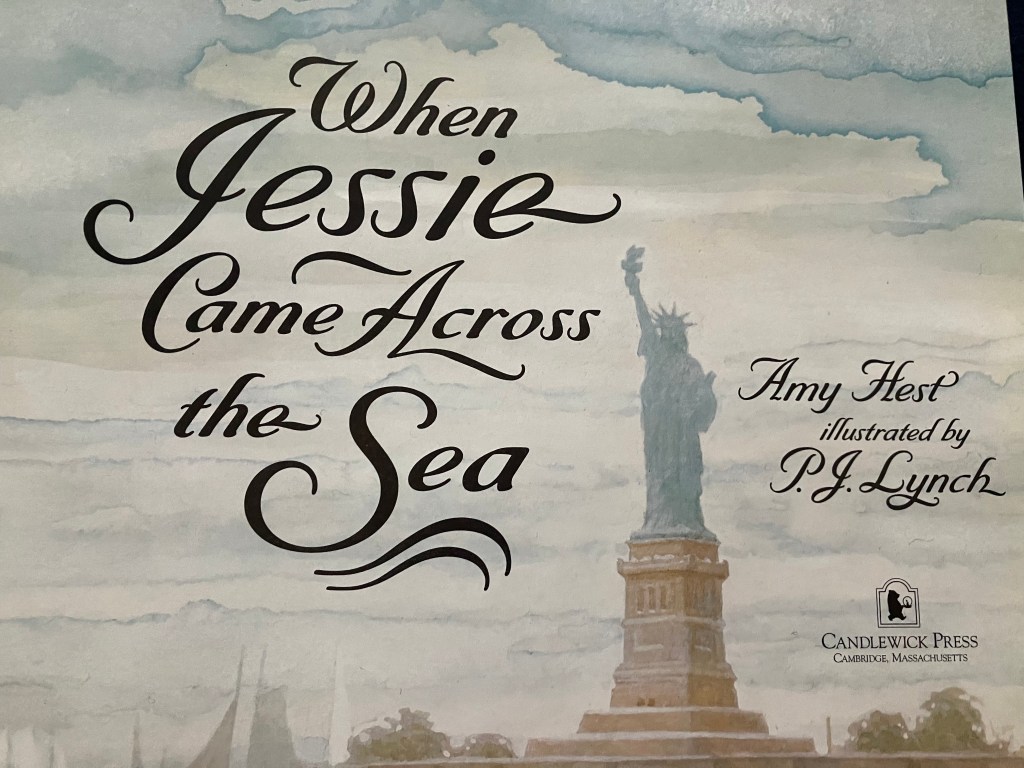
When Jessie Came Across the Sea by Amy Hest, illustrated by P. J. Lynch, 1997.
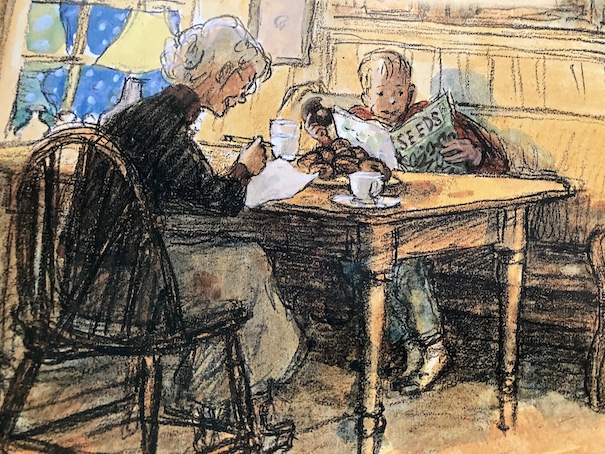
Jessie and her grandmother live in a small, thatched cottage in a small village. The little village is poor, and so are Jessie and her grandmother. Jessie’s parents died when she was a baby. Jessie’s grandmother raised her, and she insists that Jessie have lessons with the village rabbi, like the boys in the village. Jessie can read and write, and she also tries to teach her grandmother. Her grandmother makes a little money by sewing lace, and she teaches Jessie how to sew. Although they don’t have much, they are basically content with their lives.

Then, one evening, the rabbi makes an important announcement. His brother, who was living in America, has died. Before his death, he sent a ticket for a ship traveling to America to the rabbi, asking him to join him in America. Now that his brother is dead, there is no need for the rabbi to go to America, and he would rather stay in the village with his congregation. However, he thinks that someone else should use the ticket his brother sent.

Various villagers ask rabbi if they can use the ticket, offering reasons why each of them would be the best person to go. They brag up their best qualities, boasting about how strong, smart, and brave they are. The rabbi knows that they’re boasting, so he just tells them that he will pray about it and let them know his decision tomorrow.
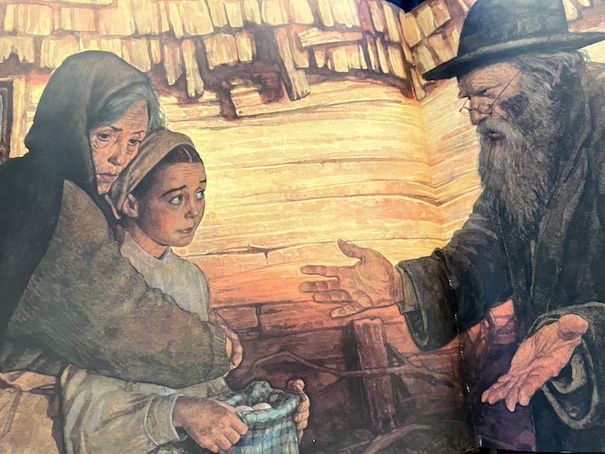
The next day, he goes to see Jessie and her grandmother and tells them that Jessie should be the one to go to America. His reasoning is that his brother’s widow owns a dress shop in New York City. Jessie can work there, and she would be a comfort to a lonely widow. Jessie doesn’t really want to leave her grandmother, and her grandmother fears to send her, but her grandmother can see the rabbi’s logic. She knows that this is an important opportunity for Jessie.

So, Jessie leaves her village and sets sail on a crowded ship for America. On the ship, Jessie is scared, lonely, and seasick. As Jessie spends time with the other passengers, she makes a few friends, and she sews a few small items for them. A boy named Lou, who is a shoemaker’s son, makes a pair of small shoes for a baby, and he and Jessie also become friends.
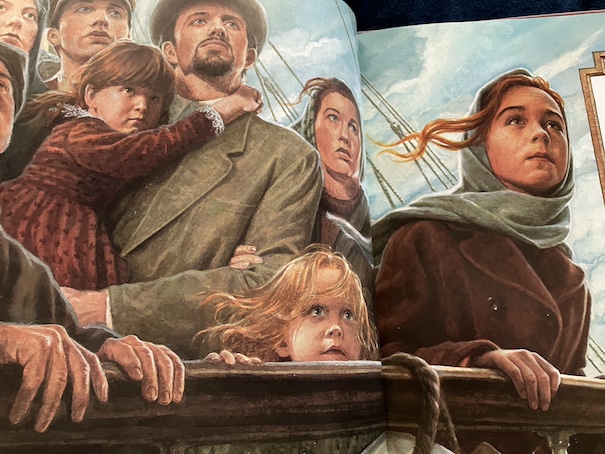
Finally, their ship arrives at New York. Everyone crowds around the rails of the ship to see the Statue of Liberty and their first glimpse of America. The ship docks at Ellis Island, and the passengers disembark to be inspected and questioned by immigration officials.
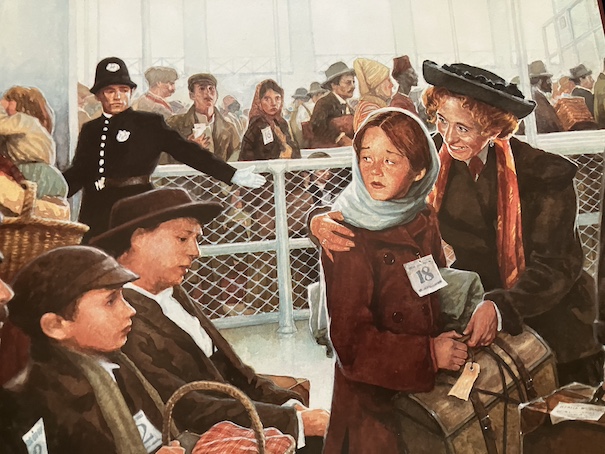
The rabbi’s brother’s widow comes to meet Jessie. She is a friendly woman, and she asks Jessie to call her Cousin Kay. Cousin Kay shows Jessie around the city. It’s a crowded, confusing place with fascinating sights, although the streets aren’t paved with gold, as Jessie has heard. Cousin Kay runs the dress shop out of her home, and she pays Jessie to sew for her. Jessie likes watching the busy street outside while she sews, and she saves the money she earns in a jar.

When Jessie puts some lace on a plain white dress, turning it into a lovely bridal gown, the shop becomes popular with young women who are getting married and looking for similar gowns.

Cousin Kay also insists that Jessie go to school and learn English. It isn’t easy, but Jessie learns. She likes walking around the city and going to the local library. Gradually, Jessie begins feeling more at home in New York, and she builds a new life for herself there. One day, she runs into Lou again in the park, and they begin meeting there regularly. Lou proposes to Jessie, and Jessie uses the money she has saved to buy a ticket so her grandmother can come to America for their wedding.
The book is available to borrow and read for free online through Internet Archive.
My Reaction
I remember reading this book when I was young! I was really older than the target audience when it was first published, but I enjoyed the story. It’s one of those books that I think takes on more significance when you’re older and understand more of the history behind the story. We don’t know exactly where Jessie is from because the book never says, but her journey resembles the kind of journey that many people made during this same period of history. We don’t know the year, either, but it appears to be set in the late 19th century or early 20th century.
Although coming to a strange country, alone and unable to speak the language, is a scary experience, Jessie is fortunate because there is a friendly and caring person waiting there for her, and she has a job lined up that suits her skills. In real life, not everyone was so fortunate, and it was more of a struggle for them to get established in their new home. Jessie still has to struggle with homesickness and missing her grandmother, but her life changes for the better because she took the chance to go to a new country and start a new life. Readers can emphasize with Jessie’s fears and uncertainty as she starts out on her journey and celebrate with her when things work out for the best.
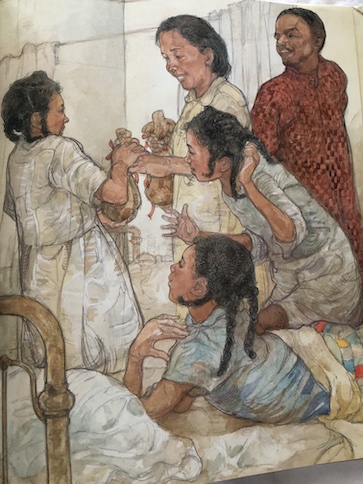
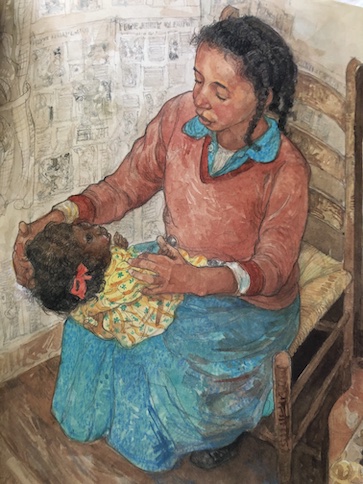
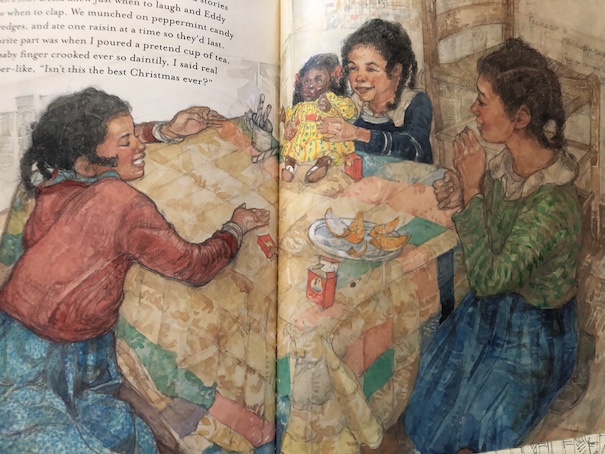
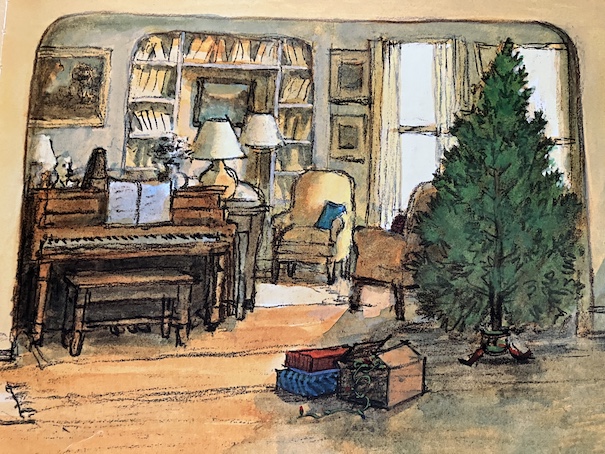
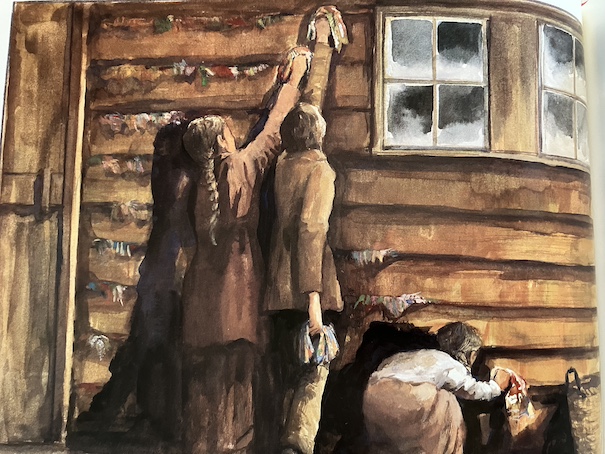
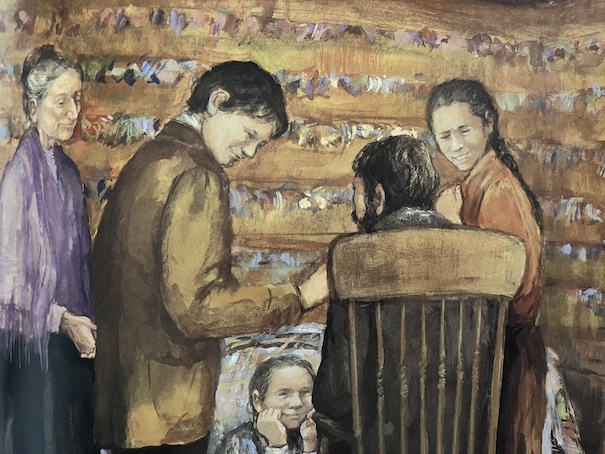
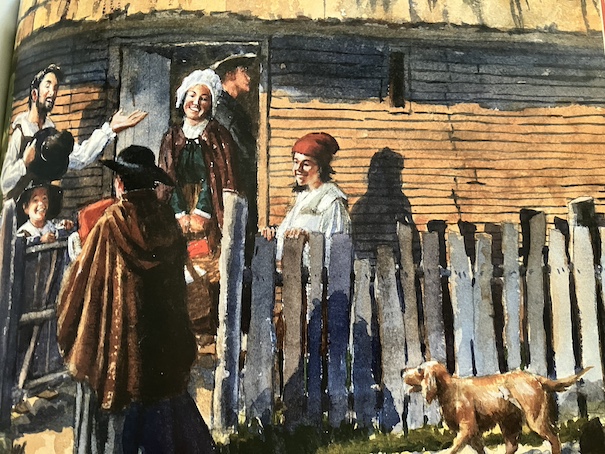
The pictures in the book are beautiful! Readers really get the sense that they’re seeing another time, with Jessie’s tiny village, the crowded ship in the rain, and busy New York City, more than 100 years ago. Even when the environment and circumstances are harsh, the pictures are charming.
There is a note in the beginning of the book for parents and teachers about how they can use this book to spark discussion with children. They can use the opportunity to invite children to learn how their own families arrived in America, because this book was originally intended for an audience of young American readers, and most people who live in the United States (with the exception of Native Americans) are descended from people who came from somewhere else. It’s an opportunity for children to learn their family’s history and to see how it compares with that of other people, whose families also made a decision to come here and start over, going through their own struggles along the way. There is also some general advice about sharing books with children, and making a point of surrounding children with books and reading aloud to them.

















 Jestress's Forgotten Books and Stories