When Clay Sings

This children’s picture book is a salute to the ancient makers of Native American pottery, dedicated to these makers and the museums that preserve their work. It’s written as free form poetry with images of the American Southwest and designs from Native American pottery.

The story sets the scene on a desert hillside, where pieces of ancient pottery are buried. Sometimes, Indian (Native American) children dig up pieces of old pottery, and their parents remind them to be respectful of what they find because they are pieces of the past and of lives that went before. Sometimes, they’re lucky enough to find pieces that fit together or even a bowl that isn’t broken.

They reflect on the time and skill that went into making the pottery and how strong the pottery would have to be to last well beyond the lives of the people who made it. They think about the people who painted the beautiful designs on the pots and what their lives were like. Could their own children have requested favorite pictures painted on their bowls?

Some designs show animals or bugs or hunters, but others show bizarre creatures that might be monsters or spirits. Others show a medicine man trying to cure a child, ceremonies, dancers in masks and costumes, or the traditional flute player. People can reflect on the lives of those long-ago people and how they compare to the lives of people today.

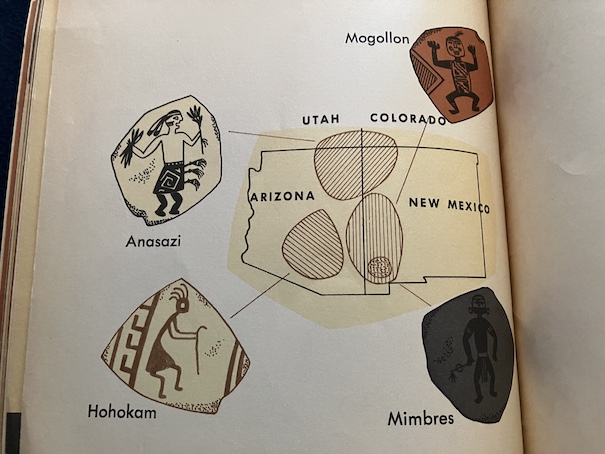
There is a map in the back of the book which shows the areas of the American Southwest (Arizona, New Mexico, Utah, and Colorado) where the pottery designs the book uses originated from and the tribes that used them.

This is a Caldecott Honor Book. It is available to borrow and read for free online through Internet Archive (multiple copies).

I grew up in Arizona, and I remember our school librarian reading books by Byrd Baylor to us in elementary school during the late 1980s or early 1990s. She wanted to introduce us to this author because she wrote about the area of the United States where we lived. In fact, this book about pottery was fitting because, when they were building our school in the 1970s, they found some ancient pottery. They used to have it on display in the school library. Even to this day, it’s common for people creating buildings in this area to have the site surveyed by archaeologists. Finds are fairly common, and the usual procedure is to thoroughly document everything that gets uncovered before burying it again in the same location and constructing the building over it. One of the reason why they usually rebury finds is that, in this dry, desert climate, putting them back into the ground will actually preserve them very well. It’s possible that later generations will find them again (especially with the location documented) when the building is gone or no longer necessary, but they may have better instruments or techniques for analyzing them.

I’m a little divided on how much I like this book, though. On the one hand, I like books about folklore and traditional crafts, and this book focuses on a geographical area that’s very familiar to me. On the other hand, the free verse poetry that reflects on the feelings of people about the pottery doesn’t appeal to me quite as much as books which show the process of making it, like The Little Indian Pottery Maker. I like to see the process and learn more of the known background legends of some of the designs than just try to imagine what things might have been going through the minds of the designers. Toward the end of the book, they show the legendary humpbacked flute player, but they don’t tell you that this figure is called Kokopelli and that there are legends about him. It’s a nice book, but I just felt like there was potential to include more background information.

This book uses the word “Indian” for “Native American” or “America Indian”, which is common in older children’s books.

Noel

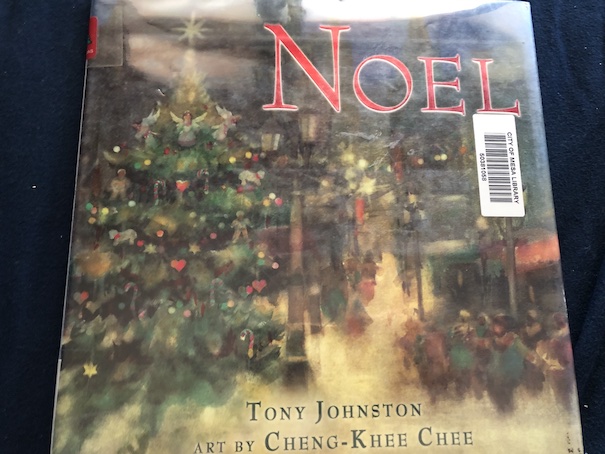
Noel by Tony Johnston, art by Cheng-Khee Chee, 2005.

This lovely Christmas picture book reads like a Christmas carol!

There is no story in the book. The text is poetry that celebrates the atmosphere of Christmas, the feelings in nature as anticipation builds and in cities as people gather to celebrate.

“Noel” is described as the sound of Christmas, like a bell, that people and animals all listen to hear.

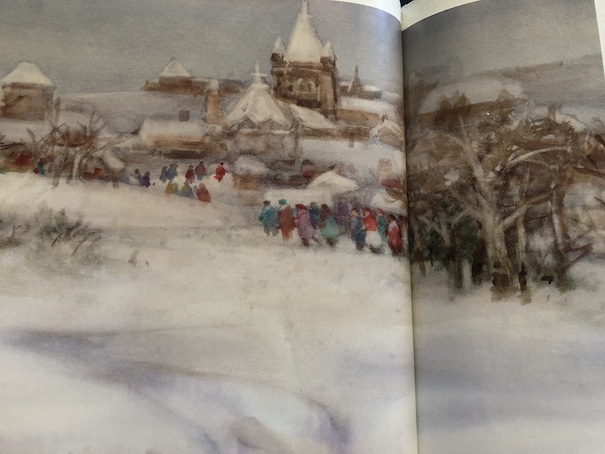
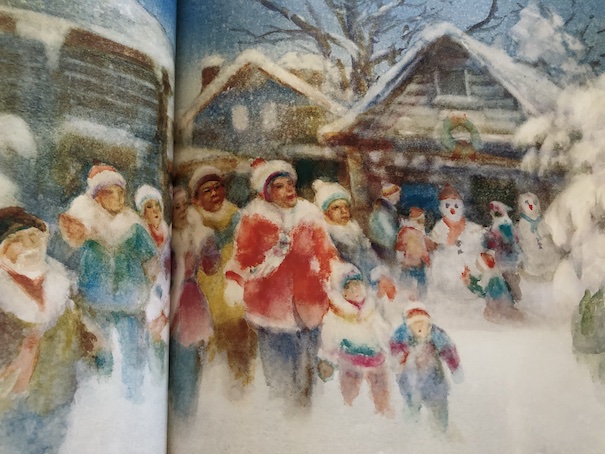
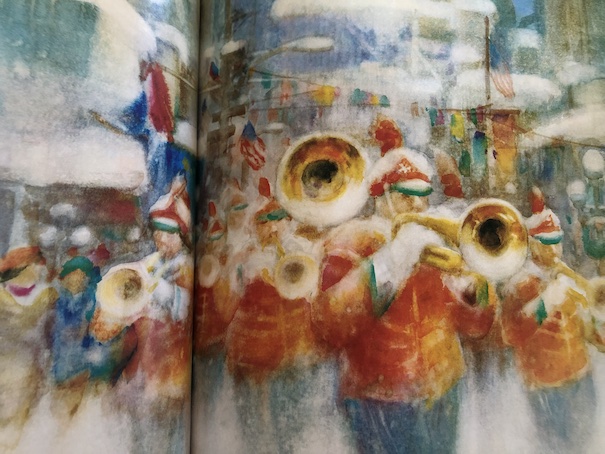
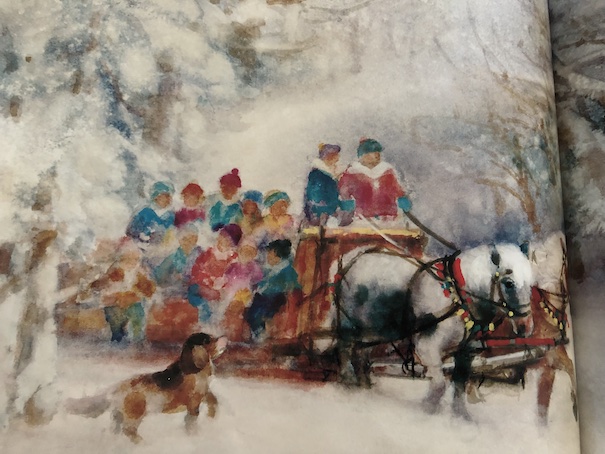
The artwork is beautiful, and there are scenes of people participating in classic Christmas celebrations, with a Christmas parade, snowmen, a public Christmas tree, and a sleigh ride.

The pictures really make the book beautiful and dreamlike. In the back of the book, there is a section that explains the art style. The artist used watercolors and a technique called “saturated wet-paper technique.” This technique is what gives the illustrations their fuzzy, dreamlike quality

The book is available to borrow and read for free online through Internet Archive.

Homespun Sarah

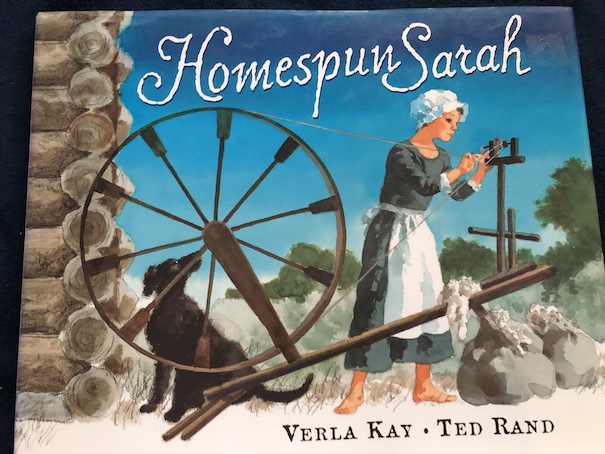
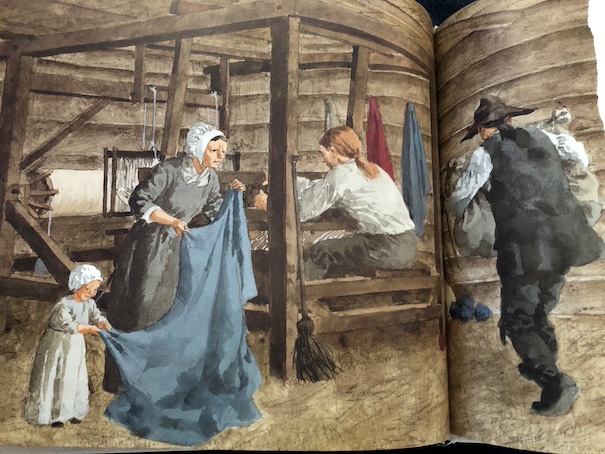
This picture book tells a story in rhyme about a girl living in 18th century Pennsylvania and what she and her family do to make her a new dress when she begins outgrowing her old one.

As Sarah gets dressed one morning, her old dress is noticeably tight, and it’s beginning to get too short for her. Because her family lives on a farm, they must produce most of what they need themselves, and that includes clothing. For Sarah to have a new dress, they must make one themselves entirely from scratch, which is what “homespun” means – they make the dress from homemade cloth from yarn that they have spun themselves.

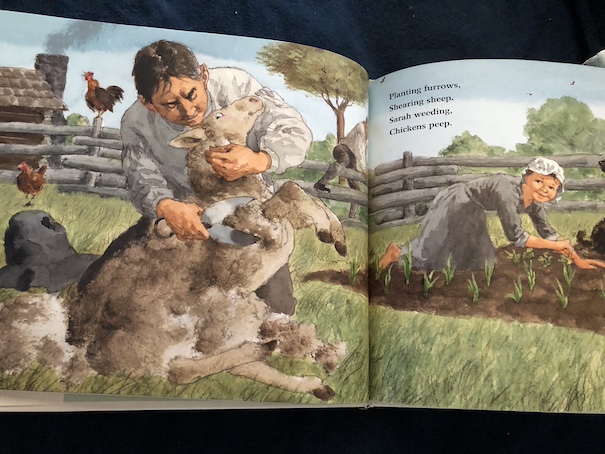
Various family members carry out different household chores, and as the story continues, readers see how everything they do is not only a part of the family’s daily life but also contributes to the creation of the new dress. The family raises sheep, so they must start by sheering the sheep to get the wool for the dress.

In between doing routine chores, like doing the laundry and making new candles, they card and comb the wool and spin it into yarn with their spinning wheel. The family also owns a large loom, which is how they weave the wool yarn and flax into cloth called linsey-woolsey. The cloth they make is blue and red, dyed using plants that they have produced and gathered.

Once they’ve made the homespun cloth, Sarah’s mother measures her to plan the size of the dress and sews the dress. Sarah gets a new red dress, while her younger sister gets a blue one. Sarah is excited about her new dress, which fits her much better than the old one, and spins around to show it off!

The author’s note at the beginning of the book says that the story is set in Pennsylvania during the 1700s, and she wanted to show how people lived during that time, having to produce everything or almost everything they used by themselves. It also shows various aspects of family life, from where and how they slept to what they ate. The characters in the book, even the children, are shown drinking beer, but the author explains that is because water wasn’t considered entirely safe to drink. The beer they drank back then was very weak and “barely alcoholic”, which was why the children could have it. (We have water treatment facilities and devices available in the United States in modern times to ensure the quality of the water, so this isn’t something that we typically do now, especially with children, and I have more to say about this in my reaction.)

The book is available to borrow and read for free online through Internet Archive.

When I was a kid, I often skipped over prefaces and author’s notes because I just wanted to get to the story, but the author’s note really adds some historical depth and helps to clarify some aspects of the story that children might misunderstand. For example, I thought that the clarification about the mention of the characters drinking beer was important. Alcohol, chemically speaking, is actually a mild poison. It’s mild enough that humans can have it in small amounts without dying or even becoming ill (although we can get sick or die from large amounts, and some people have a greater or weaker natural tolerance to it, compared to each other), but even weak alcohol might kill germs in water and make it safer for humans to drink. This is the way it’s being used in this book. Because this book is for children, it’s helpful to explain this so that child readers understand that what the characters have isn’t quite the same as modern beer and that it’s not okay for children to drink modern beer in the same way. I think this is good book for parents or other adults to read with kids, so the adults can point this out to kids and help them to understand other historical elements of the story that they might miss or misunderstand.
The author’s note also explains that, because people during the time the story is set, had to make their own clothes by hand, and making was a very time-consuming, labor-intensive process, people had far fewer clothes back then than they do now. It was common for someone to have only one set of clothes that they wore every day until they were no long usable. Getting a new set of clothes was an exciting occasion, and that’s what the story in the book tries to capture. When readers see what this family goes through to create just one new dress for a girl who is outgrowing her last one, they can understand how much that dress means to the girl who receives it.

I love books that show how things are made, so I appreciated this book for the process it shows. However, because the story is told in short, simple rhymes and focuses on the how the process would look to a casual observer without getting too detailed, I felt like there were many parts of the process that were implied rather than stated. For example, they don’t explicitly mention that the red and blue dyes for the cloth came from the red berries the girls gathered or the blue flowers of the flax plant, but it’s implied by the earlier mentions of these plants and the way the book showed the characters gathering them. That could be enough for a casual reader, but I’m the kind of person who likes hearing the details of the process, so I would have liked more detailed explanations.

I did appreciate the way the book showed aspects of daily life in the 18th century. Some of them are explained in the author’s note, but there are also other parts of daily life to notice in the pictures. One of my favorite ones was the way that the youngest child in the family is tied to her mother or older sister’s apron strings to keep her from wandering away and getting into trouble while they’re doing their chores.

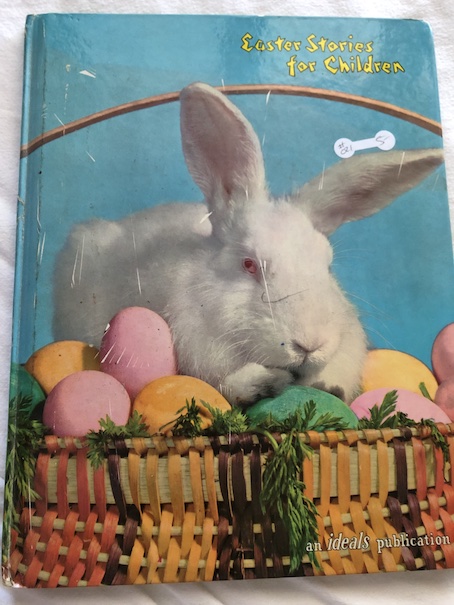
Easter Stories for Children

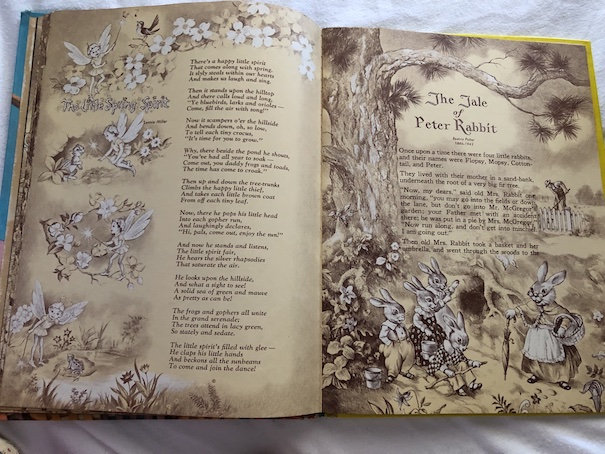
This book was published by Ideals, and if I remember right, is part of a series of holiday/seasonal books for children. (I don’t have a list of other books in the series, though.) It has short stories and poems about Easter. Largely, they’re not very religious in tone, tending to focus on fairies and the Easter bunny. I actually found all the references to fairies confusing because I never heard anybody talk about fairies being associated with Easter when I was a kid. On the religious side, there is one poem about prayer and a story about how the dogwood plant represents the crucifixion. There is also some information about how Easter is celebrated around the world.

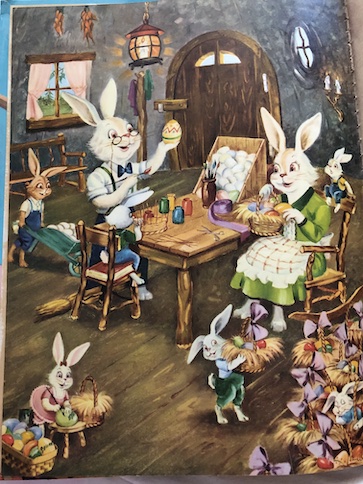
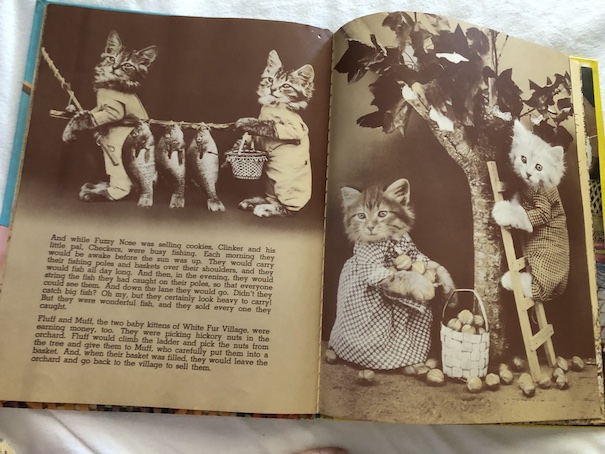
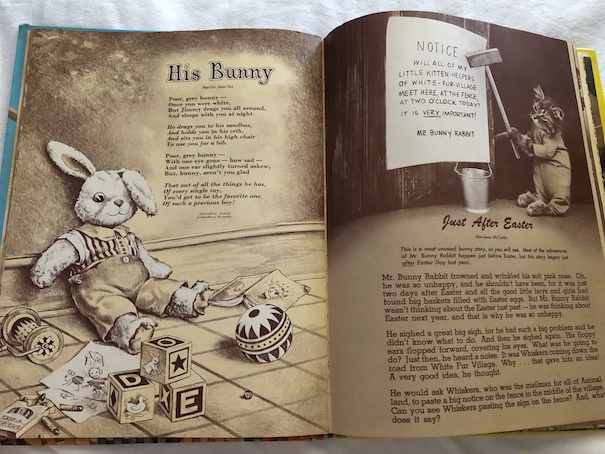
The pictures are in sepia tones. Mostly, they’re drawings, but there are also some photographs of cute bunnies and kittens wearing human clothes. The only full color pictures are on the inside of the front and back covers, and they’re scenes of rabbits painting Easter eggs. All in all, it’s a very cute book for Easter.

How the Forest Fairies Get Ready for Spring – “Written especially for you by SPARKIE” – All of the forest fairies have special tasks for getting ready for spring.

The Tale of Peter Rabbit by Beatrix Potter (1886-1943) – A classic children’s story about a bunny who disobeys his mother.

Just After Easter by Maryjane McCarthy – Mr. Bunny Rabbit is worried about next Easter because the farmer is having trouble affording grain to feed his chickens. If he can’t keep the chickens, where will they get their Easter eggs? This is the story that has pictures of bunnies and kittens in costumes with props. The kittens try various ways to raise money for the chickens.

The Legend of the Dogwood – author unknown – The legend is that the cross of Jesus’s Crucifixion was made from dogwood, but the plant felt badly about it, so Jesus made the plant too small to be used for such a purpose again and gave it a cross-shaped flower.

Easter in Many Lands – About Easter customs in different countries, and the origins of the word “Easter” and how symbols like bunnies and eggs came to be associated with Easter. This is my favorite section in the book!

The Story of the Colored Easter Egg by “Maryjane” – A fairytale about a kind queen and the origins of Easter eggs.

The Magic Pool by Dorothy Weiner – Bunnies color eggs in a magical pond fed by a rainbow.

Easter Bunny’s Secret by Mrs. Roy L. Peifer – The Easter bunny collects drops of paint that Jack Frost uses to paint leaves in autumn and saves them for Easter eggs, but when the paint gets spilled, he needs to get colors from other sources.

The Little Spring Spirit by Leonie Miller – The spirit of spring calls to plants and animals with the change of the season.

If Easter Eggs Would Hatch by Douglas Malloch – What would come out of an Easter egg? Brightly-colored chickens or maybe a little silver bunny?

In Cottontail Town by Marguerite Gode – A famly in Cottontail Town takes in an elderly rabbit and nurses him back to health. He starts a school there to teach the other rabbits how to paint Easter eggs.

The Gray Bunny’s Night“As told by The big black Bumblebee” – A little gray bunny wants to be brightly colored for Easter, and his wish is granted by the queen of the fairies.

Hippety-Hop to the Barbershop by Claribel Ream – The Easter Bunny is going to the barbershop to deliver eggs and candy for the barber’s children.

Helping One Another by Mrs. Roy L. Peifer – The Little Red Hen helps the Easter Bunny to fill his basket for Easter.

His Bunny by Marilyn Jean Fais – About a little boy’s stuffed bunny. It can be hard on a toy to be a child’s favorite, worn and dragged everywhere, but it’s worth it!

Prayer by Ethel Romig Fuller – If we can hear songs from radio waves that travel through the air, God can also hear prayers.

Seed Thoughts by W. M. Walker – Good and kind thoughts produce good deeds, like plants sprouting from seeds, but selfish thoughts are like weeds that get in the way. Be careful what seed thoughts you grow in the garden of your mind!

Jack in the Pulpit by Mrs. Jessie S. Manifold – Spring plants and animals celebrate the Sabbath Day.

And He Hippety-Hopped Away by Rowena Bastin Bennett – The Easter Bunny delivers eggs and candy to children before sunrise.

Marvin K. Mooney, Will You Please Go Now!

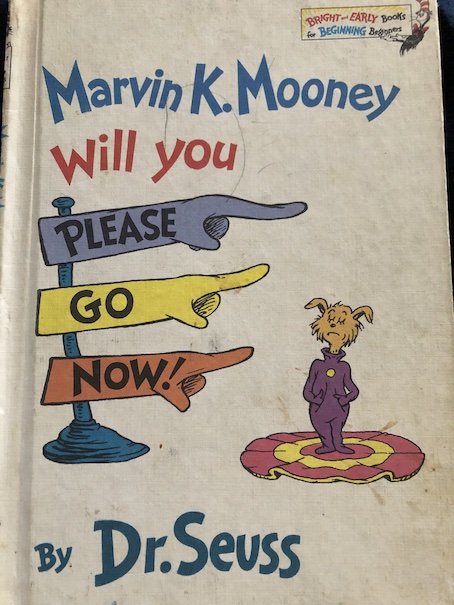
Marvin K. Mooney, Will You Please Go Now! by Dr. Seuss, 1972.

It’s time for Marvin K. Mooney to go, but he absolutely refuses. Where is going? We don’t know because the book doesn’t say. I imagine that he’s supposed to go to bed because it’s bedtime. He looks like he’s wearing footie pajamas, and the large hand that points for him to go looks like it might be a parent’s hand, but that’s just a guess. This book is just a nonsense rhyme.

The owner of the hand repeatedly tells Marvin to go, telling him that he can go in any way he chooses, as long as he goes.

In the tradition of Dr. Seuss books, all the suggested methods of going are nonsensical, and there are a few made-up nonsense words and devices thrown in.

Eventually, when the owner of the large hand insists, Marvin decides that it really is time for him to go.

The book is available to borrow and read for free online through Internet Archive (multiple copies).

My Reaction

I’m not a big fan of Dr. Seuss. I wasn’t even as a kid, mainly because my early introduction to Dr. Seuss was The Cat in the Hat and Green Eggs and Ham, two of the major ones people think of when they think of Dr. Seuss. I thought that the Cat in the Hat was way too pushy, and I was very concerned about the welfare of the pet fish in the story. When my teachers made the requisite eggs and ham and dyed them with green food coloring, I absolutely refused to eat them. I didn’t mind it when they turned milk bright green with food coloring for our earlier green-themed day because milk turned the color of mint ice cream looked good, but nothing that turns the shade of green of those green eggs and ham looks appetizing. Knowing that it was just food coloring didn’t help. Speaking of becoming more accepting of new experiences, Sam I Am really needs to learn how to take “no” for an answer.

Anyway, my early Dr. Seuss experiences didn’t appeal to me much, so I didn’t seek out Dr. Seuss books as a kid. I never encountered this particular Dr. Seuss book until I was an adult, and the one thing about Dr. Seuss that really appeals to me now is the knowledge that The Cat in the Hat was specifically meant to be a more interesting alternative for beginning reader than the Dick and Jane readers that were popular in the mid-20th century century. All Dr. Seuss books contain a limited range of simple vocabulary with a few made-up words thrown in to make it interesting, and they’re all meant to be funny and somewhat bizarre to keep young readers interested.

As I said, I don’t know for sure who is telling Marvin to go in this story or where he’s supposed to go. I think it’s probably bedtime, and he’s supposed to go to bed. It would be just like a parent to use a child’s full name to tell them that they’re supposed to do something when they’re not listening. But, it doesn’t really matter. There are some Dr. Seuss books that have a moral to them, but this isn’t one of them. It’s just supposed to be a simple story that’s fun for young children to read. You can imagine where Marvin goes yourself!

The Night Before Christmas

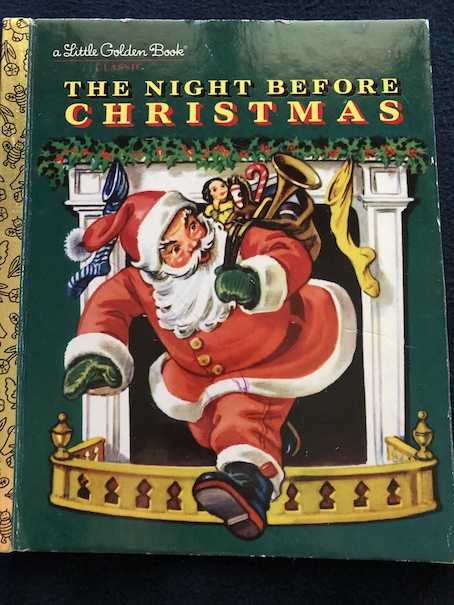
The Night Before Christmas by Clement C. Moore, illustrated by Corinne Malvern, 1949.

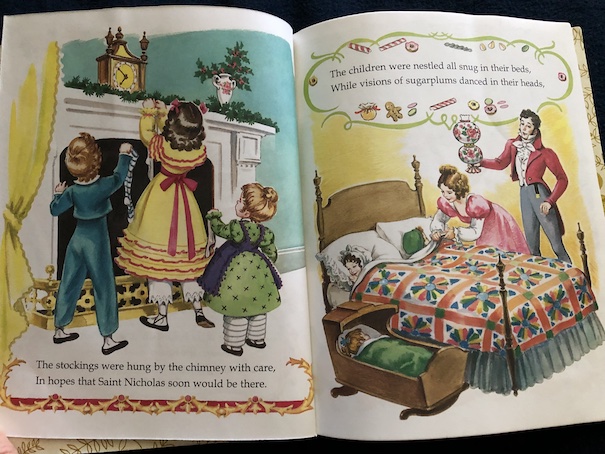
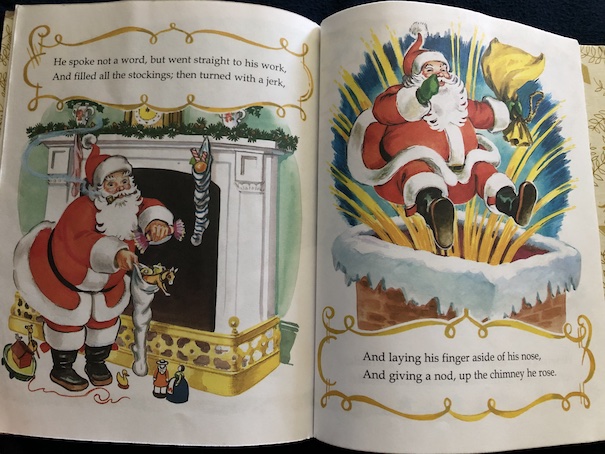
This version of The Night Before Christmas is part of the classic Little Golden Books series. The original poem, A Visit From St. Nicholas by Clement Clarke Moore, has been made into picture books for children many times since it was first published in 1823, but this version has some sentimental value to me. I think it was the first version that I ever read as a child. I had forgotten which version it was for years, but when I found this book again recently, I recognized the pictures. (It’s funny, but I remember thinking as a child that the youngest child looks a little too big to be in a cradle, but she is in the picture when the children are being put to bed.) Most people think of the poem as being called The Night Before Christmas instead of its original title, A Visit From St. Nicholas, because the phrase “the night before Christmas” appears in the first line of the poem. Many of the picture book versions that we read as children used The Night Before Christmas or ‘Twas the Night Before Christmas as a title.

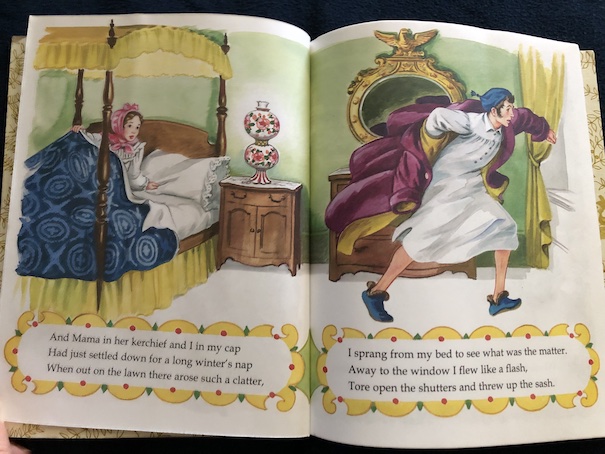
This Little Golden Book makes a cozy and pleasant bedtime story for Christmas Eve with its images of a 19th century/Victorian family hanging up their stockings and going to bed on Christmas Eve with the anticipation of the sweets, presents, and fun of the next day. Then, the father of the family is suddenly woken when he hears Santa Claus arriving.

This 19th century poem established and popularized the image of Santa Claus as generations of Americans came to know it. It describes him as a fat and jolly little old man and names all of the reindeer who pull his sleigh. This is probably the first piece of writing that established that Santa has eight reindeer and gave them specific names, which would later be echoed in the storybook and song versions of Rudolph the Red-Nosed Reindeer.

The father of the family in the poem happily watches Santa Claus leaving presents for his children and then leaving by the chimney and riding off in his sleigh with a cheery, “Happy Christmas to all and to all a good night!”

Various picture book versions of this poem are available online through Internet Archive, including this Little Golden Book version.

The Bone Keeper

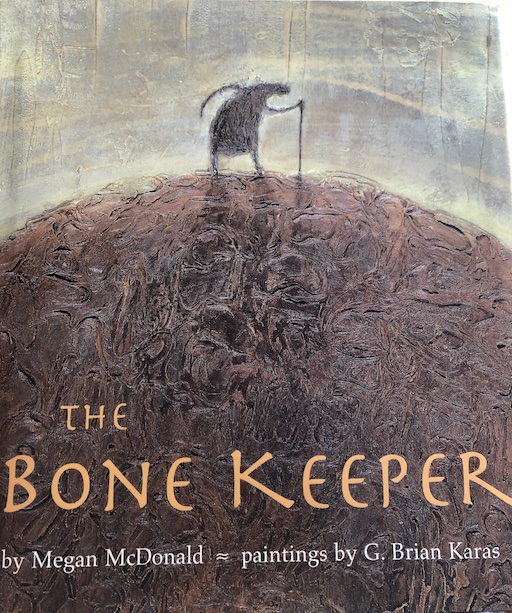
The Bone Keeper by Megan McDonald, paintings by G. Brian Karas, 1999.

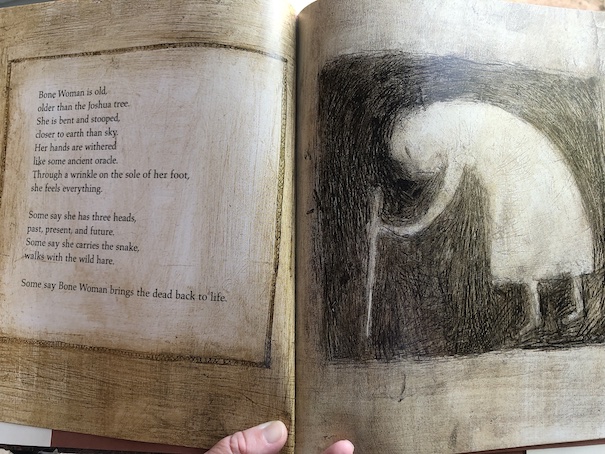
The story in this picture book is written as an unrhymed poem and illustrated with paintings that resemble paintings on a cave wall.

Bone Woman is a strange old woman. She is ancient, legendary, may have powers to bring back the dead, and lives in a cave full of bones.

She spends her time searching for bones in the desert sand. She collects the bones, studies them, and arranges them to form complete skeletons.

When she manages to complete a skeleton, she performs a ritual to bring the creature back to life!

The book is available to borrow and read for free online through Internet Archive.

My Reaction

This is one of those picture books that I think would actually be appreciated more by adults than by children. The poetry and art style seem more sophisticated than the styles that children seem to prefer. Most of the pictures are not very colorful, using a lot of grays and browns and black, although the art style is unusual and fascinating, looking like paintings and drawings scratched into rock.

I think kids could understand the action of the story – a strange old woman who lives in a cave collects bones, assembles them into skeletons, and can use them to bring animals back to life. It’s a strange story, partly because there is no explanation about why she is doing this.

One of my regrets about this book is that it doesn’t explain the background of this story. I had expected that there would be a section at the back of the book that would explain more, but there isn’t. From the context – the pictures, the style of the story, the names that the woman is called, and the fact that the artist thanked the Phoenix Public Library and the Heard Museum (both places that are familiar to me) in the dedication – adults can figure out that this is a story from folklore, but it’s not immediately clear what kind of folklore. Anyone who doesn’t already know the story might be confused. I didn’t know this story when I read the book, so I had to look it up.

The story of the Bone Woman has been told and referenced in other books. The story of La Huesera (the Bone Woman) is a Mexican folktale. Sometimes, it’s also called La Loba (the Wolf Woman) because that is the animal that she particularly wants to resurrect. The Bone Woman is a “wild woman” or a “crone” who uses a kind of natural magic to bring life to lifelessness and restoring what was lost.

Mother Goose Rhymes

Mother Goose Rhymes, illustrated by Eulalie, 1950-1953.

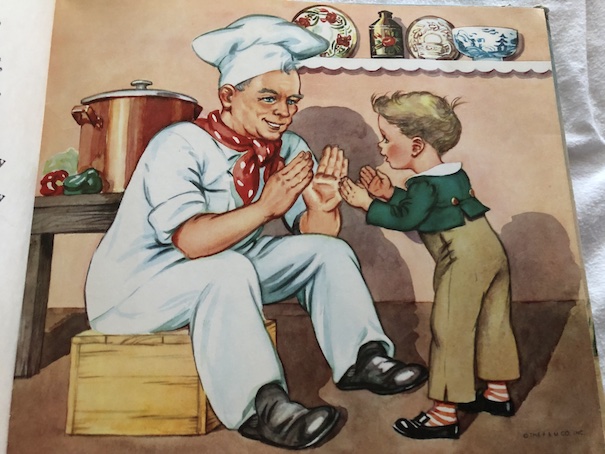
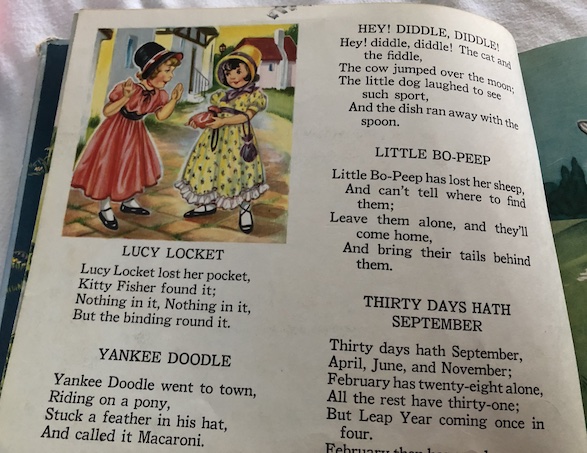
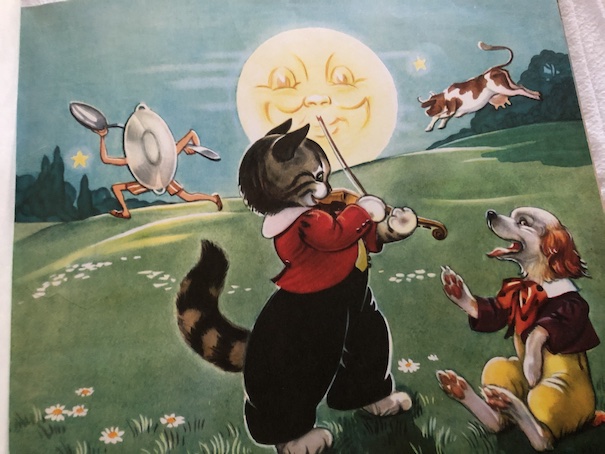
This was one of my first books of rhymes and poems as a child. We’ve had this book for as long as I can remember. I always loved the illustrations in the book, which are realistic in style, and like the illustrations in old Kate Greenaway books from the late 19th century, showing children in clothes that would be appropriate for the early 19th century, with high waists and short jackets. I suspect that Kate Greenaway’s work may have been some of the inspiration for the illustrations in this book. Some of the illustrations are small ones that appear in corners of the pages, surrounded by the text of the rhymes. Other illustrations take up a full page. All of them are full color illustrations.

People can recite popular nursery rhymes like Mary Had a Little Lamb, Old Mother Hubbard, Little Bo-Peep, and Lucy Locket from memory because many of us heard and memorized them early in life. But, since we’re on the subject, who is/was Mother Goose and what are these rhymes about really?

Mother Goose rhyme books don’t really have an author because the rhymes are short little folk poems with no known original author. When an “author” is credited for a collection, they are credited as being “collectors” of the rhymes included, not as the original creators of those rhymes. The first person to collect and describe folk and fairy tales as being “Mother Goose” stories was the French author and folk tale collector Charles Perrault. In 1697, he published a collection of stories called Stories or Tales from Past Times, with Morals or Mother Goose Tales. It isn’t completely clear how many of the stories in this book were completely Perrault’s own creation, based on common themes often found in folk and fairy tales, and how many were stories he collected from other sources and modified to fit his style and purpose. The stories included in this original Mother Goose book included many fairy tales that are now childhood classics, like Cinderella, The Sleeping Beauty, Puss in Boots, Little Red Riding Hood, and the scary Bluebeard. This collection of stories was not meant for children. The stories were intended for adults because fairy tales were in fashion among the aristocratic literary circles in Paris at the time the book was published. The exact reasons why Perrault decided to use the imaginary “Mother Goose” as the supposed source of these stories or even who “Mother Goose” once was are uncertain. American legend sometimes cites “Mother Goose” as being the wife of Isaac Goose and the mother Elizabeth Goose, who lived in Boston in the 17th century and told stories and sang songs to her (a story referenced in The Only True Mother Goose Melodies published in Boston in 1833), but it’s unlikely that Perrault was referencing her. A more likely theory is that “Mother Goose” was a reference to a somewhat forgotten figure of French folklore who would have been more familiar to people living in the late 17th century who studied folk and fairy tales. There was a French legend from the Middle Ages about a queen who told stories that amazed children and was sometimes called “goose-footed”, and possibly, this story or a similar figure from French history or legend became known as “Mother Goose.”

In the 18th century, Perrault’s book was translated into English, and English authors began putting together their own “Mother Goose” books that included English nursery rhymes. The book that shifted the association of “Mother Goose” from stories to rhymes was Mother Goose’s Melody, or, Sonnets for the Cradle, a collection of English nursery rhymes published by John Newbery, a famous English publisher of children’s literature in the 18th century who was nicknamed “The Father of Children’s Literature” and who would later become the namesake of the Newbery Medal for excellence in American children’s literature. Mother Goose’s Melody popularized the association of “Mother Goose” with children’s nursery rhymes in both England and America, and ever since, it has been used in the title of collections of nursery rhymes. Many of the popular Mother Goose rhymes are centuries-old ones from England, although some later classics, like Mary Had a Little Lamb, were added to American books of nursery rhymes in the 19th century.

But, what do these rhymes mean, or do they mean anything? Are they just nonsense rhymes for children about things like a cow jumping over the moon or a boy and girl falling down the hill, or is there some additional meaning behind these rhymes that have kept them in the public consciousness for so many centuries? The exact origins as well as the original authors of many old nursery rhymes have been lost to time, but there are indications that various nursery rhymes may have begun as folk songs or rhymes referencing current events that were happening at the time they were originally composed. Although they sound like harmless and innocent nonsense, people who heard them at the time when they were first composed would have recognized references or pieces of dark humor about real events or scandals that were public knowledge. In modern times, there is some debate about the exact meaning behind some of these rhymes because, while the references in the rhymes may have seemed clever and humorous to people at the time of their creation, they are too esoteric for modern people, who are centuries removed from the events they were referencing. For generations, people passed on the rhymes to their children but not the explanations of their meaning, so most were simply forgotten. However, there are articles that you can about The history lessons that may be hidden in nursery rhymes and The Dark Side of Nursery Rhymes, which discuss what we know about the creation of these nursery rhymes and theories about their original meanings. Sometimes, there are multiple theories about certain rhymes because there just isn’t enough evidence to firmly settle on one, and also, it’s possible that rhymes could be inspired and shaped by more than one event or source.

This particular book of Mother Goose Rhymes is available to borrow and read for free online through Internet Archive. However, there are also many other books of Mother Goose rhymes available through Internet Archive and Project Gutenberg, including Perrault’s Tales of Mother Goose.

A Child’s Garden of Verses

A Child’s Garden of Verses by Robert Louis Stevenson, illustrated by T. Lewis and Sara Gutierrez, 1989.

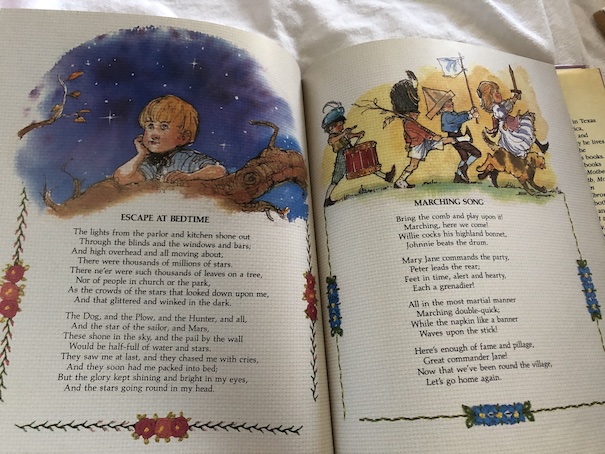
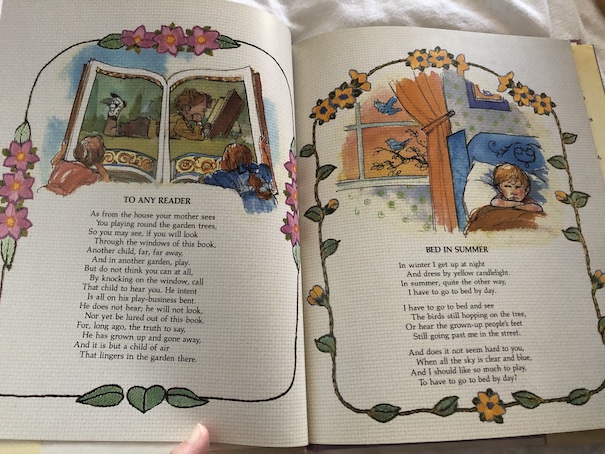
This is a reprinting of the classic collection of children’s poems by Robert Louis Stevenson first published in 1885 as Penny Whistles. What makes this edition of the book different from other printings is the illustrations, which are an unusual combination of watercolors and embroidered borders. Mary Pope Osborne, author of the Magic Tree House series wrote an introduction to the book about the life of Robert Louis Stevenson and his youth in Scotland in the 1850s, which inspired his poems for children. (See my list of Books from 1850s for the types of books children were reading during this time period, but remember that they also would have read books that were published in previous decades.)

The poems have gentle themes from the lives and fantasies of children, like games of pretend, bedtimes, and the little things that children notice and that adults often take for granted, like shadows and the beauty of stars. Some of them have things that are now anachronistic, like lamplighters, but they’re still imaginative and enjoyable for all ages.

I’ve always liked Robert Louis Stevenson’s children’s poems, and this book has my favorites! My personal favorites are:

To Any Reader – Robert Louis Stevenson speaks to children reading these poems about the child he used to be and how the poems are like a window on his childhood, although his own youth is long gone.
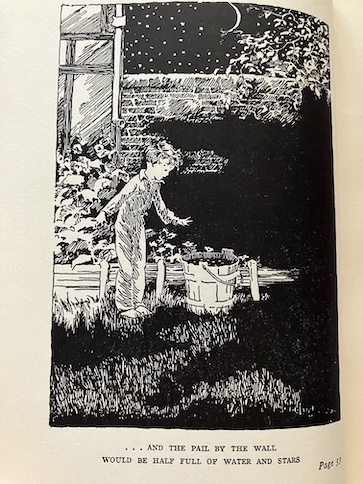
Escape at Bedtime – About a child who sneaks out of bed at night to look at the stars.
The Swing – I mentioned this one before because it’s included in another collection of poems, and I’ve often thought of it when I’ve been on swings.
Picture Books in Winter – A child enjoys picture books indoors when it’s cold outside.
The Land of Storybooks – About the adventures that children who love books enjoy in their imaginations.

However, my mother’s favorite children’s poem is Bed in Summer because it reminds her of her own childhood and having to go to bed while the sun was still shining in summer and other children in the neighborhood were still playing outside. (I didn’t have this experience when I was growing up because I never lived in a place that had daylight savings time, which changes the clocks by one hour, providing an extra hour of daylight before sunset. Arizona is very hot, so there’s a benefit for doing things after the sun has set, and few people have any interest in pushing back time to maximize the scorchingly hot daylight hours. My childhood memories include going to parks with my parents after the sun set and being put to bed after we got home.)

There are many copies of this book available in various printings online both at Internet Archive and Project Gutenberg because the text of the original book is now public domain. I didn’t see this particular printing with these illustrations available online, but if you just want to read the poems, there are plenty of other copies of the book to choose from!

A Child’s First Book of Poems

A Child’s First Book of Poems with pictures by Cyndy Szekeres, 1981.

I think this actually might have been my first book of poetry. At least, I’ve had it since I was a fairly young child, and I can’t remember reading any other book of poetry before this one. If I had an earlier book of poetry, it was probably a book of Mother Goose rhymes.

The poems in the book are about a variety of topics and some of them are by famous people and were popular poems for decades before this book was published. Among the authors whose poems appear in this book are Emily Dickinson, A.A. Milne, and Robert Louis Stevenson.

Among my favorite poems in the book:

Wild Beasts by Evaleen Stein – About children pretending to be animals.
Choosing by Eleanor Farjeon – About choosing between various nice things.
Hiding by Dorothy Aldis – A child hides while his parents search for him. My mother often quoted from this poem when we were kids and she was looking for one of us. “I’m hiding, I’m hiding, and no one knows where …”
The Swing by Robert Louis Stevenson – I think of this poem whenever I’m on a swing.
Bedtime by Eleanor Farjeon – Children making excuses to stay up later.

The pictures really make this book special. They are all drawn in a realistic style. Some just show ordinary children and animals, but some contain whimsical elements, like animals wearing clothes, depending on the poem.

The book is available to borrow and read for free online through Internet Archive.