
A Child’s First Book of Poems with pictures by Cyndy Szekeres, 1981.
I think this actually might have been my first book of poetry. At least, I’ve had it since I was a fairly young child, and I can’t remember reading any other book of poetry before this one. If I had an earlier book of poetry, it was probably a book of Mother Goose rhymes.

The poems in the book are about a variety of topics and some of them are by famous people and were popular poems for decades before this book was published. Among the authors whose poems appear in this book are Emily Dickinson, A.A. Milne, and Robert Louis Stevenson.
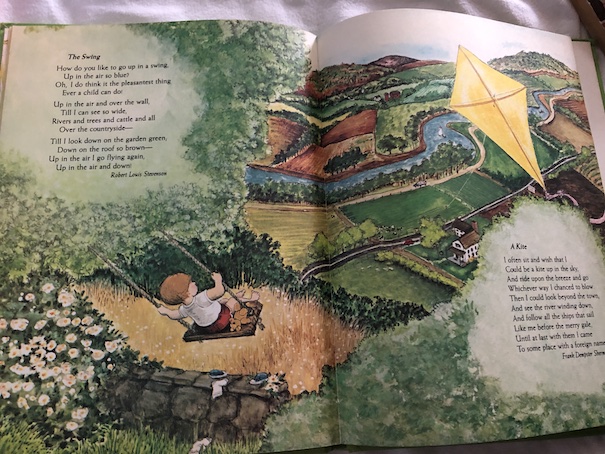
Among my favorite poems in the book:
Wild Beasts by Evaleen Stein – About children pretending to be animals.
Choosing by Eleanor Farjeon – About choosing between various nice things.
Hiding by Dorothy Aldis – A child hides while his parents search for him. My mother often quoted from this poem when we were kids and she was looking for one of us. “I’m hiding, I’m hiding, and no one knows where …”
The Swing by Robert Louis Stevenson – I think of this poem whenever I’m on a swing.
Bedtime by Eleanor Farjeon – Children making excuses to stay up later.
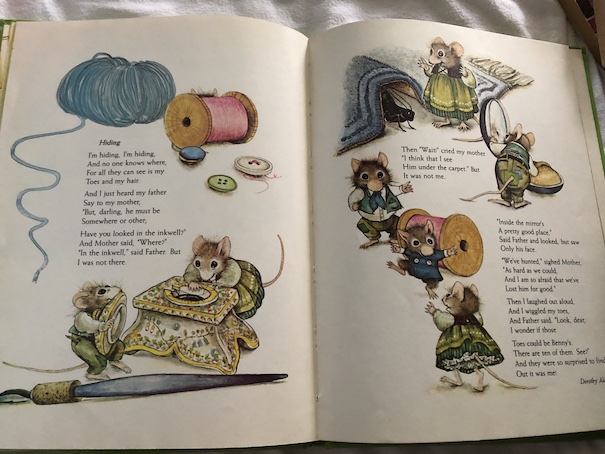
The pictures really make this book special. They are all drawn in a realistic style. Some just show ordinary children and animals, but some contain whimsical elements, like animals wearing clothes, depending on the poem.
The book is available to borrow and read for free online through Internet Archive.












 The D- Poems of Jeremy Bloom by Gordon Korman and Bernice Korman, 1992.
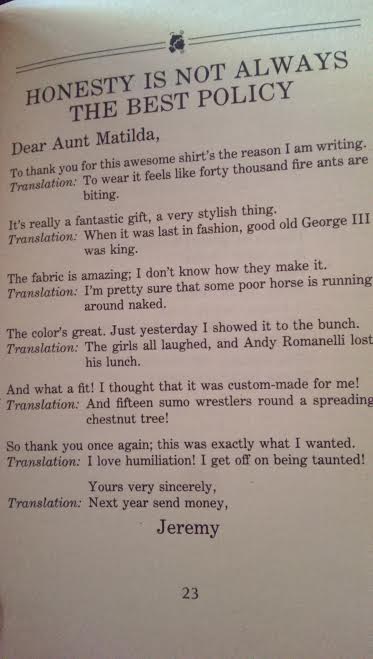 Jeremy tries to make the best of things, but somehow (partly through his own fault and partly by accident), he continually manages to do things to annoy his poetry teacher, Ms. Terranova (or, as the kids call her, Ms. Pterodactyl, thanks to a mistake Jeremy made when he said her name on the first day of class). Every single poem Jeremy writes during the year receives the same grade: D-. The book is divided into different periods of Jeremy’s work, along with an explanation about what Jeremy did during each period to tick off his teacher. At the end, the reader can be the judge: Are Jeremy’s D- grades because he’s a terrible poet or because his teacher is mad at Jeremy for everything else he does during the year? (The answer is pretty obvious.)
 Jestress's Forgotten Books and Stories