Animalia

Animalia

Animalia by Graeme Base, 1986.

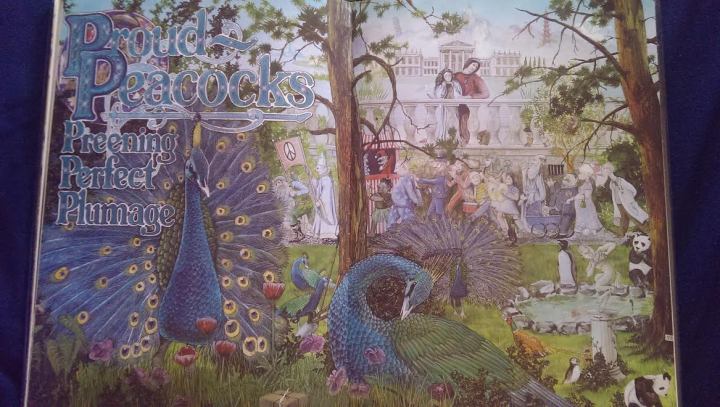
The best part about this book is the pictures.  They are absolutely beautiful and contain many small details for readers to spot.

On the surface, the book is about the alphabet, each page featuring a single sentence with every or almost every word starting with the same letter, and all of the pages are in alphabetical order.  (If you’re wondering what the author used for ‘X’, it’s a fox.  ‘X’ is an exception because all of the letters in that sentence end with ‘X’ instead of starting with it.)  The sentences and pictures are about animals, some real and some mythical.
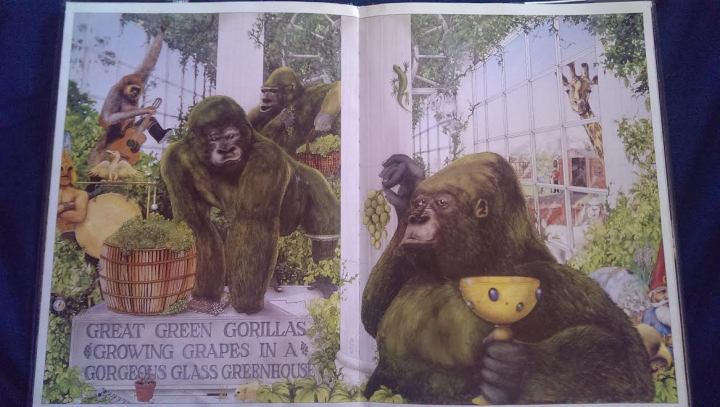
AnimaliaGorillas

However, there is also a game that you can play with the book which is explained in a poem on the title page:

“Within the pages of this book
You may discover, if you look
Beyond the spell of written words,
A hidden land of beasts and birds.
For many things are ‘of a kind’,
And those with keenest eyes will find
A thousand things, or maybe more–
It’s up to you to keep the score.
A final word before we go;
There’s one more thing you ought to know:
In Animalia, you see,
It’s possible you might find me.”

Readers are invited to notice all of the other things in the pictures which start with the designated letter, and the author himself appears throughout the book, hiding in the pictures. There is a picture of him on the title page so you know who to look for.

The book is currently available online through Internet Archive.

AnimaliaLions

AnimaliaPeacocks

The Eleventh Hour

The Eleventh Hour by Graeme Base, 1989.

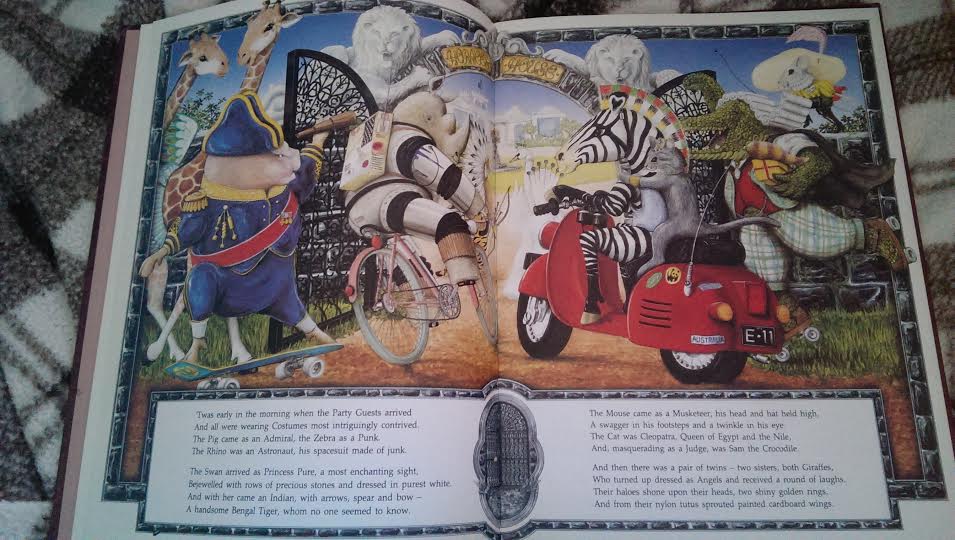
Horace the elephant is turning eleven years old, so he’s invited all of his animal friends to his house for a costume party.  The best part will be the extraordinary feast that Horace has created himself with all kinds of cakes and pastries and other desserts.

eleventhhourguests2

But, Horace refuses to let his friends eat any of the goodies until after they’ve played the party games. The guests have a lot of fun, but through all the games, they’re still thinking about that glorious feast. Only, when they finally go to eat, the food is all gone! Who could have taken it?

The book is available to borrow and read for free online through Internet Archive.

My Reaction

This picture book is actually a puzzle book, with puzzles difficult enough to even challenge adults.  Hidden within each of the large pictures taking up the entire page of each page in the book, are secret messages that hint at the identity of the thief, who is one of the party guests.  Some of the messages are in code.  Although a young child might enjoy the pictures in the book and the rhymes of the story, it would take someone older to be able to solve the puzzles.

There is a way to find the thief without finding the hidden messages or solving any codes, but it still requires attention to detail. There is a section in the back of the book that explains everything, pointing out all the secrets that you can find in the pictures, including the names of one of the giraffes and the swan, whose names are not given in the story itself.

But, don’t skip straight to the answers.  As Base himself says at the beginning to the section of answers, “the getting of wisdom is no match for the thrill of the chase, and those who choose the longer road shall reap their reward!”

Sideways Arithmetic from Wayside School

SidewaysArithmetic

Sideways Arithmetic from Wayside School by Louis Sachar, 1989.

This is a companion book to the Wayside School Series.  Unlike the other books in the series, it doesn’t contain stories.  It talks about the things that kids at Wayside School study, partly from the point of view of Sue, a new student who is stunned to learn that kids at Wayside School do arithmetic with words, not numbers.

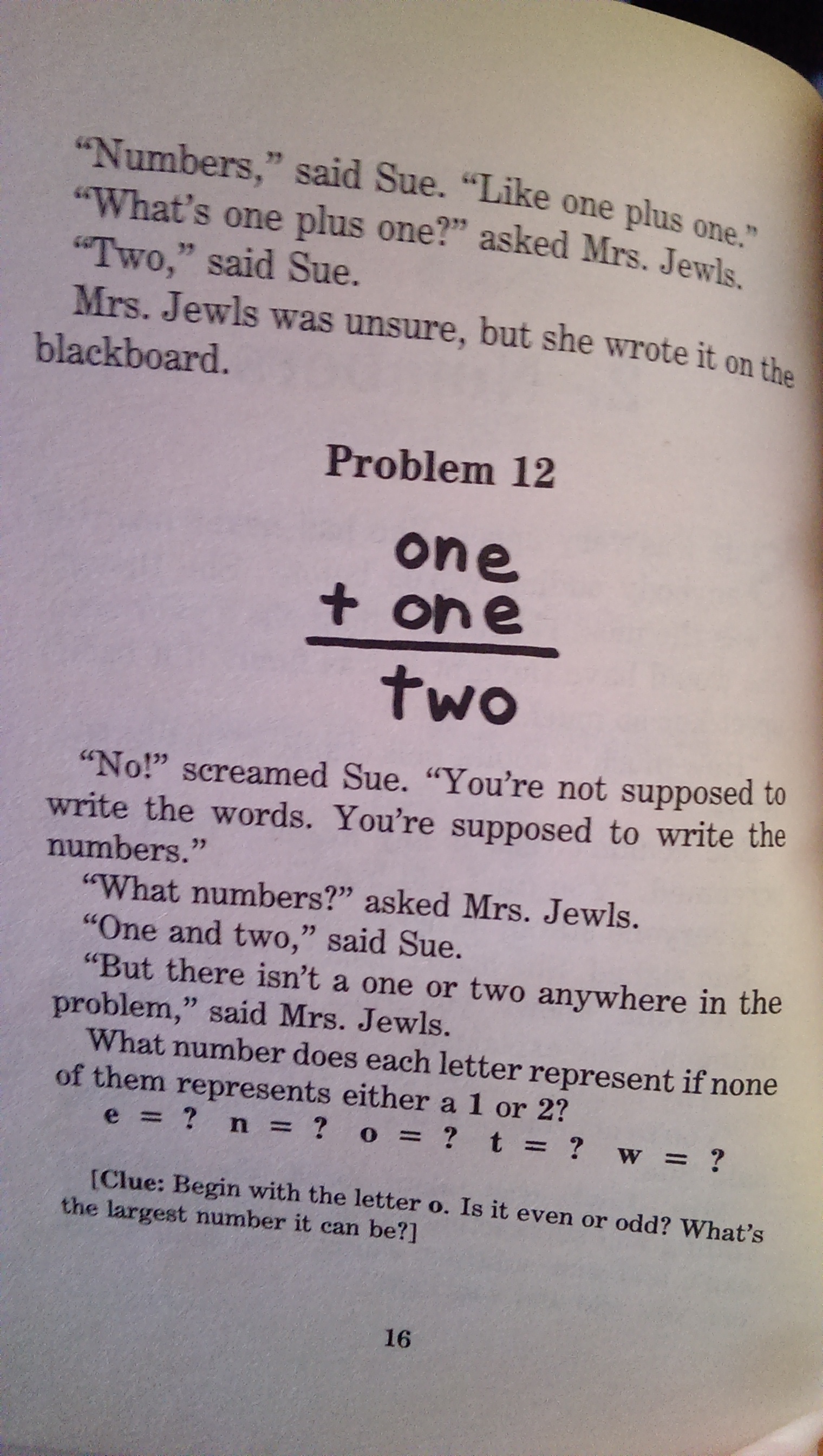
SidewaysArithmeticPicBasically, it’s a puzzle book.  In the Arithmetic section, the letters in the words stand for numbers.  The book gives an example to demonstrate how to figure out which numbers the letters stand for.  The problems get harder through the sections labeled Numbers, Pronouns, and Paragraphs.

From the Recess section on, there are logic puzzles.  In Recess, you have to use the information provided to figure out what games the children play at recess.  In Science, Geography, Etc. (that’s one chapter), you have to figure out who got the right answers to the tests from the information provided. You see the answers five of them got and know that only one of them got all the answers right and no two of them had the same score. When you look in the back to see if you solved the problem right, you get to see what the test was actually about, and that’s the funniest part.  The Lunch section combines logic puzzles with math.  The True or False section gives you true/false questions to answer based on a series of statements about which of them are true or false.  Finally, in the After School section, Joy and Sue give up and go home (as well they should).

I like the book because I like puzzles, and there are funny little stories around the problems and answers.  All of the puzzles are answerable (except for one or two where the correct answer is that they’re impossible, which is why Joy should definitely get up and go home, but you’ll figure that out way before she does).  If you like puzzles and the Wayside School series, you’d like this book.  If you don’t like puzzles, you can skip this and just stick to the regular books in the series (as regular as Wayside School gets).  If you like puzzles but don’t know about the Wayside School series, you could still find it interesting but you wouldn’t really appreciate the funny parts.  If you don’t like the Wayside School series or puzzles, you probably aren’t reading this right now, so don’t worry about it.

This book is currently available online through Internet Archive.