 Top Secret by John Reynolds Gardiner, 1984.
Nine-year-old Allen Brewster’s teacher, Miss Green, is obsessed with the science fair. Every year, there is a silver trophy awarded to the best science fair project and another prize for the best science teacher. No one in Miss Green’s class has ever won the trophy, and so Miss Green has never won the best science teacher award. All the best projects are done by older students. Miss Green hates it, and she’s been known to flunk kids who do especially bad on their science fair projects.
However, Allen Brewster thinks that he’s got the kind of project that Miss Green has been waiting for. When his mother served liver for dinner one night, Allen got to thinking how much nicer it would be if people didn’t have to eat, if they could just get nutrients from the sun, like plants do during photosynthesis. So, he decides that he wants to research human photosynthesis. When he tells Miss Green what he wants to do, she says that’s impossible and refuses to take his idea seriously. Instead, she tells him that he’s going to do a project on the topic of lipstick.
 Allen is angry that Miss Green didn’t take him seriously, and lipstick is the last thing that he’s interested in. His parents think that he should just do the lipstick project and forget about it. Even if human photosynthesis were possible, how could a nine-year-old possibly achieve such a thing? Real discoveries are made by important men, not little boys. However, Allen’s grandfather encourages him to persevere in what he wants. He says that Allen has everything that a important man would have: five good senses and a brain that he can use to think. Allen’s grandfather often thinks about strange things himself, and he encourages Allen to think all the time.
“Cause you know what you are when you stop thinking, don’t you?”
“What?”
“You’re dead.”
 Although Allen acts like he’s carrying out the lipstick project, with his parents’ help, he continues studying photosynthesis on the side. When Allen gets stuck on what to do next, his grandfather advises him to “think crazy,” to just let his mind explore possibilities and see what it comes up with.
What Allen comes up with is that, in order for a person to experience photosynthesis, the hemoglobin in human blood would have to act like chlorophyll in plants, and the difference between the two substances is magnesium. By experimenting with kitchen leftovers, especially (and unfortunately), the liver his mother made, Allen discovers that he is beginning to experience photosynthesis. He is no longer hungry for food, he craves water, loves sunlight more than ever, and he is turning green.
When his parents realize what he’s done, they panic and take him to a hospital, but the doctor can’t find anything wrong with him. He thinks that Allen is green because of allergies. When he goes to school, people notice right away how weird he looks, but they think that it’s just makeup. Miss Green is furious, sending him home to wash the “paint” off.
Trying to get everyone to believe what he’s done, Allen goes to the local newspaper. They do a story about him, but people still aren’t convinced. However, the President of the United States happens to be visiting the city. Allen writes to him, hoping to convince him of his discovery. In the end, Allen’s discovery is recognized by the government (whose scientists also figure out how to turn him back into a normal human), but it’s also, unfortunately, now considered top secret. Allen won’t be allowed to talk about it anymore or claim credit for it. Putting it in the science fair is completely out of the question. Allen could keep quiet about the whole thing . . . but he doesn’t want to.
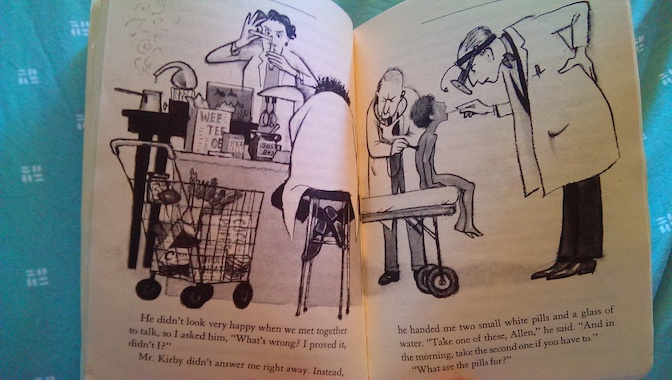
Allen’s discovery has problems. One of which, as he learns for himself while he’s a plant person, is that with photosynthesis, he’s completely dependent on sunlight. During a spell of bad weather, it’s only his desk lamp that keeps him alive. Then, the government people point out that if people aren’t dependent on food, society as we know it would break down. Industries that produce food or food-related items would no longer be necessary. In fact, people wouldn’t really have to work at all because they would no longer need to buy food. Allen thinks that sounds pretty good, but the world would no longer be the same. To the government, the economic and social repercussions of Allen’s discovery are the most important, but personally, I think it’s just as well that the project does end because I think bad weather would be an insurmountable problem.
The humor really makes this story. I love Allen’s grandfather, who loves coming up with odd ideas and fully supports Allen’s project to turn himself into a plant person. He matter-of-factly sprays his grandson with bug spray when he gets aphids and has a spot for Allen reserved in his garden, if he needs it. I’m glad that Allen didn’t remain a plant person because I found his state a little disturbing, but Allen’s description of his experiment is pretty fun.
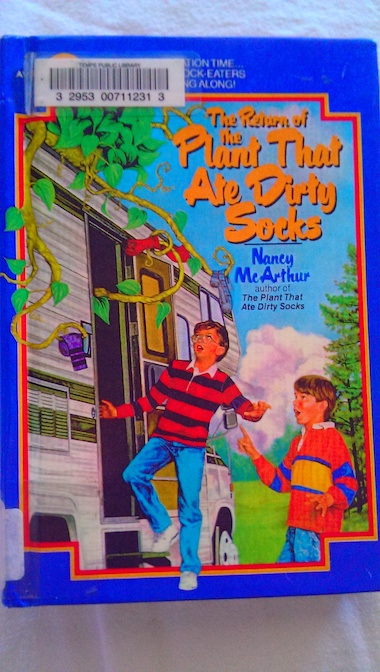 The Return of the Plant That Ate Dirty Socks by Nancy McArthur, 1990.
 The Plant That Ate Dirty Socks by Nancy McArthur, 1988.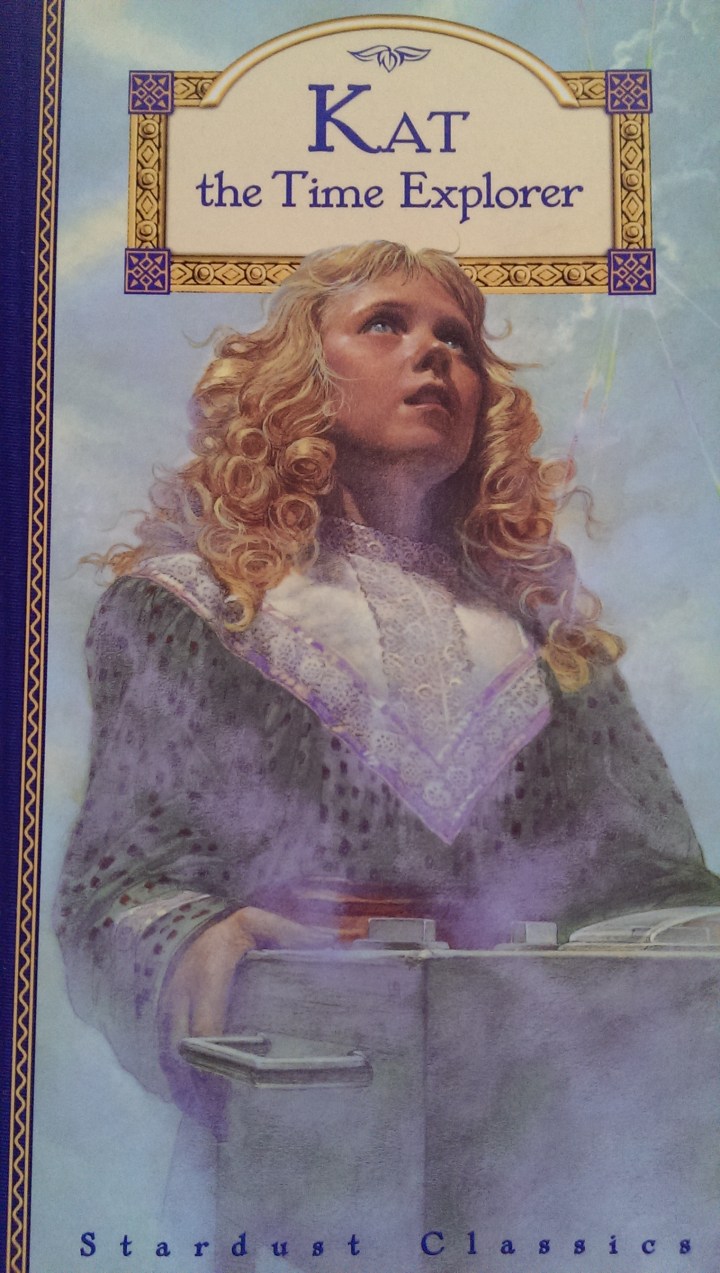
 Ten-year-old Kat is going to be living with her Aunt Jessie for the next year. Her parents are botanists, and they are spending a year in South America, studying rain forest plants. Aunt Jessie lives in a house in the same town as Kat and her parents so, by staying with her, Kat can continue going to the same school and see her friends.

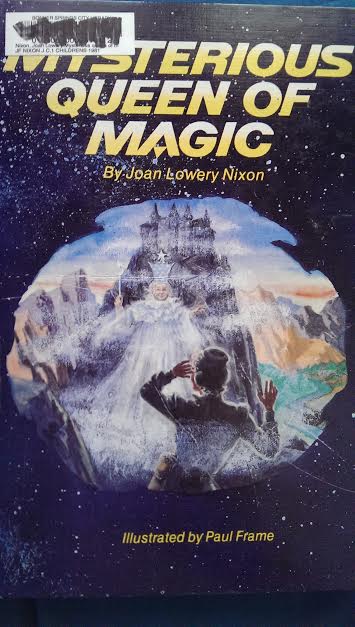 The Mysterious Queen of Magic by Joan Lowery Nixon, 1981.


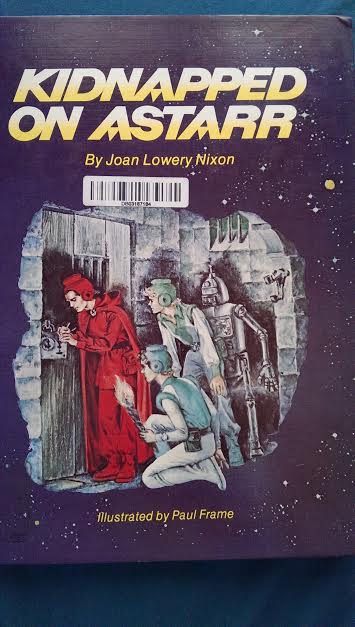 Kidnapped on Astarr by Joan Lowery Nixon, 1981.

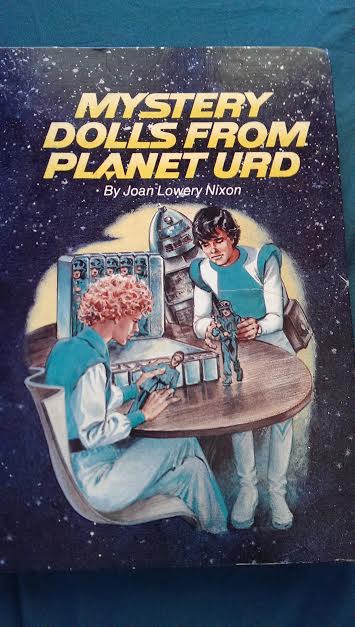 Mystery Dolls from Planet Urd by Joan Lowery Nixon, 1981.
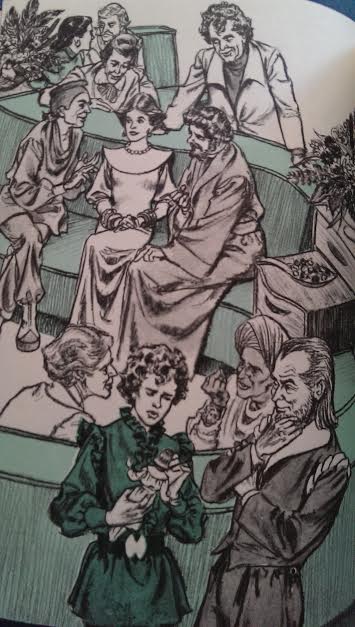 Sure enough, the dolls from Urd soon arrive, but they make Kleep even more nervous than the doll from Earth. They seem a little too life-like, and one night, Kleep wakes up, certain that she heard them whispering to each other!

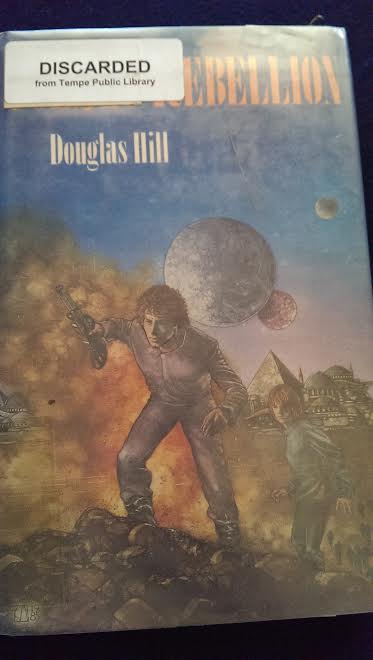 ColSec Rebellion by Douglas Hill, 1985.
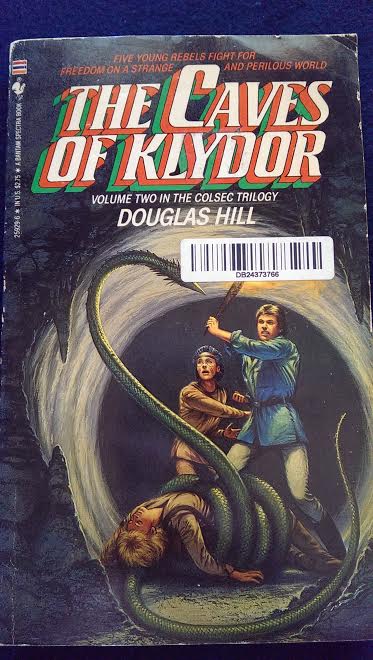 The Caves of Klydor by Douglas Hill, 1984.
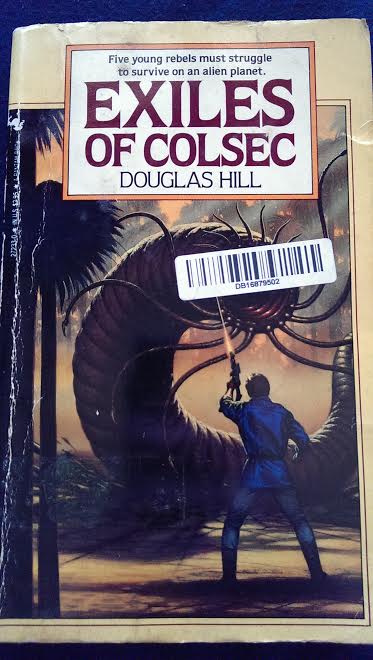 Exiles of ColSec by Douglas Hill, 1984.
 Jestress's Forgotten Books and Stories