Christmas Farm

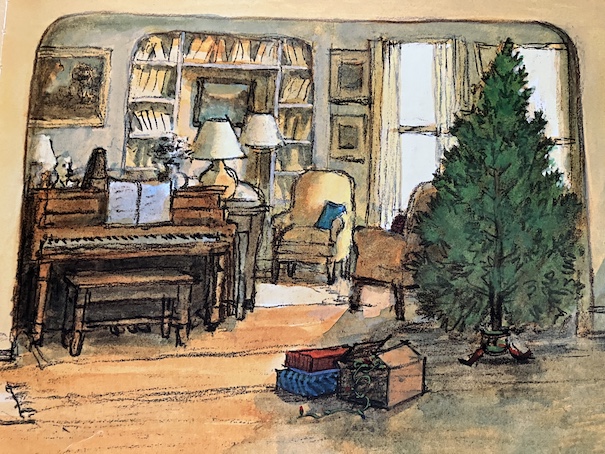
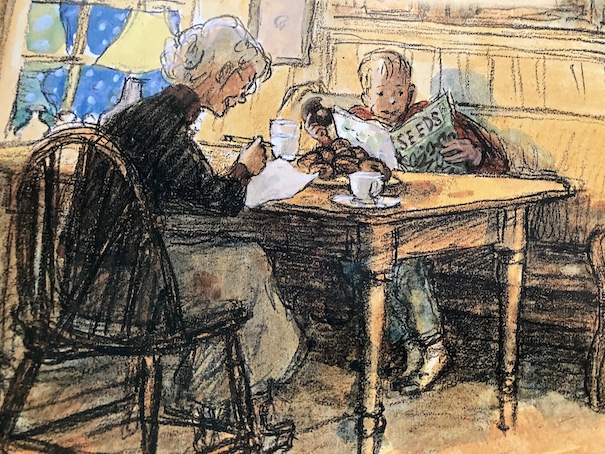
Wilma has grown flowers for years, but now, she’s decided that she wants a change. She thinks about what she would like to do with her garden next spring while she’s getting ready for Christmas. Going out to cut a Christmas tree makes her think that maybe she would like to grow Christmas trees instead of flowers.

She starts by ordering 62 dozen small balsam trees (744 trees, for those who are counting), and she gets the boy from next door, Parker, to help her prepare the site for them. They use string to lay out rows for planting the trees.

Wilma knows that it will take longer than a year for the trees to grow big enough to be Christmas trees. As the trees grow, Wilma has to mow around them and take care of them, with young Parker helping her more as he also grows bigger. Wilma loses some trees to pests and weather conditions every year, but by the time the trees are big enough to sell, she has 597 left.

In the months leading up to Christmas that year, people reserve trees, and they also get a buyer who owns a Christmas tree lot in the city. Most of the trees are sold, but there are still some left. They know that the trees that were cut down will sprout again, but they’re also going to order some new ones.

In the back of the book, there is a section that explains more about growing Christmas trees with a chart showing how long it takes the trees to grow.

I thought this book was a sweet and fun look at Christmas tree farms. It takes years to grow trees big enough for Christmas trees, so there is a considerable time investment, and farmers know that they will lose some of their trees to pests or bad weather condition during that time. It’s a project that requires long-term planning and investment.

I always feel a little sorry for the trees when they’re cut down, but I liked how this book explains that, because the stumps of the cut trees are still there with their roots, even cut trees will regrow. The end of this book touches on the cycle of replanting and regrowth, with Wilma and Parker planning for their next phase of planting and cultivating new trees.

I also thought the addition of Parker to the story helps to show the passing of time and the growth of the trees because the boy grows a few years older during the time when they’re letting the trees grow bigger. By the time they’ve sold their first crop of Christmas trees, Parker is getting old enough to take more of an active role in planning the next crop.

Felicity’s Cookbook

Felicity, An American Girl

This cook book is one of the activity books that was written to accompany the Felicity, An American Girl series that is part of the American Girl franchise. The American Girls books were written to help teach American history (as well as sell the accompanying dolls and accessories), so this book has recipes of the type that people would have eaten during the American Revolutionary War, when the character of Felicity lived, and some historical information.

The book starts out with some historical information about cooking in Colonial Virginia, where Felicity lived, and some general cooking tips, like measuring instructions and safety information. It includes information about late 18th century kitchens, cooking utensils, and dishes. Colonial kitchens were frequently located in an outbuilding, separate from the rest of the house. It was best to keep the kitchen a little away from the house because, rather than using stoves, their main method of cooking was a large kitchen fireplace, which made the kitchen very hot. During warm months, the heat would be uncomfortable, so keeping the kitchen separate from the house kept the house cooler. They would vent heat from the kitchen by opening the kitchen windows. On the other hand, during cool or cold months, the warmth of the kitchen fire could be pleasant, so family members might gather there. Families with servants and slaves might have them live in a loft over the kitchen, keeping them separate from the family. The kitchen fire could also be a potential fire hazard, so the kitchen typically had a brick floor or packed dirt because a wood floor might catch fire.

The types of dishes a family might have depended on their social class and what they could afford. Felicity comes from a prosperous merchant family, and a family like hers might have imported dishes from England or China as well as locally-made dishes. Wealthy people might have had silver or pewter serving dishes, while poor people had wooden dishes, often poplar or linden, which wouldn’t contribute much flavor to the food.

Hospitality was very important in Colonial Virginia. Friends, family members, and business associates frequently visited each other’s homes, and because there were no telephones, there often wasn’t much advance notice that guests were coming. People were often prepared to provide food for unexpected guests. Because she is being raised to be a gentlewoman, much of Felicity’s education focuses on how to be a good hostess, how to plan meals and social events, and how to properly prepare and serve different types of foods.

Modern people might not view these topics as being very important from an educational standpoint, but in Felicity’s day, they served a very important purpose. The book doesn’t really go into the reasons why it was important for Felicity to be a good hostess as part of her social status, but it essentially boils down to what 21st century people might call “networking.” As the daughter of a socially-prominent businessman and the potential future wife of someone with a similar social standing, being a good hostess could help her family or future spouse establish and maintain good relations with other members of the community, helping to cement business arrangements or arrange marriages between members her family (siblings or her future children) and other families of good social standing, possibly including her own. Being capable of cooking delicious food and arranging dinner parties could be for fun and family celebrations, but the ability to be a competent and charming hostess for anyone who might have business with her family or anyone her family might want to associate with could help smooth over possible social difficulties or quarrels or promote better relationships with members of their community.

In a way, Felicity’s lessons in manners, tea party etiquette, making pleasant conversation, preparing appropriate meals, and providing food and a pleasant visit for guests on short notice would have been the 18th century equivalent of taking courses in social networking. This type of social role is one that housewives have performed for centuries, both before and after Felicity’s time, and it also appears in some of the other American Girl books, such as Samantha, An American Girl, which is set in the early 1900s and focuses on a girl from a wealthy family. It’s a sort of unofficial role, not unlike that of the First Lady of the United States, who organizes social events, acts as hostess for important visitors, and promotes good causes to better the public image of the President, although the specific methods they use to do this varies based on the social standards of the day, their own tastes and abilities, and the image they want to promote. This is the type of lifestyle that Felicity’s family is preparing her to fulfill. People still do this sort of thing, even if it’s just being prepared to offer someone coffee, tea, or water when they’re visiting on business, seeing to the small social niceties to make the guest a little more comfortable and start important discussions on a positive note. It’s not just about keeping women in the kitchen and out of men’s business; there’s a purpose behind it for promoting the family’s business and social standing. Deep down, Felicity might wish that she could be the one to work in the shop and make business deals directly rather than learning the social niceties and networking skills to promote relationships, but it’s still an important and useful role that her family wants her to fill.

The recipes in the book are organized by meal. Each section and individual recipes come with historical details related to the different types of food.

  • Apple butter
  • Johnnycakes
  • Breakfast puffs
  • Fried ham with gravy
  • Dressed eggs

“Dinner” is usually the biggest meal of the day, but depending on when and where you live, that might be either the midday meal or the evening meal. In modern times, it tends to be the evening meal, after a family or individuals are home from work or school and have more time for a large meal. Modern people sometimes use the terms “dinner” and “supper” (the evening meal) interchangeably for that reason. In Felicity’s time and, sometimes, in rural areas even in modern times, the biggest meal is the midday meal, what most of us would call “lunch.”

  • Chicken pudding
  • Veal balls
  • Sweet potatoes and apples
  • Sally Lunn bread
  • Green beans
  • Whipped Syllabub

This section just has an assortment of recipes for Felicity’s favorite foods.

  • Beefsteak pie
  • Baked pumpkin pudding
  • Raspberry flummery
  • Almond tarts
  • Queen cakes
  • Spiced nuts
  • Liberty tea – an herbal alternative to traditional tea, used after colonists started boycotting imported tea to avoid and protest taxes

The book ends with tips for planning a Colonial party, such as an elegant tea party or Twelfth Night party.

The book is available to borrow and read for free online through Internet Archive.

A Letter to Amy

A Letter to Amy by Ezra Jack Keats, 1968.

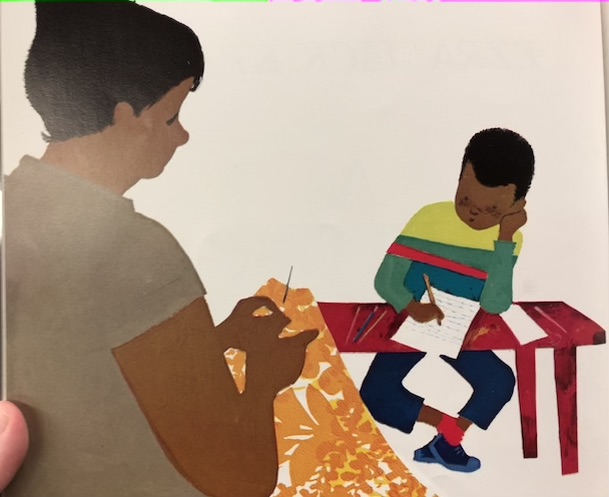
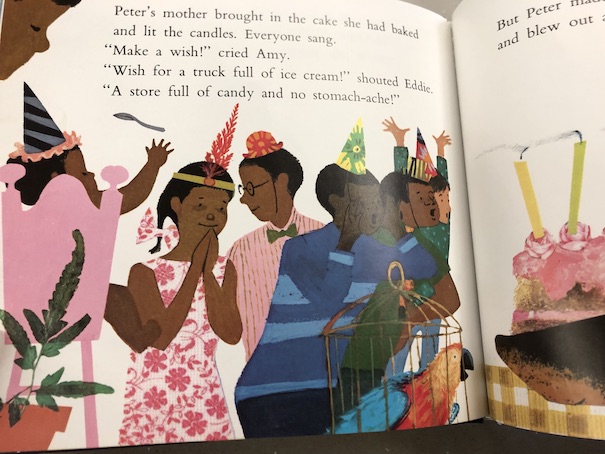
Peter wants to invite Amy to his birthday party, even though most of the other kids at his party will be boys. He has a crush on Amy and wants to mail her invitation as a special surprise.

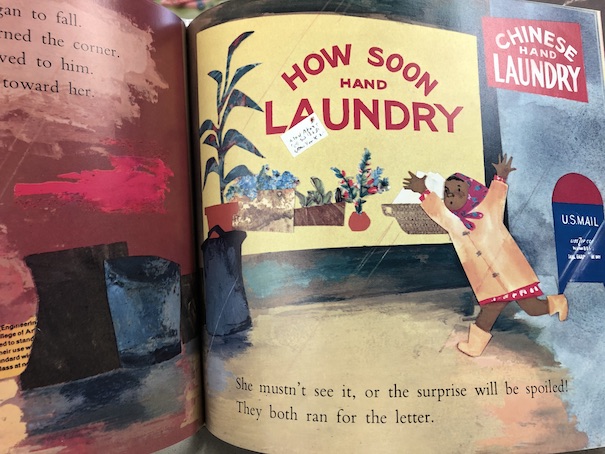
After a couple of false starts, in which Peter almost forgets to tell Amy the time of his party and almost forgets to put a stamp on the envelope, Peter sets out to mail the letter. It’s a rainy, windy day, and the letter gets away from him.

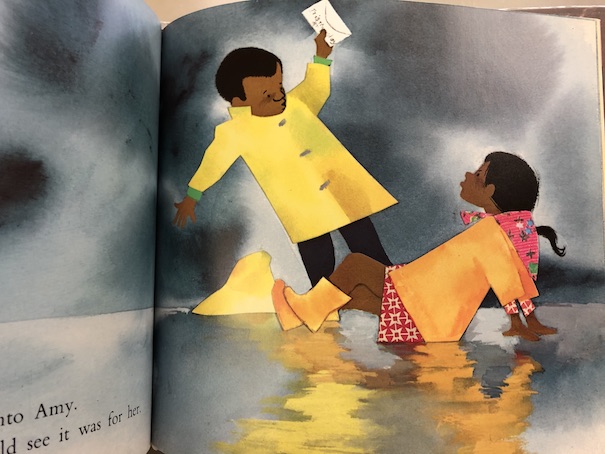
Peter chases the letter and ends up colliding with Amy. He mails the letter quickly so that Amy won’t see that it’s for her and spoil the surprise, but Amy runs away, crying because she fell down.

Peter worries that Amy will be too hurt and angry that he ran into her and knocked her down to come to his party, but things still work out well.

This is a fun slice-of-life story about the awkwardness of first crushes.

The book is available to borrow for free online through Internet Archive.

Honesty and Plagiarism

I want to talk about the subjects of honesty and plagiarism because a site that just liked one of my posts and now wants to follow my blog has made me aware that we need to have this discussion. It’s very nice that you just liked a post of mine, but the feeling isn’t mutual.

I don’t want to mention this site’s name or provide a link to it, but I want to explain that this is one of those businesses that sells essays to students so that they don’t have to write their own. Whether or not this type of business is allowed to operate isn’t my decision, but I don’t support it. This isn’t the kind of attention I want or the type of friends I really want to have.

I describe the plots of many vintage children’s books, including some that are used in schools, but I’m not doing this so that students can avoid doing their own work, or worse, trying to claim credit for work done by someone else. (Hint: I say a lot about what goes on in these stories, but I haven’t told you how much I’m not saying. There are always details of these stories that you won’t find in my reviews, and teachers will know what I’ve left out.) If a child (or adult college student) learns nothing else from their education, it should be that they, and they alone, are responsible for their own work. Accepting responsibility is part of adulthood, and the sooner you get used to it, the better. A person who copies the ideas and opinions of someone else or pays someone else to come up with ideas for them is either a person who has no ideas or opinions of their own or lacks the ability or guts to say them. I’ve been a busy college student myself, with honors classes and a job, but no matter how busy I was, I never lacked the time to do what I knew I needed to do, show what I learned because I really did learn things, and share my own thoughts about it all because I always had plenty of thoughts to share. People make time for what’s important to them, and if thinking and doing work aren’t important, it says a lot about your character. A student who can’t or doesn’t want to do these things might want to take some time to consider why they’re in school in the first place, especially at the college level.

College requires an enormous amount of time and money, and one of the main purposes behind it is to open your mind to new ideas and broader aspects of life and the rest of the world. It’s ironic, when you consider that was one of the main themes of Daddy-Long-Legs, and I discussed that in my post, the very post that this essay-selling business liked. I strongly suspect that, just like their clients don’t want to do their own reading or homework, this site didn’t do its reading or homework when it picked which post to like. Probably, they just picked up on the “college” keyword in that post and didn’t read any further than that. I can’t say that I’m really surprised. But, that being the case, they’re probably too lazy to read the rest of what I have to say about this as well. That’s not going to stop me from saying it.

Not taking a full part in the classes that make up college life is a lot like paying for tickets to a concert just to get your hand stamped at the door when you know that you’re not going to stay to listen to the music. All of the monetary investment, a portion of the time investment, and none of the benefit from doing any of it. Sure, you can gain some time by paying someone to do your work for you and maybe a fancy piece of paper that says you did well when you didn’t (assuming that you can pull it off), but your favorite essay-writing business isn’t going to be there for you when you’re out in the real world. You can’t always pay someone to do all your work or your thinking for you, and there are often some solid reasons not to. People don’t have much respect for someone who can’t handle their own work or do their own thinking, and these people aren’t doing you any favors. At some point, you need to face the music.

There’s also the question of stealing. Plagiarism is basically stealing someone else’s thoughts and ideas, and not having any of your own isn’t much of an excuse for doing that. When you use someone else’s words or ideas without giving them credit, it’s a form of theft because you have taken something that didn’t belong to you, something made by another person through their time and effort.

It takes me a long time to read all of these books and write about them, and I do it because I enjoy discussing them (and because I’m studying web design and wanted an excuse to set up a new website on a topic that I knew I could discuss so I could play with the features of WordPress). I am not being paid to do this, by anyone. I have not made any money off it. I want to make it clear that no one should be making a profit off of my words here by selling them to anyone else or reprinting them under someone else’s name. I have not sold any of my words, reviews, or essays to anyone. I have not given anyone permission to use my reviews in their name. I will never grant permission to anyone to use these reviews under someone else’s name, and I am not interested in selling them for that purpose.

I don’t mind if people cite my reviews in other book discussions on other blogs, and I allow reblogs of some of my posts for that purpose. I often link to other people’s work to provide more information about certain topics, and I expect links to my work now and then by others who are discussing the same topics. I like people giving me suggestions for books to review, but the reviews themselves are still all mine. I would resent anyone who attempted to claim credit for my work, whether they made a profit from it or not.

I would also like to point out that copying my reviews in an attempt to get out of class book reports would also not be very smart. Finding my reviews isn’t that hard because that’s what I’ve been aiming for all along. The best web designers want people to see their work, as many people as possible. Anyone who can see the WordPress Reader can see my work, which is how this essay-writing business found me in the first place. My posts also show up in Google search results, and some of them are among the first that show up for certain books. I’ve been studying SEO as part of my web design studies, and I have further plans to improve my standing in search results. Remember, this site was built for the purposes of experimentation, and I’m always making improvements so that I can show off what I’ve been learning. If you didn’t think of that, understand that I did. I’m not the kind of person who pays someone else to think for me, and I know how to actually do my own work. Know who else can do that? Any teacher who knows how to put a phrase or sentence into Google and see what comes up. I’m making it as easy for them to find me as possible. I’ll be sure to say hi if your teacher contacts me, and I would be happy to discuss all of this with him/her honestly.

Addition: So, the essay writing service keeps trying to follow this blog. I’ve kicked off the follow three times already, and it’s only been two days. Sigh. I think this is my life now. Not only that, but this idiot can’t even spell his own name right. What kind of fool sells writing for a living and can’t even spell his own stupid name? Actually, a better question is, what kind of fool pays someone for writing when that person can’t even spell his own stupid name?

Maybe some questions answer themselves.

River Quest

Dinotopia

#2 River Quest by John Vornholt, 1995.

Thirteen-year-old Magnolia and Paddlefoot, a Lambeosaurus, are apprenticed to the Habit Partners of Freshwater. Habitat Partners keep an eye on different aspects of the environment on Dinotopia and make sure that the environment is maintained and cared for. The Habitat Partners of Freshwater are specifically concerned with the bodies and sources of freshwater all over Dinotopia.

When Magnolia’s master, Edwick, is injured badly during the eruption of a geyser, he and his partner, a Saltasaurus named Calico, retire and leave the post to Magnolia and Paddlefoot. Magnolia thinks that she is still too young for the position, and she and Paddlefoot worry about whether they are ready to handle the job. However, they have no choice because a crisis has arisen, and Edwick is in no shape to handle it.

The Polongo River, which supplies the water for the waterfalls that power virtually everything in Waterfall City, is drying up. Magnolia and Paddlefoot must journey up the river to find out what is happening and restore the river to its proper course.  Along the way, they find friends who can help them, but completing their mission means coming perilously close to the Rainy Basin where the meat-eating dinosaurs live.

The book is currently available online through Internet Archive.

Windchaser

Dinotopia

#1 Windchaser by Scott Cienein,1995 .

Raymond Wilks is the son of a ship’s doctor. They are sailing on a ship taking convicts to the British colonies in Australia when the prisoners revolt and take over the ship during the middle of a terrible storm. Raymond’s father is killed, and the ship is wrecked, but Raymond escapes with a young thief named Hugh O’Donovan. The two of them are taken to shore by friendly dolphins, and they meet up with some of the inhabitants of Dinotopia.

At first, they are frightened of the dinosaurs, but everyone is kind to them. They are taken to Waterfall City, one of the most beautiful places in Dinotopia, and they begin learning about the history and ways of the land. People in Dinotopia don’t use money, and everyone shares with each other, trading goods and services for everything they need. There is no crime in Dinotopia because everyone has all that they need and everyone looks after each other.

Raymond, although still mourning his father’s death, thinks that Dinotopia is a wonderful place, and he admires the attitude of the people there. Hugh, who was orphaned at a young age and forced to steal to survive, has difficulty believing that the people are all as nice as they seem or the society as perfect as they say. His harsh childhood has taught him not to trust others too much. Little by little, the people of Dinotopia win Hugh over, and he desperately wants to become worthy of the kindness that people show him, although he doubts whether he ever can.

As Hugh and Raymond struggle to come to terms with their new life in Dinotopia, they encounter a flying dinosaur called a Skybax who is suffering from an old injury. The Skybax, called Windchaser, shows up from time to time and causes trouble. He is the only unhappy creature they have seen since arriving in Dinotopia, and Raymond develops a strong desire to learn what is wrong with him and help him. Raymond’s struggles to help the unhappy dinosaur lead him into danger, and Hugh fears that he may lose the best friend he’s ever had.

The book is currently available online through Internet Archive.

Alexander and the Terrible, Horrible, No Good, Very Bad Day

Alexander

Alexander and the Terrible, Horrible, No Good, Very Bad Day by Judith Viorst, 1972.

Everything is going wrong for Alexander today, from the very moment when he wakes up.  When he wakes up with gum in his hair and trips on his skateboard getting out of bed, he can tell that this isn’t going to be a good day at all.

AlexanderCereal

From getting crammed into the middle seat on the way to school to getting things wrong in class to fights with friends, things just get worse as the day goes on.  He sees other people getting good things and doing things right, but nothing works for him.

AlexanderDay

His bad luck continues all day long, right up to when he goes to bed.  His mother consoles him a little, saying that “some days are like that.”  Alexander threatens to run off to Australia to get away from everything that’s bothering him, but it won’t work because people can have bad days anywhere, even in Australia.

AlexanderDentist

The book doesn’t offer any real tips to avoiding bad days, mostly just sympathy, showing that bad days can happen to anyone, and they usually do at some point.  Sometimes, there’s nothing to be done about it except try to get through the day as best you can and hope that tomorrow will be better.  Readers can sympathize with Alexander because his problems are the kind of problems that everyone has had at some point, from little things like seeing siblings and friends get treats that he can’t share in to things like fights and cavities at the dentist.

AlexanderBedtime

There is a movie based on the book, but, of course, it’s a much longer story.  In the movie, when everything seems to be going wrong for Alexander and no one seems to care, he makes a wish that everyone could experience a day like the one he’s been having.  The next day, everyone in his family has everything going wrong for them.  It’s one chaotic event after another all day, but dealing with their problems together helps bring them closer.  In an odd sort of way, some of the pieces of bad luck end up working out for the best.

This book is the first of a series and was also featured on Reading Rainbow.

The Battle for the Castle

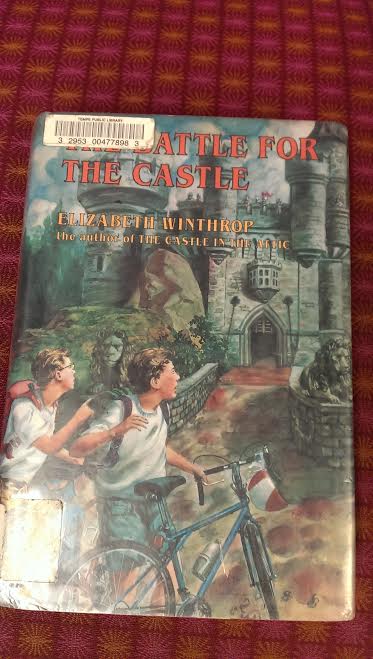
battlecastleThe Battle for the Castle by Elizabeth Winthrop, 1994.

This is the sequel to The Castle in the Attic.

William is growing up.  As William’s twelfth birthday approaches, he feels like he and his best friend, Jason, are growing apart. Actually, what he fears is that Jason is out-growing him. Jason has grown taller than William and much more muscular, thanks to his off-road bike training sessions with his father. William, on the other hand, is still short and feels like a shrimp next to Jason.

In their town, it is traditional for boys to “jump the trains” when they turn twelve. It involves grabbing hold of a ladder on the side of one of the cars as the train reaches a point on the track when it slows down, climbing over the top of the car, and jumping off the other side. It’s a dangerous trick to pull, and parents try to keep the kids from doing it. Still, the boys who don’t do it are considered to be wimps by the others. When Jason and William try, Jason makes it, but William gives up when his hand starts to slip. William is not hurt, but he is embarrassed at his failure.

To show Jason that he’s not just a wimp, William decides to let him in on the secret of the castle in the attic. Mrs. Phillips decided not to drop the magic token into the sea along with Alastor as she said she would (see previous book), and she sends it to William as a birthday present. After William explains to Jason how the token works, he convinces him to become small with him and visit Sir Simon and William’s other friends. When the boys arrive, they are welcomed by Sir Simon, who is about to leave for a tournament. William and Jason agree to help look after Sir Simon’s castle until he returns, along with his friend Dick, Dick’s son Tolliver, and Dick’s niece Gudrin. Sir Simon’s old nurse, Callendar, has died, but before her death, she made a prophecy of death and danger. Almost everyone believes that she was just raving, but Gudrin knows that danger is approaching. A strange ship of skeletons has been seen approaching the town, and bones have been floating down the river. Sir Simon had the ship towed out to see again, and Dick thinks there’s nothing more to fear. However, the ship has returned, and the boys and Gudrin know that something must be done in order to keep Callendar’s prophecy from coming true.

There is an army of rats aboard the ship, led by a giant rat that walks on its back legs like a human. The boys and Gudrin attempt to burn the ship, but the rats escape and begin attacking people across the countryside. When one of these people makes it to the castle to warn everyone, Dick finally believes them that something needs to be done. Most of the people are sent away from the castle, Tolliver is sent to bring Sir Simon back to help, and the others stay to wait out the siege. Although William is scared, he manages to keep his head and come up with a plan that defeats the rats once and for all.

In the end, when the boys return to their own world, William declares that he will never jump the trains because he thinks it’s a crazy stunt. Jason doesn’t mind because, as he says, “there’s more than one way to jump the trains.” William doesn’t need to prove that he’s grown up by performing a crazy stunt because he’s already behaved with courage and maturity while facing real problems and saving the lives of other people.

Forgotten Books and Stories

Remember that book you read as a kid?  You know the one.  It had that guy in it.  Or maybe it was that girl. Actually, it was probably both.  And there was a mystery to solve!  They went on an adventure.  There was something magical about it.  And it all ended happily!  I think.  Anyway, it was something like that.

But, after all these years, it’s hard to remember exactly how it all went.  Now, the book is out of print.  You could probably find it somewhere, if you remember what it was.  Maybe you’d like a copy, or maybe you’d just like to remember exactly how it went.

There are a number of sites on the Internet now where you can submit descriptions of a book you’re looking for, as much as you can remember about it, and see whether or not anyone recognizes it.

This site is more the opposite.  I haven’t read all the books in the world, but I’m a notorious book hoarder, and I have a particular interest in children’s literature.  This is mostly an opportunity for me to talk about old favorites.  These aren’t the kind of books that are on award lists (for the most part), and most of them are long out of print, forgotten or half-forgotten by everyone except for me and a few other people who had fun reading them years ago.  Take a moment to think back on stories you loved as a kid, the ones that made you dream of being a detective, a dancer, an astronaut, or maybe a wizard, or maybe just made you wish you could go back in time to another place . . .

Most of the books I liked when I was young were mysteries, fantasies, or historical novels.  I might offer some spoilers if someone else remembers the story and wants to know how it ends or just wants more information about it.  If someone wants to recommend a book for discussion, let me know!