Something Queer in the Cafeteria

SQCafeteria

Something Queer in the Cafeteria by Elizabeth Levy, illustrated by Mordicai Gerstein, 1994.

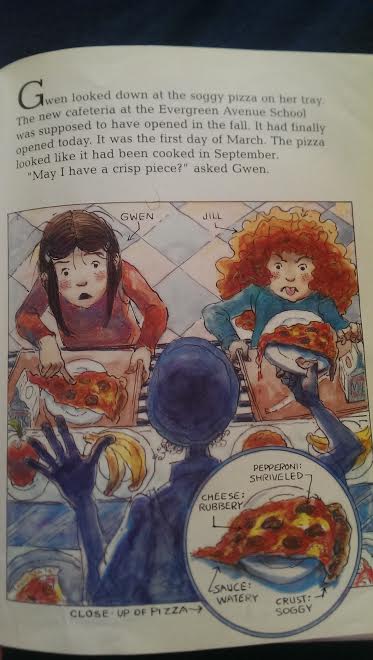
SQCafeteriaPic1Ms. Lensky, the cafeteria lady at Gwen and Jill’s school, is just plain mean. All of the food that the cafeteria serves is yucky, even though the cafeteria is new. There will be a party to celebrate the opening of the new cafeteria, and even the kids’ parents and the mayor are invited. Gwen and Jill are happy because their class will get to help decorate the cake. However, Ms. Lensky, the M.C.L. (Mean Cafeteria Lady), doesn’t like the girls, and she blames them for a number of accidents that happen in the cafeteria.

The first accident was caused by the M.C.L. herself when she was chewing out the girls for being messy (really, the food was messy), and she bumped into other students, causing a food fight to break out.  The M.C.L. blames Jill and Gwen, of course, for starting the fight.  As punishment, the girls are assigned to clean in the cafeteria.  While they’re cleaning up, the M.C.L. blames them when a faucet breaks.

SQCafeteriaFoodFight

Later, when their class visits the cafeteria to prepare for decorating the cake, a counter collapses, throwing frosting all over Gwen.  Then, the girls get in trouble again for criticizing the food.  When the cake burns at the party, and it looks like Fletcher the dog’s bandana is in the burned mess, the girls are blamed once more.

SQCafeteriaFrame

Is the cafeteria jinxed, or is the M.C.L. just out to get the girls?  Or is there another explanation?

This book is part of the Something Queer Mysteries.  It is currently available online through Internet Archive.

Something Queer in Rock ‘n’ Roll

SQRock

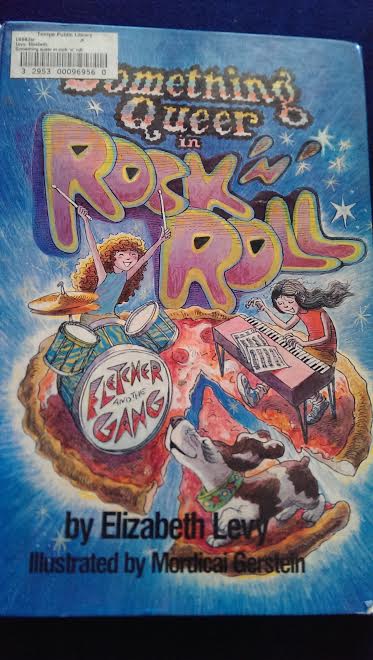
Something Queer in Rock ‘n’ Roll by Elizabeth Levy, illustrated by Mordicai Gerstein, 1987.

SQRockPic1Gwen and Jill join a couple of other friends in forming a rock band.  They want to enter a rock contest run by a local tv station.  In order to enter, they have to have an original rock song, so they write one about Jill’s dog, Fletcher.  They discover that Fletcher loves pizza so much that he gives a spectacular howl when they offer him some.  They make Fletcher and his wonderful howl part of their act.

When they audition for the station, the put on dog ear costumes to match Fletcher’s ears and call themselves Fletcher and the Gang.  The people at the station love their act, especially Fletcher’s howl, and they are accepted onto the program.

However, shortly afterward, Fletcher disappears.  They search everywhere for him and put up posters, but no luck.  Jill is convinced that Fletcher must have been abducted because he would never run away.  It turns out to be true, and they discover it for sure when they get a phone call telling them where to find Fletcher.

SQRockPic2Fletcher is all right, but now, he suddenly hates pizza!  It seems that Fletcher’s abductor fed him nothing but pizza until he started to hate it.  Did someone do that on purpose to ruin their act for the contest?  How would this person have even known about their act?  Also, what can they do about the contest now that Fletcher is more likely to run from the sight of pizza than howl for it?

The other rock bands in the contest are all hilarious with themes that include spiders, potatoes, mummies, and clowns.

The book also includes the music and lyrics for the kids’ rock song about Fletcher: “Hungry All the Time.”

It is part of the Something Queer Mysteries.

Something Queer at the Birthday Party

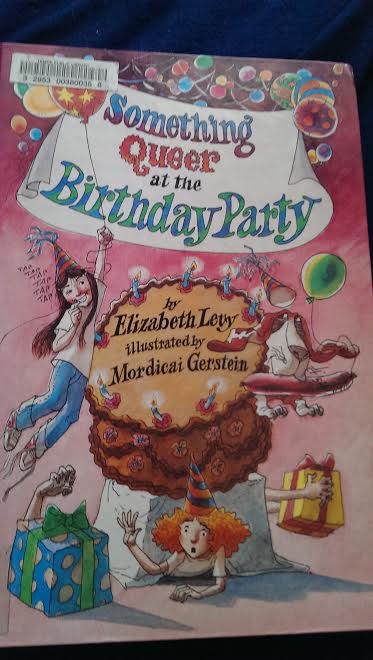
SQBirthdaySomething Queer at the Birthday Party by Elizabeth Levy, illustrated by Mordicai Gerstein, 1989.

Jill and some other friends are throwing a surprise birthday party for Gwen. They send out invitations secretly and create a mystery game for Gwen with a series of clues to lead her to the party.  As part of the game, Jill pretends that someone broke into her house and stole a painting of her and her dog, Fletcher.  The clues to the thief lead Gwen into the room where all of their friends are hiding, waiting to surprise her.

Gwen loves their little mystery and the surprise, and the party seems a success. But when it’s time to bring out the cake and open presents, Jill discovers that they are missing from the closet where they were hidden. At first, Gwen thinks that it’s just another mystery game, but Jill tells her that the presents really are missing. Who took the presents, and where are they now?

SQBirthdayPic1Gwen takes her party and all the guests on a hunt across town for her missing presents, but the big clues turn out to be right back where they started, and Fletcher leads them right to what they’re looking for.

The solution to this mystery touches on a problem that children with a birthday near Christmas understand: When your birthday is near a major holiday, people don’t pay as much attention to it or give as many presents.  My grandmother said it was the same with her when she was young, and she was also the eldest child in a large family, so her birthday was never quite what it should have been.  In the story, one of the girls’ friends had this problem, and it was the motive behind this temporary theft.  The culprit didn’t mean to keep the presents forever, they just wanted to pretend that they were all theirs for a little while.  Gwen forgives the culprit and shares the rest of her birthday with this person.

The book is part of the Something Queer Mysteries.

Lauren’s New Address

Sleepover Friends

SFLaurenNewAddress#28 Lauren’s New Address by Susan Saunders, 1990.

Lauren is not happy when her father announces that their family is moving to a new house a couple of miles from their old neighborhood. Her father works in real estate and wants to have his own office in their home. Their old house wasn’t big enough, so he found a new house for them.

Lauren hates the new house because it’s old and looks like a haunted house on tv. Plus, she’s afraid that she won’t see her friends as much because she’ll be living farther away from them. Her friends try to cheer her up by pointing out that she’ll have a swimming pool in her backyard and will be living down the street from one of the cutest boys in school, but nothing seems to help.

Then, Lauren learns that one of her new neighbors may be a princess from another country.  The girls hear that a young princess, Marina, from the European country of Osterburg has lost her parents in a car accident and is coming to live in their town with her American aunt and uncle. The only picture they’ve seen of the princess is blurry, but it looks a little like the young girl, Maya, living next door to Lauren in her new neighborhood. Stephanie suggests to Lauren that she try to find out more about the girl because if she is really a princess it would make a great story for their school newspaper.  At first, Lauren is doubtful, but then she overhears something that makes her think otherwise.

Things in Lauren’s neighborhood might not be quite what they seem at first, but her friends find some creative ways to help her adjust to her new house and learn ways of dealing with change, like keeping busy.  In the end, although Lauren is still getting used to her new house, she is happy because there are some good points about it, and she knows that her friends will still be there for her.

Patti’s Luck

Sleepover Friends

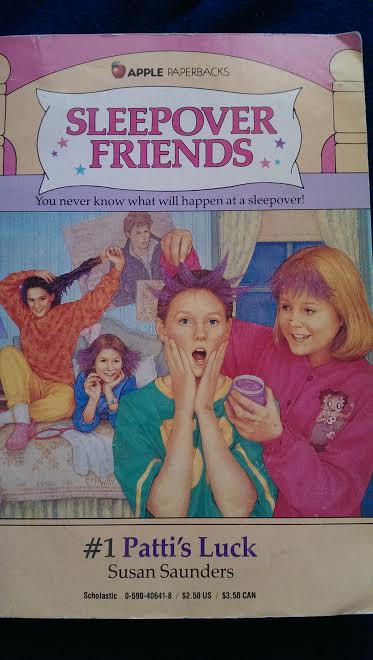
SFPattisLuck#1 Patti’s Luck by Susan Saunders, 1987.

Patti Jenkins has just moved from the big city to the smaller town of Riverhurst.  Recognizing her as a former classmate, Stephanie invites her to join the group of friends she has sleepovers with, Kate and Lauren.  The other girls like her, but almost immediately, bad things start happening.

At their first sleepover with Patti, the girls start watching a creepy old movie that spooks both Patti and Lauren. Patti accidentally knocks over a tray of snacks, and Kate jokes that it’s part of the curse, like in the movie.  Then, the water main breaks at Stephanie’s house, so the girls are unable to wash out the purple styling gel they just put in their hair.

From there, it just seems to get worse and worse.  Patti accidentally sets Lauren’s backpack on the back of a car that drives away, and the girls have to chase after it on their bikes.  Lauren eventually catches up with the car and gets her schoolwork back, but Patti gets lost and caught in a rain storm before she can find her way back to school.  Then, on a school field trip, she helps her classmates to find an elevator at the museum.  After Patti presses the button, the elevator doors close before their teacher gets on, and the elevator gets stuck for awhile with the lights off.

Is Patti bad luck?  She seems to think so, and Lauren, being the superstitious type, is pretty creeped out, thinking that Patti might really be under a curse.  Kate, of course, says that’s all nonsense.  When Stephanie is hurt after Patti accidentally lets Lauren’s brother’s huge dog out of the room whee he was supposed to stay, Patti starts avoiding the other girls because she’s worried about her bad luck curse. The others decide that they need to do something to help Patti out of her bad luck streak.

The book acknowledges that most of Patti’s “bad luck” is just a series of unfortunate accidents and coincidences and that it’s only Patti’s nervousness and superstitious attitude toward them that makes it seem like something more.  Kate devises a way to remove Patti’s bad luck that works partly because Patti feels the need for some kind of ceremony to help her get back to normal.  In the end, all of the girls realize that there’s nothing really supernatural or superstitious going on.

The book is currently available online through Internet Archive.

Totally Useless Skills

uselessskills

Totally Useless Skills by Rick Davis, 1994.

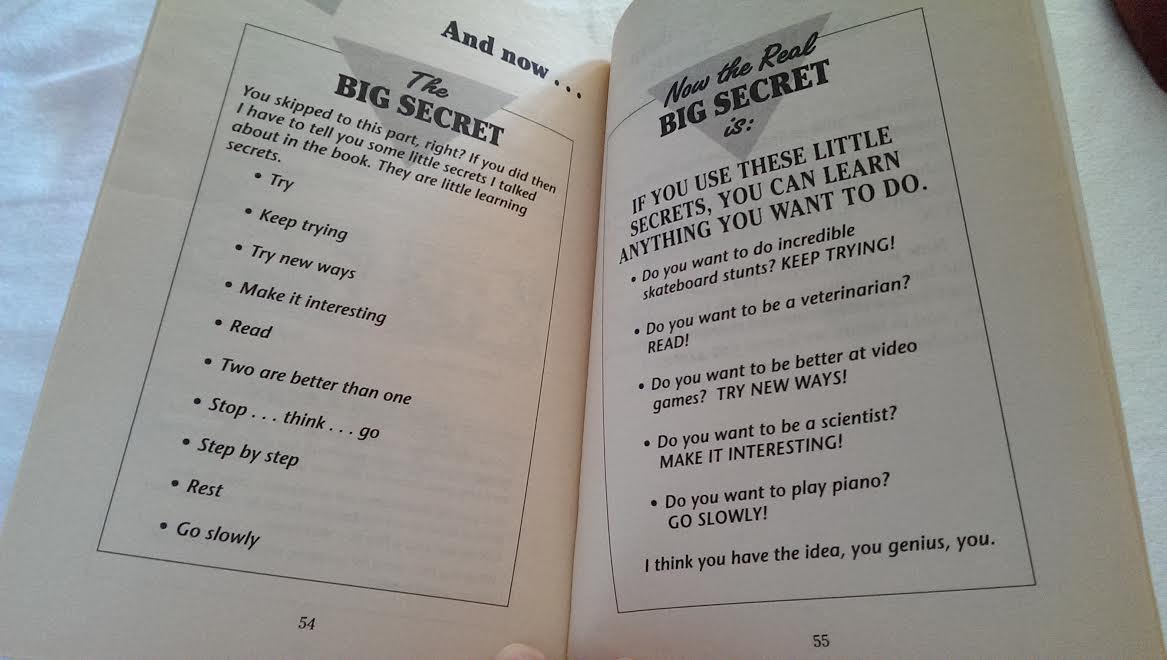
The name of this book is intentionally deceptive, but only partly.  What I mean by that is that the little tricks and stunts in the book may not have much of a practical application except for just having fun and amusing your friends, but the techniques for learning them can be applied to learning just about anything.

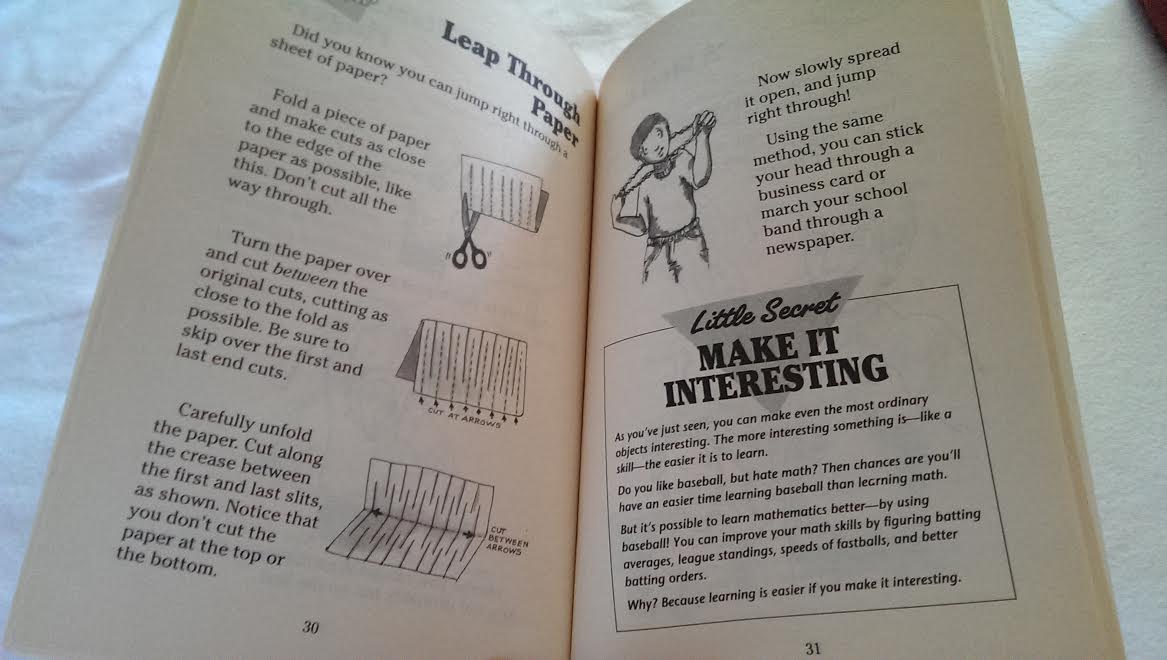
This book describes how to do fun tricks that don’t require any special equipment and are mostly based upon knowing things work, like the blind spot in the human eye (such as using the blind spot in your eye to make it look like your teacher’s head has vanished) and where your center of balance is (used in the trick showing how a girl can pick up a chair when a boy can’t). The tricks include making it look like your arms are lengthening or shrinking, making it look like you’ve broken your nose, how to hang a spoon from your nose, how to jump through a single sheet of paper, how to make a pencil float, how to make your leg disappear, and how to pronounce the longest word in the English language.

uselessskillspic1

Kids will enjoy learning these little tricks to entertain their friends. However, the book also contains useful tips for learning these skills that can be used to learn anything you want to learn. The author emphasizes the importance of trying new things, practicing what you’ve learned, going slowly and dividing big tasks into smaller ones when trying to master something difficult, and making tasks interesting so they will be easier to learn. Aside from the fun of learning these little tricks, the book’s main purpose seems to be helping kids to develop self-confidence and new learning skills.

The book is currently available online through Internet Archive.

uselessskillspic2

A Wizard’s Dozen

WizardsDozenA Wizard’s Dozen: Stories of the Fantastic edited by Michael Stearns, 1993.

This is a collection of fantasy stories (roughly middle school level) by different authors.  The tone of the stories varies from light and humorous to dark and serious.  The stories in this collection are:

The Sixty-two Curses of Caliph Arenschadd by Patricia C. Wrede

Caliph Arenschadd has a temper, but unlike other rulers, who have been known to cut off people’s head when they’re angry, Arenschadd is also a wizard.  Because he likes to show off his magic, he has thought of something more creative than executing people: a list of curses to inflict on those who anger him.  As people get him angry, he progresses through the curses in the order that he thought of them, each one worse than the last.  Worse still, he also inflicts the curses on the families of people who annoy him, which is how Imani, the young daughter of the caliph’s vizier has experienced so many at her young age.  However, the caliph has made a serious miscalculation in his latest curse.  This time, he has turned the vizier and his family into werewolves without being able to remove the curse.  As far as anyone knows, it’s impossible to cure lycanthropy.  As the vizier and his family find themselves becoming a threat to those around them, can Imani and her friend Tumpkin find a way to break the curse?

Fairy Dust by Charles De Lint

When Marina’s friend Jason manages to catch a real, live fairy in a jar, she tries to convince him to let it go, but he refuses.  He wants to keep it, just overnight.  But, the fairy ends up dying, and suddenly, Jason himself is severely ill.  Marina is sure that Jason is suffering from a fairy’s curse, but is there anything she can do to save him?

This experience touches on Marina’s absent father, an impractical dreamer, although it does turn out that he has taught Marina an important lesson, and she learns for herself that when she sees someone doing something that she knows is wrong, it is also wrong for her to keep silent.

The Princess Who Kicked Butt by Will Shetterly

In a mystical kingdom, people’s names tell everyone something about their destiny and character.  When a new princess is born in the kingdom, the Fairy Who Was Good With Names comes to bestow a new name on her.  However, the fairy sneezes and no one clearly hears the name that the fairy gave her.  Thinking that the fairy said the princess was “the Princess Who Read Books,” the king and queen make sure that she has plenty of reading material while she’s growing up and don’t give it much more thought.  Later, when the Evil Enchanter tries to force the princess to marry him and her parents to hand over the kingdom, the princess’s true name and her real skills become known.

The Sea Giants by Betty Levin

A great-grandmother translates whale songs for her family to tell them an ancient story: There was once a family that was barely surviving on small fish, small prey, and the little berries that they were able to forage for themselves.  The father wished that he were bigger, stronger, and more powerful so that he could catch bigger prey for his family.  One day, the father and mother paddled out to sea in search of food, and they met a group of giants in their own canoe.   The giants took them back to their own village and gave them food, but although the food they were offered was much larger than anything they could catch themselves, next to the giants, it was about as small as the small prey that the people ate back home.  After while, the couple returned home to their children, guided by a strange gray dog which turns out to be a porpoise.  From then on, the family’s luck begins to change, and they do become more prosperous.  However, the father is unable to forget about the giants, and he feels called to join them again.

Efrum’s Marbles by Joy Oestreicher

Efrum is a giant, but he’s no ordinary giant.  Although Efrum is big (being a giant), he hasn’t grown at all since the age of six.  He is over 30 years old, and he is still a child, which is weird, even for a giant child.  He spends his days playing with other giant children, and his favorite game is marbles.  In fact, he has a favorite marble.  No one knows quite what this marble is made of because no one has ever seen another like it.  It’s strange, and it kind of looks like . . . an eye?  Then, a young giant girl named Brinda plays marbles with Efrum, and for the first time ever, Efrum is tempted to let someone else win his precious, mysterious marble, which clever Brinda realizes may be the first step in helping Efrum to grow up.

“Come Hither” by Tappan King

Meg hates being the middle child in her family.  Her older sister is praised for being responsible, and her younger sister is pampered.  Meg feels like getting into trouble is the only way that she can get attention.  When she gets into trouble and is grounded from her older sister’s birthday party, she decides to amuse herself by messing with her sister’s computer.  She makes a mistake while typing and ends up receiving an invitation from a mysterious elf to join her for a party in his land.  Has Meg just made a serious mistake?

With His Head Tucked Underneath His Arm by Bruce Coville

In a kingdom constantly at war, few young men survive to become old.  Young Brion escapes for a time by pretending to be crippled, but one day, his pretense is exposed, and he is executed for refusing to fight.  However, Brion’s death doesn’t prevent him from returning to end the suffering of his land and hopefully save more people from his fate.

The Queen’s Mirror by Debra Doyle and James D. MacDonald

This is a re-telling of the story of Snow White.  An older servant tells the young princess about the history of the magic mirror, which belonged to the princess’s grandmother, who ordered her own daughter’s death because she feared and resented her beauty.  There are no dwarves in this version, and it’s a slightly different take on the story.  There are hints that the events in the story repeat with the generations.

The Breath of Princes by Alan P. Smale

When Stephanie is kidnapped from her town by a dragon, the dragon tries to convince her that being a dragon’s prisoner is a much better fate than the one that awaits her in small-town life: drudgery, boring marriage, children, etc.  Of course, he plans to eat her eventually, when he gets tired of her.  Young men try to rescue her, but in a way, Stephanie fears that one of them will succeed.  If they do, she will no doubt be obligated to marry the rescuer, and considering what some of them are like, it might even be worse than being eaten by a dragon.  The man she has always dreamed about is a prince she was lucky enough to meet once, but no prince has come to save her.  There may be a way for Stephanie to save herself from either fate, but she has to sacrifice her innocence in the process.

Harlyn’s Fairy by Jane Yolen

Harlyn lives with her Aunt Marilyn, and when she spots a fairy in the garden one day, her aunt begins to worry about her.  Harlyn’s mother is mentally unstable and prone to paranoid delusions, so Aunt Marilyn keeps a close eye on Harlyn.  She discourages her from reading fantasy stories (although Harlyn loves them) for fear of the effect they might have on her mind.  But, Harlyn really did see a fairy.  The question is, what is she going to do about it?

Lost Soul by Vivian Vande Velde

A young man meets a beautiful, mysterious woman by a stream.  She charms him so much that he no longer loves the woman he was going to marry.  In fact, he is so obsessed with her that he can think of nothing else.  What will he do when he realizes that she doesn’t feel the same?  Is she even . . . human?

The Way of Prophets by Dan Bennett

The royal family of the Stuard Isles has a tradition.  At the age of seventeen, each of them must make a journey alone along an old road known as The Way of Prophets.  The things that they see and the things that happen to them along their journey tell them what their destinies are.  They learn what really matters to them and find a focus for their time as rulers.  So many centuries have passed that no one can be quite sure where the original Way of Prophets was, so mostly, the journey takes on a kind of symbolic meaning, but there are stories that say that, every once in awhile, a young ruler finds their way to the true Way of Prophets, and the kingdom changes in some important way.  When Prince Ransom sets out, he hopes to find the true path himself.  However, when he does, it doesn’t turn out to be quite what he imagined, and it makes him question what he really wants most from his destiny.

I love this story for what the prince’s father told him, “When I am gone, when you take the throne, you will be powerful.  That is guaranteed.  Your knights and armies will make sure of it.  And you will be loved and respected.  That, too, is guaranteed.  No matter what you say and do, there will always be those ready to smother you with love and respect, if you let them, simply because you wear the crown.  Because of who you are, Ransom — because of who you will become when I am gone — you need never be hungry or alone.  But there is no guarantee that you will matter.”  If what Prince Ransom wants most is to matter, can the Way of Prophets make it happen?

Faith by Sherwood Smith

Faith tells her friends fantastic stories all the time.  She comes from a poor family with a lot of problems, so most people assume that she just makes up stories to try to make her life sound better than it really is and avoid thinking about the problems.  Usually, her two best friends don’t mind much, but lately, Melissa has been getting tired of hearing Faith talk about how her dog can talk or how her radio can tune in to Middle Earth.  She’s growing up and losing patience with fantasy stories.  Even the girls’ other friend wishes that Faith would stop asking them to believe these wild stories.  Then, after a visit to the trailer where Faith lives, she begins to change her mind.

The book is currently available online through Internet Archive.

The Witch King

WitchKingThe Witch King by Maeve Henry, 1987.

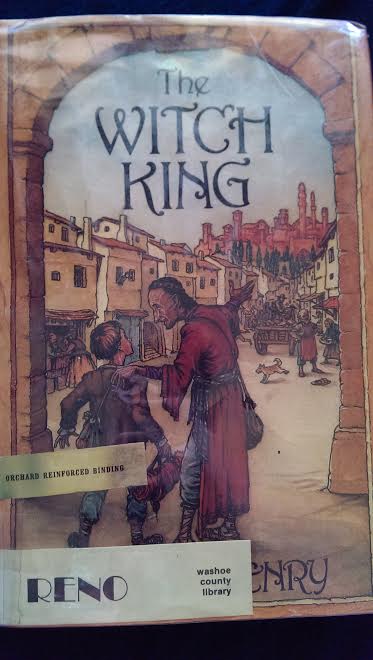
Robert is the son of a fisherman in a small village by the sea. All his life, he’s grown up hearing stories of a mysterious City to the south that was fashioned ages ago from a silver tree. Wondrous things are said to happen there. People from the City used to visit the Witch Women in Robert’s village for advice, but no one has come there from the City in a long time, and people now doubt whether the City really exists. People have even stopped believing in the Witch Women. However, Robert believes in the old stories, and he wants desperately to see the City for himself.

The stories say that someday the Witch King will come to the City and plant a seed so that a new tree will grow. Robert wants to see this story come true, and Granny Fishbone, a strange old woman who tells Robert the old stories, says that the time of the Witch King is close. She gives him a pendant in the shape of a fish and tells him that it came from the City and that it is time for Robert to take it back there.

With some misgivings, Robert’s family lets him set off on his seemingly crazy quest of finding the City. To Robert’s surprise, he is met on the road by the Royal Wizard of the City. As Granny Fishbone said, the time of the Witch King is near, and there is trouble in the City. The Spell that controls the City is failing, and the King has been seeking a remedy for the problem.

The City has become corrupt because a usurper murdered the rightful king years ago and took over the City. He had his wizards cast a spell on the City that let him control everything in it, and he manipulated historical accounts to make it seem as though he was the founder of the City himself. Robert knows differently because Granny Fishbone is really one of the Witch Women, and she told him the true story about the miraculous tree and the founding of the City. The king’s grandson, David, is also corrupt and wants to learn to control the spell over the City for his own power. He believes that he is the prophesied Witch King, and he tries to convince Robert of it so that he will help him.

When Robert learns that David’s plans for controlling the spell may mean sacrificing his own sister, Princess Sophie, who Robert loves, Robert does his best to thwart his plans by telling the king and the Royal Wizard.  Although David at first seems to have the upper hand, he is not the true Witch King. Granny Fishbone was correct that the time of the true Witch King has come, and Robert has a much bigger role to play in the story than he thinks.  As the ancient prophesy says, the City will have to be destroyed in order to be saved.

The Westing Game

The Westing Game by Ellen Raskin, 1978.

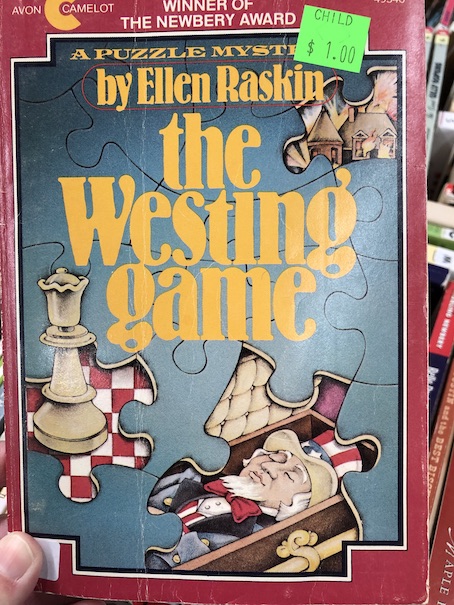
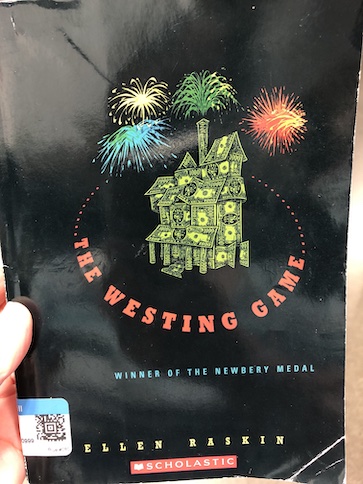
It all starts when a mysterious person invites six sets of people to live in the new apartment building, Sunset Towers.  Sunset Towers is a luxury apartment building, but the rent for these individuals and families is surprisingly affordable.  That is because these people are special, and the owner of these apartments is preparing for a very special game.  Although there doesn’t seem to be anything to tie these people together at first, they do share a special connection that isn’t immediately obvious, a connection to the wealthy but mysterious Samuel Westing.

Among the new tenants of Sunset Towers is young Turtle Wexler.  Although she is often in the shadow of her overly-shy but pretty older sister, Angela, she has ambitions of her own in life.  While her mother dreams of making it in high society, Turtle (whose real name is also something of a mystery to the other tenants for most of the book) wants to become a successful businesswoman when she grows up, and one of the things she wants most is a subscription to the Wall Street Journal.  To raise the money she needs, Turtle accepts a bet to sneak into the supposedly empty Westing House on Halloween night, earning $2 for every minute she spends there.  There are stories that the place is haunted and that Mr. Westing’s body lies rotting on an oriental rug there, but Turtle doesn’t believe them.  As it turns out, she’s right.  Instead, she finds Mr. Westing dead in bed.

To everyone’s surprise, the tenants of Sunset Towers are all named in the will, but not in an ordinary way.  In order to determine who the final heir will be, they must all play The Westing Game.  The heirs are divided up into teams of two and given $10,000 and a set of clues.  They must use these to give an answer at the end.  But, what kind of an answer?  Mr. Westing’s will implies that he was murdered, but is that really true?  Could his murderer even be among the heirs/game players?

As the book continues, readers learn more about each of the contestants.  Each of them has their own personalities, ambitions, and problems.  For example, Angela Wexler is about to be married but seems less than enthusiastic about the wedding.  Cristos Theodorakis suffers from a strange malady that keeps him confined to a wheelchair.  Sydelle Pulaski was actually invited to join the tenants by mistake, but it might be the best mistake of her life.  Mr. Hoo is worried about his restaurant, and Madame Hoo dreams of returning to China.

The competition is fierce in the Westing Game.  Players are suspicious of other players cheating.  Things around the apartments start disappearing, and some mysterious person has even started planting explosives in unlikely places!  Whether the thefts and explosions have anything to do with the contest itself is for the reader to discover, but there is an answer to the Westing Game, and only one of the contestants will discover it.

The book is a Newbery Award winner.  There is a movie version of the book called Get a Clue! (1997), although it doesn’t follow the book completely.  There are multiple copies of the book currently available online through Internet Archive.
My Reaction

One of the great things about the Westing Game is how the seemingly mismatched pairs of contestants actually complement each other, giving people new perspectives on their lives and the answers to problems that some of them have been struggling with.   Lonely Flora Baumbach, grieving for her deceased daughter, is paired with young Turtle, who finds in her a more motherly person than her own mother, someone who values her for her intelligence and her unique skills in a way that no one else does.  Mrs. Baumbach enjoys having someone to care for again, and Turtle blossoms under her care and attention.  Mr. Hoo, meanwhile, finds some unexpected support for his business from Mrs. Wexler, who develops broader interests in life than her previous social ambitions and an unexpected flair for business and marketing.  Judge Ford, who was educated by Mr. Westing and always worried about how to repay the debt, finally finds a way to repay his kindness, a way that Mr. Westing would have approved.  Bertha Crow, an unhappy woman who turned to religion to atone for past sins, finds new happiness with someone who understands and accepts her past and is willing to help her continue her good works.  Even Angela, who seems to have everything a young girl would want (good looks and a kind fiance with a promising future in medicine), figures out what she really wants in life and finds the courage to stand up for it.

A Year Down Yonder

YearDownYonderA Year Down Yonder by Richard Peck, 2000.

This is the sequel to A Long Way from Chicago. The story takes place shortly after the Great Depression, in 1937.

Times are still hard, and a recession has left a lot of people out of work again. Mary Alice’s father is out of work, and her brother Joey is out west working for the Civilian Conservation Corps. Because her family has to move to a smaller apartment, fifteen-year-old Mary Alice leaves Chicago to stay with her Grandma in the country for the year. Times are hard in Grandma’s small town as well, but Mary Alice’s Grandma is as wily and eccentric as ever.

Like the first book, this book is really a series of short stories about Mary Alice’s adventures with her Grandma during their year together. The stories generally have a hilarious turn as Grandma gets the better of everyone, often in the name justice or a good cause.  (Although, Grandma’s sense of justice is debatable since it involves “borrowing” pumpkins from the neighbors in the dead of night and other questionable activities.)

These stories present a detailed picture of rural life during the 1930s, from pranks played on Halloween to how Armistice Day was celebrated in the years following World War I, when people were still alive who had strong memories of that war. The stories also capture some of the personalities and politics of life in a small town, from a disreputable family of outcasts to the local elite, who have more money than the others and brag about having ancestors who fought in the Revolutionary War (which may or may not be so).

Rich Chicago Girl: Mary Alice arrives in Grandma’s small town and is enrolled in the local school.  She meets the class bully, and Grandma helps her to deal with her.

Vittles and Vengeance: At Halloween, Grandma gets revenge against a group of pranksters and raids her neighbors for ingredients to make the school Halloween party better.

A Minute in the Morning: Armistice Day, November 11, has more meaning for people who have actual memories of The Great War (World War I).  Grandma makes sure that those who can afford it pay what they owe to the veterans of that war and shows Mary Alice the price that some soldiers paid for supporting their country.

Away in a Manger: Mary Alice is picked to play Mary in the school’s Christmas Nativity play.  The baby Jesus turns out to be a surprise for the whole town, and Grandma arranges a special surprise for Mary Alice.

Hearts and Flour: The head of the local branch of the DAR pushes Grandma to make cherry tarts for their annual tea in honor of George Washington’s birthday.  Since she will neither allow Grandma to join the DAR (because Grandma doesn’t have the proper lineage) nor pay Grandma for her work (she thinks Grandma should ‘volunteer’ her services as part of her patriotic duty), Grandma insists that if she bakes, she must host the tea as well . . . with a couple of special surprise guests.  Meanwhile, a handsome new boy named Royce joins Mary Alice’s class at school.

A Dangerous Man: An artist working for the WPA rents a room from Grandma, treating Mary Alice and Royce to a scandalous but hilarious sight when his subject matter gets out of hand.

Gone with the Wind: A tornado sweeps through the town, and Grandma and Mary Alice go to check on residents who live alone.  Mary Alice also prepares to return home to her parents in Chicago.

Ever After: The final story in the book is about Mary Alice’s wedding, years later, toward the end of World War II.

This book is a Newbery Award winner.  There are multiple copies currently available online through Internet Archive.