The Castle in the Attic

CastleAtticThe Castle in the Attic by Elizabeth Winthrop, 1985.

Ten-year-old William’s life is being turned upside down.  Mrs. Phillips, his nanny, is leaving for good!  Mrs. Phillips has lived with William’s family and helped to take care of William ever since he was born. Both of his parents work, so William spends most of his time with Mrs. Phillips after school. She fixes him his snacks, takes him to his gymnastics lessons, spots for him as he practices his routine, and reads stories about King Arthur with him. However, now that William is ten years old, Mrs. Phillips thinks that she would like to go live with her brother in England, which is where she is from. William is upset because he can’t imagine life without Mrs. Phillips. Mrs. Phillips tells him that he will be fine without her and that his parents will start spending more time with him after she leaves. William tries everything he can think of to get her to stay, but she is determined that it’s time for her to go.

As a leaving present, Mrs. Phillips gives him a toy castle that has been in her family for generations, along with a little lead figure known as the Silver Knight. Still, William is determined to find a way to keep Mrs. Phillips from leaving.  Then, he discovers that the toy castle is magic! When the little knight comes to life and gives him a magic token that can make people small, William thinks he’s found the way he’s been looking for. With Mrs. Phillip’s impending departure and his fears of losing her, William suddenly realizes that he can use the magic coin to keep Mrs. Phillips with him.  Before she can leave, he shrinks her and puts her in the castle with the knight.

Of course, turning his nanny small and keeping her inside the toy castle was unethical, as Mrs. Phillips and the knight point out, but William’s mistake proves to be only the beginning of a fantastic journey that will fulfill a legend, free the knight’s kingdom from the reign of an evil wizard, and give William the confidence he’s been looking for.

Over the drawbridge of the castle is a poem about the beginning of a quest. Mrs. Phillips had said that there was a legend about the little knight, and when he comes alive, he tells William that his name is Sir Simon and that he was turned to lead by an evil wizard who has taken over his kingdom. The poem is the key to defeating the wizard, and the little token is really only half of one that the wizard was wearing around his neck. When William turns Mrs. Phillips small, he cannot reverse the spell because he lacks the other half of the amulet. To get it, he must become small himself and fulfill the poem by crossing the drawbridge as Sir Simon’s squire.  The two of them set out together to defeat the wizard and retrieve the other half of the token. Along the way, they become separated, and William must continue on to the wizard’s castle and finish the quest by himself. William has an inner strength that he doesn’t fully appreciate at first, and he can use it to defeat the evil wizard!

There is a sequel to this book called The Battle for the Castle.

My Reaction

I liked this story when I was a kid, and it’s a good coming-of-age story.  The sequel is also a coming-of-age story, but in a different way.  This book is about William coming to a better understanding of what kind of person he is and what he’s really capable of doing.  He can do more and handle more than he thinks he can.  In the end, although William is still a little sad at saying goodbye to Mrs. Philips when she leaves, he feels a little better about her going because he knows that he can take care of himself now, thanks to his magical adventures. Mrs. Phillips tells him that he always had what he needed inside himself but that he just didn’t believe it before.

The next book focuses on what it really means to be a man instead of a boy.  As William and his best friend grow up and are under social pressure from other boys to do a certain stunt in order to prove that they’re really grown-up, William and his friend set out on a magical adventure that teaches them that there are more ways of becoming a man than one.

Mystery Aboard the Ocean Princess

MysteryOceanPrincessMystery Aboard the Ocean Princess by Robin Gottlieb, 1967.

Jill Washburn is about to make her first trip to Europe on the same ship as a priceless painting!  Her Uncle Chow and Aunt Rose have invited her to accompany them on the cruise ship to Europe over the summer because her cousin Connie isn’t enthusiastic about the trip, and they thought that the girls would be good company for each other.  Lately, Connie has been trying to act ultra-sophisticated, declaring anything and everything that she doesn’t think is cool to be simply “tedious” (Connie loves big words, and “tedious” is her pet word).

Jill is fascinated by the presence of the famous painting on the ship, a painting of a young Spanish prince by Goya, “Don Manuel Osorio de Zuñiga.”  Jill loves art, and her ambition in life is to be an art teacher, like her father.  She has also read about recent art thefts in the newspaper and wonders whether Don Manuel is at risk during its journey.  She can’t help but seek out the room where the painting is kept and talk to one of the guards about security.  The guard just tells her that he appreciates her concern but that everything is under control.  But later, Jill finds the guard meeting secretly with a mysterious man by the lifeboats.

MysteryOceanPrincessPicCould the two men be plotting to steal the painting?  Jill persuades Connie to help her investigate and spy on the them, but things aren’t what they seem.

A mysterious gift left in Uncle Chow and Aunt Rose’s cabin frames Jill’s aunt and uncle for art theft.  Although Connie thinks their snooping has caused enough problems already, Jill thinks that the only way to clear their names is for her and Connie to find the real thieves.  With the ship’s costume ball coming up, Jill comes up with a daring scheme to get the thieves’ attention and hopefully get them to reveal themselves.  One thing is for sure: Connie was wrong about this trip being “tedious.”

Candleshoe

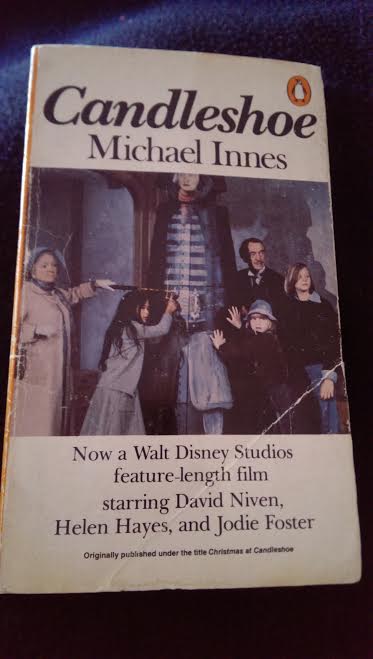
candleshoeCandleshoe by Michael Innes, 1953.

I own the movie version of the book, which was originally named Christmas at Candleshoe (although it’s not about the holiday).  It contains the text of the original story, but the picture on the front cover is from the movie.

The Disney movie is very different from the original book.  For one thing, the hero of the story is a boy (Jay), not a girl (Casey/Margaret), and unlike the movie version, the child’s identity is established for certain by the end of the book. The book has a happy ending, and so does the movie, but part of the movie’s point was that the idea of family isn’t dependent on blood relations alone, so it isn’t important whether Casey is really Margaret or not (although there are strong hints that she is).

The book is a bit hard to follow at first because it jumps back and forth between different places and different sets of characters, although it all takes place during the course of a single day and night.  Actually, I’m not sure this can really be called a children’s book, but I included it here because of the movie tie-in.  Because of the difficulty level of the book, I’d really recommend it for older children or adults.  Personally, I have to admit that I liked the movie better.

The story takes place in the mid-twentieth century, after WWII. There are two manor houses involved, Benison Court and Candleshoe. Benison Court, the newer of the two, is owned by the Spendloves, and Candleshoe, the older one, is owned by the elderly Miss Candleshoe. The two families are related, and neither one of them has as much money as they used to. The Spendloves take in some extra money by offering tours of Benison Court and showing people paintings and antiques owned by the family for generations. To raise some additional money, they decide to sell a couple of the paintings by Titian. To their surprise, the expert they call in to evaluate the paintings tells them that the paintings are forgeries.  Archdeacon, who cares for the antiques and library at Benison, reminds the Spendloves that during the war, the paintings were sent to Candleshoe for safekeeping.

Meanwhile, a couple of American tourists, the wealthy Mrs. Feather and her son Grant, having seen Benison, stop by Candleshoe. Mrs. Feather is fascinated by the old place, in spite of its state of disrepair, and Miss Candleshoe invites them to have dinner there and spend the night. Mrs. Feather has an interest in purchasing Candleshoe for herself and fixing it up.  Miss Candleshoe and her longtime friend, the retired chaplain, Armigel, know that there is not enough money for them to fix up Candleshoe, and they like the idea of traveling, so they are willing to consider selling the manor house. This plan does not sit well with Jay, the orphaned son of Miss Candleshoe’s housekeeper, Mrs. Ray.

After Mrs. Ray died, Miss Candleshoe cared for Jay, and now, with Miss Candleshoe and Armigel showing signs of senility, Jay has been handling much of the practical running of Candleshoe. On this particular evening, Jay is worried about more than the possible sale of the property. He has been noticing strange people paying unusual attention to the house. He suspects, correctly, that they intend to break into the house that night, and he has assembled a small army of local children, armed with antique weapons, to defend the place. Grant, befriending Jay, admires the boy’s practical turn of mind but worries that they are not up to the task of handling the siege that is coming to this isolated country house. As the danger presses closer, the Spendloves, Archdeacon, and the art expert are heading toward Candleshoe in search of the missing paintings.

The answer to all of these problems may lie in the strangest feature of the house: the Christmas box, a stone monument in the gallery made by Gerard Christmas and dedicated to the memory of an ancestor of the Candleshoes, who may have been a pirate. According to the lore of Candleshoe, the box will open at a time when Candleshoe is in crisis and will save the day.

The book is available online through Internet Archive.

But, is Casey Really Margaret?!

I think so. I want to say, “yes, she is,” but “I think so” is about as definite as I can be because the movie changed the story from the original book.

Whether or not Casey is actually Margaret, the lost heir to Candleshoe, is the burning question everyone is left with after watching the Disney movie Candleshoe. The movie deliberately left Casey’s true identity unresolved at the end, probably because they wanted to have the people at Candleshoe decide to accept her into their family on her own merits, not just because they had to because she’s the heir to the place. In the beginning, the audience is told that missing heir of Candleshoe, Margaret, was kidnapped as a young child by her own father, apparently in some kind of marital/custody dispute, and that she disappeared after his death in a car accident and has not been located although attempts to find her were made in the ten years that have passed since her disappearance. Casey is a teenage girl who was apparently an abandoned child with an unknown past and no memory of her early life who bears an odd resemblance to Margaret, including a couple of distinctive scars that are like ones Margaret was known to have. She is recruited as by con artist to play the part of Margaret, returning to Candleshoe as the lost heiress in order to gain access to the house and find a hidden treasure. Although Casey initially came to Candleshoe under false pretenses as part of a con with the promise of a share of the Candleshoe treasure and a red Ferrari as her payment, she eventually becomes fond of the people there and decides that she can’t let them be cheated by the real villain. Casey proves herself to be part of the Candleshoe family through her loyalty to them, and in the end, they would accept her whether she really was Margaret or not. It’s a nice sentiment, but viewers still have the urge to ask who Casey really is.

Casey is legitimately an orphan or abandoned child, found at about the right time and the right age and in the right place to really be Margaret. She has no memory at all of her early childhood, her parents, or where she came from, and she also bears some telltale scars that match ones that young Margaret was known to have. That’s what we’re told about Casey. Casey’s history is never explained in detail in the movie (we never find out under what circumstances she was found and entered into the Los Angeles foster care system), but from what we do know, her history meshes well enough with Margaret’s known past that it would seem plausible for her to actually be Margaret. Is she really Margaret, and Harry Bundage, the con man, just persuaded her that she was only pretending in order to use her for his own ends? Or, is the real Margaret still out there somewhere? If Casey actually is Margaret, did she lose her memory in the car crash that killed her father, or did he abandon her somewhere before his death, even though he had kidnapped her from her mother and took her to a completely different country?

When Harry Bundage is briefing Casey about Margaret’s background, he poses the theory that Margaret was in the car when her father crashed it and that she may have wandered off in a state of shock after the accident. That explanation might be partly for the benefit of the viewers, helping to explain how Casey could be Marget and not remember it. A young child suffering from shock might be unable to tell anyone who she was or what had happened to her. An accident may even have left some bruising that might have obscured the telltale scars that could have identified her, but again, the matter is never fully settled, and we just don’t know enough of Casey’s background to make a full connection. There are enough pieces to make it possible, maybe even probable, but nothing that definitively settles the matter.

In the final scene of the movie, Casey asks Margaret’s grandmother what will happen if Margaret is ever really found and comes home, and the grandmother says cryptically that maybe she already has. It’s a brief hint that the grandmother thinks Casey might really be her kidnapped granddaughter, even though she accepts that Casey was lying to her earlier about things she said she remembered and knows that Casey herself thought that she was just an imposter. Casey does have those telltale scars, and it does seem like quite a coincidence that two random girls of the same age and similar circumstances would have identical sets of scars. However, the movie stops short of declaring that Casey really was Margaret all along, and the unanswered questions still rankle viewers. So, some of us turned to the original book to get more detail, but it turns out that it doesn’t completely help.

As I said, the original book was different from the movie. Not only was the child hero in the book a boy instead of a girl, he wasn’t kidnapped and taken to America the way that Margaret was. In the book, Jay definitely knows who his mother was, and it’s the question of who his father was that establishes his identity as the heir to Candleshoe. It turns out that Jay’s father was the nephew of the lady of Candleshoe, making her his great-aunt rather than his grandmother. Her nephew had been a ne’er-do-well, and although his family didn’t know it, he had married an American woman before his death. He died not too long after the marriage, but by that point, he had fathered Jay. Jay’s mother knew about her husband’s family, but she wasn’t sure yet whether or not she wanted to tell them about Jay. She took the job as housekeeper so she could observe the family and decide whether or not to reveal their relationship. Unfortunately, she died in an accident before she made up her mind. By the end of the book, Jay’s identity is established, and he is definitely proven and recognized to be the heir to Candleshoe, and because of that, I believe that Casey really is the missing Margaret. At least, that’s as close to confirmation as we’re likely to get. If the child in the book was the rightful heir to Candleshoe, it would make sense if the child in the movie was, too, even if it’s not really the same child.

Of course, that’s not full proof, and it doesn’t answer the questions about Margaret’s kidnapping or her father’s accident or how Casey was found and placed in foster care in California without anyone else connecting her with the missing Margaret when Margaret’s disappearance was reported to the authorities and newspapers. I have a theory that Harry Bundage was right that Margaret was in the car during the accident and that she did wander away from the scene of the accident in shock and possibly suffering injuries that covered up her identifying scars, but that’s still just a theory. There’s nothing in the movie or book that I could use to prove it. We don’t even know exactly why Margaret’s father in the movie kidnapped her in the first place or why Margaret’s mother died not long after she disappeared. (A convenient accident or illness for story purposes so there’s one less person to try to identify Casey/Margaret, or did she kill herself out of despair at the loss of her husband and daughter? The movie doesn’t say, so those are just guesses, too.) There’s a lot of backstory missing, and the book doesn’t clarify these points because of the differences between the book and movie. I guess it’s not really important to the story in the movie, but inquiring minds still want to know.

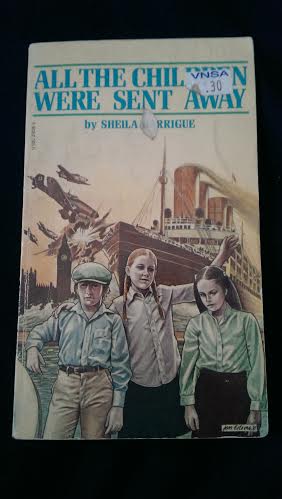
All The Children Were Sent Away

It’s 1940, and Sara Warren’s parents are sending her to stay with her uncle in Canada until the war is over.  With the increasing bombings of England, her parents have decided that it’s just too dangerous for Sara to stay, and her uncle has written, asking them to send her.  Many other British families are sending their children away to escape the bombings, and Sara travels to Canada on a ship with other British child evacuees.  All of them are worried about the families they’ve left behind and what it’s going to be like, living in another country.  They also worry about whether or not they’re ever coming back.

Sara’s escort for the trip is Lady Drume.  She is a bossy, over-bearing woman with very definite ideas about how children should be raised.  She doesn’t like Sara to talk to the sailors on the ship because they can be “impertinent,” and she doesn’t want her to play with the other children because they’re “guttersnipes!”  She even refuses to attend the lifeboat meeting or let Sara go without her!  To Sara’s mind, Lady Drume is as bad as any Nazi.

Sarah still manages to make friends with some Cockney children, Ernie and Maggie, seeing them whenever she can get away from Lady Drume, and an old sailor called Sparky makes sure that she understands safety on board the ship and attends the lifeboat drills.

But, when Lady Drume forces Sara to cut her hair after she’s been waiting so long for it to grow out, Sara decides that’s the last straw!  With the help of her friends, Sara hides from Lady Drume on the ship.  In the process, she learns something about Lady Drume which changes some things for the better, although it takes an outbreak of measles for Lady Drume to really understand and appreciate Sara.

This book is available to borrow and read for free online through Internet Archive.

Part of trouble with Lady Drume and her behavior is that she’s actually very afraid.  She doesn’t like to talk about lifeboats or life jackets because the war and the possibility of sinking frighten her.  She deals with problems by being brusque and trying to ignore frightening things, charging on ahead with whatever seems like a practical course of action to her.  It’s not even just the war but the changing world around her that frightens Lady Drume, a woman who’s used to knowing who’s who and what’s what and getting things done the way she likes them.  But, the rigors of their journey and their mutual vulnerability when they’re sick help lower Lady Drume’s barriers.  Lady Drume isn’t a bad person, and in the end, she arranges a special surprise for Sara to make her exile from England more bearable.

The end of the story is a brief section explaining Sara’s return to England, having been away for a few years, and her feelings at seeing how England and her parents have changed during that time.

There is a sequel to this book that shows what happened during Sara’s time in Canada called The Eternal Spring of Mr. Ito.  It focuses on suspicion of Japanese people following the bombing of Pearl Harbor.  There were Japanese internment camps in Canada as well as the United States during World War II.

Sheila Garrigue’s books about child evacuees from England were partly based on her own experiences as a child evacuee during World War II, as explained in her obituary after her death in 2001.

The D- Poems of Jeremy Bloom

jeremybloomThe D- Poems of Jeremy Bloom by Gordon Korman and Bernice Korman, 1992.
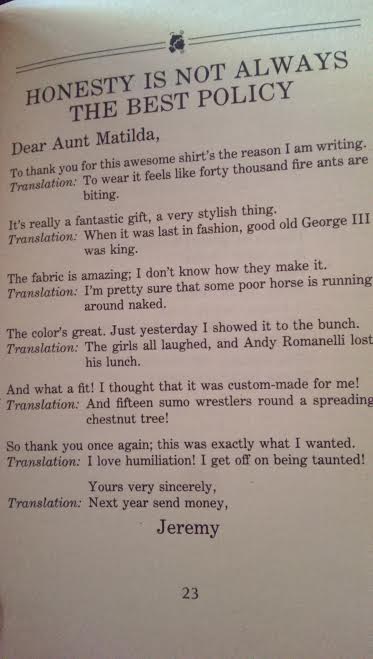
This book is mostly a collection of funny poems, but there is an overarching story to them.  Jeremy Bloom, a typical middle school slacker, wanted to sign up for the easiest elective course he possibly could.  But, by accident, he overslept on the first day of school, and by the time he got there, sign-ups had already started and the easiest and most popular electives were full.  Desperately trying to find something easy and with as little work possible under the remaining electives, Jeremy decided to sign up for Pottery. (“It was no Snooze Patrol, but how hard could it be to make ashtrays?”)  Only, he made another mistake and accidentally signed up for Poetry, and once he was enrolled, there was no way out of it.  He was committed to spending a year writing poetry.

jeremybloompoemJeremy tries to make the best of things, but somehow (partly through his own fault and partly by accident), he continually manages to do things to annoy his poetry teacher, Ms. Terranova (or, as the kids call her, Ms. Pterodactyl, thanks to a mistake Jeremy made when he said her name on the first day of class).  Every single poem Jeremy writes during the year receives the same grade: D-.  The book is divided into different periods of Jeremy’s work, along with an explanation about what Jeremy did during each period to tick off his teacher.  At the end, the reader can be the judge: Are Jeremy’s D- grades because he’s a terrible poet or because his teacher is mad at Jeremy for everything else he does during the year?  (The answer is pretty obvious.)
My favorite poems are the longer ones like “Why I Was Late,” “The Wheeler-Dealer,” and “No Boring Parts Allowed.”  Just to give you an idea of what the poems are like (although they are written in a variety of styles), here’s another one of my favorites, “Honesty Is Not Always the Best Policy.”

The book is currently available online through Internet Archive.

My Crazy Cousin Courtney Returns Again

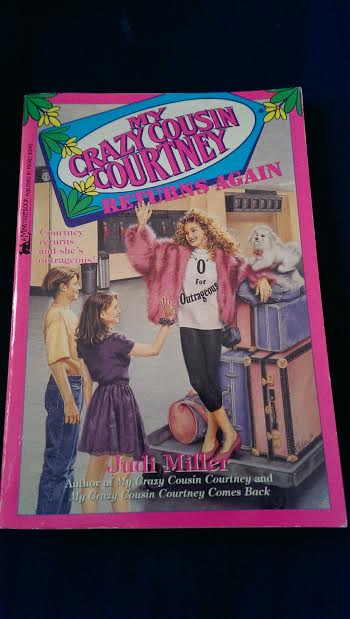
CousinCourtneyReturnsMy Crazy Cousin Courtney Returns Again by Judi Miller, 1995.

Courtney is back in New York with her cousin Cathy and living her dream of becoming an actress!  Courtney has landed a part in a movie called The Laundry Bag Murder (see the first book in the series for that explanation).  With Courtney’s new professional responsibilities, Cathy hopes that this visit will be quieter than their last ones, but no such luck.  Excitement follows Courtney wherever she goes, and if things aren’t exciting enough to suit her, she knows how to stir them up!

When Cathy and Courtney go to the Central Park Zoo to try out Courtney’s new video camera, Courtney ends up turning the expedition into a vampire hunt that ends up catching a criminal.  When they go to see a friend’s rock band perform at a bar, Courtney turns a barroom brawl into a hug-in.

Courtney is also giving Cathy relationship advice.  Cathy and Frank are boyfriend and girlfriend now, but both of them are pretty shy.  Too shy to even go on a real date.  Courtney says that maybe Cathy should act a little helpless to bring out Frank’s protective instincts and to get his attention.  She says that Cathy should tell Frank that she thinks someone might be following her around (it’s not a lie if Cathy isn’t sure).  That way, Frank will want to spend more time with her to look after her.

With some reservations, Cathy does tell Frank someone may be following her, which does get Frank’s attention.  Then, to Cathy’s surprise, she actually does notice someone following her around.  At first, she suspects that Courtney got another actress to follow her for awhile to make her story to Frank true, but it turns out, that’s not the case at all.  Who is that mysterious woman in the sunglasses and what does she want?

There is another book in the series which I don’t have and haven’t read called My Crazy Cousin Courtney Gets Crazier.  Courtney ends up going to school in New York with Cathy because she lands a role in another movie which will be shooting there during the fall.

My Crazy Cousin Courtney Comes Back

CousinCourtneyBackMy Crazy Cousin Courtney Comes Back by Judi Miller, 1994.

The title is a little deceptive because Courtney hasn’t come back to New York to visit Cathy.  This time, Cathy has flown to Beverly Hills to spend Christmas with Courtney.  Courtney’s parents are now divorced, and Courtney’s adjusting to it, but she’s still as wild and unpredictable as she ever was.

Almost as soon as Cathy arrives, Courtney wakes her in the middle of the night to tell her that she needs her help to rescue an old man who’s being held against his will and maybe bring him cans of soup and sauerkraut.  Courtney’s heart is always in the right place, but as usual, she has the wrong idea.  In the best Courtney tradition, things work out amazingly well in the end.

In between spotting movie stars and getting into trouble, the girls manage to find time to get their nails done and visit with their friend Frank, who they met last summer in New York.  Cathy had fallen in love with Frank until she realized that he was more interested in being Courtney’s boyfriend.  Seeing him again over Christmas has brought back Cathy’s awkward feelings.  She still likes Frank, but the last thing she wants to do is to take a guy away from her lovable, if crazy, cousin.  But, if there’s one thing that Courtney specializes in, it’s happy endings.

This book isn’t as introspective as the first one in the series was, although Courtney and Cathy still help each other with their opposite personalities.  Cathy’s common sense and restraint can’t stop Courtney in her wild escapades, but she does inspire Courtney to be more thoughtful.  Courtney also helps Cathy to get out of shell, speak up for herself, have a little excitement, and see the possibilities that life has to offer.

My Crazy Cousin Courtney

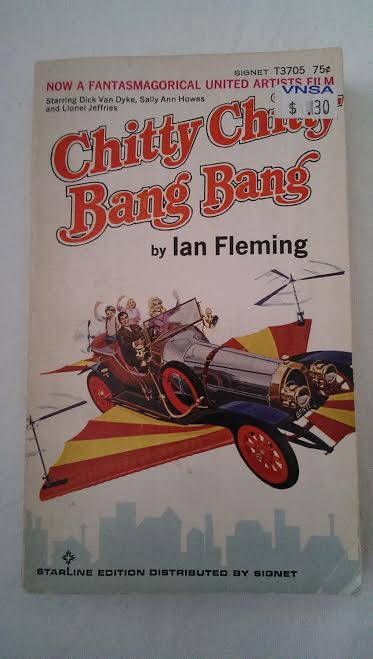
CousinCourtneyMy Crazy Cousin Courtney by Judi Miller, 1993.
Cathy Bushwick usually spends the summer at camp, but this summer, her mother is having her stay in the city because her cousin Courtney is coming to visit them in New York.  Cathy and Courtney are actually second cousins because their mothers are first cousins.  They’re the same age (thirteen) and met once when they were five, but neither of them remembers it.  All that Cathy really knows about Courtney before she arrives is that she’s somewhat neurotic (Courtney is troubled by anxiety and panic attacks) and that the reason she’s coming to visit is that her parents are thinking of getting a divorce and need time alone to discuss it.

Cathy understands what it’s like to live with a single parent.  Her parents are divorced, and her father went to California years ago to become an actor.  She hasn’t heard from him since.  Her mother used to be an actress, but with Cathy to take care of, she became a theatrical agent for animals instead (she finds animals for people to use in commercials).  So, when Cathy hears that Courtney will be visiting from Beverly Hills, she’s very excited.  At first, she hopes that she and Courtney will be like sisters and that Courtney might have even heard of her father in California.

Cathy’s illusions are shattered almost immediately.  Courtney not only hasn’t heard of her father but she’s nothing like Cathy imagined.  When she and her mother go to meet her at the airport, she’s wearing heart-shaped sunglasses and a hot pink shirt that says, “KISS ME QUICK,” and she has a pile of luggage.  She’s used to having money and getting the best of everything, and she’s immediately disappointed with the modest apartment where Cathy and her mother live.  When she learns that they don’t even have a pool, she gets upset and wants to go home.  But, it’s no use.  She’s stuck there for the summer.  And, they’re stuck with her.

But, things don’t turn out to be as bad as Cathy fears they’re going to be.  In some ways, they’re worse.  Once Courtney reconciles herself to spending the summer in New York, she has some very specific ideas about things that she’d like to do, and a lot of them end up getting the girls in trouble.  Shy, sensible Cathy finds herself getting locked in Tiffany’s after closing time because Courtney thought she saw a spy stealing their designs, rescuing Courtney from the dolphin pool at the aquarium, and lots of other things that she never thought she’d find herself doing.  Then, one day, the girls think they’ve witnessed a murder.  What are they going to do?  Is Cathy going to survive the summer with her crazy cousin Courtney?

This book is the first in a series about Cathy and Courtney.  Courtney may be a bit wild, but she’s not as crazy as Cathy thinks.  Over the course of the summer, the two become friends, and they learn quite a few things about each other and about themselves.  By the time Courtney has to go home, a little of each of them has rubbed off on the other, and neither will be quite the same again.

The book is available online through Internet Archive.

Chitty Chitty Bang Bang

ChittyChitty Chitty Bang Bang by Ian Fleming, 1964.
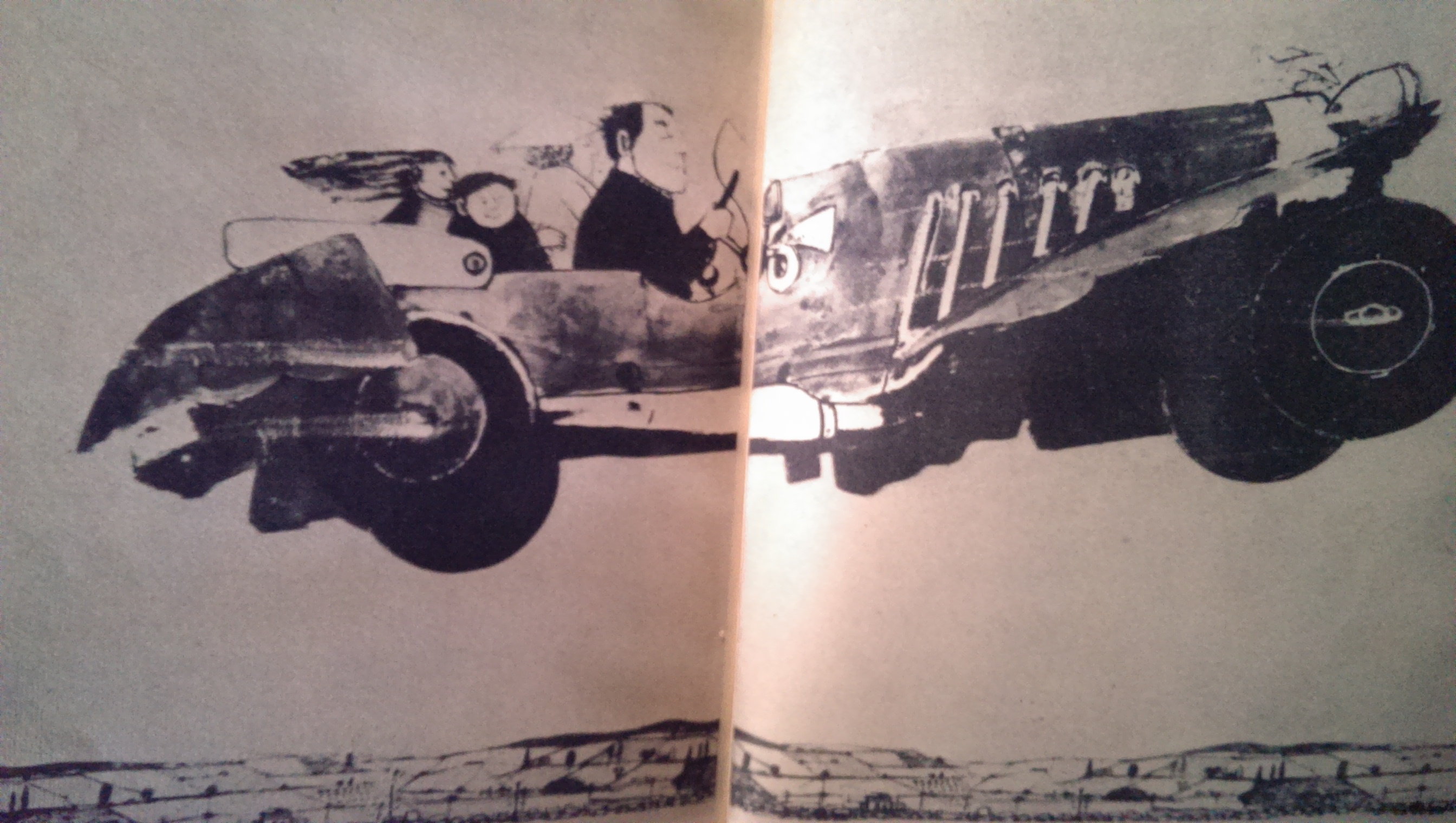
Not everyone is aware that the creator of James Bond wrote a children’s book, although the movie Chitty Chitty Bang Bang is a children’s classic.  However, the movie differs greatly from the original book, which doesn’t have anything to do with a toy-obsessed baron who has forbidden children in his kingdom, and there is no Truly Scrumptious (sorry).

Commander Caractacus Pott, retired, is an explorer and inventor who lives in a little house in the countryside with his wife Mimsie and their children, a set of eight-year-old twins named Jeremy and Jemima.  Some of the locals call Commander Pott, “Crackpott” because of his strange inventions, which never earn him very much money until one of this inventions pays off when he sells the candy whistles he creates to Lord Skrumshus’s candy company.

With the money he earns, Pott decides to buy something that his family has wanted for a while: their own car.  But, they don’t want just any boring car like everyone else.  They want something special.  They find it when they spot a former racing car that’s due for the scrap heap.  No one wants it because it would take a lot of time and money to fix.  The Pott family falls in love with it immediately, and Jemima thinks it might even be magical because the license plate says “GEN 11”, which looks like “genii” (or “genie”).  The garage man is relieved to find a buyer who appreciates the car’s history and potential and says that she’s sure to reward them for saving her from being scrap.

After Pott spends a great deal of time fixing up the car (which they name “Chitty-Chitty-Bang-Bang” because of the sounds it makes) and adding some additional inventions of his own, he begins to suspect that both Jemima and the garage man are right: the car is magical and does want to repay them for saving her life.  He starts to notice changes that the car makes to herself overnight, adding extra buttons and features that he knows he didn’t put there.  He’s not sure what they’re for until the family gets stuck in traffic the first time they decide to take the car out for a picnic. Messages on the car’s dashboard light up, telling Pott to pull some of the car’s mysterious levers.  When he does, the car sprouts wings and flies over the other cars in front of them, over towns and beaches, and even over the English Channel!

ChittyPic2

Chitty-Chitty-Bang-Bang takes the Pott family to a sandbar so they can have a private beach all to themselves.  But, that’s only the beginning of their adventure!  Chitty-Chitty-Bang-Bang can also turn into a hovercraft, and the family decides to take it on a special holiday to France.  When they reach the coast of France, they find a cave and start to explore it.  Someone has set up various devices inside to scare people away, but that only makes the Pott family more curious and determined to find out why.

It turns out that the cave is a hideout for a band of smugglers, and when the Pott family destroys it, they want revenge!

ChittyPic1

At the end of the book, there is a recipe for “Monsieur Bon-Bon’s Secret ‘Fooj'” (they mean ‘fudge’, Monsieur Bon-Bon is a character in the story).

Having known the movie version since I was a kid, I really prefer the movie to the book.  With a magical car at their disposal, the more fairy-tale story about the castle and tyrannical, toy-obsessed baron seems more fitting than the story about smugglers.  But, that being said, the book is still a lot of fun.

The book is available to borrow and read for free online through Internet Archive.

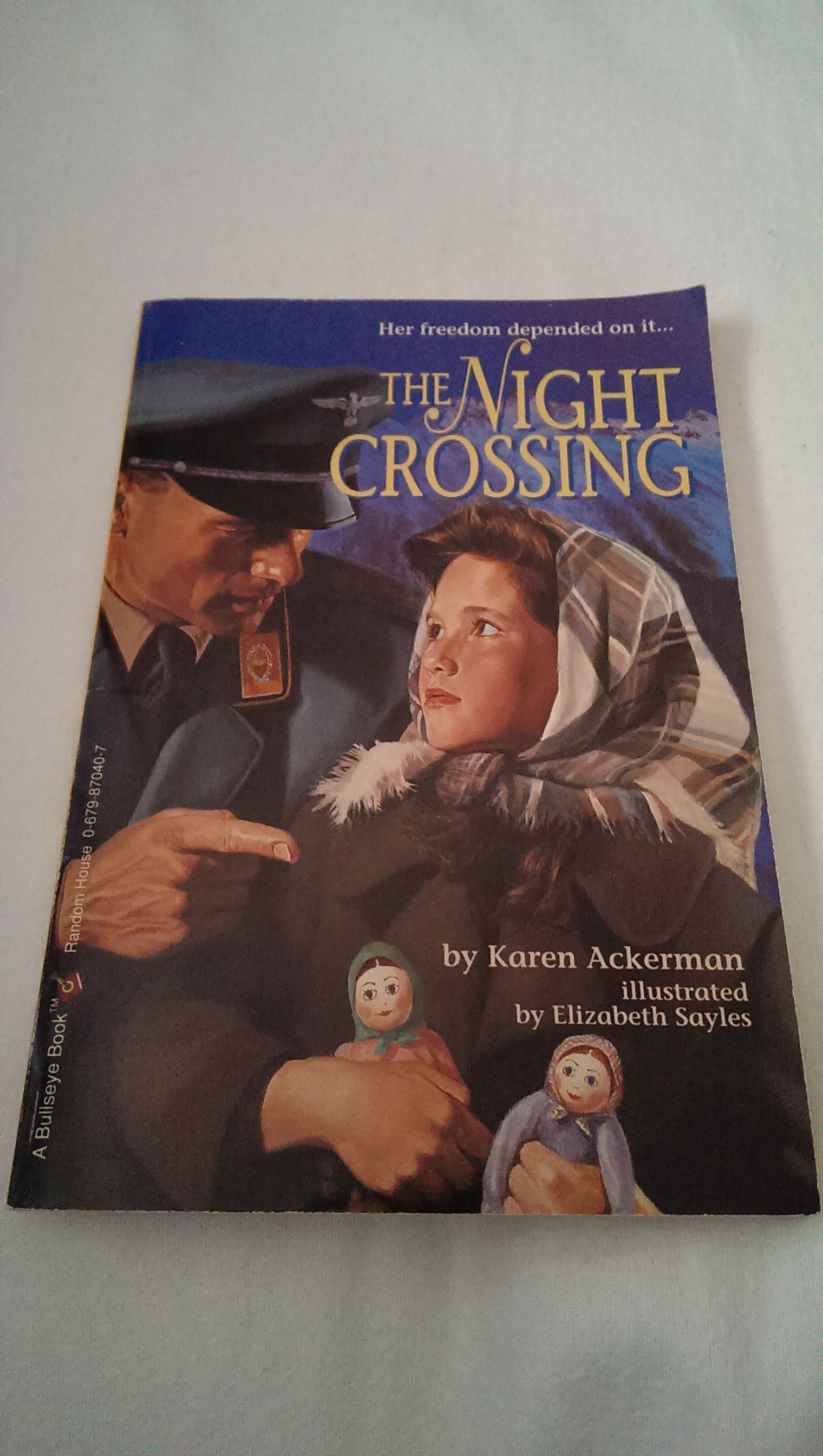
The Night Crossing

NightCrossingThe Night Crossing by Karen Ackerman, 1994.
It’s 1938 in Austria, and Clara’s parents have decided that their family needs to leave before things get worse.  Already, Jewish families like theirs are being rounded up by the Nazis, and Clara and her sister Marta were chased through the streets by other children, shouting insults.

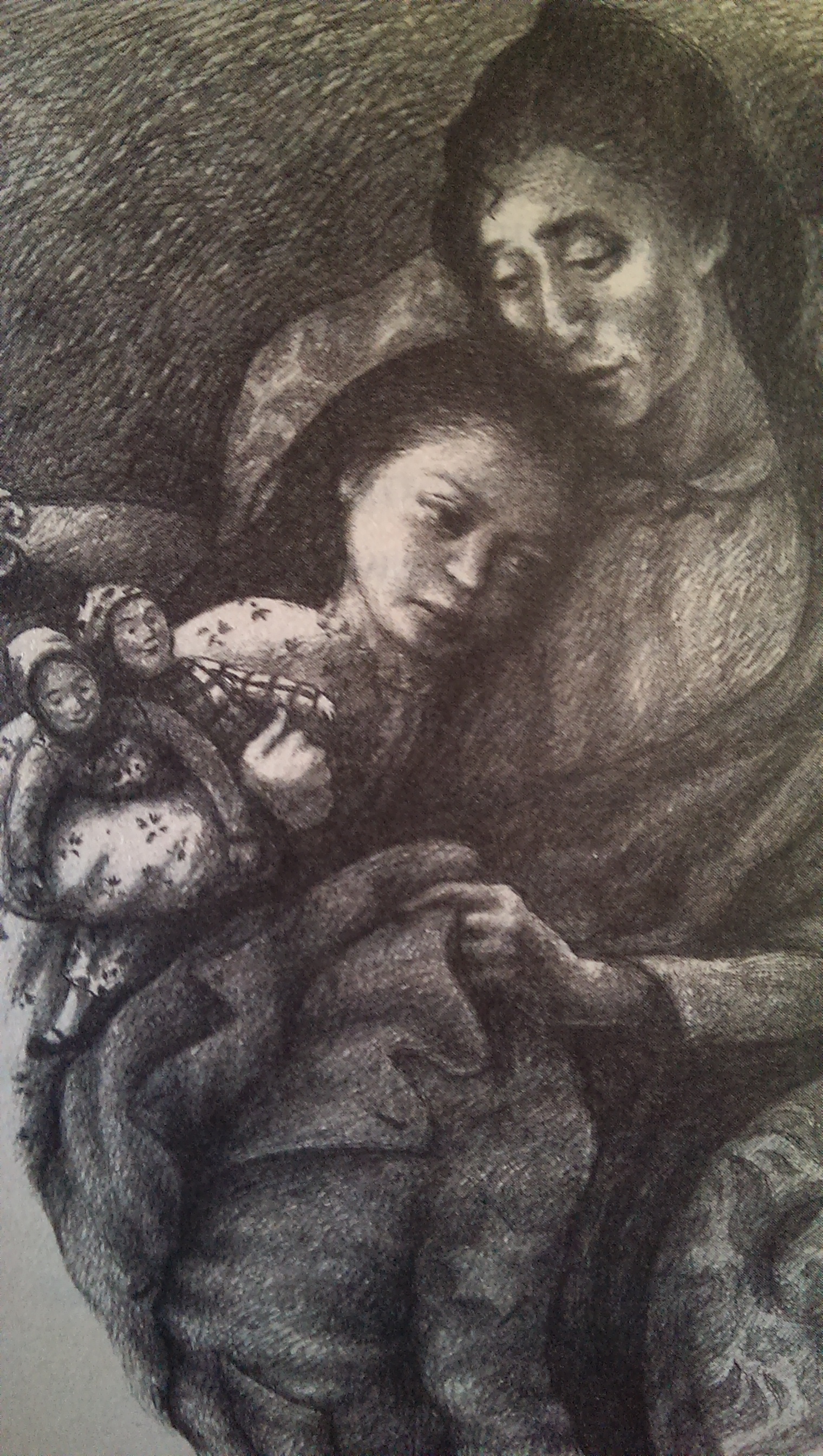
Their family has been through things like this before.  Clara’s grandmother tells her about when she had to flee Russia as a little girl to escape the pogroms.  She brought her dolls Gittel and Lotte with her as her family hiked through the Carpathian Mountains.  Now, Clara will carry them with her as their family leaves Austria for Switzerland.

It’s a hard journey with lots of walking and little food.  The family can carry very little with them, and some of what they have they are forced to trade for food, a place to rest, and for not being turned over to the Nazis.  Finally, at the border crossing, Clara’s parents are afraid that they will have to get rid of the candlesticks that have been in their family for generations because they might be discovered by the border guards.  Then, Clara comes up with a plan to hide them in her dolls.  Will it work?

NightCrossingPicThis is a pretty short chapter book.  Although the subject matter is serious, and parts might be frightening to young children (the part where Clara and Marta are chased and perhaps some of the parts where the family is hiding), there are only vague references to more dark subjects like concentration camps (people who already know what they are and what happened there would understand, but children who haven’t heard about them wouldn’t get the full picture from the brief mentions).  The book would be a good, short introduction to the topic of the Holocaust by putting it in terms of the way it changed the lives of ordinary people who had to flee from it.  Actually, it wouldn’t be a bad way to start a discussion of the Syrian refugees in Europe by putting it into the context of ordinary people fleeing the violence of war.

This book is currently available online through Internet Archive.