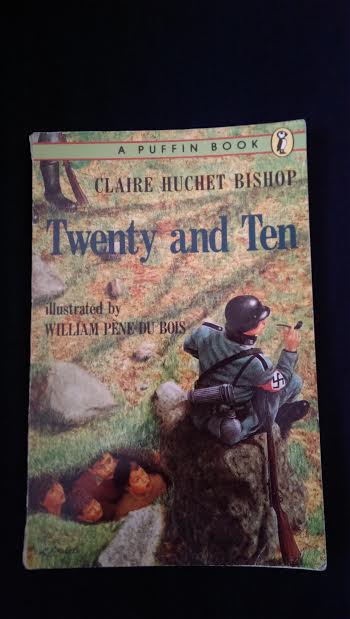
 Twenty and Ten by Claire Bishop, 1952.
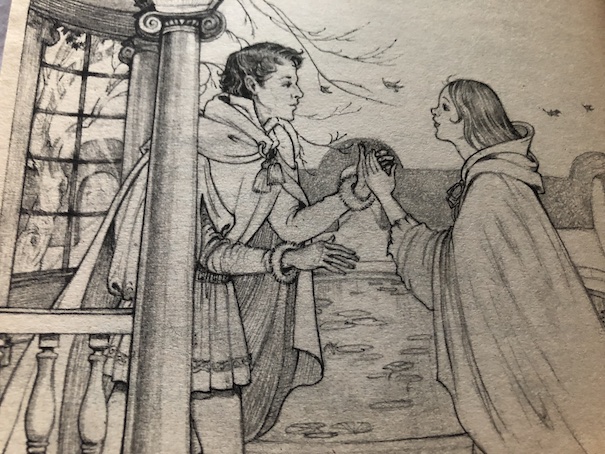
The story takes place in occupied France during World War II. Children were often sent to the countryside to escape the violence of war, and a group of twenty children, both boys and girls, are staying at a small school taught by a nun, Sister Gabriel. Most of them are about eleven years old, although four-year-old Louis is allowed stay at the school with his older sister, Denise.
Janet, another student at the school, tells how a strange man comes to the school and begs them to help him hide ten Jewish orphans from the Nazis. Sharing their school with these newcomers means that they will have to share their already meager rations with them and to keep their presence at the school absolutely secret. In spite of the danger and difficulty, everyone at the school agrees to help. They think of it as being like when Mary and Joseph had to take baby Jesus to Egypt to hide him from King Herod, a story they had recently acted out in play form.
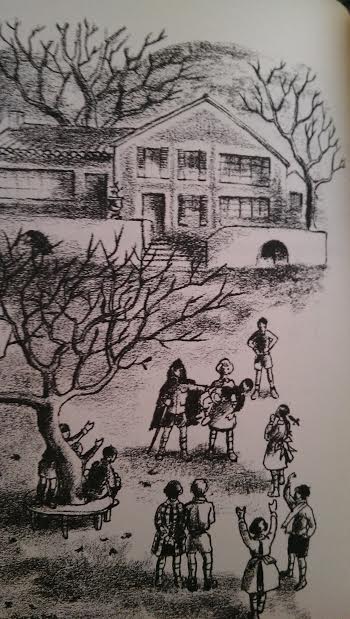 The two groups of children soon make friends, and one of the Jewish children, Arthur, shares something special with his new friend, Henry: a small piece of chocolate. With the rationing, none of them have seen chocolate in a long time. Henry decides to share a little with Janet because he likes her, and they decide to hide the rest and save it for later. When Denise spies them with the chocolate and wants to have a little herself, she steals the piece of chocolate from where Henry has hidden it. The others chase after her to get the chocolate back, and they end up accidentally discovering a cave that none of them knew was there.
This becomes a vital discovery when the children spot a pair of Nazis heading toward their school. Sister Gabriel is away, so the children have to take care of the situation themselves. Quickly, Arthur leads the other Jewish children to the cave, where they can hide. The other children remain at the school and try to keep the Nazis from learning anything. They try not to even talk to the Nazis when they start asking questions. But, how long can they keep it up? Something has obviously happened to Sister Gabriel, and the Jewish children can’t hide in the cave forever.
There is a movie version of this book called Miracle at Moreaux. The movie differs significantly from the book. In the book, the children at the school are all welcoming to the Jewish children, but in the movie, some of the children at the school are afraid of the Jewish children (there are only three of them in the movie), one of them in particular hating Jewish people because she believes anti-Semitic stories she’s heard. Also, instead of the cave that appears in the book, the movie uses a Christmas pageant as the device for confusing the Nazis and allowing the Jewish children to escape to Spain (instead of staying at the school until the end of the war, as they did in the book).
This book is available online through Internet Archive.






 Never Hit a Ghost with a Baseball Bat by Eth Clifford, 1993.
 The girls explore the trolleys parked in the museum and admire the manikins dressed in old-fashioned clothing that are part of the displays in each trolley car, but more strange things happen. A teddy bear seems to speak to them, even though it isn’t the kind with a string and a talk-box. The manikins start to seem creepier. Mary-Rose and Jo-Beth are only armed with a baseball bat from one of the displays and the old teddy bear (which terrifies Jo-Beth). But, Mary Rose is determined to find the ghost, even if it’s the last thing she does!
 The Dastardly Murder of Dirty Pete by Eth Clifford, 1981.
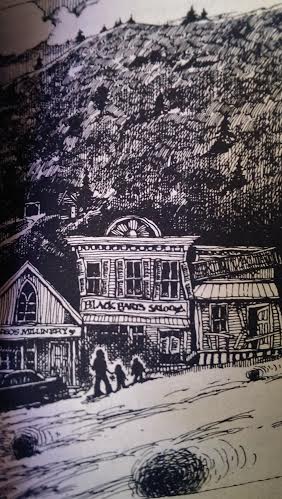 Harry Onetree and the girls find a ghost town with a hotel, an opera house, and several other buildings. Although Harry only means to look around for a little while, he forgets to set his parking brake (something else Mary Rose warns him about, which he ignores), and their car rolls backward into a ditch. Since it’s getting dark, they’re stranded in the ghost town for the night. But, they’re not alone there.
 Scared Silly by Eth Clifford, 1988.
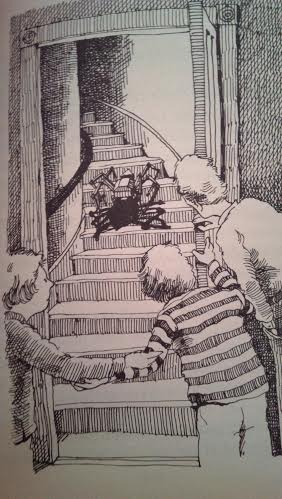 While the Onetree family is visiting the museum, a pair of shoes that once belonged to a Chinese emperor disappears. Like the two Onetree sisters, Gus considers himself the sensible brother and doesn’t take Razendale, the dreamier sibling, very seriously. He thinks Razendale ran off with the shoes as a prank. But, Erik, who seems more sensible than either of his uncles, says that they can’t just accuse him without proof. Gus provides them with an invention that could settle the whole matter, but that depends on whether or not they can trust Gus.
 Just Tell Me When We’re Dead! by Eth Clifford, 1983.
 The first place he goes is to an island in the middle of the lake near his house. The island has campgrounds and an amusement park, which is now closed for the season. Mary Rose and Jo-Beth, realizing where Jeff has gone, follow him there. But, the children are not alone on the island. When Jeff is captured by two criminals who are looking for loot that they stashed on the island years before, he has to keep his wits about him to find a way to summon help. Meanwhile, Mary Rose and Jo-Beth have no idea what they’ve just walked into.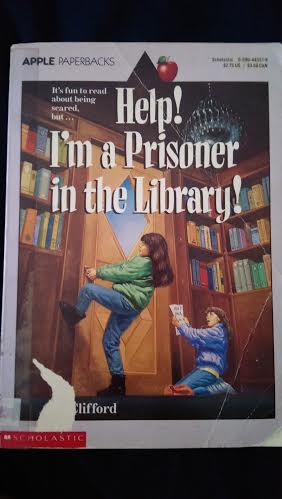

 Be a Perfect Person in Just Three Days! by Stephen Manes, 1982.
 Jestress's Forgotten Books and Stories