A long time ago, a king is irritated with his queen because they have no children. The queen tells him to be patient, and she eventually gives him a daughter. The king is very happy, but he makes a critical mistake. He forgets to invite his own sister to his daughter’s christening. It would be embarrassing for anybody to forget to invite a family member to an important event, but it’s a serious problem in his case because his sister is a wicked witch. She has a nasty temper and is vindictive. So, she decides to show up for the christening anyway and get her revenge by putting a spell on the baby princess. From that moment on, the baby is weightless, no longer bound by gravity.
It doesn’t take the little princess’s parents long to realize who has caused this strange malady in their child. It’s not all bad. Her nurses find her very easy to carry around, and people in the palace have fun playing ball with the princess as the ball, and the little princess herself seems to find all of this delightful. However, there is always the fear that she could blow away by accident, which does happen once, when she is blown out of a window and into the garden. Her parents continually worry about her future. At the queen’s urging, the king attempts to go to his sister and apologize about forgetting her invitation to the christening and ask her to lift the spell on the princess, but his sister denies all knowledge of the spell. The king knows she’s lying, but as long as she continues to deny it, there isn’t much he can do.
The problem goes much deeper than the princess having difficultly keeping her feet on the ground literally. She also has difficulty keeping her feet on the ground mentally. Her lack of gravity extends to an inability to see the “gravity” or seriousness in any situation. She laughs all the time, at everything, even when nothing is funny, although there is no real depth of feeling to her laughter. Even though she laughs all the time, she never smiles, leaving it open to question whether she ever really feels happiness or any emotion at all. She certainly doesn’t understand genuinely serious or catastrophic situations or other people’s emotions. When her mother cries, the princess just thinks that she’s making funny faces and odd sounds because she can’t seem to understand what crying means or the emotion behind it.
When the princess gets older, her parents talk to her about her condition, but the princess refuses to take it seriously. They try to ask her about what she feels. The princess says that she doesn’t feel anything, except that she sometimes feels like she’s the only one who has any sense, and then, she bursts into a wild, inappropriate fit of laughter. When they ask her if there’s anything she wants in life, all she can think of is to have someone tie a string to her and fly her like a kite, and then, she bursts into laughter again.
Since it’s useless trying to get through to the princess, the king and queen try consulting others, but nobody can agree on a solution. They consider metaphysics and philosophy. They recommend education and bloodletting. Her parents wonder if she would acquire some gravity if she fell in love, but the princess can’t seem to fall into anything … until the day she falls into the lake.
There is only one thing that the princess seems to love at all, and that’s the lake near the castle. When they take the princess out in a boat one day, she falls into the lake, and when she is in the water, she has gravity. She loves the water and loves swimming. She seems to have a better temperament when she is in the water, and she behaves better after a swim. Since water seems to affect the princess, they begin to consider that the cure to her problem might be to make her cry – a way of producing water that requires a grave emotion. However, nothing seems to make the princess cry. She is too flighty. (This book is full of puns related to gravity and flying, and they’re all given in a grave, direct manner.)
Then, one day, a prince tries to rescue the princess from the lake because he thinks she’s about to drown. When he pulls her from the water, she loses her gravity, and she angrily tells him to put her back in the lake. Unsure of how to do it when she’s weightless, the prince grabs hold of her and jumps into the lake with her. The princess is surprised and delighted because she has never truly fallen before. Now, she has fallen in with the prince … maybe in more ways than one.
However, even though the princess is starting to feel something for the prince, she has trouble understanding what she feels, not having felt much of anything for most of her life. When the lake suddenly begins drying up, the princess’s condition starts getting worse. The prince, who has truly begun to care about the princess, is willing to sacrifice himself to save the lake and the princess. It is only when the princess is confronted with the full reality of the prince’s sacrifice on her behalf that she is able to fully feel something and break free of her curse.
This book is now in the public domain, and you can read it online in your browser at Lit2Go. It is also accompanied by audio readings of each of the chapters.
My Reaction
Like other Victorian era children’s stories, there is a moral to this one, but it’s phrased in a unique and fun way. I remember liking this story the first time I read it as a kid, but I forgot about all of the puns involving “gravity”, which can refer to the force that makes things fall to earth or a state of serious emotion. The princess in the story lacks both, so she is very literally “flighty” and “can’t keep her feet on the ground.” Both of those terms are related to the idea that serious people have more emotional gravity, and unserious people lack it. For most of the book, the princess is an unfeeling air-head. I also missed the mention that the king doesn’t like puns, which may tacitly explain why his sister chose to make her curse in the form of a pun, knowing that her brother wouldn’t understand it.
The book notes that real happiness requires some emotional gravity because the person has to have enough emotional depth to understand their real emotional state and react appropriately to their emotions. That’s why the book describes the princess as never seeming happy, even when she laughs insanely at everything. She has no emotional depth or understanding. She doesn’t feel very much emotionally, and she has trouble understanding even her own limited emotional range. People often have trouble telling the difference between her laughing and screaming. Either way, it’s just a lot of loud noise with no real feeling behind it, and it’s pretty disturbing. It’s only when confronted with the apparent loss of the man she loves that the princess is able to feel a definite emotion. Fortunately, it all ends happily for our prince and princess. At the last minute, she decides to sacrifice her lake to save him, and finally, cries for the first time in her life, and that breaks her spell.
People don’t like to feel negative emotions, and some will use all kinds of defense methods to avoid what they’re feeling, but negative emotions (within reason, not taken to excess) are important to emotional health. People need to feel their full emotional range, and negative emotions often act as safety features in our lives. They tell us when we’re in an unsafe or unhealthy situation or when we’ve done something wrong, and they motivate us to do whatever is necessary to fix the situation. The princess’s habitual reaction to anything and everything is crazed and unfeeling laughter, but that’s not what she needs. She needs real feeling and honest tears to restore both her physical and emotional gravity. The princess, staring at the prince as he is about to die is literally staring death in the face and feeling the “gravity” of it. Contemplating the impending death of the prince and understanding for once the seriousness and finality of it, the princess experiences sadness and loss, and through that, she comes to understand love and sacrifice. Only when she has been through all of that is the princess truly able to be happy with her prince and his recovery. The princess has a difficult time adjusting to her new gravity, in more ways than one. She has to learn to walk for the first time because she always floated easily through life before, and sometimes, she falls down and hurts herself. She sometimes complains about it, but it’s still worth it because she has gained the ability to fully feel and to love and be loved.
During the story, none of the main characters actually have names. They are only referred to by their titles: king, queen, princess, and prince. Their names aren’t as important as their roles in the story.
There is a more modern story called Princess Hyacinth: The Surprising Tale of a Girl Who Floated from 2009 that uses the concept of a princess who is unaffected by gravity, but in a different way. It’s a picture book, and in that story, the princess isn’t cured of her lack of gravity. Instead, she learns how to make the most of it.
The Princess and Curdie by George MacDonald, 1883.
This is the sequel to The Princess and the Goblin, but it isn’t as well-known. Personally, I prefer The Princess and the Goblin, but it’s worth explaining what this book is like and how this two-book series ends.
When we last met Curdie, he was living in a cottage in the mountains and working in the mine with his father. At the beginning of this story, he is still there and still working in the mine. Most of the goblins who inhabited the mines were drowned at the end of the previous book. The beginning of the story briefly recounts the previous adventure and how the king offered Curdie a position in his guard after he helped to rescue the princess and fight the goblins. Curdie turned down the position to remain with his parents, and the king accepted his decision because he approved of the boy’s loyalty to his family. Since then, the king took Princess Irene away with him, and Curdie has missed her.
Since the old, castle-like manor house where the princess spent her earliest years flooded at the end of the story, Curdie has wondered what happened to the great-great-grandmother the princess always spoke of. Nobody ever saw her leave the house, but then again, nobody but the princess and her father ever saw her at all. Curdie’s mother says that she once saw a mysterious light, like the kind Princess Irene said that her great-great-grandmother had, but Curdie still thinks maybe the princess just dreamed that she had a great-great-grandmother, even though he once followed the magical string that the great-great-grandmother gave her.
As Curdie grows up, he believes in fewer things than he once did and focuses more on being a miner than on the little things he once noticed in the upper world. The book describes him as becoming mentally dull and more rigid and common in his thinking. Like other common and mentally-dull people, he is starting to follow the path of being so afraid of being fooled into believing something foolish that he is at risk of making a fool of himself because he is unable or unwilling to think about things deeply, consider possibilities, and believe things that he should:
“There is this difference between the growth of some human beings and that of others: in the one case it is a continuous dying, in the other a continuous resurrection. One of the latter sort comes at length to know at once whether a thing is true the moment it comes before him; one of the former class grows more and more afraid of being taken in, so afraid of it that he takes himself in altogether, and comes at length to believe in nothing but his dinner: to be sure of a thing with him is to have it between his teeth. Curdie was not in a very good way then at that time.”
Curdie’s parents worry about this change in him and find themselves wistfully thinking about how he was when he was younger. Curdie no longer makes up the songs and verses he used to because it is no longer necessary to scare the goblins away. He seems to have lost much of his former creativity, imagination, and mental flexibility because he has not been exercising them, and with them, he has been losing his critical-thinking and analysis skills and his ability to look outward and see the big picture of life and other people.
One day, Curdie makes a bow and arrows, and he uses them to shoot a pigeon. As he watches it die, he is horrified at what he has done. He suddenly remembers what the princess said about her great-great-grandmother keeping pigeons, and he feels terrible that he has killed something so lovely. His remorse stirs his heart and brings back the memories and feelings of the boy he used to be. Then, the pigeon moves, and he realizes that it is still alive, and he sees the globe of light of the great-great-grandmother. Curdie hurriedly takes the injured pigeon to the old castle. The door is open, so he goes inside and follows the sound of a spinning wheel to find the princess’s great-great-grandmother, seeing her for the first time.
Curdie admits what he has done to the great-great-grandmother and gives her the bird. The two of them discuss right and wrong, and Curdie comes to realize that he has done a great many wrong things for some time because “I was doing the wrong of never wanting or trying to be better. And now I see that I have been letting things go as they would for a long time. Whatever came into my head I did, and whatever didn’t come into my head I didn’t do.” In other words, Curdie has fallen into the habit of being thoughtless, and this is the first time in a long time that he’s paused to think about things he’s been doing or could have been doing instead. He realizes that he has even been grumbling about his work and not adequately helping his parents, and even though he noticed that they’ve been seeming unhappy and he suspected it had to do with him, he never once asked them how they felt or why.
After they have this talk and Curdie realizes the real problems behind the things he’s done and is genuinely sorry for them, the lady tells him not to worry because the pigeon will recover now, and she will take care of it. She merely gives him the caution to “Do better, and grow better, and be better. And never kill anything without a good reason for it.” Curdie offers to destroy his bow and arrows, but the lady tells him not to because there are bad things that need to be killed and that the bow and arrows may be useful someday. She also tells him that there are people who tell stories about her and laugh about her, and she asks that Curdie not laugh with them or side with them.
Curdie goes home and tells his parents what happened. They believe him and say that he should do what the lady says. The next day, when the other miners are telling stories about the lady, saying that she’s an evil witch, Curdie has to fight to hold his tongue. When they press him for what he thinks, he only says that he thinks that, if they’re going to tell stories about her, they’d better be sure that they’re true because she wouldn’t like to be slandered. The others laugh at him for being afraid of her or for wanting to defend her.
The lady appears to Curdie and his father again later. She tells them that they have the blood of the royal family in their veins, and she hints that there is a special destiny in store for Curdie. Curdie tries to ask her some questions about who she really is and about her changing appearance, but all she says is that she has many names and can appear in many different forms, and even different people see her differently. She tells Curdie to come see her alone in her tower the next night.
When he sees her the next time, the lady asks if he is ready for a difficult trial. She says that it will hurt and that it will require trust and obedience, but it will be good for him. When Curdie tells her to command him, she tells him to put both of his hands into her fire. He does it quickly, trying not to think about it, and it does hurt at first. However, it stops hurting, and when he takes his hands out of the fire again, he discovers that they are softer than they were before. The roughness and callouses from his work in the mines are gone. The lady tells him that his hands have changed more than that. She says that he will now be able to feel when he touches the hand of a man who is actually a beast on the inside, but he will lose that gift if he uses it for a selfish purpose. To demonstrate the gift, the lady calls a strange creature called Lina to them, and when Curdie feels the creature’s paw, it feels like a child’s hand. Although the creature appears strange and menacing, it’s actually good and gentle on the inside.
The lady tells Curdie to tell his parents that he must go to the king’s court the next day. She has given his father an emerald that they can use to see if he is all right during his travels because its appearance will change if he isn’t. The lady also sends Lina with Curdie to help him on his journey. Curdie is a little uneasy about that because he can tell that Lina is one of the goblins’ creatures, but Lina is genuinely helpful to him, and he becomes fond of her.
When they finally reach the king’s city, Curdie meets the king’s baker. The baker stumbles on a stone sticking up out the street and curses the king for not maintaining that road. Curdie argues that the baker himself bears some responsibility for watching where he’s going, especially since he says that he’s tripped on that stone before and knows it’s there. However, Curdie has his pickaxe with him and sees an easy way of dealing with the problem. He breaks up the rock that’s sticking out of the road, but a piece of it flies out and breaks the barber’s window. The barber comes to complain about it, and he insists that Curdie pay him more than the window is actually worth. Curdie gives him what he thinks is a fair price, and he feels the animal paw in the barber’s hand, showing what kind of man the barber is and that Curdie’s gift is still working.
There are other cruel, hard-hearted, immoral, and brutish people in this city, and sadly, some of the nicer people tend to be on the receiving end of the malicious gossip of the others. Curdie and Lina are taken in by a woman who is rumored to be a witch simply because she prefers to live quietly and not gossip like the others. Of course, everyone immediately begins gossiping about Curdie and his strange animal companion. The local magistrate believes the slander of a couple of people whose dogs Curdie had to kill because they were trying to kill him and Lina. These people claim that the dogs were harmless and Curdie killed them for no reason. When the magistrate and his soldiers come to arrest Curdie, he says that he’ll surrender, but he refuses to restrain Lina so they can kill her. Lina chases off the crowd that’s gathered to watch, but then, she vanishes herself, and Curdie is arrested. Fortunately, Curdie manages to escape and reunite with Lina. Then, he and Lina find their way into the king’s cellar and kitchen. There, he finds that the king’s servants are drunk and passed out. His touch tells him that these people are beasts inside. Going further into the palace, he finds the king’s chamber, and there, he meets Princess Irene again.
Princess Irene recognizes Curdie again immediately. It’s been less than two years since they last saw each other. She was about eight years old then, so she can’t be more than ten years old now, but Princess Irene seems older than she should be because of everything that’s been happening in the king’s palace. Her father has been ill for a year and is not in his right mind. Princess Irene thinks that the entire kingdom is concerned for him because that’s what the lord chancellor has told her, but Curdie knows that isn’t true because he hasn’t heard a word about there being anything wrong with the king outside of the palace. Princess Irene says that the king has also asked for Curdie, and his staff claimed that they tried to send for him but couldn’t find him. Curdie knows that definitely isn’t true because, until he started his journey to the king’s palace, he had been living in the same cottage where he always lived, and no one from the palace tried to find him or sent him any message.
It’s obvious that there are wicked people in the palace. These people are responsible for the king’s current condition, and they’re trying to keep the public from finding out what’s been happening. With his gift of telling who is a beast on the inside, can Curdie help Princess Irene to find and deal with the conspirators and restore the king to his right mind?
The book is public domain now. It is available to read online through Project Gutenberg (multiple formats) and Internet Archive (multiple copies). You can also listen to a LibriVox audio reading online through YouTube or Internet Archive.
My Reaction and Spoilers
As with the first book, royalty is used to represent people with the best morality in the story. Curdie and his family have royal blood because they are more wise and moral than other people around them. It feels a bit classist to think that royalty is supposed to be morally superior to everyone else just because they were born into a particular family. That certainly isn’t how these things work in real life. Just think of Prince Andrew. However, this type of comparison does fit with the fairy-tale setting of the story.
In spite of whatever royal blood he has, Curdie isn’t perfect. He was falling into bad habits until he realizes that he has done a terrible thing by shooting the pigeon, which causes him to seek out the great-great-grandmother Princess Irene told him about and to do some soul-searching about his behavior. During the time when Curdie is being thoughtless and falling into bad habits, he is portrayed as being too common, like the other men working in the mine. However, I would argue that the bad habits of the miners, like their wild, gossipy stories and rude joking and teasing, are not because they lack royal blood but because they lack thought. Curdie and his father say as much when they’re talking in the mine. The other miners are being thoughtless, and they’re simply not making any effort to be more thoughtful. More than any royal blood, Curdie proves himself worthy by his ability to be thoughtful about other people, and he gets that ability by wanting to improve himself and making the effort to do what it takes to improve.
A large part of this book comes off as a lecture about morality, but that’s not unusual for a Victorian era children’s book. The Princess and the Goblin had some of that, too, but this book has much more. That might be part of the reason why this book seems like it’s less well-known than the first book, but the ending of the book is also strange and kind of depressing.
As one might expect in a fairy-tale story of this kind, Princess Irene marries Curdie (not immediately, because they’re still children, but eventually), and the two of them are said to rule their kingdom wisely for many years. It seems like a happy ending because, thanks to Curdie’s ability to sense the true nature of people, they are able to surround themselves with the best people, and the city becomes less wicked under their rule. However, the story doesn’t end there. In the final paragraphs of the book, it says that Curdie and Irene had no children to inherit the crown. Without a blood heir to the kingdom, someone else was chosen to rule instead, and this person was wicked and greedy, so the royal city went back to being wicked. In fact, this new king was so greedy and stupid that he had his people mining continuously, right under the city itself, to bring him riches. They eventually completely undermined the entire city, so the city physically collapsed in on itself, destroying it completely and killing everyone there. I guess that’s meant to explain why this fairy tale kingdom no longer exists, but that’s quite an ending to this story! With this royal family apparently having some kind of magic about them, it seems incredible that their kingdom would have gone this way, but then again, maybe the author just didn’t want to write about them anymore.
Note to the wise: Wherever your source of wealth comes from, for the love of all that is good in the world, don’t mine your support beams! They serve a purpose and need to stay there for a reason.
The Princess and the Goblin by George MacDonald, illustrated by Jessie Willcox Smith, 1872, 1920, 1986.
“But, Mr. Author, why do you always write about princesses?” “Because every little girl is a princess.” “You will make them vain if you tell them that.” “Not if they understand what I mean.”
The Princess and the Goblin, Chapter 1: Why the Princess Has a Story About Her
This is an enchanting fairy tale-type story about a princess. One of the best parts comes at the beginning of the book, when the reader supposedly interrupts the author as he starts to tell the story, asking him why he likes to tell stories about princesses. The author explains that princess stories remind every little girl that she is a princess, that they are all the daughters of kings (apparently in the sense that any man can be the king of his family with all the dignity and wisdom that implies, and it reflects well on them when their daughters behave well, as if they were raised with the manners of royalty), even if they sometimes forget that and behave in very un-princesslike ways. He wants to remind them that they are all princesses and can behave with the grace and dignity of princesses, and he can also pamper them a little because, in the course of the story, he can give them every beautiful thing he wants all the little princesses of the world to have. There’s kind of a behavioral caution in that explanation, but also a sweet sentiment. Even if you’re just an ordinary girl, you can still act with royal dignity and grace, and through the story, you can vicariously enjoy all the riches and adventure that a fairy tale princess can have.
The princess in the story, Princess Irene, is about eight years old, being brought up in a castle or manor house in the countryside because her mother was not physically strong when she was born and is now dead. She is largely raised by her nurse and only sees her father, the king, occasionally. Her father spends his time traveling between his castles and manors, visiting various parts of his country to make sure that everything is in order. Princess Irene cannot go with him because she is still too young to travel that much.
There are caverns under and around the castle-like manor house where Princess Irene lives. There are mines in the area, and the caverns are inhabited by creatures like kobolds or goblins. The story says that there are legends that these creatures once lived above ground, but having some quarrel with requirements imposed on them by the king or human society, they retreated underground to live there in secret. From generations of living underground, they have become physically altered into deformed creatures, but they have also acquired arcane knowledge and delight in playing mischievous tricks. Because of fears of the goblins coming out at night, Princess Irene is kept safely indoors before the sun goes down and has never seen the night sky by the age of eight.
One rainy day, Princess Irene is sitting in her nursery, bored. She has many fabulous toys (so amazing that the author of the book declines to describe them and cautions the illustrator against attempting to draw them, so readers can imagine any fabulous toys they like), but Irene in not in any mood to be amused by anything. Princess Irene is restless and doesn’t even quite know what she wants. When her nurse leaves the room, Irene takes the opportunity to run off and explore parts of the castle she has never before explored. She runs up some stairs into a passageway full of doors. She continues running through the passageways with doors leading to rooms with nobody in them until she becomes lost and confused. The corridors are empty, and there is no sound but the rain. One of my favorite quotes from this book says, “It doesn’t follow that she was lost, because she had lost herself though.” Just because Princess Irene doesn’t know where she is or where she’s going doesn’t mean that she isn’t heading in the right direction, where she needs to be.
Frightened, Princess Irene tries to find her way back to the nursery. Eventually, she finds her way to a room where she hears a humming sound. When Irene enters the room, she finds a beautiful old lady with silver hair sitting at the spinning wheel. Irene isn’t sure how old the lady is because she seems almost ageless. The lady notices that she’s been crying and asks her why, and Irene explains that she is lost. The lady is kind to her, washing her face and hands, and she introduces herself as Irene, too. She says that she is the princess’s great-great-grandmother and that Princess Irene was named after her. Princess Irene wonders why she’s never seen her before, and the elderly Queen Irene says that no one else knows that she is here. She shows Princess Irene the pigeons she keeps and promises that Princess Irene will see her again. Then, she guides the little girl to the stairs back to the nursery.
When Princess Irene is back in her nursery, her nurse is relieved because she’s been looking for her. The princess explains that she was with her great-great grandmother, but her nurse doesn’t believe her. Princess Irene is offended that her nurse thinks she made up the whole story. The next day, Princess Irene tries to find the old lady’s room again, but she can’t. She almost starts to wonder if she did just dream about her.
After the rain is over, the princess and her nurse spend some time outside. They wander farther than they should, and the nurse realizes in a panic that they cannot get back to the castle before the sun sets. The nurse grabs the princess’s hand and begins running for home. She becomes even more panicked when the princess thinks she sees little men and hears a sound like laughing. In their haste and panic, they get lost. The princess doesn’t understand why her nurse is so panicked because no one is supposed to scare her by telling her about the goblins.
Fortunately, they meet up with Curdie, a young miner boy. It scares the nurse that Curdie is singing about goblins, but Curdie says that goblins can’t stand singing. Goblins don’t bother Curdie because he’s used to them and doesn’t let them frighten him. This is the first time Princess Irene learns about the goblins. When the nurse tells him who the princess is, Curdie says that they wouldn’t have gotten lost if they weren’t frightened and that it was a bad idea to say the princess’s name because the goblins might have heard and will recognize her if they see her again. Curdie guides them back to the castle before anyone realizes that they are missing. Irene likes Curdie and wants to give him a kiss for helping them, but the nurse stops her. Curdie tells her that there will be another time, and she can keep her promise of a kiss later.
Curdie can tell that the goblins are angry with him for interfering with their pursuit of the princess by their behavior toward him the next day. It doesn’t bother him much because he knows exactly how to deal with them. Goblins are intimidated by songs and rhymes, probably because they can’t make any themselves. Miners who are good at remembering songs and rhymes or making new ones for themselves don’t need to worry about the goblins, and Curdie has a talent for this sort of thing.
While Curdie is in the mine after the other miners have left, he overhears a goblin family talking, and he learns some useful things. First, he finds out that goblins’ feet are a vulnerable point on their body. Their heads are very hard, but their feet are very soft, and they have no toes. The only one who wears shoes is the goblin queen, and the goblins say that’s because the goblin king’s first wife wore shoes, and the second queen doesn’t want to seem inferior to the first. The goblin king’s first wife was a human woman, who died giving birth to their son. Second, the goblins are building new homes further away from where the miners have been mining. Third, the goblins are planning some kind of disaster against the miners. Curdie secretly follows the goblins to find out where the goblin palace is and learn more of their plans. At the goblin palace, he hears them discussing their plans. They don’t offer many new details, but it is clear that they are planning some sort of revenge against humans.
Princess Irene finds her way to her great-great-grandmother’s room again one night. This time, the old Queen Irene shows Princess Irene what she is spinning. She is spinning spiderwebs to make something for Princess Irene. She heals a wound on the princess’s hand and invites her to spend the night with her. When Princess Irene wakes up, she is back in the nursery, but she now believes that it wasn’t just a dream.
Later, the princess is frightened by a horrible goblin creature that enters her nursery through a window that the nurse left open when it was getting dark. Terrified, Princess Irene runs out of the castle into the darkness (somehow missing the extra guards that her father left at the castle for her protection). Fortunately, her great-great-grandmother sends her a magical lamp that guides her back to the castle. There, she gives the princess the present that she has finished making: a ball of finely-spun spider silk. She also gives Princess Irene a ring with a fire opal. She tells the princess that these things will guide her to safety any time that she is frightened.
The magical spider silk thread helps Princess Irene to find Curdie when he is captured by the goblins. Curdie has been trying to learn more about the goblins’ plans. Curdie discovers that the goblins are planning to kidnap Princess Irene as both a hostage and a bride for their half-human, half-goblin prince. Worse still, if their plot to abduct the princess doesn’t work, they plan to flood the mines and drown the miners!
This book is in the public domain. It’s available to read online through Project Gutenberg (multiple formats) and Internet Archive (multiple copies). You can also hear a LibriVox audio reading of this book online through YouTube and other audio recordings at Internet Archive. The story was made into an animated movie in 1991, and you can see it online through Internet Archive. There is only one sequel to this book, The Princess and Curdie. Personally, I think the original is better than the sequel.
My Reaction
This is a classic children’s fantasy story! The princess is sweet, the villains pose a real threat, and the story doesn’t shy away from the goblins’ evil. When they’re describing what to do with the princess when they get her, they talk about how they’re going to make her toes grow together so she’ll be like them. As princess stories go, this one isn’t as sparkly and pink as many modern princess books. Still, as the author notes in the beginning, this story allows all little girls to think of themselves as princesses and imagine themselves going through the adventure with Princess Irene.
As with many other Victorian era children’s stories, there are moral lessons in this one. The author periodically reminds readers about how princesses should behave with bravery and should keep their promises. There are also various other morals in the story, like the value of hard work and duty to others, learning to understand other people and give them the benefit of the doubt, and having the courage to admit mistakes and make them right. All of these values are described as being noble, and it’s implied that Curdie might have princely blood for exhibiting these values. The book uses royalty or the behavior of princesses and princes as a sort of metaphor for moral behavior.
Princess Irene’s great-great-grandmother is never fully explained. At one point, Princess Irene brings Curdie to see her, but he can’t see her, even when the princess is sitting on her lap. However, the king himself goes to see her without the princess. The princess knows that’s where he’s going because he’s heading in that direction. He is aware that the old Queen Irene is there, but he doesn’t share that knowledge with anyone else. When Curdie tells his mother that the princess tried to show him her great-great-grandmother but nobody was there and he thought that she just made it all up, his mother tells him that there is something very odd about the royal family. She says that they’re not sinister, but there are rumors and implications that there is something magical about them or that they are not quite normal humans. At the end of the story, we never get a firm answer about what Queen Irene really is. When I first read this book, I thought that she might be a ghost because, as an ordinary human, she shouldn’t be alive anymore, and I figured that she only shows herself to members of her own family. However, that doesn’t fully explain her magic, and from what Curdie’s mother says, maybe she’s some kind of fairy or elf or maybe a powerful sorceress, who can either live forever or for a long period beyond the normal human lifespan.
One of the parts that I always liked best about this book is the illustrations. They’re charming and magical! These particular illustrations were made by Jessie Willcox Smith, a famous illustrator of children’s books in the early 20th century, in 1920.
The Night Before Christmas by Clement C. Moore, illustrated by Corinne Malvern, 1949.
This version of The Night Before Christmas is part of the classic Little Golden Books series. The original poem, A Visit From St. Nicholas by Clement Clarke Moore, has been made into picture books for children many times since it was first published in 1823, but this version has some sentimental value to me. I think it was the first version that I ever read as a child. I had forgotten which version it was for years, but when I found this book again recently, I recognized the pictures. (It’s funny, but I remember thinking as a child that the youngest child looks a little too big to be in a cradle, but she is in the picture when the children are being put to bed.) Most people think of the poem as being called The Night Before Christmas instead of its original title, A Visit From St. Nicholas, because the phrase “the night before Christmas” appears in the first line of the poem. Many of the picture book versions that we read as children used The Night Before Christmas or ‘Twas the Night Before Christmas as a title.
This Little Golden Book makes a cozy and pleasant bedtime story for Christmas Eve with its images of a 19th century/Victorian family hanging up their stockings and going to bed on Christmas Eve with the anticipation of the sweets, presents, and fun of the next day. Then, the father of the family is suddenly woken when he hears Santa Claus arriving.
This 19th century poem established and popularized the image of Santa Claus as generations of Americans came to know it. It describes him as a fat and jolly little old man and names all of the reindeer who pull his sleigh. This is probably the first piece of writing that established that Santa has eight reindeer and gave them specific names, which would later be echoed in the storybook and song versions of Rudolph the Red-Nosed Reindeer.
The father of the family in the poem happily watches Santa Claus leaving presents for his children and then leaving by the chimney and riding off in his sleigh with a cheery, “Happy Christmas to all and to all a good night!”
Not long before Christmas, the lighthouse keeper at Tern Rock, Byron Flagg, approaches Martha Morse, asking her if she would be willing to temporarily take the job of tending the lighthouse while he takes a vacation. The lighthouse can never be untended because ships rely on that light, and it can be difficult for Mr. Flagg to find someone to take over his duties for an extended period of time, especially so close to Christmas. Mr. Flagg wants to hire a substitute with experience tending the lighthouse. Mrs. Morse lived there for 14 years while her late husband was the lighthouse keeper. Although many people would be daunted by the isolation of the lighthouse, Mrs. Morse actually loved it because she enjoyed the beauty of the sea and nature. She knows that she would enjoy staying there again. However, she hesitates to take the job of temporarily tending the light because she is caring for her young nephew, 11-year-old Ronnie. Ronnie might enjoy the adventure of staying in a lighthouse, but he would have to miss some school.
Mr. Flagg appeals to Mrs. Morse’s sense of nostalgia about the lighthouse and points out that Ronnie could bring along some of his schoolwork to study during their stay. Mr. Flagg says that their stay will only be for two weeks, and that he’ll return and relieve them on December 15th. Mrs. Morse points out that the weather around Tern Rock can be unpredictable and that he might not be able to return when he says he will, but Mr. Flagg says he is confident that he can. They talk to Ronnie about it, and Ronnie says that he would like to see the lighthouse, but he wants to be home for Christmas. Mr. Flagg assures them that won’t be a problem and that they will enjoy their stay at the lighthouse, so they agree to go.
When they arrive at the lighthouse, Ronnie is awed by rugged environment of Tern Rock and daunted by the isolation of the lighthouse. His Aunt Martha says that she understands how he feels, that he wonders if they’re up to the task, but she assures them that they are. The job they will do is a necessary one because, without the light, the rocks in this area are a danger to ships.
As they settle in, Ronnie becomes fascinated with the lighthouse. The interior is comfortable and designed to be compact, almost like the interior of a ship. His Aunt Martha establishes their schedule, teaching Ronnie what they need to do. She turns off the light at sunrise and lets it cool down while they have breakfast. Then, they clean the lamp, polish its lens, and do other chores to keep the light in working order. Ronnie does his schoolwork in the afternoon, and they turn on the light when the sun goes down. They spend their evenings doing quiet activities, like reading and playing games. Although Aunt Martha wasn’t sure that the quietness and monotony would appeal to an active boy like Ronnie, Ronnie finds the newness of the environment and the change in his usual routine fascinating.
Ronnie’s feelings change when December 15th arrives, and Mr. Flagg doesn’t. The weather is good, so there’s no reason why a boat shouldn’t approach Tern Rock, but Aunt Martha says that there may have been some other problem that delayed him. She doesn’t think an extra day or two at the lighthouse will hurt them, but the days go by, and still, Mr. Flagg doesn’t come. They are still comfortable in the lighthouse and there haven’t been any problems with the light, but Ronnie is angry because he realizes that Mr. Flagg lied to them. Christmas is approaching, and it becomes clear that Mr. Flagg never had any intention of being back at the lighthouse in time for Christmas.
Ronnie has trouble understanding and excepting Mr. Flagg’s lies and broken promises. Ronnie and Aunt Martha discuss the importance of honesty and the meaning of broken promises. Ronnie thinks that Mr. Flagg has been wicked. He has certainly been unfair, but Aunt Martha says that there are worse kinds of wickedness, and before they jump to conclusions about what has happened, they need to know the reasons for it.
Aunt Martha says that the Christ Child visits every home on Christmas, and no place is too distant for Him to reach, so they should make the lighthouse ready and prepare for Christmas. Ronnie doesn’t see how they can because they didn’t bring any decorations or anything for Christmas. Ronnie considers firing the cannon that would signal an emergency to bring someone out to the lighthouse, but Aunt Martha firmly tells him no. The cannon is only for serious emergencies, when there are lives in danger, not for mere disappointment and self-pity. However, Mr. Flagg has left some special surprises for them.
It is true that he intentionally deceived them about being back in time for Christmas. When Ronnie finds a sea chest with a Christmas message, he knows for certain that Mr. Flagg was lying to them the entire time, which makes him angrier. However, a letter that Mr. Flagg left explains his reasons, which earns their sympathy. To soften the blow of his deception, he has also left them some special presents and treats gathered from exotic places. This still isn’t the Christmas that Ronnie and Aunt Martha had originally planned, and being lied to doesn’t feel good. Still, in the end, this Christmas is pretty special and memorable, and they both realize that they are exactly where they need to be.
The book is a Newbery Honor book. It is recommended for ages 8 to 12 years old. It is available to borrow and read for free online through Internet Archive. The author, Julia L. Sauer, also wrote Fog Magic.
My Reaction
I wasn’t familiar with this story when the Coronavirus Pandemic started, which is a pity because this would have been a great book for the type of Christmas we had in 2020. Still, this is a lovely Christmas story, and the pandemic isn’t quite over yet. Things have improved considerably since 2020 because people have been vaccinated, but for those who still need to be cautious and are disappointed that things aren’t completely back to normal or anyone who has hard feelings toward someone or is having a rough Christmas for any other reason, this story is a useful reminder that disappointments are still temporary, and sometimes, the place where you find yourself is exactly where you need to be. Also, disappointments and inconveniences can come with compensations, if you’re open to experiencing them.
Mr. Flagg shouldn’t have lied to Mrs. Morse and Ronnie. He acknowledges in his letter that this was a hurtful thing to do, and he explains his reasons. Basically, he was lonely and desperate. As a lighthouse keeper, he is what we might call an “essential worker”, someone who can’t easily take time off from his work because he does a necessary job that can only be done in a particular place. People’s lives depend on the light from the lighthouse, so Mr. Flagg can’t leave his job for any length of time unless he finds someone qualified who is willing to take his place. This story is set during a time before lighthouses became automated, so there must be a human in this role.
Mr. Flagg is in his 60s, and he explains in his letter that he has spent most of his Christmases either alone or with other adults because of his life as a sailor and lighthouse keeper. He has a niece who has several children and who would be happy to have him for Christmas, but he has never managed to find anyone who was willing to relieve him from his duties during Christmas before. He was desperate to spend at least one Christmas with his family, so he resorted this deception out of desperation, but he left all the presents and special treats for Aunt Martha and Ronnie because he didn’t want them to be miserable.
Aunt Martha is getting older herself, and she understands how Mr. Flagg feels, having lived a similar sort of life. When she lived at the lighthouse, she and her husband were together, but Mr. Flagg has never married, and he was desperately lonely. Ronnie has more trouble understanding the feeling because he is younger and hasn’t experienced this type of loneliness before. Aunt Martha points out that Ronnie will have many more Christmases before him, more than either she or Mr. Flagg have left. One disappointing or just bizarre Christmas won’t mean that much to him in the long term. With maybe 50 or more future Christmases to come as well as the ones he’s already experienced, this strange Christmas in the lighthouse is just one more memory or story to tell other people in Christmases to come.
Part of this story is about forgiveness, but they don’t use that word at all in the story. People have different views about what forgiveness entails, but I think it’s important that Aunt Martha and Ronnie don’t excuse Mr. Flagg’s actions. They come to understand his motives, and they feel pity or sympathy for him for the kind of rough and lonely life he’s lived, but that doesn’t make lies to them good or right. He did something hurtful by betraying their trust, and there will probably be some kind of reckoning between them when Mr. Flagg eventually shows up. Mr. Flagg acknowledges that in his letter, that the knowledge that he betrayed their trust will keep him from fully enjoying Christmas with his family, even when he’s finally getting the kind of Christmas he has wanted, and he can’t blame them for whatever they’re feeling as they read his letter. So, the story never says that what Mr. Flagg did was okay or that it didn’t hurt that he lied to the people who were helping him. Lying was wrong, and it was hurtful, and the characters are honest about that. They don’t try to pretend that they’re not hurt, which I think would have made their feelings worse in the long run. Instead, it’s about looking past that hurt to something better and finding things to be happy about even in a situation where they didn’t want to be.
Aunt Martha sees that what’s really preventing Ronnie from enjoying Christmas as they happen to have it is his anger, disappointment, and bitter feelings and the way he broods about them. Brooding about the angry things he wants to say to Mr. Flagg when he sees him isn’t making his Christmas any better. Aunt Martha compares cleaning out negative emotions to cleaning house before the holiday. You have to clear out all the dust and negativity to let in something better. They will eventually see Mr. Flagg, and there will probably be words between them, but those words can wait while they enjoy themselves as best they can for this Christmas. By then, each of them will probably have a better sense of just how they really feel about the situation and what they want to say about it anyway.
Once Ronnie works through his feelings and is able to put aside his anger, he realizes that this Christmas is something special. He does miss the class Christmas party the rest of his school is having, but in return for that sacrifice, he is experiencing something truly unique that his school friends will probably never experience. He doesn’t fully consider how unique this experience actually is at first, but he senses that there is a unique feel to Christmas in the lighthouse, with its giant light. Ronnie considers the tradition of putting candles in windows at Christmas, to guide the Christ Child or other travelers. (They emphasize candles as welcoming the Christ Child in the story, but when I first heard of the tradition, it was to welcome travelers or absent family members.) He realizes that, by tending the lighthouse, he and his aunt are doing the same thing, but they’ve got the biggest candle of anyone!
Whatever your Christmas happens to be this year, wherever you’re spending it, and whoever you’re spending it with (even if it’s just yourself), don’t forget to do the little things to make it special and enjoy it for whatever it is! Merry Christmas!
Miracles On Maple Hill by Virginia Sorensen, 1956.
Ten-year-old Marly and her family are moving from Pittsburgh to the countryside, to Marly’s mother’s grandmother’s old house on Maple Hill. They’re making the move for Marly’s father’s sake. Marly’s father was a soldier and prisoner of war, and everyone says he was lucky to return home from the war. (The book doesn’t specify which war, and no date is given for the story, but the book was written during the 1950s. If it was set slightly earlier than the time of writing, it could be WWII, and if it’s in the 1950s, it would be the Korean War. Not giving the story a date gives it a timeless feel.) Since then, he has suffered from the stress of his experiences. He is frequently tired and irritable. He is easily startled by loud noises, even a door slamming, and he finds arguments between Marly and her older brother Joe too much to handle. On Christmas, he can’t even bring himself to get out of bed to celebrate with his family. (He is suffering from shell shock or PTSD, although the characters in the book don’t use those terms. Mostly, they just describe the symptoms they see in him without giving it a name. Much of our modern understanding of what PTSD is and how to treat itcame out of the World Wars and following conflicts, like the Korean War and the Vietnam War. During the 1950s, they had a general sense of what it was, and they called it different names, like “battle fatigue” or “combat stress reaction” or “gross stress reaction,” but not everyone fully understood it or how to treat it. They didn’t have as many resources for dealing with it, so this family is trying to find their own solution by giving the father a quiet place to rest and process his feelings.) Marly’s mother thinks that the peace of the countryside will do him good.
It’s March when the family makes their first trip to Maple Hill, and there is still snow on the ground. Their car gets stuck in the snow before they reach the house. Joe and Marly both get out of the car to find help. Twelve-year-old Joe initially didn’t want Marly to come with him because he’s in a phase where he likes to show off and make a big deal about how much better he is at doing things than his younger sister, but Marly sets off by herself and meets their friendly neighbor, Mr. Chris. Joe is a little offended that Marly saved the day instead of him, but Mr. Chris and his wife are very friendly and helpful. They remember the children’s mother from when she used to visit her grandmother as a child, and they welcome the family like they’re relatives themselves. Marly likes Mr. and Mrs. Chris, but her father finds their friendliness a little overwhelming. He feels like what he really needs is time alone, and he doesn’t feel much like chatting with people.
The old house at Maple Hill is a little run down because no one has lived there for years. The family has a lot of fixing-up to do, but Marly’s mother thinks that the work will be good for the children’s father. Marly and Joe aren’t used to living in the countryside, and they find some parts of it fascinating. They use a pump for water for the first time and take baths in an old tub. The house contains a Franklin stove (and Marly references the story Ben and Me by Robert Lawson).
Marly is upset when her family kills a nest of baby mice, although they tell her that mice are pests, and they have to get rid of them or be overrun by them. Marly loves animals, and she would have loved to keep the cute little mice as pets. Marly talks about her feelings with Mr. Chris when he shows them how he processes maple syrup. Mr. Chris says that he understands how Marly feels. He also has a soft spot for small animals. Although he doesn’t tell his wife about it, he has a little mouse friend who visits him every day. Marly’s family is there for the conversation, and they say that Marly makes too big a deal out of getting rid of pests, but Mr. Chris says that there’s nothing wrong with Marly for caring and gives her an extra taste of the maple sap. To Marly’s surprise, her father takes her on his lap and says that the only thing wrong with Marly caring too much is that she’ll have to spent her life crying more than she would otherwise have to. Feeling an emotional attachment to people or animals can mean having your feelings hurt when you lose them, and what Marly’s father has been through is about the most extreme version of having hurt feelings that human beings experience.
Marly’s father stays at Maple Hill alone for a couple of months while his wife and children return to the city so the children can finish the school year. In spite of her father’s reluctance to be around people, he does become friends with Mr. and Mrs. Chris in their absence. He sometimes calls his family from the phone at their house. Mr. and Mrs. Chris help him adjust to living in the countryside. He discovers how much life in the countryside is influence by changes in the weather, much more so than life in the city, where people spend more of their time indoors, and Mr. Chris gives him an almanac to use. Mr. Chris tells Marly that, when she and her brother return to the countryside in the summer, he’ll take her around and show her everything, and he’ll show her all the “miracles” at Maple Hill, meaning the wonders of the natural world.
However, even people in the peaceful countryside have their troubles. Marly overhears her mother talking to Mrs. Chris, and Mrs. Chris says that she’s worried about Mr. Chris’s health. Jolly Mr. Chris has suffered a heart attack before, and he hasn’t been taking it easy. He’s always been a hard worker, and Mrs. Chris worries that he pushes himself too hard.
Over the summer, when Marly and her brother and mother return to Maple Hill, Marly has to get used to life in the countryside, as her father has. One morning, when she tries to make pancakes for her family by herself, she accidentally fills the kitchen with smoke because she doesn’t really know how to use the old-fashioned stove. Her father comes in and helps her, and at first, Marly is worried that he’s going to get really angry, the way he often has when things go wrong because of his stress from the war. However, this time, he reacts much more calmly because he knows how to handle the situation, and he admits that he did the same thing himself when he first used that stove. It’s one of the first signs that Marly’s father has been improving in the peaceful countryside.
As Mr. Chris promised, he shows Marly the wonders of the countryside and introduces her to different types of plants and animals. Joe likes to show off what he knows about plants and animals and their scientific names from his books, but Marly enjoys learning the colloquial names for plants from Mr. Chris and observing them directly. However, she realizes that she and her brother Joe have to be careful not to overtax Mr. Chris. When Mr. Chris gets really enthusiastic about something, he pushes himself harder than he should.
As the summer comes to an end, Marly’s parents discuss whether the mother should return to the city with the children for school or if they should stay at Maple Hill year-round now. Marly’s father loves life in the country. He has been growing crops on the farm, and he feels better in the peaceful countryside. He wants to stay there for at least for one year before trying city life again. Marly is eager to stay, although Joe is reluctant because he really likes his old school and the museums and theaters of the city. However, even Joe finds some parts of country life fun and fulfilling, so he is persuaded to give it a try. It helps that boys Joe’s age take the bus to the bigger school in the next town, and that school has a marching band, because Joe had wanted to join the band at his old school.
Staying in the country year-round gives the children the opportunity to experience the changes in nature and farm life through the seasons. However, as it reaches a year since they first came to Maple Hill, Mr. Chris suffers another heart attack. While he is in the hospital, Marly’s family steps in to help harvest and process the maple sap crop, turning it into maple syrup. It’s hard work because the family also has their own crop to tend to, but helping Mr. Chris helps Marly’s family as well. Through hard work for the sake of helping someone else and the relationships they build with their new community, Marly’s father’s old tiredness and harshness turns to gentleness, further healing his spirit.
This book is a gentle story that would appeal to people who enjoy Cottagecore Style Books. It’s full of the wonders of nature and life in the countryside, and the family’s little farmhouse is cozy and charmingly old-fashioned. The “miracles” in the book refer to changes in the natural world that take place over time and with the changing of the seasons. Even Marly’s father’s recovery is natural and gradually takes place over time during the course of the story.
The book doesn’t go into detail about what Marly’s father experienced as a soldier, but it does a good job of showing how the war has affected him. He is tense, nervous, and angry because of his experiences, but not in a way that would be too frightening for children. Getting away from the chaos of the city and working outside in nature does help him. The physical activity of working outdoors gives him an outlet for his stress, and the slower pace of life and limited number of people he sees in the country give the chance he needs to rest.
Cottagecore as a genre and aesthetic became very popular during the Coronavirus Pandemic of the early 2020s. I explained when I wrote my list of books that fit the genre how the pandemic forced many people to change the way they were living. During the height of the pandemic, when there were lockdowns and quarantines, people didn’t get out as much. Many people worked from home, if they could, and limited the number of people they would see. This caused some people to feel stressed and cooped up, but one of the ways they were able to alleviate that feeling was to spend time outside, whether it was in their own gardens or in public parks or in the open countryside. When people were outside, there was less risk of contagion because they either wouldn’t encounter other people or could encounter them from a safe distance. Being out in nature, as much as they could manage, helped people feel a little more free. It gave them a welcome break from being inside their own homes all the time, and seeing beauty in the natural world can be soothing for all kinds of stress.
I mention this because that’s similar to the way Marly’s father and the rest of their family felt when they decided to go to the country. Marly’s father’s condition was hard on his family as well as himself because they were worried about him and because he would become moody and irritable at small things they would do which ordinarily wouldn’t have bothered him much. For a long time since he came back from the war, everyone had to be extremely careful about what they did around him because they didn’t want to upset him. In the countryside, without other distractions and causes of stress, everyone in the family was able to relax more. That’s why books of this kind became so popular during the pandemic; people saw in them feelings that they were experiencing themselves because of the stressful situation everyone was going through. I noticed that the people who handled the social distancing of the pandemic the best were the ones who used it as an opportunity to enjoy a slower pace of life and simple pleasures and to strengthen their connections with a small number of important people, like the people in this story do. Of course, individual circumstances varied, and some people had a greater ability to do this than others, but I think it’s interesting and helpful to note these common ways that people have of dealing with trauma and stress, even when the trauma and stress come from different sources.
Life and Death of Animals and War
There is a subplot that continues all the way through the book about how Marly feels about animals and how her feelings clash with both the way her family feels and the realities of life in the country. She gets very upset when her family destroys the nest with baby mice, and she bonds with Mr. Chris about their caring for small animals. However, Mr. Chris shocks her when he talks about hunting a family of foxes. Marly cares about the foxes because they have five babies, and she can’t imagine how a caring man like Mr. Chris would hunt baby animals. What is the difference between cute little baby mice and baby foxes? Mr. Chris explains that the foxes have been hunting his chickens, and they also eat mice. By eliminating the foxes, he can save the lives of other animals. The area has too many foxes already, and there is a bounty on their pelts. What Mr. Chris and the rest of Marly’s family understand, and which Marly struggles to come to terms with, is that sometimes animals pose a risk to other animals and even to humans. The mice would carry disease if they were allowed to live in the house with humans, and the foxes are killing the chickens. In a perfect world, everything would be able to live peacefully side-by-side without hurting each other, but the world isn’t perfect, and circumstances mean that something that poses a risk to something else sometimes has to be killed. It’s a good metaphor for war.
Marly’s father didn’t go to war because he wanted to. He was sent to war because the government decided it was necessary to prevent something even worse from happening. People don’t normally want to hurt and kill each other, but when faced with someone who poses a real threat, they will. Part of the reason why Marly’s father has suffered is that he had to endure things that went against his natural instincts. Ordinarily, he wouldn’t want to hurt or kill other people, but he had to as a soldier, and he had to survive other people’s attempts to hurt or kill him. To survive those circumstances, he had to change his way of thinking, and now that it’s over, he’s struggling to get back into the mindset of peace, where not every loud sound is a threat, conflicts are minor, and it’s okay to care about people and be sentimental about things. During their time at Maple Hill, the family also meets a hermit who came to the countryside while he was recovering from shell shock from a previous war. The book doesn’t say what war that was, but he’s been in the area for years. If Marly’s father was in either WWII or the Korean War, this man could have been a soldier during WWI, given the time period. The hermit’s experiences show the family and readers that the trauma of war affects people in similar ways across generations and between conflicts, and that what Marly’s father experienced is an inherently human reaction. It also points to the similar ways people have of responding to that type of trauma. Both Marly’s father and the hermit found solace in nature and the peaceful countryside.
Fortunately, Marly and her brother figure out a way to save the foxes from being hunted by scaring them away from their den. If you can get past the early point in the book where they destroy the nest of mice, no further animals were harmed during the course of the story. There is a point where Marly gets some chickens of her own to care for, and I was worried that the foxes would come and eat them, to prove her family’s point that some animals have to be hunted, but I was glad that didn’t happen. Marly does reflect more on how animals eat each other later in the book without needing to have anything else killed. She thinks about how she and her brother saw small animal bones and fur around the foxes’ den and how her own family eats meat and eggs. Mr. Chris says that everything needs to eat something to survive, and that helps Marly to understand the cycles of life and death in the animal kingdom and in farming. The lessons in the book are pretty gentle even though they touch on serious topics.
Boys vs Girls
One of the criticisms that I’ve sometimes seen about this book is the stereotypical gender roles in the story, but I think that’s a little unfair because Marly in particular questions the ways boys act and how other people view boys and girls. It starts very early in the story when the family’s car gets stuck and Joe doesn’t want Marly to go with him to get help. When Marly goes on her own and finds help first because she’s put a little more thought into where to go for help, Joe feels a little bad that his younger sister did better than he did. There’s a kind of competition between them that mostly seems to come from Joe, and Marly gets a little offended sometimes when he tries to leave her out of things so he can be first to do something.
I thought that it was perceptive of her to realize that boys try to prove that they’re better at things than girls because they “seemed afraid they’d stop being boys altogether if they couldn’t be first at everything.” Marly knows that boys aren’t treated the same as girls, and I think her comment comes pretty close to the reason why. The boys have a stronger idea of what they’re supposed to be, relative to girls, and in a way, they’re more threatened when either they’re not as good at something as a girl is or a girl does something that they think is supposed to be a boys’ activity. I’ve noticed men and boys with this sort of attitude even in the 21st century, and it’s ironic that they don’t seem to realize that very attitude puts them at a disadvantage by making their sense of self more fragile and dependent on someone else’s relative skills and interests.
Marly realizes this sense of fragility later in the story when she thinks about how she really likes being a girl better than she would like being a boy. Although some people might tell girls that they can’t do certain things or think of girls as being silly compared to boys, Marly realizes that there is a greater amount of freedom for girls in her time and society to simply be human beings than the boys experience. In some ways, the boys of her time seem like they’re being raised to be like little soldiers, possibly to prepare them for the day when they might be drafted, like their fathers. Boys are urged to be tough, competitive, and unsentimental. Marly knows that her brother cries sometimes, but he doesn’t want to be seen crying. Joe is not expected to care about animals or feel anything about killing them. By contrast, Marly can feel emotions and show them freely about anything she wants because she’s a girl. She realizes that people sometimes laugh when a girl does something silly or makes a mistake or asks what seems like a dumb question or is overly emotional about something, but girls are still allowed to do these things without people thinking much of it. They can do all of these things without anyone questioning their identities as girls or human beings in general. Really, everyone does these things once in a while, but Marly realizes that a boy doing one of these very human things is likely to get more criticism and might even be called “girly.” People of this time would question a boy’s identity as a boy in ways that they wouldn’t question a girl’s identity as a girl, and that’s why Joe acts the way he does sometimes, like he has something to prove to everybody. Boys of her time may have more opportunities in some ways, but in some ways, girls are more free to simply be human. Joe acts like he’s competing with his sister sometimes and trying to show her up, but in reality, he’s competing with society’s expectations for him and his own expectations for himself because of what he’s been told that boys are or have to be.
Toward the end of the story, Marly and Joe are so busy trying to help their family and the Chrises with their maple syrup processing that they miss some time in school. The local truant officer comes to check up on them and find out if they’ve been ill, and she is fascinated when she finds out that they’ve been helping to make maple syrup. She admits that, even though she’s lived in the area her whole life, she’s never actually helped to make maple syrup herself or eve watched it being done. She spends some time with the family, watching them work and asking them questions about the process. Based on what she’s seen, she decides that the children are engaging in a practical and educational experience because they are learning something that is culturally and historically relevant to the area that is not taught in classrooms. In fact, she thinks that this is such a great educational opportunity that she not only makes sure that the children are excused from classes until the work is done but also arranges for field trips of other children from the area to come to the farms and help, giving the two families the extra help they really need and the children’s classmates a unique experience. I thought that was a great example of how a disruption to the usual routine can be an exciting and valuable learning experience, something that I think is also relevant to the changes people had to make to their routines and education during the pandemic, but it also brings up the topic of boys’ work vs girls’ work again.
Throughout the book, there are certain types of work that are considered for men or women, and Marly is happy when her mother counts her among the “women” doing work in the kitchen because it makes her feel grown-up. However, there are times when she boldly speaks up about how girls should be allowed to do other things that boys also do. The truant officer is a woman, but when she arranges the field trips of students visiting the farm to help out, she specifically invites only boys at first. Marly asks her why she didn’t invite the girls because she’d like some other girls on the farm. The truant officer admits that she didn’t think of it as something the girls would want to do, but finding the process interesting herself, she decides that she’ll ask the girls to see if they’re interested. Joe dismisses the idea that girls would help out with the maple syrup because farm work is men’s work. Marly points out that she’s been doing this work the entire time herself, and Joe says that she’s different because she’s kind of a “tomboy” (meaning a girl with boyish qualities or who enjoys activities that boys typically enjoy). Marly insists that she’s not a tomboy because she’s very comfortable with her identity as a girl, and she just thinks that other people are wrong about the range of things that girls can do or be expected to enjoy. It turns out that she’s right that other girls are interested in the farm work and making maple syrup and do want to come on the field trips. They just didn’t before because nobody asked them.
I haven’t actually heard anybody say the word “tomboy” in a long time. When I was a kid in the 1980s and 1990s, it referred to a girl who acted like a boy and liked things boys liked, and it was a term far older than my childhood. In the 21st century, I more often hear about girls who are described, or more often, describe themselves as being “not like other girls.” There is still a concept that “typical” boys and “typical” girls like or do certain kinds of things and that people who don’t like or do the typical things are different somehow, although I think that concept isn’t as strict as it once was. I think that 21st century society has a more expansive notion of the types of things people of different genders like and do and a greater recognition of the varying interests people can have. Some people still leap to the conclusion that, just because someone doesn’t do or like what’s “typical”, they might be homosexual or trans (which I think might be part of that fear that Marly described about boys worrying that they’d “stop being boys altogether” if they couldn’t be first and best at everything compared to girls), but that’s not always the case. Humans come in many variations, and in the grand scheme of life, figuring out what’s “typical” for boys or girls doesn’t really tell you much about any particular individual person’s interests or feelings. (If you’ve ever tried to buy Christmas or birthday presents for a kid based on general recommendations for boys or girls their age and guessed wrong for that person, you know what I’m talking about.) There are some things that can really only be decided on an individual level. Marly is not a “tomboy.” She knows who and what she is, and she’s a girl who also likes to do outdoor activities and farm work. That’s really all there is to it, and there are more girls like her who find that appealing, when people bother to ask them how they feel.
History and Language
There aren’t many issues with language in the story, but there is one incident that I thought I would mention. There are a couple of points in the story where the characters discuss the history of making maple syrup. Mr. Chris says that one of his ancestors learned how to do it from some “Indians” in the area, meaning Native Americans, and his family has continued using the same process ever since. The truant officer is intrigued when Marly’s family tells her that, and she wonders how the Native Americans first realized that they could process tree sap into a food product. She does a little research and later tells the family a story about how a Native American woman used tree sap in making a kind of mush for her husband, and he liked the flavor, so they continued cooking with it.
Using the term “Indians” instead of “Native Americans” is very common in older children’s books, especially those from the 1950s or 1960s and earlier. This book isn’t unusual for doing that because it was written in the 1950s, although “Native American” is the preferred term of the late 20th and early 21st centuries when referring to “American Indians.” I think it’s generally better to use the most specific term possible in descriptors because it’s both more accurate and less confusing, and most people find it more polite and respectful. When I was a kid, I remember finding the term “Indian” a little confusing sometimes because I was aware that “Indians” are also people from India, although I could usually tell by context which kind of “Indians” authors meant.
(By the way, if anybody out there know which kind of “Indian” is meant when someone is sitting “Indian style”, meaning cross-legged or what some teachers now call “criss-cross applesauce”, do let me know. I asked one of my teachers when they first taught us to do it when I was a little kid, and I never got an answer. She rudely ignored the question, probably because she didn’t know the answer, either. I thought at the time it was probably based on Native Americans because of where we were living, but I was curious which tribe it was. The more I thought about it, I also realized that I couldn’t rule out India as the source because people sit crossed-legged for yoga, and yoga comes from India. Personally, I prefer to just call that kind of sitting as “sitting cross-legged” because that describes exactly what you’re supposed to do, and both of those other terms require more explanation of what they mean than I think should be necessary for just telling someone how to sit.)
The use of “Indian” instead of “Native American” sounds outdated and can be a little irritating to some people, but there is one instance where the truant officer uses the word “squaw” to refer to the Native American woman who discovered how to cook with sap from the maple tree. “Squaw” is a controversial word because, apparently, it can mean “woman” in a generic sense in some Native American languages, but in other Native American languages, it can mean something more vulgar and offensive. The word is only used briefly in that one part of the story and not in any insulting manner, but if you’re going to read this to children or have them read this story, I think it’s important for them to understand that this is not a word they should use themselves in conversation. If they want to refer to a Native American woman, they should just call her a woman and not use an ambiguous term that may seem insulting to some people. If they can understand that, sometimes, a word can mean different things to different people and that it’s important to consider your audience’s feelings when choosing what to say and how to describe other people, I don’t think this will be a serious issue with this story.
One final note that I thought of adding is about Marly’s name. Nobody in the story ever calls her anything but “Marly”, but I think that’s a nickname. In the early 21st century, there’s been a trend of giving children, especially girls, surnames as first names as a form of “gender neutral” name, but that wasn’t common back in the 1950s, and the surname of “Marley” is usually spelled with an ‘e’, unlike Marly’s name. Marly’s name could just be “Marly” as a variant of “Marley”, but I suspect, although I can’t prove it, that “Marly” is a nickname for Marlene or a similar name. I think her name is probably Marlene because there was a famous actress during the 1930s named Marlene Dietrich, and there was a spike in popularity for the name Marlene during the mid-20th century, probably because of her. Marlene Dietrich was known for defying traditional gender roles, both in her acting career and in her private life. Although she was considered a fashion icon in her time, when she described her sense of fashion in 1960, she said, “I dress for the image. Not for myself, not for the public, not for fashion, not for men. If I dressed for myself I wouldn’t bother at all. Clothes bore me. I’d wear jeans. I adore jeans. I get them in a public store—men’s, of course; I can’t wear women’s trousers. But I dress for the profession.” That sounds like the kind of girl Marly is. She knows that she’s a girl, but she’s her own kind of girl, who knows what she likes and doesn’t like.
The Poky Little Puppy is the last to wake up on this snowy day, seeing his brothers and sisters rushing outside to play as he starts his breakfast. When he finishes his breakfast and goes outside, he doesn’t see the other puppies, but there are children playing in the snow.
The Poky Little Puppy follows the puppy paws through the snow and finds his siblings. The other puppies go sliding now a hill together, but the Poky Little Puppy gets a ride on a child’s sled.
The Poky Little Puppy also tries to make a snow angel with a child and chases snowballs the children throw. He was the last puppy to start playing and the last to make it home to dinner because he is “poky” and arrives late to everything, but in the process, he had the most fun of everyone! (Although, he does fall asleep before eating his dessert.)
The book is available to borrow and read for free online through Internet Archive.
My Reaction
This is just a cute little story about the fun that a puppy has on a snowy day. I liked the message that the Poky Little Puppy has fun going through the day at his own pace and doing his own thing. Even though he isn’t always doing what his brothers and sisters are doing and sometimes trails behind them, he makes the most out of this fun, snowy day!
Little House in the Big Woods by Laura Ingalls Wilder, 1932.
The story begins “60 years ago”, in a little house in the woods in Wisconsin, where a little girl named Laura lives with her parents and her two sisters, Mary and Carrie. Mary is older than Laura, and Carrie is younger. Their father hunts for meat for the family in the woods, and although Laura worries about the wolves in the woods, she and her family are safe in their little house.
Much of the family’s time is occupied with getting and preserving food. Food preservation is important because not every hunting trip is successful, and they need to make sure that they make the best use of every animal they get, as well as dairy products and produce. Laura and Carrie like to play among the food being stored in the attic. One of their favorite chores is helping their mother mold butter into shape with their butter mold, and often, the highlight of their day is getting something special to eat.
The story begins in winter, and Christmas is coming. The girls help their mother to prepare some special foods and treats, like apple pie and vinegar pie. They make candy by pouring a molasses syrup over snow to freeze it. The girls’ aunt, uncle, and cousins come to visit, staying overnight. The children have fun playing in the snow, making what they call “pictures” by throwing themselves down in the snow and seeing what type of shapes they can make with their bodies. The family has a feast, during which the children are not allowed to talk because “children should be seen and not heard”, but they don’t really mind because the food is really good, and they can have as much as they like. The children believe in Santa, and they are happy with the simple presents they receive: a pair of red mittens and a peppermint stick each.
Laura also receives a very special present: her first real rag doll. Her older sister already has a rag doll, but up to this point, Laura didn’t. Her only doll was made from a corn cob. Children of their time don’t get many presents, and the youngest children don’t get any at all or only have improvised toys. The other children aren’t angry or jealous because Laura has received this extra present because she is younger than they are. Only the babies in the family are younger than Laura, and the older chidren know that Laura didn’t already have a doll, like they do. Laura isn’t being favored; it’s just that she is now old enough to get this kind of present.
Although the family is safe when they’re in their log cabin, there is a genuine risk of attack from wild animals when they’re outside. Members of the family talk about close encounters they or other people had with panthers or bears. Laura’s Pa has a humorous encounter with a tree stump that he mistakes for a bear in the snow, while Ma actually slaps a bear because she mistook it for the family cow.
As the seasons change, the family activities change. They help relatives make maple syrup, and they have a dance. The girls have their first trip to town with their parents. Pa gathers honey, and Ma makes straw hats. Pa helps a relative with his harvest, and a cousin who plays mean tricks instead of helping gets his comeuppance.
I couldn’t find a copy of this book to read online, probably because of the racial language in the story, but there are shorter books on Internet Archive based on individual incidents in this story, like the winter and Christmas scenes. I thought those were the best parts of the story anyway. I would recommend those shorter books and picture books over the original for young children.
My Reaction
Things I Liked and Didn’t Like
It’s been a long time since I first read this book, and honestly, I didn’t like it as much as I did the first time. I remembered kind of liking it when I was a teen. I can’t remember exactly how old I was the first time I read it, I might have been a young teen or tween, but I know I didn’t read Little House on the Prairie books as a young child. My mother wasn’t really into the series herself, so she didn’t read them to me or recommend them much. (She preferred Nancy Drew, and really, so did I.) I know I lost interest in the series after reading only one or two more books because it seemed like that poor family was always getting sick everywhere they moved, and I found that depressing. This book series is one of the reasons why I don’t believe that exercise and organic food by themselves keep a person from being sick. This family had both, and it never helped them. During the course of the series, they catch everything from malaria to scarlet fever or meningoencephalitis, whichever it was that eventually made Mary go blind. It’s like all of the diseases my characters died from in the Oregon Trail computer game but in book form. Come to think of it, people on the Oregon Trail were also exercising and eating organic, and I’ve seen the real tombstones of pioneer children. I believe in sanitation and vaccinations.
As an adult, I found much of the first half this particular book boring or frustrating. That’s surprising because I usually like books with details about life in the past, and many of the details in this particular book echo stories passed down in my own family. (I also had ancestors with strict traditions about not working on Sundays, and they also ate cold meals on Sundays because they had to do all the Sunday cooking the day before.) I found some of the early parts of this story grating. The main reason is that this book is not actually a single story. There is no real, over-arching plot. It’s basically a collection of episodic reminiscences and family stories. I found some of them interesting, but not the early parts.
The book isn’t bad because the writing quality is pretty good, but in the first part of the book, there are long descriptions of hunting and food. I hated the descriptions of how they processed animals they hunted and butchered. I’m sure they’re true-to-life, but I’m the squeamish type. The parts where they talk about foods they like are better. They have kind of a cozy feel, with homemade meals and goodies that have kind of a nostalgic feel. However, I’m not that much of a foodie, and I’m not into “food porn” or long detailed descriptions of things other people are eating. There are limits to how much of that I can take before I start wanting more plot to happen. I think food descriptions are good when used to add color and atmosphere to a story, but it’s too much when they start turning into the story itself. Ideally, a good food description in the book will make me think of a story I liked the next time I eat that particular food. When it’s too overwhelming, there isn’t much of a story to be transported to. Part of the reason why Laura dwells on the subject of food is that this family has to struggle and work hard to get it. It’s not always guaranteed, and when there is something extra, there’s reason for celebration. They are poor, and treats are rare. I think that part of the reason why this book was so popular during the 1930s, when it was first published, was that many other children were growing up in a similar situation during the Great Depression.
When there is more action in the first part story, it’s typically that someone has a close encounter with a dangerous wild animal, like a panther or a bear. Most of this isn’t something that little Laura witnesses directly, but people will tell her stories about family members who had this happen to them. It happens repeatedly throughout the book. One really exciting encounter with a wild animal who wants to eat someone makes for a good adventure story, but when it happens repeatedly, the novelty goes out of it. It starts to become more like, “Oh, another animal attack incident story. Everybody’s got one.” Ma slapping the bear was something special, though. After the other descriptions of animal attacks, Pa’s mistaking a stump for a bear and Ma actually slapping a real bear felt like the punchline of a joke.
People in Laura’s family carry guns with them whenever they go out both for hunting purposes and because they are living in a real wilderness full of dangerous animals, and there is always a real possibility that they might have to defend themselves from a bear, panther, or wolf. They also eat bear when they can get one, and Laura likes the way it tastes. One of the chores that the kids find fun is when they help their father make his own bullets using molten lead in a bullet mold. I actually know someone who does this in modern times. Some modern gun hobbyists do, but I’m not into guns myself, so I didn’t find that as interesting as other types of home crafts. As the book continued and the seasons changed, there was more variety in activities for the family, and I started getting more interested.
The books in this series are semi-autobiographical, based on the real life and childhood of the author, Laura Ingalls Wilder. Laura Ingalls Wilder is actually the Laura from the book. That’s partly why the book isn’t structured liked a story so much as a collection of reminiscences, because this is just about what she remembers from her early life and family. I appreciated some of the small details of daily life, like the log cabin where the family lives, the butter mold with the strawberry shape, the trundle bed where the girls sleep, the lanterns they use for lighting, the family’s Sunday traditions, how the ladies prepared for their dance, and how they made maple syrup and straw hats. The parts of the story that I didn’t like so well were the parts where she goes on about the parts of life in the past that interest me the least. I don’t like hunting, I have no interest in guns, I don’t like hearing about butchering animals, and I’m not the kind of person who gets excited about animal attacks. (I never liked watching them on National Geographic, and I refuse to watch Shark Week or anything like it.) The parts I liked better were about using items that people just don’t use anymore and often don’t even have in their homes and the things the family did for fun and entertainment or celebrating holidays.
One of best scenes in the book, which is probably many people’s favorite, is the Christmas episode. It’s charming how Laura and her family make candy by pouring molasses syrup over snow. People can still do this today if they want to try an old-fashioned treat. It’s also heart-warming that they spend Christmas with visiting relatives, playing outside in the snow and enjoying a few simple presents, mostly handmade. They take great pleasure in simple activities and small presents because much of the rest of their lives were about chores and basic survival, and special treats and presents of any kind were rare. I thought about this book during the covid pandemic, when many people couldn’t safely visit with family or friends for Christmas. This is just one household of people, with just a few relatives visiting for a day, enjoying a few simple pleasures and homemade food and fun. It can be possible to enjoy very simple, homemade activities if you take the time to fully appreciate them and really throw yourself into making the most of them. The Christmas scene was the one that really stayed with me from my first reading when I was young, and it was the main reason why I wanted to read it again. I forgot most of the rest of the book.
Racial Language Issues
One thing that many people find distasteful about the Little House on the Prairie books these days is that books in the series have inappropriate racial language. This sort of thing went completely over my head when I was a kid because I didn’t know what some of these words meant, but it really jumps out at me now. At one point in the story, Laura’s father plays his fiddle and sings a folk song called Uncle Ned (that link is to a page from Missouri State University with words and music), which is about a black man who dies and uses the word “darkey” repeatedly. To be completely honest, I listened to the entire recording of this song, and I have no idea why anybody would like it. It’s not the only song Pa sings in the story about someone dying, and I can’t figure out why he thinks any songs like that are fun. They just sound depressing to me. But, Uncle Ned stands out from the other songs because of the racial slur.
I want to stress that it definitely is a slur. “Darkey” was not a polite term even during the time the story was set. People said it, but it was rude and insulting slang, not a word for polite conversation. Black people did have feelings about racial terms, and there were terms that were preferred and polite and terms that were considered demeaning and insulted and were known to be deliberately condescending. This particular term belongs to the second category. Black people weren’t always able to openly express their real feelings about the rude terms because of threatened violence for anything they might say, but their inability to speak openly about the issue doesn’t change the reality of the issue. There were 19th century white people who were well aware of what terms were polite and which were impolite, and they made active efforts to teach children to speak politely, such as the editors of this 19th century children’s magazine and Rev. Jacob Abbott, author of the Stories of Rainbow and Lucky (1859-1860), among other children’s books. Both of those sources are older than Laura Ingalls Wilder, pre-Civil War. Abbott made it a point to include a conversation between a grandfather and grandson in one of his Rainbow and Lucky stories to teach children the polite way to address black people of their time (“black” was one of the less preferred terms until the Civil Rights era, when people wanted to distance themselves from older racial terms and their accompanying emotional baggage, but the advice to care about others’ feelings and what they want to be called still holds true):
“I don’t know who they are, grandfather,” said he, after gazing at Handie and Rainbow a moment intently. “One of them is a black fellow.” “Call him a colored fellow, Jerry,” said the old man. “They all like to be called colored people, and not black people. Every man a right to be called by whatever name he likes best himself.” “But this is a boy,” replied Jerry. “The same rule holds good in respect to boys,” added the old man. “Never call a boy by any name you think he don’t like; it only makes ill blood.”
True politeness requires consideration for others’ feelings, not denial of them, which would be the exact opposite of politeness by literal definition. Politeness is about avoiding what would offend others and emphasizing behaviors others find pleasant, not about doing only what pleases oneself or choosing to take personal offense at the idea of considering another’s feelings.
So, what’s the deal with Pa Ingalls? If other white adults of this era cared and tried to teach their children to care, why doesn’t he? Some people might point out that he’s just singing a song and that he didn’t write the song, which is true. In this particular instance, he’s effectively quoting someone else. That being said, this is just the first instance of questionable racial terms and attitudes in this series, and some of the later ones are worse. After thinking it over, I think what it comes down to is that the Ingalls family has little need to consider how people of other races feel specifically because of the way they live. Most of the time, there are simply no “others” in their lives to consider.
Nobody thinks anything of this type of language in the story or comments on it because, remember, this family lives in a log cabin in the woods with no close neighbors. They rarely go to town, and when they visit with other people, it’s usually other relatives, like the children’s aunt and uncle or grandparents. What I’m saying is that, when you live alone much of the time or surrounded only by people like you, especially close relatives, you don’t have to put much energy or thought into how to live with other people. The Ingalls family doesn’t have to think about any of this, so they just don’t think about any of this. But, when it comes right down to it, that’s certainly not the kind of life I’ve lived or the kind of life modern 21st century children live.
Since my first encounter with this book, I grew up in a city, in multicultural society full of people to interact with every day, and I got a higher education with a heavy focus on cultural issues. Some of the words in this book went over my head the first time, but I grew up. This book did not grow with me, and the racial language is one of the parts that not only doesn’t hold up but feels worse when you’re older and know better. This is not a book that has greater depth and provides more insight when you go back and read it as an adult with more life experience, as some children’s books do. Instead, it brings out some uncomfortable realizations about characters you liked before and the lives they live.
I’ve read that some newer printings of these books have changed the problematic parts, which is actually very common with older classic children’s books that are still in print. The same thing was done to old Stratemeyer Syndicate books like the Bobbsey Twins, Mary Poppins books, and various books by Enid Blyton. I was surprised when I found out what some of the original editions of those books were like. However, I haven’t seen a new copy of any of the Little House on the Prairie books to know how much has changed. There are parts of this series that I remembered from reading them the first time, mostly the Christmas scenes, but I’m just not really into this series. There are others I like better. Overall, I really prefer the Grandma’s Attic series to the Little House on the Prairie series because it also has details of daily life in the past, but I feel like it has more variety and warm humor to the stories in those books, and there are no inappropriate racial terms. My own grandmother grew up on a farm in Indiana, and she specifically recommended the Grandma’s Attic series to me, saying that it reminded her of her youth. She never mentioned or recommended Little House on the Prairie books, so I suppose she wasn’t as into those, either.
How Tia Lola Came to Visit Stay by Julia Alvarez, 2001.
After Miguel Guzman’s parents get divorced, Miguel’s mother moves from New York to a small town in Vermont with Miguel and his sister, Juanita, and invites her favorite aunt from the Dominican Republic, Tia Lola, to come stay with them and help raise the children. Miguel’s mother has gotten a job as a counselor at a small college in the area, and because of the hours she works, she asks her aunt to come and be with the kids. Miguel isn’t enthusiastic about the arrival of this aunt, who has to be called “tia”, the Spanish word for “aunt”, instead of “aunt” because she doesn’t speak English. Miguel and Juanita know some Spanish, but they’re more accustomed to English because they’ve always lived in the US.
The move from New York to Vermont isn’t easy because Miguel misses his father and New York City, and there are no other Latino families in this small town in Vermont, making Miguel feel like he doesn’t fit in. Some of the kids in Vermont don’t even know that Miguel is Latino, mistaking him for being from some other ethnic group or asking him uncomfortable questions about the way he looks and why his skin is darker than everyone else’s. He misses his old friends in New York and still doesn’t understand why his parents couldn’t just stay married instead of turning their lives upside down with this divorce.
When Tia Lola arrives, Miguel can’t think of anything else to say to her in Spanish except “Te quiero mucho” (“I love you a lot”), which is something his parents say to him. He’s a little embarrassed that he can’t think of anything else and that his sister is more bold with her Spanish, but Tia Lola appreciates the message and says that she loves both Miguel and Juanita, too. Miguel isn’t sure at first how long Tia Lola will be staying with them, but he’s astonished at the amount of luggage she’s brought. She says that she didn’t know what she would need in Vermont, so she brought a little of everything. Among her belongings are potions because Tia Lola practices santeria, particularly related to healing. Miguel’s mother explains that Tia Lola is something like a doctor, but with magic. Juanita thinks that sounds exciting, and she can’t wait to tell other kids about her magical aunt when school starts again after the winter break, but Miguel hopes nobody else finds out about Tia Lola.
Miguel thinks that people will think Tia Lola is crazy for thinking that she can do magic and for her other odd habits. The beauty mark on her face tends to change positions because she keeps forgetting where she put it last time. She refuses to even learn English, saying that Spanish is easier, and if Americans are so clever, how come they haven’t realized that? Miguel dreads what the kids at school will say about Tia Lola because they already tease him about other things. They call him “Goose man” because of his last name and quack at him. (Yes, I know geese honk and ducks quack, but the kids apparently don’t.) Miguel knows that the kids are just trying to have fun, but all the teasing makes him feel really uncomfortable, like he’s always going to be an outsider. Tia Lola is a colorful but eccentric character. A couple of boys from the Little League team at school mistake her for a ghost when they drop by the house because she’s dressed oddly and is carrying a brazier for doing one of her spells to rid the house of evil spirits. Apparently, there were already some local rumors about the house being haunted before they moved in, and Miguel lets the other boys believe that they really saw a ghost for awhile because he can’t think how to explain what Tia Lola was actually doing. At first, Miguel hopes that Tia Lola’s visit will just be temporary so no one will find out who Tia Lola really is and tease him about her. However, he gradually becomes fond of her and comes to reconsider himself whether or not Tia Lola’s “magic” really works.
As the family settles into their new home and the children get used to Tia Lola, they have to sort out some problems and learn how to live with each other. When Tia Lola realizes that Miguel seems embarrassed by her, her feelings are hurt, but Miguel finds a way to let her know that he’s glad she came. Miguel loves the stories that Tia Lola tells them about their relatives and legends of the Dominican Republic, like la ciguapa, a story that Miguel puts to his own use. (I love books with references to folklore and legends!) When she finds out that Miguel wants to try out for Little League, she makes special foods for him to help him get stronger. When Miguel turns ten years old, Tia Lola helps to throw a surprise party for Miguel with the boys from Little League. Miguel is relieved when the boys accept Tia Lola and laugh about how they thought she was a ghost.
Tia Lola sometimes gets homesick for the Dominican Republic, but she begins making friends in Vermont, starting with a local restaurant owner who joins her for Spanish lessons and dancing lessons. Tia Lola points out that people can have fun together even when they don’t speak the same language. However, the kids begin giving her English lessons, and she starts to learn some phrases. Her first attempts to speak English in public don’t go well because, while the kids taught her to speak phrases, they didn’t make the meanings of the phrases clear. Tia Lola starts saying the wrong things at the wrong time until they find a way to help her understand what she’s really saying and when to say it.
Through it all, Miguel keeps wishing that, somehow, his parents could magically get back together. In spite of Tia Lola’s “magic”, Miguel’s life and his parents’ marriage don’t return to the way they were before. Everyone’s life changes. Miguel comes to realize that there can be good changes as well as bad, and some of the changes that seemed really bad at first turn out to be better than he thought. Tia Lola is one of the greatest good surprises of them all, and Miguel finds himself hoping that, rather than just staying for a short visit, Tia Lola will stay with them forever.
This book is the first of a series of stories about Tia Lola, and it is available to borrow and read for free online through Internet Archive (multiple copies).
My Reaction and Spoilers
There is an interesting element to this story that I didn’t fully appreciate until the second time around. The first time I read this book, I read it in Spanish, the only other language I know with any fluency besides English. When you read the book in English, there are English translations for the Spanish words and phrases that the children use with their aunt. I didn’t need English translations for these phrases because they were pretty simple, but they’re useful for anyone who doesn’t know Spanish or is just a beginner. (By the way, please excuse the fact that I haven’t placed the proper accent marks in the Spanish words. I know where they’re supposed to go, like the ‘i’ in “tia”, but I’ve been having trouble typing them on this keyboard. I can fix that when I figure out what the problem is.)
Because I grew up in the Southwestern US, I took Spanish classes all through school. It’s the most popular foreign language class in Arizona schools because there are people who commonly speak it around here. It’s a very useful skill to have. My speech has always been weaker than my reading ability because of the way classes are taught, and my speech practice has been irregular. I often read children’s books in Spanish to keep my vocabulary sharp, but when I try to speak, I’m often slow. In some ways, I understand how both Miguel and Tia Lola feel, trying to communicate when you’re still learning and you have an imperfect understanding of another language. One of the things I liked about this story is that it shows how it’s okay to start with an imperfect knowledge. In my experience, if you know some of another language, the other person will try to help you and meet you halfway. Even if you don’t say everything exactly right or you’re slow and clumsy, you can still find a way to get your point across, and the more you practice, the more you improve.
Miguel and Tia Lola go through that same process, starting out with communicating imperfectly and learning to meet each other halfway, not just with language but with learning to live together as family. Miguel’s mother says, “The easiest language to learn but the hardest to speak is mutual understanding.” Tia Lola seems to have a kind of magic about her, not the fairy tale kind, but the kind that comes from having a unique way of looking at things and from understanding people. She doesn’t magically have all of the answers, she makes embarrassing mistakes sometimes, and she can’t fix Miguel’s parents’ marriage, but she makes life better for the family by being there and caring.
When Miguel’s father finds out that Tia Lola is staying with them, he likes the idea because Tia Lola will help the children improve their Spanish, something that he also wants. Miguel confides his initial worries about Tia Lola and what the other kids will say about her to his father over the phone. Miguel’s father tells him that, if he is proud of himself and proud of his family, he shouldn’t care what other people think. It’s easier said than done with the other kids at school teasing Miguel all the time. Miguel’s father says that he’ll understand evenutally and also that accepting other people for who they are helps them become the best versions of themselves they can be. Miguel thinks about what his father has told him before about the harmful effects of stereotypes because people make unfair assumptions about other and the things other people have assumed about him because of his background. One kid at school told him that he was bound to make the Little League because his family is from the Dominican Republic, like his baseball hero Sammy Sosa, and that baseball must be in his blood, but Miguel knows that’s just a stereotype. Miguel’s father tells him that his skills at baseball are his own, not due to being from the Dominican Republic, and if he makes the team, it will be because his skills are good and he worked to develop them. It makes Miguel think about some of the things he’s been assuming unfairly about Tia Lola and what she’s like, and he begins looking at her in a different way.
The book ends at Christmas, one year after Miguel’s parents separated, they moved to Vermont, and Tia Lola came to stay with them. Miguel and his mother and sister accompany Tia Lola on a visit to the Dominican Republic, where he meets his other relatives and sees what Tia Lola’s original home is like. There, he makes it clear to her that he wants her to come stay with his family in Vermont permanently, and she decides that she wants to keep living with them, too.
Ruth Fielding at Sunrise Farm or What Became of the Baby Orphans by Alice B. Emerson (Stratemeyer Syndicate), 1915.
When the story begins, Ruth and her friends are at boarding school, and they are having a secret night meeting of their club, the Sweetbriars, to initiate some new members. Their initiation ceremony includes the story about the statue with the harp in the fountain that the girls were told during a scary initiation to another club in an earlier book, but the Sweetbriars are against tormenting and hazing new members. Instead of the scary ceremony, their initiation ceremony involves marching around the fountain while chanting a rhyme about the statue. There is supposed to be a mild prank of splashing the new members as if the fountain did it, but that’s as much hazing as the Sweetbriars will allow.
However, their ceremony is interrupted when one of the girls who is already a member of the club starts screaming. When everyone runs to see what happened, the girl who was supposed to do the splashing of the new members is all wet and says that someone pushed her into the fountain. She doesn’t know who did it, but she saw someone run away afterward. Ruth catches this mysterious lurker, and it turns out to be a younger girl who doesn’t belong to their school at all. The girl says that she had just been at the fountain, getting a drink of water. She says her name is Raby and that she ran away from some people called Perkins, who beat her. Ruth isn’t able to get much of Raby’s story that night, but she can tell that the girl is in trouble, so she says that if Raby will meet her the next morning, she can give her some money and help her.
The next day, Ruth’s friend, Madge Steele, invites Ruth and the other girls to spend part of the summer at a farm that her family bought near Darrowtown, where Ruth used to live with her parents before they died. The farm is called Sunrise Farm, and this trip is also meant to be a graduation party for Madge. Madge is older than the other girls, a senior at Briarwood, so these are her last few months at the school.
Ruth slips away from the others to bring some food to Raby, and she learns more about the girl’s plight. Raby explains that she’s an orphan. Raby is her last name, and her first name is Sadie. She was at an orphanage with her two younger brothers, a set of twins called Willie and Dickie. However, kids are only kept at the orphanage until about age 12, when they are put to work. Sadie is about 12 1/2 years old, and she was separated from her brothers when they were taken in by another family and she was sent to work for the Perkins family. The Perkins family acted kind in front of the adults at the orphanage, but they started treating her badly as soon as they got her to their home. Ruth is very much aware that she is also an orphan, and if it hadn’t been for her uncle and her friends, she would never have been able to go to a school like Briarwood and might have ended up in a situation very much like Sadie’s.
Ruth gets to see for herself what Mr. Perkins is like. While the girls are talking, he enters the school grounds to find her. Sadie runs away and hides, and Mr. Perkins grabs hold of Ruth. He has a whip with him, and he whips Ruth across the knees, demanding that she tell him where the runaway girl is. Mr. Perkins is interrupted by a stage driver, Mr. Dolliver, who sees what’s happening and yells at Mr. Perkins to leave Ruth alone and not to bother any of the girls at the school. Mr. Perkins claims that he didn’t know Ruth was a student, and Mr. Dolliver makes Mr. Perkins leave. When he’s gone, Ruth explains the situation with Sadie to Mr. Dolliver. Mr. Dolliver tells her that it’s against the law to help runaways. Ruth asks if that means that Sadie will be sent back to the Perkins family if she’s caught, and Mr. Dolliver says that’s probably the case: “Ye see, Sim Perkins an’ his wife air folks ye can’t really go agin’—not much. Sim owns a good farm, an’ pays his taxes, an’ ain’t a bad neighbor. But they’ve had trouble before naow with orphans. But before, ’twas boys.” Ruth says she hopes that the boy orphans also ran away from the Perkins family, and Mr. Dolliver says, “Wal—they did, by golly!” (Oh, surprise, surprise.)
Ruth begs Mr. Dolliver not to turn Sadie in if he sees her, and Mr. Dolliver says that his plan is to not see her, and he advises Ruth to do the same. Ruth tries leaving some food out for Sadie again, but she doesn’t return to the school. She hasn’t been returned to the Perkins family, either. Ruth is glad that she’s not with the abusive Perkins family, but she’s still worried about where Sadie went and what she’s going to do. As the school year comes to an end, Ruth gets a letter from Aunt Alvirah saying that her Uncle Jabez is willing to let her go to Sunrise Farm with her friends during the summer. Aunt Alvirah has hired a “tramping girl that came by” to help with the work around the Red Mill, so Ruth will be free for a relaxing visit. Ruth later learns that the “tramping girl” was Sadie, but Sadie has moved on to find work elsewhere by the time Ruth gets home from boarding school. Ruth hears stories about her from other people who employed her or helped her, and her best friend’s brother, Tom, says that he paid for her to get a ride on a train to a town called Campton.
Soon, it’s time for Ruth and her friends to go to Darrowtown and meet at Sunrise Farm. It’s an emotional journey for Ruth because she has bittersweet memories of Darrowtown from when she lived there with her parents, when they died, and the period when she was an orphan there, before she went to live with her great uncle. While she’s there, she stops to visit with Miss Pettis, a seamstress who looked after her before she went to live with Uncle Jabez. Miss Pettis is happy to see her, and the two of them spend some time catching up on what’s been happening to everyone since Ruth left Darrowtown.
When they all get to Sunrise Farm, Madge’s father is annoyed because he’s discovered that their neighbors, the Caslons, are having a bunch of “fresh air children” coming in the summer. (“Fresh air children” are children who come from the city, usually from unfortunate backgrounds, to experience the fresh air and wholesome activities of the countryside. There are still programs that do this, including the Fresh Air Fund in New York. In fact, I think that might be the program that the Caslons are supposed to be participating in as a volunteer host family during the story because it existed in this time period, and the series is generally set somewhere on the East Coast.) Mr. Steele thinks that the Caslons are bringing in a bunch of children to make noise and annoy him personally, but Madge says that she’s heard that they take in children like this every summer. Madge’s parents see this as a personal inconvenience to them. Ruth knows that Mr. Steele is a wealthy businessman who has always lived in the city. He doesn’t know much about the countryside, doesn’t understand the people who live there, and has little patience for any of it. When he bought Sunrise Farm, he did it with the idea of being kind of a gentleman farmer, but it’s starting to become obvious that he has little idea of what that means.
It turns out that Sadie’s little brothers are among the group of orphans who are visiting the Caslons this summer, and Sadie soon shows up, looking for them. At first, Mr. Steele thinks he should call the orphanage when Sadie shows up at Sunrise Farm, but after she rescues his young son from a runaway horse, Mr. Steele is grateful and decides not to. Instead, he plays host to Sadie and her brothers at Sunrise Farm. Then, they learn that a lawyer has been looking for the Raby family because they have inherited some property in Canada. When the Raby twins and some of the other “fresh air” boys run away and get lost on a prank, Mr. Steele and Mr. Caslon join together to find them and get a new respect for each other.
This book is now in the public domain and available to borrow and read for free online through Project Gutenberg.
My Reaction and Spoilers
This is one of the books in the series that is really more adventure than mystery. There are some moments of slight mystery, when Ruth wonders where Sadie is or where her brothers are, but those are cleared up pretty quickly, just by chance, without Ruth having to go out of her way to investigate. The Raby children’s unexpected inheritance is quite a convenient coincidence, but it still leaves the children’s custody to be decided. At first, I thought that they might stay with the childless Caslons, but Mr. Steele, having been won over by the children, agrees to look after them and manage their inheritance until they’re old enough to manage it themselves. It feels a little classist that rich Mr. Steele gets the children and manages their inheritance, but by the end of the book, the Steeles are getting along better with the Caslons, so I suppose they’ll be seeing each other on a regular basis. The Caslons will also probably continue to invite “fresh air” kids from the city to visit their farm.
I really appreciated the part in this book where Ruth gets emotional about returning to the town where she used to live with her parents before they died. Orphans are common in children’s literature, partly because their orphaned status can be a reason for leaving home and finding adventure. However, I’ve noticed that many children’s series don’t dwell on the loss of the parents for long after it occurs and the adventure starts. Even when a child grieves for the loss of a parent, that grieving doesn’t show up much in sequels in a series as the story focuses more on the orphan’s adventures and new friends, like they kind of got over it. The Boxcar Children, for example, rarely mention their parents at all, and their cause of death isn’t even described in the main series (except for the oldest edition of the first book, which has a really dark first chapter). Ruth Fielding, as a character, was kind of a precursor to Nancy Drew in the Stratemeyer Syndicate, and Nancy Drew also lost her mother, but she never really talks about it. Ruth is usually a pretty happy person, even in difficult circumstances, but I like this acknowledgement that she still feels something from the loss of her parents. Even though she tries to keep cheerful and busy, there are times when she can still get sad about their loss. It’s like that in real life. Even when someone has had a long time to get accustomed to a loss, they can still have moments when they think about it and feel sad. This is the type of character development that I like in the Ruth Fielding series that doesn’t appear much in other vintage children’s series.
This book also addresses the fact that, as orphans go, Ruth has been more fortunate than some. Ruth’s uncle isn’t rich, and he’s kind of a miser, but he still takes care of her, gives her a place to live, and makes sure that she gets an education. Uncle Jabez sometimes says that he doesn’t know what good a fancy education will do for Ruth and that other girls like her stay home to help with chores or go out and get jobs. However, Ruth’s friends are getting an education, so Uncle Jabez decided in earlier books that Ruth should go to the same school and not be left out. Ruth comes to see how other people look at orphans. People accept Ruth because she lives with her uncle and goes to school with girls from better-off families, but would they all look at her the same way if she’d been forced to grow up like Sadie?
Mr. Steele is rather self-centered, thinking only of his convenience in everything. He sees the presence of the young orphans next door as some kind of personal affront to him because he thinks they’re just there to cause noise and mess and make trouble for him. Madge and her mother don’t like that kind of talk, but Madge’s brother echoes everything his father says. Even some of the other guests at Sunrise Farm express similar sentiments about how troublesome the young orphans are or must be, even for the Caslons: “Just think of troubling one’s self with a parcel of ill-bred children like those orphanage kids.” However, when the young people talk to the Caslons, they learn that the Caslons love having the orphans visit them every year. While Mr. Steele tells himself (and anyone who will listen) that the Caslons have only decided to do this out of spite for him, they’ve actually been hosting orphans for years, long before they ever met the Steeles, and it has nothing to do with the Steeles. Their own two children died very young, and they find joy and fulfillment in helping to take care of other children. They know that kids cause a certain amount of noise, mess, and chaos, but they feel like the inconveniences are worth it because they truly enjoy the children and have fun with them.
There is also a theme in the story about neighbors, what makes somebody a good neighbor or a bad neighbor. Mr. Steele thinks that the Caslons are bad neighbors from the beginning, both because they invite the orphans to join them for the summer, which Mr. Steele thinks is going to cause him some kind of personal inconvenience, and because the Caslons refuse to sell their farm to him when he decides that he wants to buy them out, like he’s entitled to their farm and they’re somehow “bad” for not letting him have it when he wants it. From my perspective, Mr. Steele is the bad neighbor because he’s the one who comes in without knowing the things that people in this area do, and he expects everyone to change their plans even sell out to him just on his say-so. Mr. Steele wants everything to be about him, even when it takes place on someone else’s property, and it bothers him that other people’s property belong to them and not to him. It seems to me that various characters in the story rate their neighbors not on how their neighbors behave or what they actually do but on how they happen to feel themselves at that particular moment. Mr. Steele seems to be in a mindset where I would expect that anything a neighbor did on his own property would be some kind affront to him because what he really wants is the neighbor’s property itself. It feels to him like his neighbor is doing things to him because, in his mind, the neighbor’s property is already his, even though it’s not, so the neighbor is already committing a trespass just because they are on their own land and doing what they’ve always done there, which Mr. Steele doesn’t own outside of his own mind. Fortunately, Mr. Steele’s experiences with the Raby children and his acknowledgement that Mr. Caslon is more experienced with this area and better able to find the lost children than he is humble him a little and get him to take a different view of both the Caslons and the “fresh air” children.
Some of the characters seem to have poor priorities when it comes to figuring out who makes the best neighbors, and I think maybe they should take some of their neighbors’ actions under realistic consideration. I don’t know what Mr. Dolliver means when he says that Mr. Perkins “ain’t a bad neighbor.” That’s definitely not the impression I’m getting. When someone storms onto someone else’s property in a full rage and starts randomly grabbing and whipping a girl he’s never seen before, it’s not just a red flag anymore. A red flag would be a warning of potential danger, and this is full-on, uncontrolled physical violence in action in front of a witness! Ruth’s skin is described as having red welts from the whip! If this is part of Mr. Dolliver’s definition of a neighbor who “ain’t bad”, just how does he define a bad one? Honestly, where are the limits? It seems like the only thing Mr. Perkins has going for him is money from his “good farm” and “taxes”, which makes me think maybe the locals are easily bought off. As long as this neighbor seems to be contributing money (through direct or indirect means, through taxes) and there is the option to ignore his behavior, the local people seem content to ignore the behavior and accept the money.
From what Mr. Dolliver says about Mr. Perkins’s problems with other orphans before, his physical violence is repeated behavior. By Mr. Dolliver’s admission, the Perkins family has never had a different result with any orphan they’ve had in their custody. Each time, they mistreat the orphan and the orphan runs away in desperation, unable to return to the orphanage that’s supposed to be caring for them because the adults there seem to think that it’s more important to not say “no” to the Perkins family than to ensure the physical safety of children. I’m pretty sure they’re getting money for this, because otherwise, why in the name of all that is truly good, holy, and sane, would anybody ever let him have access to any other orphans after he’s already gone through multiple orphans in this fashion already? To very loosely quote Oscar Wilde, to lose one might be considered unfortunate, to lose two begins to look like careless, and to lose three or more brings everyone involved in the process into question. Insanity is doing the same thing over and over and expecting a different result each time. How many minors is the orphanage prepared to sacrifice to the Perkins family before they decide it’s enough, and at what point will it dawn on them that the Perkins family is the common element to the disappearance of all of the previous orphans?
I’m just going to say it: Mr. Perkins is a dangerous weirdo. He’s unsafe with vulnerable children or really anyone who gets in the way when he’s angry and is not in a position of authority or able to fight back. I’m sure his neighbors are either being bribed or they’re all in deep denial about it and that’s why they end up being complicit in the continuance and repetition of orphan abuse. I know that, as a character, Mr. Perkins is deliberately set up as a villain and an obstacle in the story to be escaped or overcome, but he’s such an over-the-top violent character, running around with a whip that he uses on total strangers, it just brings the orphanage, the neighbors, and everybody in the community who still calls this wacko a basically decent neighbor into question.
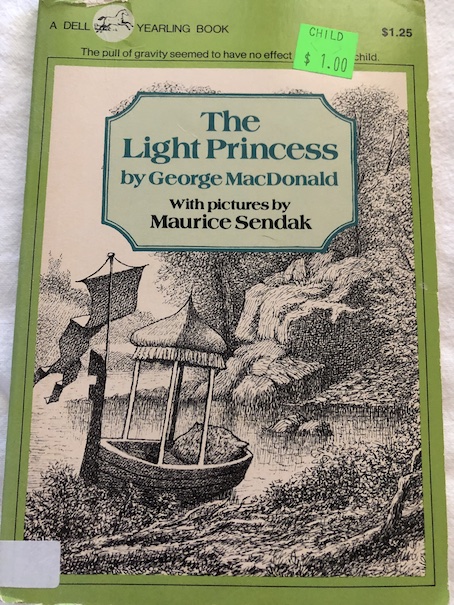


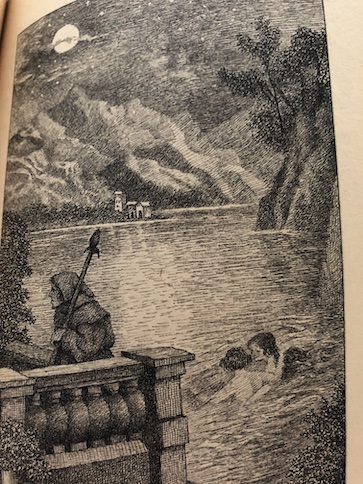


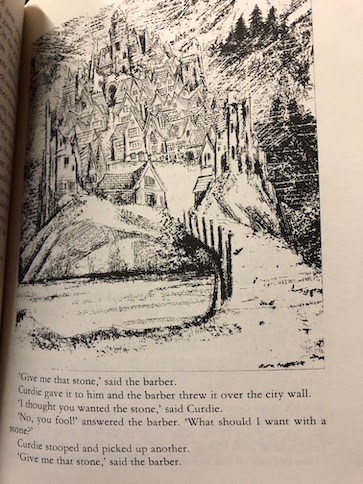

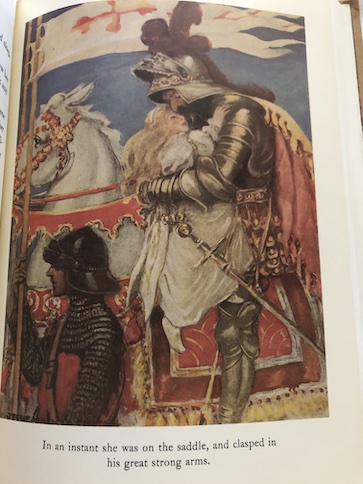
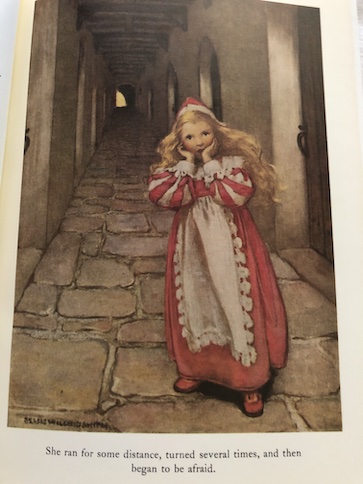
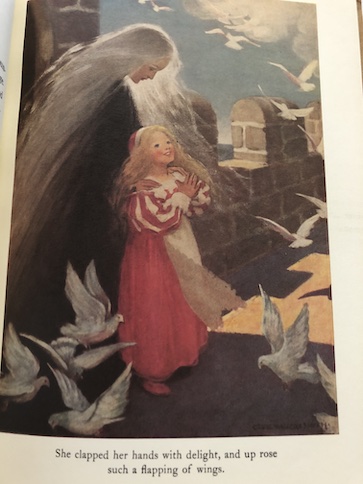
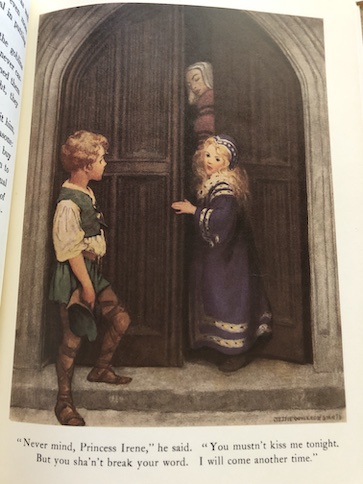
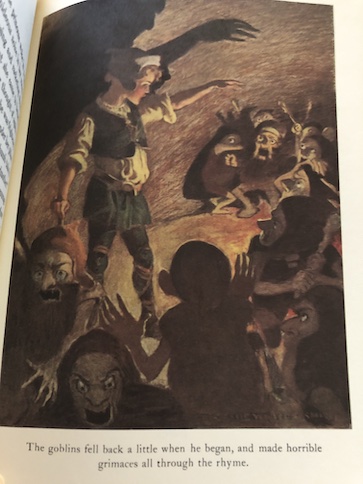


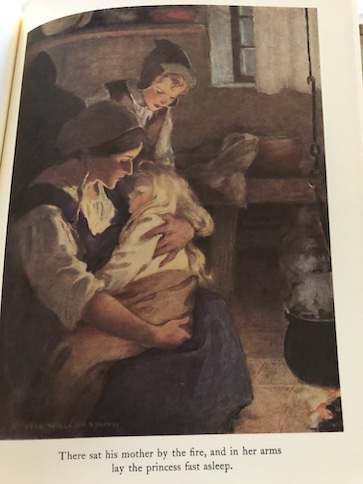
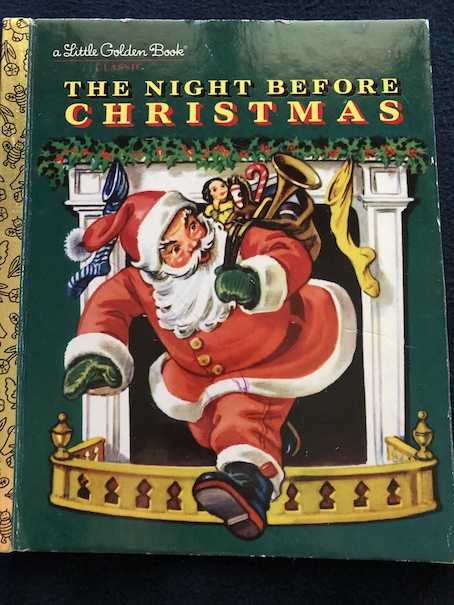
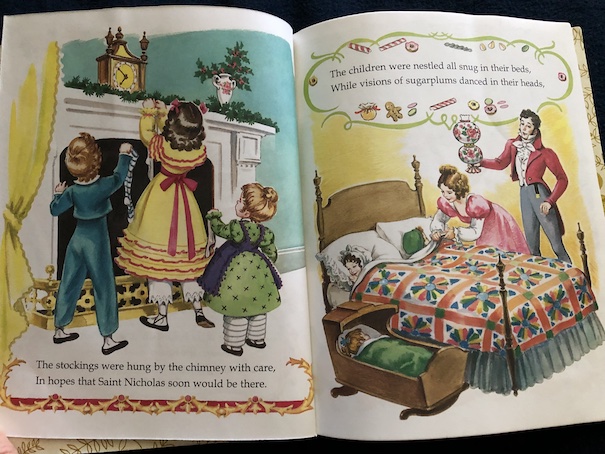
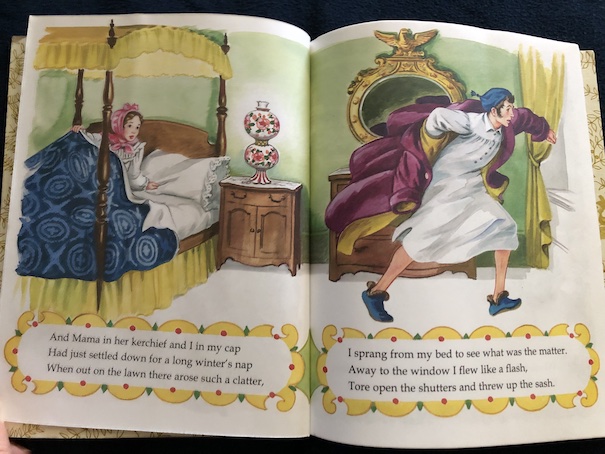


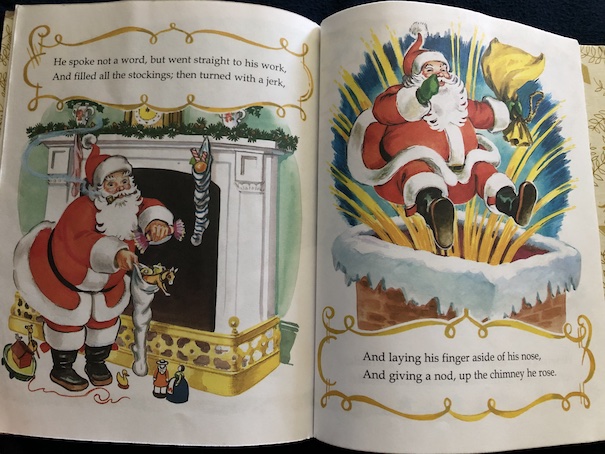

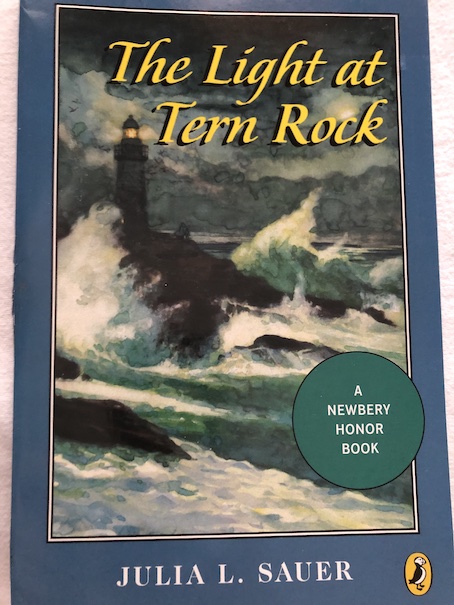


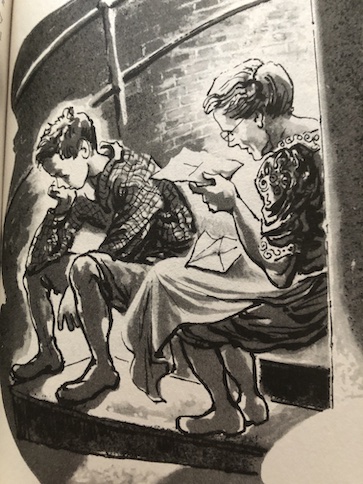
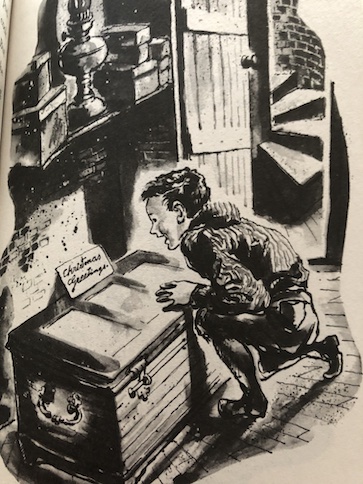

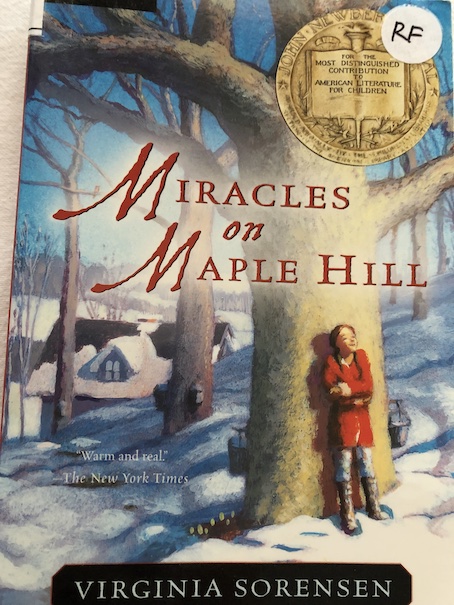
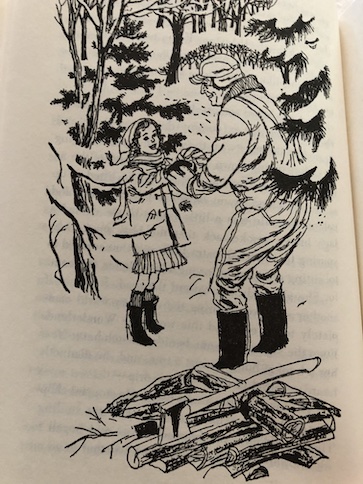
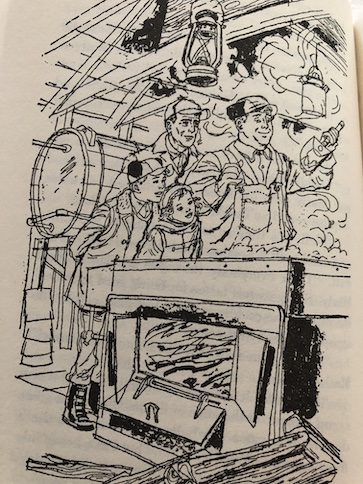


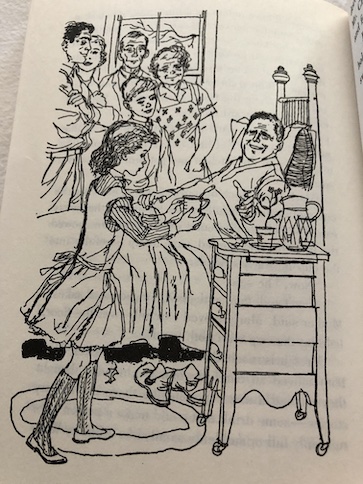
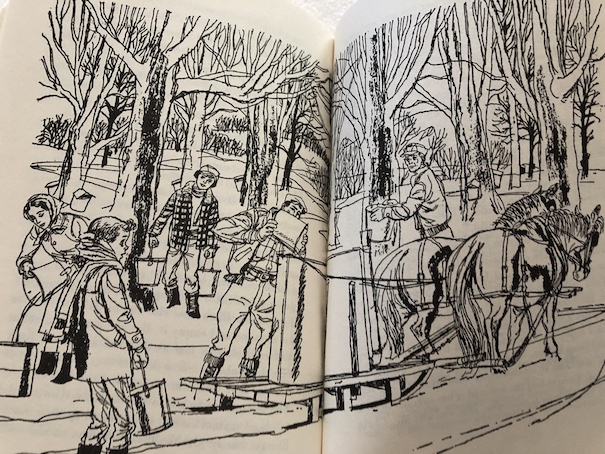
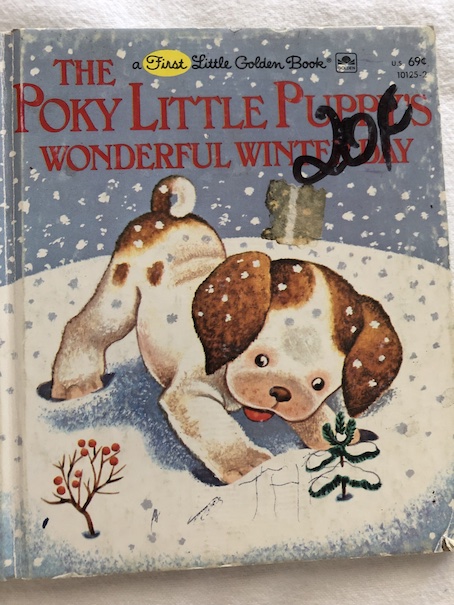


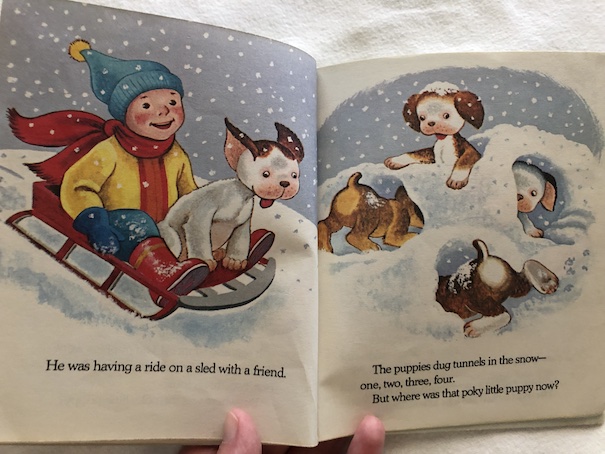
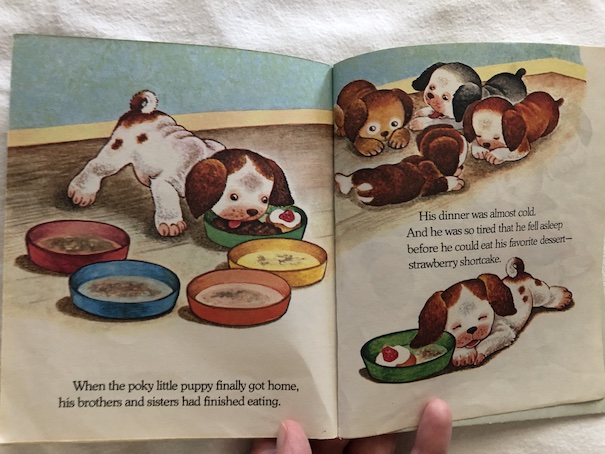


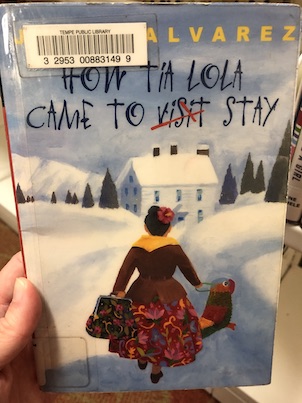
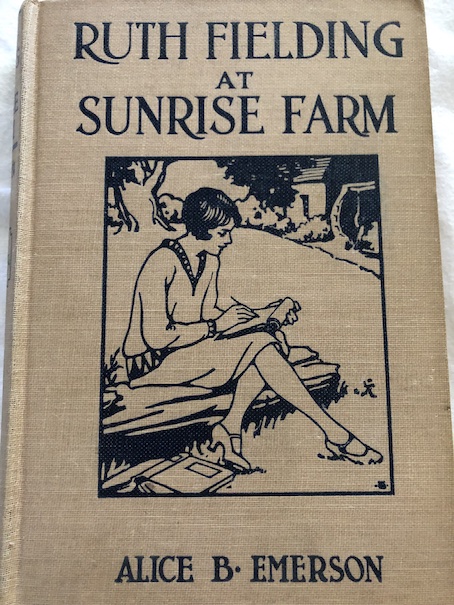
 Jestress's Forgotten Books and Stories