The House on Hackman’s Hill

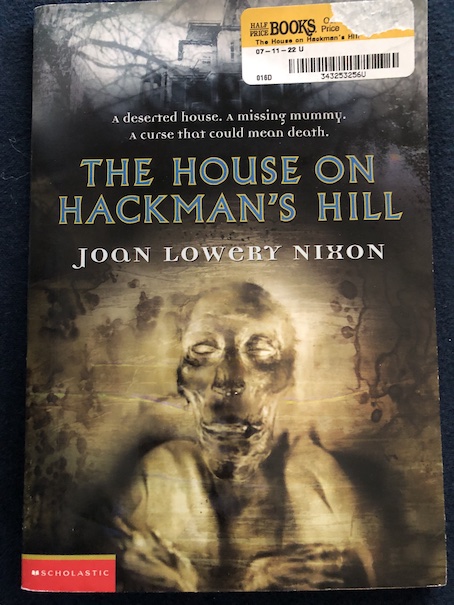
House on Hackman's Hill cover

The House on Hackman’s Hill by Joan Lowery Nixon, 1985.

This creepy book is interesting partly because it is told in two parts. About half the story is a flashback that explains the history of the house and the mummy inside it, and the rest continues in the present day.

The very beginning of the story is in the present, starting with a pair of cousins. While they are visiting their grandparents, Jeff tells his cousin Debbie that he’s found out about an old, abandoned house nearby that supposedly contains a hidden mummy and that there’s a reward for anybody who finds it. Debbie doesn’t believe him at first, but he says that he heard all about it from their grandparents’ neighbor, Mr. Karsten. Jeff persuades Debbie to come with him to check out the old house. Debbie comes and takes pictures of it because she’s interested in entering a photo contest.

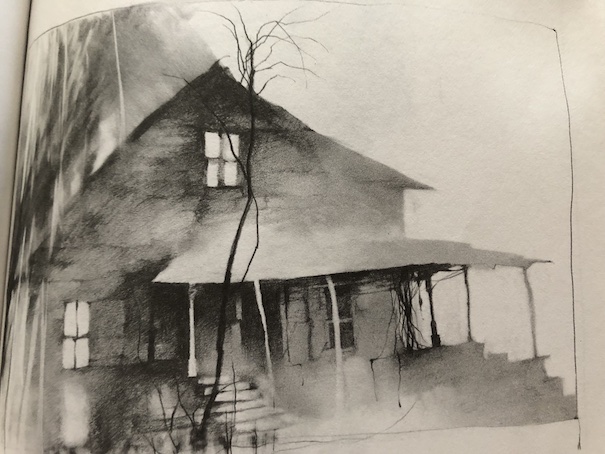
The place looks really creepy, and they have the odd feeling like somebody is watching them, even though the house is supposed to be empty. Debbie says that they should ask their grandparents what they know about the old house. At first, the grandparents don’t want to talk about it. They just say that it’s an old house and not very interesting. Debbie asks them directly about the mummy, and they say that there are a lot of rumors about the old place, but they don’t really believe them. The kids decide to talk to old Mr. Karsten again. Mr. Karsten says that he knows all about the old house on Hackman’s Hill because he lived there for awhile when he was young, back in 1911.

Paul Karsten’s Story

Paul Karsten’s mother was a secretary, and she went to work for Dr. Hackman, the former owner of the house, after the death of her husband. Dr. Hackman was a strange man with changeable moods. He was pleasant enough to Mrs. Karsten, but he hated children and didn’t really like having her son Paul in his house. Dr. Hackman was a history professor, specializing in Egyptology. He was approaching retirement, and he wanted to devote himself to his papers and his collection of Egyptian artifacts. Mrs. Karsten’s job was to help him catalog his collection, and Dr. Hackman offered such a good salary, Mrs. Karsten couldn’t refuse. The mummy was delivered the same day that Paul and his mother moved into the house.

Paul was given a room in the tower of the house, and while he thought that it had a great view at first, he got nervous when he noticed how the tower room was situated on the edge of a cliff. One of Dr. Hackman’s servants, Jules, makes a comment about how Paul should be careful because they don’t want “another accident”, refusing to say more about whatever “accident” occurred there before. Paul was uncomfortable with the house and with Dr. Hackman. He tells his mother that the house frightens him and that he wants to leave, but his mother reassures him that the place only looks strange because of the Egyptian artifacts. Paul found the artifacts he once saw at a museum exhibit frightening and he’s particularly disturbed by a statue that Dr. Hackman has of a man with an animal head, but his mother says that’s just a statue of an Egyptian god.

Paul had notice earlier that a long box had been delivered to the house, and he gives into temptation and tries to look inside. However, he is stopped by Jules. Jules and his wife Anna warn Paul that this house isn’t very good for children and that Dr. Hackman doesn’t like people nosing around or messing with any of part his collection. At dinner, Paul admits to Dr. Hackman that he tried to look in the box and apologizes for his curiosity. Dr. Hackman accepts the apology, and before Paul goes to bed that evening, Dr. Hackman shows him the mummy case that was in the box. Paul asks him if it’s real, and Dr. Hackman says it is. Paul says that he heard that it’s illegal to take real mummies out of Egypt, but Dr. Hackman says that there are ways, if you’re willing to pay for it, and he was. Dr. Hackman says that his eventual goal is to turn his house into a museum of Egyptian artifacts so that scholars will come there to study them and read his papers, and he will be famous. He also says that he knows how to protect himself from the mummy’s curse. The talk of curses scares Paul, but Dr. Hackman says that nothing has ever happened to him personally because of any tomb curses … implying that something might have happened to someone else.

When Paul tells his mother that Dr. Hackman has a real mummy, she is worried and upset. She doesn’t like the idea of people obtaining artifacts through unethical or illegal means, although she knows that the laws are poorly enforced. Mrs. Karsten doesn’t believe in superstitious curses, but soon, strange things begin to happen. While putting away his things in his room, Paul discovers a strange, triangular piece of gold metal with some kind of design on it. When he goes up to bed, he feels like someone is there in the room, although he can’t find anyone. During the night, he wakes up, sees that one of his windows is open, and feels an odd urge to walk toward it, but fortunately, his mother comes to check on him and stops him. Paul and his mother both realize that they were woken by the sound of a cry in the night. His mother supposes that it was some kind of night bird, but Paul knows that it was probably something to do with the curse.

Paul insists that Jules and Anna tell him about the accident that took place in his room. They say that they weren’t working for Dr. Hackman when it happened, but they know that the person who fell from the tower room was a guest of Dr. Hackman’s, he was from Egypt, he died when he fell, and his body was shipped back home. At first, Paul thinks that the gold piece he found probably belonged to the Egyptian guest, but that’s not quite it.

Dr. Hackman gives Paul the job of polishing some of his statues, knowing that they bother him. It amuses Dr. Hackman as a mean joke. However, Paul’s fear of them fades while working with them because he begins to appreciate their artistry. Dr. Hackman is surprised that Paul is able to see that and not just be afraid of the statues. Paul asks him about the statue of the man with the animal head, and he explains that it’s a statue of Anubis, the god of the dead, and scares Paul again by saying that Anubis is the one responsible for the curses on tombs. He says that Anubis’s head is a jackal head and that jackals hunt at night and have a bark like a cry. This confirms to Paul that the curse was responsible for the cry he and his mother heard.

Paul eventually comes to realize that the strange gold piece attracts the mummy and the mummy’s curse, which is why Dr. Hackman knows that he’s in no danger. Dr. Hackman put it in the tower room to make sure that the mummy’s wrath would only come to whoever was in that room … and that’s why he made sure that Paul was given that room, too. To protect himself and his mother, Paul knows that he has to get rid of that gold piece.

Mr. Karsten finishes his story by explaining to Jeff and Debbie where he hid the gold piece and how Dr. Hackman disappeared, apparently a victim of the curse. Nobody ever discovered what happened to Dr. Hackman, and the mummy disappeared that same night, but a museum has offered a reward for anybody who finds the mummy. Mr. Karsten says that various people have tried to stay in the house and find the mummy, but nobody has succeeded. Everyone has been frightened off after just a single night in the house.

Jeff doesn’t believe in curses, and Debbie agrees to accompany him into the old house to find the mummy and claim the reward.

Return to the Present

The rest of the story is about Jeff and Debbie’s adventures with the house on Hackman’s Hill. Jeff says that he thinks all the spooky curse stuff was just put on by Dr. Hackman, who was a mean old man having a joke by scaring a kid with all that talk of curses. Dr. Hackman was definitely a mean old man who enjoyed scaring young Paul Karsten, but questions still remain. How much of what Paul experienced was really real, and what happened to Dr. Hackman? If the curse was just something he made up, why did he scream the night he disappeared, and where did he go?

Jeff’s idea is that all the creepy stuff happened at night, so the best time to go look for the mummy would be during the day. (That’s actually pretty sensible. Why go to a supposedly haunted house during the night if you don’t have to?) The kids make a plan and put together a collection of useful supplies and food for their mummy hunt. They decide to go while their grandmother is busy watching her favorite soap opera and their grandfather is in town, arranging some sort of surprise for them.

When they enter the house, they discover that everything is still inside. All of the furniture and Egyptian artifacts are like Mr. Karsten described them. Debbie has an instant camera that with takes pictures that develop themselves. (No brand name mentioned, but basically, a Polaroid instant camera or something very similar. Those were popular when I was a kid in the 1980s and into the early 1990s, especially for families and amateur photographers. They’re not as popular now with the popularity of smart phones and digital photography, but they’re still around. Although police photographers now use digital cameras, instant cameras have been used in accident and crime scene photography because they produce quick results, the photos last for a long time, and because they develop immediately after being taken, they can’t be digitally altered. What I’m saying is that Debbie has made a good choice for recording their adventures and any evidence that they uncover, and it pays off almost immediately.) When Debbie takes a picture of the statues that Mr. Karsten told them about, she notices something frightening right away: the Anubis statue doesn’t show up in photographs.

Jeff discounts the photographic evidence because Debbie’s hand shook, and the picture is somewhat blurred. However, the kids start hearing noises in the house. Then, Debbie notices that a bad snow storm is approaching. She wants to leave the house immediately, but Jeff realizes that they can’t because they’d never make it back to their grandparents’ house by the time the storm hit. Night approaches, and the kids are about to see just how true Mr. Karsten’s story was. The kids are trapped in the house by the snow storm, but they’re not there alone.

The book is available to borrow and read for free online through Internet Archive (multiple copies).

My Reaction and Spoilers

I thought that this was a fun, creepy story. The creepiness is tempered somewhat in the first half of this story because it’s told in the form of a flashback. We know during the first part of the story that Paul survives his ordeals and lives to old age because he’s telling the story of what happened when he was young to Jeff and Debbie as an old man. When Jeff and Debbie go into the house themselves, it’s less certain what’s going to happen.

There are points in the story after Jeff and Debbie enter the house where it seems uncertain how much of what Paul Karsten experienced was supernatural and how much might have been due to the machinations of Dr. Hackman, who seems to have been a very disturbed man by himself. They soon discover that the house has secret passages that could allow Dr. Hackman to move around the house unseen and create some strange phenomena himself to scare or harm people in the house. There was a point where I thought perhaps everything would turn out to be part of some elaborate plot by Dr. Hackman or someone else, but (spoiler) there is real supernatural phenomena happening.

Before the end of the book, Jeff and Debbie discover both where the mummy is hidden and where Dr. Hackman hid the mummy’s golden eyes, which Anubis has been searching for all this time. They also learn what really happened to Dr. Hackman all those years ago. He apparently did become the victim of the curse that he had tried to evade by inflicting it on others. When the story ends, it seems that the curse is ended permanently, although Jeff and Debbie do manage to get some things out of the experience.

I liked how, even though the story does turn out to be supernatural, the author introduced the idea that it might not be because that element of uncertainty kept the suspense going for longer and introduced some interesting possibilities for readers to consider. It also made it a little more plausible that the kids would be willing to enter the house because they could believe that the house itself was harmless without Dr. Hackman there to continue his plots.
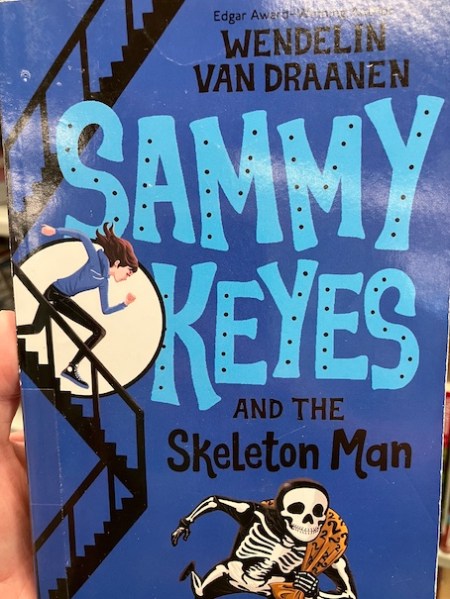
Sammy Keyes and the Skeleton Man

Sammy Keyes

Sammy Keyes decides that she wants to go trick-or-treating even though her grandmother thinks that she’s getting too old to do it. She’s still living secretly in her grandmother’s apartment in an apartment building that’s intended only for seniors, so she jumps at the chance to go out with friends on Halloween night. Dot (real name Margaret/Maggie), a new girl at school, invites her and Marissa to come over to her house to get ready before going out trick-or-treating, which works well for Sammy.

As Dot’s house, Dot is painting herself yellow as part of her bee costume. Sammy is going to color herself green so she can be a marsh monster (something she made up, but it sounds like a swamp monster from old movies). When Marissa comes, she brings Sammy a green sweater that she borrowed from her mother that would be good for a marsh monster costume, and the other girls help Marissa wrap herself in toilet paper for her mummy costume. As the girls set off to trick-or-treat, Sammy gets the idea to go by the old Bush House. The Bush House isn’t haunted, but it is a creepy place and there are stories about the crazy Bush Man who supposedly lives there and will jump out of the tangled bushes that surround the house and kill people. Sammy’s grandmother says that the stories are just stories and the old man who lives in the house is just a lonely old man, but Sammy thinks that it would be thrilling to visit the house and see it up close on Halloween.

As the girls approach the house, they almost collide with someone in a skeleton costume who’s running away. He looks bigger than the girls are, and he’s carrying a pillowcase that looks pretty full. The girls are startled, but Sammy is determined to go up to the Bush House and just knock on the door once for the experience of it. What Sammy sees when she knocks on the door is even more startling.

The door of the house just swings open, and there’s a pile of newspapers on the floor inside that are on fire. Sammy calls out to see if there’s anybody in the house. There’s no answer, so Sammy rushes inside and manages to put out the fire by smothering it with her marsh monster sweater. As the girls are about to leave, Sammy sees someone in a Frankenstein costume in a chair, and they scream and run outside. Then, Sammy realizes that the Frankenstein mask was on sideways, and it’s not easy to breathe in a sideways mask, when the nose and mouth holes don’t line up, so she decides that she has to go back and see if the person wearing the costume is really alright. It’s definitely a human in a costume, and not a dummy. When Sammy removes the mask, she at first fears that the person in the costume is dead because he’s so still, but it turns out that the person under the mask is the Bush Man. He’s tied up, has a head injury, and is barely conscious. He begs the girls for help. The Bush Man is having trouble talking, so after the girls untie him, he writes a message down on paper, asking the girls to go next door and call the police. He also wants to know if the girls saw the skeleton man.

The Bush Man’s real name is Chauncy LeBard, and the reason he can’t talk is that he’s had surgery on his throat because of smoking-related throat cancer. He needs a device held up to his throat to really speak in an electronic voice (an electrolarynx, I’ve seen one used before). While Dot and Marissa run next door and call the police, Sammy stays in the house with him. When the police come, Sammy uncomfortably recognizes the police officer who knows her from the previous book in the series, Officer Borsch. Last time, she and Marissa told him that Sammy is Marissa’s foster sister so they wouldn’t have to reveal where Sammy is actually living. Dot is confused when Marissa refers to Sammy as her “sister”, but she doesn’t give them away.

Mr. LeBard explains that the man in the skeleton costume had forced his way into the house and tied him up, but he doesn’t know who the man is or why he did it. The girls can’t fully describe the man because he was wearing a full-body costume, although they agree that he seemed like a full adult, not just a tall teen. It seems like the skeleton man was a thief because Mr. LeBard’s wallet and a pair of candlesticks are missing.

After the night’s adventures are over, Sammy winds up spending the night at the house of an elderly friend, Hudson Graham, because her grandmother’s nosy neighbor is awake, trying to find proof that Sammy is illegally living with her grandmother in their apartment building. Hudson agrees to let Sammy stay with him, and it turns out that he’s also an old friend of Chauncy LeBard. Mr. LeBard used to be a political science professor at the local college, and Hudson was one of his students. The two of them liked to get together and have political debates. Then, Mr. LeBard’s mother died, leaving him her estate. The local rumors say that’s when Mr. LeBard went crazy and became the Bush Man. The reality is that he developed health problems because of his smoking and didn’t want his old friends to know. Chauncy also has a brother, who was disinherited by their mother because she disapproved of his wife, but nobody knows why the mother didn’t like her.

Sammy can’t forget about what happened with Chauncy LeBard, even if she wants to. She at least has to go back to the Bush House to get Marissa’s mother’s sweater, which turns out to be worth a lot more than either of them thought. Marissa tells her that, even though her mother never wears that old green sweater, she did notice that it was gone and was upset because it turns out that it was a designer sweater that she bought for $500. Sammy is horrified because, having put out a fire with that sweater, she’s pretty sure that it’s done for, and if she has to come up with $500 to replace it, so is she! When Sammy goes to see Chauncy about the sweater, she starts learning more about him and how his inheritance from his mother turned out to be more of a curse than a blessing. Sammy also starts to wonder whether theft was really the motive for what happened on Halloween. If Chauncy didn’t have that hole in his throat from his surgery, the sideways mask might have smothered him. Did the skeleton man want Chauncy dead?

The mystery of the skeleton man and the ruined $500 sweater aren’t Sammy only problems, though. At school, there’s a nasty rumor going around that Sammy has been calling a boy name Jared, trying to get him away from his girlfriend, Amber. Amber is angry with Sammy, and Sammy’s school nemesis, Heather, has been gleefully making sure that everyone in school knows about it in order to embarrass her as much as possible. Sammy knows that she has never called or even spoken to Jared in her life and doesn’t care about him, but it’s not easy to convince everyone else of that. So who really has been calling Jared? Sammy is sure that it’s really Heather, pretending to be her and saying embarrassing things to get her in trouble. It would certainly be in character for Heather to do that. The rumors are get so out of hand even in a day that one of Sammy’s teachers even suggests that maybe she should talk to a school counselor about her issues with Jared so it won’t affect her schoolwork.

Because the characters are middle school kids, Sammy decides that the best way to get evidence that Heather is her phone imposter is to crash her Halloween party. With everyone in costume and the whole class from school invited (except for Sammy, of course), Sammy, Marissa, and Dot are pretty sure that Sammy can sneak in with them, posing as Dot’s cousin “Nikki.” What could possibly go wrong?

The book is available to borrow and read for free online through Internet Archive (multiple copies).

There are characters in the Sammy Keyes series who smoke, which was becoming uncommon in children’s books in general when I was young in the 1980s and 1990s because adults didn’t want to set a bad example for children. In the last book, the fortune teller character smoked, and it kind of surprised me, but it seems that the series follows the unspoken rule for children’s books that include smoking, that the only characters who do it are either villains or oddballs, not cool people to be imitated. This book confronts the issue of smoking more directly, with Chauncy LeBard’s throat cancer. Mean girl Heather also turns out to be a secret smoker who bribes one of her friends to spy on Sammy and her friends by giving her cigarettes. Sammy later finds out that Chauncy’s mother was also a smoker who died of lung cancer. Between Chauncy’s throat cancer and his mother’s death, the story helps illustrate the hard realities of long-term smoking. Chauncy seems to be living in reduced circumstances, without heat or electricity in his house. My first thought was that his mother’s medical expenses and subsequent funeral and Chauncy’s surgery drained his funds. Medical expenses have wiped out people’s savings before in the US, and I remember that one of the stories they told us to discourage smoking when I was in school years ago was about a woman who was forced to sell her family’s heirlooms to cover her cancer treatment. When Sammy meets Chauncy’s brother, Douglas, she finds out that Douglas was trying to get his mother and brother to quit smoking, but neither of them would, and that’s part of the reason for the family rift. Douglas says that if Chauncy has suffered health problems and blown through the family’s money, it’s really his own fault. It’s true that Chauncy should have taken the hint and quit smoking a long time ago, and he might have spared himself a lot of pain and misery if he had, but it turns out that he didn’t sell the family heirlooms to pay for his medical expenses. There was something in his house that was worth a great deal of money, something that Chauncy couldn’t bear to part with even to improve his own living situation because of the sentimental value. The thief is one of the few people who understood what Chauncy had and how to take it without him even noticing that it was gone right away. In a way, what the thief really stole is as much of a mystery for most of the book as who the thief was. The skeleton man turned out to be one of the people I suspected, but not my first suspect, so I was actually in suspense for most of the book.

As for the side plot with Heather calling Jared as Sammy: Oh, criminy! This is one of those ridiculous tween problems that seems so impossibly complicated when you’re in middle school but pretty dumb when you’re not. I appreciate that the math teacher is concerned when Sammy seems distracted in class and her work suffers, but I have trouble believing that an adult teacher would really be interested in rumors about who at school is calling who. I can’t remember any of my teachers ever caring about that stuff because adults usually know that rumors are wrong and that this kind of school drama passes faster if you don’t feed it. I don’t recall any massive rumor campaigns getting the attention of teachers when I was a kid, and I can’t imagine any of my old teachers giving rumors much weight or interest. I think my teachers would have just told us to stop being drama queens, focus on our work, and save the gossip for after school. A few of the more outspoken and direct communicators on the faculty would have flat out told us that gossip isn’t worth anything, that most of it is wrong anyway (that was actually the subject of a play I was in at school once), and that everyone will have gotten bored of whatever it is and moved on in a week or two because nothing we were talking about was really that earth-shaking and we all had the attention spans of chihuahuas on a sugar rush.

If I had to say something to these kids about this situation, I might just tell Sammy not to go calling people who don’t want to speak to her (if I were to assume that she was doing that) because it’s just going to annoy everyone. As for Amber, it’s not really her business to control either her boyfriend or the person calling him, whoever it is. Her decision is whether or not she’s satisfied with how Jared is responding to the situation and if she wants to still be his girlfriend when he acts that way. I’d make it a point to tell Jared, as the center of this drama, that if he doesn’t want to talk to somebody on the phone, he should just hang up without saying anything. You don’t need to stay on the line with someone who’s bothering you. With today’s caller IDs and cell phones that identify everyone who calls, it’s even easier because you don’t have to pick up the phone in the first place if you recognize a number you don’t want to answer. I can’t remember if they had those in the late 1990s, or if that was more an early 2000s development, but I know we definitely had answering machines, and I knew people who would just let the machine answer most of the time, only picking up if they recognized the voice leaving a message. Either way, just because someone calls you doesn’t mean that you have to take the call. On the other hand, if Jared likes being called by a girl other than his girlfriend, it might be time for him to rethink his relationship and decide what he really wants. That seems to be where Jared is. The book describes him as not being too bright and going on an ego trip from whoever keeps calling him. Actually, if I were one of the teachers, the people I’d really want to talk to the most would be Jared’s parents because I think they’d have more power to stop the situation than anybody, no matter who the caller was. Jared’s a kid who still lives at home, so his parents could answer the phone first and find out who wants to talk to him or let the machine record a message that could be used as proof against a prankster who’s bothering him if it gets excessive. Most child pranksters would give up if they called a few times and only got the boy’s parents, especially if the parents sound annoyed or angry when they answer. If Jared’s family got the call on a landline (probable for the 1990s), an annoyed parent could also *69 to last-call return the prankster’s number or look it up on their phone bill if they want to confront the prank caller or talk to the prankster’s parents. It’s annoying to deal with a prank calling kid but not really that hard. I didn’t have access to my parents’ phone bill as a kid, but everyone knew how to *69. Of course, if people in the book handled the situation sensibly, the book would probably be less exciting, and we wouldn’t get the payoff of seeing Sammy get the best of Heather.

There are some laughs when Sammy finds a clever way to record Heather making one of her calls and play the recording for the whole school. It was the sort of victory moment that I would have loved when I was about twelve. However, Sammy’s secret life living in her grandmother’s apartment complicates any problems that Sammy has with the authorities and school administration. After she turns Heather into a public spectacle during a school assembly, the vice principal insists that Sammy’s mother attend a parent-teacher conference. Since Sammy’s mother isn’t available, her grandmother has to attend instead, risking the exposure of their secret.

There is a little more insight into Heather when Sammy sees what Heather’s home and mother are like, but understanding doesn’t equal approval. Heather’s life isn’t perfect, and she lets slip at her party that her mother is a 40-year-old who dresses really inappropriately and flirts with much younger men, possibly including some of her daughter’s teenage classmates. She doesn’t appear to know about Heather’s smoking habit or the truth about any of the other things Heather does. Knowing that her mother is odd and may have really inappropriate taste in men/boys doesn’t make Heather any more likeable, though. At the end of the book, Heather’s outbursts in front of the vice principal may lead to the school insisting on counseling for Heather, which is a hopeful sign, but since Heather remains a bully mean girl for the rest of the series, it’s not that hopeful. You can lead a person to professional help, but you can’t make them internalize it and make use of it.

For me, one of the best parts of this book was the further development of the relationship between Sammy and her grandmother and Hudson Graham. There are hints that Hudson is romantically interested in Sammy’s grandmother, and he treats Sammy like his granddaughter. He seems to be in on the secret of Sammy living with her grandmother and is one of Sammy’s best protections against getting caught. He willingly aids and abets Sammy’s investigations, giving her knowledge and guidance whenever she needs it, and at the end of the book, he gives Sammy and her grandmother a ride to the parent teacher conference.

The ending of the story sets up the beginning of the third book in the series with Sammy being given the assignment of completing some volunteer hours to make up for the disruption that she caused at school.

Susannah and the Poison Green Halloween

Susannah and the Poison Green Halloween by Patricia Elmore, 1982.

This is the second book the Susannah Higgins mystery series.

Halloween doesn’t start out well for Susannah’s best friend, Lucy. Her father accidentally threw out her costume, thinking that it was trash because it was mostly made out of tin foil. (She was planning to be the Death Queen character from a comic book.) As she desperately tries to put together a last-minute costume for Susannah’s Halloween party, her father tries to buy her a costume at the discount store. Unfortunately, all the discount store left was a Little Bo Peep costume. Lucy thinks that she’s going to be mortified, showing up in something so childish when she told everyone her costume would be really cool. When another girl from school, Carla, comes by and teases her about her costume, Lucy gets the idea to make it a kind of double costume, painting her face an evil green so she can rip off her sweet Little Bo Peep mask and be the sinister Death Queen underneath.

Carla says that the secret identity costume idea is pretty good, but before she can go to the party, she has to buy a costume of her own. She had to wait for her stepfather’s pay day because her parents bought a new dress for her older sister, Nadine, for a high school dance earlier. As Carla explains about her delay in getting her costume, she mentions her sister’s social worker coming to dinner. Susannah asks why Nadine has a social worker, and Carla says that her sister got into trouble with drugs a couple of years before, but she’s not really supposed to talk about it. Lucy and Susannah want to do some trick-or-treating before the party, and Carla asks if they’ll wait for her to get her costume first. The other girls aren’t willing to wait, but they say that they’ll get some extra candy for her when they start out, and they’ll meet her at her family’s apartment at the Eucalyptus Arms apartment house. In her recounting of that Halloween night, Lucy says right out that it was at the Eucalyptus Arms that someone gave them poisoned candy.

When they reach the Eucalyptus Arms, Carla isn’t home yet, but they meet up with Knieval Jones (Lucy’s nemesis and Susannah’s occasional helper from the previous book), who is dressed like a vampire, and get some stale granola bars from Carla’s sister, Nadine. A nice lady name Mrs. Sweet gives them homemade cupcakes, and Mr. O’Hare, who is a vegetarian and thinks that sugar is poisonous, gives them organic treats from the natural food store. However, the strangest experience they have is in Mr. Mordecai’s apartment. Mr. Mordecai is a strange man with whitish eyes. He insists that they come in and pay their respects to the deceased “Jeremiah.” There is a coffin in the room with a wreath on it. The kids are spooked, but Susannah notices something odd about the wreath, which gives her an idea of who/what “Jeremiah” is. Mr. Mordecai gives them popcorn balls, and they leave.

They meet up with Carla, and Susannah’s grandfather, Judge Higgins, drives all four children to the party. However, Knievel and Lucy get into a fight over their treat bags, spilling both of them into the gutter and ruining their candy. Lucy is mad at Knievel, but then Knievel suddenly gets sick. At first, Lucy thinks that he’s just eaten too much because he’s been sampling his treats and stealing some of hers. Knievel misses the party because he’s sick, but it turns out to be much worse than that. The next day, the police come to the school to tell them that Knievel was poisoned and to interview the children about everything that happened the night before.

Because Lucy and Knievel spilled and ruined their bags of candy, it’s hard to say exactly what Knievel ate before he got sick, and Lucy never ate any of it. Carla had the same treats as the others, and she is also ill and being examined by a doctor, just in case she was also poisoned. Susannah turns her treat bag over the police for analysis. She never touched her candy because she had more than enough to eat at the Halloween party.

By process of elimination, they determine that the poisoned treats had to come from one of the apartments at the Eucalyptus Arms, and that it must have been in something homemade or unwrapped, not wrapped, commercially-made candy. Lucy says that they really know better than to eat unwrapped treats from a stranger, but Susannah points out that Knievel was hungry and ate treats almost as fast as he got them, regardless of whether they were wrapped or not. There are only a handful of suspects who could have handed out the poison in homemade or unwrapped treats, but which of them did it and why?

The title of the book is based on the fact that the apartment house is painted an ugly shade of green and all of the questionable treats the kids received were colored green.

The book is available to borrow and read for free online through Internet Archive (multiple copies).

My Reaction

One of the best things about this book for me is that it was originally published in the year I was born, and it’s a Halloween story, and I happened to be born only a few days before Halloween. Even if I hadn’t already read and liked the first book in this series, that would have endeared me to this book right away. I originally read the first book in the Susannah Higgins series as a child in elementary school, but I think that’s the only book in the series that I read at the time. It might have been that the library didn’t have the full series and the first book was the only one I could find or that book was one of the many that I found at a used book sale and the others weren’t there. It’s been so long that I can’t remember. I just remembered one scene from the first book for years, and it took me a long time to figure out what I was remembering.

Because I was very young during the early 1980s, it was a long time before I understood that this was a period when people were especially worried about the possibility of poison and razor blades in Halloween candy. Like other kids of the 1980s and 1990s, I had to watch those Halloween safety videos that warn you to be careful and to inspect candy for signs of tampering before eating it. (Specifically, I saw this video, which I found one day on YouTube. I watched this 1970s film on reel-to-reel when I was in elementary school because they hadn’t yet installed TVs and VCRs in the classrooms yet and they had a library of old films that I’m pretty sure they bought when they originally built the school in the 1970s. The sound quality wasn’t any better when I saw it for the first time, but it still cracks me up that the ultimate solution to the girl’s unsafe Halloween costume turns out to be gradually changing it to be a different costume.) In 1974, a father murdered his own son for the insurance money, hoping that some random sadist would be blamed for the crime because there were already urban legends about such things. Even though it wasn’t long before the truth of the father’s crime came out, this incident added to the urban legends, seeming to confirm the stories of Halloween poisonings. Because of this, my early Halloweens were very different from the ones my parents had in the 1950s. I was allowed to go trick-or-treating, but I never received any homemade treats, like the popcorn balls and candy apples my parents sometimes got. By the time I was trick-or-treating, only fully-wrapped, commercially made candy was considered safe and acceptable.

At first, I thought that the solution to this mystery would be that Nadine had made marijuana granola bars because we were told right away that she was involved with drugs in the past. There have been real-life cases of children accidentally getting into drugs owned by family members, including cases that have become part of the Halloween urban legends. However, that’s not the case in this story. Susannah’s Aunt Louise, who is a nurse at the children’s hospital, tells Susannah that marijuana was one of the first things they ruled out when they were testing to see what had poisoned the children. The children were vomiting and hallucinating, so Aunt Louise says that it appears to be an overdose of some kind of medicine.

Aunt Louise wasn’t mentioned in the previous book in the series, but she comes to stay with Susannah because her grandparents have to go out of town. Again, Susannah’s parents are simply not mentioned in the story. It’s never clarified whether Susannah is an orphan or living with her grandparents for another reason, although I think it’s implied that she’s an orphan by the parents’ absence and the lack of any mention of why.

Carla is a new character who didn’t appear in the previous book, but again, children in these books do not live in conventional two-parent households. Nadine is actually Carla’s stepsister, and the two of them haven’t known each other very long and are having problems adjusting to their parents’ remarriage and living together. Books with divorced parents or blended families were becoming increasingly common in children’s literature during the 1980s and 1990s, and they were a regular staple of books that I read when I was young. It was pretty common for there to be at least one character with divorced parents in the books I read, but this series stands out to me because it seems like every kid in it so far is either from a divorced family or lives with relatives other than their parents, for some reason. A mixture of different family situations is to be expected, but an overwhelming number of kids in almost the same situation just seems a little odd.

The author does a good job of making everyone at the apartment house look equally suspicious. A number of people at the apartment house have secrets, and some of them are truly dangerous. One of the characters in the story, a man Nadine and Carla call “Uncle Bob” because he’s a friend of Nadine’s father, seems to be showing inappropriate attention to the girls. Carla is afraid to be alone with him, hinting that things that he does when she’s alone with him make her uneasy or even frightened. Uncle Bob isn’t the poisoner, but he does seem to have inappropriate sexual interest in the girls. There isn’t anything explicit described in the story, but the way that the characters refer to Uncle Bob and the dirty magazine that Lucy says she found in his trash can along with a bunch of empty liquor bottles imply what Uncle Bob is like when other adults aren’t watching. Carla says that she’s tried to tell her parents about it before, but nobody believed her because Uncle Bob has been such a good old friend of her stepfather, and he can’t picture him doing anything wrong. When she finally confides the problem to Nadine, Nadine confirms that she’s had the same experience with him and that her father didn’t believe her either, but she’s going to make sure that he listens this time. Susannah also says that they are going to tell the police about it and her Aunt Louise, and while Uncle Bob may not have actually done anything that would cause him to be arrested, he’s going to get some severe warnings and maybe some professional help.

The Red Room Riddle

The Red Room Riddle by Scott Corbett, 1972.

The story takes place during the 1920s. (It doesn’t actually give a date, but it references the early days of radio and silent movies, which helps place it.) Bruce Crowell meets the new kid in the neighborhood, Bill Slocum, shortly before Halloween. Bruce is afraid of Bill at first because he’s big and has a mean look. Bill does turn out to be a bully, picking on him and shoving him into mud puddles as they walk home from school. Then, one day, Bruce fights back and gives Bill a black eye. Bruce expects that Bill will be mad, but when he points out that Bill didn’t have to shove him into a puddle, Bill says that he guesses that they’re even now, and the two of them end up becoming friends.

Bruce and Bill spend a lot of their time playing outside with other neighborhood kids, and they start making plans for Halloween. During the 1920s, kids mainly celebrated Halloween with pranks. Even though Bill isn’t very good in school, he likes to read nonfiction books, and he starts reading folklore about ghosts. Bruce is more into fiction, and he starts reading books of ghost stories. Bill is really into hard facts and doesn’t believe in ghosts. His reading about ghosts is because he wants to figure out why people would believe in something so silly. He reads about how people have faked ghosts before, and he comments that he wishes that there was a haunted house nearby so he could do some research.

Bruce tells Bill about a house in a richer neighborhood that’s supposedly haunted. Bruce has seen the house before with another boy named Virgil. Virgil’s father says that there was a story about a dead baby being chopped up and buried in the garden of the house or something. Bruce isn’t completely clear about the details, but he says that the house has been boarded up for years because there’s some kind of long-standing dispute about who owns the property. Bill asks Bruce what he saw when he and Virgil went to the house, but Bruce says that they didn’t see much because the house is surrounded by a high wall, and they couldn’t get past the gates. It’s impossible to climb over the wall because there’s broken glass on top that’s cemented in place to stop people from getting in.

When it looks like it’s going to rain on Halloween, Bill suggests that they go check out the haunted house instead of running around the neighborhood, playing pranks. Bruce is reluctant, but Bill talks him into it. They have trouble finding the house at first, and they stop to ask a mailman where it is. The mailman gives them directions, amused that the boys are looking for a scare on Halloween. Bruce doubts that they’ll be able to get near the house because of the wall around it, but Bill discovers that there’s a door in the wall that’s unlocked.

Inside the wall, they find a messy, overgrown garden. The house itself is three stories tall and badly damaged on one side from a fire. In the garden, the boys meet another boy, Jamie Bly, who says that he also snuck onto the property. Jamie has his dog with him, and he says that he’s not scared of the ghosts in the house, daring the other boys to come inside with him.

Inside, the boys have a frightening encounter with the half-blind caretaker of the house, who menaces them with a broken axe handle. The boys run outside again, and Jamie says that the old caretaker wouldn’t really hurt them. Jamie says that he comes there from time to time to spook him because he thinks it’s funny. The caretaker knows it’s him because he calls him by name when he chases him. Jamie says that the caretaker won’t be there much longer, though, because the house is going to be torn down soon, and if the other boys want to see some real ghosts, they should come to his house later that night.

Jamie claims that he lives in a real haunted house. The other boys don’t believe him, and at first, they don’t want to show up to meet Jamie that night because they think he’s really annoying. However, their curiosity gets the better of them, and they decide to show up and see whatever Jamie has to show them. They think at first that they’re just calling Jamie’s bluff and that they’ll prove that he’s a liar, but they’re about to be in for the scariest Halloween they’ve ever had!

When they meet Jamie that night, he leads them through an unfamiliar neighborhood to a house that seems as big as the other old house. It’s difficult for them to see the outside because it’s raining heavily, but the inside is lit with gaslight and oil lamps instead of electricity, something that immediately strikes the boys as odd. They don’t see anyone else at first, and Jamie says that his parents are out for the evening. Bill expects that there are probably servants somewhere in the house because it’s such a big place, and he actually seems to be enjoying himself, looking forward to the challenge of debunking any “ghosts” that Jamie might show them.

The scares start slowly. Something scratches Bill on the cheek before they enter the house. They don’t know what it is, but they assume that it’s some trick that Jamie set up. There’s a creepy maid who doesn’t seem to see them or acknowledge them. Lights go on and off mysteriously. Jamie makes a peanut butter sandwich. (That wouldn’t be scary except that the boys are seriously starting to be creeped out by Jamie, so everything he does is creepy.) Then, Jamie takes them upstairs to see the Red Room.

The Red Room is a bedroom where everything is red. It has a picture of the Slaughter of the Innocents and a tapestry with the same theme outside. It has a red marble fireplace. Even the ceiling of the room is red … and it looks red and sticky. Then, Jamie locks them inside. The room has no windows, and Jamie says that there’s a secret staircase out … if they can find it.

The book is available to borrow and read for free online through Internet Archive (multiple copies).

My Reaction and Spoilers

Getting locked in what looks like a creepy murder room is scary enough, but there are other scares, and the boys do see what looks like real ghosts. After their experience, Bill thinks that he’s reasoned out a good explanation, but there is one more punchline to the story when the boys go back the next day to confront Jamie about all the creepy things that happened.

This is one of those stories where you never get a full explanation. In the end, we still don’t know what the deal was with the theme of the of Slaughter of the Innocents and the dead baby that was once supposedly found on the property. However, when the boys talk to an impartial person at the end, they do learn that the house is the same one that they visited before and that Jamie probably did live there at some point in the past, back when people used gaslights. The Bly family who once owned the house seems to have had a dark and sinister history, and while it’s still possible that there was some kind of trick being played by a person who knows about it, the boys come to believe that they really did have a supernatural experience.

Because of the scary subject matter, I would say that this book would be best for older elementary school children who really like a good scare.

Personally, the parts I liked the best were the references to things that kids don’t often encounter in modern times. I liked how Bruce gives an estimated time period for the story by talking about silent movies that are accompanied by piano playing and how he and Bill learned the term “yellow” for cowardly from western films. When they first meet Jamie and don’t want to tell him their names, they give the retort of “Pudding Tane. Ask me again and I’ll tell you the same.” I’ve seen/heard that retort used in old books (like Ruth Fielding at Lighthouse Point) and tv shows, but it’s one that went out of style before I was a kid myself. I had to get my parents to explain it to me the first time I heard it on a tv show as a kid.

Scared Stiff

Kelly Anderson and her brother Chace rarely have visitors to their house because their parents are morticians, and there is no way to even get to the children’s bedrooms without passing a dead body somewhere because the family home is the mortuary. Their house is a big, old mansion in Maryland with the mortuary on the ground floor and the family quarters above. The kids’ parents say that it’s traditional for morticians to live at the mortuary, but Kelly still thinks that it’s creepy, even though she’s been around it her whole life. She also hates it that she always has to be quiet because there might be a viewing or funeral going on. When she was little, she was always afraid that they would accidentally bury someone who was still alive. However, her brother thinks living in a mortuary is kind of cool and makes jokes about it, saying that his parents are “professional boxers” and that they live in a “body shop.”

One evening, Kelly’s parents go out to a Chamber of Commerce banquet, leaving Kelly and her brother home alone with Chace’s friend, Matt. Before her parents leave, her mother says that she’s ordered pizza for them and suggests that Kelly go down to the video shop and rent a movie. She says that Kelly can also invite a friend over, if she wants, and Kelly complains that no girls she knows want to hang out in a mortuary. In fact, kids have been teasing her mercilessly and telling her that she and her family are gross and creepy. Chace just makes jokes about these comments, but they really bother Kelly. It bothers her even more that her best friend seems to be siding with other people who keep telling her not to take it seriously, especially now that she’s dating one of Kelly’s tormentors. (Yeah, it usually is the people dishing it out who want everyone to just be cool about everything they inflict on someone else. Insert eye roll here.) Kelly just wants someone to care about her feelings.

On the other hand, some of Chace’s friend’s are morbidly fascinated by what happens at the mortuary. Chace has been giving them tours of the embalming room where they prepare bodies for burial without his parents’ knowledge or permission. Chace says that the appeal for his friends is that they like to be scared. His friends are always afraid that a dead body will come to life, so Chace likes to grab his friends’ necks so they feel like the dead body was reaching for them. Then, they get scared and run away. It thrills Chace’s friends every time, although Chace says it’s all starting to feel a little routine. The kids’ parents would punish Chace if they knew what he was up to.

Before Matt comes over, he calls Chace and asks if any new dead bodies have arrived at the mortuary. Chace promises him that, if there’s no dead body to see, they can still look at the coffins. Kelly tells Chace that, for about the last month, she’s been having some premonitions that something bad is going to happen, but she’s not sure what it is. Her premonitions start getting worse when a sudden storm comes in.

At first, Matt’s visit seems pretty normal. The kids eat the pizza (which the pizza delivery guy just flung at the door because even pizza delivery guys are afraid of the mortuary), and the boys start playing video games. Then, Kelly hears that their mother’s grandfather clock chimes the wrong number downstairs. The clock is an antique, and it does that sometimes. Chace doesn’t want to go downstairs and fix the clock because he’s playing a game. Kelly is nervous about going downstairs because the mortuary gives her the creeps, but she doesn’t want to admit that she’s nervous in front of Matt, so she goes to fix the clock anyway. While she’s fixing the clock, she gets the odd feeling that there’s a dead body in the building even though Chace had told her that they didn’t have any “customers” that day. When she takes a look in the chapel, she sees that her parents have left a red light on by the door to the embalming room, which is the signal that there’s a body there.

When Kelly goes back upstairs, she asks Chace why he said that there was no body when there is. Chace says that the light was off earlier, and the three kids go downstairs to check. The light is definitely on, and Chace says that he must have made a mistake before. He’s surprised because their dad usually tells them when a body has arrived, and he didn’t this time. Matt asks them what their parents do with the bodies, and the kids describe the process of preparing a body for burial. Matt asks if he can see the body because he’s never seen one before. Kelly says that the boys shouldn’t go in there because it’s against the law for anyone but a licensed mortician to be in there, and also the body might be in a really bad condition if it’s been in an accident. Matt thinks that just makes it sound even more cool. Chace hesitates because, while he doesn’t usually mind giving his friends secret tours, he’s starting to get an odd feeling from the situation. Things aren’t like they usually are, and he’s starting to share Kelly’s premonition.

However, Matt insists that he wants to see the see the body, so Chace says that they’ll just take a quick look. Kelly goes upstairs and locks herself in her room, and the boys go in the embalming room. Although Kelly tells most of the story, she says that Chace told her later what they saw. There is a body on one of the tables in the embalming room, covered by a sheet. The feet sticking out from the sheet have ugly yellow toenails, and the toe tag says “J. L. Torbett.” Matt asks if he can see the face of the body. Both of the boys are nervous about moving the sheet because Chace still has an odd feeling, but Chace finally pulls back the sheet. J. L. Torbett turns out to be an old man with white hair, who is oddly wearing an orange jumpsuit. Chace’s odd feeling grows when he realizes that his father hasn’t even started to work on this body. He usually starts prepping bodies immediately upon arrival. Then, the body moans. At first, Chace tells Matt not to panic because it’s probably just air escaping from the body, and that happens with dead people. (That’s true. It is probably one of the factors of human decomposition that led to stories of vampires and other undead creatures. But, this is a scary story.) Then, the body sits up on the table, and Matt screams and runs. Chace hesitates for a moment, thinking that it might just be an odd nerve impulse that caused the body to sit up, but then, its head turns toward Chace, it opens its yellow eyes to look at him, and it starts reaching for him. Chace faints.

When Matt and Kelly come to find Chace, they find him on the floor of the embalming room, disoriented, and the old guy in the jumpsuit is standing in the middle of the room, swaying like he’s trying to get his balance. Kelly demands that the guy tell them who he is and what he’s doing in there. The boys tell her that he’s the corpse, but she says that’s impossible because he’s up and walking. The kids are terrified, but the man prevents them from leaving. The kids tell him that he’s in a mortuary and he’s supposed to be dead. The man is confused because he just remembers going to sleep in his cell and waking up there. The kids realize that he must be a criminal, but the man insists that he’s not. He asks the kids what day it is, and they say that it’s Friday, November 13. (Yep, Friday the 13th!)

That date excites Torbett. He says that he has spent 50 years in prison for a murder he didn’t commit, and the day has come to take his revenge by killing the people who sent him there. Of the twelve jurors, one is still alive, and so is the judge and a key witness. The kids realize that Torbett is talking about murdering three people. They also realize that, when he smashes some bottles in his agitation, he cuts his hand … and it doesn’t bleed. The kids try to run away, and Torbett grabs Kelly. Kelly realizes that his skin is cold and his eyes are lifeless. Torbett really is a walking dead man, brought back to life by his intense need for revenge. The kids struggle with Torbett, and Torbett runs out of the room, looking the children inside.

However, the embalming room has a telephone. Kelly remembers that her friend, Gretchen, is babysitting at the house where the old judge lives, and she wants to call her and warn her, but Matt says that they need the police and calls 911. Unfortunately, when the kids try to explain what the problem is, the operator doesn’t believe them and thinks its a prank. Kelly gets angry with the 911 operator, hangs up, and calls Gretchen, but the phone line at the house is busy. Matt says that, weirdly, the embalming room is probably the safest place for them to be because it’s the last place Torbett will want to return to, but that doesn’t help much. Torbett is still out to kill people, and if and when he does come back, the kids are trapped. What are they going to do?

The book is available to borrow and read for free online through Internet Archive.

I’ve been looking for this book for awhile because I remember reading it when I was a kid in elementary school. Actually, that kind of amazes me now because I’ve always been easily spooked, and I’m still kind of surprised that I read this and remembered liking it. I was also easily grossed out as a kid, and I still am, so, while I think that it’s really interesting that the author included some real details about the morticians’ professions, I have to admit that I still find it gross. There are reasons why I got a ‘C’ in health class in high school and declared myself to be a conscientious objector about dissection and did reports instead. I’m very squeamish.

Feeling the way I do about these things, I can’t remember why I decided to read this book when I was a kid, but I know why I finished it. The book is well-written, and once you become involved with the characters’ situation, it’s compelling to keep reading and find out what happens. Actually, the only parts of the story that I remembered before I re-read it where the very beginning and the very end.

The kids manage to break out of the embalming room and try to help the people that Torbett said that he would go after. They already know that it’s too late for one of Torbett’s victims because Kelly was talking to her on the phone and trying to convince her of the danger when Torbett broke in, but they know who and where the other two possible victims are, and they decide to try to reach them before Torbett does.

Part of the story that I had forgotten is that Matt comes from a bad neighborhood. One of the people Torbett is trying to kill also lives in that neighborhood, and when they go there, Kelly says that the neighborhood gives her the creeps. Then, she realizes that she might have offended Matt in the same way people have offended her for making fun of the place where she lives, and she apologizes to him. Matt says it’s okay, and he understands because it’s not a safe neighborhood. I liked that part of the story because I thought that it was an interesting comparison. There are different reasons why someone might have to live in a place that people consider undesirable (lack of money in Matt’s case, and their parents’ profession, in Kelly and Chace’s case), and it’s not always a reflection on the person so much as their circumstances.

In case you’re wondering if maybe Torbett is actually alive and was faking that he’d been dead, no, he actually is a risen corpse. At one point, he gets shot, and the hole is big enough for the kids to look right through it, and it doesn’t stop him. Torbett also isn’t lying about not being guilty of the murder he was sentenced for. Along the way, the kids learn who the real murderer was, and it’s one of Torbett’s victims.

The story has a kind of open ending. Just after the kids think that they’ve finally dealt with Torbett by cremating him, their parents come home from their dinner, saying that they had to leave early to pick up a body … at the state prison. It’s Torbett, and as the book ends, they see his head move under the sheet.

More Scary Stories to Tell in the Dark

More Scary Stories to Tell in the Dark collected from folklore and retold by Alvin Schwartz, drawings by Stephen Gammell, 1984.

This is the second book in a series of popular ghost stories and American urban legends. Many of us who were children in the 1980s and 1990s heard these stories on school playgrounds, at summer camps, or at sleepovers, even if we didn’t read them in this book first. I found the stories in the first book in the series to be more familiar to me from my childhood than the ones in the second book, but there are still many popular and familiar ghost stories here. There is a section at the beginning of the book where the author/compiler discusses why stories like these have been popular for generations. In the back of the book, there is another section with more detailed information about the origins of the stories and their variants.

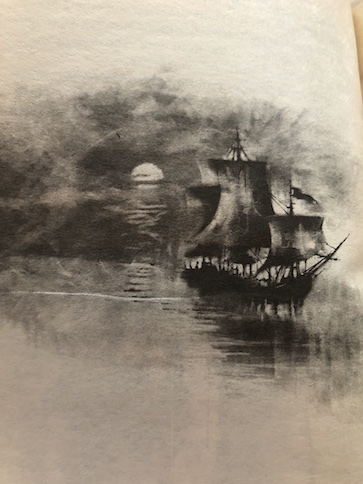
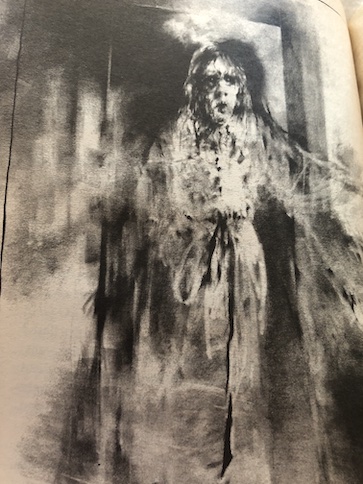
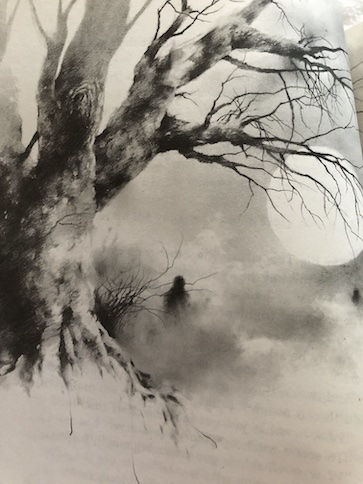
The drawings in the book also complement the stories well. They’re all in black-and-white and have an ethereal look, as those they were composed of spirits or smoke.

The book is available to borrow and read for free online through Internet Archive (multiple copies).

Stories Included in the Book:

The stories are divided into sections by theme or by the effect that the stories are supposed to have.

When She Saw Him, She Screamed and Ran

This section has stories about ghosts.

Something Was Wrong – A man is walking down the street, but for some reason, everybody is afraid of him. What’s wrong?

The Wreck – A guy meets a girl at a dance … only to learn that she was killed before she got there.

One Sunday Morning – A woman goes to church on Sunday but discovers that this isn’t a normal church service.

Sounds – Some fishermen take shelter in an empty house during a storm and hear the sounds of a past murder.

A Weird Blue Light – The crew of a ship during the Civil War witness something very strange, possibly the ghost of a pirate ship.

Somebody Fell From Aloft – The ghost of a murdered sailor gets his revenge.

The Little Black Dog – A murderer is followed by the ghost of a dog.

Clinkity-Clink – A grave digger steals the silver dollars laid on the eyes of a corpse, but the dead woman wants them back. (This story is supposed to end with a jump scare, like ghost stories told aloud around a camp fire.)

She Was Spittin’ and Yowlin’ Just Like a Cat

This is a selection of strange stories about different topics.

The Bride – The famous story about a bride who plays hide-and-seek and accidentally gets locked in a trunk.

Rings on Her Fingers – A thief tries to steal the rings from a dead woman, only she may not be quite as dead as everyone thinks.

The Drum – Two young girls meet a gypsy girl with a special drum that controls dancing figures. The girls want the drum, but the gypsy girl says that she’ll only give it to them if they do bad things.

The Window – One dark night, Margaret sees something with glowing eyes outside her window. What is it?

Wonderful Sausage – A butcher murders his wife and turns her into sausage.

The Cat’s Paw – A woman turns herself into a cat.

The Voice – A girl hears a voice in her room at night, but nobody is there.

When I Wake Up, Everything Will Be All Right

This section has stories about dangerous and scary places.

“Oh, Susannah!” – A university student thinks her roommate is humming at night, but her roommate is already dead.

The Man in the Middle – A girl sees three men on the subway late at night, but something’s wrong with the one in the middle.

The Cat in a Shopping Bag – A woman accidentally runs over a cat, and she puts the body in a bag to dispose of, causing a thief to get a terrible shock.

The Bed by the Window – A room at a nursing home has only one bed by the window. When one man kills another to get the view, he gets a shock.

The Dead Man’s Hand – A group of nursing students resent a fellow student who seems too perfect and decide to play a prank on her.

A Ghost in the Mirror – This story explains the spooky sleepover game Bloody Mary. Kids (typically girls) go into a dark or diml-lit room and look in a mirror to see a scary face appear. (This is actually a psychological trick, sometimes referred to as the “strange-face illusion“. Humans instinctively look for faces and facial emotions, and when someone can’t see their own face in the mirror very well because the room is too dim, their mind will try to reconstruct the missing details and interpret them, creating some strange illusions, like it’s someone else’s face when it’s just their own. The book doesn’t explain that, but that’s basically what “Bloody Mary” really is.) In the game, the identity of “Bloody Mary” and what she’ll supposedly do if you see her varies. This story explains different versions of the ghost story associated with the game.

The Curse – A fraternity initiation results in the deaths of two pledges and a curse on the remaining members.

The Last Laugh

This section has spooky stories with a humorous twist.

The Church – A man takes shelter in an abandoned church during a storm and thinks that he sees ghosts inside, but they aren’t what they appear to be.

The Bad News – Two old friends who love baseball and wonder if there’s baseball in heaven. There’s good news, and bad news.

Cemetery Soup – A woman makes soup with a bone she finds in the cemetery.

The Brown Suit – A woman thinks that her dead husband would look better in a brown suit for his funeral, and the funeral parlor comes up with a bizarre solution.

BA-ROOOM! – A spooky song.

Thumpity-Thump – People move into a spooky house and hear a mysterious thumping noise.

Scary Stories to Tell in the Dark

Scary Stories to Tell in the Dark collected from folklore and retold by Alvin Schwartz, drawings by Stephen Gammell, 1981.

This collection of creepy stories was a popular staple of my childhood! The stories included in the book are not original stories but popular ghost stories and American urban legends that were spread around by word of mouth before being collected and written down. Many of us who were children in the 1980s and 1990s heard these stories on school playgrounds, at summer camps, or at sleepovers, even if we didn’t read them in this book first. The very popularity of these stories was part of the popularity of this particular book and others in its series. The stories were frightening yet familiar, and reading them as an adult brings a sense of creepy nostalgia and Halloweens past. There is a section at the beginning of the book where the author/compiler discusses why stories like these have been popular for generations. In the back of the book, there is another section with more detailed information about the origins of the stories and their variants. The back of the book recommends these stories for ages 9 and up.

The drawings in the book also complement the stories well. They’re all in black-and-white and have an ethereal look, as those they were composed of spirits or smoke.

The book is available to borrow and read for free online through Internet Archive (multiple copies). There is also an audiobook copy.

Stories Included in the Book:

The stories are divided into sections by theme or by the effect that the stories are supposed to have.

Aaaaaaaaaaah!

This section has stories that are meant to make listeners jump at the end, like the kind people like to tell around camp fires, and there are tips for how to deliver the jump scares at the end.

The Big Toe – A boy finds a toe that seems to be growing in his garden, and his family decides to eat it (God only knows why), but that’s just the tip of something bigger …

The Walk – Two men walking down a road are each frightened by each other.

“What Do You Come For?” – A ghostly man comes down the chimney, part by part … and he comes for YOU!

Me Tie Dough-ty Walker! – A boy and his dog wait for a ghostly head that falls down a chimney.

A Man Who Lived in Leeds – A spooky rhyme.

Old Woman All Skin and Bone – A popular spooky song.

He Heard Footsteps Coming Up the Cellar Stairs

These are all stories about ghosts.

The Thing – Two friends see a frightening thing crawl out of a field, and it turns out to be prophetic.

Cold as Clay – A farmer separates his daughter from the man she loves, but when the man dies, his ghost makes sure that she gets safely home.

The White Wolf – When wolves are killing farmers’ livestock, a man becomes wealthy by hunting them. Then, a ghostly wolf takes its revenge.

The Haunted House – A preacher rids a haunted house of its ghost and brings her murderer to justice.

The Guests – A pair of travelers are looking for a room for the night. An elderly couple offers to let them stay in their house, but the travlers get a shock the next morning.

They Eat Your Eyes, They Eat Your Nose

These are an assortment of stories, and some are kind of gross-out stories. I never liked the gross-out scary stories when I was a kid, but I know some kids were really into them.

The Hearse Song – An old, traditional scary song that has several variations. “Don’t you ever laugh as the hearse goes by, For you may be the next to die.”

The Girl Who Stood on a Grave – Some kids at a party say that the graveyard down the street is scary, and one of them claims that if you stand on a grave, the person inside will reach up to grab you. A girl at the party doesn’t believe it and accepts a bet to go stand on a grave with frightening results.

A New Horse – A farmhand tells his friend that a witch turns him into a horse and rides him at night, and his friend finds a way to put a stop to it.

Alligators – A woman claims that her husband turns into an alligator at night and is turning their two sons into alligators as well. People don’t believe her, but there’s more truth to her story than they know.

Room for One More – A man has a prophetic dream that saves his life.

The Wendigo – A man on a hunting trip hears the wind calling to his companion. What does it mean?

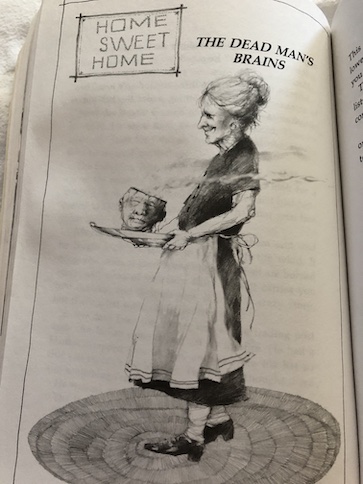
The Dead Man’s Brains – This story is actually played as a game, and it’s especially popular on Halloween. Many of us have played some version of the game, where someone describes the body of a dead person, giving people weird and creepy things to feel that are supposed to be body parts. In reality, the “body parts” are common things, usually food, like peeled grapes to represent eyes, etc.

“May I Carry Your Basket?” – A man walking home late at night helps a strange woman to carry her basket, but what’s inside the basket is truly terrifying!

Other Dangers

These are more modern horror stories and urban legends than the earlier ones in the book, and they focus less on old ghosts and more on the dangers of modern society.

The Hook – This is a popular story at camps and sleepovers! A young couple is listening the radio in their car when they hear about an escaped murderer. The girl gets frightened and wants to go home, and it’s only when they get there that they realize how close they came to being his next victims.

The White Satin Evening Gown – A girl wants to go to a dance but doesn’t have much money for a dress to wear. When she finds a dress that she can rent cheaply, it turns out that there is something very wrong with it.

High Beams – A girl realizes that she’s being followed as she drives home alone at night, but her pursuer isn’t the one she should be afraid of.

The Babysitter – A young babysitter keeps getting strange calls … and they’re coming from inside the house.

Aaaaaaaaaaah!

Even though this section has the same name as the first section, the stories in the final section of the book have humorous twists.

The Viper – One of my old favorites! The characters in The Haunting of Grade Three tell this story to each other. A woman keeps getting calls from a man calling himself “the viper.” Who is he, and what does he want?

The Attic – Rupert is looking for his dog when something happens to him on the way to check the attic that makes him scream.

The Slithery-Dee – A short rhyme.

Aaron Kelly’s Bones – Aaron Kelly is dead, but he doesn’t feel dead enough to stay in his coffin and won’t go back there until he does.

Wait Till Martin Comes – What will the cats do when Martin finally comes?

The Ghost with the Bloody Fingers – When dealing with a ghost, sometimes the practical approach is best.

The Secret Secret Passage

Clue

#2 The Secret Secret Passage created by A. E. Parker, written by Eric Weiner, 1992.

At the end of the previous book of solve-it-yourself mini-mysteries, it looked like Mr. Boddy had been murdered, but at the beginning of this book, he explains that he was only knocked unconscious. All of the books in the series follow this pattern from this point on – Mr. Boddy seems to be murdered in the final story, but he’s okay again in the next book, mimicking the pattern in the Clue board game, where players solve our host’s murder in his mansion over and over again. There’s generally a humorous twist to how he survives and explains the situation.

The book is available to borrow and read for free online through Internet Archive.

Stories in the Book:

The Secret Secret Passage – Professor Plum accidentally stumbles on a secret passage in the mansion that nobody knows about it. As various other guests either try to rescue Plum or try to follow his explanation of what happened to him, they also get trapped in the secret secret passage, until someone eventually tries to shoot Professor Plum over it.

The Challenge – Colonel Mustard is in a bad mood because he lost a tiddlywinks tournament and starts challenging everyone to a duel. Mr. Boddy and the other guests try to calm him down, but Mr. Green, who won the tournament provokes him into losing his temper. The two of them actually fight a duel, and readers are challenged to keep track of which weapons they use. (Of course, everyone survives the duel to appear in the other stories.)

The Joke Contest – The guests start telling each other jokes, but then they start to argue about who’s the best at telling jokes. To settle the matter, they decide to vote on it by secret ballot. Mrs. White wins, but Miss Scarlet is angry about losing. She wants to get back at whoever voted against her, and then, she realizes who it must be.

Mrs. White’s Horrible Plan – Mrs. White discovers that all of the other guests have left her something in their wills, and she makes a plan to eliminate them, but it has unintended consequences.

Boddy Language – Mrs. Peacock is so obsessed with good manners that she gets upset about the new mystery movie that Mr. Boddy funded and wants to show to his guests when she finds out that there is a scene where a white horse walks through a mud puddle. She just can’t stand any kind of “filth” in films. Mr. Boddy refuses to call off the showing of the movie, so she decides that she’s going to do something about it herself, but various others notice her attempts and thwart her. Readers are asked to figure out which weapon she was holding when she was thwarted for the last time.

Plum’s Plasma – Professor Plum has invented a fantastic cure for injuries, and after a series of injuries involving the knife, the other guests could sure use it … if readers can help Plum remember which room he left it in.

A Show of Talent – Mr. Boddy and his guests are putting on a talent show. Unfortunately, because the guests include the various weapins from the Clue game intheir acts, people end up getting hurt.

Trick or Treat – Mr. Boddy invites his friends to a Halloween party, but when they all show up in costume and start scaring each other, Mr. Boddy has to admit that he’s confused about who is who. Can you figure out who’s wearing each costume?

The Wrong Briefcase – Professor Plum is going to give the guests a scientific lecture about relativity, but when he goes to check his lecture notes, he discovers that he has the wrong briefcase. This briefcase is full of money! Professor Plum’s first thought is that he must have picked up the wrong briefcase while he was at the bank and that he should call the bank to let them know. However, the other guests try to persuade him to keep the money … and share it with them. When that fails, naturally, they decide to steal it from Plum themselves.

Mr. Boddy’s Pyramid – Mr. Boddy has decided that, when he dies, he wants to be buried in the style of an Egyptian pharaoh. He’s had a pyramid built for the purpose on his property with secret doors and hidden chambers full of treasures that he plans to have buried with him. Of course, he tells his guests all about it, asking them to make sure this last request of his is fulfilled. Also of course, someone tries to kill him for the treasure.

Who Killed Mr. Boddy?

Clue

#1 Who Killed Mr. Boddy? created by A. E. Parker, written by Eric Weiner, 1992.

This book is a collection of short solve-it-yourself mini-mysteries based on the Clue board game. It’s the first in a series that uses the setting, characters, weapons, and other tropes from the board game. Each book in the series contains short mysteries that the reader is urged to attempt to solve before the characters do. The solutions to the mysteries come after each chapter.

The book, like others in the series begins with Reginald Boddy greeting you and welcoming you to his mansion. Then, he tells you about his other guests and asks you to be on the lookout for clues in case anything suspicious happens.

Most of the mysteries involve a crime of some kind, but not all. In the final chapter of the book, it seems like Boddy, our host, has been murdered, and the reader has to solve his murder, just like in a game of Clue. However, Mr. Boddy doesn’t actually die. It becomes a pattern in the series that he seems to have been killed in each book, but he always survives somehow to reappear in other books in the series.

The book is available to borrow and read for free online through Internet Archive.

Stories in the Book:

Who Killed Pitty-Pat? – Someone has killed Mr. Boddy’s annoying parrot!

Who Stole Miss Scarlet’s Diamonds? – Miss Scarlet asks Mr. Boddy to put her diamonds in his safe. Mr. Boddy is sure that he’s the only one who knows the combination to the safe, but someone else finds out.

Happy Birthday, Mr. Green – It’s Mr. Green’s birthday. Various guests give him presents that are the weapons in the Clue game, but Professor Plum really takes the cake by telling Mr. Green that one of his presents is a time bomb (which he says that he thought would be really exciting), and he can’t remember which room of the mansion it’s in. Can the guests find it before it goes off?

The Ghost of Mrs. Boddy – The guests hold a seance to try to contact Mr. Boddy’s late wife, Bessie. Mr. Boddy is happy when the seance is successful and his wife gives raps to indicate that she’s happy and waiting for Mr. Boddy. However, after he goes to bed, the guests realize that one of them was faking the raps just to make Mr. Boddy happy. (A rare instance where they care about his feelings.) Can you find the faker?

Hide and Seek – During a game of hide-and-seek, Mrs. White is accidentally knocked unconscious at the same time that the mansion catches fire. Can you help the other guests find her in time to save her?

Where There’s Smoke, There’s Fire! – There’s another fire in the mansion, and one of the guests is responsible. Can you determine from their statements which of them caused the fire?

The Secret Changes Hands – Mr. Boddy forms a photography club with his friends. However, Professor Plum, desperate for money to fund his research about which animal blinks the most, takes the opportunity to spy on Mr. Boddy and learn the secret of his discovery for making extra-long-lasting gumdrops to sell to a rival company. Unfortunately, he’s not the only one interested in Mr. Boddy’s secrets, and after he photographs Mr. Boddy’s secret documents, other people try to steal his roll of film. Can you find the person who ends up with it?

The Sleepwalking Killer – A member of Mr. Boddy’s house party starts sleepwalking. After having a midnight snack in the kitchen, this person finds a gun and thinks that they’re supposed to shoot someone. Who is the mysterious sleepwalker?

Miss Feather’s Gossip Column – One of Mr. Boddy’s guests writes a gossip column about the others. Since the gossip columnist is obsessed with analyzing everyone’s manners, it isn’t hard to figure out that it’s Mrs. Peacock. When the others confront her, she refuses to retract the article, and the other guests later try to attack her while wearing masks. Mrs. Peacock demonstrates that she knows who all of the masked people are and invites the reader to figure out who is who.

Who Was Fiddling Around? – Mr. Boddy invites his guests to join him for a musical evening. However, a strange, hunchbacked woman also shows up and plays the violin. Then, Mr. Boddy’s rare Stradivarius violin disappears. It seems that the strange woman took it, but who was the strange woman, really?

The Night the Maid Became a Zombie – Someone hypnotizes Mrs. White to steal Mr. Boddy’s new statuette.

April Fools – A series of April Fools jokes seems to end in murder.

Who Killed Mr. Boddy? – Mr. Boddy tells his friends how much he’s appreciated their companionship since his wife’s death and reveals that he’s made them all heirs in his will. Naturally, someone plots to kill him.

Encyclopedia Brown Gets His Man

Encyclopedia Brown

Encyclopedia Brown Gets His Man by Donald J. Sobol, 1967, 1982.

The Idaville police department has an excellent record, but that’s because the chief of police’s ten-year-old son is Encyclopedia Brown. People praise Chief Brown, and Chief Brown doesn’t feel like he can admit how much help his son gives him because he doubts anyone would believe him. Encyclopedia himself doesn’t want to admit to other people that he helps his father figure out tough cases because he doesn’t want to seem too different from the others kids at school. However, Encyclopedia also has a detective business, helping the neighborhood kids to solve their problems for only 25 cents a day, plus expenses.

I always liked Encyclopedia Brown books when I was a kid! There are a couple of instances in this book of underage kids smoking, but I’d like to point out that smoking isn’t portrayed as a good think. Bugs is shown smoking in a picture, but he’s a young hoodlum and Encyclopedia’s nemesis, not one of the good guys in the stories. In another case, there’s a kid who smokes coffee grounds with a homemade pipe because he’s too young to buy tobacco. At first, he thinks he’s clever for figuring out how to do that and sneak a smoke without his mother’s knowledge, but it ends up getting him into trouble, and he promises Encyclopedia that he’ll give it up if he helps him out. Encyclopedia doesn’t lecture him, but he does refer to smoking as “burning your lungs”, so it seems that he isn’t in favor of it.

The book is available to borrow and read for free online through Internet Archive (multiple copies).

Stories in the Book:

The Case of the Marble Shooter

Algernon Kehoe is a master at marbles, but when he beat Bugs Meany, Bugs took all of his marbles, including his best shooters. Can Encyclopedia get Algernon’s marbles back?

The Case of Bugs Meany, Detective

Bugs Meany resents Encyclopedia for interfering with his schemes, but he can’t fight him directly because Encyclopedia’s detective partner, Sally, is the toughest and most athletic girl in their grade at school, and she’s beaten Bugs in a fight before. However, this time, he thinks he’s come up with a great way to get revenge – turn his gang, the Tigers, into a rival detective agency and beat Encyclopedia at his own game.

Someone steals a violin from the kids’ friend, Mario, and Bugs shows off that he can get it back before Encyclopedia and claim the reward for finding it. Of course, the kids’ first thought is that Bugs stole the violin himself. Can they prove it?

The Case of the Underwater Car

Encyclopedia and some friends want to go camping, and his mother tells him that he ought to ask Benny to go as well. Encyclopedia and the other kids like Benny, but they don’t like to camp with him because he snores badly. Sure enough, that night, Benny snores again, and Encyclopedia and the other boys have trouble getting to sleep. Encyclopedia leaves the tent for awhile and witnesses a bizarre car accident. The car misses a turn in the road, and the driver jumps out, screaming for help. The driver claims that he fell asleep at the wheel and that he woke up just in time to save himself. He says that his back is now badly injured, and he’s making a large claim on his insurance. However, Encyclopedia knows how to prove that the whole accident was staged.

The Case of the Whistling Ghost

A boy named Fabius hires Encyclopedia because he thinks his camera was stolen by a ghost. Fabius likes to study bugs, and he went inside the old, abandoned Morgan house to see if he could find any interesting bugs there. He was about to photograph a spider when a white ghost came down the stairs, making scary noises and an odd whistling sound. Fabius got spooked and ran off, leaving his camera behind. Later, when he got up the nerve to go back for his camera, it was gone.

The Case of the Explorer’s Money

A famous explorer dies, and a large amount of his money disappears. With so many people coming to his estate to attend an auction of the explorer’s belongings, how can Encyclopedia figure out how the thief plans to evade the searches being conducted by the police and get the money out of the estate?

The Case of the Coffee Smoker

A friend of the kids is being blackmailed. Someone is threatening to tell his mother that he’s been secretly smoking coffee grounds (because he’s too young to buy tobacco and thinks he’s found a clever way around the problem). He promises to kick the habit if Encyclopedia can stop the blackmailer. It isn’t hard to figure out who the blackmailer might be, but proving it will take more thought.

The Case of the Chinese Vase

A friend of Encyclopedia’s has a job cutting lawns to earn extra money for his family. While he’s working on a job, someone breaks an expensive vase in his client’s house, and they accuse Encyclopedia’s friend of doing it. Encyclopedia knows that it was actually the daughter of the house who did it, even though he wasn’t in the house at the time himself. How?

The Case of the Blueberry Pies

This year, there’s been a change to the pie-eating contest because local mothers think that the usual eating contest is gross and unhealthy. To make it healthier, they’ve limited the eating portion to two pies and added a race portion to the event. (Because running is a good thing to do immediately after eating two whole pies quickly?) However, one of the contestants seems to win too easily. How did they cheat?

The Case of the Murder Man

Cicero, a boy actor, wants to put on a mystery play with himself as the star as entertainment for an interfaith youth gathering. The problem is that he doesn’t have a good mystery story in mind, and he recruits Encyclopedia to write one that the audience can solve along with the characters.

The Case of the Million Pesos

Encyclopedia’s friend, Tim Gomez, is worried about his uncle, who is in jail in Mexico. He’s a famous baseball player, but he’s been accused of robbing a bank. Tim thinks his uncle was framed by a man named Pedro Morales because the woman he loved married Tim’s uncle instead, and he’s jealous. Tim’s uncle has an abili, but it’s not one that would be easy to prove. Even though the robbery occurred in another country, Tim asks Encyclopedia to consider the problem and see if he can think of something that will help.