Jessica the Blue Streak

Jessica the Blue Streak by Sucie Stevenson, 1989.

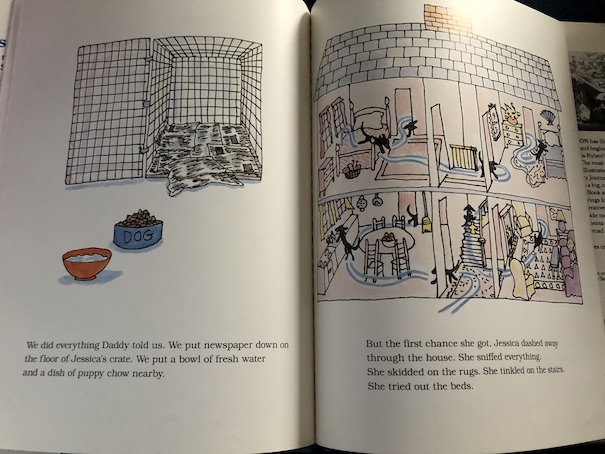
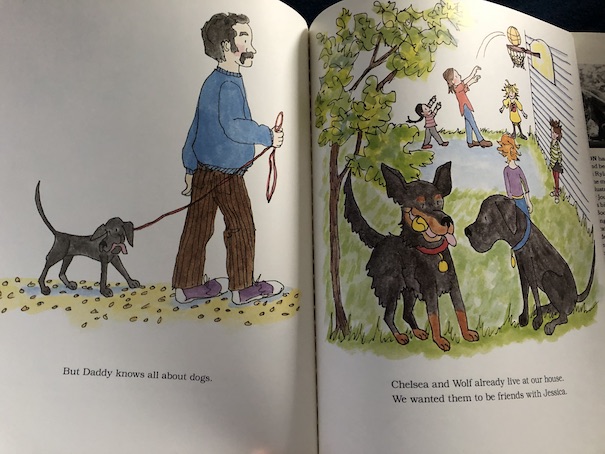
Jessica is a six-month-old puppy who has just arrived at her new home. The lady the family bought the dog from warned them to keep Jessica in her crate at night to keep her out of trouble, but the family is confident that they know about dogs.

They already have two dogs, Chelsea and Wolf, and they’re hoping that all three dogs will be friends. Chelsea doesn’t mind Jessica, but Wolf bites the new puppy.

On her first day with the family, Jessica runs wildly through the house, peeing on the floor and grabbing random things to run around with and chew on. She makes messes and eats the cat’s food. Soon, she’s even getting on Chelsea’s nerves.

That night, when they put Jessica in her crate, Jessica howls and cries. What can the family do with this wild puppy?

The story is based on a real dog, Jessica, who was owned by the author’s family, who are all characters in the story. I know from my own experience with my adopted rescue dog that it’s normal for a dog to cry at night in a new home. Puppies are little babies, and like small human children, they need comforting when they’re scared in a new place.

Clifford Goes to Hollywood

Clifford

Clifford Goes to Hollywood by Norman Bridwell, 1980.

Clifford the big, red dog gets an offer to be in a movie. He passes a screen test where he has to act out different emotions, and he gets the part in the movie, so he has to go to Hollywood to accept the role, while Emily Elizabeth and her parents stay behind.

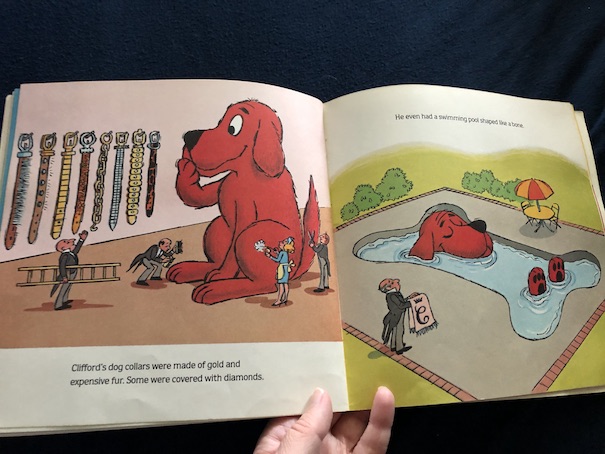
In Hollywood, Clifford is given a big, fancy doghouse and all sorts of fancy collars to wear.

However, Clifford quickly gets overwhelmed by all of the fans who mob him.

He misses Emily Elizabeth, so he runs back home to be with her.

The idea of someone going to Hollywood and missing friends back home is kind of cliche. Actually, I think the best part of the book was the screen test, where Clifford has to show different emotions. There are many books that demonstrate different types of emotions to kids, and I thought that was a nice addition to this book. The part where they show all the fancy collars that Clifford has to choose from was nice, too, because kids like to make choices, and this page is an opportunity for kids to decide which of the collars they like best.

The book is available to borrow for free online through Internet Archive.

Clifford's Family

Clifford

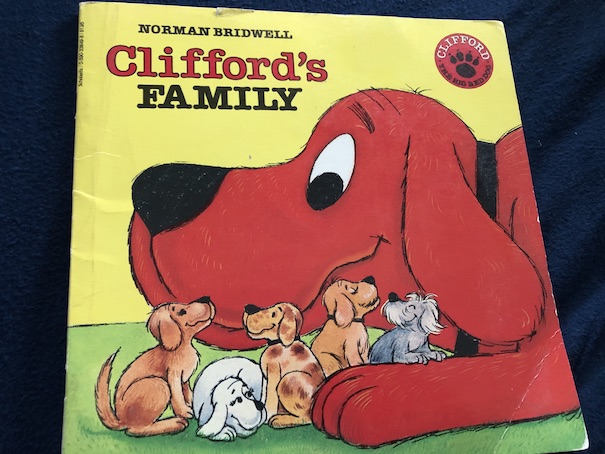
Clifford’s Family by Norman Bridwell, 1984.

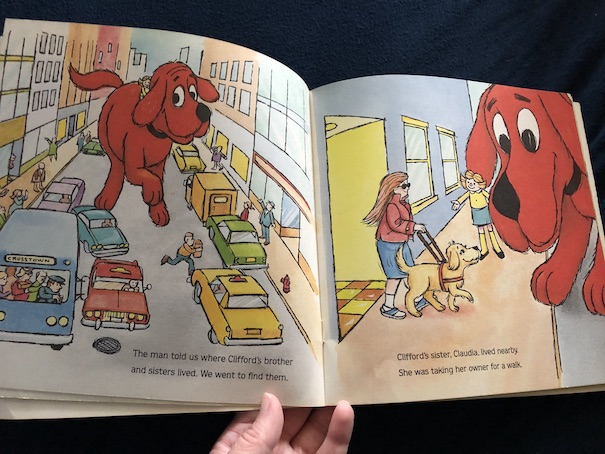
Emily Elizabeth and her enormous dog, Clifford, were both born in a big city, although they live in a smaller town now. They decide to go back to the city and visit Clifford’s mother, who is still there.

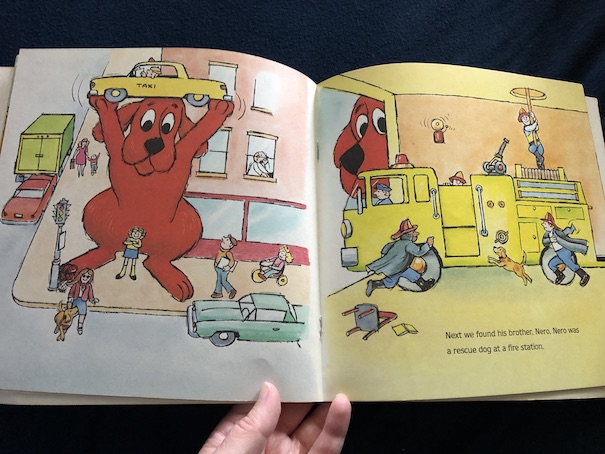
Clifford’s brothers and sisters all live with different people now, so they decide to visit them, too. Clifford’s sister, Claudia, has become a seeing-eye dog.

His brother, Nero, is now a fire rescue dog.

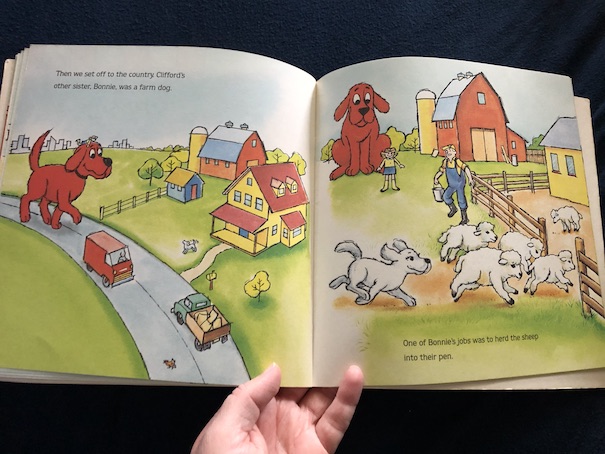
Clifford’s other sister, Bonnie, lives on a farm and herds sheep.

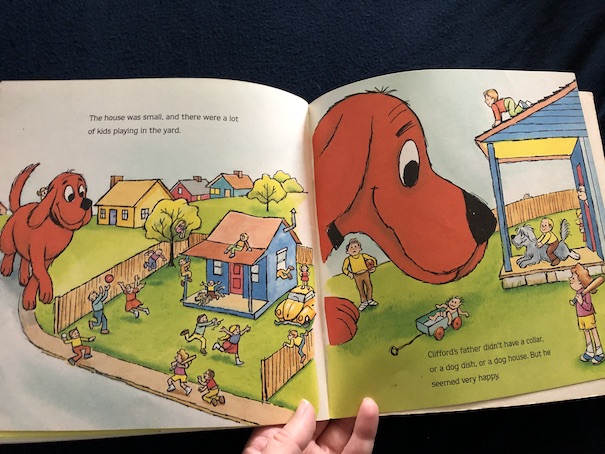
Clifford’s father doesn’t live with his mother. He lives in a house in another town with a lot of children, and he loves playing with them.

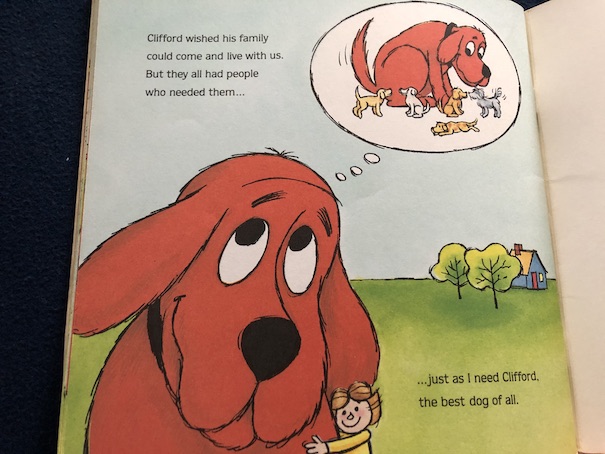
Clifford wishes that his family could live together, but he understands that every member of his family has other people who also need them.

I thought that this book did a good job of pointing out some of the jobs that dogs do, like seeing-eye dog, rescue dog, and herding dog. Clifford and his parents are all companions animals, like most pet dogs, but his siblings all have specific jobs to do for their owners.

The book is available to borrow for free online through Internet Archive.

Clifford's Tricks

Clifford

Clifford’s Tricks by Norman Bridwell, 1969.

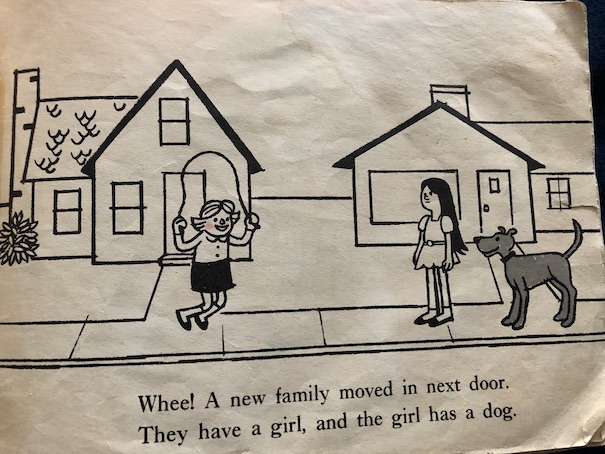
A new girl moves next door to Emily Elizabeth. The new girl, Martha, also has a dog, although her dog, Bruno, is a normal-sized dog, unlike Emily Elizabeth’s dog, Clifford.

Martha is competitive and brags that her dog is probably smarter than Clifford. Martha and Emily Elizabeth compare the tricks that their dogs can do, although Clifford’s tricks are different from those of normal dogs. His tricks tend to go wrong or cause problems because of his large size. For example, Bruno can retrieve a newspaper for Martha, but when Clifford tries to do the same thing, he comes back with the whole news stand.

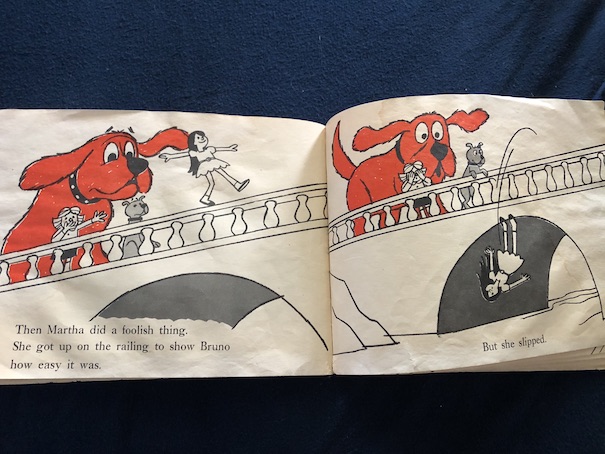
Martha tries to show off Bruno’s bravery by getting him to walk the railing of a bridge, but Bruno doesn’t want to do it because it’s too dangerous. When Martha tries to show Bruno how easy it is, she falls off the bridge into the river. Bruno jumps in to save her and also gets into trouble.

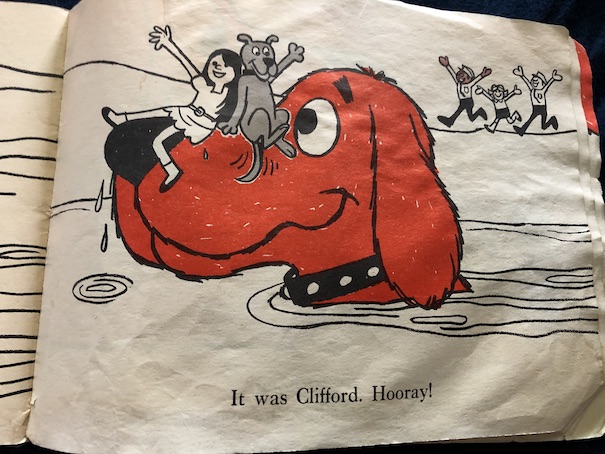
Fortunately, Clifford is big enough to save them both.

Martha is grateful that Clifford saved her and her dog, but each girl still loves her own dog the best.

The book is available to borrow for free online through Internet Archive. The edition that I have is the older edition of the book with pictures that are mostly black-and-white, except for Clifford, who is red. However, there is also a newer edition with full color pictures.

Clifford the Big Red Dog

Clifford

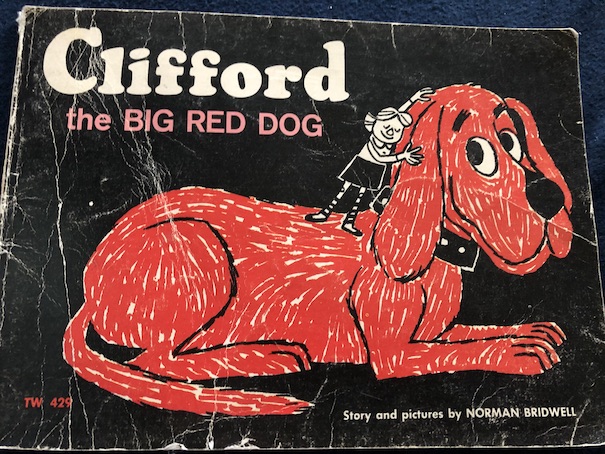
Clifford the Big Red Dog by Norman Bridwell, 1963.

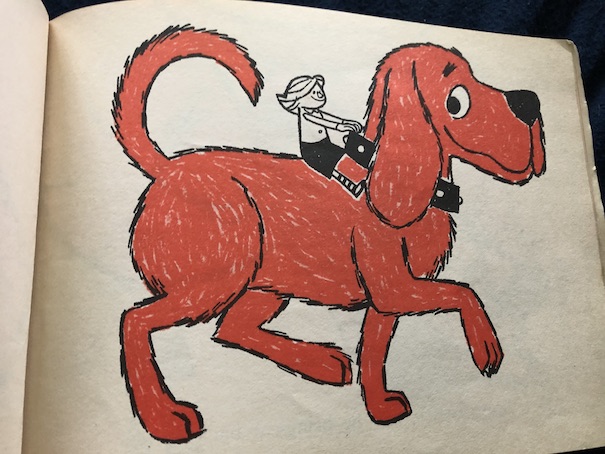
Emily Elizabeth introduces readers to her big, red dog, Clifford. Clifford isn’t just big; he’s humongous.

Like other kids, Emily Elizabeth likes to play with her dog, but playing even the usual games of fetch have unpredictable results because of Clifford’s size. When they play hide-and-seek, there aren’t many places where Clifford can hide, and even then, he’s not too difficult to find.

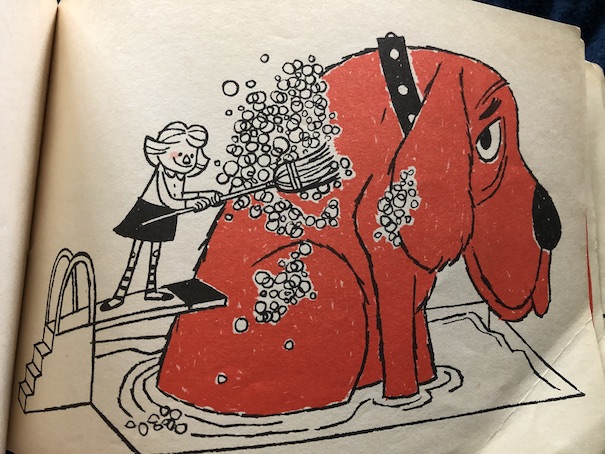
He also requires a lot of food and special accommodations because of his size. His baths aren’t like those of normal-sized dogs.

Clifford’s doggy bag habits, like chasing cars, can be even more unpredictable. Other dogs might chase cars, but Clifford has a real chance of actually catching them.

However, there are good sides to having a big dog. For one thing, bullies never bother Emily Emily Elizabeth.

Emily Elizabeth loves Clifford and wouldn’t trade him for any other dog.

The book is available to borrow for free online through Internet Archive. The edition that I have is the older edition of the book, but there is also a newer edition with full color pictures.

I Can Fly

I Can Fly by Ruth Krauss, 1950.

This is a cute Little Golden Book about a little girl playing.

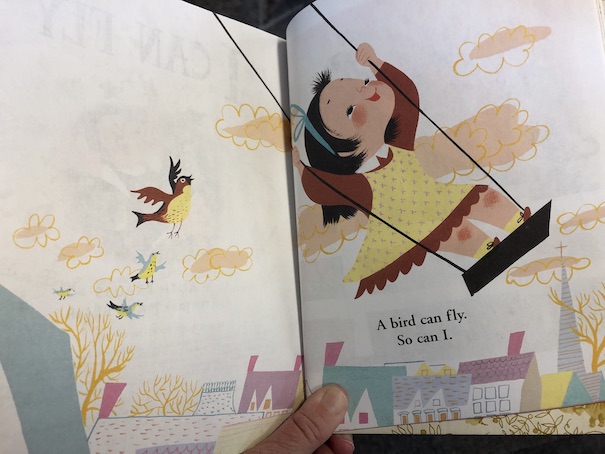
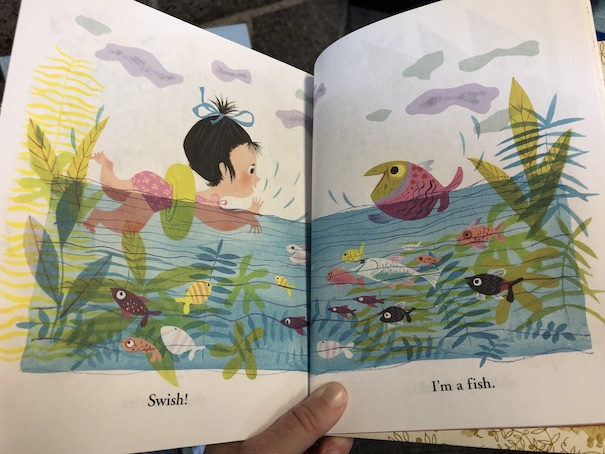
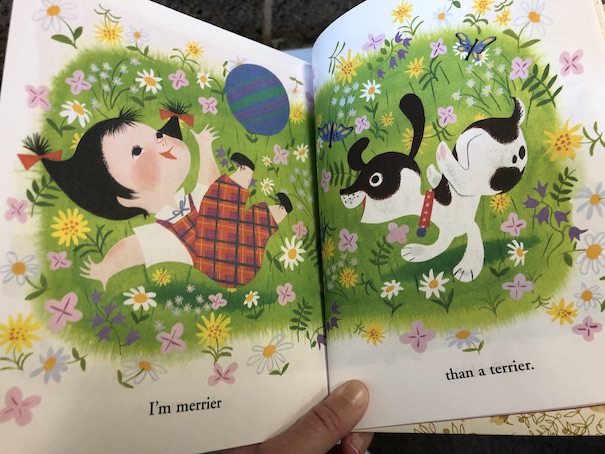
As she plays, she compares herself to various animals. When she’s on her swing, she feels like she’s flying like a bird, and when she swims, she feels like a fish.

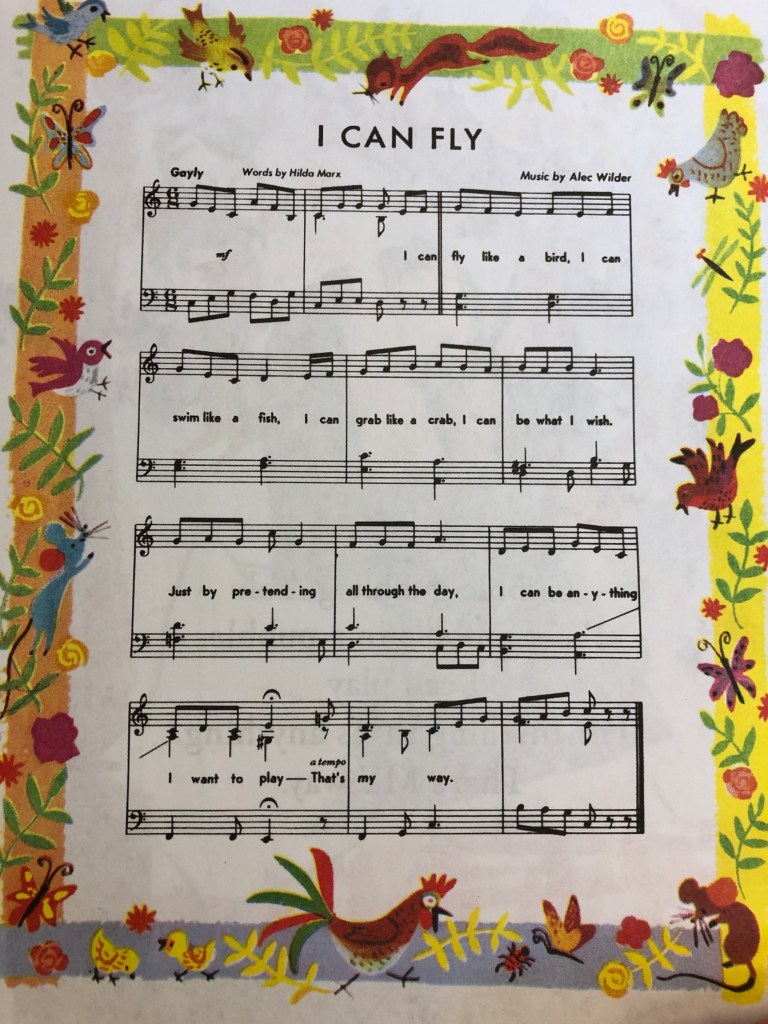
The story is told in rhyme, and in the back of the book, there is actually music so you can sing the rhyme as a song.

There are different printings of this book, some with different illustrations. The different versions also have different words, and it looks like the newer one includes both a boy and a girl and doesn’t have the music for the song. One of the newer versions is available to borrow for free online through Internet Archive.

Stellaluna

Stellaluna by Janell Cannon, 1993.

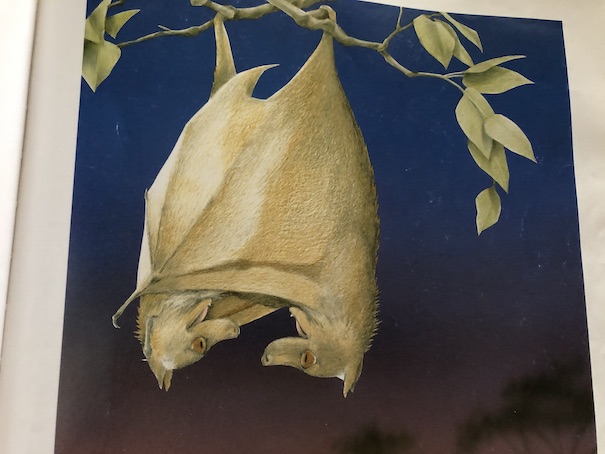
Stellaluna is a baby fruit bat. Every night, her mother carries her along while she goes looking for food.

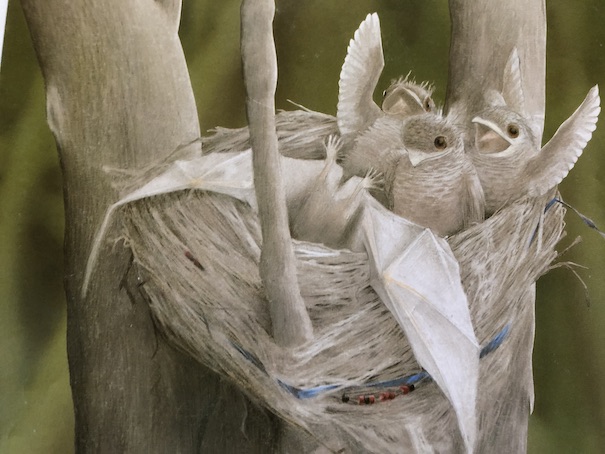
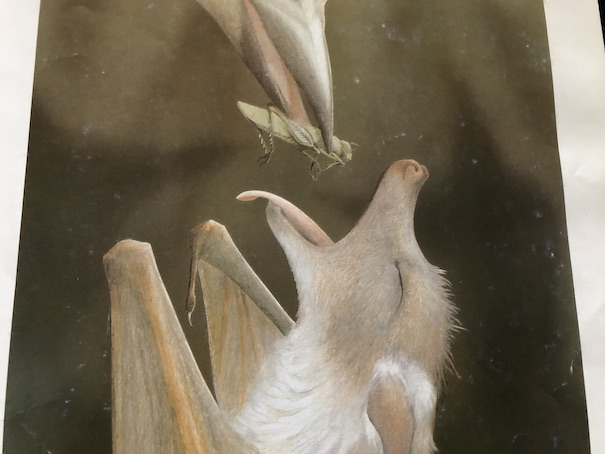
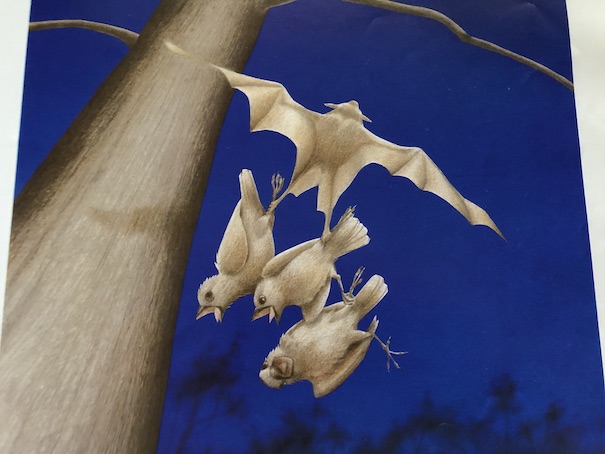
One night, they are attacked by an owl, and Stellaluna falls into the trees below. First, she is caught by some tree branches, and then, she falls into a bird’s nest. Stellaluna doesn’t really like the bugs that the mother bird brings her babies to eat, but she eats them anyway because she gets hungry.

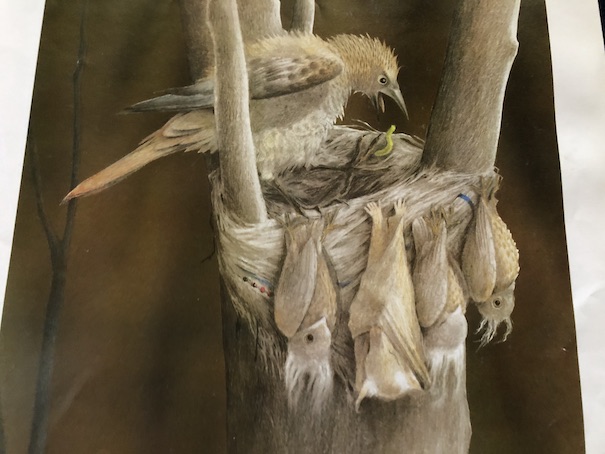
Gradually, Stellaluna adopts the habits of the birds, staying awake during the day and sleeping at night. She tries to sleep upside down, hanging from the nest, but the mother bird stops her because the baby birds try to imitate her, and she’s afraid that they’re going to break their necks. The mother bird continues to care for Stellaluna, but insists that she obey the rules of their nest, which means that Stellaluna has to act like a bird.

Eventually, both Stellaluna and the little birds learn how to fly. However, Stellaluna has trouble landing on branches like the birds do. One day, she flies farther than the birds do and doesn’t return to the nest at night. She falls asleep in a tree, hanging by her thumbs because the mother bird told her not to hang by her feet, and she is found by another bat.

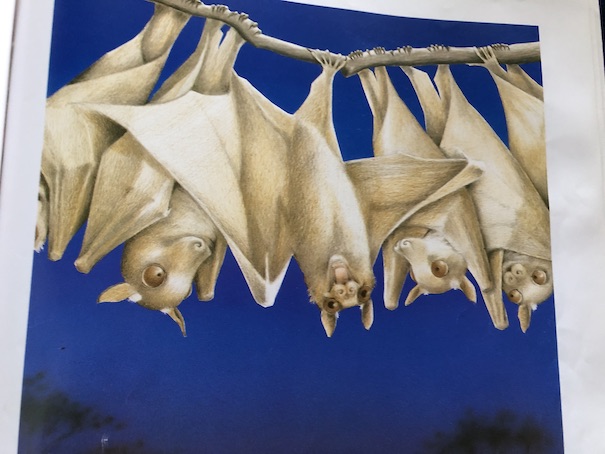
The other bat explains to Stellaluna that she is a bat, not a bird, and tells her that hanging by her feet is normal bat behavior. Soon, other bats come to look at Stellaluna, and Stellaluna’s mother recognizes her as her child.

Stellaluna is overjoyed to learn that her mother escaped from the owl, and her mother is glad to finally have her child back. Her mother begins teaching her what it means to be a bat, how to eat fruit instead of bugs, and how to see in the dark.

Stellaluna returns to the birds to introduce them to her bat family. The birds try to go on a night flight with Stellaluna, but they can’t because they can’t see at night like Stellaluna. Stellaluna helps them find a safe branch, and they talk about all the ways they are alike but yet very different. They decide that they will remain friends even though they have to live different types of lives.

This is a nice story about how people can love each other even though they are very different. The mother bird cares for Stellaluna like she is one of her children, even though Stellaluna is not a bird and has strange habits. Her insistence that Stellaluna act like a bird is because it is necessary for her to do so in order to live in the birds’ nest, and the birds are not able to live like bats and teach her how to be a bat. Eventually, Stellaluna has to return to the bats and live like the bat she is, but she still loves the birds who raised her and were like her brothers and sisters. It’s a little like human foster families. A foster family isn’t quite like a person’s birth family, and foster children have to adapt to new ways of doing things, but foster families can offer the affection of a birth family and help the children grow and reach the places where they really need to be in life.

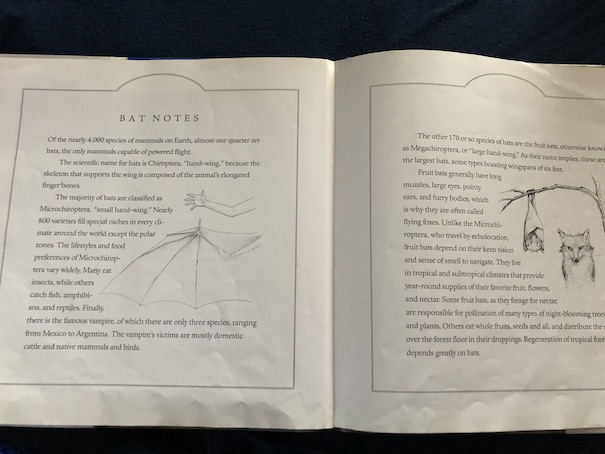
The book ends with a section of non-fiction information about bats.

The book is available to borrow for free online through Internet Archive (multiple copies). It is a Reading Rainbow book.

Will It Be Okay?

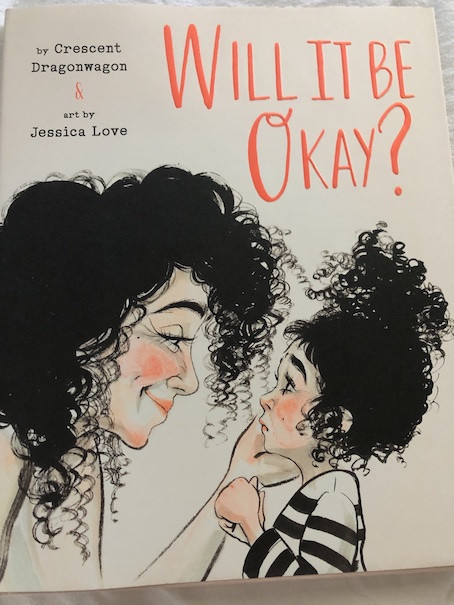
Will It Be Okay? by Crescent Dragonwagon, 1977, 2022.

I like to tie my book reviews into current events when I can, and I first wrote this review around the beginning of the coronavirus pandemic. It just seemed like the right time for this one. It’s a picture book, and, when I first wrote the review, my local libraries were closed because of the pandemic, so I couldn’t go find a copy to get pictures. However, the book is available to read online through Internet Archive, which is where I first encountered it.

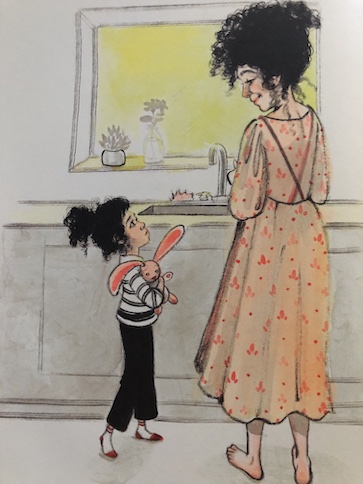
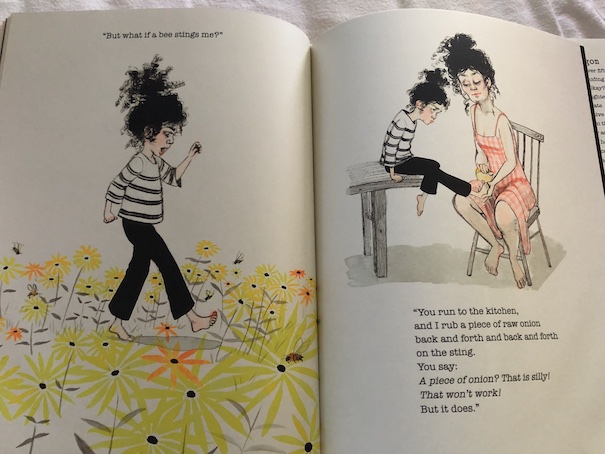
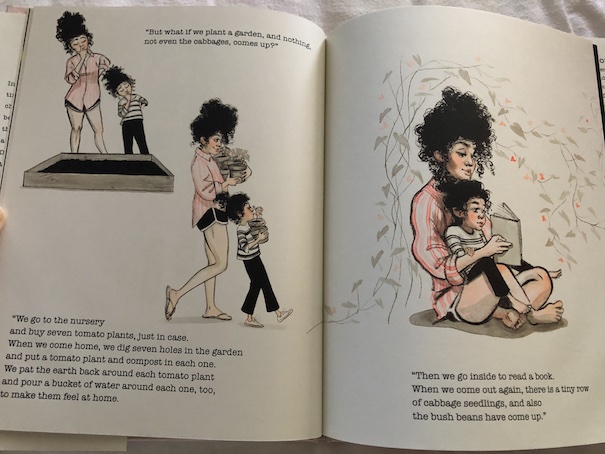
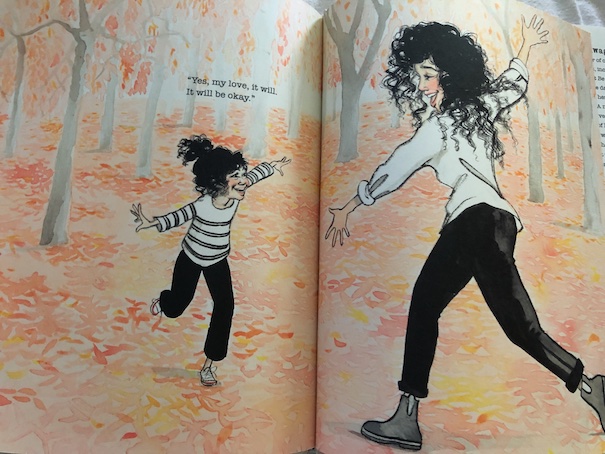
The version on Internet Archive is the older printing of the book, with its original pictures. Since then, the book has been reprinted with a set of new pictures. The pictures that appear here are from the new version. The older version of the book showed a blonde girl with a blonde mother, and the new version has a mother and daughter with black hair. Between the two, I prefer the newer illustrations, but readers can decide for themselves. I was surprised, but some of the text of the story was also changed between the versions of the book.

A young girl keep asking her mother about various types of problems that she might encounter, everything from storms to bee stings to forgetting her lines in the school play, and asking her what she would do if each of these things happen.

The mother gives her calm, reassuring answers. Some of them are based on common sense, like if their cabbages don’t come up, they’ll go get some tomato plants and plant tomatoes, and then their cabbages will likely come up anyway.

All of the answers have a poetic quality and answer the girl’s emotions, not taking all of the situations exactly literally, but capturing the feeling that the girl would need to have to get through life’s fears and uncertainties. When the girl asks what if no one likes her dancing, her mother describes how she can dance alone until she meets a new friend, who will dance with her and then come to her house to draw pictures and drink cocoa. I take this to mean what if people don’t like the girl instead of just her dancing, and her mother’s response to mean that she just needs to keep living her life, and she will meet people who will like her.

The last question that the girl poses to her mother is “But what if you die?” This is probably the fear that the girl has more than any of the other fears that she’s mentioned, but the mother still has a calm reply.

The mother tells her daughter that if she dies, her love will stay with her and she’ll have so much that she’ll have to give love away to other people. Her daughter will make new friends and dance with them and she’ll even come to love things like bees and thunderstorms and the other things that have frightened her. The girl will love other people in her life, and they’ll love her, too. Everything will be okay.

My Reaction

Life has many uncertainties, and bad things can happen, but there are other things that can make life better so that, in the end, we will be okay, in spite of the bad and scary things that come along. It’s not easy to believe that in the middle of scary situations, when you don’t know how it’s all going to work out, but I appreciate the sentiment. It’s always possible for things to improve. Bad things might happen, but we can handle them. It’s important to believe that we can handle situations and approach them with confidence.

The hardest, scariest thing to accept is when people die. Death is permanent. When someone has died or is facing death, it’s hard to believe that it could ever be okay because you can’t undo death. The mother in the story doesn’t try to deny that she could die at some point, but what she says is that her daughter will go on with her life and that she will always have her love. It’s what she leaves behind and what her daughter will continue to do after she is gone that will make things okay. The mother doesn’t want her daughter to focus on the sad and scary parts but to look forward with hope and confidence. As long as we can continue to move forward and love one another, things will be okay.

The last picture in the original version of the book is of the mother and daughter in the bathtub together, but they’re largely concealed by bubbles in the bath. Personally, I prefer the newer version of the book, which has the mother and daughter dancing in the leaves together under the trees.

Some of the situations in the book were changed between the old version and the new version of the book. In the old version of the book, the girl worries about what to do if she meets a big dog or if snakes come in the middle of the night, and neither of those were included in the new version of the book. Some answers in the old book are as improbable as the problems that the girl poses, like suggesting that the girl play a flute to charm snakes if snakes come. Both versions of the book have the scene where the girl worries that someone might hate her and her mother says that a frog will tell her that she’s lovable.

Song and Dance Man

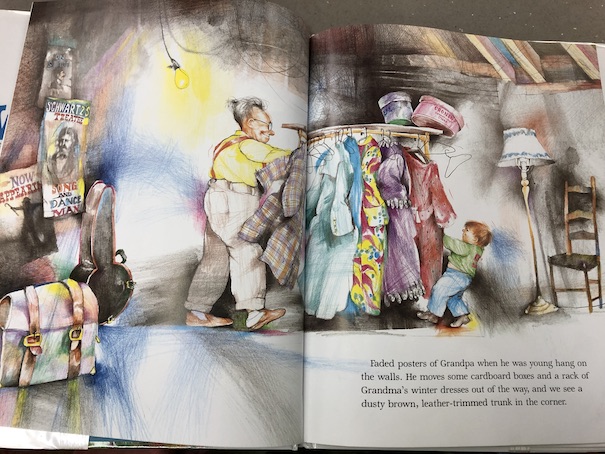
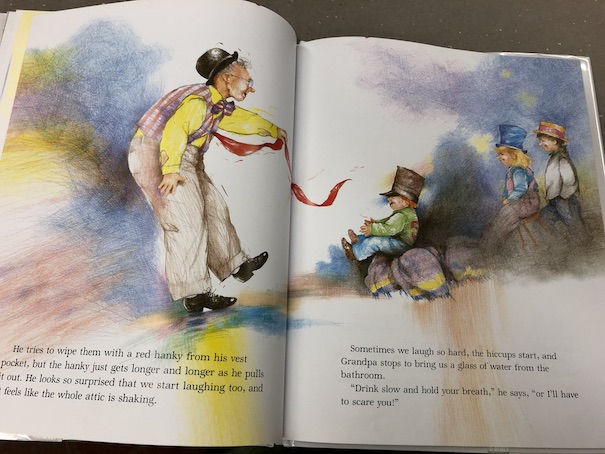
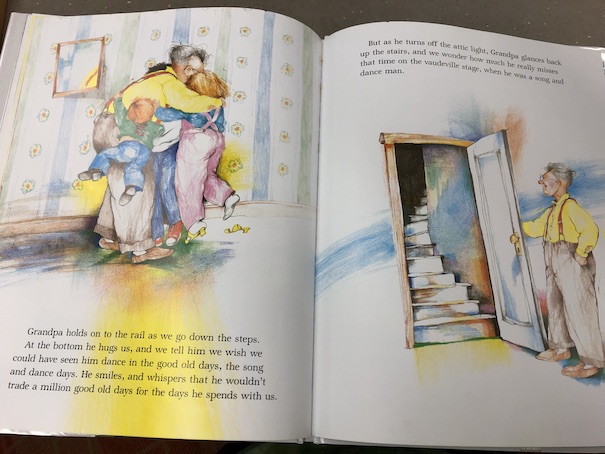
Song and Dance Man by Karen Ackerman, illustrated by Stephen Gammell, 1988.

A grandfather likes to tell his grandchildren stories about when he was a young man and he was a vaudeville performer, a “song and dance man.” Back before the invention of television, live vaudeville performances were a major form of public entertainment in the United States during the late 19th century and early 20th century. A typical vaudeville performance in the United States was like a variety show with short skits, music, singing, dancing, comedy routines, juggling, magic acts, ventriloquists, and various other stunts, acrobatics, and miscellaneous acts.

When his grandchildren come to visit, he likes to take them up to the attic, where his old costume pieces and tap shoes are stored, and he gives them a private performance of his old vaudeville act.

He sings songs, plays the banjo, tells jokes, and also does small magic tricks for the children, like pulling coins out of their hair.

The grandfather loves performing for his grandchildren, and they love seeing him perform. The children can tell that he misses the “good old days” when he was a performer, although he says that he wouldn’t trade the time he has with his grandchildren for his life in the past.

In a way, the fact that the children’s grandfather was a former vaudeville performer dates this story. In the early 21st century, children’s grandparents are mostly people who were born in the mid-20th century, probably between the 1940s and 1970s, depending on the age of the grandchildren and how old the grandparents were when they were born. By the mid-20th century, vaudeville had already gone out of fashion, declining in popularity during the late 1920s and early 1930s, around the time when sound movies were first being produced, although some earlier vaudeville performances actually included short silent films among the other skits and acts. The book talks about television ending vaudeville’s popularity, but it was really movie theaters that were the main competition for vaudeville. Some movies produced during the 1930s and into the mid-20th century carried on some of the vaudeville traditions, like certain types of comedy and song and dance routines, as former vaudeville performers, including Fred Astaire and Bob Hope, transitioned into movie performers. Vaudeville elements show up frequently in Shirley Temple movies, and the Road series of movies with Bob Hope, Bing Crosby, and Dorothy Lamour also features many call-backs to vaudeville variety acts, which is part of the reason why they’re so episodic, light on over-arching plot, and punctuated with song and dance routines. The people who were adults when vaudeville was still big would have been the parents or grandparents of modern, early 21st century grandparents. I first saw this book when I was a child, and my grandparents would have been among those old enough to remember vaudeville. The book was published in the late 1980s, a little over 30 years ago. The children in this book would be from my generation, about the age I was when this book was new, not the current 21st century generation of children. Even so, it is a fun glimpse at the past and can be a good opportunity to introduce children to the idea of changing tastes in entertainment and occupations that used to exist but either don’t exist now or have taken different forms in modern times. Modern grandparents could still use this book to talk about family history and memories of the past.
This book is a Caldecott Medal winner. The book is available to borrow for free online through Internet Archive.

Grandfather’s Journey

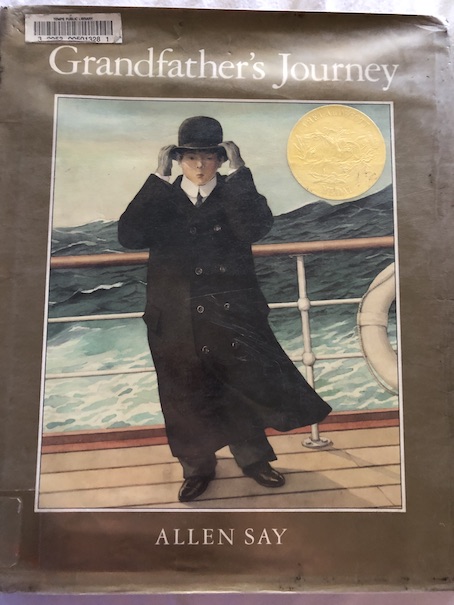
Grandfather’s Journey by Allen Say, 1993.

A man describes how his grandfather traveled by ship from his home in Japan to the United States. The time period isn’t specified, but from the context of the story, the grandfather’s original journey would have taken place either at the end of the 19th century or at the beginning of the 20th century.

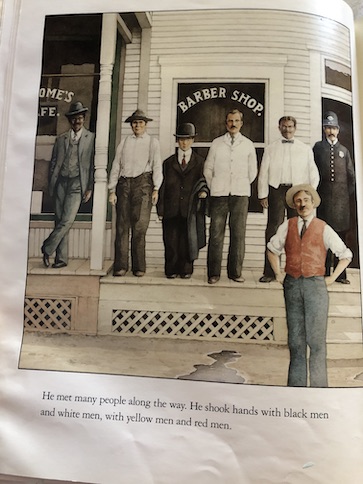
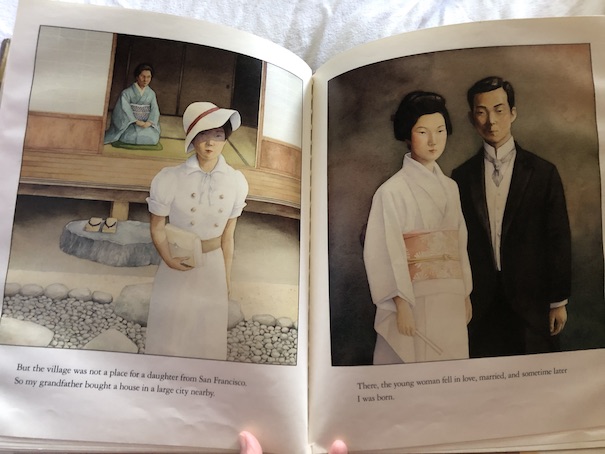
As a young man, the future grandfather travels all over the United States, seeing the sights and meeting all kinds of interesting people. It’s a bit of an adjustment for him, wearing Western style clothing and getting used to life in a new country, but he enjoys the adventure of it. He decides to settle in California, the part of the United States that he likes the best. He briefly returns to Japan to persuade his girlfriend to marry him and return to the United States with him.

The grandfather and his wife have a daughter in the United States, and they enjoy living there, but as the daughter grows older, the grandfather realizes that he misses Japan and wants to return home. He and his wife move back to Japan with their daughter.

The daughter has to learn to adjust to life in Japan after having lived all of her life so far in America. The family moves to the city because life there is more what their daughter was accustomed to than life in the countryside, where they were originally from.

Later, the daughter grows up, gets married, and has a son, who is the author of the book. The grandson describes being young during World War II and the devastation in Japan during the war. (This is part of what dates the earlier part of the story.)

Toward the end of his life, the grandfather finds himself growing nostalgic about his time as a young man in the United States and wishes that he could return to California one more time. Unfortunately, the grandfather dies before making the trip. Instead, his grandson goes to the United States to see the places that his grandfather told him about.

Like his grandfather, the grandson stays in the United States for a time and has a daughter of his own. He comes to understand how his grandfather felt, missing Japan when he is in the United States and missing the United States when he is in Japan. The world is vast and full of fascinating places to explore, but there is always something to miss and feel nostalgic about, no matter where you are. The grandson continues to travel back and forth between the United States and Japan, enjoying both of them.

The book is a Caldecott Medal winner. It is available to borrow for free online through Internet Archive.