A little girl (unnamed, like the other girls in this series) really wants a kitten of her own. However, the girl’s mother won’t give her a kitten because she doesn’t think that the girl is responsible enough to care for one. In the past, the girl has had a hamster and a gerbil, and she left most of the animals’ care to her mother.
Soon, the girl gets a chance to prove that she can be more responsible. The woman next door is going away for a week, and she needs someone to look after her cat, Clover. The girl says that she would like to take care of Clover. Besides playing with Clover, the girl would have to feed her, change her water, and clean her litter box, but the girl says that she is willing to do it.
The girl loves Clover, but Clover is very shy around her at first. It takes time and patience for the girl to make friends with her and to take care of her. Once the cat gets used to the girl, the two of them have fun together.
When the neighbor returns from her trip, she is pleased that the girl took good care of her cat and gives her a silver cat charm as a memento. The girl misses Clover, now that she no longer needs to take care of her and still wishes for a cat of her own. Her wish is fulfilled when Clover has kittens, and the neighbor gives one to the girl.
All of the books in this series originally came with charms like the ones described in the stories. This book originally included a little silver cat charm for the reader to wear. The hole in the cover of the book was where the charm was displayed when the book was new. The books in the series often focus on the unnamed main character (who could represent any girl reading this story – the books were aimed at young girls) developing new self confidence, and the charms were meant to be either a sign of their new self confidence or inspiration for developing it. In this case, the charm is a reminder of the girl’s experience with the neighbor’s cat, which taught her what she needed to know to take care of a pet of her own.
The book is available to borrow for free online through Internet Archive.
The Silver Slippers by Elizabeth Koda-Callan, 1989.
A little girl (unnamed, like the other girls in this series) wants to be a ballerina. She takes ballet classes, but she never seems quite good enough, like the ballet posters on the walls of her room. She feels discouraged because she is not perfect.
When her ballet teacher tells the class that there is going to be a dance recital and that one girl in class will be chosen to be the prima and lead the others, the girl doesn’t think that she has a chance to be chosen because her dancing isn’t good enough.
The girl tells her mother about the recital and her doubts about being chosen to be prima, and her mother tells her that it depends on how much she wants to be prima and how much she is willing to practice to improve. If the girl is willing to put in extra practice, she still has a chance to be prima. To remind her of her goals, her mother gives her a silver charm in the shape of a pair of ballet slippers.
In order to improve her dancing, the girl has to focus on her goal and give up participating in other activities to find more time to practice. However, her practicing pays off, and she gets the role of prima. On the night of the recital, she is nervous, but her silver slippers charm reminds her of her dream of being a real ballerina and gives her the courage to go on with her performance.
All of the books in this series originally came with charms like the ones described in the stories. This book originally included a little silver slippers charm for the reader to wear. The hole in the cover of the book was where the charm was displayed when the book was new. The books in the series often focus on the unnamed main character (who could represent any girl reading this story – the books were aimed at young girls) developing new self confidence, and the charms were meant to be either a sign of their new self confidence or inspiration for developing it. In this case, the charm is a reminder of the girl’s goals and how much she really loves dancing, giving her the inspiration she needs to persevere even when learning is difficult.
The book is available to borrow for free online through Internet Archive.
This retelling of the classic fairy tale is a Caldecott Medal winner. The illustrations are beautiful! A note in the beginning of the book explains a little more about the author’s sources for the story as well as his view about it. Instead of focusing on an evil witch who holds a young girl captive, he presents “a mother figure who powerfully resists her child’s inevitable growth.”
A
couple who have wished for children for a long time are excited to realize that
they are finally going to have one!
However, the wife finds herself with an irresistible craving for the
Rapunzel (an herb) that grows in the nearby garden of a sorceress. She is so desperate to have some that she is
able to persuade her husband to steal some for her. But, even having some causes her craving to
grow.
When the husband returns to the garden to get more Rapunzel, the sorceress catches him. He explains the situation, saying that his wife’s craving is so intense that he fears she will die if she doesn’t get some Rapunzel. The sorceress agrees that the wife can have the Rapunzel she needs, but in exchange, she demands the child when it is born. Not knowing what else to do, the husband reluctantly agrees. When the wife gives birth to a baby girl, the sorceress comes, names the baby “Rapunzel”, and takes her away from her parents.
The sorceress cares for the girl and raises her. When the beautiful young girl turns twelve, the sorceress takes her to live in a tower in the forest. The tower is magical, looking narrow on the outside, but containing many beautiful and comfortable rooms. The only way in or out is through the window at the very top. The witch has Rapunzel let down her extremely long, beautiful hair so that she can climb up.
Rapunzel lives alone in the tower for years, until a prince happens to ride by and hears her singing. The prince is enchanted by the singing and asks questions about the tower at the nearest houses, learning about the sorceress and the young woman in the tower.
One
day, he sees the sorceress visiting Rapunzel and sees how she gets into the
tower. So, later, he calls to Rapunzel
himself, asking her to let down her hair.
Rapunzel is surprised and frightened at first, when she sees that her
new visitor isn’t the sorceress, but he speaks nicely to her, and they become
friendly. The prince proposes marriage,
and Rapunzel accepts. After that, he
visits her every night, without the sorceress’s knowledge.
However,
Rapunzel eventually gets pregnant, and when her clothes no longer fit her, the
sorceress realizes it. She calls
Rapunzel a “wicked child” and says that she has betrayed her. She cuts off Rapunzel’s long hair and exiles
her into the wilderness, alone.
The sorceress uses Rapunzel’s long hair to trick the prince into climbing into the tower. When he comes, she tells him that Rapunzel is gone, and he will never see her again. The prince falls from the tower, injuring his eyes. Blinded, the prince wanders alone for a year, lamenting for his lost wife.
Eventually, he finds Rapunzel in the wilderness, recognizing her singing. She has given birth to twins. Rapunzel’s tears heal the prince’s eyes, and he is able to see again. Realizing that they are near to his kingdom, he takes Rapunzel and the twins home.
The book is available to borrow for free online through Internet Archive.
Princess Tales edited by Nora Kramer, illustrated by Barbara Cooney, 1971.
This is a collection of princess stories by various authors, including retellings of some classic fairy tales, some or all of which were printed in other locations before being included in this collection. Although I have encountered some of these stories before this collection, I liked the illustrations in this book because I like Barbara Cooney’s work.
Stories in the Book:
The Practical Princess by Jay Williams (1969) – I know this story from the story collection that is named after it, but it did appear in other printings before either of these. Princess Bedelia was given the gift of common sense as a baby, and she uses her practicality to rid her kingdom of a dragon and save herself from marriage to an evil sorcerer.
The Twelve Dancing Princesses by Virginia Haviland (1959) – A retelling of the classic fairy tale. A French kingdom with twelve beautiful princesses is mystified by how the princesses’ shoes are always worn through every morning even though the door to their room is locked every night when they go to bed. What are the princesses doing every night that ruins their shoes, and how are they doing it? Michel, a young cowherd who has recently taken a gardening job at the castle and who has fallen in love with the youngest of the twelve princesses, discovers the answer. When her sisters want to enchant Michel, as they have others who have discovered their secret to keep them from telling, Princess Lina needs to decide if she loves Michel as much as he loves her.
The Princess and the Vagabone by Ruth Sawyer (1942) – A beautiful but bad-tempered Irish princess learns a lesson in kindness when her father gets fed up with the way she treats her suitors. All of her life, the princess has dealt out criticism and insults to everyone, when she sees a suitor with whom she can find no fault, she doesn’t know what to do (never having practiced kindness or spoken nicely to anyone) and gets angry, hitting him and crying as she runs from the room. Her father, disgusted with her impossible behavior, tells her that he’s had enough, and since she has rejected all the royal suitors, he will force her to marry the next vagabone (vagabond) who comes begging at the castle. As the wife of a vagabond, the princess learns to face hardships she has never experienced before, sees for the first time how much kindness from another person can really mean, and notes positive points about others for the first time, enjoying the ragged vagabone’s song. But, there is still one more surprise when the vagabone turns out to be the perfect suitor the princess thought that she had rejected.
Melisande by E. Nesbit – A king and queen want to avoid the usual messes and curses that often result from holding a christening party for a new princess and forgetting to invite one of the fairies, so they decide that, for their daughter Melisande, they will simply hold an informal christening with no party. However, all of the fairies get mad about this and come to give curses to the princess. Fortunately, the king points out logically that, according to tradition, only one forgotten fairy can offer a bad curse to a princess after being left out of a christening party. Fairies are held to certain rules and can vanish for breaking them, so since the first fairy already cursed the princess with baldness, the others simply agree to count themselves are party guests and leave. Princess Melisande spends her childhood being bald, but the king offers her a fairy wish that he had been saving for something special so that she can wish for hair. However, Melisande foolishly wishes for her hair to grow exceedingly fast and even faster when cut. It’s far too much hair for her, even though people try to help her find uses for it, like weaving it into clothes and stuffing pillows with it. As usual in these cases, the king offers Melisande’s hand in marriage to the prince who can help her to solve her problem. At first, Prince Florizel thinks he’s found the solution when, instead of cutting the princess’s hair from her, he cuts her from her hair. However, that has the unintended side effect of making the princess grow suddenly tall! What will Prince Florizel do to get the princess and her hair to balance? (At one point, this story references Alice in Wonderland.)
The Handkerchief by Robert Gilstrap and Irene Estabrook (1958) – At first, Zakia is not happy when her father, the Grand Vizier of Morocco accepts the sultan’s offer to marry her on her behalf. She doesn’t think that it’s fair for him to order her to marry anyone, and she doesn’t love the sultan. In response, she imposes a requirement on the marriage, that the sultan must learn a trade in case he loses his throne and has to earn a living. To the vizier’s surprise, the sultan thinks that sounds like a clever request, and the sultan learns the art of weaving. He enjoys it, and he makes a beautiful handkerchief for Zakia as a wedding present. Zakia appreciates the gift and marries him. The sultan’s ability as a weaver later saves him when he is in a desperate situation.
The Blackbird’s Song by Barbara Leonie Picard (1964) – An artist paints an unflattering picture of the king and is thrown into prison. However, the princess’s pet blackbird sings to him of the princess’s beauty and kindness, and he is able to paint a marvelous portrait of her without having seen her himself. When the princess falls in love with the artist, her blackbird and its friends help them to make their escape from her father.
Ricky-of-the-Tuft by Polly Curren (1963) – A prince is born ugly, and his mother is worried, but a fairy gives him the gift of wit and intelligence, with the ability to give that gift to someone he loves. In another kingdom, a queen has two daughters. The eldest is beautiful and the youngest is plain. However, a fairy says that the plain girl will be bright and intelligent, and people who talk to her will forget what she looks like. The beautiful girl is less fortunate because she is not intelligent. People will enjoy looking at her, but they will quickly tire of her because she does not speak intelligently and has nothing to say. To compensate the beautiful girl, the fairy says that she will be able to make the person she loves beautiful as well. When the ugly prince, Rick-of-the-Tuft, meets the beautiful princess and falls in love with her, the two of them are able to use their gifts to help each other. The story is based on a Perrault fairy tale.
The Son of the Baker of Barra by Sorche Nic Leodhas (1968) – The baker’s son, Ian Beg, is a nice boy, and sometimes a little too nice. When his father sends him to take a cake to the princess, he is stopped by old women who ask him for a taste of the cake, and he cannot refuse them. However, it turns out to be a fortunate thing. The old women are actually fairy folk, and not only do they handsomely compensate him for the cake that they eat, but they also help him when the princess falls in love with him and the king tries to get rid of him by sending him off to find a castle of his own. The king doesn’t expect that Ian Beg will be able to find a castle and supply the kind of lifestyle that a princess needs, but he doesn’t know that Ian Beg has help.
The Enchanted Forest by La Comtesse de Segur, translated by Beatrice Schenk de Regniers, 1856, 1974.
This is an English translation and retelling of one of La Comtesse’s stories. I can’t read French, and I’ve never read the original version of the story, but the translator, Beatrice Schenk de Regniers, had a note in the book that she altered the story slightly from its original version.
King Goodheart has a lovely little daughter named Goldenhair, who he loves very much. Unfortunately, his wife dies, and his people urge him to remarry. His new wife, Queen Meanette, is as mean as her name sounds, and she does not like Goldenhair at all. The King, realizing this, does his best to keep her away from his daughter and puts his daughter in the care of some trusted servants.
Meanette, still jealous of the love and attention the King gives Goldenhair, plots to get rid of her. One of the princess’s attendants is a boy who takes her out in her little carriage in the garden every day. The boy is greedy for sweets, and the queen bribes him into tricking the princess into going into the enchanted forest. People who go into the forest have been known to disappear forever. When the princess becomes lost in the forest, she is befriended by a cat who takes her to a palace where he lives with a doe. They are very kind to her, but Goldenhair still longs for a way to return home.
One day, while Goldenhair is living with the cat and the doe in their palace, a parrot comes and claims that he knows a way that the princess can return home. He insists that she leave the palace, against the doe’s wishes, and pick a single rose that grows in the forest. What the girl doesn’t know is that the parrot is an evil wizard in disguise. When the girl picks the rose, the doe’s palace is destroyed, and the evil wizard reveals himself.
Thinking that she has killed her friends, Goldenhair wanders, lonely and miserable, through the forest. Then, a large tortoise comes and tells her that her friends are still alive and that she can find out what happened to them if she’s willing to take a long journey on the tortoise’s back without saying a single word the whole time. Goldenhair does so and arrives at a fine palace where she learns that the doe was really Fairy Kindheart and the cat was really her son, Prince Charming. They had been turned into animals by the evil wizard, and they had been freed when the princess picked the rose. However, the princess had then fallen under the spell of the evil wizard, and the other trials were necessary to free her. Fairy Kindheart takes the princess home to her father, who is overjoyed to see her. The King marries Fairy Kindheart, and Goldenhair marries Prince Charming, and they all live happily ever after.
The book is currently available online through Internet Archive.
My Reaction and Further Information
The life of La Comtesse de Segur, the original author of this story, is almost like a fairy tale itself. Her first name was Sophie, and she was born in 1799 in Russia. Her father was a Russian Count, and she grew up with her seven siblings on his vast estate. However, even though her family was wealthy, her mother believed that children shouldn’t have life easy. Sophie and her brothers and sisters had to sleep on small, hard beds and were never given much food to eat or any sweets. When she was 18, Sophie went to live in France, and she married a French Count named Eugene de Segur. It was not a particularly happy marriage, but she had four daughters and four sons and many grandchildren. She wrote stories for them and became the most popular children’s writer of her time in France. She died in 1874, but her stories are still popular with children in France.
I found the story of La Comtess’s life even more interesting than the story in the book, although the story in the book isn’t bad. It seems like a pretty obvious variation on the story of Snow White, but it is a charming story.
The story of Alice in Wonderland is over 150 years old, and the sequel, Through the Looking Glass, is now 150 years old, as of 2021. These books have been reprinted in many different languages and editions. The edition that I’m using for this review is actually a combined edition of the two from 1960 with added notes by Martin Gardner. (Although I used a cover image from a different edition above.) I like editions with added notes because there is quite a lot to explain about both Lewis Carroll and his stories.
I explained a lot of Lewis Carroll’s background and some of the controversies surrounding his life in my review of Alice in Wonderland. One important point about the Alice stories is that they are full of puzzles, riddles, word games, in-jokes, and parodies of poems that were popular in the author’s time. Lewis Carroll (real name Charles Dodgson) was a mathematician and scholar at Oxford, and he liked to play with logic puzzles and word games. Sometimes he would hide people’s names within poems or parts of the story by rearranging the letters of their names or using them as the beginning of lines in a poem, as an acrostic. There is an acrostic poem which is dedicated to Alice Liddell, the real girl who inspired Alice in Wonderland. This poem is printed as part of some editions of Through the Looking Glass, including the one that I’m using. The acrostic poem also references Row, Row, Row Your Boat, which is apparently older although its origins aren’t completely certain. If you read down the beginning letters of the poem, you find out that Alice’s middle name was Pleasance.
The chess game in Through the Looking Glass is meant to be part of an actual chess game with real moves that can be mapped out on a board. The game and the moves in the story are explained in the preface of my copy of the book. Alice begins as a white pawn in the game, but when she reaches the other side of the board, she becomes a queen, which is part of the rules of chess – pawns that successfully reach the opponent’s side may be exchanged for other pieces. The colors of the chess pieces in Alice’s game are red and white instead of black and white because red and white are old traditional colors. Although black and white are common today, many different color combinations have been used, and the red and white combination dates back to the Middle Ages.
The story begins on the day before Guy Fawkes’ Night. (Alice has been watching the bonfire preparations out the window.) Alice is trying to wind some yarn, and her pet cat Dinah’s little black kitten keeps playing with it. Alice chastises the kitten, and then begins talking to the kitten about the way it was watching her play chess earlier in the day. Alice likes to play games of pretend, and she starts to pretend that the kitten is the red queen from the chess game. The kitten doesn’t cooperate in posing like the chess queen, so Alice holds it up to a looking-glass.
As they look in the mirror, Alice gets the idea of a “Looking-glass House” – a house on the other side of the mirror that can be reached by stepping through it. Alice starts to imagine what it would be like to enter the world on the other side of the mirror. She gets up on the mantle over the fireplace and steps through the mirror into the looking-glass house to see what is there.
Things in the looking-glass house are very strange. The clock and the pictures seem to be alive, and so are the chess pieces. Alice helps the pieces back onto their table after they’ve been knocked off, but they don’t seem to understand what has happened and are alarmed. Alice then picks up a book on the table near the chess board and reads the poem Jabberwocky, which is about the defeat of a horrible monster. The poem is written in backwards writing, and Alice has to hold it up to a mirror to read it. The poem is a nonsense poem that contains many made-up words, which are explained later on in the story.
Alice decides to see what is outside the house. She discovers that the flowers can talk to her, but they are rude and insulting. Then, Alice encounters the Red Queen, who has grown taller than she was in the house. (The flowers say that it’s because of all the fresh air outside.) The Red Queen is both commanding and contradictory, but she gives Alice directions to other “squares”, addressing her as a chess pawn.
Pawns get to move two squares on their first turn, so Alice gets to go by train. In the train carriage, Alice meets many strange characters, including a gentleman dressed in white, a Goat, a Beetle, and a Gnat, who keeps whispering in her ear and suggesting that she make jokes based on puns. Through the Gnat, Alice meets other strange insects, like the snap-dragon-fly, the rocking-horse-fly, and the bread-and-butterfly. The Gnat tells Alice that the creatures in the woods don’t have names, and when Alice goes through the woods, she temporarily forgets her name, getting it back again on the other side.
Soon after, Alice meets Tweedledum and Tweedledee. (Lewis Carroll didn’t invent these characters. They are nursery rhyme characters.) They ask Alice if she likes poetry, and they tell her the tale of The Walrus and the Carpenter. (This is one of the most-quoted poems in the Alice stories – many people remember the part where they “talk of many things” – “Shoes and ships and sealing wax and cabbages and kings.”) At the end, Alice can’t decide which of the two characters she likes the best because both are sneaky and eat the oysters that trusted them, so she decides that she doesn’t like either of them. (Yeah, I can think of others stories where I’ve felt the same way.) Alice hears a strange sound, and they tell her that it’s the Red King snoring and that the Red King is actually dreaming about her right now. Tweedledum and Tweedledee insist that Alice isn’t a real person, only part of the Red King’s dream, and that she’d disappear if he were to wake up, which upsets Alice. Alice starts to cry, which she thinks is proof that she’s real, but they claim that those aren’t real tears. Finally, Alice decides that they’re just talking nonsense and that there’s no point in crying over it. Tweedledum and Tweedledee want to have a battle (as in their poem), but a large crow interrupts them and frightens them away by producing a great wind.
Alice catches hold of a shawl that was being blown away by the wind and returns it to its owner, the White Queen. The White Queen speaks very strangely, and she says that it’s an effect of living backwards. Because she lives backwards, her memory works both ways, and she can remember things that haven’t happened yet. The White Queen screams with pain before she pricks her finger, so she doesn’t have to do it again after her finger is hurt. Alice cries when she talks about how lonely she is in the woods, and the White Queen distracts her by telling her to consider things because no one can think of two things at once (which is true). The White Queen talks about considering and believing impossible things (sometimes she believes “six impossible things before breakfast” – one of the most famous lines that is often quoted from this story).
As Alice asks the White Queen if her finger is better, she suddenly and inexplicably finds herself in a shop and talking to a sheep, who asks her what she wants to buy. Alice tries to look around, and the Sheep asks her if she’s a child or a teetotum (a kind of spinning top used in old games, sometimes by itself and sometimes as a replacement for dice or a spinner – dreidels are a kind of teetotum) because of the way she’s turning around. The Sheep is knitting and keeps picking up more needles to knit with. For awhile, the shop disappears, and Alice finds herself in a boat with the Sheep, but then the shop returns, and the Sheep asks her again what she wants to buy.
Alice decides to buy an egg, and the egg that she buys turns into Humpty Dumpty when she approaches it. Humpty Dumpty is a bit rude and insults Alice’s name because he doesn’t think it means anything. Alice mistakes Humpty Dumpty’s cravat for a belt because he’s egg-shaped and doesn’t have a true neck for wearing a tie. Humpty Dumpty reveals that the cravat was an un-birthday (a concept that Lewis Carroll invented) present from the White King and Queen. All through the conversation, Humpty Dumpty uses words in unusual yet strangely nit-picky ways, making words mean only what he wants them to mean in the moment. Because he’s so particular about the meanings of words, Alice asks Humpty Dumpty about all the strange words in the Jabberwocky poem, and he explains what the made-up words mean. Humpty Dumpty recites another poem for Alice that doesn’t seem to have a true ending and then abruptly dismisses her.
As Alice leaves, she meets the king with all of his horses and men (from the Humpty Dumpty nursery rhyme) and is introduced to one of his messengers. Alice is amused by the name and description of the messenger and starts playing a game of “I Love My Love” out loud with the messenger’s name. (The two messengers are called Haigha and Hatta and are shown looking like the March Hare and Mad Hatter from Alice in Wonderland in the illustrations.) The messenger informs the king that the lion and the unicorn are fighting for the crown again (another nursery rhyme reference). The king says that it’s all a joke because the crown is his and neither one of them is going to get it no matter which of them wins the fight.
The unicorn is amazed to meet Alice because he never knew that children were real before. As at the end of the rhyme, they are given plum cake, and they hand the dish to Alice for her to cut the cake. However, Alice finds that she can’t cut it, so they ask her to hand the cake around first and then cut it afterward, which surprisingly works.
After the others are drummed out of town, also as part of the rhyme, the Red Knight attempts to capture Alice, but the White Knight shows up to save her. The White Knight tells Alice all about his inventions, none of which make any sense, and sings her a song which apparently has several names and is set to the tune of a song Alice recognizes as “I give thee all, I can no more” (which is another name and the first line of the song which is really titled My Heart and Lute, which is part of the on-going joke about the song’s real name).
Then, Alice reaches the final square of the board and becomes a queen, finding a crown suddenly on her head. The Red Queen and the White Queen appear suddenly, and the Red Queen tells her that she must pass an examination before she can truly become a queen. The queens ask her a series of questions that are supposed to be math questions but are actually a combination of riddles and nonsense. Their general knowledge questions are a combination of nonsense and puns. Eventually, the Red Queen and White Queen both fall asleep to a parody of “Rock-a-bye Baby.”
Alice finds herself in front of a door labelled “Queen Alice,” but the old frog who comes to the door doesn’t seem to want to let her in. Alice enters anyway and sits next to the Red Queen and White Queen. They introduce her to the food being served at the feast, but they don’t actually allow her to have any because it isn’t polite to cut and serve something you’ve been introduced to, and the plum cake verbally protests when Alice tries to serve it anyway.
The White Queen tells Alice a riddle in poem form about fish. The riddle is never answered, but everyone drinks to Alice’s health. The Red Queen tells Alice that she should make a speech, and as she gets up, many strange things begin happening in the room. Alice thinks that the Red Queen is responsible and grabs hold of her, threatening to “shake her into a kitten.” Alice suddenly wakes up, holding her little black kitten.
Like in Alice in Wonderland, everything that Alice experienced was a dream. However, the end of the book poses the question of whether the dream was Alice’s or the Red King’s. The question is never answered; it’s just something to make the readers think. That’s actually what I like most about the Alice stories, that they are partly meant to make the reader think. The stories are somewhat disjointed and constantly changing, kind of like dreams do, but I appreciate all the references and parodies in the stories.
Alice’s Adventures in Wonderland by Lewis Carroll, 1865.
The beginning of the story is famous. Alice is sitting with her sister (unnamed in the book, but probably based on Lorina because Lorina was older than Alice) by the river, and she is bored by the book that her sister is reading because there are no pictures or conversations. As Alice is sitting there drowsily, she suddenly spots a white rabbit who seems like he’s running late for something. Curious to see where he is going, Alice follows him and falls down a rabbit hole which is like a deep well.
It takes her a long time to fall (causing Alice to wonder if she’ll pop out on the other side of the world eventually), and when she reaches the bottom, she finds herself in a dark hallway with a small door that is too small for her to go through. She manages to shrink herself by drinking from a mysterious bottle that says “Drink Me,” but she forgets the key to the door on the table above her, so she has to make herself bigger by eating cake from a box labeled “Eat Me.” When Alice is big, she cries so much, worrying that she is no longer herself but someone else she would rather not be because so many strange things are happening, that she makes a sea of tears, and when she is small again, she has to swim.
She meets a mouse, who swims to shore with her, where they meet a bunch of other animals (including the Dodo), who all seem somehow familiar to Alice (probably because they’re all parodies of people Dodgson and the Liddells knew – A Lory (type of parrot) argues with Alice and tells her that it’s older than she is and “must know better” than she does – possibly another reference to Alice’s older sister Lorina).
Alice and all of the animals are wet, so they try to dry themselves. The Mouse begins telling a very dry history of England (ha, ha), but that’s not good enough. The Dodo suggests that they have a Caucus-race (Alice’s childish misunderstanding of certain words and concepts leads to some of the jokes and puns in the story) to dry themselves out, and they all start running in a circle. After awhile, they all stop, and since there is no obvious winner, the Dodo decides that everyone has won and that everyone should receive a prize. Alice gives all the animals pieces of candy from her pocket. Alice’s prize is her own thimble, which is the only other thing she has in her pocket.
The Mouse starts to tell a story about why it hates dogs and cats, but it gives up when Alice doesn’t pay attention and becomes confused. Then, Alice makes the mistake of mentioning her pet cat and how it likes to chase mice and birds, and all of the other animals become offended and leave. However, the White Rabbit appears and, apparently mistaking Alice for his maid, asks her to bring him his gloves and fan. Alice goes into his house to look for them. Finding another bottle like the first one, she drinks it and becomes so big that she gets stuck in the house. The White Rabbit and his friend, Bill the Lizard, become alarmed at her large arm sticking out of the window and talk about burning the house down. They throw pebbles at Alice which turn into cakes, and Alice eats them to become smaller.
Alice makes her escape from the house, distracting a puppy much larger than she is by throwing a stick, and meets a caterpillar, who is sitting on a mushroom and smoking a hookah. The Caterpillar asks her to explain herself, but Alice says that she can’t because she isn’t really herself. Alice tells him that she keeps changes sizes and can’t remember things that she thinks she should remember. The Caterpillar asks her to recite the poem about Father William, and Alice recites Carroll’s parody version instead of the original poem. The Caterpillar agrees that Alice said the poem wrong. He asks Alice what size she would like to be and gets offended when Alice says that being only three inches tall is awful because that is the Caterpillar’s height. However, he does tell Alice that one side of the mushroom will make her taller and the other will make her shorter, not explaining which is which. Alice experiments with bits of mushroom until she finally becomes her normal size again. She keeps the mushroom pieces so that she can change size again, if she needs to. (Has anyone ever made a video game version of Alice in Wonderland where the player, as Alice, has to become bigger or smaller to get through different levels? If no one has, I think someone should.)
Alice soon makes herself small again so that she can go into a little house. Alice speaks to the footman of the house, who has just accepted an invitation for the Duchess to join the Queen for croquet. The footman rambles on about how there’s no use in Alice knocking because they’re both on the same side of the door and everyone inside is making too much noise to hear her. Not getting any straight answers about whether or not she’s allowed to go inside, Alice decides that the footman is an idiot and just lets herself in. The Duchess is sitting inside with a baby while her cook makes pepper soup. The Duchess’s cat, the Cheshire Cat, grins at Alice in a strange way. (The Cheshire cat comes from an expression that was popular in the 19th century – “grinning like a Cheshire cat” – although the origins of the phrase are uncertain. The Cheshire Cat wasn’t actually in the original version of the story.) Alice becomes alarmed when the cook begins throwing things at the Duchess and the baby, but the Duchess tells her to mind her own business. The Duchess is rough with the baby and throws it. Alice catches it and takes it away, worrying that the Duchess might kill it, but the baby turns into a pig, and Alice has to let it go. Alice thinks that it would have been a very ugly child and is better off as pig, which reminds her of other children she knows. (Ouch.)
Alice spots the Cheshire Cat and tries to ask it for directions. It directs her to the Mad Hatter and the March Hare, telling her that they’re both mad. (These also come from old expressions, “mad as a hatter” and “mad as a March hare.”) Alice says that she doesn’t want to “go among mad people”, but the Cheshire Cat says that can’t be helped because everyone is mad here, including Alice, because she wouldn’t be there if she wasn’t. He says that he will see her later when she plays croquet with the Queen. Before the Cat vanishes completely, he asks her what happened to the baby, and when Alice says that it turned into a pig, the Cat says, “I thought it would.”
Alice ends up at the tea party that the March Hare and the Mad Hatter are having with the Dormouse. (This tea party also was not part of Carroll’s original version of the story.) Although they tell her there is no room at the table for her, Alice notes that it’s a big table with a lot of chairs, so she sits down, uninvited. The conversation is confused, and the Mad Hatter tells Alice a riddle without knowing the answer to it himself. Alice says that he’s wasting time, and the Mad Hatter says that Time won’t do anything he wants now because he was accused of “murdering the time” when he sang “Twinkle, twinkle, little bat!” before the Queen of Hearts (he messed up with the timing of the song), and now it’s always six o’clock and always tea time (that’s when people, including the Liddells, used to have tea time when the story was written). This gives them no time to clean up between tea times, so they just keep moving around the table. Alice tries to ask them what they do when they get back to their original positions at the table, but the March Hare changes the subject. The Dormouse begins telling the story of the three sisters who lived at the bottom of the Treacle Well and were learning to draw things that begin with the letter ‘M’. (As the March Hare says, “Why not?”) Alice tries to ask questions, and starts to say, “I don’t think-” The Mad Hatter says, “Then you shouldn’t talk.” Alice gets offended and decides to leave.
She finds a door that takes her back to the hallway where she was in the beginning, and she is able to open the door that she couldn’t before, which leads her into a beautiful garden. There, she finds some playing cards painting the roses. It turns out that they accidentally planted white roses, and the Queen wants red ones, so they’re just painting the roses so she won’t find out. The King and Queen of Hearts enter the garden, and the Queen begins demanding to know who Alice is and who the cards are. Alice gives a flippant remark, and the Queen screams, “Off with her head!” (Which, I think, is about the third time in the story that someone has said that. The Duchess was the first.) The King points out that Alice is only a child. The Queen invites Alice to play croquet. The White Rabbit explains that the Duchess isn’t coming because she’s supposed to be executed for boxing the Queen’s ears.
In this game of croquet, the mallets are flamingos (ostriches in the original version) and the balls are hedgehogs. The card soldiers have to bend themselves to be the arches. Alice can’t control her flamingo or hedgehog, nobody waits for their turn, and the Queen keeps ordering people’s heads to be taken off. Alice is very worried, and when the Cheshire Cat appears, Alice tells him that nobody is playing fairly. She notices that the Queen is listening, so she comments that the Queen is likely to win, which pleases her. The King says that he doesn’t like the Cat and wants him removed. The Queen orders its execution, but the Cheshire Cat makes its body disappear. The executioner doesn’t know what to do because he’s used to removing heads from bodies and can’t deal with a bodiless head. Alice suggests asking the Duchess because it’s her cat.
The Duchess seems glad to see Alice, and as Alice’s mind wanders, the two of them have a discussion about what the moral of the situation is. (Victorian children’s books often had a moral to the story. All of the Duchess’s and Alice’s suggested morals are proverbs that don’t fit the situation at all or are parodies on popular sayings. “Take care of the sense, and the sounds will take care of themselves” is a parody of “Take care of the pence, and the pounds will take care of themselves.”) The croquet game continues until everybody has been arrested except for the King, Queen, and Alice.
The Queen asks Alice if she’s met the Mock Turtle yet (which is supposedly what mock turtle soup is made from). Alice hears the King pardon everyone who was arrested. The Queen orders the Gryphon to take Alice to the Mock Turtle, and the Gryphon tells her that nobody ever really gets executed when the Queen orders an execution – it’s all just the Queen’s fancy.
When the Gryphon introduces Alice to the Mock Turtle, the Mock Turtle explains that he used to be a real turtle. He talks about his youth and the lessons he had when he was young. (The “extras” that he and Alice describe – French, music, and washing – are a parody of British boarding schools at the time and a play of the word “extra.” These things were not provided as free “extras”, and of course, washing isn’t a lesson – they would cost extra at boarding school and the additional costs would be added on to the fees.) The Gryphon and the Mock Turtle describe the Lobster-Quadrille dance to Alice, demonstrating it (while singing a song that is a parody of The Spider and the Fly). They ask Alice about her adventures, and she tells them everything that’s happened to her so far. When she mentions not being able to recite poems correctly, they have her try another, and she recites “‘Tis the voice of the Lobster” instead of “The Sluggard” by Isaac Watts. The Mock Turtle sings “Turtle Soup”, which is a parody of the song “Star of the Evening” by James M. Sayles.
Then, they hear that a trial is beginning. It turns out that it’s a trial for the Knave of Hearts who stole the Queen’s tarts. During the trial, which is basically nonsense, Alice feels herself growing larger. She is called to give evidence, but because she is becoming too tall, she is told to leave the court. The King says that it’s Rule Forty-Two and is the oldest rule in the book, but Alice points out that the oldest rule should be Rule One. The White Rabbit presents a letter, supposedly written by the defendant, which is a nonsense poem. (This one is a shortened version of another nonsense poem by Carroll which loosely parodied the song “Alice Gray” and isn’t recognizably close to the original here.) The King and Queen try to figure out what the poem means, but Alice doesn’t think it means anything. The Queen wants to give the sentence first and the verdict afterward, and Alice says that’s nonsense and she doesn’t care what they think because they’re just a pack of cards. The cards come flying at her, and Alice wakes up.
Apparently, the entire adventure was a dream, and Alice feel asleep on the river bank with her sister. Alice tells her sister about the dream, and her sister is enchanted. Alice’s sister imagines Alice in years to come, telling other children the same story.
The story of Alice in Wonderland is over 150 years old, as of this writing, and it has been reprinted in many different languages and editions. The edition that I’m using for this review is actually a combined edition with the sequel, Through the Looking Glass, from 1960 with added notes by Martin Gardner. I like editions with added notes because there is quite a lot to explain about both Lewis Carroll and his stories. This is going to be a very long review, and there are a number of things I want to explain before I even start summarizing the story.
Lewis Carroll, real name Charles Dodgson, was actually a mathematician at Oxford in England. His modern reputation is somewhat dubious because one of his hobbies was photography, and among the pictures he took were pictures of children, including many in various states of undress, some nude or partially nude and some in nightgowns. Charles Dodgson never married and never had any children of his own, and his sexuality (or relative lack thereof, as some have also speculated) is debatable. He was known for being friendly with the children of many of his friends and colleagues, and he enjoyed spending time with them, talking to them, telling them stories, and teaching them things … and taking pictures of them. The parents of the children knew about the photographs, including the nude ones, and gave permission for them to be taken, even keeping copies themselves.
Scholars debate about Dodgson’s photographs and the intention behind them. Not all of the pictures feature children who are undressed; some are just wearing ordinary clothes and others are dressed in fanciful costumes, like characters from stories. However, the nude or partially nude pictures are troubling because the children in those pictures were not babies, like the ones in modern Anne Geddes photographs. By modern standards, there would be no innocent reason for taking pictures of unclothed children like that. However, some scholars point out that photography was a relatively new hobby at that time, and people were taking pictures of things and other people in ways that people wouldn’t now because they were so eager to try out this new technology. People were realizing that they could use photography to immortalize loved ones in ways that they never could before. (Look up 19th century post-mortem photography only if you’re not easily startled or disgusted.)
There is some evidence that Victorian people were not scandalized by the idea of nude photographs of children, perhaps considering them a preservation of a state of innocence that would gradually disappear as the children grew up, almost like how some people today still photograph nude babies. Dodgson wasn’t the only one taking pictures of nude children at the time, and he apparently did so with the full knowledge and approval of the children’s parents, giving them photographs to keep. On the other hand, without knowing Dodgson’s real intentions, it’s difficult to say whether or not these pictures were really as innocent as they were once supposed, and some people consider that Dodgson may have taken advantage of the innocence of both the children and parents involved for his own purposes. After his death, some of his relatives removed some of the pages in his diaries, censoring them before they could be made public, so it’s difficult to say what they removed and why. This censorship could have had something to do with his photography hobby and how he felt about it, or it could be unrelated, maybe covering up his romantic feelings for someone else or maybe personal or professional quarrels that might have proved embarrassing to people still alive at the time he died. Without the missing diary pages, there isn’t really much to go on, and the speculation is really just speculation.
Not what Alice Liddell really looked like.
One of the favorite child friends of Dodgson’s was Alice Liddell, one of the daughters of the ecclesiastical dean of Christ Church, Oxford. Dodgson often visited the Liddell family and took Alice and her sisters on outings. On one of their outings together, when he and a friend took the Liddell girls on a boating trip on the Thames, Alice begged Dodgson to tell a story, and he began making up the story that became Alice in Wonderland, making Alice herself the heroine. Dodgson was still friends with the Liddell family at that point, although he later had a falling out with the family for reasons that are still unknown. The reasons for the falling out were apparently part of the pages removed from his diary, and some people have speculated that Dodgson may have behaved improperly toward one or more of the girls, although that’s not the only possibility; Dodgson may have had a different type of romantic indiscretion at that time, possibly involving the children’s governess or Alice’s older sister Lorina, and he may have also quarreled with the dean over college politics. Dodgson was a contemporary of another famous author of children’s fantasy books, George MacDonald. (I’ll be talking about him more when I get to The Light Princess and The Princess and the Goblin.) The two of them were friends, and MacDonald was the one who urged Dodgson to publish Alice in Wonderland after his own children read it and liked it. (MacDonald’s children were also among the ones photographed by Dodgson.)
This documentary has more details about the history Lewis Carroll, his photography, and his writing. Overall, I think that probably the most accurate answer in the documentary to the question of what was really going on in Oxford in the mid-1800s is “Who knows?” Some people gave much more definite-sounding responses to the question, but there are equally vehement opinions that take completely opposite views of the situation, and with the obvious gaps in the available information, I don’t think that level of certainty is warranted. The documentary covers various viewpoints and ends with a photograph that is potentially damaging to Lewis Carroll’s reputation, one that would have been scandalous even in the Victorian era if it was really taken by Carroll (it wasn’t proven definitely, but the experts’ conclusions were that seems likely or at least credible, and its time period and quality are in keeping with Carroll’s work) because the subject of the photograph (possibly Lorina Liddell) would have been too old for the photograph to be considered “innocent” even back then. The girl in that photograph would have been above the minimum age of consent for her time but still below the age of consent for ours, making that photograph suspicious by everyone’s standards.
My Reaction
This is not sexy, Martin Grotjahn.
My theory about the issue? I kind of doubt that Carroll was a pedophile. Kind of. Partly, my reasoning is based on listening to and reading the different arguments on each side, and it seems to me that those who express doubt about the accusation have more concrete evidence to support their points (they reference other photographers who took pictures similar to Carroll’s, they discuss the age of consent in the Victorian era, they note inconsistencies in the reported ages of Carroll’s female friends, they provide details about different sources of information, etc.) than the people who insist that he “obviously” and “without doubt” was sexually attracted to little girls, who seem to be largely reactionary and make I statements like “I can’t believe” that there was anything innocent going on and “it makes me angry.” (Some of the people interviewed the Timeline Documentary speak like that.)
Between the two choices, I’d be more inclined to go with reasoned arguments and cited sources more than gut reactions. My reviews here on this site are full of my personal feelings and gut reactions on a number of topics because that is the nature of opinion-based reviews, but I’ve had training in evaluating historical sources and writing research papers. Feelings change over time, and you can’t cite gut reactions as evidence in a thesis paper. The first essay that postulated that Alice in Wonderland may contain sexual symbolism, written by A.M.E. Goldschmidt in the 1930s, may have actually been written as a parody of contemporary psycho-analysis, and some of the “obvious” sexual symbols cited in later essays and analysis make no sense to me. In 1947, a psychoanalyst named Martin Grotjahn said that the scene where Alice’s neck suddenly grows longer is a symbol “almost too obvious for words.” No, it’s really not. I had to sit and think for awhile about why a person with a giraffe-like neck would be considered sexy, and then, it occurred to me that he’s probably really thinking of a piece of male anatomy instead of a girl’s neck, which doesn’t make any sense for the context of the story. Even now, I’m still not completely sure if that’s what he’s really getting at, and if I have to ponder it that much, it’s not that “obvious.” It’s about as bad as all the “that’s what she said” jokes I’ve heard. Quite a lot of unrelated things can be made to sound raunchy if you add “that’s what she said” after them, and the more times you hear that, the more annoying and less funny that kind of joke becomes. When a scholar does something like that in literary criticism, I’ve noticed that people are reluctant to question it because they assume that the scholar knows something they don’t, but I really don’t understand that comment and I don’t mind saying that I don’t think it makes much sense.
Also, I can’t help but notice in the descriptions of Carroll’s interactions with the Liddell girls that he visited them in different locations and took them on outings in different locations and that they were in the company of different people during these visits. The Timeline documentary mentions that the children’s governess would have been with them, even if the parents weren’t, and on the day that he took them on the boat trip where he began composing Alice in Wonderland, they were accompanied by his friend, Robinson Duckworth. I’m not a specialist in Carroll’s life, but it isn’t clear to me, from their descriptions, whether or not he was ever completely alone with the girls or with any child in particular, with no other witnesses. He may have been, but it seems to me from others’ descriptions that they were often chaperoned by different people. If some form of abuse or suspicious behavior were going on, it would be more difficult to evade or fool multiple witnesses. In 1932, when Alice was 80 years old, she went to New York to receive an honorary doctorate from Columbia University for her participation in the creation of a piece of iconic children’s literature and to take part in a centennial celebration of Dodgson’s birthday. I would think that if she had bad memories of Dodgson, she would have been less likely to take such a long journey at her advanced age in order to attend this celebration. On the other hand, that’s still just a guess of mine, and the suspicions about Dodgson, now raised, really can’t be proven either way. It still remains a possibility, and that’s why I only “kind of” think that Dodgson’s intentions might have been innocent.
In the end, I don’t have a firm theory so much as a conclusion: if you need to have definite answers, without debate, qualification, or reservation, in order to acquire knowledge, history probably isn’t your field. My first degree was in history, and I’ve noticed so many times that people discount historians and historical knowledge because the field doesn’t make firm, definite statements on many debatable aspects of history like this, and times when historians and private individuals have tried, they have often been proven wrong in some respect. However, that’s exactly the point: serious, professional historians don’t make definite statements unless and until they have definite proof because they know that there’s always a chance that they could be proven wrong at a later date when new information surfaces. It’s happened before, so true professionals are usually cautious. It’s not that they don’t know anything, it’s just that they’re aware of the limits of their knowledge, and they are careful in how they present what they really know in order to prevent people from drawing the wrong conclusions too quickly. It would be irresponsible to tell people that something is definitely true when the circumstances aren’t definite, so instead, they tell people about the information they know they have and the things are “possible,” “likely,” or “probable,” which irritates people who expect definite answers from experts. We know some things, and we also are aware of what we don’t know and what pieces we’re missing, which is also very important.
It doesn’t matter so much in modern times that we can’t completely prove Dodgson/Carroll’s intentions regarding his photography one way or the other as that we understand that the controversy exists. Without the diary pages, which would have been proof of his thoughts and intentions (and which were probably destroyed long ago), the most we could say is that the photographs suggest a possibility. Because, as scholars have pointed out, Dodgson wasn’t the only person who took photographs of children like that without apparently causing scandal, I wouldn’t say that it’s “definite” that his behavior or intentions were inappropriate. The final photograph in the documentary above is bad, but because they never proved definitely that he made it, I’d hesitate to call it “probable,” even though it seemed to me that the documentary makers were fishing for that so they could have a compelling revelation for their documentary. I don’t know for certain whether Charles Dodgson was or was not a pedophile, but I do know that it’s possible that he may have been one or at least had feelings or urges in that direction. There are enough indications that it remains possible, even though it’s unprovable. If you’re okay accepting as fact that an idea is “possible,” but probably not “probable” and certainly not “certain” … you could do well studying history, and just getting through my explanation (if you managed all that) means that you’re more than ready to tackle the logic puzzles of Alice in Wonderland. They’re kind of like that when you turn them around in your head.
Parodies, In-Jokes, and Literary References
There are a couple of things that are easier to prove about Alice in Wonderland than whether or not Lewis Carroll may have been attracted to the real Alice, and these more easily provable aspects of the story are what make it particularly interesting for me. First, parts of the Alice stories are actually parodies of popular stories and rhymes from the 19th century. Dodgson/Carroll particularly liked to poke fun at didactic stories and rhymes that were used to teach children useful lessons and morals. He liked to twist those more serious stories and rhymes into things that were basically nonsense. Modern readers are more likely to focus on the nonsense and less likely to notice the parodies in the Alice stories because they are not familiar with the original rhymes and stories being parodied, as the original readers of these books would have been. The original readers would have known immediately what he was making fun of. For example, “How Doth the Little Crocodile” is a parody on “Against Idleness and Mischief” by Isaac Watts, which is about the importance of using time well. “You are Old, Father William” or “Ballad of Father William” is a parody on “The Old Man’s Comforts and How He Gained Them” by Robert Southey, which gives advice to the young about how to behave so that they may enjoy a happier old age. These types of poems would have been given to Victorian children as something to read and memorize during their lessons, and so they would have noticed that Carroll was poking fun at them. That’s why I like editions of the Alice books that come with extra notes, pointing out the parodies and original references, so I can be in on the joke. On the other hand, modern readers will have no trouble recognizing the source of “Twinkle, Twinkle, Little Bat” as “Twinkle, Twinkle, Little Star” or “The Star” by Jane Taylor (first published in 1806, although modern readers think of it as the song instead of the poem, and not all of them know all the verses). It’s pretty common throughout history for bored students to make jokes about the things that they’re required to learn in their lessons, and many of these poems are old enough for Carroll himself to have learned them when he was a student. It’s possible that he may have started playing with parodies of his school lessons or popular songs long before he started writing Alice in Wonderland, although that’s just my personal guess, based on my own school years. I did things like that, and some of my friends did, too. (People older than me also remember On Top of Spaghetti and Joy to the World, the School Burned Down – not Carroll parodies and much cruder than his work, but examples of the way kids can twist things that are commonly known for the amusement of their friends.)
The second important point about the Alice stories is that they are full of puzzles, riddles, and word games. Remember that Lewis Carroll /Charles Dodgson was really a mathematician and scholar, and he liked to play with logic puzzles and word games. There are a lot of puns in Alice in Wonderland, some of which reference places in and around Oxford, like the Treacle Well where three sisters supposedly live – Lacie (anagram of Alice), Elsie (her older sister was Lorina Charlotte – L.C. Liddell), and Tillie (her younger sister Edith’s nickname). Alice in Wonderland is full of inside jokes, riddles, and puns like this. There are many in-jokes for people who are familiar with places in Oxford, and there are many in-jokes that Dodgson and the girls had with each other. Some of the strange characters in Wonderland are apparently parodies of people that Dodgson and the Liddells actually knew. Dodgson himself explained that he is the Dodo in the story. Dodgson spoke with a stutter, and when he would introduce himself to people, his name would often come out, “Do-Do-Dodgson.” “Dodo” Dodgson was an in-joke that the Liddells would have recognized.
Part of the trouble with analyzing Alice in Wonderland is that it’s possible to take it too far. Some of the parodies are obvious to people who are familiar with 19th century literature and poetry, and the references to places in Oxford are noticeable to people who are familiar with Oxford, but there are so many in-jokes in the story that might not be possible for modern readers to understand them all because we might not know all the in-jokes that Dodgson and the Liddells had with each other. So many strange and surreal things happen in the story that it’s possible to read too much into all of it. Some of it may have simply been meant to be silly references to other stories that Dodgson told the children before Alice’s story, long-standing in-jokes, or random silliness, and may not have any deeper meaning than that. When I read other reviews and analysis of the stories, I sometimes get the feeling like the critics are trying too hard, reaching and reading too much into everything. There’s a lot to enjoy about the story just as it is, without over-analyzing it to death, looking for hidden psychology that might not actually be there because a major part of it was based on parody and in-jokes in the beginning. If you want to spend some time appreciating the logic puzzles and word play and comparing the parody poems to their originals, that’s fine, but it’s also fine to just enjoy the book for the imaginative nonsense. It’s a long, strange trip, and I think it’s perfectly okay to just sit back and enjoy.
Note About the Illustrations and Original Version
Something else I’d like to mention before starting on the story itself is that the Alice who is depicted in the classic illustrations is not actually the original Alice Liddell. The illustrated Alice is a blond girl, but Alice Liddell was a brunette with shorter hair. Lewis Carroll apparently suggested that the illustrator use a picture of Mary Hilton Badcock as the model for the book illustrations, and Mary Hilton Badcock did look similar to the finished illustrations, although it’s also possible that the illustrator used a different child with a similar appearance as his model.
Also, the story as Carroll originally wrote it was called Alice’s Adventures Underground. Carroll did his own illustrations in the original version, showing Alice more like the real Alice, and there were a number of differences in the story. For example, in the original version, the White Rabbit drops a nosegay of flowers, which Alice smells, and that causes her to shrink, something that didn’t happen in the later version. If you want to read the original, it’s available through Project Gutenberg.
Mary (or “Mairi,” they spell it both ways) Urquhart and her cousin Duncan had always loved each other. They were always close as children, feeling more like two parts of one person than separate people, and they always imagined that they would spend the rest of their lives together. Then, Duncan’s parents, Mary’s Uncle Davie and Aunt Jean, decided that they wanted to travel to Canada, while Mary and her parents stayed at home in the Scottish Highlands. Duncan hadn’t really wanted to go. He was only eleven, and he promised Mary that when he was older, he would work hard to earn enough money to come back. However, Duncan never came. He only sent Mary a brief letter about the dark forest where he now lives. Mary feels like the Duncan she knew is gone forever.
Four years later, in 1815, when Mary is fifteen, she has a strange feeling, like Duncan is calling to her from across the ocean. All of her life, Mary has had a strange gift for seeing into the future or reading others’ minds. The “gift of two sights,” people call it, but Mary doesn’t feel like it’s a gift. It makes her uneasy, and she can’t control it. She hears Duncan’s calls to her through her “gift,” but she is afraid because she doesn’t want to leave Scotland. She wants Duncan to come to her.
However, she is unable to resist Duncan’s calls. She asks her parents for help with money for her passage to Canada, but they tell her that she is wasting her time and that, even if they sold their family’s most precious heirloom to give her the money, there would not be enough for the return journey. A family friend gives her the money instead, and although Mary doesn’t really want to accept it and doesn’t really want to go, she can’t help herself.
The journey to Canada is miserable, and when she finally arrives at the place where her aunt and uncle live, alone and without money, she learns something which she thought she had sensed during the journey: Duncan is dead. Duncan committed suicide while Mary was still on the ship to Canada. Mary has arrived too late. To make matters worse, one of the family’s neighbors, Luke Anderson, tells her that her aunt and uncle gave up the idea of farming in Canada and have already begun the journey back to Scotland. Mary has no money to follow them, and they have no idea that she’s now in Canada, alone.
Luke takes Mary to Mrs. Colliver, who tells Mary a little about her family and their life in Canada and why they decided to leave. Mary is devastated by the loss of Duncan and tries to tell Mrs. Colliver about how she felt that Duncan had been calling out to her, but Mrs. Colliver tells her that she doesn’t believe in ghosts or things like that. Although Mary knows that her “gift” is real and so are spirits, she learns that others in the community share Mrs. Colliver’s no-nonsense, disbelieving attitude toward such things. Mary, in her despair, wants to rush straight back to Scotland, but Mrs. Colliver, with her practicality, points out that Mary can’t possibly get there without money. She tells Mary that she can stay with her family, that she will give her room and board in exchange for help with chores and that she can earn extra money for weaving and spinning. Mary is clumsy at household chores because she was always better with animals at home, but when Mrs. Colliver sees Mary’s skills with animals, she is appreciative.
Life is hard in the small farming community. Mrs. Anderson, Luke’s mother, explains to Mary that most of the people who live there are refugees. When they were young, their families moved there from the Thirteen Colonies that now make up the United States because they were Loyalists. When the Revolution came, they couldn’t stay, and so had gone north to Canada, where they struggled to establish a new community for themselves with their small homesteads. During her time there, Mary witnesses the death of a baby and the hardships of this strange place, seeing why Duncan didn’t like it there. They tell her that Duncan was a strange boy who would seem bright and happy one day, but black with depression the next, something Mary remembers in him even before he went to Canada.
The people are kind and welcoming to Mary, although they find her a bit strange. As Mary struggles to make a life for herself, hoping to earn enough money to return home, she slowly comes to appreciate Luke’s kindness and help. She learns healing arts and the use of herbs from another woman in the community, developing new skills. In helping others, she earns their appreciation and a place in their community. Luke Anderson becomes very fond of Mary, but she still mourns for her lost Duncan. In spite of his kindness, she doesn’t see how she can make this strange, hard, dark forest of Canada her home, where it doesn’t even seem like the spirits she believed in and that seemed to protect her when she lived in Scotland exist.
Mary is melancholy and feels like she doesn’t belong in Canada. It distresses her that she can no longer feel Duncan’s presence . . . although she can oddly hear him calling to her sometimes. Mary also unnerves people when she makes predictions that come true and speaks about ghosts and spirits. When she almost gives in to her homesickness and depression and kills herself, lured to the spot where Duncan drowned himself by his ghostly calls to her, she finally sees Duncan’s death for what it really was and finds the courage to refuse to follow him down the dark path that he chose for himself and to fight for the life she has been building, the one she really wants to live.
The book is available to borrow and read for free online through Internet Archive.
My Reaction
This book is part of a loose trilogy, involving ancestors and descendants of the Anderson and Morrisay families. All of the books take place in or near Hawthorn Bay in Canada, but at different time periods. Some of the characters are psychic, like Mary, or have the ability to travel through time, like Susan in The Root Cellar, who is apparently Mary’s granddaughter. The connection between Mary and Susan is never stated explicitly, but it’s implied by their last name, shared psychic abilities, and comments that a friend makes about Susan’s grandmother in The Root Cellar. In this series, the characters from each of the books generally don’t appear in any of the others (except, perhaps, for Phoebe, who appears briefly in this book and is the main character in the third story). Most of the time, you only know about the family connections by reading the books and taking note of the last names. The books go backward in time as the series progresses, and the connection between the Anderson and Morrisay families is only obvious in The Root Cellar.
With the deaths that occur in the book, discussions of suicide, and the influence of Duncan’s selfish, malevolent spirit, this is not a book for young kids. I’d say that readers should be middle school level or older. There is also some implied sex and pregnancy out of wedlock when one of Luke’s brothers gets one of Mary’s friends pregnant. Her friend doesn’t give the details of what happened, but from what she says, it’s implied that Luke’s disreputable brother forced himself on the girl and that she went along with it because she didn’t know what else to do. The description of that incident is minimal, but older readers will understand what happened. There is a scandal in the community because of it, and the disreputable brother leaves rather than face the consequences of his actions.
Themes and Spoilers
I enjoyed the book for its references to Scottish folklore, which Mary believes in and seems to be in touch with through her “gift” and for Mary’s growing confidence in her abilities and more mature understanding of what her cousin was really like and what her relationship with him really was. In some ways, I do feel sorry for Duncan because he seems to have been suffering from some kind of mental illness, possibly bipolar disorder or manic depression, which would explain how his moods could shift so abruptly and dramatically. However, Duncan was also a selfish and controlling person. Although Duncan’s death was sad, Mary realizes that his end was of his own making, and it’s not the future she wants for herself. There are some disturbing scenes in the story. Mary witnesses the deaths of others, including a baby, because it is a harsh environment, where people sometimes succumb to sickness or bad weather, although these deaths are not described in too much detail.
There are also some frightening moments, like when Duncan’s ghost almost convinces Mary to kill herself and when he similarly lures a young boy, Luke’s younger brother, to the spot where he drowned and almost kills the boy because Mary finds the little boy comforting and Duncan doesn’t want her to be comfortable and happy. In the beginning, readers see Duncan through Mary’s fondness for him, so the true darkness of his personality isn’t immediately apparent, although I had some misgivings about him from Mary’s first description of how they played together as children. I didn’t like the way she described how he would tease her until she became angry or hurt and then he would sulk until she comforted him. She says that wasn’t really fair, but to me, it was disturbing because I have seen that kind of selfish personality before, and it’s never a good sign. It shows right from the first that Duncan doesn’t really care about Mary’s feelings. He cares only about his own feelings, and he has no interest in changing his behavior out of consideration for her. In fact, the very idea that he should consider her feelings seems somehow insulting to him, even though he supposedly loves her. He just thinks that she needs to reassure him that everything he does is fine whether it is or not. In his view, Mary is obviously wrong to feel hurt even when he tries to hurt her because he has more right to his feelings than she has to hers and he should be able to behave any way he wants with no consequences. That’s what Mary’s first description of Duncan said to me. As soon as I saw that, even though some might consider it just the actions of an immature child, I had some suspicions about him.
My suspicions were somewhat confirmed before Mary left home. Her mother told her that she didn’t think Duncan was worth chasing after, calling him sulky and thoughtless, but the full truth of that doesn’t strike Mary until she confronts his spirit where he died. Because people in Canada don’t like to talk about Duncan much, when Mary first hears about his death, it isn’t immediately clear that he killed himself or how. At first, it’s just somewhat implied, but when Mary is almost lured to her death, she sees the full truth about Duncan.
Mary comes to realize that, although everyone, including Duncan and herself, felt like the two of them were two parts of the same person, they really weren’t. Mary sees that not only can she live without Duncan, she has been living without him for years. She lived without him for a time in Scotland, and she’s been living without him in Canada, and she can continue to live without him wherever she chooses to live the rest of her life. When she was younger, she had thought of Duncan as being the stronger of the two of them because he was not plagued by the same “gift” she was, but she realizes that she is actually the stronger of the two of them. Duncan’s “love” for her had also always been a selfish one. He couldn’t bring himself to work hard and return to Scotland for her sake, but he expected her to give up everything, even her own life, to join him in Canada and in death.
When Mary realizes all of this, Duncan’s spirit loses its hold over her, and she comes to see that the darkness in him was darker than the forests that had seemed so frightening to her before. Free from the shadow of Duncan’s death and his selfish spirit, Mary is able to see the beauty of Canada and to be more open to the good people around her, forging a new future with a better man.
This book was originally called Twin Spell but was renamed Double Spell in reprintings.
Elizabeth and Jane Hubbard, a set of twelve-year-old twins, can’t really explain what made them stop to look at the little wooden doll in the window of the antiques shop. Ordinarily, they probably wouldn’t have noticed it at all, but something seemed to draw them to it while they were supposed to be going home to look after their little brother. The woman in the shop wasn’t going to sell the doll to them, either, but for some reason, she said that she felt that she ought to do it because it seemed like the doll belonged with them.
Buying the old doll starts off a chain of mysterious events in the twins’ lives. On impulse, still forgetting that they’re supposed to go home and baby-sit, the girls decide to visit their Aunt Alice and show her the doll. Aunt Alice had been living in England, but she had recently moved back to Toronto to live in the girls’ grandmother’s old house. Aunt Alice doesn’t know what to think of the doll, except that it might be worth something as an antique. She shows the girls around their grandmother’s old house, but Elizabeth has a sudden fall down the stairs, breaking her leg. Strangely, a week later, Aunt Alice suffers a similar accident, breaking her hip.
Because of her accident, Aunt Alice decides that the big old house is a bit much for her to handle, and she tells the twins’ parents that they can have it to live in instead. With five children in the family, including the twins, they could really use the larger house, and the children are excited about going to live there.
The twins find themselves thinking of odd things, as if they were old memories. They suggest taking a “sick basket” of goodies to their aunt, thinking that maybe their mother had done something like that for someone before or maybe they had dreamed something like it. Their brothers can’t remember any such thing happening, and it would be pretty weird for both of the girls to have the same dream.
However, the children think that a basket of goodies for their aunt would be a good idea. They put together some stuff from their kitchen and what they can buy with their money, and they decide to include a book that she can read while she’s recovering. Unfortunately, the book they choose from their shelves turns out to be a rare copy of a book about the history of Toronto that their father was using for a research project, so they have to get it back. They do, and Aunt Alice tells them that she enjoyed it and that she had forgotten that an uncle had written it.
As the family moves into Aunt Alice’s old house, the twins keep thinking that there is something strange about their doll, that it seems to be influencing them, giving them visions of the past. Besides the “sick basket” dream they both had, they have visions of a house and a blonde girl in old-fashioned clothes. They start to think that the doll, which they both have the impulse to call “Amelia,” might be magic or something. Jane is the more sensible of the two, and she insists that there must be some other explanation, like imagination or coincidence. Elizabeth, the dreamier twin, insists that it’s the influence of Amelia, that they’re somehow seeing Amelia’s memories of the past.
After the girls argue about the doll and the source of their odd visions, Jane starts ignoring Elizabeth. Elizabeth continues thinking about what they’ve seen, and the blonde girl, who she is sure is called Hester and was the former owner of Amelia. Eventually, Jane starts agreeing with Elizabeth about Hester being the doll’s former owner, but she is dubious when Elizabeth says that Amelia wants to find the house where she once lived with Hester. Jane doesn’t know how the two of them can do that.
They ask their father for his advice, and he suggests that they start at the museum. There, they learn by studying the styles of old clothes that Amelia is from the 1840s. They find an area of town with houses similar to the one they’ve seen in their minds, where Amelia once lived, but they have trouble finding the exact house they’re looking for.
Jane becomes increasingly afraid, though. More and more, she begins to feel like something is trying to take the doll away from them. Something that is mean and doesn’t like her is in their attic. Something like a ghost. Jane has an awful feeling that something horrible is about to happen.
When the Jane looks at the history book her father has been reading, the one written by her great-great-uncle, Jane suddenly has a startling revelation. The house they have been seeking in actually their house, changed over the years by new additions. Amelia came from their house, and that is where she really belongs. Through the visions, they see an old tragedy in their family reenacted, a tragedy that puts Jane’s life in danger.
The book is available to read for free online through Internet Archive. There is no need to borrow this copy and no time limit; you can just read it in your browser.
Themes and Spoilers
The girls had made a mistake when they first started receiving their visions. They had assumed that Hester was Amelia’s original owner, but she wasn’t. The glimpses they got of Hester weren’t through the doll’s eyes, but those of the doll’s real former owner. The doll was one of a set of two that originally belonged to another set of twins in the girls’ family, Anne and Melissa. Hester was their cousin, and she was not a nice girl. Both Jane and Elizabeth sensed it pretty early. During an argument with Anne years before, Hester accidentally lit Anne’s dress on fire with a candle she was holding, causing Anne to die. Hester hadn’t actually meant to harm Anne. The whole thing was just an accident, but Hester’s guilt and Melissa’s anger and grief at her twin’s death had caused Hester’s spirit to linger in the house. By learning the circumstances of Anne’s death and assuring Hester that they understand that she had not meant to kill her cousin, that it was all an accident, and that she couldn’t save Anne because she was just too frightened and didn’t know what to do, they help Hester’s spirit to finally rest and to reunite Amelia with her doll twin, which Hester had hidden years before.
The scene where the girls see Anne’s death is a little scary, but mostly sad. Hester lived on after the incident, but it was not a happy life. She ended up having to live in Anne and Melissa’s old room, where Anne died, because she never married and had to live with family. Aunt Alice remembers knowing her as a young child, when Hester was a bitter old woman. Perhaps if Hester hadn’t been carrying that guilt around for so many years, her life would have been much happier, although being a nice person had never particularly been her nature. However, the twins’ acceptance of Hester’s tragedy and assurance that they understand and forgive her for what happened set her spirit at peace.
The genealogy in the story is a little confusing, partly because certain family names repeat through the generations, but there is a chart in the back of the book to help. There are some other loose ends in the story which are also never completely clarified. The girls admit that they will probably never know how the doll Amelia came to be in the antiques store, but it doesn’t particularly matter because Hester, Anne, Melissa, and Amelia all seem to be at peace now.
Prosper and Bo (short for Boniface) are orphans, running away from their caregiver. They were living with their aunt, a wealthy woman who likes little Bo and treats him like a little doll but doesn’t like Prosper because he is too old to treat like a toy. When the aunt starts considering sending Prosper away to boarding school, they run away to Venice to hide. There, they meet up with a band of orphans who live in an old movie theater. The other orphans/homeless children are Riccio, Mosca, and Hornet. Each of them is running from something in their past, and lacking adults to take care of them, has made their home in the theater, stealing and picking pockets to survive. The Thief Lord, the leader of this group, is the mysterious Scipio, a boy with his own secrets.
Many of the adults in this book are varying degrees of unhelpful and threatening as the children struggle to take care of themselves and their own lives. The boys’ aunt hires a detective to find them, and he does eventually figure out where they are living. Scipio turns out to be the son of the wealthy man who actually owns the disused theater. However, in spite of his father’s wealth, he does not have a happy home life. His father ignores and neglects him because he is too obsessed with his business concerns. At one point, the boy’s beloved cat is very sick, and Scipio fears that she might die, but his father brusquely tells him that he has no time to take it to a vet, and he’ll just buy him another one. (Don’t worry, the cat gets saved.)
One of the thefts that Scipio has the children attempt is the theft of a lion’s wing owned by a woman named Ida Spavento. A man known as the Conte, a customer of the man who buys the band’s stolen goods, specifically requested this item, although the children do not initially know why. Ida catches them in the act and tells them that the wing was once part of a magical merry-go-round that can change the ages of the people who ride it, making older people younger and younger people older. When Ida learns that the children received a request to steal the lion’s wing, she allows them to have it on the condition that she is allowed to come with them to see who hired them.
The Conte and his sister have discovered the merry-go-round and need the missing wing to complete it. Once the wing is restored, the merry-go-round turns them into young children. When Scipio sees that the merry-go-round really changes a person’s age, he insists on riding it himself. After a ride on the merry-go-round, Scipio becomes a young adult, able to live independently from his hard-hearted father and take care of his beloved cat. Barbarossa, the man who fences their stolen goods, also rides the merry-go-round and becomes a little boy again, far more adorable than the man he used to be. However, he accidentally breaks the merry-go-round so that the magic no longer works.
With the exception of Ida and the detective, Victor, the other adults in the story are irresponsible and self-centered, really more like children than the children. When the merry-go-round changes the ages of some of the characters, the changes end up suiting their personalities. Scipio was always more mature, and his new status as an adult reflects that. He ends up becoming an assistant to the detective in his agency, who understands the whole situation. Ida adopts Prosper, Bo, and Hornet and takes care of them. Prosper and Bo’s aunt is charmed by the now adorable Barbarossa and takes him in. Barbarossa, who is as shifty as a child as he was as an adult, is more than happy to let the aunt pamper him and fuss over him because he knows that he’ll get to enjoy her money in the process. The end does reveal that the aunt catches Barbarossa stealing from her and sends him to boarding school for some discipline, but he bullies and dominates the other boys into doing his bidding and even stealing for him, becoming the new Thief Lord.
The book is available to borrow for free online through Internet Archive.


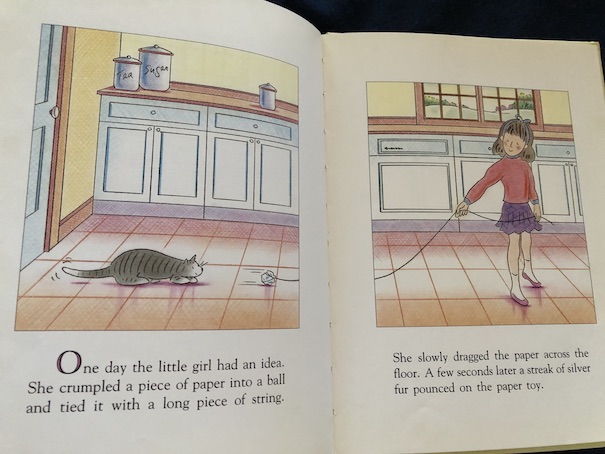


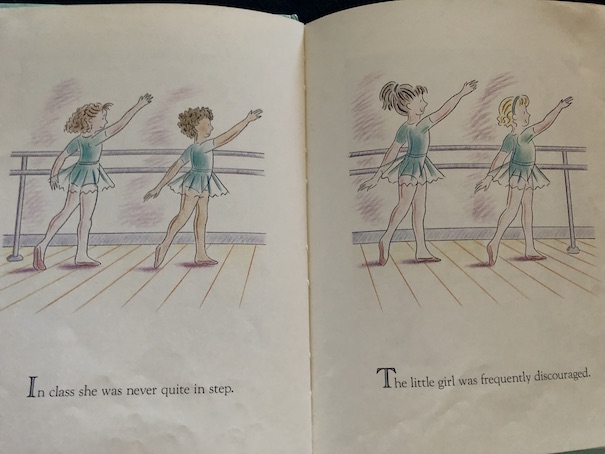


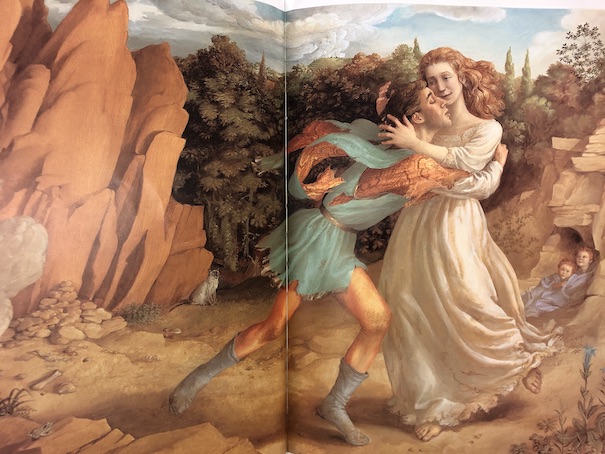
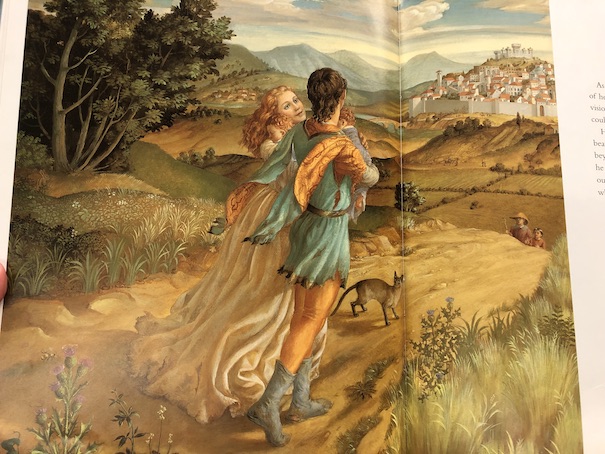
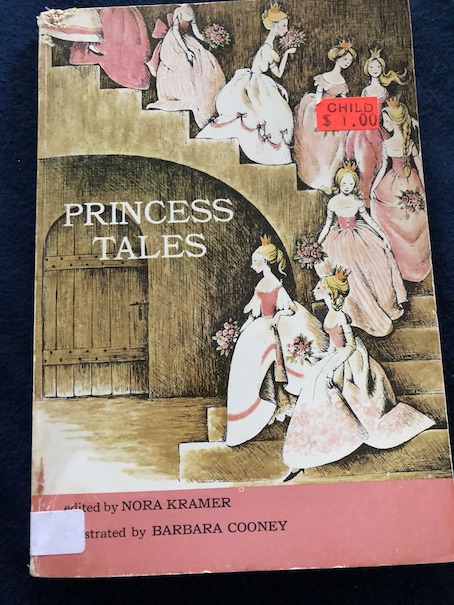
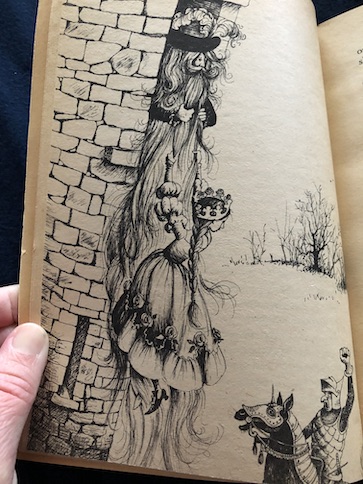
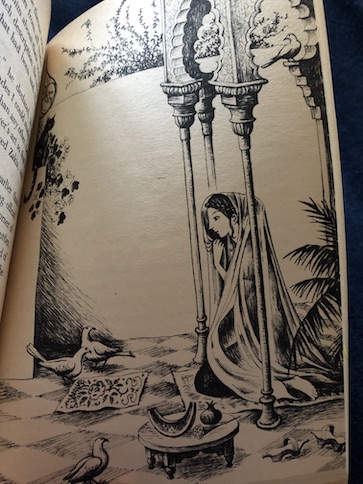
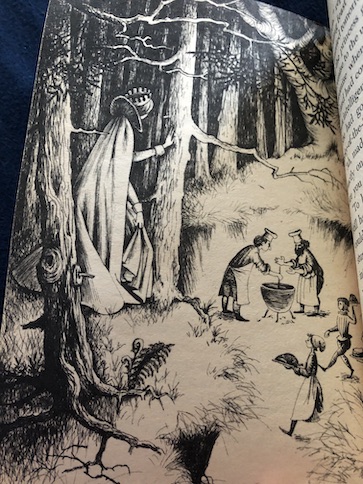


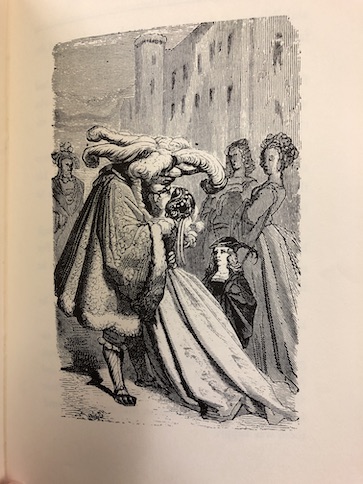

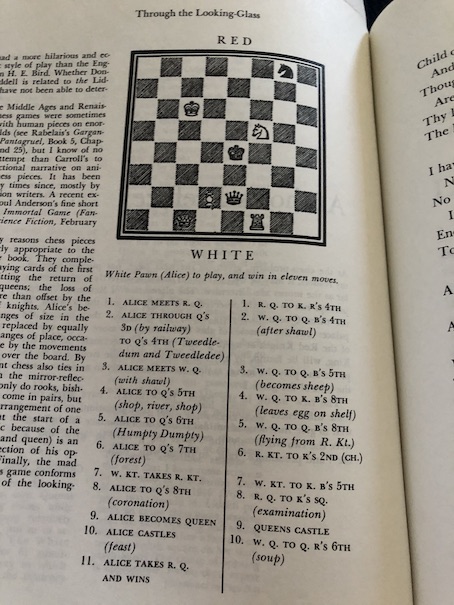

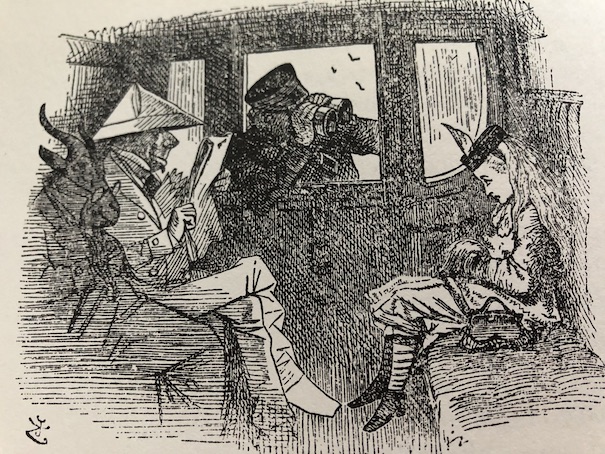


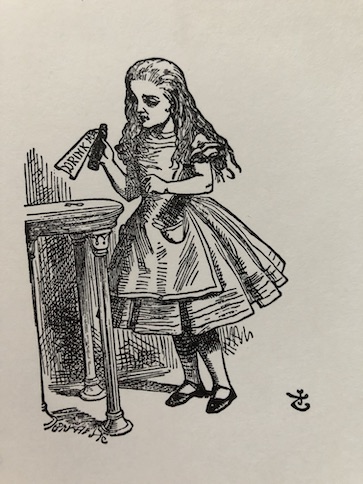


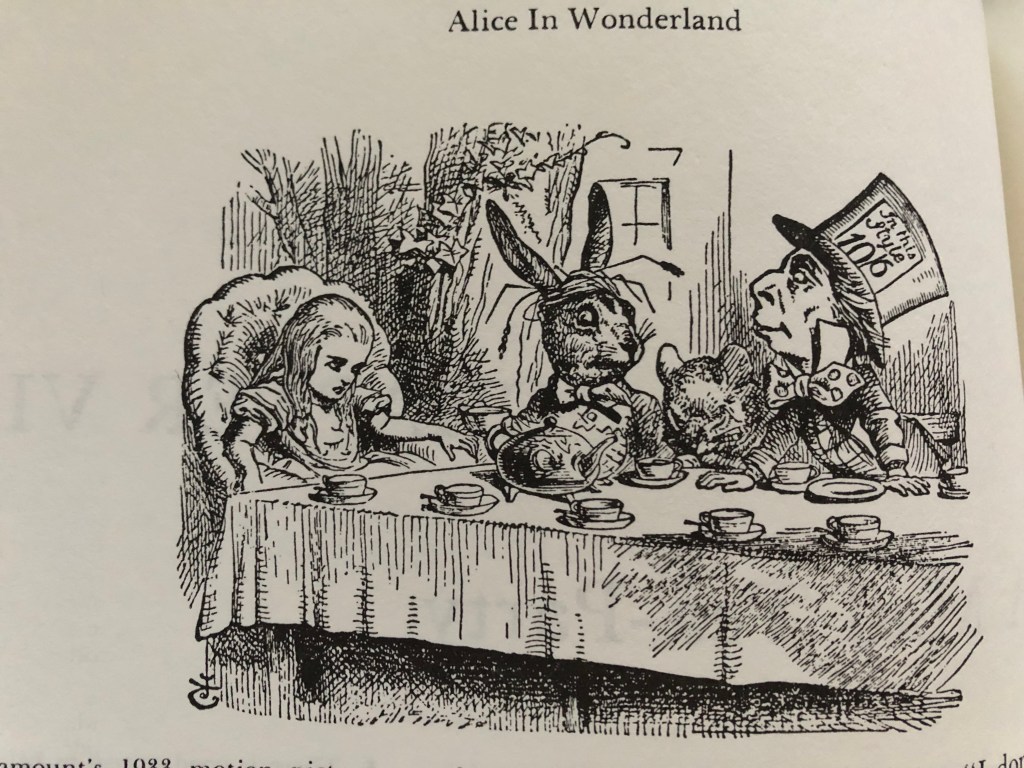


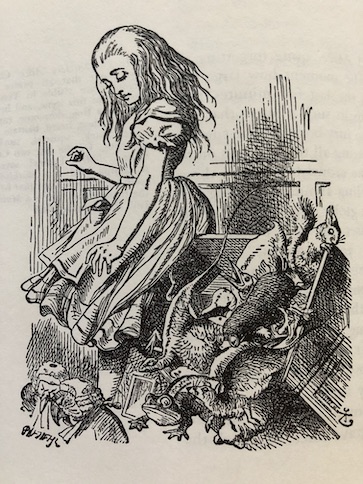
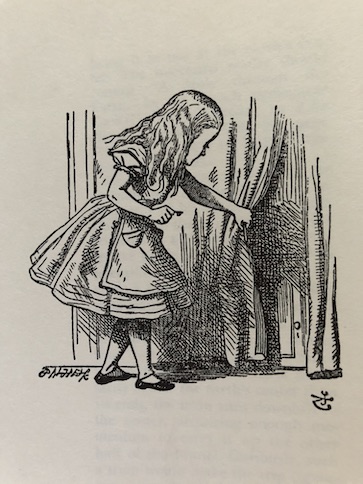
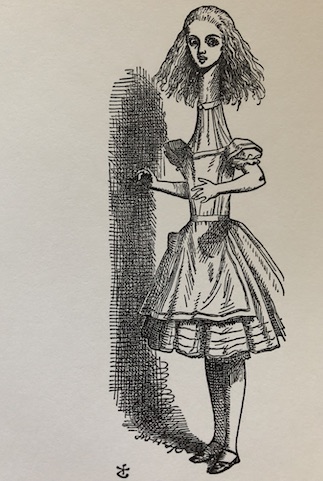


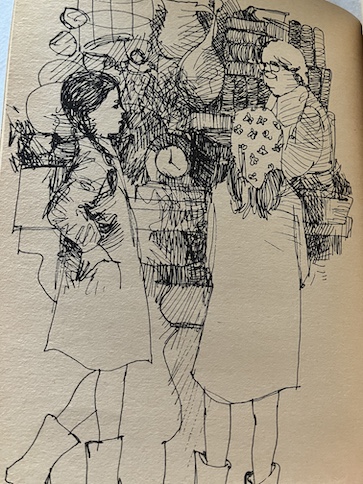

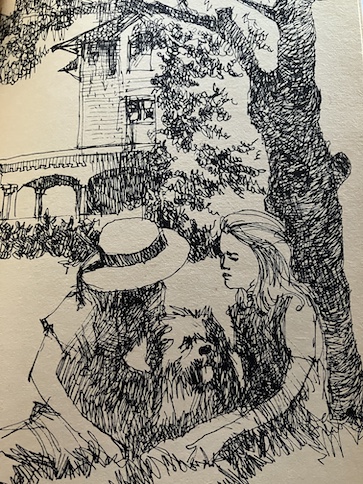
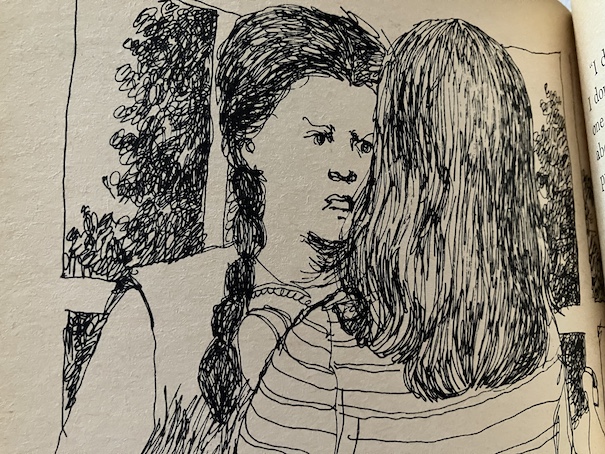


 Jestress's Forgotten Books and Stories